
This Draft Registration Statement is confidentially submitted to the U.S. Securities and Exchange Commission pursuant to Section 106 (a) of the Jumpstart Our Business Startups Act of 2012 on , 2025 and is not being filed publicly under the Securities Act of 1933, as amended.
UNITED STATES
SECURITIES AND EXCHANGE COMMISSION
Washington, D.C. 20549
FORM F-1
REGISTRATION STATEMENT
UNDER THE SECURITIES ACT OF 1933
VISION MARINE TECHNOLOGIES INC.
(Exact name of registrant as specified in its charter)
| Québec | 3730 | N/A | ||
| (State or other jurisdiction of | (Primary Standard Industrial | (I.R.S. Employer | ||
| incorporation or organization) | Classification Code Number) | Identification Number) |
730 Boulevard du Curé-Boivin
Boisbriand, Québec J7G 2A7, Canada
Telephone: 450-951-7009
(Address of principal executive offices, including zip code, and telephone number, including area code)
CorpoMax Inc.
2915 Ogletown Road, Newark, DE 19713.
Telephone: +1 302 266-8200
(Name, address, including zip code, and telephone number, including area code, of agent of service)
With copies to:
| William Rosenstadt, Esq. Tim Dockery, Esq. Ortoli Rosenstadt LLP 366 Madison Avenue, 3rd Floor New York, New York 10017 Telephone: (212) 588-0022 |
Virgil Hlus Andrew Stewart Vancouver, BC, V6C 2B5, Canada |
Approximate date of commencement of proposed sale to the public: As soon as practicable after this Registration Statement becomes effective.
If any of the securities being registered on this Form are to be offered on a delayed or continuous basis pursuant to Rule 415 under the Securities Act of 1933, check the following box. x
If this Form is filed to register additional securities for an offering pursuant to Rule 462(b) under the Securities Act of 1933, check the following box and list the Securities Act registration statement number of the earlier effective registration statement for the same offering. ¨
If this Form is a post-effective amendment filed pursuant to Rule 462(c) under the Securities Act of 1933, check the following box and list the Securities Act registration statement number of the earlier effective registration statement for the same offering. ¨
If this Form is a post-effective amendment filed pursuant to Rule 462(d) under the Securities Act of 1933, check the following box and list the Securities Act registration statement number of the earlier effective registration statement for the same offering. ¨
Indicate by check mark whether the registrant is an emerging growth company as defined in Rule 405 of the Securities Act of 1933.
Emerging growth company x
If an emerging growth company that prepares its financial statements in accordance with U.S. GAAP, indicate by check mark if the registrant has elected not to use the extended transition period for complying with any new or revised financial accounting standards provided pursuant to Section 7(a)(2)(B) of the Securities Act. ¨
The registrant hereby amends this Registration Statement on such date or dates as may be necessary to delay its effective date until the registrant shall file a further amendment which specifically states that this Registration Statement shall thereafter become effective in accordance with Section 8(a) of the Securities Act of 1933 or until this Registration Statement shall become effective on such date as the Securities and Exchange Commission, acting pursuant to said Section 8(a), may determine.
The information contained in this preliminary prospectus is not complete and may be changed. These securities may not be sold until the registration statement filed with the United States Securities and Exchange Commission is effective. This preliminary prospectus is not an offer to sell these securities, and it is not soliciting an offer to buy these securities, in any state where the offer or sale is not permitted.
| PRELIMINARY PROSPECTUS | SUBJECT TO COMPLETION | DATED , 2025 |
Up to Common Shares
Up to Pre-Funded Warrants to purchase Common Shares
Up to Common Shares underlying the Pre-Funded Warrants
Vision Marine Technologies Inc.
We are offering on a firm-commitment underwritten basis of up to of our common shares, without par value per share of Vision Marine Technologies Inc. (the “Company”, “we”, “our”, “us”), at an assumed offering price of US$ per common share, which is the reported sale price of our common shares, as reported on the Nasdaq Capital Market on , 2025. For further information about the securities offered herein, see “Description of Securities We Are Offering”.
We are also offering to each purchaser of common shares that would otherwise result in the purchaser’s beneficial ownership exceeding 4.99% of our outstanding common shares immediately following the consummation of this offering the opportunity to purchase up to pre-funded warrants in lieu of common shares. A holder of pre-funded warrants will not have the right to exercise any portion of its pre-funded warrants if the holder, together with its affiliates, would beneficially own in excess of 4.99% (or, at the election of the holder, such limit may be increased to up to 9.99%) of the number of common shares outstanding immediately after giving effect to such exercise. Each pre-funded warrant will be exercisable for one common share. The purchase price of each pre-funded warrant will be equal to the price per common share, minus C$0.001, and the remaining exercise price of each pre-funded warrant will equal C$0.001 per common share. The pre-funded warrants will be immediately exercisable (subject to the beneficial ownership cap) and may be exercised at any time until all of the pre-funded warrants are exercised in full. For each pre-funded warrant we sell (without regard to any limitation on exercise set forth therein), the number of common shares we are offering will be decreased on a one-for-one basis. We are also registering the common shares issuable from time to time upon the exercise of the pre-funded warrants offered hereby. We refer to the common shares and pre-funded warrants offered hereby as the offered securities.
The offering price for the offered securities will be determined at the time of pricing and may be at a discount to the current market price or to the assumed price set forth above. The assumed offering price used throughout this prospectus may not be indicative of the final offering price. The final public offering price will be determined through negotiation between us and the underwriter based upon a number of factors, including our history and our prospects, the industry in which we operate, our past and present operating results, the previous experience of our executive officers and the general condition of the securities markets at the time of this offering. Therefore, the assumed public offering price used through this prospectus may not be indicative of the final offering price.
Our common shares are currently traded on the Nasdaq Capital Market, or Nasdaq, under the symbol “VMAR.” On , 2025, the last reported sale price of our common shares on Nasdaq was US$ . As of , 2025, there were common shares issued and outstanding.
See “Risk Factors” on page [--] for more information.
We are an “emerging growth company” under the federal securities laws and have elected to comply with certain reduced public company reporting requirements.
Investing in the offered securities involves a high degree of risk. You should carefully consider the matters described under the caption “Risk Factors” beginning on page [--] as well as the other information contained in this prospectus before making a decision to invest in our securities.
Neither the United States Securities and Exchange Commission nor any state securities commission has approved or disapproved of these securities or determined if this prospectus is truthful or complete. Any representation to the contrary is a criminal offense.
| Per Common Share |
Per Pre-Funded Warrant |
Total | ||||
| Public offering price | US$ | US$ | US$ | |||
| Underwriting discounts and commissions(1) | US$ | US$ | US$ | |||
| Proceeds to us, before expenses | US$ | US$ | US$ |
(1) Underwriting discounts and commissions do not include a non-accountable expense allowance equal to 1% of the public offering price payable to the underwriter. See "Underwriting" for a description of compensation payable to the underwriter.
We have granted a 45-day option to the underwriter to purchase up to an additional common shares and/or pre-funded warrants (using the assumed offering price of US$ per common share), representing 15% of the common shares and pre-funded warrants initially offered hereby, solely to cover over-allotments, if any.
The underwriter expects to deliver the securities to the investors on or about , 2025.
ThinkEquity
The date of this prospectus is , 2025
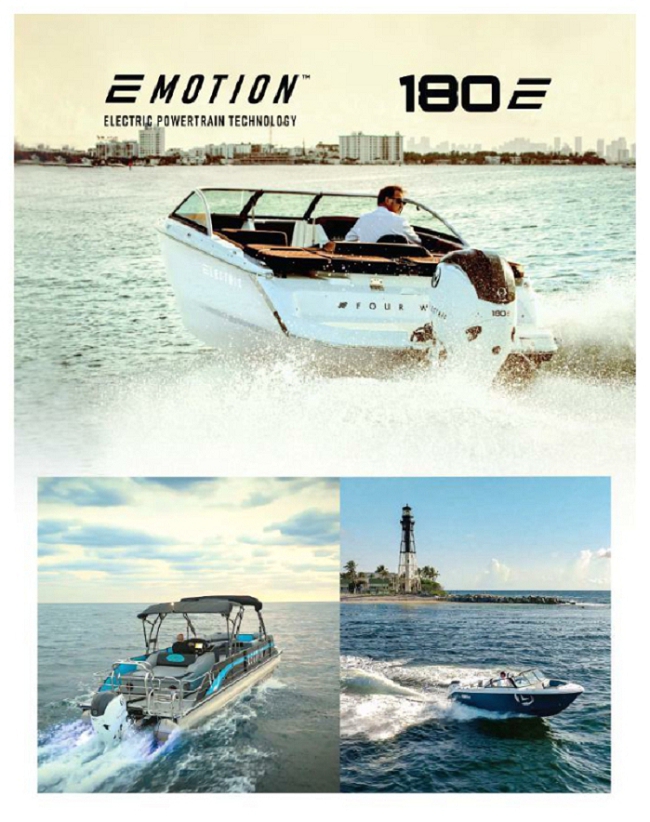
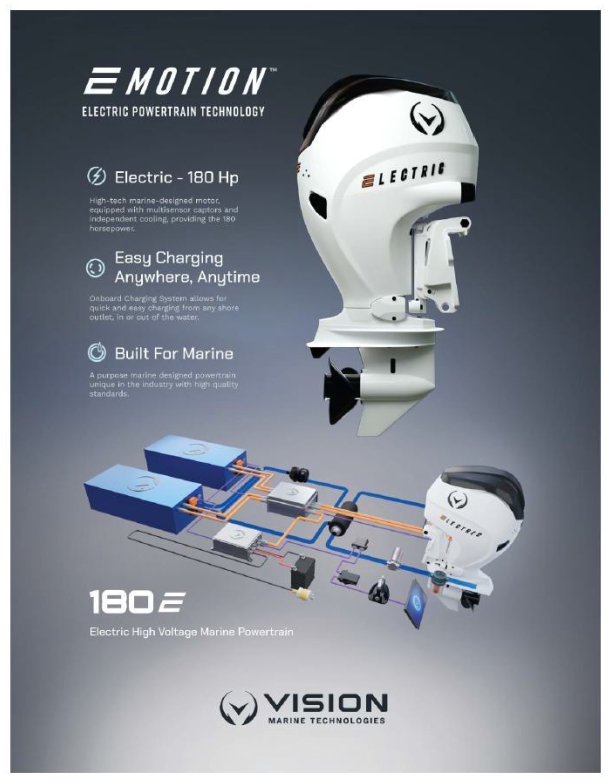
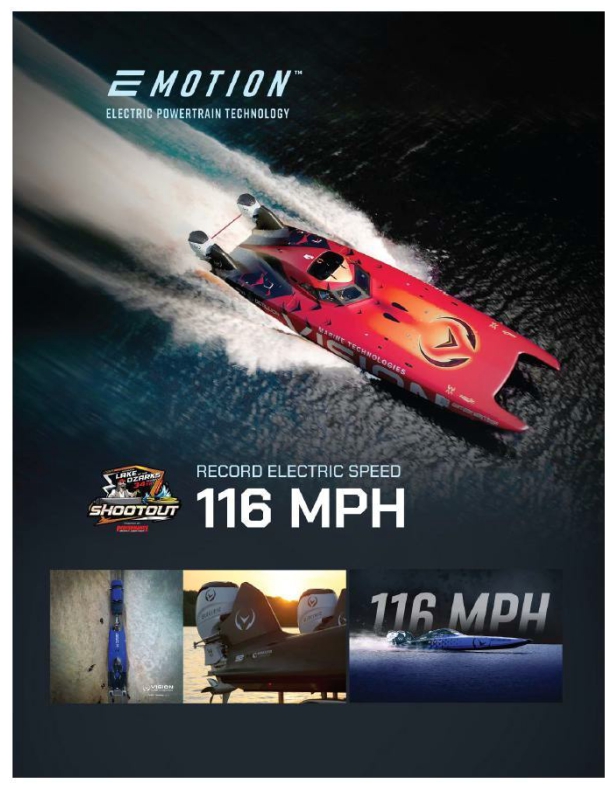
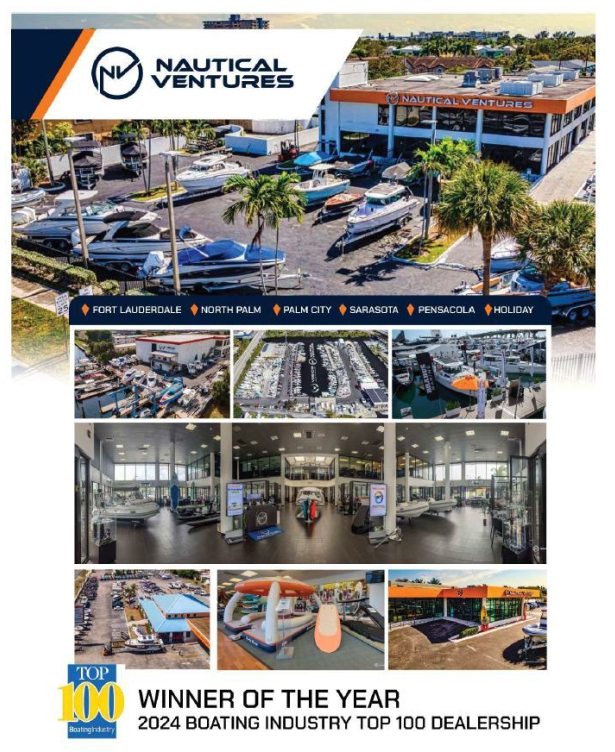
TABLE OF CONTENTS
You should rely only on the information contained in this prospectus, inclusive of any amendment or supplement to this prospectus or any free writing prospectus prepared by, or on, our behalf. Neither we nor the underwriter have authorized any other person to provide you with different or additional information. Neither we nor the underwriter take responsibility for, nor can we provide assurance as to the reliability of, any other information that others may provide. This prospectus is not an offer to sell these securities in any jurisdiction where the offer or sale is not permitted. The information contained in this prospectus is accurate only as of the date of this prospectus or such other date stated in this prospectus, and our business, financial condition, results of operations and/or prospects may have changed since those dates.
To the extent this prospectus contains summaries of the documents referred to herein, you are directed to the actual documents for complete information. All of the summaries are qualified in their entirety by the actual documents. Copies of some of the documents referred to herein have been filed, will be filed, or will be incorporated by reference as exhibits to the registration statement of which this prospectus forms a part, and you may obtain copies of such documents as described below in the section titled “Where You Can Find Additional Information.”
Except as otherwise set forth in this prospectus, neither we nor the underwriter have taken any action to permit an offering of these securities outside the United States or to permit the possession or distribution of this prospectus outside the United States. Persons outside the United States who come into possession of this prospectus must inform themselves about and observe any restrictions relating to the offering of these securities and the distribution of this prospectus outside the United States.
Unless the context otherwise requires, in this prospectus, the term(s) “we”, “us”, “our”, “Company”, “our company”, and “our business” refer to Vision Marine Technologies Inc. and its consolidated subsidiaries, and “common shares” refer to our “Voting Common Shares – Series Investor 1” common shares, with no par value. For more information related to our authorized share capital please see “Articles of Incorporation of Our Company”.
| 1 |
All per share amounts in this prospectus (except where otherwise indicated) account for (i) a 1:15 reverse stock split of our common shares that occurred on August 22, 2024, (ii) a 1:9 reverse stock split of our common shares that occurred on October 8, 2024 and (iii) a 1:10 reverse stock split of our common shares that occurred on March 31, 2025.
All amounts converted from or into US$ or $ in this prospectus have been converted using an exchange rate of $US1.00:$1.3491 (the high US$ to CAD exchange rate on August 30, 2024 as reported by the Bank of Canada) except (i) US$ and $ amounts included in our historical financial statements (or amounts in the prospectus derived from such financial statements) and (ii) as otherwise stated herein.
| 2 |
The following summary highlights, and should be read in conjunction with, the more detailed information contained elsewhere in this prospectus. You should read carefully the entire document, including our historical financial statements and related notes and the historical financial statements of Nautical Ventures and related notes, to understand our business, the offered securities and the other considerations that are important to your investment decision. You should pay special attention to the “Risk Factors” section beginning on page [--].
All references to “$”, “C$”, or “dollars”, are expressed in Canadian dollars unless otherwise indicated.
Business Overview
Our operations are focused on providing goods and services related to the recreational boating market. Prior to June 2025, we focused exclusively on the design, development and manufacturing of electric outboard powertrain systems and electric power boats and the renting of electric boats. In June 2025, we acquired Nautical Ventures and with nine locations in Florida for the sale of boats, parts and accessories and the provision of related services. We set out below a description of these different operations.
Nautical Ventures’ Operations
In June 2025, we acquired Nautical Ventures which sells boats, parts and accessories and offers services related to recreational boating. Nautical Ventures has nine locations in Florida, consisting of five dealerships, a watersports showroom, a marina, a yacht tender service and a kayak rental. Taking into account the acquisition of Nautical Ventures, on a pro forma basis these operations accounted for approximately 97.5% and 99.4% of our revenue and 92.7% and 85.9% of our total assets for the year ended August 31, 2024 and the nine months ended May 31, 2025, respectively.
The bulk of Nautical Ventures revenues for its fiscal year ended December 31, 2024 and its three months ended March 31, 2025 (approximately 89% and 90%, respectively) was derived from the sale of boats from third-party manufacturers, the majority of which were manufactured by Axopar Boats Oy (“Axopar”). The remainder of Nautical Ventures revenues for those periods was primarily derived from the sale of boat parts and “water toys” (such as kayaks, stand-up paddleboards, and electric personal watercraft), the provision of services and dockage fees.
Boat Sales
Nautical Ventures is primarily focused on the sale of recreational boats including both those with internal combustion engines and with electric propulsion. Nautical Ventures sells boats through its dealerships in Ft. Lauderdale, Sarasota, Palm Beach, Tampa Bay and Pensacola, two of which locations are waterfront dealerships. We are proud that in February 2025, Boating Industry magazine listed Nautical Ventures as number one in its ranking of the top 100 U.S. dealerships.
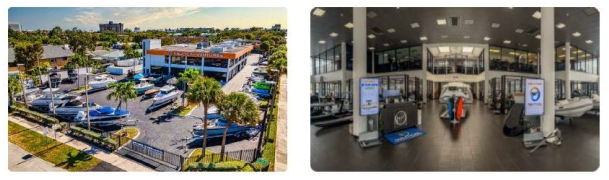
Fort Lauderdale dealership
Nautical Ventures has translated its experience with sales, servicing the customer and knowledge of the region in which it operates into annual sales of near or over US$100 million in its past two fiscal years. Although it sells both new and used boats, the sale of new boats respectively accounted for approximately 79.7% and 81.9% of Nautical Ventures revenues in its 2024 fiscal year and the three months ended March 31, 2025, respectively. In particular, Nautical Ventures has had success in selling new models of boats manufactured by Axopar with such models accounting for approximately 51% of Nautical Ventures’ revenues in its 2024 fiscal year.
| 3 |
The sale of used boats accounted for approximately 6.7% and 8.5% of Nautical Ventures revenues in its 2024 fiscal and the three months ended March 31, 2025, respectively. We sell used versions of the new makes and models we offer and used boats of other makes and models generally taken as trade-ins. Our used boat sales depend on our ability to source a supply of high-quality used boats at attractive prices. We acquire a large portion of our used boat inventory through customer trade-ins.
We believe that Vision Marine’s experience with electric boats will enhance the ability of the network of dealerships provided by Nautical Ventures to sell electric boats. We envision the increased sale of electric boats by Nautical Ventures to include both boats manufactured by us as well as those manufactured by third parties.
Boat – Other
In addition to selling boats, Nautical Ventures provides services for boat owners as well as sells parts needed for the maintenance of boats owned by our customers. For example, in the year ended December 31, 2024 and the three months ended March 31, 2025 Nautical Ventures generated revenue of (i) US$3.3 million and US$0.6 million, respectively, from the sale of parts for boats (or approximately 3.4% and 2.7%, respectively, of all of Nautical Ventures revenues for those periods), (ii) US$2.4 million and US$0.5 million, respectively, from servicing boats (or approximately 2.5% and 2.2%, respectively, of all of Nautical Ventures revenues for those periods) and (iii) US$1.2 million and US$0.3 million, respectively, from dockage fees (or approximately 1.2% and 1.2%, respectively, of all of Nautical Ventures revenues for those periods).
We believe that we can expand revenue from products and services related to boats through the Nautical Ventures network. In particular, we are pursuing efforts to expand our electric integration services in Florida to combine various components, including the electric motor, battery system, charging system, and control systems, to create a functional and efficient electric propulsion system and to increase revenue derived from the provision of financing and warranty opportunities.
Other
Nautical Ventures derives revenues from other sources. For example, in the year ended December 31, 2024 and the three months ended March 31, 2025 Nautical Ventures generated revenue of US$1.4 million and US$0.3 million, respectively, from the sale of water toys, such as inflatable and rideable toys (or approximately 3.4% and 1.2%, respectively, of all of Nautical Ventures’ revenues for those periods). Nautical Ventures also derives revenues from other activities such as the rental of kayaks, paddleboards, and pontoons.
Our Legacy Electric Focused Operations
We design and manufacture electric outboard powertrain systems, power boats, and related technology and rent electric boats. Taking into account the acquisition of Nautical Ventures, on a pro forma basis these operations accounted for approximately 2.5% and 0.6% of our revenue and 8.3% and 18.2% of our total assets for the year ended August 31, 2024 and the nine months ended May 31, 2025, respectively.
Our legacy operations related to electric boats primarily focus on the development of our electric outboard powertrain system that we believe is significantly more efficient and powerful than those currently being offered in the market today. In particular, we have recorded powertrain efficiencies of more than 96%, well above the 54% efficiency that we recorded for our principal competitor’s product. Increases in powertrain efficiency allow for more power and range, both of which are highly desirable characteristics for consumers in the marketplace. Although our primary focus is on electric outboard powertrain technology, we will continue to design, manufacture and sell our high-performance, fully-electric boats to commercial and retail customers.
We have developed our first fully-electric outboard powertrain system that combines an advanced battery pack, inverter, high-efficiency motor with proprietary union assembly between the transmission and the electric motor design and extensive control software. Our technologies used in this powertrain system are designed to improve the efficiency of the outboard powertrain and, as a result, increase range and performance. We believe our approach in marketing and selling our powertrain technology to boat designers and manufacturers will enable us to leverage their distribution and servicing systems with minimal capital outlay.
We continue to manufacture hand-crafted, highly durable, low maintenance, environmentally-friendly electric recreational powerboats. In our last three fiscal years, we manufactured 45, 46, and 58, respectively. We sell powerboats to retail customers and operators of rental fleets of powerboats through which we seek to build brand awareness.
In our fiscal year 2021, we expanded our business to include rentals of electric powerboats by acquiring EB Rental Ltd. (“EBR”), an entity that rents electric boats at two marinas in California. In addition to generating revenues from the rental of our powerboats, EBR builds brand awareness and acts an open-water showroom for potential buyers. In April 2024, we sold our electric boat rental facility located in Newport Beach, California to Stratégies EB Inc., a related party, for $1,089,302. As of the date of this prospectus, we continue to own and operate our electric boat rental operations in Ventura, California and Palm Beach, Florida. In addition, we are currently in the process of opening a new electric boat rental facility in Dania Beach, Florida.
| 4 |
Our Electric Outboard Powertrain Systems
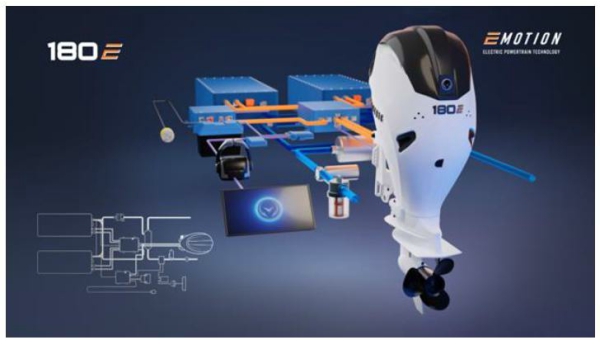
A powertrain system is a vehicle’s infrastructure that converts energy into movement. In an electric boat, that infrastructure starts at the battery pack, continues with an inverter, goes to the motor and ends with the propeller. Electric powertrains have less moving parts than powertrains for boats with an internal combustion engine and, as a result, tend to break less and require less complex servicing.
The efficiency of a powertrain system determines the range of a boat on a single battery charge and the speed at which the boat operates. We find existing electric powertrain systems unsatisfactory because of their insufficient yields and limited power range. In 2015, we decided to research technology to take advantage of this vacuum and develop an in-house system, relying on existing third-party components where possible. We noted the need for innovation in the following areas:
| · | optimizing the electric motor to improve efficiency and range by customizing the power to the motor from different battery suppliers; |
| · | developing optimization software that reads and calibrates the controller to suit the current use of the outboard electric powertrain system; |
| · | using appropriate components, including the battery; |
| · | customizing gears and propellers to a boat’s specifications. We have recorded the efficiency of our principal competitor’s electric powertrain system as 54%, meaning that only 54% of the power leaving the battery pack reached the propeller, although their technology may have improved since that recording. Our proprietary union and direct transmission system allow our prototype powertrains to have an efficiency of 96% which provides a competitive advantage over current electric outboard motors. We have also chosen a propeller design which when combined with the efficiencies obtained using our proprietary union and transmission system, provides optimal results; and; |
| · | developing an innovative controller, in particular, one that: |
| o | improves control over thermal overheating and thus protects the electric powertrain system; |
| o | incorporates a dual electrical and mechanical cooling system allowing for a better performance of the electric powertrain system; |
| o | detects possible operating problems (for example cavitation); and |
| 5 |
| o | reduces jolts and noise. |
Our electric powertrain is designed to have 180 hp (horsepower) and 236 Lb. ft at 96% load. Furthermore, the electric powertrain system will be liquid cooled as compared to air cooled.
In October 2021, we entered into a Manufacture and Supply Agreement with Linamar Corporation, a provider of manufacturing solutions and a developer of highly engineered products. Under the terms of the agreement, we intend for McLaren Engineering, Linamar’s technology and product development team for its advanced mobility segment, to manufacture and assemble our E-Motion™ technology through testing, parts, tooling development, and designing the union assembly for mass production of our electric powertrain at Linamar’s facility in Canada.
Once we have scaled up the production of our electric powertrain, we intend for the Linamar Corporation to produce our electric powertrain for mass commercialization. Although we believe that we can produce up to 300 electric powertrains per year in our current facilities in addition to producing 150 boats per year, we believe that contracting out the production of the electric powertrains will allow us to dedicate more time and resources to the development of additional electric powertrains.
The production of our electric powertrains will consist of assembling components from third parties, including battery packs, inverters and high-efficiency motors. We intend to use advanced batteries primarily from two suppliers, Octillion and Neogy, but as we are able to use a wide range of batteries we could use other suppliers. We will source the inverters from UQM (Danfoss Editron) and motors from UQM (Danfoss Editron).
In January 2022, we announced our partnership with Octillion to develop a customized high voltage 35 KW high density battery. Octillion will manufacture a new advanced electric battery system, “Polar 35” to power our E-Motion™ outboard powertrain. The configuration of the battery pack is smaller than that of a typical fuel tank, which in turn makes it easier to custom fit in virtually any boat.
During that same period, we partnered with Nextfour Solutions Ltd. to further develop a customized multifunctional display to be integrated within our E-Motion™ 180 fully electric powertrain system. In February 2022, we partnered with Weismann Marine, LLC to design and develop a lower unit (or gearcase) assembly. We partnered with Hellcat Powerboats to include our outboard powertrain in the boat that achieved a world record speed of 109 mph for an all-electric boat in 2022.
Our electric powertrains are controlled by control software developed in house. We have used open-source software code to develop our own battery management system software that will be tailored to regulate the power from the battery pack to the electric motor and its related systems.
We have filed twelve patent applications with respect to our electric outboard powertrain system and plan on another twelve patent applications related to this innovation in the near future.
Specifications of our First Outboard Electric Powertrain
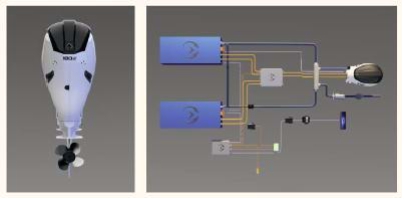
We have developed our first fully-electric outboard powertrain system that combines an advanced battery pack, inverter, high-efficiency motor with proprietary union assembly between the transmission and the electric motor design and extensive control software. We set out below the current specifications of this outboard electric powertrain.
| Maximum power | 180 HP, 135 kW |
|
|
| Max torque | 250 ft.lb, 340 Nm | ||
| Voltage | 650 V | ||
| Efficiency | 96% | ||
| Weight | 413 Lbs., 188 kg | ||
| Lithium Battery | 43 kW | ||
| Shaft Length | S - XL | ||
| Cooling | Water | ||
| Control | Can bus |
| 6 |
Our Powerboats
We manufacture seven models of electric powerboats. Each model is available in different standard variations or may be customized according to a purchaser’s specifications. In our last three fiscal years, we manufactured 45, 46, and 58 boats, respectively, and in the nine months ended May 31, 2025, we manufactured an additional 11 boats.
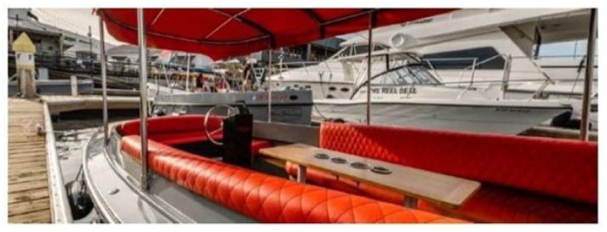
For each of our boats, our consumers are able to customize certain aspects including color (for the hull, striping, interior and deck), radio and covers and other storage options. In addition, there are customizations that are just available for some boat models, including propulsion and batteries.
Sales
We envision that if we are able to mass produce our electric powertrains, a significant of our revenue will be generated from the sale of our electric powertrains. In the three-months ended May 31, 2025, we made the first sale of our E-Motion™ Electric Powertrain System for $80,025. Although we have received non-binding letters of intent from OEMs for the purchase of such powertrains, such letters may never result in any actual sales. The projected sales price for future sales of our electric outboard powertrain system will depend on the number of batteries used and where it is sold. For the European market, we anticipate that the systems with Neogy batteries will sell for US$60,000 for a one-battery system, US$85,000 for a two-battery system and US$115,000 for a three-battery system. For the U.S. market, we anticipate that the systems with Octillion batteries will sell for US$45,000 for a one-battery system, US$65,000 for a two-battery system and US$85,000 for a three-battery system.
On a pro-forma basis, we generated approximately 1.2% and 0.4% of our revenue from the sale of our electric boats for the year ended August 31, 2024 and the nine months ended May 31, 2025, respectively. We intend to use the network of Nautical Ventures dealerships that we acquired in June 2025 to promote the sale of our electric powerboats.
Rentals
In our fiscal year 2021, we expanded our business to include rentals of electric powerboats at one location in Newport Beach, California. In April 2023, we opened our second electric boat rental operation in Portside Ventura, California, and in December 2023, we opened our third electric boat rental operation in Palm Beach, Florida. In April 2024, we sold our electric boat rental operations located in Newport Beach, California, to Stratégies EB Inc. for $1,089,302. At the time of the sale, Stratégies EB Inc. was a related party because its controlling shareholder was a member of management of EB Rental, Ltd. prior to its sale. The sale of our rental operations in Newport Beach, California has significantly decreased the size of our rental operations. We are currently in the process of opening a new electric boat rental facility in Dania Beach, Florida.
The electric boat rental business currently has a fleet of approximately 8 powerboats. Rental rates range from US$75 per hour to US$215 per hour, plus a booking fee, with a minimum booking of two hours. Once a powerboat in our fleet has over 200 hours of sailing time, we offer the powerboat for sale to the public. In our 2024 fiscal year and in the nine months ended May 31, 2025, our rental business generated approximately $1,946,427 and $94,125 of revenue respectively.
Suppliers
The supplies that we require for the sale of products by Nautical Ventures, the design and manufacture of our electric powertrains and the manufacture of our boats differ. As a result, we set out below a brief description of each of those operations.
| 7 |
Nautical Ventures
Nautical Ventures sources its products through a strategic network of domestic and international manufacturers and distributors.
Key elements of the sourcing process include:
| · | Direct Manufacturer Relationships: Nautical Ventures works directly with a wide range of industry-leading manufacturers and brands that enables competitive pricing, product consistency, and early access to new product lines; |
| · | Exclusive and Authorized Dealerships: Nautical Ventures holds exclusive or authorized dealership rights for several top-tier marine brands, ensuring access to genuine products and manufacturer support; |
| · | Global and Domestic Supply Chain: Products are sourced both internationally and domestically, depending on availability, product category, and logistics feasibility; and |
| · | Strategic Vendor Partnerships: Long-standing vendor relationships are maintained through performance reviews, regular negotiations, and mutual planning for inventory and promotional alignment. |
Nautical Ventures relies on one manufacturer for a substantial portion of its revenues. In Nautical Ventures’ fiscal year ended December 31, 2024, the sale of boats from Axopar represented approximately 51% of its net revenues.
Electric Powertrains
The most significant parts and components we intend to use in manufacturing our electric powertrains are:
| · | engines – we rely on two suppliers of engines, Danfoss and E-Propulsion; |
| · | lithium-ion batteries – we purchase 100% of our lithium-ion batteries from Neogy who in turn rely upon Samsung cells. We have an agreement with Octillion Power Systems to provide marine specific batteries to power the E-Motion™ powertrains; |
| · | inverter – we intend to source our inverters from Danfoss; and |
| · | smart navigation system – we intend to rely on our partnership with Nextfour to develop a multifunctional display to be integrated with our E-Motion™ powertrains. |
Electric Boats
Although we manufacture all of our electric boats, we do so by assembling the component parts that we acquire from third-party suppliers rather than by producing any of those component parts ourselves. Some of these parts and components are manufactured to our specifications (such as hulls and motors) while others are bought “off the shelf” (such as batteries and canopies). We do not maintain long-term contracts with preferred suppliers but instead rely on informal arrangements and off-the-shelf purchases. We materially depend on some of those third-party suppliers for certain components that we obtain from a limited number of suppliers.
The most significant parts and components used in manufacturing our boats are:
| · | engines – we use one supplier of engines, E-Propulsion (for the Quietude, the Fantail 217 and the Volt 180) in addition to our use of our E-Motion™ for the Volt; |
| · | lithium-ion batteries – we source duplicate suppliers for our lithium-ion batteries, including Neogy and Octillion and believe that we could source batteries at a similar price from the market were these suppliers unable to meet our demand; and |
| · | hulls – we purchase all of our hulls from Manunor Inc. |
General
We have not experienced any material shortages in any of our product parts or components. As a result of the COVID-19 pandemic and recent tariff uncertainty, some of our third-party suppliers experienced delays in delivering our product parts and components in a timely manner and fluctuations in price for these supplies is a possibility if raw material pricing increases. Temporary shortages, when they do occur, usually involve manufacturers of these products adjusting model mix, introducing new product lines, or limiting production in response to an industry-wide reduction in boat demand, or in finding persons able to deliver the parts and components in a timely manner.
| 8 |
As we do not produce any of the parts of components of the third-party boats that we sell, our electric powertrains or the electric powerboats that we manufacture, we do not materially use, or intend to use, any raw materials in their production. The manufacturers of the parts and components that we use, however, do use raw materials, including resins, fiberglass, hydrocarbon feedstocks, steel and various minerals, especially in the production of the engines and batteries that we use. We do not control how these third parties source the raw materials that they use, and we may suffer production delays if such third parties do not have access to all of the raw materials that they need or source conflict minerals in violation of applicable regulations.
Patents and Licenses
Our success depends, at least in part, on our ability to protect our core technology and intellectual property. To accomplish this, we intend to rely on a combination of patent and design applications, trade secrets, including know-how, employee and third-party non-disclosure agreements, copyright laws, trademarks and other contractual rights to establish and protect our proprietary rights in our technology. We intend to file patent applications with respect to components of a powertrain that we are developing. We do not know whether any of our patent applications will result in the issuance of patents or whether the examination process will require us to narrow our claims. Even if granted, these pending patent applications might not provide us with adequate protection.
We have filed twelve patent applications with respect to our electric outboard powertrain system and plan on filing another twelve patent applications related to this innovation in the near future.
Trademarks
We filed trademark applications with the Canadian Intellectual Property Office and the U.S. Patent and Trademark Office for our logo and the brand name “E-Motion”. We operate under the trade name “VISION MARINE TECHNOLOGIES”, but neither this name nor any of the names of the models of our boats are currently registered trademarks.
Nautical Ventures operates under the trade names “NAUTICAL VENTURES GROUP” and “AQUAZONE”, but none of these names are currently registered trademarks.
This prospectus contains references to trademarks and service marks belonging to other entities. Solely for convenience, trademarks and trade names referred to in this prospectus may appear without the ® or TM symbols, but such references are not intended to indicate, in any way, that we will not assert, to the fullest extent possible under applicable law, our rights to these trademarks and trade names. We do not intend our use or display of other companies’ trade names, trademarks or service marks to imply a relationship with, or endorsement or sponsorship of us by, any other companies.
Competitive Advantages & Operational Strengths
The recreational boating industry is highly competitive. Competition affects our ability to succeed in the markets we currently serve and new markets that we may enter in the future. In addition to facing competition generally from recreation businesses seeking to attract consumers’ leisure time and discretionary spending dollars, the recreational boating industry itself is highly fragmented, resulting in intense competition for customers, quality products, boat show space, and suitable retail locations.
Many of our current and potential competitors have significantly greater financial, technical, manufacturing, marketing and other resources than we do and may be able to devote greater resources to the sale of recreational boats, parts and accessories and related services as well as to the design, development, manufacturing, distribution, promotion, sale and support of their products. Many of our competitors have more extensive customer bases and broader customer and industry relationships, including with third-party manufacturers, than we do. In addition, many of these companies have longer operating histories and greater name recognition than we do. Our competitors may be in a stronger position to respond quickly to new technologies and may be able to design, develop, market and sell their products more effectively.
Many dealerships offer a wider range of financing options on the boats they sell and also have the ability to market boats at a substantial discount, provided that the boats are financed through their affiliated financing company. We offer some forms of financing on our boats, but the lack of more financing options and the absence of customary boat discounts could put us at a competitive disadvantage.
| 9 |
Nautical Ventures
Our operations run by Nautical Ventures compete primarily with single- and limited-location boat dealers and regional and national dealerships. With respect to sales of marine parts, accessories, and equipment, these operations compete with national specialty marine parts and accessories stores, online catalog retailers, sporting goods stores, and mass merchants. Competition among boat dealers is based on the quality of available products, the price and value of the products, and attention to customer service. There is significant competition both within markets we currently serve and in new markets that we may enter. We compete in each of our markets with retailers of brands of boats and engines we do not sell in that market. In addition, several of our competitors, especially those selling marine equipment and accessories, are large national or regional chains that have substantial financial, marketing and other resources. Private sales of used boats represent an additional source of competition. Due to various matters, including environmental concerns, permitting and zoning requirements, and competition for waterfront real estate, some markets in the United States face intense competition for suitable marina and storage availability.
We believe that the following factors will enable our Nautical Ventures operations to successfully compete:
| · | Proven retail experience: Nautical Ventures team has demonstrated it has the ability generate revenue through the sale of products and services. In each of its past three fiscal years, it has generated net sales of over or almost US$100 million. The hiring and maintenance of a motivated salesforce and the training it receives separate us from our competitors, and |
| · | Product selection: We offer a competitive selection of brands and exclusive products in select markets to reach potential customers with different tastes and price points; |
| · | Reputation: We have developed a strong brand and recognition in the areas in which we operate through our years of operation. Customer satisfaction helps drive repeat business and customer referrals; and |
| · | Locations: We select the locations our dealerships and other operations because of their strategic high visibility geographic positioning. |
Electric Powertrains
In the development and production of our electric powertrains, we face competition from manufacturers of:
| i. | electric powertrain systems that sell to OEMs; |
| ii. | traditional fossil fuel-powered recreational powerboats in general; and |
| iii. | electric recreational powerboats in particular. |
We intend to sell our electric powertrains to OEMs for use in their boats. We are currently aware of one company (Torqeedo) that produces electric powertrains for OEMs, and as a result we believe that there is a viable and meaningful market opportunity in this market for us. Although we believe that our electric powertrain systems are more efficient and powerful than current offerings on the market, our competitors, including Torqeedo, may have greater resources than we do and OEMs may find their designs or price to be more attractive than ours. Even if we produce electric powertrains and sell them to OEMs, other competitors may enter the field or the OEMs may decide to produce their own powertrains and cease purchasing ours.
We believe that our experience, production capability, product offering and management give us the ability to successfully operate in the recreational electric powerboat market in a way that our competitors cannot. In particular, we believe that we have a number of competitive advantages, including:
| · | technological innovation: we have demonstrated our capacity to develop our own products through research and development by introducing the Volt 180, which currently holds the speed record for a certified electric boat. We believe that the technological design of our electric powertrain will provide efficiency at a price that our competitors will not be able to match. |
| · | product performance: the efficiency of our powertrain systems provides the boats they are in greater speed and range, results that are magnified when combined with our ultra-hydrodynamic hull designs. |
| · | product price: we have not priced our first powertrain system yet but intend to do so in a way that is competitive for its performance. |
| · | management expertise: our founders have extensive experience in offshore power boating and are aware of what is required by customers in regard to power and efficiency of outboard electric powertrain systems. The inherent reputation of our management team over 25 years has built our brand for quality and technologically advanced products. |
| 10 |
We might not be able to compete successfully in our market. If our competitors introduce new powertrains, powerboats or services that compete with or surpass the quality, price or performance of our powertrains, powerboats or services, we may be unable to satisfy existing customers or attract new customers at the prices and levels that would allow us to generate attractive rates of return on our investment. Increased competition could result in price reductions and revenue shortfalls, loss of customers and loss of market share, which could harm our business, prospects, financial condition and operating results.
Strategy
We are a vertically integrated marine company focused on delivering a superior on-water experience through innovative propulsion systems and a multi-brand retail strategy. Our operations span the design and industrialization of high-voltage electric powertrain systems, the development of electric boats, and the retail distribution of both electric and internal combustion engine (ICE) boats.
Following the acquisition of Nautical Ventures, a top-performing boat dealership network with nine locations across Florida, we have significantly expanded our access to retail customers. Through Nautical Ventures, we now offer a wide portfolio of leading recreational boat brands and models, giving us the ability to meet a broad spectrum of consumer demand, from entry-level boats to high-performance vessels. This footprint not only enables direct-to-consumer sales but also allows us to embed electric models within an established sales pipeline traditionally centered on ICE products, accelerating mainstream adoption of our electric offerings.
We also continue to sell electric boats directly to commercial fleet operators and boat rental businesses, which serve as high-visibility testbeds for our propulsion technology. These installations contribute to brand awareness, generate recurring fleet sales, and allow new consumers to experience electric boating firsthand.
Nautical Ventures further provides an immediate, scalable service infrastructure. Several locations are equipped or will be upgraded to support electric boat service bays, giving Vision Marine the ability to offer after-sale support for our E-Motion™ propulsion systems and electric boat fleet. This creates a full-cycle ownership experience for electric boat customers, from purchase to service, and enhances our value proposition in the retail environment.
At the same time, we continue to make our marine-specific electric propulsion systems available to boat manufacturers through direct engagement. Our E-Motion™ powertrains are engineered for seamless integration by OEMs, allowing them to electrify existing platforms while maintaining design and performance standards. We market these systems through trade shows, prototype demonstrations, and targeted outreach to selected manufacturers.
We believe that combining a controlled retail network with a technology integration strategy positions us to scale efficiently, maintain visibility over the customer journey, and foster broader market adoption of electric propulsion. We will continue to invest in research and development, operational efficiency, and our service infrastructure to meet the growing demand across both recreational and commercial marine segments.
Manufacturing
We produce our electric recreational powerboats and related components at our 15,000 square foot assembly warehouse in Quebec and use Linamar as our production partner for our E-Motion powertrains. In our last three fiscal years ended August 31, 2024, 2023 and 2022, we manufactured 45, 46, and 58 powerboats, respectively. We run one assembly line and have a production capacity that allows us to produce up to seven boats a week depending on the type of boats and the specifications of each order.
Marketing
Vision Marine – Electric Propulsion Marketing Strategy
OEM-Focused Promotion
Vision Marine markets its E-Motion™ high-voltage electric propulsion systems through a targeted B2B strategy. This includes participation in major industry trade shows, private demonstrations, and direct engagement with OEM engineering and procurement teams. The system has already been integrated onto a wide range of recreational boats, including pontoons, center consoles, bowriders (runabouts), catamarans, and double console boats. These real-world integrations enable Vision Marine to present validated performance data and practical use cases to potential partners.
Consumer Access Through Nautical Ventures
With the acquisition of Nautical Ventures, Vision Marine now benefits from direct-to-consumer access. Existing manufacturer production agreements and OEM partnerships allow certain models to be offered with either internal combustion or E-Motion™ electric propulsion. This integrated distribution channel enhances Vision Marine’s ability to introduce electric alternatives to end users at the point of sale, supported by on-site education and product comparison opportunities.
| 11 |
Rental and Demonstration Platforms
Vision Marine’s rental and fleet operations act as high-frequency demonstration environments. These programs expose thousands of boaters annually to electric propulsion firsthand and generate qualified leads across both retail and commercial fleet segments. This consumer exposure supports awareness, education, and conversion while reinforcing product reliability.
Forward Strategy and Growth Outlook
Looking ahead, Vision Marine intends to accelerate electric propulsion adoption by focusing on four key marketing priorities: (1) expanding OEM integration through facilitated retail and technical access, (2) enhancing consumer education at the point of sale and during use, (3) driving revenue through dedicated electric propulsion installation services, and (4) becoming the reference in electric marine servicing to build long-term consumer confidence in aftermarket support. These initiatives are designed to strengthen Vision Marine’s leadership position in high-voltage marine electrification, support the broader ecosystem of E-Motion™ deployments, and enable scalable, recurring value across both OEM and retail channels.
Nautical Ventures – Multi-Brand Retail Marketing Strategy
Retail Network and Physical Activation
Nautical Ventures is an award-winning dealership network with nine locations across Florida—the highest-volume recreational boating market in the United States. The company operates waterfront showrooms and a managed marina in high-traffic areas and holds exclusive regional rights for several boat brands. This infrastructure enables in-person marketing through demos, events, and showroom-based activations.
Digital Marketing and Lead Generation
In addition to physical locations, Nautical Ventures manages centralized digital campaigns, including paid search advertising, SEO, social media, and email outreach. These digital initiatives are designed to drive traffic, capture leads, and support the full customer journey—from initial inquiry to sale.
Marine Accessories and Water Toys
Nautical Ventures also markets a wide range of marine accessories and recreational watercraft, including kayaks, paddleboards, inflatables, tenders, and other water toys. These product categories enhance customer engagement and create cross-selling opportunities that reinforce Nautical Ventures’ position as a full-service marine retailer.
Boat Shows and Seasonal Marketing
The dealership maintains a strong presence at major U.S. and international boat shows, providing exposure for both ICE and electric product offerings. Seasonal campaigns are also tailored to Florida’s unique boating calendar, optimizing regional timing for sales activity.
Forward Strategy: Financing, Services, and Recurring Revenue
Strategic Focus on Value-Added Services
Following the acquisition of Nautical Ventures, Vision Marine intends to expand its consumer offering to include enhanced financing, insurance, and after-sale service programs. While these initiatives are not yet fully operational, the existing infrastructure positions the combined entity to develop recurring revenue streams over time. Plans include the introduction of extended warranties, service subscriptions, and electric propulsion maintenance plans, which will be marketed through both digital and in-store channels.
Together, Vision Marine and Nautical Ventures represent a vertically integrated marine platform with the potential to drive growth across both propulsion and retail channels, while enabling future expansion into services and consumer financing.
| 12 |
Sales and Service Model
We operate a multi-channel sales and service structure across three distinct product categories: (1) high-voltage E-Motion™ electric powertrain systems, (2) internal combustion engine (ICE) boats distributed through Nautical Ventures, and (3) low-horsepower electric boats sold directly or through dealers. Our approach is designed to ensure tailored customer support and scalable service capabilities across both recreational and commercial marine applications.
1. E-Motion™ Powertrain Systems
We commercialize our proprietary high-voltage electric outboard powertrain systems through three avenues:
| • | OEM Integrations: If we sell to boat manufacturers (OEMs), the powertrain will be integrated into their platforms and distributed through their own dealer networks. In these cases, the OEM will be responsible for end-customer service. Vision Marine will provide training, documentation, and ongoing technical support to enable OEM service teams to be equipped to maintain and troubleshoot our systems. |
| • | Third-Party Integrations with Dealer Distribution: For customers purchasing boats from a third-party manufacturer or dealer who integrates our E-Motion™ system, Vision Marine offers after-sale service through designated Nautical Ventures service bays. These installations are being equipped and staffed to handle electric propulsion diagnostics, maintenance, and upgrades, providing localized service coverage for integrated units. |
| • | Direct-to-Consumer Sales: In cases where customers select an E-Motion™ system to be installed on a new boat at the point of purchase—either through our network or by working with boat builders—Vision Marine facilitates installation and ongoing support. Service is delivered through Nautical Ventures locations or participating marina partners trained to support our systems, ensuring coverage for consumers who choose our technology independently of an OEM agreement. |
2. Internal Combustion Engine (ICE) Boats
We sell a wide portfolio of ICE-powered recreational boats through Nautical Ventures’ nine Florida-based retail locations. These boats are supported through the Nautical Ventures service departments, which are certified to perform warranty and routine maintenance as per each manufacturer's program. Our teams coordinate with manufacturers to promote high standards of post-sale support and customer care.
3. Low-Horsepower Electric Boats
Vision Marine also produces and sells a line of low-voltage electric boats, including tenders and compact cruisers, marketed through both the Vision Marine website and Nautical Ventures locations. These boats are supported either directly by our technical team in Quebec or through our dealership service centers, depending on location and warranty terms.
This structured, multi-tiered service model enables Vision Marine to meet the diverse needs of our customer base, while leveraging our growing footprint to ensure technical coverage, training, and long-term customer satisfaction across electric and ICE segments.
Government Regulation
Our operations are subject to extensive and frequently changing federal, state, provincial, local and foreign laws and regulations, including those concerning product safety, environmental protection and occupational health and safety. We believe that our operations and products are in compliance with these regulatory requirements. Historically, the cost of achieving and maintaining compliance with applicable laws and regulations has not been material. However, future costs and expenses required for us to comply with such laws and regulations, including any new or modified regulatory requirements, or an inability to address newly discovered environmental conditions could have a material adverse effect on our business, financial condition, operating results, or cash flows.
Research and Development
We invest significant sums on research and development expenses to improve the products that we manufacture. For example, in the year ended August 31, 2024 and the nine-months ended May 31, 2025, we respectively spent $2,739,022 and $1,782,507 (approximately 17.3% and 21.7% of our operating expenses in those respective periods) on research and development. The majority of this research and development expense was incurred on the development and fine tuning of our E-Motion™ electric powertrain technology.
| 13 |
Seasonality
Our current operating results are subject to annual and seasonal fluctuations resulting from a variety of factors, including:
| · | seasonal variations in retail demand for boats, with a significant majority of sales occurring during peak boating season; |
| · | product mix, which is driven by boat model mix and higher option order rates; while sales of all our boats generate comparable margins, sales of larger boats and boats with optional content produce higher absolute profits; |
| · | inclement weather, which can affect production at our manufacturing facilities as well as consumer demand, particularly for rentals; |
| · | competition from other recreational boat retailers and manufacturers; and |
| · | general economic conditions. |
If we are able to sell our electric powertrains to OEMS, we do not envision that such sales will be seasonal. As building a boat is a time-consuming process, we expect that OEMs will build their boats and increase their inventory even in those seasons where sales are generally lower in preparation for the seasons of higher sales.
Legal Proceedings
Apart from the matters below, we are not involved in, or aware of, any material legal or administrative proceedings contemplated or threatened by any governmental authority or any other party.
| · | In October 2024, a fire at our marina that began while employees were servicing a boat injured five employees, one fatally. In connection with this accident, |
| (i) | the estate of the deceased employee filed a lawsuit seeking discovery. This matter was voluntarily dismissed without prejudice on May 2, 2025. We filed a motion to dismiss the initial claim, which was granted; |
| (ii) | we have been named as a defendant in a suit seeking recovery for damages and lost income from the owner of a trailer damaged in the accident; and |
| (iii) | we are negotiating with the Occupational Safety and Health Administration for the settlement of claims concerning alleged workplace safety violations |
As of the date of this prospectus, no director, officer or affiliate is a party adverse to us in any legal proceeding or has an adverse interest to us in any legal proceeding.
Employees
As of September 29, 2025, we employed a total of 154 people full-time. All of our employees were employed at our principal executive offices in Boisbriand, Québec, Newport, California and our locations in Florida. None of our employees are covered by a collective bargaining agreement.
The breakdown of full-time employees by main category of activity is as follows:
| Activity | As of September 29, 2025 | As of August 31, 2025 | As of August 31, 2024 | As of August 31, 2023 | ||||||||||||
| Administration | 30 | 30 | 9 | 34 | ||||||||||||
| Operations (Production, logistics and maintenance) | 22 | 22 | 7 | 7 | ||||||||||||
| Sales and marketing | 41 | 41 | 4 | 5 | ||||||||||||
| Servicing | 61 | 61 | Nil | Nil | ||||||||||||
Property, Plant and Equipment
We operate in various locations in Florida, Quebec and California. We believe that each of these locations provides sufficient space for the operations that are planned to occur therein over the next twelve months. The following is a brief description of those properties and our ongoing obligations in connection with such properties:
| 14 |
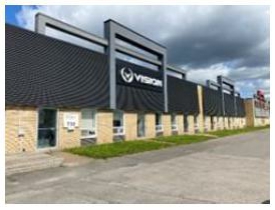 |
Boisbriand, Quebec – Headquarters and Manufacturing Space
Our manufacturing and office space is located in Boisbriand, Quebec, just outside of Montreal. This space is located in four adjacent units each under a separate lease with a related party. For details related to that transaction, please see “Related-Party Transactions”.
The first lease is for 3,607 square feet, has a monthly rent of approximately $4,485. The second lease is for 3,611 square feet, has a monthly rent of approximately $4,490. The third lease is for 3,607 square feet, has a monthly rent of approximately $4,485. The fourth lease is for 3,564 square feet, has a monthly rent of approximately $4,430. Each of these leases is with an entity controlled by our Chief Executive Officer. Each of these leases expires on July 31, 2026. |
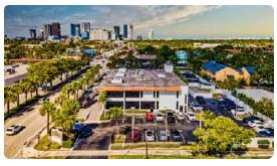 |
Ft. Lauderdale, Florida – Dealership
We operate our largest dealership in Ft. Lauderdale, Florida from two contiguous lots. The primary property serves as our main dealership showroom and sales office, featuring extensive indoor and outdoor display areas for our inventory. This facility comprises approximately 10,000 square feet in addition to a second lot of 0.46 acres of land with a 2,882 square foot building. The aggregate monthly lease payment is approximately US$100,000 and terminates on May 31, 2030.
We may purchase these properties pursuant to the Real Property Option. If we elect to do so, we will likely need to obtain a source of financing to pay the mortgages on the properties that mature in February 2032. |
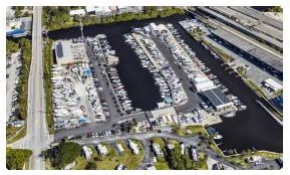 |
Ft. Lauderdale, Florida – Marina and Service Center
We lease a marina and location for additional inventory storage and service operations. This facility includes a 10-acre marina, 110 wet slips, service bays, paint tents, a 50-ton travel lift, a 32,000 lb. forklift, and office space. The current monthly lease payment is approximately US$40,000 and terminates on August 31, 2026.
|
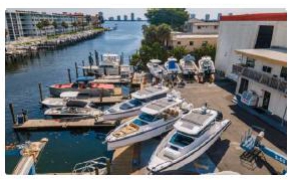 |
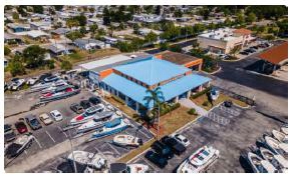
Palm Beach, Florida – Waterfront Dealership
We operate a waterfront dealership in Palm Beach, Florida consisting of approximately 0.75 acres of land and a 6,000 square foot building. The current monthly lease payment is approximately US$30,000 and terminates on May 31, 2026.
We may purchase this property pursuant to the Real Property Option. If we elect to do so, we will likely need to obtain a source of financing to pay the mortgage on the property that matures in January 2046. |
| 15 |
 |
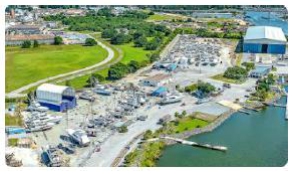
Tampa Bay, Florida – Dealership
We operate a dealership in Tampa Bay, Florida including approximately 3.1 acres of land, an 8,550 square foot showroom, and a 2,280 square foot covered area. The current monthly lease payment is approximately US$25,000 and terminates on May 31, 2030.
We may purchase this property pursuant to the Real Property Option. If we elect to do so, we will likely need to obtain a source of financing to pay the mortgage on the property that matures in December 2031. |
 |
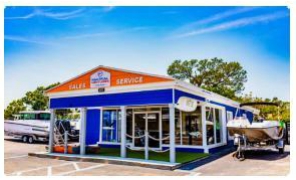
Pensacola, Florida – Waterfront Dealership
We operate a leased waterfront dealership in Pensacola, Florida. The lease commenced March 1, 2025, for a one-year term with four one-year renewal options. The monthly rent is $3,250, with annual increases of 5%.
|
 |
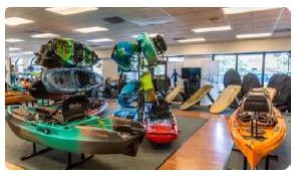
Sarasota, Florida – Dealership
We operate a dealership in Sarasota, Florida indirectly. The original lease term ended October 31, 2024, and has been renewed for an additional five-year period with a minimum rent of US$4,000 per month. The property includes a 1,464 square foot building on less than one acre of land and is used for boat sales and display, as well as service operations.
|
 |
North Palm Beach, Florida – Watersports Showroom
We operate a watersports showroom in North Palm Beach, Florida consisting of approximately 1.46 acres (including submerged land) and a 26,258 square foot building. The current monthly lease payment is approximately US$42,000 and terminates on May 31, 2026.
We may purchase this property pursuant to the Real Property Option. If we elect to do so, we will likely need to obtain a source of financing to pay the mortgage on the property that matures in December 2031. |
| 16 |
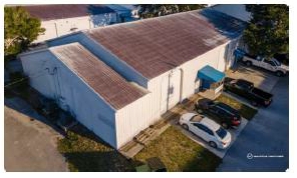 |
Palm City, Florida – Yacht Tender Service
We operate a yacht tender service property in Palm City, Florida. The property consists of 0.13 acres of land and a 6,360 square foot warehouse. The current monthly lease payment is approximately US$9,000 and terminates on May 31, 2030.
We may purchase this property pursuant to the Real Property Option. If we elect to do so, we will likely need to obtain a source of financing to pay the mortgage on the property that matures in July 2032. |
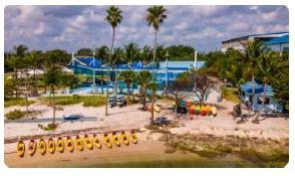 |
Riviera Beach, Florida – Kayak Rentals
We operate a kiosk providing kayak rentals in Riviera Beach, Florida which is licensed from the City of Riviera Beach, Community Redevelopment Agency under a license agreement with Seven Kings Management, Inc. The current license term runs from December 1, 2024, to November 30, 2025, with a monthly license fee of $1,250 plus applicable sales tax. The agreement is subject to annual renewal. |
 |
Ventura, California – Electric Boat Rentals
We lease a kiosk and two slips for our rental business at the Ventura Portside Marina in Ventura, California. In exchange for use of the space and common areas in the facility, we pay a monthly rent of approximately US$2,500. The lease expires on March 31, 2027. |
|
Ft. Lauderdale, Florida – Water Sports Warehouse
We lease a warehouse in Lauderdale, Florida consisting of approximately 5,157 square feet. The lease commenced July 1, 2024, for a three-year term with one two-year renewal option. The monthly base rent is $11,500 for the first two years, increasing to $11,845 thereafter. |
On October 1, 2021, we entered into a lease agreement with the developers of Waves at Dania Beach, Florida to rent office space as well as slip space for twenty-five electric boats, for monthly rent of approximately US$10,000, which lease expires on October 1, 2027. Monthly rent is payable upon the completion of the Dania Beach, Florida development, which as of the date of this prospectus is anticipated to be completed by December 2025.
Summary of Significant Risk Factors
An investment in the offered securities involves a high degree of risk. We set forth a summary of certain of those risks. For a more detailed discussion, see “Risk Factors” beginning on page 27. If any of the factors below or in the section entitled “Risk Factors” occurs, our business, financial condition, liquidity, results of operations and prospects could be materially and adversely affected.
| 17 |
Risks Related to Our Business
General Risks
| · | There is limited public information on our operating history. |
| · | We currently have a net loss, and if we are unable to achieve and grow a net income in the future our ability to grow our business as planned will be adversely affected. |
| · | To carry out our proposed business plan, we will require a significant amount of capital. |
| · | Terms of subsequent financings may adversely impact your investment. |
| · | Expected benefits from business acquisitions may not materialize due to integration challenges |
| · | Demand in the boat industry is highly volatile. |
| · | Unfavorable weather conditions may have a material adverse effect on our business, financial condition, and results of operations, especially during the peak boating season. |
| · | Interest rate increases could adversely affect sales. |
| · | Inflation could adversely affect our financial results. |
| · | We depend on certain key personnel, and our success will depend on our continued ability to retain and attract such qualified personnel. |
| · | We are subject to numerous regulations, including environmental, health and safety laws, and any breach of such laws may have a material adverse effect on our business and operating results. |
| · | Product liability, warranty, personal injury, property damage and recall claims may materially affect our financial condition and damage our reputation. |
| · | Global economic conditions could materially adversely impact demand for our products and services. |
| · | We are vulnerable to supply chain risks. |
| · | Our financial statements have been prepared on a going concern basis and our financial status creates a substantial doubt whether we will continue as a going concern. |
| · | If we are unable to maintain compliance with Nasdaq’s continued listing requirements, Nasdaq may choose to delist our securities from its exchange or may subject us to additional restrictions, which may adversely affect the liquidity and trading price of our securities. |
| · | In an effort to maintain compliance with the Minimum Bid Price Requirement, we recently enacted a third reverse stock split. We may need to enact additional reverse stock splits to maintain compliance if we fail to meet the Minimum Bid Price Requirement in the future. |
| · | We may lose our foreign private issuer status in the future, which could result in significant additional cost and expense. |
Risks Related to Nautical Ventures
| · | Our success will depend, in part, upon our continued access to financing for inventory. |
| · | Our business model entails carrying substantial amounts of debt. |
| · | Our success depends to a significant extent on the well-being, as well as the continued popularity and reputation for quality of the boating products of our manufacturers. The failure to obtain a high quality and desirable mix of competitively priced products that our customers demand could have a material adverse effect on our business, financial condition, and results of operations. |
| 18 |
| · | We rely on one manufacturer for a substantial portion of our sales |
| · | We face intense competition. |
| · | Timing of sales and failure to adequately anticipate consumer preference and demand may have an adverse impact on our business. |
| · | Our sales volume and profit margin on each sale may be materially and adversely affected if manufacturers discontinue or change their incentive programs. |
| · | We depend on manufacturers to supply us with sufficient numbers of popular and profitable new models. |
| · | We envision generating significant revenue from the sale of parts and accessories and the provision of services to customers related to boats but will be less likely to do so if we do not sell boats to those customers. |
| · | We have the option to acquire additional properties, and if the contingent conditions to do so do not occur, we may be prevented from acquiring such properties. |
| · | We have significant relationships with various third-party warranty insurers and administrators. These third-parties are the obligor of service warranty policies sold to our customers. Additionally, we have agreements in place that allow for future income based on the claims experience on policies sold to our customers. |
| · | Changes to trade policies, tariffs, and import/export regulations may have a material adverse effect on our business, financial condition, and results of operations. |
| · | We are vulnerable to geographic risk. |
| · | The availability of boat insurance is critical to our success. |
Risks Related to our Electric Operations
| · | Our plan of operations entails promoting a product that we may never launch or which may not be commercially accepted if launched. |
| · | Our future growth depends upon consumers’ willingness to purchase electric powerboats. |
| · | Our future growth depends upon consumers’ preference for outboard motors. |
| · | We rely on a limited number of suppliers for key components of our finished products. |
| · | Revenues from our electric boat rental business may be affected by a variety of factors that are outside of our control. |
| · | The range of electric powerboats on a single charge declines over time which may negatively influence potential customers’ decisions whether to purchase our boats or boats containing our electric powertrains. |
| · | Developments in alternative technologies or improvements in the internal combustion engine may materially adversely affect the demand for our electric powerboats. |
| · | We intend to rely on a third-party for the manufacture of what we envision will become our principal product. |
| · | If we are unable to meet our production and development goals, we may need to change our business plans for our E-Motion powertrains or the timeline in which we expect to carry them out. |
| · | If our suppliers sell us parts or components containing conflict minerals, we may be required at significant expense to find suppliers that do not use conflict minerals. |
| 19 |
| · | Our business may be adversely affected by labor and union activities. |
| · | Our ability to meet our manufacturing workforce needs is crucial to our results of operations and future sales and profitability. |
| · | Our intellectual property is not fully protected through patents or formal copyright registration. As a result, we do not have the full benefit of patent or copyright laws to prevent others from replicating our products, product candidates and brands. |
| · | Confidentiality agreements with employees and others may not adequately prevent disclosure of trade secrets and other proprietary information. |
| · | Any patent applications that we file may not result in issued patents, which may have a material adverse effect on our ability to prevent others from interfering with our commercialization of our products |
| · | We may need to defend ourselves against patent or trademark infringement claims, which may be time-consuming and would cause us to incur substantial costs. |
Risks Related to our Common Shares and this Offering
| · | The market price and liquidity of our common shares may be volatile and may fluctuate in a way that is disproportionate to our operating performance. |
| · | Management will have broad discretion as to the use of the proceeds from this offering and may not use the proceeds effectively. |
| · | FINRA sales practice requirements may limit your ability to buy and sell our common shares, which could depress the price of our shares. |
| · | We are a foreign private issuer within the meaning of the rules under the Exchange Act, and as such we are exempt from certain provisions applicable to United States domestic public companies. |
| · | As an “emerging growth company” under applicable law, we will be subject to lessened disclosure requirements. Such reduced disclosure may make our common shares less attractive to investors. |
| · | We incur significant costs as a result of being a public company, which costs will grow after we cease to qualify as an “emerging growth company.” |
| · | If we are, or were to become, a passive foreign investment company (a “PFIC”) for U.S. federal income tax purposes, U.S. investors in the offered securities would be subject to certain adverse U.S. federal income tax consequences. |
| 20 |
Offering Summary
This prospectus relates to the offer and sale on a firm-commitment basis of up to common shares and/or pre-funded warrants at an assumed offering price of (i) US$ per common share, which is the reported sale price of our common shares, as reported on the Nasdaq Capital Market on , 2025, and (ii) US$ per pre-funded warrant, which is the per common share offering price less the pre-funded warrant exercise price of C$0.001 (using the assumed exchange rate of US$1.00:C$ , the US$ to CAD exchange rate on , 2025 as reported by the Bank of Canada).
| Common Shares Offered by us: | This prospectus relates to the firm commitment offering of up to common shares and/or pre-funded warrants at an assumed offering price of US$ per common share and US$ per pre-funded warrant. For further information about the securities offered herein, see “Description of Securities We Are Offering”. | |
| Shares Outstanding Prior to the Offering: | common shares, and we assume that the same amount will be outstanding immediately prior to the closing of the offering. | |
| Shares Outstanding After the Offering: | common shares (or common shares assuming the underwriter exercises the over-allotment option), which includes shares underlying any pre-funded warrants sold in this offering. | |
| Pre-Funded Warrants Offered by Us: |
Up to pre-funded warrants. We are offering to each purchaser of common shares that would otherwise result in the purchaser’s beneficial ownership exceeding 4.99% of our outstanding common shares immediately following the consummation of this offering the opportunity to purchase pre-funded warrants in lieu of common shares. A holder of pre-funded warrants will not have the right to exercise any portion of its pre-funded warrants if the holder, together with its affiliates, would beneficially own in excess of 4.99% (or, at the election of the holder, such limit may be increased to up to 9.99%) of the number of common shares outstanding immediately after giving effect to such exercise. Each pre-funded warrant will be exercisable for one common share. The purchase price of each pre-funded warrant will be equal to the price per common share, minus C$0.001, and the remaining exercise price of each pre-funded warrant will equal C$0.001 per common share. The pre-funded warrants will be immediately exercisable (subject to the beneficial ownership cap) and may be exercised at any time until all of the pre-funded warrants are exercised in full.
For each pre-funded warrant we sell (without regard to any limitation on exercise set forth therein), the number of common shares we are offering will be decreased on a one-for-one basis. | |
| Over-allotment option |
We have granted a 45-day option to the underwriter, exercisable one or more times in whole or in part, to purchase up to an additional common shares and/or pre-funded warrants, representing 15% of the common shares and pre-funded warrants sold in the offering.
The over-allotment option purchase price to be paid per additional common share by the underwriter shall be equal to the public offering price of one common share less the underwriting discount. The over-allotment option purchase price to be paid per additional pre-funded warrant by the underwriter shall be equal to the public offering price of one common share less the underwriting discount and C$0.001. | |
| Use of Proceeds: |
We estimate that we will receive net proceeds of approximately US$ (or US$ assuming the full exercise of the underwriter’s overallotment option) from this offering, after deducting estimated underwriter’s fees, reimbursement of underwriter expenses, and estimated offering expenses payable by us.
We intend primarily to use the net proceeds from this offering for general corporate purposes and working capital, including for inventory management and servicing our floorplan lines of credit, general and administrative expenses and prosecuting patent applications relating to our E-Motion™ electric powertrain technology. We may also use a portion of the net proceeds from this offering for acquisitions or strategic investments in complementary businesses or technologies, however as of the date of this prospectus, no acquisition targets have been identified. | |
| Trading: | Our common shares are currently quoted on the Nasdaq Capital Market under the symbol “VMAR”. Our pre-funded warrants are not traded on any public market or quotation system, and we do not intend to apply for our pre-funded warrants to be traded on any such market or system |
| 21 |
| Lock-up | Each of our executive officers and directors has agreed, subject to certain exceptions set forth in the lock-up agreements, not to offer, pledge, sell, contract to sell, grant, lend, or otherwise transfer or dispose of, directly or indirectly, any common shares or any securities convertible into or exercisable or exchangeable for common shares for the three month period following the date of the offering, without the underwriter’s prior written consent. In addition, subject to certain exceptions, the company has agreed not to engage in various transactions involving its common shares or related securities, including sales, offerings, registrations, or economic transfers, without the underwriter’s prior written consent for sixty (60) days after the offering, and additionally, not to conduct any “at-the-market” or variable rate equity transactions for six months post-offering. | |
| Risk Factors: | See “Risk Factors” and the other information included in this prospectus for a discussion of the factors you should consider before deciding to invest in our securities. |
Shares outstanding prior to and after the offering is based on 4,988,735 common shares outstanding as of September 29, 2025, and excludes:
| · | 2,308 common shares issuable upon the exercise of outstanding options outstanding as of September 29, 2025 with a weighted average exercise price (“WAEP”) of US$778.48; |
| · | common shares underlying the Underwriter’s Warrants to be issued to the Underwriter in connection with this registered offering; |
| · | 440,146 common shares issuable upon exercise of warrants outstanding as of September 29, 2025, with a WAEP of US$21.67; |
| · | 48 common shares exercisable upon the exercise of outstanding pre-funded warrants; | |
| · | up to 419,628 common shares that may be issued upon the conversion of US$3,618,873 in convertible notes that were issued pursuant to the Equity Purchase Agreement, at a conversion price of US$8.624 per share; | |
| · | 285,000 common shares to be issued to Alexandre Mongeon as per the Mongeon Employment Agreement as compensation for services and for moving his family to Southern Florida. | |
| · | up to 255,102 common shares that may be issued if we exercise all of the Real Property Options; and | |
| · | up to 463,821 common shares that may be issued upon the conversion of up to US$4,000,000 in convertible notes that may be issued if we exercise all of the Real Property Options and dependent on the outcome of certain claims against Nautical Ventures, at a conversion price of US$8.624 per share. |
Except as otherwise indicated, all information in this prospectus assumes:
| · | no exercise of the representative’s warrants; |
| · | any pre-funded warrants sold in this offering are immediately exercised without violating any beneficial ownership restrictions therein; and |
| · | no exercise of the over-allotment option. |
Recent Developments
Acquisition of Nautical Ventures
On June 20, 2025, we entered into an Equity Purchase Agreement (together with the ancillary agreements described therein, the “Agreement”) to acquire Nautical Ventures Group Inc. (“Nautical Ventures”), a Florida-based recreational boat dealership, marina, and service provider, and other entities. The acquisition of Nautical Ventures (the “Acquisition”) pursuant to the Agreement occurred on June 20, 2025. Nautical Ventures operates several high-volume retail locations across Florida, including two flagship waterfront showrooms, providing Vision Marine with direct access to one of the most concentrated and active recreational boating markets in the world. The network of dealerships offers a wide portfolio of prestigious marine brands including Axopar, Beneteau, Brabus, Edgewater, Flite, Highfield, Hobie, Mercury, NorthStar, Seabob, Smokercraft, Suzuki, Tohatsu, Wellcraft, and Yamaha, serving a diverse customer base from high-performance boaters to luxury yacht owners and international resort fleets.
| 22 |
Pursuant to the Agreement, we acquired all of the issued and outstanding equity of Nautical Ventures in exchange for:
| (i) | the payment of US$2.3 million to settle certain indebtedness and outstanding tax liabilities of Nautical Ventures; | |
| (ii) | the issuance of a convertible note (the “Initial Convertible Note”) in a principal amount of US$4,000,000. The Initial Convertible Note has a term of twenty-four months, bears interest at the rate of 6% per year (12% in the event of a default) and is convertible into common shares at a conversion price of US$8.624 per share. We are required to make a minimum monthly payment of US$20,000 of interest and principal on the Initial Convertible Note; and | |
| (iii) | an agreement to issue a convertible note for up to US$2,000,000 on terms substantially identical to the Initial Convertible Note depending on the outcome of certain claims against Nautical Ventures. |
Pursuant to the Agreement, we may obtain all of the outstanding membership interests of Moore Marine Ventures LLC (“Marine Ventures”), a Florida limited liability company controlled by Roger Moore, and/or the properties indirectly owned by Marine Ventures (the “Real Property Options”). Mr. Moore was the chairman and chief economic officer of Nautical Ventures and a party to the Agreement that owned 93% of the equity interest of Nautical Ventures at the time of the Agreement, and following the Agreement he became our Chief Revenue Officer. Marine Ventures owns several subsidiaries that own a total of six properties leased by Nautical Ventures in the operation of its business. The consideration to be paid in exchange for the acquisition of Marine Ventures and/or the properties that it indirectly owns depends on how many of the six properties indirectly owned by Marine Ventures that we opt to purchase. If we elect to purchase Marine Ventures and/or all of the six properties that it indirectly owns, we will
| (i) | deliver evidence of payment of indebtedness of Marine Ventures and/or its subsidiaries; | |
| (ii) | issue a convertible note (the “Subsequent Convertible Note”) in a principal amount of US$2,000,000. The Subsequent Convertible Note would have a term of thirty-six months, bear interest at the rate of 6% per year (12% in the event of a default) and would be convertible into common shares at a conversion price of US$8.624 per share. Upon issuance of such Subsequent Convertible Note, we would be required to make a minimum monthly payment of US$10,000 of interest and principal on the Subsequent Convertible Note; and | |
| (iii) | issue up to 255,102 of our common shares (the “Equity Consideration”). |
Additionally, all of the six properties are currently mortgaged, and if we acquire the properties the mortgage will need to be repaid prior to our acquisition (which will require additional financing) or we will need to be assigned the mortgages, something the mortgage holders have so far proven unwilling to consider.
The Initial Convertible Note was placed into escrow with us and the Equity Consideration will be placed into escrow with us to secure potential purchase price adjustments under the Agreement under which we may reduce the Initial Convertible Note and the Equity Consideration including (i) as based on a calculation of the difference between Nautical Venture’s estimates of its indebtedness, net working capital and transaction expenses and the actual amounts of each as determined within 120 days from closing, with the net working capital target which is set at $6,000,000 (ii) for certain indemnifications resulting from liabilities under the Equity Purchase Agreement (not to exceed US$3,000,000).
In connection with the Acquisition, we invested US$1,690,210.61 in Nautical Ventures to fund operating expenses.
An additional closing condition of the Acquisition was that Nautical Ventures enter into a new employment agreement with Roger Moore. Pursuant to the new employment agreement, Mr. Moore will serve as the Chief Revenue Officer of Nautical Ventures in exchange for a salary of US$350,000 per year and eligibility for a discretionary bonus.
Summary Financial Data
The summary financial information set forth below has been derived from:
| · | our unaudited consolidated financial statements and the notes thereto for the nine months ended May 31, 2025; |
| · | our audited consolidated financial statements for the fiscal years ended August 31, 2024 and 2023; |
| · | Nautical Ventures’ unaudited consolidated financial statements and the notes thereto for the three months ended March 31, 2025; |
| 23 |
| · | Nautical Ventures’ audited consolidated financial statements for the fiscal years ended December 31, 2024 and 2023; |
| · | the unaudited pro forma financial statements as of, and for the nine months ended May 31, 2025; and |
| · | the unaudited pro forma financial statements as of, and for the year ended, August 31, 2024. |
You should read the following summary financial data together with such historical financial statements and the notes thereto.
Summary Financial Data of Vision Marine Technologies Inc.
Consolidated Statement of Comprehensive Loss
| Nine Months Ended May 31, | For the Fiscal Year Ended August 31, | |||||||||||||||
| 2025 | 2024 | 2023 | 2022 | |||||||||||||
| Unaudited | ||||||||||||||||
| Revenue | $ | 533,246 | $ | 3,794,345 | $ | 5,651,502 | $ | 7,350,946 | ||||||||
| Gross profit (loss) | $ | (23,206 | ) | $ | 1,497,438 | $ | 1,536,426 | $ | 3,285,565 | |||||||
| Net loss | $ | (12,344,937 | ) | $ | (14,060,620 | ) | $ | (20,877,186 | ) | $ | (13,111,785 | ) | ||||
| Basic and diluted loss per share | $ | (20.27 | ) | $ | (1,537.86 | ) | $ | (3,000.46 | ) | $ | (2,124.74 | ) | ||||
Consolidated Statements of Financial Position
| As of May 31, 2025 | ||||
| Unaudited | ||||
| Current Assets | $ | 21,712,350 | ||
| Total Assets | $ | 24,500,322 | ||
| Current Liabilities | $ | 5,529,740 | ||
| Total Liabilities | $ | 7,613,634 | ||
| Total Shareholders’ Equity | $ | 16,886,688 | ||
Summary Financial Data of Nautical Ventures Group Inc.
Consolidated Statement of Comprehensive Income (Loss)
| Three Months Ended March 31, | For the Fiscal Year Ended December 31, | ||||||||||||
| 2025 | 2024 | 2023 | |||||||||||
| Unaudited | |||||||||||||
| Revenue | US$ | 22,228,700 | US$ | 97,291,543 | US$ | 104,788,069 | |||||||
| Gross profit | US$ | 3,456,116 | US$ | 20,521,294 | US$ | 29,740,957 | |||||||
| Net income (loss) | US$ | (2,369,334 | ) | US$ | (7,315,074 | ) | US$ | 4,878,992 | |||||
| Basic and diluted earnings (loss) per share | US$ | (0.11 | ) | US$ | (0.34 | ) | US$ | 0.15 | |||||
Consolidated Statements of Financial Position
| As of March 31, 2025 | ||||
| Unaudited | ||||
| Current Assets | US$ | 70,534,130 | ||
| Total Assets | US$ | 90,607,476 | ||
| Current Liabilities | US$ | 63,747,814 | ||
| Total Liabilities | US$ | 83,673,334 | ||
| Total Shareholders’ Equity | US$ | 6,934,142 | ||
Pro Forma Summary Financial Data
| 24 |
Consolidated Statement of Comprehensive Loss
| For the nine-month period ended May 31, 2025 | For the fiscal 2024 | |||||||
| Unaudited | Unaudited | |||||||
| Revenue | $ | 93,430,338 | $ | 153,460,524 | ||||
| Gross profit | $ | 16,346,617 | $ | 35,463,386 | ||||
| Net loss | $ | (14,905,804 | ) | $ | (10,159,281 | ) | ||
| Basic and diluted loss per share | $ | (24.48 | ) | $ | (1,111.15 | ) | ||
Consolidated Statements of Financial Position
| As of May 31, 2025 |
||||
| Unaudited | ||||
| Current Assets | $ | 117,265,846 | ||
| Total Assets | $ | 134,394,699 | ||
| Current Liabilities | $ | 88,977,746 | ||
| Total Liabilities | $ | 108,576,238 | ||
| Total Shareholders’ Equity | $ | 25,818,461 | ||
COMPARATIVE SHARE INFORMATION
The following table sets forth summary historical comparative share information for Vision Marine and Nautical Ventures and unaudited pro forma condensed combined per share information of Vision Marine after giving effect to the Acquisition.
The unaudited pro forma book value information reflects the Acquisition as if it had occurred on August 31, 2024. The weighted average shares outstanding and net earnings per share information reflect the Acquisition as if they had occurred on September 1, 2023.
This information is only a summary and should be read together with the summary historical financial information included elsewhere in this prospectus, and the historical financial statements of Vision Marine and Nautical Ventures and related notes that are included elsewhere in this prospectus. The unaudited pro forma combined per share information of Vision Marine and Nautical Ventures is derived from, and should be read in conjunction with, the unaudited pro forma condensed combined financial statements and related notes included elsewhere in this prospectus.
The unaudited pro forma combined earnings per share information below does not purport to represent the earnings per share which would have occurred had the companies been combined during the periods presented, nor earnings per share for any future date or period. The unaudited pro forma combined book value per share information below does not purport to represent what the value of Vision Marine and Nautical Ventures would have been had the companies been combined during the periods presented.
| Vision Marine | Nautical Ventures | Pro Forma Combined | ||||||||||
| As of and For the Year Ended August 31, 2024 | ||||||||||||
| Book value per share(1) | $ | 184.71 | $ | 782.89 | $ | 1,224.58 | ||||||
| Weighted average shares outstanding – basic and diluted | 9,143 | 9,143 | 9,143 | |||||||||
| Net loss per share – basic and diluted | $ | (1,537.86 | ) | $ | (550.20 | ) | $ | (228.50 | ) | |||
(1) Book value per share equals total equity divided by total shares.
| 25 |
An investment in the offered securities carries a significant degree of risk. You should carefully consider the following risks, as well as the other information contained in this prospectus, before you decide to purchase any offered securities. Any one of these risks and uncertainties has the potential to cause material adverse effects on our business, prospects, financial condition and operating results which could cause actual results to differ materially from any forward-looking statements expressed by us and a significant decrease in the value of the offered securities. Refer to “Special Note Regarding Forward-Looking Statements”.
We may not be successful in preventing the material adverse effects that any of the following risks and uncertainties may cause. These potential risks and uncertainties may not be a complete list of the risks and uncertainties facing us. There may be additional risks and uncertainties that we are presently unaware of, or presently consider immaterial, that may become material in the future and have a material adverse effect on us. You could lose all or a significant portion of your investment due to any of these risks and uncertainties.
Risks Related to our Business and Industry
General Risks
There is limited public information on our operating history.
Our limited public operating history makes evaluating our business and prospects difficult. Although we were formed in 2012, we did not provide public reports on the results of operations until our 2020 fiscal year. We only have six years of audited financial statements.
Additionally, we recently acquired Nautical Ventures Group Inc (“Nautical Ventures”) and its subsidiaries, a business whose assets and revenues account for the vast majority of our assets and revenues as of August 31, 2024 on a pro forma basis. You have less available public information regarding Nautical Ventures than for our company. Audited financial statements for Nautical Ventures have only been publicly filed as of, and for the years ended, December 31, 2024 and 2023 and unaudited financials as of, and for the three months ended, March 31, 2025.
We currently have a net loss, and if we are unable to achieve and grow a net income in the future our ability to grow our business as planned will be adversely affected.
We have made significant up-front investments in research and development, sales and marketing, and general and administrative expenses to rapidly develop and expand our business. We had a net loss of $12,344,937 for the nine-month period ended May 31, 2025 as compared to a net loss of $10,407,997 for the same period last year. Although our net loss on a pro forma basis as of August 31, 2024 was $13,022,289 as opposed to a historical net loss of $14,316,083 for our Company, the operations of Nautical Ventures in future periods may increase our net loss. We may never achieve net income or if we do it may fail to grow or even decline in certain circumstances, many of which are beyond our control. Our revenues might not ever significantly exceed our expenses and may even be lower than our expenses. It may take us longer to obtain net income than we anticipate, if at all, or we may only do so at a much lower rate than we anticipate. Failure to obtain net income may mean that we will have to curtail our planned growth in operations or resort to financings to fund such growth in the future.
To carry out our proposed business plan, we will require a significant amount of capital.
If current cash, cash equivalents and revenue from our business are not sufficient to cover our cash requirements, we will need to raise additional funds through the sale of debt or equity securities, in either private placements or additional registered offerings. We require substantial access to capital for operations. For example, of the US$91.2 million in the total liabilities of Nautical Ventures as of December 31, 2024, US$56.1 million consisted of notes payable related to floor plan financing for the purchase of inventory. If we are unsuccessful in raising enough funds through such capital-raising efforts, we may review other financing possibilities such as bank loans and floor financing plans. Financing might not be available to us or, if available, only on terms that are not favorable or acceptable to us.
Our ability to obtain the necessary financing to carry out our business plan is subject to a number of factors, including general market conditions and investor acceptance of our business plan. These factors may make the timing, amount, terms and conditions of such financing unattractive or unavailable to us. If we are unable to raise sufficient funds, we will have to significantly reduce our spending, delay or cancel our planned activities, sell non-essential assets or substantially change our current corporate structure. We might not be able to obtain any funding, and we might not have sufficient resources to conduct our business as projected, both of which could mean that we would be forced to curtail or discontinue our operations.
| 26 |
Terms of subsequent financings may adversely impact your investment.
We may have to engage in common equity, debt, or preferred share financings in the future. During the year ended August 31, 2025, we issued 2,986,234 common shares and 1,470,000 pre-funded warrants through various financings for net proceeds of approximately $34.9 million, and we anticipate additional financings in the future. As a result, your rights and the value of your investment in our securities could be reduced. Interest on debt securities or floor plan financings could increase costs and negatively impact operating results. Preferred shares could be issued in one or more series from time to time with such designation, rights, preferences, and limitations as determined by the Board. The terms of preferred shares could be more advantageous to those investors than to the holders of common shares. In addition, if we need to raise more equity capital from the sale of common shares, institutional or other investors may negotiate terms at least as, and possibly more, favorable than the terms of your investment in our common shares.
Expected benefits from business acquisitions may not materialize due to integration challenges
On June 20, 2025, we acquired 100% of the equity of Nautical Ventures, a Florida-based recreational boat dealership, marina, and service provider. The success of a business acquisition depends on the integration of the acquired business through such tasks as the realization of synergies, elimination of cost duplication, information systems integration, and establishment of controls and procedures. The inability to adequately integrate an acquired business in a timely manner might result in lost business opportunities, higher than expected integration costs and departures of key personnel, all of which could have a negative impact on potential future earnings.
Demand in the boat industry is highly volatile.
Fluctuations in demand for recreational boats, parts and accessories may materially and adversely affect our business, prospects, operating results and financial condition. The markets in which we compete have been subject to considerable volatility in demand in recent periods. Recreational boats and related items are non-essential items, and demand for them depends to a large extent on general, economic and social conditions in a given market. Historically, sales of recreational boats decrease during economic downturns. We have fewer financial resources than more established boat retailers and manufacturers to withstand adverse changes in the market and disruptions in demand.
Unfavorable weather conditions may have a material adverse effect on our business, financial condition, and results of operations, especially during the peak boating season.
Adverse weather conditions in any year, in any particular geographic region, may adversely affect sales and rentals in that particular geographic region, especially during the peak boating season in such particular geographic region. Sales and rentals of our products are generally stronger just before and during spring and summer, which represent the peak boating months in most of our markets, and favorable weather during these months generally has a positive effect on consumer demand for our products. Conversely, uncomfortable weather, excessive rainfall, reduced rainfall levels, or drought conditions during these periods may close area boating locations or render boating dangerous or inconvenient, thereby generally reducing consumer demand for our products. Our annual results would be materially and adversely affected if our net sales and rentals were to fall below expected seasonal levels during these periods. We may also experience more pronounced seasonal fluctuation in net sales and rentals in the future as we continue to expand our businesses. Additionally, to the extent that unfavorable weather conditions are exacerbated by global climate change or otherwise, our sales and rentals may be affected to a greater degree than we have previously experienced.
Interest rate increases could adversely affect sales.
Many of the purchasers of boats sold by Nautical Ventures finance those purchases through loans. If interest rates rise, the cost of boat purchases for consumers relying on a financing plan will also rise. Changes by the U.S. Federal Reserve to raise its benchmark interest rate would likely significantly increase higher long-term interest rates, which could negatively impact, our customers’ willingness or desire to take out loans to purchase our products.
Inflation could adversely affect our financial results.
The market prices of certain materials and components used by us and our suppliers in manufacturing our products can be volatile. Significant increases in inflation, particularly those related to wages and increases in the cost of raw materials, may have an adverse impact on the business, financial condition, and results of operations of us or our suppliers, and our suppliers may in turn pass such increases along to us by raising the cost of our inventories. In addition, new boat buyers often finance their purchases. Inflation, along with a rise in interest rates, could translate into an increased cost of boat ownership. If inflation continues to occur and if the Federal Reserve fails to cut interest rates further or raises interest rates again, prospective consumers may choose to forego or delay their purchases or buy a less expensive boat in the event credit is not available to finance their boat purchases.
| 27 |
We depend on certain key personnel, and our success will depend on our continued ability to retain and attract such qualified personnel.
Our success depends on the efforts, abilities and continued service of Alexandre Mongeon (our Chief Executive Officer), Daniel Rathe (our Chief Technical Officer), Raffi Sossoyan (our Chief Financial Officer), Roger Moore (our Chief Revenue Officer) and Maixime Podrier (our Chief Operating Officer). A number of these key employees and consultants have significant experience in the recreational boating, manufacturing and electric vehicle industries. A loss of service from any one of these individuals may adversely affect our operations, and we may have difficulty locating, or may not be able to locate and hire a suitable replacement. We have not obtained any “key person” insurance on certain key personnel.
We are subject to numerous regulations, including environmental, health and safety laws, and any breach of such laws may have a material adverse effect on our business and operating results.
We are subject to numerous regulations including those related to environmental, health and safety laws, including statutes, regulations, bylaws and other legal requirements. These laws relate to the marketing, selling, financing and servicing of boats as well as the generation, use, handling, storage, transportation and disposal of regulated substances, including hazardous substances (such as batteries), dangerous goods and waste, emissions or discharges into soil, water and air, including noise and odors (which could result in remediation obligations), and occupational health and safety matters, including indoor air quality. These regulations also apply to any contamination that our boats or powertrains cause in the lakes and rivers in which they operate. These legal requirements vary by location and can arise under federal, provincial, state or municipal laws. Any breach of such laws and/or requirements could have a material adverse effect on our company and its operating results.
Product liability, warranty, personal injury, property damage and recall claims may materially affect our financial condition and damage our reputation.
We are engaged in a business that exposes us to claims of product liability and warranty claims in the event our products or the products that we sell actually or allegedly fail to perform as expected or the use of our products results, or is alleged to result, in property damage, personal injury or death. Our products and the products that we sell involve kinetic energy, produce physical motion and are to be used on the water, factors which increase the likelihood of injury or death. Our electric boats and powertrains contain Lithium-ion batteries, which have been known to catch fire or vent smoke and flame, and chemicals which are known to be, or could later be proved to be, toxic carcinogenic. Likewise, the internal combustion engines in several of the boats we sell operate on highly flammable fuel. Any personal injury or wrongful death claim could, even if not justified, prove expensive to contest.
We do not provide warranties for the boats we sell but instead rely upon the warranties provided by the third-party manufacturers from whom we purchase the boats. Although we maintain product and general liability insurance of the types and in the amounts that we believe are customary for the industry, we are not fully insured against all such potential claims. We may experience legal claims in excess of our insurance coverage or claims that are not covered by insurance, either of which could adversely affect our business, financial condition and results of operations. Adverse determination of material product liability and warranty claims made against us could have a material adverse effect on our financial condition and harm our reputation. In addition, if any of our products, components in our products or products that we sell are, or are alleged to be, defective, we may be required to participate in a recall of that product or component if the defect or alleged defect relates to safety. Any such recall and other claims could be costly to us and require substantial management attention.
We face potential liability from workplace accidents.
We are engaged in a business that exposes us to claims of workplace liability as our employees are exposed to moving mechanical parts, chemicals used in manufacturing, heavy equipment and combustible fuels, among other conditions that could lead to personal injury. For example. we face legal uncertainty in connection with an October 2024 fire that started at our marina while employees were servicing a boat. This fire injured five employees, one fatally. In connection with this accident, (i) the estate of the deceased employee began legal proceedings against us (we filed a motion to dismiss the initial claim, which was granted), (ii) we have been named as a defendant in a suit seeking recovery for damages and lost income from the owner of a trailer damaged in the accident; and (iii) we are negotiating with the Occupational Safety and Health Administration for the settlement of claims concerning alleged workplace safety violations. Any damages that we are ordered to pay as a result of these claims or any other claims that may arise from our workplace environment (or that we opt to pay in a settlement) could materially affect our results of operations.
| 28 |
Global economic conditions could materially adversely impact demand for our products and services.
Our operations and performance depend significantly on economic conditions. Global financial conditions continue to be subject to volatility arising from international geopolitical developments and global economic phenomenon, as well as general financial market turbulence, including growing inflationary concerns and tariff uncertainty, resulting in a significant reduction in many major market indices. Uncertainty about global economic conditions could result in:
| · | customers postponing purchases of our products and services in response to tighter credit, unemployment, negative financial news and/or declines in income or asset values and other macroeconomic factors, which could have a material negative effect on demand for our products and services; and |
| · | third-party suppliers being unable to produce parts and components for our products in the same quantity or on the same timeline or being unable to deliver such parts and components as quickly as before or subject to price fluctuations, which could have a material adverse effect on our production or the cost of such production; and |
accordingly, on our business, results of operations or financial condition. Access to public financing and credit can be negatively affected by the effect of these events on Canadian, U.S. and global credit markets. The health of the global financing and credit markets may affect our ability to obtain equity or debt financing in the future and the terms at which financing or credit is available to us. These instances of volatility and market turmoil could adversely affect our operations and the trading price of our common shares.
Our business may be materially affected by future pandemics.
Potential future pandemics may disrupt our business and operational plans. These disruptions may include disruptions resulting from (i) shortages of employees, (ii) unavailability of contractors and subcontractors, (iii) interruption of, or price fluctuations in, supplies from third parties upon which we rely, (iv) restrictions that governments impose to address the pandemic, and (v) restrictions that we and our contractors and subcontractors impose to ensure the safety of employees and others. Any such pandemic may adversely affect our ability to produce goods or purchase goods from third parties as well as consumer demand for such goods.
We are vulnerable to supply chain risks.
We rely upon efficient and predictable supply chains for both the development of our e-Motion powertrain as well as the delivery of boats, parts and accessories from third-party manufacturers. Delays in supply chains could adversely impact our production as well as the delivery of inventory for sale, which in turn could adversely affect our revenues. Such supply chain disruptions could be rapid and unexpected and could arise from wars and other geopolitical conflicts, tariff disputes, future pandemics, natural disasters and other unforeseen events that could prevent the timely production of raw materials and goods that we or our manufacturers need and/or the timely delivery of such raw materials and goods.
Fluctuations in currency exchange rates may significantly impact our results of operations.
Our reporting currency is the Canadian dollar. Our operations are conducted in the United States and Canada, but almost all of our revenues for our 2024 fiscal year on a pro forma basis occurred in the United States. Additionally, almost all of our currently outstanding debt obligations are denominated in U.S. dollars. As a result, we are exposed to an exchange rate risk between the U.S. and Canadian dollars. The exchange rates between these currencies in recent years have fluctuated significantly and may continue to do so in the future. In our fiscal 2024, the monthly average exchange rate as published by the Bank of Canada ranged from a high of US1.3717: $1.00 to a low of US$1.3425: $1.00, while, in the nine-month period ended May 31, 2025, the monthly average exchange rate as published by the Bank of Canada ranged from a high of US1.4359: $1.00 to a low of US$1.3546: $1.00. An appreciation of the Canadian dollar against the U.S. dollar could decrease our revenues when reported in Canadian dollars. Conversely, the depreciation of the Canadian dollar against the U.S. dollar would increase the cost of such goods and services.
We do not hedge our currency exposure and, therefore, we incur currency transaction risk whenever we enter into either a purchase or sale transaction using a currency other than the Canadian dollar. Given the volatility of exchange rates, we might not be able to effectively manage our currency transaction risks, and volatility in currency exchange rates might have a material adverse effect on our business, financial condition or results of operations.
If we experience material weaknesses or otherwise fail to maintain an effective system of internal controls over financial reporting, we may not be able to accurately or timely report our financial condition or results of operations, which may adversely affect investor confidence in us and, as a result, the value of our common shares.
As a result of the year-end assessment process for the year ended August 31, 2024, we identified that we did not maintain effective processes and controls over the accounting for and reporting of complex and non-routine transactions due to a material weakness. Specifically, we determined that there was a lack of sufficient accounting and finance personnel to enable appropriate level of internal controls within the financial statement close process, including performing in-depth analysis and review of complex accounting matters and non-routine transactions within the timeframes set by us for filing our consolidated financial statements. Because of this deficiency, we concluded there was a reasonable possibility that a material misstatement of our financial statements will not be prevented or detected on a timely basis at August 31, 2024. We are working on remediating the identified material weakness.
| 29 |
If we fail to identify or remediate any current or future material weaknesses in our internal controls over financial reporting, we are unable to conclude that our internal controls over financial reporting are effective or if our independent registered public accounting firm is unable to express an opinion as to the effectiveness of our internal controls over financial reporting when we are no longer an emerging growth company, investors may lose confidence in the accuracy and completeness of our financial reports and the market price of our common shares could be negatively affected. As a result of such failures, we could also become subject to investigations by Nasdaq, the SEC or other regulatory authorities, and become subject to litigation from investors and shareholders, which could harm our reputation and financial condition or divert financial and management resources from our regular business activities.
Our financial statements have been prepared on a going concern basis and our financial status creates a substantial doubt whether we will continue as a going concern.
Our financial statements have been prepared on a going concern basis under which an entity is considered to be able to realize its assets and satisfy its liabilities in the ordinary course of business. Our future operations depend upon the identification and successful completion of equity or debt financing and the achievement of profitable operations at an indeterminate time in the future. There can be no assurance that we will be successful in completing an equity or debt financing or in achieving or maintaining profitability. The financial statements do not give effect to any adjustments relating to the carrying values and classification of assets and liabilities that would be necessary should we be unable to continue as a going concern.
If we are unable to maintain compliance with Nasdaq’s continued listing requirements, Nasdaq may choose to delist our securities from its exchange or may subject us to additional restrictions, which may adversely affect the liquidity and trading price of our securities.
Our securities are currently listed on Nasdaq Capital Market maintained by The Nasdaq Stock Market LLC (“Nasdaq”). Nasdaq sets out certain standards that companies quoted on the Nasdaq Capital Market must continue to meet to remain on the Nasdaq Capital Market. In the past, we have received notices from Nasdaq that we failed to comply with some of those standards including that the closing bid price of our common shares no longer complied with the minimum bid price requirement of US$1.00 per share (the “Minimum Bid Price Requirement”).
Although we took steps to regain compliance with the Minimum Bid Requirement by enacting two reverse stock splits that had the practical effect of a 1:135 reverse stock split and satisfied a Nasdaq Hearing Panel of the same, Nasdaq imposed a Discretionary Panel Monitor, in application of Listing Rule 5815(d)(4)(A), for a period of one year to ensure that we maintain long-term compliance with all of the Nasdaq’s continued listing requirements. Should we fail to maintain compliance with any continued listing requirement, Nasdaq may notify us if such non-compliance and promptly schedule a new hearing with the Nasdaq Hearing Panel. As of September 29, 2025, the closing price of our common shares on the Nasdaq Capital Market was US$1.43, which is approaching the US$1.00 listing requirement. If we further violate Nasdaq’s continued listing requirement, we could be delisted. A delisting would likely have a negative effect on the liquidity and market price of our common shares and may impair your ability to sell or purchase our common shares when you wish to do so.
If Nasdaq delists our common shares from trading on its exchange and we are not able to list our common shares on another national securities exchange, our common shares may be quoted on an over-the-counter market. However, if this were to occur, we could face significant material adverse consequences, including:
| · | a limited availability of market quotations for our securities; | |
| · | reduced liquidity for our securities; | |
| · | a determination that our common shares are a “penny stock”, which will require brokers trading in such common shares to adhere to more stringent rules and possibly result in a reduced level of trading activity in the secondary trading market for our common shares; | |
| · | a limited amount of news and analyst coverage; and | |
| · | a decreased ability to issue additional securities or obtain additional financing in the future. |
As a result, an investor would likely find it more difficult to trade, or to obtain accurate price quotations for, our securities if our securities are de-listed from Nasdaq. Delisting would likely also reduce the visibility, liquidity and value of our securities, including as a result of reduced institutional investor interest in our company, and may increase the volatility of our securities.
| 30 |
In an effort to maintain compliance with the Minimum Bid Price Requirement, we recently enacted a third reverse stock split. We may need to enact additional reverse stock splits to maintain compliance if we fail to meet the Minimum Bid Price Requirement in the future.
As mentioned above, we enacted a 1-for-15 reverse stock split of our Voting Common Shares on August 22, 2024, and a reverse stock split of 1-for-9 of our Voting Common Shares on October 8, 2024, in an effort to regain compliance with Nasdaq’s minimum bid price requirement for continued listing on the Nasdaq Capital Market. Nasdaq Listing Rule 5450(a)(1) which requires listed securities to maintain a minimum bid price of US$1.00 per share (the “Minimum Bid Price Requirement”). To maintain compliance, the closing bid price of our common shares cannot be less US$1.00 per share for 30 consecutive days, otherwise we would be subject to an automatic Nasdaq Hearing Panel which could result in a delisting from the Nasdaq Capital Market. In an effort to maintain compliance with the Minimum Bid Price Requirement, we enacted a third reverse stock split on a 1-for-10 basis on March 31, 2025. The cumulative effect of the three reverse stock splits was 1-for-1,350. While this action was sufficient to ensure that we maintain a minimum bid price for our common shares above US$1.00, there are no assurances that we will maintain such compliance in the future. If we have to enact a fourth reverse stock split to maintain compliance in the future, we may not be able to do so as the Nasdaq may object to such a fourth reverse stock split or we may not have sufficient room for a reverse stock split given other listing requirements such as the minimum number of common shares required to be in circulation and held by the public. Even if we enacted a fourth reverse stock split, the public markets could view any such future reverse stock split negatively, and the per share price of our common shares could be adversely affected.
You may face difficulties in protecting your interests, and your ability to protect your rights through the U.S. federal courts may be limited because we are incorporated under the laws of the Province of Quebec and the majority of our directors and executive officers reside outside the United States.
We are constituted under the laws of the Business Corporations Act (Quebec) (the “Business Corporation Act”), and our executive offices are located outside of the United States in Boisbriand, Quebec. Our officers and the majority of our directors reside outside the United States. As a result, you may have difficulty serving legal process within the United States upon us or any of these persons. You may also have difficulty enforcing, both in and outside of the United States, judgments you may obtain in U.S. courts against us or these persons in any action, including actions based upon the civil liability provisions of U.S. Federal or state securities laws. Furthermore, there is substantial doubt as to the enforceability in Canada against us or against any of our directors and officers who are not residents of the United States, in original actions or in actions for enforcement of judgments of U.S. courts, of liabilities based solely upon the civil liability provisions of the U.S. federal securities laws. In addition, shareholders in Quebec corporations may not have standing to initiate a shareholder derivative action in U.S. federal courts.
As a result, our public shareholders may have more difficulty in protecting their interests through actions against us, our management, our directors or our major shareholders than would shareholders of a corporation incorporated in a jurisdiction in the United States.
We may lose our foreign private issuer status in the future, which could result in significant additional cost and expense.
While we currently qualify as a foreign private issuer, the determination of foreign private issuer status is made annually based on the last business day of an issuer’s most recently completed second fiscal quarter and, accordingly, our next determination will be made based on information as of February 28, 2026. Although we have concluded that we will continue to be a foreign private issuer in our fiscal year starting September 1, 2025, we may lose our foreign private issuer status for the fiscal year starting September 1, 2026 as a result of our acquisition of Nautical Ventures.
If we cease to be a foreign private issuer, the regulatory and compliance costs to us under U.S. securities laws as a U.S. domestic issuer may be significantly higher. If we cease to be a foreign private issuer, we will be required to file periodic reports and registration statements on U.S. domestic issuer forms with the SEC, which are more detailed and extensive in certain respects than the forms available to a foreign private issuer. We would be required under current SEC rules to prepare our financial statements in accordance with U.S. GAAP, rather than IFRS, and modify certain of our policies to comply with corporate governance practices required of U.S. domestic issuers. Such conversion of our financial statements to U.S. GAAP would involve significant time and cost. In addition, we may lose our ability to rely upon exemptions from certain corporate governance requirements on U.S. stock exchanges (including the Nasdaq Capital Market) that are available to foreign private issuers such as the ones described above and exemptions from procedural requirements related to the solicitation of proxies.
Risks Related to Nautical Ventures
In June 2025, we expanded our business through the acquisition of Nautical Ventures, a business that consists of nine dealerships that sell boats, boat parts and accessories. The following risks, which are in addition to other risks set out herein, are more specifically related to those operations.
| 31 |
Our success will depend, in part, upon our continued access to financing for inventory.
Our dealership business requires a large inventory to satisfy potential customers with different tastes and price points. We require adequate financing to purchase such inventory. This financing is generally in the form of floor plan financing provided by banks or other lending institutions or from manufacturers of boats and other items that we sell. Of the US$91.2 million in the total liabilities of Nautical Ventures as of December 31, 2024, US$56.1 million consisted of notes payable related to floor plan financing. Access to floor plan financing generally facilitates our ability to increase our inventory. The availability and terms of floor plan financing depends upon:
| · | our ability to access certain capital markets and to fund operations in a cost-effective manner; |
| · | the performance of our overall credit portfolios; |
| · | the willingness of manufacturers to accept the risks associated with lending to us; and |
| · | our overall creditworthiness. |
If floor plan financing were not available to us, our sales and our working capital levels could be adversely affected as we would likely have less models available for sale in our inventory and would likely make less sales.
Our business model entails carrying substantial amounts of debt.
Our subsidiary Nautical Ventures is highly leveraged. The model for Nautical Ventures’ dealership business entails incurring a substantial amount of debt for both the purchase of inventory through floor plan financing (for example, as of December 31, 2024, Nautical Ventures had US$56.1 million of notes payable related to floor plan financing) and mortgages on certain of the properties on which we have dealerships (for example, as of December 31, 2024, Nautical Ventures had mortgages with principal amounts outstanding of approximately US$15.2 million). Failure to properly service this debt could cause us to sell assets at less than their market value, refinance these debts on unfavorable terms or issue debt and/or equity securities on unfavorable terms. If we were to default on any of this debt, we could incur severe penalties, be prevented from incurring any additional debt, default on unrelated debt, have repayment of outstanding debt accelerated and/or lose any assets (such as inventory or real property) secured by such debt or by court order. Although Nautical Ventures has entered into forbearance agreements with its floor plan lenders, such agreements only provide short-term relief from enforcement actions and the protection they offer is limited to the duration of the forbearance period. Once the forbearance period expires, we could be subject to the enforcement actions described above if were to default on any of the floor plan loan arrangements.
Our success depends to a significant extent on the well-being, as well as the continued popularity and reputation for quality of the boating products of our manufacturers. The failure to obtain a high quality and desirable mix of competitively priced products that our customers demand could have a material adverse effect on our business, financial condition, and results of operations.
We depend on our manufacturers to provide us with products that compare favorably with competing products in terms of quality, performance, safety, and advanced features, including the latest advances in propulsion and navigation systems. Any adverse change in the production efficiency, product development efforts, technological advancement, expansion of manufacturing footprint, supply chain and third-party suppliers, marketplace acceptance, marketing capabilities, ability to secure adequate access to capital, and financial condition of our manufacturers could have a substantial adverse impact on our business. Any difficulties encountered by any of our manufacturers resulting from economic, financial, supply chain, or other factors could adversely affect the quality and amount of products that they are able to supply to us and the services and support they provide to us.
Any interruption or discontinuance of the operations of the manufacturers that we purchase from could cause us to experience shortfalls, disruptions or delays with respect to needed inventory. An alternate sources to any manufacturer experiencing such difficulties may not be available at the time of any interruption, and alternative products may not be available at comparable quality and price.
We rely on one manufacturer for a substantial portion of our sales
Nautical Ventures relies on one manufacturer for a substantial portion of its revenues. In Nautical Ventures’ fiscal year ended December 31, 2024, the sale of boats from Axopar represented approximately 51% of its net revenues. If our relationships with this manufacturer deteriorated, if it were to experience financial hardship or if it were to cease operations, the price at which we purchase these boats could increase or we might not be able to purchase them at all. Additionally, Axopar manufactures the majority of its boats in Poland. If the current U.S. administration were to impose new tariffs on goods manufactured in Poland (as is currently proposed), the cost to us of these boats could significantly increase. As a result of these factors, our margins could decrease or we may lose sales as a result of an increase in the price at which we sell these goods.
| 32 |
We face intense competition.
We operate in a highly competitive environment. In addition to facing competition generally from recreation businesses seeking to attract consumers’ leisure time and discretionary spending dollars, the recreational boat industry itself is highly fragmented, resulting in intense competition for customers, quality products, boat show space, and suitable retail locations. We rely to a certain extent on boat shows to generate sales.
We compete primarily with boat dealers and, with respect to sales of marine parts, accessories, and equipment, with national specialty marine parts and accessories stores, online catalog retailers, sporting goods stores, and mass merchants. Competition among boat dealers is based on the quality of available products, the price and value of the products, and attention to customer service. There is significant competition both within markets we currently serve and in new markets that we may enter. We compete in each of our markets with retailers of brands of boats and engines we do not sell in that market. In addition, several of our competitors, especially those selling marine equipment and accessories, are large national or regional chains that have substantial financial, marketing and other resources. Private sales of used boats represent an additional source of competition.
Due to various matters, including environmental concerns, permitting and zoning requirements, and competition for waterfront real estate, some markets in the United States have experienced an increased waiting list for marina and storage availability. Marine retail activity could be adversely affected in markets that do not have sufficient marine and storage availability to satisfy demand.
Timing of sales and failure to adequately anticipate consumer preference and demand may have an adverse impact on our business.
Forecasting optimal inventory levels is difficult to predict based on, among other things, changes in economic conditions, consumer preferences, delivery of new models from manufacturers, and timing of sales. Failure to adequately anticipate consumer demand and preferences could negatively impact our inventory management strategies, inventory carrying costs, and our operating margins.
Our sales volume and profit margin on each sale may be materially and adversely affected if manufacturers discontinue or change their incentive programs.
We depend on manufacturers of boats, parts and accessories for certain sales incentives, warranties and other programs that are intended to promote and support new sales. Manufacturers routinely modify their incentive programs in response to changing market conditions. Some of the key incentive programs include:
| · | customer rebates or below market financing on new boats; |
| · | dealer incentives on new boats; and |
| · | warranties on new and used boats. |
A reduction or discontinuation of a manufacturer’s incentive programs may materially and adversely affect our profitability.
We depend on manufacturers to supply us with sufficient numbers of popular and profitable new models.
Manufacturers typically allocate their boats among dealerships based on the sales history of each dealership. Supplies of popular new boats may be limited by the applicable manufacturer’s production capabilities. Popular new boats that are in limited supply typically produce the highest profit margins. We depend on manufacturers to provide us with a desirable mix of popular new boats. Our operating results may be materially adversely affected if we do not obtain a sufficient supply of these boats.
We envision generating significant revenue from the sale of parts and accessories and the provision of services to customers related to boats but will be less likely to do so if we do not sell boats to those customers.
We believe that we can generate a substantial portion of our revenues from our Nautical Ventures locations from the provision of maintenance required to keep a boat operational, safe, and efficient, integration of electronic, mechanical, and software components onto a boat, providing financing services, and selling warranties, parts and accessories. Although we will try to sell these services and products to anyone needing them, it will be easier to sell such services and products to persons who have already purchased a boat from us and as a result have a re-existing relationship. Consequently, any decrease in the number of boats that we are able to sell will likely result in a decrease in the sale of these related services.
| 33 |
We have the option to acquire additional properties, and if the contingent conditions to do so do not occur, we may be prevented from acquiring such properties.
We entered into an Equity Purchase Agreement in June 2025 to acquire Nautical Ventures and its subsidiaries. Initially, we had intended to acquire six pieces of real property that Nautical Ventures owned and from which it operated its business in the transaction, but instead we acquired the option to purchase these properties. We negotiated for the acquisition of the option to purchase those properties instead of purchasing them outright because the mortgage lender on those properties refused to extend the existing mortgages on those properties beyond the closing of the transaction because the ultimate shareholder of Nautical Ventures would be a non-U.S. entity post-closing. Therefore, we now have the option to purchase those properties if we are able to obtain an alternative source of financing. If we are unable to obtain such financing, we might never exercise our option to acquire these properties. If that were to occur, instead of owning the land on which we conduct our operations, we would lease it and be subject to the risks involved in being a lessee.
We have significant relationships with various third-party warranty insurers and administrators. These third-parties are the obligor of service warranty policies sold to our customers. Additionally, we have agreements in place that allow for future income based on the claims experience on policies sold to our customers.
We sell service warranty policies to our customers issued by various third-party obligors. We receive additional fee income if actual claims are less than the amounts reserved for anticipated claims and the costs of administration and administrator profit.
A decline in the financial health of any third-party insurer could jeopardize the claims reserves held by the administrator and prevent us from collecting the experience payments anticipated to be earned in future years. While the amount we receive varies annually, the loss of this income could negatively impact our business, results of operations, financial condition and cash flows. Further, the inability of an insurer to honor service warranty claims would likely result in reputational risk to us and might result in claims to cover any default by the insurer.
Changes to trade policies, tariffs, and import/export regulations may have a material adverse effect on our business, financial condition, and results of operations.
Although the products that we manufacture are manufactured in Canada, in our fiscal year ended August 31, 2024, approximately 94% of our sales and rentals occurred in the United States, a percentage that could increase as our operations expand. Changes in laws and policies governing foreign trade could adversely affect our business. The current U.S. administration has recently implemented tariffs on various countries and products to levels not seen in over 50 years and has imposed and threatened to impose new tariffs on goods manufactured in Canada (like our boats and proposed mass manufacturing of our powertrains). There is uncertainty as to whether the tariffs imposed by the current U.S. administration are permanent, will be increased as a result of retaliatory measures or will be increased unilaterally. Such policy changes and the uncertainty surrounding them may place greater restrictions and economic disincentives on international trade and may have the potential to adversely impact the global and local economies, our industry and global demand for our products and, as a result, could have a material adverse effect on our business, financial condition and results of operations. Specifically, such tariffs could increase the cost of our products to U.S. consumers and increase the cost of our rental boat operations in the United States.
Additionally, approximately 51% of the boats sold by Nautical Ventures in its 2024 fiscal year were manufactured by Axopar. Axopar manufactures the majority of its boats in Poland. If the current U.S. administration were to impose new tariffs on goods manufactured in Poland (as is currently proposed), the cost to us of these boats could significantly increase. This could have a material adverse affect on our expenses as well as the price at which we sell such boats and the number of such boats sold.
We are vulnerable to geographic risk.
In June 2025, we acquired a network of dealerships through our acquisition of Nautical Ventures. Of our approximately $153 million in pro forma revenue for the year ended August 31, 2024, approximately $150 million was generated by Nautical Ventures. All of Nautical Ventures nine physical locations are located in the State of Florida. If Florida were to suffer natural disasters, such as hurricanes, tropical storms, fire or floods, if Florida were otherwise exposed to a regional downturn in its economic condition, or if our competitors in Florida became more successful, our sales and revenues could be materially reduced. Unless we expand our network of dealerships outside of Florida, our geographic risk is concentrated in a regional area instead of being spread nationally or even globally.
The availability of boat insurance is critical to our success.
The ability of our customers to secure reasonably affordable boat insurance that is satisfactory to lenders that finance our customers’ purchases is critical to our success. Any difficulty of customers to obtain affordable boat insurance could impede boat sales and adversely affect our business.
| 34 |
Risks Related to our Electric Operations
Prior to June 2025, we exclusively focused our operations on the development and manufacture of our proprietary e-Motion Powertrain, the manufacture of a limited number of electric boats and the rental of electric boats. Although we have expanded our business through the acquisition of Nautical Ventures, we intend to continuing pursuing these operations, especially those related to our e-Motion Powertrain. The following risks, which are in addition to other risks set out herein, are more specifically related to those operations.
Our plan of operations entails promoting a product that we may never launch or which may not be commercially accepted if launched.
We have concentrated the majority of our research and development efforts on developing electric powertrain systems that we intend to rent and sell to Original Equipment Manufacturers (“OEM”) of boats. We expect the electric powertrain systems to represent a significant portion of our revenue in our coming accounting periods. We do not know if OEMs will find our product candidate to be an attractive component in their boats or if they will find the price of our electric powertrains to be acceptable. We do not currently have any significant customers for our electric powertrains. Even if we do develop such relationships with OEMs, we might not be able to maintain them or grow them as anticipated. At the time of our initial public offering, we had expected to begin the commercialization of our electric powertrains in 2020 but were not able to meet that preferred timeline, and we may not meet our new timelines. If we are not successful in commercializing our product or if sales of our electric powertrain are less than we estimate, our business may not grow as expected.
Our future growth depends upon consumers’ willingness to purchase electric powerboats.
Our growth highly depends upon the adoption by consumers of, and we are subject to an elevated risk of any reduced demand for, electric powerboats. Without such growth, sales of our electric powertrain, if any, and our electric boats may not grow at the rate that we anticipate, if such sales grow at all. If the market for electric powerboats does not develop as we expect or develops more slowly than we expect, our business, prospects, financial condition and operating results will be negatively impacted. Despite the long history of electric powerboats, the market for them is relatively new, rapidly evolving, characterized by rapidly changing technologies, price competition, additional competitors, evolving government regulation and industry standards, frequent new electric powerboat announcements and changing consumer demands and behaviors. Powerboats with conventional gas-powered motors may be deemed preferable to electric powerboats as they tend to be more powerful, have a longer range and/or cost less. Other factors that may influence the adoption of electric powerboats include:
| · | the decline of an electric powerboats range resulting from deterioration over time in the battery’s ability to hold a charge; |
| · | concerns about electric grid capacity and reliability, which could derail our efforts to promote electric powerboats as a practical solution to powerboats which require gasoline; |
| · | improvements in the fuel economy of the internal combustion engine; |
| · | the availability of service for electric powerboats; |
| · | the environmental consciousness of consumers; |
| · | the availability of tax and other governmental incentives to manufacture electric powerboats; and |
| · | increased costs related to tariffs and possible inflation. |
Any of the factors described above may cause current or potential customers not to purchase our electric powerboat, which would materially adversely affect our business, operating results, financial condition and prospects.
Our future growth depends upon consumers’ preference for outboard motors.
We envision the majority of our growth deriving from the sale of our electric powertrain for an outboard motor. If consumer preferences lead to a decline in outboard motors, the OEMs we intend to sell our electric powertrain to may produce less electric boats, and we may not be able to sell as many electric powertrains as we anticipate, if we sell any at all. We may not be able to adapt the technology behind this powertrain for inboard motors or may only be able to do so in a way that is not cost effective.
We rely on a limited number of suppliers for key components of our finished products.
Although we manufacture all of our powerboats, we do so by assembling the component parts that we acquire from third-party suppliers rather than by producing any of those component parts ourselves. Likewise, we purchase parts for the assembly of our powertrains rather than manufacture the individual components. We materially depend on some of those third-party suppliers for certain components that we obtain from a limited number of suppliers.
| 35 |
As we purchase our components and parts through purchase orders and informal arrangements rather than long-term purchase agreements, we have not contractually secured a supply chain for these components and parts. Some of our third-party suppliers may experience delays in delivering parts and components for our products. If we experience delays in receiving our supplies from these third-parties, if they significantly increase the cost of these components or if they cease offering us these components, we may have to find new suppliers, which might not be possible on a timely basis, or cease production of the products in which the components are included.
Revenues from our electric boat rental business may be affected by a variety of factors that are outside of our control.
Revenues from our electric boat rental business represented 51% of our total revenues in our fiscal year 2024 and only 18% of our total revenue for the nine-month period ended May 31, 2025. Future revenues from our electric boat rental business may be affected by the sale in April 2024 of our electric boat rental operations located in Newport Beach. If revenues from our electric boat rental business decrease significantly, it may cease to be profitable or our revenues may not be as large as we currently project, which may have a negative impact on the book value of the goodwill associated with the boat rental operations.
The range of electric powerboats on a single charge declines over time which may negatively influence potential customers’ decisions whether to purchase our boats or boats containing our electric powertrains.
The range of electric powerboats on a single charge declines principally as a function of usage, time and charging patterns. For example, a customer’s use of their powerboat as well as the frequency with which they charge the battery can result in additional deterioration of the battery’s ability to hold a charge. During the lifetime of the lead acid batteries in powerboats, 500 to 1,000 recharge cycles are possible, and our lithium battery pack will retain approximately 85% of its ability to hold its initial charge after approximately 3,000 charge cycles and 8 years, which will result in a decrease to the boat’s initial range. Such battery deterioration and the related decrease in range may negatively influence potential customer decisions whether to purchase an electric boat, which may harm our ability to market and sell our boats. Likewise, if such reasoning deters potential customers from purchasing boats made by OEMs that use our electric powertrains, they may order fewer electric powertrains from us, if they ever order any at all.
Developments in alternative technologies or improvements in the internal combustion engine may materially adversely affect the demand for our electric powerboats.
Significant developments in alternative technologies, such as advanced diesel, ethanol, fuel cells or compressed natural gas, or improvements in the fuel economy of the internal combustion engine, may materially and adversely affect our business and prospects in ways we do not currently anticipate. For example, fuel which is abundant and relatively inexpensive in North America, such as compressed natural gas, may emerge as consumers’ preferred alternative to petroleum-based propulsion. Any failure by us to develop new or enhanced technologies or processes, or to react to changes in existing technologies, could materially delay our development and introduction of new and enhanced electric powerboats, which could result in the loss of competitiveness of our boats, decreased revenue and a loss of market share to competitors.
If we are unable to keep up with advances in electric powerboat technology, we may lose our competitive position in the industry.
We may be unable to keep up with changes in electric powerboats technology, particularly developments with powertrains. As a result, we may lose our competitive position in the industry. Any failure to keep up with advances in electric powerboat technology could result in a loss of our competitive position which would materially and adversely affect our business, prospects, operating results and financial condition. Our research and development efforts may not be sufficient to adapt to changes in electric powerboat technology. As technologies change, we plan to upgrade or adapt our electric powertrain. We would additionally upgrade our boats and introduce new models to take advantage of these changes. However, our technology and boats may not compete effectively with alternative technology or powerboats if we are not able to source and integrate the latest technology. For example, we do not manufacture lead or lithium battery cells, and as a result, we are dependent on suppliers of battery cell technology for our battery packs.
We intend to rely on a third-party for the manufacture of what we envision will become our principal product.
If we are able to commercialize our E-Motion™ electric powertrain system, we intend to use a third-party to mass produce our powertrains. In October 2021, we entered into a Manufacture and Supply Agreement with Linamar Corporation, a provider of manufacturing solutions and a developer of highly engineered products. Under the terms of the agreement, we intend for McLaren Engineering, Linamar’s technology and product development team for its advanced mobility segment, to manufacture and assemble our E-Motion™ technology through testing, parts, tooling development, and designing the union assembly for mass production of our electric powertrain at Linamar’s facility in Canada. If the current U.S. administration implements its threatened significant tariffs on all or select imports from Canada, OEMs located in the United States might not find the post-tariff cost of our powertrains produced at this facility to be sufficiently competitive. Once we have scaled up the production of our electric powertrain, we intend for the Linamar Corporation to produce our electric powertrain for mass commercialization. If Linamar Corporation is unable to satisfactorily manufacture our E-Motion™ powertrains, we will be forced to find a new third-party manufacturer or to produce such powertrains inhouse (with our current facilities we believe that we are limited to producing 300 electric powertrains per year in addition to producing 150 boats per year). Any such change in manufacturers could lead to a delay in our ability to deliver on purchase orders or the loss of such purchase orders, which in turn could adversely affect our revenue or the timing of our revenue.
| 36 |
If we are unable to meet our production and development goals, we may need to change our business plans for our E-Motion powertrains or the timeline in which we expect to carry them out.
Our ability to carry out our business plans for the commercialization of our powertrains depends upon meeting our production and development goals. Delays or failures in meeting these goals could require us to reassess our business plans and the timeline that it will take us to implement those plans. In the past, we have not always met our production and development goals. For example, we expected to manufacture approximately 50 powerboats, and begin commercialization of our electric powertrains in calendar 2023, and we did not meet these goals. If any such delays or failures were to cause a material change to our proposed business plans, such change could result in materially adverse changes in our projected revenues or expenses and could jeopardize the viability of our E-Motion powertrains.
If our suppliers sell us parts or components containing conflict minerals, we may be required at significant expense to find suppliers that do not use conflict minerals.
In 2010, Congress passed the Dodd-Frank Wall Street Reform and Consumer Protection Act (“Dodd-Frank Act”) requiring the Securities and Exchange Commission (“SEC”) to issue rules specifically relating to the use of “Conflict Minerals” within manufactured products. Conflict Minerals are currently defined by U.S. Law as tin, tantalum, tungsten and gold (also known as “3TG”) and related derivatives. Within a year of becoming a public company, the SEC rules require any SEC registrant whose commercial products contain any 3TG (“3TG Product”) to determine whether the 3TG in the 3TG Product originated from the Democratic Republic of the Congo (“DRC”) or adjoining countries (collectively, the “DRC Region”) and, if so, whether the 3TG is “conflict free”. “3TG Conflict Free” means that the supply chain is transparent and the 3TG in 3TG Products does not directly or indirectly benefit armed groups responsible for serious human rights abuses in the DRC Region. By enacting this provision, Congress intends to further the humanitarian goal of ending the extremely violent conflict in the DRC Region, which has been partially financed by the exploitation and trade of 3TG originating in the DRC Region.
We may need to expend time and money on determining whether our products contain conflict minerals. To date, we have not conducted such an analysis. If our suppliers use conflict minerals in the production of the parts and components that we purchase from them, we may need to find alternative suppliers. If possible, this may only be possible at significant expense or with material delays in production.
Our software to control our electric powertrain systems contains “open source” software, and any failure to comply with the terms of one or more of these open-source licenses could negatively affect our business.
We use software to control our electric powertrain systems that relies upon “open source” licenses and intend to use such software in the future. Although we do not believe that the open source code we have used imposes any limitations on the use of the software that we have developed, the terms of many open source licenses have not been interpreted by United States or other courts, and there is a risk that these licenses could be construed in a manner that could impose unanticipated conditions or restrictions on our ability to commercialize our solutions including requirements that we make available source code for modifications or derivative works we create based upon the open source software or license such modifications or derivative works. In addition to risks related to license requirements, usage of open-source software can lead to greater risks than use of third-party commercial software, as open-source licensors generally do not provide warranties or controls on origin of the software. We cannot be sure that all open source is submitted for approval prior to use in our solutions. In addition, many of the risks associated with use of open source cannot be eliminated, and could, if not properly addressed, negatively affect the performance of our electric powertrains and our business.
We rely on network and information systems and other technologies for our business activities and certain events, such as computer hackings, viruses or other destructive or disruptive software or activities may disrupt our operations, which could have a material adverse effect on our business, financial condition and results of operations.
Network and information systems and other technologies are important to our business activities and operations. Network and information systems-related events, such as computer hackings, cyber threats, security breaches, viruses, or other destructive or disruptive software, process breakdowns or malicious or other activities could result in a disruption of our services and operations or improper disclosure of personal data or confidential information, which could damage our reputation and require us to expend resources to remedy any such breaches. Moreover, the amount and scope of insurance we maintain against losses resulting from any such events or security breaches may not be sufficient to cover our losses or otherwise adequately compensate us for any disruptions to our businesses that may result, and the occurrence of any such events or security breaches could have a material adverse effect on our business and results of operations. The risk of these systems-related events and security breaches occurring has intensified, in part because we maintain certain information necessary to conduct our businesses in digital form stored on cloud servers. While we develop and maintain systems seeking to prevent systems-related events and security breaches from occurring, the development and maintenance of these systems is costly and requires ongoing monitoring and updating as technologies change and efforts to overcome security measures become more sophisticated. Despite these efforts, there can be no assurance that disruptions and security breaches will not occur in the future. Moreover, we may provide certain confidential, proprietary and personal information to third parties in connection with our businesses, and while we obtain assurances that these third parties will protect this information, there is a risk that this information may be compromised. The occurrence of any of such network or information systems-related events or security breaches could have a material adverse effect on our business, financial condition and results of operations.
| 37 |
The unavailability, reduction or elimination of government economic incentives could have a material adverse effect on our business, financial condition, operating results and prospects.
Although we are unaware of substantial governmental economic incentives, such as tax credits and rebates, that customers may receive in connection with the purchase of our products, there are certain governmental regulations whose repeal could affect the desirability of our powerboats. In particular, local and regional restrictions of internal combustion engines on certain waterways, make electric boats an attractive alternative for use in such lakes and rivers. Any reduction, elimination or discriminatory application of such rules because of policy changes or other reasons may result in the diminished competitiveness of electric boats generally. This could materially and adversely affect the growth of our market and our business, prospects, financial condition and operating results.
Our business may be adversely affected by labor and union activities.
None of our employees are currently represented by a labor union. It is common in Quebec for employees of manufacturers of a certain size to belong to a union. Although we do not believe that we are currently of a size where our employees will unionize, were they to do so now or in the future, we would be at risk for higher employee costs and increased risk of work stoppages. We also directly and indirectly depend upon other companies with unionized work forces, such as parts suppliers and trucking and freight companies, and work stoppages or strikes organized by such unions could have a material adverse impact on our business, financial condition or operating results. If a work stoppage occurs among our key suppliers or our network of distributors, it could materially reduce the manufacture and sale of our boats and have a material adverse effect on our business, prospects, operating results or financial condition.
Our ability to meet our manufacturing workforce needs is crucial to our results of operations and future sales and profitability.
We rely on the existence of an available hourly workforce to manufacture our products. We cannot assure you that we will be able to attract and retain qualified employees to meet current or future manufacturing needs at a reasonable cost, or at all. For instance, the demand for skilled employees has increased recently with the low unemployment rates in the regions where we have manufacturing facilities. Also, although none of our employees are currently covered by collective bargaining agreements, we cannot assure you that our employees will not elect to be represented by labor unions in the future. Additionally, competition for qualified employees could require us to pay higher wages to attract a sufficient number of employees. Significant increases in manufacturing workforce costs could materially adversely affect our business, financial condition or results of operations.
Our intellectual property is not fully protected through patents or formal copyright registration. As a result, we do not have the full benefit of patent or copyright laws to prevent others from replicating our products, product candidates and brands.
While we have filed trademark applications with the Canadian Intellectual Property Office and the U.S. Patent and Trademark Office for our logo and the brand name “E-Motion”, we have not yet fully protected our intellectual property rights, particularly for our E-Motion™ powertrain system, through patents or formal copyright or trademark registration. We have currently filed twelve patent applications with the U.S. Patent and Trademark Office with respect to our E-Motion™ powertrain system and intend to file another 12 patent applications related to this system over the next twelve months. All filed patent applications are currently pending. As we intend to transition into the production of electric powertrains to OEMs, we envision our intellectual property and its security becoming more vital to our future. Until we fully protect our intellectual property through patent, trademarks and registered copyrights, we may not be able to protect our intellectual property and trade secrets or prevent others from independently developing substantially equivalent proprietary information and techniques or from otherwise gaining access to our intellectual property or trade secrets. In such an instance, our competitors could produce products that are nearly identical to ours resulting in us selling less products or generating less revenue from our sales.
| 38 |
Confidentiality agreements with employees and others may not adequately prevent disclosure of trade secrets and other proprietary information.
We rely on trade secrets, know-how and technology, which are not protected by patents, to protect the intellectual property behind our electric powertrain and for the construction of our boats. We do not yet use confidentiality agreements with our collaborators, employees, consultants, outside scientific collaborators and sponsored researchers and other advisors to protect our proprietary technology and processes. We intend to use such agreements in the future, but these agreements may not effectively prevent disclosure of confidential information and may not provide an adequate remedy in the event of unauthorized disclosure of confidential information. In addition, others may independently discover trade secrets and proprietary information, and in such cases, we could not assert any trade secret rights against such party. Costly and time-consuming litigation could be necessary to enforce and determine the scope of our proprietary rights, and failure to obtain or maintain trade secret protection could adversely affect our competitive business position.
Any patent applications that we file may not result in issued patents, which may have a material adverse effect on our ability to prevent others from interfering with our commercialization of our products
We have retained a patent lawyer to begin the process of filing patent applications for up to 24 patents related to our E-Motion™ powertrain system; to date, we have filed twelve patent applications. The registration and enforcement of patents involves complex legal and factual questions and the breadth and effectiveness of patented claims is uncertain. If we file patent applications in connection with our electric outboard powertrain systems or other matters, we cannot be certain that we will be first to file patent applications on those or other inventions, nor can we be certain that such patent applications will result in issued patents or that any of our issued patents will afford sufficient protection against someone creating competing products, or as a defensive portfolio against a competitor who claims that we are infringing its patents. In addition, patent applications filed in foreign countries are subject to laws, rules and procedures that differ from those of the United States, and thus we cannot be certain that foreign patent applications, if any, will result in issued patents in those foreign jurisdictions or that such patents can be effectively enforced, even if they relate to patents issued in the United States.
We have limited registered trademarks for our products and trade names
We have submitted applications for registered trademarks for our name and some of our brands, and, while such applications have been granted, not all of our brands currently have registered trademark protection. Any future trademark applications that we file with a relevant governmental authority for brand names/logos might not be approved. Failure to obtain such approval could limit our ability to use the brand names/logos in those territories or lead our products to be confused with, and/or tarnished by, competing products. Even if appropriate applications were made and approved, third parties may oppose or otherwise challenge such applications or registrations.
We may need to defend ourselves against patent or trademark infringement claims, which may be time-consuming and would cause us to incur substantial costs.
The status of the protection of our intellectual property is unsettled as we do not have any patents, limited trademarks or registered copyrights. We have yet to apply for protection for at least twelve components of intellectual property for which we intend to file patent applications, and we operate under the names “Nautical Ventures Group” and “Aquazone” without trademark protection. Companies, organizations or individuals, including our competitors, may hold or obtain patents, trademarks or other proprietary rights that would prevent, limit or interfere with our ability to make, use, develop, sell or market our powerboats and electric powertrains or use third-party components, which could make it more difficult for us to operate our business. From time to time, we may receive communications from third parties that allege our products or components thereof are covered by their patents or trademarks or other intellectual property rights. Companies holding patents or other intellectual property rights may bring suits alleging infringement of such rights or otherwise assert their rights. If we are determined to have infringed upon a third party’s intellectual property rights, we may be required to do one or more of the following:
| · | cease making, using, selling or offering to sell processes, goods or services that incorporate or use the third-party intellectual property; |
| · | pay substantial damages; |
| · | seek a license from the holder of the infringed intellectual property right, which license may not be available on reasonable terms or at all; |
| · | redesign our boats or other goods or services to avoid infringing the third-party intellectual property; |
| · | establish and maintain alternative branding for our products and services; or |
| · | find-third providers of any part or service that is the subject of the intellectual property claim. |
In the event of a successful claim of infringement against us and our failure or inability to obtain a license to the infringed technology or other intellectual property right, our business, prospects, operating results and financial condition could be materially adversely affected. In addition, any litigation or claims, whether or not valid, could result in substantial costs, negative publicity and diversion of resources and management attention.
| 39 |
Risks Related to our Common Shares and this Offering
The market price and liquidity of our common shares may be volatile and may fluctuate in a way that is disproportionate to our operating performance.
Our common shares began trading on the Nasdaq Capital Market in November 2020. From the date of the start of our fiscal year ended August 31, 2024 to the date hereof, the highest closing price of our common shares on the Nasdaq Capital Market was US$21,114.00 and the lowest closing price was US$1.29. Additionally, the liquidity of our common shares may decrease, meaning that the demand for the purchase of our shares may not be at a level that allows for your sale at a desirable price or even the then market price if you wish to sell your common shares. The market value of our common shares and their liquidity will continue to fluctuate due to the impact of any or all of the following factors:
| ∙ | sales or potential sales of substantial amounts of our common shares; |
| ∙ | announcements about us or our competitors; |
| ∙ | litigation and other developments relating to our proprietary rights or those of our competitors; |
| ∙ | conditions in the marine product industry; |
| ∙ | governmental regulation and legislation; |
| ∙ | variations in our anticipated or actual operating results; |
| ∙ | change in securities analysts’ estimates of our performance, or our failure to meet analysts’ expectations; | |
| ∙ | change in general economic trends; and |
| ∙ | investor perception of our industry or our prospects. |
There is no trading market for our pre-funded warrants.
Unlike our common shares, no trading market exists for our pre-funded warrants, and we do not intend to take steps to list our pre-funded warrants on any public exchange or quotation system. You should be prepared to only make a return on your investments in the pre-funded warrants if you exercise such warrants into common shares and then resell the shares at a price above the exercise price. The market price for our common shares might never be above the exercise price of such warrants. If you exercise such warrants, you might not be able to sell them for a price above which you bought them, if at all.
Management will have broad discretion as to the use of the proceeds from this offering and may not use the proceeds effectively.
Our management will have broad discretion as to the use of the net proceeds from any offering by us and could use them for purposes other than those contemplated at the time of this offering. Accordingly, you will be relying on the judgment of our management with regard to the use of these net proceeds, and you will not have the opportunity, as part of your investment decision, to assess whether the proceeds are being used appropriately. It is possible that the proceeds will be invested in a way that does not yield a favorable, or any, return for our company.
We may not receive any additional funds upon the exercise of the pre-funded warrants.
Each pre-funded warrant may be exercised by way of a cashless exercise, meaning that the holder may not pay a cash purchase price upon exercise, but instead would receive upon such exercise the net number of common shares determined according to the formula set forth in the pre-funded warrants. Accordingly, we may not receive any additional funds upon the exercise of the pre-funded warrants. Even if the remainder of the exercise price on the pre-funded warrants, C$0.001, is paid in cash, such payment will be nominal and will not improve our ability to fund operations.
| 40 |
You will experience immediate and substantial dilution as a result of this offering.
You will incur immediate and substantial dilution as a result of this offering. After giving effect to the sale by us of common shares (assuming the immediate exercise of all pre-funded warrants sold in this offering) at an assumed public offering price of $ per common share and after deducting the placement agent fees and estimated offering expenses payable by us, investors in this offering can expect an immediate dilution of $ per common share on a pro forma, as adjusted basis (see Dilution).
In the future, we may issue our authorized but previously unissued equity securities, resulting in the further dilution of the ownership interests of our shareholders. We may issue additional common shares or other securities that are convertible into or exercisable for common shares in order to raise additional capital, or in connection with hiring or retaining employees, directors, or consultants, or in connection with future acquisitions of licenses to technology or diagnostic tests in connection with future business acquisitions, or for other business purposes. The future issuance of any such additional common shares or other securities, including those underlying the warrants and options we have issued and granted, would dilute the voting power of our shareholders, could dilute the net tangible book value per share at the time of such future issuance and may create downward pressure on the trading price of our common shares.
We may also issue preferred shares having rights, preferences, and privileges senior to the rights of our common shares with respect to dividends, rights to share in distributions of our assets if we liquidate our company or voting rights. Any preferred shares may also be convertible into common shares on terms that would be dilutive to holders of common shares.
Holders of pre-funded warrants purchased in this offering will have no rights as common shareholders until such holders exercise their pre-funded warrants and acquire our common shares.
Until holders of pre-funded warrants acquire common shares upon exercise of such warrants, holders of pre-funded warrants will have no rights with respect to the common shares underlying such pre-funded warrants. Upon exercise of the pre-funded warrants, the holders will be entitled to exercise the rights of a common shareholder only as to matters for which the record date occurs after the exercise date.
We do not intend to pay dividends, and there will thus be fewer ways in which you are able to make a gain on your investment.
We have never paid any cash or stock dividends, and we do not intend to pay any dividends for the foreseeable future. To the extent that we require additional funding currently not provided for in our financing plan, our funding sources may prohibit the payment of any dividends. Because we do not intend to declare dividends, any gain on your investment will need to result from an appreciation in the price of our common shares. There will therefore be fewer ways in which you are able to make a gain on your investment.
FINRA sales practice requirements may limit your ability to buy and sell our common shares, which could depress the price of our shares.
The Financial Industry Regulatory Authority (“FINRA”) rules require broker-dealers to have reasonable grounds for believing that an investment is suitable for a customer before recommending that investment to the customer. Prior to recommending speculative low-priced securities to their non-institutional customers, broker-dealers must make reasonable efforts to obtain information about the customer’s financial status, tax status and investment objectives, among other things. Under interpretations of these rules, FINRA believes that there is a high probability such speculative low-priced securities will not be suitable for at least some customers. Thus, FINRA requirements may make it more difficult for broker-dealers to recommend that their customers buy our common shares, which may limit your ability to buy and sell our shares, have an adverse effect on the market for our shares and, thereby, depress their market prices.
Volatility in our common shares price may subject us to securities litigation.
The market for our common shares may have, when compared to seasoned issuers, significant price volatility, and we expect that our share price may continue to be more volatile than that of a seasoned issuer for the indefinite future. In the past, plaintiffs have often initiated securities class action litigation against a company following periods of volatility in the market price of its securities. We may, in the future, be the target of similar litigation. Securities litigation could result in substantial costs and liabilities and could divert management’s attention and resources.
We are a foreign private issuer within the meaning of the rules under the Exchange Act, and as such we are exempt from certain provisions applicable to United States domestic public companies.
We are a foreign private issuer within the meaning of the rules under the Exchange Act. As such, we are exempt from certain provisions applicable to United States domestic public companies. For example:
| ∙ | we are not required to provide as many Exchange Act reports, or as frequently, as a domestic public company; |
| 41 |
| · | for interim reporting, we are permitted to comply solely with our home country requirements, which are less rigorous than the rules that apply to domestic public companies; |
| · | we are not required to provide the same level of disclosure on certain issues, such as executive compensation; |
| · | we are exempt from provisions of Regulation FD aimed at preventing issuers from making selective disclosures of material information; |
| · | we are not required to comply with the sections of the Exchange Act regulating the solicitation of proxies, consents or authorizations in respect of a security registered under the Exchange Act; and |
| · | we are not required to comply with Section 16 of the Exchange Act requiring insiders to file public reports of their share ownership and trading activities and establishing insider liability for profits realized from any “short-swing” trading transaction. |
Our shareholders may not have access to certain information they may deem important and are accustomed to receiving from U.S. reporting companies.
Additionally, if we fail to retain our status as a foreign private issuer, we will be required to report as a domestic issuer in the United States. Such a requirement would require us, among other matters, to report our financial statements in U.S. generally accepted accounting principles. Such an adjustment would require significant cost and would require our management to adapt to such U.S. domestic reporting standards with which they are not fully experienced.
As an “emerging growth company” under applicable law, we will be subject to lessened disclosure requirements. Such reduced disclosure may make our common shares less attractive to investors.
For as long as we remain an “emerging growth company”, as defined in the Jumpstart Our Business Startups Act of 2012 (the “JOBS Act”), we will elect to take advantage of certain exemptions from various reporting requirements that are applicable to other public companies that are not “emerging growth companies”, including, but not limited to, not being required to comply with the auditor attestation requirements of Section 404 of the Sarbanes-Oxley Act, reduced disclosure obligations regarding executive compensation in our periodic reports, and exemptions from the requirements of holding a non-binding advisory vote on executive compensation and shareholder approval of any golden parachute payments not previously approved. Because of these lessened regulatory requirements, our shareholders would be left without information or rights available to shareholders of more mature companies. If some investors find our common shares less attractive as a result, there may be a less active trading market for such securities and their market prices may be more volatile.
We incur significant costs as a result of being a public company, which costs will grow after we cease to qualify as an “emerging growth company.”
We incur significant legal, accounting and other expenses as a public company that we did not incur as a private company. The Sarbanes-Oxley Act, as well as rules subsequently implemented by the SEC and the Nasdaq Capital Market, impose various requirements on the corporate governance practices of public companies. We are an “emerging growth company,” as defined in the JOBS Act and we anticipate that we will cease being an emerging growth company on September 1, 2026. An emerging growth company may take advantage of specified reduced reporting and other requirements that are otherwise applicable generally to public companies. These provisions include exemption from the auditor attestation requirement under Section 404 in the assessment of the emerging growth company’s internal control over financial reporting and permission to delay adopting new or revised accounting standards until such time as those standards apply to private companies.
Compliance with these rules and regulations increases our legal and financial compliance costs and makes some corporate activities more time-consuming and costly. After we are no longer an emerging growth company, we expect to incur significant expenses and devote substantial management effort toward ensuring compliance with the requirements of Section 404 and the other rules and regulations of the SEC. For example, as a public company, we have been required to increase the number of independent directors and adopt policies regarding internal controls and disclosure controls and procedures. We have incurred additional costs in obtaining director and officer liability insurance. In addition, we incur additional costs associated with our public company reporting requirements. It may also be more difficult for us to find qualified persons to serve on our Board of Directors or as executive officers. We are currently evaluating and monitoring developments with respect to these rules and regulations, and we cannot predict or estimate with any degree of certainty the amount of additional costs we may incur or the timing of such costs.
| 42 |
If we are, or were to become, a passive foreign investment company (a “PFIC”) for U.S. federal income tax purposes, U.S. investors in the offered securities would be subject to certain adverse U.S. federal income tax consequences.
In general, a non-U.S. corporation will be a PFIC for any taxable year if (i) 75% or more of its gross income consists of passive income or (ii) 50% or more of the average quarterly value of its assets consists of assets that produce, or are held for the production of, passive income. We do not expect to be a PFIC for our current taxable year or in the foreseeable future. However, there can be no assurance that we will not be considered a PFIC for any taxable year. If we were a PFIC for any taxable year during which a U.S. investor held any offered securities, such investor would be subject to certain adverse U.S. federal income tax consequences, such as ineligibility for any preferred tax rates on capital gains or on actual or deemed dividends, an additional interest charge on certain taxes treated as deferred, and additional reporting requirements under U.S. federal income tax laws and regulations. If we are characterized as a PFIC, a U.S. investor may be able to make a “mark-to-market” election with respect to the offered securities that would alleviate some of the adverse consequences of PFIC status. Although U.S. tax rules also permit a U.S. investor to make a “qualified electing fund” election with respect to the shares of a non-U.S. corporation that is a PFIC if the non-U.S. corporation provides certain information to its investors, we do not currently intend to provide the information that would be necessary for a U.S. investor to make a valid “qualified electing fund” election with respect to the offered securities.
A possible “short squeeze” due to a sudden increase in demand of our common shares that largely exceeds supply may lead to price volatility in our common shares.
Following this offering, investors may purchase our common shares to hedge existing exposure in our common shares or to speculate on the price of our common shares. Speculation on the price of our common shares may involve long and short exposures. To the extent that aggregate short exposure exceeds the number of shares of our common shares available for purchase in the open market, investors with short exposure may have to pay a premium to repurchase our common shares for delivery to lenders of our common shares. Those repurchases may in turn, dramatically increase the price of our common shares until investors with short exposure are able to purchase additional common shares to cover their short position. This is often referred to as a “short squeeze.” A short squeeze could lead to volatile price movements in our common shares that are not directly correlated to the performance or prospects of our company and once investors purchase the common shares necessary to cover their short position the price of our common shares may decline.
SPECIAL NOTE REGARDING FORWARD-LOOKING STATEMENTS
This prospectus contain statements that constitute “forward-looking statements”. Any statements that are not statements of historical facts may be deemed to be forward-looking statements. These statements appear in a number of different places in this prospectus and, in some cases, can be identified by words such as “anticipates”, “estimates”, “projects”, “expects”, “contemplates”, “intends”, “believes”, “plans”, “may”, “will”, or their negatives or other comparable words, although not all forward-looking statements contain these identifying words. Forward-looking statements in this prospectus may include, but are not limited to, statements and/or information related to: strategy, future operations, projected production capacity, projected sales or rentals, projected costs, expectations regarding demand and acceptance of our products, availability of material components, trends in the market in which we operate, plans and objectives of management.
We believe that we have based our forward-looking statements on reasonable assumptions, estimates, analysis and opinions made in light of our experience and our perception of trends, current conditions and expected developments, as well as other factors that we believe to be relevant and reasonable in the circumstances at the date that such statements are made, but which may prove to be incorrect. Although management believes that the assumption and expectations reflected in such forward-looking statements are reasonable, we may have made misjudgments in preparing such forward-looking statements. Assumptions have been made regarding, among other things: our expected production capacity, labor costs and material costs, no material variations in the current regulatory environment and our ability to obtain financing as and when required and on reasonable terms. Readers are cautioned that the foregoing list is not exhaustive of all factors and assumptions which may have been used.
The forward-looking statements, including the statements contained in the sections entitled “Risk Factors”, “Description of Business” and elsewhere in this prospectus, are subject to known and unknown risks, uncertainties and other factors that may cause actual results to be materially different from those expressed or implied by such forward-looking statements. These important factors include those that we discuss under the heading “Risk Factors”. The forward-looking statements made herein relate only to events as of the date on which the statements are made.
Although management has attempted to identify important factors that could cause actual results to differ materially from those contained in forward-looking statements, there may be other factors that cause results not to be as anticipated, estimated or intended. Forward-looking statements might not prove to be accurate, as actual results and future events could differ materially from those anticipated in such forward-looking statements or we may have made misjudgments in the course of preparing the forward-looking statements. Accordingly, readers should not place undue reliance on forward-looking statements. We wish to advise you that these cautionary remarks expressly qualify, in their entirety, all forward-looking statements attributable to our company or persons acting on our company’s behalf. We do not undertake to update any forward-looking statements to reflect actual results, changes in assumptions or changes in other factors affecting such statements, except as, and to the extent required by, applicable securities laws. You should carefully review the cautionary statements and risk factors contained in this prospectus in addition to those documents we may file from time to time with the SEC.
| 43 |
IMPLICATIONS OF BEING A FOREIGN PRIVATE ISSUER
We are considered a foreign private issuer. In our capacity as a foreign private issuer, we are exempt from certain rules under the Exchange Act that impose certain disclosure obligations and procedural requirements for proxy solicitations under Section 14 of the Exchange Act. In addition, our officers, directors and principal shareholders are exempt from the reporting and "short-swing" profit recovery provisions of Section 16 of the Exchange Act and the rules under the Exchange Act with respect to their purchases and sales of our securities. Moreover, we are not required to file periodic reports and financial statements with the SEC as frequently or as promptly as U.S. companies whose securities are registered under the Exchange Act. In addition, we are not required to comply with Regulation FD, which restricts the selective disclosure of material information.
We may take advantage of these exemptions until such time as we are no longer a foreign private issuer. We would cease to be a foreign private issuer at such time as more than 50% of our outstanding voting securities are held by U.S. residents and any of the following three circumstances applies: (1) the majority of our executive officers or directors are U.S. citizens or residents, (2) more than 50% of our assets are located in the United States or (3) our business is administered principally in the United States. The next date at which we will assess our status as a foreign private issuer is February 28, 2026, and the recent acquisition of Nautical Ventures increases the likelihood that we will no longer be a foreign private issuer at the date of that assessment. If we deem that we are no longer a foreign private issuer, we will have to report as a U.S. domestic issuer beginning on September 1, 2026. Reporting as a U.S. domestic issuer will require significant expense and time of our management.
We have taken advantage of certain reduced reporting and other requirements in this prospectus. Accordingly, the information contained herein may be different than the information you receive from other public companies in which you hold equity securities.
IMPLICATIONS OF BEING AN EMERGING GROWTH COMPANY
The U.S. Congress passed the JOBS Act, which provides for certain exemptions from various reporting requirements applicable to reporting companies under the Exchange Act, that qualify as “emerging growth companies.” We are an “emerging growth company” and we will continue to qualify as an “emerging growth company” until the earliest to occur of: (a) the last day of the fiscal year during which we have total annual gross revenues of US$1.235 billion (as such amount is indexed for inflation every five years by the SEC) or more; (b) the last day of our fiscal year following the fifth anniversary of the date of the first sale of our common equity securities pursuant to an effective registration statement under the Securities Act; (c) the date on which we have, during the previous three-year period, issued more than US$1.0 billion in non-convertible debt; or (d) the date on which we are deemed to be a “large accelerated filer”, as defined in Exchange Act Rule 12b–2. Therefore, we expect to continue to be an emerging growth company until August 31, 2026.
An emerging growth company may take advantage of specified reduced reporting and other burdens that are otherwise applicable generally to public companies. These provisions include:
| · | the ability to include only two years of audited financial statements and only two years of related management’s discussion and analysis of financial condition and results of operations disclosure in this prospectus; and |
| · | an exemption from the auditor attestation requirement in the assessment of our internal control over financial reporting pursuant to the Sarbanes-Oxley Act of 2002. |
We may take advantage of these provisions until the last day of our fiscal year following the fifth anniversary of the date of the first sale of our common equity securities pursuant to an effective registration statement under the Securities Act or such earlier time that we are no longer an emerging growth company. We would cease to be an emerging growth company if we have more than US$1.235 billion in annual revenue, have more than US$700 million in market value of our common shares held by non-affiliates or issue more than US$1 billion of non-convertible debt over a three-year period. We anticipate that we will cease being an emerging growth company starting September 1, 2026.
We estimate that the net proceeds from this offering will be approximately US$ assuming the sale of all of the common shares in this offering, after deducting the estimated underwriting discounts and commissions and estimated offering expenses payable by us, based on as the assumed public offering price of US$ per common share. If the underwriter exercises its over-allotment option in full, we estimate that the net proceeds to us from this offering will be approximately US$ , after deducting the estimated underwriting discounts and commissions and estimated offering expenses payable by us.
| 44 |
We intend primarily to use the net proceeds from this offering for general corporate purposes and working capital, including for inventory management and servicing our floorplan lines of credit, general and administrative expenses and prosecuting patent applications relating to our E-Motion™ electric powertrain technology. We may also use a portion of the net proceeds from this offering for acquisitions or strategic investments in complementary businesses or technologies, however as of the date of this prospectus, no acquisition targets have been identified.
Each US$0.10 increase (decrease) in the assumed public offering price of US$ per common share would increase (decrease) net proceeds to us by approximately US$ or US$ if the underwriter exercises its over-allotment option in full, assuming the number of common shares we sell, as set forth on the cover page of this prospectus, remains the same, before deducting underwriting discounts and commissions and the estimated offering expenses payable by us. Similarly, each increase (decrease) of 100,000 common shares offered by us would increase (decrease) the net proceeds to us by US$ assuming the assumed public offering price remains the same and before deducting underwriting discounts and commissions.
To date, we have not paid any dividends on our outstanding common shares. The future payment of dividends will depend upon our financial requirements to fund further growth, our financial condition and other factors which our Board of Directors may consider in the circumstances. We do not contemplate paying any dividends in the immediate or foreseeable futures.
CAPITALIZATION AND INDEBTEDNESS
The following table sets forth our unaudited capitalization as of May 31, 2025:
| · | on an actual basis; |
| · | on a pro forma basis to reflect (i) the acquisition of Nautical Ventures, (ii) the issuance of 3,500,000 common shares since June 1, 2025 in exchange for net proceeds of approximately $8.2 million, (iii) the issuance of 107,989 common shares for services rendered, and (iv) the issuance of 250,000 commons shares resulting from the settlement of a legal claim; and |
| · | on a pro forma as adjusted basis to further reflect the issuance and sale of common shares by us in this offering (and assuming the immediate exercise of any pre-funded warrants sold in this offering) based on an assumed offering price of US$ per common share, equal to the closing price of our common shares on Nasdaq on , 2025, for net proceeds of $ after deducting underwriter fees and estimated offering expenses payable by us. |
| Shareholders’ Equity | Actual (Unaudited) |
Pro Forma (Unaudited) |
Pro Forma as Adjusted (Unaudited) |
|||||||||
| Cash and Cash Equivalents | $ | 10,891,002 | $ | 13,103,712 | $ | |||||||
| Current portion of long-term debt | $ | 92,520 | $ | 92,520 | $ | |||||||
| Long-term debt | $ | 190,847 | $ | 5,163,902 | $ | |||||||
| Capital Stock: common shares, no par value per share, unlimited number of common shares authorized, 1,130,746 common shares outstanding on an actual basis, 4,988,735 commons shares outstanding on a pro form basis and common shares outstanding on a pro forma as adjusted basis | $ | 81,105,476 | $ | 90,456,829 | $ | |||||||
| Contributed Surplus | $ | 12,611,783 | $ | 12,949,415 | $ | |||||||
| Accumulated other comprehensive income | $ | 1,123,723 | $ | 1,123,723 | $ | |||||||
| Retained Earnings/(Deficit) | $ | (77,954,294 | ) | $ | (79,410,023 | ) | $ | |||||
| Total Shareholders’ Equity | $ | 16,886,688 | $ | 25,119,944 | $ | |||||||
| Total Capitalization and Indebtedness | $ | 17,170,055 | $ | 30,376,366 | $ | |||||||
Shares outstanding prior to the offering is based on 4,988,735 common shares outstanding as of September 29, 2025, and excludes:
| · | 2,308 common shares issuable upon the exercise of outstanding options outstanding as of September 29, 2025 with a WAEP of US$778.48; |
| · | common shares underlying the underwriter warrants to be issued to the Underwriter in connection with this registered offering; and |
| 45 |
| · | 440 184 common shares issuable upon exercise of other warrants outstanding as of September 29, 2025 with a WAEP of US$21.67. | |
| · | 48 common shares exercisable upon the exercise of outstanding pre-funded warrants; | |
| · | up to 419,628 common shares that may be issued upon the conversion of US$3,618,873 in convertible notes that were issued pursuant to the Equity Purchase Agreement; | |
| · | 285,000 common shares to be issued to Alexandre Mongeon as per the Mongeon Employment Agreement as compensation for services and for moving his family to Southern Florida. | |
| · | up to 255,102 common shares that may be issued if we exercise all of the Real Property Options; and | |
| · | up to 463,821 common shares that may be issued upon the conversion of up to US$4,000,000 in convertible notes that may be issued if we exercise all of the Real Property Options and dependent on the outcome of certain claims against Nautical Ventures. |
Investors in securities often experience immediately dilution in their investment to the extent of the difference between the offering price per common share included in the securities and the net tangible book value per common share after this offering. Such dilution would result in this offering if the offering price per common share included in the securities is substantially in excess of the book value per common share attributable to the existing shareholders for our presently outstanding common shares. However, there is no such dilution in this offering as our net tangible book value per share on a pro forma as adjusted basis is higher then the assumed offering price.
Net tangible book value represents the amount of our total consolidated tangible assets, which represent the amount of our total consolidated assets, excluding intangible assets, less total consolidated liabilities. Our historical net tangible book value as of May 31, 2025 was $16,006,010, or $14.16 per common share. Our historical net tangible book value is the amount of our total tangible assets less our liabilities. Historical net tangible book value per common share is our historical net tangible book value divided by the number of outstanding common share as of May 31, 2025.
After giving effect to (i) the issuance of common shares since June 1, 2024 in exchange for net proceeds of approximately $ and (ii) the acquisition of approximately $115 million in assets and the incurrence of approximately $98 million of liabilities in connection with the NVG Acquisition (the “Post- May 31, 2025 Issuances”), our pro forma net tangible book value as of May 31, 2025 would have been approximately $ million, or approximately $ per common share, based on shares of common stock outstanding on a pro forma basis.
After giving effect to the Post- May 31, 2025 Issuances and the additional proceeds we will receive from this offering and the shares to be issued in connection therewith, our pro forma as adjusted net tangible book value as of May 31, 2025 would have been approximately $ million, or approximately $ per common share, based on shares of common stock outstanding on a pro forma as adjusted basis.
Dilution is determined by subtracting pro forma as adjusted net tangible book value per share from the assumed offering price of US$[ ] per common share (or $ converted into Canadian dollars at US$1.00 = $ , the closing US$ to CAD exchange rate on , 2025 as reported by the Bank of Canada) which is the last reported sale price of our common share on Nasdaq on , 2025, and after deducting the underwriter’s fees and estimated offering expenses payable by us.
Without taking into account any other changes in net tangible book value after May 31, 2025 other than to give effect to the Post-May 31, 2025 Issuances and the sale of the common shares offered in this offering (and assuming the immediate exercise of any pre-funded warrants sold in this offering), at an assumed offering price of US$ , which is the reported sale price of our common share on Nasdaq on , 2025, after deducting the underwriter’s fees and estimated offering expenses payable by us and assuming the sales of all of the securities we are offering, our pro forma as adjusted net tangible book value as of May 31, 2025 would have been approximately $ million, or $ per common share (or $ million or $ per common share, if the over-allotment option is exercised in full). This represents an immediate decrease in net tangible book value of $8.78 per common share to the existing shareholders (or $ if the over-allotment option is exercised in full) and an immediate anti-dilution in net tangible book value of $ per common share to investors purchasing securities in this offering (or $ if the over-allotment option is exercised in full). The following table illustrates such dilution: The following table (which excludes the exercise of the over-allotment option) illustrates that there is no dilution in net tangible book value on a pro forma as adjusted basis for investors participating in this offering:
| Assumed offering price per common share | $ | ||
| Net tangible book value per share as of May 31, 2025 | $ | ||
| Pro forma as adjusted net tangible book value as of May 31, 2025 | $ | ||
| Pro forma as adjusted net tangible book value per share after this offering | $ | ||
| Dilution per share to new investors in this offering | $ |
| 46 |
The pro forma as adjusted information is illustrative only, and we will adjust this information based on the actual offering price and other terms of this offering determined at pricing. The tables and discussion above are based on a total of common shares issued and outstanding as of , 2025.
To the extent that we issue additional common shares in the future, there could be dilution to new investors participating in this offering.
We were incorporated pursuant to the Business Corporations Act (Quebec) on August 27, 2012. Until June 23, 2025, our principal activity was the design, development and manufacturing of electric outboard powertrain systems and power boats and the renting of electric boats. On June 23, 2025, we acquired Nautical Ventures and with nine locations in Florida for the sale of boats, parts and accessories and the provision of related services.
We have three wholly-owned subsidiaries and nine indirectly wholly-owned subsidiaries.
Our registered agent in the United States is CorpoMax Inc. The address of the Company’s registered agent in the United States is 2915 Ogletown Road, Newark, DE 19713.
Our principal executive offices are located at 730 Boulevard du Curé-Boivin, Boisbriand, Quebec J7G 2A7, Canada. Our phone number is 450-951-7009. The SEC maintains an Internet site that contains reports, proxy information statements and other information regarding issuers that file electronically with the SEC. The address of that site is http://www.sec.gov. Our website address is https://visionmarinetechnologies.com. Information contained in, or that can be accessed through, our website is not a part of, and shall not be incorporated by reference into, this prospectus. We have included our website address in this prospectus solely as an inactive textual reference.
Our operations are focused on providing goods and services related to the recreational boating market. Prior to June 2025, we focused exclusively on the design, development and manufacturing of electric outboard powertrain systems and electric power boats and the renting of electric boats. In June 2025, we acquired Nautical Ventures and with nine locations in Florida for the sale of boats, parts and accessories and the provision of related services. We set out below a description of these different operations.
Nautical Ventures’ Operations
In June 2025, we acquired Nautical Ventures which sells boats, parts and accessories and offers services related to recreational boating. Nautical Ventures has nine locations in Florida, consisting of five dealerships, a watersports showroom, a marina, a yacht tender service and a kayak rental. Taking into account the acquisition of Nautical Ventures, on a pro forma basis these operations accounted for approximately 97.5% and 99.4% of our revenue and 92.7% and 85.9% of our total assets for the year ended August 31, 2024 and the nine months ended May 31, 2025, respectively.
The bulk of Nautical Ventures revenues for its fiscal year ended December 31, 2024 and its three months ended March 31, 2025 (approximately 89% and 90%, respectively) was derived from the sale of boats from third-party manufacturers, the majority of which were manufactured by Axopar Boats Oy (“Axopar”). The remainder of Nautical Ventures revenues for those periods was primarily derived from the sale of boat parts and “water toys” (such as kayaks, stand-up paddleboards, and electric personal watercraft), the provision of services and dockage fees.
| 47 |
Boat Sales
Nautical Ventures is primarily focused on the sale of recreational boats including both those with internal combustion engines and with electric propulsion. Nautical Ventures sells boats through its dealerships in Ft. Lauderdale, Sarasota, Palm Beach, Tampa Bay and Pensacola, two of which locations are waterfront dealerships. We are proud that in February 2025, Boating Industry magazine listed Nautical Ventures as number one in its ranking of the top 100 U.S. dealerships.
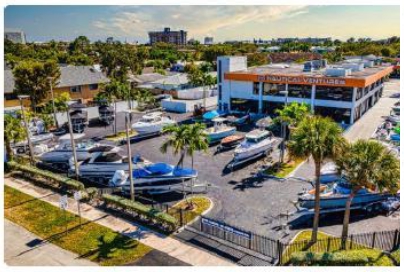 |
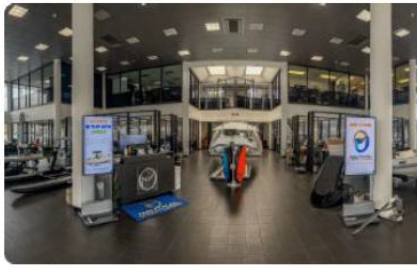 |
Fort Lauderdale dealership
Nautical Ventures has translated its experience with sales, servicing the customer and knowledge of the region in which it operates into annual sales of near or over US$100 million in its past two fiscal years. Although, it sells both new and used boats, the sale of new boats respectively accounted for approximately 79.7% and 81.9% of Nautical Ventures revenues in its 2024 fiscal year and the three months ended March 31, 2025, respectively. In particular, Nautical Ventures has had success in selling new models of boats manufactured by Axopar with such models accounting for approximately 51% of Nautical Ventures’ revenues in its 2024 fiscal year.
The sale of used boats accounted for approximately 6.7% and 8.5% of Nautical Ventures revenues in its 2024 fiscal and the three months ended March 31, 2025, respectively. We sell used versions of the new makes and models we offer and used boats of other makes and models generally taken as trade-ins. Our used boat sales depend on our ability to source a supply of high-quality used boats at attractive prices. We acquire a large portion of our used boat inventory through customer trade-ins. We strive to increase our used boat business through the availability of quality used boat trade-ins generated from our new boat sales efforts, which are well-maintained through our service initiatives. Additionally, substantially all of our used boat inventory is posted on our digital properties, which expands the awareness and availability of our products to a large audience of boating enthusiasts.
We believe that Vision Marine’s experience with electric boats will enhance the ability of the network of dealerships provided by Nautical Ventures to sell electric boats. We envision the increased sale of electric boats by Nautical ventures to include both boats manufactured by us as well as those manufactured by third parties.
Boat – Other
In addition to selling boats, Nautical Ventures provides services for boat owners as well as sells parts needed for the maintenance of boats owned by our customers. For example, in the year ended December 31, 2024 and the three months ended March 31, 2025 Nautical Ventures generated revenue of (i) US$3.3 million and US$0.6 million, respectively, from the sale of parts for boats (or approximately 3.4% and 2.7%, respectively, of all of Nautical Ventures revenues for those periods), (ii) US$2.4 million and US$0.5 million, respectively, from servicing boats (or approximately 2.5% and 2.2%, respectively, of all of Nautical Ventures revenues for those periods) and (iii) US$1.2 million and US$0.3 million, respectively, from dockage fees (or approximately 1.2% and 1.2%, respectively, of all of Nautical Ventures revenues for those periods).
We believe that we can expand revenue from products and services related to boats through the Nautical Ventures network. In particular, we are pursuing efforts to expand our electric integration services in Florida to combine various components, including the electric motor, battery system, charging system, and control systems, to create a functional and efficient electric propulsion system and to increase revenue derived from the provision of financing and warranty opportunities.
Other
Nautical Ventures derives revenues from other sources. For example, in the year ended December 31, 2024 and the three months ended March 31, 2025 Nautical Ventures generated revenue of US$1.4 million and US$0.3 million, respectively, from the sale of water toys, such as inflatable and rideable toys (or approximately 3.4% and 1.2%, respectively, of all of Nautical Ventures revenues for those periods). Nautical Ventures also derives revenues from other activities such as the rental of kayaks, paddleboards, and pontoons.
| 48 |
Floor Plan Financing
We finance most of our new and some of our used boat inventory through standardized floor plan facilities with various financial institutions, manufacturer-affiliated finance companies and other lending institutions. The new and used boat floor plan facilities bear interest at variable rates based on either the secured overnight financing rate or prime rates. The weighted average interest rate on floor plan facilities was 8.5% as of December 31, 2024 and 8.25% as of March 31, 2025. The new and used boat floor plan facilities are collateralized by boat inventory and other assets.
The vehicle floor plan facilities contain a number of covenants, including, among others, covenants restricting Nautical Ventures with respect to the creation of liens and changes in ownership, officers and key management personnel. Nautical Ventures was not compliant with covenants of its floor plan due to a change of ownership when Nautical Ventures Group purchased 86% of the shares held by a founding shareholder in 2023. In addition, Nautical Ventures was not compliant with the covenant requiring threshold debt service coverage ratios due to the reduced margins throughout 2024 caused by excessive dealer inventory levels, fierce competition and high floor plan interest triggering technical defaults with 5 of its lenders, namely:
| · | Wells Fargo Commercial Finance |
| · | Bank of Montreal (BMO) |
| · | Valley National Bank |
| · | Shore Premier/Centennial Bank |
| · | Northpoint Commercial Finance |
In June 2025, all of our floor plan lenders consented to Vision Marine’s acquisition of Nautical Ventures and signed Forbearance Agreements.
Proceeds from floor plan providers amounted to US$83 million as of December 31, 2023 and US$9 million as of March 31, 2025. Payments to floor plan providers amounted to US$72 million as of December 31, 2023 and US$14 million as March 31, 2025.
Our Legacy Electric Focused Operations
We design and manufacture electric outboard powertrain systems, power boats, and related technology and rent electric boats. Taking into account the acquisition of Nautical Ventures, on a pro forma basis these operations accounted for approximately 2.5% and 0.6% of our revenue and 8.3% and 18.2% of our total assets for the year ended August 31, 2024 and the nine months ended May 31, 2025, respectively.
Our legacy operations related to electric boats primarily focus on the development of our electric outboard powertrain system that we believe is significantly more efficient and powerful than those currently being offered in the market today. In particular, we have recorded powertrain efficiencies of more than 96%, well above the 54% efficiency that we recorded for our principal competitor’s product. Increases in powertrain efficiency allow for more power and range, both of which are highly desirable characteristics for consumers in the marketplace. Although our primary focus is on electric outboard powertrain technology, we will continue to design, manufacture and sell our high-performance, fully-electric boats to commercial and retail customers.
We have developed our first fully-electric outboard powertrain system that combines an advanced battery pack, inverter, high-efficiency motor with proprietary union assembly between the transmission and the electric motor design and extensive control software. Our technologies used in this powertrain system are designed to improve the efficiency of the outboard powertrain and, as a result, increase range and performance. We believe our approach in marketing and selling our powertrain technology to boat designers and manufacturers will enable us to leverage their distribution and servicing systems with minimal capital outlay. We expect our core intellectual property contained within our outboard electric powertrain systems to form the foundation for our future growth and for such systems to represent the majority of our revenue.
We continue to manufacture hand-crafted, highly durable, low maintenance, environmentally-friendly electric recreational powerboats. In our last three fiscal years, we manufactured 45, 46, and 58, respectively. We sell powerboats to retail customers and operators of rental fleets of powerboats through which we seek to build brand awareness. We intend to continue to build brand awareness by partnering with marina operators to offer rental fleets of electric boats. We conduct our transactions directly to customers through our website or through a network of marinas, distributors and show rooms.
| 49 |
In our fiscal year 2021, we expanded our business to include rentals of electric powerboats by acquiring EB Rental, Ltd., an entity that rents electric boats in Newport Beach, California. Since that time, we added two more locations: one in Ventura, California which is held by EB Rental Ventura Corp. and one in Palm Beach, Florida which is held by EBR Palm Beach Inc. We plan on opening another rental operation in Dania Beach, Florida. In addition to generating revenues from the rental of our powerboats, our rental locations build brand awareness and act as an open-water showroom for potential buyers. On April 25, 2024, we sold EB Rental, Ltd. for $1,089,302 in order to partially finance patent applications for our electric outboard powertrain systems.
Our Electric Outboard Powertrain Systems
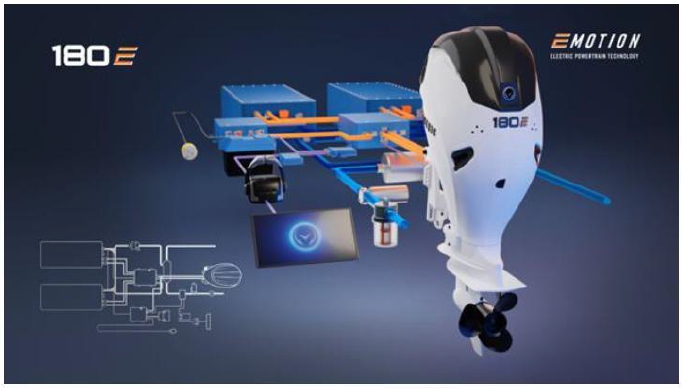
A powertrain system is a vehicle’s infrastructure that converts energy into movement. In an electric boat, that infrastructure starts at the battery pack, continues with an inverter, goes to the motor and ends with the propeller. Electric powertrains have less moving parts than powertrains for boats with an internal combustion engine and, as a result, tend to break less and require less complex servicing.
The efficiency of a powertrain system determines the range of a boat on a single battery charge and the speed at which the boat operates. We find existing electric powertrain systems unsatisfactory because of their insufficient yields and limited power range. In 2015, we decided to research technology to take advantage of this vacuum and develop an in-house system, relying on existing third-party components where possible. We noted the need for innovation in the following areas:
| · | optimizing the electric motor to improve efficiency and range by customizing the power to the motor from different battery suppliers; |
| · | developing optimization software that reads and calibrates the controller to suit the current use of the outboard electric powertrain system; |
| · | using appropriate components, including the battery; |
| · | customizing gears and propellers to a boat’s specifications. We have recorded the efficiency of our principal competitor’s electric powertrain system as 54%, meaning that only 54% of the power leaving the battery pack reached the propeller, although their technology may have improved since that recording. Our proprietary union and direct transmission system allow our prototype powertrains to have an efficiency of 96% which provides a competitive advantage over current electric outboard motors. We have also chosen a propeller design which when combined with the efficiencies obtained using our proprietary union and transmission system, provides optimal results; and; |
| · | developing an innovative controller, in particular, one that: |
| o | improves control over thermal overheating and thus protects the electric powertrain system; |
| 50 |
| o | incorporates a dual electrical and mechanical cooling system allowing for a better performance of the electric powertrain system; |
| o | detects possible operating problems (for example cavitation); and |
| o | reduces jolts and noise. |
Our electric powertrain is designed to have 180 hp (horsepower) and 236 Lb. ft at 96% load. Furthermore, the electric powertrain system will be liquid cooled as compared to air cooled.
In October 2021, we entered into a Manufacture and Supply Agreement with Linamar Corporation, a provider of manufacturing solutions and a developer of highly engineered products. Under the terms of the agreement, we intend for McLaren Engineering, Linamar’s technology and product development team for its advanced mobility segment, to manufacture and assemble our E-Motion™ technology through testing, parts, tooling development, and designing the union assembly for mass production of our electric powertrain at Linamar’s facility in Canada.
Once we have scaled up the production of our electric powertrain, we intend for the Linamar Corporation to produce our electric powertrain for mass commercialization. Although we believe that we can produce up to 300 electric powertrains per year in our current facilities in addition to producing 150 boats per year, we believe that contracting out the production of the electric powertrains will allow us to dedicate more time and resources to the development of additional electric powertrains.
The production of our electric powertrains will consist of assembling components from third parties, including battery packs, inverters and high-efficiency motors. We intend to use advanced batteries primarily from two suppliers, Octillion and Neogy, but as we are able to use a wide range of batteries we could use other suppliers. We will source the inverters from UQM (Danfoss Editron) and motors from UQM (Danfoss Editron).
In January 2022, we announced our partnership with Octillion to develop a customized high voltage 35 KW high density battery. Octillion will manufacture a new advanced electric battery system, “Polar 35” to power our E-Motion™ outboard powertrain. The configuration of the battery pack is smaller than that of a typical fuel tank, which in turn makes it easier to custom fit in virtually any boat.
During that same period, we partnered with Nextfour Solutions Ltd. to further develop a customized multifunctional display to be integrated within our E-Motion™ 180 fully electric powertrain system. In February 2022, we partnered with Weismann Marine, LLC to design and develop a lower unit (or gearcase) assembly. We partnered with Hellcat Powerboats to include our outboard powertrain in the boat that achieved a world record speed of 109 mph for an all-electric boat in 2022.
Our electric powertrains are controlled by control software developed in house. We have used open-source software code to develop our own battery management system software that will be tailored to regulate the power from the battery pack to the electric motor and its related systems.
In August 2023, our outboard powertrain was included in the boat that broke our previously held world record speed for an all-electric boat when it achieved a speed of 116 mph. In October 2023, we announced the delivery of our E-Motion™ Electric Powertrain Technology to Groupe Beneteau, Four Winns to be the inaugural electric motors integrated on the proposed Four Winns H2e Bowrider. As of the date hereof, we have not made any sales of our electric motors to Four Winns.
In September 2024, we launched the E-Motion™ 180e inboard electric motor system. Delivering a continuous 180hp at the propeller, this new system opens an important market segment for us, significantly expanding the range of vessels that can benefit from its advanced electric propulsion technology. Following development and testing, this inboard system incorporates 95% of the components from the E-Motion™ outboard powertrain system, so that the outboard motor system can relay performance of the inboard system. We believe that this integration allows us to extend our offerings within the electric marine sector, positioning us to meet the growing demand for electric propulsion solutions in both outboard and inboard applications.
On December 8, 2024, the Company announced a strategic partnership with Armada Pontoons, a renowned manufacturer of high-quality pontoon boats based in Quebec, Canada. This collaboration introduces a new electric pontoon boat design to meet the growing demand for eco-friendly, regulation-compliant, and competitively priced boating solutions for North America’s vast network of lakes.
On January 9, 2025, the Company announced the establishment of a production line for custom cooling plates in partnership with Calip Group, a leader in high-tech welding processes. Under this collaboration, Calip Group will supply components that enhance the thermal management of the Company’s high-voltage (HV) marine battery packs. These custom cooling plates are specifically tailored to meet the stringent demands of marine applications, with production slated to begin in 2025.
| 51 |
On February 24, 2025, the Company announced the filing of its ninth patent application related to its E-Motion™ Electric Powertrain System for its Outboard Power Control Unit (“PCU”) designed for electric marine vessels for the autonomous management of propulsion parameters and cooling operations to deliver enhanced efficiency and reliability. Leveraging a dual-CAN bus architecture, the PCU promotes seamless communication with both internal sensors and actuators within the outboard engine housing and external vessel control units. This architecture promotes real-time autonomous control of the electric motor, designed to increase performance while maintaining robust safety protocols and scalability.
On February 27, 2025, the Company announced the signing of a three-year exclusive supply agreement with MS Marine GmbH (“STERK”). This agreement positions the Company to become the sole provider of electric propulsion systems for STERK boats and grants the Company the exclusive global distribution rights for electric-powered STERK vessels with the Company’s electric propulsion systems. As of the date hereof, we have not made any sales of our electric propulsion systems to STERK.
On April 16, 2025, the Company, along with MS Marine GmbH, announced the successful completion of internal hull optimization in the latter’s STERK brand of vessels. The joint engineering effort focused on refining the internal hull layout of STERK vessels to securely house the Company’s E-Motion™ Electric Powertrain System.
On June 11, 2025, the Company announced the expansion of its partnership with Octillion Power Systems, a U.S.-based lithium-ion battery manufacturer, to produce high-voltage battery packs dedicated exclusively to the American market. Under the terms of the agreement, Octillion Power Systems will assemble the Company’s new proprietary 45.36 kWh battery packs at its facility in Nevada, aiding in fast, cost-efficient distribution across North America. These batteries are designed to support both the Company’s OEM integrations and consumer-facing electric boat offerings, delivering increased power, extended range, and improved performance, while reducing total system cost and simplifying logistics.
We have filed twelve patent applications with respect to our electric outboard powertrain system and plan on another twelve patent applications related to this innovation in the near future.
Specifications of our First Outboard Electric Powertrain
We have developed our first fully-electric outboard powertrain system that combines an advanced battery pack, inverter, high-efficiency motor with proprietary union assembly between the transmission and the electric motor design and extensive control software. We set out below the current specifications of this outboard electric powertrain.
| Maximum power | 180 HP, 135 kW | 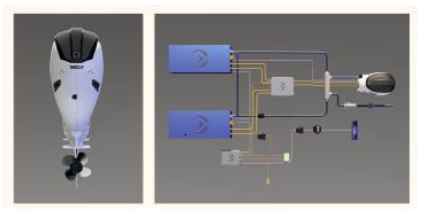 |
|
| Max torque | 250 ft.lb, 340 Nm | ||
| Voltage | 650 V | ||
| Efficiency | 96% | ||
| Weight | 413 Lbs., 188 kg | ||
| Lithium Battery | 43 kW | ||
| Shaft Length | S - XL | ||
| Cooling | Water | ||
| Control | Can bus |
| 52 |
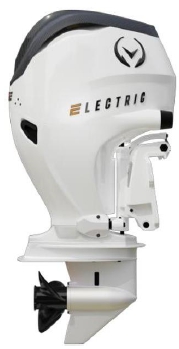
Our Powerboats
We manufacture seven models of electric powerboats. Each model is available in different standard variations or may be customized according to a purchaser’s specifications. In our last three fiscal years, we manufactured 45, 46, and 58 boats, respectively, and in the nine months ended May 31, 2025, we manufactured an additional 11 boats.
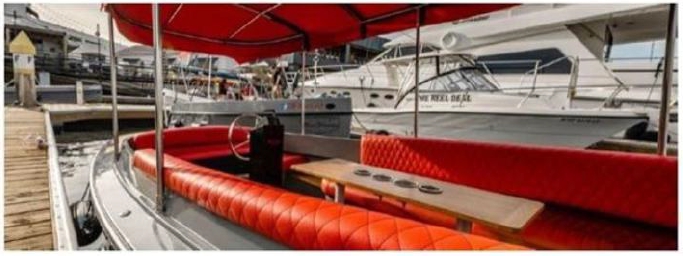
For each of our boats, our consumers are able to customize certain aspects including color (for the hull, striping, interior and deck), radio and covers and other storage options. In addition, there are customizations that are just available for some boat models, including propulsion and batteries.
V30 Electric Pontoon
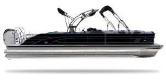 |
The V30 electric pontoon is powered by our 180 HP E-Motion™ electric powertrain. With a length of 30 feet, the V24 electric powertrain is designed to carry up to 12 people. The starting retail price for the V24 electric pontoon is about US$140,000. We began offering this boat in 2025. No sales have been made of this boat in the nine months ended May 31, 2025. |
| 53 |
V24 Electric Pontoon
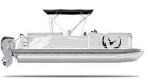 |
The V24 electric pontoon is powered by our 180 HP E-Motion™ electric powertrain. With a length of just under 25 feet, the V24 electric powertrain is designed to carry up to 12 people. The starting retail price for the V24 electric pontoon is about US$100,000. We began offering this boat in 2025. We did not sell any of these boats in the nine months ended May 31, 2025. |
V17 Electric Pontoon
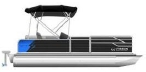 |
The V17 electric pontoon has a length of 17 feet and is designed to carry up to 8 people. The starting retail price for the V17 electric pontoon is about US$33,000. In our 2024 fiscal year, we sold 4 V17 electric pontoons. We did not sell any of these boats in the nine months ended May 31, 2025. |
VX Electric Pontoon
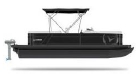 |
The VX electric pontoon has a length of over 17 feet and is designed to carry up to 10 people. The starting retail price for the VX electric pontoon is about US$53,000. We did not sell any of these boats in our 2024 fiscal year or in the nine months ended May 31, 2025. |
Volt 180
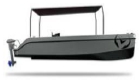 |
Reaching speeds of up to approximately 6 miles per hour, the Volt 180 is a boat that can be used for various watersports. In addition to the customizations that are available for each of our boats, purchasers may customize the Volt 180 by choosing among various options including the power of the motor (available in 2, 3, 6 and 10 kilowatts), accessories (fish rod holder, depth finder and anchor) and other options (including bumper, types of canopies and a premium sound system In our 2024 fiscal year, we sold 13 Volt 180s, and in the nine-months ended May 31, 2025, we sold none of these boats. |
Fantail 217
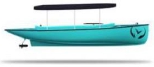 |
We designed the Fantail 217 with a view towards relaxation rather than speed. The Fantail 217 starts at US$34,995, seats up to ten people and has a maximum speed of approximately 10 miles per hour. In addition to the customizations that are available for each of our boats, purchasers may customize the Fantail 217 by choosing among various options including the type of motor (Torqeedo Salt Water, E-Tech, Min-Kota or E-Propulsion), number of batteries (up to eight), type of canopy (aluminum, stainless steel or fiberglass) and other options (including night navigation light, a double horn and bottom paint). In our 2024 fiscal year, we sold 16 Fantail 217s, and in the nine-months ended May 31, 2025, we sold 3 of these boats. |
Phantom
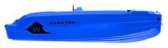 |
We designed the Phantom specifically for the boat rental market. The Phantom starts at US$14,995 for the hull only, seats up to ten passengers and reaches a top speed approximately 5 miles per hour. The Phantom is made out of plastic and is US Coast Guard approved. We launched the Phantom in our 2023 fiscal year. In our 2024 fiscal year, we sold 8 Phantoms, and in the nine months ended May 31, 2025, we sold 2 phantoms. |
Sales
We envision that if we are able to mass produce our electric powertrains, a significant of our revenue will be generated from the sale of our electric powertrains. In the three-months ended May 31, 2025, we made the first sale of our E-Motion™ Electric Powertrain System for $80,025. Although we have received non-binding letters of intent from OEMs for the purchase of such powertrains, such letters may never result in any actual sales. The projected sales price for future sales of our electric outboard powertrain system will depend on the number of batteries used and where it is sold. For the European market, we anticipate that the systems with Neogy batteries will sell for US$60,000 for a one-battery system, US$85,000 for a two-battery system and US$115,000 for a three-battery system. For the U.S. market, we anticipate that the systems with Octillion batteries will sell for US$45,000 for a one-battery system, US$65,000 for a two-battery system and US$85,000 for a three-battery system.
| 54 |
On a pro forma basis, we generated approximately 1.2% and 0.4% of our revenue from the sale of our electric boats for the year ended August 31, 2024 and the nine months ended May 31, 2025, respectively. We intend to use the network of Nautical Ventures dealerships that we acquired in June 2025 to promote the sale of our electric powerboats.
Rentals
In our fiscal year 2021, we expanded our business to include rentals of electric powerboats at one location in Newport Beach, California. In April 2023, we opened our second electric boat rental operation in Portside Ventura, California, and in December 2023, we opened our third electric boat rental operation in Palm Beach, Florida. In April 2024, we sold our electric boat rental operations located in Newport Beach, California, to Stratégies EB Inc. for $1,089,302. At the time of the sale, Stratégies EB Inc. was a related party because its controlling shareholder was a member of management of EB Rental, Ltd. prior to its sale. The sale of our rental operations in Newport Beach, California has significantly decreased the size of our rental operations. We are currently in the process of opening a new electric boat rental facility in Dania Beach, Florida.
The electric boat rental business currently has a fleet of approximately 8 powerboats. Rental rates range from US$75 per hour to US$215 per hour, plus a booking fee, with a minimum booking of two hours. Once a powerboat in our fleet has over 200 hours of sailing time, we offer the powerboat for sale to the public. In our 2024 fiscal year and in the nine months ended May 31, 2025, our rental business generated approximately $1,946,427 and $94,125 of revenue respectively.
Suppliers
The supplies that we require for the sale of products by Nautical Ventures, the design and manufacture of our electric powertrains and the manufacture of our boats differ. As a result, we set out below a brief description of each of those operations.
Nautical Ventures
Nautical Ventures sources its products through a strategic network of domestic and international manufacturers and distributors.
Key elements of the sourcing process include:
| · | Direct Manufacturer Relationships: Nautical Ventures works directly with a wide range of industry-leading manufacturers and brands that enables competitive pricing, product consistency, and early access to new product lines; |
| · | Exclusive and Authorized Dealerships: Nautical Ventures holds exclusive or authorized dealership rights for several top-tier marine brands, ensuring access to genuine products and manufacturer support; |
| · | Global and Domestic Supply Chain: Products are sourced both internationally and domestically, depending on availability, product category, and logistics feasibility; and |
| · | Strategic Vendor Partnerships: Long-standing vendor relationships are maintained through performance reviews, regular negotiations, and mutual planning for inventory and promotional alignment. |
Nautical Ventures relies on one manufacturer for a substantial portion of its revenues. In Nautical Ventures’ fiscal year ended December 31, 2024, the sale of boats from Axopar represented approximately 51% of its net revenues.
Electric Powertrains
The most significant parts and components we intend to use in manufacturing our electric powertrains are:
| · | engines – we rely on two suppliers of engines, Danfoss and E-Propulsion; |
| · | lithium-ion batteries – we purchase 100% of our lithium-ion batteries from Neogy who in turn rely upon Samsung cells. We have an agreement with Octillion Power Systems to provide marine specific batteries to power the E-Motion™ powertrains; |
| · | inverter – we intend to source our inverters from Danfoss; and |
| · | smart navigation system – we intend to rely on our partnership with Nextfour to develop a multifunctional display to be integrated with our E-Motion™ powertrains. |
| 55 |
Electric Boats
Although we manufacture all of our electric boats, we do so by assembling the component parts that we acquire from third-party suppliers rather than by producing any of those component parts ourselves. Some of these parts and components are manufactured to our specifications (such as hulls and motors) while others are bought “off the shelf” (such as batteries and canopies). We do not maintain long-term contracts with preferred suppliers, but instead rely on informal arrangements and off-the-shelf purchases. We materially depend on some of those third-party suppliers for certain components that we obtain from a limited number of suppliers.
The most significant parts and components used in manufacturing our boats are:
| · | engines – we use one supplier of engines, E-Propulsion (for the Quietude, the Fantail 217 and the Volt 180) in addition to our use of our E-Motion™ for the Volt; |
| · | lithium-ion batteries – we source duplicate suppliers for our lithium-ion batteries, including Neogy and Octillion and believe that we could source batteries at a similar price from the market were these suppliers unable to meet our demand; and |
| · | hulls – we purchase all of our hulls from Manunor Inc. |
General
We have not experienced any material shortages in any of our product parts or components. As a result of the COVID-19 pandemic and recent tariff uncertainty, some of our third-party suppliers experienced delays in delivering our product parts and components in a timely manner and fluctuations in price for these supplies is a possibility if raw material pricing increases. Temporary shortages, when they do occur, usually involve manufacturers of these products adjusting model mix, introducing new product lines, or limiting production in response to an industry-wide reduction in boat demand, or in finding persons able to deliver the parts and components in a timely manner.
As we do not produce any of the parts of components of the third-party boats that we sell, our electric powertrains or the electric powerboats that we manufacture, we do not materially use, or intend to use, any raw materials in their production. The manufacturers of the parts and components that we use, however, do use raw materials, including resins, fiberglass, hydrocarbon feedstocks, steel and various minerals, especially in the production of the engines and batteries that we use. We do not control how these third parties source the raw materials that they use, and we may suffer production delays if such third parties do not have access to all of the raw materials that they need or source conflict minerals in violation of applicable regulations.
Patents and Licenses
Our success depends, at least in part, on our ability to protect our core technology and intellectual property. To accomplish this, we intend to rely on a combination of patent and design applications, trade secrets, including know-how, employee and third-party non-disclosure agreements, copyright laws, trademarks and other contractual rights to establish and protect our proprietary rights in our technology. We intend to file patent applications with respect to components of a powertrain that we are developing. We do not know whether any of our patent applications will result in the issuance of patents or whether the examination process will require us to narrow our claims. Even if granted, these pending patent applications might not provide us with adequate protection.
We have filed twelve patent applications with respect to our electric outboard powertrain system and plan on filing another twelve patent applications related to this innovation in the near future.
Trademarks
We filed trademark applications with the Canadian Intellectual Property Office and the U.S. Patent and Trademark Office for our logo and the brand name “E-Motion”. We operate under the trade name “VISION MARINE TECHNOLOGIES”, but neither this name nor any of the names of the models of our boats are currently registered trademarks.
Nautical Ventures operates under the trade names “NAUTICAL VENTURES GROUP” and “AQUAZONE”, but none of these names are currently registered trademarks.
| 56 |
This prospectus contains references to trademarks and service marks belonging to other entities. Solely for convenience, trademarks and trade names referred to in this prospectus may appear without the ® or TM symbols, but such references are not intended to indicate, in any way, that we will not assert, to the fullest extent possible under applicable law, our rights to these trademarks and trade names. We do not intend our use or display of other companies’ trade names, trademarks or service marks to imply a relationship with, or endorsement or sponsorship of us by, any other companies.
Industry Overview
Recreational Boating
In North America, 75 million people go boating every year, according to the U.S. Coast Guard, with approximately 11.8 million recreational vessels registered with the U.S. Coast Guard in 2020. The U.S. recreational boating industry generated approximately $57.7 billion in retail sales in calendar 2023, according to the National Marine Manufacturers Association (“NMMA”). Retail sales within this industry include sales of new and used recreational boats; marine products, such as engines, trailers, parts, and accessories; and related boating expenditures, such as fuel, insurance, docking, storage, and repairs. The recreational boat retail market remains highly fragmented with little consolidation having occurred to date and consists of numerous boat retailers, many of which are small companies owned by individuals that operate in a single market and provide varying degrees of merchandising, professional management, and customer service.
Outboard Motor Market
An outboard motor is a propulsion system for boats, consisting of a self-contained unit that includes engine, gearbox and propeller or jet drive, designed to be affixed to the outside of the boat. As well as providing propulsion, outboards provide steering control, as they are designed to pivot over their mountings and thus control the direction of thrust. Outboard motors tend to be found on smaller watercraft as it is more efficient for larger boats to have an inboard system. Although outboard engines powered by fossil fuels have traditionally dominated this market and continue to do so, electric outboard motors are a relatively new phenomenon that have been growing in step with the growth in the electric boat market.
According to the NMMA, after reaching record highs in 2022, sales of outboard engines in the United States (which includes outboard motors) surpassed US$10.5 billion and is expected to grow by 5% (CAGR) by 2032. Consumer demand for higher-performance engines continued to trend upward in 2020, with double digit gains in sales for engines with 200 and greater horsepower. Engines with between 200 and 300 horsepower accounted for 27% of all sales of outboard engines.
Although many recreational boats can be powered by outboard or inboard motors, many consumers prefer outboard motors. Among the reasons for their preference are that, unlike inboard motors, outboard motors can be easily removed for storage or repairs, they provide more room in the boat as they are attached to the transom outside of the boat, they tend to have a shallower draft and they can be more easily replaced in the event the motor no longer works or a desire to upgrade to a higher horsepower.
There are many manufacturers of outboard motors. Some of these manufacturers are subsidiaries of massive global conglomerates, like Yamaha, Bombardier and Suzuki, that have more resources and experience in the market than we do. Others are relatively new startups, like us, that may be more nimble and adaptive to changes in the outboard motor market than we will be. We deem our biggest competitor in the electric outboard motor market to be Torqeedo.
Competitive Advantages & Operational Strengths
The recreational boating industry is highly competitive. Competition affects our ability to succeed in the markets we currently serve and new markets that we may enter in the future. In addition to facing competition generally from recreation businesses seeking to attract consumers’ leisure time and discretionary spending dollars, the recreational boating industry itself is highly fragmented, resulting in intense competition for customers, quality products, boat show space, and suitable retail locations.
Many of our current and potential competitors have significantly greater financial, technical, manufacturing, marketing and other resources than we do and may be able to devote greater resources to the sale of recreational boats, parts and accessories and related services as well as to the design, development, manufacturing, distribution, promotion, sale and support of their products. Many of our competitors have more extensive customer bases and broader customer and industry relationships, including with third-party manufacturers, than we do. In addition, many of these companies have longer operating histories and greater name recognition than we do. Our competitors may be in a stronger position to respond quickly to new technologies and may be able to design, develop, market and sell their products more effectively.
| 57 |
Many dealerships offer a wider range of financing options on the boats they sell and also have the ability to market boats at a substantial discount, provided that the boats are financed through their affiliated financing company. We offer some forms of financing on our boats, but the lack of more financing options and the absence of customary boat discounts could put us at a competitive disadvantage.
Nautical Ventures
Our operations run by Nautical Ventures compete primarily with single- and limited-location boat dealers and regional and national dealerships. With respect to sales of marine parts, accessories, and equipment, these operations compete with national specialty marine parts and accessories stores, online catalog retailers, sporting goods stores, and mass merchants. Competition among boat dealers is based on the quality of available products, the price and value of the products, and attention to customer service. There is significant competition both within markets we currently serve and in new markets that we may enter. We compete in each of our markets with retailers of brands of boats and engines we do not sell in that market. In addition, several of our competitors, especially those selling marine equipment and accessories, are large national or regional chains that have substantial financial, marketing and other resources. Private sales of used boats represent an additional source of competition. Due to various matters, including environmental concerns, permitting and zoning requirements, and competition for waterfront real estate, some markets in the United States face intense competition for suitable marina and storage availability.
We believe that the following factors will enable our Nautical Ventures operations to successfully compete:
| · | Proven retail experience: Nautical Ventures team has demonstrated it has the ability generate revenue through the sale of products and services. In each of its past three fiscal years, it has generated net sales of over or almost US$100 million. The hiring and maintenance of a motivated salesforce and the training it receives separate us from our competitors, and |
| · | Product selection: We offer a competitive selection of brands and exclusive products in select markets to reach potential customers with different tastes and price points; |
| · | Reputation: We have developed a strong brand and recognition in the areas in which we operate through our years of operation. Customer satisfaction helps drive repeat business and customer referrals; and |
| · | Locations: We select the locations our dealerships and other operations because of their strategic high visibility geographic positioning. |
Electric Powertrains
In the development and production of our electric powertrains, we face competition from manufacturers of:
| iv. | electric powertrain systems that sell to OEMs; |
| v. | traditional fossil fuel-powered recreational powerboats in general; and |
| vi. | electric recreational powerboats in particular. |
We intend to sell our electric powertrains to OEMs for use in their boats as well as direct to consumers through the distribution channels available through Nautical Ventures. We are currently aware of one company (Torqeedo) that produces electric powertrains for OEMs, and as a result we believe that there is a viable and meaningful market opportunity in this market for us. Although, we believe that our electric powertrain systems are more efficient and powerful than current offerings on the market, our competitors, including Torqeedo, may have greater resources than we do and OEMs may find their designs or price to be more attractive than ours. Even if we produce electric powertrains and sell them to OEMs, other competitors may enter the field or the OEMs may decide to produce their own powertrains and cease purchasing ours.
We believe that our experience, production capability, product offering and management give us the ability to successfully operate in the recreational electric powerboat market in a way that our competitors cannot. In particular, we believe that we have a number of competitive advantages, including:
| · | technological innovation: we have demonstrated our capacity to develop our own products through research and development by introducing the Volt 180, which currently holds the speed record for a certified electric boat. We believe that the technological design of our electric powertrain will provide efficiency at a price that our competitors will not be able to match. |
| · | product performance: the efficiency of our powertrain systems provides the boats they are in greater speed and range, results that are magnified when combined with our ultra-hydrodynamic hull designs. |
| 58 |
| · | product price: we have not priced our first powertrain system yet but intend to do so in a way that is competitive for its performance. |
| · | management expertise: our founders have extensive experience in offshore power boating and are aware of what is required by customers in regard to power and efficiency of outboard electric powertrain systems. The inherent reputation of our management team over 25 years has built our brand for quality and technologically advanced products. |
We might not be able to compete successfully in our market. If our competitors introduce new powertrains, powerboats or services that compete with or surpass the quality, price or performance of our powertrains, powerboats or services, we may be unable to satisfy existing customers or attract new customers at the prices and levels that would allow us to generate attractive rates of return on our investment. Increased competition could result in price reductions and revenue shortfalls, loss of customers and loss of market share, which could harm our business, prospects, financial condition and operating results.
Strategy
We are a vertically integrated marine company focused on delivering a superior on-water experience through innovative propulsion systems and a multi-brand retail strategy. Our operations span the design and industrialization of high-voltage electric powertrain systems, the development of electric boats, and the retail distribution of both electric and internal combustion engine (ICE) boats.
Following the acquisition of Nautical Ventures, a top-performing boat dealership network with nine locations across Florida, we have significantly expanded our access to retail customers. Through Nautical Ventures, we now offer a wide portfolio of leading recreational boat brands and models, giving us the ability to meet a broad spectrum of consumer demand, from entry-level boats to high-performance vessels. This footprint not only enables direct-to-consumer sales but also allows us to embed electric models within an established sales pipeline traditionally centered on ICE products, accelerating mainstream adoption of our electric offerings.
We also continue to sell electric boats directly to commercial fleet operators and boat rental businesses, which serve as high-visibility testbeds for our propulsion technology. These installations contribute to brand awareness, generate recurring fleet sales, and allow new consumers to experience electric boating firsthand.
Nautical Ventures further provides an immediate, scalable service infrastructure. Several locations are equipped or will be upgraded to support electric boat service bays, giving Vision Marine the ability to offer after-sale support for our E-Motion™ propulsion systems and electric boat fleet. This creates a full-cycle ownership experience for electric boat customers, from purchase to service, and enhances our value proposition in the retail environment.
At the same time, we continue to make our marine-specific electric propulsion systems available to boat manufacturers through direct engagement. Our E-Motion™ powertrains are engineered for seamless integration by OEMs, allowing them to electrify existing platforms while maintaining design and performance standards. We market these systems through trade shows, prototype demonstrations, and targeted outreach to selected manufacturers.
We believe that combining a controlled retail network with a technology integration strategy positions us to scale efficiently, maintain visibility over the customer journey, and foster broader market adoption of electric propulsion. We will continue to invest in research and development, operational efficiency, and our service infrastructure to meet the growing demand across both recreational and commercial marine segments.
Manufacturing
We produce our electric recreational powerboats and related components at our 15,000 square foot assembly warehouse in Quebec and use Linamar as our production partner for our E-Motion powertrains. In our last three fiscal years ended August 31, 2024, 2023 and 2022, we manufactured 45, 46, and 58 powerboats, respectively. We run one assembly line and have a production capacity that allows us to produce up to seven boats a week depending on the type of boats and the specifications of each order.
Marketing
Vision Marine – Electric Propulsion Marketing Strategy
OEM-Focused Promotion
Vision Marine markets its E-Motion™ high-voltage electric propulsion systems through a targeted B2B strategy. This includes participation in major industry trade shows, private demonstrations, and direct engagement with OEM engineering and procurement teams. The system has already been integrated onto a wide range of recreational boats, including pontoons, center consoles, bowriders (runabouts), catamarans, and double console boats. These real-world integrations enable Vision Marine to present validated performance data and practical use cases to potential partners.
| 59 |
Consumer Access Through Nautical Ventures
With the acquisition of Nautical Ventures, Vision Marine now benefits from direct-to-consumer access. Existing manufacturer production agreements and OEM partnerships allow certain models to be offered with either internal combustion or E-Motion™ electric propulsion. This integrated distribution channel enhances Vision Marine’s ability to introduce electric alternatives to end users at the point of sale, supported by on-site education and product comparison opportunities.
Rental and Demonstration Platforms
Vision Marine’s rental and fleet operations act as high-frequency demonstration environments. These programs expose thousands of boaters annually to electric propulsion firsthand and generate qualified leads across both retail and commercial fleet segments. This consumer exposure supports awareness, education, and conversion while reinforcing product reliability.
Forward Strategy and Growth Outlook
Looking ahead, Vision Marine intends to accelerate electric propulsion adoption by focusing on four key marketing priorities: (1) expanding OEM integration through facilitated retail and technical access, (2) enhancing consumer education at the point of sale and during use, (3) driving revenue through dedicated electric propulsion installation services, and (4) becoming the reference in electric marine servicing to build long-term consumer confidence in aftermarket support. These initiatives are designed to strengthen Vision Marine’s leadership position in high-voltage marine electrification, support the broader ecosystem of E-Motion™ deployments, and enable scalable, recurring value across both OEM and retail channels.
Nautical Ventures – Multi-Brand Retail Marketing Strategy
Retail Network and Physical Activation
Nautical Ventures is an award-winning dealership network with nine locations across Florida—the highest-volume recreational boating market in the United States. The company operates waterfront showrooms and managed marinas in high-traffic areas and holds exclusive regional rights for several boat brands. This infrastructure enables in-person marketing through demos, events, and showroom-based activations.
Digital Marketing and Lead Generation
In addition to physical locations, Nautical Ventures manages centralized digital campaigns, including paid search advertising, SEO, social media, and email outreach. These digital initiatives are designed to drive traffic, capture leads, and support the full customer journey—from initial inquiry to sale.
Marine Accessories and Water Toys
Nautical Ventures also markets a wide range of marine accessories and recreational watercraft, including kayaks, paddleboards, inflatables, tenders, and other water toys. These product categories enhance customer engagement and create cross-selling opportunities that reinforce Nautical Ventures’ position as a full-service marine retailer.
Boat Shows and Seasonal Marketing
The dealership maintains a strong presence at major U.S. and international boat shows, providing exposure for both ICE and electric product offerings. Seasonal campaigns are also tailored to Florida’s unique boating calendar, optimizing regional timing for sales activity.
Forward Strategy: Financing, Services, and Recurring Revenue
Strategic Focus on Value-Added Services
Following the acquisition of Nautical Ventures, Vision Marine intends to expand its consumer offering to include enhanced financing, insurance, and after-sale service programs. While these initiatives are not yet fully operational, the existing infrastructure positions the combined entity to develop recurring revenue streams over time. Plans include the introduction of extended warranties, service subscriptions, and electric propulsion maintenance plans, which will be marketed through both digital and in-store channels.
| 60 |
Together, Vision Marine and Nautical Ventures represent a vertically integrated marine platform with the potential to drive growth across both propulsion and retail channels, while enabling future expansion into services and consumer financing.
Sales and Service Model
We operate a multi-channel sales and service structure across three distinct product categories: (1) high-voltage E-Motion™ electric powertrain systems, (2) internal combustion engine (ICE) boats distributed through Nautical Ventures, and (3) low-horsepower electric boats sold directly or through dealers. Our approach is designed to ensure tailored customer support and scalable service capabilities across both recreational and commercial marine applications.
1. E-Motion™ Powertrain Systems
We commercialize our proprietary high-voltage electric outboard powertrain systems through three avenues:
| · | OEM Integrations: If we sell to boat manufacturers (OEMs), the powertrain will be integrated into their platforms and distributed through their own dealer networks. In these cases, the OEM will be responsible for end-customer service. Vision Marine will provide training, documentation, and ongoing technical support to enable OEM service teams to be equipped to maintain and troubleshoot our systems. |
| · | Third-Party Integrations with Dealer Distribution: For customers purchasing boats from a third-party manufacturer or dealer who integrates our E-Motion™ system, Vision Marine offers after-sale service through designated Nautical Ventures service bays. These installations are being equipped and staffed to handle electric propulsion diagnostics, maintenance, and upgrades, providing localized service coverage for integrated units. |
| · | Direct-to-Consumer Sales: In cases where customers select an E-Motion™ system to be installed on a new boat at the point of purchase—either through our network or by working with boat builders—Vision Marine facilitates installation and ongoing support. Service is delivered through Nautical Ventures locations or participating marina partners trained to support our systems, ensuring coverage for consumers who choose our technology independently of an OEM agreement. |
2. Internal Combustion Engine (ICE) Boats
We sell a wide portfolio of ICE-powered recreational boats through Nautical Ventures’ nine Florida-based retail locations. These boats are supported through the Nautical Ventures service departments, which are certified to perform warranty and routine maintenance as per each manufacturer's program. Our teams coordinate with manufacturers to promote high standards of post-sale support and customer care.
3. Low-Horsepower Electric Boats
Vision Marine also produces and sells a line of low-voltage electric boats, including tenders and compact cruisers, marketed through both the Vision Marine website and Nautical Ventures locations. These boats are supported either directly by our technical team in Quebec or through our dealership service centers, depending on location and warranty terms.
This structured, multi-tiered service model enables Vision Marine to meet the diverse needs of our customer base, while leveraging our growing footprint to ensure technical coverage, training, and long-term customer satisfaction across electric and ICE segments.
Government Regulation
Our operations are subject to extensive and frequently changing federal, state, provincial, local and foreign laws and regulations, including those concerning product safety, environmental protection and occupational health and safety. We believe that our operations and products are in compliance with these regulatory requirements. Historically, the cost of achieving and maintaining compliance with applicable laws and regulations has not been material. However, future costs and expenses required for us to comply with such laws and regulations, including any new or modified regulatory requirements, or an inability to address newly discovered environmental conditions could have a material adverse effect on our business, financial condition, operating results, or cash flows.
The regulatory programs that impact our business include the following:
| 61 |
Regulations on Hazardous Materials
As with boat dealerships generally, and parts and service operations in particular, our business involves the use, handling, storage, and contracting for recycling or disposal of hazardous or toxic substances or wastes, including environmentally sensitive materials, such as motor oil, waste motor oil and filters, transmission fluid, antifreeze, freon, waste paint and lacquer thinner, batteries, solvents, lubricants, degreasing agents, gasoline, and diesel fuels. Accordingly, we are subject to regulation by federal, state, and local authorities establishing requirements for the use, management, handling, and disposal of these materials and health and environmental quality standards, and liability related thereto, and providing penalties for violations of those standards. We are also subject to laws, ordinances, and regulations governing investigation and remediation of contamination at facilities we operate to which we send hazardous or toxic substances or wastes for treatment, recycling, or disposal.
Certain materials used in our manufacturing, including the resins used in production of our boats, are toxic, flammable, corrosive, or reactive and are classified by the federal, state and provincial governments as “hazardous materials.” Control of these substances is regulated by the Environmental Protection Agency (EPA) and state pollution control agencies under the Federal Resource Conservation and Recovery Act, and related state programs in the United States, and by Environment and Climate Change Canada and Health Canada and provincial pollution control agencies under the Canadian Environmental Protection Act, 1999 (“CEPA”) and related provincial legislation in Canada. Storage of these materials must be maintained in appropriately labeled and monitored containers, and disposal of wastes requires completion of detailed waste manifests and recordkeeping requirements. Any failure by us to properly store or dispose of our hazardous materials could result in liability, including fines, penalties, or obligations to investigate and remediate any contamination originating from our operations.
Certain of our facilities own and operate underground storage tanks (“USTs”) and above ground storage tanks (“ASTs”) for the storage of various petroleum products. The USTs and ASTs are generally subject to federal, state, and local laws and regulations that require testing and upgrading of tanks and remediation of contaminated soils and groundwater resulting from leaking tanks. In addition, if leakage from Company-owned or operated tanks migrates onto the property of others, we may be subject to civil liability to third parties for remediation costs or other damages.
The United States Clean Air Act and the Canadian Environmental Protection Act
The United States Clean Air Act (the “CAA”) and CEPA and corresponding state and provincial rules regulate emissions of air pollutants. Because our manufacturing operations involve molding and coating of fiberglass materials, which involves the emission of certain volatile organic compounds, hazardous air pollutants, and particulate matter, we are required to comply with Canadian federal and provincial environmental protection regulations. The hulls used in our products are all manufactured by third parties. The additional cost of complying with these regulations has increased our cost to purchase hulls and, accordingly, has increased the cost to manufacture our products.
In addition to the regulation of our manufacturing operations, the EPA has adopted regulations stipulating that many marine propulsion engines meet certain air emission standards. The engines used in our products and those of third-party manufacturers that we sell, all of which are manufactured by third parties, are warranted by the manufacturers to be in compliance with the EPA’s emission standards. Furthermore, the engines used in our products must comply with the applicable emission standards under the CEPA and corresponding provincial legislation. The additional cost of complying with these regulations has increased our cost to purchase the engines and, accordingly, has increased the cost to manufacture our products.
If we are not able to pass these additional costs along to our customers, it may have a negative impact on our business and financial condition.
Boat Manufacturing Standards
As a manufacturer of small vessels established in Canada, we are required to ensure that:
| · | our boats comply with all the applicable construction requirements of Part 7 of the Small Vessel Regulations (Canada) and Transport Canada’s Construction Standards for Small Vessels (TP 1332E); |
| · | for each boat, a Declaration of Conformity is produced to Transport Canada in accordance with Part 8 of the Small Vessel Regulations (Canada) stating that the boat meets all the construction requirements and that a Compliance Notice is attached to the boat; and |
| · | each boat is marked with a Hull Serial Number (HIN) (also known as a Hull Identification Number) in accordance with Part 9 of the Small Vessel Regulations (Canada). |
| 62 |
Boat Safety Standards
The powerboats that we manufacture and those that we sell from third-party manufacturers must be manufactured to meet the standards of certification in the jurisdictions in which they are used or to which they are imported. This means that our powerboats must meet the standards of certification required by the U.S. Coast Guard and the Canadian Coast Guard in Canada and they must be certified to meet the European Union’s imported manufactured products standards in the European Union. These certifications specify standards for the design and construction of powerboats. We believe that all of the boats that we manufacture and/or sell meet these standards.
Safety of recreational boats in the United States is subject to federal regulation under the Boat Safety Act of 1971, which requires boat manufacturers to recall products for replacement of parts or components that have demonstrated defects affecting safety. Any recall of our boats, third-party boats that we sell or of the components in any of these boats or could result in large expenditures and tarnish our brand.
Labor regulations
The Act respecting occupational health and safety (Quebec) and the regulations made thereunder impose standards of conduct for and regulate workplace safety, including limits on the amount of emissions to which an employee may be exposed without the need for respiratory protection or upgraded plant ventilation. Our facilities are subject to inspection by Canadian, Quebec and local agencies and departments. We believe that our facilities comply in all material aspects with these regulations. We have made a considerable investment in safety awareness programs and provide ongoing safety training for all of our employees.
Our operations in the United States are governed by a patchwork of federal, state and local laws regarding workplace matters including safety, wages and unionization rights. For example, the Occupational Safety and Health Act 1994 imposes a duty on us to ensure, so far as is practicable, the safety, health and welfare at work of our employees in the United States. To date, we have not received notice from any regulatory authority of any material violations of workplace regulations.
Licensing Regulations
Certain U.S. states have required or are considering requiring a license in order to operate a recreational boat. While such licensing requirements are not expected to be unduly restrictive, regulations may decrease our pool of potential customers or discourage potential first-time buyers, thereby limiting future sales, which could adversely affect our business, financial condition, and results of operations.
Research and Development
We invest significant sums on research and development expenses to improve the products that we manufacture. For example, in the year ended August 31, 2024 and the nine-months ended May 31, 2025, we respectively spent $2,739,022 and $1,782,507 (approximately 17.3% and 21.7% of our operating expenses in those respective periods) on research and development. The majority of this research and development expense was incurred on the development and fine tuning of our E-Motion™ electric powertrain technology.
Seasonality
Our current operating results are subject to annual and seasonal fluctuations resulting from a variety of factors, including:
| · | seasonal variations in retail demand for boats, with a significant majority of sales occurring during peak boating season; |
| · | product mix, which is driven by boat model mix and higher option order rates; while sales of all our boats generate comparable margins, sales of larger boats and boats with optional content produce higher absolute profits; |
| · | inclement weather, which can affect production at our manufacturing facilities as well as consumer demand, particularly for rentals; |
| · | competition from other recreational boat retailers and manufacturers; and |
| · | general economic conditions. |
If we are able to sell our electric powertrains to OEMS, we do not envision that such sales will be seasonal. As building a boat is a time-consuming process, we expect that OEMs will build their boats and increase their inventory even in those seasons where sales are generally lower in preparation for the seasons of higher sales.
| 63 |
Legal Proceedings
Apart from the matters below, we are not involved in, or aware of, any material legal or administrative proceedings contemplated or threatened by any governmental authority or any other party.
| · | In October 2024, a fire at our marina that began while employees were servicing a boat injured five employees, one fatally. In connection with this accident, |
| (i) | the estate of the deceased employee filed a lawsuit seeking discovery. This matter was voluntarily dismissed without prejudice on May 2, 2025. We filed a motion to dismiss the initial claim, which was granted; |
| (ii) | we have been named as a defendant in a suit seeking recovery for damages and lost income from the owner of a trailer damaged in the accident; and |
| (iii) | we are negotiating with the Occupational Safety and Health Administration for the settlement of claims concerning alleged workplace safety violations |
As of the date of this prospectus, no director, officer or affiliate is a party adverse to us in any legal proceeding or has an adverse interest to us in any legal proceeding.
Design and Manufacturing
We believe that our electric outboard powertrain systems are significantly more efficient and powerful than those currently being offered in the market today. In particular, we have recorded powertrain efficiencies of more than 96%, well above the 54% efficiency that we recorded for our principal competitor’s product. Increases in powertrain efficiency allow for more power and range, both of which are highly desirable characteristics for consumers in the marketplace. Although our primary focus is on electric outboard powertrain technology, we will continue to design, manufacture and sell our high-performance, fully-electric boats to commercial and retail customers. According to Allied Market Research, the global electric boat market will reach US$16.6 billion in 2031 up significantly from US$5 billion in 2021, growing at a compound annual growth rate of 12.9% from 2022 to 2031.
We have developed our first fully-electric outboard powertrain system that combines an advanced battery pack, inverter, high-efficiency motor with proprietary union assembly between the transmission and the electric motor design and extensive control software. Our technologies used in this powertrain system are designed to improve the efficiency of the outboard powertrain and, as a result, increase range and performance. We believe our approach in marketing and selling our powertrain technology to boat designers and manufacturers will enable us to leverage their distribution and servicing systems with minimal capital outlay. We expect our core intellectual property contained within our outboard electric powertrain systems to form the foundation for our future growth and for such systems to represent the majority of our revenue.
We continue to manufacture hand-crafted, highly durable, low maintenance, environmentally-friendly electric recreational powerboats. In our last two fiscal years 2024 and 2023, we manufactured 45 and 46 powerboats, respectively. We sell powerboats to retail customers and operators of rental fleets of powerboats through which we seek to build brand awareness. We intend to continue to build brand awareness by partnering with marina operators to offer rental fleets of electric boats. We conduct our transactions directly to customers through our website or through a network of marinas, distributors and show rooms.
Intellectual Property
We regard our trademarks, patents, and technological know-how, proprietary technologies and other intellectual properties as critical to our success and competitiveness. We rely on a combination of patent and trademark law, trade secret protection, confidentiality agreements with employees and contractual restrictions on intellectual property and confidentiality clauses in our agreements with third parties to protect our intellectual property rights. In addition, under the agreements we enter into with our employees and consultants, they acknowledge that the intellectual property made by them in connection with their employment or consultancy with us is our property. We also regularly monitor any infringement or misappropriation of our intellectual property rights. We do not know whether any of our patent applications will result in the issuance of patents or whether the examination process will require us to narrow our claims. Even if granted, these pending patent applications might not provide us with adequate protection.
| 64 |
Patents
Below is a table, with footnotes, that includes our United States patent applications as of September 29, 2025:
| Property No. | Patent title | Application Number and Filling Date |
Application Type |
Jurisdiction | Ownership Status(1) | |||||
| 1. | Cryptographic Authentication of Components In An Electric Vessel | 18/644,961 filed April 24, 2024 | Non-Provisional | United States | Vision Marine Technologies | |||||
| 2. | Controlling A Cooling System Water Intake Pump of An Electric Marine Vessel | 18/650,274 filed April 30, 2024 | Non-Provisional | United States | Vision Marine Technologies | |||||
| 3. | Implementing A Torque Fuse in An Electric Marine Propulsion System | 18/656,061 filed May 6, 2024 | Non-Provisional | United States | Vision Marine Technologies | |||||
| 4. | Battery Pack for An Electric Marine Vessel | 18/664,377 filed May 15, 2024 | Non-Provisional | United States | Vision Marine Technologies | |||||
| 5. | Responding To Detecting An Error Associated With One Or More Powertrain Components Of An Electric Vessel | 18/679,675 filed May 31, 2024 | Non-Provisional | United States | Vision Marine Technologies | |||||
| 6. | Authenticating Powertrain Components Of An Electric Vessel By A Battery Management Controller | 19/018,281filed January 13, 2025 | Non-Provisional | United States | Vision Marine Technologies | |||||
| 7. | Enhancing Safety In An Electric Marine Vessel Using Independent Fault Detection Loops In A Power Distribution Unit | 19/037,500 filed January 27, 2025 | Non-Provisional | United States | Vision Marine Technologies | |||||
| 8. | Distributed Control System Architecture For An Electric Marine Vessel | 19/046,708 filed February 6, 2025 | Non-Provisional | United States | Vision Marine Technologies | |||||
| 9. | Outboard power control unit for controlling An electric motor of an outboard engine | 19/060,907 filed February 24, 2025 | Non-Provisional | United States | Vision Marine Technologies | |||||
| 10. | Adaptive Control Of A Water Pump In A Marine Propulsion System | 19/074,527 filed March 10, 2025 | Non-Provisional | United States | Vision Marine Technologies | |||||
| 11. | Establishing Secure Communication Between An Interface Device And Control Systems Of An Electric Marine Vessel | 19/173,006 filed April 8, 2025 | Non-Provisional | United States | Vision Marine Technologies | |||||
| 12. | Overload Protection For A Cooling Pump Motor In An Electric Marine Vessel | 19/200,778 filed May 7, 2025 | Non-Provisional | United States | Vision Marine Technologies |
| (1) | The inventor of each of the five properties, Mr. Xavier Montagne, until July 2025 an executive officer of our company, has assigned each property to us pursuant to duly filed Notices of Recordation of Assignment with the United States Patent and Trademark Office. |
Trademarks
We filed trademark applications with the Canadian Intellectual Property Office and the U.S. Patent and Trademark Office for our logo and the brand name “E-Motion”. We operate under the trade name “VISION MARINE TECHNOLOGIES”, but neither this name nor any of the names of the models of our boats are currently registered trademarks.
This prospectus contains references to trademarks and service marks belonging to other entities. Solely for convenience, trademarks and trade names referred to in this prospectus may appear without the ® or TM symbols, but such references are not intended to indicate, in any way, that we will not assert, to the fullest extent possible under applicable law, our rights to these trademarks and trade names. We do not intend our use or display of other companies’ trade names, trademarks or service marks to imply a relationship with, or endorsement or sponsorship of us by, any other companies.
Trademarks
We own or have filed the following United States trademark applications as of , 2025, as noted below:
| No. | Trademark | Owner | Country / Region |
Application Number (s) |
Application Date |
Registration Number(s) |
Registration Date |
Notes |
| 1. | E-MOTION | Vision Marine Technologies Inc. | United States | 90714884 | May 17, 2021 | 7215701 | November 14, 2023 | |
| 2. | PUGBOATS | Vision Marine Technologies Inc. | United States | 98110317 | July 31, 2023 | - | - | Application suspended on April 17, 2024 |
| 4. | VISION MARINE | Vision Marine Technologies Inc. | United States | 90008528 | June 18, 2020 | - |
| 65 |
We own or have filed the following Canadian trademark applications as of September 29, 2025, as noted below:
| No. | Trademark | Owner | Country / Region | Application Number (s) | Application Date |
Registration Number(s) | Registration Date |
| 1. | E-MOTION | Vision Marine Technologies Inc. | Canada | 2106213 | May 12, 2021 | TMA1179146 | May 10, 2023 |
| 2. | PUGBOATS | Vision Marine Technologies Inc. | Canada | 2270151 | July 18, 2023 | - | - |
| 3. | VISION MARINE TECHNOLOGIES SINCE 1995 |
Vision Marine Technologies Inc. | Canada | 2033133 | June 10, 2020 | - | - |
| 4. | VISION MARINE | Vision Marine Technologies Inc. | Canada | 2033134 | June 10, 2020 | - | - |
Employees
As of September 29, 2025, we employed a total of 154 people full-time. All of our employees were employed at our principal executive offices in Boisbriand, Québec, Newport, California and our locations in Florida. None of our employees are covered by a collective bargaining agreement.
The breakdown of full-time employees by main category of activity is as follows:
| Number of | |||||
| Employees | |||||
| Activity | Full-Time | ||||
| Administration | 30 | ||||
| Operations (Production, logistics and maintenance) | 22 | ||||
| Sales and marketing | 41 | ||||
| Servicing | 61 | ||||
Organizational Structure
Vision Marine Technologies Inc. is a corporation incorporated under the laws of the province of Quebec, Canada. It conducts its operations directly and through a number of subsidiaries. The following table sets forth our significant subsidiaries, their jurisdictions of incorporation, and our ownership interest in each:
| Name of subsidiary | Principal activity | Country of incorporation and operation |
Proportion of ownership held by the Company | |||
| 7858078 Canada Inc. | Owns an electric boat rental center | Canada | 100% | |||
| EB Rental Ventura Corp. | Operates an electric boat rental center | United States | 100% | |||
| EB Rental FL Corp. | Operates an electric boat rental center | United States | 100% | |||
| EBR Palm Beach Inc. | Operates an electric boat rental center | United States | 100% | |||
| Vision Marine Technologies Corp. | Operates an electric boat service center | United States | 100% | |||
| NVG Holdings Inc. | Holding company | United States | 100% | |||
| Nautical Ventures Group Inc. | Operates a boat distribution center | United States | 100% | |||
| Nautical Ventures North LLC | Operates a boat distribution center | United States | 100% | |||
| Nautical Ventures Marine LLC | Operates a boat distribution center | United States | 100% | |||
| NV Marina LLC | Operates a boat distribution center | United States | 100% | |||
| Nautical Ventures West LLC | Operates a boat distribution center | United States | 100% | |||
| Nautical Ventures Panhandle LLC | Operates a boat distribution center | United States | 100% |
| 66 |
Property, Plant and Equipment
We operate in various locations in Florida, Quebec and California. We believe that each of these locations provides sufficient space for the operations that are planned to occur therein over the next twelve months. The following is a brief description of those properties and our ongoing obligations in connection with such properties:
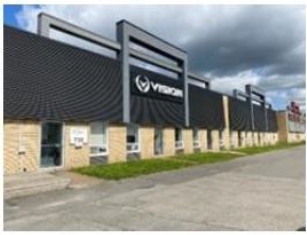 |
Boisbriand, Quebec – Manufacturing Space
Our manufacturing and office space is located in Boisbriand, Quebec, just outside of Montreal. This space is located in four adjacent units each under a separate lease with a related party. For details related to that transaction, please see “Related-Party Transactions”.
The first lease is for 3,607 square feet, has a monthly rent of approximately $4,485. The second lease is for 3,611 square feet, has a monthly rent of approximately $4,490. The third lease is for 3,607 square feet, has a monthly rent of approximately $4,485. The fourth lease is for 3,564 square feet, has a monthly rent of approximately $4,430. Each of these leases is with an entity controlled by our Chief Executive Officer. Each of these leases expires on July 31, 2026. |
 |
Ft. Lauderdale, Florida – Dealership
We operate our largest dealership in Ft. Lauderdale, Florida from two contiguous lots. The primary property serves as our main dealership showroom and sales office, featuring extensive indoor and outdoor display areas for our inventory. This facility comprises approximately 10,000 square feet in addition to a second lot of 0.46 acres of land with a 2,882 square foot building. The aggregate monthly lease payment is approximately US$100,000 and terminates on May 31, 2030.
We may purchase these properties pursuant to the Real Property Option. If we elect to do so, we will likely need to obtain a source of financing to pay the mortgages on the properties that mature in February 2032. |
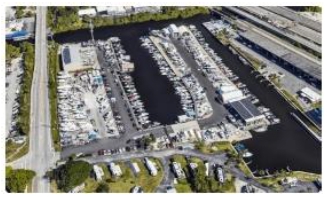 |
Ft. Lauderdale, Florida – Marina and Service Center
We lease a marina and location for additional inventory storage and service operations. This facility includes a 10-acre marina, 110 wet slips, service bays, paint tents, a 50-ton travel lift, a 32,000 lb. forklift, and office space. The current monthly lease payment is approximately US$40,000 and terminates on August 31, 2026. |
| 67 |
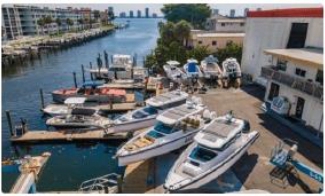 |
Palm Beach, Florida – Waterfront Dealership
We operate a waterfront dealership in Palm Beach, Florida consisting of approximately 0.75 acres of land and a 6,000 square foot building. The current monthly lease payment is approximately US$30,000 and terminates on May 31, 2026.
We may purchase this property pursuant to the Real Property Option. If we elect to do so, we will likely need to obtain a source of financing to pay the mortgage on the property that matures in January 2046. |
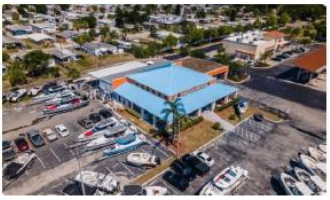 |
Tampa Bay, Florida – Dealership
We operate a dealership in Tampa Bay, Florida including approximately 3.1 acres of land, an 8,550 square foot showroom, and a 2,280 square foot covered area. The current monthly lease payment is approximately US$25,000 and terminates on May 31, 2030.
We may purchase this property pursuant to the Real Property Option. If we elect to do so, we will likely need to obtain a source of financing to pay the mortgage on the property that matures in December 2031. |
 |
Pensacola, Florida – Waterfront Dealership
We operate a leased waterfront dealership in Pensacola, Florida. The lease commenced March 1, 2025, for a one-year term with four one-year renewal options. The monthly rent is $3,250, with annual increases of 5%. |
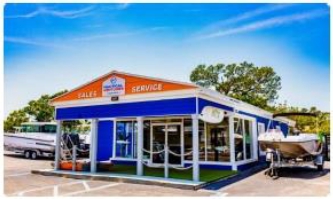 |
Sarasota, Florida – Dealership
We operate a dealership in Sarasota, Florida indirectly. The original lease term ended October 31, 2024, and has been renewed for an additional five-year period with a minimum rent of US$4,000 per month. The property includes a 1,464 square foot building on less than one acre of land and is used for boat sales and display, as well as service operations. |
 |
North Palm Beach, Florida – Watersports Showroom
We operate a watersports showroom in North Palm Beach, Florida consisting of approximately 1.46 acres (including submerged land) and a 26,258 square foot building. The current monthly lease payment is approximately US$42,000 and terminates on May 31, 2026.
We may purchase this property pursuant to the Real Property Option. If we elect to do so, we will likely need to obtain a source of financing to pay the mortgage on the property that matures in December 2031. |
| 68 |
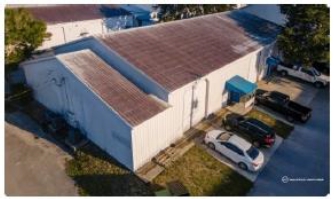 |
Palm City, Florida – Yacht Tender Service
We operate a yacht tender service property in Palm City, Florida. The property consists of 0.13 acres of land and a 6,360 square foot warehouse. The current monthly lease payment is approximately US$9,000 and terminates on May 31, 2030.
We may purchase this property pursuant to the Real Property Option. If we elect to do so, we will likely need to obtain a source of financing to pay the mortgage on the property that matures in July 2032. |
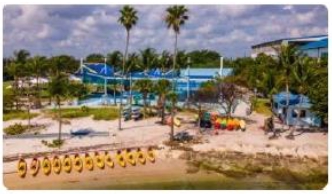 |
Riviera Beach, Florida – Kayak Rentals
We operate a kiosk providing kayak rentals in Riviera Beach, Florida which is licensed from the City of Riviera Beach, Community Redevelopment Agency under a license agreement with Seven Kings Management, Inc. The current license term runs from December 1, 2024, to November 30, 2025, with a monthly license fee of $1,250 plus applicable sales tax. The agreement is subject to annual renewal. |
 |
Ventura, California – Electric Boat Rentals
We lease a kiosk and two slips for our rental business at the Ventura Portside Marina in Ventura, California. In exchange for use of the space and common areas in the facility, we pay a monthly rent of approximately US$2,500. The lease expires on March 31, 2027. |
|
Ft. Lauderdale, Florida – Water Sports Warehouse
We lease a warehouse in Lauderdale, Florida consisting of approximately 5,157 square feet. The lease commenced July 1, 2024, for a three-year term with one two-year renewal option. The monthly base rent is $11,500 for the first two years, increasing to $11,845 thereafter. |
On October 1, 2021, we entered into a lease agreement with the developers of Waves at Dania Beach, Florida to rent office space as well as slip space for twenty-five electric boats, for monthly rent of approximately US$10,000, which lease expires on October 1, 2027. Monthly rent is payable upon the completion of the Dania Beach, Florida development, which as of the date of this prospectus is anticipated to be completed by December 2025.
MANAGEMENT’S DISCUSSION AND ANALYSIS OF FINANCIAL CONDITION AND RESULTS OF OPERATIONS
This prospectus should be read in conjunction with the accompanying financial statements and related notes. The discussion and analysis of the financial condition and results of operations of Vision Marine Technologies Inc. are based upon its financial statements, which have been prepared in accordance with International Financial Reporting Standards (IFRS), as adopted by the International Accounting Standards Board (IASB).
| 69 |
The preparation of financial statements in conformity with these accounting principles requires us to make estimates and assumptions that affect the reported amounts of assets and liabilities, disclosure of contingent liabilities at the financial statement date and reported amounts of revenue and expenses during the reporting period. On an ongoing basis, we review our estimates and assumptions. The estimates were based on historical experience and other assumptions that we believe to be reasonable under the circumstances. Actual results are likely to differ from those estimates or other forward-looking statements under different assumptions or conditions, but we do not believe such differences will materially affect our financial position or results of operations. Our actual results may differ materially as a result of many factors, including those set forth under the headings entitled “Special Note Regarding Forward-Looking Statements” and “Risk Factors.”
Critical accounting policies, the policies we believe are most important to the presentation of our financial statements and require the most difficult, subjective and complex judgments, are outlined below under the heading “Critical Accounting Policies and Estimates” and have not changed significantly since our founding.
Description of Business
The Company was incorporated on August 29, 2012, under the laws of the province of Quebec, Canada, and its principal activity is the design, development and manufacturing of electric outboard powertrain systems and electric boats.
In June 2025, we acquired Nautical Ventures and with nine locations in Florida for the sale of boats, parts and accessories and the provision of related services. We set out below a description of these different operations. As this acquisition occurred after the end of our nine-month period ended May 31, 2025, the effect of this acquisition on our financial condition and results of operations are not included in the section. For more information, see the section entitled “Prospectus Summary – Comparative Share Information” as well as the pro form unaudited financial statements for the year ended August 31, 2024 and the unaudited financial statements as of, and for the nine months ended, May 31, 2025, and the respective notes thereto, all of which are included in this prospectus.
The head office and principal address of the Company are located at 730 Boulevard du Cure-Boivin, Boisbriand, Quebec, Canada, V7G 2A7.
Selected Annual Financial Information
| Year Ended | Year Ended | Year Ended | ||||||||||
| August 31, 2024 | August 31, 2023 | August 31, 2022 | ||||||||||
| $ | $ | $ | ||||||||||
| Revenue | 3,794,345 | 5,651,502 | 7,350,946 | |||||||||
| Gross Profit | 1,497,438 | 1,536,426 | 3,285,565 | |||||||||
| Expenses | (15,813,521 | ) | (22,694,487 | ) | (16,139,007 | ) | ||||||
| Income/(Loss) before Tax | (14,316,083 | ) | (21,158,061 | ) | (12,853,442 | ) | ||||||
| Income Taxes | (255,463 | ) | (280,875 | ) | 258,343 | |||||||
| Total comprehensive income/(loss) | (13,966,200 | ) | (20,542,229 | ) | (12,802,680 | ) | ||||||
| Basic & Diluted Earnings/(Loss) per Share | (1,537.86 | ) | (3,000.46 | ) | (2,124.74 | ) | ||||||
| Balance Sheet | ||||||||||||
| Working Capital Surplus(1) | 2,888,660 | 3,636,936 | 8,727,011 | |||||||||
| Total Assets | 11,420,241 | 24,046,512 | 29,100,209 | |||||||||
| Total Long-Term Liabilities | 2,675,347 | 7,631,898 | 2,197,684 | |||||||||
(1) Working capital surplus is calculated using current assets less current liabilities.
Results of Operations
Goodwill impairment test as at February 29, 2024
Assets that have an indefinite life, such as goodwill, are tested annually by the Company for impairment, or more frequently if events or circumstances indicate there may be impairment. During the three-month period ended May 31, 2024, the Company noted certain events and circumstances which indicated that there may be an impairment of the goodwill associated with its boat rental operation CGU (see detailed description below).
| 70 |
As a result of these triggering events and circumstances, the Company performed an impairment analysis for the boat rental operation CGU as at February 29, 2024. As a result of this analysis, the Company determined that the carrying amount of the goodwill associated with the boat rental operation CGU exceeded its recoverable amount and, accordingly, the Company recorded a goodwill impairment loss of $4,274,000 for the three-month period ended February 29, 2024. As a result of this loss, the carrying amount of the goodwill associated with this CGU had been reduced to $5,431,975 as at February 29, 2024 [August 31, 2023 - $9,680,941]. Note that the goodwill was further reduced in the quarter ended May 31, 2024 following the sale of EB Rental, Ltd. See the next section for details.
The recoverable amount was determined based on the fair value less costs of disposal approach using a discounted cash flow model. The fair value measurement is categorized within Level 3 of the fair value hierarchy. The model included forecasted cash flows based on updated financial plans prepared by management covering a five-year period taking into consideration future investments and expansion activities that will enhance the performance of the assets of the CGU and the following key assumptions:
| - | Expected earnings before interest, taxes, depreciation and amortization (“EBITDA”) as a percentage of revenues for the CGU of 12.7% for the remainder of 2024, 15.8% in 2025, 19.3% in 2026, 19.9% in 2027, 20.7% in 2028 and 21.5% in 2029 and thereafter. |
| - | Expected working capital cash absorption ratio for the CGU of 20% of annual incremental sales increases. |
| - | Expected annual capital expenditure needs for the CGU of US$56,500 for the remainder of 2024, US$126,000 in 2025, US$346,800 in 2026, US$594,259 in 2027, US$229,820 in 2028, US$234,310 in 2029 and US$238,876 annually thereafter. |
The discounted cash flow model was established using a post-tax discount rate of 28.0% based on the weighted average cost of capital calculated using observable market-based inputs or benchmark of a sample of representative publicly traded companies. The terminal growth rate of 2% used is based on published long-term growth rates.
Any reasonable negative change in these key assumptions could cause additional impairment of the CGU.
In prior periods, management had based its selection of assumptions upon its assessment of the ability of the CGU to maintain the levels of growth and profitability experienced during the COVID-19 pandemic, despite the unfavorable weather conditions experienced in its key markets over the course of the fiscal year ended August 31, 2023. However, continued unfavorable weather conditions and a recent general downturn in the boating industry have had a negative impact on the CGU’s revenues and EBITDA over the first six months of the current fiscal year. In addition, management’s attempts to sell all or a portion of the Company’s boat rental operation over the third quarter of fiscal year 2024 have been largely unsuccessful, indicating a possible decline in value of the CGU. Therefore, the impairment charge was the result of management’s revised assumptions related to revenues and the expected EBITDA as a percentage of sales taking into account the current economic environment.
Sale of subsidiary
On April 25, 2024, the Company sold 100% of the shares of EB Rental, Ltd., which previously facilitated its electric boat rental operations located in Newport Beach, California, to EB Strategies Inc. for $1,089,302. The Company continues to own and operate its electric boat rental operations in Ventura, California and Palm Beach, Florida. Up until April 25, 2024, EB Strategies Inc was considered a related party whose controlling shareholder was a member of management of the Company’s boat rental operation. His employment and association with the Company ended at the close of this transaction.
The Company’s consolidated financial statements have been prepared based on the books and records maintained by the Company, and the subsidiaries that it controls. However, due to the above sale of EB Rental, Ltd., the control over this subsidiary was deemed to have been lost as of April 25, 2024. As such, the Company ceased consolidating this subsidiary as at April 25, 2024.
| 71 |
The gain on the disposal of EB Rental, Ltd. at the deconsolidation date was determined as follows:
| $ | ||||||||
| Fair Value Consideration received | 1,089,302 | |||||||
| Less: EB Rental, Ltd. net assets at disposal | ||||||||
| - EB Rental Ltd. share capital at disposal | 100 | |||||||
| - EB Rental Ltd. deficit at disposal | (165,427 | ) | (165,327 | ) | ||||
| Less: Goodwill attributable to EB Rental, Ltd. | 1,079,040 | |||||||
| Total gain on deconsolidation date | 175,589 | |||||||
On the deconsolidation date, EB Rental, Ltd.’s net assets (liabilities) were determined as follows:
| $ | ||||
| Current assets | 363,825 | |||
| Right of use assets | 804,596 | |||
| Property, plant and equipment | 555,875 | |||
| Other assets | 83,726 | |||
| Current liabilities | (1,132,115 | ) | ||
| Lease liabilities | (937,427 | ) | ||
| Other comprehensive income | 96,193 | |||
| (165,327 | ) | |||
The financial performance of EB Rental, Ltd. for the fiscal years ended August 31, 2024, 2023, and 2022 included in these consolidated financial statements are as follows:
| 2024 | 2023 | 2022 | ||||||||||
| $ | $ | $ | ||||||||||
| Revenues | 1,883,674 | 3,927,953 | 4,793,860 | |||||||||
| Cost of sales | 1,651,967 | 2,905,285 | 3,029,043 | |||||||||
| Gross profit | 231,707 | 1,022,668 | 1,764,817 | |||||||||
| Expenses | 965,745 | 1,523,595 | 1,042,494 | |||||||||
| Income (loss) before tax | (734,038 | ) | (500,927 | ) | 722,323 | |||||||
| Income tax recovery | (205,367 | ) | (181,661 | ) | 217,497 | |||||||
| Net income | (528,671 | ) | (319,266 | ) | 504,826 | |||||||
The Cash flow information related to EB Rental, Ltd. for the fiscal years ended August 31, 2024, 2023, and 2022 are as follows:
| 2024 | 2023 | 2022 | ||||||||||
| $ | $ | $ | ||||||||||
| Cash provided by (used in) operating activities | 247,185 | (243,813 | ) | 814,056 | ||||||||
| Cash used in investing activities | (23,336 | ) | (24,852 | ) | (151,569 | ) | ||||||
| Cash used in financing activities | (151,192 | ) | (283,811 | ) | (227,708 | ) | ||||||
Annual goodwill impairment test as at August 31, 2024
During the quarter ended August 31, 2024, the Company conducted its annual impairment test on the carrying value of the goodwill associated with the boat rental operation CGU in accordance with the requirements under IFRS. As a result of this analysis, the Company determined that the carrying amount of the goodwill associated with the boat rental operation CGU exceeded its recoverable amount and, accordingly, the Company recorded an additional goodwill impairment loss of $4,430,182 for the fiscal year ended August 31, 2024, which was recognized during the three-month period ended August 31, 2024. As a result of this loss, the carrying amount of the goodwill associated with this CGU has been reduced to nil as at August 31, 2024 (August 31, 2023 - $9,680,941).
The recoverable amount was determined based on the fair value less costs of disposal approach using a discounted cash flow model. The fair value measurement is categorized within Level 3 of the fair value hierarchy. The model included revised forecasted cash flows based on updated financial plans prepared by management covering a five-year period taking into consideration the performance of the CGU since the previous impairment test conducted as at February 29, 2024. The following key assumptions were used:
| 72 |
| - | Expected earnings before interest, taxes, depreciation and amortization (“EBITDA”) as a percentage of revenues for the CGU of -11% in 2025, 4% in 2026, and 10% in 2027 and thereafter. |
| - | Expected working capital cash absorption ratio for the CGU of 10% of annual incremental sales increases. |
| - | Expected annual capital expenditure needs for the CGU of US$185,000 in 2025, US$98,040 in 2026, US$47,000 in 2027, US$63,000 in 2028, US$71,000 in 2029 and US$71,680 annually thereafter. |
The discounted cash flow model was established using a post-tax discount rate of 29.0% based on the weighted average cost of capital calculated using observable market-based inputs or benchmark of a sample of representative publicly traded companies. The terminal growth rate of 2% used is based on published long-term growth rates.
When reviewing the performance of the boat rental operation CGU since the sale of EB Rental, Ltd., management revised its forecasted cash flows downward following disappointing results over the last two quarters at its rental locations, particularly at its Palm Beach, Florida location where the Company had projected strong EBITDA due to its unique revenue sharing model which was expected to generate greater margins then the Company’s other locations.. Specifically, management revised downward the forecasted revenues and EBITDA in future periods due to continued unfavourable weather conditions, particularly in the peak summer months. It has now become more likely than not that such weather conditions will be the norm rather than an anomaly as was determined in the past. In addition, the boat rental operation at Palm Beach, Florida has also had to deal with more days of high winds and tides due to its closer proximity to the ocean which has resulted in its inability to operate on those days. Finally, the opening of the Dania Beach, Florida facility has been delayed by a further three months than previously forecasted which had a negative impact on the forecasted cash flows. Therefore, as a result of these new factors, management revised its assumptions related to revenues and the expected EBITDA as a percentage of sales which resulted in the goodwill impairment loss.
Fiscal year ended August 31, 2024
Revenue for the fiscal year ended August 31, 2024 was $3,794,345 (August 31, 2023: $5,651,502); the decrease of 33% resulted from a decrease in the revenue generated by the Company’s rental operations which was partially offset by an increase in sales of electric boats. The Company’s gross profit remained relatively flat at $1,497,438 (August 31, 2023: $1,536,426) despite the decrease in sales due largely to the onerous provision of $91,667 for an expected loss on sales of E-Motion™ recorded during the corresponding prior period. The following provides an analysis of the sale of electric boats and revenue from rental operations:
| Fiscal year ended | Fiscal year ended | Increase | ||||||||||
| August 31, 2024 | August 31, 2023 | (Decrease) | ||||||||||
| Sale of Electric Boats | 1,847,918 | 1,612,699 | 15 | % | ||||||||
| Rental of electric boats | 1,946,427 | 4,038,803 | (52 | )% | ||||||||
| $ | 3,794,345 | $ | 5,651,502 | (33 | )% | |||||||
During the fiscal year ended August 31, 2024, the Company incurred a net loss of $14,060,620 compared to a net loss of $20,877,186 for the corresponding prior period. The decrease in net loss was due primarily to lower operating costs, as well as non-operating items such as an increase in net finance income offset by a goodwill impairment loss of $8,704,182 incurred in the year (see explanation above). Overall, the Company’s operating expenses for the fiscal year ended August 31, 2024 were $14,731,988 (August 31, 2023: $21,779,493), representing a 32% decrease when compared to the corresponding prior period.
The following variances were observed for the fiscal year ended August 31, 2024:
| · | Research and development costs for the fiscal year ended August 31, 2024 were $2,739,022 (August 31, 2023: $5,704,912); the decrease was due to the Company moving towards the production of its E-Motion™ powertrains, thus reducing research and development costs during the period which was partially offset by the fitting of the Company’s E-Motion™ powertrains to third party prototypes for testing purposes. |
| · | Office salaries and benefits for the fiscal year ended August 31, 2024 were $3,307,420 (August 31, 2023: $4,014,181). The decrease is due to reduced staffing since the beginning of the current fiscal year. |
| · | Selling and marketing expenses for the fiscal year ended August 31, 2024 decreased to $2,021,930 (August 31, 2023: $3,470,772) due to less attendance at boat shows, and decreased marketing and investor relations costs. |
| · | Professional fees for the fiscal year ended August 31, 2024 decreased to $3,251,172 (August 31, 2023: $3,764,465) due to a decrease in fees paid to advisors to the Company. |
| 73 |
| · | Office and general expenses for the fiscal year ended August 31, 2024 were $2,360,816 (August 31, 2023: $3,100,024). The decrease is due to cost-cutting measures the Company began implementing since the beginning of the current fiscal year. |
| · | Share-based compensation for the fiscal year ended August 31, 2024 decreased to $220,752 (August 31, 2023: $1,136,182), as the Company granted 742 stock options during the fiscal year ended August 31, 2024. The costs include past grants of stock options which are recognized when the stock options are vested. The Company recognizes compensation expense for option grants based on the fair value at the date of grant using the Black-Scholes valuation model. |
| · | For the fiscal year ended August 31, 2024, the Company realized net finance income of $7,480,761 (August 31, 2023: net finance expense of $1,604,536). This positive variance was caused primarily by gains on derivative liabilities related to the fair value adjustments caused by the issuance of warrants and preferred shares which are classified as derivative liabilities for accounting purposes rather than equity, partially offset by transaction costs related primarily to the Series A and B Convertible Preferred Share issuances and a loss incurred on the exchange of warrants which occurred on August 16, 2024 (see Financings section above for details). |
In addition to the above, the Company incurred an impairment on an investment in the corresponding prior period. The Company impaired its investment in convertible debentures in The Limestone Boat Company due to its announcement that its wholly-owned subsidiaries have filed for voluntary petitions for relief under Chapter 7 of the Bankruptcy Code of the U.S. Bankruptcy Court for the Middle District of Tennessee. As a result, the Company had impaired 100% of the value of its investment in Limestone during the fiscal year ending August 31, 2023 realizing a loss of $2,637,000. No loss or gain related to this investment was recognized in the fiscal year ending August 31, 2024.
Three-month period ended May 31, 2025
Revenue for the three-month month period ended May 31, 2025 was $283,553 (May 31, 2024: $1,060,153); the decrease of 73% resulted primarily from a decrease in the revenue generated by the Company’s boat rental operations which were largely affected by the sale of EB Rental, Ltd. (“EBR”) in April 2024. Excluding the revenues generated by EBR in the corresponding prior period, the decrease in revenue for the period would have been 56%. A general downturn in the boating industry as well as severe weather are the primary reasons for this drop in revenue. The Company sold its first E-Motion™ Electric Powertrain System in the three-month period ended May 31, 2025. The Company recognized a gross profit of $32,936 for the three-month period ended May 31, 2025 compared to a gross profit of $450,037 in the corresponding prior period. The decrease is due primarily to the decrease in revenues in the three-month period ended May 31, 2025. The following provides an analysis of the sale of electric boats and revenue from boat rental operations:
| Three-month period ended May 31, 2025 | Three-month period ended May 31,2024 | Decrease | ||||||||||
| Sale of Electric Boats | 160,372 | 599,380 | (73 | )% | ||||||||
| Rental of electric boats | 45,156 | 460,773 | (90 | )% | ||||||||
| Sale of E-Motion™ powertrains | 80,025 | — | N/A | |||||||||
| $ | 285,553 | $ | 1,060,153 | (73 | )% | |||||||
During the three-month period ended May 31, 2025, the Company incurred a net loss of $7,189,450 compared to a net loss of $3,025,977 for the corresponding prior period. The increase in net loss was mainly attributable to litigation settlement costs accrued in the three-month period ended May 31, 2025 resolving an outstanding legal claim related to certain of its Series A Convertible Preferred shareholders. Overall, the Company’s operating expenses for the three-month period ended May 31, 2025 were $3,779,850 (May 31, 2024: $3,185,282), representing a 19% increase when compared to the corresponding prior period.
The following variances were observed for the three-month period ended May 31, 2025:
| · | Research and development costs for the three-month period ended May 31, 2025 were $738,522 (May 31, 2024: $628,578); the increase was due to integration costs related to the fitting of the Company’s E-Motion™ powertrains to third party prototypes for testing purposes with several major boat manufacturers including Smoker Craft Inc., Massimo Marine and STERK. |
| · | Office salaries and benefits for three-month period ended May 31, 2025 were $716,788 (May 31, 2024: $791,409). The decrease is due to reduced staffing since the beginning of the prior fiscal year. |
| 74 |
| · | Selling and marketing expenses for the three-month period ended May 31, 2025 were $1,033,713 (May 31, 2024: $326,877) due to increased attendance at boat shows as well as increased marketing and investor relations costs. |
| · | Professional fees for the three-month period ended May 31, 2025 increased to $697,229 (May 31, 2024: $587,990) due to increased legal costs associated with required regulatory filings as well the organization of a general shareholders’ meeting in the quarter. |
| · | Office and general expenses for the three-month period ended May 31, 2025, were $450,675 (May 31, 2024: $585,364) due to cost-cutting measures the Company began implementing since the beginning of the prior fiscal year. |
| · | Share-based compensation for the three-month period ended May 31, 2025 decreased to $11,787 (May 31, 2024: $46,270), as the Company had not granted any stock options during the three-month period ended May 31, 2025. The costs include past grants of stock options which are recognized when the stock options are vested. The Company recognizes compensation expense for option grants based on the fair value at the date of grant using the Black-Scholes valuation model. |
| · | Net finance expense for the three-month period ended May 31, 2025 amounted to $3,400,886 (May 31, 2024: $453,301). This amount consisted primarily of accrued litigation settlement costs of $2,813,511 (May 31, 2024: nil) related to the resolution of an outstanding legal claim related to certain of its Series A Convertible Preferred shareholders. |
Nine-month period ended May 31, 2025
Revenue for the nine-month month period ended May 31, 2025 was $533,246 (May 31, 2024: $2,775,156); the decrease of 81% resulted primarily from a decrease in the revenue generated by the Company’s boat rental operations which were largely affected by the sale of EB Rental, Ltd. (“EBR”) in April 2024. Excluding the revenues generated by EBR in the corresponding prior period, the decrease in revenue for the period would have been 39%. A general downturn in the boating industry as well as severe weather are the primary reasons for this drop in revenue. The Company sold its first E-Motion™ Electric Powertrain System in the nine-month month period ended May 31, 2025. The Company recognized a gross loss of $23,206 for the nine-month period ended May 31, 2025 compared to a gross profit of $1,105,648 in the corresponding prior period. The decrease is due primarily to the decrease in revenues in the nine-month month period ended May 31, 2025. The following provides an analysis of the sale of electric boats and revenue from boat rental operations:
| Nine-month period ended May 31, 2025 | Nine-month period ended May 31, 2024 | Decrease | ||||||||||
| Sale of Electric Boats | 359,096 | 893,998 | (60 | )% | ||||||||
| Rental of electric boats | 94,125 | 1,881,158 | (95 | )% | ||||||||
| Sale of E-Motion™ powertrains | 80,025 | — | N/A | |||||||||
| $ | 533,246 | $ | 2,775,156 | (81 | )% | |||||||
During the nine-month period ended May 31, 2025, the Company incurred a net loss of $12,344,937 compared to a net loss of $10,407,997 for the corresponding prior period. The increase in net loss was mainly attributable to litigation settlement costs accrued in the nine-month month period ended May 31, 2025 resolving an outstanding legal claim related to certain of its Series A Convertible Preferred shareholders and a decrease in gains attributable to mark to market valuations of the Company’s derivative liabilities at the balance sheet date, which were partially offset by the absence of a goodwill impairment loss of $4,274,000 which occurred in the corresponding prior period. Overall, the Company’s operating expenses for the nine-month period ended May 31, 2025 were $10,991,954 (May 31, 2024: $11,437,853), representing a 4% decrease when compared to the corresponding prior period.
The following variances were observed for the nine-month period ended May 31, 2025:
| ● | Research and development costs for the nine-month period ended May 31, 2025 were $1,782,507 (May 31, 2024: $1,947,815); the decrease was due to the Company moving towards the production of its E-Motion™ powertrains, thus reducing core research and development costs during the period, which was partially offset by integration costs related to the fitting of the Company’s E-Motion™ powertrains to third party prototypes for testing purposes with several major boat manufacturers including Smoker Craft Inc., Massimo Marine and STERK. |
| 75 |
| ● | Office salaries and benefits for nine-month period ended May 31, 2025 were $2,151,659 (May 31, 2024: $2,696,635). The decrease is due to reduced staffing since the beginning of the prior fiscal year. |
| ● | Selling and marketing expenses for the nine-month period ended May 31, 2025 were $2,641,459 (May 31, 2024: $1,727,701) due to increased attendance at boat shows as well as increased marketing and investor relations costs. |
| ● | Professional fees for the nine-month period ended May 31, 2025 increased to $2,705,781 (May 31, 2024: $2,194,337), due to increased legal costs associated with required regulatory filings related to various capital raises in the period as well the organization of a general shareholders’ meeting in the period. |
| ● | Office and general expenses for the nine-month period ended May 31, 2025, were $1,296,789 (May 31, 2024: $2,045,738) due to cost-cutting measures the Company began implementing since the beginning of the prior fiscal year. |
| ● | Share-based compensation for the nine-month period ended May 31, 2025 decreased to $44,214 (May 31, 2024: $192,622), as the Company had not granted any stock options during the nine-month period ended May 31, 2025. The costs include past grants of stock options which are recognized when the stock options are vested. The Company recognizes compensation expense for option grants based on the fair value at the date of grant using the Black-Scholes valuation model. |
| ● | For the nine-month period ended May 31, 2025, the Company realized net finance expense of $1,320,950 (May 31, 2024: net finance income of $3,909,102). This unfavorable variance was due primarily to decreased gains attributable to the period-end fair value adjustments caused by the issuance of warrants and preferred shares which are classified as derivative liabilities for accounting purposes rather than equity of $3,094,832 (May 31, 2024: $5,913,484), as well as accrued litigation settlement costs of $2,813,511 (May 31, 2024: nil) related to the resolution of an outstanding legal claim related to certain of its Series A Convertible Preferred shareholders. |
| 76 |
Liquidity and Capital Resources
Prior to June 23, 2025, the Company’s operations consisted of the designing, developing and manufacturing of electric outboard powertrain systems, rental of electric boats and electric boats sales. On June 23, 2025, the Company expanded its operations to include dealerships for the sale of boats, parts and accessories manufactured by third parties as well as the provision of related services. The Company’s financial success depends upon its ability to market and sell its outboard powertrain systems and electric boats; to sell boats, parts and accessories as well as related services through its dealerships; and to raise sufficient working capital to enable the Company to execute its business plan. The Company’s historical capital needs have been met by internally generated cashflow from operations and the support of its shareholders. During the year ended August 31, 2021, the Company raised gross proceeds of US$27,600,000 from its initial public offering onto the Nasdaq, and during the year ended August 31, 2023, the Company raised $12,437,523. In addition, during the fiscal year ended August 31, 2024, the Company raised $8,326,492. During the nine-month period ended May 31, 2025, the Company raised a further $27,145,659. However, should the Company need further funding, there is no assurance that funding will be possible at the times required by the Company. If no funds can be raised and sales of its outboard powertrain systems and electric boats does not produce sufficient net cash flow, then the Company may require a significant curtailing of operations to ensure its survival.
The interim condensed consolidated financial statements have been prepared on a going concern basis which assumes that the Company will be able to realize its assets and discharge its liabilities in the normal course of business for the foreseeable future. The Company generated a net loss before tax of $12,334,407, and a net loss of $12,344,937 during the nine-month period ended May 31, 2025 and had a cash balance and a working capital surplus of $10,891,002 and $16,182,610, respectively, as at May 31, 2025. The Company’s ability to meet its obligations as they fall due and to continue to operate as a going concern depends on the continued financial support of the creditors and the shareholders. In the past, the Company has relied on the support of its shareholders to meet its cash requirements. There can be no assurance that funding from this or other sources will be sufficient in the future to continue its operations. Even if the Company is able to obtain new financing, it may not be on commercially reasonable terms or terms that are acceptable to it. Failure to obtain such financing on a timely basis could cause the Company to reduce or terminate its operations.
The Company is evaluating several different strategies and is actively pursuing actions that are expected to increase its liquidity position, including, but not limited to, pursuing additional cost savings initiatives, seeking additional financing from both the public and private markets through the issuance of equity securities, and potentially selling assets which do not align with the Company’s outlook of future operations. However, the Company’s management cannot provide assurances that the Company will be successful in accomplishing any of its proposed financing plans. These matters, when considered in aggregate, indicate the existence of a material uncertainty that raises substantial doubt about the Company’s ability to continue as a going concern for at least 12 months from the issuance of the interim condensed consolidated financial statements for the nine-month period ended May 31, 2025.
As of July 11, 2025, the Company had 1,157,137 issued and outstanding common shares and 1,886,551 on a fully diluted basis. In addition, there are up to 505,102 common shares that are issuable but contingent on court approval of a litigation settlement with certain Series A Convertible Preferred shareholders (250,000 common shares issuable) and the exercise of the option to acquire the six real estate properties of Nautical Ventures (up to 255,102 common shares issuable). If those events were to materialize, the total outstanding common shares on a fully diluted basis would be 2,391,653.
The Company had $16,182,610 of working capital surplus as at May 31, 2025 compared to $923,886 working capital surplus as at August 31, 2024. The increase in working capital surplus during the nine-month period ended May 31, 2025 resulted from the cash used in operations of $15,442,572 (May 31, 2024: $11,135,794); cash used for investing activities of $449,025 (May 31, 2024: cash provided by investing activities of $603,561) resulting primarily from the additions to property and equipment of $312,420 (May 31, 2024: $465,463) and intangible assets of $136,605 (May 31, 2024: $50,653). Note that, for the nine-month period ended May 31, 2024, the Company generated net proceeds from the sale of a subsidiary and the disposal of equipment of $993,109 and $126,568, respectively, which did not materialize in quarter ended May 31, 2025; financing activities provided cash of $26,719,473 (May 31, 2024: $7,514,284), caused mainly by the issuance of various securities of $27,145,659 (May 31, 2024: $8,326,492), and by an increase in long-term debt of $280,500 (May 31, 2024: $247,000). These increases were partially offset by the repayment of lease liabilities of $108,928 (May 31, 2024: $517,497), the repayment of long-term debt of $495,734 (May 31, 2024: $386,711) and the repayment of advances from related parties of $102,024 (May 31, 2024: nil).
| 77 |
Capital Resources
As at May 31, 2025, the Company had cash of $10,891,002 (August 31, 2024: $63,126).
As of the date of this prospectus, the Company has no outstanding commitments, other than rent and lease commitments and purchase commitments as disclosed in notes 11 and 22 of the Company’s interim condensed consolidated financial statements for the three-month and nine-month periods ended May 31, 2025, as well as the following lease commitments of Nautical Ventures following its acquisition in June 2025:
| US$ | ||||
| 2025 | 1,237,554 | |||
| 2026 | 1,724,600 | |||
| 2027 | 1,365,300 | |||
| 2028 | 1,365,300 | |||
| 2029 and thereafter | 2,047,950 | |||
Off-Balance Sheet Arrangements
The Company has no off-balance sheet arrangements.
Trend Information
The Company’s results of operations and financial condition are expected to continue to be affected by the following trends, uncertainties, and events:
| · | Liquidity Constraints and Capital Requirements – The Company has incurred recurring losses from operations and negative cash flows, and expects these trends to continue until sales volumes increase significantly. The Company is pursuing a registered public offering under Form F-1 to raise additional capital. There can be no assurance that such financing will be completed on terms acceptable to the Company, or at all. Failure to obtain sufficient financing may materially limit the Company’s ability to fund ongoing operations and execute its growth strategy. |
| · | Integration of Nautical Ventures – The Company is in the process of integrating Nautical Ventures which requires significant management attention and financial resources and is expected to result in incremental costs and operational disruption in the near term. There can be no assurance that anticipated synergies will be realized within the expected time frame, or at all. |
| · | Change in Presentation Currency – The Company anticipates changing its presentation currency from the Canadian dollar to the U.S. dollar as of the fiscal year ended August 31, 2025. This transition exposes the Company to fluctuations in foreign exchange rates, which may result in volatility in reported results and reduced comparability to prior periods. |
| · | Uncertain Market Adoption of Electric Marine Propulsion – While regulatory initiatives and consumer interest in sustainable alternatives are expected to drive growth in the marine electrification market, the pace of adoption remains uncertain. Customers may be slow to transition away from traditional internal combustion systems due to concerns about cost, range, infrastructure, and product reliability. Any delay in widespread adoption may materially affect the Company’s sales growth. |
| · | Supply Chain Risks and Cost Pressures – The Company relies on third-party suppliers for key components, including battery cells and electronic systems. Global supply chain disruptions, raw material shortages, and rising input costs may continue to adversely affect production schedules and gross margins. The Company may not be able to pass on increased costs to customers in a timely manner. |
| · | Dependence on Strategic Partnerships – The Company’s growth strategy relies heavily on partnerships with boat manufacturers and distributors. If these partners fail to adopt or promote the Company’s technology as expected, or if such relationships are delayed, modified, or terminated, the Company’s market penetration could be adversely affected. |
| · | Evolving Regulatory Environment – Although environmental regulations in North America and Europe are increasingly favorable to electrification, regulatory implementation timelines and requirements remain uncertain. Any delays in policy enforcement, changes in government priorities, or the emergence of competing regulatory incentives could negatively impact the Company’s anticipated market opportunities. |
| 78 |
Quantitative and Qualitative Disclosures About Market Risk
We are exposed in varying degrees to a variety of financial instrument related risks. Our Board approves and monitors the risk management processes, inclusive of controlling and reporting structures. The type of risk exposure and the way in which such exposure is managed is provided as follows:
Credit risk
Credit risk refers to the risk that a counterparty will default on its contractual obligations resulting in financial loss to us. We have a strict code of credit, including obtaining instalment payments, obtaining agency credit information and setting appropriate credit limits. The maximum exposure to credit risk at the reporting date, is the carrying amount of financial assets. We do not hold any collateral. Generally, trade receivables are written off when there is no reasonable expectation of recovery. Indicators of this include the failure for a debtor to engage in a repayment plan, no active enforcement activity and a failure to make contractual payments. Credit risk related with the debentures is reflected in the fair value of the instrument. Trade and other receivables are generally written off when there is no reasonable expectation of recovery. Indicators of this include the failure for a debtor to engage in a repayment plan, no active enforcement activity and a failure to make contractual payments.
Liquidity risk
Liquidity risk is the risk that we will encounter difficulty in meeting our financial obligations as they fall due. We are exposed to liquidity risk primarily from our trade and other payables, other financial liabilities and long-term debt. We believe that our recurring financial resources are adequate to cover all our expenditures.
| Contractual | Less than | Greater than | ||||||||||||||
| cash flows | one year | 1-5 years | 5 years | |||||||||||||
| $ | $ | $ | $ | |||||||||||||
| August 31, 2024 | ||||||||||||||||
| Trade and other payables | 2,062,044 | 2,062,044 | — | — | ||||||||||||
| Long-term debt | 458,640 | 101,397 | 357,243 | — | ||||||||||||
| 2,520,684 | 2,163,441 | 357,243 | — | |||||||||||||
| August 31, 2023 | ||||||||||||||||
| Trade and other payables | 550,836 | 550,836 | — | — | ||||||||||||
| Other financial liabilities | 113,694 | 113,694 | — | — | ||||||||||||
| Long-term debt | 305,329 | 231,546 | 73,783 | — | ||||||||||||
| 969,859 | 896,076 | 73,783 | — | |||||||||||||
Interest rate risk
We are exposed to interest rate risk on our variable rate bank indebtedness and variable and fixed rate long-term debt. Fixed-rate borrowings exposes us to fair value risk while variable rate borrowings exposes us to cash flow risk.
Foreign exchange risk
Foreign exchange risk is the risk that the value of a financial instrument will fluctuate due to changes in foreign exchange rates. We have certain financial assets and liabilities denominated in United States dollars. The Canadian dollar equivalent carrying amounts of these assets and liabilities are as follows:
| 2024 | 2023 | |||||||
| $ | $ | |||||||
| Cash | 38,107 | 3,258,419 | ||||||
| Trade and other receivables | 28,488 | 188,001 | ||||||
| Trade and other payables | 2,224,737 | 800,149 | ||||||
Sensitivity
A reasonably possible 1% strengthening (weakening) of the U.S. dollar against the Canadian Dollar at the reporting date would have increased (decreased) net income (loss) and other comprehensive income by the amounts shown below. This analysis assumes that all other variables remain constant.
| Net income (loss) | Other comprehensive income | ||||||||
| +5 | % | -5 | % | +5 | % | -5 | % | ||
| $ | $ | $ | $ | ||||||
| August 31, 2024 | 107,907 | (107,907 | ) | (17,658 | ) | 17,658 | |||
| 79 |
Fair value measurement and hierarchy
The fair value measurement of our financial and non-financial assets and liabilities utilizes market observable inputs and data as far as possible. Inputs used in determining fair value measurements are categorized into different levels based on how observable the inputs used in the valuation technique utilized are (the ‘fair value hierarchy’):
- Level 1: Quoted prices in active markets for identical items (unadjusted);
- Level 2: Observable direct or indirect inputs other than Level 1 inputs; and
- Level 3: Unobservable inputs (i.e. not derived from market data).
The classification of an item into the above levels is based on the lowest level of the inputs used that has a significant effect on the fair value measurement of the item. Transfers of items between levels are recognized in the period they occur.
The carrying amount of trade and other receivables, advances to related parties, trade and other payables and advances from related parties are assumed to approximate their fair value due to their short-term nature.
The fair value of financial liabilities is estimated by discounting the remaining contractual maturities at the current market interest rate that is available for similar financial liabilities.
Classified as Level 3, the fair value of Debentures was estimated using the partial differential equation model to value convertible debentures that include a call feature. Key assumptions used in the model include volatility, which was based on actual trading data, difference in volatility since initial issuance of the instrument and similar instruments on the market, and credit spread, which was based on corporate bond yield spreads in the market and credit spread data for similar public companies. The model included a fair value adjustment based on an initial calibration exercise. During the fiscal year ended August 31, 2023, the Company recorded an impairment loss on the Debentures based on the estimated recoverable amount of the financial asset.
The fair value of the derivative liabilities related to the warrants issued is classified as Level 3 in the fair value hierarchy and is calculated using the Black-Scholes Option Pricing Model using the historical volatility of comparable companies as an estimate of future volatility. As at August 31, 2024, the Company used volatility of approximately 83% to 88% over the remaining contractual life in order to determine the fair value of the derivative liabilities.
The fair value of the derivative liabilities related to the Series A and B Convertible Preferred Shares is classified as Level 3 in the fair value hierarchy and is calculated using the Monte Carlo simulation run under the Geometric Brownian Motion model. The significant input assumptions into the model for each valuation date include the starting share price, a 70% volatility applied to the Series A and Series B Convertible Preferred Shares as at the issuance date, a 75% volatility applied to the Series A and Series B Convertible Preferred Shares as at August 31, 2024 and a risk-free rate based on the U.S. treasury rates matching the duration of each component of the Series A and Series B Convertible Preferred Shares.
Significant Accounting Policies
Cash and cash equivalents
Cash and cash equivalents include cash on hand, cash held on trust, deposits held at call with banks, other short term highly liquid investments with original maturities of three months or less.
Trade and other receivables
Trade receivables are initially recognized at fair value and subsequently measured at amortized cost using the effective interest method, less any allowance for expected credit losses. Trade receivables are generally due for settlement within 30 days.
The Company has applied the simplified approach to measuring expected credit losses, which uses a lifetime expected loss allowance. To measure the expected credit loss, trade receivables have been grouped based on days overdue.
Other receivables are recognized at amortized cost, less any allowance for expected credit loss.
| 80 |
Inventories
Inventories are stated at the lower of cost and net realizable value. Raw materials are valued on a first-in first-out basis. Cost of work in progress and finished goods comprises direct materials and delivery costs, direct labor, import duties and other taxes, and appropriate proportion of variable and fixed overhead expenditure based on normal operating capacity. Cost of purchased inventory is determined after deducting rebates and discounts received or receivable.
Net realizable value is the estimated selling price in the ordinary course of business less estimated costs of completion and the estimated costs necessary to make the sale.
Grants and investment tax credits
Government grants are recognized where there is reasonable assurance that the grant will be received and all attached conditions will be complied with. When the grant relates to an expense item, it is recognized as income on a systematic basis over the periods that the related costs, for which it is intended to compensate, are expensed. Where retention of a government grant is dependent on the Company satisfying certain criteria, it is initially recognized as deferred income. When the criteria for retention have been satisfied, the deferred income balance is released to the statement of consolidated comprehensive loss or netted against the asset purchased.
Leases
Right-of-use assets
The Company recognizes right-of-use assets at the commencement date of the lease (i.e., the date the underlying asset is available for use). Right-of-use assets are measured at cost, less any accumulated depreciation and impairment losses, and adjusted for any remeasurement of lease liabilities. The cost of right-of-use assets includes the amount of lease liabilities recognized, initial direct costs incurred, and lease payments made at or before the commencement date less any lease incentives received. Unless the Company is reasonably certain to obtain ownership of the leased asset at the end of the lease term, the recognized right-of-use assets are depreciated on a straight-line basis over the shorter of its estimated useful life and the lease term ranging from two to six years. Right-of-use assets are subject to impairment.
Lease liabilities
At the commencement date of the lease, the Company recognizes lease liabilities measured at the present value of lease payments to be made over the lease term. The lease payments include fixed payments (including in-substance fixed payments) less any lease incentives receivable and variable lease payments that depend on an index or a rate. The lease payments also include the exercise price of a purchase option reasonably certain to be exercised by the Company and payments of penalties for terminating a lease, if the lease term reflects the Company exercising the option to terminate. The variable lease payments that do not depend on an index or a rate are recognized as expense in the period on which the event or condition that triggers the payment occurs. In calculating the present value of lease payments, the Company uses the incremental borrowing rate at the lease commencement date if the interest rate implicit in the lease is not readily determinable. After the commencement date, the amount of lease liabilities is increased to reflect the accretion of interest and reduced for the lease payments made. Interest accretion is recorded as interest expense in finance costs. In addition, the carrying amount of lease liabilities is remeasured if there is a modification, a change in the lease term, a change in the in- substance fixed lease payments or a change in the assessment to purchase the underlying asset.
Short-term leases and leases of low-value assets
The Company applies the short-term lease recognition exemption to its short-term leases that have a lease term of 12 months or less from the commencement date and do not contain a purchase option. It also applies the lease of low-value assets recognition exemption to leases of office equipment that are considered of low value (i.e., below $5,000). Lease payments on short-term leases and leases of low-value assets are recognized as expense on a straight-line basis over the lease term. For the year-ended August 31, 2024, the expense for leases of low- value assets is insignificant.
Property and equipment
Property and equipment is stated at cost less accumulated depreciation and accumulated impairment losses, if any. Cost includes expenditures that are directly attributable to the acquisition of the asset.
Depreciation is recorded to recognize the cost of assets over their useful lives. The estimated useful lives and depreciation methods are reviewed at the end of each reporting period, with the effect of any changes in estimate accounted for on a prospective basis.
| 81 |
| Asset type | Methods | Rates | ||
| Computer equipment | Declining balance method | 55% | ||
| Machinery and equipment | Declining balance method | 20% | ||
| Rolling stock | Declining balance method | 30% | ||
| Leasehold improvements | Straight-line method | Over the term of the lease | ||
| Boat rental fleet | Straight-line method | 15 years | ||
| Moulds | Straight-line method | 25 years |
Any item of property and equipment is derecognized upon disposal or when no future economic benefits are expected to arise from the continued use of the asset. Any gain or loss arising on the disposal or retirement of an asset is determined as the difference between the sales and proceeds and the carrying amount of the asset and is recognized in profit or loss.
Repairs and maintenance costs that do not improve or extend productive life are recognized in profit or loss in the period in which the costs are incurred.
Intangible assets and goodwill
Expenditure on research activities is recognized in net earnings as incurred.
Development expenditure is capitalized only if the expenditure can be measured reliably, the product or process is technically and commercially feasible, future economic benefits are probable and the Company intends to and has sufficient resources to complete development and to use or sell the asset. Otherwise, it is recognized in net earnings as incurred. The Company has not capitalized any development costs. When awarded government grants and income tax credits, the Company recognizes the income either in net loss, netted with the related expenses, or as a reduction of the cost, when related with capitalized development expenditure.
Goodwill arising from business combinations is initially recognized when the fair value of the separately identifiable assets the Company acquired and liabilities the Company assumed is lower than the consideration paid (including the recognized amount of the non-controlling interest, if any). If the fair value of the consideration transferred is lower than that of the separately identified assets and liabilities, the Company immediately recognizes the difference as a gain in the consolidated statement of comprehensive loss.
Other intangible assets, including intellectual property, software, trade name, backlog and website that have finite useful lives are measured at cost less accumulated amortization and accumulated impairment losses.
Amortization is calculated over the cost of the asset less its residual value. Amortization is recognized in net earnings on a straight-line basis over the estimated useful lives of intangible assets from the date that they are available for use. The estimated useful lives are as follows:
| Asset type | Methods | Rates | ||
| Intellectual property | Straight-line method | 10 years | ||
| Software | Straight-line method | 7 years | ||
| Trade name | Straight-line method | 5 years | ||
| Backlog | Straight-line method | 3 years | ||
| Website | Straight-line method | 5 years |
Amortization methods, useful lives and residual values are reviewed at each reporting date and adjusted if appropriate.
Impairment of non-financial assets
Non-financial assets other than goodwill
At the end of each reporting period, the Company reviews the carrying amounts of its non-financial assets, other than goodwill, to determine whether there is any indication of impairment. If any such indication exists, the recoverable amount of the asset is estimated. Where it is not possible to estimate the recoverable amount of an individual asset, assets are grouped together into the smallest group of assets that generates cash inflows from continuing use that are largely independent of the cash inflows of other assets or groups of assets (the “cash- generating unit”, or “CGU”).
| 82 |
Recoverable amount is the greater of fair value less costs to sell and value in use. In assessing value in use, the estimated future cash flows are discounted to their present value using a discount rate that reflects current market assessments of the time value of money and the risks specific to the asset or CGU. If the recoverable amount of an asset or CGU is lower than its carrying amount, the carrying amount is reduced to its recoverable amount. An impairment loss is recognized immediately in the consolidated statement of comprehensive loss.
Where an impairment loss subsequently reverses, the carrying amount of the asset or CGU is increased to the revised recoverable amount, to the extent that the carrying amount does not exceed the carrying amount that would have been determined had no impairment loss been recognized. A reversal of an impairment loss is recognized immediately in the consolidated statement of comprehensive loss.
Goodwill
After initial recognition, goodwill is measured at cost less any accumulated impairment losses. For purposes of impairment testing, goodwill is allocated to each of the Company’s CGU (or groups of CGUs) that is expected to benefit from the synergies of the combination. A CGU to which goodwill has been allocated is tested for impairment annually, or more frequently when there is indication that the CGU may be impaired. If the recoverable amount of the CGU is less than its carrying amount, the impairment loss is allocated first to reduce the goodwill allocated to the CGU and then, to reduce the carrying amounts of the other assets in the CGU on a pro-rata basis. Any impairment loss is recognized in the consolidated statement of comprehensive loss. An impairment loss recognized for goodwill is not reversed in subsequent periods.
Trade and other payables
These amounts represent liabilities for goods and services provided to the entity prior to the end of the financial year and which are unpaid. Due to their short-term nature, they are measured at amortized cost and are not discounted. The amounts are unsecured and are usually paid within 30 days of recognition.
Provisions
Provisions are recognized when the Company has a present obligation as a result of a past event, it is probable the Company will be required to settle the obligation, and a reliable estimate can be made of the amount of the obligation. The amount recognized as a provision is the best estimate of the consideration required to settle the present obligation at the reporting date, taking into account the risks and uncertainties surrounding the obligation. If the time value of money is material, provisions are discounted using a current pre-tax rate specific to the liability. The increase in the provision resulting from the passage of time is recognized as a finance cost.
Onerous contracts
An onerous contract is a contract under which the unavoidable costs (i.e., the costs that the Company cannot avoid because it has the contract) of meeting the obligations under the contract exceed the economic benefits expected to be received under it. The unavoidable costs under a contract reflect the least net cost of exiting from the contract, which is the lower of the cost of fulfilling it and any compensation or penalties arising from failure to fulfil it. The cost of fulfilling a contract comprises the costs that relate directly to the contract (i.e., both incremental costs and an allocation of costs directly related to contract activities).
When the Company has a contract that is onerous, the present obligation under the contract is recognized and measured as a provision. However, before a separate provision for an onerous contract is established, the Company recognizes any impairment loss that has occurred on assets used in fulfilling the contract.
Fair value measurement
When an asset or liability, financial or non-financial, is measured at fair value for recognition or disclosure purposes, the fair value is based on the price that would be received to sell an asset or paid to transfer a liability in an orderly transaction between market participants at the measurement date; and assumes that the transaction will take place either: in the principal market; or in the absence of a principal market, in the most advantageous market.
| 83 |
Fair value is measured using the assumptions that market participants would use when pricing the asset or liability, assuming they act in their economic best interests. For non-financial assets, the fair value measurement is based on its highest and best use. Valuation techniques that are appropriate in the circumstances and for which sufficient data are available to measure fair value, are used, maximizing the use of relevant observable inputs and minimizing the use of unobservable inputs.
Assets and liabilities measured at fair value are classified into three levels, using a fair value hierarchy that reflects the significance of the inputs used in making the measurements. Classifications are reviewed at each reporting date and transfers between levels are determined based on a reassessment of the lowest level of input that is significant to the fair value measurement.
Financial instruments
Classification and measurement of financial instruments
The Company measures its financial assets and financial liabilities at fair value on initial recognition, which is typically the transaction price unless a financial instrument contains a significant financing component. Subsequent measurement is dependent on the financial instrument’s classification which in the case of financial assets, is determined by the context of the Company’s business model and the contractual cash flow characteristics of the financial asset. Financial assets are classified into two categories: (1) measured at amortized cost and (2) fair value through profit and loss (“FVTPL”). Financial liabilities are subsequently measured at amortized cost at the effective interest rate, other than financial liabilities that are measured at FVTPL or designated as FVTPL where any change in fair value resulting from an entity’s own credit risk is recorded as other comprehensive income (“OCI”).
The Company assesses the classification of warrants to purchase common shares of the Company, whether the warrants issued meet the criteria of an equity instrument (i.e. the warrants would be settled by the issuance of fixed number of common shares of the Company at a fixed exercise price) or a financial liability. Since the exercise price of these warrants is denominated in U.S. dollars, while the functional currency of the Company is Canadian dollar, the value of the proceeds on exercise of the warrants is not fixed and will vary based on the foreign exchange rate movements. As such, the Company classified the warrants, other than warrants issued as compensation for goods and services, as derivative liabilities, measured at fair value at initial recognition and at each reporting period. Any changes in fair value are recorded as gain or loss in the consolidated statement of comprehensive loss.
The Company assesses the classification of the Series A and B Convertible Preferred Shares of the Company, whether these securities meet the criteria of an equity instrument (i.e. they would be settled by the issuance of fixed number of common shares of the Company upon conversion) or a financial liability. Since the conversion price of these securities is denominated in U.S. dollars, while the functional currency of the Company is Canadian dollar, the number of common shares to be issued on conversion is not fixed and will vary based on the foreign exchange rate movements. As such, the Company classified the Series A and B Convertible Preferred Shares as derivative liabilities, measured at fair value at initial recognition and at each reporting period. The fair value gain or loss determined at the initial recognition date of these securities is amortized over the period between the initial recognition date and the forced conversion date. Any subsequent changes in fair value are recorded as gain or loss in the consolidated statement of comprehensive loss.
Amortized cost
The Company classifies trade and other receivables, other financial assets, trade and other payables, other financial liabilities, long-term debt and advances to/from related parties as financial instruments measured at amortized cost. The contractual cash flows received from the financial assets are solely payments of principal and interest and are held within a business model whose objective is to collect the contractual cash flows.
Fair value through profit and loss
The Company classifies debentures as financial instruments measured at fair value through profit and loss since the contractual cash flows received from the financial asset are not solely payments of principal and interest.
Impairment of financial assets
The Company recognizes a loss allowance for expected credit losses on financial assets measured at amortized cost. The measurement of the loss allowance depends upon the Company’s assessment at the end of each reporting period as to whether the financial instrument’s credit risk has increased significantly since initial recognition, based on reasonable and supportable information that is available, without undue cost or effort to obtain. Where there has not been a significant increase in exposure to credit risk, a 12-month expected credit loss allowance is estimated. The amount of expected credit loss recognized is measured on the basis of the probability weighted present value of anticipated cash shortfalls over the life of the instrument discounted at the original effective interest rate. Impairment provisions for current and non-current trade receivables are recognized based on the simplified approach within IFRS 9 using a provision matrix in the determination of the lifetime expected credit losses.
| 84 |
Equity instruments
Financial instruments issued by the Company are classified as equity only to the extent that they do not meet the definition of a financial liability or financial asset. An equity instrument is any contract that evidences a residual interest in the assets of an entity after deducting all of its liabilities. Equity instruments issued by the Company are recorded at the proceeds received, net of direct issuance costs.
The Company’s common shares and Pre-Funded Warrants are classified as equity instruments.
Revenue recognition
Revenue is recognized at an amount that reflects the consideration to which the Company is expected to be entitled in exchange for transferring goods or services to a customer. For each contract with a customer, the Company:
· identifies the contract with the customer;
· identifies the performance obligations in the contract;
· determines the transaction price which takes into account estimates of variable consideration and the time value of money;
· allocates the transaction price to separate performance obligations on the basis of relative stand-alone selling price of each distinct good or service to be delivered; and,
· recognizes revenue when or as each performance obligation is satisfied in a manner that depicts the transfer to the customer of the goods or services promised.
The Company enters into contracts with customers, as well as distributor agreements with specific distributors for the sale of boats.
Sale of boats
Revenue from the sale of boats, including incidental shipping fees, is recognized at the point in time when the customer obtains control of the goods, which is generally at the shipping point. In the context of its distributor agreements, control is passed at the shipping point to the distributor as the Company has no further performance obligations at that point. The Company concluded that it is the principal in its revenue arrangements, because it typically controls the boats before transferring them to the customer. The amount of consideration the Company receives, and the revenue recognized varies with volume rebate programs offered to distributors. When the Company offers retrospective volume rebates, it estimates the expected volume rebates based on an analysis of historical experience, to the extent that it is highly probable that a significant reversal will not occur. The Company adjusts its estimate of revenue related to volume rebates at the earlier of when the most likely amount of consideration expected to be received changes or when the consideration becomes fixed.
The Company recognizes customer deposits on the sale of boats as contract liabilities.
Boat rental and boat club membership revenue
Revenue from boat rentals is recognized at a point in time when the services are completed given the short term rental period. Boat club membership revenue is recognized over time as the service is provided. These services are typically provided, and thus revenue is typically recognized, on a monthly basis.
The Company recognizes customer prepayments on boat rentals and boat club memberships as contract liabilities.
Sale of parts and boat maintenance
Revenue from the sale of parts and related maintenance services are recognized at the point in time when the customer obtains control of the parts and when services are completed.
Other
Other revenue is recognized when it is received or when the right to receive payment is established.
| 85 |
Contract liabilities
A contract liability is recognized if a payment is received, or a payment is due (whichever is earlier) from a customer before the Company transfers the related goods or services. Contract liabilities are recognized as revenue when the Company performs under the contract (i.e., transfers control of the related goods or services to the customer).
Share-based payments
The Company has a share option plan for key employees, consultants, advisors, officers and directors from which options to purchase common stock of the Company are issued. The Company also issues warrants to non- employees granting the right to purchase common stock of the Company at a determined exercise price. Share- based compensation costs are accounted for on a fair value basis, as measured at the grant date, using the Black- Scholes option pricing model taking into account the terms and conditions upon which the options were granted. An individual is classified as an employee when the individual is an employee for legal or tax purposes or provides services similar to those performed by an employee. In situations where options or warrants have been issued to non-employees and some or all of the services received by the Company can be specifically identified, the options or warrants are measured at the fair value of the services received. If the services cannot be specifically identified, the options or warrants are measured at the fair value of the options issued.
All share-based remuneration is ultimately recognized as an expense in profit or loss with a corresponding credit to contributed surplus. If vesting periods or other vesting conditions apply, the expense is allocated over the vesting period, based on the best available estimate of the number of share options expected to vest. Any adjustment to cumulative share-based compensation resulting from a revision is recognized in the period such revision occurs. The number of vested options ultimately exercised by holders does not impact the expense recorded in any period.
Foreign currency translation
The Company’s consolidated financial statements are presented in Canadian dollars, which is also the parent company’s functional currency. The functional currency of 7858078 Canada Inc. is the Canadian dollar while the functional currencies for EB Rental, Ltd., EB Rental Ventura Corp., EB Rental FL Corp., EBR Palm Beach Inc. and Vision Marine Technologies Corp. are the US dollar. The Company and its subsidiaries each determine their functional currency based on the currency of the primary economic environment in which they operate. Transactions denominated in a currency other than the functional currency of an entity are translated at the exchange rate in effect on the transaction date. The resulting exchange gains and losses are included in each entity’s net loss in the period in which they arise.
The Company’s foreign operations are translated to the Company’s presentation currency, for inclusion in the consolidated financial statements. Foreign-denominated monetary and non-monetary assets and liabilities of foreign operations are translated at exchange rates in effect at the end of the reporting period and revenue and expenses are translated at exchange rates in effect at the transaction date. The resulting translation gains and losses are included in other comprehensive income with the cumulative gain or loss reported in accumulated other comprehensive income. On disposal of a foreign operation, the component of OCI relating to that particular foreign operation is reclassified to profit or loss.
The exchange rates for the currencies used in the preparation of the consolidated financial statements were as follows:
| · | Exchange rate as at August 31, 2024 | 1.3491 |
| · | Exchange rate as at August 31, 2023 | 1.3535 |
| · | Average exchange rate for year ended August 31, 2024 | 1.3601 |
| · | Average exchange rate for year ended August 31, 2023 | 1.3463 |
Taxes
Tax expense comprises current and deferred tax. Tax is recognized in net loss except to the extent it relates to items recognized in other comprehensive income or directly in equity.
Current tax
Current tax expense is based on the results for the period as adjusted for items that are not taxable or not deductible. Current tax is calculated using tax rates and laws that were enacted or substantively enacted at the end of the reporting period. Management periodically evaluates positions taken in tax returns with respect to situations in which applicable tax regulation is subject to interpretation. Current income tax assets and liabilities are measured at the amount expected to be recovered from or paid to the taxation authorities.
| 86 |
Deferred tax
Deferred taxes are the taxes expected to be payable or recoverable on differences between the carrying amounts of assets in the statement of financial position and their corresponding tax bases used in the computation of taxable profit. Deferred tax liabilities are generally recognized for all taxable temporary differences between the carrying amounts of assets and their corresponding tax bases. Deferred tax assets are recognized to the extent that it is probable that taxable profits will be available against which deductible temporary differences, and the carry forward of unused tax credits and unused tax losses can be utilized. Such assets and liabilities are not recognized if the temporary difference arises from the initial recognition of goodwill or from the initial recognition (other than in a business combination) of other assets in a transaction that affects neither the taxable profit nor the accounting profit.
The Company offsets deferred tax assets and deferred tax liabilities if and only if it has a legally enforceable right to set off current tax assets and current tax liabilities and the deferred tax assets and deferred tax liabilities relate to income taxes levied by the same taxation authority on either the same taxable entity or different taxable entities which intend either to settle current tax liabilities and assets on a net basis, or to realize the assets and settle the liabilities simultaneously, in each future period in which significant amounts of deferred tax liabilities or assets are expected to be settled or recovered.
Earnings per share
Basic earnings per share is calculated by dividing the profit or loss attributable to equity holders of the Company by the weighted average number of common stock outstanding during the year.
Diluted income per share is calculated by dividing the profit attributable to equity holders of the Company by the weighted average number of common stock outstanding, adjusted for the effects of all dilutive potential common stock. For the purpose of calculating diluted earnings per share, the Company assumes the exercise of dilutive options and warrants of the entity. The assumed proceeds from these instruments are regarded as having been received from the issue of common stock at the average market price of common shares during the period. The difference between the number of common shares issued and the number of common shares that would have been issued at the average market price of common shares during the period is treated as an issue of common shares for no consideration.
Significant accounting estimates and assumptions
The preparation of financial statements in conformity with IFRS requires management to make estimates and assumptions that affect the reported amounts of assets, liabilities and contingent liabilities at the date of the financial statements and reported amounts of revenues and expenses during the reporting period. Estimates and judgments are continuously evaluated and are based on management’s experience and other factors, including expectations of future events that are believed to be reasonable under the circumstances. Actual outcomes can differ from these estimates.
Going concern uncertainty
In assessing whether the going concern assumption is appropriate and whether there are material uncertainties that raise substantial doubt about the Company’s ability to continue as a going concern, management must estimate future cash flows for a period of at least twelve months following the end of the reporting period by considering relevant available information about the future. In addition, management must make assumptions about what actions it will take to increase the Company’s liquidity position. Given that it is difficult to adequately predict future cash flows and the Company’s ability to raise additional financing, management has concluded that there are material uncertainties related to events or conditions that raise substantial doubt upon the Company’s ability to continue as a going concern for at least the next twelve months.
Impairment of non-financial assets
Impairment exists when the carrying value of an asset or cash generating unit exceeds its recoverable amount, which is the higher of its fair value less costs of disposal and its value in use. The Company concluded the fair value less costs of disposal will yield a higher recoverable amount, which is based on a discounted cash flow (“DCF”) model. The fair value measurement is categorized within Level 3 of the fair value hierarchy. The cash flows are derived from cash flow projections over a 5-year period, including future investments and expansion activities that will enhance the performance of the assets of the CGU.
As at August 31, 2024, all of the Company’s goodwill is allocated to the boat rental operation CGU, which represents the lowest level within the Company at which the goodwill is monitored for internal management purposes. For the year ended August 31, 2024, the Company recorded a goodwill impairment loss of $8,704,182.
| 87 |
The recoverable amount is sensitive to the discount rate used for the DCF model, as well as the expected future cash-inflows, gross profit and the growth rate used for extrapolation purposes. The post-tax discount rate of 28% used in the DCF is based on a weighted average cost of capital calculated using observable market-based inputs or a benchmark of a sample of representative publicly traded companies. The long-term growth rate of 2% used for extrapolation purposes is based on published research growth rates. Any reasonable negative change in the key assumptions used could cause the carrying value of this CGU to exceed its recoverable amount.
Financial instruments measured at fair value
In measuring financial instruments at fair value, the Company makes estimates and assumptions, including estimates and assumptions about interest rates, credit spreads and other market conditions. Financial instruments measured at fair value include derivative liabilities and investment in Limestone.
Provision for impairment of inventories
The provision for impairment of inventories assessment requires a degree of estimation and judgment. The level of the provision is assessed by taking into account the recent sales experience, the ageing of inventories and other factors that affect inventory obsolescence.
Income tax
Provisions for taxes are made using the best estimate of the amount expected to be paid based on a qualitative assessment of all relevant factors. The Company reviews the adequacy of these provisions at the end of the reporting period. However, it is possible that at some future date an additional liability could result from audits by taxing authorities. Where the final outcome of these tax-related matters is different from the amounts that were initially recorded, such differences will affect the tax provisions in the period in which such determination is made.
The carrying amount of deferred tax assets is reviewed at each reporting date and reduced to the extent that it is no longer probable that sufficient taxable profit will be available to allow all or part of the deferred tax asset to be utilized. Unrecognized deferred tax assets are re-assessed at each reporting date and are recognized to the extent that it has become probable that future taxable profits will allow the deferred tax asset to be recovered.
In assessing the recoverability of deferred tax assets, the Company relies on the same forecast assumptions used elsewhere in the financial statements and in other management reports, which, among other things, reflect the potential impact of climate-related development on the business.
Share-based payments
The Company measures the cost of equity-settled transactions with employees by reference to the fair value of the equity instrument at the date at which they are granted. The fair value is determined by using the Black-Scholes model taking into account the terms and conditions upon which the instruments were granted. Judgment is exercised in determining the expected life and historical volatility. The accounting estimates and assumptions relating to equity-settled share-based payments would have no impact on the carrying amounts of assets and liabilities but may impact profit or loss and equity.
Lease term
The lease term is a significant component in the measurement of both the right-of-use asset and lease liability. Judgment is exercised in determining whether there is reasonable certainty that an option to extend the lease will be exercised, when ascertaining the periods to be included in the lease term. In determining the lease term, all facts and circumstances that create an economical incentive to exercise an extension option are considered at the lease commencement date. The Company reassesses whether it is reasonably certain to exercise an extension option if there is a significant event or significant change in circumstances.
Incremental borrowing rate
Where the interest rate implicit in the lease cannot be readily determined, an incremental borrowing rate is estimated to discount future lease payments to measure the present value of the lease liability at the lease commencement date. Such a rate is based on what the Company estimates it would have to pay a third party to borrow the funds necessary to obtain an asset of a similar value to the right-of-use asset, with similar terms, security and economic environment.
| 88 |
Changes in Accounting Policies including Initial Adoption
Effective as of September 1, 2024
Amendments to IAS 1 – Classification of Liabilities as Current or Non-current and Non-current Liabilities with Covenants
| - | In January 2020, the IASB issued amendments to paragraphs 69 to 76 of IAS 1 Presentation of Financial Statements to specify the requirements for classifying liabilities as current or non-current. In November 2022, the IASB issued further amendments delaying the effective date to annual reporting periods beginning on or after January 1, 2024. The amendments are required to be applied on a retrospective basis. |
For the Company, the amendments became effective as of September 1, 2024, resulting in the reclassification of the Company's derivative liabilities from long-term to current liabilities as described below. Comparative figures have also been adjusted to comply with the required retrospective application
Prior to the effective date of these amendments, the Company classified all of its derivative liabilities as long-term. The Company’s derivative liabilities consist of the following instruments:
| - | Warrants issued to common shareholders |
| - | Warrants issued to Series B Convertible Preferred shareholders |
| - | Series A Convertible Preferred Shares |
| - | Series B Convertible Preferred Shares |
As a result of the amendments to IAS 1, the derivative liabilities associated with the warrants issued to both the common shareholders and the Series B Convertible Preferred shareholders will continue to be classified as long-term liabilities because expiry dates for these instruments are more than 12 months after both period-ends presented, namely May 31, 2025 and August 31, 2024. However, the derivative liabilities associated with the Series A and B Convertible Preferred Shares are required to be reclassified from long-term to current as a result of these amendments since the forced conversion date for these instruments is less than 12 months after both period-ends presented, namely May 31, 2025 and August 31, 2024. For the Series A Convertible Preferred Shares, the forced conversion date was December 21, 2024 while the forced conversion date for the Series B Convertible Preferred Shares was January 17, 2025.
The following table provides a reconciliation of the effect of the adoption of the amendments to IAS 1 on the current and non-current portion of the derivative liabilities as at May 31, 2025:
| Balance prior to adoption | Changes | Balance after adoption | ||||||||||
| $ | $ | $ | ||||||||||
| Current portion of derivative liabilities | - | - | - | |||||||||
| Long-term portion of derivative liabilities | 1,838,183 | - | 1,838,183 | |||||||||
The following table provides a reconciliation of the effect of the adoption of the amendments to IAS 1 on the current and non-current portion of the derivative liabilities as at August 31, 2024:
| Balance prior to adoption | Changes | Balance after adoption | ||||||||||
| $ | $ | $ | ||||||||||
| Current portion of derivative liabilities | - | 1,964,774 | 1,964,774 | |||||||||
| Long-term portion of derivative liabilities | 2,180,389 | (1,964,774 | ) | 215,615 | ||||||||
| 89 |
DIRECTORS AND EXECUTIVE OFFICERS
Board of Directors
Our Articles of Incorporation are attached as an exhibit to the registration statement of which this prospectus forms a part. Our Articles of Incorporation provide that our company shall have a minimum of one (1) and a maximum of ten (10) directors.
Our Board of Directors (the “Board”) consists of five directors. Four of our five directors satisfy the “independence” requirements of Rule 5605(a)(2) of the Listing Rules of the Nasdaq Stock Market and meet the independence standards under Rule 10A-3 under the Exchange Act. Our directors are elected annually at each annual meeting of our company’s shareholders. The Board assesses potential Board candidates to fill perceived needs on the Board for required skills, expertise, independence and other factors.
Our Board of Directors is responsible for appointing our company’s officers.
Board Committees
On November 27, 2020, we established three committees under the Board of Directors: an Audit Committee, a Compensation Committee and a Nominating and Corporate Governance Committee. Each committee is governed by a charter approved by our Board of Directors.
Audit Committee
Our Audit Committee consists of Steve P. Barrenechea, Dr. Philippe Couillard and Luisa Ingargiola and is chaired by Ms. Ingargiola. Each member of the Audit Committee satisfies the “independence” requirements of Rule 5605(a)(2) of the Listing Rules of the Nasdaq Stock Market and meets the independence standards under Rule 10A-3 under the Exchange Act. Our Audit Committee Financial Expert is Luisa Ingargiola who qualifies as an “audit committee financial expert” within the meaning of the SEC rules and possesses financial sophistication within the meaning of the Listing Rules of the Nasdaq Stock Market. The Audit Committee oversees our accounting and financial reporting processes and the audits of the financial statements of our company. The Audit Committee is responsible for, among other things:
| · | selecting our independent registered public accounting firm and pre-approving all auditing and non-auditing services permitted to be performed by our independent registered public accounting firm; |
| · | reviewing with our independent registered public accounting firm any audit problems or difficulties and management’s response and approving all proposed related party transactions, as defined in Item 404 of Regulation S-K; |
| · | discussing the annual audited financial statements with management and our independent registered public accounting firm; |
| · | annually reviewing and reassessing the adequacy of our Audit Committee charter; |
| · | meeting separately and periodically with the management and our independent registered public accounting firm; |
| · | reporting regularly to the full Board of Directors; |
| · | reviewing the adequacy and effectiveness of our accounting and internal control policies and procedures and any steps taken to monitor and control major financial risk exposure; and |
| · | such other matters that are specifically delegated to our Audit Committee by our Board of Directors from time to time. |
Compensation Committee
Our Compensation Committee consists of Steve P. Barrenechea and Luisa Ingargiola and is chaired by Mr. Barrenechea. Each of the Compensation Committee members satisfies the “independence” requirements of Rule 5605(a)(2) of the Listing Rules of the Nasdaq Stock Market. Our Compensation Committee assists the board in reviewing and approving the compensation structure, including all forms of compensation relating to our directors and executive officers. No officer may be present at any committee meeting during which such officer’s compensation is deliberated upon. The Compensation Committee is responsible for, among other things:
| 90 |
| · | reviewing and approving to the Board with respect to the total compensation package for our most senior executive officers; |
| · | approving and overseeing the total compensation package for our executives other than the most senior executive officers; |
| · | reviewing and recommending to the Board with respect to the compensation of our directors; |
| · | reviewing periodically and approving any long-term incentive compensation or equity plans; |
| · | selecting compensation for consultants, legal counsel or other advisors after taking into consideration all factors relevant to that person’s independence from management; and |
| · | programs or similar arrangements, annual bonuses, employee pension and welfare benefit plans. |
Nominating and Corporate Governance Committee
Our Nominating and Corporate Governance Committee consists of Dr. Philippe Couillard, Luisa Ingargiola and Steve P. Barrenechea and is chaired by Dr. Couillard. Each member of the Nominating and Corporate Governance Committee satisfies the “independence” requirements of Rule 5605(a)(2) of the Listing Rules of the Nasdaq Stock Market. The Nominating and Corporate Governance Committee is responsible for overseeing the selection of persons to be nominated to serve on our Board of Directors. The Nominating and Corporate Governance Committee considers persons identified by its members, management, shareholders, investment bankers and others.
Directors and Executive Officers
The following table sets forth the names and ages of all of our directors and executive officers.
| Name, Province/State and | Director/Officer | ||||||
| Country of Residence | Age | Position | Since | ||||
| Alexandre Mongeon / Florida, United States | 50 | Chief Executive Officer and Director | August 2014 | ||||
| Raffi Sossoyan / Quebec, Canada | 55 | Chief Financial Officer | March 2024 | ||||
| Roger Moore / Florida, United States | 79 | Chief Revenue Officer | June 2025 | ||||
| Daniel Rathe / Missouri, United States | 36 | Chief Technical Officer | July 2025 | ||||
| Maxime Poudrier/ Quebec, Canada | 33 | Chief Operating Officer | August 2025 | ||||
| Pierre-Yves Terrisse / Québec, Canada | 57 | Director | February 2025 | ||||
| Steve P. Barrenechea / California, United States | 67 | Director | September 2020 | ||||
| Luisa Ingargiola / Florida, United States | 58 | Director | September 2020 | ||||
| Dr. Phillipe Couillard / Quebec, Canada | 68 | Director | September 2023 |
Business Experience
The following summarizes the occupation and business experience during the past five years or more for our directors, and executive officers as of the date of this prospectus:
Alexandre Mongeon, -- Chief Executive Officer and Director
Alexandre Mongeon is a co-founder and the Chief Executive Officer of the Company. Since his arrival in 2014, he has brought his extensive experience in leading marine technology ventures with a focus on innovation, sustainability, and global market growth. Under his leadership, the Company has become a pioneer in electric marine propulsion, developing the award-winning e-Motion™ electric outboard and forging key strategic partnerships to drive international expansion. He played a central role in the development of the Ozark 2023, the world’s fastest electric boat, which reached a record speed of 116 mph. Mr. Mongeon has demonstrated a consistent ability to drive operational excellence, scale global sales, and position the Company as a leader in clean recreational boating technologies. Mr. Mongeon is a graduate of the School of Construction in Laval, Quebec with a specialization in electricity.
| 91 |
Raffi Sossoyan, -- Chief Financial Officer
Raffi Sossoyan is a chartered professional accountant with over 25 years of multinational and multidisciplinary experience in various aspects of the accounting, finance, treasury, risk management and taxation functions. Prior to joining us, Mr. Sossoyan held various senior management positions at Velan Inc., a Canadian multinational company listed on the Toronto Stock Exchange (TSX) from January 2010 to August 2018, and again from August 2021 to October 2023. At Velan Inc., Mr. Sossoyan most recently served as the Vice President, Corporate Treasury where he managed financial operations. Additionally, Mr. Sossoyan served as Chief Financial Officer at Valtech Fabrication, Inc. from 2018 to 2021. Since 2013, Mr. Sossoyan has served on the board of directors of the Canadian Armenian Business Council, a non-profit corporation that serves and promotes the Armenian business community and all of its professionals in the Canadian and North American markets.
Roger Moore – Chief Revenue Officer
Roger Moore is a trailblazing entrepreneur who has the distinction of having sailed around the world on a 13-year, 42,000 nautical mile journey. His firsthand experience as a seasoned boater drives his visionary approach to business, making him a true authority in the maritime industry. Upon returning from his nautical journey to Fort Lauderdale, FL, Mr. Moore co-founded Quality Power and Sail, LLC in 2003. Under his leadership, it expanded into a diversified marine conglomerate known today as Nautical Ventures. He lives full-time on an 84-foot expedition yacht, providing him with intimate knowledge of the marine industry from vessel mechanics to customer needs.
Daniel Rathe – Chief Technical Officer
Daniel Rathe brings over seven years of technical leadership experience in energy storage system integration and development, complemented by over a decade of entrepreneurial business management experience. During his tenure at Spear Power Systems from 2018 to 2023, Mr. Rathe was placed in roles with increasing responsibility, establishing manufacturing operations, and serving as the Global Service Manager for maritime energy storage systems (“ESS”) up to 3MWh across international markets. He drove engineering changes from in-field feedback, leading ESS integration projects for high-profile customers, including the pair of flagship Maid of the Mist electric boats in Niagara Falls, NY. Mr. Rathe played a critical role in manufacturing process development, quality validation, and certification compliance for DNV-GL, ABS, and USCG classed vessels. His technical expertise encompasses high-voltage systems and advanced manufacturing standards, supported by specialized certifications in high voltage training and IPC-JSTD quality protocols. He holds a Bachelor of Science degree in Construction Management from Missouri State University.
Maxime Poudrier– Chief Operating Officer
Maxime Poudrier served as Head of Growth & Strategic Partnerships at the Company since 2022 and was promoted to the position of the Company’s Chief Operating Officer in August 2025. Prior to that, he delivered M&A advisory and strategic consulting services to major companies in Europe, Canada, and the United States, including ArcelorMittal, and provided consulting services to the Company beginning in 2021. Mr. Poudrier’s current senior leadership responsibilities include focusing on operational integration, strategic acquisitions, and international growth initiatives in the marine and electrification sectors. He has successfully completed an executive education at Harvard Business School.
Pierre-Yves Terrisse -- Director
Pierre-Yves is currently Vice-President Corporate Development at NanoXplore (TSX-GRA), a world leader in graphene production with applications varying from transportation to plastic and drilling fluid. Prior to that, Pierre-Yves was Managing Director Investment Banking for a major Canadian financial institution with more than $13B of market capitalization. From 2013 to 2022, Mr. Terrisse was instrumental in building Ventum Capital Markets (formally Echelon Wealth Partners) Quebec institutional presence and leadership through multiple financial transactions. From 2006 to 2012, Pierre-Yves was Vice-President Dundee Capital Market, privatized by Dundee Corporation in 2012. Pierre-Yves started his career in finance (capital markets) and has a sell-side analyst covering the technology and industrial sectors for leading independent Canadian investment banks from 1996 to 2006.
| 92 |
Steve P. Barrenechea -- Director
Steven P. Barrenechea has served as Executive Vice President of ALG Corp. since 2006, which is a transactional investment banking and advisory firm active in the oil and gas, industrial gases, robotics, and technology sectors. Mr. Barrenechea specializes in board protocol and investor outreach. Since 2023, Mr. Barrenechea has also served as a consultant to Indrocorp Technologies, Inc. (dba “Indrotek”), a privately held company focused on innovative robotics and AI software solutions for both commercial and military applications, including cutting-edge counter-drone technologies. He is also a Director of Innov8 Gases Corp., a privately held company engaged in the development of helium and green hydrogen resources in the Holbrook Basin, Arizona. From 2001 to 2003, Mr. Barrenechea served as interim CEO during the early stages of Dune Energy, Inc., helping guide its predecessor through significant growth into a $1 billion enterprise producing 4,500 BOE/day, with operations onshore in Texas and Louisiana, and offshore in Gulf of Mexico state waters. He served on Dune Energy’s Board of Directors from its founding in 2001 until 2010. Earlier in his career, Mr. Barrenechea was the founder and CEO of Coastal Restaurants, Inc. (1993–2004), which operated multiple locations across New York and Connecticut before being sold in 2004. Mr. Barrenechea has been active in various charitable organizations including the American Cancer Society and the National Multiple Sclerosis Society. He has previously served on the Boards of the Connecticut Chapter of the American Red Cross, the Connecticut Child Guidance Center, and The Creative Coalition. He holds a B.B.A. from the Leonard N. Stern School of Business at New York University and currently resides in Los Angeles, California.
Luisa Ingargiola -- Director
Luisa Ingargiola has been Chief Financial Officer of Avalon GloboCare Corp. (Nasdaq: ALTB) since February 2017. Ms. Ingargiola has served as a Director and Audit Committee Chair of Vision Marine Technologies Inc. (Nasdaq: VMAR) since December 2020, BioCorRx Inc. (OTCQB: BICX) since April 2018, a Director of Fusion Fuel Green PLC (Nasdaq: HTOO) since February 2025, where she serves on the board’s Audit (Chair), Nominating and Compensation Committees, and as a Director of Dragonfly Energy Holdings Corp. (Nasdaq: DFLI) since June 2021. Ms. Ingargiola was also a Director and Audit Committee Chair of AgEagle Aerial Systems Inc. (NYSE American: UAVS) from May 2018 to November 2022 and Siyata Mobile from December 2020 to December 2021, and served as a Director of Xos, Inc. from March 2024 to June 2025, ElectraMeccanica Vehicles Corp. from March 2018 to March 2024 (when it was acquired by Xos), and Progress Acquisition Corp. from November 2020 to February 2023. Ms. Ingargiola graduated from Boston University with a bachelor’s degree in Business Administration and a concentration in Finance. She also received a Master of Health Administration from the University of South Florida.
Dr. Phillipe Couillard -- Director
From 2014 to 2018, Dr. Couillard served as the 31st Premier (First Minister) of Quebec. Prior to that, Dr. Couillard served as the Minister of Health for the province of Quebec from 2003 to 2008. Dr. Couillard also served as a Member of the National Assembly from 2003 to 2008 and from 2013 to 2018. Dr. Couillard is currently a member of various boards of directors, including Diagnos (TSX: ADK.V) and Revera Inc. He is a senior advisor at Strategy Corp, a consulting firm and the co-founder of Eleqtrion, a startup developing an aluminum-ion battery. Dr. Couillard was previously a member of the board of directors of the Canadian Cancer Society (2019-2023). Dr. Couillard began his career practicing neurosurgery internationally from 1985 to 2003, when he began his political career. Dr. Couillard served as Chief Surgeon in the Department of Neurosurgery at the Hôpital Saint-Luc in Montréal from 1989 to 1992 and was chairman of surgery at the University of Sherbrooke from 1996 to 2003. Dr. Couillard also co-founded the Dhahran Department of Neurosurgery in Saudi Arabia, where he practiced from 1992 to 1996. Dr. Couillard received his medical degree in 1979 and completed his specialty training in neurosurgery in 1985 at the Université de Montréal.
Executive Compensation
Executive Officers
| 93 |
The following table sets forth all annual and long-term compensation for services in all capacities to our Company during the fiscal periods indicated in respect of the executive officers set out below:
| Share- | Option- | Long | All | ||||||||||||||||
| Named Executive | based | based | Incentive | term | Pension | Other | Total | ||||||||||||
| Officer | Salary | awards | awards | Plan | Incentive | Value | Compensation | Compensation | |||||||||||
| and Principal Position | Year | ($) | ($) | ($) | ($) | Plan ($) | ($) | ($) | ($) | ||||||||||
| Alexandre Mongeon | 2025 | 765,545 | Nil | Nil | 247,298 | Nil | Nil | Nil | 1,012,843 | ||||||||||
| Chief Executive Officer | 2024 | 585,146 | Nil | Nil | Nil | Nil | Nil | Nil | 585,146 | ||||||||||
| 2023 | 605,461 | Nil | 14,893 | Nil | Nil | Nil | Nil | 620,354 | |||||||||||
| Raffi Sossoyan (1) | 2025 | 279,781 | Nil | Nil | 50,000 | Nil | Nil | Nil | 329,781 | ||||||||||
| Chief Financial Officer | 2024 | 269,680 | 39,698 | Nil | Nil | Nil | Nil | 23,850 | 333,228 | ||||||||||
| 2023 | Nil | Nil | Nil | Nil | Nil | Nil | Nil | Nil | |||||||||||
| Maxime Poudrier (2) | 2025 | 167,879 | 18,615 | Nil | Nil | Nil | Nil | 17,689 | 204,183 | ||||||||||
| Chief Operating Officer | 2024 | ||||||||||||||||||
| 2023 | |||||||||||||||||||
| Daniel Rathe (3) | 2025 | 222,258 | Nil | 2,897 | Nil | Nil | Nil | Nil | 225,155 | ||||||||||
| Chief Technical Officer | 2024 | ||||||||||||||||||
| 2023 | |||||||||||||||||||
| Roger Moore (4) | 2025 | 94,842 | Nil | Nil | Nil | Nil | Nil | Nil | 94,842 | ||||||||||
| Chief Revenue Officer | 2024 | Nil | Nil | Nil | Nil | Nil | Nil | Nil | Nil | ||||||||||
| 2023 | Nil | Nil | Nil | Nil | Nil | Nil | Nil | Nil | |||||||||||
| Xavier Montagne (5) | 2025 | 264,765 | 138,251 | 17,891 | Nil | Nil | Nil | Nil | 420,907 | ||||||||||
| Former Chief Technology Officer | 2024 | 349,465 | Nil | 53,638 | Nil | Nil | Nil | Nil | 403,103 | ||||||||||
| and Chief Operating Officer | 2023 | 280,690 | Nil | 252,413 | Nil | Nil | Nil | Nil | 533,103 | ||||||||||
| Patrick Bobby (6) | 2025 | Nil | Nil | Nil | Nil | Nil | Nil | Nil | Nil | ||||||||||
| Former President of Special | 2024 | 245,894 | Nil | Nil | Nil | Nil | Nil | Nil | 245,894 | ||||||||||
| Operations | 2023 | 400,000 | Nil | 14,893 | Nil | Nil | Nil | Nil | 414,893 | ||||||||||
| Kulwant Sandher (7) | 2025 | Nil | Nil | Nil | Nil | Nil | Nil | Nil | Nil | ||||||||||
| Former Chief Financial Officer | 2024 | 227,768 | Nil | Nil | Nil | Nil | Nil | Nil | 227,768 | ||||||||||
| 2023 | 380,533 | Nil | 14,893 | Nil | Nil | Nil | Nil | 395,426 |
| (1) | Raffi Sossoyan became Chief Financial Officer of the Company effective March 1, 2024. | |
| (2) | Maxime Poudrier became Chief Operating Officer of the Company effective August 25, 2025. | |
| (3) | Daniel Rathe became Chief Technical Officer of the Company effective July 16, 2025. | |
| (4) | Roger Moore became Chief Revenue Officer of the Company effective June 20, 2025. | |
| (5) | Xavier Montagne resigned as Chief Technology Officer and Chief Operating Officer of the Company effective July 11, 2025. The amounts in the table above include his compensation received from the Company up to that date. | |
| (6) | Patrick Bobby resigned as a director and President of Special Operations of the Company effective April 16, 2024. The amounts in the table above include his compensation received from the Company up to that date. | |
| (7) | Kulwant Sandher resigned as Chief Financial Officer of the Company effective February 29, 2024. The amounts in the table above include his compensation received from the Company up to that date. |
Directors
The following table sets forth the value of all compensation paid to the directors, excluding Alexandre Mongeon who is paid as an officer and not as a director, during the fiscal years ended August 31, 2025 and 2024:
| Fees | Share- based | Option- based | Plan | Pension | All other | |||||||||||||||||||||||||||
| Fiscal | earned | awards | awards | compensation | value | compensation | Total | |||||||||||||||||||||||||
| Name | Year | ($) | ($) | ($) | ($) | ($) | ($) | ($) | ||||||||||||||||||||||||
| Steve P. Barrenechea | 2025 | 67,138 | 46,127 | Nil | Nil | Nil | Nil | 113,265 | ||||||||||||||||||||||||
| 2024 | 35,698 | 52,888 | Nil | Nil | Nil | Nil | 88,586 | |||||||||||||||||||||||||
| Anthony Cassella(1) | 2025 | 48,934 | 38,917 | 4,056 | Nil | Nil | Nil | 91,907 | ||||||||||||||||||||||||
| 2024 | 14,163 | 28,714 | 47,734 | Nil | Nil | Nil | 90,611 | |||||||||||||||||||||||||
| Philippe Couillard(2) | 2025 | 77,138 | Nil | 388 | Nil | Nil | Nil | 77,526 | ||||||||||||||||||||||||
| 2024 | 25,414 | Nil | 40,425 | Nil | Nil | 50,816 | 116,655 | |||||||||||||||||||||||||
| Luisa Ingargiola | 2025 | 67,138 | 46,127 | Nil | Nil | Nil | Nil | 113,265 | ||||||||||||||||||||||||
| 2024 | 35,698 | 52,888 | Nil | Nil | Nil | Nil | 88,586 | |||||||||||||||||||||||||
| Carter Murray(3) | 2025 | Nil | Nil | Nil | Nil | Nil | Nil | Nil | ||||||||||||||||||||||||
| 2024 | Nil | Nil | Nil | Nil | Nil | 113,342 | 113.342 | |||||||||||||||||||||||||
| Mario Saucier(4) | 2025 | Nil | 4,090 | Nil | Nil | Nil | Nil | 4,090 | ||||||||||||||||||||||||
| 2024 | 22,824 | 28,553 | Nil | Nil | Nil | 6,899 | 58,276 | |||||||||||||||||||||||||
| Pierre-Yves Terrisse (5) | 2025 | 41,255 | Nil | Nil | Nil | Nil | Nil | 41,255 | ||||||||||||||||||||||||
| 2024 | Nil | Nil | Nil | Nil | Nil | Nil | Nil | |||||||||||||||||||||||||
| 94 |
| (1) | On January 26, 2024, the Board appointed Mr. Anthony Cassella as a member of the Board. He resigned as a director on July 11, 2025. |
| (2) | On September 8, 2023, the Board appointed Dr. Philippe Couillard as a member of the Board. | |
| (3) | On April 2, 2024, Mr. Carter Murray resigned as a member of the Board. | |
| (4) | On March 26, 2024, Mr. Mario Saucier resigned as a member of the Board. | |
| (5) | On February 7, 2025, the Board appointed Mr. Pierre-Yves Terrisse as a member of the Board. |
Executive Compensation Arrangements
In our 2024 fiscal year, we entered into an Executive Compensation Agreement with our Chief Financial Officer and amended the Executive Compensation Agreement that we entered into with our Chief Executive Officer.
Executive Compensation Agreement with Mr. Sossoyan
On March 1, 2024, we entered into an Executive Compensation Agreement with Raffi Sossoyan, our Chief Financial Officer (the “Sossoyan Agreement”), which replaced our prior Employment Agreement with him of September 2023. Pursuant to the terms and provisions of the Sossoyan Agreement: (a) Mr. Sossoyan is appointed as our Chief Financial Officer and will undertake and perform the duties and responsibilities normally and reasonably associated with such office; (b) we shall pay to Mr. Sossoyan a gross annual net salary of $260,000 (the “Annual Base Salary”); (c) pay Mr. Sossoyan a signing bonus of $50,000 payable in our common shares conditional upon his remaining in our service for a minimum of 12 months, (d) provide Mr. Sossoyan with employee benefits, if and when such benefits have been adopted by us, including group health insurance, accidental death and dismemberment insurance, travel accident insurance, group life insurance, short-term disability insurance, long-term disability insurance, drug coverage and dental coverage (the “Group Benefits”); (e) Mr. Sossoyan is eligible to receive a discretionary bonus of up to 25% of his Annual Base Salary; and (e) Mr. Sossoyan will be entitled to five weeks’ paid annual vacation per calendar year.
We may terminate the employment of Mr. Sossoyan under the Sossoyan Agreement without any notice or any payment in lieu of notice for a serious reason. Mr. Sossoyan may terminate his employment under the Sossoyan Agreement for any reason by providing not less than 60 calendar days’ notice in writing to us, provided, however, that we may waive or abridge any notice period specified in such notice in our sole and absolute discretion.
The employment of Mr. Sossoyan will terminate upon the death of Mr. Sossoyan. Upon the death of Mr. Sossoyan during the continuance of the Sossoyan Agreement, we will provide Mr. Sossoyan’s estate with (a) payment of any unpaid portion of his Annual Base Salary through the date of his death and (b) payment of any fully vested but unpaid rights as required by the terms of any bonus or other incentive pay plan or any other employee benefit plan or program.
Amended Executive Compensation Agreement with Mr. Mongeon
On February 27, 2024, we entered into an Amending Agreement to the Executive Compensation Agreement with Alexandre Mongeon, our Chief Executive Officer (the “Amending Agreement”) which was originally entered into on March 1, 2021. In addition to maintaining the terms and provisions of the original Executive Compensation Agreement, the Amending Agreement provides to Mr. Mongeon share-based compensation of up to 445 restricted common shares of the Company conditional upon the Company achieving certain levels of market capitalization value for a 21-day period, starting at $100,000,000. The Amending Agreement also provides Mr. Mongeon with up to $750,000 in cash bonuses conditional upon the Company achieving certain levels of earnings before interest, taxes, depreciation and amortization in a fiscal year, starting at $10,000,000.
On September 25, 2025, Vision Marine Technologies Corp, our wholly owned subsidiary incorporated in the State of Delaware, entered into an executive employment agreement (the " Mongeon Employment Agreement") with Alexandre Mongeon, effective as of September 25, 2025, which replaced the Amending Agreement. The Mongeon Employment Agreement renews Mr. Mongeon's employment as our CEO for a five-year term ending September 24, 2030, unless terminated earlier. Pursuant to the Mongeon Employment Agreement, Mr. Mongeon was granted (i) an annual base salary of US$600,000, subject to annual review; (ii) a one-time issuance of 285,000 of our common shares as a bonus for completing the Nautical Ventures acquisition and relocating to the State of Florida; (iii) eligibility for cash bonuses up to US$750,000 (US$200,000 at US$15 million, US$250,000 at US$25 million, and US$300,000 at US$35 million) and up to of our 500,000 common shares (150,000 at US$15 million, 150,000 at US$25 million, and 200,000 at US$35 million) upon achieving specified “market cap milestones” (a market capitalization of US$15 million, US$25 million, and US$35 million, in each instance maintained for 10 consecutive trading days (the “Milestones”)); (iv) a discretionary annual bonus target of 50% of base salary (maximum 100%); (v) six weeks of paid vacation; (vi) a one-time US$20,000 relocation payment, monthly housing allowance of US$12,000, and monthly car allowance of US$2,000; and (vii) severance, including 12 months' base salary upon termination by us without cause or by him for good reason, with enhanced severance (two times base salary) upon a change in control. The Mongeon Employment Agreement includes standard non-competition, non-solicitation, and confidentiality obligations. The Mongeon Employment Agreement was approved by our Compensation Committee on September 23, 2025.
| 95 |
Concurrently, we entered into a restricted share unit agreement (the "RSU Agreement") with Mr. Mongeon, granting 500,000 restricted share units ("RSUs") that gradually vest upon achieving the Milestones set out in the Mongeon Employment Agreement. The RSUs are governed by our Restricted Share Unit Plan (the "RSU Plan") that was adopted by the Board of Directors on September 12, 2025. The RSU Plan limits issuances to 10% of the Company's issued and outstanding common shares (subject to other security-based compensation plans) and restricts any participant from receiving more than 70% of available common shares in any 12-month period, unless disinterested shareholder approval is obtained. The Company intends to seek such approval at its next annual general meeting. The RSU Agreement and RSU Plan were also approved by our Compensation Committee. In connection with out continued listing requirements on Nasdaq, the approval of the RSU Plan and the grant of equity awards thereunder were done without shareholder approval in reliance on the “home country” exemption provided by Nasdaq Rule
These arrangements align management incentives with shareholder value creation and are material compensatory plans for a named executive officer.
Family Relationships
There are no family relationships among any of our directors and executive officers.
Term of Office
Each director of our company is to serve for a term of one year ending on the date of the subsequent annual meeting of shareholders following the annual meeting at which such director was elected. Notwithstanding the foregoing, each director is to serve until his successor is elected and qualified or until his death, resignation or removal. Our Board of Directors appoints our officers and each officer is to serve until his successor is appointed and qualified or until his or her death, resignation or removal.
Involvement in Certain Legal Proceedings
During the past ten years, none of our directors or executive officers have been the subject of the following events:
| 1. | a petition under the Federal bankruptcy laws or any state insolvency law was filed by or against, or a receiver, fiscal agent or similar officer was appointed by a court for the business or property of such person, or any partnership in which he was a general partner at or within two years before the time of such filing, or any corporation or business association of which he was an executive officer at or within two years before the time of such filing; |
| 2. | convicted in a criminal proceeding or is a named subject of a pending criminal proceeding (excluding traffic violations and other minor offenses); |
| 3. | the subject of any order, judgment, or decree, not subsequently reversed, suspended or vacated, of any court of competent jurisdiction, permanently or temporarily enjoining him from, or otherwise limiting, the following activities; |
| i) | acting as a futures commission merchant, introducing broker, commodity trading advisor, commodity pool operator, floor broker, leverage transaction merchant, any other person regulated by the Commodity Futures Trading Commission, or an associated person of any of the foregoing, or as an investment adviser, underwriter, broker or dealer in securities, or as an affiliated person, director or employee of any investment company, bank, savings and loan association or insurance company, or engaging in or continuing any conduct or practice in connection with such activity; |
| ii) | engaging in any type of business practice; or |
| iii) | engaging in any activity in connection with the purchase or sale of any security or commodity or in connection with any violation of federal or state securities laws or federal commodities laws; |
| 4. | the subject of any order, judgment or decree, not subsequently reversed, suspended or vacated, of any federal or state authority barring, suspending or otherwise limiting for more than 60 days the right of such person to engage in any activity described in paragraph 3.i in the preceding paragraph or to be associated with persons engaged in any such activity; |
| 5. | was found by a court of competent jurisdiction in a civil action or by the SEC to have violated any federal or state securities law, and the judgment in such civil action or finding by the SEC has not been subsequently reversed, suspended, or vacated; |
| 6. | was found by a court of competent jurisdiction in a civil action or by the Commodity Futures Trading Commission to have violated any federal commodities law, and the judgment in such civil action or finding by the Commodity Futures Trading Commission has not been subsequently reversed, suspended or vacated; |
| 7. | was the subject of, or a party to, any federal or state judicial or administrative order, judgment, decree, or finding, not subsequently reversed, suspended or vacated, relating to an alleged violation of: |
| i) | any federal or state securities or commodities law or regulation; or |
| 96 |
| ii) | any law or regulation respecting financial institutions or insurance companies including, but not limited to, a temporary or permanent injunction, order of disgorgement or restitution, civil money penalty or temporary or permanent cease-and-desist order, or removal or prohibition order, or |
| iii) | any law or regulation prohibiting mail or wire fraud or fraud in connection with any business entity; or |
| 8. | was the subject of, or a party to, any sanction or order, not subsequently reversed, suspended or vacated, of any self-regulatory organization (as defined in Section 3(a)(26) of the Exchange Act (15 U.S.C. 78c(a)(26))), any registered entity (as defined in Section 1(a)(29) of the Commodity Exchange Act (7 U.S.C. 1(a)(29))), or any equivalent exchange, association, entity or organization that has disciplinary authority over its members or persons associated with a member. |
Director Independence
Our Board has determined that the following directors are “independent” within the meaning of the corporate governance standards of Nasdaq Rule 5605 and meet the criteria for independence set forth in Rule 10A-3 of the Exchange Act: Pierre-Yves Terrisse, Steve P. Barrenechea, Luisa Ingargiola and Dr. Phillipe Couillard. As such directors do not have a direct or indirect material relationship with our company. A material relationship is a relationship which could, in the view of our Board of Directors, be reasonably expected to interfere with the exercise of a director’s independent judgment.
Code of Business Conduct and Ethics
We have adopted a Code of Conduct and Ethics that applies to our directors, officers and other employees.
Security Ownership of Certain Beneficial Owners and Management
The following table sets forth certain information regarding the beneficial ownership of our common shares as of September 29, 2025 by (a) all our directors; (b) all our executive officers, and (c) all our executive officers and directors as a group. We do not know of any person who beneficially owns 5% or more of our outstanding common shares. Except as otherwise indicated, all persons listed below have (i) sole voting power and investment power with respect to their common shares, except to the extent that authority is shared by spouses under applicable law, and (ii) record and beneficial ownership with respect to their common shares.
| Percentage of | ||||||||||||
| Percentage of | Common Shares |
|||||||||||
| Common Shares | Common Shares | Beneficially | ||||||||||
| Beneficially | Beneficially | Owned After | ||||||||||
| Name | Owned (1) | Owned (2) | Offering(10) | |||||||||
| Directors and Executive Officers: | ||||||||||||
| Alexandre Mongeon, Chief Executive Officer, Director(3)) | 286,037 | 5.4 | % | * | % | |||||||
| Roger Moore, Chief Revenue Officer(8) | 390,254 | 7.3 | % | % | ||||||||
| Maxime Poudrier, Chief Operating Officer(12) | 1,000 | * | % | * | % | |||||||
| Raffi Sossoyan, Chief Financial Officer | 14,702 | * | % | * | % | |||||||
| Daniel Rathe, Chief Technical Officer(9)(11) | 332 | * | % | * | % | |||||||
| Steve P. Barrenechea, Director(4) | 4,744 | * | % | * | % | |||||||
| Luisa Ingargiola, Director(5) | 4,744 | * | % | * | % | |||||||
| Dr. Philippe Couillard, Director(6) | 38 | * | % | * | % | |||||||
| Pierre-Yves Terrisse, Director(7) | Nil | * | % | * | % | |||||||
| All Directors and Executive Officers as a Group (Nine Persons) | 701,851 | 12.4 | % | * | % | |||||||
| * | Under 1% |
| (1) | Under Rule 13d-3, a beneficial owner of a security includes any person who, directly or indirectly, through any contract, arrangement, understanding, relationship, or otherwise has or shares: (i) voting power, which includes the power to vote, or to direct the voting of shares; and (ii) investment power, which includes the power to dispose or direct the disposition of shares. Certain shares may be deemed to be beneficially owned by more than one person (if, for example, persons share the power to vote or the power to dispose of the shares). In addition, shares are deemed to be beneficially owned by a person if the person has the right to acquire the shares (for example, upon exercise of an option) within 60 days of the date as of which the information is provided. In computing the percentage ownership of any person, the amount of shares outstanding is deemed to include the number of shares beneficially owned by such person (and only such person) by reason of these acquisition rights. As a result, the percentage of outstanding shares of any person as shown in this table does not necessarily reflect the person’s actual ownership or voting power with respect to the number of common shares actually outstanding on September 29, 2025. Holders of shares of our Series A Preferred Shares are subject to restrictions upon conversion and exercise of those securities including certain of our option securities that prevent holders of those securities from owning more than 4.99% of our common shares. The table accounts for such limitations. |
| 97 |
| (2) | The percentage is calculated based on (i) 4,988,735 common shares that were outstanding as of September 29, 2025 and (ii) common shares deemed to be beneficially owned by such person or group if the person or group has the right to acquire the common shares within 60 days of the date as of which the information is provided. |
| (3) | Includes 16 common shares underlying options that have vested or will vest within the next 60 days. Under the terms of the Mongeon Employment Agreement, Alexandre Mongeon will be issued 285,000 of our common shares as compensation for moving his entire family to Southern Florida. The common shares will be issued once the move is completed. |
| (4) | Includes 45 common shares underlying options that have vested or will vest within the next 60 days. |
| (5) | Includes 45 common shares underlying options that have vested or will vest within the next 60 days. |
| (6) | Includes 38 common shares underlying options that have vested or will vest within the next 60 days. |
| (7) | Pierre-Yves Terrisse was appointed to our Board of Directors in February 2025. |
| (8) | Roger Moore was appointed our Chief Revenue Officer in June 2025. Mr. Moore does not hold any of our common shares, but he beneficially owns 93% of the common shares underlying a USD$3,618,873 convertible note that is convertible at USD$8.624 per share. Mr. Moore beneficially owns 390,254 of our common shares. |
| (9) | Daniel Rathe was appointed our Chief Technical Officer in July 2025. |
| (10) | Assuming the immediate exercise of any pre-funded warrants sold in this offering. |
| (11) | Includes 332 common shares underlying options that have vested or will vest within the next 60 days. |
| (12) | Maxime Poudrier was appointed our Chief Operating Officer in August 2025. |
The information as to shares beneficially owned, not being within our knowledge, has been furnished by each of our officers and directors, all directors and executive officers as a group, and each person who is known to us to own beneficially more than 5% of our common shares.
As of September 29, 2025, there were 20 holders of record of our common shares in the United States including CEDE & Co., which is a nominee of the Depository Trust Company.
In addition to employment and consulting agreements described elsewhere in this prospectus and the agreements related to the acquisition of Nautical Ventures, the following summarizes those transactions since September 1, 2021 to which we have been a participant in which the amount involved exceeded or will exceed $25,000, and in which any of our directors, executive officers or beneficial owners of our common shares who own more than 10% of our common shares or any member of the immediate family of any of the foregoing persons had or will have a direct or indirect material interest:
| · | We sold $84,149 of boats, parts, services and other items for that portion of our 2022 fiscal year prior to acquiring EB Rental, Ltd (“EBR”). Our Chief Executive Officer was an affiliate of EBR at the time of those sales. There was no written agreement for any of these sales; |
| · | We entered into an agreement with Montana Strategies Inc., wholly owned corporation of Philippe Pellerin a related party who operated our rental business in the United States (prior to the sale of EBR) to rent a forklift truck in connection with EBRs operations pursuant to which we paid $29,059 and $62,462 in the 2023 and 2022 fiscal years, respectively. As of the date of this prospectus, this agreement has been terminated; and |
| 98 |
| · | On April 25, 2024, we sold 100% of the shares of EBR, which previously facilitated our electric boat rental operations located in Newport Beach, California, to Stratégies EB Inc. for $1,089,302. At the time of the sale, Stratégies EB Inc. was a related party because its controlling shareholder was a member of management of EBR prior to its sale. |
The following advances from related parties are non-interest bearing and have no specified terms of repayment. As of May 31, 2025, the amounts due to and from related parties are as follows:
| As of May 31, | ||||
| 2025 | ||||
| $ | ||||
| Share subscription receivable | ||||
| 9335-1427 Quebec Inc.(1) | 25,000 | |||
| Alexandre Mongeon(2) | 14,200 | |||
| 39,200 | ||||
| Current advances to related party | ||||
| Alexandre Mongeon(2)(8) | 17,609 | |||
| Amounts due to related parties included in trade and other payable | ||||
| Alexandre Mongeon(2) | 10,769 | |||
| Xavier Montagne(3) | 5,808 | |||
| Raffi Sossoyan(4) | 5,750 | |||
| Mac Engineering, SASU(6) | 18,519 | |||
| 40,846 | ||||
The following table summarizes our related party transactions for the years ended August 31, 2024, 2023 and 2022 and for the nine-month period ended May 31, 2025:
| May 31, 2025 | August 31, 2024 | August 31, 2023 | August 31, 2022 | |||||||||||||
| $ | $ | $ | $ | |||||||||||||
| Research and Development | ||||||||||||||||
| Mac Engineering, SASU(6) | 1,392,983 | 2,759,362 | 545,892 | 666,178 | ||||||||||||
| Office salaries and benefits | ||||||||||||||||
| Montana Strategies Inc.(7) | - | - | 29,059 | 62,462 | ||||||||||||
| (1) | Mr. Alexandre Mongeon has control and dipositive power over 9335-1427 Quebec Inc. |
| (2) | Mr. Alexandre Mongeon is chief executive officer of the Company. |
| (3) | Mr. Xavier Montagne was the chief technology officer and chief operating officer of the Company until July 2025. |
| (4) | Mr. Raffi Sossoyan is the Chief Financial Officer of the Company. |
| (5) | Mr. Alexandre Mongeon, our chief executive officer has control over California Electric Boat Company Inc. |
| (6) | Mr. Xavier Montagne, an officer of the Company until July 2025, has control and dipositive power over Mac Engineering, SASU. |
| (7) | Prior to June 3, 2021, Montana Strategies Inc. was a wholly owned corporation of Philippe Pellerin a related party who operated our rental business in the United States (prior to the sale of EBR). |
| (8) | This advance was fully repaid subsequent to May 31, 2025. |
The Company leases its Boisbriand premises from California Electric Boat Company Inc., an entity controlled by Alexandre Mongeon. Prior to August 1, 2024, this lease was accounted for as a right-of-use asset and lease liability. However, on August 1, 2024, the lease was renegotiated for a one year term only and ceased to be accounted for as a right-of-use asset and lease liability. As such, as at August 31, 2024, the right-of-use asset for this lease was nil [August 31, 2023 – $1,270,955] and the lease liability was nil [August 31, 2023 – $1,395,732]. For the fiscal year ended August 31, 2024, rent expense of $22,446 [August 31, 2023 and 2022 – nil for both periods] was recorded under the renegotiated lease. For the nine-month period ended May 31, 2025, rent expense of $205,043 was recorded under the renegotiated lease.
| 99 |
On June 10, 2025, Nautical Ventures entered into lease agreements with Marine Ventures LLC, an entity over which Roger Moore, an officer of the Company, has control and dipositive power. The lease agreements are for six commercial properties described in the “Property, Plant and Equipment” section above. For two of the locations, the lease term is for one year with nine additional options to extend the term of the lease for additional periods of one year each with total monthly lease payments totaling US$71,860. For four of the locations, the lease term is for five years with one additional option to extend the term of the lease for an additional period of five years with total monthly lease payments totaling US$133,775. The Company obtained an exclusive option to purchase each of these properties at any time during the lease term of the relevant property.
Our common shares are presently quoted on the Nasdaq Capital Market under the symbol “VMAR”. As of September 29, 2025, the last reported sale price of our common share on the Nasdaq Capital Market was US$1.43 per share. The market for our common shares is limited and may become volatile and sporadic. There is no market for our pre-funded warrants, and we do not intend to apply for or create any such market for such pre-funded warrants.
Holders
As of September 29, 2025, the registrar and transfer agent for our common shares reported that there were 4,988,735 common shares issued and outstanding. 17,109 of our common shares were registered to 14 shareholders in Canada, one of which is CDS & Co., which is a nominee of the Canadian Depository for Securities Limited. 4,968,994 of our common shares were registered to residents of the United States, including 4,858,184 shares registered to CEDE & Co., which is a nominee of the Depository Trust Company, 2,632 of our common shares were registered to a resident of France.
Dividends
We have not declared any common share dividends to date. We have no present intention of paying any cash dividends on our common shares in the foreseeable future, as we intend to use earnings, if any, to generate growth. The payment by us of dividends, if any, in the future, is within the discretion of our Board of Directors and will depend upon, among other things, our earnings, capital requirements and financial condition, as well as other relevant factors. There are no material restrictions in our Articles of Incorporation and By-laws that restrict us from declaring dividends.
Authorized Capital
Our Articles of Incorporation provides that our authorized capital consists of two (2) classes of shares, being an unlimited number of common shares without par value, issuable in four series, of which an unlimited number are designated as Voting Common Shares - Series Founder, an unlimited number are designated as Voting Common Shares - Series Investor 1, an unlimited number are designated as Voting Common Shares - Series Investor 2 and an unlimited number are designated as Non-Voting Common Shares, and we are also authorized to issue an unlimited number of preferred shares without par value, in one (1) or more series, each series to consist of such number of shares as may before issuance thereof be determined by the directors.
Rights, Preferences and Restrictions Attaching to Our Shares
Our Voting Common Shares, subject to the Business Corporations Act, are entitled to the following rights, privileges, restrictions and conditions attaching to our Voting Common Shares:
| • | Voting Common Shares carry the right to vote at every shareholders’ meeting and receive a notice of meeting; each shareholder has one vote per share during the meeting; |
| • | Voting Common Shares carry the right to receive any dividend; |
| • | Voting Common Shares have the right to share the remainder of the assets in the event of the liquidation or dissolution of the Corporation. |
Our Non-Voting Common Shares, subject to the Business Corporations Act, are entitled to the following rights, privileges, restrictions and conditions attaching to our Non-Voting Common Shares:
| • | Non-Voting Common Shares do not carry the right to vote at shareholder meetings or to receive notice of such meetings; |
| • | Non-Voting Common Shares carry the right to receive any dividend; |
| • | Non-Voting Common Shares have the right to share the remainder of the assets in the event of the liquidation or dissolution of the Corporation. |
The directors of the Corporation may at any time and from time to time issue the Preferred Shares in one (1) or more series, each series to consist of such number of shares as may before issuance thereof be determined by the directors, with such designation, rights, restrictions, conditions and limitations to attach to the Preferred Shares as the directors of the Corporation may determine.
| 100 |
To date, the Corporation has created:
Series A Preferred Shares
By certificate of amendment dated December 13, 2023, the Corporation created the Series A Convertible Preferred (the “Series A Preferred Shares”). Pursuant to a private placement which closed on December 21, 2023, the Series A Preferred Shares were limited to 6,000 shares in total and each Series A preferred share had a stated Value equal to US$1,000. Holders of the Series A Preferred Shares are not entitled to receive any dividends, however as long as any Series A Preferred Shares remain outstanding, the Corporation is prohibited from declaring any dividends or making any distributions on any securities junior to the Series A Preferred Shares.
The Series A Preferred Shares have no voting rights except if the Corporation proposes to (i) alter or adversely change the prior preferences given to the Series A Preferred Shares, (ii) authorize or create any class of shares ranking as to dividends, redemption or distribution any rights senior to or pari-passu with the Series A Preferred Shares, (iv) increase the number of authorized preferred shares, or (v) enter into any agreement with respect to any of the foregoing.
Upon liquidation, dissolution or winding-up of the Corporation, holders of Series A Preferred Shares would be entitled to receive, an amount equal to the stated value plus accrued and unpaid dividends thereon and such payments would be made before any distribution or payment is made to the holders of any junior securities.
Each Series A Preferred Share is convertible, at any time and from time to time, after they are issued, at the option of the holder into that number of Common Shares determined by dividing the stated value of such Series A Preferred Shares by the conversion price. The conversion price shall be equal to US$1,417.50 subject to any adjustments otherwise provided in the articles of amendment. However, the conversion price in connection with a forced conversion would be the lesser of the then price and 80% of the average VWAP during the five trading days ending on and including the forced conversion date. In no event, shall the conversion price be less than US$405.00, subject to adjustment.
The Series A Preferred Shares are subject to a forced conversion on the one-year anniversary date of original issue pursuant to which the Corporation shall deliver a written notice to all holders of Series A Preferred Shares to cause each holder to convert all or part of such holder’s Series A Preferred Shares plus all liquidated damage and other amounts due in respect of the Series A Preferred Shares.
The Series A Preferred Shares also contain a number of negative covenants that prevent the Corporation for taking various actions which would adversely affect any rights of the holders of Series A Preferred Shares including, without limitation, (i) amending its charter documents,(ii) repurchasing or offering to dividends or distributions on junior securities of the Corporation, or (iv) enter into any agreements with respect to any of the foregoing.
The Corporation also has the right to redeem all but not less than all of the stated value of the Series A Preferred Shares then outstanding in cash at a price equal to 120% of the stated value being redeemed as of the redemption date. The Series A Preferred Shares also have adjustment mechanisms in order to insure that upon any splits or reverse splits any appropriate adjustment shall be made to the conversion price and to the number of common shares and contain specific adjustments for any equity sales which are issued below the then set price.
No Series A Preferred Shares are currently outstanding.
Series B Preferred Shares
By certificate of amendment dated January 15, 2024, the Corporation created the Series B Convertible Preferred (the “Series B Preferred Shares”). Pursuant to a private placement which closed on January 19, 2024, the Series B Preferred Shares were limited to 3,000 shares in total and each Series B preferred share had a stated Value equal to US$1,000. Holders of the Series B Preferred Shares are not entitled to receive any dividends, however as long as any Series B Preferred Shares remain outstanding, the Corporation is prohibited from declaring any dividends or making any distributions on any securities junior to the Series B Preferred Shares.
The Series B Preferred Shares have no voting rights except if the Corporation proposes to (i) alter or adversely change the prior preferences given to the Series B Preferred Shares, (ii) authorize or create any class of shares ranking as to dividends, redemption or distribution any rights senior to or pari-passu with the Series B Preferred Shares, (iv) increase the number of authorized preferred shares, or (v) enter into any agreement with respect to any of the foregoing.
Upon liquidation, dissolution or winding-up of the Corporation, holders of Series B Preferred Shares would be entitled to receive, an amount equal to the stated value plus accrued and unpaid dividends thereon and such payments would be made before any distribution or payment is made to the holders of any junior securities.
| 101 |
Each Series B Preferred Share is convertible, at any time and from time to time, after they are issued, at the option of the holder into that number of Common Shares determined by dividing the stated value of such Series B Preferred Shares by the conversion price. The conversion price shall be equal to US$1,417.50 subject to any adjustments otherwise provided in the articles of amendment. However, the conversion price in connection with a forced conversion would be the lesser of the then price and 80% of the average VWAP during the five trading days ending on and including the forced conversion date. In no event, shall the conversion price be less than US$405.00, subject to adjustment.
The Series B Preferred Shares are subject to a forced conversion on the one-year anniversary date of original issue pursuant to which the Corporation shall deliver a written notice to all holders of Series B Preferred Shares to cause each holder to convert all or part of such holder’s Series B Preferred Shares plus all liquidated damage and other amounts due in respect of the Series B Preferred Shares.
The Series B Preferred Shares also contain a number of negative covenants that prevent the Corporation for taking various actions which would adversely affect any rights of the holders of Series B Preferred Shares including, without limitation, (i) amending its charter documents,(ii) repurchasing or offering to repurchase or otherwise require more than a de minimus number of common shares, (iii) pay cash dividends or distributions on junior securities of the Corporation, or (iv) enter into any agreements with respect to any of the foregoing.
The Corporation also has the right to redeem all but not less than all of the stated value of the Series B Preferred Shares then outstanding in cash at a price equal to 120% of the stated value being redeemed as of the redemption date. The Series B Preferred Shares also have adjustment mechanisms in order to insure that upon any splits or reverse splits any appropriate adjustment shall be made to the conversion price and to the number of common shares and contain specific adjustments for any equity sales which are issued below the then set price.
No Series B Preferred Shares are currently outstanding.
ARTICLES OF INCORPORATION OF OUR COMPANY
Our company was incorporated under the laws of the Province of Québec, Canada on August 27, 2012, under the name Riopel Marine, Inc. We amended our Articles of Incorporation on April 22, 2020, to change our name to Vision Marine Technologies Inc. and filed certificates of amendment on January 20, 2020 to modify classes of common shares, and on (i) September 30, 2022, (ii) December 13, 2023, and (iii) January 15, 2024, to create new classes of preferred shares. The following is a description of certain sections of our Articles of Incorporation.
Remuneration of Directors
Our directors are entitled to remuneration for acting as directors as the directors may from time to time determine. Unless otherwise provided for in a unanimous shareholder’s agreement, the board Directors fixes, from time to time, by resolution, the remuneration of the directors. In addition, the Board of Directors may, by resolution, grant special compensation to a director who performs a specific or additional mandate on behalf of the Company. Directors also have the right to be reimbursed for travel expenses and all reasonable costs and expenses incurred in the exercise of their duties.
Number of Directors
Our Articles of Incorporation provide for a minimum of one and a maximum of ten directors. The Board is composed of the fixed number of directors, between these minimum and maximum numbers, determined by resolution of the Board, or failing that by shareholder resolution. The number of directors is currently fixed at six directors. An amendment to the Articles of Incorporation which reduces the number of directors does not end the mandate of the directors in office.
Directors
Our directors are elected each year at the annual shareholders’ meeting. The election of a director is made by plurality of votes; the candidates who collect the greatest number of votes are elected in descending order, up to the number of positions to be filled. Our Articles provide that the Board may, between annual meetings, appoint one or more additional directors to serve until the next annual meeting, but the number of additional directors must not at any time exceed the fixed or maximum number of directors provided for by the Articles of Incorporation.
| 102 |
Authorized Capital
Our Certificate of Incorporation, as amended by our Articles of Amendment, provides that our authorized capital consists of two classes of shares, (1) an unlimited number of common shares without par value, issuable in four series, of which an unlimited number are designated as voting common shares – Series Founder, an unlimited number are designated as voting common shares – Series Investor 1, an unlimited number are designated as voting common shares – Series Investor 2 and an unlimited number are designated as non-voting common shares; (2) an unlimited number of preferred shares without par value, issuable in one (1) or more series, each series to consist of such number of shares as may before issuance thereof be determined by the directors and holders of Preferred Shares shall be entitled to receive from the amounts which the Company may set aside for the payment of dividends; (3) 6,000 Series A Preferred Shares with a stated value of US$1,000 per share and are convertible into common shares at the election of the holder of the Series A Preferred Shares at any time at a price of US$4.50 per share, subject to adjustment. The Series A Preferred Shares rank senior to the common shares but retain no voting rights and are convertible at the election of a holder into that number of common shares determined by dividing the series A stated value (plus any and all other amounts which may be owing in connection therewith) by the Set Price, subject to certain beneficial ownership limitations which prohibit any holder from converting into an amount of common shares that would cause such holder to beneficially own more than 4.99% of the then outstanding common shares). On the one-year anniversary of the original issuance date, the Series A Preferred Shares will automatically convert into common shares at the lesser of: (y) the then Set Price and (z) 80% of the volume-weighted average price of our common shares during the five trading days ending on, and including, such date; and (4) 3,000 Series B Preferred Shares with a stated value of US$1,000 per share and are convertible into common shares at the election of the holder of Series B Preferred Shares at any time at a price of US$4.50 per share, subject to adjustment. The Series B Preferred Shares rank senior to the common shares but retain no voting rights and are convertible at the election of a holder into that number of common shares determined by dividing the Series B Stated Value (plus any and all other amounts which may be owing in connection therewith) by the Series B Set Price. On the one-year anniversary of the original issuance date, the Series B Preferred Shares will automatically convert into common shares at the lesser of: (y) the then Series B Set Price and (z) 80% of the volume-weighted average price of our common shares during the five trading days ending on, and including, such date.
Rights, Preferences and Restrictions Attaching to Our Shares
Our voting common shares, subject to the Business Corporations Act, are entitled to the following rights, privileges, restrictions and conditions attaching to our voting common shares:
| · | the right to vote at every shareholders’ meeting and receive a notice of meeting; | |
| · | each shareholder has one vote per share during the meeting; |
| · | voting common shares carry the right to receive any dividend; and |
| · | voting common shares have the right to share the remainder of the assets in the event of the liquidation or dissolution of the Company. |
Our non-voting common shares, subject to the Business Corporations Act, are entitled to the following rights, privileges, restrictions and conditions attaching to our non-voting common shares:
| · | non-voting common shares do not carry the right to vote at shareholder meetings or to receive notice of such meetings; |
| · | non-voting common shares carry the right to receive any dividend; and |
| · | non-voting common shares have the right to share the remainder of the assets in the event of the liquidation or dissolution of the Corporation. |
Our preferred shares as of the date of this prospectus, inclusive of our Series A Preferred Shares and Series B Preferred Shares, subject to the Business Corporations Act, are entitled to the following rights, privileges, restrictions and conditions:
| · | Preferred shares, Series A Preferred Shares and Series B Preferred Shares do not carry the right to vote at shareholder meetings or to receive notice of such meetings; |
| · | Preferred shares, Series A Preferred Shares and Series B Preferred Shares shall be entitled to preference over the common shares of the Company and over any other shares of the Company ranking junior to the Preferred Shares with respect to the payment of any dividend; and |
| · | Preferred shares, Series A Preferred Shares and Series B Preferred Shares shall be entitled to preference over the common shares of the Company and over any other shares of the Company ranking junior to the Preferred Shares to share the remainder of the assets in the event of the liquidation or dissolution of the Company. |
| 103 |
Shareholder Meetings
The Business Corporations Act provides that: (i) the corporation must hold an annual meeting of shareholders; if necessary, it can hold one or more special shareholder’s meetings; (ii) shareholders’ meeting may be held in Quebec, in any place chosen by the Board of Directors, or may be held at a location outside Quebec if the Articles of Incorporation allow it, or if all the shareholders entitled to vote agree; (iii) an annual meeting must be held within 18 months of the incorporation of the Company and, thereafter, within 15 months of the previous annual meeting; (iv) the Board of Directors may at any time call a special meeting; (v) shareholders holding at least 10% of the shares giving the right to vote at the special meeting requested to be convened may, by means of a notice, request the Board of Directors to convene a special meeting for the purposes set out in their request.
Pursuant to Article 12 of our By-laws, a shareholder or proxy holder who is entitled to participate in a meeting of shareholders may do so by any means, if all shareholders and proxy holders participating in the meeting are able to communicate with each other; each shareholder participating by such means shall be deemed to be present at the meeting.
Material Contracts
In addition to the contracts described elsewhere in this Annual Report, the following are summaries of each material contract to which we are a party for the two years preceding the date of this prospectus.
December 2023 Private Placement
On December 14, 2023, the Company announced that it entered into definitive securities purchase agreements with several institutional and accredited investors (the “Investors”) for the sale of its preferred shares and warrants. The Corporation sold an aggregate of 3,000 shares of its non-dividend bearing Series A Convertible Preferred Shares, with a stated value of US$1,000 per share, and Warrants to purchase up to 21,169 of its common shares for aggregate gross proceeds of US$3.0 million, before deducting placement agent fees and other offering expenses. Investors were also granted an option to purchase up to an additional 3,000 shares of Series A Convertible Preferred Shares and up to an additional 21,169 Warrants for a period of six (6) months from the execution of the definitive securities purchase agreements. The shares of Series A Convertible Preferred Shares are initially convertible into an aggregate of 21,169 common shares of the Company at a conversion price of US$141.75 per share, as may be adjusted, for a period of twelve (12) months, at which time the Series A Convertible Preferred Shares becomes mandatorily convertible, subject to a potential price adjustment at maturity. The Warrants have an exercise price of US$141.75 per share and will expire five (5) years from the date of issuance. Simultaneously with the execution of the definitive securities purchase agreement, the Company has agreed to reduce the exercise price of 20,358 of its previously issued warrants from US$546.75 and US$568.35 to US$141.75, which includes certain participating investors, who have entered into warrant amendment agreements with the Company. Joseph Gunnar & Co., LLC acted as the exclusive placement agent for the offering. The offering closed on December 21, 2023.
In connection with this offering, the Company paid Joseph Gunnar & Co., LLC, as placement agent, an aggregate cash fee equal to 6% of the gross proceeds. Additionally, the Company issued to Joseph Gunnar & Co., LLC or its designees, warrants to purchase 1,023 common shares. The warrants are exercisable six months following the date of issuance, at an exercise price of US$141.75 per common share, and will expire five years from the date of issuance.
January 2024 Private Placement
On January 18, 2024, the Company announced that it had entered into definitive securities purchase agreement with the Government of Quebec, through Investissement Québec (the “Investor”) for the sale of its preferred shares and warrants. Vision Marine sold an aggregate of 3,000 shares of its non-dividend bearing Series B Convertible Preferred Shares, with a stated value of US$1,000 per share, and Warrants to purchase up to 21,165 of its common shares for aggregate gross proceeds of US$3.0 million, before deducting placement agent fees and other offering expenses. The shares of Series B Convertible Preferred Shares are initially convertible into an aggregate of 21,165 common shares of the Company at a conversion price of US$141.75 per share, as may be adjusted, for a period of twelve (12) months, at which time the Series B Convertible Preferred Shares become mandatorily convertible, subject to a potential price adjustment at maturity. The Warrants have an exercise price of US$141.75 per share and will expire five (5) years from the date of issuance.
August 2024 Warrant Exchange
21,169 warrants to purchase Voting Common Shares issued to Series A Convertible Preferred shareholders were exchanged for 41,858 Voting Common Shares and 475 Pre-Funded Warrants.
September 2024 Private Placement
On September 16, 2024, the Company entered into a subscription agreement with investors for the purchase and sale of 377,778 of the Company’s common shares at a purchase price of US$9.00 per share, in a private placement offering exempt from registration under the Securities Act pursuant to Regulation S promulgated thereunder.
| 104 |
In connection with this offering, the Company paid ThinkEquity LLC, as placement agent, an aggregate cash fee equal to 7.5% of the gross proceeds. Additionally, the Company issued to ThinkEquity LLC or its designees, warrants to purchase 18,896 common shares. The warrants are exercisable six months following the date of issuance, at an exercise price of US$11.25 per common share, and will expire five years from the date of issuance.
October 2024 “At the Market” Placement
The Corporation established an “at-the-market” facility with ThinkEquity LLC for the sale of up to US$11.75 million of Voting Common Shares. As of December 17, 2024, the Corporation issued 1,854,957 Voting Common Shares as part of the “at the market” public offering for a total cash consideration of US$5,484,874, less transaction costs of US$333,130.
August 2025 Underwriting Agreement
On August 15, 2025, we entered into an underwriting agreement with ThinkEquity LLC (the “Underwriter”), pursuant to which we issued and sold, in a firm commitment offering, an aggregate of 2,075,000 of our common shares, no par value, and 1,425,000 pre-funded warrants at a public offering price of US$2.00 per common share (inclusive of the pre-funded warrant exercise price). The offering closed on August 18, 2025 and generated gross proceeds of US$7,000,00 before deducting underwriting discount and other Offering expenses payable by the Company. Pursuant to such Underwriting Agreement, we have agreed that, subject to certain exceptions or prior written consent of the Underwriter, (i) we will not issue, or enter into any agreement to issue or announce the issuance or proposed issuance of our common shares (or securities deemed equivalent to common shares) for a period of sixty days following the closing of the offering and that (ii) we will not enter into a variable rate transaction for a period of six months following the closing of the offering. The Agreement contains customary representations, warranties and agreements on our part, indemnification obligations and other obligations of the parties.
The underwriting discount was 6.5% and we granted the Underwriter an option expiring 45-days from the effective date of the Registration Statement to purchase up to an additional 525,000 of our common shares or pre-funded warrants to cover over-allotments representing 15% of the common shares and pre-funded warrants sold in the Offering. Additionally, we issued to the Underwriter and/or its designees warrants to purchase up to 175,000 common shares. Such warrants have a term of five years commencing August 15, 2025, are exercisable commencing August 18, 2025, and have an exercise price of US$2.50 per common share.
LIMITATIONS ON RIGHTS OF NON-CANADIANS
Vision Marine Technologies Inc. is incorporated pursuant to the laws of the Province of Quebec, Canada. There is no law or governmental decree or regulation in Canada that restricts the export or import of capital, or affects the remittance of dividends, interest or other payments to a non-resident holder of common shares, other than withholding tax requirements. Any such remittances to United States residents are generally subject to withholding tax, however no such remittances are likely in the foreseeable future. See “Certain Canadian Federal Income Tax Considerations For Non-Canadian Holders,” below.
There is no limitation imposed by Canadian law or by the charter or other constituent documents of our company on the right of a non-resident to hold or vote common shares of our company. However, the Investment Canada Act (Canada) (the “Investment Act”) has rules regarding certain acquisitions of shares by non-residents, along with other requirements under that legislation.
The following discussion summarizes the principal features of the Investment Act for a non-resident who proposes to acquire common shares of our company. The discussion is general only; it is not a substitute for independent legal advice from an investor’s own advisor; and it does not anticipate statutory or regulatory amendments.
The Investment Act is a federal statute of broad application regulating the establishment and acquisition of Canadian businesses by non-Canadians, including individuals, governments or agencies thereof, corporations, partnerships, trusts or joint ventures (each an “entity”). Investments by non-Canadians to acquire control over existing Canadian businesses or to establish new ones are either reviewable or notifiable under the Investment Act. If an investment by a non-Canadian to acquire control over an existing Canadian business is reviewable under the Investment Act, the Investment Act generally prohibits implementation of the investment unless, after review, the Minister of Innovation, Science and Economic Development (the “Minister”), is satisfied that the investment is likely to be of net benefit to Canada.
A non-Canadian would acquire control of our company for the purposes of the Investment Act through the acquisition of common shares if the non-Canadian acquired a majority of the common shares of our company.
| 105 |
Further, the acquisition of less than a majority but one-third or more of the common shares of our company would be presumed to be an acquisition of control of our company unless it could be established that, on the acquisition, our company was not controlled in fact by the acquirer through the ownership of common shares.
For a direct acquisition that would result in an acquisition of control of our company, subject to the exception for “WTO-investors” that are controlled by persons who are resident in World Trade Organization (“WTO”) member nations, a proposed investment would be reviewable where the value of the acquired assets is $5 million or more, or if an order for review was made by the federal cabinet on the grounds that the investment related to Canada’s cultural heritage or national identity, where the value of the acquired assets is less than $5 million.
For a proposed indirect acquisition by an investor other than a so-called WTO investor that would result in an acquisition of control of our company through the acquisition of a non-Canadian parent entity, the investment would be reviewable where the value of the assets of the entity carrying on the Canadian business, and of all other entities in Canada, the control of which is acquired, directly or indirectly is $50 million or more. The threshold is reduced to $5 million or more for a direct acquisition of control of the company by a non-WTO investor.
In the case of a direct acquisition by or from a “WTO investor”, the threshold is significantly higher. An investment in common shares of our company by a WTO investor would be reviewable only if it was an investment to acquire control of the company and the enterprise value of the assets of the company was equal to or greater than a specified amount, which is published by the Minister after its determination for any particular year. This amount is currently $1.386 billion (unless the WTO member is party to one of a list of certain free trade agreements, in which case the amount is currently $2.079 billion); since January 1, 2019, both thresholds are adjusted annually by a GDP (Gross Domestic Product) based index.
The higher WTO threshold for direct investments and the exemption for indirect investments do not apply where the relevant Canadian business is carrying on a “cultural business”. The acquisition of a Canadian business that is a “cultural business” is subject to lower review thresholds under the Investment Act because of the perceived sensitivity of the cultural sector.
In 2009 and 2024, important amendments were enacted to the Investment Act concerning investments that may be considered injurious to national security. If the Minister has reasonable grounds to believe that an investment by a non-Canadian “could be injurious to national security,” the Minister may send the non-Canadian a notice indicating that an order for review of the investment may be made. The review of an investment on the grounds of national security may occur whether or not an investment is otherwise subject to review on the basis of net benefit to Canada or otherwise subject to notification under the Investment Act. To date, there is neither legislation nor guidelines published, or anticipated to be published, on the meaning of “injurious to national security.” Discussions with government officials suggest that very few investment proposals will cause a review under these new sections. In 2016, 2021 and 2025, the government of Canada released a set of guidelines for the national security review process. The guidelines state that, in assessing a proposed investment under the national security provisions of the Investment Act, the nature of the asset or business activities and the parties, including the potential for third party influence, involved in the transaction will be considered. The guidelines also provide a list of factors that may be taken into account to determine whether a review of an investment on national security grounds will be conducted.
Certain transactions, except those to which the national security provisions of the Investment Act may apply, relating to common shares of our company are exempt from the Investment Act, including:
| (a) | the acquisition of our common shares by a person in the ordinary course of that person’s business as a trader or dealer in securities, |
| (b) | the acquisition of control of our company in connection with the realization of security granted for a loan or other financial assistance and not for a purpose related to the provisions on the Investment Act, and | |
| (c) | the acquisition of control of our company by reason of an amalgamation, merger, consolidation or corporate reorganization following which the ultimate direct or indirect control in fact of our company, through the ownership of common shares, remained unchanged. |
| 106 |
Canadian Federal Income Tax Considerations for Non-Canadian Holders
The following summary describes, as of the date hereof, the material Canadian federal income tax considerations generally applicable to a purchaser who acquires, as a beneficial owner, the offered securities pursuant to this offering and who, at all relevant times, for the purposes of the application of the Income Tax Act (Canada) and the Income Tax Regulations, or, collectively, the Canadian Tax Act, (1) is not, and is not deemed to be, resident in Canada for purposes of the Canadian Tax Act and any applicable income tax treaty or convention; (2) deals at arm’s length with us; (3) is not affiliated with us; (4) does not use or hold, and is not deemed to use or hold, the offered securities in a business carried on in Canada; (5) has not entered into, with respect to our offered securities, a “derivative forward agreement” as that term is defined in the Canadian Tax Act and (6) holds the offered securities as capital property (a “Non-Canadian Holder”). Special rules, which are not discussed in this summary, may apply to a Non-Canadian Holder that is an insurer carrying on an insurance business in Canada and elsewhere.
This summary is based on the current provisions of the Canadian Tax Act, and an understanding of the current administrative policies of the Canada Revenue Agency published in writing prior to the date hereof. This summary takes into account all specific proposals to amend the Canadian Tax Act and the Canada-United States Tax Convention (1980), as amended, or the Canada-U.S. Tax Treaty, publicly announced by or on behalf of the Minister of Finance (Canada) prior to the date hereof the (“Proposed Amendments”) and assumes that all Proposed Amendments will be enacted in the form proposed. However, no assurances can be given that the Proposed Amendments will be enacted as proposed, or at all. This summary does not otherwise take into account or anticipate any changes in law or administrative policy or assessing practice whether by legislative, regulatory, administrative or judicial action nor does it take into account tax legislation or considerations of any province, territory or foreign jurisdiction, which may differ from those discussed herein.
This summary is of a general nature only and is not intended to be, nor should it be construed to be, legal or tax advice to any particular Non-Canadian Holder and no representation with respect to the Canadian federal income tax consequences to any particular Non-Canadian Holder or prospective Non-Canadian Holder is made. This summary is not exhaustive of all Canadian federal income tax considerations. Accordingly, prospective purchasers should consult with their own tax advisors for advice with respect to their own particular circumstances.
Generally, for purposes of the Canadian Tax Act, all amounts relating to the acquisition, holding or disposition of the offered securities must be converted into Canadian dollars based on the exchange rates as determined in accordance with the Canadian Tax Act. The amount of any dividends required to be included in the income of, and capital gains or capital losses realized by, a Non-Canadian Holder may be affected by fluctuations in the Canadian exchange rate.
Dividends
Dividends paid or credited on the common shares or deemed to be paid or credited on the common shares to a Non-Canadian Holder will be subject to Canadian withholding tax at the rate of 25%, subject to any reduction in the rate of withholding to which the Non-Canadian Holder is entitled under any applicable income tax treaty or convention between Canada and the country in which the Non-Canadian Holder is resident. For example, under the Canada-U.S. Tax Treaty, where dividends on the common shares are considered to be paid to or derived by a Non-Canadian Holder that is the beneficial owner of the dividends and a U.S. resident for the purposes of, and is entitled to benefits of, the Canada-U.S. Tax Treaty, the applicable rate of Canadian withholding tax is generally reduced to 15% (or 5% in the case of a U.S. Holder that is a corporation beneficially owning at least 10% of all of the issued voting shares). We will be required to withhold the applicable withholding tax from any dividend and remit it to the Canadian government for the Non-Canadian Holder’s account. Non-Canadian Holders are urged to consult their own tax advisors to determine their entitlement to relief under an applicable income tax treaty.
Dispositions
A Non-Canadian Holder will not be subject to tax under the Canadian Tax Act on any capital gain realized on a disposition or deemed disposition of an offered security, nor will capital losses arising therefrom be recognized under the Canadian Tax Act, unless (i) the offered securities are “taxable Canadian property” to the Non-Canadian Holder for purposes of the Canadian Tax Act at the time of disposition; and (ii) the Non-Canadian Holder is not entitled to relief under an applicable income tax treaty or convention between Canada and the country in which the Non-Canadian Holder is resident.
Generally, the offered securities will not constitute “taxable Canadian property” to a Non-Canadian Holder at a particular time provided that the offered securities are listed at that time on a “designated stock exchange” (as defined in the Canadian Tax Act), which includes Nasdaq unless at any particular time during the 60-month period that ends at that time:
| · | at least 25% of the issued shares of any class or series of our capital stock was owned by or belonged to any combination of (a) the Non-Canadian Holder, (b) persons with whom the Non-Canadian Holder does not deal at arm’s length, and (c) partnerships in which the Non-Canadian Holder or a person described in (b) holds a membership interest directly or indirectly through one or more partnerships, and |
| · | more than 50% of the fair market value of the offered securities was derived, directly or indirectly, from one or any combination of : (i) real or immoveable property situated in Canada, (ii) “Canadian resource properties” (as that term is defined in the Canadian Tax Act), (iii) “timber resource properties” (as that term is defined in the Canadian Tax Act) and (iv) options in respect of, or interests in, or for civil law rights in, property in any of the foregoing whether or not the property exists. |
| 107 |
Notwithstanding the foregoing, in certain circumstances, offered securities could be deemed to be “taxable Canadian property.”
A Non-Canadian Holder’s capital gain (or capital loss) of a disposition or deemed disposition of the offered securities that constitute or are deemed to constitute taxable Canadian property (and are not “treaty-protected property” as defined in the Canadian Tax Act) generally will be computed and taxed as though the Non-Canadian Holder were a resident of Canada for purposes of the Canadian Tax Act. Such Non-Canadian Holder may be required to report the disposition or deemed disposition of offered securities by filing a tax return in accordance with the Canadian Tax Act. Non-Canadian Holders whose offered securities may be taxable Canadian property should consult their own tax advisors regarding the tax and compliance considerations that may be relevant to them. The proceeds of disposition payable by the purchaser to the Non-Canadian Holder may be subject to a mandatory withholding equal to 25% of such proceeds if the Non-Canadian Holder does not provide the purchaser with a proper certificate issued by the Canadian tax authorities.
United States Federal Income Tax Considerations
The following discussion is a summary of United States federal income tax considerations relating to the ownership and disposition of the offered securities by a U.S. holder (as defined below) that holds offered securities as “capital assets” (generally, property held for investment) under the United States Internal Revenue Code of 1986, as amended (the “Code”). This discussion is based upon existing United States federal income tax law, which is subject to differing interpretations and may be changed, possibly with retroactive effect. No ruling has been sought from the Internal Revenue Service (the “IRS”) with respect to any United States federal income tax consequences described below, and there can be no assurance that the IRS or a court will not take a contrary position. This discussion does not address all aspects of United States federal income taxation that may be important to particular investors in light of their individual circumstances, including investors subject to special tax rules (for example, banks or other financial institutions, insurance companies, broker-dealers, pension plans, cooperatives, traders in securities that have elected the mark-to-market method of accounting for their securities, partnerships and their partners, regulated investment companies, real estate investment trusts, and tax-exempt organizations (including private foundations)), holders who are not U.S. holders, holders who own (directly, indirectly, or constructively) 10% or more of our voting shares, holders who will hold offered securities as part of a straddle, hedge, conversion, constructive sale, or other integrated transaction for United States federal income tax purposes, or investors that have a functional currency other than the United States dollar, all of whom may be subject to tax rules that differ significantly from those summarized below. In addition, this discussion does not discuss any non-United States, alternative minimum tax, state, or local tax considerations, or the Medicare tax on net investment income. Each U.S. holder is urged to consult its tax advisors regarding the United States federal, state, local, and non-United States income and other tax considerations with respect to the ownership and disposition of the offered securities.
General
For purposes of this discussion, a “U.S. holder” is a beneficial owner of offered securities that is, for United States federal income tax purposes, (i) an individual who is a citizen or resident of the United States, (ii) a corporation (or other entity treated as a corporation for United States federal income tax purposes) created in, or organized under the laws of, the United States or any state thereof or the District of Columbia, (iii) an estate the income of which is subject to United States federal income taxation regardless of its source, or (iv) a trust (A) the administration of which is subject to the primary supervision of a United States court and which has one or more United States persons who have the authority to control all substantial decisions of the trust or (B) that has otherwise elected to be treated as a United States person under applicable United States Treasury regulations.
If a partnership (or other entity treated as a partnership for United States federal income tax purposes) is a beneficial owner of offered securities, the tax treatment of a partner in the partnership will generally depend upon the status of the partner and the activities of the partnership. Partnerships holding offered securities and partners in such partnerships are urged to consult their tax advisors as to the particular United States federal income tax consequences of an investment in the offered securities.
Passive Foreign Investment Company Considerations
A non-United States corporation, such as our company, will be a “passive foreign investment company,” or “PFIC,” for United States federal income tax purposes, if, in any particular taxable year, either (i) 75% or more of its gross income for such year consists of certain types of “passive” income or (ii) 50% or more of the average quarterly value of its assets (as determined on the basis of fair market value) during such year produce or are held for the production of passive income. For this purpose, cash is categorized as a passive asset and the company’s unbooked intangibles associated with active business activities may generally be classified as active assets. Passive income generally includes, among other things, dividends, interest, rents, royalties, and gains from the disposition of passive assets. We will be treated as owning a proportionate share of the assets and earning a proportionate share of the income of any other corporation in which we own, directly or indirectly, at least 25% (by value) of the stock.
| 108 |
The discussion below under “Dividends” and “Sale or Other Disposition of Offered Securities” is written on the basis that we will not be or become a PFIC for United States federal income tax purposes. The United States federal income tax rules that apply if we are a PFIC for the current taxable year or any subsequent taxable year are generally discussed below under “Passive Foreign Investment Company Rules.”
Dividends
Subject to the PFIC rules discussed below, any cash distributions (including the amount of any tax withheld) paid on our common shares out of our current or accumulated earnings and profits, as determined under United States federal income tax principles, will generally be includible in the gross income of a U.S. holder as dividend income on the day actually or constructively received by the U.S. holder. Because we do not intend to determine our earnings and profits on the basis of United States federal income tax principles, any distribution paid will generally be reported as a “dividend” for United States federal income tax purposes. A non-corporate recipient of dividend income will generally be subject to tax on dividend income from a “qualified foreign corporation” at a reduced United States federal tax rate rather than the marginal tax rates generally applicable to ordinary income provided that certain holding period requirements are met.
Dividends received by certain non-corporate U.S. Holders (including individuals) may be “qualified dividend income,” which is taxed at the lower applicable capital gains rate, provided that (1) our common shares are readily tradable on an established securities market in the United States, (2) we are neither a passive foreign investment company (as discussed below) nor treated as such with respect to the U.S. Holder for our taxable year in which the dividend is paid or the preceding taxable year, (3) the U.S. Holder satisfies certain holding period requirements, and (4) the U.S. Holder is not under an obligation to make related payments with respect to positions in substantially similar or related property. Under IRS authority, common shares generally are considered for purposes of clause (1) above to be readily tradable on an established securities market in the United States if they are listed on the Nasdaq Capital Market, as our common shares are expected to be. U.S. Holders should consult their own tax advisors regarding the availability of the lower rate for dividends paid with respect to our common shares.
Sale or Other Disposition of Offered Securities
Subject to the PFIC rules discussed below, a U.S. holder will generally recognize capital gain or loss upon the sale or other disposition of offered securities in an amount equal to the difference between the amount realized upon the disposition and the U.S. holder’s adjusted tax basis in such offered securities. Any capital gain or loss will be long-term if the offered securities have been held for more than one year and will generally be United States source gain or loss for United States foreign tax credit purposes. Long-term capital gain of non-corporate U.S. holders is generally eligible for a reduced rate of taxation. The deductibility of a capital loss may be subject to limitations. U.S. holders are advised to consult its tax advisors regarding the tax consequences if a foreign tax is imposed on a disposition of the offered securities.
Passive Foreign Investment Company Rules
If we are a PFIC for any taxable year during which a U.S. holder holds our common shares, and unless the U.S. holder makes a mark-to-market election (as described below), the U.S. holder will generally be subject to special tax rules that have a penalizing effect, regardless of whether we remain a PFIC, for subsequent taxable years, on (i) any excess distribution that we make to the U.S. holder (which generally means any distribution paid during a taxable year to a U.S. holder that is greater than 125% of the average annual distributions paid in the three preceding taxable years or, if shorter, the U.S. holder’s holding period for the common shares), and (ii) any gain realized on the sale or other disposition, including, under certain circumstances, a pledge, of common shares. Under the PFIC rules:
| · | such excess distribution and/or gain will be allocated ratably over the U.S. holder’s holding period for the common shares; |
| · | such amount allocated to the current taxable year and any taxable years in the U.S. holder’s holding period prior to the first taxable year in which we are a PFIC, or pre-PFIC year, will be taxable as ordinary income; and |
| · | such amount allocated to each prior taxable year, other than a pre-PFIC year, will be subject to tax at the highest tax rate in effect for that year; and an interest charge generally applicable to underpayments of tax will be imposed on the tax attributable to each prior taxable year, other than a pre-PFIC year. |
If we are a PFIC for any taxable year during which a U.S. holder holds our common shares and any of our non-United States subsidiaries is also a PFIC, such U.S. holder would be treated as owning a proportionate amount (by value) of the shares of the lower-tier PFIC for purposes of the application of these rules. U.S. holders are advised to consult their tax advisors regarding the application of the PFIC rules to any of our subsidiaries.
| 109 |
As an alternative to the foregoing rules, a U.S. holder of “marketable stock” in a PFIC may make a mark-to-market election. Since we plan to have our common shares listed on the Nasdaq, and provided that the common shares will be regularly traded on the Nasdaq, a U.S. holder holds common shares will be eligible to make a mark-to-market election if we are or were to become a PFIC. If a mark-to-market election is made, the U.S. holder will generally (i) include as ordinary income for each taxable year that we are a PFIC the excess, if any, of the fair market value of common shares held at the end of the taxable year over the adjusted tax basis of such common shares and (ii) deduct as an ordinary loss the excess, if any, of the adjusted tax basis of the common shares over the fair market value of such common shares held at the end of the taxable year, but only to the extent of the net amount previously included in income as a result of the mark-to-market election. The U.S. holder’s adjusted tax basis in the common shares would be adjusted to reflect any income or loss resulting from the mark-to-market election. If a U.S. holder makes an effective mark-to-market election, in each year that we are a PFIC any gain recognized upon the sale or other disposition of the common shares will be treated as ordinary income and loss will be treated as ordinary loss, but only to the extent of the net amount previously included in income as a result of the mark-to-market election. If a U.S. holder makes a mark-to-market election it will be effective for the taxable year for which the election is made and all subsequent taxable years unless the common shares are no longer regularly traded on a qualified exchange or the Internal Revenue Service consents to the revocation of the election.
If a U.S. holder makes a mark-to-market election in respect of a PFIC and such corporation ceases to be a PFIC, the U.S. holder will not be required to take into account the mark-to-market gain or loss described above during any period that such corporation is not a PFIC.
Because a mark-to-market election cannot be made for any lower-tier PFICs that a PFIC may own, a U.S. holder who makes a mark-to-market election with respect to our common shares may continue to be subject to the general PFIC rules with respect to such U.S. holder’s indirect interest in any of our non-United States subsidiaries if any of them is a PFIC.
We do not intend to provide information necessary for U.S. holders to make qualified electing fund elections, which, if available, would result in tax treatment different from the general tax treatment for PFICs described above.
Dividends that we pay on our common shares will not be eligible for the reduced tax rate that applies to qualified dividend income if we are a PFIC for the taxable year in which the dividend is paid or the preceding taxable year. In addition, if a U.S. holder owns our common shares during any taxable year that we are a PFIC, such holder would generally be required to file an annual IRS Form 8621. Each U.S. holder is advised to consult its tax advisors regarding the potential tax consequences to such holder if we are or become a PFIC, including the possibility of making a mark-
Treatment of Pre-Funded Warrants
Although not free from doubt, a pre-funded warrant should be treated as a share of our common shares for U.S. federal income tax purposes, and a holder of pre-funded warrants should generally be taxed in the same manner as a holder of common shares, as described below. Accordingly, no gain or loss should be recognized (other than with respect to cash paid in lieu of a fractional share) upon the exercise of a pre-funded warrant (except in the case of a cashless exercise, the treatment of which for U.S. federal income tax purposes is not clear) and, upon exercise, the holding period of a pre-funded warrant should carry over to the share of common shares received. Similarly, the tax basis of the pre-funded warrant should carry over to the share of common shares received upon exercise, increased by the exercise price of C$0.001. The discussion below assumes the characterization described above is respected for U.S. federal income tax purposes. Holders should consult their tax advisors regarding the risks associated with the acquisition of pre-funded warrants pursuant to this offering (including alternative characterizations).
Information Reporting
Certain U.S. holders may be required to report information to the IRS relating to an interest in “specified foreign financial assets,” including shares issued by a non-United States corporation, for any year in which the aggregate value of all specified foreign financial assets exceeds US$50,000 (or a higher dollar amount prescribed by the IRS), subject to certain exceptions (including an exception for shares held in custodial accounts maintained with a United States financial institution). These rules also impose penalties if a U.S. holder is required to submit such information to the IRS and fails to do so.
In addition, U.S. holders may be subject to information reporting to the IRS with respect to dividends on and proceeds from the sale or other disposition of the offered securities. Each U.S. holder is advised to consult with its tax advisor regarding the application of the United States information reporting rules to their particular circumstances.
THE DISCUSSION ABOVE IS A GENERAL SUMMARY. IT DOES NOT COVER ALL TAX MATTERS THAT MAY BE IMPORTANT TO YOU. EACH PROSPECTIVE PURCHASER SHOULD CONSULT ITS OWN TAX ADVISOR ABOUT THE TAX CONSEQUENCES OF AN INVESTMENT IN THE OFFERED SECURITIES UNDER THE INVESTOR’S OWN CIRCUMSTANCES.
| 110 |
The following is a summary of our share capital. This summary is not complete and you should review our Articles of Incorporation and the Modifications to Certificate, each of which is incorporated by reference as an exhibit to the registration statement of which this prospectus is a part, for a complete description of the terms and conditions applicable to the below share capital.
Common Shares
The description of our common shares under the section “Articles of Incorporation of our Company” in this prospectus is incorporated herein by reference.
DESCRIPTION OF SECURITIES WE ARE OFFERING
The following is a summary of our common shares and the pre-funded warrants. You should review the underwriting agreement, our Articles of Incorporation, the Modification to Certificate and the form of the pre-funded warrant, each of which is filed as an exhibit to the registration statement of which this prospectus is a part, for a complete description of the terms and conditions applicable to our common shares and pre-funded warrants.
Common Shares
The description of our common shares under the section “Articles of Incorporation of our Company” in this prospectus is incorporated herein by reference.
Our Articles of Incorporation permit the issuance of an unlimited number of Common shares, and holders of common shares have no pre-emptive or conversion or exchange right or other subscription rights in connection with such further issuance. Under our Articles of Incorporation, the authorized share capital of the Company is comprised of two (2) classes of shares, being: (a) an unlimited number of common shares without par value, issuable in four series, of which (i) an unlimited number are designated as voting common shares - series founder, (ii) an unlimited number are designated as voting common shares - series investor 1, (iii) an unlimited number are designated as voting common shares - series investor 2 and (iv) an unlimited number are designated as non-voting common shares, and (b) an unlimited number of preferred shares without par value, in one (1) or more series, each series to consist of such number of shares as may before issuance thereof be determined by the directors.
Voting Rights
The common shares offered herein, subject to the Business Corporations Act, are entitled to vote at every shareholders’ meeting and receive a notice of meeting; each shareholder has one vote per share during the meeting.
Pre-Funded Warrants
General
The term “pre-funded” refers to the fact that the purchase price of the pre-funded warrants in this offering includes almost the entire exercise price that will be paid under the pre-funded warrants, except for a nominal remaining exercise price of C$0.001. The purpose of the pre-funded warrants is to enable investors that may have restrictions on their ability to beneficially own more than 4.99% (or, at the election of such purchaser, 9.99%) of our outstanding common shares following the consummation of this offering the opportunity to invest capital into the Company without triggering their ownership restrictions, by receiving pre-funded warrants in lieu of common shares which would result in such ownership of more than 4.99% or 9.99%, as applicable, and receiving the ability to exercise their option to purchase the shares underlying the pre-funded warrants at a nominal price at a later date.
The following is a brief summary of certain terms and conditions of the pre-funded warrants being offered by us. The following description is subject in all respects to the provisions contained in the form of pre-funded warrants, the form of which is being filed as an exhibit to the registration statement of which this prospectus forms a part.
Exercise price
The exercise price of each pre-funded warrants is equal to the offering price of each common share sold in this offering, of which all but C$0.001, the remaining nominal exercise price, has been paid. The exercise price is subject to appropriate adjustment in the event of certain stock dividends and distributions, stock splits, stock combinations, reclassifications or similar events affecting our common shares and also upon any distributions of assets, including cash, stock or other property to our shareholders.
| 111 |
Exercisability
The pre-funded warrants are exercisable at any time after their original issuance and until exercised in full. The pre-funded warrants will be exercisable, at the option of each holder, in whole or in part by delivering to us a duly executed exercise notice and by payment in full of the exercise price in immediately available funds for the number of common shares purchased upon such exercise. As an alternative to payment in immediately available funds, the holder may elect to exercise the pre-funded warrant through a cashless exercise, in which the holder would receive upon such exercise the net number of common shares determined according to the formula set forth in the pre-funded warrant. No fractional common shares will be issued in connection with the exercise of a pre-funded warrant.
Exercise limitations
The pre-funded warrants may not be exercised by the holder to the extent that the holder, together with its affiliates, would beneficially own, after such exercise more than 4.99% of the common shares then outstanding (including for such purpose the common shares issuable upon such exercise). However, any holder may increase or decrease such beneficial ownership limitation upon notice to us, provided that such limitation cannot exceed 9.99%, and provided that any increase in the beneficial ownership limitation shall not be effective until 61 days after such notice is delivered. Purchasers of pre-funded warrants in this offering may also elect prior to the issuance of the pre-funded warrants to have the initial exercise limitation set at 9.99% of our outstanding common shares.
Transferability
Subject to applicable laws, the pre-funded warrants may be offered for sale, sold, transferred or assigned without our consent.
Exchange listing
There is no established trading market for the pre-funded warrants. We do not intend to list the pre-funded warrants on any securities exchange or nationally recognized trading system. Without an active trading market, the liquidity of the pre-funded warrants will be limited.
Fundamental transactions
In the event of a fundamental transaction, generally including any reorganization, recapitalization or reclassification of our common shares, the sale, transfer or other disposition of all or substantially all of our properties or assets, our consolidation, merger, amalgamation or arrangement with or into another person, the acquisition of more than 50% of our outstanding common shares, or any person or group becoming the beneficial owner of 50% of the voting power represented by our outstanding common shares, the holder shall have the right to receive, for each common share that would have been issuable upon such exercise immediately prior to the occurrence of such fundamental transaction, the number of common share of the successor or acquiring corporation or of us if we are the surviving corporation, and any additional consideration receivable as a result of such fundamental transaction by a holder of the number of common shares for which the pre-funded warrant was exercisable immediately prior to such fundamental transaction.
No rights as a shareholder
Except as otherwise provided in the pre-funded warrants or by virtue of such holder’s ownership of common shares, the holders of pre-funded warrants do not have the rights or privileges of a holder of our common shares, including any voting rights, until the holder exercises the pre-funded warrant. The pre-funded warrants will provide that holders have the right to participate in distributions or dividends paid on our common shares.
We entered into an underwriting agreement, dated, , 2025, with ThinkEquity LLC, acting as the underwriter. Subject to the terms and conditions of the underwriting agreement, the underwriter has agreed to purchase, and we have agreed to sell to the underwriter, the number of common shares listed next to its name at the public offering price, less the underwriting discounts and commissions, in addition to pre-funded warrants as set forth on the cover page of this prospectus and common shares as indicated below:
| Underwriter: | Number of Common Shares |
Number of Pre-Funded Warrants | ||
| ThinkEquity LLC | ||||
| Total: |
| 112 |
The underwriting agreement provides that the obligations of the underwriter to pay for and accept delivery of the common shares offered by this prospectus are subject to various conditions and representations and warranties, including the approval of certain legal matters by its counsel and other conditions specified in the underwriting agreement. The common shares are offered by the underwriter, subject to prior sale, when, as and if issued to and accepted by the underwriter. The underwriter reserves the right to withdraw, cancel or modify the offer to the public and to reject orders in whole or in part. The underwriter is obligated to take and pay for all of the common shares offered by this prospectus if any such securities are taken.
We have agreed to indemnify the underwriter and certain of its affiliates and controlling persons (within the meaning of Section 15 of the Securities Act or Section 20 of the Exchange Act), among others, against specified liabilities, including liabilities under the Securities Act, and to contribute to payments the underwriter may be required to make in respect thereof.
Discounts and Commissions
The underwriter proposes to offer the common shares directly to the public at the public offering prices set forth on the cover page of this prospectus. After the offering to the public, the offering prices and other selling terms may be changed by the underwriter without changing the proceeds we will receive from the underwriter. Any common shares sold by the underwriter to securities dealers will be sold at the public offering price less a selling concession not in excess of US$ per common share. We have agreed to sell the pre-funded warrants to the underwriter at the same offering price less C$0.001 per pre-funded warrant.
The following table summarizes the public offering price, underwriting discount and proceeds before expenses to us. The underwriting discount is 6.5% of the public offering price. We have also agreed to pay a non-accountable expense allowance to the underwriter equal to 1% of the gross proceeds received at the closing of the offering.
| Per Common Share |
Per Pre-Funded Warrant(1) |
Total Without Over- Allotment Option |
Total With Full Over- Allotment Option |
|||||||||||||
| Public offering price | ||||||||||||||||
| Underwriting discount (6.5%) | - | - | ||||||||||||||
| Non-accountable expense allowance (1%) | - | - | ||||||||||||||
| Proceeds, before expenses, to us | ||||||||||||||||
| (1) | Gross proceeds do not include a nominal exercise price to be paid to us upon the exercise of the pre-funded warrants. |
We have also agreed to pay certain of the underwriter's expenses relating to the offering, including: all filing fees and expenses associated with the review of the offering by FINRA; all fees, expenses and disbursements relating to background checks of the Company’s officers, directors and entities in an amount not to exceed $15,000 in the aggregate; the fees and expenses of the underwriter's legal counsel not to exceed US$125,000; the US$29,500 cost associated with the use of Ipreo's book building, prospectus tracking and compliance software for the offering; US$10,000 for data services and communications expenses; up to US$10,000 of underwriter's actual accountable "road show" expenses; and up to US$20,000 of the underwriter's market making and trading, and clearing firm settlement expenses for the offering.
Over-Allotment Option
We have granted a 45-day option to the underwriter, exercisable one or more times in whole or in part, to purchase up to an additional [ ] common shares and pre-funded warrants, representing 15% of the common shares and pre-funded warrants sold in the offering, solely to cover over-allotments, if any. The purchase price to be paid per additional common share by the underwriter shall be equal to the public offering price of one common share, less the underwriting discount. The purchase price of the additional pre-funded warrants to be issued is the public offering price of one common share less the underwriting discount and C$0.001.
Underwriter’s Warrants
Upon closing of this offering, we have agreed to issue to the underwriter, or its designees, as compensation, Underwriter’s Warrants to purchase up to 94,161 common shares (108,286 if the underwriter exercises its over-allotment option in full), which is equal to 5% of the aggregate number of common shares and pre-funded warrants sold in this offering, using the assumed offering price of US$ . The Underwriter’s Warrants will be exercisable at a per share exercise price equal to 125% of the public offering price per common share in this offering. The Underwriter’s Warrants are exercisable at any time and from time to time, in whole or in part, immediately following the closing of the offering and expiring on the date which is five years from the effective date of the registration statement of which this prospectus is a part. The Underwriter’s Warrants provide for one demand registration right of the shares underlying the Underwriter’s Warrants, and unlimited “piggyback” registration rights with respect to the registration of the shares of common shares underlying the Underwriter’s Warrants and customary antidilution provisions. The demand registration right provided will not be greater than five years from the effective date of the registration statement related to this offering in compliance with FINRA Rule 5110(g)(8)(C). The piggyback registration right provided will not be greater than seven years from the effective date of the registration statement related to this offering in compliance with FINRA Rule 5110(g)(8)(D).
| 113 |
The Underwriter’s Warrants will provide for adjustment in the number and price of the Underwriter’s Warrants and the common shares underlying such Underwriter’s Warrants in the event of recapitalization, merger, share split or other structural transaction.
Right of First Refusal
We have agreed that for a period of six months from the closing of the offering, that the underwriter has the option to act as sole investment banker, sole book-runner, and/or sole placement agent, at the underwriter’s sole and exclusive discretion, for each and every future public and private equity offering, including all of our equity linked financings (each, a "Subject Transaction"), or any successor (or any of our subsidiaries), subject to the same cash, discount, and warrant compensation for the underwriter on such same terms and conditions as the common shares are being offered herein for such Subject Transactions (the “Right of First Refusal”).
Lock-Up Agreements
In connection with this offering, each of our executive officers and directors has agreed, subject to certain exceptions set forth in the lock-up agreements, not to offer, pledge, sell, contract to sell, grant, lend, or otherwise transfer or dispose of, directly or indirectly, any common shares or any securities convertible into or exercisable or exchangeable for common shares for the three month period following the date of the offering without the underwriter’s prior written consent.
Company Lock-Up Agreement
In addition, we have agreed that without the prior written consent of the underwriter, we will not, for a period of 60 days after the date of the offering, (i) offer, pledge, sell, contract to sell, sell any option or contract to purchase, purchase any option or contract to sell, grant any option, right or warrant to purchase, lend, or otherwise transfer or dispose of, directly or indirectly, any common shares or any securities convertible into or exercisable or exchangeable for common shares; (ii) file or cause to be filed any registration statement with the SEC relating to the offering of any of common shares or any securities convertible into or exercisable or exchangeable for common shares; (iii) complete any offering of our debt securities, other than entering into a line of credit with a traditional bank; or (iv) enter into any swap or other arrangement that transfers to another, in whole or in part, any of the economic consequences of ownership of common shares, whether any such transaction described in (i), (ii), (iii) or (iv) above is to be settled by delivery of common shares or such other securities, in cash or otherwise. The prohibitions above, among other exemptions, shall not apply to the issuance of securities that we may issue if we exercise the Real Property Options.
Additionally, we have agreed that for a period of 6 months after the date of the offering we will not directly or indirectly offer to sell, contract to sell, grant any option to sell or otherwise dispose of common shares or any securities convertible into or exercisable or exchangeable for common shares in any “at-the-market”, continuous equity or variable rate transaction, without the prior written consent of the underwriter.
Price Stabilization, Short Positions and Penalty Bids
In order to facilitate the offering of our securities, the underwriter may engage in transactions that stabilize, maintain or otherwise affect the price of our securities. In connection with the offering, the underwriter may purchase and sell our securities in the open market. These transactions may include short sales, purchases on the open market to cover positions created by short sales and stabilizing transactions in accordance with Regulation M under the Exchange Act. Short sales involve the sale by the underwriter of a greater number of securities than they are required to purchase in the offering. “Covered” short sales are sales made in an amount not greater than the underwriter’s option to purchase additional securities in the offering. The underwriter may close out any covered short position by either exercising the over-allotment option to purchase securities or purchasing securities in the open market. In determining the source of securities to close out the covered short position, the underwriter will consider, among other things, the price of securities available for purchase in the open market as compared to the price at which they may purchase securities through the over-allotment option to purchase securities. “Naked” short sales are sales in excess of the over-allotment option to purchase securities. The underwriter must close out any naked short position by purchasing securities in the open market. A naked short position is more likely to be created if the underwriter is concerned that there may be downward pressure on the price of our securities in the open market after pricing that could adversely affect investors who purchase in the offering. Stabilizing transactions consist of various bids for or purchases of securities made by the underwriter in the open market before the completion of the offering.
| 114 |
The underwriter makes no representation or prediction as to the direction or magnitude of any effect that the transactions described above may have on the price of our securities. In addition, neither we nor the underwriter make any representation that the underwriter will engage in these transactions or that these transactions, once commenced, will not be discontinued without notice.
Passive Market Making
In connection with the offering, underwriters and selling group members may engage in passive market making transactions in our common shares on the national securities market on which our common shares are trading in accordance with Rule 103 of Regulation M under the Exchange Act, during a period before the commencement of offers or sales of the common shares or pre-funded warrants and extending through the completion of the distribution. A passive market maker must display its bid at a price not in excess of the highest independent bid of that security. However, if all independent bids are lowered below the passive market maker’s bid, then that bid must then be lowered when specified purchase limits are exceeded.
Electronic Offer, Sale and Distribution of Securities
A prospectus in electronic format may be made available on the websites maintained by the underwriter. The underwriter may agree to allocate a number of securities for sale to online brokerage account holders. Other than the prospectus in electronic format, the information on the underwriter’s website and any information contained in any other website maintained by the underwriter is not part of this prospectus or the registration statement of which this prospectus forms a part.
Other Relationships
From time to time, the underwriter and/or their affiliates may provide in the future, various advisory, investment and commercial banking and other services to us in the ordinary course of business, for which it will receive customary fees and commissions. ThinkEquity LLC acted as underwriter in our November 2020 public offering, for which it received compensation. We have paid ThinkEquity LLC approximately US$2,007,000 and issued it (or its assignees) approximately 200,471 warrants to purchase common shares since September 1, 2021 for its services as a placement agent or as an underwriter in various security offerings, including under the placement agency agreement dated September 13, 2024, at the market sales agreement dated October 17, 2024, the placement agency agreement dated January 12, 2025 and the underwriting agreement dated August 15, 2025.
On June 7, 2024, we entered into a strategic advisory agreement with the underwriter, pursuant to which the underwriter agreed to serve as our exclusive financial advisor in connection with a potential business combination transaction or other transactions (the “Strategic Advisory Agreement”). A non-refundable advisory fee equal to US$45,000 (the “Advisory Fee”) is payable at the Company’s first closing of a minimum gross financing amount of US$2,500,000. If during the term of the Strategic Advisory Agreement, or within the 12 month period following the term of the agreement, a business combination is completed with a target company introduced to us by the underwriter, the Company shall pay the underwriter a cash fee equal to the greater of (i) 3% of the value of the business combination, and or (ii) US$300,000, which amount shall be reduced by the amount of the Advisory Fee, if any. In addition to any fees payable under the Strategic Advisory Agreement, the Company agreed to pay the underwriter for all reasonable travel and other out-of-pocket expenses incurred in connection with the agreement, including the preapproved and reasonable fees and expenses of the underwriter’s counsel and due diligence analysis efforts not to exceed US$25,000.
On September 11, 2024, the Strategic Advisory Agreement was amended to grant the underwriter a right of first refusal in connection with future business combinations (the “Right of First Refusal”). If during the term of the Strategic Advisory Agreement or within the twelve-month period following its expiration, and following the closing of a business combination with a company identified on a pre-approved list, we elect to pursue a subsequent business combination, the underwriter shall have the exclusive right, but not the obligation, to act as our exclusive financial advisor and sole investment banker for such transaction. If the underwriter accepts this engagement, the parties will enter into a separate agreement on customary terms, including provisions for appropriate fees and indemnification consistent with similar transactions. In accordance with FINRA Rule 5110(g)(6)(a), this Right of First Refusal is limited to three years from the date of the amendment.
On July 11, 2025, we entered into a debt financing engagement agreement with the underwriter (the “Debt Engagement Agreement”), pursuant to which the underwriter agreed to act as a non-exclusive financial advisor and placement agent in connection with potential debt financing transactions. Under the terms of the Debt Engagement Agreement, if we complete a debt financing during the term of the agreement with a lender or investor introduced by the underwriter (a “Debt Financing”), we are required to pay the underwriter a cash fee equal to the greater of (i) 2.5% of the total facility size of the Debt Financing or (ii) US$75,000.
In addition, upon the closing of a Debt Financing, we agreed to issue to the underwriter (or its designees) a five-year warrant to purchase a number of our common shares equal to 2.5% of the total facility size of such Debt Financing. The exercise price of these warrants will be equal to the price per share at which warrants, if any, are issued to the lender in such Debt Financing, or, if no such warrants are issued to the lender, the closing price of our common shares on the date of the agreement. These warrants include a net-exercise feature and provide for one-time piggyback registration rights, unless the shares underlying the warrants are then freely tradeable under Rule 144 of the Securities Act.
| 115 |
The agreement provides that if any subsequent loans are executed, or if an existing loan is increased, within 18 months following the termination of the Debt Engagement Agreement with a lender or investor who participated in an initial Debt Financing for which the underwriter received a fee, we must pay the underwriter a fee consistent with the foregoing compensation structure (i.e., 2.5% of new or incremental capital raised), payable at closing. The Debt Engagement Agreement also includes customary indemnification and contribution provisions.
Except as disclosed in this prospectus, we have no present arrangements with the underwriter or any of its affiliates for any further services.
Offer Restrictions Outside the United States
Other than in the United States, no action has been taken by us or the underwriter that would permit a public offering of the securities offered by this prospectus in any jurisdiction where action for that purpose is required. The securities offered by this Prospectus may not be offered or sold, directly or indirectly, nor may this prospectus or any other offering material or advertisements in connection with the offer and sale of any such securities be distributed or published in any jurisdiction, except under circumstances that will result in compliance with the applicable rules and regulations of that jurisdiction. Persons into whose possession this prospectus comes are advised to inform themselves about and to observe any restrictions relating to the offering and the distribution of this prospectus. This prospectus does not constitute an offer to sell or a solicitation of an offer to buy any securities offered by this prospectus in any jurisdiction in which such an offer or a solicitation is unlawful.
The legality and validity of the securities offered from time to time under this prospectus was passed upon by Dentons Canada LLP, our Canadian counsel. The current address of Dentons Canada LLP is 1 Place Ville-Marie, Suite 3900, Montreal, Quebec, H3B 4M7. Ortoli Rosenstadt LLP is acting as counsel to our company regarding U.S. securities law matters. The current address of Ortoli Rosenstadt LLP is 366 Madison Avenue, 3rd Floor, New York, NY 10017. Cozen O’Connor LLP is acting as counsel to the underwriter. The address of Cozen O’Connor LLP is Bentall 5, 550 Burrard Street, Suite 2501, Vancouver, BC, V6C 2B5, Canada.
The audited consolidated financial statements of Vision Marine Technologies Inc. as of August 31, 2024 and the year in the period ended August 31, 2024, included in this prospectus, have been so included in reliance on the report of M&K CPA, PLLC, an independent registered public accounting firm, which contains an explanatory paragraph describing conditions that raise substantial doubt about the Company's ability to continue as a going concern as described in Note 2 to the consolidated financial statements, given on the authority of said firm as experts in accounting and auditing. M&K CPA, PLLC has offices at 24955 Interstate Highway 45 Suite 400, The Woodlands, Texas.
The audited consolidated financial statements of Vision Marine Technologies Inc. as of August 31, 2023 and the two years in the period ended August 31, 2023, included in this prospectus, have been so included in reliance on the report of Ernst & Young LLP, an independent registered public accounting firm, which contains an explanatory paragraph describing conditions that raise substantial doubt about the Company's ability to continue as a going concern as described in Note 2 to the consolidated financial statements, given on the authority of said firm as experts in accounting and auditing. Ernst & Young LLP has offices at 900, Blvd. de Maisonneuve West, Suite 2300, Montréal, Québec H3A 0A8, Canada.
The estimated expenses payable by us in connection with the offering described in this prospectus (other than the underwriting discounts and commissions) will be as set forth in the table below. With the exception of the SEC registration fee, and FINRA filing fee all amounts are estimates. All such expenses will be borne by us.
| Item | Amount to be Paid | ||
| SEC registration fee | US$ | ||
| Printing and engraving expenses | US$ | ||
| Legal fees and expenses | US$ | ||
| FINRA filing fee | US$ | ||
| Accounting fees and expenses | US$ | ||
| Miscellaneous expenses | US$ | ||
| Total | US$ | ||
| 116 |
CHANGE IN REGISTRANT’S CERTIFYING ACCOUNTANT
On May 6, 2024, Ernst & Young LLP, our independent registered public accounting firm notified the Company that effective May 6, 2024 it will not stand for reappointment as the independent registered public accounting firm of the Company for the fiscal year ending August 31, 2024. On May 26, 2024, we appointed M&K CPAS, PLLC to fill the vacancy created by the resignation of Ernst & Young LLP, to be our independent registered public accounting firm until the close of the next annual meeting of our shareholders. The appointment of M&K CPAS, PLLC was considered and approved by our Audit Committee and our Board of Directors.
During the fiscal years ended August 31, 2023 and August 31, 2022, and for the subsequent interim periods ended November 30, 2023 and February 29, 2024, there were no (i) disagreements between the Company and Ernst & Young LLP on any matter of accounting principles or practices, financial statement disclosure or auditing scope or procedure, any of which, if not resolved to Ernst & Young LLP’s satisfaction, would have caused Ernst & Young LLP to make reference thereto in its audit report on the financial statements of the Company for such period, or (ii) “reportable events” within the meaning of Item 16F(a)(1)(v) of Form 20-F, except that, in connection with the preparation of the Company’s consolidated financial statements as of August 31, 2023 and 2022, Ernst & Young LLP and management identified material weaknesses in the Company’s internal controls as described in the Company’s Annual Reports on Form 20-F for the years ended August 31, 2023 and 2022.
INTERESTS OF EXPERTS AND COUNSEL
None of the named experts or legal counsel was employed on a contingent basis, owns an amount of shares in our company which is material to that person, or has a material, direct or indirect economic interest in our company or that depends on the success of the offering.
DISCLOSURE OF COMMISSION POSITION ON INDEMNIFICATION FOR SECURITIES ACT LIABILITIES
Insofar as indemnification for liabilities arising under the Securities Act may be permitted to directors, officers or persons controlling the registrant pursuant to the foregoing provisions, the registrant has been informed that in the opinion of the SEC such indemnification is against public policy as expressed in the Securities Act and is therefore unenforceable.
ENFORCEABILITY OF CIVIL LIABILITIES
We are a corporation organized under the laws of Canada, and some of our directors and officers, as well as the Canadian independent registered public accounting firm named in the “Experts” section of this prospectus, reside outside of the United States. Service of process upon such persons may be difficult or impossible to effect within the United States. Furthermore, because a substantial portion of our assets, and substantially all the assets of our directors and officers and the Canadian expert named herein, are located outside of the United States, any judgment obtained in the United States, including a judgment based upon the civil liability provisions of United States federal securities laws, against us or any of such persons may not be collectible within the United States.
In addition, there is doubt as to the applicability of the civil liability provisions of United States federal securities law to original actions instituted in Canada. It may be difficult for an investor, or any other person or entity, to assert United States securities laws claims in original actions instituted in Canada. However, subject to certain time limitations, a foreign civil judgment, including a United States court judgment based upon the civil liability provisions of United States federal securities laws, may be enforced by a Canadian court, provided that:
| · | the judgment is enforceable in the jurisdiction in which it was given; |
| · | the judgment was obtained after due process before a court of competent jurisdiction that recognizes and enforces similar judgments of Canadian courts, and the court had authority according to the rules of private international law currently prevailing in Canada; |
| · | adequate service of process was effected and the defendant had a reasonable opportunity to be heard; |
| · | the judgment is not contrary to the law, public policy, security or sovereignty of Canada and its enforcement is not contrary to the laws governing enforcement of judgments; |
| · | the judgment was not obtained by fraud and does not conflict with any other valid judgment in the same matter between the same parties; |
| 117 |
| · | the judgment is no longer appealable; and |
| · | an action between the same parties in the same matter is not pending in any Canadian court at the time the lawsuit is instituted in the foreign court. |
Foreign judgments enforced by Canadian courts generally will be payable in Canadian dollars. A Canadian court hearing an action to recover an amount in a non-Canadian currency will render judgment for the equivalent amount in Canadian currency.
The name and address of our agent for service of process in the United States is CorpoMax Inc., 2915 Ogletown Road, Newark, DE 19713.
WHERE YOU CAN FIND MORE INFORMATION
We have filed with the SEC a registration statement on Form F-1 under the Securities Act with respect to the offered securities. This prospectus does not contain all of the information set forth in the registration statement and the exhibits thereto, to which reference is hereby made including the documents filed with the SEC incorporated by reference herein. With respect to each contract, agreement or other document filed as an exhibit to the registration statement, reference is made to such exhibit for a more complete description of the matter involved. The SEC maintains a website at www.sec.gov that contains reports, proxy and information statements, and other information regarding registrants that make electronic filings with the SEC using its EDGAR system.
We are subject to the information reporting requirements of the Exchange Act that are applicable to foreign private issuers, and under those requirements are filing reports with the SEC. Those other reports or other information may be inspected without charge at the locations described above. As a foreign private issuer, we are exempt from the rules under the Exchange Act related to the furnishing and content of proxy statements, and our officers, directors and principal shareholders are exempt from the reporting and short-swing profit recovery provisions contained in Section 16 of the Exchange Act. In addition, we are not required under the Exchange Act to file annual, quarterly and current reports and financial statements with the SEC as frequently or as promptly as U.S. companies whose securities are registered under the Exchange Act. However, we intend to file with the SEC, within four months after the end of each fiscal year, or such applicable time as required by the SEC, an annual report on Form 20-F containing financial statements audited by an independent registered public accounting firm, and will submit to the SEC, on Form 6-K, unaudited quarterly financial information.
We have not authorized anyone to give any information or make any representation about their companies that is different from, or in addition to, that contained in this prospectus. Therefore, if anyone does give you information of this sort, you should not rely on it. If you are in a jurisdiction where offers to exchange or sell, or solicitations of offers to exchange or purchase, the securities offered by this prospectus or the solicitation of proxies is unlawful, or if you are a person to whom it is unlawful to direct these types of activities, then the offer presented in this prospectus does not extend to you. The information contained in this prospectus speaks only as of the date of this prospectus unless the information specifically indicates that another date applies.
| 118 |
INDEX TO FINANCIAL STATEMENTS
|
Vision Marine Technologies Inc.
Annual Financial Statements for the Year Ended August 31, 2024 and 2023 |
|
| Report of Independent Registered Public Accounting Firm M&K CPAS, PLLC | F-3 |
| Report of Independent Registered Public Accounting Firm Ernst & Young LLP | F-4 |
| Consolidated Statements of Financial Position | F-5 |
| Consolidated Statements of Changes in Equity (Deficit) | F-6 |
| Consolidated Statements of Comprehensive Loss | F-7 |
| Consolidated Statements of Cash Flow | F-8 |
| Notes to the Consolidated Financial Statements | F-9 |
| Condensed Interim Consolidated Financial Statements for the three-month and nine-month periods ended May 31, 2025 and 2024 (Unaudited) | |
| Consolidated Statements of Financial Position | F-54 |
| Consolidated Statements of Changes in Equity (Deficit) | F-55 |
| Consolidated Statements of Comprehensive Income (Loss) | F-56 |
| Consolidated Statements of Cash Flow | F-57 |
| Notes to the Condensed Interim Consolidated Financial Statements | F-58 |
|
Nautical Ventures Group Inc.
Annual Financial Statements for the Year Ended December 31, 2024 and 2023 |
|
| Report of Independent Registered Public Accounting Firm M&K CPAS, PLLC | F-[--] |
| Consolidated Statements of Financial Position | F-91 |
| Consolidated Statements of Changes in Equity | F-93 |
| Consolidated Statements of Comprehensive Income (Loss) | F-94 |
| Consolidated Statements of Cash Flow | F-95 |
| Notes to the Consolidated Financial Statements | F-97 |
| Condensed Interim Consolidated Financial Statements for the three-month periods ended March 31, 2025 and 2024 (Unaudited) | |
| Consolidated Statements of Financial Position | F-120 |
| Consolidated Statements of Changes in Equity | F-122 |
| Consolidated Statements of Income (Loss) | F-123 |
| Consolidated Statements of Cash Flow | F-124 |
| Notes to the Consolidated Financial Statements | F-126 |
Pro Forma Information
| Unaudited Pro Forma Combined Financial Statements for the Year ended August 31, 2024 | |
| Combined Statement of Financial Position | F-146 |
| Combined Statement of Income (Loss) | F-147 |
| Notes to Unaudited Pro Forma Combined Financial Statements | F-148 |
| Unaudited Pro Forma Combined Financial Statements as of, and for the nine months ended, May 31, 2025 | |
| Combined Statement of Financial Position | F-150 |
| Combined Statement of Income (Loss) | F-151 |
| Notes to Unaudited Pro Forma Combined Financial Statements | F-153 |
| F-1 |
 | |
| Vision Marine Technologies Inc. | |
| Consolidated financial statements | |
| August 31, 2024 and 2023 |
| F-2 |
REPORT OF INDEPENDENT REGISTERED PUBLIC ACCOUNTING FIRM
To the Board of Directors and Shareholders of Vision Marine Technologies Inc.
Opinion on the Consolidated Financial Statements
We have audited the accompanying consolidated statement of financial position of Vision Marine Technologies Inc. (the Company) as of August 31, 2024, and the related consolidated statements of comprehensive loss, changes in equity (deficit), and cash flows for the year ended August 31, 2024, and the related notes (collectively referred to as the "financial statements"). In our opinion, the consolidated financial statements referred to above present fairly, in all material respects, the financial position of the Company as of August 31, 2024, and the results of its operations and its cash flows for the year ended August 31, 2024, in conformity with International Financial Reporting Standards (IFRS) as issued by the International Accounting Standards Board. The consolidated financial statements of Vision Marine Technologies Inc. as of August 31, 2023 and 2022 were audited by other auditors whose report dated November 27, 2023 expressed an unqualified opinion on those statements.
Going Concern
The accompanying consolidated financial statements have been prepared assuming that the Company will continue as a going concern. As discussed in Note 2 to the consolidated financial statements, the Company has limited cash and working capital available, has suffered recurring losses, has not achieved profitable operations and has an accumulated deficit, and has stated that a substantial doubt exists about the Company’s ability to continue as a going concern. Management’s plans regarding those matters are discussed in Note 2. The consolidated financial statements do not include any adjustments that might result from the outcome of this uncertainty.
Basis for Opinion
These consolidated financial statements are the responsibility of the Company’s management. Our responsibility is to express an opinion on the Company’s consolidated financial statements based on our audit. We are a public accounting firm registered with the Public Company Accounting Oversight Board (United States) (PCAOB) and are required to be independent with respect to the Company in accordance with the U.S. federal securities laws and the applicable rules and regulations of the Securities and Exchange Commission and the PCAOB.
We conducted our audit in accordance with the standards of the PCAOB. Those standards require that we plan and perform the audit to obtain reasonable assurance about whether the consolidated financial statements are free of material misstatement, whether due to error or fraud. The Company is not required to have, nor were we engaged to perform, an audit of its internal control over financial reporting. As part of our audit, we are required to obtain an understanding of internal control over financial reporting, but not for the purpose of expressing an opinion on the effectiveness of the Company’s internal control over financial reporting. Accordingly, we express no such opinion.
Our audit included performing procedures to assess the risks of material misstatement of the consolidated financial statements, whether due to error or fraud, and performing procedures that respond to those risks. Such procedures included examining, on a test basis, evidence regarding the amounts and disclosures in the consolidated financial statements. Our audit also included evaluating the accounting principles used and the significant estimates made by management, as well as evaluating the overall presentation of the consolidated financial statements. We believe our audit provides a reasonable basis for our opinion.

M&K CPAS, PLLC
We have served as the Company’s auditor since 2024
The Woodlands, TX
December 2, 2024, except for the effects of the reverse stock splits described in Note 2, as to which the date is October 3, 2025
PCAOB ID #2738
| F-3 |
Report of Independent Registered Public Accounting Firm
To the Shareholders and the Board of Directors of
Vision Marine Technologies Inc.
Opinion on the Financial Statements
We have audited the accompanying consolidated statements of financial position of Vision Marine Technologies Inc. [the “Company”] as of August 31, 2023, the related consolidated statements of changes in shareholders’ equity (deficit), comprehensive loss and cash flows for each of the two years in the period ended August 31, 2023, and the related notes [collectively referred to as the “consolidated financial statements”]. In our opinion, the consolidated financial statements present fairly, in all material respects, the financial position of the Company at August 31, 2023, and the results of its operations and its cash flows for each of the two years in the period ended August 31, 2023, in conformity with International Financial Reporting Standards [“IFRS”] as issued by the International Accounting Standards Board.
The Company's Ability to Continue as a Going Concern
The accompanying consolidated financial statements have been prepared assuming that the Company will continue as a going concern. As discussed in Note 2 to the financial statements, the Company has suffered recurring losses from operations, and has stated that substantial doubt exists about the Company’s ability to continue as a going concern. Management's evaluation of the events and conditions and management’s plans regarding these matters are also described in Note 2. The consolidated financial statements do not include any adjustments that might result from the outcome of this uncertainty.
Basis for Opinion
These financial statements are the responsibility of the Company's management. Our responsibility is to express an opinion on the Company’s financial statements based on our audits. We are a public accounting firm registered with the Public Company Accounting Oversight Board (United States) [“PCAOB”] and are required to be independent with respect to the Company in accordance with the U.S. federal securities laws and the applicable rules and regulations of the Securities and Exchange Commission and the PCAOB.
We conducted our audits in accordance with the standards of the PCAOB. Those standards require that we plan and perform the audit to obtain reasonable assurance about whether the financial statements are free of material misstatement, whether due to error or fraud. The Company is not required to have, nor were we engaged to perform, an audit of its internal control over financial reporting. As part of our audits we are required to obtain an understanding of internal control over financial reporting but not for the purpose of expressing an opinion on the effectiveness of the Company's internal control over financial reporting. Accordingly, we express no such opinion.
Our audits included performing procedures to assess the risks of material misstatement of the financial statements, whether due to error or fraud, and performing procedures that respond to those risks. Such procedures included examining, on a test basis, evidence regarding the amounts and disclosures in the financial statements. Our audits also included evaluating the accounting principles used and significant estimates made by management, as well as evaluating the overall presentation of the financial statements. We believe that our audits provide a reasonable basis for our opinion.
/s/ Ernst & Young LLP
We have served as the Company’s auditor from 2021 to 2023.
Montréal, Canada
November 27, 2023, except for the effects of the reverse stock splits described in Note 2, as to which the date is October 3, 2025
| F-4 |
Vision Marine Technologies Inc.
Consolidated statements of financial position
[Going concern uncertainty – see note 2]
As at August 31,
| 2024 | 2023 | |||||||
| $ | $ | |||||||
| Assets | ||||||||
| Current | ||||||||
| Cash | 63,126 | 3,359,257 | ||||||
| Trade and other receivables [note 6] | 138,656 | 550,836 | ||||||
| Income tax receivable | 6,454 | 98,540 | ||||||
| Inventories [note 7] | 6,209,287 | 2,445,554 | ||||||
| Prepaid expenses [note 7] | 2,156,844 | 1,973,591 | ||||||
| Grants and investment tax credits receivable [note 22] | - | - | ||||||
| Share subscription receivable [note 18] | 39,200 | 39,200 | ||||||
| Advances to related parties [note 18] | - | 20,135 | ||||||
| Total current assets | 8,613,567 | 8,487,113 | ||||||
| Right-of-use assets [note 9] | 260,807 | 2,414,593 | ||||||
| Property and equipment [note 10] | 1,578,422 | 2,313,926 | ||||||
| Intangibles [note 11] | 868,543 | 966,724 | ||||||
| Deferred income taxes [note 24] | 92,973 | 68,460 | ||||||
| Goodwill [note 5] | - | 9,680,941 | ||||||
| Other financial assets | 5,929 | 114,755 | ||||||
| Total assets | 11,420,241 | 24,046,512 | ||||||
| Liabilities and shareholders’ equity | ||||||||
| Current | ||||||||
| Credit facility [note 12] | - | 155,000 | ||||||
| Trade and other payables [notes 13 & 18] | 4,497,508 | 1,754,900 | ||||||
| Provision on onerous contracts | 91,667 | 91,667 | ||||||
| Contract liabilities [note 14] | 827,642 | 1,815,731 | ||||||
| Advances from related parties [note 18] | 84,616 | - | ||||||
| Current portion of lease liabilities [note 15] | 122,077 | 647,638 | ||||||
| Current portion of long-term debt [note 16] | 101,397 | 271,546 | ||||||
| Other financial liabilities | - | 113,695 | ||||||
| Total current liabilities | 5,724,907 | 4,850,177 | ||||||
| Lease liabilities [note 15] | 137,715 | 1,994,156 | ||||||
| Long-term debt [note 16] | 357,243 | 33,783 | ||||||
| Derivative liabilities [note 17] | 2,180,389 | 5,558,822 | ||||||
| Deferred income taxes [note 23] | - | 45,137 | ||||||
| Total liabilities | 8,400,254 | 12,482,075 | ||||||
| Shareholders’ equity | ||||||||
| Capital stock [note 19] | 55,421,479 | 50,395,717 | ||||||
| Contributed surplus [note 20] | 12,080,817 | 11,684,829 | ||||||
| Accumulated other comprehensive income | 1,127,048 | 1,032,628 | ||||||
| Deficit | (65,609,357 | ) | (51,548,737 | ) | ||||
| Total shareholders’ equity | 3,019,987 | 11,564,437 | ||||||
| 11,420,241 | 24,046,512 | |||||||
See accompanying notes
| F-5 |
Vision Marine Technologies Inc.
Consolidated statements of changes in equity (deficit)
[Going concern uncertainty – see note 2]
Year ended August 31,
| Common shares | Pre-funded warrants | Contributed surplus | Deficit | Accumulated other comprehensive income | Total | |||||||||||||||||||||||||||
| Units | $ | Units | $ | $ | $ | $ | $ | |||||||||||||||||||||||||
| Shareholders’ equity as at August 31, 2021 | 6,156 | 42,834,982 | - | - | 7,861,405 | (17,559,766 | ) | 388,566 | 33,525,187 | |||||||||||||||||||||||
| Total comprehensive loss | - | - | - | - | - | (13,111,785 | ) | 309,105 | (12,802,680 | ) | ||||||||||||||||||||||
| Securities issuance, net of transaction costs of nil [note 19] | 81 | 606,609 | - | - | - | - | - | 606,609 | ||||||||||||||||||||||||
| Share-based compensation [note 20] | - | - | - | - | 2,699,481 | - | - | 2,699,481 | ||||||||||||||||||||||||
| Shareholders’ equity as at August 31, 2022 | 6,237 | 43,441,591 | - | - | 10,560,886 | (30,671,551 | ) | 697,671 | 24,028,597 | |||||||||||||||||||||||
| Total comprehensive loss | - | - | - | - | - | (20,877,186 | ) | 334,957 | (20,542,229 | ) | ||||||||||||||||||||||
| Securities issuance – options exercised | 45 | 175,699 | - | - | (12,239 | ) | - | - | 163,460 | |||||||||||||||||||||||
| Securities issuance, net of transaction costs of $800,744 [note 19] | 2,000 | 6,778,427 | - | - | - | - | - | 6,778,427 | ||||||||||||||||||||||||
| Share-based compensation [note 20] | - | - | - | - | 1,136,182 | - | - | 1,136,182 | ||||||||||||||||||||||||
| Shareholders’ equity as at August 31, 2023 | 8,282 | 50,395,717 | - | - | 11,684,829 | (51,548,737 | ) | 1,032,628 | 11,564,437 | |||||||||||||||||||||||
| Total comprehensive loss | - | - | - | - | - | (14,060,620 | ) | 94,420 | (13,966,200 | ) | ||||||||||||||||||||||
| Securities issuance – preferred shares converted | 1,165 | 301,997 | - | - | - | - | - | 301,997 | ||||||||||||||||||||||||
| Securities issuance – warrants exchanged | 4,186 | 2,406,645 | 48 | 38,725 | - | - | - | 2,445,370 | ||||||||||||||||||||||||
| Securities issuance, net of transaction costs of $246,298 [note 19] | 2,717 | 2,278,395 | - | - | - | - | - | 2,278,395 | ||||||||||||||||||||||||
| Share-based compensation – warrants [note 20] | 175,236 | 175,236 | ||||||||||||||||||||||||||||||
| Share-based compensation – stock options [note 20] | - | - | - | - | 220,752 | - | - | 220,752 | ||||||||||||||||||||||||
| Shareholders’ equity as at August 31, 2024 | 16,350 | 55,382,754 | 48 | 38,725 | 12,080,817 | (65,609,357 | ) | 1,127,048 | 3,019,987 | |||||||||||||||||||||||
| F-6 |
Vision Marine Technologies Inc.
Consolidated statements of comprehensive loss
[Going concern uncertainty – see note 2]
Year ended August 31,
| 2024 | 2023 | 2022 | ||||||||||
| $ | $ | $ | ||||||||||
| Revenues [note 21] | 3,794,345 | 5,651,502 | 7,350,946 | |||||||||
| Cost of sales [note 7] | 2,296,907 | 4,115,076 | 4,065,381 | |||||||||
| Gross profit | 1,497,438 | 1,536,426 | 3,285,565 | |||||||||
| Expenses | ||||||||||||
| Research and development [note 18] | 2,739,022 | 5,704,912 | 2,242,794 | |||||||||
| Office salaries and benefits [note 18] | 3,307,420 | 4,014,181 | 3,335,799 | |||||||||
| Selling and marketing expenses | 2,021,930 | 3,470,772 | 1,972,306 | |||||||||
| Professional fees | 3,251,172 | 3,764,465 | 3,590,816 | |||||||||
| Office and general | 2,360,816 | 3,100,024 | 1,949,583 | |||||||||
| Share-based compensation [note 20] | 220,752 | 1,136,182 | 2,699,481 | |||||||||
| Impairment loss on debentures [note 8] | - | 2,637,000 | - | |||||||||
| Depreciation and amortization | 830,876 | 588,957 | 268,490 | |||||||||
| Goodwill impairment loss [note 5] | 8,704,182 | - | - | |||||||||
| Gain on deconsolidation of subsidiary [note 30] | (175,589 | ) | - | - | ||||||||
| Net finance (income) expense [note 23] | (7,480,761 | ) | (1,604,536 | ) | 223,660 | |||||||
| Other expense (income) | 33,701 | (117,470 | ) | (143,922 | ) | |||||||
| 15,813,521 | 22,694,487 | 16,139,007 | ||||||||||
| Loss before tax | (14,316,083 | ) | (21,158,061 | ) | (12,853,442 | ) | ||||||
| Income taxes [note 24] | ||||||||||||
| Current tax expense (recovery) | 9,913 | (70,607 | ) | 182,854 | ||||||||
| Deferred tax expense (recovery) | (265,376 | ) | (210,268 | ) | 75,489 | |||||||
| (255,463 | ) | (280,875 | ) | 258,343 | ||||||||
| Net loss for the period | (14,060,620 | ) | (20,877,186 | ) | (13,111,785 | ) | ||||||
| Items of comprehensive income that will be subsequently reclassified to earnings: | ||||||||||||
| Foreign currency translation differences for foreign operations, net of tax | 94,420 | 334,957 | 309,105 | |||||||||
| Other comprehensive income, net of tax | 94,420 | 334,957 | 309,105 | |||||||||
| Total comprehensive loss for the year, net of tax | (13,966,200 | ) | (20,542,229 | ) | (12,802,680 | ) | ||||||
| Weighted average shares outstanding | 9,143 | 6,958 | 6,171 | |||||||||
| Basic and diluted loss per share | (1,537.86 | ) | (3,000.46 | ) | (2,124.74 | ) | ||||||
See accompanying notes
| F-7 |
Vision Marine Technologies Inc.
Consolidated statements of cash flows
[Going concern uncertainty – see note 2]
Year ended August 31,
| 2024 | 2023 | 2022 | ||||||||||
| $ | $ | $ | ||||||||||
| Operating activities | ||||||||||||
| Net loss | (14,060,620 | ) | (20,877,186 | ) | (13,111,785 | ) | ||||||
| Depreciation | 1,022,437 | 1,060,897 | 955,513 | |||||||||
| Accretion on long-term debt and lease liability | 161,930 | 166,719 | 157,270 | |||||||||
| Share-based compensation – options and warrants | 395,988 | 1,136,182 | 2,699,481 | |||||||||
| Shares issued for services | 1,262,934 | 1,670,415 | 596,608 | |||||||||
| Net loss on debentures | - | 2,435,000 | 330,000 | |||||||||
| Goodwill impairment loss [note 5] | 8,704,182 | - | - | |||||||||
| Transaction costs – Preferred Shares [note 17] | 1,535,627 | - | - | |||||||||
| Loss on disposal of property and equipment | 199,224 | 173,375 | - | |||||||||
| Interest income received | - | - | 85,000 | |||||||||
| Income tax expense | (255,463 | ) | (280,875 | ) | 258,343 | |||||||
| Income tax paid | (9,219 | ) | (14,040 | ) | (373,196 | ) | ||||||
| Income tax recovered | 8,802 | - | - | |||||||||
| Gain on derivative liabilities | (12,081,094 | ) | (1,770,689 | ) | - | |||||||
| Loss on securities exchange | 1,715,543 | - | - | |||||||||
| Loss on warrant re-pricing | 887,827 | - | - | |||||||||
| Gain on deconsolidation of subsidiary [note 30] | (175,589 | ) | - | - | ||||||||
| Gain on lease termination | (168,030 | ) | (50,329 | ) | (5,652 | ) | ||||||
| Effect of exchange rate fluctuation | (42,279 | ) | 49,670 | 17,398 | ||||||||
| (10,897,800 | ) | (16,300,861 | ) | (8,391,020 | ) | |||||||
| Net change in non-cash working capital items | ||||||||||||
| Trade and other receivables | 253,232 | (78,288 | ) | (152,808 | ) | |||||||
| Provision for onerous contracts | - | 91,667 | - | |||||||||
| Inventories | (3,778,018 | ) | (351,778 | ) | (117,692 | ) | ||||||
| Grants and investment tax credits receivable | - | 681,663 | (573,361 | ) | ||||||||
| Other financial assets | 25,101 | 4,121 | (85,597 | ) | ||||||||
| Prepaid expenses | (215,317 | ) | 498,710 | (1,927,459 | ) | |||||||
| Trade and other payables | 3,075,003 | 724,569 | 182,277 | |||||||||
| Contract liabilities | (59,256 | ) | 786,413 | 130,605 | ||||||||
| Other financial liabilities | (45,149 | ) | (64,139 | ) | (61,764 | ) | ||||||
| Cash used in operating activities | (11,642,204 | ) | (14,007,923 | ) | (10,996,819 | ) | ||||||
| Investing activities | ||||||||||||
| Proceeds from sale of subsidiary [note 30] | 1,089,302 | - | - | |||||||||
| Additions to property and equipment | (536,946 | ) | (938,802 | ) | (1,175,931 | ) | ||||||
| Proceeds from the disposal of property and equipment | 126,568 | 401,782 | 243,630 | |||||||||
| Additions to intangible assets | (63,316 | ) | - | (32,202 | ) | |||||||
| Cash provided by (used in) investing activities | 615,608 | (537,020 | ) | (964,503 | ) | |||||||
| Financing activities | ||||||||||||
| Increase (Decrease) in credit facility | (155,000 | ) | 155,000 | - | ||||||||
| Addition in long-term debts | 527,000 | 258,000 | 282,424 | |||||||||
| Repayment of long-term debt | (419,449 | ) | (207,607 | ) | (135,230 | ) | ||||||
| Advances from related parties | 101,883 | - | 176,771 | |||||||||
| Issuance of Convertible Preferred Shares and Warrants [note 17] | 6,545,298 | - | - | |||||||||
| Issuance of Voting Common Shares and Warrants – net of transaction costs [note 19] | 1,781,194 | 12,437,523 | - | |||||||||
| Shares issued upon options conversion | - | 163,461 | 10,001 | |||||||||
| Repayment of lease liabilities | (650,461 | ) | (726,893 | ) | (695,749 | ) | ||||||
| Cash provided by (used in) financing activities | 7,730,465 | 12,079,484 | (361,783 | ) | ||||||||
| Net decrease in cash during the year | (3,296,131 | ) | (2,465,459 | ) | (12,323,105 | ) | ||||||
| Cash, beginning of year | 3,359,257 | 5,824,716 | 18,147,821 | |||||||||
| Cash, end of year | 63,126 | 3,359,257 | 5,824,716 | |||||||||
See accompanying notes
| F-8 |
Vision Marine Technologies Inc.
Notes to the consolidated financial statements
August 31, 2024
| 1. | Incorporation and nature of business |
Vision Marine Technologies Inc. [the “Company”] was incorporated on August 29, 2012 and its principal business is to manufacture and sell or rent electric boats. The Voting Common Shares of the Company are listed under the trading symbol “VMAR” on Nasdaq.
The Company is incorporated in Canada and its head office and registered office is located at 730 Curé-Boivin boulevard, Boisbriand, Quebec, J7G 2A7.
Business seasonality
The Company’s operating results generally vary from quarter to quarter as a result of changes in general economic conditions and seasonal fluctuations, among other things, in each of its reportable segments. This means the Company’s results in one quarter are not necessarily indicative of how the Company will perform in a future quarter.
Sale of electric boats
The sale of electric boats segment has a seasonal aspect to its operations. Most customers purchase their electric boats from the Company with the intention of utilizing them during the summer period which typically runs from early June to late August and corresponds to the Company’s fourth quarter of a financial year. As such, the revenues in this operating segment fluctuate based on the level of boat deliveries, with a high and a low in the fourth quarter and the first quarter, respectively.
Rental of electric boats
Revenue generated by the rental of electric boats segment also has a seasonal aspect to its operations. Boat rental as an activity is highly sought by customers when the weather is milder, which is typically the case during the period from May to August. A colder-than-expected or rainier summer in any given year could have an impact on the segment’s revenues and hence on its profitability. Revenue from the boat club memberships is not impacted by seasonality as the memberships are typically on an annual basis.
| 2. | Basis of preparation and going concern uncertainty |
Compliance with IFRS
These consolidated financial statements have been prepared in accordance with International Financial Reporting Standards [“IFRS”] as issued by the International Accounting Standards Board [“IASB”] and interpretations issued by the International Financial Reporting Interpretations Committee [“IFRIC”] in effect on August 31, 2024.
The consolidated financial statements were authorized for issue by the Board of Directors on December 2, 2024, except for the effects of the reverse stock split consolidating every 10 Voting Common Shares into 1 Voting Common Share which took place on March 31, 2025 and have been reflected in these financial statements authorized for issue on October 3, 2025.
Going concern uncertainty
As of August 31, 2024, the Company has cash of $63,126 and working capital of $2,888,660. The Company has incurred recurring losses, has not yet achieved profitable operations and has a deficit of $65,609,357 since its inception. The cash flows from operations were negative for the three years ended August 31, 2024. Additional financing will be needed by the Company to fund its operations and to commercialize the E-Motion powertrain business. These matters, when considered in aggregate, indicate the existence of a material uncertainty that raises substantial doubt about the Company’s ability to continue as a going concern for at least 12 months from the issuance of these consolidated financial statements. In view of these matters, continuation as a going concern is dependent upon the continued operations of the Company which will be determined by the Company’s ability to meet its financial requirements, including its ability to raise additional capital.
| F-9 |
Vision Marine Technologies Inc.
Notes to the consolidated financial statements
August 31, 2024
The Company is evaluating several different strategies and is actively pursuing actions that are expected to increase its liquidity position, including, but not limited to, pursuing additional cost savings initiatives and seeking additional financing from both the public and private markets through the issuance of equity securities. For the year ended August 31, 2024, the Company was able to raise net proceeds from issuance of shares of $8,326,492. However, the Company's management cannot provide assurances that the Company will be successful in accomplishing any of its proposed financing plans. Management also cannot provide any assurance as to unforeseen circumstances that could occur within the next 12 months which could increase the Company’s need to raise additional capital on an immediate basis, which additional capital may not be available to the Company.
The accompanying consolidated financial statements have been prepared on a going concern basis, which assumes the Company will continue its operations for the foreseeable future and will be able to realize its assets and discharge its liabilities and commitments in the normal course of business. These consolidated financial statements as at and for the year ended August 31, 2024 do not include any adjustments to the carrying amounts and classification of assets, liabilities and reported expenses that may otherwise be required if the going concern basis was not appropriate. Such adjustments could be material.
Basis of consolidation
The consolidated financial statements include the accounts of the Company, and the subsidiaries that it controls. Control exists when the Company has the power over the subsidiary, when it is exposed or has rights to variable returns from its involvement with the subsidiary and when it has the ability to use its power to affect its returns. Subsidiaries that the Company controls are consolidated from the effective date of acquisition up to the effective date of disposal or loss of control.
Details of the Company’s significant subsidiaries at the end of the reporting period are set out below.
| Name of subsidiary | Principal activity | Country
of incorporation and operation | Proportion
of ownership held by the Company | |||
| 7858078 Canada Inc. | Owns an electric boat rental center | Canada | 100% | |||
| EB Rental, Ltd. | Operates an electric boat rental center | United States | nil | |||
| EB Rental Ventura Corp. | Operates an electric boat rental center | United States | 100% | |||
| EB Rental FL Corp. | Operates an electric boat rental center | United States | 100% | |||
| EBR Palm Beach Inc. | Operates an electric boat rental center | United States | 100% | |||
| Vision Marine Technologies Corp. | Operates an electric boat service center | United States | 100% |
On April 25, 2024, the Company disposed of its 100% ownership in EB Rental Ltd., which was deconsolidated at that date. See note 30 for details.
Use of estimates and judgments
The preparation of financial statements in conformity with IFRS requires management to make judgments, estimates and assumptions that affect the reported amounts of assets and liabilities at the date of the financial statements and the reported amounts of revenues and expenses during the reporting period. Although these estimates are based on management’s best knowledge of the amount, event or actions, actual results ultimately may differ from those estimates. Areas where estimates are significant to the consolidated financial statements are disclosed in note 4.
Reverse stock splits
On August 22, 2024, the Company implemented a reverse stock split, consolidating every 15 Voting Common Shares into 1 Voting Common Share. On October 8, 2024, the Company implemented a subsequent reverse stock split, consolidating every 9 Voting Common Shares into 1 Voting Common Share. On March 31, 2025, the Company implemented a third reverse stock split, consolidating every 10 Voting Common Shares into 1 Voting Common Share. In accordance with IFRS, all references to common shares, Pre-Funded Warrants, Series A and B Convertible Preferred Shares, warrants and options have been adjusted to reflect these reverse stock splits, despite the fact that the latter two occurred in the subsequent period. Comparative references to the above have also been adjusted to reflect the three reverse stock splits.
| F-10 |
Vision Marine Technologies Inc.
Notes to the consolidated financial statements
August 31, 2024
| 3. | Significant accounting policies |
Cash and cash equivalents
Cash and cash equivalents include cash on hand, cash held on trust, deposits held at call with banks, other short term highly liquid investments with original maturities of three months or less.
Trade and other receivables
Trade receivables are initially recognized at fair value and subsequently measured at amortized cost using the effective interest method, less any allowance for expected credit losses. Trade receivables are generally due for settlement within 30 days.
The Company has applied the simplified approach to measuring expected credit losses, which uses a lifetime expected loss allowance. To measure the expected credit loss, trade receivables have been grouped based on days overdue.
Other receivables are recognized at amortized cost, less any allowance for expected credit loss.
Inventories
Inventories are stated at the lower of cost and net realizable value. Raw materials are valued on a first-in first-out basis. Cost of work in progress and finished goods comprises direct materials and delivery costs, direct labour, import duties and other taxes, and appropriate proportion of variable and fixed overhead expenditure based on normal operating capacity. Cost of purchased inventory is determined after deducting rebates and discounts received or receivable.
Net realizable value is the estimated selling price in the ordinary course of business less estimated costs of completion and the estimated costs necessary to make the sale.
Grants and investment tax credits
Government grants are recognized where there is reasonable assurance that the grant will be received, and all attached conditions will be complied with. When the grant relates to an expense item, it is recognized as income on a systematic basis over the periods that the related costs, for which it is intended to compensate, are expensed. Where retention of a government grant is dependent on the Company satisfying certain criteria, it is initially recognized as deferred income. When the criteria for retention have been satisfied, the deferred income balance is released to the statement of consolidated comprehensive loss or netted against the asset purchased.
Leases
Right-of-use assets
The Company recognizes right-of-use assets at the commencement date of the lease [i.e., the date the underlying asset is available for use]. Right-of-use assets are measured at cost, less any accumulated depreciation and impairment losses, and adjusted for any remeasurement of lease liabilities. The cost of right-of-use assets includes the amount of lease liabilities recognized, initial direct costs incurred, and lease payments made at or before the commencement date less any lease incentives received. Unless the Company is reasonably certain to obtain ownership of the leased asset at the end of the lease term, the recognized right-of-use assets are depreciated on a straight-line basis over the shorter of its estimated useful life and the lease term ranging from two to six years. Right-of-use assets are subject to impairment.
| F-11 |
Vision Marine Technologies Inc.
Notes to the consolidated financial statements
August 31, 2024
Lease liabilities
At the commencement date of the lease, the Company recognizes lease liabilities measured at the present value of lease payments to be made over the lease term. The lease payments include fixed payments [including in- substance fixed payments] less any lease incentives receivable and variable lease payments that depend on an index or a rate. The lease payments also include the exercise price of a purchase option reasonably certain to be exercised by the Company and payments of penalties for terminating a lease, if the lease term reflects the Company exercising the option to terminate. The variable lease payments that do not depend on an index or a rate are recognized as expense in the period on which the event or condition that triggers the payment occurs. In calculating the present value of lease payments, the Company uses the incremental borrowing rate at the lease commencement date if the interest rate implicit in the lease is not readily determinable. After the commencement date, the amount of lease liabilities is increased to reflect the accretion of interest and reduced for the lease payments made. Interest accretion is recorded as interest expense in finance costs. In addition, the carrying amount of lease liabilities is remeasured if there is a modification, a change in the lease term, a change in the in- substance fixed lease payments or a change in the assessment to purchase the underlying asset.
Short-term leases and leases of low-value assets
The Company applies the short-term lease recognition exemption to its short-term leases that have a lease term of 12 months or less from the commencement date and do not contain a purchase option. It also applies the lease of low-value assets recognition exemption to leases of office equipment that are considered of low value [i.e., below $5,000]. Lease payments on short-term leases and leases of low-value assets are recognized as expense on a straight-line basis over the lease term. For the year-ended August 31, 2024, the expense for leases of low- value assets is insignificant.
Property and equipment
Property and equipment is stated at cost less accumulated depreciation and accumulated impairment losses, if any. Cost includes expenditures that are directly attributable to the acquisition of the asset.
Depreciation is recorded to recognize the cost of assets over their useful lives. The estimated useful lives and depreciation methods are reviewed at the end of each reporting period, with the effect of any changes in estimate accounted for on a prospective basis.
| Asset type | Methods | Rates | ||
| Computer equipment | Declining balance method | 55% | ||
| Machinery and equipment | Declining balance method | 20% | ||
| Rolling stock | Declining balance method | 30% | ||
| Leasehold improvements | Straight-line method | Over the term of the lease | ||
| Boat rental fleet | Straight-line method | 15 years | ||
| Moulds | Straight-line method | 25 years |
Any item of property and equipment is derecognized upon disposal or when no future economic benefits are expected to arise from the continued use of the asset. Any gain or loss arising on the disposal or retirement of an asset is determined as the difference between the sales and proceeds and the carrying amount of the asset and is recognized in profit or loss.
Repairs and maintenance costs that do not improve or extend productive life are recognized in profit or loss in the period in which the costs are incurred.
| F-12 |
Vision Marine Technologies Inc.
Notes to the consolidated financial statements
August 31, 2024
Intangible assets and goodwill
Expenditure on research activities is recognized in net earnings as incurred.
Development expenditure is capitalized only if the expenditure can be measured reliably, the product or process is technically and commercially feasible, future economic benefits are probable and the Company intends to and has sufficient resources to complete development and to use or sell the asset. Otherwise, it is recognized in net earnings as incurred. The Company has not capitalized any development costs. When awarded with government grants and income tax credits, the Company recognizes the income either in net loss, netted with the related expenses, or as a reduction of the cost, when related with capitalized development expenditure.
Goodwill arising from business combinations is initially recognized when the fair value of the separately identifiable assets the Company acquired and liabilities the Company assumed is lower than the consideration paid [including the recognized amount of the non-controlling interest, if any]. If the fair value of the consideration transferred is lower than that of the separately identified assets and liabilities, the Company immediately recognizes the difference as a gain in the consolidated statement of comprehensive loss.
Other intangible assets, including intellectual property, software, trade name, backlog and website that have finite useful lives are measured at cost less accumulated amortization and accumulated impairment losses.
Amortization is calculated over the cost of the asset less its residual value. Amortization is recognized in net earnings on a straight-line basis over the estimated useful lives of intangible assets from the date that they are available for use. The estimated useful lives are as follows:
| Asset type | Methods | Rates | ||
| Intellectual property | Straight-line method | 10 years | ||
| Software | Straight-line method | 7 years | ||
| Trade name | Straight-line method | 5 years | ||
| Backlog | Straight-line method | 3 years | ||
| Website | Straight-line method | 5 years |
Amortization methods, useful lives and residual values are reviewed at each reporting date and adjusted if appropriate.
Impairment of non-financial assets
Non-financial assets other than goodwill
At the end of each reporting period, the Company reviews the carrying amounts of its non-financial assets, other than goodwill, to determine whether there is any indication of impairment. If any such indication exists, the recoverable amount of the asset is estimated. Where it is not possible to estimate the recoverable amount of an individual asset, assets are grouped together into the smallest group of assets that generates cash inflows from continuing use that are largely independent of the cash inflows of other assets or groups of assets [the “cash- generating unit”, or “CGU”].
Recoverable amount is the greater of fair value less costs to sell and value in use. In assessing value in use, the estimated future cash flows are discounted to their present value using a discount rate that reflects current market assessments of the time value of money and the risks specific to the asset or CGU. If the recoverable amount of an asset or CGU is lower than its carrying amount, the carrying amount is reduced to its recoverable amount. An impairment loss is recognized immediately in the consolidated statement of comprehensive loss.
| F-13 |
Vision Marine Technologies Inc.
Notes to the consolidated financial statements
August 31, 2024
Where an impairment loss subsequently reverses, the carrying amount of the asset or CGU is increased to the revised recoverable amount, to the extent that the carrying amount does not exceed the carrying amount that would have been determined had no impairment loss been recognized. A reversal of an impairment loss is recognized immediately in the consolidated statement of comprehensive loss.
Goodwill
After initial recognition, goodwill is measured at cost less any accumulated impairment losses. For purposes of impairment testing, goodwill is allocated to each of the Company’s CGU [or groups of CGUs] that is expected to benefit from the synergies of the combination. A CGU to which goodwill has been allocated is tested for impairment annually, or more frequently when there is indication that the CGU may be impaired. If the recoverable amount of the CGU is less than its carrying amount, the impairment loss is allocated first to reduce the goodwill allocated to the CGU and then, to reduce the carrying amounts of the other assets in the CGU on a pro-rata basis. Any impairment loss is recognized in the consolidated statement of comprehensive loss. An impairment loss recognized for goodwill is not reversed in subsequent periods.
Trade and other payables
These amounts represent liabilities for goods and services provided to the entity prior to the end of the financial year and which are unpaid. Due to their short-term nature, they are measured at amortized cost and are not discounted. The amounts are unsecured and are usually paid within 30 days of recognition.
Provisions
Provisions are recognized when the Company has a present obligation as a result of a past event, it is probable the Company will be required to settle the obligation, and a reliable estimate can be made of the amount of the obligation. The amount recognized as a provision is the best estimate of the consideration required to settle the present obligation at the reporting date, taking into account the risks and uncertainties surrounding the obligation. If the time value of money is material, provisions are discounted using a current pre-tax rate specific to the liability. The increase in the provision resulting from the passage of time is recognized as a finance cost.
Onerous contracts
An onerous contract is a contract under which the unavoidable costs (i.e., the costs that the Company cannot avoid because it has the contract) of meeting the obligations under the contract exceed the economic benefits expected to be received under it. The unavoidable costs under a contract reflect the least net cost of exiting from the contract, which is the lower of the cost of fulfilling it and any compensation or penalties arising from failure to fulfil it. The cost of fulfilling a contract comprises the costs that relate directly to the contract (i.e., both incremental costs and an allocation of costs directly related to contract activities).
When the Company has a contract that is onerous, the present obligation under the contract is recognized and measured as a provision. However, before a separate provision for an onerous contract is established, the Company recognizes any impairment loss that has occurred on assets used in fulfilling the contract.
| F-14 |
Vision Marine Technologies Inc.
Notes to the consolidated financial statements
August 31, 2024
Fair value measurement
When an asset or liability, financial or non-financial, is measured at fair value for recognition or disclosure purposes, the fair value is based on the price that would be received to sell an asset or paid to transfer a liability in an orderly transaction between market participants at the measurement date; and assumes that the transaction will take place either: in the principal market; or in the absence of a principal market, in the most advantageous market.
Fair value is measured using the assumptions that market participants would use when pricing the asset or liability, assuming they act in their economic best interests. For non-financial assets, the fair value measurement is based on its highest and best use. Valuation techniques that are appropriate in the circumstances and for which sufficient data are available to measure fair value, are used, maximizing the use of relevant observable inputs and minimizing the use of unobservable inputs.
Assets and liabilities measured at fair value are classified into three levels, using a fair value hierarchy that reflects the significance of the inputs used in making the measurements. Classifications are reviewed at each reporting date and transfers between levels are determined based on a reassessment of the lowest level of input that is significant to the fair value measurement.
Financial instruments
Classification and measurement of financial instruments
The Company measures its financial assets and financial liabilities at fair value on initial recognition, which is typically the transaction price unless a financial instrument contains a significant financing component. Subsequent measurement is dependent on the financial instrument’s classification which in the case of financial assets, is determined by the context of the Company’s business model and the contractual cash flow characteristics of the financial asset. Financial assets are classified into two categories: [1] measured at amortized cost and [2] fair value through profit and loss [“FVTPL”]. Financial liabilities are subsequently measured at amortized cost at the effective interest rate, other than financial liabilities that are measured at FVTPL or designated as FVTPL where any change in fair value resulting from an entity’s own credit risk is recorded as other comprehensive income [“OCI”].
The Company assesses the classification of warrants to purchase common shares of the Company, whether the warrants issued meet the criteria of an equity instrument (i.e. the warrants would be settled by the issuance of fixed number of common shares of the Company at a fixed exercise price) or a financial liability. Since the exercise price of these warrants is denominated in U.S. dollars, while the functional currency of the Company is Canadian dollar, the value of the proceeds on exercise of the warrants is not fixed and will vary based on the foreign exchange rate movements. As such, the Company classified the warrants, other than warrants issued as compensation for goods and services, as derivative liabilities, measured at fair value at initial recognition and at each reporting period. Any changes in fair value are recorded as gain or loss in the consolidated statement of comprehensive loss. Refer to note 20 and 26 for details on the warrants issued and outstanding for the year ended August 31, 2024, the derivative liabilities recorded and the assumptions used to determine the fair value.
The Company assesses the classification of the Series A and B Convertible Preferred Shares of the Company, whether these securities meet the criteria of an equity instrument (i.e. they would be settled by the issuance of fixed number of common shares of the Company upon conversion) or a financial liability. Since the conversion price of these securities is denominated in U.S. dollars, while the functional currency of the Company is Canadian dollar, the number of common shares to be issued on conversion is not fixed and will vary based on the foreign exchange rate movements. As such, the Company classified the Series A and B Convertible Preferred Shares as derivative liabilities, measured at fair value at initial recognition and at each reporting period. The fair value gain or loss determined at the initial recognition date of these securities is amortized over the period between the initial recognition date and the forced conversion date. Any subsequent changes in fair value are recorded as gain or loss in the consolidated statement of comprehensive loss. Refer to notes 17 and 26 for details on the Series A and B Convertible Preferred Shares issued and outstanding for the year ended August 31, 2024, the derivative liabilities recorded and the assumptions used to determine the fair value.
| F-15 |
Vision Marine Technologies Inc.
Notes to the consolidated financial statements
August 31, 2024
Amortized cost
The Company classifies trade and other receivables, other financial assets, trade and other payables, other financial liabilities, long-term debt and advances to/from related parties as financial instruments measured at amortized cost. The contractual cash flows received from the financial assets are solely payments of principal and interest and are held within a business model whose objective is to collect the contractual cash flows.
Fair value through profit and loss
The Company classifies debentures as financial instruments measured at fair value through profit and loss since the contractual cash flows received from the financial asset are not solely payments of principal and interest.
Impairment of financial assets
The Company recognizes a loss allowance for expected credit losses on financial assets measured at amortized cost. The measurement of the loss allowance depends upon the Company’s assessment at the end of each reporting period as to whether the financial instrument’s credit risk has increased significantly since initial recognition, based on reasonable and supportable information that is available, without undue cost or effort to obtain. Where there has not been a significant increase in exposure to credit risk, a 12-month expected credit loss allowance is estimated. The amount of expected credit loss recognized is measured on the basis of the probability weighted present value of anticipated cash shortfalls over the life of the instrument discounted at the original effective interest rate. Impairment provisions for current and non-current trade receivables are recognized based on the simplified approach within IFRS 9 using a provision matrix in the determination of the lifetime expected credit losses.
Equity instruments
Financial instruments issued by the Company are classified as equity only to the extent that they do not meet the definition of a financial liability or financial asset. An equity instrument is any contract that evidences a residual interest in the assets of an entity after deducting all of its liabilities. Equity instruments issued by the Company are recorded at the proceeds received, net of direct issuance costs.
The Company’s common shares and Pre-Funded Warrants are classified as equity instruments.
Revenue recognition
Revenue is recognized at an amount that reflects the consideration to which the Company is expected to be entitled in exchange for transferring goods or services to a customer. For each contract with a customer, the Company:
| · | identifies the contract with the customer; |
| · | identifies the performance obligations in the contract; |
| · | determines the transaction price which takes into account estimates of variable consideration and the time value of money; |
| · | allocates the transaction price to separate performance obligations on the basis of relative stand-alone selling price of each distinct good or service to be delivered; and, |
| · | recognizes revenue when or as each performance obligation is satisfied in a manner that depicts the transfer to the customer of the goods or services promised. |
The Company enters into contracts with customers, as well as distributor agreements with specific distributors for the sale of boats.
| F-16 |
Vision Marine Technologies Inc.
Notes to the consolidated financial statements
August 31, 2024
Sale of boats
Revenue from the sale of boats, including incidental shipping fees, is recognized at the point in time when the customer obtains control of the goods, which is generally at the shipping point. In the context of its distributor agreements, control is passed at the shipping point to the distributor as the Company has no further performance obligations at that point. The Company concluded that it is the principal in its revenue arrangements, because it typically controls the boats before transferring them to the customer. The amount of consideration the Company receives, and the revenue recognized varies with volume rebate programs offered to distributors. When the Company offers retrospective volume rebates, it estimates the expected volume rebates based on an analysis of historical experience, to the extent that it is highly probable that a significant reversal will not occur. The Company adjusts its estimate of revenue related to volume rebates at the earlier of when the most likely amount of consideration expected to be received changes or when the consideration becomes fixed.
The Company recognizes customer deposits on the sale of boats as contract liabilities.
Boat rental and boat club membership revenue
Revenue from boat rentals is recognized at a point in time when the services are completed given the short term rental period. Boat club membership revenue is recognized over time as the service is provided. These services are typically provided, and thus revenue is typically recognized, on a monthly basis.
The Company recognizes customer prepayments on boat rentals and boat club memberships as contract liabilities.
Sale of parts and boat maintenance
Revenue from the sale of parts and related maintenance services are recognized at the point in time when the customer obtains control of the parts and when services are completed.
Other
Other revenue is recognized when it is received or when the right to receive payment is established.
Contract liabilities
A contract liability is recognized if a payment is received, or a payment is due [whichever is earlier] from a customer before the Company transfers the related goods or services. Contract liabilities are recognized as revenue when the Company performs under the contract [i.e., transfers control of the related goods or services to the customer].
Share-based payments
The Company has a share option plan for key employees, consultants, advisors, officers and directors from which options to purchase common stock of the Company are issued. The Company also issues warrants to non- employees granting the right to purchase common stock of the Company at a determined exercise price. Share- based compensation costs are accounted for on a fair value basis, as measured at the grant date, using the Black- Scholes option pricing model taking into account the terms and conditions upon which the options were granted. An individual is classified as an employee when the individual is an employee for legal or tax purposes or provides services similar to those performed by an employee. In situations where options or warrants have been issued to non-employees and some or all of the services received by the Company can be specifically identified, the options or warrants are measured at the fair value of the services received. If the services cannot be specifically identified, the options or warrants are measured at the fair value of the options issued.
| F-17 |
Vision Marine Technologies Inc.
Notes to the consolidated financial statements
August 31, 2024
All share-based remuneration is ultimately recognized as an expense in profit or loss with a corresponding credit to contributed surplus. If vesting periods or other vesting conditions apply, the expense is allocated over the vesting period, based on the best available estimate of the number of share options expected to vest. Any adjustment to cumulative share-based compensation resulting from a revision is recognized in the current period. The number of vested options ultimately exercised by holders does not impact the expense recorded in any period.
Foreign currency translation
The Company’s consolidated financial statements are presented in Canadian dollars, which is also the parent company’s functional currency. The functional currency of 7858078 Canada Inc. is the Canadian dollar while the functional currencies for EB Rental, Ltd., EB Rental Ventura Corp., EB Rental FL Corp., EBR Palm Beach Inc. and Vision Marine Technologies Corp. are the US dollar. The Company and its subsidiaries each determine their functional currency based on the currency of the primary economic environment in which they operate. Transactions denominated in a currency other than the functional currency of an entity are translated at the exchange rate in effect on the transaction date. The resulting exchange gains and losses are included in each entity’s net loss in the period in which they arise.
The Company’s foreign operations are translated to the Company’s presentation currency, for inclusion in the consolidated financial statements. Foreign-denominated monetary and non-monetary assets and liabilities of foreign operations are translated at exchange rates in effect at the end of the reporting period and revenue and expenses are translated at exchange rates in effect at the transaction date. The resulting translation gains and losses are included in other comprehensive income with the cumulative gain or loss reported in accumulated other comprehensive income. On disposal of a foreign operation, the component of OCI relating to that particular foreign operation is reclassified to profit or loss.
The exchange rates for the currencies used in the preparation of the consolidated financial statements were as follows:
| Exchange rate as at | Average exchange rate for year ended | |||||||||||||||
| August 31,
2024 | August 31,
2023 | August 31,
2024 | August 31,
2023 | |||||||||||||
| US dollar | 1.3491 | 1.3535 | 1.3601 | 1.3465 | ||||||||||||
Taxes
Tax expense comprises current and deferred tax. Tax is recognized in net loss except to the extent it relates to items recognized in other comprehensive income or directly in equity.
Current tax
Current tax expense is based on the results for the period as adjusted for items that are not taxable or not deductible. Current tax is calculated using tax rates and laws that were enacted or substantively enacted at the end of the reporting period. Management periodically evaluates positions taken in tax returns with respect to situations in which applicable tax regulation is subject to interpretation. Current income tax assets and liabilities are measured at the amount expected to be recovered from or paid to the taxation authorities.
| F-18 |
Vision Marine Technologies Inc.
Notes to the consolidated financial statements
August 31, 2024
Deferred tax
Deferred taxes are the taxes expected to be payable or recoverable on differences between the carrying amounts of assets in the statement of financial position and their corresponding tax bases used in the computation of taxable profit. Deferred tax liabilities are generally recognized for all taxable temporary differences between the carrying amounts of assets and their corresponding tax bases. Deferred tax assets are recognized to the extent that it is probable that taxable profits will be available against which deductible temporary differences, and the carry forward of unused tax credits and unused tax losses can be utilized. Such assets and liabilities are not recognized if the temporary difference arises from the initial recognition of goodwill or from the initial recognition [other than in a business combination] of other assets in a transaction that affects neither the taxable profit nor the accounting profit.
The Company offsets deferred tax assets and deferred tax liabilities if and only if it has a legally enforceable right to set off current tax assets and current tax liabilities and the deferred tax assets and deferred tax liabilities relate to income taxes levied by the same taxation authority on either the same taxable entity or different taxable entities which intend either to settle current tax liabilities and assets on a net basis, or to realize the assets and settle the liabilities simultaneously, in each future period in which significant amounts of deferred tax liabilities or assets are expected to be settled or recovered.
Earnings per share
Basic earnings per share is calculated by dividing the profit or loss attributable to equity holders of the Company by the weighted average number of common stock outstanding during the year.
Diluted income per share is calculated by dividing the profit attributable to equity holders of the Company by the weighted average number of common stock outstanding, adjusted for the effects of all dilutive potential common stock. For the purpose of calculating diluted earnings per share, the Company assumes the exercise of dilutive options and warrants of the entity. The assumed proceeds from these instruments are regarded as having been received from the issue of common stock at the average market price of common shares during the period. The difference between the number of common shares issued and the number of common shares that would have been issued at the average market price of common shares during the period is treated as an issue of common shares for no consideration.
Standards issued but yet not effective
The new and amended standards and interpretations that are issued, but not yet effective, up to the date of issuance of the Company’s financial statements are disclosed below. The Company intends to adopt these new and amended standards and interpretations, if applicable, when they become effective.
Amendments to IFRS 16: Lease Liability in a Sale and Leaseback
In September 2022, the IASB issued amendments to IFRS 16, Leases, to specify the requirements that a seller- lessee uses in measuring the lease liability arising in a sale and leaseback transaction, to ensure the seller-lessee does not recognize any amount of the gain or loss that relates to the right of use it retains. The amendments are effective for annual reporting periods beginning on or after 1 January 2024 and must applied retrospectively to sale and leaseback transactions entered into after the date of initial application of IFRS 16. The amendments are not expected to have a material impact on the Company’s consolidated financial statements.
| F-19 |
Vision Marine Technologies Inc.
Notes to the consolidated financial statements
August 31, 2024
Amendments to IAS 1: Classification of Liabilities as Current or Non-current
In January 2020 and October 2022, the IASB issued amendments to paragraphs 69 to 76 of IAS 1 to specify the requirements for classifying liabilities as current or non-current. The amendments clarify:
| · | What is meant by a right to defer settlement |
| · | That a right to defer must exist at the end of the reporting period |
| · | That classification is unaffected by the likelihood that an entity will exercise its deferral right |
| · | That only if an embedded derivative in a convertible liability is itself an equity instrument would the terms of a liability not impact its classification |
In addition, a requirement has been introduced to require disclosure when a liability arising from a loan agreement is classified as non-current and the entity’s right to defer settlement is contingent on compliance with future covenants within twelve months. The amendments are effective for annual reporting periods beginning on or after 1 January 2024 and must be applied retrospectively. This will result in reclassification of the Company's derivative liabilities from long-term to short-term liabilities [note 17].
Amendments to IAS 7 and IFRS 7: Supplier Finance Arrangements
The amendments clarify the characteristics of supplier finance arrangements and require additional disclosure of such arrangements. The disclosure requirements in the amendments are intended to assist users of financial statements in understanding the effects of supplier finance arrangements on an entity’s liabilities, cash flows and exposure to liquidity risk. The amendments are effective for annual reporting periods beginning on or after 1 January 2024 and must be applied retrospectively to sale and leaseback transactions entered into after the date of initial application of IFRS 16. The amendments are not expected to have a material impact on the Company’s consolidated financial statements.
Amendments to IAS 1 - Non-current liabilities with agreements
In October 2022, amendments to IAS 1 were issued to clarify that only covenants with which an entity must comply on or before the reporting date will affect a liability's classification as current or non-current. When noncurrent liabilities from loan arrangements are subject to future covenants, a company now needs to disclose information in the notes to help users of financial statements understand the risk that those liabilities could become repayable within 12 months after the reporting date. The amendments clarify that only covenants with which an entity must comply on or before the reporting date will affect a liability’s classification as current or non-current The amendments will be effective for annual reporting periods beginning on or after 1 January 2024. The amendments are not expected to have a material impact on the Company’s financial statements.
Amendments to IAS 21 - Effect of variations in exchange rates - Lack of interchangeability
In August 2023, the IASB issued amendments to IAS 21 The Effects of Changes in Foreign Exchange Rates to specify how an entity should assess whether a currency is exchangeable and how it should determine a spot exchange rate when exchangeability is lacking. The amendments also require disclosure of information that enables users of its financial statements to understand how the currency not being exchangeable into the other currency affects, or is expected to affect, the entity’s financial performance, financial position and cash flows. The amendments will be effective for annual reporting periods beginning on or after 1 January 2025. Early adoption is permitted but will need to be disclosed. When applying the amendments, an entity cannot restate comparative information. The amendments are not expected to have a material impact on the Company’s financial statements.
IFRS 18 Presentation and Disclosure in Financial Statements
In April 2024, the IASB issued IFRS 18, which replaces IAS 1 Presentation of Financial Statements. IFRS 18 introduces new requirements for presentation within the statement of profit or loss, including specified totals and subtotals. Furthermore, entities are required to classify all income and expenses within the statement of profit or loss into one of five categories: operating, investing, financing, income taxes and discontinued operations, whereof the first three are new. IFRS 18 also requires disclosure of newly defined management-defined performance measures, subtotals of income and expenses, and includes new requirements for aggregation and disaggregation of financial information based on the identified ‘roles’ of the primary financial statements and the notes. In addition, narrow-scope amendments have been made to IAS 7 Statement of Cash Flows, which include changing the starting point for determining cash flows from operations under the indirect method, from ‘profit or loss’ to ‘operating profit or loss’ and removing the optionality around classification of cash flows from dividends and interest. In addition, there are consequential amendments to several other standards. IFRS 18, and the amendments to the other standards, are effective for reporting periods beginning on or after 1 January 2027, but earlier application is permitted and must be disclosed. IFRS 18 will apply retrospectively. The Company is currently working to identify all impacts that the amendments will have on the primary financial statements and notes to the financial statements.
| F-20 |
Vision Marine Technologies Inc.
Notes to the consolidated financial statements
August 31, 2024
| 4. | Significant accounting estimates and assumptions |
The preparation of financial statements in conformity with IFRS requires management to make estimates and assumptions that affect the reported amounts of assets, liabilities and contingent liabilities at the date of the financial statements and reported amounts of revenues and expenses during the reporting period. Estimates and judgments are continuously evaluated and are based on management’s experience and other factors, including expectations of future events that are believed to be reasonable under the circumstances. Actual outcomes can differ from these estimates.
Going concern uncertainty
In assessing whether the going concern assumption is appropriate and whether there are material uncertainties that raise substantial doubt about the Company’s ability to continue as a going concern, management must estimate future cash flows for a period of at least twelve months following the end of the reporting period by considering relevant available information about the future. In addition, management must make assumptions about what actions it will take to increase the Company’s liquidity position. Given that it is difficult to adequately predict future cash flows and the Company’s ability to raise additional financing, management has concluded that there are material uncertainties related to events or conditions that raise substantial doubt upon the Company’s ability to continue as a going concern for at least the next twelve months.
Impairment of non-financial assets
Impairment exists when the carrying value of an asset or cash generating unit exceeds its recoverable amount, which is the higher of its fair value less costs of disposal and its value in use. The Company concluded the fair value less costs of disposal will yield a higher recoverable amount, which is based on a discounted cash flow (“DCF”) model. The fair value measurement is categorized within Level 3 of the fair value hierarchy. The cash flows are derived from cash flow projections over a 5-year period, including future investments and expansion activities that will enhance the performance of the assets of the CGU.
As at August 31, 2024, all of the Company’s goodwill is allocated to the boat rental operation CGU, which represents the lowest level within the Company at which the goodwill is monitored for internal management purposes. For the year ended August 31, 2024, the Company recorded a goodwill impairment loss of $8,704,182. See note 5 for details.
The recoverable amount is sensitive to the discount rate used for the DCF model, as well as the expected future cash-inflows, gross profit and the growth rate used for extrapolation purposes. The post-tax discount rate of 28% used in the DCF is based on a weighted average cost of capital calculated using observable market-based inputs or a benchmark of a sample of representative publicly traded companies. The long-term growth rate of 2% used for extrapolation purposes is based on published research growth rates. Any reasonable negative change in the key assumptions used could cause the carrying value of this CGU to exceed its recoverable amount.
Financial instruments measured at fair value
In measuring financial instruments at fair value, the Company makes estimates and assumptions, including estimates and assumptions about interest rates, credit spreads and other market conditions. Financial instruments measured at fair value include derivative liabilities [note 17] and investment in Limestone [note 8].
| F-21 |
Vision Marine Technologies Inc.
Notes to the consolidated financial statements
August 31, 2024
Provision for impairment of inventories
The provision for impairment of inventories assessment requires a degree of estimation and judgment. The level of the provision is assessed by taking into account the recent sales experience, the ageing of inventories and other factors that affect inventory obsolescence.
Income tax
Provisions for taxes are made using the best estimate of the amount expected to be paid based on a qualitative assessment of all relevant factors. The Company reviews the adequacy of these provisions at the end of the reporting period. However, it is possible that at some future date an additional liability could result from audits by taxing authorities. Where the final outcome of these tax-related matters is different from the amounts that were initially recorded, such differences will affect the tax provisions in the period in which such determination is made.
The carrying amount of deferred tax assets is reviewed at each reporting date and reduced to the extent that it is no longer probable that sufficient taxable profit will be available to allow all or part of the deferred tax asset to be utilized. Unrecognized deferred tax assets are re-assessed at each reporting date and are recognized to the extent that it has become probable that future taxable profits will allow the deferred tax asset to be recovered.
In assessing the recoverability of deferred tax assets, the Company relies on the same forecast assumptions used elsewhere in the financial statements and in other management reports, which, among other things, reflect the potential impact of climate-related development on the business.
Share-based payments
The Company measures the cost of equity-settled transactions with employees by reference to the fair value of the equity instrument at the date at which they are granted. The fair value is determined by using the Black-Scholes model taking into account the terms and conditions upon which the instruments were granted. Judgment is exercised in determining the expected life and historical volatility. The accounting estimates and assumptions relating to equity-settled share-based payments would have no impact on the carrying amounts of assets and liabilities but may impact profit or loss and equity.
Lease term
The lease term is a significant component in the measurement of both the right-of-use asset and lease liability. Judgment is exercised in determining whether there is reasonable certainty that an option to extend the lease will be exercised, when ascertaining the periods to be included in the lease term. In determining the lease term, all facts and circumstances that create an economical incentive to exercise an extension option are considered at the lease commencement date. The Company reassesses whether it is reasonably certain to exercise an extension option if there is a significant event or significant change in circumstances.
Incremental borrowing rate
Where the interest rate implicit in the lease cannot be readily determined, an incremental borrowing rate is estimated to discount future lease payments to measure the present value of the lease liability at the lease commencement date. Such a rate is based on what the Company estimates it would have to pay a third party to borrow the funds necessary to obtain an asset of a similar value to the right-of-use asset, with similar terms, security and economic environment.
| 5. | Goodwill |
On June 3, 2021, the Company completed the acquisition of EB Rental Ltd. [“EBR”] by acquiring all the issued and outstanding shares of 7858078 Canada Inc. EBR operates an electric boat rental operation located in Newport beach, California, with a fleet of over 20 ships. All boats operated by EBR are supplied by the Company, which offers the Company the ability to showcase its products and provide brand awareness. Before the acquisition, the Company and EBR were related through common ownership.
| F-22 |
Vision Marine Technologies Inc.
Notes to the consolidated financial statements
August 31, 2024
EBR was acquired for cash consideration of U.S.$4,582,367 ($5,546,039), financed entirely by the Company’s available cash on hand, and equity consideration of $3,474,232 representing 211 shares at U.S.$13,621.50 [approximately $16,483.50] per share.
Goodwill impairment test as at February 29, 2024
Assets that have an indefinite life, such as goodwill, are tested annually by the Company for impairment, or more frequently if events or circumstances indicate there may be impairment. During the three-month period ended February 29, 2024, the Company noted certain events and circumstances which indicated that there may be an impairment of the goodwill associated with its boat rental operation CGU (see detailed description below).
As a result of these triggering events and circumstances, the Company performed an impairment analysis for the boat rental operation CGU as at February 29, 2024. As a result of this analysis, the Company determined that the carrying amount of the goodwill associated with the boat rental operation CGU exceeded its recoverable amount and, accordingly, the Company recorded a goodwill impairment loss of $4,274,000 for the six-month period ended February 29, 2024. As a result of this loss, the carrying amount of the goodwill associated with this CGU had been reduced to $5,431,975 as at February 29, 2024 [August 31, 2023 - $9,680,941]. Note that the goodwill was further reduced to $4,430,182 on April 25, 2024 following the sale of EB Rental, Ltd. See note 29 for details.
The recoverable amount was determined based on the fair value less costs of disposal approach using a discounted cash flow model. The fair value measurement is categorized within Level 3 of the fair value hierarchy. The model included forecasted cash flows based on updated financial plans prepared by management covering a five-year period taking into consideration future investments and expansion activities that will enhance the performance of the assets of the CGU and the following key assumptions:
| - | Expected earnings before interest, taxes, depreciation and amortization (“EBITDA”) as a percentage of revenues for the CGU of 12.7% for the remainder of 2024, 15.8% in 2025, 19.3% in 2026, 19.9% in 2027, 20.7% in 2028 and 21.5% in 2029 and thereafter. | |
| - | Expected working capital cash absorption ratio for the CGU of 20% of annual incremental sales increases. | |
| - | Expected annual capital expenditure needs for the CGU of US$56,500 for the remainder of 2024, US$126,000 in 2025, US$346,800 in 2026, US$594,259 in 2027, US$229,820 in 2028, US$234,310 in 2029 and US$238,876 annually thereafter. |
The discounted cash flow model was established using a post-tax discount rate of 28.0% based on the weighted average cost of capital calculated using observable market-based inputs or benchmark of a sample of representative publicly traded companies. The terminal growth rate of 2% used is based on published long-term growth rates.
Any reasonable negative change in these key assumptions could cause additional impairment of the CGU.
In prior periods, management had based its selection of assumptions upon its assessment of the ability of the CGU to maintain the levels of growth and profitability experienced during the COVID-19 pandemic, despite the unfavourable weather conditions experienced in its key markets over the course of the fiscal year ended August 31, 2023. However, continued unfavourable weather conditions and a recent general downturn in the boating industry have had a negative impact on the CGU’s revenues and EBITDA over the first six months of the current fiscal year. In addition, management’s attempts to sell all or a portion of the Company’s boat rental operation over the current quarter have been largely unsuccessful, indicating a possible decline in value of the CGU. Therefore, the impairment charge was the result of management’s revised assumptions related to revenues and the expected EBITDA as a percentage of sales taking into account the current economic environment.
| F-23 |
Vision Marine Technologies Inc.
Notes to the consolidated financial statements
August 31, 2024
Annual goodwill impairment test as at August 31, 2024
During the three-month period ended August 31, 2024, the Company conducted its annual impairment test on the carrying value of the goodwill associated with the boat rental operation CGU in accordance with the requirements under IFRS. As a result of this analysis, the Company determined that the carrying amount of the goodwill associated with the boat rental operation CGU exceeded its recoverable amount and, accordingly, the Company recorded an additional goodwill impairment loss of $4,430,182 for the fiscal year ended August 31, 2024, which was recognized during the three-month period ended August 31, 2024. As a result of this loss, the carrying amount of the goodwill associated with this CGU has been reduced to nil as at August 31, 2024 [August 31, 2023 - $9,680,941].
The recoverable amount was determined based on the fair value less costs of disposal approach using a discounted cash flow model. The fair value measurement is categorized within Level 3 of the fair value hierarchy. The model included revised forecasted cash flows based on updated financial plans prepared by management covering a five-year period taking into consideration the performance of the CGU since the previous impairment test conducted as at February 29, 2024. The following key assumptions were used:
| - | Expected earnings before interest, taxes, depreciation and amortization (“EBITDA”) as a percentage of revenues for the CGU of -11% in 2025, 4% in 2026, and 10% in 2027 and thereafter. | |
| - | Expected working capital cash absorption ratio for the CGU of 10% of annual incremental sales increases. | |
| - | Expected annual capital expenditure needs for the CGU of US$185,000 in 2025, US$98,040 in 2026, US$47,000 in 2027, US$63,000 in 2028, US$71,000 in 2029 and US$71,680 annually thereafter. |
The discounted cash flow model was established using a post-tax discount rate of 29.0% based on the weighted average cost of capital calculated using observable market-based inputs or benchmark of a sample of representative publicly traded companies. The terminal growth rate of 2% used is based on published long-term growth rates.
When reviewing the performance of the boat rental operation CGU since the sale of EB Rental, Ltd. (note 30), management revised its forecasted cash flows downward following disappointing results over the last two quarters at its rental locations, particularly at its Palm Beach, Florida location where the Company had projected strong EBITDA due to its unique revenue sharing model which was expected to generate greater margins then the Company’s other locations. Specifically, management revised downward the forecasted revenues and EBITDA in future periods due to continued unfavourable weather conditions, particularly in the peak summer months. It has now become more likely than not that such weather conditions will be the norm rather than an anomaly as was determined in the past. In addition, the boat rental operation at Palm Beach, Florida has also had to deal with more days of high winds and tides due to its closer proximity to the ocean which has resulted in its inability to operate on those days. Finally, the opening of the Dania Beach, Florida facility has been delayed by a further three months than previously forecasted which had a negative impact on the forecasted cash flows. Therefore, as a result of these new factors, management revised its assumptions related to revenues and the expected EBITDA as a percentage of sales which resulted in the goodwill impairment loss.
| F-24 |
Vision Marine Technologies Inc.
Notes to the consolidated financial statements
August 31, 2024
| 6. | Trade and other receivables |
| 2024 | 2023 | |||||||
| $ | $ | |||||||
| Trade receivables | 26,222 | 59,364 | ||||||
| Sales taxes receivable | 104,270 | 159,114 | ||||||
| Other receivables | 8,164 | 332,358 | ||||||
| 138,656 | 550,836 | |||||||
Trade receivable disclosed above include amounts that are past due at the end of the reporting period for which the Company has not recognized an allowance for expected credit losses because there has not been a significant change in credit quality and the amounts are still considered recoverable.
As at August 31, 2024, trade receivables of $26,222 [2023 – $59,364] were past due but not impaired. They relate to customers with no default history. The aging analysis of these receivables is as follows:
| 2024 | 2023 | |||||||
| $ | $ | |||||||
| 0 – 30 | - | 13,986 | ||||||
| 31 – 60 | 21,603 | - | ||||||
| 61 – 90 | - | - | ||||||
| 91 and over | 4,619 | 45,378 | ||||||
| 26,222 | 59,364 | |||||||
There were no movements in the allowance for expected credit losses for the fiscal years ended August 31, 2024 and August 31, 2023.
| 7. | Inventories |
| 2024 | 2023 | |||||||
| $ | $ | |||||||
| Raw materials | 5,456,935 | 1,553,501 | ||||||
| Work-in-process | 383,968 | 369,753 | ||||||
| Finished goods | 368,384 | 522,300 | ||||||
| 6,209,287 | 2,445,554 | |||||||
For the year ended August 31, 2024, inventories recognized as an expense amounted to $2,296,907 [2023 – $4,023,409; 2022 – $4,065,381].
For the year ended August 31, 2024, cost of sales includes depreciation of $190,618 [2023 – $471,940; 2022 - $687,023].
For the year ended August 31, 2024, prepaid expenses included deposits to suppliers for future inventory purchases of $1,780,430.
| F-25 |
Vision Marine Technologies Inc.
Notes to the consolidated financial statements
August 31, 2024
| 8. | Investment in Limestone |
On May 14, 2021, the Company subscribed for and purchased 3,400 senior unsecured subordinated convertible debentures of The Limestone Boat Company Limited [“Limestone”], a publicly traded company listed under the trading symbol "BOAT" on the TSX Venture Exchange [the "Debentures"], for an aggregate amount of $3,400,000.
The Debentures bear interest at a rate of 10% per annum, payable annually in arrears, and have a 36-month term [the “Term”]. The Debentures are convertible at any time at the option of the Company into common shares of Limestone [“Common Shares”] at a conversion price of $0.36 per Common Share [the “Conversion Price”]. If at any time following 120 days from the date of issuance of the Debentures [the “Closing Date“] and prior to the date that is 30 days prior to the end of the Term, the volume weighted average closing price of the Common Shares on the TSX Venture Exchange, or such other exchange on which the Common Shares may be listed, is equal to or higher than $0.50 per Common Share for 20 consecutive trading days, Limestone may notify the Company that the Debentures will be automatically converted into Common Shares at the Conversion Price 30 days following the date of such notice.
The Debentures are carried at fair value through profit and loss and are considered as Level 2 financial instruments in the fair value hierarchy.
On January 20, 2023, Limestone announced that Limestone’s U.S. subsidiaries filed for voluntary petitions for relief under Chapter 7 of the Bankruptcy Code in the U.S. Bankruptcy Court for the Middle District of Tennessee. As a result, the Company recorded an impairment on the entire value of the Debentures at the amount $2,637,000 for the year ended August 31, 2023 [2022 – nil].
For the year ended August 31, 2024, the Company recorded a loss of nil [2023 - $88,866; 2022 - $670,000] for the change in fair value of the Debentures and interest income of nil [2023 - $113,334; 2022 - $340,000] in net loss as a net financial income (expense).
On July 18, 2023, the Company agreed with Limestone to convert the Debentures into common shares of Limestone at a conversion price of $0.071, which was approved by the shareholders of Limestone and awaiting the issuance of the Company’s shareholder certificate. The Company maintained the fair value of its investment in Limestone at nil as at August 31, 2024.
| F-26 |
Vision Marine Technologies Inc.
Notes to the consolidated financial statements
August 31, 2024
| 9. | Right-of-use assets |
| Premises | Moulds | Computer equipment | Rolling stock | Boat rental fleet | Total | |||||||||||||||||||
| $ | $ | $ | $ | $ | $ | |||||||||||||||||||
| Cost | ||||||||||||||||||||||||
| Balance at August 31, 2022 | 2,880,039 | - | 3,646 | 88,020 | 211,459 | 3,183,164 | ||||||||||||||||||
| Additions | 921,498 | - | - | - | - | 921,498 | ||||||||||||||||||
| Disposals | - | - | - | (46,200 | ) | (170,298 | ) | (216,498 | ) | |||||||||||||||
| Transferred to Property and equipment | - | - | (3,646 | ) | - | (41,161 | ) | (44,807 | ) | |||||||||||||||
| Currency translation | 38,255 | - | - | 2,099 | - | 40,354 | ||||||||||||||||||
| Balance at August 31, 2023 | 3,839,792 | - | - | 43,919 | - | 3,883,711 | ||||||||||||||||||
| Additions | - | 67,432 | - | 170,037 | - | 237,469 | ||||||||||||||||||
| Disposals | (2,186,552 | ) | - | - | - | - | (2,186,552 | ) | ||||||||||||||||
| Deconsolidation on sale of subsidiary | (1,549,425 | ) | - | - | (46,656 | ) | - | (1,596,081 | ) | |||||||||||||||
| Currency translation | 9,433 | - | - | 1,113 | - | 10,546 | ||||||||||||||||||
| Balance at August 31, 2024 | 113,248 | 67,432 | - | 168,413 | - | 349,093 | ||||||||||||||||||
| Accumulated depreciation | ||||||||||||||||||||||||
| Balance at August 31, 2022 | 822,407 | - | 2,878 | 20,315 | 76,464 | 922,064 | ||||||||||||||||||
| Depreciation | 615,937 | - | 768 | 23,934 | 21,442 | 662,081 | ||||||||||||||||||
| Disposal | - | - | (3,646 | ) | (13,475 | ) | (97,906 | ) | (115,027 | ) | ||||||||||||||
| Balance at August 31, 2023 | 1,438,344 | - | - | 30,774 | - | 1,469,118 | ||||||||||||||||||
| Depreciation | 524,772 | 8,429 | - | 71,385 | - | 604,586 | ||||||||||||||||||
| Disposal | (1,193,933 | ) | - | - | - | - | (1,193,933 | ) | ||||||||||||||||
| Deconsolidation on sale of subsidiary | (748,972 | ) | - | - | (42,513 | ) | - | (791,485 | ) | |||||||||||||||
| Balance at August 31, 2024 | 20,211 | 8,429 | - | 59,646 | - | 88,286 | ||||||||||||||||||
| Net carrying amount | ||||||||||||||||||||||||
| As at August 31, 2023 | 2,401,448 | - | - | 13,145 | - | 2,414,593 | ||||||||||||||||||
| As at August 31, 2024 | 93,037 | 59,003 | - | 108,767 | - | 260,807 | ||||||||||||||||||
During the year ended August 31, 2023, the Company exercised a purchase option and paid in full a lease liability related to a computer and boat rental fleet that was previously included in the right-of-use assets. As a result, the Company transferred the assets to property and equipment assets at its net book value of $44,807 [note 10].
During the year ended August 31, 2024, the Company sold its subsidiary EB Rental, Ltd., which resulted in the deconsolidation of the subsidiary’s right-of-use assets. As a result, the Company deconsolidated right-of-use assets with a net book value of $804,596 [note 30].
| F-27 |
Vision Marine Technologies Inc.
Notes to the consolidated financial statements
August 31, 2024
| 10. | Property and equipment |
| Machinery | Leasehold | |||||||||||||||||||||||||||
| and | Rolling | Computer | improve- | Boat | ||||||||||||||||||||||||
| equipment | stock | equipment | Moulds | ments | rental fleet | Total | ||||||||||||||||||||||
| $ | $ | $ | $ | $ | $ | $ | ||||||||||||||||||||||
| Cost | ||||||||||||||||||||||||||||
| Balance at August 31, 2022 | 333,084 | 118,664 | 21,032 | 911,924 | 264,356 | 971,477 | 2,620,537 | |||||||||||||||||||||
| Additions | 62,409 | 69,029 | 565 | 30,501 | 97,699 | 678,599 | 938,802 | |||||||||||||||||||||
| Transferred from Right-of-use assets | - | - | 3,646 | - | - | 41,161 | 44,807 | |||||||||||||||||||||
| Disposals | - | (136,072 | ) | - | - | - | (499,770 | ) | (635,842 | ) | ||||||||||||||||||
| Currency translation | - | (2,347 | ) | - | - | - | (70,115 | ) | (72,462 | ) | ||||||||||||||||||
| Balance at August 31, 2023 | 395,493 | 49,274 | 25,243 | 942,425 | 362,055 | 1,121,352 | 2,895,842 | |||||||||||||||||||||
| Additions | 30,845 | 3,088 | - | 236,654 | 10,000 | 318,991 | 599,578 | |||||||||||||||||||||
| Transferred to Inventory | - | - | - | - | - | (154,912 | ) | (154,912 | ) | |||||||||||||||||||
| Disposals | - | (6,213 | ) | - | (62,632 | ) | - | (360,881 | ) | (429,726 | ) | |||||||||||||||||
| Deconsolidation on sale of subsidiary | - | - | - | - | - | (635,327 | ) | (635,327 | ) | |||||||||||||||||||
| Balance at August 31, 2024 | 426,338 | 46,149 | 25,243 | 1,116,447 | 372,055 | 289,223 | 2,275,455 | |||||||||||||||||||||
| Accumulated depreciation | ||||||||||||||||||||||||||||
| Balance at August 31, 2022 | 197,804 | 29,999 | 12,803 | 73,028 | 44,505 | 43,416 | 401,555 | |||||||||||||||||||||
| Depreciation | 31,495 | 25,875 | 4,485 | 37,696 | 69,332 | 72,163 | 241,046 | |||||||||||||||||||||
| Disposal | - | (21,864 | ) | - | - | - | (38,821 | ) | (60,685 | ) | ||||||||||||||||||
| Balance at August 31, 2023 | 229,299 | 34,010 | 17,288 | 110,724 | 113,837 | 76,758 | 581,916 | |||||||||||||||||||||
| Depreciation | 38,522 | 4,574 | 4,374 | 40,949 | 101,665 | 67,908 | 257,992 | |||||||||||||||||||||
| Disposals | - | (3,655 | ) | - | (728 | ) | - | (37,646 | ) | (42,029 | ) | |||||||||||||||||
| Transferred to Inventory | - | - | - | - | - | (21,394 | ) | (21,394 | ) | |||||||||||||||||||
| Deconsolidation on sale of subsidiary | - | - | - | - | - | (79,452 | ) | (79,452 | ) | |||||||||||||||||||
| Balance at August 31, 2024 | 267,821 | 34,929 | 21,662 | 150,945 | 215,502 | 6,174 | 697,033 | |||||||||||||||||||||
| Net carrying amount | ||||||||||||||||||||||||||||
| As at August 31, 2023 | 166,194 | 15,264 | 7,955 | 831,701 | 248,218 | 1,044,594 | 2,313,926 | |||||||||||||||||||||
| As at August 31, 2024 | 158,517 | 11,220 | 3,581 | 965,502 | 156,553 | 283,049 | 1,578,422 | |||||||||||||||||||||
As at August 31, 2024, moulds of nil [August 31, 2023 – $377,253] are not depreciated because they are not ready for use.
| F-28 |
Vision Marine Technologies Inc.
Notes to the consolidated financial statements
August 31, 2024
| 11. | Intangible assets |
| Intellectual Property $ | Software $ | Patents $ | Trade
name $ | Backlog
$ | Website $ | Total $ | ||||||||||||||||||||||
| Cost | ||||||||||||||||||||||||||||
| Balance at August 31, 2022 | 1,035,070 | 101,775 | - | 98,294 | 79,550 | 18,858 | 1,333,547 | |||||||||||||||||||||
| Currency translation | - | - | - | 6,057 | 4,556 | 1,211 | 11,824 | |||||||||||||||||||||
| Balance at August 31, 2023 | 1,035,070 | 101,775 | - | 104,351 | 84,106 | 20,069 | 1,345,371 | |||||||||||||||||||||
| Additions | - | - | 63,316 | - | - | - | 63,316 | |||||||||||||||||||||
| Currency translation | - | - | - | (862 | ) | (604 | ) | (172 | ) | (1,638 | ) | |||||||||||||||||
| Balance at August 31, 2024 | 1,035,070 | 101,775 | 63,316 | 103,489 | 83,502 | 19,897 | 1,407,049 | |||||||||||||||||||||
| Accumulated depreciation | ||||||||||||||||||||||||||||
| Balance at August 31, 2022 | 159,089 | 24,700 | - | 14,439 | 19,830 | 2,819 | 220,877 | |||||||||||||||||||||
| Depreciation | 103,508 | 12,920 | - | 20,426 | 16,911 | 4,005 | 157,770 | |||||||||||||||||||||
| Balance at August 31, 2023 | 262,597 | 37,620 | - | 34,865 | 36,741 | 6,824 | 378,647 | |||||||||||||||||||||
| Depreciation | 103,507 | 12,920 | 1,277 | 21,028 | 17,082 | 4,045 | 159,859 | |||||||||||||||||||||
| Balance at August 31, 2024 | 366,104 | 50,540 | 1,277 | 55,893 | 53,823 | 10,869 | 538,506 | |||||||||||||||||||||
| Net carrying amount | ||||||||||||||||||||||||||||
| As at August 31, 2023 | 772,473 | 64,155 | - | 69,486 | 47,365 | 13,245 | 966,724 | |||||||||||||||||||||
| As at August 31, 2024 | 668,966 | 51,235 | 62,039 | 47,596 | 29,679 | 9,028 | 868,543 | |||||||||||||||||||||
During the fiscal year ended August 31, 2024, the Company completed five patent applications for a cash consideration of $63,316.
| 12. | Credit facility |
The Company had an authorized line of credit of $250,000, renewable annually, bearing interest at prime rate plus 1%, secured by a first ranking movable hypothec of $750,000 on all present and future accounts receivable and inventory. Effective March 31, 2024, the line of credit was not renewed and closed. As at August 31, 2024, the Company has drawn an amount of nil [August 31, 2023 - $155,000] on the line of credit.
| F-29 |
Vision Marine Technologies Inc.
Notes to the consolidated financial statements
August 31, 2024
| 13. | Trade and other payables |
| 2024 | 2023 | |||||||
| $ | $ | |||||||
| Trade payables | 3,883,020 | 1,107,310 | ||||||
| Sales taxes payable | - | 62,398 | ||||||
| Salaries, vacation and other employee benefits payables | 614,488 | 585,192 | ||||||
| 4,497,508 | 1,754,900 | |||||||
| 14. | Contract liabilities |
| 2024 | 2023 | |||||||
| $ | $ | |||||||
| Opening balance | 1,815,731 | 1,029,318 | ||||||
| Payments received in advance | 924,913 | 3,330,235 | ||||||
| Boat sale deposits | - | 151,572 | ||||||
| Payments reimbursed | - | (8,131 | ) | |||||
| Transferred to revenues | (997,224 | ) | (2,718,943 | ) | ||||
| Deconsolidation on sale of subsidiary | (928,833 | ) | - | |||||
| Currency translation | 13,055 | 31,680 | ||||||
| Closing balance | 827,642 | 1,815,731 | ||||||
| 15. | Lease liabilities |
| 2024 | 2023 | |||||||
| $ | $ | |||||||
| Opening balance | 2,641,794 | 2,415,549 | ||||||
| Additions | 237,469 | 921,498 | ||||||
| Repayment | (650,461 | ) | (726,893 | ) | ||||
| Interest on lease liability | 116,170 | 139,132 | ||||||
| Lease termination | (1,160,649 | ) | (151,800 | ) | ||||
| Deconsolidation on sale of subsidiary | (937,427 | ) | - | |||||
| Currency translation | 12,896 | 44,308 | ||||||
| Closing balance | 259,792 | 2,641,794 | ||||||
| Current | 122,077 | 647,638 | ||||||
| Non-current | 137,715 | 1,994,156 | ||||||
| 259,792 | 2,641,794 | |||||||
| F-30 |
Vision Marine Technologies Inc.
Notes to the consolidated financial statements
August 31, 2024
Future undiscounted lease payments as at August 31, 2024 are as follows:
| $ | ||||
| Less than one year | 125,719 | |||
| One to five years | 147,878 | |||
| 273,597 | ||||
Included in rent expense is $915,532 of short-term lease expense [2023 – $127,511, 2022 - $58,663]. The lease liabilities have a weighted average interest rate of 5.01% [2023 – 5.79%, 2022 – 5.40%].
| 16. | Long-term debt |
| 2024 | 2023 | |||||||
| $ | $ | |||||||
| The government assistance loan is non-interest bearing until December 31, 2022 at which time the loan bears interest at 5% per annum. The loan must be repaid by December 31, 2025. | - | 40,000 | ||||||
| Term loans, bearing interest at rates varying between 9.44% and 13.87%, repayable in monthly instalments of $13,609, ending December 2026. | 458,640 | 265,329 | ||||||
| 458,640 | 305,329 | |||||||
| Current portion of long-term debt | 101,397 | 271,546 | ||||||
| 357,243 | 33,783 | |||||||
| 17. | Derivative liabilities |
Warrants issued to common shareholders
On January 19, 2023, as part of a share subscription, the Company issued warrants with the option to purchase 412 Voting Common Shares of the Company for a period of three years from the grant date at an original exercise price of US$5,683.50 ($7,600.50).
On February 17, 2023, as part of a share subscription, the Company issued warrants with the option to purchase 353 Voting Common Shares of the Company for a period of three years from the grant date at an original exercise price of US$5,683.50 ($7,654.50).
On April 19, 2023, as part of a share subscription, the Company issued warrants with the option to purchase 283 Voting Common Shares of the Company for a period of three years from the grant date at an original exercise price of US$5,683.50 ($7,614.00).
On June 16, 2023, as part of a share subscription, the Company issued warrants with the option to purchase 367 Voting Common Shares of the Company for a period of three years from the grant date at an original exercise price of US$5,467.50 ($7,222.50).
On August 2, 2023, as part of a share subscription, the Company issued warrants with the option to purchase 368 Voting Common Shares of the Company for a period of three years from the grant date at an original exercise price of US$5,467.50 ($7,249.50).
| F-31 |
Vision Marine Technologies Inc.
Notes to the consolidated financial statements
August 31, 2024
On September 20, 2023, as part of a share subscription [note 19], the Company issued warrants with the option to purchase 277 Voting Common Shares of the Company for a period of three years from the grant date at an original exercise price of US$5,467.50 ($7,344.00).
On December 13, 2023, the Company agreed to reduce the exercise price of 2,060 of its previously issued warrants to US$1,417.50 ($2,046.59). For the fiscal year ended August 31, 2024, the Company recorded a loss of $896,458 related to the re-pricing of these instruments in net finance (income) expense [August 31, 2023 – nil] [note 23].
The table below lists the assumptions used to determine the fair value of these warrant grants or issuances. Volatility is based on the historical share price volatility of the Company and other public companies with characteristics similar to the Company.
| Issuance date | Original
Exercise price | Market price | Expected volatility | Risk-free interest rate | Expected life | |||||||||||||||
| $ | $ | % | % | [years] | ||||||||||||||||
| January 19, 2023 | 7,600.50 | 7,600.50 | 100 | 3.4 | 3 | |||||||||||||||
| February 17, 2023 | 7,654.50 | 8,167.50 | 100 | 4.0 | 3 | |||||||||||||||
| April 19, 2023 | 7,614.00 | 7,492.50 | 75 | 3.9 | 3 | |||||||||||||||
| June 16, 2023 | 7,222.50 | 7,425.00 | 75 | 4.1 | 3 | |||||||||||||||
| August 2, 2023 | 7,249.50 | 6,885.00 | 75 | 4.8 | 3 | |||||||||||||||
| September 20, 2023 | 7,344.00 | 5,940.00 | 75 | 4.8 | 3 | |||||||||||||||
| Issuance date | Revised Exercise price | Number of
warrants outstanding | Weighted
average remaining contractual life | |||||||||
| $ | # | [years] | ||||||||||
| January 19, 2023 | 1,912.30 | 412 | 1.39 | |||||||||
| February 17, 2023 | 1,912.30 | 353 | 1.47 | |||||||||
| April 19, 2023 | 1,912.30 | 283 | 1.63 | |||||||||
| June 16, 2023 | 1,912.30 | 367 | 1.79 | |||||||||
| August 2, 2023 | 1,912.30 | 368 | 1.92 | |||||||||
| September 20, 2023 | 1,912.30 | 277 | 2.05 | |||||||||
As at August 31, 2024, the derivative liabilities related to the warrants issued to common shareholders amounted to $30,564 [August 31, 2023 – $5,558,822]. For the fiscal year ended August 31, 2024, the Company allocated transaction costs of $149,472 related to the warrants issued to common shareholders during the period, which were recorded in net finance (income) expense [August 31, 2023 – $718,546] [note 23].
| F-32 |
Vision Marine Technologies Inc.
Notes to the consolidated financial statements
August 31, 2024
The table below summarizes the movement in the derivative liabilities related to the warrants issued to common shareholders during the fiscal years ended August 31, 2024 and 2023:
| As at August 31, 2024 | As at August 31, 2023 | |||||||
| $ | $ | |||||||
| Opening balance | 5,558,822 | - | ||||||
| Additions | 765,733 | 7,614,510 | ||||||
| Effect on fair value of repricing of warrants | 896,458 | - | ||||||
| Change in estimate of fair value | (7,190,449 | ) | (2,055,688 | ) | ||||
| Closing balance | 30,564 | 5,558,822 | ||||||
For the fiscal year ended August 31, 2024, the Company recorded a gain of $7,190,449 related to the valuation of these instruments in net finance (income) expense [August 31, 2023 – $2,055,688] [note 23].
Series A Convertible Preferred Shares
On December 13, 2023, the Company authorized the issuance of Series A Convertible Preferred Shares. This class of shares ranks senior to the Voting Common Shares but retains no voting rights. They have a stated value of US$1,000 per share and are convertible into Voting Common Shares of the Company at the election of the holder at any time at a price of US$1,417.50 per share, exercise price subject to adjustment. The Series A Convertible Preferred Shares are convertible at the election of its holder into that number of Voting Common Shares determined by dividing its stated value (plus any and all other amounts which may be owing in connection therewith) by the exercise price, subject to certain beneficial ownership limitations which prohibit any holder from converting into an amount of Voting Common Shares that would cause such holder to beneficially own more than 4.99% of the then outstanding Voting Common Shares). On the one-year anniversary of the original issuance date, the Series A Convertible Preferred Shares will automatically convert into Voting Common Shares at the lesser of the then exercise price, and 80% of the average volume-weighted average price of the Company’s Voting Common Shares during the five trading days ending on, and including, such date. In no event shall the conversion price for the Series A Convertible Preferred Shares be less than US$405.00, subject to adjustment herein. The holder also receives 1 warrant to purchase Voting Common Shares per US$1,000 stated value of the Series A Convertible Preferred Shares held that are exercisable for a period of 5 years from the issuance date at a price of US$1,417.50 per share. In addition, the holder receives an option to purchase one additional Series A Convertible Preferred Share and 1 warrant to purchase Voting Common Shares per each Series A Convertible Preferred Share held for a period of 6 months from the issuance date at the stated value of US$1,000.
On December 21, 2023, the Company issued 3,000 Series A Convertible Preferred Shares and 2,124 warrants to purchase Voting Common Shares for a total cash consideration of $4,036,025 (US$3,000,000). For the fiscal year ended August 31, 2024, the Company incurred transaction costs of $615,306 related to this issuance, which were recorded in net finance (income) expense [August 31, 2023 – Nil] [note 23].
During the fiscal year ended August 31, 2024, 650 Series A Convertible Preferred Shares were converted into 1,165 Voting Common Shares at a value of $301,997 [Note 19].
On August 16, 2024, 2,124 warrants to purchase Voting Common Shares issued to Series A Convertible Preferred shareholders were exchanged for 4,186 Voting Common Shares and 48 Pre-Funded Warrants [Note 19]. As a result of this transaction, the Company recorded a loss of $1,715,543 in net finance (income) expense [August 31, 2023 – nil] [note 23] with a corresponding increase in Capital Stock [Note 19].
| F-33 |
Vision Marine Technologies Inc.
Notes to the consolidated financial statements
August 31, 2024
Given the variability associated with the various components of this instrument, these instruments were recorded as derivative liabilities and will be subject to fair value adjustments at the issuance date and at subsequent balance sheet dates. The fair value was determined using the Monte Carlo simulation run under the Geometric Brownian Motion. Since the fair value is based on valuation using unobservable market inputs, the Company did not recognize the loss on initial recognition. The difference between the fair value at initial recognition and the transaction price was deferred and is recognized over time based on the individual terms of each financial instrument. This difference determined was due to delays in negotiations, the changes in the capital market and the Company’s liquidity situation.
The table below summarizes the movement in the derivative liabilities related to the Series A Convertible Preferred Shares including the related warrants and option to purchase additional Series A Convertible Preferred Shares and related warrants during the fiscal years ended August 31, 2024 and 2023:
| As at August 31, 2024 | As at August 31, 2023 | |||||||
| $ | $ | |||||||
| Opening balance | - | - | ||||||
| Fair value at issuance | 12,744,593 | - | ||||||
| Deferred loss at issuance | (8,737,194 | ) | - | |||||
| Revaluation at the end of the period | (10,336,357 | ) | - | |||||
| Amortization of the deferred loss during the period | 7,325,187 | - | ||||||
| Conversion to Voting Common Shares during the period [Note 19] | (301,997 | ) | - | |||||
| Closing balance | 694,232 | - | ||||||
For the fiscal year ended August 31, 2024, the Company recorded a gain of $3,011,170 related to the valuation of these instruments in net finance (income) expense [August 31, 2023 – nil] [note 23].
Series B Convertible Preferred Shares
On December 13, 2023, the Company authorized the issuance of Series B Convertible Preferred Shares. This class of shares ranks senior to the Voting Common Shares but retains no voting rights. They have a stated value of US$1,000 per share and are convertible into Voting Common Shares of the Company at the election of the holder at any time at a price of US$1,417.50 per share, exercise price subject to adjustment. The Series B Convertible Preferred Shares are convertible at the election of its holder into that number of Voting Common Shares determined by dividing its stated value (plus any and all other amounts which may be owing in connection therewith) by the exercise price, subject to certain beneficial ownership limitations which prohibit any holder from converting into an amount of Voting Common Shares that would cause such holder to beneficially own more than 4.99% of the then outstanding Voting Common Shares). On the one-year anniversary of the original issuance date, the Series B Convertible Preferred Shares will automatically convert into Voting Common Shares at the lesser of the then exercise price, and 80% of the average volume-weighted average price of the Company’s Voting Common Shares during the five trading days ending on, and including, such date. In no event shall the conversion price for the Series B Convertible Preferred Shares be less than US$405.00, subject to adjustment herein. The holder also receives 1 warrant to purchase Voting Common Shares per US$1,000 stated value of the Series B Convertible Preferred Shares held that are exercisable for a period of 5 years from the issuance date at a price of US$1,417.50 per share.
On January 17, 2024, the Company issued 3,000 Series B Convertible Preferred Shares and 2,117 warrants to purchase Voting Common Shares for a total cash consideration of $4,044,900 (US$3,000,000). For the fiscal year ended August 31, 2024, the Company incurred transaction costs of $839,195 related to this issuance, which were recorded in net finance (income) expense [August 31, 2023 – Nil] [note 23].
| F-34 |
Vision Marine Technologies Inc.
Notes to the consolidated financial statements
August 31, 2024
Given the variability associated with the various components of this instrument, these instruments were recorded as derivative liabilities and will be subject to fair value adjustments at the issuance date and at subsequent balance sheet dates. The fair value was determined using the Monte Carlo simulation run under the Geometric Brownian Motion. Since the fair value is based on valuation using unobservable market inputs, the Company did not recognize the loss on initial recognition. The difference between the fair value at initial recognition and the transaction price was deferred and is recognized over time based on the individual terms of each financial instrument. This difference determined was due to delays in negotiations, the changes in the capital market and the Company’s liquidity situation.
The table below summarizes the movement in the derivative liabilities related to the Series B Convertible Preferred Shares including the related warrants during the fiscal years ended August 31, 2024 and 2023:
| As at August 31, 2024 | As at August 31, 2023 | |||||||
| $ | $ | |||||||
| Opening balance | - | - | ||||||
| Fair value at issuance | 6,888,006 | - | ||||||
| Deferred loss at issuance | (2,841,008 | ) | - | |||||
| Revaluation at the end of the period | (4,642,780 | ) | - | |||||
| Amortization of the deferred loss during the period | 1,674,778 | - | ||||||
| Accelerated amortization of the deferred loss during the period | 376,598 | - | ||||||
| Closing balance | 1,455,594 | - | ||||||
For the fiscal year ended August 31, 2024, the Company recorded a gain of $2,591,404 related to the valuation of these instruments in net finance (income) expense [August 31, 2023 – nil] [note 23].
With respect to the deferred loss at issuance, the portion of this balance that was applicable to the warrants issued to the Series B Convertible Preferred shareholders was written off completely at August 31, 2024 because the amount of the deferred loss balance at year-end exceeded the fair value attributable to these instruments at that date. As such, the Company recorded an accelerated loss of $376,598 on these warrants at August 31, 2024 [August 31, 2023 – Nil].
| F-35 |
Vision Marine Technologies Inc.
Notes to the consolidated financial statements
August 31, 2024
| 18. | Related party transactions |
Companies related through common ownership
EB Rental Ltd. [prior to June 3, 2021] [note 5]
7858078 Canada Inc. [prior to June 3, 2021] [note 5]
Montana Strategies Inc. [prior to April 25, 2024]
Strategies EB Inc. [prior to April 25, 2024] [note 30]
Key management personnel of the Company have control over the following entities
California Electric Boat Company Inc. 9335-1427 Quebec Inc.
9519-0682 Quebec Inc.
Hurricane Corporate Services Ltd.
Mac Engineering, SASU – Since February 16, 2021
Ultimate founder shareholders and their individually controlled entities
Alexandre Mongeon
Patrick Bobby
Robert Ghetti
Immobilier R. Ghetti Inc.
Société de Placement Robert Ghetti Inc.
The following table summarizes the Company’s related party transactions for the fiscal years ended August 31,:
| 2024 | 2023 | 2022 | ||||||||||
| $ | $ | $ | ||||||||||
| Expenses | ||||||||||||
| Research and Development Mac Engineering, SASU | 2,759,362 | 545,892 | 666,178 | |||||||||
| Office salaries and benefits Montana Strategies Inc. | - | 29,059 | 62,462 | |||||||||
The Company leases its Boisbriand premises from California Electric Boat Company Inc. Prior to August 1, 2024, this lease was accounted for as a right-of-use asset and lease liability. However, on August 1, 2024, the lease was renegotiated for a one year term only and ceased to be accounted for as a right-of-use asset and lease liability. As such, as at August 31, 2024, the right-of-use asset for this lease was nil [August 31, 2023 – $1,270,955] and the lease liability was nil [August 31, 2023 – 1,395,732] [notes 9 and 15]. For the fiscal year ended August 31, 2024, rent expense of $22,446 [August 31, 2023 – nil] was recorded under the renegotiated lease.
| F-36 |
Vision Marine Technologies Inc.
Notes to the consolidated financial statements
August 31, 2024
Remuneration of directors and key management of the Company
| 2024 | 2023 | 2022 | ||||||||||
| $ | $ | $ | ||||||||||
| Wages | 1,856,453 | 2,447,827 | 2,324,770 | |||||||||
| Share-based payments – capital stock | 115,577 | 433,263 | - | |||||||||
| Share-based payments – stock options | 141,797 | 382,196 | 2,560,031 | |||||||||
| 2,113,827 | 3,263,286 | 4,884,801 | ||||||||||
At the end of the year, the amounts due to and from related parties are as follows:
| 2024 | 2023 | |||||||
| $ | $ | |||||||
| Share subscription receivable | ||||||||
| 9335-1427 Quebec Inc. | 25,000 | 25,000 | ||||||
| Alexandre Mongeon | 14,200 | 14,200 | ||||||
| 39,200 | 39,200 | |||||||
| Current advances to (from) related party | ||||||||
| Alexandre Mongeon | (84,616 | ) | 20,135 | |||||
| Amounts due to related parties included in trade and other payable | ||||||||
| Alexandre Mongeon | 86,152 | 19,384 | ||||||
| Xavier Montagne | 11,615 | 10,454 | ||||||
| Raffi Sossoyan | 11,500 | - | ||||||
| Patrick Bobby | - | 13,847 | ||||||
| Kulwant Sandher | - | 8,654 | ||||||
| California Electric Boat Company | 197,862 | - | ||||||
| Mac Engineering, SASU | 1,006,541 | 9,935 | ||||||
| 1,313,670 | 62,274 | |||||||
Advances from related parties are non-interest bearing and have no specified terms of repayment.
| F-37 |
Vision Marine Technologies Inc.
Notes to the consolidated financial statements
August 31, 2024
| 19. | Capital stock |
Authorized
Voting Common Shares – Series Founder, Series Investor 1, Series Investor 2, voting and participating
Non-Voting Common Shares, non-voting
Preferred shares, without par value, non-cumulative annual dividend, redeemable at their issue price, non- participating, non-voting
Pre-Funded Warrants, exercisable at the option of the holder into Voting Common Shares of the Company at an exercise price of CAD$1.35 on a one-for-one basis with no expiry date
Issued
| 2024 | 2023 | |||||||
| $ | $ | |||||||
| 16,350 Voting Common Shares [2023 – 8,282] | 55,382,754 | 50,395,717 | ||||||
| 48 Pre-Funded Warrants [2023 – nil] | 38,725 | - | ||||||
| 55,421,479 | 50,395,717 | |||||||
Subscription and issuance of Voting Common Shares
During the year ended August 31, 2023, the Company issued a total of 218 Voting Common Shares to third parties in exchange for marketing services and board fees provided to the Company valued at $1,670,415. For such transactions, the value of the services was paid for with shares, the number of shares being determined by dividing the value of the services provided by the price of the shares on the stock exchange at time of their issuance.
During the year ended August 31, 2023, the Company issued 45 Voting Common Shares upon the exercises of two former employees and a consultant’s stock options.
During the year ended August 31, 2023, the Company issued 1,782 Voting Common Shares and warrants to purchase Voting Common Shares, respectively as part of the financing rounds for a total cash consideration price of $12,012,591, net of transaction costs of $1,225,676. The warrants issued are to purchase 1,783 Voting Common Shares of the Company for a period of three years from the issuance date at an exercise price at US$5,683.50 [note 17].
During the year ended August 31, 2024, the Company issued a total of 760 Voting Common Shares to third parties in exchange for marketing, management consulting services, and board fees provided to the Company valued at $1,262,934. For such transactions, the value of the services was paid for with shares, the number of shares being determined by dividing the value of the services provided by the price of the shares on the stock exchange at time of their issuance.
| F-38 |
Vision Marine Technologies Inc.
Notes to the consolidated financial statements
August 31, 2024
During the year ended August 31, 2024, the Company issued 277 Voting Common Shares and warrants to purchase Voting Common Shares, as part of the financing rounds for a total cash consideration price of $1,781,194, net of transaction costs of $246,298. The warrants issued are to purchase 277 Voting Common Shares of the Company for a period of three years from the issuance date at an exercise price at US$5,467.50 [note 17].
During the year ended August 31, 2024, the Company issued a total of 1,165 Voting Common Shares upon the conversion of 650 Series A Convertible Preferred Shares [note 17].
On August 16, 2024, 2,124 warrants to purchase Voting Common Shares issued to Series A Convertible Preferred shareholders were exchanged for 4,186 Voting Common Shares and 48 Pre-Funded Warrants [Note 17].
On August 22, 2024, the Company implemented a reverse stock split, consolidating every 15 Voting Common shares into 1 Voting Common Share. As a result of the round up feature for fractional shares, the Company issued an additional 1,680 Voting Common Shares.
| 20. | Share-based payments |
Description of the plan
The Company has a fixed option plan. The Company’s stock option plan is administered by the Board of Directors. Under the plan, the Company’s Board of Directors may grant stock options to employees, advisors and consultants, and designates the number of options and the share price pursuant to the new options, subject to applicable regulations. The options, when granted, will have an exercise price of no less than the estimated fair value of shares at the date of grant.
Stock options
On multiple grant dates, the Company granted stock options at exercise prices varying between $1,384.69 and $21,991.50 per share to directors, officers, employees and consultants of the Company. The stock options will expire 5 to 10 years from the grant dates.
The Company recognizes share-based payments expense for option grants based on the fair value at the date of grant using the Black-Scholes valuation model. The share-based payments expense recognized for the year ended August 31, 2024 amounts to $220,752 [2023 – $1,136,182; 2022 - $2,699,481]. The table below lists the assumptions used to determine the fair value of these option grants. Volatility is based on the historical share price volatility of the Company and other public companies with characteristics similar to the Company.
| F-39 |
Vision Marine Technologies Inc.
Notes to the consolidated financial statements
August 31, 2024
| Grant date | Exercise
price | Market price | Expected volatility | Risk-free interest rate | Expected life | |||||||||||||||
| $ | $ | % | % | [years] | ||||||||||||||||
| May 27, 2020 | 4,995.00 | 4,995.00 | 84 | 0.4 | 5 | |||||||||||||||
| May 27, 2020 | 3,753.00 | 4,995.00 | 84 | 0.4 | 5 | |||||||||||||||
| October 23, 2020 | 4,995.00 | 4,995.00 | 97 | 0.4 | 5 | |||||||||||||||
| November 24, 2020 | 21,991.50 | 17,590.50 | 101 | 0.4 | 5 | |||||||||||||||
| November 24, 2020 | 7,668.00 | 7,722.00 | 75 | 3.6 | 4 | |||||||||||||||
| February 23, 2021 | 21,262.50 | 20,317.50 | 103 | 0.6 | 5 | |||||||||||||||
| May 14, 2021 | 7,668.00 | 7,722.00 | 75 | 3.6 | 3 | |||||||||||||||
| July 14, 2021 | 12,487.50 | 12,163.50 | 105 | 0.7 | 5 | |||||||||||||||
| September 21, 2021 | 11,947.50 | 11,583.00 | 106 | 0.9 | 5 | |||||||||||||||
| January 22, 2022 | 7,627.50 | 7,452.00 | 107 | 1.5 | 5 | |||||||||||||||
| November 30, 2022 | 8,221.50 | 8,221.50 | 107 | 3.1 | 5 | |||||||||||||||
| December 1, 2022 | 7,870.50 | 7,870.50 | 107 | 3.0 | 5 | |||||||||||||||
| March 22, 2023 | 7,776.00 | 6,939.00 | 75 | 3.6 | 2 | |||||||||||||||
| March 25, 2023 | 7,789.50 | 7,060.50 | 75 | 3.6 | 3 | |||||||||||||||
| March 25, 2023 | 7,789.50 | 7,060.50 | 75 | 3.6 | 4 | |||||||||||||||
| April 20, 2023 | 7,816.50 | 7,114.50 | 75 | 3.6 | 5 | |||||||||||||||
| December 29, 2023 | 6,129.00 | 1,998.00 | 76 | 3.1 | 5 | |||||||||||||||
| January 26, 2024 | 1,390.50 | 1,458.00 | 76 | 3.5 | 5 | |||||||||||||||
The following tables summarize information regarding the option grants outstanding as at August 31, 2024:
| Number of options | Weighted average exercise price | |||||||
| # | $ | |||||||
| Balance at August 31, 2022 | 1,289 | 12,510.74 | ||||||
| Granted | 76 | 7,854.87 | ||||||
| Forfeited | (203 | ) | 12,955.88 | |||||
| Stock options modifications | (274 | ) | 7,793.67 | |||||
| Exercised | (45 | ) | 3,891.00 | |||||
| Balance at August 31, 2023 | 843 | 7,027.44 | ||||||
| Granted | 76 | 3,745.49 | ||||||
| Forfeited | (109 | ) | 8,198.46 | |||||
| Balance at August 31, 2024 | 810 | 6,562.77 | ||||||
On March 25, 2023, 313 options previously granted to directors and officers of the Company with exercise price ranging from U.S. $10,017.00 ($12,123.00) to U.S. $16,875.00 ($21,991.50) and five-year term were cancelled and the Company agreed to issue 192 stock options with an exercise price of U.S. $5,683.50 ($7,803.00). The modification of these stock options granted resulted in an increase in the fair value of the stock options at the date of modification of $129,800, recorded as stock-based compensation expense for the year ended August 31, 2023.
| F-40 |
Vision Marine Technologies Inc.
Notes to the consolidated financial statements
August 31, 2024
| Exercise price range | Number of options outstanding | Weighted average grant date fair value | Weighted average remaining contractual life | Exercisable options | ||||||||||||
| $ | # | $ | [years] | # | ||||||||||||
| 1,384.69 – 4,995.00 | 381 | 3,420.18 | 1.12 | 367 | ||||||||||||
| 6,124.30 – 7,870.50 | 399 | 3,405.11 | 3.51 | 368 | ||||||||||||
| 8,221.50 – 11,947.50 | 4 | 6,466.50 | 3.25 | 2 | ||||||||||||
| 21,991.50 | 26 | 12,595.50 | 6.25 | 26 | ||||||||||||
Warrants
On November 23, 2020, the Company granted the underwriter the option to purchase 113 Voting Common Shares of the Company for a period of five years from the date of the initial public offering at an exercise price of U.S. $16,875.00 ($22,766.10).
On August 5, 2022, the Company granted the underwriter the option to purchase 38 Voting Common Shares of the Company for a period of four years from the grant date at an exercise price of U.S. $10,800.00 ($14,570.30).
On December 21, 2023, the Company granted the underwriter the option to purchase 103 Voting Common Shares of the Company for a period of five years from the grant date at an exercise price of U.S. $1,417.50 ($1,912.30).
| Grant date | Exercise price | Number of
warrants outstanding | Weighted
average remaining contractual life | |||||||||
| $ | # | [years] | ||||||||||
| November 23, 2020 | 22,766.10 | 113 | 1.23 | |||||||||
| August 5, 2022 | 14,570.30 | 38 | 0.93 | |||||||||
| December 21, 2023 | 1,912.30 | 103 | 4.31 | |||||||||
The Company recognizes share-based payments expense for warrant grants based on the fair value at the date of grant using the Black-Scholes valuation model. The share-based payments expense recognized for the fiscal year ended August 31, 2024 amounts to $175,236 [August 31, 2023 – nil]. The table below lists the assumptions used to determine the fair value of these warrant grants. Volatility is based on the historical share price volatility of the Company and other public companies with characteristics similar to the Company.
| Grant date | Exercise
price | Market price | Expected volatility | Risk-free interest rate | Expected life | |||||||||||||||
| $ | $ | % | % | [years] | ||||||||||||||||
| November 23, 2020 | 22,766.10 | 17,590.50 | 100 | 0.4 | 5 | |||||||||||||||
| August 5, 2022 | 14,570.30 | 9,720.00 | 100 | 2.9 | 3 | |||||||||||||||
| December 21, 2023 | 1,912.30 | 2,470.50 | 76 | 4.0 | 5 | |||||||||||||||
| F-41 |
Vision Marine Technologies Inc.
Notes to the consolidated financial statements
August 31, 2024
| 21. | Revenues |
| 2024 | 2023 | 2022 | ||||||||||
| $ | $ | $ | ||||||||||
| Sales of boats | 1,752,750 | 1,287,979 | 2,459,365 | |||||||||
| Sales of parts and boat maintenance | 95,168 | 324,720 | 97,721 | |||||||||
| Boat rental and boat club membership revenue | 1,946,427 | 4,038,803 | 4,793,860 | |||||||||
| 3,794,345 | 5,651,502 | 7,350,946 | ||||||||||
Revenues from external customers for the fiscal year ended August 31, 2024 were primarily from the U.S. The table below provides the breakdown disclosed in comparative periods:
| 2023 | ||||||||||||
| Sale of electric boats | Rental of electric boats | Total | ||||||||||
| $ | $ | $ | ||||||||||
| Canada | 348,570 | - | 348,570 | |||||||||
| USA | 1,078,124 | 4,038,803 | 5,116,927 | |||||||||
| Other | 186,005 | - | 186,005 | |||||||||
| 1,612,699 | 4,038,803 | 5,651,502 | ||||||||||
| 2022 | ||||||||||||
| Sale of electric boats | Rental of electric boats | Total | ||||||||||
| $ | $ | $ | ||||||||||
| Canada | 557,639 | - | 557,639 | |||||||||
| USA | 1,292,666 | 4,793,861 | 6,086,527 | |||||||||
| Other | 706,780 | - | 706,780 | |||||||||
| 2,557,085 | 4,793,861 | 7,350,946 | ||||||||||
| 22. | Grants and investment tax credits |
During the year ended August 31, 2024, the Company recognized grants and investment tax credits amounting to
$66,761 [August 31, 2023 – $232,882; August 31, 2022 - $1,458,632], of which nil are presented against research and development expenses [August 31, 2023 – $144,032; August 31, 2022 - $1,408,840], nil against cost of sales [August 31, 2023 – nil; August 31, 2022 - $8,535] and nil as a reduction of property and equipment and intangible assets [August 31, 2023 – nil; August 31, 2022 - $40,584]. Office salaries and benefits are presented net of $66,761 [August 31, 2023 – $88,850; August 31, 2022 - nil] of grants.
| F-42 |
Vision Marine Technologies Inc.
Notes to the consolidated financial statements
August 31, 2024
| 23. | Net finance (income) expense |
| 2024 | 2023 | 2022 | ||||||||||
| $ | $ | $ | ||||||||||
| Interest and bank charges | 249,627 | 142,117 | 184,895 | |||||||||
| Interest income | (64,118 | ) | (113,334 | ) | (379,288 | ) | ||||||
| Foreign currency exchange gain | (48,881 | ) | (208,132 | ) | (251,947 | ) | ||||||
| Transaction costs [note 17] | 1,860,335 | 719,167 | - | |||||||||
| Gain on derivative liabilities [note 17] | (12,081,094 | ) | (2,055,688 | ) | - | |||||||
| Loss on securities exchange [note 17] | 1,715,543 | - | - | |||||||||
| Loss on warrant re-pricing [note 17] | 887,827 | - | - | |||||||||
| Loss (gain) on Debentures [note 8] | - | (88,666 | ) | 670,000 | ||||||||
| (7,480,761 | ) | (1,604,536 | ) | 223,660 | ||||||||
| 24. | Income taxes |
The income tax expense on the Company’s loss before tax differs from the theoretical amount that would arise using the federal, provincial and foreign statutory tax rates applicable. The difference is as follows:
| 2024 | 2023 | 2022 | ||||||||||
| $ | $ | $ | ||||||||||
| Income taxes at the applicable tax rate of 26.5% [2023 – 26.5%; 2022 – 26.5%] | (3,793,762 | ) | (5,606,886 | ) | (3,406,162 | ) | ||||||
| Adjustment in respect of current and deferred income tax of previous year | 789,334 | (72,894 | ) | (4,396 | ) | |||||||
| Permanent differences | 2,526 | 70,418 | 823,119 | |||||||||
| Change in recognition of deferred income tax assets | 2,746,439 | 5,328,487 | 2,816,417 | |||||||||
| Other | - | - | 29,365 | |||||||||
| Total income tax (recovery) expense | (255,463 | ) | (280,875 | ) | 258,343 | |||||||
| F-43 |
Vision Marine Technologies Inc.
Notes to the consolidated financial statements
August 31, 2024
Deferred income taxes reflect the net tax impact of temporary differences between the value of assets and liabilities for accounting and tax purposes. The main components of the deferred tax expense and deferred tax assets and liabilities were as follows:
| Balance as at August 31, 2023 | Recognized in net loss | Deconso- lidated | Other | Balance as at August 31, 2024 | ||||||||||||||||
| $ | $ | $ | $ | $ | ||||||||||||||||
| Temporary differences | ||||||||||||||||||||
| Property and equipment | (184,176 | ) | (50,882 | ) | 198,275 | (3,686 | ) | (40,469 | ) | |||||||||||
| Intangibles | (255,278 | ) | 26,428 | (2,594 | ) | 36 | (231,408 | ) | ||||||||||||
| Net operating losses | 9,354,764 | 3,019,259 | (120,802 | ) | - | 12,253,221 | ||||||||||||||
| Financing fees | 732,369 | 140,459 | - | - | 872,828 | |||||||||||||||
| Research and development | 987,997 | 79,352 | - | - | 1,067,349 | |||||||||||||||
| Difference in timing of recognition | 755,900 | 34,737 | (233,328 | ) | 2,569 | 559,878 | ||||||||||||||
| Right-of-use asset | (603,989 | ) | 340,679 | 222,297 | (3,446 | ) | (44,459 | ) | ||||||||||||
| Lease liability | 664,308 | (363,979 | ) | (261,506 | ) | 6,458 | 45,281 | |||||||||||||
| Net capital losses | 50,418 | - | - | - | 50,418 | |||||||||||||||
| Unrecognized deferred tax assets | (11,478,990 | ) | (2,960,676 | ) | - | - | (14,439,666 | ) | ||||||||||||
| Deferred tax liability | 23,323 | 265,377 | (197,658 | ) | 1,931 | 92,973 | ||||||||||||||
The net operating losses carried forward and deductible temporary differences for which deferred tax assets have not been recognized amounted to $54,489,000 as at August 31, 2024 [2023 - $45,415,000]. Of these amounts, $46,369,000 [2023 - $35,333,000] relates to net operating losses carried forward, that will expire between 2040 and 2044 and $4,271,000 [2023 - $3,541,000] relates to research and development expenditures, which can be carried forward indefinitely.
As of August 31, 2024, the Company has available Canadian federal non-refundable investment tax credits of $678,000 [2023 - $642,000] related to research and development expenditures which may be used to reduce Canadian federal income taxes payable in future years. These non-refundable investment tax credits will expire between 2041 and 2043. The benefits of these non-refundable investment tax credits have not been recognized in the consolidated financial statements.
| 25. | Capital disclosures |
The Company’s objectives in managing capital are:
| a. | to safeguard the entity’s ability to continue as a going concern, so that it can continue to provide returns for shareholders and benefits for other stakeholders; and | |
| b. | to provide an adequate return to shareholders by pricing products and services commensurately with the level of risk. |
Capital is regarded as total equity, as recognized in the statement of financial position, plus net debt. Net debt is calculated as total borrowings less cash and cash equivalents.
| F-44 |
Vision Marine Technologies Inc.
Notes to the consolidated financial statements
August 31, 2024
The Company manages and adjusts its capital structure considering changes in economic conditions. To maintain or adjust its capital structure, the Company may issue debt or new shares. Financing decisions are generally made on a specific transaction basis and depend on such things as the Company’s needs, capital markets and economic conditions at the time of the transaction. Management reviews its capital management approach on an ongoing basis and believes that this approach is reasonable, given the size of the Company.
The Company does not have any externally imposed capital compliance requirements at August 31, 2024.
| 26. | Financial risk management and fair value measurement |
Fair value measurement and hierarchy
The fair value measurement of the Company’s financial and non-financial assets and liabilities utilizes market observable inputs and data as far as possible. Inputs used in determining fair value measurements are categorized into different levels based on how observable the inputs used in the valuation technique utilized are (the “fair value hierarchy”):
| a. | Level 1: Quoted prices in active markets for identical items [unadjusted]; | |
| b. | Level 2: Observable direct or indirect inputs other than Level 1 inputs; and | |
| c. | Level 3: Unobservable inputs [i.e., not derived from market data]. |
The classification of an item into the above levels is based on the lowest level of the inputs used that has a significant effect on the fair value measurement of the item. Transfers of items between levels are recognized in the period they occur.
The carrying amount of trade and other receivables, advances from related parties and trade and other payables are assumed to approximate their fair value due to their short-term nature.
The fair value of financial liabilities is estimated by discounting the remaining contractual maturities at the current market interest rate that is available for similar financial liabilities.
| F-45 |
Vision Marine Technologies Inc.
Notes to the consolidated financial statements
August 31, 2024
Classified as Level 3, the fair value of Debentures was estimated using the partial differential equation model to value convertible debentures that include a call feature. Key assumptions used in the model include volatility, which was based on actual trading data, difference in volatility since initial issuance of the instrument and similar instruments on the market, and credit spread, which was based on corporate bond yield spreads in the market and credit spread data for similar public companies. The model included a fair value adjustment based on an initial calibration exercise. During the fiscal year ended August 31, 2023, the Company recorded an impairment loss on the Debentures based on the estimated recoverable amount of the financial asset [note 8].
The fair value of the derivative liabilities related to the warrants issued is classified as Level 3 in the fair value hierarchy and is calculated using the Black-Scholes Option Pricing Model using the historical volatility of comparable companies as an estimate of future volatility. As at August 31, 2024, the Company used volatility of approximately 83% to 88% over the remaining contractual life in order to determine the fair value of the derivative liabilities.
The fair value of the derivative liabilities related to the Series A and B Convertible Preferred Shares is classified as Level 3 in the fair value hierarchy and is calculated using the Monte Carlo simulation run under the Geometric Brownian Motion model. The significant input assumptions into the model for each valuation date include the starting share price, a 70% volatility applied to the Series A and Series B Convertible Preferred Shares as at the issuance date, a 75% volatility applied to the Series A and Series B Convertible Preferred Shares as at August 31, 2024 and a risk-free rate based on the U.S. treasury rates matching the duration of each component of the Series A and Series B Convertible Preferred Shares.
Financial risk management
The Company is exposed to risks that arise from its use of financial instruments. This note describes the Company’s objectives, policies and processes for managing those risks and the methods used to measure them.
| [a] | Credit risk |
Credit risk refers to the risk that a counterparty will default on its contractual obligations resulting in financial loss to the Company. The Company has a strict code of credit, including obtaining instalment payments, obtaining agency credit information and setting appropriate credit limits. The maximum exposure to credit risk at the reporting date, is the carrying amount of financial assets. The Company does not hold any collateral.
Credit risk related with the Debentures is reflected in the fair value of the instrument [note 8].
Trade and other receivables are generally written off when there is no reasonable expectation of recovery. Indicators of this include the failure for a debtor to engage in a repayment plan, no active enforcement activity and a failure to make contractual payments.
| [b] | Liquidity risk |
Liquidity risk is the risk that the Company will encounter difficulty in meeting its financial obligations as they fall due. The Company is exposed to liquidity risk primarily from its trade and other payables, other financial liabilities and long-term debt.
| August 31, 2024 | Contractual
cash flows $ | Less
than one year $ | 1-5
years $ | |||||||||
| Trade and other payables | 2,062,044 | 2,062,044 | - | |||||||||
| Long-term debt | 458,640 | 101,397 | 357,243 | |||||||||
| 2,520,684 | 2,163,441 | 357,243 | ||||||||||
| F-46 |
Vision Marine Technologies Inc.
Notes to the consolidated financial statements
August 31, 2024
| August 31, 2023 | Contractual
cash flows $ | Less
than one year $ | 1-5
years $ | |||||||||
| Trade and other payables | 550,836 | 550,836 | - | |||||||||
| Other financial liabilities | 113,694 | 113,694 | - | |||||||||
| Long-term debt | 305,329 | 231,546 | 73,783 | |||||||||
| 969,859 | 896,076 | 73,783 | ||||||||||
| [c] | Interest rate risk |
The Company is exposed to interest rate risk on its variable rate bank indebtedness and variable and fixed rate long-term debt. Fixed-rate borrowings expose the Company to fair value risk while variable rate borrowings expose the Company to cash flow risk.
| [d] | Foreign exchange risk |
Foreign exchange risk is the risk that future cash flows or fair value of a financial instrument will fluctuate due to changes in foreign exchange rates.
The Company is exposed to transactional foreign currency risk to the extent that there is a mismatch between the currencies in which sales, purchases, receivables and borrowings are denominated and the respective functional currencies of the Company and its subsidiaries.
The Company has certain financial assets and liabilities denominated in United States dollars. The Canadian dollar equivalent carrying amounts of these assets and liabilities are as follows:
| 2024 | 2023 | |||||||
| $ | $ | |||||||
| Cash | 38,107 | 3,258,419 | ||||||
| Trade and other receivables | 28,488 | 188,001 | ||||||
| Trade and other payables | 2,224,737 | 800,149 | ||||||
Sensitivity
A reasonably possible 5% strengthening (weakening) of the U.S. dollar against the Canadian Dollar at the reporting date would have increased (decreased) net loss and other comprehensive loss by the amounts shown below. This analysis assumes that all other variables remain constant.
| Net Loss | Other Comprehensive Income | |||||||||||||||
| +5% | -5% | +5% | -5% | |||||||||||||
| $ | $ | $ | $ | |||||||||||||
| August 31, 2024 | 107,907 | (107,907 | ) | (17,658 | ) | 17,658 | ||||||||||
| F-47 |
Vision Marine Technologies Inc.
Notes to the consolidated financial statements
August 31, 2024
| 27. | Segment information |
The Company operates in two reportable business segments.
The two reportable business segments offer different products and services, require different processes and are based on how the financial information is produced internally for the purposes of monitoring operating results and making decisions about resource allocation and performance assessment by the Company’s Chief Operating Decision Maker.
The following summary describes the operations of each of the Company’s reportable business segments:
| a. | Sale of electric boats – manufacture of customized electric boats for consumer market and sale of boat parts maintenance, and | |
| b. | Rental of electric boats – short-term rental operation and boat club membership. |
Sales between segments are accounted for at prices that approximate fair value. No business segments have been aggregated to form the above reportable business segments.
| Year ended August 31, 2024 | ||||||||||||||||
| Sale of electric boats | Rental of electric boats | Inter-segment eliminations | Total | |||||||||||||
| $ | $ | $ | $ | |||||||||||||
| Revenue from external customers | 1,847,918 | 1,946,427 | - | 3,794,345 | ||||||||||||
| Revenue from other segments | 487,000 | 16,962 | (503,962 | ) | - | |||||||||||
| Segment revenues | 2,334,918 | 1,963,389 | (503,962 | ) | 3,794,345 | |||||||||||
| Segment gross profit (loss) | 570,268 | 1,095,179 | (168,009 | ) | 1,497,438 | |||||||||||
| Segment loss before tax | (4,180,670 | ) | (9,078,914 | ) | (1,056,499 | ) | (14,316,083 | ) | ||||||||
| Research and development | 2,739,022 | - | - | 2,739,022 | ||||||||||||
| Office salaries and benefits | 2,890,588 | 416,832 | - | 3,307,420 | ||||||||||||
| Year ended August 31, 2023 | ||||||||||||||||
| Sale of electric boats | Rental of electric boats | Inter-segment eliminations | Total | |||||||||||||
| $ | $ | $ | $ | |||||||||||||
| Revenue from external customers | 1,612,699 | 4,038,803 | - | 5,651,502 | ||||||||||||
| Revenue from other segments | 867,097 | 336,683 | (1,203,780 | ) | - | |||||||||||
| Segment revenues | 2,479,796 | 4,375,486 | (1,203,780 | ) | 5,651,502 | |||||||||||
| Segment gross profit (loss) | (242,590 | ) | 1,966,466 | (187,450 | ) | 1,536,426 | ||||||||||
| Segment loss before tax | (20,363,838 | ) | (623,856 | ) | (170,367 | ) | (21,158,061 | ) | ||||||||
| Research and development | 5,938,010 | - | (233,098 | ) | 5,704,912 | |||||||||||
| Office salaries and benefits | 2,769,196 | 1,237,246 | 7,739 | 4,014,181 | ||||||||||||
| F-48 |
Vision Marine Technologies Inc.
Notes to the consolidated financial statements
August 31, 2024
| August 31, 2022 | ||||||||||||||||
| Sale of electric boats | Rental of electric boats | Inter-segment eliminations | Total | |||||||||||||
| $ | $ | $ | $ | |||||||||||||
| Revenue from external customers | 2,557,086 | 4,793,860 | - | 7,350,946 | ||||||||||||
| Revenue from other segments | 820,383 | 80,842 | (901,225 | ) | - | |||||||||||
| Segment revenues | 3,377,469 | 4,874,702 | (901,225 | ) | 7,350,946 | |||||||||||
| Segment gross profit (loss) | 596,570 | 2,839,970 | (150,975 | ) | 3,285,565 | |||||||||||
| Segment (loss) profit before tax | (13,632,377 | ) | 872,787 | (93,852 | ) | (12,853,442 | ) | |||||||||
| Research and development | 2,242,794 | - | - | 2,242,794 | ||||||||||||
| Office salaries and benefits | 2,384,746 | 951,053 | - | 3,335,799 | ||||||||||||
| August 31, 2024 | ||||||||||||||||
| Sale of electric boats | Rental of electric boats | Inter-segment Eliminations | Total | |||||||||||||
| $ | $ | $ | $ | |||||||||||||
| Segment assets | 19,737,669 | 2,960,124 | (11,277,388 | ) | 11,420,241 | |||||||||||
| Cash | 28,108 | 35,018 | - | 63,126 | ||||||||||||
| Additions to property and equipment | 280,587 | 487,000 | (185,744 | ) | 599,578 | |||||||||||
| Segment liabilities | 8,306,618 | 1,151,501 | (1,013,824 | ) | 8,400,254 | |||||||||||
| August 31, 2023 | ||||||||||||||||
| Sale of electric boats | Rental of electric boats | Inter-segment Eliminations | Total | |||||||||||||
| $ | $ | $ | $ | |||||||||||||
| Segment assets | 20,344,002 | 13,941,898 | (10,239,388 | ) | 24,046,512 | |||||||||||
| Cash | 3,025,565 | 333,692 | - | 3,359,257 | ||||||||||||
| Additions to property and equipment | 194,820 | 974,533 | (185,744 | ) | 983,609 | |||||||||||
| Segment liabilities | 10,154,031 | 3,341,868 | (1,013,824 | ) | 12,482,075 | |||||||||||
The Company has disclosed the above amounts for each reportable segment because they are regularly reviewed by the Chief Operating Decision Maker.
| F-49 |
Vision Marine Technologies Inc.
Notes to the consolidated financial statements
August 31, 2024
| 28. | Additional cash flows information |
Financing and investing activities not involving cash:
| 2024 | 2023 | 2022 | ||||||||||
| $ | $ | $ | ||||||||||
| Additions to right-of-use assets | 237,469 | 921,498 | 234,608 | |||||||||
| Lease termination | 1,160,649 | 101,471 | 273,652 | |||||||||
| 29. | Commitments |
In addition to the obligations under leases [note 15], the Company is subject to supply agreements with minimum spend commitments. The amount of the minimum fixed and determinable portion of the unconditional purchase obligations over the next years, is as follows:
| $ | ||||
| 2025 | 3,180,531 | |||
| 2026 | 1,283,257 | |||
In October 2021, EB Rental FL Corp. has entered into lease arrangement for premises, which have not commenced yet and therefore related right-of-use asset and lease liability are not recorded as at August 31, 2024. The lease offers EB Rental FL Corp. a termination clause in case certain contractual requirements are not met by the lessor at the lease commencement date.
The Company’s undiscounted lease commitments related to this lease are as follows as at August 31, 2024:
| $ | ||||
| 2025 | 53,964 | |||
| 2026 | 162,971 | |||
| 2027 | 166,231 | |||
| 2028 and thereafter | 459,320 | |||
| 842,486 | ||||
| F-50 |
Vision Marine Technologies Inc.
Notes to the consolidated financial statements
August 31, 2024
| 30. | Deconsolidation of subsidiary |
On April 25, 2024, the Company sold 100% of the shares of EB Rental, Ltd., which previously facilitated its electric boat rental operations located in Newport Beach, California, to EB Strategies Inc. for $1,089,302. The Company continues to own and operate its electric boat rental operations in Ventura, California and Palm Beach, Florida. Up until April 25, 2024, EB Strategies Inc was considered a related party whose controlling shareholder was a member of management of the Company’s boat rental operation. His employment and association with the Company ended at the close of this transaction.
These consolidated financial statements have been prepared based on the books and records maintained by the Company, and the subsidiaries that it controls. However, due to the above sale of EB Rental, Ltd., the control over this subsidiary was deemed to have been lost as of April 25, 2024. As such, the Company ceased consolidating this subsidiary as at April 25, 2024.
The gain on the disposal of EB Rental, Ltd. at the deconsolidation date was determined as follows:
| $ | ||||||||
| Fair Value Consideration received | 1,089,302 | |||||||
| Add: EB Rental, Ltd. net deficit at disposal | ||||||||
| - EB Rental Ltd. share capital at disposal | (100 | ) | ||||||
| - EB Rental Ltd. deficit at disposal | 165,427 | 165,327 | ||||||
| Less: Goodwill attributable to EB Rental, Ltd. | (1,079,040 | ) | ||||||
| Total gain on deconsolidation date | 175,589 | |||||||
On the deconsolidation date, EB Rental, Ltd.’s net assets (liabilities) were determined as follows:
| $ | ||||
| Current assets | 363,825 | |||
| Right of use assets | 804,596 | |||
| Property, plant and equipment | 555,875 | |||
| Other assets | 83,726 | |||
| Current liabilities | (1,132,115 | ) | ||
| Lease liabilities | (937,427 | ) | ||
| Other comprehensive income | 96,193 | |||
| (165,327 | ) | |||
| F-51 |
Vision Marine Technologies Inc.
Notes to the consolidated financial statements
August 31, 2024
| 31. | Subsequent events |
On September 16, 2024, the Company issued 37,778 Voting Common Shares as part of a public offering for a total cash consideration of $4,621,620, net of transaction costs of $1,088,964.
During the month of September 2024, 400 Series A Convertible Preferred Shares were converted into 988 Voting Common Shares
During the months of September, October and November 2024, the Company issued a total of 12,467 Voting Common Shares to third parties in exchange of sub-contracting services provided to the Company related to marketing and investor relations.
During the months of October and November 2024, the Company issued 69,561 Voting Common Shares as part of an “at the market” public offering for a total cash consideration of US$2,572,680, less transaction costs of US$77,252. The Company is entitled to issue up to US$11.75 million worth of Voting Common Shares under this offering.
On October 8, 2024, the Company implemented a reverse stock split, consolidating every 9 Voting Common shares into 1 Voting Common Share. As a result of the round up feature for fractional shares, the Company issued an additional 19,512 Voting Common Shares.
| F-52 |

Vision Marine Technologies Inc.
Condensed Interim Consolidated Financial Statements
For the three-month and nine-month periods ended
May 31, 2025 and 2024
(Unaudited)
| F-53 |
Vision Marine Technologies Inc.
Consolidated statements of financial position
[Going concern uncertainty – see note 2]
(Unaudited)
| As at May 31, 2025 | As at August 31, 2024 | |||||||
| $ | $ | |||||||
| Assets | ||||||||
| Current | ||||||||
| Cash | 10,891,002 | 63,126 | ||||||
| Trade and other receivables [note 3] | 328,346 | 138,656 | ||||||
| Income tax receivable | 6,415 | 6,454 | ||||||
| Inventories [note 4] | 7,107,318 | 6,209,287 | ||||||
| Prepaid expenses [note 4] | 3,322,460 | 2,156,844 | ||||||
| Share subscription receivable [note 14] | 39,200 | 39,200 | ||||||
| Advances to related parties [note 14] | 17,609 | - | ||||||
| Total current assets | 21,712,350 | 8,613,567 | ||||||
| Right-of-use assets [note 5] | 175,396 | 260,807 | ||||||
| Property and equipment [note 6] | 1,634,715 | 1,578,422 | ||||||
| Intangibles [note 7] | 880,678 | 868,543 | ||||||
| Deferred income taxes | 97,183 | 92,973 | ||||||
| Other financial assets | - | 5,929 | ||||||
| Total assets | 24,500,322 | 11,420,241 | ||||||
| Liabilities and shareholders’ equity | ||||||||
| Current | ||||||||
| Trade and other payables [notes 9 & 14] | 4,124,220 | 4,497,508 | ||||||
| Provision on onerous contracts | 91,667 | 91,667 | ||||||
| Contract liabilities [note 10] | 1,099,429 | 827,642 | ||||||
| Advances from related parties [note 14] | - | 84,616 | ||||||
| Current portion of lease liabilities [note 11] | 121,904 | 122,077 | ||||||
| Current portion of long-term debt [note 12] | 92,520 | 101,397 | ||||||
| Current portion of derivative liabilities [notes 2 and 13] | - | 1,964,774 | ||||||
| Total current liabilities | 5,529,740 | 7,689,681 | ||||||
| Lease liabilities [note 11] | 54,864 | 137,715 | ||||||
| Long-term debt [note 12] | 190,847 | 357,243 | ||||||
| Derivative liabilities [notes 2 and 13] | 1,838,183 | 215,615 | ||||||
| Total liabilities | 7,613,634 | 8,400,254 | ||||||
| Shareholders’ equity | ||||||||
| Capital stock [note 15] | 81,105,476 | 55,421,479 | ||||||
| Contributed surplus [note 16] | 12,611,783 | 12,080,817 | ||||||
| Accumulated other comprehensive income | 1,123,723 | 1,127,048 | ||||||
| Deficit | (77,954,294 | ) | (65,609,357 | ) | ||||
| Total shareholders’ equity | 16,886,688 | 3,019,987 | ||||||
| 24,500,322 | 11,420,241 | |||||||
See accompanying notes
| F-54 |
Vision Marine Technologies Inc.
Consolidated statements of changes in equity (deficit)
[Going concern uncertainty – see note 2]
(Unaudited)
For the nine-month periods ended May 31,
| Accumulated | ||||||||||||||||||||||||||||||||
| other | ||||||||||||||||||||||||||||||||
| Contributed | comprehensive | |||||||||||||||||||||||||||||||
| Common shares | Pre-funded warrants | surplus | Deficit | income | Total | |||||||||||||||||||||||||||
| Units | $ | Units | $ | $ | $ | $ | $ | |||||||||||||||||||||||||
| Shareholders’ equity as at August 31, 2023 | 8,282 | 50,395,717 | - | - | 11,684,829 | (51,548,737 | ) | 1,032,628 | 11,564,437 | |||||||||||||||||||||||
| Total comprehensive income | - | - | - | - | - | (10,407,997 | ) | 97,624 | (10,310,373 | ) | ||||||||||||||||||||||
| Securities issuance – preferred shares converted [note 15] | 113 | 115,556 | 115,556 | |||||||||||||||||||||||||||||
| Securities issuance, net of transaction costs of $246,298 [note 15] | 784 | 1,983,485 | - | - | - | - | - | 1,983,485 | ||||||||||||||||||||||||
| Share-based compensation – stock options [note 16] | - | - | - | - | 367,858 | - | - | 367,858 | ||||||||||||||||||||||||
| Shareholders’ equity as at May 31, 2024 | 9,179 | 52,494,758 | - | - | 12,052,687 | (61,956,734 | ) | 1,130,252 | 3,720,963 | |||||||||||||||||||||||
| Shareholders’ equity as at August 31, 2024 | 16,350 | 55,382,754 | 48 | 38,725 | 12,080,817 | (65,609,357 | ) | 1,127,048 | 3,019,987 | |||||||||||||||||||||||
| Total comprehensive loss | - | - | - | - | - | (12,344,937 | ) | (3,325 | ) | (12,348,262 | ) | |||||||||||||||||||||
| Securities issuance – preferred shares converted [note 15] | 13,217 | 435,763 | - | - | - | - | - | 435,763 | ||||||||||||||||||||||||
| Securities issuance – pre-funded warrants converted [note 15] | 45,000 | 810,619 | (45,000 | ) | (810,619 | ) | - | - | - | - | ||||||||||||||||||||||
| Securities issuance, net of transaction costs of $3,123,837 [note 13 and 15] | 971,003 | 24,437,615 | 45,000 | 810,619 | - | - | - | 25,248,234 | ||||||||||||||||||||||||
| Fractional securities issued due to reverse stock split | 85,176 | - | - | - | - | - | - | - | ||||||||||||||||||||||||
| Share-based compensation – warrants [note 16] | - | - | - | - | 486,752 | - | - | 486,752 | ||||||||||||||||||||||||
| Share-based compensation – stock options [note 16] | - | - | - | - | 44,214 | - | - | 44,214 | ||||||||||||||||||||||||
| Shareholders’ equity as at May 31, 2025 | 1,130,746 | 81,066,751 | 48 | 38,725 | 12,611,783 | (77,954,294 | ) | 1,123,723 | 16,886,688 | |||||||||||||||||||||||
See accompanying notes
| F-55 |
Vision Marine Technologies Inc.
Consolidated statements of comprehensive income (loss)
[Going concern uncertainty – see note 2]
(Unaudited)
| Three- month period ended May 31, | Three- month period ended May 31, | Nine- month period ended May 31, | Nine- month period ended May 31, | |||||||||||||
| 2025 | 2024 | 2025 | 2024 | |||||||||||||
| $ | $ | $ | $ | |||||||||||||
| Revenues [note 17] | 285,553 | 1,060,153 | 533,246 | 2,775,156 | ||||||||||||
| Cost of sales [note 4] | 252,617 | 610,116 | 556,452 | 1,669,508 | ||||||||||||
| Gross profit (loss) | 32,936 | 450,037 | (23,206 | ) | 1,105,648 | |||||||||||
| Expenses | ||||||||||||||||
| Research and development | 738,522 | 628,578 | 1,782,507 | 1,947,815 | ||||||||||||
| Office salaries and benefits | 716,788 | 791,409 | 2,151,659 | 2,696,635 | ||||||||||||
| Selling and marketing expenses | 1,033,713 | 326,877 | 2,641,459 | 1,727,701 | ||||||||||||
| Professional fees | 697,229 | 587,990 | 2,705,781 | 2,194,397 | ||||||||||||
| Office and general | 450,675 | 585,364 | 1,296,789 | 2,045,738 | ||||||||||||
| Share-based compensation [note 16] | 11,787 | 46,270 | 44,214 | 192,622 | ||||||||||||
| Depreciation and amortization | 131,136 | 218,794 | 369,545 | 632,945 | ||||||||||||
| Net finance expense (income) [note 18] | 3,400,086 | 453,301 | 1,320,950 | (3,909,102 | ) | |||||||||||
| Goodwill impairment loss [note 8] | - | - | - | 4,274,000 | ||||||||||||
| Gain on deconsolidation of subsidiary [note 23] | - | (175,589 | ) | - | (175,589 | ) | ||||||||||
| Other expense (income) | - | 192,146 | (1,703 | ) | 162,637 | |||||||||||
| 7,179,936 | 3,655,140 | 12,311,201 | 11,789,799 | |||||||||||||
| Income (loss) income before taxes | (7,147,000 | ) | (3,205,103 | ) | (12,334,407 | ) | (10,684,151 | ) | ||||||||
| Income taxes | ||||||||||||||||
| Current tax expense (benefit) | 8,527 | (65,314 | ) | 14,740 | 124 | |||||||||||
| Deferred tax recovery | (11,233 | ) | (113,812 | ) | (4,210 | ) | (276,278 | ) | ||||||||
| (2,706 | ) | (179,126 | ) | 10,530 | (276,154 | ) | ||||||||||
| Net loss for the period | (7,144,294 | ) | (3,025,977 | ) | (12,344,937 | ) | (10,407,997 | ) | ||||||||
| Items of comprehensive income that will be subsequently reclassified to earnings: | ||||||||||||||||
| Foreign currency translation differences for foreign operations, net of tax | 8,785 | 76,543 | (3,325 | ) | 97,624 | |||||||||||
| Other comprehensive income (loss), net of tax | 8,785 | 76,543 | (3,325 | ) | 97,624 | |||||||||||
| Total comprehensive loss for the period, net of tax | (7,135,509 | ) | (2,949,434 | ) | (12,348,262 | ) | (10,310,373 | ) | ||||||||
| Weighted average Voting Common Shares outstanding | 1,093,319 | 9,078 | 608,905 | 8,770 | ||||||||||||
| Basic and diluted loss per share | (6.53 | ) | (333.33 | ) | (20.27 | ) | (1,186.77 | ) | ||||||||
See accompanying notes
| F-56 |
Vision Marine Technologies Inc.
Consolidated statements of cash flows
[Going concern uncertainty – see note 2]
(Unaudited)
For the nine-month period ended
| May 31, | May 31, | |||||||
| 2025 | 2024 | |||||||
| $ | $ | |||||||
| Operating activities | ||||||||
| Net loss | (12,344,937 | ) | (10,407,997 | ) | ||||
| Depreciation and amortization | 409,981 | 805,147 | ||||||
| Accretion on long-term debt and lease liability | 48,100 | 131,870 | ||||||
| Share-based compensation – options and warrants | 530,966 | 367,858 | ||||||
| Shares issued for services | 1,290,964 | 968,024 | ||||||
| Goodwill impairment loss | - | 4,274,000 | ||||||
| Transaction costs – Preferred Shares [note 15] | - | 1,535,627 | ||||||
| Income tax provision (recovery) | 10,530 | (276,154 | ) | |||||
| Income tax recovered | (14,701 | ) | (417 | ) | ||||
| Loss (gain) on disposal of property and equipment | - | 199,224 | ||||||
| Loss (gain) on derivative liabilities | (3,094,832 | ) | (5,913,484 | ) | ||||
| Litigation settlement costs [note 9] | 2,813,511 | - | ||||||
| Gain on deconsolidation of subsidiary [note 23] | - | (175,589 | ) | |||||
| Effect of exchange rate fluctuation | (7,523 | ) | 58,663 | |||||
| (10,357,941 | ) | (8,433,228 | ) | |||||
| Net change in non-cash working capital items | ||||||||
| Trade and other receivables | (189,690 | ) | 68,647 | |||||
| Inventories | (820,242 | ) | (3,057,142 | ) | ||||
| Prepaid expenses | (1,165,616 | ) | (796,169 | ) | ||||
| Other financial assets | 5,929 | 25,019 | ||||||
| Trade and other payables | (3,186,799 | ) | 1,081,235 | |||||
| Contract liabilities | 271,787 | 20,993 | ||||||
| Other financial liabilities | - | (45,149 | ) | |||||
| Cash used in operating activities | (15,442,572 | ) | (11,135,794 | ) | ||||
| Investing activities | ||||||||
| Proceeds from sale of subsidiary – net of cash in subsidiary [note 23] | - | 993,109 | ||||||
| Additions to property and equipment | (312,420 | ) | (465,463 | ) | ||||
| Additions to intangible assets | (136,605 | ) | (50,653 | ) | ||||
| Proceeds from the disposal of property and equipment | - | 126,568 | ||||||
| Cash used in investing activities | (449,025 | ) | 603,561 | |||||
| Financing activities | ||||||||
| Change in credit facility | - | (155,000 | ) | |||||
| Issuance of long-term debt | 280,500 | 247,000 | ||||||
| Repayment of long-term debt | (495,734 | ) | (386,711 | ) | ||||
| Repayment of advance from related parties | (102,024 | ) | - | |||||
| Issuance of Series A & B Convertible Preferred Shares and Warrants [note 15] | - | 6,545,298 | ||||||
| Issuance of Voting Common Shares and Warrants [note 17] | 27,145,659 | 1,781,194 | ||||||
| Repayment of lease liabilities | (108,928 | ) | (517,497 | ) | ||||
| Cash provided by financing activities | 26,719,473 | 7,514,284 | ||||||
| Net increase (decrease) in cash during the period | 10,827,876 | (3,017,949 | ) | |||||
| Cash, beginning of period | 63,126 | 3,359,257 | ||||||
| Cash, end of period | 10,891,002 | 341,308 | ||||||
See accompanying notes
| F-57 |
Vision Marine Technologies Inc.
Notes to the condensed interim consolidated financial statements
(Unaudited)
May 31, 2025
1. Incorporation and nature of business
Vision Marine Technologies Inc. [the “Company”] was incorporated on August 29, 2012, and its principal business is to manufacture and sell or rent electric boats. The Voting Common Shares of the Company are listed under the trading symbol “VMAR” on Nasdaq.
The Company is incorporated in Quebec, Canada and its head office and registered office is located at 730 Curé-Boivin boulevard, Boisbriand, Quebec, J7G 2A7.
Business seasonality
The Company’s operating results generally vary from quarter to quarter as a result of changes in general economic conditions and seasonal fluctuations, among other things, in each of its reportable segments. This means the Company’s results in one quarter are not necessarily indicative of how the Company will perform in a future quarter.
Sale of electric boats
The sale of electric boats segment has a seasonal aspect to its operations. Most customers purchase their electric boats from the Company with the intention of utilizing them during the summer period which typically runs from early June to late August and corresponds to the Company’s fourth quarter of a financial year. As such, the revenues in this operating segment fluctuate based on the level of boat deliveries, with a high and a low in the fourth quarter and the first quarter, respectively.
Rental of electric boats
Revenue generated by the rental of electric boats segment also has a seasonal aspect to its operations. Boat rental as an activity is highly sought by customers when the weather is milder, which is typically the case during the period from May to August. A colder-than-expected or rainier summer in any given year could have an impact on the segment’s revenues and hence on its profitability. Revenue from the boat club memberships is not impacted by seasonality as the memberships are typically on an annual basis.
2. Basis of preparation and going concern uncertainty
Compliance with IFRS
These condensed interim consolidated financial statements are for the three-month and nine-month periods ended May 31, 2025 and have been prepared in accordance with IAS 34: Interim Financial Reporting. They do not include all of the information required in annual financial statements in accordance with International Financial Reporting Standards (“IFRS”) as issued by the International Accounting Standards Board (“IASB”) and should be read in conjunction with the consolidated financial statements for the year ended August 31, 2024.
Except for new accounting standards and interpretations adopted on September 1, 2024 and further described in this note 2 below, the accounting policies adopted in the preparation of the interim condensed consolidated financial statements are consistent with those followed in the preparation of the Company’s annual consolidated financial statements for the year ended August 31, 2024.
| F-58 |
Vision Marine Technologies Inc.
Notes to the condensed interim consolidated financial statements
(Unaudited)
May 31, 2025
The condensed interim consolidated financial statements were authorized for issuance by the Board of Directors on July 11, 2025.
Going concern uncertainty
As at May 31, 2025, the Company has cash of $10,891,002 and working capital of $16,182,610. The Company has incurred recurring losses, has not yet achieved profitable operations and has a deficit of $77,954,294 since its inception. The cash flows from operations were negative for the three years ended August 31, 2024 as well as for the current nine-month period ended May 31, 2025. Additional financing will be needed by the Company to fund its operations and to commercialize the E-Motion powertrain business. These matters, when considered in aggregate, indicate the existence of a material uncertainty that raises substantial doubt about the Company’s ability to continue as a going concern for at least 12 months from the issuance of these condensed interim consolidated financial statements. In view of these matters, continuation as a going concern is dependent upon the continued operations of the Company which will be determined by the Company’s ability to meet its financial requirements, including its ability to raise additional capital.
The Company is evaluating several different strategies and is actively pursuing actions that are expected to increase its liquidity position, including, but not limited to, pursuing additional cost savings initiatives, seeking additional financing from both the public and private markets through the issuance of equity securities, and potentially selling assets which do not align with the Company’s outlook of future operations. For the nine-month period ended May 31, 2025, the Company was able to raise net proceeds from issuance of common shares and warrants, of $27,145,659. However, the Company's management cannot provide assurances that the Company will be successful in accomplishing any of its proposed financing plans. Management also cannot provide any assurance as to unforeseen circumstances that could occur within the next 12 months which could increase the Company’s need to raise additional capital on an immediate basis, which additional capital may not be available to the Company.
The accompanying condensed interim consolidated financial statements have been prepared on a going concern basis, which assumes the Company will continue its operations for the foreseeable future and will be able to realize its assets and discharge its liabilities and commitments in the normal course of business. These condensed interim consolidated financial statements as at and for the three-month and nine-month periods ended May 31, 2025 do not include any adjustments to the carrying amounts and classification of assets, liabilities and reported expenses that may otherwise be required if the going concern basis was not appropriate. Such adjustments could be material.
Basis of measurement
These condensed interim consolidated financial statements are presented in Canadian dollars and were prepared on a historical cost basis.
Basis of consolidation
The condensed interim consolidated financial statements include the accounts of the Company and the subsidiaries that it controls. Control exists when the Company has the power over the subsidiary, when it is exposed or has rights to variable returns from its involvement with the subsidiary and when it has the ability to use its power to affect its returns. Subsidiaries that the Company controls are consolidated from the effective date of acquisition up to the effective date of disposal or loss of control.
| F-59 |
Vision Marine Technologies Inc.
Notes to the condensed interim consolidated financial statements
(Unaudited)
May 31, 2025
Details of the Company’s significant subsidiaries at the end of the reporting period are set out below.
| Name of subsidiary | Principal activity | Country of incorporation and operation | Proportion of ownership held by the Company | |||||
| 7858078 Canada Inc. | Owns an electric boat rental center | Canada | 100 | % | ||||
| EB Rental, Ltd. | Operates an electric boat rental center | United States | nil | |||||
| EB Rental Ventura Corp. | Operates an electric boat rental center | United States | 100 | % | ||||
| EB Rental FL Corp. | Operates an electric boat rental center | United States | 100 | % | ||||
| EBR Palm Beach Inc. | Operates an electric boat rental center | United States | 100 | % | ||||
| NVG Holdings Inc. | Holding company | United States | 100 | % | ||||
| Vision Marine Technologies Corp. | Operates an electric boat service center | United States | 100 | % | ||||
On April 25, 2024, the Company disposed of its 100% ownership in EB Rental Ltd., which was deconsolidated at that date.
Foreign currency translation
The Company’s condensed interim consolidated financial statements are presented in Canadian dollars, which is also the parent company’s functional currency. The functional currency of 7858078 Canada Inc. is the Canadian dollar, while the functional currency for EB Rental Ltd., EB Rental Ventura Corp., EB Rental FL Corp., EBR Palm Beach Inc., NVG Holdings Inc. and Vision Marine Technologies Corp. is the U.S. dollar.
The exchange rates for the currencies used in the preparation of the interim condensed consolidated financial statements were as follows:
| Exchange rate as at: | Average exchange rate for the nine-month period ended | |||||||||||||||
| May 31, 2025 | August 31, 2024 | May 31, 2025 | May 31, 2024 | |||||||||||||
| US dollar | 1.3758 | 1.3491 | 1.4048 | 1.3573 | ||||||||||||
Use of estimates and judgments
The preparation of financial statements in conformity with IFRS requires management to make judgments, estimates and assumptions that affect the reported amounts of assets and liabilities at the date of the financial statements and the reported amounts of revenues and expenses during the reporting period. Although these estimates are based on management’s best knowledge of the amount, event or actions, actual results ultimately may differ from those estimates. Areas where judgments, estimates and assumptions are considered significant to the condensed interim consolidated financial statements remain unchanged to the 2024 annual financial statements.
| F-60 |
Vision Marine Technologies Inc.
Notes to the condensed interim consolidated financial statements
(Unaudited)
May 31, 2025
Reverse stock splits
On August 22, 2024, the Company implemented a reverse stock split, consolidating every 15 Voting Common Shares into 1 Voting Common Share. On October 8, 2024, the Company implemented a second reverse stock split, consolidating every 9 Voting Common Shares into 1 Voting Common Share. On March 31, 2025, the Company implemented a third reverse stock split, consolidating every 10 Voting Common Shares into 1 Voting Common Share. In accordance with IFRS, all references to common shares, Pre-Funded Warrants, Series A and B Convertible Preferred Shares, warrants and options have been adjusted to reflect these reverse stock splits. Comparative references to the above have also been adjusted to reflect the three reverse stock splits.
New accounting standards and interpretations
Effective as of September 1, 2024
Amendments to IAS 1 – Classification of Liabilities as Current or Non-current and Non-current Liabilities with Covenants
| - | In January 2020, the IASB issued amendments to paragraphs 69 to 76 of IAS 1 Presentation of Financial Statements to specify the requirements for classifying liabilities as current or non-current. In November 2022, the IASB issued further amendments delaying the effective date to annual reporting periods beginning on or after January 1, 2024. The amendments are required to be applied on a retrospective basis. |
For the Company, the amendments became effective as of September 1, 2024, resulting in the reclassification of the Company's derivative liabilities from long-term to current liabilities as described below. Comparative figures have also been adjusted to comply with the required retrospective application
Prior to the effective date of these amendments, the Company classified all of its derivative liabilities as long-term. See note 13 for details of the Company’s derivative liabilities. The Company’s derivative liabilities consist of the following instruments:
| - | Warrants issued to common shareholders | |
| - | Warrants issued to Series B Convertible Preferred shareholders | |
| - | Series A Convertible Preferred Shares | |
| - | Series B Convertible Preferred Shares |
As a result of the amendments to IAS 1, the derivative liabilities associated with the warrants issued to both the common shareholders and the Series B Convertible Preferred shareholders will continue to be classified as long-term liabilities because expiry dates for these instruments are more than 12 months after both period-ends presented, namely May 31, 2025 and August 31, 2024. However, the derivative liabilities associated with the Series A and B Convertible Preferred Shares are required to be reclassified from long-term to current as a result of these amendments since the forced conversion date for these instruments is less than 12 months after both period-ends presented, namely May 31, 2025 and August 31, 2024. For the Series A Convertible Preferred Shares, the forced conversion date was December 21, 2024 while the forced conversion date for the Series B Convertible Preferred Shares was January 17, 2025.
| F-61 |
Vision Marine Technologies Inc.
Notes to the condensed interim consolidated financial statements
(Unaudited)
May 31, 2025
The following table provides a reconciliation of the effect of the adoption of the amendments to IAS 1 on the current and non-current portion of the derivative liabilities as at May 31, 2025:
| Balance prior to adoption | Changes | Balance after adoption | ||||||||||
| $ | $ | $ | ||||||||||
| Current portion of derivative liabilities | - | - | - | |||||||||
| Long-term portion of derivative liabilities | 1,838,183 | - | 1,838,183 | |||||||||
The following table provides a reconciliation of the effect of the adoption of the amendments to IAS 1 on the current and non-current portion of the derivative liabilities as at August 31, 2024:
| Balance prior to adoption | Changes | Balance after adoption | ||||||||||
| $ | $ | $ | ||||||||||
| Current portion of derivative liabilities | - | 1,964,774 | 1,964,774 | |||||||||
| Long-term portion of derivative liabilities | 2,180,389 | (1,964,774 | ) | 215,615 | ||||||||
Standards and interpretations not yet effective
Amendments to IAS 21 - Effect of variations in exchange rates - Lack of interchangeability
In August 2023, the IASB issued amendments to IAS 21 The Effects of Changes in Foreign Exchange Rates to specify how an entity should assess whether a currency is exchangeable and how it should determine a spot exchange rate when exchangeability is lacking. The amendments also require disclosure of information that enables users of its financial statements to understand how the currency not being exchangeable into the other currency affects, or is expected to affect, the entity’s financial performance, financial position and cash flows. The amendments will be effective for annual reporting periods beginning on or after 1 January 2025. Early adoption is permitted but will need to be disclosed. When applying the amendments, an entity cannot restate comparative information. The amendments are not expected to have a material impact on the Company’s financial statements.
IFRS 18 Presentation and Disclosure in Financial Statements
In April 2024, the IASB issued IFRS 18, which replaces IAS 1 Presentation of Financial Statements. IFRS 18 introduces new requirements for presentation within the statement of profit or loss, including specified totals and subtotals. Furthermore, entities are required to classify all income and expenses within the statement of profit or loss into one of five categories: operating, investing, financing, income taxes and discontinued operations, whereof the first three are new. IFRS 18 also requires disclosure of newly defined management-defined performance measures, subtotals of income and expenses, and includes new requirements for aggregation and disaggregation of financial information based on the identified ‘roles’ of the primary financial statements and the notes. In addition, narrow-scope amendments have been made to IAS 7 Statement of Cash Flows, which include changing the starting point for determining cash flows from operations under the indirect method, from ‘profit or loss’ to ‘operating profit or loss’ and removing the optionality around classification of cash flows from dividends and interest. In addition, there are consequential amendments to several other standards. IFRS 18, and the amendments to the other standards, are effective for reporting periods beginning on or after 1 January 2027, but earlier application is permitted and must be disclosed. IFRS 18 will apply retrospectively. The Company is currently working to identify all impacts that the amendments will have on the primary financial statements and notes to the financial statements.
| F-62 |
Vision Marine Technologies Inc.
Notes to the condensed interim consolidated financial statements
(Unaudited)
May 31, 2025
3. Trade and other receivables
| As at May 31, 2025 | As at August 31, 2024 | |||||||
| $ | $ | |||||||
| Trade receivables | 169,156 | 26,222 | ||||||
| Sales taxes receivable | 151,027 | 104,270 | ||||||
| Other receivables | 8,163 | 8,164 | ||||||
| 328,346 | 138,656 | |||||||
Trade receivables disclosed above include amounts that are past due at the end of the reporting period for which the Company has not recognized an allowance for expected credit losses because there has not been a significant change in credit quality and the amounts are still considered recoverable.
As at May 31, 2025, trade receivables of $125,244 [August 31, 2024 – $26,222] were past due but not impaired. They relate to customers with no default history.
The aging analysis of these receivables is as follows:
| As at May 31, 2025 | As at August 31, 2024 | |||||||
| $ | $ | |||||||
| 0 – 30 | 43,912 | - | ||||||
| 31 – 60 | 11,006 | 21,603 | ||||||
| 61 – 90 | - | - | ||||||
| 91 and over | 114,238 | 4,619 | ||||||
| 169,156 | 26,222 | |||||||
There were no movements in the allowance for expected credit losses for the nine-month period ended May 31, 2025 and the year ended August 31, 2024.
| F-63 |
Vision Marine Technologies Inc.
Notes to the condensed interim consolidated financial statements
(Unaudited)
May 31, 2025
4. Inventories
| As at May 31, 2025 | As at August 31, 2024 | |||||||
| $ | $ | |||||||
| Raw materials | 5,683,077 | 5,456,935 | ||||||
| Work-in-process | 684,114 | 383,968 | ||||||
| Finished goods | 740,127 | 368,384 | ||||||
| 7,107,318 | 6,209,287 | |||||||
For the three-month and nine-month periods ended May 31, 2025, inventories recognized as an expense amounted to $252,617 and $556,452 respectively [May 31, 2024 – $610,116 and $1,669,508 respectively].
For the three-month and nine-month periods ended May 31, 2025, cost of sales includes depreciation of $4,157 and $31,289 respectively [May 31, 2024 – $53,311 and $176,438 respectively].
As at May 31, 2025, prepaid expenses included deposits to suppliers for future inventory purchases of $2,550,950 [August 31, 2024 – $1,780,430].
| F-64 |
Vision Marine Technologies Inc.
Notes to the condensed interim consolidated financial statements
(Unaudited)
May 31, 2025
5. Right-of-use assets
| Premises | Moulds | Rolling stock | Total | |||||||||||||
| $ | $ | $ | $ | |||||||||||||
| Cost | ||||||||||||||||
| Balance at August 31, 2023 | 3,839,792 | - | 43,919 | 3,883,711 | ||||||||||||
| Additions | - | 67,432 | 170,037 | 237,469 | ||||||||||||
| Disposals | (2,186,552 | ) | - | - | (2,186,552 | ) | ||||||||||
| Deconsolidation on sale of subsidiary | (1,549,425 | ) | - | (46,656 | ) | (1,596,081 | ) | |||||||||
| Currency translation | 9,433 | - | 1,113 | 10,546 | ||||||||||||
| Balance at August 31, 2024 | 113,248 | 67,432 | 168,413 | 349,093 | ||||||||||||
| Additions | - | - | 62,296 | 62,296 | ||||||||||||
| Disposal | - | - | (79,356 | ) | (79,356 | ) | ||||||||||
| Currency translation | 1,841 | 1,624 | - | 3,465 | ||||||||||||
| Balance at May 31, 2025 | 115,089 | 69,056 | 151,353 | 335,498 | ||||||||||||
| Accumulated depreciation | ||||||||||||||||
| Balance at August 31, 2023 | 1,438,344 | - | 30,774 | 1,469,118 | ||||||||||||
| Depreciation | 524,772 | 8,429 | 71,385 | 604,586 | ||||||||||||
| Disposal | (1,193,933 | ) | - | - | (1,193,933 | ) | ||||||||||
| Deconsolidation on sale of subsidiary | (748,972 | ) | - | (42,513 | ) | (791,485 | ) | |||||||||
| Balance at August 31, 2024 | 20,211 | 8,429 | 59,646 | 88,286 | ||||||||||||
| Depreciation | 27,546 | 25,287 | 52,048 | 104,881 | ||||||||||||
| Disposal | - | - | (33,065 | ) | (33,065 | ) | ||||||||||
| Balance at May 31, 2025 | 47,757 | 33,716 | 78,629 | 160,102 | ||||||||||||
| Net carrying amount | ||||||||||||||||
| As at August 31, 2024 | 93,037 | 59,003 | 108,767 | 260,807 | ||||||||||||
| As at May 31, 2025 | 67,332 | 35,340 | 72,724 | 175,396 | ||||||||||||
During the year ended August 31, 2024, the Company sold its subsidiary EB Rental, Ltd., which resulted in the deconsolidation of the subsidiary’s right-of-use assets. As a result, the Company deconsolidated right-of-use assets with a net book value of $804,596.
| F-65 |
Vision Marine Technologies Inc.
Notes to the condensed interim consolidated financial statements
(Unaudited)
May 31, 2025
6. Property and equipment
| Machinery and equipment | Rolling stock | Computer equipment | Moulds | Leasehold improvements | Boat rental fleet | Total | ||||||||||||||||||||||
| $ | $ | $ | $ | $ | $ | $ | ||||||||||||||||||||||
| Cost | ||||||||||||||||||||||||||||
| Balance at August 31, 2023 | 395,493 | 49,274 | 25,243 | 942,425 | 362,055 | 1,121,352 | 2,895,842 | |||||||||||||||||||||
| Additions | 30,845 | 3,088 | - | 236,654 | 10,000 | 318,991 | 599,578 | |||||||||||||||||||||
| Transferred to Inventory | - | - | - | - | - | (154,912 | ) | (154,912 | ) | |||||||||||||||||||
| Disposals | - | (6,213 | ) | - | (62,632 | ) | - | (360,881 | ) | (429,726 | ) | |||||||||||||||||
| Deconsolidation on sale of subsidiary | - | - | - | - | - | (635,327 | ) | (635,327 | ) | |||||||||||||||||||
| Balance at August 31, 2024 | 426,338 | 46,149 | 25,243 | 1,116,447 | 372,055 | 289,223 | 2,275,455 | |||||||||||||||||||||
| Additions | 254,456 | - | 6,018 | - | 45,146 | 6,800 | 312,420 | |||||||||||||||||||||
| Transferred to inventory | - | - | - | - | - | (81,473 | ) | (81,473 | ) | |||||||||||||||||||
| Balance at May 31, 2025 | 680,794 | 46,149 | 31,261 | 1,116,447 | 417,201 | 214,550 | 2,506,402 | |||||||||||||||||||||
| Accumulated depreciation | ||||||||||||||||||||||||||||
| Balance at August 31, 2023 | 229,299 | 34,010 | 17,288 | 110,724 | 113,837 | 76,758 | 581,916 | |||||||||||||||||||||
| Depreciation | 38,522 | 4,574 | 4,374 | 40,949 | 101,665 | 67,908 | 257,992 | |||||||||||||||||||||
| Disposals | - | (3,655 | ) | - | (728 | ) | - | (37,646 | ) | (42,029 | ) | |||||||||||||||||
| Transferred to Inventory | - | - | - | - | - | (21,394 | ) | (21,394 | ) | |||||||||||||||||||
| Deconsolidation on sale of subsidiary | - | - | - | - | - | (79,452 | ) | (79,452 | ) | |||||||||||||||||||
| Balance at August 31, 2024 | 267,821 | 34,929 | 21,662 | 150,945 | 215,502 | 6,174 | 697,033 | |||||||||||||||||||||
| Depreciation | 25,718 | 2,508 | 2,635 | 33,279 | 87,430 | 26,768 | 178,338 | |||||||||||||||||||||
| Transferred to inventory | - | - | - | - | - | (3,684 | ) | (3,684 | ) | |||||||||||||||||||
| Balance at May 31, 2025 | 293,539 | 37,437 | 24,297 | 184,224 | 302,932 | 29,258 | 871,687 | |||||||||||||||||||||
| Net carrying amount | ||||||||||||||||||||||||||||
| As at August 31, 2024 | 158,517 | 11,220 | 3,581 | 965,502 | 156,553 | 283,049 | 1,578,422 | |||||||||||||||||||||
| As at May 31, 2025 | 387,255 | 8,712 | 6,964 | 932,223 | 114,269 | 185,292 | 1,634,715 | |||||||||||||||||||||
| F-66 |
Vision Marine Technologies Inc.
Notes to the condensed interim consolidated financial statements
(Unaudited)
May 31, 2025
7. Intangible assets and goodwill
| Intellectual Property $ | Software $ | Patents $ | Trade name $ | Backlog $ | Website $ | Total $ | ||||||||||||||||||||||
| Cost | ||||||||||||||||||||||||||||
| Balance at August 31, 2023 | 1,035,070 | 101,775 | - | 104,351 | 84,106 | 20,069 | 1,345,371 | |||||||||||||||||||||
| Additions | - | - | 63,316 | - | - | - | 63,316 | |||||||||||||||||||||
| Currency translation | - | - | - | (862 | ) | (604 | ) | (172 | ) | (1,638 | ) | |||||||||||||||||
| Balance at August 31, 2024 | 1,035,070 | 101,775 | 63,316 | 103,489 | 83,502 | 19,897 | 1,407,049 | |||||||||||||||||||||
| Additions | - | - | 136,605 | - | - | - | 136,605 | |||||||||||||||||||||
| Currency translation | - | - | - | 1,217 | 831 | 244 | 2,292 | |||||||||||||||||||||
| Balance at May 31, 2025 | 1,035,070 | 101,775 | 199,921 | 104,706 | 84,333 | 20,141 | 1,545,946 | |||||||||||||||||||||
| Accumulated depreciation | ||||||||||||||||||||||||||||
| Balance at August 31, 2023 | 262,597 | 37,620 | - | 34,865 | 36,741 | 6,824 | 378,647 | |||||||||||||||||||||
| Depreciation | 103,507 | 12,920 | 1,277 | 21,028 | 17,082 | 4,045 | 159,859 | |||||||||||||||||||||
| Balance at August 31, 2024 | 366,104 | 50,540 | 1,277 | 55,893 | 53,823 | 10,869 | 538,506 | |||||||||||||||||||||
| Depreciation | 77,134 | 9,626 | 7,367 | 16,265 | 13,234 | 3,136 | 126,762 | |||||||||||||||||||||
| Balance at May 31, 2025 | 443,238 | 60,166 | 8,644 | 72,158 | 67,057 | 14,005 | 665,268 | |||||||||||||||||||||
| Net carrying amount | ||||||||||||||||||||||||||||
| As at August 31, 2024 | 668,966 | 51,235 | 62,039 | 47,596 | 29,679 | 9,028 | 868,543 | |||||||||||||||||||||
| As at May 31, 2025 | 591,832 | 41,609 | 191,277 | 32,548 | 17,276 | 6,136 | 880,678 | |||||||||||||||||||||
8. Goodwill impairment loss
Assets that have an indefinite life, such as goodwill, are tested annually by the Company for impairment, or more frequently if events or circumstances indicate there may be impairment. During the nine-month period ended May 31, 2024, the Company noted certain events and circumstances which indicated that there may be an impairment of the goodwill associated with its boat rental operation CGU (see detailed description below).
As a result of these triggering events and circumstances, the Company performed an impairment analysis for the boat rental operation CGU as at February 29, 2024. As a result of this analysis, the Company determined that the carrying amount of the goodwill associated with the boat rental operation CGU exceeded its recoverable amount and, accordingly, the Company recorded a goodwill impairment loss for the three-month and nine-month periods ended May 31, 2024 of nil and $4,274,000, respectively. No amount of goodwill impairment loss was recorded for the three-month and nine-month periods ended May 31, 2025 as the carrying amount of the goodwill associated with this CGU was nil at May 31, 2025 and August 31, 2024.
| F-67 |
Vision Marine Technologies Inc.
Notes to the condensed interim consolidated financial statements
(Unaudited)
May 31, 2025
The recoverable amount was determined based on the fair value less costs of disposal approach using a discounted cash flow model. The fair value measurement is categorized within Level 3 of the fair value hierarchy. The model included forecasted cash flows based on updated financial plans prepared by management covering a five-year period taking into consideration future investments and expansion activities that will enhance the performance of the assets of the CGU and the following key assumptions:
| - | Expected earnings before interest, taxes, depreciation and amortization (“EBITDA”) as a percentage of revenues for the CGU of 12.7% for the remainder of 2024, 15.8% in 2025, 19.3% in 2026, 19.9% in 2027, 20.7% in 2028 and 21.5% in 2029 and thereafter. | |
| - | Expected working capital cash absorption ratio for the CGU of 20% of annual incremental sales increases. | |
| - | Expected annual capital expenditure needs for the CGU of US$56,500 for the remainder of 2024, US$126,000 in 2025, US$346,800 in 2026, US$594,259 in 2027, US$229,820 in 2028, US$234,310 in 2029 and US$238,876 annually thereafter. |
The discounted cash flow model was established using a post-tax discount rate of 28.0% based on the weighted average cost of capital calculated using observable market-based inputs or benchmark of a sample of representative publicly traded companies. The terminal growth rate of 2% used is based on published long-term growth rates.
9. Trade and other payables
| As at May 31, 2025 | As at August 31, 2024 | |||||||
| $ | $ | |||||||
| Trade payable | 1,145,593 | 3,883,020 | ||||||
| Salaries and vacation payable | 165,116 | 614,488 | ||||||
| Provision for legal settlement | 2,813,511 | - | ||||||
| 4,124,220 | 4,497,508 | |||||||
On May 16, 2025, the Company reached a settlement agreement resolving an outstanding legal claim related to certain of its Series A Convertible Preferred shareholders. As a result of this agreement, the Company agreed to issue up to 250,000 Voting Common Shares to these shareholders to settle the dispute. The settlement requires court approval, which was still pending at May 31, 2025. As at May 31, 2025, a provision for legal settlement of $2,813,511 was recognized in connection with this settlement [August 31, 2024 – nil]. For the three-month and nine-month periods ended May 31, 2025, the Company recognized costs of $2,813,511 related to this settlement, which were recorded in net finance expense (income) [May 31, 2024 – Nil].
| F-68 |
Vision Marine Technologies Inc.
Notes to the condensed interim consolidated financial statements
(Unaudited)
May 31, 2025
10. Contract liabilities
| As at May 31, 2025 | As at August 31, 2024 | |||||||
| $ | $ | |||||||
| Opening balance | 827,642 | 1,815,731 | ||||||
| Payments received in advance | 425,578 | 924,913 | ||||||
| Payments reimbursed | (9,220 | ) | - | |||||
| Transferred to revenues | (144,661 | ) | (997,224 | ) | ||||
| Deconsolidation on sale of subsidiary | - | (928,833 | ) | |||||
| Currency translation | 90 | 13,055 | ||||||
| Closing balance | 1,099,429 | 827,642 | ||||||
11. Lease liabilities
| As at May 31, 2025 | As at August 31, 2024 | |||||||
| $ | $ | |||||||
| Opening balance | 259,792 | 2,641,794 | ||||||
| Additions | 62,296 | 237,469 | ||||||
| Repayment | (107,224 | ) | (650,461 | ) | ||||
| Interest on lease liability | 8,139 | 116,170 | ||||||
| Lease termination | (47,995 | ) | (1,160,649 | ) | ||||
| Deconsolidation on sale of subsidiary | - | (937,427 | ) | |||||
| Currency translation | 1,760 | 12,896 | ||||||
| Closing balance | 176,768 | 259,792 | ||||||
| Current | 121,904 | 122,077 | ||||||
| Non-current | 54,864 | 137,715 | ||||||
| 176,768 | 259,792 | |||||||
Future undiscounted lease payments as at May 31, 2025 are as follows:
| $ | ||||
| Less than one year | 129,935 | |||
| One to five years | 51,745 | |||
| 181,680 | ||||
| F-69 |
Vision Marine Technologies Inc.
Notes to the condensed interim consolidated financial statements
(Unaudited)
May 31, 2025
12. Long-term debt
| As at May 31, 2025 | As at August 31, 2024 | |||||||
| $ | $ | |||||||
| Term loans, bearing interest at rates varying 9.44% and 13.87% per annum payable in monthly installments of $13,609 ending December 2026. | 283,367 | 458,640 | ||||||
| 283,367 | 458,640 | |||||||
| Current portion of long-term debt | 92,520 | 101,397 | ||||||
| 190,847 | 357,243 | |||||||
In addition to the above facilities, on September 2, 2024, the Company obtained a temporary bridge loan of $270,500 (US$200,000) bearing interest at 30% per annum and repayable, at the latest, within 90 days from that date. The loan also carried a processing fee of $74,762 (US$55,000) which was recorded in net finance income [note 18]. The Company repaid the loan together with accrued interest of $2,721 on September 17, 2024.
13. Derivative liabilities
Warrants issued to common shareholders
On January 19, 2023, as part of a share subscription, the Company issued warrants with the option to purchase 412 Voting Common Shares of the Company for a period of three years from the grant date at an original exercise price of US$5,683.50 ($7,600.50).
On February 17, 2023, as part of a share subscription, the Company issued warrants with the option to purchase 353 Voting Common Shares of the Company for a period of three years from the grant date at an original exercise price of US$5,683.50 ($7,654.50).
On April 19, 2023, as part of a share subscription, the Company issued warrants with the option to purchase 283 Voting Common Shares of the Company for a period of three years from the grant date at an original exercise price of US$5,683.50 ($7,614.00).
On June 16, 2023, as part of a share subscription, the Company issued warrants with the option to purchase 367 Voting Common Shares of the Company for a period of three years from the grant date at an original exercise price of US$5,467.50 ($7,222.50).
On August 2, 2023, as part of a share subscription, the Company issued warrants with the option to purchase 368 Voting Common Shares of the Company for a period of three years from the grant date at an original exercise price of US$5,467.50 ($7,249.50).
| F-70 |
Vision Marine Technologies Inc.
Notes to the condensed interim consolidated financial statements
(Unaudited)
May 31, 2025
On September 20, 2023, as part of a share subscription, the Company issued warrants with the option to purchase 277 Voting Common Shares of the Company for a period of three years from the grant date at an original exercise price of US$5,467.50 ($7,344.00).
On December 13, 2023, the Company agreed to reduce the exercise price of 2,060 of its previously issued warrants to US$1,417.50 ($2,046.59). For the fiscal year ended August 31, 2024, the Company recorded a loss of $896,458 related to the re-pricing of these instruments in net finance income.
On January 14, 2025, as part of a share subscription, the Company issued warrants with the option to purchase 235,320 Voting Common Shares of the Company for a period of five and a half years from the grant date at an exercise price of US$15.00 ($20.64).
The table below lists the assumptions used to determine the fair value of these warrant grants or issuances. Volatility is based on the historical share price volatility of the Company and other public companies with characteristics similar to the Company.
| Original Exercise price | Market price | Expected volatility | Risk-free interest rate | Expected life | ||||||||||||||||
| Issuance date | $ | $ | % | % | [years] | |||||||||||||||
| January 19, 2023 | 7,600.50 | 7,600.50 | 100 | 3.4 | 3 | |||||||||||||||
| February 17, 2023 | 7,654.50 | 8,167.50 | 100 | 4.0 | 3 | |||||||||||||||
| April 19, 2023 | 7,614.00 | 7,492.50 | 75 | 3.9 | 3 | |||||||||||||||
| June 16, 2023 | 7,222.50 | 7,425.00 | 75 | 4.1 | 3 | |||||||||||||||
| August 2, 2023 | 7,249.50 | 6,885.00 | 75 | 4.8 | 3 | |||||||||||||||
| September 20, 2023 | 7,344.00 | 5,940.00 | 75 | 4.8 | 3 | |||||||||||||||
| January 14, 2025 | 20.64 | 19.74 | 99 | 4.4 | 5.5 | |||||||||||||||
| Revised Exercise price | Number of warrants outstanding | Weighted average remaining contractual life | ||||||||||
| Issuance date | $ | # | [years] | |||||||||
| January 19, 2023 | 1,950.20 | 412 | 0.64 | |||||||||
| February 17, 2023 | 1,950.20 | 353 | 0.72 | |||||||||
| April 19, 2023 | 1,950.20 | 283 | 0.88 | |||||||||
| June 16, 2023 | 1,950.20 | 367 | 1.04 | |||||||||
| August 2, 2023 | 1,950.20 | 368 | 1.17 | |||||||||
| September 20, 2023 | 1,950.20 | 277 | 1.31 | |||||||||
| January 14, 2025 | 20.64 | 235,320 | 5.13 | |||||||||
As at May 31, 2025, the derivative liabilities related to the warrants issued to common shareholders amounted to $1,824,411 [August 31, 2024 – $30,564]. For the three-month and nine-month periods ended May 31, 2025, the Company allocated transaction costs of nil and $479,228, respectively, related to the warrants issued during the period, which were recorded in net finance income [May 31, 2024 – nil and $149,472, respectively].
| F-71 |
Vision Marine Technologies Inc.
Notes to the condensed interim consolidated financial statements
(Unaudited)
May 31, 2025
The table below summarizes the movement in the derivative liabilities related to the warrants issued to common shareholders during the nine-month period ended May 31, 2025 and the fiscal year ended August 31, 2024:
| As at May 31, 2025 | As at August 31, 2024 | |||||||
| $ | $ | |||||||
| Opening balance | 30,564 | 5,558,822 | ||||||
| Additions | 3,188,389 | 765,733 | ||||||
| Effect on fair value of repricing of warrants | - | 896,458 | ||||||
| Change in estimate of fair value | (1,394,542 | ) | (7,190,449 | ) | ||||
| Closing balance | 1,824,411 | 30,564 | ||||||
For the three-month period ended May 31, 2025, the Company recorded a loss of $21,623 related to the valuation of these instruments in net finance expense (income) [May 31, 2024 – gain of $433,457] [note 18]. For the nine-month period ended May 31, 2025, the Company recorded a gain of $1,394,542 related to the valuation of these instruments in net finance expense (income) [May 31, 2024 – $5,652,884] [note 18].
Series A Convertible Preferred Shares
On December 13, 2023, the Company authorized the issuance of Series A Convertible Preferred Shares. This class of shares ranked senior to the Voting Common Shares but retained no voting rights. They had a stated value of US$1,000 per share and were convertible into Voting Common Shares of the Company at the election of the holder at any time at a price of US$1,417.50 per share, exercise price subject to adjustment. The Series A Convertible Preferred Shares were convertible at the election of its holder into that number of Voting Common Shares determined by dividing its stated value (plus any and all other amounts which may be owing in connection therewith) by the exercise price, subject to certain beneficial ownership limitations which prohibited any holder from converting into an amount of Voting Common Shares that would cause such holder to beneficially own more than 4.99% of the then outstanding Voting Common Shares). On the one-year anniversary of the original issuance date, the Series A Convertible Preferred Shares automatically converted into Voting Common Shares at the lesser of the then exercise price, and 80% of the average volume-weighted average price of the Company’s Voting Common Shares during the five trading days ending on, and including, such date. The conversion price for the Series A Convertible Preferred Shares had a floor of US$405.00. The holder also received 1 warrant to purchase Voting Common Shares per US$1,000 stated value of the Series A Convertible Preferred Shares held that are exercisable for a period of 5 years from the issuance date at a price of US$1,417.50 per share. In addition, the holder received an option to purchase one additional Series A Convertible Preferred Share and 1 warrant to purchase Voting Common Shares per each Series A Convertible Preferred Share held for a period of 6 months from the issuance date at the stated value of US$1,000.
On December 21, 2023, the Company issued 3,000 Series A Convertible Preferred Shares and 2,124 warrants to purchase Voting Common Shares for a total cash consideration of $4,036,025 (US$3,000,000). For the fiscal year ended August 31, 2024, the Company incurred transaction costs of $615,306 related to this issuance.
During the fiscal year ended August 31, 2024, 650 Series A Convertible Preferred Shares were converted into 1,165 Voting Common Shares at a value of $301,997 [Note 15].
| F-72 |
Vision Marine Technologies Inc.
Notes to the condensed interim consolidated financial statements
(Unaudited)
May 31, 2025
On August 16, 2024, 2,124 warrants to purchase Voting Common Shares issued to Series A Convertible Preferred shareholders were exchanged for 4,186 Voting Common Shares and 48 Pre-Funded Warrants [Note 15]. As a result of this transaction, the Company recorded a loss of $1,715,543 in net finance income with a corresponding increase in Capital Stock in the fiscal year ended August 31, 2024.
During the nine-month period ended May 31, 2025, 400 Series A Convertible Preferred Shares were converted into 988 Voting Common Shares at a value of $136,689 [Note 15].
On December 21, 2024, the Company forced the conversion of 1,950 Series A Convertible Preferred Shares into 4,821 Common Shares at a value of $103,268 [Note 15].
Given the variability associated with the various components of this instrument, these instruments were recorded as derivative liabilities and were subject to fair value adjustments at the issuance date and at subsequent balance sheet dates. The fair value was determined using the Monte Carlo simulation run under the Geometric Brownian Motion. Since the fair value is based on valuation using unobservable market inputs, the Company did not recognize the loss on initial recognition. The difference between the fair value at initial recognition and the transaction price was deferred and is recognized over time based on the individual terms of each financial instrument. This difference determined was due to delays in negotiations, the changes in the capital market and the Company’s liquidity situation.
The table below summarizes the movement in the derivative liabilities related to the Series A Convertible Preferred Shares including the related warrants and options to purchase additional Series A Convertible Preferred Shares and related warrants during the nine-month period ended May 31, 2025 and the fiscal year ended August 31, 2024:
| As at May 31, 2025 | As at August 31, 2024 | |||||||
| $ | $ | |||||||
| Opening balance | 694,232 | - | ||||||
| Fair value at issuance | - | 12,744,593 | ||||||
| Deferred loss at issuance | - | (8,737,194 | ) | |||||
| Revaluation at the end of the period | (1,258,951 | ) | (10,336,357 | ) | ||||
| Amortization of the deferred loss during the period | - | 7,325,187 | ||||||
| Accelerated amortization of the deferred loss during the period | 804,676 | - | ||||||
| Voluntary conversions to Voting Common Shares during the period [Note 19] | (136,689 | ) | (301,997 | ) | ||||
| Forced conversions to Voting Common Shares during the period [Note 19] | (103,268 | ) | ||||||
| Closing balance | - | 694,232 | ||||||
For the three-month and nine-month periods ended May 31, 2025, the Company recorded a gain of nil and $454,275, respectively [May 31, 2024 – loss of $1,044,557 and gain of $355,401, respectively], related to the valuation of these instruments in net finance income [note 18]. Included in this gain is the accelerated amortization of the deferred loss at issuance. The portion of this balance that was applicable to the Series A Convertible Preferred Shares was written off completely at November 30, 2024 because the amount of the deferred loss balance at that date exceeded the fair value attributable to these instruments at that date. As such, the Company recorded an accelerated loss of $804,676 on these instruments for the nine-month period ended May 31, 2025 [May 31, 2024 – Nil].
| F-73 |
Vision Marine Technologies Inc.
Notes to the condensed interim consolidated financial statements
(Unaudited)
May 31, 2025
Series B Convertible Preferred Shares
On December 13, 2023, the Company authorized the issuance of Series B Convertible Preferred Shares. This class of shares ranked senior to the Voting Common Shares but retained no voting rights. They had a stated value of US$1,000 per share and were convertible into Voting Common Shares of the Company at the election of the holder at any time at a price of US$1,417.50 per share, exercise price subject to adjustment. The Series B Convertible Preferred Shares were convertible at the election of its holder into that number of Voting Common Shares determined by dividing its stated value (plus any and all other amounts which may be owing in connection therewith) by the exercise price, subject to certain beneficial ownership limitations which prohibited any holder from converting into an amount of Voting Common Shares that would cause such holder to beneficially own more than 4.99% of the then outstanding Voting Common Shares). On the one-year anniversary of the original issuance date, the Series B Convertible Preferred Shares automatically converted into Voting Common Shares at the lesser of the then exercise price, and 80% of the average volume-weighted average price of the Company’s Voting Common Shares during the five trading days ending on, and including, such date. The conversion price for the Series B Convertible Preferred Shares had a floor of US$405.00. The holder also received 1 warrant to purchase Voting Common Shares per US$1,000 stated value of the Series B Convertible Preferred Shares held that are exercisable for a period of 5 years from the issuance date at a price of US$1,417.50 per share.
On January 17, 2024, the Company issued 3,000 Series B Convertible Preferred Shares and 2,117 warrants to purchase Voting Common Shares for a total cash consideration of $4,044,900 (US$3,000,000). For the fiscal year ended August 31, 2024, the Company incurred transaction costs of $839,195 related to this issuance, which were recorded in net finance income.
On January 17, 2025, the Company forced the conversion of 3,000 Series B Convertible Preferred Shares into 7,408 Common Shares at a value of $195,806 [Note 15].
Given the variability associated with the various components of this instrument, these instruments were recorded as derivative liabilities and were subject to fair value adjustments at the issuance date and at subsequent balance sheet dates. The fair value was determined using the Monte Carlo simulation run under the Geometric Brownian Motion. Since the fair value is based on valuation using unobservable market inputs, the Company did not recognize the loss on initial recognition. The difference between the fair value at initial recognition and the transaction price was deferred and is recognized over time based on the individual terms of each financial instrument. This difference determined was due to delays in negotiations, the changes in the capital market and the Company’s liquidity situation.
| F-74 |
Vision Marine Technologies Inc.
Notes to the condensed interim consolidated financial statements
(Unaudited)
May 31, 2025
The table below summarizes the movement in the derivative liabilities related to the Series B Convertible Preferred Shares including the related warrants during the nine-month period ended May 31, 2025 and the fiscal year ended August 31, 2024:
| As at May 31, 2025 | As at August 31, 2024 | |||||||
| $ | $ | |||||||
| Opening balance | 1,455,594 | - | ||||||
| Fair value at issuance | - | 6,888,006 | ||||||
| Deferred loss at issuance | - | (2,841,008 | ) | |||||
| Forced conversions to Voting Common Shares during the period [Note 19] | (195,806 | ) | ||||||
| Revaluation at the end of the period | (2,035,649 | ) | (4,642,780 | ) | ||||
| Amortization of the deferred loss during the period | - | 1,674,778 | ||||||
| Accelerated amortization of the deferred loss during the period | 789,633 | 376,598 | ||||||
| Closing balance | 13,772 | 1,455,594 | ||||||
For the three-month and nine-month periods ended May 31, 2025, the Company recorded a loss of $13,192 and a gain of $1,246,016, respectively [May 31, 2024 – gain of $206,656 and loss of $94,801, respectively], related to the valuation of these instruments in net finance income [note 18]. Included in this gain is the accelerated amortization of the deferred loss at issuance. The portion of this balance that was applicable to the Series B Convertible Preferred Shares was written off completely at November 30, 2024 because the amount of the deferred loss balance at that date exceeded the fair value attributable to these instruments at that date. As such, the Company recorded an accelerated loss of $789,633 on these instruments for the nine-month period ended May 31, 2025 [May 31, 2024 – Nil].
14. Related party transactions
Companies related through common ownership
Montana Strategies Inc. [prior to April 25, 2024]
Key management personnel of the Company have control over the following entities
California Electric Boat Company Inc.
9335-1427 Quebec Inc.
Hurricane Corporate Services Ltd. [prior to March 1, 2024]
Mac Engineering, SASU – Since February 16, 2021
Ultimate founder shareholders and their individually controlled entities
Alexandre Mongeon
Patrick Bobby
Robert Ghetti
Immobilier R. Ghetti Inc.
Société de Placement Robert Ghetti Inc.
| F-75 |
Vision Marine Technologies Inc.
Notes to the condensed interim consolidated financial statements
(Unaudited)
May 31, 2025
The following table summarizes the Company’s related party transactions for the period:
| Three-month period ended May 31, 2025 | Three-month period ended May 31, 2024 | Nine-month period ended May 31, 2025 | Nine-month period ended May 31, 2024 | |||||||||||||
| $ | $ | $ | ||||||||||||||
| R&D expenses & Inventory Deposits | ||||||||||||||||
| Mac Engineering, SASU | - | 65,962 | 1,392,983 | 1,646,738 | ||||||||||||
The Company leases its Boisbriand premises from California Electric Boat Company Inc. Prior to August 1, 2024, this lease was accounted for as a right-of-use asset and lease liability. However, on August 1, 2024, the lease was renegotiated for a one-year term only and ceased to be accounted for as a right-of-use asset and lease liability. As such, as at May 31, 2025 the right-of-use asset for this lease was nil [August 31, 2024 – nil] and the lease liability was nil [August 31, 2024 – nil]. For the three-month and nine-month periods ended May 31, 2025, rent expense of $68,347 and $205,043 respectively [May 31, 2024 – nil for both periods] was recorded under the renegotiated lease.
Remuneration of directors and key management of the Company
| Three-month period ended May 31, 2025 | Three-month period ended May 31, 2024 | Nine-month period ended May 31, 2025 | Nine-month period ended May 31, 2024 | |||||||||||||
| $ | $ | $ | $ | |||||||||||||
| Wages | 369,254 | 715,753 | 1,087,612 | 1,292,518 | ||||||||||||
| Share-based payments – capital stock | 16,414 | 71,145 | 257,916 | 187,771 | ||||||||||||
| Share-based payments – stock options | 3,938 | 37,823 | 20,533 | 120,929 | ||||||||||||
| 389,606 | 824,721 | 1,366,061 | 1,601,218 | |||||||||||||
The amounts due to and from related parties are as follows:
| As at May 31, 2025 | As at August 31, 2024 | |||||||
| $ | $ | |||||||
| Share subscription receivable | ||||||||
| 9335-1427 Quebec Inc. | 25,000 | 25,000 | ||||||
| Alexandre Mongeon | 14,200 | 14,200 | ||||||
| 39,200 | 39,200 | |||||||
| Current advances to (from) related party | ||||||||
| Alexandre Mongeon | 17,609 | (84,616 | ) | |||||
| F-76 |
Vision Marine Technologies Inc.
Notes to the condensed interim consolidated financial statements
(Unaudited)
May 31, 2025
| As at May 31, 2025 | As at August 31, 2024 | |||||||
| $ | $ | |||||||
| Amounts due to related parties included in trade and other payable | ||||||||
| Alexandre Mongeon | 10,769 | 86,152 | ||||||
| Xavier Montagne | 5,808 | 11,615 | ||||||
| Raffi Sossoyan | 5,750 | 11,500 | ||||||
| California Electric Boat Company | - | 197,862 | ||||||
| Mac Engineering, SASU | 18,519 | 1,006,541 | ||||||
| 40,846 | 1,313,670 | |||||||
Advances from related parties are non-interest bearing and have no specified terms of repayment.
15. Capital stock
Authorized
Voting Common Shares – Series Founder, Series Investor 1, Series Investor 2, voting and participating
Non-Voting Common Shares, non-voting
Preferred shares, without par value, non-cumulative annual dividend, redeemable at their issue price, non- participating, non-voting
Pre-Funded Warrants, exercisable at the option of the holder into Voting Common Shares of the Company at an exercise price of CAD $1.35 on a one-for-one basis with no expiry date
Issued
| As at May 31, 2025 | As at August 31, 2024 | |||||||
| $ | $ | |||||||
| 1,130,746 Voting Common Shares [August 31, 2024 – 16,350] | 81,066,751 | 55,382,754 | ||||||
| 48 Pre-Funded Warrants [August 31, 2024 – 48] | 38,725 | 38,725 | ||||||
| 81,105,476 | 55,421,479 | |||||||
During the three-month and nine-month periods ended May 31, 2025, the Company issued a total of 31,318 and 59,769 Voting Common Shares, respectively, to third parties in exchange for marketing for marketing, management consulting services, and board fees provided to the Company valued at $283,089 and $1,290,965, respectively.
| F-77 |
Vision Marine Technologies Inc.
Notes to the condensed interim consolidated financial statements
(Unaudited)
May 31, 2025
For such transactions, the value of the services was paid for with shares, the number of shares being determined by dividing the value of the services provided by the price of the shares on the stock exchange at time of their issuance.
During the nine-month period ended May 31, 2025, 400 Series A Convertible Preferred Shares were converted into 988 Voting Common Shares at a value of $136,689 [Note 13].
On December 21, 2024, the Company forced the conversion of 1,950 Series A Convertible Preferred Shares into 4,821 Common Shares at a value of $103,268 [Note 13].
On September 16, 2024, the Company issued 37,778 Voting Common Shares as part of a private placement offering for a total cash consideration price of $3,567,439, net of transaction costs of $1,051,801.
During the nine-month period May 31, 2025, the Company issued 447,816 Voting Common Shares as part of an “at the market” placement offering for a total cash consideration price of $15,738,087, net of transaction costs of $965,662.
On January 16, 2025, the Company issued 425,640 Voting Common Shares and 45,000 Pre-Funded Warrants as part of a private placement offering for a total cash consideration of $3,841,125, net of transaction costs of $627,146. In addition, the Company issued warrants to purchase 235,320 Voting Common Shares of the Company for a period of five and a half years from the issuance date at an exercise price at US$15.00 [note 13].
On January 17, 2025, the Company forced the conversion of 3,000 Series B Convertible Preferred Shares into 7,408 Common Shares at a value of $195,806 [Note 13].
During the nine-month period ended May 31, 2025, 45,000 Pre-Funded Warrants were converted into 45,000 Voting Common Shares at a value of $810,619.
16. Share-based payments
Description of the plan
The Company has a fixed option plan. The Company’s stock option plan is administered by the Board of Directors. Under the plan, the Company’s Board of Directors may grant stock options to employees, advisors and consultants, and designates the number of options and the share price pursuant to the new options, subject to applicable regulations. The options, when granted, will have an exercise price of no less than the estimated fair value of shares at the date of grant.
Stock options
On multiple grant dates, the Company granted stock options at exercise prices varying between $1,384.69 and $21,991.50 per share to directors, officers, employees and consultants of the Company. The stock options will expire 5 to 10 years from the grant dates.
The Company recognizes share-based payments expense for option grants based on the fair value at the date of grant using the Black-Scholes valuation model. The share-based payments expense recognized for the three-month and nine-month periods ended May 31, 2025 amounts to $11,787 and $44,214 respectively [May 31, 2024 – $46,270 and $192,622 respectively]. The table below lists the assumptions used to determine the fair value of these option grants. Volatility is based on the historical share price volatility of the Company and other public companies with characteristics similar to the Company.
| F-78 |
Vision Marine Technologies Inc.
Notes to the condensed interim consolidated financial statements
(Unaudited)
May 31, 2025
| Exercise price | Market price | Expected volatility | Risk-free interest rate | Expected life | ||||||||||||||||
| Grant date | $ | $ | % | % | [years] | |||||||||||||||
| May 27, 2020 | 4,995.00 | 4,995.00 | 84 | 0.4 | 5 | |||||||||||||||
| May 27, 2020 | 3,753.00 | 4,995.00 | 84 | 0.4 | 5 | |||||||||||||||
| October 23, 2020 | 4,995.00 | 4,995.00 | 97 | 0.4 | 5 | |||||||||||||||
| November 24, 2020 | 21,991.50 | 17,590.50 | 101 | 0.4 | 5 | |||||||||||||||
| November 24, 2020 | 7,668.00 | 7,722.00 | 75 | 3.6 | 4 | |||||||||||||||
| February 23, 2021 | 21,262.50 | 20,317.50 | 103 | 0.6 | 5 | |||||||||||||||
| May 14, 2021 | 7,668.00 | 7,722.00 | 75 | 3.6 | 3 | |||||||||||||||
| July 14, 2021 | 12,487.50 | 12,163.50 | 105 | 0.7 | 5 | |||||||||||||||
| September 21, 2021 | 11,947.50 | 11,583.00 | 106 | 0.9 | 5 | |||||||||||||||
| January 22, 2022 | 7,627.50 | 7,452.00 | 107 | 1.5 | 5 | |||||||||||||||
| November 30, 2022 | 8,221.50 | 8,221.50 | 107 | 3.1 | 5 | |||||||||||||||
| December 1, 2022 | 7,870.50 | 7,870.50 | 107 | 3.0 | 5 | |||||||||||||||
| March 22, 2023 | 7,776.00 | 6,939.00 | 75 | 3.6 | 2 | |||||||||||||||
| March 25, 2023 | 7,789.50 | 7,060.50 | 75 | 3.6 | 3 | |||||||||||||||
| March 25, 2023 | 7,789.50 | 7,060.50 | 75 | 3.6 | 4 | |||||||||||||||
| April 20, 2023 | 7,816.50 | 7,114.50 | 75 | 3.6 | 5 | |||||||||||||||
| December 29, 2023 | 6,129.00 | 1,998.00 | 76 | 3.1 | 5 | |||||||||||||||
| January 26, 2024 | 1,390.50 | 1,458.00 | 76 | 3.5 | 5 | |||||||||||||||
The following tables summarize information regarding the option grants outstanding as at May 31, 2025:
| Number of options | Weighted average exercise price | |||||||
| # | $ | |||||||
| Balance at August 31, 2023 | 843 | 7,027.44 | ||||||
| Granted | 76 | 3,745.49 | ||||||
| Forfeited | (109 | ) | 8,198.46 | |||||
| Balance at August 31, 2024 | 810 | 6,562.77 | ||||||
| Expired | (450 | ) | 5,968.65 | |||||
| Balance at May 31, 2025 | 360 | 7,935.98 | ||||||
| F-79 |
Vision Marine Technologies Inc.
Notes to the condensed interim consolidated financial statements
(Unaudited)
May 31, 2025
| Exercise price range | Number of options outstanding | Weighted average grant date fair value | Weighted average remaining contractual life | Exercisable options | ||||||||||||||
| $ | # | $ | [years] | # | ||||||||||||||
| 1,384.69 – 4,995.00 | 43 | 1,328.97 | 3.29 | 43 | ||||||||||||||
| 6,124.30 – 7,870.50 | 287 | 3,390.52 | 4.00 | 270 | ||||||||||||||
| 8,221.50 – 11,947.50 | 4 | 6,466.50 | 2.50 | 3 | ||||||||||||||
| 21,991.50 | 26 | 12,595.50 | 0.50 | 26 | ||||||||||||||
Warrants
On November 23, 2020, the Company granted the underwriter the option to purchase 113 Voting Common Shares of the Company for a period of five years from the date of the initial public offering at an exercise price of US$16,875.00 ($23,216.63).
On August 5, 2022, the Company granted the underwriter the option to purchase 38 Voting Common Shares of the Company for a period of four years from the grant date at an exercise price of US$10,800.00 ($14,858.64).
On December 21, 2023, the Company granted the underwriter the option to purchase 103 Voting Common Shares of the Company for a period of five years from the grant date at an exercise price of US$1,417.50 ($1,950.20).
On September 16, 2024, the Company granted the underwriter the option to purchase 1,896 Voting Common Shares of the Company for a period of five years from the grant date at an exercise price of US$112.50 ($154.78).
On January 14, 2025, the Company granted the underwriter the option to purchase 23,537 Voting Common Shares of the Company for a period of five and a half years from the grant date at an exercise price of US$15.00 ($20.64).
| Exercise price | Number of warrants outstanding | Weighted average remaining contractual life | ||||||||||
| Grant date | $ | # | [years] | |||||||||
| November 23, 2020 | 23,216.63 | 113 | 0.48 | |||||||||
| August 5, 2022 | 14,858.64 | 38 | 0.18 | |||||||||
| December 21, 2023 | 1,950.20 | 103 | 3.56 | |||||||||
| September 16, 2024 | 154.78 | 1,896 | 4.30 | |||||||||
| January 14, 2025 | 20.64 | 23,357 | 5.13 | |||||||||
The Company recognizes share-based payments expense for warrant grants based on the fair value at the date of grant using the Black-Scholes valuation model. The share-based payments expense recognized for the three and nine-month periods ended May 31, 2025 amounts to nil and $486,752 respectively [May 31, 2024 – nil and $175,236, respectively]. The table below lists the assumptions used to determine the fair value of these warrant grants. Volatility is based on the historical share price volatility of the Company and other public companies with characteristics similar to the Company.
| F-80 |
Vision Marine Technologies Inc.
Notes to the condensed interim consolidated financial statements
(Unaudited)
May 31, 2025
| Exercise price | Market price | Expected volatility | Risk-free interest rate | Expected life | ||||||||||||||||
| Grant date | $ | $ | % | % | [years] | |||||||||||||||
| November 23, 2020 | 23,216.63 | 17,590.50 | 100 | 0.4 | 5.0 | |||||||||||||||
| August 5, 2022 | 14,858.64 | 9,720.00 | 100 | 2.9 | 3.0 | |||||||||||||||
| December 21, 2023 | 1,950.20 | 2,470.50 | 76 | 4.0 | 5.0 | |||||||||||||||
| September 16, 2024 | 154.78 | 97.40 | 92 | 3.4 | 5.0 | |||||||||||||||
| January 14, 2025 | 20.64 | 20.12 | 99 | 4.4 | 5.5 | |||||||||||||||
17. Revenues
| Three-month period ended May 31, 2025 | Three-month period ended May 31, 2024 | Nine-month period ended May 31, 2025 | Nine-month period ended May 31, 2024 | |||||||||||||
| $ | $ | $ | $ | |||||||||||||
| Sales of boats | 150,557 | 581,481 | 307,721 | 840,188 | ||||||||||||
| Sales of parts and boat maintenance | 9,815 | 17,899 | 51,375 | 53,810 | ||||||||||||
| Boat rental and boat club membership revenue | 45,156 | 460,773 | 94,125 | 1,881,158 | ||||||||||||
| Sale of powertrains | 80,025 | - | 80,025 | - | ||||||||||||
| 285,553 | 1,060,153 | 533,246 | 2,775,156 | |||||||||||||
Revenues from external customers for the three and nine-month periods ended May 31, 2025 were primarily from the U.S.
18. Net finance expense (income)
| Three-month period ended May 31, 2025 |
Three-month period ended May 31, 2024 |
Nine-month period ended May 31, 2025 |
Nine-month period ended May 31, 2024 |
|||||||||||||
| $ | $ | $ | $ | |||||||||||||
| Interest and bank charges | 70,693 | 59,900 | 148,898 | 203,390 | ||||||||||||
| Interest income | (143,312 | ) | (11,043 | ) | (183,400 | ) | (59,343 | ) | ||||||||
| Foreign currency exchange | 624,379 | - | 596,032 | - | ||||||||||||
| Transaction costs [note 15] | - | - | 1,040,742 | 1,860,335 | ||||||||||||
| Litigation settlement costs [note 9] | 2,813,511 | - | 2,813,511 | - | ||||||||||||
| Loss (gain) on derivative liabilities [note 15] | 34,815 | 404,444 | (3,094,833 | ) | (5,913,484 | ) | ||||||||||
| 3,400,086 | 453,301 | 1,320,950 | (3,909,102 | ) | ||||||||||||
| F-81 |
Vision Marine Technologies Inc.
Notes to the condensed interim consolidated financial statements
(Unaudited)
May 31, 2025
19. Fair value measurement and hierarchy
The fair value measurement of the Company’s financial and non-financial assets and liabilities utilizes market observable inputs and data as far as possible. Inputs used in determining fair value measurements are categorized into different levels based on how observable the inputs used in the valuation technique utilized are (the “fair value hierarchy”):
| · | Level 1: Quoted prices in active markets for identical items [unadjusted]; | |
| · | Level 2: Observable direct or indirect inputs other than Level 1 inputs; and | |
| · | Level 3: Unobservable inputs [i.e., not derived from market data]. |
The classification of an item into the above levels is based on the lowest level of the inputs used that has a significant effect on the fair value measurement of the item. Transfers of items between levels are recognized in the period they occur.
The carrying amount of trade and other receivables, advances from related parties and trade and other payables are assumed to approximate their fair value due to their short-term nature.
The fair value of financial liabilities is estimated by discounting the remaining contractual maturities at the current market interest rate that is available for similar financial liabilities.
The fair value of the derivative liabilities related to the warrants issued is classified as Level 3 in the fair value hierarchy and is calculated using the Black-Scholes Option Pricing Model using the historical volatility of comparable companies as an estimate of future volatility. As at May 31, 2025, the Company used volatility of approximately 99% over the remaining contractual life in order to determine the fair value of the derivative liabilities.
The fair value of the derivative liabilities related to the Series A and B Convertible Preferred Shares is classified as Level 3 in the fair value hierarchy and is calculated using the Monte Carlo simulation run under the Geometric Brownian Motion model. The significant input assumptions into the model for each valuation date include the starting share price, a 70% volatility applied to the Series A and Series B Convertible Preferred Shares as at the issuance date, a 85% and 90% volatility applied to the Series A and Series B Convertible Preferred Shares as at November 30, 2024 and a risk-free rate based on the U.S. treasury rates matching the duration of each component of the Series A and Series B Convertible Preferred Shares.
20. Segment information
The Company operates in two reportable business segments.
The two reportable business segments offer different products and services, require different processes and are based on how the financial information is produced internally for the purposes of monitoring operating results and making decisions about resource allocation and performance assessment by the Company’s Chief Operating Decision Maker.
| F-82 |
Vision Marine Technologies Inc.
Notes to the condensed interim consolidated financial statements
(Unaudited)
May 31, 2025
The following summary describes the operations of each of the Company’s reportable business segments:
| · | Sale of electric boats – manufacture of customized electric boats for consumer market and sale of boat parts maintenance, and | |
| · | Rental of electric boats – short-term rental operation and boat club membership. |
Sales between segments are accounted for at prices that approximate fair value. No business segments have been aggregated to form the above reportable business segments.
| Three-month period ended May 31, 2025 | ||||||||||||||||
| Sale of electric boats | Rental of electric boats | Inter-segment eliminations | Total | |||||||||||||
| $ | $ | $ | $ | |||||||||||||
| Revenue from external customers | 160,372 | 45,156 | - | 205,528 | ||||||||||||
| Revenue from other segments | 81,891 | - | (81,891 | ) | - | |||||||||||
| Segment revenues | 242,263 | 45,156 | (81,891 | ) | 205,528 | |||||||||||
| Segment gross profit (loss) | 55,509 | (16,263 | ) | (6,310 | ) | 32,936 | ||||||||||
| Segment profit (loss) before tax | (7,075,475 | )1 | (67,806 | ) | (3,789 | ) | (7,147,000 | ) | ||||||||
| Research and development | 725,299 | 13,223 | - | 738,522 | ||||||||||||
| Office salaries and benefits | 715,751 | 1,037 | - | 716,788 | ||||||||||||
| Three-month period ended May 31, 2024 | ||||||||||||||||
| Sale of electric boats | Rental of electric boats | Inter-segment eliminations | Total | |||||||||||||
| $ | $ | $ | $ | |||||||||||||
| Revenue from external customers | 599,380 | 460,773 | - | 1,060,153 | ||||||||||||
| Revenue from other segments | (18,753 | ) | 4,959 | 13,794 | - | |||||||||||
| Segment revenues | 580,627 | 465,732 | 13,794 | 1,060,153 | ||||||||||||
| Segment gross profit (loss) | 111,615 | 326,455 | 11,967 | 450,037 | ||||||||||||
| Segment profit (loss) before tax | (2,307,334 | )2 | 5,883 | (903,212 | ) | (3,205,103 | ) | |||||||||
| Research and development | 628,578 | - | - | 628,578 | ||||||||||||
| Office salaries and benefits | 681,995 | 109,414 | - | 791,409 | ||||||||||||
1 For the three-month period ended May 31, 2025, the segment profit for this segment includes a loss on derivative liabilities of $34.815 and litigation settlement costs of $2,813,511 [see notes 9 and 13].
2 For the three-month period ended May 31, 2024, the segment profit for this segment includes a gain on derivative liabilities of $404,044 [see note 13].
| F-83 |
Vision Marine Technologies Inc.
Notes to the condensed interim consolidated financial statements
(Unaudited)
May 31, 2025
| Nine-month period ended May 31, 2025 | ||||||||||||||||
| Sale of electric boats | Rental of electric boats | Inter-segment eliminations | Total | |||||||||||||
| $ | $ | $ | $ | |||||||||||||
| Revenue from external customers | 359,096 | 94,125 | - | 453,221 | ||||||||||||
| Revenue from other segments | 116,479 | - | (116,479 | ) | - | |||||||||||
| Segment revenues | 475,575 | 94,125 | (116,479 | ) | 453,221 | |||||||||||
| Segment gross profit (loss) | 33,958 | (32,642 | ) | (24,522 | ) | (23,206 | ) | |||||||||
| Segment profit (loss) before tax | (12,225,389 | )1 | (83,199 | ) | (25,819 | ) | (12,334,407 | ) | ||||||||
| Research and development | 1,763,484 | 19,023 | - | 1,782,507 | ||||||||||||
| Office salaries and benefits | 2,262,379 | (110,720 | ) | - | 2,151,659 | |||||||||||
| Nine-month period ended May 31, 2024 | ||||||||||||||||
| Sale of electric boats | Rental of electric boats | Inter-segment eliminations | Total | |||||||||||||
| $ | $ | $ | $ | |||||||||||||
| Revenue from external customers | 893,998 | 1,881,158 | - | 2,775,156 | ||||||||||||
| Revenue from other segments | 207,000 | 16,926 | (223,926 | ) | - | |||||||||||
| Segment revenues | 1,100,998 | 1,898,064 | (223,926 | ) | 2,775,156 | |||||||||||
| Segment gross profit (loss) | 42,746 | 1,065,055 | (2,153 | ) | 1,105,648 | |||||||||||
| Segment profit (loss) before tax | (5,049,355 | )2 | (4,732,851 | )3 | (901,945 | ) | (10,648,151 | ) | ||||||||
| Research and development | 1,947,815 | - | - | 1,947,815 | ||||||||||||
| Office salaries and benefits | 2,280,098 | 416,537 | - | 2,696,635 | ||||||||||||
| As at May 31, 2025 | ||||||||||||||||
| Sale of electric boats | Rental of electric boats | Inter-segment eliminations | Total | |||||||||||||
| $ | $ | $ | $ | |||||||||||||
| Segment assets | 26,218,536 | 1,272,635 | (2,990,849 | ) | 24,500,322 | |||||||||||
| Cash | 10,858,474 | 32,428 | - | 10,891,002 | ||||||||||||
| Additions to property and equipment and intangibles | 442,225 | 10,000 | (3,200 | ) | 449,025 | |||||||||||
| Segment liabilities | 797,910 | 640,103 | 6,175,621 | 7,613,634 | ||||||||||||
1 For the nine-month period ended May 31, 2025, the segment profit for this segment includes a gain on derivative liabilities $3,094,833, transaction costs of $1,040,742, and litigation settlement costs of $2,813,511 [see notes 9 and 13]
2 For the nine-month period ended May 31, 2024, the segment profit for this segment includes a gain on derivative liabilities $5,913,484 and transaction costs of $1,860,335 [see note 13].
3 For the nine-month period ended May 31, 2024, the segment profit for this segment includes a goodwill impairment loss of $4,274,000 [see note 8].
| F-84 |
Vision Marine Technologies Inc.
Notes to the condensed interim consolidated financial statements
(Unaudited)
May 31, 2025
| As at August 31, 2024 | ||||||||||||||||
| Sale of electric boats | Rental of electric boats | Inter-segment eliminations | Total | |||||||||||||
| $ | $ | $ | $ | |||||||||||||
| Segment assets | 19,737,669 | 2,960,124 | (11,277,388 | ) | 11,420,241 | |||||||||||
| Cash | 28,108 | 35,018 | - | 63,126 | ||||||||||||
| Additions to property and equipment | 280,587 | 487,000 | (185,744 | ) | 599,578 | |||||||||||
| Segment liabilities | 8,306,618 | 1,151,501 | (1,013,824 | ) | 8,400,254 | |||||||||||
The Company has disclosed the above amounts for each reportable segment because they are regularly reviewed by the Chief Operating Decision Maker.
21. Additional cash flows information
Financing and investing activities not involving cash:
| Nine-month period ended May 31, 2025 | Nine-month period ended May 31, 2024 | |||||||
| $ | $ | |||||||
| Additions to right-of-use assets | 62,296 | 38,283 | ||||||
| Lease termination | 46,291 | - | ||||||
| Initial recognition of derivative liabilities | 3,188,389 | - | ||||||
| Conversion of Series A & B Convertible Preferred Shares | 435,763 | - | ||||||
22. Commitments
In addition to the obligations under leases [note 11], the Company is subject to supply agreements with minimum spend commitments. The amount of the minimum fixed and determinable portion of the unconditional purchase obligations over the next years, is as follows:
| $ | ||||
| 2025 | 947,765 | |||
| 2026 | 2,941,308 | |||
In October 2021, EB Rental FL Corp. has entered into lease arrangement for premises, which have not commenced yet and therefore related right-of-use asset and lease liability are not recorded as at May 31, 2025. The lease offers EB Rental FL Corp. a termination clause in case certain contractual requirements is not met by the lessor at the lease commencement date.
| F-85 |
Vision Marine Technologies Inc.
Notes to the condensed interim consolidated financial statements
(Unaudited)
May 31, 2025
The Company’s undiscounted lease commitments related to this lease are as follows as at May 31, 2025:
| $ | ||||
| 2026 | 123,822 | |||
| 2027 | 167,572 | |||
| 2028 | 170,924 | |||
| 2029 and thereafter | 396,841 | |||
23. Deconsolidation of subsidiary
On April 25, 2024, the Company sold 100% of the shares of EB Rental, Ltd., which previously facilitated its electric boat rental operations located in Newport Beach, California, to EB Strategies Inc. for $1,089,302. The Company continues to own and operate its electric boat rental operations in Ventura, California and Palm Beach, Florida. Up until April 25, 2024, EB Strategies Inc was considered a related party whose controlling shareholder was a member of management of the Company’s boat rental operation. His employment and association with the Company ended at the close of this transaction.
These condensed interim consolidated financial statements have been prepared based on the books and records maintained by the Company, and the subsidiaries that it controls. However, due to the above sale of EB Rental, Ltd., the control over this subsidiary was deemed to have been lost as of April 25, 2024. As such, the Company ceased consolidating this subsidiary as at April 25, 2024.
The gain on the disposal of EB Rental, Ltd. at the deconsolidation date was determined as follows:
| $ | ||||||||
| Fair Value Consideration received | 1,089,302 | |||||||
| Less: EB Rental, Ltd. net assets at disposal | ||||||||
| - EB Rental Ltd. share capital at disposal | 100 | |||||||
| - EB Rental Ltd. deficit at disposal | (165,427 | ) | (165,327 | ) | ||||
| Less: Goodwill attributable to EB Rental, Ltd. | 1,079,040 | |||||||
| Total gain on deconsolidation date | 175,589 | |||||||
| F-86 |
Vision Marine Technologies Inc.
Notes to the condensed interim consolidated financial statements
(Unaudited)
May 31, 2025
On the deconsolidation date, EB Rental, Ltd.’s net assets (liabilities) were determined as follows:
| $ | ||||
| Current assets | 460,018 | |||
| Right of use assets | 804,596 | |||
| Property, plant and equipment | 555,875 | |||
| Other assets | 281,384 | |||
| Current liabilities | (1,627,777 | ) | ||
| Lease liabilities | (639,423 | ) | ||
| (165,327 | ) | |||
The financial performance of EB Rental, Ltd. for the three-month and nine-month periods ended May 31, 2024 and 2023 that are included in these condensed interim consolidated financial statements are as follows:
| Three-month period ended May 31, 2024 | Three-month period ended May 31, 2023 | Nine-month period ended May 31, 2024 | Nine-month period ended May 31, 2023 | |||||||||||||
| $ | $ | $ | $ | |||||||||||||
| Revenues | 422,537 | 830,007 | 1,883,709 | 2,534,865 | ||||||||||||
| Cost of sales | 98,224 | 515,949 | 832,088 | 1,381,900 | ||||||||||||
| Gross profit | 324,313 | 314,058 | 1,051,621 | 1,152,965 | ||||||||||||
| Expenses | 274,162 | 347,084 | 965,745 | 836,861 | ||||||||||||
| Income (loss) before tax | 50,151 | (33,026 | ) | 85,876 | 316,104 | |||||||||||
| Income tax recovery | (53,834 | ) | (216,848 | ) | (205,367 | ) | (216,848 | ) | ||||||||
| Net income | 106,985 | 183,822 | 291,243 | 532,952 | ||||||||||||
The Cash flow information related to EB Rental, Ltd. for the nine-month periods ended May 31, 2024 and 2023 are as follows:
| Nine-month period ended May 31, 2024 | Nine-month period ended May 31, 2023 | |||||||
| $ | $ | |||||||
| Cash provided by operating activities | 247,185 | 695,127 | ||||||
| Cash used in investing activities | (23,336 | ) | (290,035 | ) | ||||
| Cash used in financing activities | (151,192 | ) | (189,785 | ) | ||||
| F-87 |
Vision Marine Technologies Inc.
Notes to the condensed interim consolidated financial statements
(Unaudited)
May 31, 2025
24. Subsequent events
On June 20, 2025, the Company closed the acquisition of100% of the issued and outstanding equity of Nautical Ventures Group Inc. (“Nautical Ventures”), a Florida-based recreational boat dealership, marina, and service provider pursuant to an equity purchase agreement. Under the terms of the equity purchase agreement, the Company’s purchase consideration included a US$2 million payment to a creditor of Nautical Ventures, approximately US$300,000 in payment to satisfy certain of Nautical Venture’s real property tax obligations, and approximately US$1.7 million capital contribution to Nautical Ventures for ongoing operations.In addition, the Company issued a US$4 million convertible note to the former shareholders of Nautical Ventures, bearing interest at 6% per annum for a term of 24 months, convertible into Voting Common Shares of the Company at a conversion price of US$8.624 per share. Subsequent to closing, Nautical Ventures entered into lease agreements with various entities controlled by the former shareholders of Nautical Ventures for six commercial locations. For two of the locations, the lease term is for one year with nine additional options to extend the term of the lease for additional periods of one year each with total monthly lease payments totaling US$71,860. For four of the locations, the lease term is for five years with one additional option to extend the term of the lease for an additional period of five years with total monthly lease payments totaling US$133,775. The Company obtained an exclusive option to purchase each of these properties at any time during the lease term of the relevant property.
| F-88 |
NAUTICAL VENTURES GROUP, INC
CONSOLIDATED
FINANCIAL STATEMENTS
WITH REPORT OF INDEPENDENT CERTIFIED PUBLIC ACCOUNTANTS
FOR THE FISCAL YEARS ENDED
DECEMBER 31, 2024 AND DECEMBER 31, 2023
| F-89 |
INDEX TO CONSOLIDATED FINANCIAL STATEMENTS
| F-90 |
NAUTICAL VENTURES GROUP, INC
Consolidated statements of financial position
| December 31, | December 31, | |||||||
| 2024 | 2023 | |||||||
| ASSETS | ||||||||
| Current assets | ||||||||
| Cash | $ | 2,650,708 | $ | 1,859,885 | ||||
| Accounts receivable, net | 665,630 | 337,959 | ||||||
| Inventory | 75,320,633 | 61,353,201 | ||||||
| Factory deposits on inventory | 1,130,925 | 11,041,561 | ||||||
| Prepaid expenses | 160,774 | 1,164,368 | ||||||
| Receivable from Related Party | - | 25,893 | ||||||
| Other current assets | - | 430,740 | ||||||
| Total current assets | 79,928,670 | 76,213,607 | ||||||
| Property and equipment, net | 18,825,537 | 19,097,335 | ||||||
| Operating lease right-of-use assets, net | 989,492 | 642,457 | ||||||
| Security deposits | 83,859 | 56,658 | ||||||
| Goodwill | 656,903 | 656,903 | ||||||
| Total Assets | $ | 100,484,461 | $ | 96,666,960 | ||||
| F-91 |
NAUTICAL VENTURES GROUP, INC
Consolidated statements of financial position (Continued)
| December 31, | December 31, | |||||||
| 2024 | 2023 | |||||||
| LIABILITIES and SHAREHOLDERS’ EQUITY | ||||||||
| Current liabilities | ||||||||
| Accounts payable and accrued expenses | $ | 3,813,904 | $ | 2,147,422 | ||||
| Customer deposits | 5,715,531 | 6,177,519 | ||||||
| Accrued income taxes | - | 556,288 | ||||||
| Mortgages, notes and loans payable | 1,088,053 | 645,369 | ||||||
| Notes payable - floor plan | 56,114,575 | 46,130,900 | ||||||
| Operating lease liabilities | 588,065 | 469,390 | ||||||
| Other current liabilities | 3,678,055 | 3,043,770 | ||||||
| Total current liabilities | 70,998,183 | 59,170,658 | ||||||
| Long-term liabilities | ||||||||
| Mortgages, notes and loans payable, net | 14,132,905 | 14,670,037 | ||||||
| Deferred tax liability | - | 978,325 | ||||||
| Notes payable - related party | 5,577,164 | 5,550,155 | ||||||
| Operating lease liabilities | 472,733 | 307,770 | ||||||
| Total long-term liabilities | 20,182,802 | 21,506,287 | ||||||
| Total Liabilities | 91,180,985 | 80,676,945 | ||||||
| Shareholders' equity | ||||||||
| Preferred stock, $0.00001 par value, 10,000,000 shares authorized; no shares issued and outstanding as of December 31, 2024 and 2023 | - | - | ||||||
| Common stock, $0.00001 par value, 100,000,000 shares authorized, 40,000,000 shares issued and 21,505,000 shares outstanding as of December 31, 2024 and 2023 | 215 | 215 | ||||||
| Additional paid-in capital | 2,184,952 | 1,556,417 | ||||||
| Retained earnings | 9,568,309 | 16,883,383 | ||||||
| Treasury stock | (2,450,000 | ) | (2,450,000 | ) | ||||
| Total shareholders’ equity | 9,303,476 | 15,990,015 | ||||||
| Total Liabilities and Shareholders' Equity | $ | 100,484,461 | $ | 96,666,960 | ||||
See accompanying notes
| F-92 |
NAUTICAL VENTURES GROUP, INC
Consolidated statements of changes in equity
| Preferred
Shares $0.00001 Par Value |
Common
Stock, $0.00001 Par Value |
|||||||||||||||||||||||||||||||
| Shares | Amount | Shares | Amount | Additional
Paid in Capital |
Treasury
Common Stock |
Retained
Earnings |
Shareholders’
Equity |
|||||||||||||||||||||||||
| December 31, 2022 | - | - | 40,000,000 | $ | 400 | $ | 1,505,038 | $ | - | $ | 12,004,391 | $ | 13,509,829 | |||||||||||||||||||
| Shareholder redemption | - | - | (18,495,000 | ) | (185 | ) | - | (2,450,000 | ) | - | (2,450,185 | ) | ||||||||||||||||||||
| Stock based compensation | - | - | - | - | 51,379 | - | - | 51,379 | ||||||||||||||||||||||||
| Net Income | - | - | - | - | - | - | 4,878,992 | 4,878,992 | ||||||||||||||||||||||||
| December 31, 2023 | 21,505,000 | $ | 215 | $ | 1,556,417 | $ | (2,450,000 | ) | $ | 16,833,383 | $ | 15,990,015 | ||||||||||||||||||||
| Stock based compensation | - | - | - | - | 628,535 | - | - | 628,535 | ||||||||||||||||||||||||
| Net loss | - | - | - | - | - | - | (7,315,074 | ) | (7,315,074 | ) | ||||||||||||||||||||||
| December 31, 2024 | - | - | 21,505,000 | $ | 215 | $ | 2,184,952 | $ | (2,450,000 | ) | $ | 9,568,309 | $ | 9,303,476 | ||||||||||||||||||
See accompanying notes
| F-93 |
NAUTICAL VENTURES GROUP, INC
Consolidated statements of income (loss)
| For the Year Ended | For the Year Ended | |||||||
| December 31, 2024 | December 31, 2023 | |||||||
| Revenues: | ||||||||
| Operating revenues | $ | 97,291,543 | $ | 104,788,069 | ||||
| Cost of revenues | 76,770,249 | 75,047,112 | ||||||
| Gross Profit | 20,521,294 | 29,740,957 | ||||||
| Operating Expenses: | ||||||||
| General and administrative expenses | 21,433,480 | 19,709,150 | ||||||
| Depreciation and amortization | 1,424,310 | 1,250,102 | ||||||
| Total Operating Expenses | 22,857,790 | 20,959,252 | ||||||
| Operating Income (loss) | (2,336,496 | ) | 8,781,705 | |||||
| Other Income (Expense): | ||||||||
| Interest expense | (6,135,747 | ) | (3,461,203 | ) | ||||
| Interest income | 56,917 | 130,502 | ||||||
| Rental income | 52,423 | 52,465 | ||||||
| Income from ERC funds | 131,104 | 951,111 | ||||||
| Total Other Income (Expense) | (5,895,303 | ) | (2,327,125 | ) | ||||
| Net Income (loss) before provision for income taxes | (8,231,799 | ) | 6,454,580 | |||||
| Provision for (recovery of) income taxes | (916,725 | ) | 1,575,588 | |||||
| Net Income (loss) | $ | (7,315,074 | ) | $ | 4,878,992 | |||
| Weighted average shares outstanding | 21,505,000 | 32,348,644 | ||||||
| Basic and diluted earnings (loss) per share | $ | (0.34 | ) | $ | 0.15 | |||
See accompanying notes
| F-94 |
NAUTICAL VENTURES GROUP, INC
Consolidated statements of cash flows
| For the Year Ended | For the Year Ended | |||||||
| December 31, 2024 | December 31, 2023 | |||||||
| CASH FLOWS FROM OPERATING ACTIVITIES | ||||||||
| Net income (loss) | $ | (7,315,074 | ) | $ | 4,878,992 | |||
| Adjustments to reconcile net income (loss) to net cash used for operating activities: | ||||||||
| Depreciation and amortization | 1,424,310 | 1,250,102 | ||||||
| Stock-based compensation | 628,535 | 51,379 | ||||||
| Bad debt expense | 445,467 | 665,397 | ||||||
| Provision for slow moving inventories | 458,383 | - | ||||||
| Changes in operating assets and liabilities: | ||||||||
| Decrease (Increase) in accounts receivable | (342,398 | ) | (554,811 | ) | ||||
| Increase in inventory | (14,278,494 | ) | (26,832,335 | ) | ||||
| Decrease in factory deposits on inventory | 9,910,636 | 493,620 | ||||||
| Decrease (Increase) in prepaid expenses | 1,003,594 | (959,810 | ) | |||||
| Decrease (Increase) in receivable from related party | 25,893 | 205,530 | ||||||
| Decrease (Increase) in other receivables | - | (332,121 | ) | |||||
| Increase in security deposits | (27,201 | ) | (2,275 | ) | ||||
| Increase in accounts payable and accrued expenses | 1,655,118 | 212,335 | ||||||
| Decrease in customer deposits | (461,988 | ) | (5,976,983 | ) | ||||
| Increase (decrease) in accrued income taxes | (556,288 | ) | (603,851 | ) | ||||
| Increase (decrease) in lease liabilities | (609,766 | ) | (554,352 | ) | ||||
| Decrease in other current liabilities | 634,285 | 841,829 | ||||||
| Increase (decrease) in deferred tax liability | (978,325 | ) | 94,649 | |||||
| Net cash used in operating activities | (8,383,323 | ) | (27,122,705 | ) | ||||
| CASH FLOWS FROM INVESTING ACTIVITIES | ||||||||
| Purchases of property and equipment | (753,464 | ) | (477,179 | ) | ||||
| Net cash used in investing activities | (753,464 | ) | (477,179 | ) | ||||
| CASH FLOWS FROM FINANCING ACTIVITIES | ||||||||
| Proceeds from notes payable - floor plan | 82,136,533 | 67,450,464 | ||||||
| Payments on notes payable - floor plan | (72,152,858 | ) | (41,710,008 | ) | ||||
| Proceeds from mortgages, notes and loans payable | 671,918 | 668,071 | ||||||
| F-95 |
NAUTICAL VENTURES GROUP, INC
Consolidated statements of cash flows (Continued)
| For the Year Ended | For the Year Ended | |||||||
| December 31, 2024 | December 31, 2023 | |||||||
| Payments on mortgages, notes and loans payable | (754,992 | ) | (621,829 | ) | ||||
| Proceeds from notes payable - related party | 603,968 | 6,447,338 | ||||||
| Payments on notes payable - related party | (576,959 | ) | (4,280,347 | ) | ||||
| Net cash provided by financing activities | 9,927,610 | 27,953,689 | ||||||
| Net increase in cash | 790,823 | 353,805 | ||||||
| Cash - beginning of period | 1,859,885 | 1,506,080 | ||||||
| Cash - end of period | $ | 2,650,708 | $ | 1,859,885 |
See accompanying notes
| F-96 |
NAUTICAL VENTURES GROUP, INC
NOTES TO CONSOLIDATED FINANCIAL STATEMENTS
FOR THE YEAR ENDED DECEMBER 31, 2024
Notes to Consolidated Financial Statements
NOTE 1- ORGANIZATION AND DESCRIPTION OF BUSINESS
Background
Nautical Ventures Group, Inc. (the “Company”), is a Florida corporation that was incorporated on April 17, 2013. The Company is a holding company for various activities relating to the sale and service of boats and water sports products. The Company has various retail locations in Florida as well as a marina.
NOTE 2 – BASIS OF PREPARATION AND GOING CONCERN UNCERTAINTY
Compliance with IFRS
These consolidated financial statements have been prepared in accordance with International Financial Reporting Standards (“IFRS”) as issued by the International Accounting Standards Board (“IASB”) and interpretations issued by the International Financial Reporting Interpretations Committee (“IFRIC”) in effect on December 31, 2024.
All dollar amounts referenced in these consolidated financial statements and the notes contained therein are expressed in U.S. dollars.
The consolidated financial statements were authorized for issue by the Board of Directors on June 27, 2025.
Going concern uncertainty
As of December 31, 2024, the Company has cash of $2,650,708 and working capital of $8,930,487. The Company has incurred a net loss of $7,315,074 in the year and used $8,383,323 in cash in its operations. These matters, when considered in aggregate, indicate the existence of a material uncertainty that raises substantial doubt about the Company’s ability to continue as a going concern for at least 12 months from the issuance of these consolidated financial statements. In view of these matters, continuation as a going concern is dependent upon the continued operations of the Company which will be determined by the Company’s ability to meet its financial requirements, including its ability to raise additional capital.
The Company is evaluating several different strategies and is actively pursuing actions that are expected to increase its liquidity position, including, but not limited to, pursuing additional cost savings initiatives and seeking additional financing. The Company's management cannot provide assurances that the Company will be successful in accomplishing any of its proposed financing plans. Management also cannot provide any assurance as to unforeseen circumstances that could occur within the next 12 months which could increase the Company’s need to raise additional capital on an immediate basis, which additional capital may not be available to the Company.
| F-97 |
NAUTICAL VENTURES GROUP, INC
NOTES TO CONSOLIDATED FINANCIAL STATEMENTS
FOR THE YEAR ENDED DECEMBER 31, 2024
The accompanying consolidated financial statements have been prepared on a going concern basis, which assumes the Company will continue its operations for the foreseeable future and will be able to realize its assets and discharge its liabilities and commitments in the normal course of business. These consolidated financial statements as at and for the years ended December 31, 2023 and 2024 do not include any adjustments to the carrying amounts and classification of assets, liabilities and reported expenses that may otherwise be required if the going concern basis was not appropriate. Such adjustments could be material.
Basis of consolidation
The consolidated financial statements include the accounts of the Company, and the subsidiaries that it controls. Control exists when the Company has the power over the subsidiary, when it is exposed or has rights to variable returns from its involvement with the subsidiary and when it has the ability to use its power to affect its returns. Subsidiaries that the Company controls are consolidated from the effective date of acquisition up to the effective date of disposal or loss of control.
The consolidated financial statements include the accounts of the following wholly owned subsidiaries:
| · | NVPB Marina Holdings, LLC | · | Marine Ventures, LLC | ||
| · | Nautical Ventures Marine, LLC | · | Nautical Ventures West, LLC | ||
| · | Nautical Ventures North, LLC | · | Nautical Ventures Panhandle, LLC | ||
| · | NV Marina, LLC | · | NVFL Holdings, LLC | ||
| · | NVFL 1440 Holdings, LLC |
Use of estimates and judgments
The preparation of financial statements in conformity with IFRS requires management to make judgments, estimates and assumptions that affect the reported amounts of assets and liabilities at the date of the financial statements and the reported amounts of revenues and expenses during the reporting period. Although these estimates are based on management’s best knowledge of the amount, event or actions, actual results ultimately may differ from those estimates. Areas where estimates are significant to the consolidated financial statements are disclosed in note 5.
Concentration of credit risk
Financial instruments that subject the Company to concentrations of credit risk include cash and accounts receivable. The Company does not generally require collateral or other security to support its outstanding receivables. The Company minimizes its credit risk relating to receivables by performing ongoing credit evaluations and, to date, credit losses have not been material.
| F-98 |
NAUTICAL VENTURES GROUP, INC
NOTES TO CONSOLIDATED FINANCIAL STATEMENTS
FOR THE YEAR ENDED DECEMBER 31, 2024
Risks and uncertainties
Making estimates requires management to exercise significant judgment. It is at least reasonably possible that the estimate of the effect of a condition, situation or set of circumstances that existed at the date of the financial statements, which management considered in formulating its estimate, could change in the near term due to one or more future occurring events. Accordingly, the actual results could differ significantly from estimates.
The Company operates in an industry that is subject to intense competition and changes in consumer demand. The Company's operations are subject to significant risk and uncertainties, including financial and operational risks and the potential risk of business failure.
NOTE 3 – SIGNIFICANT ACCOUNTING POLICIES
Cash and cash equivalents
The Company maintains its cash in banks selected by management and assessed for financial stability. Balances may periodically exceed the $250,000 federal depository Insurance limit; however, the Company has not experienced any losses on deposits. The Company’s bank balance exceeded the federally insured limit in only one financial institution by approximately $1.6 million and $2.4 million at December 31, 2023 and 2024, respectively.
Accounts receivable, net
The Company has historically had minimal bad debts; therefore, the Company’s allowance for doubtful accounts totaled $0.1 million for the years ended December 31, 2023 and December 31, 2024. Bad debts of $0.7 million and $0.4 million were charged to expense for the years ended December 31, 2023 and 2024, respectively.
Inventory
Inventory, which consist of new and used boats and parts is stated at the lower of cost or net realizable value, with cost determined by the specific identification method. Most of the inventory provisions relate to the write-off of outdated or defective parts and the write-down of used boats due to market conditions. Once inventory has been written-off or written-down, it creates a new cost basis for the inventory which is on hand at the time of the write-down. The written-down inventory is not subsequently written-up.
| F-99 |
NAUTICAL VENTURES GROUP, INC
NOTES TO CONSOLIDATED FINANCIAL STATEMENTS
FOR THE YEAR ENDED DECEMBER 31, 2024
Factory deposits on inventory
The Company classifies deposits on inventory ordered but not yet received as factory deposits. Upon receipt of the inventory such amounts are reclassified to inventory.
Leases
Right-of-use assets
The Company recognizes right-of-use assets at the commencement date of the lease (i.e., the date the underlying asset is available for use). Right-of-use assets are measured at cost, less any accumulated depreciation and impairment losses, and adjusted for any remeasurement of lease liabilities. The cost of right-of-use assets includes the amount of lease liabilities recognized, initial direct costs incurred, and lease payments made at or before the commencement date less any lease incentives received. Unless the Company is reasonably certain to obtain ownership of the leased asset at the end of the lease term, the recognized right-of-use assets are depreciated on a straight-line basis over the shorter of its estimated useful life and the lease term ranging from two to six years. Right-of-use assets are subject to impairment.
Lease liabilities
At the commencement date of the lease, the Company recognizes lease liabilities measured at the present value of lease payments to be made over the lease term. The lease payments include fixed payments (including in- substance fixed payments) less any lease incentives receivable and variable lease payments that depend on an index or a rate. The lease payments also include the exercise price of a purchase option reasonably certain to be exercised by the Company and payments of penalties for terminating a lease, if the lease term reflects the Company exercising the option to terminate. The variable lease payments that do not depend on an index or a rate are recognized as expense in the period on which the event or condition that triggers the payment occurs. In calculating the present value of lease payments, the Company uses the incremental borrowing rate at the lease commencement date if the interest rate implicit in the lease is not readily determinable. After the commencement date, the amount of lease liabilities is increased to reflect the accretion of interest and reduced for the lease payments made. Interest accretion is recorded as interest expense in finance costs. In addition, the carrying amount of lease liabilities is remeasured if there is a modification, a change in the lease term, a change in the in- substance fixed lease payments or a change in the assessment to purchase the underlying asset.
Short-term leases and leases of low-value assets
The Company applies the short-term lease recognition exemption to its short-term leases that have a lease term of 12 months or less from the commencement date and do not contain a purchase option. It also applies the lease of low-value assets recognition exemption to leases of office equipment that are considered of low value (i.e., below $5,000). Lease payments on short-term leases and leases of low-value assets are recognized as expense on a straight-line basis over the lease term. For the year-ended December 31, 2024, the expense for leases of low-value assets is insignificant.
| F-100 |
NAUTICAL VENTURES GROUP, INC
NOTES TO CONSOLIDATED FINANCIAL STATEMENTS
FOR THE YEAR ENDED DECEMBER 31, 2024
Property and Equipment, net
Property and equipment are recorded at cost less accumulated depreciation. Major renewals and betterments are capitalized while maintenance, repairs and minor renewals are charged to expense as incurred. The cost of equipment is being depreciated over five to forty years using the straight-line method. Upon sale or retirement of depreciable property, the related cost and accumulated depreciation are removed from the accounts and any resulting gains or losses are recognized in other income within the accompanying consolidated statement of income.
Depreciation is recorded to recognize the cost of assets over their useful lives.
| Asset Type | Method | Useful Life |
| Building & building improvements | Straight line | 39-40 years |
| Leasehold improvements | Straight line | 15 years |
| Machinery & equipment | Straight line | 5-10 years |
| Furniture & fixtures | Straight line | 7-10 years |
| Vehicles | Straight line | 5 years |
Any item of property and equipment is derecognized upon disposal or when no future economic benefits are expected to arise from the continued use of the asset. Any gain or loss arising on the disposal or retirement of an asset is determined as the difference between the sales and proceeds and the carrying amount of the asset and is recognized in profit or loss.
Repairs and maintenance costs that do not improve or extend productive life are recognized in profit or loss in the period in which the costs are incurred.
Goodwill
Goodwill represents the excess cost of an acquired business over the fair market value of its identifiable net assets.
On Nov 1, 2019, the company acquired Outpost Marine LLC, which owned 2 strategic locations on the West Coast of Florida: Holiday and Sarasota. The acquisition price included goodwill amounting to $0.6 million.
The Company reviews its goodwill assets annually for impairment, or sooner, if events or changes in circumstances indicate that the carrying amount of an asset may not be recoverable.
| F-101 |
NAUTICAL VENTURES GROUP, INC
NOTES TO CONSOLIDATED FINANCIAL STATEMENTS
FOR THE YEAR ENDED DECEMBER 31, 2024
Fair value measurement
The fair value measurement of the Company’s financial and non-financial assets and liabilities utilizes market observable inputs and data as far as possible. Inputs used in determining fair value measurements are categorized into different levels based on how observable the inputs used in the valuation technique utilized are (the “fair value hierarchy”):
| · | Level 1 – Quoted prices in active markets for identical items (unadjusted). |
| · | Level 2 - Observable inputs other than Level 1 prices such as quoted prices for similar assets or liabilities; quoted prices in markets that are not active; or other inputs that are observable or can be corroborated by observable market data for substantially the full term of the assets or liabilities. |
| · | Level 3 - Unobservable inputs that are supported by little or no market activity and that are significant to the fair value of the assets or liabilities. |
When an asset or liability, financial or non-financial, is measured at fair value for recognition or disclosure purposes, the fair value is based on the price that would be received to sell an asset or paid to transfer a liability in an orderly transaction between market participants at the measurement date; and assumes that the transaction will take place either: in the principal market; or in the absence of a principal market, in the most advantageous market.
Fair value is measured using the assumptions that market participants would use when pricing the asset or liability, assuming they act in their economic best interests. For non-financial assets, the fair value measurement is based on its highest and best use. Valuation techniques that are appropriate in the circumstances and for which sufficient data are available to measure fair value, are used, maximizing the use of relevant observable inputs and minimizing the use of unobservable inputs.
Assets and liabilities measured at fair value are classified into three levels, using a fair value hierarchy that reflects the significance of the inputs used in making the measurements. Classifications are reviewed at each reporting date and transfers between levels are determined based on a reassessment of the lowest level of input that is significant to the fair value measurement.
| F-102 |
NAUTICAL VENTURES GROUP, INC
NOTES TO CONSOLIDATED FINANCIAL STATEMENTS
FOR THE YEAR ENDED DECEMBER 31, 2024
Revenue recognition
Revenue is recognized at an amount that reflects the consideration to which the Company is expected to be entitled in exchange for transferring goods or services to a customer. For each contract with a customer, the Company:
| · | identifies the contract with the customer; |
| · | identifies the performance obligations in the contract; |
| · | determines the transaction price which takes into account estimates of variable consideration and the time value of money; |
| · | allocates the transaction price to separate performance obligations on the basis of relative stand-alone selling price of each distinct good or service to be delivered; and, |
| · | recognizes revenue when or as each performance obligation is satisfied in a manner that depicts the transfer to the customer of the goods or services promised. |
Sale of boats
The majority of the Company’s revenue is from contracts with customers for the sale of boats. Revenue from the sale of boats, including incidental shipping fees, is recognized from boat sales upon transfer of control of the boat to the customer, which is generally upon acceptance of the boat by the customer and the satisfaction of our performance obligation. The transaction price is determined with the customer at the time of sale. Customers may trade in a used boat to apply toward the purchase of a new or used boat. The trade-in is a type of noncash consideration measured at fair value, based on external and internal observable and unobservable market data and applied as payment to the contract price for the purchased boat. At the time of acceptance, the customer is able to direct the use of, and obtain substantially all of the benefits of the boat. Commissions are earned from a brokerage sale when the related brokerage transaction closes upon transfer of control of the boat to the customer, which is generally upon acceptance by the customer.
Revenue from parts and service operations
Revenue from parts and service operations (boat maintenance and repairs) is recognized over time as services are performed. Each boat maintenance and repair service is a single performance obligation that includes both the parts and labor associated with the service. Payment for boat maintenance and repairs is typically due upon the completion of the service, which is generally completed within a short period of time from contract inception. We satisfy our performance obligations, transfer control, and recognize revenue over time for parts and service operations because we are creating a contract asset with no alternative use and we have an enforceable right to payment for performance completed to date. Contract assets primarily relate to our right to consideration for work in process not yet billed at the reporting date associated with maintenance and repair services. We use an input method to recognize revenue and measure progress based on labor hours expended to satisfy the performance obligation at average labor rates. The Company has determined labor hours expended to be the relevant measure of work performed to complete the maintenance and repair service for the customer.
| F-103 |
NAUTICAL VENTURES GROUP, INC
NOTES TO CONSOLIDATED FINANCIAL STATEMENTS
FOR THE YEAR ENDED DECEMBER 31, 2024
Advertising
The Company expenses the costs of advertising as incurred and production costs when the advertising initially takes place. Advertising expenses totaled $1.1 million, and $1.2 million for the years ended December 31, 2023, and December 31, 2024, respectively, and are included in general and administrative expenses in the accompanying consolidated statement of income.
Share-based payments
The Company has a share option plan for key employees, consultants, advisors, officers and directors from which options to purchase common stock of the Company are issued. Share-based compensation costs are accounted for on a fair value basis, as measured at the grant date, using the Black-Scholes option pricing model taking into account the terms and conditions upon which the options were granted.
All share-based remuneration is ultimately recognized as an expense in net income or loss with a corresponding credit to additional paid-in capital. If vesting periods or other vesting conditions apply, the expense is allocated over the vesting period, based on the best available estimate of the number of share options expected to vest. Any adjustment to cumulative share-based compensation resulting from a revision is recognized in the current period. The number of vested options ultimately exercised by holders does not impact the expense recorded in any period.
Taxes
Tax expense comprises current and deferred tax. Tax is recognized in net income (loss) except to the extent it relates to items recognized in other comprehensive income or directly in equity.
Current tax
Current tax expense is based on the results for the period as adjusted for items that are not taxable or not deductible. Current tax is calculated using tax rates and laws that were enacted or substantively enacted at the end of the reporting period. Management periodically evaluates positions taken in tax returns with respect to situations in which applicable tax regulation is subject to interpretation. Current income tax assets and liabilities are measured at the amount expected to be recovered from or paid to the taxation authorities.
| F-104 |
NAUTICAL VENTURES GROUP, INC
NOTES TO CONSOLIDATED FINANCIAL STATEMENTS
FOR THE YEAR ENDED DECEMBER 31, 2024
Deferred tax
Deferred taxes are the taxes expected to be payable or recoverable on differences between the carrying amounts of assets in the statement of financial position and their corresponding tax bases used in the computation of taxable profit. Deferred tax liabilities are generally recognized for all taxable temporary differences between the carrying amounts of assets and their corresponding tax bases. Deferred tax assets are recognized to the extent that it is probable that taxable profits will be available against which deductible temporary differences, and the carry forward of unused tax credits and unused tax losses can be utilized. Such assets and liabilities are not recognized if the temporary difference arises from the initial recognition of goodwill or from the initial recognition [other than in a business combination] of other assets in a transaction that affects neither the taxable profit nor the accounting profit.
The Company offsets deferred tax assets and deferred tax liabilities if and only if it has a legally enforceable right to set off current tax assets and current tax liabilities and the deferred tax assets and deferred tax liabilities relate to income taxes levied by the same taxation authority on either the same taxable entity or different taxable entities which intend either to settle current tax liabilities and assets on a net basis, or to realize the assets and settle the liabilities simultaneously, in each future period in which significant amounts of deferred tax liabilities or assets are expected to be settled or recovered.
Earnings per share
Basic earnings per share is calculated by dividing the profit or loss attributable to equity holders of the Company by the weighted average number of common stock outstanding during the year.
Diluted earnings per share is calculated by dividing the profit attributable to equity holders of the Company by the weighted average number of common stock outstanding, adjusted for the effects of all dilutive potential common stock. For the purpose of calculating diluted earnings per share, the Company assumes the exercise of dilutive options of the entity. Since none of the options are vested for the 2023 and 2024 fiscal years, diluted earnings per share is equal to basic earnings per share for both fiscal years.
NOTE 4 – STANDARDS ISSUED BUT NOT YET EFFECTIVE
The new and amended standards and interpretations that are issued, but not yet effective, up to the date of issuance of the Company’s financial statements are disclosed below. The Company intends to adopt these new and amended standards and interpretations, if applicable, when they become effective.
Amendments to IAS 21 – Effect of variations in exchange rates - Lack of interchangeability
In August 2023, the IASB issued amendments to IAS 21 The Effects of Changes in Foreign Exchange Rates to specify how an entity should assess whether a currency is exchangeable and how it should determine a spot exchange rate when exchangeability is lacking. The amendments also require disclosure of information that enables users of its financial statements to understand how the currency not being exchangeable into the other currency affects, or is expected to affect, the entity’s financial performance, financial position and cash flows. The amendments will be effective for annual reporting periods beginning on or after 1 January 2025. Early adoption is permitted but will need to be disclosed. When applying the amendments, an entity cannot restate comparative information. The amendments are not expected to have a material impact on the Company’s financial statements.
| F-105 |
NAUTICAL VENTURES GROUP, INC
NOTES TO CONSOLIDATED FINANCIAL STATEMENTS
FOR THE YEAR ENDED DECEMBER 31, 2024
IFRS 18 – Presentation and Disclosure in Financial Statements
In April 2024, the IASB issued IFRS 18, which replaces IAS 1 Presentation of Financial Statements. IFRS 18 introduces new requirements for presentation within the statement of profit or loss, including specified totals and subtotals. Furthermore, entities are required to classify all income and expenses within the statement of profit or loss into one of five categories: operating, investing, financing, income taxes and discontinued operations, whereof the first three are new. IFRS 18 also requires disclosure of newly defined management-defined performance measures, subtotals of income and expenses, and includes new requirements for aggregation and disaggregation of financial information based on the identified ‘roles’ of the primary financial statements and the notes. In addition, narrow-scope amendments have been made to IAS 7 Statement of Cash Flows, which include changing the starting point for determining cash flows from operations under the indirect method, from ‘profit or loss’ to ‘operating profit or loss’ and removing the optionality around classification of cash flows from dividends and interest. In addition, there are consequential amendments to several other standards. IFRS 18, and the amendments to the other standards, are effective for reporting periods beginning on or after 1 January 2027, but earlier application is permitted and must be disclosed. IFRS 18 will apply retrospectively. The Company is currently working to identify all impacts that the amendments will have on the primary financial statements and notes to the financial statements.
NOTE 5 – SIGNIFICANT ACCOUNTING ESTIMATES AND ASSUMPTIONS
The preparation of financial statements in conformity with IFRS requires management to make estimates and assumptions that affect the reported amounts of assets, liabilities and contingent liabilities at the date of the financial statements and reported amounts of revenues and expenses during the reporting period. Estimates and judgments are continuously evaluated and are based on management’s experience and other factors, including expectations of future events that are believed to be reasonable under the circumstances. Actual outcomes can differ from these estimates.
Going concern uncertainty
In assessing whether the going concern assumption is appropriate and whether there are material uncertainties that raise substantial doubt about the Company’s ability to continue as a going concern, management must estimate future cash flows for a period of at least twelve months following the end of the reporting period by considering relevant available information about the future. In addition, management must make assumptions about what actions it will take to increase the Company’s liquidity position. Given that it is difficult to adequately predict future cash flows and the Company’s ability to raise additional financing, management has concluded that there are material uncertainties related to events or conditions that raise substantial doubt upon the Company’s ability to continue as a going concern for at least the next twelve months.
| F-106 |
NAUTICAL VENTURES GROUP, INC
NOTES TO CONSOLIDATED FINANCIAL STATEMENTS
FOR THE YEAR ENDED DECEMBER 31, 2024
Financial instruments measured at fair value
In measuring financial instruments at fair value, the Company makes estimates and assumptions, including estimates and assumptions about interest rates, credit spreads and other market conditions.
Provision for impairment of inventories
The provision for impairment of inventories assessment requires a degree of estimation and judgment. The level of the provision is assessed by taking into account the recent sales experience, the ageing of inventories and other factors that affect inventory obsolescence.
Income tax
Provisions for taxes are made using the best estimate of the amount expected to be paid based on a qualitative assessment of all relevant factors. The Company reviews the adequacy of these provisions at the end of the reporting period. However, it is possible that at some future date an additional liability could result from audits by taxing authorities. Where the final outcome of these tax-related matters is different from the amounts that were initially recorded, such differences will affect the tax provisions in the period in which such determination is made.
The carrying amount of deferred tax assets is reviewed at each reporting date and reduced to the extent that it is no longer probable that sufficient taxable profit will be available to allow all or part of the deferred tax asset to be utilized. Unrecognized deferred tax assets are re-assessed at each reporting date and are recognized to the extent that it has become probable that future taxable profits will allow the deferred tax asset to be recovered.
In assessing the recoverability of deferred tax assets, the Company relies on the same forecast assumptions used elsewhere in the financial statements and in other management reports, which, among other things, reflect the potential impact of climate-related development on the business.
| F-107 |
NAUTICAL VENTURES GROUP, INC
NOTES TO CONSOLIDATED FINANCIAL STATEMENTS
FOR THE YEAR ENDED DECEMBER 31, 2024
Share-based payments
The Company measures the cost of equity-settled transactions with employees by reference to the fair value of the equity instrument at the date at which they are granted. The fair value is determined by using the Black-Scholes model taking into account the terms and conditions upon which the instruments were granted. Judgment is exercised in determining the expected life and historical volatility. The accounting estimates and assumptions relating to equity-settled share-based payments would have no impact on the carrying amounts of assets and liabilities but may impact profit or loss and equity.
Lease term
The lease term is a significant component in the measurement of both the right-of-use asset and lease liability. Judgment is exercised in determining whether there is reasonable certainty that an option to extend the lease will be exercised, when ascertaining the periods to be included in the lease term. In determining the lease term, all facts and circumstances that create an economical incentive to exercise an extension option are considered at the lease commencement date. The Company reassesses whether it is reasonably certain to exercise an extension option if there is a significant event or significant change in circumstances.
Incremental borrowing rate
Where the interest rate implicit in the lease cannot be readily determined, an incremental borrowing rate is estimated to discount future lease payments to measure the present value of the lease liability at the lease commencement date. Such a rate is based on what the Company estimates it would have to pay a third party to borrow the funds necessary to obtain an asset of a similar value to the right-of-use asset, with similar terms, security and economic environment.
NOTE 6 – PROPERTY AND EQUIPMENT
Property and equipment, net are as follows:
| December 31, | December 31, | |||||||
| 2024 | 2023 | |||||||
| Land and land improvements | $ | 4,518,495 | $ | 4,518,495 | ||||
| Building and leasehold improvements | 14,040,628 | 14,040,628 | ||||||
| Machinery and equipment | 1,906,467 | 1,442,555 | ||||||
| Office equipment and furnishings | 1,061,052 | 1,198,330 | ||||||
| Vehicles | 734,685 | 645,089 | ||||||
| 22,261,327 | 21,845,096 | |||||||
| Less: accumulated depreciation | (3,435,790 | ) | (2,747,761 | ) | ||||
| $ | 18,825,537 | $ | 19,097,335 | |||||
| F-108 |
NAUTICAL VENTURES GROUP, INC
NOTES TO CONSOLIDATED FINANCIAL STATEMENTS
FOR THE YEAR ENDED DECEMBER 31, 2024
NOTE 7 – INVENTORY
| December 31, | December 31, | |||||||
| 2024 | 2023 | |||||||
| New boats | $ | 58,445,446 | $ | 48,017,381 | ||||
| Used boats | 6,820,625 | 3,250,976 | ||||||
| Motors | 1,946,575 | 2,184,966 | ||||||
| Trailers | 1,711,600 | 1,574,365 | ||||||
| Parts | 3,838,794 | 3,454,496 | ||||||
| WIP | 1,065,013 | 1,478,931 | ||||||
| Water toys | 1,492,580 | 1,392,086 | ||||||
| $ | 75,320,633 | $ | 61,353,201 | |||||
NOTE 8 – RELATED PARTY TRANSACTIONS
Due to the nature of the following relationships, the terms of respective agreements might not be the same as those that would result from transactions among wholly unrelated parties.
Loan from and Loans to Shareholders:
Amounts due to shareholders totaled $5.5 million and $5.6 million as of December 31, 2023, and December 31, 2024, respectively, and are recorded as notes payable – related party on the accompanying consolidated balance sheet.
During 2020, the Company executed a promissory note due to its principal shareholder, bearing interest at 3.25%, totaling $2.8 million. As of January 1, 2023, the note had been amended to modify the interest rate to a variable rate based on a rate consistent with the principal shareholder’s personal loans. As of December 31, 2024, the variable interest rate was 7.75%. Total interest paid on the notes totaled $0.2 million and $0.3 million for the years ended December 31, 2023 and December 31, 2024, respectively. The amount outstanding as of December 31, 2024 on this promissory note is $2.3 million and is recorded as notes payable – related party on the accompanying consolidated balance sheet.
During the year ended December 31, 2023, the Company’s principal shareholder loaned the Company $1.3 million that does not bear interest and has no maturity date. This same principal shareholder also loaned an additional $0.9 million, which does not bear interest and has no maturity date. The amount outstanding as of December 31, 2024 is $2.2 million and is recorded as notes payable – related party on the accompanying consolidated balance sheet.
| F-109 |
NAUTICAL VENTURES GROUP, INC
NOTES TO CONSOLIDATED FINANCIAL STATEMENTS
FOR THE YEAR ENDED DECEMBER 31, 2024
On August 2, 2023, the Company entered into a redemption agreement with a founding shareholder to redeem 18,495,000 shares, or 86%, of the founding shareholder’s holdings in the Company. The total redemption price is $2.45 million, payable by (a) the transfer from inventory a boat and tender with a carrying value of $1.2 million, and (c) cash payments in the amount of $1.25 million to be made over time to or on behalf of the founding shareholder, or by offsetting receivables due from the founding shareholder. As of December 31, 2024, the boat and tender have been transferred, and cash payments of $1 million remain outstanding and is recorded as notes payable – related party on the accompanying consolidated balance sheet.
Proceeds from shareholders amounted to $6.4 million and $0.6 million as of December 31, 2023 and December 31, 2024, respectively. Payments on shareholder notes amounted to $4.3 million and $0.6 million as of December 31, 2023 and December 31, 2024, respectively.
NOTE 9 – NOTES PAYABLE - FLOOR PLAN
The Company finances most of its new and certain of its used boat inventory through standardized floor plan facilities with either various financial institutions and manufacturer-affiliated finance companies or directly with individual manufacturer-affiliated finance companies and other lending institutions. The new and used boat floor plan facilities bear interest at variable rates based on either SOFR or prime rates, depending on the lender arrangement. The weighted average interest rate on floor plan facilities was 8.5% as of December 31, 2024. The new and used boat floor plan facilities are collateralized by boat inventory and other assets. The vehicle floor plan facilities contain a number of covenants, including, among others, covenants restricting the Company with respect to the creation of liens and changes in ownership, officers and key management personnel.
The Company has not been compliant with all covenants of its floor plan and mortgage lenders due to the change of ownership when Nautical Ventures Group, purchased the 86% of the shares held by a founding shareholder in 2023 as well as the change of ownership that has occurred with acquisition of 100% of the shares of Nautical Ventures Group by Vision Marine Technology on June 20, 2025. In addition, the company has not been compliant with the covenant requiring threshold DSCR’s Debt Service Coverage Ratios due to the reduced margins throughout 2024 caused by excessive dealer inventory levels, fierce competition and high floor plan interest triggering technical defaults with 5 of its lenders, namely:
| · | Wells Fargo Commercial Finance |
| · | Bank of Montreal (BMO) |
| · | Valley National Bank |
| · | Shore Premier/Centennial Bank |
| · | Northpoint Commercial Finance |
Proceeds from floor plan providers amounted to $67 million and $83 million as of December 31, 2023 and December 31, 2024 respectively. Payments to floor plan providers amounted to $42million and $72 million as of December 31, 2023 and December 31, 2024 respectively.
| F-110 |
NAUTICAL VENTURES GROUP, INC
NOTES TO CONSOLIDATED FINANCIAL STATEMENTS
FOR THE YEAR ENDED DECEMBER 31, 2024
In June of 2025 all lenders have consented to the change of ownership and signed Forbearance Agreements as the company regains profitability and updates documentation with all lenders, post Vision Marine Technologies acquisition.
NOTE 10 – MORTGAGES, NOTES AND LOANS PAYABLE
Mortgages, notes and loans payable consist of the following:
| December 31, 2024 | December 31, 2023 | |||||||
| Valley National Bank – Real Estate mortgage – 4.0% maturing January 1, 2046 | $ | 2,897,575 | $ | 2,983,079 | ||||
| Valley National Bank – Real Estate mortgage – 3.85% maturing February 24, 2032 | 4,470,466 | 4,595,301 | ||||||
| Valley National Bank – Real Estate mortgage – 3.85% maturing February 24, 2032 | 1,982,867 | 2,038,238 | ||||||
| Valley National Bank – Real Estate mortgage – 3.85% Maturing December 15, 2031 | 3,743,643 | 3,849,442 | ||||||
| Valley National Bank – Real Estate mortgage – 4.85% Maturing July 21, 2032 | 710,691 | 727,500 | ||||||
| Less: loan costs net of amortization | (25,043 | ) | (28,568 | ) | ||||
| Total mortgages | $ | 13,780,199 | $ | 14,164,992 | ||||
| First Horizon Bank- Equipment loans averaging interest at 4.53% with varying maturities extending between March 25, 2025 and January 25, 2028 | 442,821 | 607,808 | ||||||
| M2 Equipment Finance – 7% maturing July 11, 2030 | 451,148 | 514,974 | ||||||
| SBA Loan | 149,681 | |||||||
| Business Loan – John Bone | 381,032 | |||||||
| Ford Credit - 0% loan Maturing May 5, 2026 | 16,077 | 27,426 | ||||||
| Capital Lease | 206 | |||||||
| Total notes and loans | 1,140,759 | 1,150,414 | ||||||
| Total mortgages, notes and loans payable | 15,220,958 | 15,315,406 | ||||||
| Less short-term portion | (1,088,053 | ) | (645,369 | ) | ||||
| Mortgages, notes and loans payable - long-term | $ | 14,132,905 | $ | 14,670,037 | ||||
Proceeds from mortgages, notes and loans payable amounted to $0.7 million and $0.7 million as of December 31, 2023, and as of December 31, 2024, respectively. Payments on mortgages, notes and loans payable amounted to $0.6 million and $0.8 million as of December 31, 2023, and as of December 31, 2024, respectively.
| F-111 |
NAUTICAL VENTURES GROUP, INC
NOTES TO CONSOLIDATED FINANCIAL STATEMENTS
FOR THE YEAR ENDED DECEMBER 31, 2024
NOTE 11 – LEASES
Substantially all of the Company’s leases that are entered into are real estate leases. Leases are for numerous facilities relating to the Company’s operations. Leases for real property have terms, including renewal options, ranging from one to in excess of twenty-five years. As of December 31, 2024, the weighted-average remaining lease term for our leases was approximately 21 months. All of our leases are classified as operating leases, which are included as right-of-use ("ROU") assets and operating lease liabilities in the accompanying consolidated balance sheet. For the fiscal year ended December 31, 2023, amortization of right of use assets recorded in selling, general, and administrative expenses were approximately $0.8 million for the year ended December 31, 2023. The Company’s lease agreements do not contain any material residual value guarantees or material restrictive covenants. We do not have any significant leases that have not yet commenced but that create significant rights and obligations for us.
Substantially all of our lease agreements include fixed rental payments. Certain of our lease agreements include fixed rental payments that are adjusted periodically by a fixed rate or changes in an index. The fixed payments, including the effects of changes in the fixed rate or amount, and renewal options reasonably certain to be exercised, are included in the measurement of the related lease liability. Most of our real estate leases include one or more options to renew, with renewal terms that can extend the lease term from one to five years or more. The exercise of lease renewal options is at our sole discretion. If it is reasonably certain that we will exercise such options, the periods covered by such options are included in the lease term and are recognized as part of our right of use assets and lease liabilities. The depreciable life of assets and leasehold improvements are limited by the expected lease term, which includes renewal options reasonably certain to be exercised.
For our incremental borrowing rate, we generally use a portfolio approach to determine the discount rate for leases with similar characteristics. We determine discount rates based upon our hypothetical credit rating, taking into consideration our short-term borrowing rates, and then adjusting as necessary for the appropriate lease term. As of December 31, 2024, the weighted-average discount rate used was approximately 7.0%.
As of December 31, 2024, maturities of lease liabilities by fiscal year are summarized as follows:
| 2025 | $ | 588,065 | ||
| 2026 | 390,370 | |||
| 2027 | 43,616 | |||
| 2028 | 38,746 | |||
| Total lease payments | 1,060,797 | |||
| Less: imputed interest | (207,147 | ) | ||
| Present value of lease liability | $ | 853,650 |
| F-112 |
NAUTICAL VENTURES GROUP, INC
NOTES TO CONSOLIDATED FINANCIAL STATEMENTS
FOR THE YEAR ENDED DECEMBER 31, 2024
NOTE 12 – SHAREHOLDERS’ EQUITY
Common stock
On July 5, 2023 the Board of Directors adopted a resolution to reverse split the common shares of the Company on a 100,000 to 1 basis, which effectively increased the Company’s authorized common shares from 1,000 to 100,000,000 and adjusted the par value from $1 per share to $.00001 per share. As a result, the common shares outstanding increased from 400 shares to 40,000,000 shares as of July 5, 2023. All common stock amounts have been retroactively adjusted for the stock split. The Company also authorized 10,000,000 shares of preferred stock with a par value of $0.00001.
On December 20, 2023, the Board of Directors adopted a resolution to designate 5,376,344 shares of a series A preferred stock. The holders of the preferred stock will be entitled to dividends if declared on the same basis as the common shareholders. The preferred shareholders will have voting rights similar to common shareholders and liquidation preference equal to the stated value of $4.50 per share. In addition, preferred shareholders will have conversion rights into common shares as follows:
| · | Optional conversion – preferred shareholders may elect at any time to convert on a 1 for 1 basis. |
| · | Mandatory conversion- Each share of preferred will convert into common shares on a 1 for 1 basis upon the consummation by the Company of an underwritten public offering. |
There are no preferred shares outstanding as of December 31, 2023 and December 31, 2024.
On August 2, 2023, the Company entered into a redemption agreement with a founding shareholder to redeem 18,495,000 shares, or 86%, of the founding shareholder’s holdings in the Company. The total redemption price is $2.45 million, payable by (a) the transfer from inventory a boat and tender with a carrying value of $1.2 million, and (c) cash payments in the amount of $1.25 million to be made over time to or on behalf of the founding shareholder, or by offsetting receivables due from the founding shareholder. As of December 31, 2024, the boat and tender have been transferred, and cash payments of $1 million remain outstanding and is recorded as notes payable – related party on the accompanying consolidated balance sheet.
On December 31, 2023 and 2024, the company had 40,000,000 common shares issued and 21,505,000 common shares outstanding and no preferred shares issued and outstanding.
All shares in the accompanying financial statements have been retroactively restated to reflect the above reverse stock split.
| F-113 |
NAUTICAL VENTURES GROUP, INC
NOTES TO CONSOLIDATED FINANCIAL STATEMENTS
FOR THE YEAR ENDED DECEMBER 31, 2024
Options
On December 2, 2023, the Company granted 2,866,500 stock options to certain employees of the Company at an exercise price of $1.03 per share, which equates to the stock price on the measurement date. The stock options will expire 5 to 7 years from the grant dates.
The Company recognizes share-based payments expense for option grants based on the fair value at the date of grant using the Black-Scholes valuation model. The share-based payments expense recognized for the year ended December 31, 2024 amounts to $628,535 (2023 - $51,379). The key components and assumptions used in the Black-Scholes valuation model to determine the fair value of these option grants of $1,177,347 were as follows:
| · | Volatility of 57.46% to 59.01% |
| · | Discount rate of 4.14% to 4.22% |
| Number of options | ||||
| Balance at December 31, 2022 | - | |||
| Granted | 2,866,500 | |||
| Expired | (67,500 | ) | ||
| Balance at December 31, 2023 | 2,799,000 | |||
| Expired | (818,500 | ) | ||
| Balance at December 31, 2024 | 1,980,500 | |||
For both the 2023 and 2024 fiscal years, none of the options have vested.
NOTE 13 – REVENUES
| 2024 | 2023 | |||||||
| Sales - boats | $ | 86,813,568 | $ | 94,664,204 | ||||
| Sales - parts | 3,341,128 | 2,859,350 | ||||||
| Sales - service | 2,395,951 | 2,190,450 | ||||||
| Sales – water toys | 1,406,446 | 1,907,598 | ||||||
| Sales -dockage | 1,150,132 | 1,279,896 | ||||||
| Sales -other | 2,184,318 | 1,886,571 | ||||||
| $ | 97,291,543 | $ | 104,788,069 | |||||
| F-114 |
NAUTICAL VENTURES GROUP, INC
NOTES TO CONSOLIDATED FINANCIAL STATEMENTS
FOR THE YEAR ENDED DECEMBER 31, 2024
NOTE 14 – OTHER INCOME (EXPENSE)
| As of December 31, 2024 | As of December 31, 2023 | |||||||
| Interest expense | (6,135,747 | ) | (3,461,203 | ) | ||||
| Interest income | 56,917 | 130,502 | ||||||
| Rental income | 52,423 | 52,465 | ||||||
| Income from Employment Retention | 131,104 | 951,111 | ||||||
| Credits | ||||||||
| (5,895,303 | ) | (2,327,125 | ) | |||||
The company has collected refunds from the Employee Retention Credit (ERC) in amounting to $0.9 million in 2023 and $0.1 million in 2024. These amounts represent refundable tax credits for eligible businesses that kept employees on payroll during the COVID-19 pandemic.
NOTE 15 – INCOME TAXES
The components of the Company’s provision for income taxes are as follows for the years ending December 31, 2024 and 2023:
| 2024 | 2023 | |||||||
| Current | ||||||||
| Federal | $ | (1,633,601 | ) | $ | 1,239,517 | |||
| State | (455,499 | ) | 340,780 | |||||
| Total current taxes | (2,089,100 | ) | 1,580,297 | |||||
| Deferred | ||||||||
| Federal | 1,172,375 | (4,709 | ) | |||||
| State | – | – | ||||||
| Total deferred taxes | 1,172,375 | (4,709 | ) | |||||
| Provision (recovery) for income taxes | $ | (916,725 | ) | $ | 1,575,588 | |||
| F-115 |
NAUTICAL VENTURES GROUP, INC
NOTES TO CONSOLIDATED FINANCIAL STATEMENTS
FOR THE YEAR ENDED DECEMBER 31, 2024
The effects of temporary differences that give rise to significant elements of deferred tax assets and liabilities at December 31, 2024 and 2023 were as follows:
| 2024 | 2023 | |||||||
| Deferred tax assets | $ | 1,962,318 | $ | – | ||||
| Less valuation allowance | (1,053,470 | ) | – | |||||
| Total deferred tax assets | 908,848 | – | ||||||
| Deferred tax Liabilities | ||||||||
| Property and equipment | 487,550 | 553,001 | ||||||
| 1031 exchange - Property | 421,298 | 421,298 | ||||||
| Other | – | 4,026 | ||||||
| Total deferred tax liability | 908,848 | 978,325 | ||||||
| Net deferred tax asset (liability) | $ | – | $ | (978,325 | ) | |||
NOTE 16 – ADDITIONAL CASH FLOWS INFORMATION
Financing and investing activities not involving cash:
| 2024 | 2023 | |||||||
| Reclassification of inventory to fixed assets | $ | 147,321 | - | |||||
| Lease origination | $ | 893,404 | - | |||||
| Shareholder redemption | - | $ | 2,450,185 | |||||
NOTE 17 – SUBSEQUENT EVENTS
Management has evaluated the subsequent events through June 23, 2025, the date at which the financial statements were available to be issued.
Due to industry wide weakness in the marine sector, management evaluated all locations, costs and staffing to reduce costs. Several decisions were made and implemented as follows.
| · | In the first quarter of 2025 management closed the Eastpoint (Panhandle store) that was acquired on January 1st 2024, released all staff, negotiated the termination of the lease, and redistributed the inventory and assets to other Nautical Ventures Group owned locations. A new location in Pensacola at a new marina was rented to maintain a market presence in the Panhandle region and several boats were moved to the new location. The new location now falls under the umbrella of Nautical Ventures West, LLC. |
| · | Management also decided during the first quarter of 2025 to close the Stuart retail location on Montgomery Street. The inventory was redistributed to other Nautical Ventures locations and staff was relocated or released. |
| F-116 |
NAUTICAL VENTURES GROUP, INC
NOTES TO CONSOLIDATED FINANCIAL STATEMENTS
FOR THE YEAR ENDED DECEMBER 31, 2024
| · | On March 12th, 2025, the company signed a letter of intent to sell both real estate properties, the retail water sports and the adjacent marina, retail sales and service facility in N Palm Beach, 139 Shore Ct, and 300 US1, for the total sum of $9.1 million that would liberate approximately $4 million in equity. On May 14th a final Purchase and Sale Agreement was executed with an estimated closing date of 60 days. |
| · | On April 9th, 2025, the company signed a letter of intent with Vision Marine Technologies, Inc, a NASDAQ listed company (VMAR) for the purchase of 100% of the common stock of Nautical Ventures Group for the sum of $10,000,000 in the form of cash, notes and common stock in Vision Marine Technologies. The final Equity Purchase Agreement and closing was completed on June 20th, 2025. |
| · | On the 9th of June, 2025 Nautical Ventures Group, Inc. sold the real estate properties, at fair market value, located at 139 Shore Court, N Palm Beach and 1400 & 1440 N Federal Highway, Fort Lauderdale to Marine Ventures, LLC for the sum of $19.9 million in order to facilitate the conclusion of the sale of Nautical Ventures Group, Inc to Vision Marine Technologies, Inc. |
| F-117 |
NAUTICAL VENTURES GROUP INC.
CONDENSED INTERIM CONSOLIDATED
FINANCIAL STATEMENTS
FOR THE THREE-MONTH PERIODS ENDED
MARCH 31, 2025 AND 2024
| F-118 |
INDEX TO CONDENSED INTERIM CONSOLIDATED FINANCIAL STATEMENTS
| F-119 |
NAUTICAL VENTURES GROUP INC.
Consolidated statements of financial position
(Unaudited)
| March 31, | December 31, | |||||||
| 2025 | 2024 | |||||||
| ASSETS | ||||||||
| Current assets | ||||||||
| Cash | $ | 1,988,541 | $ | 2,650,708 | ||||
| Accounts receivable, net | 1,019,960 | 665,630 | ||||||
| Inventory | 66,438,170 | 75,320,633 | ||||||
| Factory deposits on inventory | 644,113 | 1,130,925 | ||||||
| Prepaid expenses | 443,346 | 160,774 | ||||||
| Total current assets | 70,534,130 | 79,928,670 | ||||||
| Property and equipment, net | 18,504,201 | 18,825,537 | ||||||
| Operating lease right-of-use assets, net | 831,883 | 989,492 | ||||||
| Security deposits | 80,359 | 83,859 | ||||||
| Goodwill | 656,903 | 656,903 | ||||||
| Total Assets | $ | 90,607,476 | $ | 100,484,461 | ||||
| F-120 |
NAUTICAL VENTURES GROUP INC.
Consolidated statements of financial position (Continued)
(Unaudited)
| March 31, | December 31, | |||||||
| 2025 | 2024 | |||||||
| LIABILITIES and SHAREHOLDERS’ EQUITY | ||||||||
| Current liabilities | ||||||||
| Accounts payable and accrued expenses | $ | 4,132,888 | $ | 3,813,904 | ||||
| Customer deposits | 3,786,072 | 5,715,531 | ||||||
| Mortgages, notes and loans payable | 743,860 | 1,088,053 | ||||||
| Notes payable - floor plan | 51,043,558 | 56,114,575 | ||||||
| Operating lease liabilities | 555,278 | 588,065 | ||||||
| Other current liabilities | 3,486,158 | 3,678,055 | ||||||
| Total current liabilities | 63,747,814 | 70,998,183 | ||||||
| Long-term liabilities | ||||||||
| Mortgages, notes and loans payable, net | 14,019,323 | 14,132,905 | ||||||
| Deferred tax liability | - | - | ||||||
| Notes payable - related party | 5,557,915 | 5,577,164 | ||||||
| Operating lease liabilities | 348,282 | 472,733 | ||||||
| Total long-term liabilities | 19,925,520 | 20,182,802 | ||||||
| Total Liabilities | 83,673,334 | 91,180,985 | ||||||
| Shareholders' equity | ||||||||
| Preferred stock, $0.00001 par value, 10,000,000 shares authorized; no shares issued and outstanding as of March 31, 2025 and December 31, 2024 | - | - | ||||||
| Common stock, $0.00001 par value, 100,000,000 shares authorized, 40,000,000 shares issued and 21,505,000 shares outstanding as of March 31, 2025 and December 31, 2024 | 215 | 215 | ||||||
| Additional paid-in capital | 2,184,952 | 2,184,952 | ||||||
| Retained earnings | 7,198,975 | 9,568,309 | ||||||
| Treasury stock | (2,450,000 | ) | (2,450,000 | ) | ||||
| Total shareholders’ equity | 6,934,142 | 9,303,476 | ||||||
| Total Liabilities and Shareholders' Equity | $ | 90,607,476 | $ | 100,484,461 | ||||
See accompanying notes
| F-121 |
NAUTICAL VENTURES GROUP INC.
Consolidated statements of changes in equity
(Unaudited)
| Preferred
Shares $0.00001 Par Value |
Common
Stock, $0.00001 Par Value |
Additional Paid in |
Treasury Common |
Retained | Shareholders’ | |||||||||||||||||||||||||||
| Shares | Amount | Shares | Amount | Capital | Stock | Earnings | Equity | |||||||||||||||||||||||||
| December 31, 2023 | - | - | 21,505,000 | $ | 215 | $ | 1,556,417 | $ | (2,450,000 | ) | $ | 16,833,383 | $ | 15,990,015 | ||||||||||||||||||
| Net loss | - | - | - | - | - | - | (1,168,849 | ) | (1,168,849 | ) | ||||||||||||||||||||||
| March 31, 2024 | - | - | 21,505,000 | $ | 215 | $ | 2,184,952 | $ | (2,450,000 | ) | 15,664,534 | $ | 14,821,166 | |||||||||||||||||||
| December 31, 2024 | - | - | 21,505,000 | $ | 215 | $ | 2,184,952 | $ | (2,450,000 | ) | $ | 9,568,309 | $ | 9,303,476 | ||||||||||||||||||
| Net loss | - | - | - | - | - | - | (2,369,334 | ) | (2,369,334 | ) | ||||||||||||||||||||||
| March 31, 2025 | - | - | 21,505,000 | $ | 215 | $ | 2,184,952 | $ | (2,450,000 | ) | $ | 7,198,975 | $ | 6,934,142 | ||||||||||||||||||
See accompanying notes
| F-122 |
NAUTICAL VENTURES GROUP INC.
Consolidated statements of income (loss)
(Unaudited)
| For
the three-month period ended |
For
the three-month period ended |
|||||||
| March 31, 2025 | March 31, 2024 | |||||||
| Revenues: | ||||||||
| Operating revenues | $ | 22,228,700 | $ | 26,803,230 | ||||
| Cost of revenues | 18,772,584 | 20,648,624 | ||||||
| Gross Profit | 3,456,116 | 6,154,606 | ||||||
| Operating Expenses: | ||||||||
| General and administrative expenses | 4,720,514 | 5,874,703 | ||||||
| Depreciation and amortization | 381,576 | 328,761 | ||||||
| Total Operating Expenses | 5,102,090 | 6,203,464 | ||||||
| Operating Income (loss) | (1,645,974 | ) | (48,858 | ) | ||||
| Other Income (Expense): | ||||||||
| Interest expense | (1,337,985 | ) | (1,354,576 | ) | ||||
| Interest income | 132,560 | 26,517 | ||||||
| Rental income | 13,095 | 13,116 | ||||||
| Other income (expenses) | (25,042 | ) | - | |||||
| Income from ERC funds | 494,012 | 194,952 | ||||||
| Total Other Income (Expense) | (723,360 | ) | (1,119,991 | ) | ||||
| Net Income (loss) before provision for income taxes | (2,369,334 | ) | (1,168,849 | ) | ||||
| Provision for (recovery of) income taxes | ||||||||
| Net Income (loss) | $ | (2,369,334 | ) | $ | (1,168,849 | ) | ||
| Weighted average shares outstanding | 21,505,000 | 21,505,000 | ||||||
| Basic and diluted earnings (loss) per share | $ | (0.11 | ) | $ | (0.05 | ) | ||
See accompanying notes
| F-123 |
NAUTICAL VENTURES GROUP INC.
Consolidated statements of cash flows
(Unaudited)
| For
the three-month period ended | For
the three-month period ended | |||||||
| March 31, 2025 | March 31, 2024 | |||||||
| CASH FLOWS FROM OPERATING ACTIVITIES | ||||||||
| Net income (loss) | $ | (2,369,334 | ) | $ | (1,168,849 | ) | ||
| Adjustments to reconcile net income (loss) to net cash provided by (used in) operating activities: | ||||||||
| Depreciation and amortization | 381,576 | 328,761 | ||||||
| Loss on fixed assets retirement | 97,369 | - | ||||||
| -Changes in operating assets and liabilities: | ||||||||
| Decrease (Increase) in accounts receivable | (354,330 | ) | (159,487 | ) | ||||
| Decrease (increase) in inventory | 8,882,463 | (9,609,935 | ) | |||||
| Decrease in factory deposits on inventory | 486,812 | 2,684,550 | ||||||
| Decrease (Increase) in prepaid expenses | (282,572 | ) | 71,105 | |||||
| Decrease (Increase) in receivable from related party | - | 25,893 | ||||||
| Decrease (Increase) in other receivables | - | (12,463 | ) | |||||
| Increase in security deposits | 3,500 | (3,500 | ) | |||||
| Increase in accounts payable and accrued expenses | 318,984 | 103,474 | ||||||
| Decrease in customer deposits | (1,929,459 | ) | (880,939 | ) | ||||
| Increase (decrease) in accrued income taxes | - | (94,650 | ) | |||||
| Increase (decrease) in lease liabilities | (157,238 | ) | (150,160 | ) | ||||
| Decrease in other current liabilities | (191,897 | ) | 246,593 | |||||
| Net cash provided by (used in) operating activities | 4,885,874 | (8,619,607 | ) | |||||
| CASH FLOWS FROM INVESTING ACTIVITIES | ||||||||
| Purchases of property and equipment | - | (180,932 | ) | |||||
| Net cash used in investing activities | - | (180,932 | ) | |||||
| CASH FLOWS FROM FINANCING ACTIVITIES | ||||||||
| Proceeds from notes payable - floor plan | 8,520,452 | 27,894,295 | ||||||
| Payments on notes payable - floor plan | (13,591,469 | ) | (16,907,985 | ) | ||||
| Proceeds from mortgages, notes and loans payable | 326,915 | 1,550,574 | ||||||
| F-124 |
NAUTICAL VENTURES GROUP INC.
Condensed Consolidated statements of cash flows (Continued)
(Unaudited)
| For the three-month period ended | For the three-month period ended | |||||||
| March 31, 2025 | March 31, 2024 | |||||||
| Payments on mortgages, notes and loans payable | (784,690 | ) | (1,111,752 | ) | ||||
| Proceeds from notes payable - related party | 68,820 | 597,792 | ||||||
| Payments on notes payable - related party | (88,069 | ) | (1,392,201 | ) | ||||
| Net cash provided by (used in) financing activities | (5,548,041 | ) | 10,630,723 | |||||
| Net increase (decrease) in cash | (662,167 | ) | 1,830,184 | |||||
| Cash - beginning of period | 2,650,708 | 1,859,885 | ||||||
| Cash - end of period | $ | 1,988,541 | $ | 3,690,069 | ||||
See accompanying notes
| F-125 |
NAUTICAL VENTURES GROUP INC.
Notes to Consolidated Financial Statements
(Unaudited)
NOTE 1- ORGANIZATION AND DESCRIPTION OF BUSINESS
Background
Nautical Ventures Group, Inc. (the “Company”), is a Florida corporation that was incorporated on April 17, 2013. The Company is a holding company for various activities relating to the sale and service of boats and water sports products. The Company has various retail locations in Florida as well as a marina.
NOTE 2 – BASIS OF PREPARATION AND GOING CONCERN UNCERTAINTY
Compliance with IFRS
These condensed interim consolidated financial statements are for the three-month period ended March 31, 2025 and have been prepared in accordance with IAS 34: Interim Financial Reporting. They do not include all of the information required in annual financial statements in accordance with International Financial Reporting Standards (“IFRS”) as issued by the International Accounting Standards Board (“IASB”) and should be read in conjunction with the consolidated financial statements for the year ended December 31, 2024.
The accounting policies adopted in the preparation of the interim condensed consolidated financial statements are consistent with those followed in the preparation of the Company’s annual consolidated financial statements for the year ended December 31, 2024.
The condensed interim consolidated financial statements were authorized for issuance by the Board of Directors on June 30, 2025.
Going concern uncertainty
As of March 31, 2025, the Company has cash of $1,988,541 and working capital of $6,786,316. The Company has incurred a net loss of $2,369,334 in the three months ended March 31, 2025. These matters, when considered in aggregate, indicate the existence of a material uncertainty that raises substantial doubt about the Company’s ability to continue as a going concern for at least 12 months from the issuance of these consolidated financial statements. In view of these matters, continuation as a going concern is dependent upon the continued operations of the Company which will be determined by the Company’s ability to meet its financial requirements, including its ability to raise additional capital.
| F-126 |
The Company is evaluating several different strategies and is actively pursuing actions that are expected to increase its liquidity position, including, but not limited to, pursuing additional cost savings initiatives and seeking additional financing. The Company's management cannot provide assurances that the Company will be successful in accomplishing any of its proposed financing plans. Management also cannot provide any assurance as to unforeseen circumstances that could occur within the next 12 months which could increase the Company’s need to raise additional capital on an immediate basis, which additional capital may not be available to the Company.
The accompanying condensed interim consolidated financial statements have been prepared on a going concern basis, which assumes the Company will continue its operations for the foreseeable future and will be able to realize its assets and discharge its liabilities and commitments in the normal course of business. These condensed interim consolidated financial statements as at and for the three months ended March 31, 2025 do not include any adjustments to the carrying amounts and classification of assets, liabilities and reported expenses that may otherwise be required if the going concern basis was not appropriate. Such adjustments could be material.
Basis of measurement
These condensed interim consolidated financial statements are presented in U.S. dollars and were prepared on a historical cost basis. All dollar amounts referenced in these condensed interim consolidated financial statements and the notes contained therein are expressed in U.S. dollars.
Basis of consolidation
The condensed interim consolidated financial statements include the accounts of the Company, and the subsidiaries that it controls. Control exists when the Company has the power over the subsidiary, when it is exposed or has rights to variable returns from its involvement with the subsidiary and when it has the ability to use its power to affect its returns. Subsidiaries that the Company controls are consolidated from the effective date of acquisition up to the effective date of disposal or loss of control.
The condensed interim consolidated financial statements include the accounts of the following wholly owned subsidiaries:
| · NVPB Marina Holdings, LLC | · Marine Ventures, LLC |
| · Nautical Ventures Marine, LLC | · Nautical Ventures West, LLC |
| · Nautical Ventures North, LLC | · Nautical Ventures Panhandle, LLC |
| · NV Marina, LLC | · NVFL Holdings, LLC |
| · NVFL 1440 Holdings, LLC |
Use of estimates and judgments
The preparation of financial statements in conformity with IFRS requires management to make judgments, estimates and assumptions that affect the reported amounts of assets and liabilities at the date of the financial statements and the reported amounts of revenues and expenses during the reporting period. Although these estimates are based on management’s best knowledge of the amount, event or actions, actual results ultimately may differ from those estimates. Areas where judgments, estimates and assumptions are considered significant to the condensed interim consolidated financial statements remain unchanged to the 2024 annual financial statements.
| F-127 |
Concentration of credit risk
Financial instruments that subject the Company to concentrations of credit risk include cash and accounts receivable. The Company does not generally require collateral or other security to support its outstanding receivables. The Company minimizes its credit risk relating to receivables by performing ongoing credit evaluations and, to date, credit losses have not been material.
Risks and uncertainties
Making estimates requires management to exercise significant judgment. It is at least reasonably possible that the estimate of the effect of a condition, situation or set of circumstances that existed at the date of the financial statements, which management considered in formulating its estimate, could change in the near term due to one or more future occurring events. Accordingly, the actual results could differ significantly from estimates.
The Company operates in an industry that is subject to intense competition and changes in consumer demand. The Company's operations are subject to significant risk and uncertainties, including financial and operational risks and the potential risk of business failure.
NOTE 3 – SIGNIFICANT ACCOUNTING POLICIES
Cash and cash equivalents
The Company maintains its cash in banks selected by management and assessed for financial stability. Balances may periodically exceed the $250,000 federal depository Insurance limit; however, the Company has not experienced any losses on deposits. The Company’s bank balance exceeded the federally insured limit in only one financial institution by approximately $2 million and $2.7 million at March 31, 2025 and December 31, 2024, respectively.
Accounts receivable, net
The Company has historically had minimal bad debts; therefore, the Company’s allowance for doubtful accounts totaled $1 million and $0.7 million at March 31, 2025 and December 31, 2024, respectively. No bad debts were charged in the period ended March 31, 2025 and bad debts of $0.5 million were charged to expense for the year ended December 31, 2024.
| F-128 |
Inventory
Inventory, which consist of new and used boats and parts is stated at the lower of cost or net realizable value, with cost determined by the specific identification method. Most of the inventory provisions relate to the write-off of outdated or defective parts and the write-down of used boats due to market conditions. Once inventory has been written-off or written-down, it creates a new cost basis for the inventory which is on hand at the time of the write-down. The written-down inventory is not subsequently written-up.
Factory deposits on inventory
The Company classifies deposits on inventory ordered but not yet received as factory deposits. Upon receipt of the inventory such amounts are reclassified to inventory.
Leases
Right-of-use assets
The Company recognizes right-of-use assets at the commencement date of the lease (i.e., the date the underlying asset is available for use). Right-of-use assets are measured at cost, less any accumulated depreciation and impairment losses, and adjusted for any remeasurement of lease liabilities. The cost of right-of-use assets includes the amount of lease liabilities recognized, initial direct costs incurred, and lease payments made at or before the commencement date less any lease incentives received. Unless the Company is reasonably certain to obtain ownership of the leased asset at the end of the lease term, the recognized right-of-use assets are depreciated on a straight-line basis over the shorter of its estimated useful life and the lease term ranging from two to six years. Right-of-use assets are subject to impairment.
Lease liabilities
At the commencement date of the lease, the Company recognizes lease liabilities measured at the present value of lease payments to be made over the lease term. The lease payments include fixed payments (including in- substance fixed payments) less any lease incentives receivable and variable lease payments that depend on an index or a rate. The lease payments also include the exercise price of a purchase option reasonably certain to be exercised by the Company and payments of penalties for terminating a lease, if the lease term reflects the Company exercising the option to terminate. The variable lease payments that do not depend on an index or a rate are recognized as expense in the period on which the event or condition that triggers the payment occurs. In calculating the present value of lease payments, the Company uses the incremental borrowing rate at the lease commencement date if the interest rate implicit in the lease is not readily determinable. After the commencement date, the amount of lease liabilities is increased to reflect the accretion of interest and reduced for the lease payments made. Interest accretion is recorded as interest expense in finance costs. In addition, the carrying amount of lease liabilities is remeasured if there is a modification, a change in the lease term, a change in the in- substance fixed lease payments or a change in the assessment to purchase the underlying asset.
| F-129 |
Short-term leases and leases of low-value assets
The Company applies the short-term lease recognition exemption to its short-term leases that have a lease term of 12 months or less from the commencement date and do not contain a purchase option. It also applies the lease of low-value assets recognition exemption to leases of office equipment that are considered of low value (i.e., below $5,000). Lease payments on short-term leases and leases of low-value assets are recognized as expense on a straight-line basis over the lease term. For the year-ended December 31, 2024 and the three months ended March 31, 2025, the expense for leases of low-value assets is insignificant.
Property and Equipment, net
Property and equipment are recorded at cost less accumulated depreciation. Major renewals and betterments are capitalized while maintenance, repairs and minor renewals are charged to expense as incurred. The cost of equipment is being depreciated over five to forty years using the straight-line method. Upon sale or retirement of depreciable property, the related cost and accumulated depreciation are removed from the accounts and any resulting gains or losses are recognized in other income within the accompanying consolidated statement of income.
Depreciation is recorded to recognize the cost of assets over their useful lives.
| Asset Type | Method | Useful Life |
| Building & building improvements | Straight line | 39-40 years |
| Leasehold improvements | Straight line | 15 years |
| Machinery & equipment | Straight line | 5-10 years |
| Furniture & fixtures | Straight line | 7-10 years |
| Vehicles | Straight line | 5 years |
Any item of property and equipment is derecognized upon disposal or when no future economic benefits are expected to arise from the continued use of the asset. Any gain or loss arising on the disposal or retirement of an asset is determined as the difference between the sales and proceeds and the carrying amount of the asset and is recognized in profit or loss.
Repairs and maintenance costs that do not improve or extend productive life are recognized in profit or loss in the period in which the costs are incurred.
Goodwill
Goodwill represents the excess cost of an acquired business over the fair market value of its identifiable net assets.
| F-130 |
On Nov 1, 2019, the company acquired Outpost Marine LLC, which owned 2 strategic locations on the West Coast of Florida: Holiday and Sarasota. The acquisition price included goodwill amounting to $0.6 million.
The Company reviews its goodwill assets annually for impairment, or sooner, if events or changes in circumstances indicate that the carrying amount of an asset may not be recoverable.
Fair value measurement
The fair value measurement of the Company’s financial and non-financial assets and liabilities utilizes market observable inputs and data as far as possible. Inputs used in determining fair value measurements are categorized into different levels based on how observable the inputs used in the valuation technique utilized are (the “fair value hierarchy”):
| · | Level 1 – Quoted prices in active markets for identical items (unadjusted). |
| · | Level 2 - Observable inputs other than Level 1 prices such as quoted prices for similar assets or liabilities; quoted prices in markets that are not active; or other inputs that are observable or can be corroborated by observable market data for substantially the full term of the assets or liabilities. |
| · | Level 3 - Unobservable inputs that are supported by little or no market activity and that are significant to the fair value of the assets or liabilities. |
When an asset or liability, financial or non-financial, is measured at fair value for recognition or disclosure purposes, the fair value is based on the price that would be received to sell an asset or paid to transfer a liability in an orderly transaction between market participants at the measurement date; and assumes that the transaction will take place either: in the principal market; or in the absence of a principal market, in the most advantageous market.
Fair value is measured using the assumptions that market participants would use when pricing the asset or liability, assuming they act in their economic best interests. For non-financial assets, the fair value measurement is based on its highest and best use. Valuation techniques that are appropriate in the circumstances and for which sufficient data are available to measure fair value, are used, maximizing the use of relevant observable inputs and minimizing the use of unobservable inputs.
Assets and liabilities measured at fair value are classified into three levels, using a fair value hierarchy that reflects the significance of the inputs used in making the measurements. Classifications are reviewed at each reporting date and transfers between levels are determined based on a reassessment of the lowest level of input that is significant to the fair value measurement.
| F-131 |
Revenue recognition
Revenue is recognized at an amount that reflects the consideration to which the Company is expected to be entitled in exchange for transferring goods or services to a customer. For each contract with a customer, the Company:
| · | identifies the contract with the customer; |
| · | identifies the performance obligations in the contract; |
| · | determines the transaction price which takes into account estimates of variable consideration and the time value of money; |
| · | allocates the transaction price to separate performance obligations on the basis of relative stand-alone selling price of each distinct good or service to be delivered; and, |
| · | recognizes revenue when or as each performance obligation is satisfied in a manner that depicts the transfer to the customer of the goods or services promised. |
Sale of boats
The majority of the Company’s revenue is from contracts with customers for the sale of boats. Revenue from the sale of boats, including incidental shipping fees, is recognized from boat sales upon transfer of control of the boat to the customer, which is generally upon acceptance of the boat by the customer and the satisfaction of our performance obligation. The transaction price is determined with the customer at the time of sale. Customers may trade in a used boat to apply toward the purchase of a new or used boat. The trade-in is a type of noncash consideration measured at fair value, based on external and internal observable and unobservable market data and applied as payment to the contract price for the purchased boat. At the time of acceptance, the customer is able to direct the use of, and obtain substantially all of the benefits of the boat. Commissions are earned from a brokerage sale when the related brokerage transaction closes upon transfer of control of the boat to the customer, which is generally upon acceptance by the customer.
Revenue from parts and service operations
Revenue from parts and service operations (boat maintenance and repairs) is recognized over time as services are performed. Each boat maintenance and repair service is a single performance obligation that includes both the parts and labor associated with the service. Payment for boat maintenance and repairs is typically due upon the completion of the service, which is generally completed within a short period of time from contract inception. We satisfy our performance obligations, transfer control, and recognize revenue over time for parts and service operations because we are creating a contract asset with no alternative use and we have an enforceable right to payment for performance completed to date. Contract assets primarily relate to our right to consideration for work in process not yet billed at the reporting date associated with maintenance and repair services. We use an input method to recognize revenue and measure progress based on labor hours expended to satisfy the performance obligation at average labor rates. The Company has determined labor hours expended to be the relevant measure of work performed to complete the maintenance and repair service for the customer.
| F-132 |
Advertising
The Company expenses the costs of advertising as incurred and production costs when the advertising initially takes place. Advertising expenses totaled $0.3 million, in each of the periods ended March 31, 2025, and March 31, 2024, and are included in general and administrative expenses in the accompanying consolidated statement of income.
Share-based payments
The Company has a share option plan for key employees, consultants, advisors, officers and directors from which options to purchase common stock of the Company are issued. Share-based compensation costs are accounted for on a fair value basis, as measured at the grant date, using the Black-Scholes option pricing model taking into account the terms and conditions upon which the options were granted.
All share-based remuneration is ultimately recognized as an expense in net income or loss with a corresponding credit to additional paid-in capital. If vesting periods or other vesting conditions apply, the expense is allocated over the vesting period, based on the best available estimate of the number of share options expected to vest. Any adjustment to cumulative share-based compensation resulting from a revision is recognized in the current period. The number of vested options ultimately exercised by holders does not impact the expense recorded in any period.
Taxes
Tax expense comprises current and deferred tax. Tax is recognized in net income (loss) except to the extent it relates to items recognized in other comprehensive income or directly in equity.
Current tax
Current tax expense is based on the results for the period as adjusted for items that are not taxable or not deductible. Current tax is calculated using tax rates and laws that were enacted or substantively enacted at the end of the reporting period. Management periodically evaluates positions taken in tax returns with respect to situations in which applicable tax regulation is subject to interpretation. Current income tax assets and liabilities are measured at the amount expected to be recovered from or paid to the taxation authorities.
Deferred tax
Deferred taxes are the taxes expected to be payable or recoverable on differences between the carrying amounts of assets in the statement of financial position and their corresponding tax bases used in the computation of taxable profit. Deferred tax liabilities are generally recognized for all taxable temporary differences between the carrying amounts of assets and their corresponding tax bases. Deferred tax assets are recognized to the extent that it is probable that taxable profits will be available against which deductible temporary differences, and the carry forward of unused tax credits and unused tax losses can be utilized. Such assets and liabilities are not recognized if the temporary difference arises from the initial recognition of goodwill or from the initial recognition [other than in a business combination] of other assets in a transaction that affects neither the taxable profit nor the accounting profit.
| F-133 |
The Company offsets deferred tax assets and deferred tax liabilities if and only if it has a legally enforceable right to set off current tax assets and current tax liabilities and the deferred tax assets and deferred tax liabilities relate to income taxes levied by the same taxation authority on either the same taxable entity or different taxable entities which intend either to settle current tax liabilities and assets on a net basis, or to realize the assets and settle the liabilities simultaneously, in each future period in which significant amounts of deferred tax liabilities or assets are expected to be settled or recovered.
Earnings per share
Basic earnings per share is calculated by dividing the profit or loss attributable to equity holders of the Company by the weighted average number of common stock outstanding during the year.
Diluted earnings per share is calculated by dividing the profit attributable to equity holders of the Company by the weighted average number of common stock outstanding, adjusted for the effects of all dilutive potential common stock. For the purpose of calculating diluted earnings per share, the Company assumes the exercise of dilutive options of the entity. Due to the net loss for the three months ended March 31, 2025 and 2024, the potential dilutive securities are considered anti-dilutive.
NOTE 4 – STANDARDS ISSUED BUT NOT YET EFFECTIVE
The new and amended standards and interpretations that are issued, but not yet effective, up to the date of issuance of the Company’s financial statements are disclosed below. The Company intends to adopt these new and amended standards and interpretations, if applicable, when they become effective.
Amendments to IAS 21 – Effect of variations in exchange rates - Lack of interchangeability
In August 2023, the IASB issued amendments to IAS 21 The Effects of Changes in Foreign Exchange Rates to specify how an entity should assess whether a currency is exchangeable and how it should determine a spot exchange rate when exchangeability is lacking. The amendments also require disclosure of information that enables users of its financial statements to understand how the currency not being exchangeable into the other currency affects, or is expected to affect, the entity’s financial performance, financial position and cash flows. The amendments were adopted for annual reporting periods beginning on January 1, 2025.
| F-134 |
IFRS 18 – Presentation and Disclosure in Financial Statements
In April 2024, the IASB issued IFRS 18, which replaces IAS 1 Presentation of Financial Statements. IFRS 18 introduces new requirements for presentation within the statement of profit or loss, including specified totals and subtotals. Furthermore, entities are required to classify all income and expenses within the statement of profit or loss into one of five categories: operating, investing, financing, income taxes and discontinued operations, whereof the first three are new. IFRS 18 also requires disclosure of newly defined management-defined performance measures, subtotals of income and expenses, and includes new requirements for aggregation and disaggregation of financial information based on the identified ‘roles’ of the primary financial statements and the notes. In addition, narrow-scope amendments have been made to IAS 7 Statement of Cash Flows, which include changing the starting point for determining cash flows from operations under the indirect method, from ‘profit or loss’ to ‘operating profit or loss’ and removing the optionality around classification of cash flows from dividends and interest. In addition, there are consequential amendments to several other standards. IFRS 18, and the amendments to the other standards, are effective for reporting periods beginning on or after 1 January 2027, but earlier application is permitted and must be disclosed. IFRS 18 will apply retrospectively. The Company is currently working to identify all impacts that the amendments will have on the primary financial statements and notes to the financial statements.
NOTE 5 – SIGNIFICANT ACCOUNTING ESTIMATES AND ASSUMPTIONS
The preparation of financial statements in conformity with IFRS requires management to make estimates and assumptions that affect the reported amounts of assets, liabilities and contingent liabilities at the date of the financial statements and reported amounts of revenues and expenses during the reporting period. Estimates and judgments are continuously evaluated and are based on management’s experience and other factors, including expectations of future events that are believed to be reasonable under the circumstances. Actual outcomes can differ from these estimates.
Going concern uncertainty
In assessing whether the going concern assumption is appropriate and whether there are material uncertainties that raise substantial doubt about the Company’s ability to continue as a going concern, management must estimate future cash flows for a period of at least twelve months following the end of the reporting period by considering relevant available information about the future. In addition, management must make assumptions about what actions it will take to increase the Company’s liquidity position. Given that it is difficult to adequately predict future cash flows and the Company’s ability to raise additional financing, management has concluded that there are material uncertainties related to events or conditions that raise substantial doubt upon the Company’s ability to continue as a going concern for at least the next twelve months.
| F-135 |
Financial instruments measured at fair value
In measuring financial instruments at fair value, the Company makes estimates and assumptions, including estimates and assumptions about interest rates, credit spreads and other market conditions.
Provision for impairment of inventories
The provision for impairment of inventories assessment requires a degree of estimation and judgment. The level of the provision is assessed by taking into account the recent sales experience, the ageing of inventories and other factors that affect inventory obsolescence.
Income tax
Provisions for taxes are made using the best estimate of the amount expected to be paid based on a qualitative assessment of all relevant factors. The Company reviews the adequacy of these provisions at the end of the reporting period. However, it is possible that at some future date an additional liability could result from audits by taxing authorities. Where the final outcome of these tax-related matters is different from the amounts that were initially recorded, such differences will affect the tax provisions in the period in which such determination is made.
The carrying amount of deferred tax assets is reviewed at each reporting date and reduced to the extent that it is no longer probable that sufficient taxable profit will be available to allow all or part of the deferred tax asset to be utilized. Unrecognized deferred tax assets are re-assessed at each reporting date and are recognized to the extent that it has become probable that future taxable profits will allow the deferred tax asset to be recovered.
In assessing the recoverability of deferred tax assets, the Company relies on the same forecast assumptions used elsewhere in the financial statements and in other management reports, which, among other things, reflect the potential impact of climate-related development on the business.
Share-based payments
The Company measures the cost of equity-settled transactions with employees by reference to the fair value of the equity instrument at the date at which they are granted. The fair value is determined by using the Black-Scholes model taking into account the terms and conditions upon which the instruments were granted. Judgment is exercised in determining the expected life and historical volatility. The accounting estimates and assumptions relating to equity-settled share-based payments would have no impact on the carrying amounts of assets and liabilities but may impact profit or loss and equity.
| F-136 |
Lease term
The lease term is a significant component in the measurement of both the right-of-use asset and lease liability. Judgment is exercised in determining whether there is reasonable certainty that an option to extend the lease will be exercised, when ascertaining the periods to be included in the lease term. In determining the lease term, all facts and circumstances that create an economical incentive to exercise an extension option are considered at the lease commencement date. The Company reassesses whether it is reasonably certain to exercise an extension option if there is a significant event or significant change in circumstances.
Incremental borrowing rate
Where the interest rate implicit in the lease cannot be readily determined, an incremental borrowing rate is estimated to discount future lease payments to measure the present value of the lease liability at the lease commencement date. Such a rate is based on what the Company estimates it would have to pay a third party to borrow the funds necessary to obtain an asset of a similar value to the right-of-use asset, with similar terms, security and economic environment.
NOTE 6 – PROPERTY AND EQUIPMENT
Property and equipment, net are as follows:
| March 31, | December 31, | |||||||
| 2025 | 2024 | |||||||
| Land and land improvements | $ | 4,518,495 | $ | 4,518,495 | ||||
| Building and leasehold improvements | 14,040,628 | 14,040,628 | ||||||
| Machinery and equipment | 1,629,217 | 1,906,467 | ||||||
| Office equipment and furnishings | 1,061,052 | 1,061,052 | ||||||
| Vehicles | 758,753 | 734,685 | ||||||
| 22,008,145 | 22,261,327 | |||||||
| Less: accumulated depreciation | (3,503,944 | ) | (3,435,790 | ) | ||||
| $ | 18,504,201 | $ | 18,825,537 | |||||
NOTE 7 – INVENTORY
| March 31, | December 31, | |||||||
| 2025 | 2024 | |||||||
| New boats | $ | 49,719,579 | $ | 58,445,446 | ||||
| Used boats | 7,021,133 | 6,820,625 | ||||||
| Motors | 1,826,008 | 1,946,575 | ||||||
| Trailers | 1,550,816 | 1,711,600 | ||||||
| Parts | 3,773,326 | 3,838,794 | ||||||
| WIP | 960,410 | 1,065,013 | ||||||
| Water toys | 1,586,898 | 1,492,580 | ||||||
| $ | 66,438,170 | $ | 75,320,633 | |||||
| F-137 |
NOTE 8 – RELATED PARTY TRANSACTIONS
Due to the nature of the following relationships, the terms of respective agreements might not be the same as those that would result from transactions among wholly unrelated parties.
Loan from and Loans to Shareholders:
Amounts due to shareholders totaled $5.6 million and $5.6 million as of March 31, 2025, and December 31, 2024, respectively, and are recorded as notes payable – related party on the accompanying consolidated balance sheet.
During 2020, the Company executed a promissory note due to its principal shareholder, bearing interest at 3.25%, totaling $2.8 million. As of January 1, 2023, the note had been amended to modify the interest rate to a variable rate based on a rate consistent with the principal shareholder’s personal loans. As of December 31, 2024, the variable interest rate was 7.75%. Total interest paid on the notes totaled $0.05 million and $0.2 million for the period ended March 31, 2025 and period ended December 31, 2024, respectively. The amount outstanding as of March 31, 2025 on this promissory note is $2.3 million and is recorded as notes payable – related party on the accompanying consolidated balance sheet.
During the year ended December 31, 2023, the Company’s principal shareholder loaned the Company $1.3 million that does not bear interest and has no maturity date. This same principal shareholder also loaned an additional $0.9 million, which does not bear interest and has no maturity date. The amount outstanding as of March 31, 2025 is $2.2 million and is recorded as notes payable – related party on the accompanying consolidated balance sheet.
Proceeds from shareholders amounted to $0.07 million and $0.6 million as of March 31, 2025 and March 31, 2024, respectively. Payments on shareholder notes amounted to $0.09 million and $1.4 million as of March 31, 2025 and March 31, 2024, respectively.
NOTE 9 – NOTES PAYABLE - FLOOR PLAN
The Company finances most of its new and certain of its used boat inventory through standardized floor plan facilities with either various financial institutions and manufacturer-affiliated finance companies or directly with individual manufacturer-affiliated finance companies and other lending institutions. The new and used boat floor plan facilities bear interest at variable rates based on either SOFR or prime rates, depending on the lender arrangement. The weighted average interest rate on floor plan facilities was 8.25% as of March 31, 2025. The new and used boat floor plan facilities are collateralized by boat inventory and other assets. The vehicle floor plan facilities contain a number of covenants, including, among others, covenants restricting the Company with respect to the creation of liens and changes in ownership, officers and key management personnel.
| F-138 |
The Company has not been compliant with all covenants of its floor plan and mortgage lenders due to the change of ownership when Nautical Ventures Group, purchased the 86% of the shares held by a founding shareholder in 2023 as well as the change of ownership that has occurred with acquisition of 100% of the shares of Nautical Ventures Group by Vision Marine Technology on June 20, 2025. In addition, the company has not been compliant with the covenant requiring threshold DSCR’s Debt Service Coverage Ratios due to the reduced margins throughout 2024 caused by excessive dealer inventory levels, fierce competition and high floor plan interest triggering technical defaults with 5 of its lenders, namely:
| · | Wells Fargo Commercial Finance |
| · | Bank of Montreal (BMO) |
| · | Valley National Bank |
| · | Shore Premier/Centennial Bank |
| · | Northpoint Commercial Finance |
Proceeds from floor plan providers amounted to $9 million and $28 million as of March 31, 2025 and March 31, 2024 respectively. Payments to floor plan providers amounted to $14 million and $17 million as of March 31, 2025 and March 31, 2024 respectively.
In June of 2025 all lenders have consented to the change of ownership and signed Forbearance Agreements as the company regains profitability and updates documentation with all lenders, post Vision Marine Technologies acquisition.
| F-139 |
NOTE 10 – MORTGAGES, NOTES AND LOANS PAYABLE
Mortgages, notes and loans payable consist of the following:
| March 31,
2025 | December 31,
2024 | |||||||
| Valley National Bank – Real Estate mortgage – 4.0% maturing January 1, 2046 | $ | 2,875,174 | $ | 2,897,575 | ||||
| Valley National Bank – Real Estate mortgage – 3.85% maturing February 24, 2032 | 4,437,793 | 4,470,466 | ||||||
| Valley National Bank – Real Estate mortgage – 3.85% maturing February 24, 2032 | 1,968,375 | 1,982,867 | ||||||
| Valley National Bank – Real Estate mortgage – 3.85% Maturing December 15, 2031 | 3,715,962 | 3,743,643 | ||||||
| Valley National Bank – Real Estate mortgage – 4.85% Maturing July 21, 2032 | 706,218 | 710,691 | ||||||
| Less: loan costs net of amortization | (24,162 | ) | (25,043 | ) | ||||
| Total mortgages | $ | 13,679,360 | $ | 13,780,199 | ||||
| First Horizon Bank- Equipment loans averaging interest at 4.53% with varying maturities extending between March 25, 2025 and January 25, 2028 | 396,099 | 442,821 | ||||||
| M2 Equipment Finance – 7% maturing July 11, 2030 | 434,484 | 451,148 | ||||||
| SBA Loan | - | 149,681 | ||||||
| Business Loan – John Bone | 240,000 | 381,032 | ||||||
| Ford Credit - 0% loan Maturing May 5, 2026 | 13,240 | 16,077 | ||||||
| Capital Lease | ||||||||
| Total notes and loans | 1,083,823 | 1,140,759 | ||||||
| Total mortgages, notes and loans payable | 14,763,183 | 15,220,958 | ||||||
| Less short-term portion | (743,860 | ) | (1,088,053 | ) | ||||
| Mortgages, notes and loans payable - long-term | $ | 14,019,323 | $ | 14,132,905 | ||||
Proceeds from mortgages, notes and loans payable amounted to $0.3 million and $1.6 million as of March 31, 2025, and as of March 31, 2024, respectively. Payments on mortgages, notes and loans payable amounted to $0.8 million and $1.1 million as of March 31, 2025, and as of March 31, 2024, respectively.
NOTE 11 – LEASES
Substantially all of the Company’s leases that are entered into are real estate leases. Leases are for numerous facilities relating to the Company’s operations. Leases for real property have terms, including renewal options, ranging from one to in excess of twenty-five years. As of March 31, 2025, the weighted-average remaining lease term for our leases was approximately 18 months. All of our leases are classified as operating leases, which are included as right-of-use ("ROU") assets and operating lease liabilities in the accompanying consolidated balance sheet. Amortization of right of use assets recorded in selling, general, and administrative expenses were approximately $0.02 million for the period ended March 31, 2025. The Company’s lease agreements do not contain any material residual value guarantees or material restrictive covenants. We do not have any significant leases that have not yet commenced but that create significant rights and obligations for us.
| F-140 |
Substantially all of our lease agreements include fixed rental payments. Certain of our lease agreements include fixed rental payments that are adjusted periodically by a fixed rate or changes in an index. The fixed payments, including the effects of changes in the fixed rate or amount, and renewal options reasonably certain to be exercised, are included in the measurement of the related lease liability. Most of our real estate leases include one or more options to renew, with renewal terms that can extend the lease term from one to five years or more. The exercise of lease renewal options is at our sole discretion. If it is reasonably certain that we will exercise such options, the periods covered by such options are included in the lease term and are recognized as part of our right of use assets and lease liabilities. The depreciable life of assets and leasehold improvements are limited by the expected lease term, which includes renewal options reasonably certain to be exercised.
For our incremental borrowing rate, we generally use a portfolio approach to determine the discount rate for leases with similar characteristics. We determine discount rates based upon our hypothetical credit rating, taking into consideration our short-term borrowing rates, and then adjusting as necessary for the appropriate lease term. As of March 31, 2025, the weighted-average discount rate used was approximately 7.0%.
As of March 31, 2025, maturities of lease liabilities by fiscal year are summarized as follows:
| 2026 | $ | 555,278 | ||
| 2027 | 235,148 | |||
| 2028 | 41,392 | |||
| 2029 | 44,384 | |||
| 2030 | 27,358 | |||
| Total lease payments | 903,560 | |||
| Less: imputed interest | (176,443 | ) | ||
| Present value of lease liability | $ | 727,117 |
NOTE 12 – SHAREHOLDERS’ EQUITY
Common stock
On July 5, 2023 the Board of Directors adopted a resolution to reverse split the common shares of the Company on a 100,000 to 1 basis, which effectively increased the Company’s authorized common shares from 1,000 to 100,000,000 and adjusted the par value from $1 per share to $.00001 per share. As a result, the common shares outstanding increased from 400 shares to 40,000,000 shares as of July 5, 2023. All common stock amounts have been retroactively adjusted for the stock split. The Company also authorized 10,000,000 shares of preferred stock with a par value of $0.00001.
| F-141 |
On December 20, 2023, the Board of Directors adopted a resolution to designate 5,376,344 shares of a series A preferred stock. The holders of the preferred stock will be entitled to dividends if declared on the same basis as the common shareholders. The preferred shareholders will have voting rights similar to common shareholders and liquidation preference equal to the stated value of $4.50 per share. In addition, preferred shareholders will have conversion rights into common shares as follows:
| · | Optional conversion – preferred shareholders may elect at any time to convert on a 1 for 1 basis. |
| · | Mandatory conversion- Each share of preferred will convert into common shares on a 1 for 1 basis upon the consummation by the Company of an underwritten public offering. |
There are no preferred shares outstanding as of March 31, 2025 and December 31, 2024.
On March 31, 2025 and December 31, 2024, the company had 40,000,000 common shares issued and 21,505,000 common shares outstanding and no preferred shares issued and outstanding.
Treasury stock with a value of $2,450,000 consists of 18,495,000 shares as of March 31, 2025 and December 31, 2024.
All shares in the accompanying financial statements have been retroactively restated to reflect the above reverse stock split.
Options
On December 2, 2023, the Company granted 2,866,500 stock options to certain employees of the Company at an exercise price of $1.03 per share, which equates to the stock price on the measurement date. The stock options will expire 5 to 7 years from the grant dates.
| F-142 |
The Company recognizes share-based payments expense for option grants based on the fair value at the date of grant using the Black-Scholes valuation model. The key components and assumptions used in the Black-Scholes valuation model to determine the fair value of these option grants of $1,177,347 were as follows:
| · | Volatility of 57.46% to 59.01% |
| · | Discount rate of 4.14% to 4.22% |
| Number
of options | ||||
| Balance at December 31, 2022 | - | |||
| Granted | 2,866,500 | |||
| Expired | (67,500 | ) | ||
| Balance at December 31, 2023 | 2,799,000 | |||
| Expired | (818,500 | ) | ||
| Balance at December 31, 2024 | 1,980,500 | |||
| Granted | - | |||
| Expired | - | |||
| Balance at March 31, 2025 | 1,980,500 | |||
NOTE 13 – REVENUES
| Three
months ended March 31, 2025 | Three
months ended March 31, 2024 | |||||||
| Sales - boats | $ | 19,946,192 | $ | 24,505,340 | ||||
| Sales - parts | 607,169 | 690,901 | ||||||
| Sales - service | 478,379 | 460,121 | ||||||
| Sales – water toys | 308,686 | 495,415 | ||||||
| Sales -dockage | 260,001 | 292,130 | ||||||
| Sales -other | 628,273 | 359,323 | ||||||
| $ | 22,228,700 | $ | 26,803,230 | |||||
NOTE 14 – OTHER INCOME (EXPENSE)
| Three
months ended March 31, 2025 | Three
months ended March 31, 2024 | |||||||
| Interest expense | (1,337,625 | ) | (1,354,576 | ) | ||||
| Interest income | 132,560 | 26,517 | ||||||
| Rental income | 13,095 | 13,116 | ||||||
| Other expenses | (24,402 | ) | - | |||||
| Income from Employment Retention Credits | 494,012 | 194,952 | ||||||
| (723,360 | ) | (1,119,991 | ) | |||||
| F-143 |
The company has collected refunds from the Employee Retention Credit (ERC) in amounting to $0.5 million in the three months ended March 31, 2025 and $0.2 million in in the three months ended March 31, 2024. These amounts represent refundable tax credits for eligible businesses that kept employees on payroll during the COVID-19 pandemic.
NOTE 15 – SUBSEQUENT EVENTS
Management has evaluated the subsequent events through June 30th, 2025, the date at which the financial statements were available to be issued.
Due to industry wide weakness in the marine sector, management evaluated all locations, costs and staffing to reduce costs. Several decisions were made and implemented as follows.
| · | On March 12th, 2025, the company signed a letter of intent to sell both real estate properties, the retail water sports and the adjacent marina, retail sales and service facility in N Palm Beach, 139 Shore Ct, and 300 US1, for the total sum of $9.1 million that would liberate approximately $4 million in equity. On May 14th a final Purchase and Sale Agreement was executed with an estimated closing date of 60 days. |
| · | On April 9th, 2025, the company signed a letter of intent with Vision Marine Technologies, Inc, a NASDAQ listed company (VMAR) for the purchase of 100% of the common stock of Nautical Ventures Group for the sum of $10,000,000 in the form of cash, notes and common stock in Vision Marine Technologies. The final Equity Purchase Agreement and closing was completed on June 20th, 2025. |
| · | On the 9th of June, 2025 Nautical Ventures Group, Inc. sold the real estate properties, at fair market value, located at 139 Shore Court, N Palm Beach and 1400 & 1440 N Federal Highway, Fort Lauderdale to Marine Ventures, LLC for the sum of $19.9 million in order to facilitate the conclusion of the sale of Nautical Ventures Group, Inc to Vision Marine Technologies, Inc. |
| F-144 |
UNAUDITED PRO FORMA COMBINED FINANCIAL STATEMENTS
The following unaudited pro forma combined financial data are presented to illustrate the effect of the following equity purchase agreement (the “Acquisition”): On June 20, 2025, NVG Holdings Inc., a wholly-owned subsidiary of Vision Marine Technologies Inc. (the “Company”) entered into an equity purchase agreement (the “Purchase Agreement”) to acquire 100% of the common stock of Nautical Ventures Group Inc. ("NVG") . The Company, NVG Holdings Inc. and NVG may be referred to herein collectively as the “Parties” and separately as a “Party.” The Acquisition closed on June 20, 2025.
The following unaudited pro forma combined balance sheet data as of August 31, 2024, is presented as if the Acquisition had occurred on September 1, 2023. The following unaudited pro forma combined statements of operations data for the year ended August 31, 2024, is presented as if the Acquisition occurred on September 1, 2023.
The pro forma adjustments are based upon available information and certain assumptions that the Company believes are reasonable under the circumstances; however, the actual results could differ. The pro forma adjustments are directly attributable to the Merger and are expected to have a continuing impact on the results of operations of the Company. Management believes that all adjustments necessary to present fairly the unaudited pro forma combined financial statements have been made. The unaudited pro forma combined financial statements are presented for informational purposes only and are not necessarily indicative of the results of operations that would have resulted had the Merger been consummated on the dates indicated and should not be construed as being representative of the Company’s future results of operations or financial position.
The acquired assets, liabilities and results of operations presented herein were derived from the audited financial statements of NVG for the year ended December 31, 2024 (collectively, the “Financial Statements”).
The unaudited pro forma combined financial statements included herein constitute forward-looking information and are subject to certain risks and uncertainties that could cause actual results to differ materially from those anticipated. See the sections titled “Cautionary Note Regarding Forward-Looking Information” in the Company’s Current Report on Form 6-K which these unaudited pro forma combined financial statements are a part of and the Company’s Annual Report on Form 20-F for the year ended August 31, 2024, as filed with the Commission.
| F-145 |
Vision Marine Technologies Inc.
Unaudited Pro Forma Combined Statement of Financial Position
As of August 31, 2024
In Canadian Dollars
| Vision Marine | Nautical | |||||||||||||||||||||||
| Technologies | Ventures | |||||||||||||||||||||||
| Inc. | Group Inc. | Pro Forma Adjustments | ||||||||||||||||||||||
| August 31, 2024 | September
30, 2024 | Note 3a | Note 3b | Note 3c | Combined Pro Forma | |||||||||||||||||||
| Assets | ||||||||||||||||||||||||
| Current | ||||||||||||||||||||||||
| Cash | 63,126 | 1,386,760 | - | - | (1,449,886 | ) | - | |||||||||||||||||
| Trade and other receivables | 138,656 | 2,594,715 | 3,937,907 | - | - | 6,671,278 | ||||||||||||||||||
| Income tax receivable | 6,454 | - | - | - | - | 6,454 | ||||||||||||||||||
| Inventories | 6,209,287 | 98,524,224 | - | - | - | 104,733,511 | ||||||||||||||||||
| Prepaid expenses and deposits | 2,156,844 | 5,873,538 | - | - | - | 8,030,382 | ||||||||||||||||||
| Other current assets | 39,200 | - | - | - | - | 39,200 | ||||||||||||||||||
| Total current assets | 8,613,567 | 108,379,237 | 3,937,907 | - | (1,449,886 | ) | 119,480,825 | |||||||||||||||||
| Right-of-use assets | 260,807 | 846,502 | 9,406,945 | - | - | 10,514,254 | ||||||||||||||||||
| Property and equipment | 1,578,422 | 25,896,514 | (22,425,328 | ) | - | - | 5,049,608 | |||||||||||||||||
| Goodwill and intangible assets | 868,543 | 1,257,230 | - | - | - | 2,125,773 | ||||||||||||||||||
| Deferred income taxes | 92,973 | - | - | - | - | 92,973 | ||||||||||||||||||
| Other financial assets | 5,929 | 113,134 | - | - | - | 119,063 | ||||||||||||||||||
| Total assets | 11,420,241 | 136,492,617 | (9,080,476 | ) | - | (1,449,886 | ) | 137,382,496 | ||||||||||||||||
| Liabilities and shareholders’ equity | ||||||||||||||||||||||||
| Current | ||||||||||||||||||||||||
| Bank indebtedness | - | - | - | - | 3,946,514 | 3,946,514 | ||||||||||||||||||
| Trade payables and accrued liabilities | 4,589,175 | 7,742,191 | - | - | (2,698,200 | ) | 9,633,166 | |||||||||||||||||
| Contract liabilities | 827,642 | 5,235,529 | - | - | - | 6,063,171 | ||||||||||||||||||
| Notes payable - floor plan | - | 75,559,497 | - | - | (2,698,200 | ) | 72,861,297 | |||||||||||||||||
| Other current liabilities | 84,616 | - | - | - | - | 84,616 | ||||||||||||||||||
| Current portion of lease liabilities | 122,077 | 176,366 | 1,627,824 | - | - | 1,926,267 | ||||||||||||||||||
| Current portion of long-term debt | 101,397 | 718,340 | (405,059 | ) | - | - | 414,678 | |||||||||||||||||
| Total current liabilities | 5,724,907 | 89,431,923 | 1,222,765 | - | (1,449,886 | ) | 94,929,709 | |||||||||||||||||
| Lease liabilities | 137,715 | 670,136 | 7,779,121 | - | - | 8,586,972 | ||||||||||||||||||
| Shareholder notes | - | 12,296,224 | - | (12,296,224 | ) | 8,094,600 | 8,094,600 | |||||||||||||||||
| Long-term debt | 357,243 | 20,057,354 | (18,082,362 | ) | - | - | 2,332,235 | |||||||||||||||||
| Derivative liabilities | 2,180,389 | - | - | - | - | 2,180,389 | ||||||||||||||||||
| Deferred income taxes | - | 1,236,754 | - | - | - | 1,236,754 | ||||||||||||||||||
| Total liabilities | 8,400,254 | 123,692,391 | (9,080,476 | ) | (12,296,224 | ) | 6,644,714 | 117,360,659 | ||||||||||||||||
| Shareholders’ equity | ||||||||||||||||||||||||
| Preferred stock, $0.00001 par value, 10,000,000 shares authorized; no shares issued and outstanding as of March 31, 2025 | - | - | - | - | - | - | ||||||||||||||||||
| Common stock, $0.00001 par value, 100,000,000 shares authorized, 40,000,000 shares issued and 21,505,000 shares outstanding as of March 31, 2025 | - | 292 | - | - | (292 | ) | - | |||||||||||||||||
| Treasury stock | - | (9,365,774 | ) | - | - | 9,365,774 | - | |||||||||||||||||
| Voting Common stock, no-par value; unlimited shares authorized of which 1,130,746 shares are issued and outstanding as of May 31, 2025 | 55,382,754 | - | - | - | - | 55,382,754 | ||||||||||||||||||
| Pre-Funded Warrants exercisable into Voting Common Shares on a one-for-one basis of which 48 warrants were issued and outstanding at May 31, 2025 | 38,725 | - | - | - | - | 38,725 | ||||||||||||||||||
| Contributed surplus | 12,080,817 | 2,047,002 | - | 12,296,224 | (14,343,226 | ) | 12,080,817 | |||||||||||||||||
| Accumulated other comprehensive income | 1,127,048 | (104,367 | ) | - | - | 104,367 | 1,127,048 | |||||||||||||||||
| Retained earnings (Deficit) | (65,609,357 | ) | 20,223,073 | - | - | (3,221,223 | ) | (48,607,507 | ) | |||||||||||||||
| Total shareholders’ equity | 3,019,987 | 12,800,226 | - | 12,296,224 | (8,094,600 | ) | 20,021,837 | |||||||||||||||||
| Total liabilities and shareholders’ equity | 11,420,241 | 136,492,617 | (9,080,476 | ) | - | (1,449,886 | ) | 137,382,496 | ||||||||||||||||
| F-146 |
Vision Marine Technologies Inc.
Unaudited Pro Forma Combined Statement of Income (Loss)
For the year ended August 31, 2024
In Canadian Dollars
| Vision Marine | Nautical | |||||||||||||||||||||||
| Technologies | Ventures | |||||||||||||||||||||||
| Inc. | Group Inc. | Pro Forma Adjustments | ||||||||||||||||||||||
| August
31, 2024 | September
30, 2024 | Note 3a | Note 3b | Note 3c | Combined Pro Forma | |||||||||||||||||||
| Revenues | 3,794,345 | 149,666,179 | - | - | - | 153,460,524 | ||||||||||||||||||
| Cost of revenues | 2,296,907 | 115,700,231 | - | - | - | 117,997,138 | ||||||||||||||||||
| Gross profit (loss) | 1,497,438 | 33,965,948 | - | - | - | 35,463,386 | ||||||||||||||||||
| Expenses | ||||||||||||||||||||||||
| General and administrative expenses | 13,901,112 | 29,449,440 | - | - | - | 43,350,552 | ||||||||||||||||||
| Depreciation and amortization | 830,876 | 1,828,617 | - | - | - | 2,659,493 | ||||||||||||||||||
| Goodwill impairment loss | 8,704,182 | - | - | - | - | 8,704,182 | ||||||||||||||||||
| Net finance expense (income) | (7,480,761 | ) | 8,053,234 | - | - | - | 572,473 | |||||||||||||||||
| Other income (expense) | (141,888 | ) | (173,507 | ) | - | - | - | (315,395 | ) | |||||||||||||||
| Gain on bargain purchase | - | - | - | - | (17,001,850 | ) | (17,001,850 | ) | ||||||||||||||||
| 15,813,521 | 39,157,784 | - | - | (17,001,850 | ) | 37,969,455 | ||||||||||||||||||
| Income (loss) income before taxes | (14,316,083 | ) | (5,191,836 | ) | - | - | 17,001,850 | (2,506,069 | ) | |||||||||||||||
| Income taxes | (255,463 | ) | (161,402 | ) | - | - | - | (416,865 | ) | |||||||||||||||
| Net loss for the period | (14,060,620 | ) | (5,030,434 | ) | - | - | 17,001,850 | (2,089,204 | ) | |||||||||||||||
| Items of comprehensive income that will be subsequently reclassified to earnings: | ||||||||||||||||||||||||
| Foreign currency translation differences for foreign operations, net of tax | 94,420 | 40,684 | - | - | - | 135,104 | ||||||||||||||||||
| Other comprehensive income (loss), net of tax | 94,420 | 40,684 | - | - | - | 135,104 | ||||||||||||||||||
| Total comprehensive loss for the period, net of tax | (13,966,200 | ) | (4,989,750 | ) | - | - | 17,001,850 | (1,954,100 | ) | |||||||||||||||
| Weighted average Voting Common Shares outstanding | 9,143 | 9,143 | ||||||||||||||||||||||
| Basic and diluted loss per share | (1,537.86 | ) | (228.50 | ) | ||||||||||||||||||||
| F-147 |
Vision Marine Technologies Inc.
Notes to Unaudited Pro Forma Combined Financial Statements
In Canadian Dollars
1. BASIS OF PRESENTATION
The accompanying unaudited pro forma combined financial statements are based on the Company’s and NVG's historical financials as adjusted to give effect to the pro forma adjustments necessary to reflect the Acquisition. The unaudited pro forma combined statement of operations for the year ended August 31, 2024, gives effect to the Acquisition of NVG as if it had occurred on September 1, 2023 and the pro forma combined balance sheet as of August 31, 2024, gives effect to the Acquisition as if it had occurred on September 1, 2023.
2. PRELIMINARY PURCHASE PRICE ALLOCATIONS
The preliminary purchase price for NVG has been allocated to the assets acquired and liabilities assumed for purposes of this pro forma financial information based on their estimated relative fair values. The purchase price allocations herein are preliminary. The final purchase price allocations for NVG will be determined after completion of a thorough analysis to determine the fair value of all assets acquired and liabilities assumed but in no event later than one year following completion of the Acquisition. Accordingly, the final Acquisition accounting adjustments could differ materially from the accounting adjustments included in the pro forma financial statements presented herein. Any increase or decrease in the fair value of the assets acquired and liabilities assumed, as compared to the information shown herein, could also change the portion of purchase price allocable to goodwill and could impact the operating results of the Company following the Acquisition due to differences in purchase price allocation, depreciation and amortization related to some of these assets and liabilities.
| Preliminary Purchase Price: | ||||
| Convertible note payable issued to the former shareholders of NVG | 5,396,400 | |||
| Convertible note payable to be issued to the former shareholders of NVG, contingent on the outcome of certain claims against NVG | 2,698,200 | |||
| Total preliminary purchase consideration | 8,094,600 | |||
| Preliminary Purchase Price Allocation: | ||||
| Cash | 1,386,760 | |||
| Trade and other receivables | 6,532,622 | |||
| Inventories | 98,524,224 | |||
| Prepaid expenses and deposits | 5,873,538 | |||
| Right-of-use assets | 10,253,447 | |||
| Property and equipment | 3,471,186 | |||
| Goodwill and intangible assets | 1,257,230 | |||
| Other financial assets | 113,134 | |||
| Liabilities assumed | (102,315,691 | ) | ||
| Gain on bargain purchase | (17,001,850 | ) | ||
| Net assets acquired | 8,094,600 |
3. PRO FORMA ADJUSTMENTS
The unaudited pro forma combined statements of operations and balance sheets reflect the effect of the following pro forma adjustments:
a) This adjustment reflects the removal of NVG's real estate assets at net book value along with the associated liabilities which were not part of the Acquisition. Since four of the real estate properties were subsequently leased by NVG after the removal, this adjustment also includes the right of use assets and related lease liabilities resulting from such leases.
b) This adjustment reflects the conversion of all pre-closing shareholder notes payable into contributed surplus which was a pre-closing condition per the Purchase Agreement.
c) This adjustment reflects the preliminary purchase price consideration and preliminary purchase price allocation from Note 2, as well as the cash payment of various NVG liabilities that were assumed at closing and were required to be made per the Purchase Agreement.
| F-148 |
UNAUDITED PRO FORMA COMBINED FINANCIAL STATEMENTS
The following unaudited pro forma combined financial data are presented to illustrate the effect of the following equity purchase agreement (the “Acquisition”): On June 20, 2025, NVG Holdings Inc., a wholly-owned subsidiary of Vision Marine Technologies Inc. (the “Company”) entered into an equity purchase agreement (the “Purchase Agreement”) to acquire 100% of the common stock of Nautical Ventures Group Inc. ("NVG") . The Company, NVG Holdings Inc. and NVG may be referred to herein collectively as the “Parties” and separately as a “Party.” The Acquisition closed on June 20, 2025.
The following unaudited pro forma combined balance sheet data as of May 31, 2025, is presented as if the Acquisition had occurred on September 1, 2024. The following unaudited pro forma combined statements of operations data for the nine months ended May 31, 2025, and the year ended August 31, 2024, is presented as if the Acquisition occurred on September 1, 2024 and 2023, respectively.
The pro forma adjustments are based upon available information and certain assumptions that the Company believes are reasonable under the circumstances; however, the actual results could differ. The pro forma adjustments are directly attributable to the Merger and are expected to have a continuing impact on the results of operations of the Company. Management believes that all adjustments necessary to present fairly the unaudited pro forma combined financial statements have been made. The unaudited pro forma combined financial statements are presented for informational purposes only and are not necessarily indicative of the results of operations that would have resulted had the Merger been consummated on the dates indicated and should not be construed as being representative of the Company’s future results of operations or financial position.
The acquired assets, liabilities and results of operations presented herein were derived from the audited financial statements of NVG for the year ended December 31, 2024 and the unaudited interim financial statements for the nine months ended March 31, 2025 (collectively, the “Financial Statements”).
The unaudited pro forma combined financial statements included herein constitute forward-looking information and are subject to certain risks and uncertainties that could cause actual results to differ materially from those anticipated. See the sections titled “Cautionary Note Regarding Forward-Looking Information” in the Company’s Current Report on Form 6-K which these unaudited pro forma combined financial statements are a part of and the Company’s Annual Report on Form 20-F for the year ended August 31, 2024, as filed with the Commission.
| F-149 |
Vision Marine Technologies Inc.
Unaudited Pro Forma Combined Statement of Financial Position
As of May 31, 2025
In Canadian Dollars
| Vision Marine | Nautical | |||||||||||||||||||||||
| Technologies | Ventures | |||||||||||||||||||||||
| Inc. | Group Inc. | Pro Forma Adjustments | ||||||||||||||||||||||
| May 31, 2025 | March 31, 2025 | Note 3a | Note 3b | Note 3c | Combined Pro Forma | |||||||||||||||||||
| Assets | ||||||||||||||||||||||||
| Current | ||||||||||||||||||||||||
| Cash | 10,891,002 | 2,735,835 | - | - | (5,503,200 | ) | 8,123,637 | |||||||||||||||||
| Trade and other receivables | 328,346 | 1,403,261 | 4,015,840 | - | - | 5,747,447 | ||||||||||||||||||
| Income tax receivable | 6,415 | - | - | - | - | 6,415 | ||||||||||||||||||
| Inventories | 7,107,318 | 91,405,634 | - | - | - | 98,512,952 | ||||||||||||||||||
| Prepaid expenses and deposits | 3,322,460 | 1,496,126 | - | - | - | 4,818,586 | ||||||||||||||||||
| Other current assets | 56,809 | - | - | - | - | 56,809 | ||||||||||||||||||
| Total current assets | 21,712,350 | 97,040,856 | 4,015,840 | - | (5,503,200 | ) | 117,265,846 | |||||||||||||||||
| Right-of-use assets | 175,396 | 1,144,505 | 9,593,118 | - | - | 10,913,019 | ||||||||||||||||||
| Property and equipment | 1,634,715 | 25,458,080 | (22,869,147 | ) | - | - | 4,223,648 | |||||||||||||||||
| Goodwill and intangible assets | 880,678 | 903,767 | - | - | - | 1,784,445 | ||||||||||||||||||
| Deferred income taxes | 97,183 | - | - | - | - | 97,183 | ||||||||||||||||||
| Other financial assets | - | 110,558 | - | - | - | 110,558 | ||||||||||||||||||
| Total assets | 24,500,322 | 124,657,766 | (9,260,189 | ) | - | (5,503,200 | ) | 134,394,699 | ||||||||||||||||
| Liabilities and shareholders’ equity | ||||||||||||||||||||||||
| Current | ||||||||||||||||||||||||
| Trade payables and accrued liabilities | 4,215,887 | 10,482,283 | - | - | (2,751,600 | ) | 11,946,570 | |||||||||||||||||
| Contract liabilities | 1,099,429 | 5,208,878 | - | - | - | 6,308,307 | ||||||||||||||||||
| Notes payable - floor plan | - | 70,225,727 | - | - | (2,751,600 | ) | 67,474,127 | |||||||||||||||||
| Current portion of lease liabilities | 121,904 | 763,951 | 1,660,040 | - | - | 2,545,895 | ||||||||||||||||||
| Current portion of long-term debt | 92,520 | 1,023,403 | (413,076 | ) | - | - | 702,847 | |||||||||||||||||
| Total current liabilities | 5,529,740 | 87,704,242 | 1,246,964 | - | (5,503,200 | ) | 88,977,746 | |||||||||||||||||
| Lease liabilities | 54,864 | 479,166 | 7,933,077 | - | - | 8,467,107 | ||||||||||||||||||
| Shareholder notes | - | 7,646,579 | - | (7,646,579 | ) | 8,254,800 | 8,254,800 | |||||||||||||||||
| Long-term debt | 190,847 | 19,287,785 | (18,440,230 | ) | - | - | 1,038,402 | |||||||||||||||||
| Derivative liabilities | 1,838,183 | - | - | - | - | 1,838,183 | ||||||||||||||||||
| Deferred income taxes | - | - | - | - | - | - | ||||||||||||||||||
| Total liabilities | 7,613,634 | 115,117,772 | (9,260,189 | ) | (7,646,579 | ) | 2,751,600 | 108,576,238 | ||||||||||||||||
| Shareholders’ equity | ||||||||||||||||||||||||
| Preferred stock, $0.00001 par value, 10,000,000 shares authorized; no shares issued and outstanding as of March 31, 2025 | - | - | - | - | - | - | ||||||||||||||||||
| Common stock, $0.00001 par value, 100,000,000 shares authorized, 40,000,000 shares issued and 21,505,000 shares outstanding as of March 31, 2025 | - | 302 | - | - | (302 | ) | - | |||||||||||||||||
| Treasury stock | - | (3,441,838 | ) | - | - | 3,441,838 | - | |||||||||||||||||
| Voting Common stock, no-par value; unlimited shares authorized of which 1,130,746 shares are issued and outstanding as of May 31, 2025 | 81,066,751 | - | - | - | - | 81,066,751 | ||||||||||||||||||
| Pre-Funded Warrants exercisable into Voting Common Shares on a one-for-one basis of which 48 warrants were issued and outstanding at May 31, 2025 | 38,725 | - | - | - | - | 38,725 | ||||||||||||||||||
| Contributed surplus | 12,611,783 | 3,069,490 | - | 7,646,579 | (10,716,069 | ) | 12,611,783 | |||||||||||||||||
| Accumulated other comprehensive income | 1,123,723 | (201,310 | ) | - | - | 201,310 | 1,123,723 | |||||||||||||||||
| Retained earnings (Deficit) | (77,954,294 | ) | 10,113,350 | - | - | (1,181,577 | ) | (69,022,521 | ) | |||||||||||||||
| Total shareholders’ equity | 16,886,688 | 9,539,994 | - | 7,646,579 | (8,254,800 | ) | 25,818,461 | |||||||||||||||||
| Total liabilities and shareholders’ equity | 24,500,322 | 124,657,766 | (9,260,189 | ) | - | (5,503,200 | ) | 134,394,699 | ||||||||||||||||
| F-150 |
Vision Marine Technologies Inc.
Unaudited Pro Forma Combined Statement of Income (Loss)
For the nine-months ended May 31, 2025
In Canadian Dollars
| Vision Marine | Nautical | |||||||||||||||||||||||
| Technologies | Ventures | |||||||||||||||||||||||
| Inc. | Group Inc. | Pro Forma Adjustments | ||||||||||||||||||||||
| May 31, 2025 | March 31, 2025 | Note 3a | Note 3b | Note 3c | Combined Pro Forma | |||||||||||||||||||
| Revenues | 533,246 | 92,897,092 | - | - | - | 93,430,338 | ||||||||||||||||||
| Cost of revenues | 556,452 | 76,527,269 | - | - | - | 77,083,721 | ||||||||||||||||||
| Gross profit (loss) | (23,206 | ) | 16,369,823 | - | - | - | 16,346,617 | |||||||||||||||||
| Expenses | ||||||||||||||||||||||||
| General and administrative expenses | 10,622,409 | 21,400,910 | - | - | - | 32,023,319 | ||||||||||||||||||
| Depreciation and amortization | 369,545 | 1,939,288 | - | - | - | 2,308,833 | ||||||||||||||||||
| Net finance expense (income) | 1,320,950 | 6,379,238 | - | - | - | 7,700,188 | ||||||||||||||||||
| Other income (expense) | (1,703 | ) | (569,128 | ) | - | - | - | (570,831 | ) | |||||||||||||||
| Gain on bargain purchase | - | - | - | - | (8,931,773 | ) | (8,931,773 | ) | ||||||||||||||||
| 12,311,201 | 29,150,308 | - | - | (8,931,773 | ) | 32,529,736 | ||||||||||||||||||
| Income (loss) income before taxes | (12,334,407 | ) | (12,780,485 | ) | - | - | 8,931,773 | (16,183,119 | ) | |||||||||||||||
| Income taxes | 10,530 | (1,287,845 | ) | - | - | - | (1,277,315 | ) | ||||||||||||||||
| Net loss for the period | (12,344,937 | ) | (11,492,640 | ) | - | - | 8,931,773 | (14,905,804 | ) | |||||||||||||||
| Items of comprehensive income that will be subsequently reclassified to earnings: | ||||||||||||||||||||||||
| Foreign currency translation differences for foreign operations, net of tax | (3,325 | ) | 237,504 | - | - | - | 234,179 | |||||||||||||||||
| Other comprehensive income (loss), net of tax | (3,325 | ) | 237,504 | - | - | - | 234,179 | |||||||||||||||||
| Total comprehensive loss for the period, net of tax | (12,348,262 | ) | (11,255,136 | ) | - | - | 8,931,773 | (14,671,625 | ) | |||||||||||||||
| Weighted average Voting Common Shares outstanding | 608,905 | 608,905 | ||||||||||||||||||||||
| Basic and diluted loss per share | (20.27 | ) | (24.48 | ) | ||||||||||||||||||||
| F-151 |
Vision Marine Technologies Inc.
Unaudited Pro Forma Combined Statement of Income (Loss)
For the year ended August 31, 2024
In Canadian Dollars
| Vision Marine | Nautical | |||||||||||||||||||||||
| Technologies | Ventures | |||||||||||||||||||||||
| Inc. | Group Inc. | Pro Forma Adjustments | ||||||||||||||||||||||
| August 31, 2024 | September 30, 2024 | Note 3a | Note 3b | Note 3c | Combined Pro Forma | |||||||||||||||||||
| Revenues | 3,794,345 | 149,666,179 | - | - | - | 153,460,524 | ||||||||||||||||||
| Cost of revenues | 2,296,907 | 115,700,231 | - | - | - | 117,997,138 | ||||||||||||||||||
| Gross profit (loss) | 1,497,438 | 33,965,948 | - | - | - | 35,463,386 | ||||||||||||||||||
| Expenses | ||||||||||||||||||||||||
| General and administrative expenses | 13,901,112 | 29,449,440 | - | - | - | 43,350,552 | ||||||||||||||||||
| Depreciation and amortization | 830,876 | 1,828,617 | - | - | - | 2,659,493 | ||||||||||||||||||
| Goodwill impairment loss | 8,704,182 | - | - | - | - | 8,704,182 | ||||||||||||||||||
| Net finance expense (income) | (7,480,761 | ) | 8,053,234 | - | - | - | 572,473 | |||||||||||||||||
| Other income (expense) | (141,888 | ) | (173,507 | ) | - | - | - | (315,395 | ) | |||||||||||||||
| Gain on bargain purchase | - | - | - | - | (8,931,773 | ) | (8,931,773 | ) | ||||||||||||||||
| 15,813,521 | 39,157,784 | - | - | (8,931,773 | ) | 46,039,532 | ||||||||||||||||||
| Income (loss) income before taxes | (14,316,083 | ) | (5,191,836 | ) | - | - | 8,931,773 | (10,576,146 | ) | |||||||||||||||
| Income taxes | (255,463 | ) | (161,402 | ) | - | - | - | (416,865 | ) | |||||||||||||||
| Net loss for the period | (14,060,620 | ) | (5,030,434 | ) | - | - | 8,931,773 | (10,159,281 | ) | |||||||||||||||
| Items of comprehensive income that will be subsequently reclassified to earnings: | ||||||||||||||||||||||||
| Foreign currency translation differences for foreign operations, net of tax | 94,420 | 40,684 | - | - | - | 135,104 | ||||||||||||||||||
| Other comprehensive income (loss), net of tax | 94,420 | 40,684 | - | - | - | 135,104 | ||||||||||||||||||
| Total comprehensive loss for the period, net of tax | (13,966,200 | ) | (4,989,750 | ) | - | - | 8,931,773 | (10,024,177 | ) | |||||||||||||||
| Weighted average Voting Common Shares outstanding | 9,143 | 9,143 | ||||||||||||||||||||||
| Basic and diluted loss per share | (1,537.86 | ) | (1,111.15 | ) | ||||||||||||||||||||
| F-152 |
Vision Marine Technologies Inc.
Notes to Unaudited Pro Forma Combined Financial Statements
In Canadian Dollars
1. BASIS OF PRESENTATION
The accompanying unaudited pro forma combined financial statements are based on the Company’s and NVG's historical financials as adjusted to give effect to the pro forma adjustments necessary to reflect the Acquisition. The unaudited pro forma combined statement of operations for the nine months ended May 31, 2025, and the year ended August 31, 2024, gives effect to the Acquisition of NVG as if it had occurred on September 1, 2024 and 2023, respectively and the pro forma combined balance sheet as of May 31, 2025, gives effect to the Acquisition as if it had occurred on September 1, 2024.
2. PRELIMINARY PURCHASE PRICE ALLOCATIONS
The preliminary purchase price for NVG has been allocated to the assets acquired and liabilities assumed for purposes of this pro forma financial information based on their estimated relative fair values. The purchase price allocations herein are preliminary. The final purchase price allocations for NVG will be determined after completion of a thorough analysis to determine the fair value of all assets acquired and liabilities assumed but in no event later than one year following completion of the Acquisition. Accordingly, the final Acquisition accounting adjustments could differ materially from the accounting adjustments included in the pro forma financial statements presented herein. Any increase or decrease in the fair value of the assets acquired and liabilities assumed, as compared to the information shown herein, could also change the portion of purchase price allocable to goodwill and could impact the operating results of the Company following the Acquisition due to differences in purchase price allocation, depreciation and amortization related to some of these assets and liabilities.
Preliminary Purchase Price:
| Converible note payable issued to the former shareholders of NVG | 5,503,200 | |||
| Converible note payable to be issued to the former shareholders of NVG, contingent on the outcome of certain claims against NVG | 2,751,600 | |||
| Total preliminary purchase consideration | 8,254,800 |
| Preliminary Purchase Price Allocation: | ||||
| Cash | 2,735,835 | |||
| Trade and other receivables | 5,419,101 | |||
| Inventories | 91,405,634 | |||
| Prepaid expenses and deposits | 1,496,126 | |||
| Right-of-use assets | 10,737,623 | |||
| Property and equipment | 2,588,933 | |||
| Goodwill and intangible assets | 903,767 | |||
| Other financial assets | 110,558 | |||
| Liabilities assumed | (98,211,004 | ) | ||
| Gain on bargain purchase | (8,931,773 | ) | ||
| Net assets acquired | 8,254,800 |
3. PRO FORMA ADJUSTMENTS
The unaudited pro forma combined statements of operations and balance sheets reflect the effect of the following pro forma adjustments:
a) This adjustment reflects the removal of NVG's real estate assets at net book value along with the associated liabilities which were not part of the Acquisition. Since four of the real estate properties were subsequently leased by NVG after the removal, this adjustment also includes the right of use assets and related lease liabilities resulting from such leases.
b) This adjustment reflects the conversion of all pre-closing shareholder notes payable into contributed surplus which was a pre-closing condition per the Purchase Agreement.
c) This adjustment reflects the preliminary purchase price consideration and preliminary purchase price allocation from Note 2, as well as the cash payment of various NVG liabilities that were assumed at closing and were required to be made per the Purchase Agreement.
| F-153 |
Up to Common Shares
Up to Pre-Funded Warrants to Purchase Common Shares
Up to Common Shares underlying the Pre-Funded Warrants

Vision Marine Technologies Inc.
PRELIMINARY PROSPECTUS
ThinkEquity
, 2025
PART II
INFORMATION NOT REQUIRED IN PROSPECTUS
ITEM 6: INDEMNIFICATION OF DIRECTORS AND OFFICERS
The corporate laws of Quebec and our By-laws require us (subject to the provisions of the Business Corporations Act noted below), to indemnify our directors and officers and former directors and officers, our mandataries, or any other person who acts or acted at our request as a director or an officer of another group, of all their costs and reasonable expenses incurred in the exercise of their functions, to the greatest extent permitted by Division VII of Chapter VI of the Business Corporations Act.
Notwithstanding the foregoing, we may not indemnify a person referred to in the preceding paragraph if a court or any other competent authority judges that the following conditions are not fulfilled:
| (1) | the person acted with honesty and loyalty in the interest of the Company or, as the case may be, in the interest of the other group for which the person acted as director or officer or in a similar capacity at the Company’s request; and |
| (2) | in the case of a proceeding that is enforced by a monetary penalty, the person had reasonable grounds for believing that his or her conduct was lawful. |
Furthermore, we may not indemnify a person referred to in the preceding paragraph if the court determines that the person has committed an intentional or gross fault.
ITEM 7. RECENT SALES OF UNREGISTERED SECURITIES
In the past three years, we have issued and sold the securities described below without registering the securities under the Securities Act. None of these transactions involved any underwriter’s underwriting discounts or commissions, or any public offering. We believe that each of the following issuances was exempt from registration under the Securities Act in reliance on Regulation S promulgated under the Securities Act regarding sales by an issuer in offshore transactions, Regulation D under the Securities Act, Rule 701 under the Securities Act or pursuant to Section 4(a)(2) of the Securities Act regarding transactions not involving a public offering. All share and per share amounts herein have been adjusted to account for (i) a 1-for-15 reverse stock split of our common shares that we enacted on August 22, 2024, (ii) a 1-for-9 reverse stock split of our common shares that we enacted on October 8, 2024 and (ii) a 1-for-10 reverse stock split of our common shares that we enacted on March 31, 2025.
During the fiscal year ended August 31, 2022, the Company issued a total of 79 voting common shares to third parties in exchange for marketing services provided to the Company.
In August 2022, the Company issued 2 voting common shares upon the exercise of a former employee’s stock options.
On January 24, 2023, the Company issued 412 warrants in a private placement closed concurrently with a registered direct offering of common shares. The Company has not received proceeds from the private placement and will not unless the warrants are exercised for cash.
On February 21, 2023, the Company issued 353 warrants in a private placement closed concurrently with a registered direct offering of common shares. The Company has not received proceeds from the private placement and will not unless the warrants are exercised for cash.
In March 2023, the Company issued to our employees, directors and officers an aggregate of 165 options to purchase voting common shares at US$5,683.50 per share.
On March 22, 2023, the Company issued 37 voting common shares to a former director of the Company, as part of the financing rounds, for a total consideration of US$208,332.
In April 2023, the Company issued to our employees, directors and officers an aggregate of 37 options to purchase common shares at US$5,683.50 per share.
On April 20, 2023, the Company issued 283 warrants in a private placement closed concurrently with a registered direct offering of common shares. The Company has not received proceeds from the private placement and will not unless the warrants are exercised for cash.
II-1
During the fiscal year ended August 31, 2023, the Company issued a total of 181 voting common shares to third parties in exchange for marketing and management consulting services, and board fees provided to the Company.
On June 16, 2023, the Company issued 367 warrants in a private placement closed concurrently with a registered direct offering of common shares. The Company has not received proceeds from the private placement and will not unless the warrants are exercised for cash.
On July 31, 2023, the Company issued 368 warrants in a private placement closed concurrently with a registered direct offering of common shares. The Company has not received proceeds from the private placement and will not unless the warrants are exercised for cash.
During the fiscal year ended August 31, 2023, the Company issued 45 voting common shares upon the exercise of a former employee’s stock options.
During the fiscal year ended August 31, 2024, the Company issued a total of 537 voting common shares to third parties in exchange for marketing and management consulting services, and board fees provided to the Company.
In September 2023, the Company sold an aggregate of 277 voting common shares of the Company at a purchase price of US$5,467.50 per unit for gross proceeds of approximately US$1.5 million. Each of the units issued pursuant to the private placement was comprised of one common share and one common share purchase warrant. Each full warrant will be exercisable six months from the date of issuance and entitle its holder to acquire one additional common share at a price of US$5,467.50 per common share and will expire three years from the date of issuance. On December 13, 2023, the Company agreed to reduce the exercise price of these warrants to US$1,417.50.
In December 2023, the Company entered into a securities purchase agreement with institutional and accredited investors, for the offering of (i) 3,000 Series A Preferred Shares, no par value at a price of US$1,000 per share, (ii) 2,124 warrants to purchase the Company’s common shares, with an exercise price equal to US$1,417.50, subject to adjustment therein, and which expire on the five (5)-year anniversary of the issue date for gross proceeds of US$3,000,000 and (iii) an option to purchase one additional Series A Preferred Share and 1 warrant to purchase Voting Common Shares per each Series A Preferred Share held for a period of 6 months from the issuance date at the stated value of US$1,000.
In December 2023, the Company issued to our employees, directors and officers an aggregate of 38 options to purchase common shares at US$4,630.50 per share.
In January 2024, the Company issued to our employees, directors and officers an aggregate of 38 options to purchase common shares at US$1,026.00 per share.
In January 2024, the Company entered into a securities purchase agreement with the Government of Québec, through Investissement Québec, for the offering of (i) 3,000 Series B Preferred Shares, no par value at a price of US$1,000 per share, (ii) 2,117 warrants to purchase shares of the Company’s common shares, with an exercise price equal to US$1,417.50, subject to adjustment therein, and which expire on the five (5)-year anniversary of the issue date for gross proceeds of US$3,000,000.
On June 7, 2024, the Company issued 223 voting common shares to Bancroft Capital LLC in exchange for Bancroft Capital LLC’s release of the Company for unpaid referral fees due to Bancroft Capital LLC as it related to a former investment engagement agreement by and between Bancroft Capital LLC and the Company dated May 5, 2023.
During the fiscal year ended August 31, 2024, the Company issued a total of 1,165 voting common shares upon the conversion of 650 Series A Preferred Shares.
On August 19, 2024, the Company issued 4,186 common shares and 48 pre-funded warrants exercisable into 48 common shares for a nominal exercise price in exchange for 2,124 warrants issued upon the issuance of the Series A Preferred Shares.
On September 16, 2024, the Company issued 37,778 voting common shares as part of a private placement for total gross proceeds of US$3,400,000, less transaction costs of approximately US$774,000. In connection with the issuance of these securities, the Company issued 1,896 private placement warrants for the issuance of the same number of voting common shares at an exercise price of US$112.50 per share.
During the nine-month period May 31, 2025, the Company issued 447,816 voting common shares as part of an “at the market” placement offering for a total cash consideration price of $15,738,087, net of transaction costs of $965,662.
II-2
On January 16, 2025, the Company issued 425,640 voting common shares, 45,000 pre-funded warrants exercisable into common shares on a one-for-one basis and 235,320 common warrants exercisable into common shares on a one-for-one basis with an exercise price of US$15.00. The common shares (or pre-funded warrants) and common warrants were issued for a combined price of US$12.50. In connection with the issuance of these securities, the Company issued 23,537 private placement warrants for the issuance of the same number of common shares at an exercise price of US$15.00 per share. During the nine-month period ended May 31, 2025, 45,000 pre-funded warrants were converted into 45,000 voting common shares.
During the nine-month period ended May 31, 2025, the Company issued a total of 59,769 voting common shares to third parties in exchange for marketing, management consulting services, and board fees provided to the Company.
During the nine-month period ended May 31, 2025, the Company issued a total of 988 voting common shares upon the conversion of 400 Series A Preferred Shares.
On December 21, 2024, the Company forced the conversion of 1,950 Series A Preferred Shares into 4,821 voting common shares.
On January 17, 2025, the Company forced the conversion of 3,000 Series B Preferred Shares into 7,408 voting common shares.
During the month of June 2025, the Company issued a total of 26,391 voting common shares to third parties in exchange for marketing services and board fees provided to the Company.
ITEM 8. EXHIBITS AND FINANCIAL STATEMENT SCHEDULES
The following exhibits are filed herewith or incorporated by reference herein are listed in the following Exhibit Index:
II-3
| * | Previously filed and incorporated herein by reference. |
| ** | To be filed by amendment. |
| + | Confidential Treatment has been requested for portions of this exhibit. The copy filed herewith omits the information subject to the confidentiality request. |
ITEM 9. UNDERTAKINGS
The undersigned Registrant hereby undertakes:
| (1) | To file, during any period in which offers or sales of securities are being made, a post-effective amendment to this registration statement to: |
| (i) | Include any prospectus required by Section 10(a)(3) of the Securities Act of 1933; |
| (ii) | Reflect in the prospectus any facts or events arising after the effective date of the registration statement (or the most recent post-effective amendment thereof) which, individually or in the aggregate, represent a fundamental change in the information set forth in the registration statement. Notwithstanding the foregoing, any increase or decrease in volume of securities offered (if the total dollar value of securities offered would not exceed that which was registered) and any deviation from the low or high end of the estimated maximum offering range may be reflected in the form of prospectus filed with the Commission pursuant to Rule 424(b) if, in the aggregate, the changes in volume and price represent no more than 20% change in the maximum aggregate offering price set forth in the “Calculation of Registration Fee” table in the effective registration statement; and |
| (iii) | Include any material information with respect to the plan of distribution not previously disclosed in the registration statement or any material change to such information in the registration statement. |
| (2) | That, for the purpose of determining any liability under the Securities Act of 1933, each such post- effective amendment shall be deemed to be a new registration statement relating to the securities offered therein, and the offering of such securities at that time shall be deemed to be the initial bona fide offering thereof. |
| (3) | To remove from registration by means of a post-effective amendment any of the securities being registered which remain unsold at the termination of the offering. |
II-4
| (4) | To file a post-effective amendment to the registration statement to include any financial statements required by Item 8.A. of Form 20-F at the start of any delayed offering or throughout a continuous offering. Financial statements and information otherwise required by Section 10(a)(3) of the Act need not be furnished, provided that the registrant includes in the prospectus, by means of a post- effective amendment, financial statements required pursuant to this paragraph (4) and other information necessary to ensure that all other information in the prospectus is at least as current as the date of those financial statements. Notwithstanding the foregoing, with respect to registration statements on Form F-3, a post-effective amendment need not be filed to include financial statements and information required by Section 10(a)(3) of the Act or Rule 3-19 of Regulation S- X if such financial statements and information are contained in periodic reports filed with or furnished to the Commission by the registrant pursuant to section 13 or section 15(d) of the Securities Exchange Act of 1934 that are incorporated by reference in the Form F-3. |
| (5) | Insofar as indemnification for liabilities arising under the Securities Act of 1933 may be permitted to directors, officers and controlling persons of the registrant pursuant to the provisions described herein, or otherwise, the registrant has been advised that in the opinion of the Securities and Exchange Commission such indemnification is against public policy as expressed in the Act and is, therefore, unenforceable. In the event that a claim for indemnification against such liabilities (other than the payment by the registrant of expenses incurred or paid by a director, officer or controlling person of the registrant in the successful defense of any action, suit or proceeding) is asserted by such director, officer or controlling person in connection with the securities being registered, the registrant will, unless in the opinion of its counsel the matter has been settled by controlling precedent, submit to a court of appropriate jurisdiction the question whether such indemnification by it is against public policy as expressed in the Act and will be governed by the final adjudication of such issue. |
| (6) | Each prospectus filed pursuant to Rule 424(b) as part of a registration statement relating to an offering, other than registration statements relying on Rule 430B or other than prospectuses filed in reliance on Rule 430A, shall be deemed to be part of and included in the registration statement as of the date it is first used after effectiveness. Provided, however, that no statement made in a registration statement or prospectus that is part of the registration statement or made in a document incorporated or deemed incorporated by reference into the registration statement or prospectus that is part of the registration statement will, as to a purchaser with a time of contract of sale prior to such first use, supersede or modify any statement that was made in the registration statement or prospectus that was part of the registration statement or made in any such document immediately prior to such date of first use. |
| (7) | For the purpose of determining any liability of the registrant under the Securities Act to any purchaser in the initial distribution of the securities, the undersigned registrant undertakes that in a primary offering of securities of the undersigned registrant pursuant to this registration statement, regardless of the underwriting method used to sell the securities to the purchaser, if the securities are offered or sold to such purchaser by means of any of the following communications, the undersigned registrant will be a seller to the purchaser and will be considered to offer or sell such securities to such purchaser: |
| (i) | Any preliminary prospectus or prospectus of the undersigned registrant relating to the offering required to be filed pursuant to Rule 424; |
| (ii) | Any free writing prospectus relating to the offering prepared by or on behalf of the undersigned registrant or used or referred to by the undersigned registrant; |
| (iii) | The portion of any other free writing prospectus relating to the offering containing material information about the undersigned registrant or its securities provided by or on behalf of the undersigned registrant; and |
| (iv) | Any other communication that is an offer in the offering made by the undersigned registrant to the purchaser. |
II-5
Pursuant to the requirements of the Securities Act of 1933, the Registrant certifies that it has reasonable grounds to believe it meets all of the requirements for filing on Form F-1 and has duly caused this Registration Statement to be signed on its behalf by the undersigned, thereunto duly authorized in the City of Boisbriand, Province of Québec, Canada on , 2025.
| VISION MARINE TECHNOLOGIES INC. | ||
| (Registrant) | ||
| By: | ||
| Alexandre Mongeon, Chief Executive Officer | ||
| (Principal Executive Officer) | ||
POWER OF ATTORNEY
We, the undersigned directors and officers of the registrant, hereby severally constitute and appoint Alexandre Mongeon, as singly, our true and lawful attorney in fact, with full power to him, and to singly, to sign for us and in our names in the capacities indicated below, the registration statement on Form F-1 filed herewith, and any and all pre-effective and post-effective amendments to said registration statement, and any registration statement filed pursuant to Rule 462(b) under the Securities Act of 1933, as amended, in connection with the registration under the Securities Act of 1933, as amended, of equity securities of the registrant, and to file or cause to be filed the same, with all exhibits thereto and other documents in connection therewith, with the Securities and Exchange Commission, granting unto said attorney, and to him, full power and authority to do and perform each and every act and thing requisite and necessary to be done in connection therewith, as fully to all intents and purposes as each of us might or could do in person, and hereby ratifying and confirming all that said attorney, or their substitute or substitutes, shall do or cause to be done by virtue of this Power of Attorney.
Pursuant to the requirements of the Securities Act of 1933, this registration statement has been signed by the following persons in the capacities and on the dates indicated.
| Signature | Title | Date | ||
| Director, Chief Executive Officer (Principal Executive Officer) | , 2025 | |||
| Alexandre Mongeon | ||||
| Chief Financial Officer (Principal Financial Officer and Principal Accounting Officer) |
, 2025 | |||
| Raffi Sossoyan | ||||
| Director | , 2025 | |||
| Pierre-Yves Terrisse | ||||
| Director | , 2025 | |||
| Luisa Ingargiola | ||||
| Director | , 2025 | |||
| Steve Barrenechea | ||||
| Director | , 2025 | |||
| Dr. Phillipe Couillard |
SIGNATURE OF AUTHORIZED REPRESENTATIVE IN THE UNITED STATES
Pursuant to the Securities Act of 1933, the undersigned, the duly authorized representative in the United States of Vision Marine Technologies Inc., has signed this registration statement or amendment thereto in Ft. Lauderdale, Florida, on , 2025.
| By: | ||
| Name: | Alexandre Mongeon | |
| Title: | CEO, Vision Marine Technologies Inc. |
