© Compass Pathways | 1 Compass Pathways Phase 3 COMP006 data review July 7, 2026

© Compass Pathways | 2 Cautionary Note Regarding Forward-Looking Statements This presentation includes “forward-looking statements” within the meaning of the Private Securities Litigation Reform Act of 1995, as amended. In some cases, you can identify forward-looking statements by terms such as “believe,” “continue,” “could,” “estimate,” “expect,” “may,” “might,” “plan,” “potential,” “project,” “target,” “will,” “would,” or the negative of these terms, and similar expressions intended to identify forward-looking statements. However, not all forward-looking statements contain these identifying words. These forward-looking statements include express or implied statements relating to our strategic plans or objectives; our plans and expectations regarding our clinical trials, including our Phase 3 trials in TRD and our planned Phase 2b/3 trial in PTSD; any implication that preliminary results will be predictive of full safety and efficacy data from our phase 3 program; our expectations regarding the timing of our rolling submission of a new drug application, or NDA, for COMP360 psilocybin treatment in TRD and the timing of the review by the Food and Drug Administration, or FDA, of such NDA, including potential acceleration due to the grant of rolling review and award of a National Priority Voucher, for COMP360 psilocybin treatment in TRD; the potential for the pivotal phase 3 program in TRD to support regulatory filings and approvals on an accelerated basis or at all; our expectations regarding the timing of federal and state rescheduling decisions; our expectations regarding potential commercial launch timelines and our commercial readiness; our efforts and our ability to obtain regulatory approval and adequate coverage and reimbursement; our ability to transition from a clinical-stage to a commercial-stage organization and effectively launch a commercial product, if regulatory approval is obtained, on our expected, accelerated timeline or at all; and our expectations regarding the benefits of our investigational COMP360 psilocybin treatment, including potential durability and dosing regimen. By their nature, these statements are subject to numerous risk and uncertainties, including the our need for substantial additional funding to achieve our business goals and if we are unable to obtain this funding when needed and on acceptable terms or at all, we could be forced to delay, limit or terminate our clinical development efforts; clinical development is lengthy and outcomes are uncertain, and therefore our Phase 3 clinical trials in TRD and our other clinical trials may be delayed or terminated; the full results and safety data from the Phase 3 trials may not be consistent with the preliminary results to date; that the rolling review process and/or the National Priority Voucher pilot program may not actually lead to a faster FDA review or approval process; our efforts to obtain FDA approval, or approval from regulatory authorities in other jurisdictions, for our investigational COMP360 psilocybin treatment on an accelerated basis, or at all, may be unsuccessful; potential for delayed or negative rescheduling decisions by the Drug Enforcement Administration and states regarding COMP360 psilocybin treatment, which contains Schedule I controlled substances and must be rescheduled, if FDA approved, before commercializing COMP360 psilocybin in the U.S.; our efforts to commercialize and obtain coverage and reimbursement for our investigational COMP360 psilocybin treatment, if approved, may be unsuccessful; and our ability to manage growth and retain key personnel; our dependence on third parties in connection with our clinical trials; negative general economic and market conditions; unfavorable geopolitical conditions; changes in policy or resources of U.S. governmental agencies; and other factors beyond our control, that could cause our actual results, performance or achievements to differ materially and adversely from those anticipated or implied in our statements. For additional disclosure regarding these and other risks we may face, see the disclosure contained under the heading "Risk Factors" and elsewhere in the Company’s most recent Annual Report on Form 10-K, Quarterly Reports on Form 10-Q and subsequent public filings with the US Securities and Exchange Commission (the “SEC”). You should not rely upon forward-looking statements as predictions of future events. Although our management believes that the expectations reflected in our statements are reasonable, we cannot guarantee that the future results, levels of activity, performance or events and circumstances described in the forward-looking statements will be achieved or occur. Moreover, neither we, nor any other person, assumes responsibility for the accuracy and completeness of these statements. Accordingly, you are cautioned not to place undue reliance on these forward-looking statements, which speak only as of the date such statements are made and should not be construed as statements of fact. Except as required by applicable law, we undertake no obligation to update these forward-looking statements to reflect any new information, events or circumstances after the date hereof, or to reflect the occurrence of unanticipated events. No representations or warranties (expressed or implied) are made about the accuracy of any such forward-looking statements. Market & Industry Data Market & industry data projections, estimates, industry data and information contained in this presentation, including our general expectations about our market position and market opportunity, are based on information from third-party sources, publicly available information, our knowledge of our industry and assumptions based on such information and knowledge. Although we believe that our third party-sources are reliable, we cannot guarantee the accuracy or completeness of our sources. All of the projections, estimates, market data and industry information used in this presentation involve a number of assumptions and limitations, and you are cautioned not to give undue weight to such information. In addition, projections, estimates and assumptions relating to our and our industry’s future performance are necessarily subject to a high degree of uncertainty and risk due to a variety of factors, including, but not limited to, those described above, that could cause future performance to differ materially from our expressed projections, estimates and assumptions or those provided by third parties. Disclaimer

© Compass Pathways | 3 Welcome Kabir Nath Chief Executive Officer Guy Goodwin, MD Chief Medical Officer Lori Englebert Chief Commercial Officer
© Compass Pathways | 4 Significant Progress Towards Potential Approval of COMP360 in TRD Consistent Results across two highly statistically significant positive Phase 3 trials • COMP006 and COMP005 26-week data demonstrate rapid onset and remarkable durability through at least 6 months further validating COMP360’s differentiated profile in highly chronic TRD • COMP360 is generally well tolerated with a safe profile, with majority of adverse events transient and occurring on treatment day Rolling NDA submission and initial review underway with final submission expected to be completed in Q4 Commercial launch-readiness on track for end of 2026, with launch expected in first half of 2027 We are convinced COMP360 will lead to a profound shift in mental health care - moving beyond daily or frequent administration - toward an option potentially involving just a few treatments in a year that could be life changing for patients
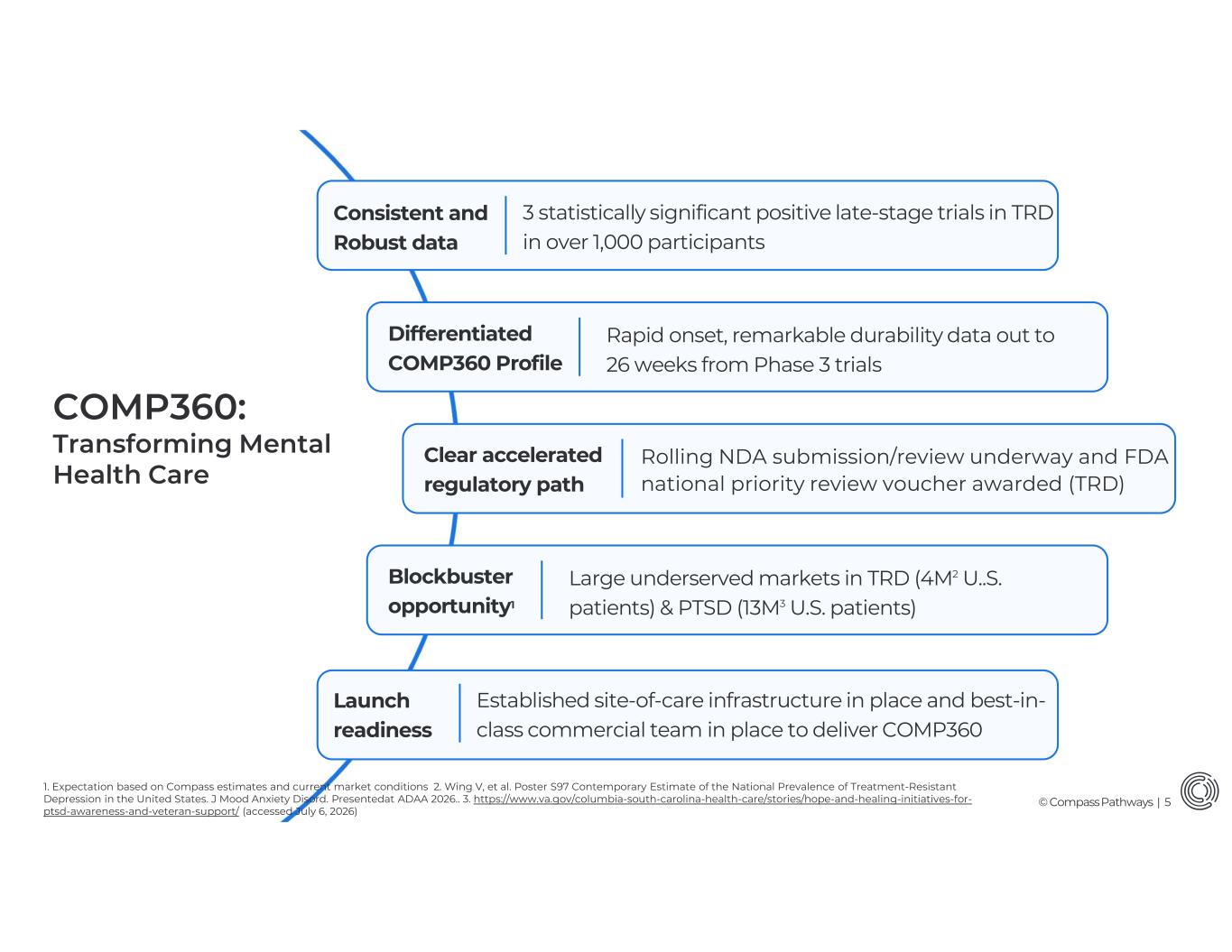
© Compass Pathways | 5 COMP360: Transforming Mental Health Care 1. Expectation based on Compass estimates and current market conditions 2. Wing V, et al. Poster S97 Contemporary Estimate of the National Prevalence of Treatment-Resistant Depression in the United States. J Mood Anxiety Disord. Presentedat ADAA 2026.. 3. https://www.va.gov/columbia-south-carolina-health-care/stories/hope-and-healing-initiatives-for- ptsd-awareness-and-veteran-support/ (accessed July 6, 2026) Consistent and Robust data 3 statistically significant positive late-stage trials in TRD in over 1,000 participants Differentiated COMP360 Profile Rapid onset, remarkable durability data out to 26 weeks from Phase 3 trials Clear accelerated regulatory path Rolling NDA submission/review underway and FDA national priority review voucher awarded (TRD) Blockbuster opportunity1 Large underserved markets in TRD (4M2 U..S. patients) & PTSD (13M3 U.S. patients) Launch readiness Established site-of-care infrastructure in place and best-in- class commercial team in place to deliver COMP360
© Compass Pathways | 6 COMP006 Clinical Data
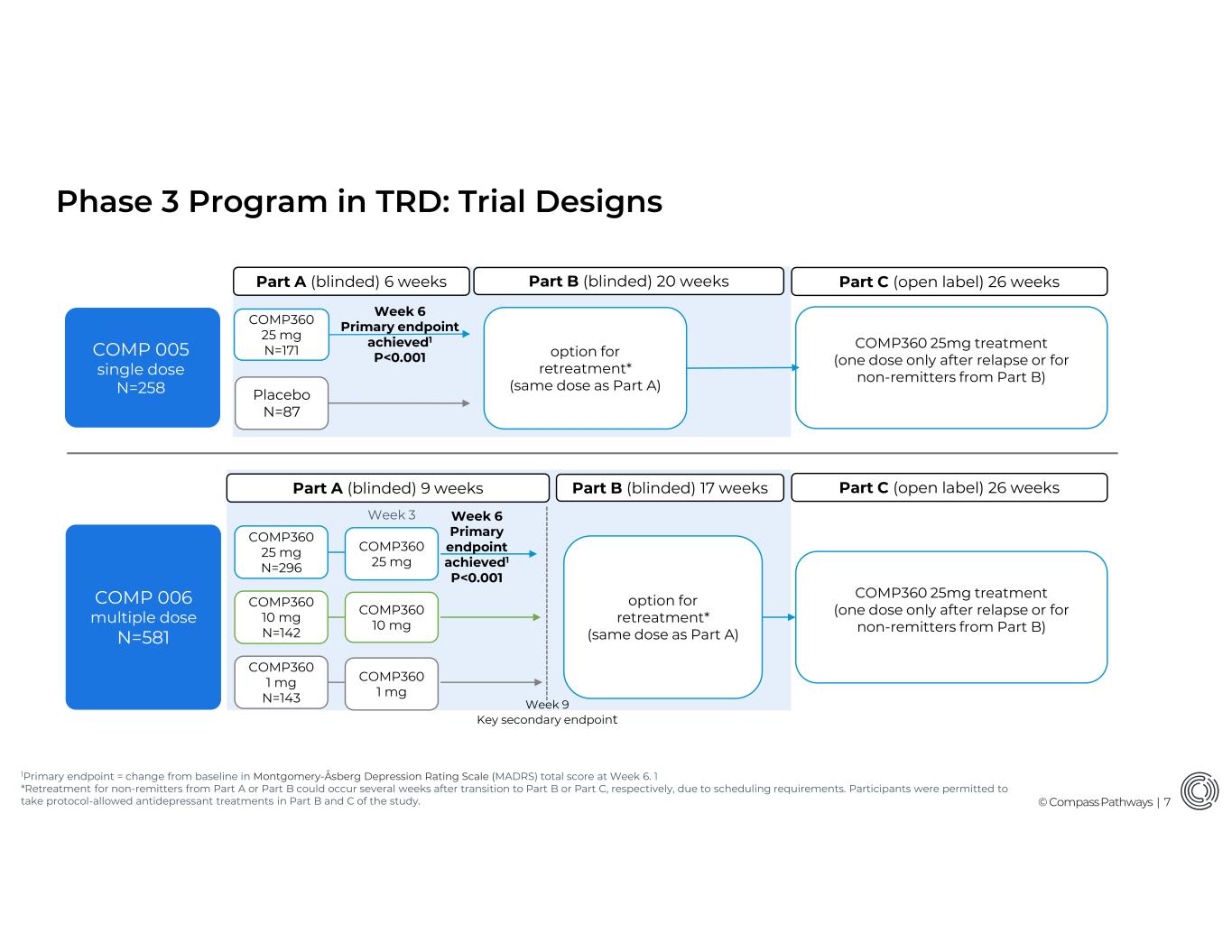
© Compass Pathways | 7 Phase 3 Program in TRD: Trial Designs COMP 005 single dose N=258 COMP360 25 mg N=171 COMP 006 multiple dose N=581 COMP360 25 mg N=296 COMP360 1 mg N=143 COMP360 25 mg COMP360 1 mg COMP360 10 mg N=142 COMP360 10 mg Week 3 Week 6 Primary endpoint achieved1 P<0.001 option for retreatment* (same dose as Part A) COMP360 25mg treatment (one dose only after relapse or for non-remitters from Part B) Part A (blinded) 6 weeks Part B (blinded) 20 weeks Part C (open label) 26 weeks Placebo N=87 option for retreatment* (same dose as Part A) COMP360 25mg treatment (one dose only after relapse or for non-remitters from Part B) Part A (blinded) 9 weeks Part B (blinded) 17 weeks Part C (open label) 26 weeks Week 9 Key secondary endpoint Week 6 Primary endpoint achieved1 P<0.001 1Primary endpoint = change from baseline in Montgomery-Åsberg Depression Rating Scale (MADRS) total score at Week 6. 1 *Retreatment for non-remitters from Part A or Part B could occur several weeks after transition to Part B or Part C, respectively, due to scheduling requirements. Participants were permitted to take protocol-allowed antidepressant treatments in Part B and C of the study.
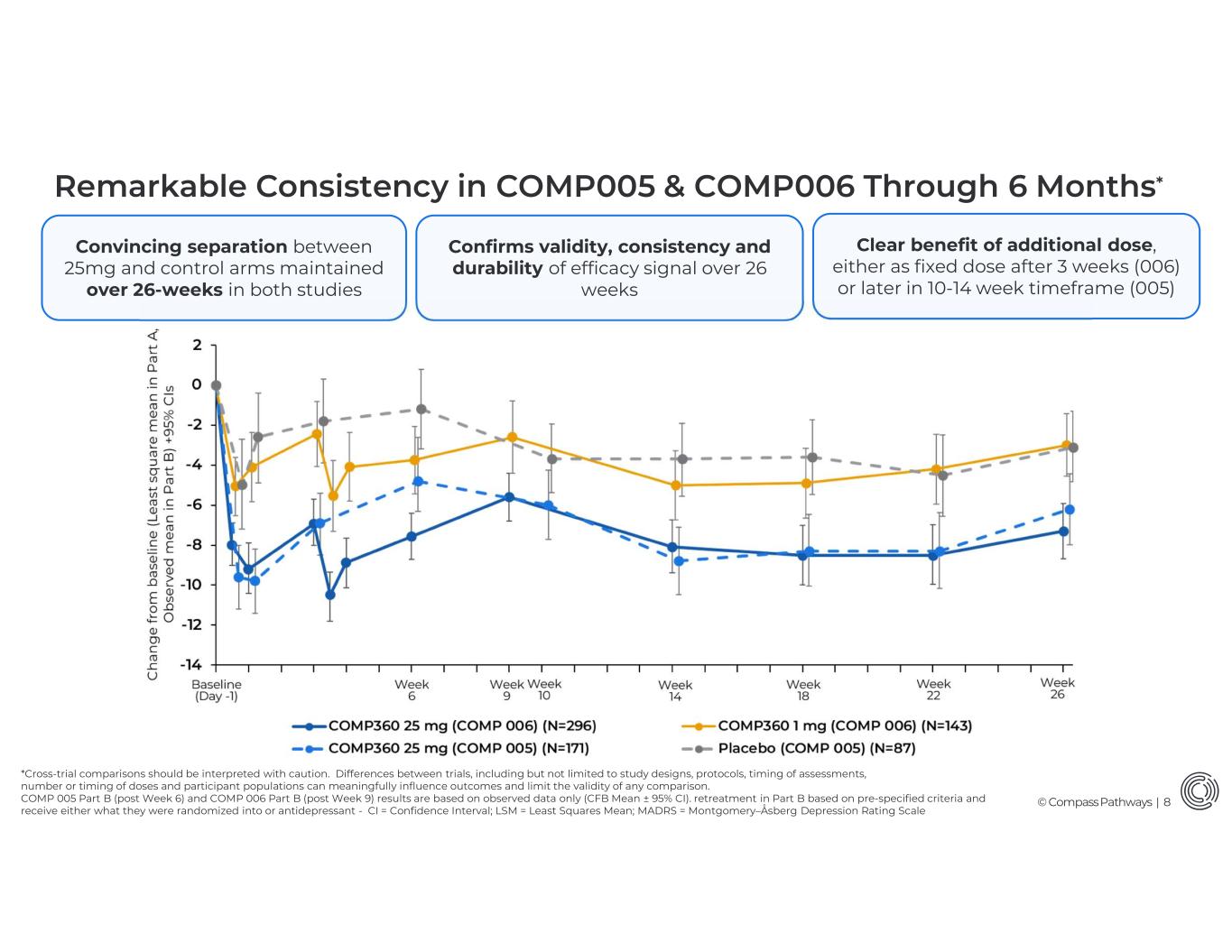
© Compass Pathways | 8 Remarkable Consistency in COMP005 & COMP006 Through 6 Months* Confirms validity, consistency and durability of efficacy signal over 26 weeks Clear benefit of additional dose, either as fixed dose after 3 weeks (006) or later in 10-14 week timeframe (005) Convincing separation between 25mg and control arms maintained over 26-weeks in both studies *Cross-trial comparisons should be interpreted with caution. Differences between trials, including but not limited to study designs, protocols, timing of assessments, number or timing of doses and participant populations can meaningfully influence outcomes and limit the validity of any comparison. COMP 005 Part B (post Week 6) and COMP 006 Part B (post Week 9) results are based on observed data only (CFB Mean ± 95% CI). retreatment in Part B based on pre-specified criteria and receive either what they were randomized into or antidepressant - CI = Confidence Interval; LSM = Least Squares Mean; MADRS = Montgomery–Åsberg Depression Rating Scale
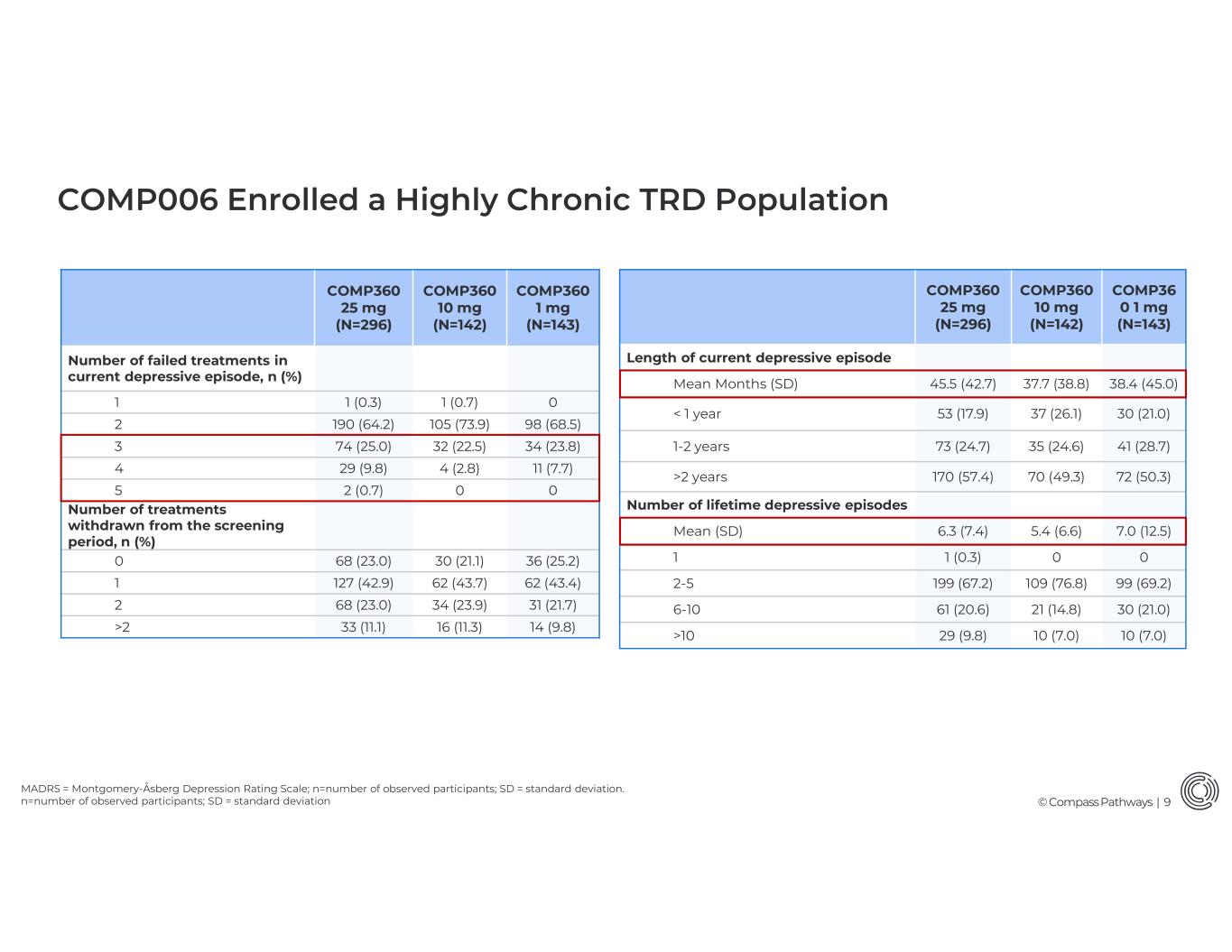
© Compass Pathways | 9 COMP006 Enrolled a Highly Chronic TRD Population COMP36 0 1 mg (N=143) COMP360 10 mg (N=142) COMP360 25 mg (N=296) Length of current depressive episode 38.4 (45.0)37.7 (38.8)45.5 (42.7)Mean Months (SD) 30 (21.0)37 (26.1)53 (17.9)< 1 year 41 (28.7)35 (24.6)73 (24.7)1-2 years 72 (50.3)70 (49.3)170 (57.4)>2 years Number of lifetime depressive episodes 7.0 (12.5)5.4 (6.6)6.3 (7.4)Mean (SD) 001 (0.3)1 99 (69.2)109 (76.8)199 (67.2)2-5 30 (21.0)21 (14.8)61 (20.6)6-10 10 (7.0)10 (7.0)29 (9.8)>10 COMP360 1 mg (N=143) COMP360 10 mg (N=142) COMP360 25 mg (N=296) Number of failed treatments in current depressive episode, n (%) 01 (0.7)1 (0.3)1 98 (68.5)105 (73.9)190 (64.2)2 34 (23.8)32 (22.5)74 (25.0)3 11 (7.7)4 (2.8)29 (9.8)4 002 (0.7)5 Number of treatments withdrawn from the screening period, n (%) 36 (25.2)30 (21.1)68 (23.0)0 62 (43.4)62 (43.7)127 (42.9)1 31 (21.7)34 (23.9)68 (23.0)2 14 (9.8)16 (11.3)33 (11.1)>2 MADRS = Montgomery-Åsberg Depression Rating Scale; n=number of observed participants; SD = standard deviation. n=number of observed participants; SD = standard deviation
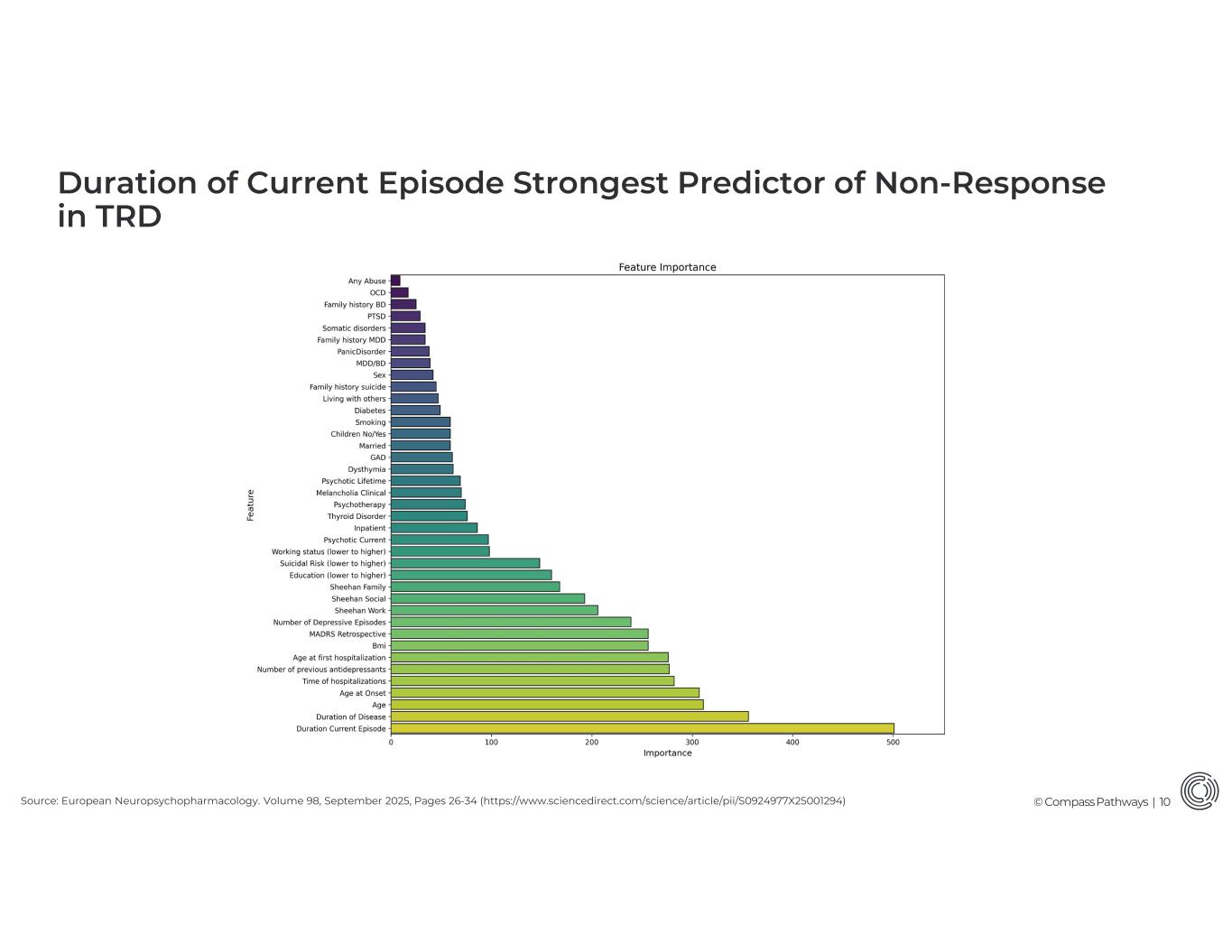
© Compass Pathways | 10 Duration of Current Episode Strongest Predictor of Non-Response in TRD Source: European Neuropsychopharmacology. Volume 98, September 2025, Pages 26-34 (https://www.sciencedirect.com/science/article/pii/S0924977X25001294)
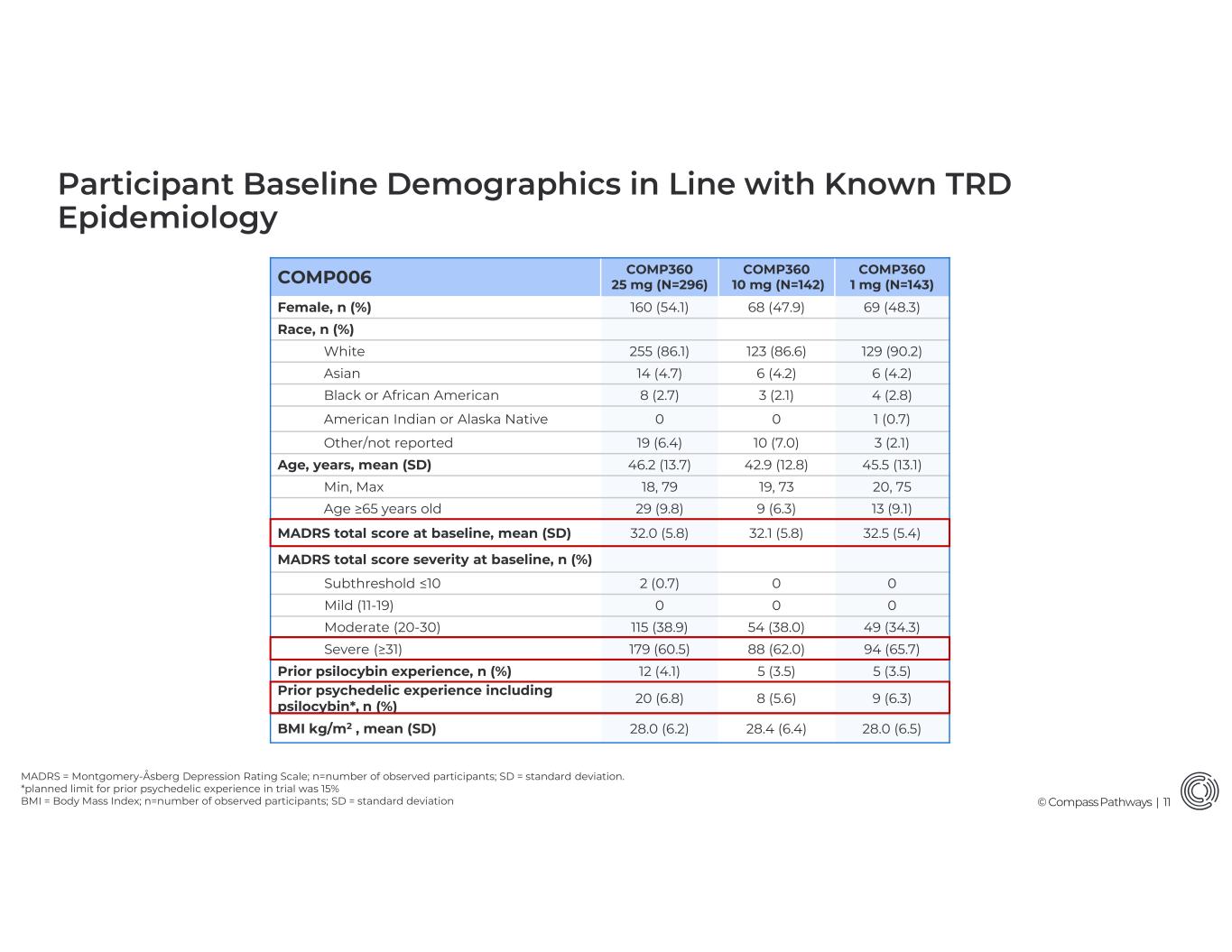
© Compass Pathways | 11 Participant Baseline Demographics in Line with Known TRD Epidemiology COMP360 1 mg (N=143) COMP360 10 mg (N=142) COMP360 25 mg (N=296)COMP006 69 (48.3)68 (47.9)160 (54.1)Female, n (%) Race, n (%) 129 (90.2)123 (86.6)255 (86.1)White 6 (4.2)6 (4.2)14 (4.7)Asian 4 (2.8)3 (2.1)8 (2.7)Black or African American 1 (0.7)00American Indian or Alaska Native 3 (2.1)10 (7.0)19 (6.4)Other/not reported 45.5 (13.1)42.9 (12.8)46.2 (13.7)Age, years, mean (SD) 20, 7519, 7318, 79Min, Max 13 (9.1)9 (6.3)29 (9.8)Age ≥65 years old 32.5 (5.4)32.1 (5.8)32.0 (5.8)MADRS total score at baseline, mean (SD) MADRS total score severity at baseline, n (%) 002 (0.7)Subthreshold ≤10 000Mild (11-19) 49 (34.3)54 (38.0)115 (38.9)Moderate (20-30) 94 (65.7)88 (62.0)179 (60.5)Severe (≥31) 5 (3.5)5 (3.5)12 (4.1)Prior psilocybin experience, n (%) 9 (6.3)8 (5.6)20 (6.8)Prior psychedelic experience including psilocybin*, n (%) 28.0 (6.5)28.4 (6.4)28.0 (6.2)BMI kg/m2 , mean (SD) MADRS = Montgomery-Åsberg Depression Rating Scale; n=number of observed participants; SD = standard deviation. *planned limit for prior psychedelic experience in trial was 15% BMI = Body Mass Index; n=number of observed participants; SD = standard deviation
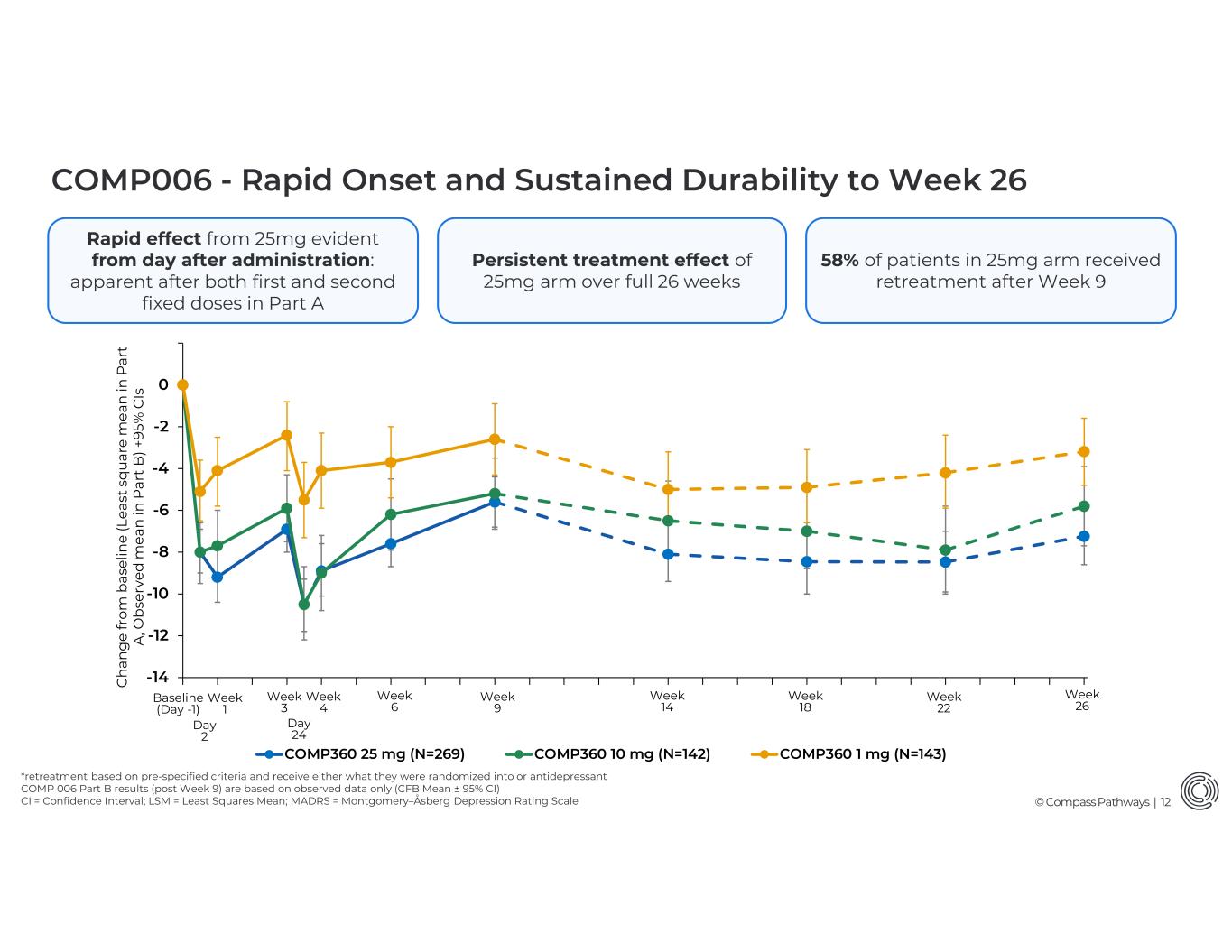
© Compass Pathways | 12 COMP006 - Rapid Onset and Sustained Durability to Week 26 Source: Post Hoc (Include Number) Note: : CI = Confidence Interval; LSM = Least Squares Mean; MADRS = Montgomery–Åsberg Depression Rating Scale. *retreatment based on pre-specified criteria and receive either what they were randomized into or antidepressant COMP 006 Part B results (post Week 9) are based on observed data only (CFB Mean ± 95% CI) CI = Confidence Interval; LSM = Least Squares Mean; MADRS = Montgomery–Åsberg Depression Rating Scale -14 -12 -10 -8 -6 -4 -2 0 2 COMP360 25 mg (N=269) COMP360 10 mg (N=142) COMP360 1 mg (N=143) Baseline (Day -1) Day 2 Week 1 Week 3 Week 6 C h an g e fr o m b as el in e (L ea st s q u ar e m e an in P ar t A , O b se rv e d m e an in P ar t B ) + 95 % C Is Week 9 Week 14 Week 18 Week 22 Week 26 Day 24 Week 4 Rapid effect from 25mg evident from day after administration: apparent after both first and second fixed doses in Part A Persistent treatment effect of 25mg arm over full 26 weeks 58% of patients in 25mg arm received retreatment after Week 9
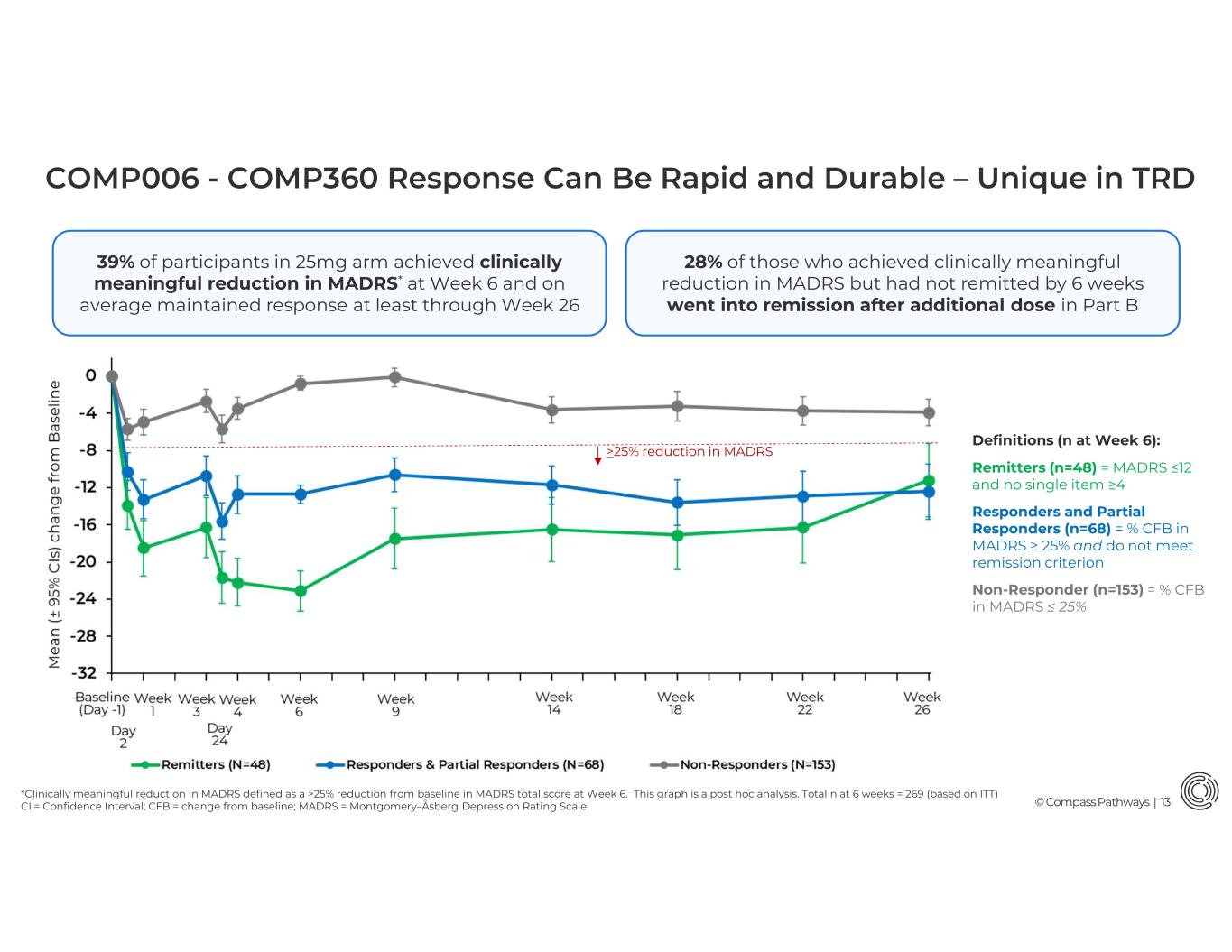
© Compass Pathways | 13 Definitions (n at Week 6): Remitters (n=48) = MADRS ≤12 and no single item ≥4 Responders and Partial Responders (n=68) = % CFB in MADRS ≥ 25% and do not meet remission criterion Non-Responder (n=153) = % CFB in MADRS ≤ 25% COMP006 - COMP360 Response Can Be Rapid and Durable – Unique in TRD >25% reduction in MADRS *Clinically meaningful reduction in MADRS defined as a >25% reduction from baseline in MADRS total score at Week 6. This graph is a post hoc analysis. Total n at 6 weeks = 269 (based on ITT) CI = Confidence Interval; CFB = change from baseline; MADRS = Montgomery–Åsberg Depression Rating Scale 39% of participants in 25mg arm achieved clinically meaningful reduction in MADRS* at Week 6 and on average maintained response at least through Week 26 28% of those who achieved clinically meaningful reduction in MADRS but had not remitted by 6 weeks went into remission after additional dose in Part B
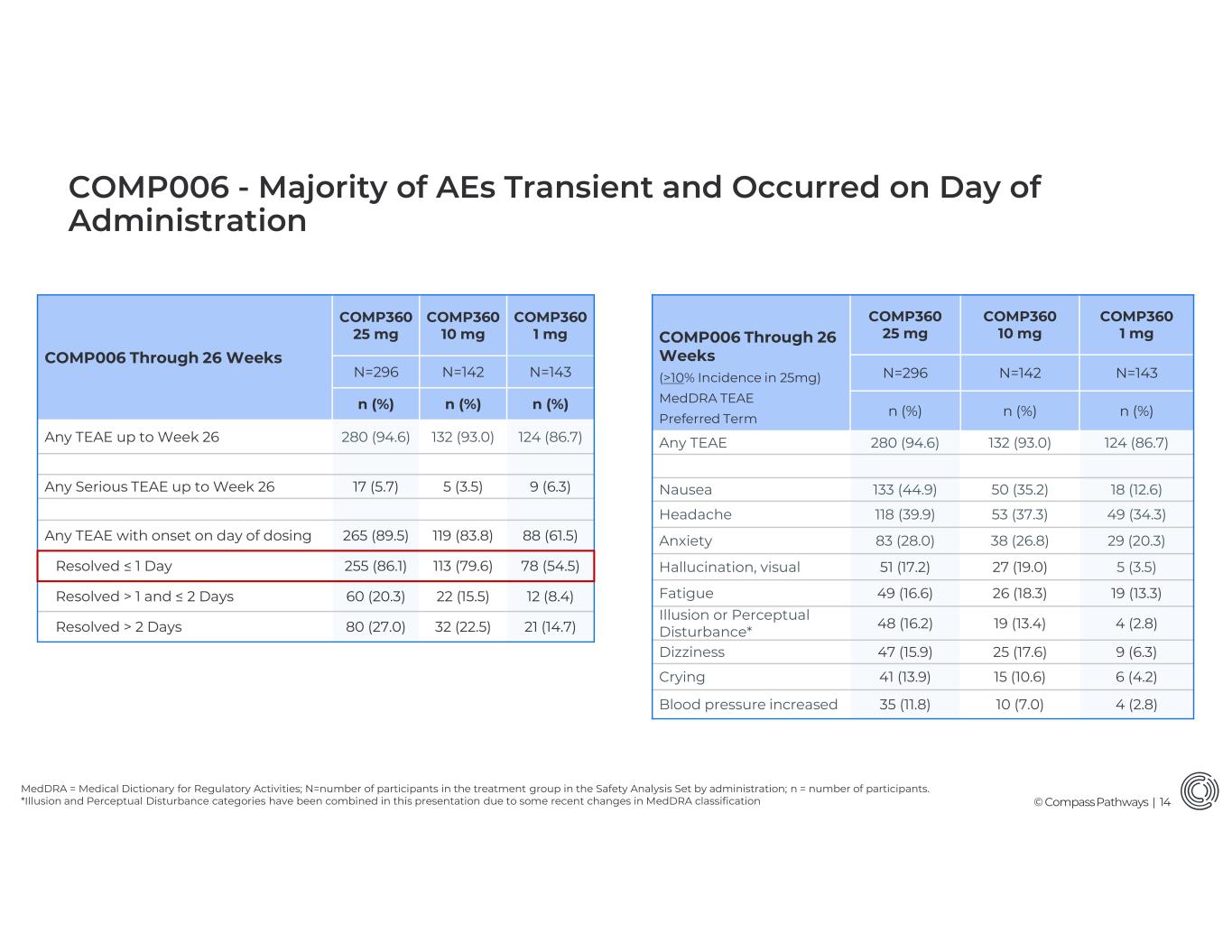
© Compass Pathways | 14 COMP006 - Majority of AEs Transient and Occurred on Day of Administration MedDRA = Medical Dictionary for Regulatory Activities; N=number of participants in the treatment group in the Safety Analysis Set by administration; n = number of participants. *Illusion and Perceptual Disturbance categories have been combined in this presentation due to some recent changes in MedDRA classification COMP360 1 mg COMP360 10 mg COMP360 25 mg COMP006 Through 26 Weeks N=143N=142N=296 n (%)n (%) n (%) 124 (86.7)132 (93.0)280 (94.6)Any TEAE up to Week 26 9 (6.3)5 (3.5)17 (5.7)Any Serious TEAE up to Week 26 88 (61.5)119 (83.8)265 (89.5)Any TEAE with onset on day of dosing 78 (54.5)113 (79.6)255 (86.1)Resolved ≤ 1 Day 12 (8.4)22 (15.5)60 (20.3)Resolved > 1 and ≤ 2 Days 21 (14.7)32 (22.5)80 (27.0)Resolved > 2 Days COMP360 1 mg COMP360 10 mg COMP360 25 mgCOMP006 Through 26 Weeks (>10% Incidence in 25mg) MedDRA TEAE Preferred Term N=143N=142N=296 n (%)n (%) n (%) 124 (86.7)132 (93.0)280 (94.6)Any TEAE 18 (12.6)50 (35.2)133 (44.9)Nausea 49 (34.3)53 (37.3)118 (39.9)Headache 29 (20.3)38 (26.8)83 (28.0)Anxiety 5 (3.5)27 (19.0)51 (17.2)Hallucination, visual 19 (13.3)26 (18.3)49 (16.6)Fatigue 4 (2.8)19 (13.4)48 (16.2)Illusion or Perceptual Disturbance* 9 (6.3)25 (17.6)47 (15.9)Dizziness 6 (4.2)15 (10.6)41 (13.9)Crying 4 (2.8)10 (7.0)35 (11.8)Blood pressure increased
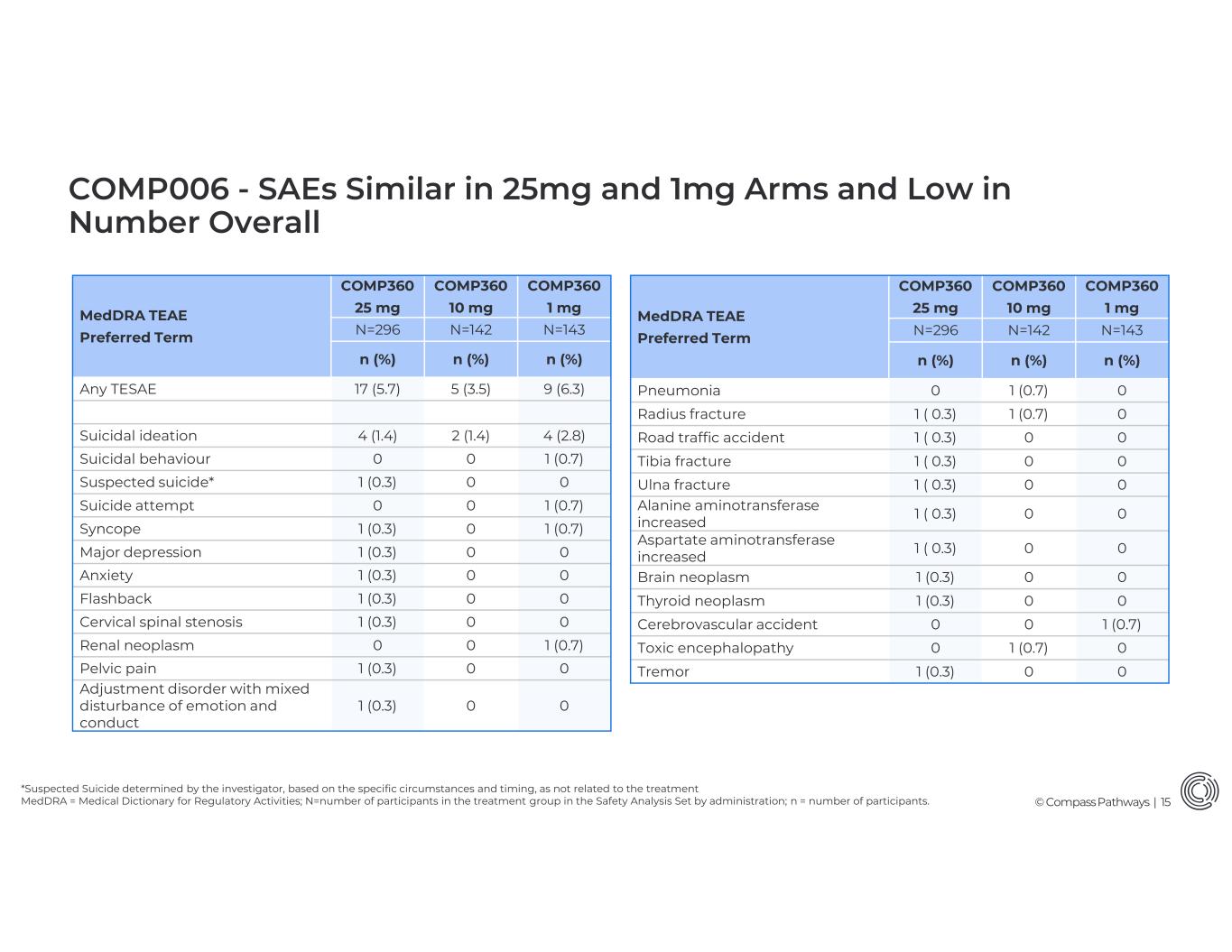
© Compass Pathways | 15 COMP006 - SAEs Similar in 25mg and 1mg Arms and Low in Number Overall COMP360 1 mg COMP360 10 mg COMP360 25 mgMedDRA TEAE Preferred Term N=143N=142N=296 n (%) n (%) n (%) 9 (6.3)5 (3.5)17 (5.7)Any TESAE 4 (2.8)2 (1.4)4 (1.4)Suicidal ideation 1 (0.7)00Suicidal behaviour 001 (0.3)Suspected suicide* 1 (0.7)00Suicide attempt 1 (0.7)01 (0.3)Syncope 001 (0.3)Major depression 001 (0.3)Anxiety 001 (0.3)Flashback 001 (0.3)Cervical spinal stenosis 1 (0.7)00Renal neoplasm 001 (0.3)Pelvic pain 001 (0.3) Adjustment disorder with mixed disturbance of emotion and conduct COMP360 1 mg COMP360 10 mg COMP360 25 mgMedDRA TEAE Preferred Term N=143N=142N=296 n (%) n (%) n (%) 01 (0.7)0Pneumonia 01 (0.7)1 ( 0.3)Radius fracture 001 ( 0.3)Road traffic accident 001 ( 0.3)Tibia fracture 001 ( 0.3)Ulna fracture 001 ( 0.3)Alanine aminotransferase increased 001 ( 0.3)Aspartate aminotransferase increased 001 (0.3)Brain neoplasm 001 (0.3)Thyroid neoplasm 1 (0.7)00Cerebrovascular accident 01 (0.7)0Toxic encephalopathy 001 (0.3)Tremor *Suspected Suicide determined by the investigator, based on the specific circumstances and timing, as not related to the treatment MedDRA = Medical Dictionary for Regulatory Activities; N=number of participants in the treatment group in the Safety Analysis Set by administration; n = number of participants.
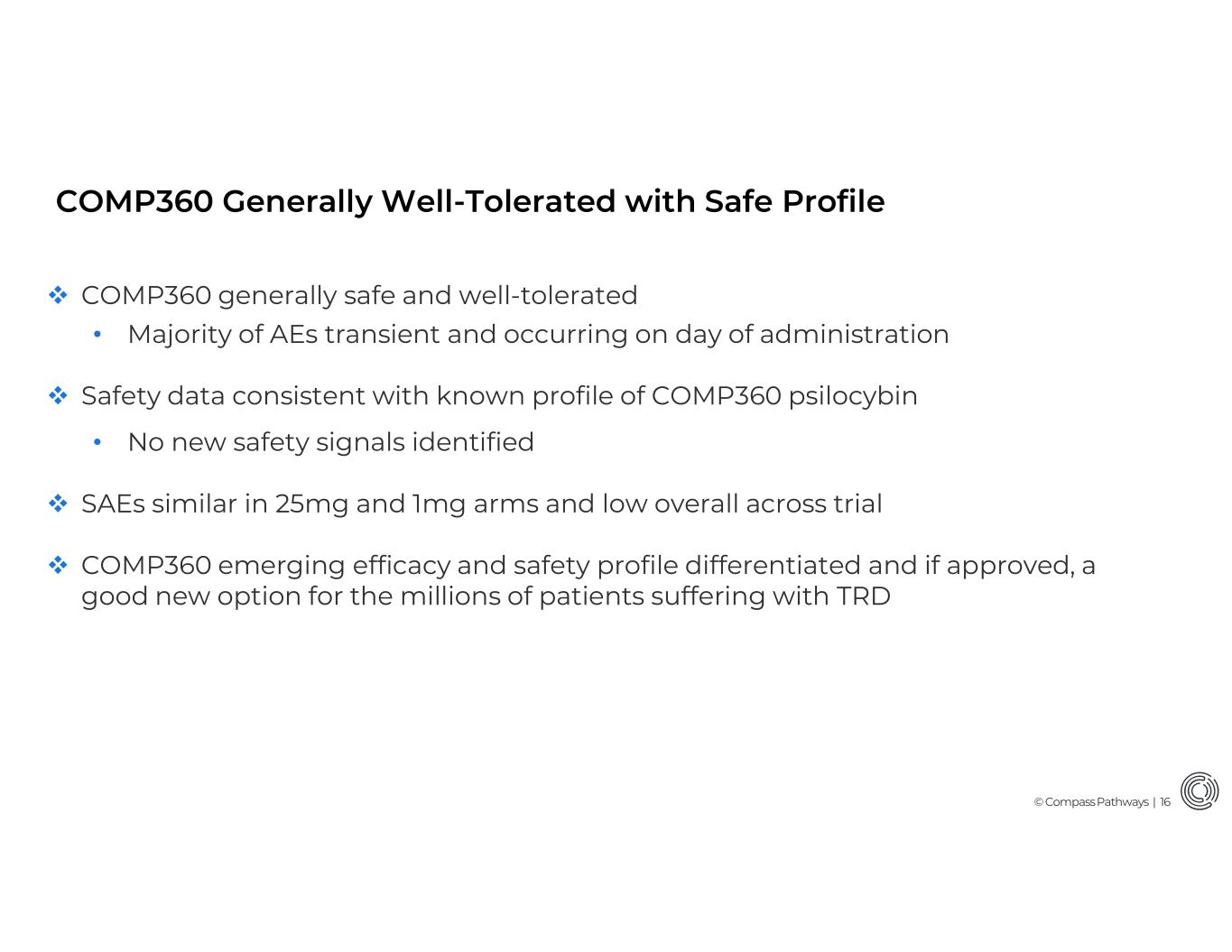
© Compass Pathways | 16 COMP360 Generally Well-Tolerated with Safe Profile COMP360 generally safe and well-tolerated • Majority of AEs transient and occurring on day of administration Safety data consistent with known profile of COMP360 psilocybin • No new safety signals identified SAEs similar in 25mg and 1mg arms and low overall across trial COMP360 emerging efficacy and safety profile differentiated and if approved, a good new option for the millions of patients suffering with TRD

© Compass Pathways | 17 Commercial Update
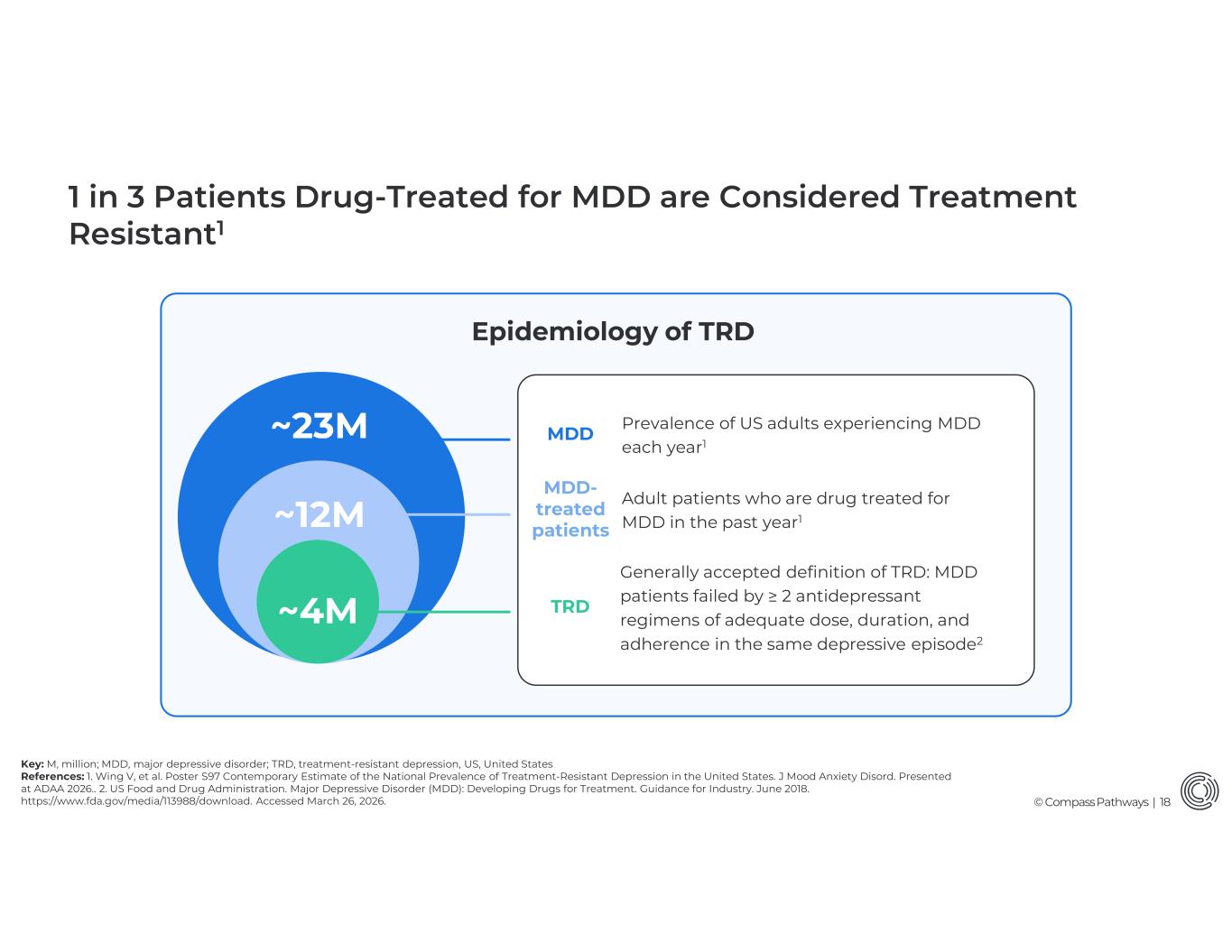
© Compass Pathways | 18 ~23M ~4M ~12M Generally accepted definition of TRD: MDD patients failed by ≥ 2 antidepressant regimens of adequate dose, duration, and adherence in the same depressive episode2 TRD MDD Prevalence of US adults experiencing MDD each year1 MDD- treated patients Adult patients who are drug treated for MDD in the past year1 Epidemiology of TRD Key: M, million; MDD, major depressive disorder; TRD, treatment-resistant depression, US, United States References: 1. Wing V, et al. Poster S97 Contemporary Estimate of the National Prevalence of Treatment-Resistant Depression in the United States. J Mood Anxiety Disord. Presented at ADAA 2026.. 2. US Food and Drug Administration. Major Depressive Disorder (MDD): Developing Drugs for Treatment. Guidance for Industry. June 2018. https://www.fda.gov/media/113988/download. Accessed March 26, 2026. 1 in 3 Patients Drug-Treated for MDD are Considered Treatment Resistant1
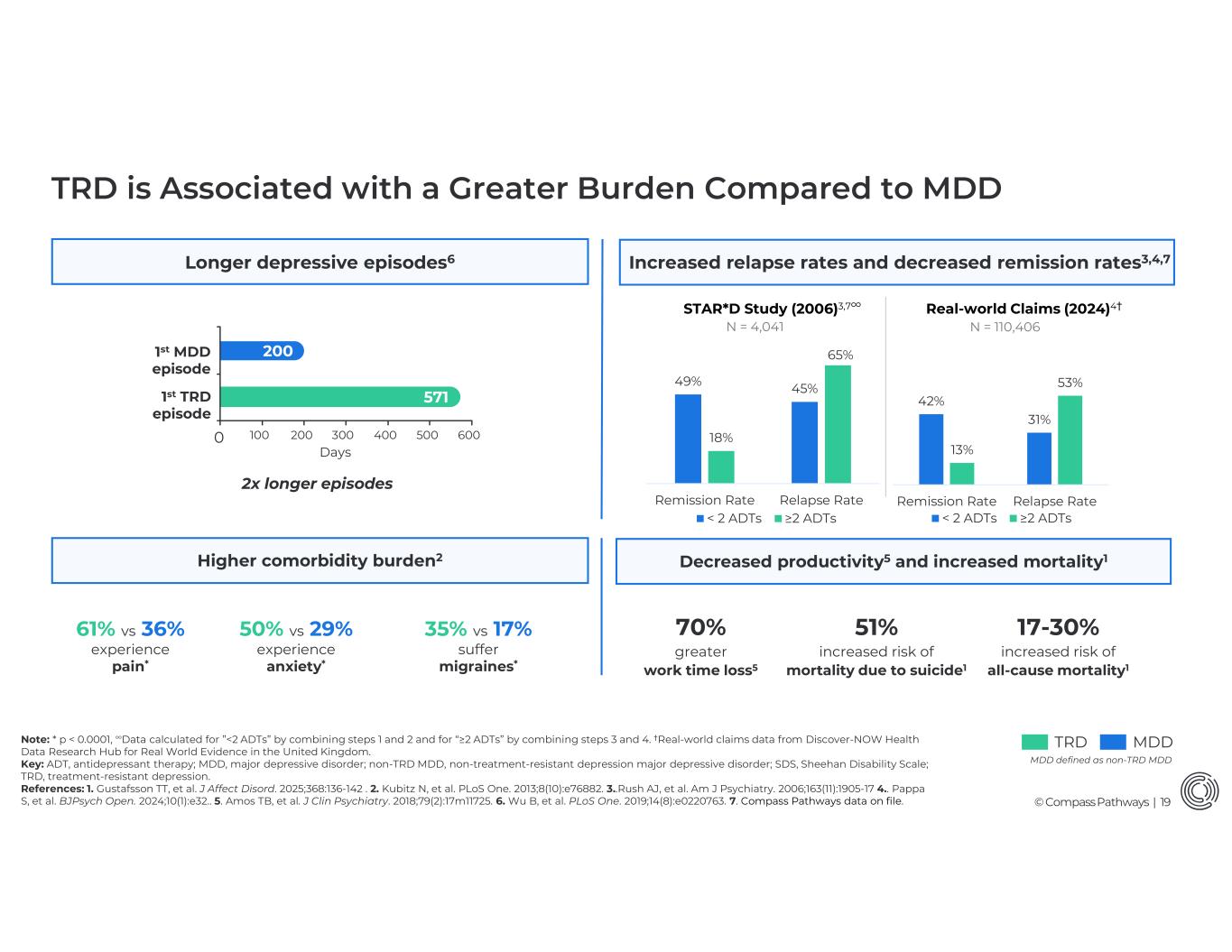
© Compass Pathways | 19 TRD is Associated with a Greater Burden Compared to MDD Higher comorbidity burden2 61% vs 36% experience pain* Longer depressive episodes6 49% 45% 18% 65% Remission Rate Relapse Rate < 2 ADTs ≥2 ADTs 42% 31% 13% 53% Remission Rate Relapse Rate < 2 ADTs ≥2 ADTs STAR*D Study (2006)3,7∞ Real-world Claims (2024)4† N = 110,406N = 4,041 Increased relapse rates and decreased remission rates3,4,7 1st MDD episode 1st TRD episode 571 6005004003002001000 Days 200 17-30% increased risk of all-cause mortality1 51% increased risk of mortality due to suicide1 2x longer episodes Decreased productivity5 and increased mortality1 70% greater work time loss5 50% vs 29% experience anxiety* 35% vs 17% suffer migraines* MDD TRD MDD defined as non-TRD MDD Note: * p < 0.0001, ∞Data calculated for ”<2 ADTs” by combining steps 1 and 2 and for “≥2 ADTs” by combining steps 3 and 4. †Real-world claims data from Discover-NOW Health Data Research Hub for Real World Evidence in the United Kingdom. Key: ADT, antidepressant therapy; MDD, major depressive disorder; non-TRD MDD, non-treatment-resistant depression major depressive disorder; SDS, Sheehan Disability Scale; TRD, treatment-resistant depression. References: 1. Gustafsson TT, et al. J Affect Disord. 2025;368:136-142 . 2. Kubitz N, et al. PLoS One. 2013;8(10):e76882. 3..Rush AJ, et al. Am J Psychiatry. 2006;163(11):1905-17 4.. Pappa S, et al. BJPsych Open. 2024;10(1):e32.. 5. Amos TB, et al. J Clin Psychiatry. 2018;79(2):17m11725. 6. Wu B, et al. PLoS One. 2019;14(8):e0220763. 7. Compass Pathways data on file.
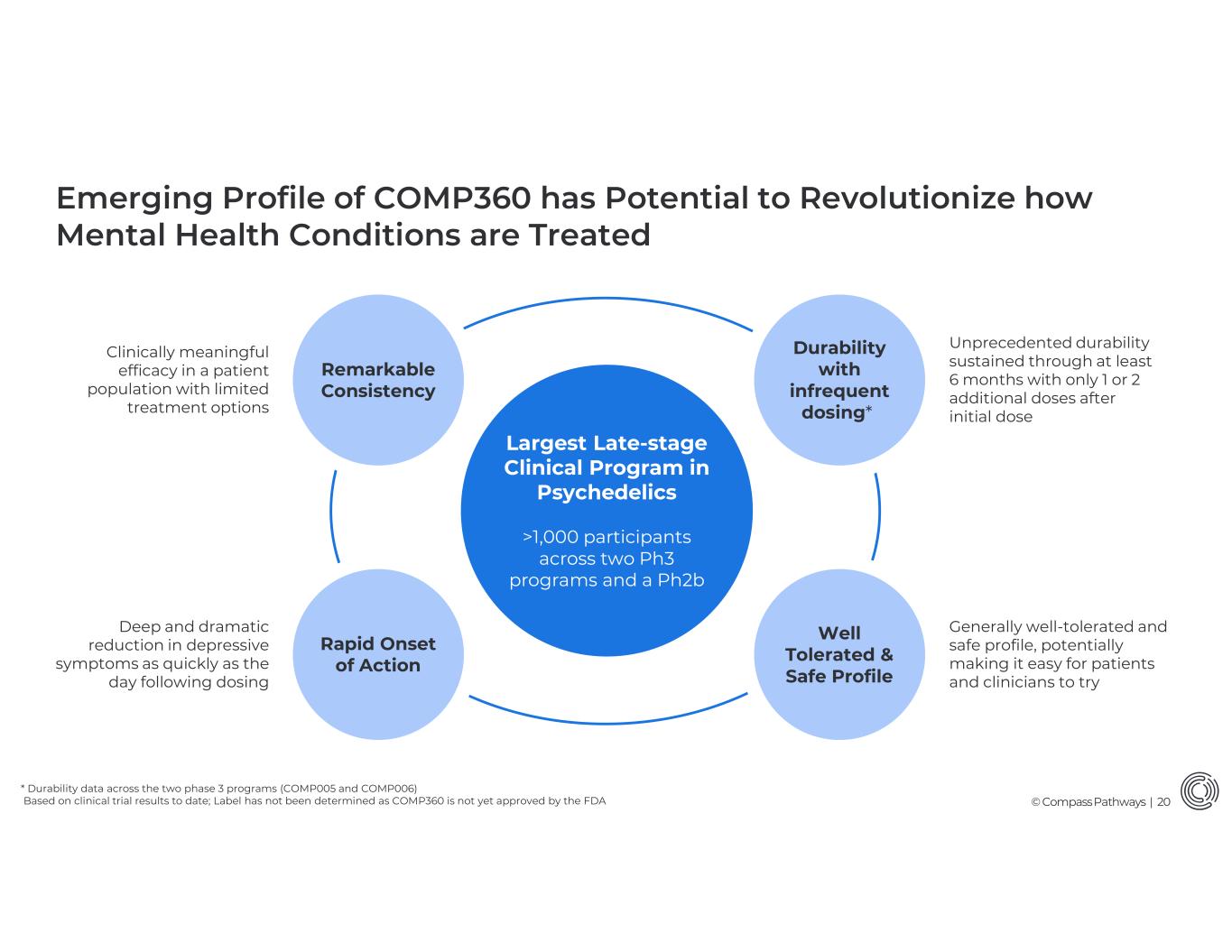
© Compass Pathways | 20 Emerging Profile of COMP360 has Potential to Revolutionize how Mental Health Conditions are Treated * Durability data across the two phase 3 programs (COMP005 and COMP006) Based on clinical trial results to date; Label has not been determined as COMP360 is not yet approved by the FDA Remarkable Consistency Largest Late-stage Clinical Program in Psychedelics >1,000 participants across two Ph3 programs and a Ph2b Durability with infrequent dosing* Rapid Onset of Action Well Tolerated & Safe Profile Clinically meaningful efficacy in a patient population with limited treatment options Deep and dramatic reduction in depressive symptoms as quickly as the day following dosing Unprecedented durability sustained through at least 6 months with only 1 or 2 additional doses after initial dose Generally well-tolerated and safe profile, potentially making it easy for patients and clinicians to try
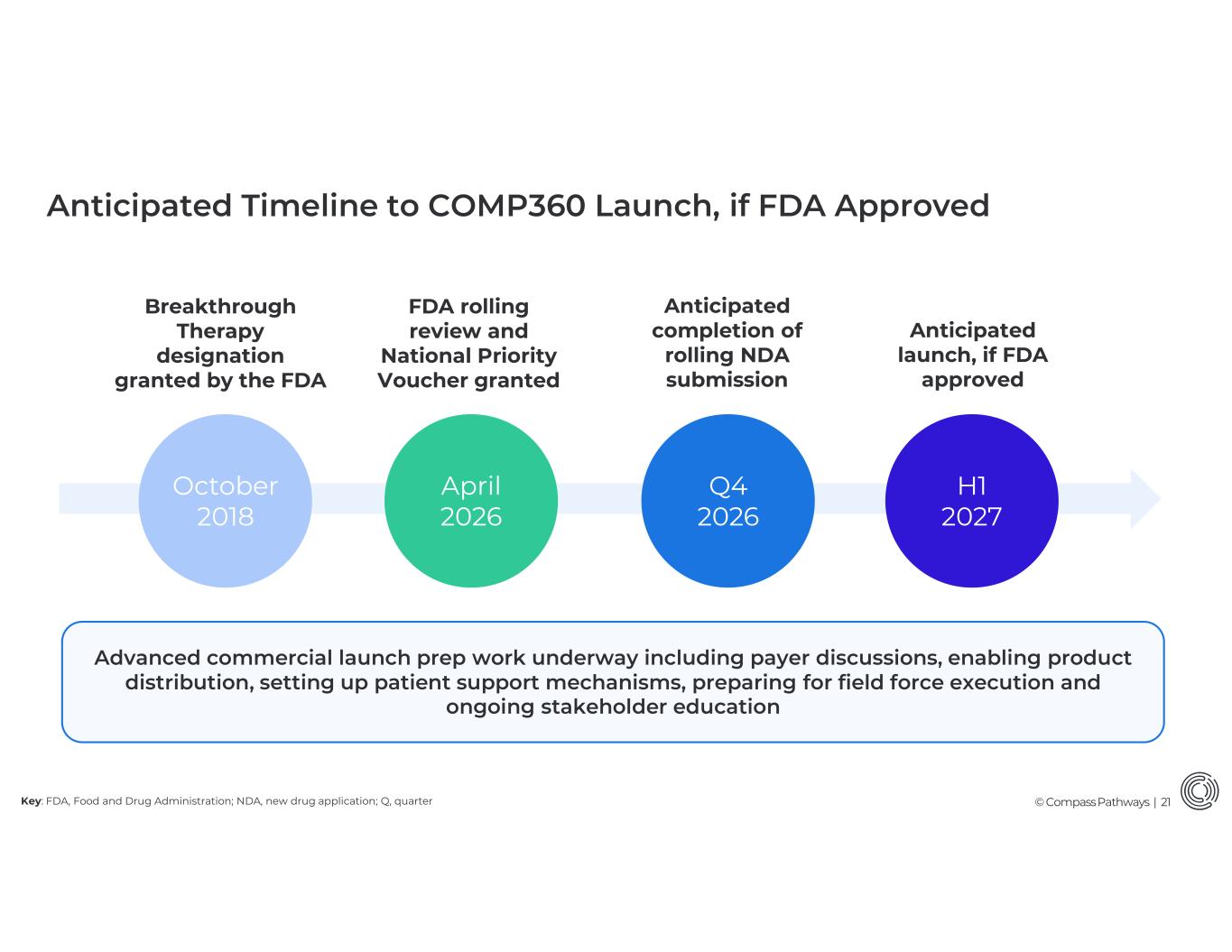
© Compass Pathways | 21 Anticipated Timeline to COMP360 Launch, if FDA Approved Breakthrough Therapy designation granted by the FDA FDA rolling review and National Priority Voucher granted Anticipated completion of rolling NDA submission Anticipated launch, if FDA approved Key: FDA, Food and Drug Administration; NDA, new drug application; Q, quarter October 2018 April 2026 Q4 2026 H1 2027 Advanced commercial launch prep work underway including payer discussions, enabling product distribution, setting up patient support mechanisms, preparing for field force execution and ongoing stakeholder education
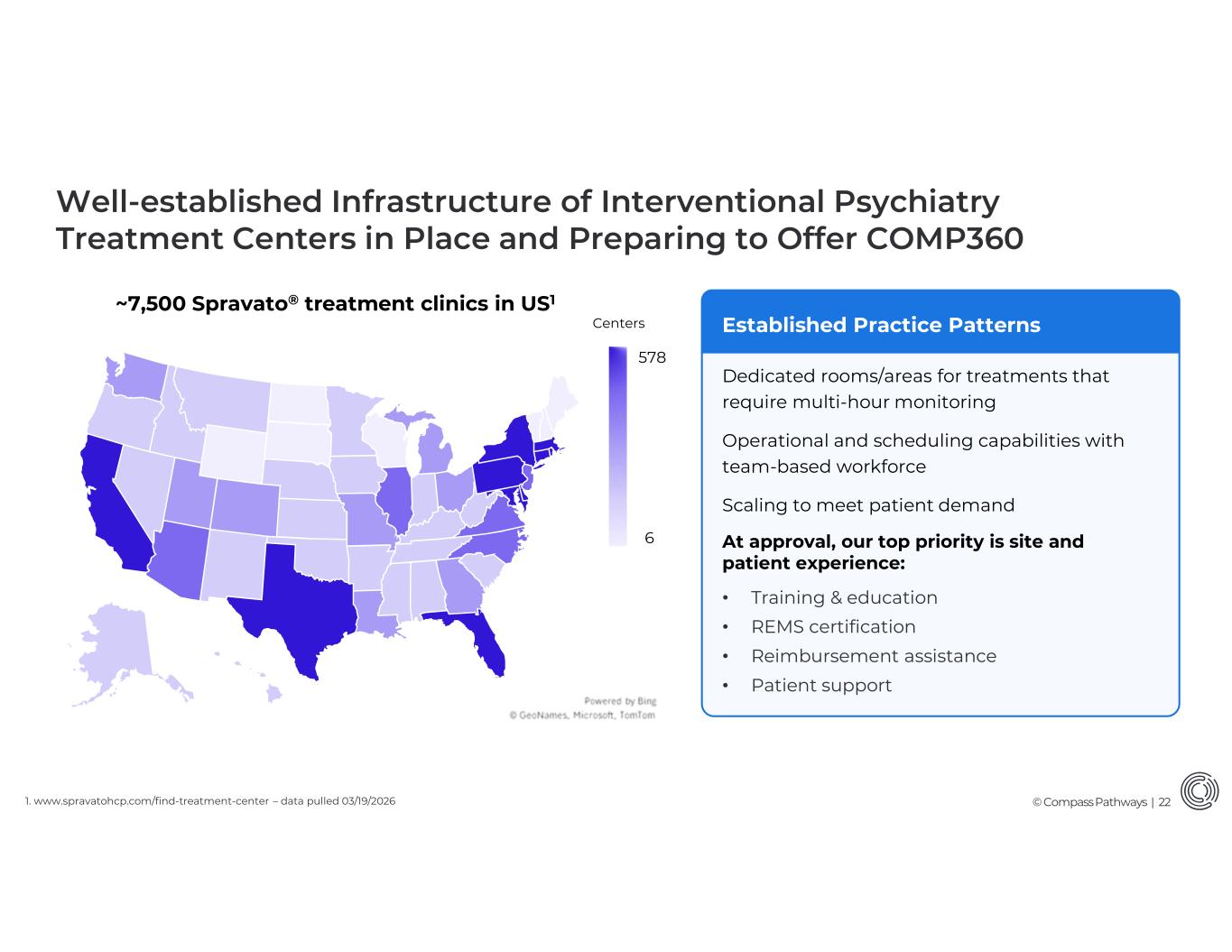
© Compass Pathways | 22 Dedicated rooms/areas for treatments that require multi-hour monitoring Operational and scheduling capabilities with team-based workforce Scaling to meet patient demand At approval, our top priority is site and patient experience: • Training & education • REMS certification • Reimbursement assistance • Patient support Well-established Infrastructure of Interventional Psychiatry Treatment Centers in Place and Preparing to Offer COMP360 Established Practice Patterns ~7,500 Spravato® treatment clinics in US1 6 578 Centers 1. www.spravatohcp.com/find-treatment-center – data pulled 03/19/2026
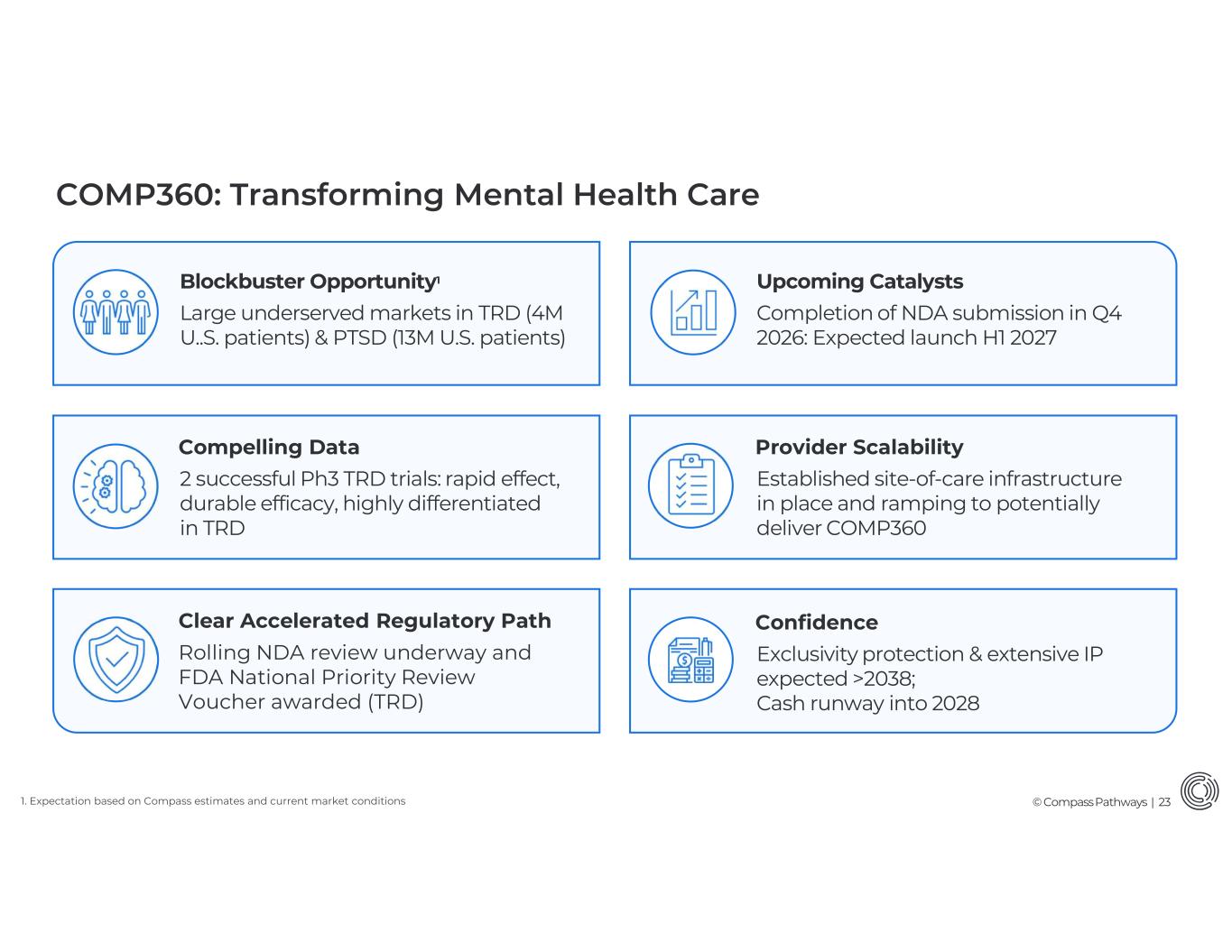
© Compass Pathways | 23 COMP360: Transforming Mental Health Care Blockbuster Opportunity1 Large underserved markets in TRD (4M U..S. patients) & PTSD (13M U.S. patients) Compelling Data 2 successful Ph3 TRD trials: rapid effect, durable efficacy, highly differentiated in TRD Clear Accelerated Regulatory Path Rolling NDA review underway and FDA National Priority Review Voucher awarded (TRD) Provider Scalability Established site-of-care infrastructure in place and ramping to potentially deliver COMP360 Confidence Exclusivity protection & extensive IP expected >2038; Cash runway into 2028 Upcoming Catalysts Completion of NDA submission in Q4 2026: Expected launch H1 2027 1. Expectation based on Compass estimates and current market conditions

© Compass Pathways | 24 For more information: Stephen Schultz SVP, Investor Relations stephen.schultz@compasspathways.com +1 401-290-7324 Thank you… Q&A
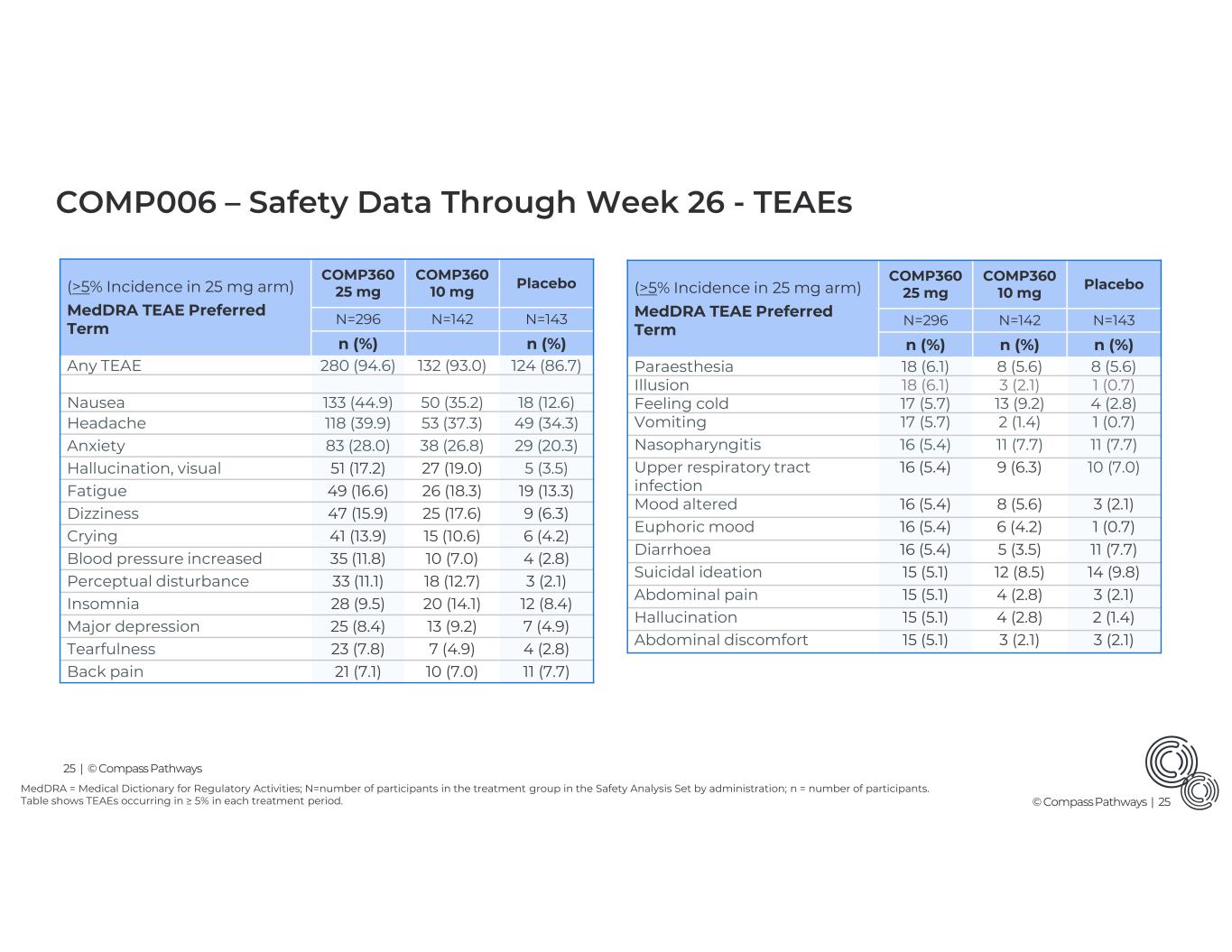
© Compass Pathways | 25 25 | © Compass Pathways PlaceboCOMP360 10 mg COMP360 25 mg(>5% Incidence in 25 mg arm) MedDRA TEAE Preferred Term N=143N=142N=296 n (%) n (%) 124 (86.7)132 (93.0)280 (94.6)Any TEAE 18 (12.6)50 (35.2)133 (44.9)Nausea 49 (34.3)53 (37.3)118 (39.9)Headache 29 (20.3)38 (26.8)83 (28.0)Anxiety 5 (3.5)27 (19.0)51 (17.2)Hallucination, visual 19 (13.3)26 (18.3)49 (16.6)Fatigue 9 (6.3)25 (17.6)47 (15.9)Dizziness 6 (4.2)15 (10.6)41 (13.9)Crying 4 (2.8)10 (7.0)35 (11.8)Blood pressure increased 3 (2.1)18 (12.7)33 (11.1)Perceptual disturbance 12 (8.4)20 (14.1)28 (9.5)Insomnia 7 (4.9)13 (9.2)25 (8.4)Major depression 4 (2.8)7 (4.9)23 (7.8)Tearfulness 11 (7.7)10 (7.0)21 (7.1)Back pain PlaceboCOMP360 10 mg COMP360 25 mg(>5% Incidence in 25 mg arm) MedDRA TEAE Preferred Term N=143N=142N=296 n (%) n (%) n (%) 8 (5.6)8 (5.6)18 (6.1)Paraesthesia 1 (0.7)3 (2.1)18 (6.1)Illusion 4 (2.8)13 (9.2)17 (5.7)Feeling cold 1 (0.7)2 (1.4)17 (5.7)Vomiting 11 (7.7)11 (7.7)16 (5.4)Nasopharyngitis 10 (7.0)9 (6.3)16 (5.4)Upper respiratory tract infection 3 (2.1)8 (5.6)16 (5.4)Mood altered 1 (0.7)6 (4.2)16 (5.4)Euphoric mood 11 (7.7)5 (3.5)16 (5.4)Diarrhoea 14 (9.8)12 (8.5)15 (5.1)Suicidal ideation 3 (2.1)4 (2.8)15 (5.1)Abdominal pain 2 (1.4)4 (2.8)15 (5.1)Hallucination 3 (2.1)3 (2.1)15 (5.1)Abdominal discomfort COMP006 – Safety Data Through Week 26 - TEAEs MedDRA = Medical Dictionary for Regulatory Activities; N=number of participants in the treatment group in the Safety Analysis Set by administration; n = number of participants. Table shows TEAEs occurring in ≥ 5% in each treatment period.