
Artiva Biotherapeutics May 2026 .3
Disclaimers and Forward-looking Statements This presentation contains forward-looking statements within the meaning of the Private Securities Litigation Reform Act of 1995. Statements in this presentation that are not statements of historical fact are forward-looking statements. Such forward-looking statements include, without limitation, statements regarding: expectations of Artiva Biotherapeutics, Inc. (the “Company”) regarding AlloNK and its potential benefits, mechanism of action, activity, potency, differentiation, safety, tolerability, effectiveness, depth and duration of response, comparability to other products/candidates or modalities, scalability, outpatient administrability, potential for adoption in a community setting, potential to help patients get off immunomodulatory drugs and/or steroids, market opportunity, competitive landscape, ability to address an unmet need, potential timing and outcome of regulatory interactions, registrational strategy (including potential and timing to advance into a registrational trial and design of a potential registrational trial), potential and timing of additional clinical data, potential to move into follow-on indications, and potential to be approved for marketing or be first-in-class; the Company’s plans and expectations regarding its research and development programs, including the design, timing, and results of preclinical and clinical study designs and results, and the timing or likelihood of regulatory filings and approvals; and the Company’s business strategy, IP protection, ability to deliver value creation, future results of operations, and financial position, including cash runway. Words such as “opportunity,” “potential,” “estimate,” “emerging,” “near-term,” “next,” “focus,” “can,” “design,” “TBD,” “target,” “initial,” “future,” “path,” “runway,” references to specific future dates or periods, and similar expressions are intended to identify forward-looking statements, though not all forward-looking statements necessarily contain these identifying words. These forward-looking statements are based on the beliefs of the management of the Company as well as assumptions made by and information currently available to the Company. Such statements reflect the current views of the Company with respect to future events and are subject to known and unknown risks and uncertainties, including business, regulatory, economic and competitive risks and uncertainties about the Company, including, without limitation, risks inherent in developing product candidates, the fact that initial, preliminary, and interim data from the Company’s clinical trials may change as more patient data become available and remain subject to audit and verification procedures that could result in material differences from the financial data, future results from the Company’s ongoing and planned clinical trials, the Company’s ability to obtain adequate financing to fund its planned clinical trials and other expenses, risks that future clinical trial results may not be consistent with interim, initial, preliminary, or topline results or results from prior preclinical studies or clinical trials, trends in the industry, the Company’s relationships with its existing and future collaboration partners, the legal and regulatory framework for the industry, and future expenditures. In light of these risks and uncertainties, the events or circumstances referred to in the forward-looking statements may not occur. The actual results may vary from the anticipated results, and the variations may be material. Other factors that may cause the Company’s actual results to differ from current expectations are discussed in the Company’s filings with the U.S. Securities and Exchange Commission, including the section titled “Risk Factors” in the Company’s Annual Report on Form 10-K for the year ended December 31, 2025. You are cautioned not to place undue reliance on these forward-looking statements, which speak only as of the date this presentation is given. Except as required by law, the Company undertakes no obligation to publicly update any forward-looking statements, whether as a result of new information, future events or otherwise. This presentation discusses product candidates that are under clinical study and have not yet been approved for marketing by the U.S. Food and Drug Administration. No representation is made as to the safety or effectiveness of these product candidates for the use for which such product candidates are being studied. The clinical data for AlloNK in this presentation are based on separate studies and include pooled data from the Phase 2a company-sponsored basket trial (NCT06991114) and investigator-initiated basket trial (NCT06581562), and cross-study comparative data. No head-to-head trial has been conducted evaluating AlloNK against any other products or product candidates included herein. Differences exist between clinical trial design, patient populations, and the product candidates themselves, and caution should be exercised when pooling and/or comparing data across trials as pooled data and cross-study comparisons are inherently limited and such data may not be directly comparable. The trademarks included herein are the property of the owners thereof and are used for reference purposes only. Such use should not be construed as an endorsement of such products. Artiva Biotherapeutics
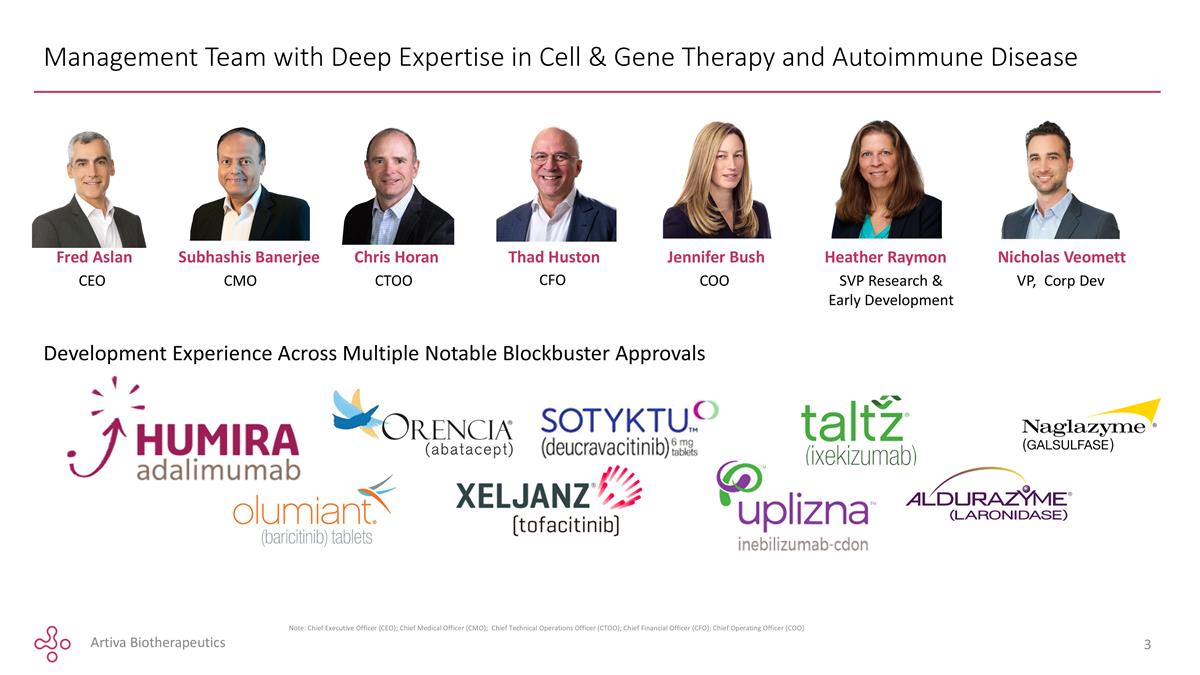
Management Team with Deep Expertise in Cell & Gene Therapy and Autoimmune Disease Fred Aslan Subhashis Banerjee Jennifer Bush Chris Horan Thad Huston Heather Raymon Nicholas Veomett CEO CMO COO CTOO SVP Research & Early Development VP, Corp Dev CFO Development Experience Across Multiple Notable Blockbuster Approvals Artiva Biotherapeutics Note: Chief Executive Officer (CEO); Chief Medical Officer (CMO); Chief Technical Operations Officer (CTOO); Chief Financial Officer (CFO); Chief Operating Officer (COO)
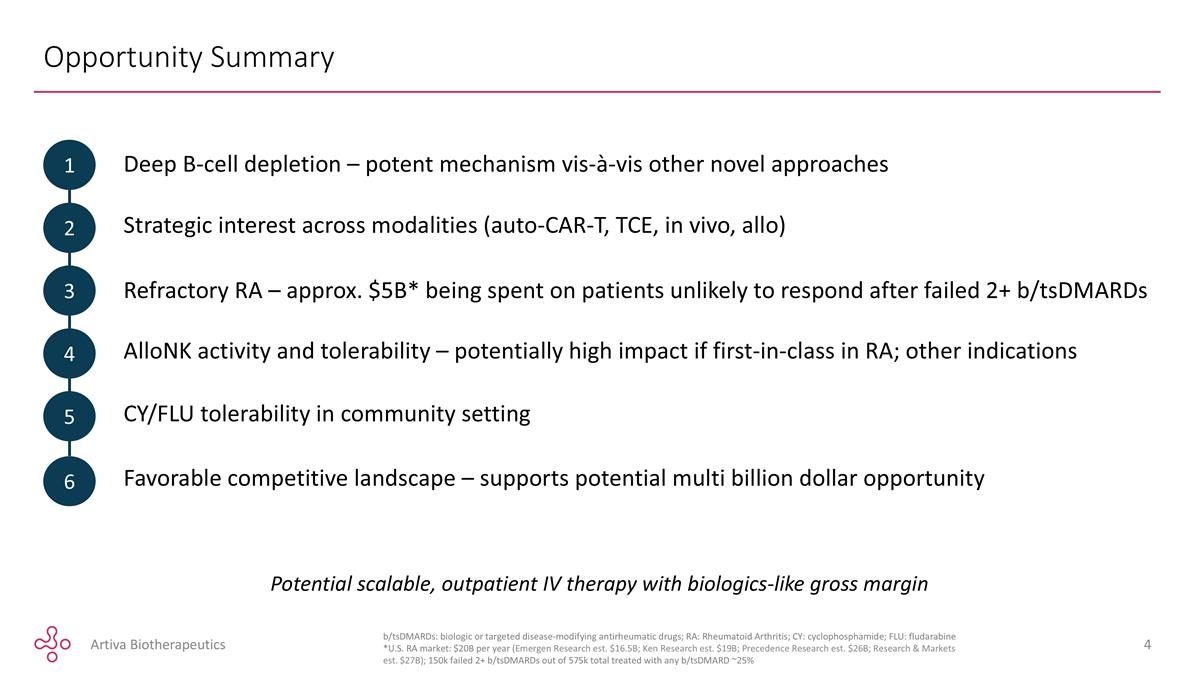
Opportunity Summary Deep B-cell depletion – potent mechanism vis-à-vis other novel approaches Artiva Biotherapeutics 1 6 2 Strategic interest across modalities (auto-CAR-T, TCE, in vivo, allo) 3 Refractory RA – approx. $5B* being spent on patients unlikely to respond after failed 2+ b/tsDMARDs 4 AlloNK activity and tolerability – potentially high impact if first-in-class in RA; other indications 5 CY/FLU tolerability in community setting Favorable competitive landscape – supports potential multi billion dollar opportunity Potential scalable, outpatient IV therapy with biologics-like gross margin b/tsDMARDs: biologic or targeted disease-modifying antirheumatic drugs; RA: Rheumatoid Arthritis; CY: cyclophosphamide; FLU: fludarabine *U.S. RA market: $20B per year (Emergen Research est. $16.5B; Ken Research est. $19B; Precedence Research est. $26B; Research & Markets est. $27B); 150k failed 2+ b/tsDMARDs out of 575k total treated with any b/tsDMARD ~25%
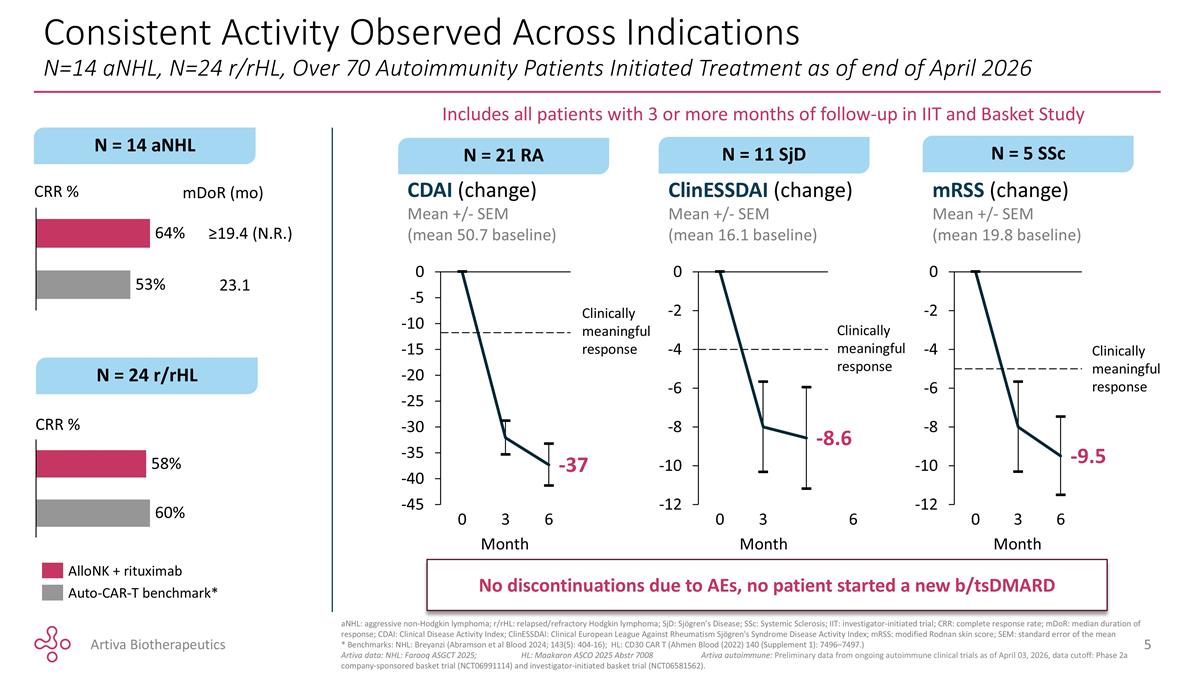
Consistent Activity Observed Across Indications N=14 aNHL, N=24 r/rHL, Over 70 Autoimmunity Patients Initiated Treatment as of end of April 2026 Artiva Biotherapeutics mDoR (mo) ≥19.4 (N.R.) 23.1 No discontinuations due to AEs, no patient started a new b/tsDMARD CRR % imab Auto-CAR-T benchmark* aNHL: aggressive non-Hodgkin lymphoma; r/rHL: relapsed/refractory Hodgkin lymphoma; SjD: Sjögren’s Disease; SSc: Systemic Sclerosis; IIT: investigator-initiated trial; CRR: complete response rate; mDoR: median duration of response; CDAI: Clinical Disease Activity Index; ClinESSDAI: Clinical European League Against Rheumatism Sjögren's Syndrome Disease Activity Index; mRSS: modified Rodnan skin score; SEM: standard error of the mean * Benchmarks: NHL: Breyanzi (Abramson et al Blood 2024; 143(5): 404-16);HL: CD30 CAR T (Ahmen Blood (2022) 140 (Supplement 1): 7496–7497.) Artiva data: NHL: Farooq ASGCT 2025;HL: Maakaron ASCO 2025 Abstr 7008Artiva autoimmune: Preliminary data from ongoing autoimmune clinical trials as of April 03, 2026, data cutoff: Phase 2a company-sponsored basket trial (NCT06991114) and investigator-initiated basket trial (NCT06581562). CRR % CDAI (change) Mean +/- SEM (mean 50.7 baseline) Month ClinESSDAI (change) Mean +/- SEM (mean 16.1 baseline) Month mRSS (change) Mean +/- SEM (mean 19.8 baseline) Month N = 14 aNHL N = 24 r/rHL N = 21 RA N = 11 SjD N = 5 SSc Includes all patients with 3 or more months of follow-up in IIT and Basket Study Clinically meaningful response Clinically meaningful response Clinically meaningful response
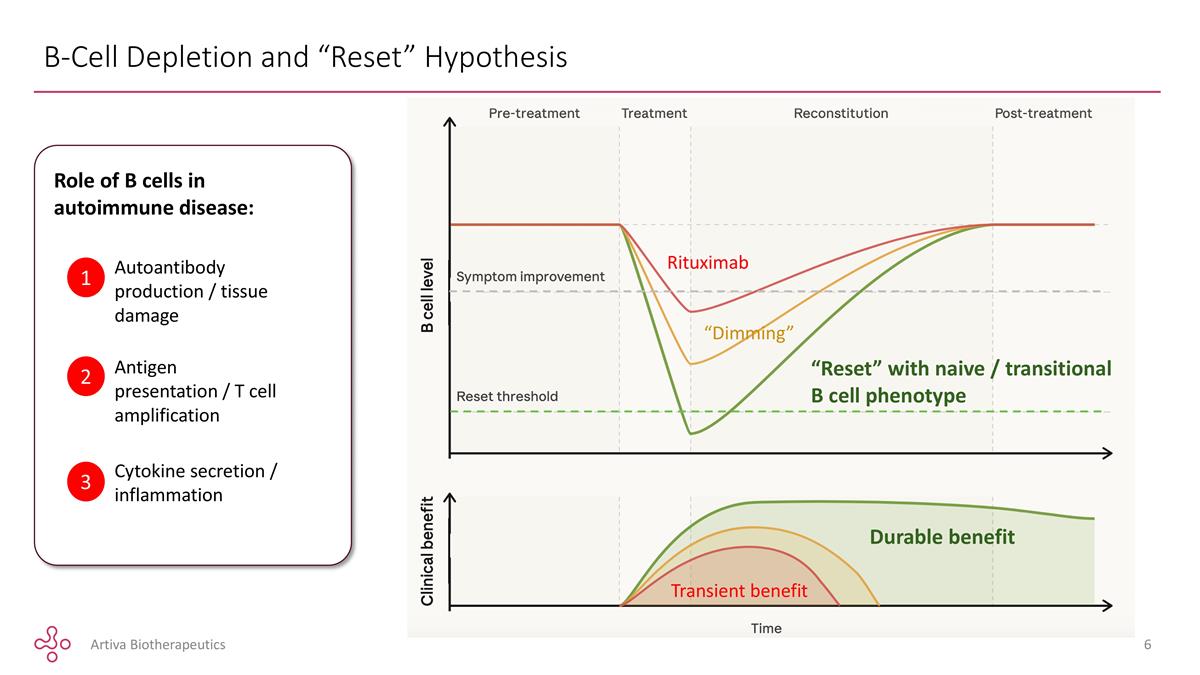
B-Cell Depletion and “Reset” Hypothesis Artiva Biotherapeutics Autoantibody production / tissue damage Cytokine secretion / inflammation Antigen presentation / T cell amplification Role of B cells in autoimmune disease: 1 2 3 “Reset” with naive / transitional B cell phenotype Rituximab “Dimming” Durable benefit Transient benefit
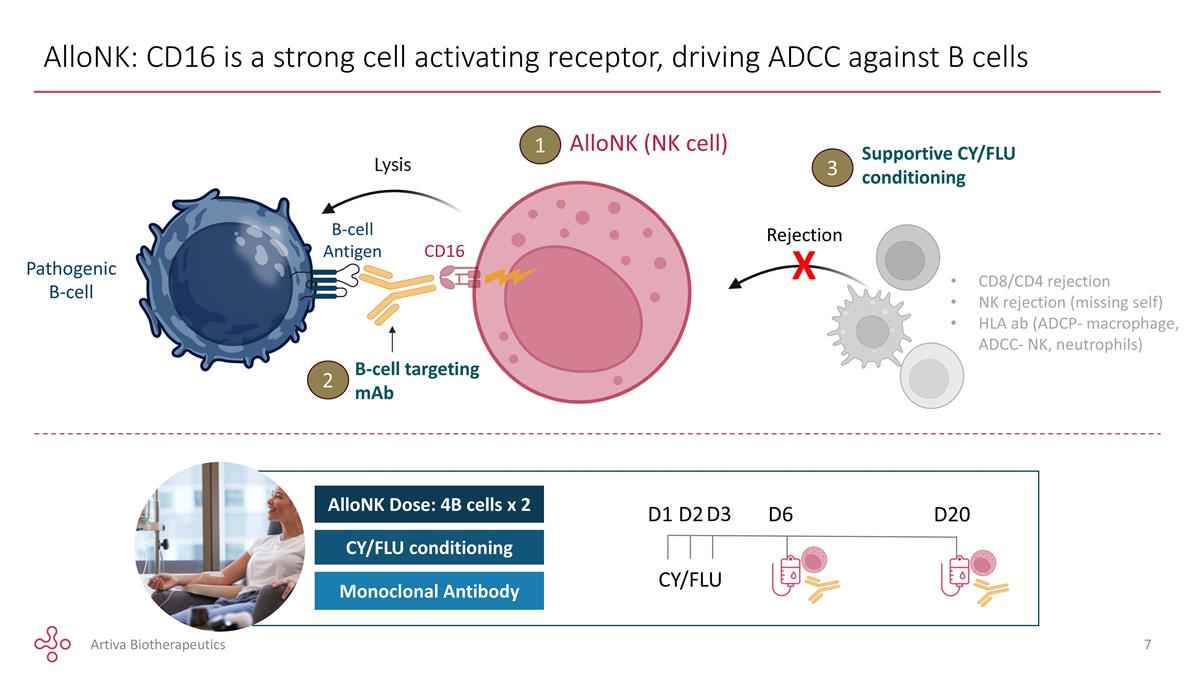
Supportive CY/FLU conditioning CD8/CD4 rejection NK rejection (missing self) HLA ab (ADCP- macrophage, ADCC- NK, neutrophils) AlloNK: CD16 is a strong cell activating receptor, driving ADCC against B cells AlloNK (NK cell) Pathogenic B-cell CD16 B-cell Antigen X 1 2 3 Rejection D1 D2 D3 D6 D20 CY/FLU conditioning AlloNK Dose: 4B cells x 2 Monoclonal Antibody B-cell targeting mAb CY/FLU Artiva Biotherapeutics
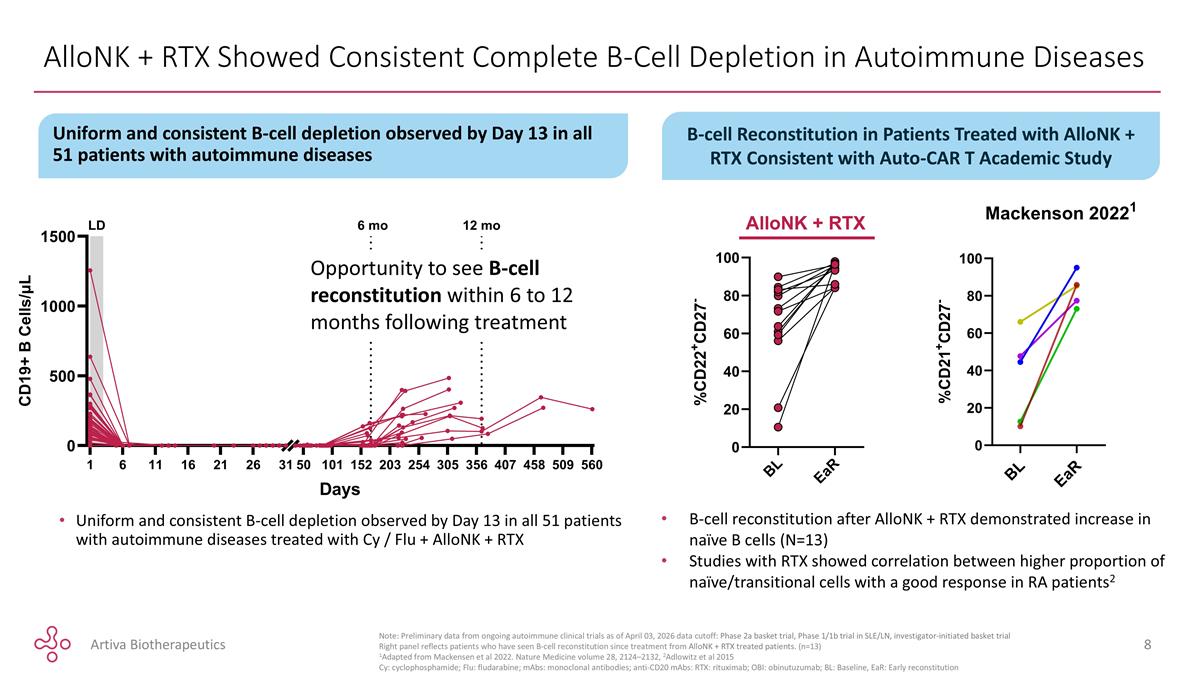
AlloNK + RTX Showed Consistent Complete B-Cell Depletion in Autoimmune Diseases Opportunity to see B-cell reconstitution within 6 to 12 months following treatment B-cell Reconstitution in Patients Treated with AlloNK + RTX Consistent with Auto-CAR T Academic Study Uniform and consistent B-cell depletion observed by Day 13 in all 51 patients with autoimmune diseases treated with Cy / Flu + AlloNK + RTX Uniform and consistent B-cell depletion observed by Day 13 in all 51 patients with autoimmune diseases B-cell reconstitution after AlloNK + RTX demonstrated increase in naïve B cells (N=13) Studies with RTX showed correlation between higher proportion of naïve/transitional cells with a good response in RA patients2 Note: Preliminary data from ongoing autoimmune clinical trials as of April 03, 2026 data cutoff: Phase 2a basket trial, Phase 1/1b trial in SLE/LN, investigator-initiated basket trial Right panel reflects patients who have seen B-cell reconstitution since treatment from AlloNK + RTX treated patients. (n=13) 1Adapted from Mackensen et al 2022. Nature Medicine volume 28, 2124–2132, 2Adlowitz et al 2015 Cy: cyclophosphamide; Flu: fludarabine; mAbs: monoclonal antibodies; anti-CD20 mAbs: RTX: rituximab; OBI: obinutuzumab; BL: Baseline, EaR: Early reconstitution Artiva Biotherapeutics
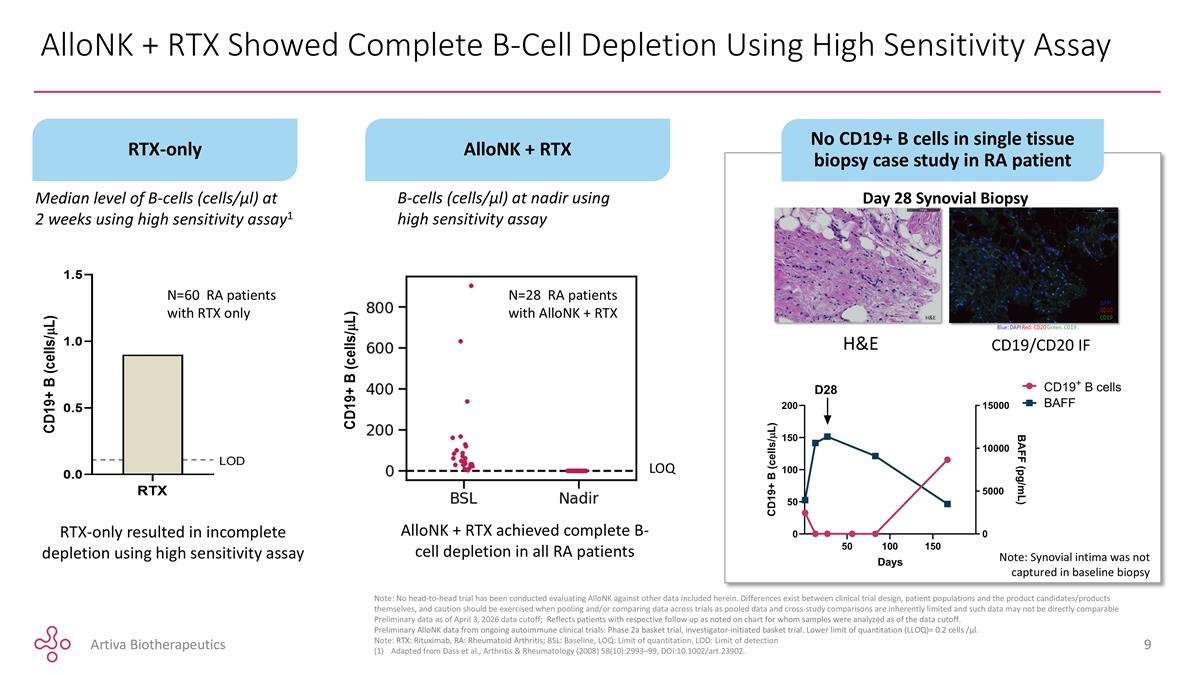
AlloNK + RTX Showed Complete B-Cell Depletion Using High Sensitivity Assay Note: No head-to-head trial has been conducted evaluating AlloNK against other data included herein. Differences exist between clinical trial design, patient populations and the product candidates/products themselves, and caution should be exercised when pooling and/or comparing data across trials as pooled data and cross-study comparisons are inherently limited and such data may not be directly comparable Preliminary data as of April 3, 2026 data cutoff; Reflects patients with respective follow up as noted on chart for whom samples were analyzed as of the data cutoff. Preliminary AlloNK data from ongoing autoimmune clinical trials: Phase 2a basket trial, investigator-initiated basket trial. Lower limit of quantitation (LLOQ)= 0.2 cells /µl. Note: RTX: Rituximab, RA: Rheumatoid Arthritis; BSL: Baseline, LOQ: Limit of quantitation, LOD: Limit of detection Adapted from Dass et al., Arthritis & Rheumatology (2008) 58(10):2993–99, DOI:10.1002/art.23902. Day 28 Synovial Biopsy H&E CD19/CD20 IF RTX-only resulted in incomplete depletion using high sensitivity assay N=60 RA patients with RTX only Median level of B-cells (cells/µl) at 2 weeks using high sensitivity assay1 RTX-only B-cells (cells/µl) at nadir using high sensitivity assay AlloNK + RTX No CD19+ B cells in single tissue biopsy case study in RA patient Note: Synovial intima was not captured in baseline biopsy AlloNK + RTX achieved complete B-cell depletion in all RA patients N=28 RA patients with AlloNK + RTX LOQ Artiva Biotherapeutics
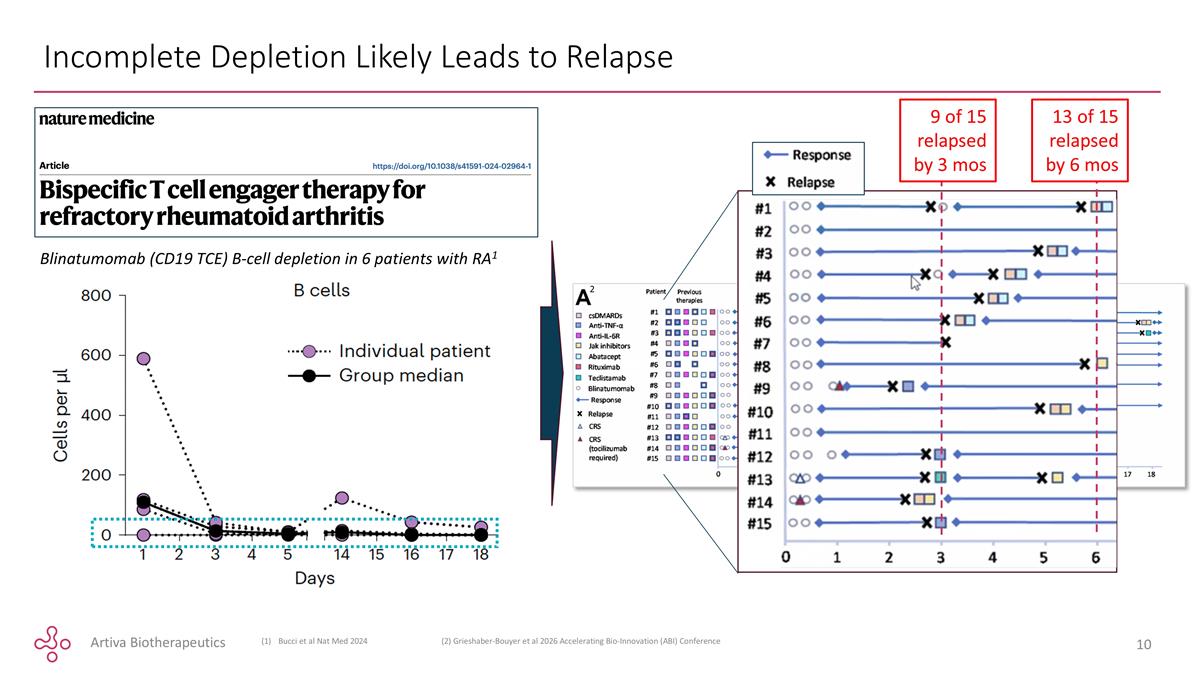
Incomplete Depletion Likely Leads to Relapse Blinatumomab (CD19 TCE) B-cell depletion in 6 patients with RA1 Bucci et al Nat Med 2024(2) Grieshaber-Bouyer et al 2026 Accelerating Bio-Innovation (ABI) Conference 9 of 15 relapsed by 3 mos 13 of 15 relapsed by 6 mos 2 Artiva Biotherapeutics
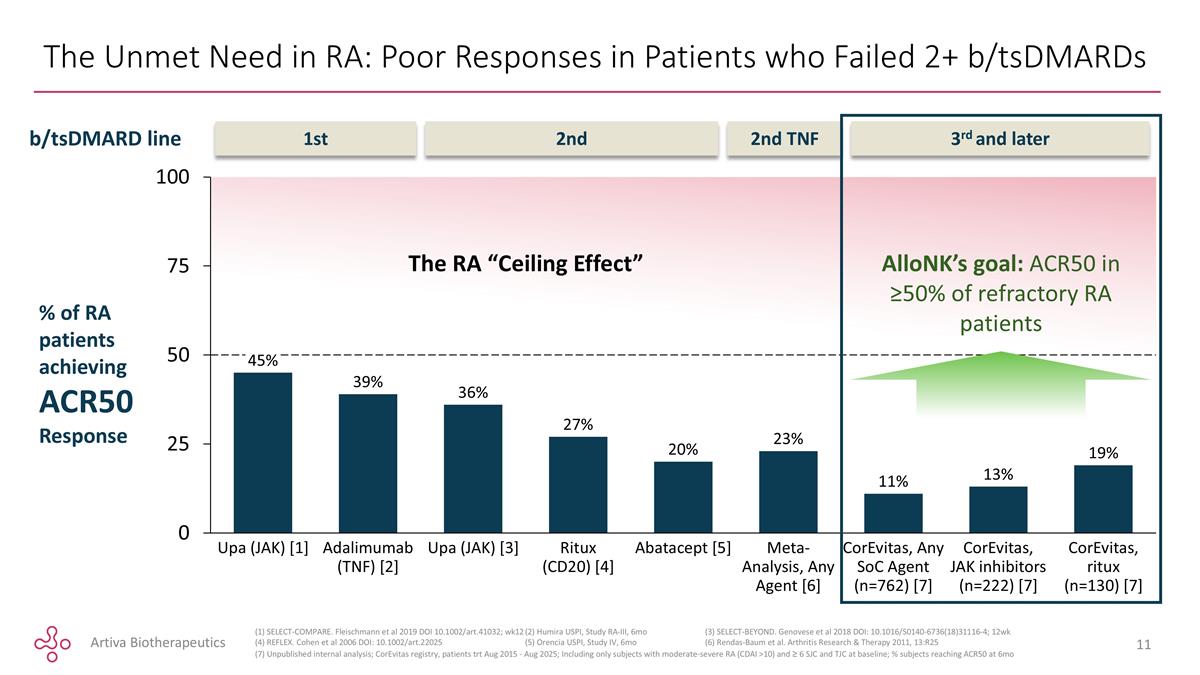
The Unmet Need in RA: Poor Responses in Patients who Failed 2+ b/tsDMARDs % of RA patients achieving ACR50 Response 1st 2nd TNF 3rd and later b/tsDMARD line (1) SELECT-COMPARE. Fleischmann et al 2019 DOI 10.1002/art.41032; wk12(2) Humira USPI, Study RA-III, 6mo(3) SELECT-BEYOND. Genovese et al 2018 DOI: 10.1016/S0140-6736(18)31116-4; 12wk (4) REFLEX. Cohen et al 2006 DOI: 10.1002/art.22025(5) Orencia USPI, Study IV, 6mo(6) Rendas-Baum et al. Arthritis Research & Therapy 2011, 13:R25 (7) Unpublished internal analysis; CorEvitas registry, patients trt Aug 2015 - Aug 2025; Including only subjects with moderate-severe RA (CDAI >10) and ≥ 6 SJC and TJC at baseline; % subjects reaching ACR50 at 6mo Artiva Biotherapeutics AlloNK’s goal: ACR50 in ≥50% of refractory RA patients The RA “Ceiling Effect” 2nd
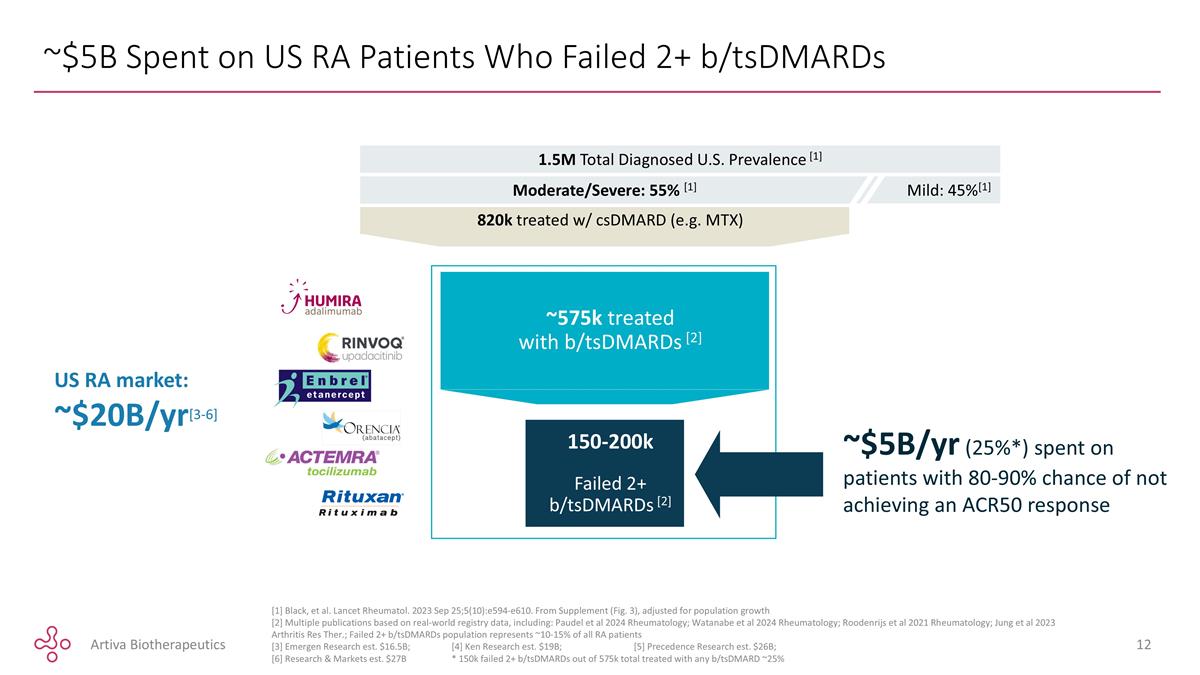
~$5B Spent on US RA Patients Who Failed 2+ b/tsDMARDs Artiva Biotherapeutics 820k treated w/ csDMARD (e.g. MTX) 1.5M Total Diagnosed U.S. Prevalence [1] Mild: 45%[1] Moderate/Severe: 55% [1] 150-200k Failed 2+ b/tsDMARDs [2] US RA market: ~$20B/yr[3-6] ~575k treated with b/tsDMARDs [2] ~$5B/yr (25%*) spent on patients with 80-90% chance of not achieving an ACR50 response [1] Black, et al. Lancet Rheumatol. 2023 Sep 25;5(10):e594-e610. From Supplement (Fig. 3), adjusted for population growth [2] Multiple publications based on real-world registry data, including: Paudel et al 2024 Rheumatology; Watanabe et al 2024 Rheumatology; Roodenrijs et al 2021 Rheumatology; Jung et al 2023 Arthritis Res Ther.; Failed 2+ b/tsDMARDs population represents ~10-15% of all RA patients [3] Emergen Research est. $16.5B;[4] Ken Research est. $19B; [5] Precedence Research est. $26B; [6] Research & Markets est. $27B* 150k failed 2+ b/tsDMARDs out of 575k total treated with any b/tsDMARD ~25%
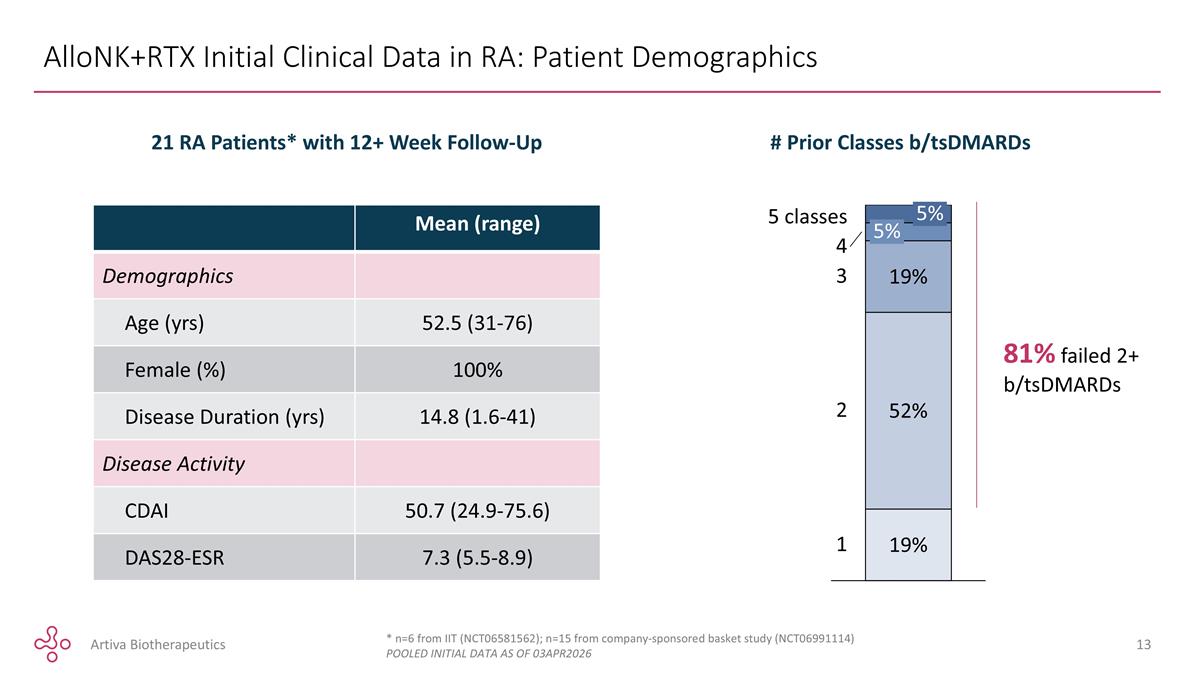
AlloNK+RTX Initial Clinical Data in RA: Patient Demographics Artiva Biotherapeutics Mean (range) Demographics Age (yrs) 52.5 (31-76) Female (%) 100% Disease Duration (yrs) 14.8 (1.6-41) Disease Activity CDAI 50.7 (24.9-75.6) DAS28-ESR 7.3 (5.5-8.9) * n=6 from IIT (NCT06581562); n=15 from company-sponsored basket study (NCT06991114) POOLED INITIAL DATA AS OF 03APR2026 21 RA Patients* with 12+ Week Follow-Up # Prior Classes b/tsDMARDs 81% failed 2+ b/tsDMARDs
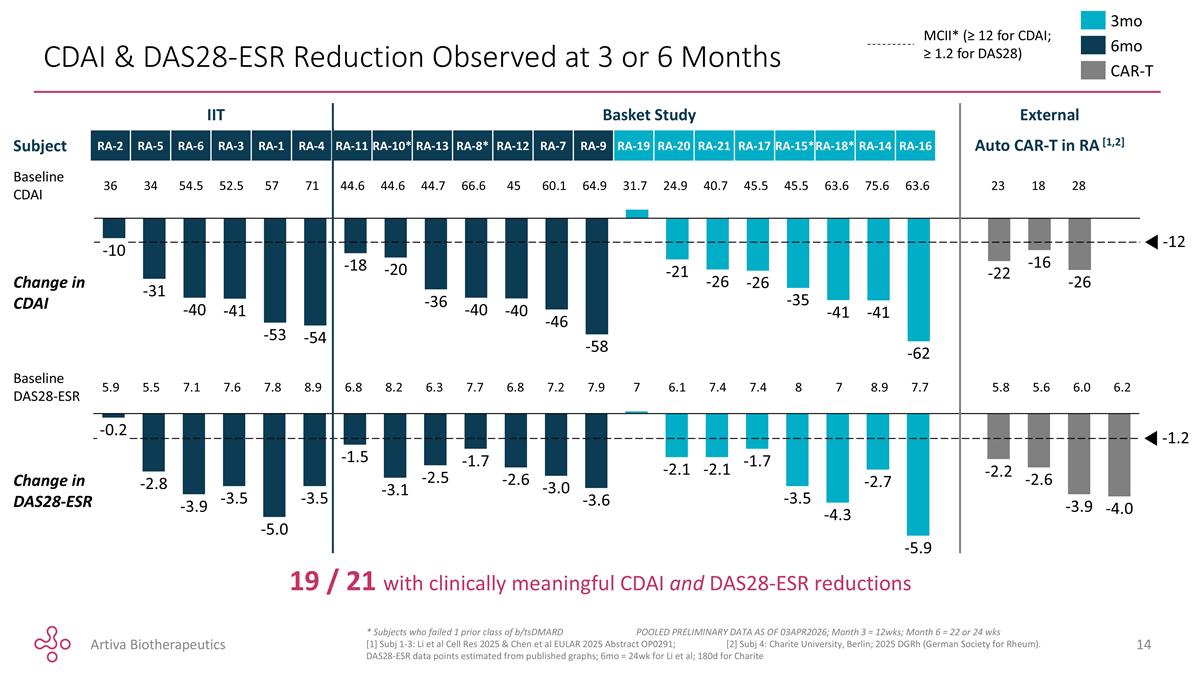
CDAI & DAS28-ESR Reduction Observed at 3 or 6 Months Artiva Biotherapeutics Subject RA-2 RA-5 RA-6 RA-3 RA-1 RA-4 RA-11 RA-10* RA-13 RA-8* RA-12 RA-7 RA-9 RA-19 RA-20 RA-21 RA-17 RA-15* RA-18* RA-14 RA-16 Change in CDAI Change in DAS28-ESR MCII* (≥ 12 for CDAI; ≥ 1.2 for DAS28) Baseline CDAI 36 34 54.5 52.5 57 71 44.6 44.6 44.7 66.6 45 60.1 64.9 31.7 24.9 40.7 45.5 45.5 63.6 75.6 63.6 23 18 28 Baseline DAS28-ESR 5.9 5.5 7.1 7.6 7.8 8.9 6.8 8.2 6.3 7.7 6.8 7.2 7.9 7 6.1 7.4 7.4 8 7 8.9 7.7 5.8 5.6 6.0 6.2 * Subjects who failed 1 prior class of b/tsDMARDPOOLED PRELIMINARY DATA AS OF 03APR2026; Month 3 = 12wks; Month 6 = 22 or 24 wks [1] Subj 1-3: Li et al Cell Res 2025 & Chen et al EULAR 2025 Abstract OP0291;[2] Subj 4: Charite University, Berlin; 2025 DGRh (German Society for Rheum). DAS28-ESR data points estimated from published graphs; 6mo = 24wk for Li et al; 180d for Charite IIT Basket Study 19 / 21 with clinically meaningful CDAI and DAS28-ESR reductions Auto CAR-T in RA [1,2] External
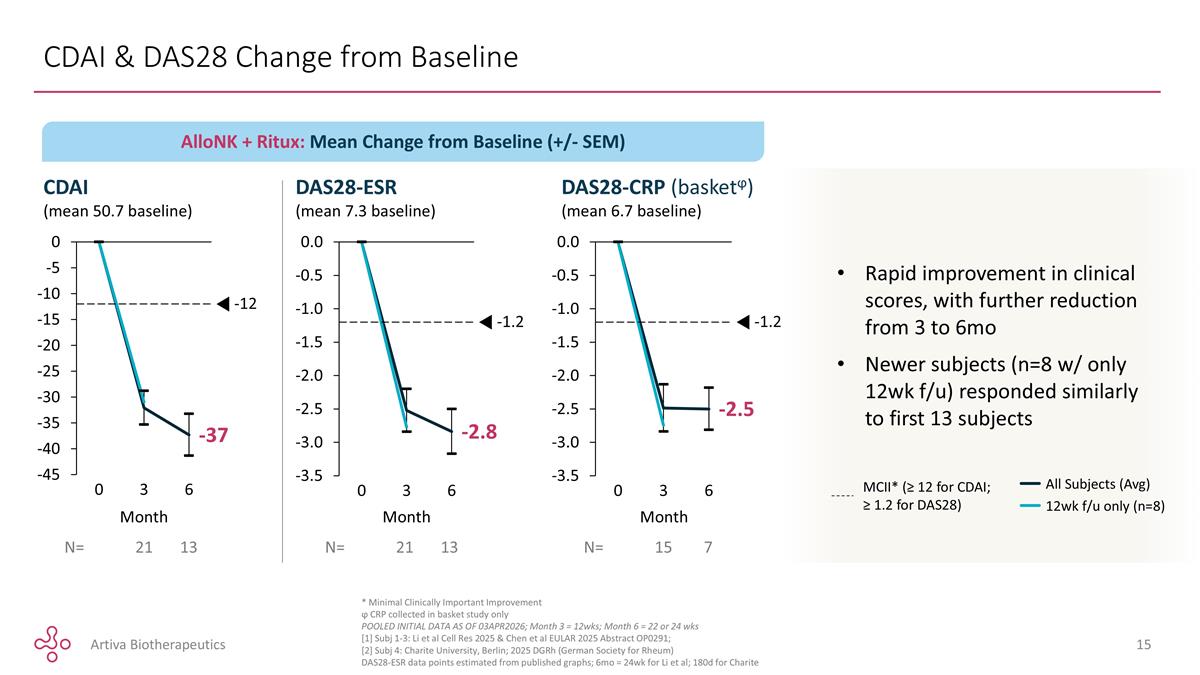
CDAI & DAS28 Change from Baseline Artiva Biotherapeutics CDAI (mean 50.7 baseline) Month N= 21 13 Month DAS28-ESR (mean 7.3 baseline) * Minimal Clinically Important Improvement ϕ CRP collected in basket study only POOLED INITIAL DATA AS OF 03APR2026; Month 3 = 12wks; Month 6 = 22 or 24 wks [1] Subj 1-3: Li et al Cell Res 2025 & Chen et al EULAR 2025 Abstract OP0291; [2] Subj 4: Charite University, Berlin; 2025 DGRh (German Society for Rheum) DAS28-ESR data points estimated from published graphs; 6mo = 24wk for Li et al; 180d for Charite MCII* (≥ 12 for CDAI; ≥ 1.2 for DAS28) AlloNK + Ritux: Mean Change from Baseline (+/- SEM) Rapid improvement in clinical scores, with further reduction from 3 to 6mo Newer subjects (n=8 w/ only 12wk f/u) responded similarly to first 13 subjects DAS28-CRP (basketϕ) (mean 6.7 baseline) Month N= 21 13 N= 15 7
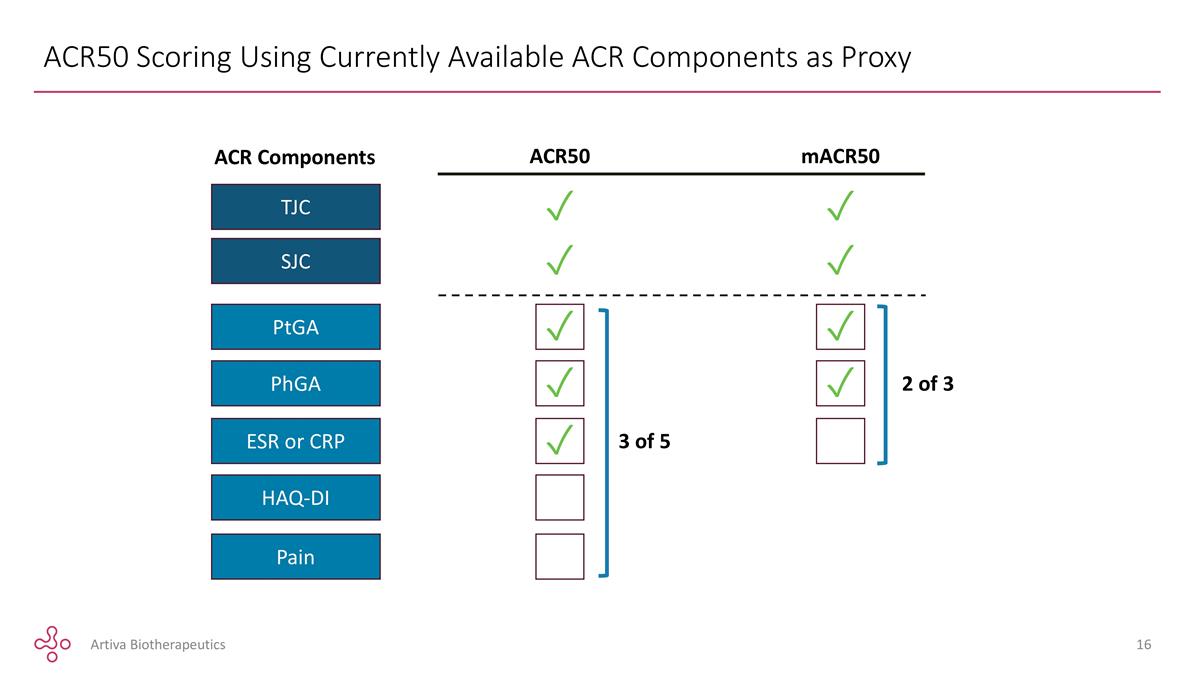
ACR50 Scoring Using Currently Available ACR Components as Proxy Artiva Biotherapeutics PhGA PtGA SJC TJC HAQ-DI ESR or CRP Pain 3 of 5 ACR50 mACR50 ACR Components 2 of 3 ✓ ✓ ✓ ✓ ✓ ✓ ✓ ✓ ✓
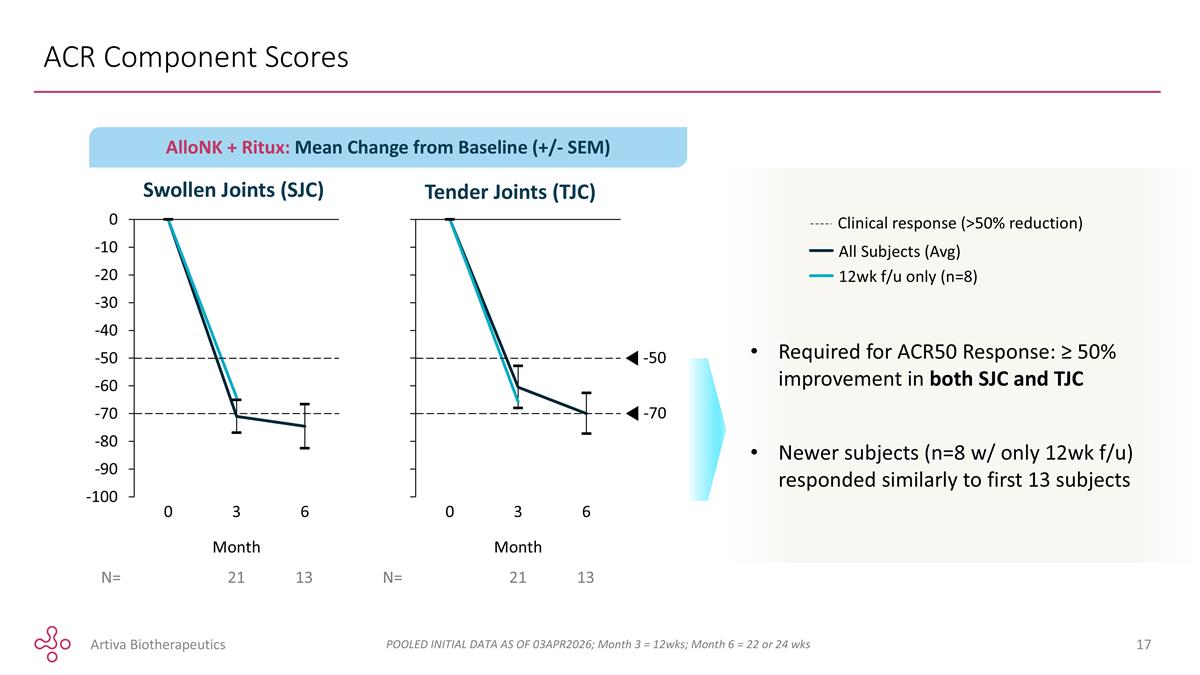
ACR Component Scores Artiva Biotherapeutics Swollen Joints (SJC) Month Clinical response (>50% reduction) POOLED INITIAL DATA AS OF 03APR2026; Month 3 = 12wks; Month 6 = 22 or 24 wks N= 21 13 Tender Joints (TJC) Month N= 21 13 Required for ACR50 Response: ≥ 50% improvement in both SJC and TJC Newer subjects (n=8 w/ only 12wk f/u) responded similarly to first 13 subjects AlloNK + Ritux: Mean Change from Baseline (+/- SEM) -70
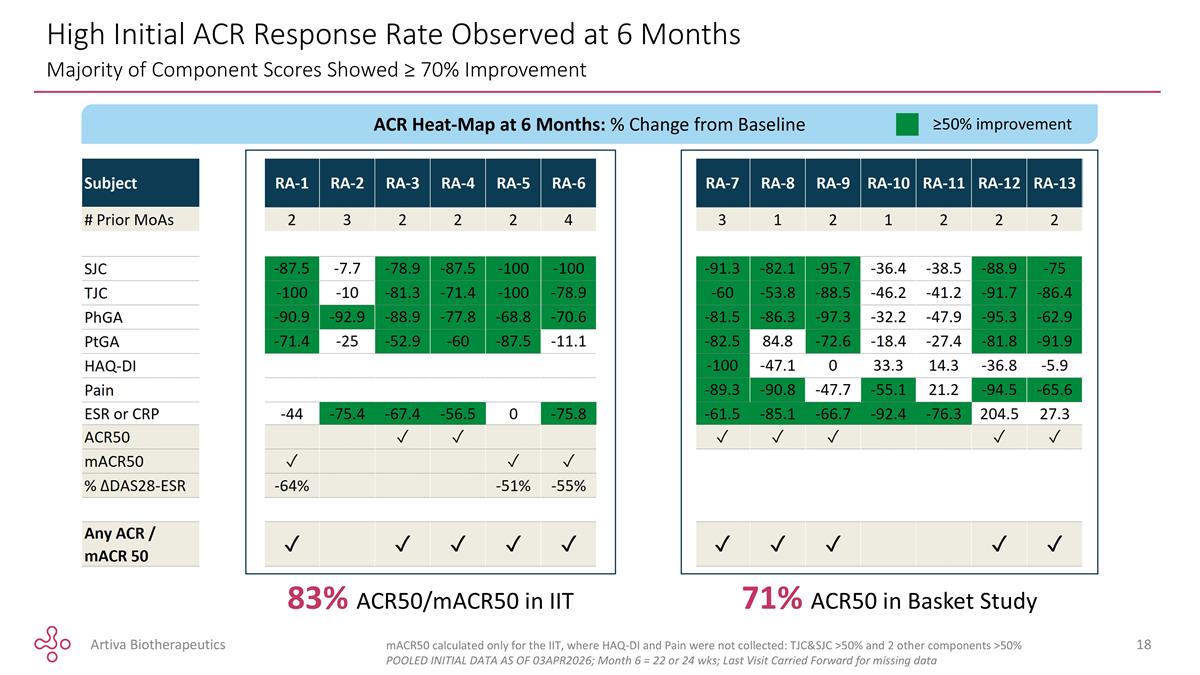
High Initial ACR Response Rate Observed at 6 Months Artiva Biotherapeutics mACR50 calculated only for the IIT, where HAQ-DI and Pain were not collected: TJC&SJC >50% and 2 other components >50% POOLED INITIAL DATA AS OF 03APR2026; Month 6 = 22 or 24 wks; Last Visit Carried Forward for missing data 83% ACR50/mACR50 in IIT 71% ACR50 in Basket Study ACR Heat-Map at 6 Months: % Change from Baseline ≥50% improvement Majority of Component Scores Showed ≥ 70% Improvement
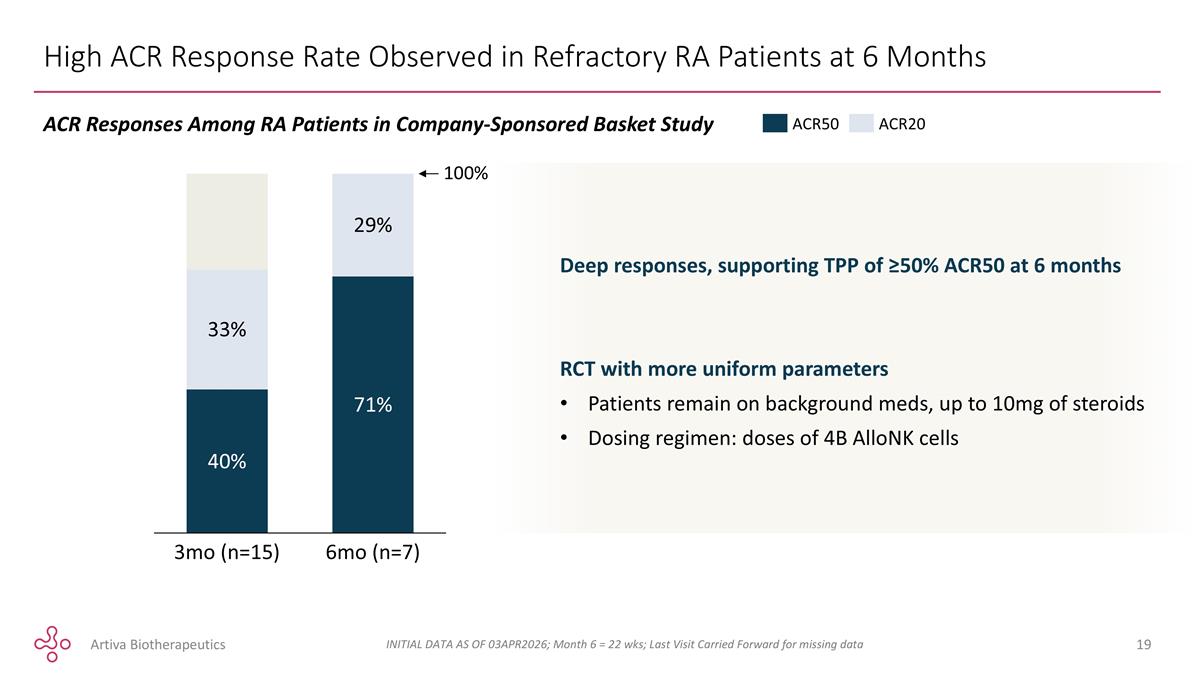
High ACR Response Rate Observed in Refractory RA Patients at 6 Months 19 Artiva Biotherapeutics ACR Responses Among RA Patients in Company-Sponsored Basket Study INITIAL DATA AS OF 03APR2026; Month 6 = 22 wks; Last Visit Carried Forward for missing data Deep responses, supporting TPP of ≥50% ACR50 at 6 months RCT with more uniform parameters Patients remain on background meds, up to 10mg of steroids Dosing regimen: doses of 4B AlloNK cells
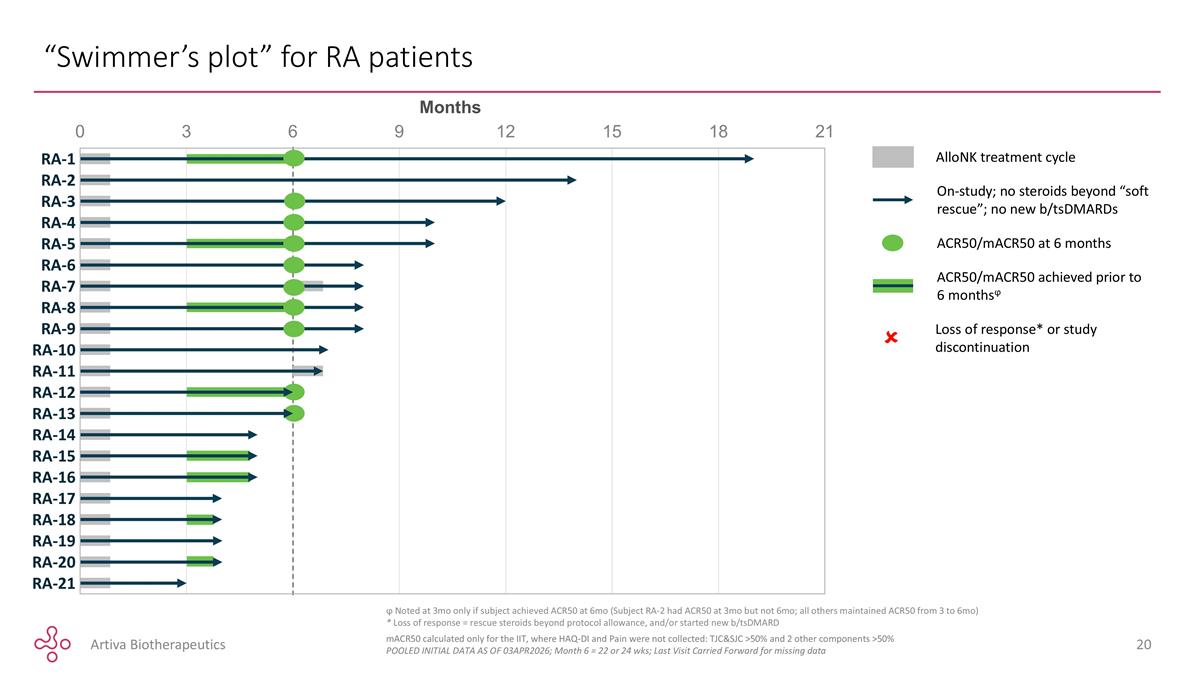
“Swimmer’s plot” for RA patients Artiva Biotherapeutics AlloNK treatment cycle On-study; no steroids beyond “soft rescue”; no new b/tsDMARDs Loss of response* or study discontinuation û ϕ Noted at 3mo only if subject achieved ACR50 at 6mo (Subject RA-2 had ACR50 at 3mo but not 6mo; all others maintained ACR50 from 3 to 6mo) * Loss of response = rescue steroids beyond protocol allowance, and/or started new b/tsDMARD mACR50 calculated only for the IIT, where HAQ-DI and Pain were not collected: TJC&SJC >50% and 2 other components >50% POOLED INITIAL DATA AS OF 03APR2026; Month 6 = 22 or 24 wks; Last Visit Carried Forward for missing data 0 3 6 9 12 15 18 21 Months RA-1 ü RA-2 RA-3 ü RA-4 ü RA-5 ü RA-6 ü RA-7 ü RA-8 ü RA-9 ü RA-10 RA-11 RA-12 ü RA-13 ü RA-14 RA-15 RA-16 RA-17 RA-18 RA-19 RA-20 RA-21 ACR50/mACR50 at 6 months ACR50/mACR50 achieved prior to 6 monthsϕ
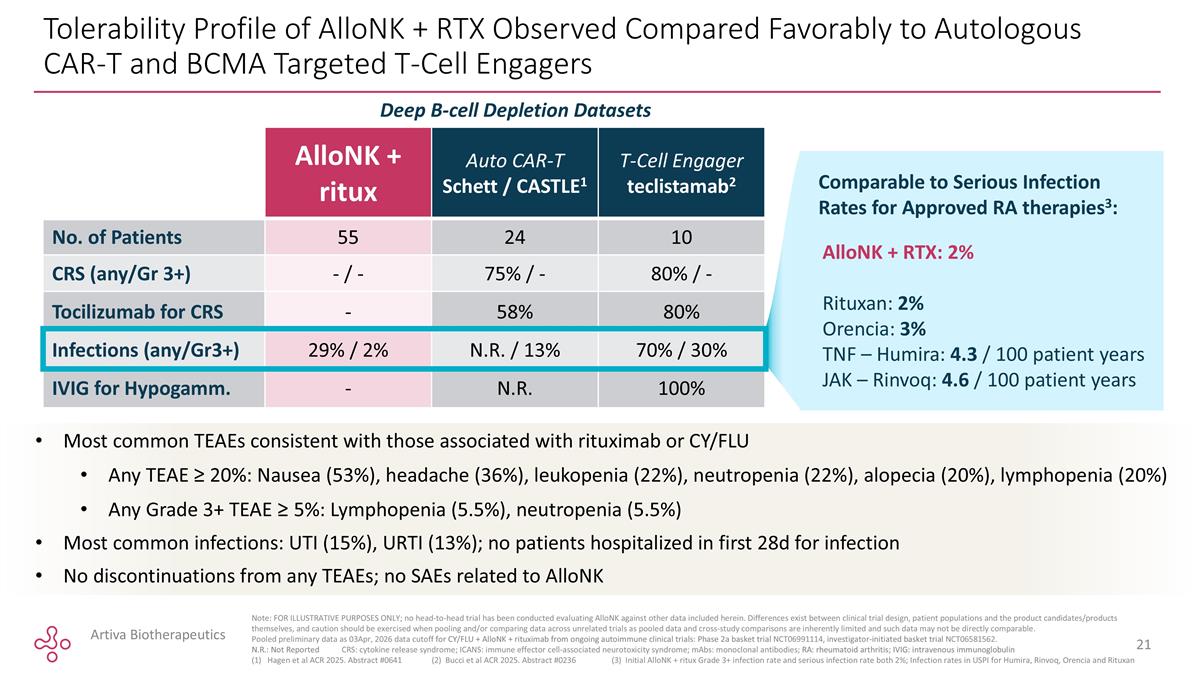
Tolerability Profile of AlloNK + RTX Observed Compared Favorably to Autologous CAR-T and BCMA Targeted T-Cell Engagers AlloNK + ritux Auto CAR-T Schett / CASTLE1 T-Cell Engager teclistamab2 No. of Patients 55 24 10 CRS (any/Gr 3+) - / - 75% / - 80% / - Tocilizumab for CRS - 58% 80% Infections (any/Gr3+) 29% / 2% N.R. / 13% 70% / 30% IVIG for Hypogamm. - N.R. 100% Deep B-cell Depletion Datasets Note: FOR ILLUSTRATIVE PURPOSES ONLY; no head-to-head trial has been conducted evaluating AlloNK against other data included herein. Differences exist between clinical trial design, patient populations and the product candidates/products themselves, and caution should be exercised when pooling and/or comparing data across unrelated trials as pooled data and cross-study comparisons are inherently limited and such data may not be directly comparable. Pooled preliminary data as 03Apr, 2026 data cutoff for CY/FLU + AlloNK + rituximab from ongoing autoimmune clinical trials: Phase 2a basket trial NCT06991114, investigator-initiated basket trial NCT06581562. N.R.: Not ReportedCRS: cytokine release syndrome; ICANS: immune effector cell-associated neurotoxicity syndrome; mAbs: monoclonal antibodies; RA: rheumatoid arthritis; IVIG: intravenous immunoglobulin (1) Hagen et al ACR 2025. Abstract #0641(2) Bucci et al ACR 2025. Abstract #0236(3) Initial AlloNK + ritux Grade 3+ infection rate and serious infection rate both 2%; Infection rates in USPI for Humira, Rinvoq, Orencia and Rituxan Artiva Biotherapeutics Comparable to Serious Infection Rates for Approved RA therapies3: AlloNK + RTX: 2% Rituxan: 2% Orencia: 3% TNF – Humira: 4.3 / 100 patient years JAK – Rinvoq: 4.6 / 100 patient years Most common TEAEs consistent with those associated with rituximab or CY/FLU Any TEAE ≥ 20%: Nausea (53%), headache (36%), leukopenia (22%), neutropenia (22%), alopecia (20%), lymphopenia (20%) Any Grade 3+ TEAE ≥ 5%: Lymphopenia (5.5%), neutropenia (5.5%) Most common infections: UTI (15%), URTI (13%); no patients hospitalized in first 28d for infection No discontinuations from any TEAEs; no SAEs related to AlloNK
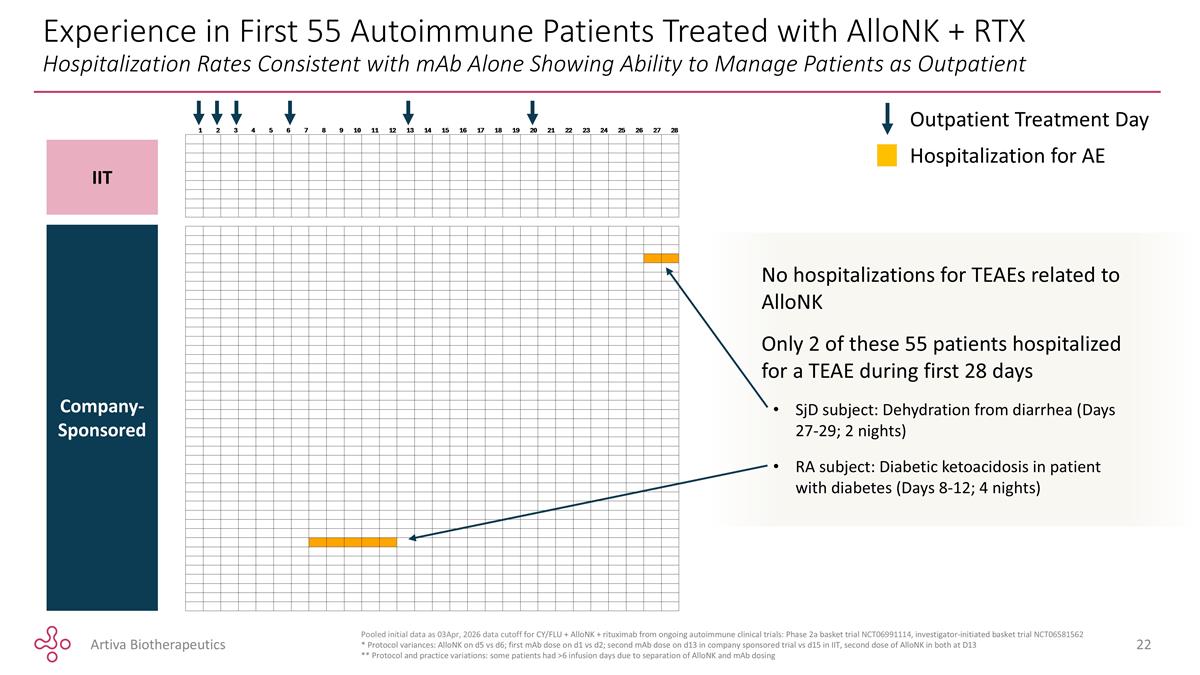
Experience in First 55 Autoimmune Patients Treated with AlloNK + RTX Hospitalization Rates Consistent with mAb Alone Showing Ability to Manage Patients as Outpatient Pooled initial data as 03Apr, 2026 data cutoff for CY/FLU + AlloNK + rituximab from ongoing autoimmune clinical trials: Phase 2a basket trial NCT06991114, investigator-initiated basket trial NCT06581562 * Protocol variances: AlloNK on d5 vs d6; first mAb dose on d1 vs d2; second mAb dose on d13 in company sponsored trial vs d15 in IIT, second dose of AlloNK in both at D13 ** Protocol and practice variations: some patients had >6 infusion days due to separation of AlloNK and mAb dosing IIT Company-Sponsored No hospitalizations for TEAEs related to AlloNK Only 2 of these 55 patients hospitalized for a TEAE during first 28 days SjD subject: Dehydration from diarrhea (Days 27-29; 2 nights) RA subject: Diabetic ketoacidosis in patient with diabetes (Days 8-12; 4 nights) Artiva Biotherapeutics Outpatient Treatment Day Hospitalization for AE
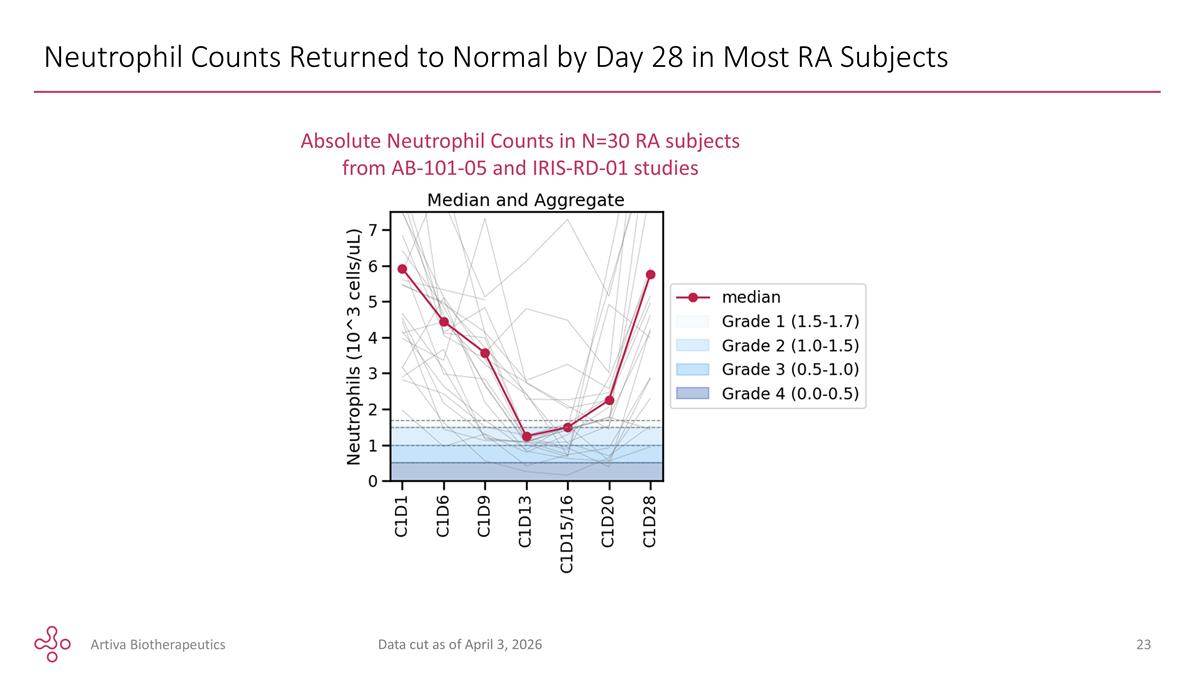
Neutrophil Counts Returned to Normal by Day 28 in Most RA Subjects Artiva Biotherapeutics Data cut as of April 3, 2026 Absolute Neutrophil Counts in N=30 RA subjects from AB-101-05 and IRIS-RD-01 studies
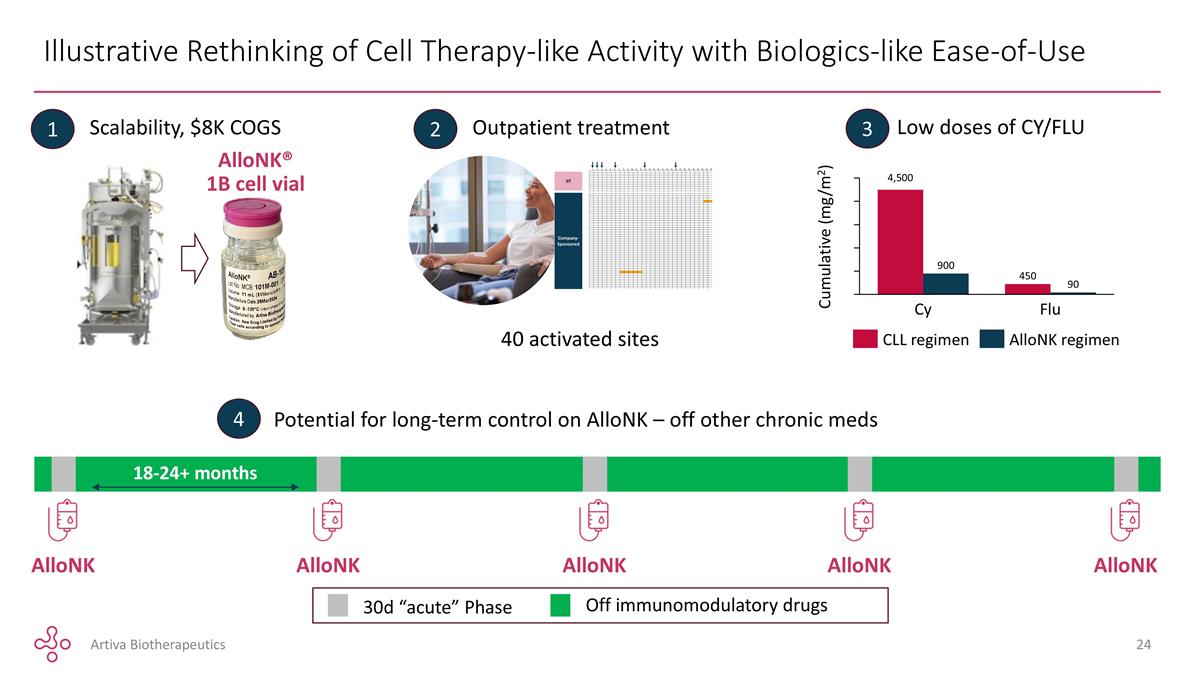
Illustrative Rethinking of Cell Therapy-like Activity with Biologics-like Ease-of-Use Artiva Biotherapeutics AlloNK AlloNK AlloNK AlloNK AlloNK Potential for long-term control on AlloNK – off other chronic meds 18-24+ months 30d “acute” Phase Off immunomodulatory drugs Low doses of CY/FLU 4 3 Scalability, $8K COGS 1 Outpatient treatment 2 40 activated sites AlloNK® 1B cell vial Cumulative (mg/m2)
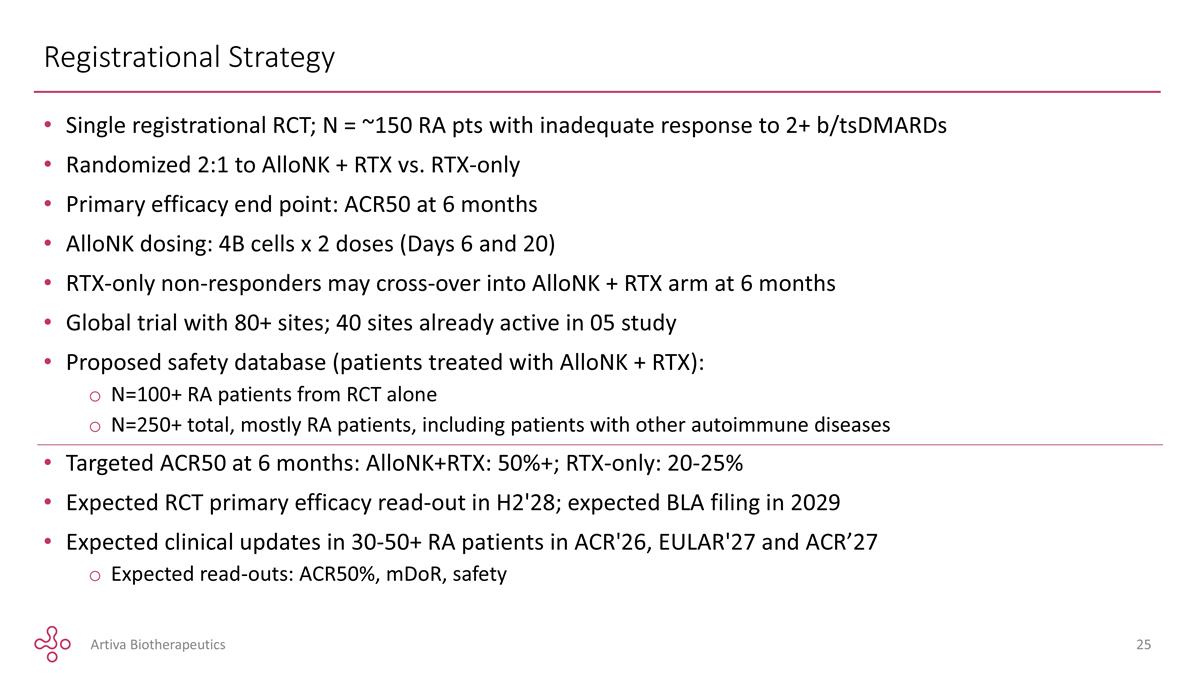
Registrational Strategy Single registrational RCT; N = ~150 RA pts with inadequate response to 2+ b/tsDMARDs Randomized 2:1 to AlloNK + RTX vs. RTX-only Primary efficacy end point: ACR50 at 6 months AlloNK dosing: 4B cells x 2 doses (Days 6 and 20) RTX-only non-responders may cross-over into AlloNK + RTX arm at 6 months Global trial with 80+ sites; 40 sites already active in 05 study Proposed safety database (patients treated with AlloNK + RTX): N=100+ RA patients from RCT alone N=250+ total, mostly RA patients, including patients with other autoimmune diseases Targeted ACR50 at 6 months: AlloNK+RTX: 50%+; RTX-only: 20-25% Expected RCT primary efficacy read-out in H2'28; expected BLA filing in 2029 Expected clinical updates in 30-50+ RA patients in ACR'26, EULAR'27 and ACR’27 Expected read-outs: ACR50%, mDoR, safety Artiva Biotherapeutics
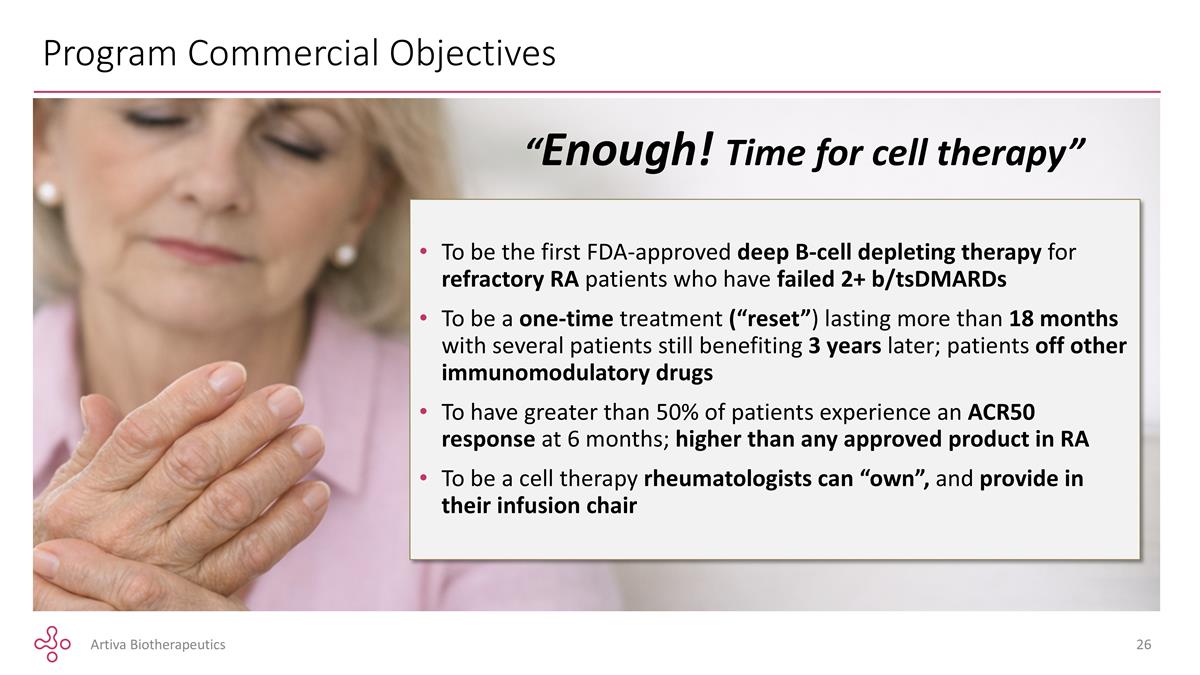
Artiva Biotherapeutics To be the first FDA-approved deep B-cell depleting therapy for refractory RA patients who have failed 2+ b/tsDMARDs To be a one-time treatment (“reset”) lasting more than 18 months with several patients still benefiting 3 years later; patients off other immunomodulatory drugs To have greater than 50% of patients experience an ACR50 response at 6 months; higher than any approved product in RA To be a cell therapy rheumatologists can “own”, and provide in their infusion chair Program Commercial Objectives “Enough! Time for cell therapy”
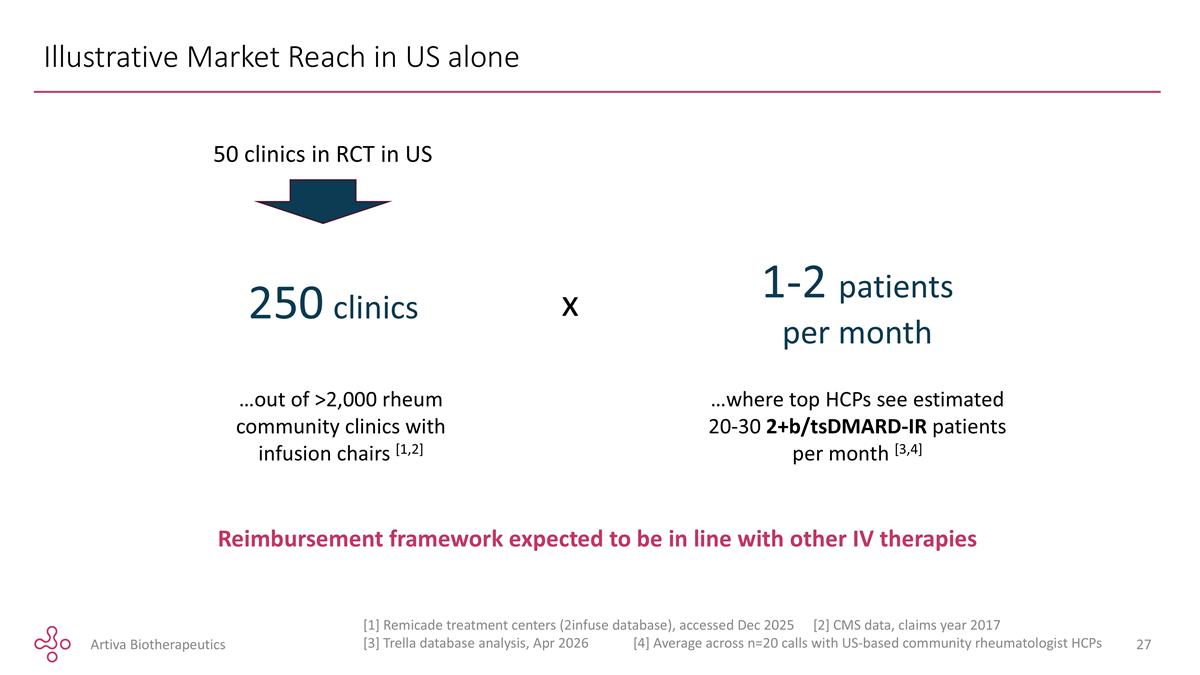
Illustrative Market Reach in US alone Reimbursement framework expected to be in line with other IV therapies Artiva Biotherapeutics 250 clinics 1-2 patients per month 50 clinics in RCT in US …out of >2,000 rheum community clinics with infusion chairs [1,2] …where top HCPs see estimated 20-30 2+b/tsDMARD-IR patients per month [3,4] x [1] Remicade treatment centers (2infuse database), accessed Dec 2025[2] CMS data, claims year 2017 [3] Trella database analysis, Apr 2026[4] Average across n=20 calls with US-based community rheumatologist HCPs
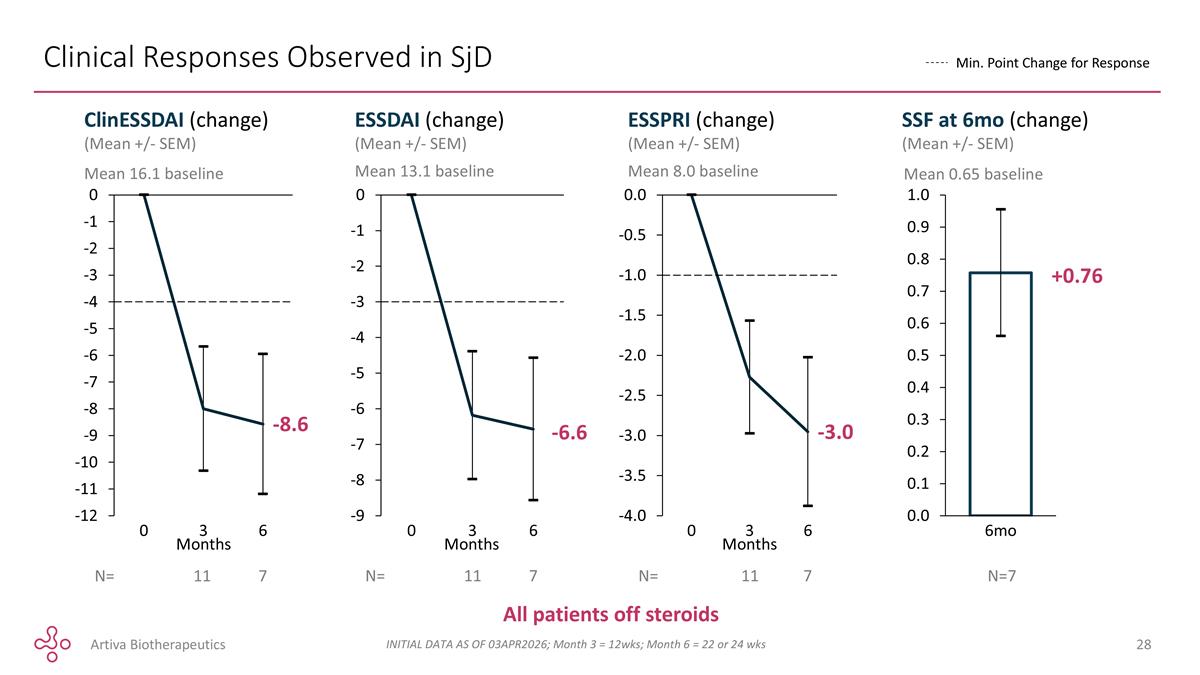
Clinical Responses Observed in SjD Artiva Biotherapeutics N= 11 7 ESSPRI (change) (Mean +/- SEM) N= 11 7 ESSDAI (change) (Mean +/- SEM) SSF at 6mo (change) (Mean +/- SEM) Months Months INITIAL DATA AS OF 03APR2026; Month 3 = 12wks; Month 6 = 22 or 24 wks Mean 13.1 baseline Mean 8.0 baseline Mean 0.65 baseline Min. Point Change for Response N= 11 7 ClinESSDAI (change) (Mean +/- SEM) Months Mean 16.1 baseline +0.76 N=7 All patients off steroids
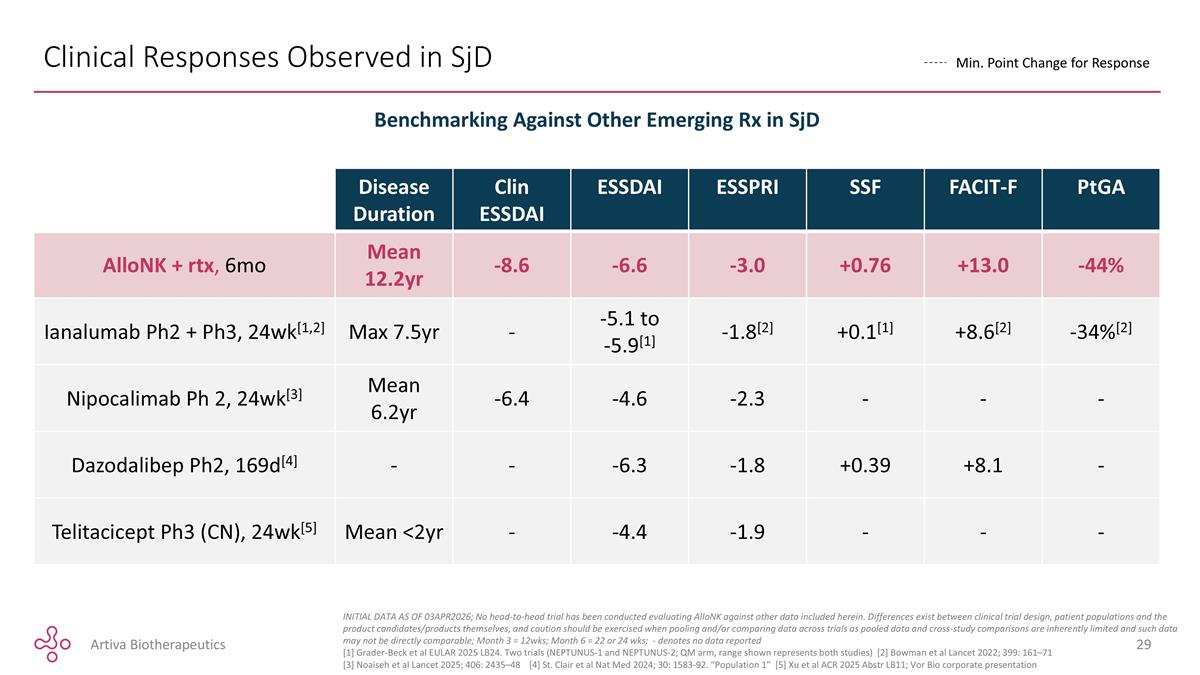
Clinical Responses Observed in SjD Artiva Biotherapeutics INITIAL DATA AS OF 03APR2026; No head-to-head trial has been conducted evaluating AlloNK against other data included herein. Differences exist between clinical trial design, patient populations and the product candidates/products themselves, and caution should be exercised when pooling and/or comparing data across trials as pooled data and cross-study comparisons are inherently limited and such data may not be directly comparable; Month 3 = 12wks; Month 6 = 22 or 24 wks; - denotes no data reported [1] Grader-Beck et al EULAR 2025 LB24. Two trials (NEPTUNUS-1 and NEPTUNUS-2; QM arm, range shown represents both studies) [2] Bowman et al Lancet 2022; 399: 161–71 [3] Noaiseh et al Lancet 2025; 406: 2435–48 [4] St. Clair et al Nat Med 2024; 30: 1583-92. “Population 1” [5] Xu et al ACR 2025 Abstr LB11; Vor Bio corporate presentation Min. Point Change for Response Disease Duration Clin ESSDAI ESSDAI ESSPRI SSF FACIT-F PtGA AlloNK + rtx, 6mo Mean 12.2yr -8.6 -6.6 -3.0 +0.76 +13.0 -44% Ianalumab Ph2 + Ph3, 24wk[1,2] Max 7.5yr - -5.1 to -5.9[1] -1.8[2] +0.1[1] +8.6[2] -34%[2] Nipocalimab Ph 2, 24wk[3] Mean 6.2yr -6.4 -4.6 -2.3 - - - Dazodalibep Ph2, 169d[4] - - -6.3 -1.8 +0.39 +8.1 - Telitacicept Ph3 (CN), 24wk[5] Mean <2yr - -4.4 -1.9 - - - Benchmarking Against Other Emerging Rx in SjD
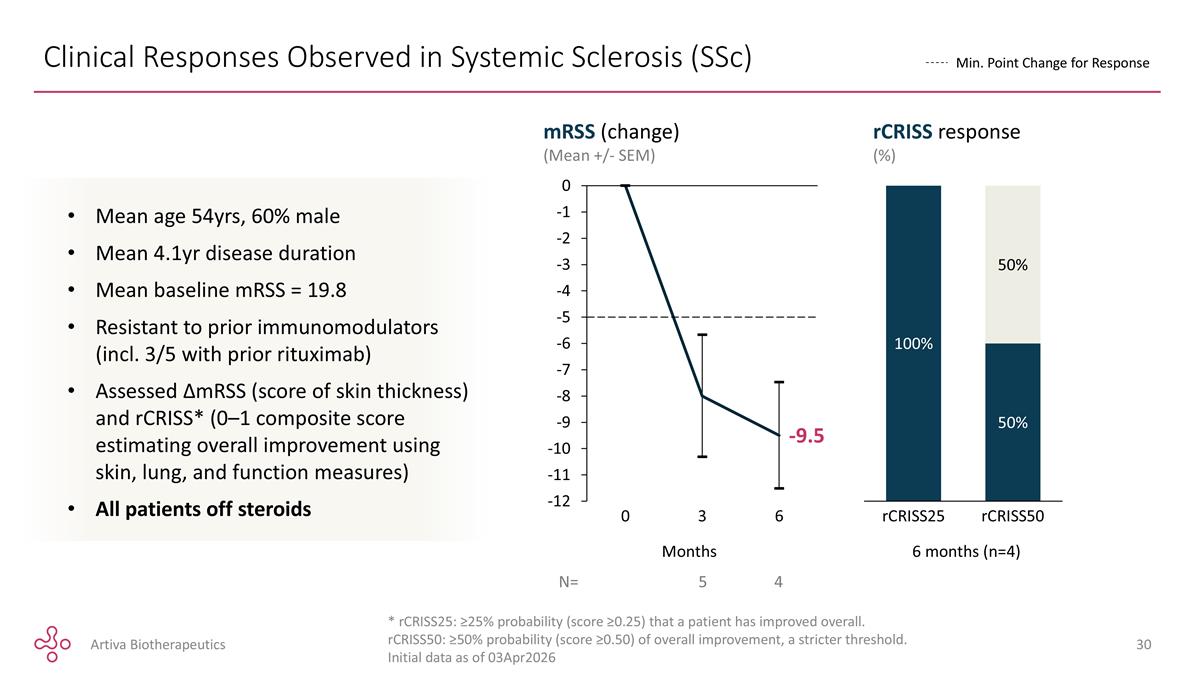
Clinical Responses Observed in Systemic Sclerosis (SSc) Artiva Biotherapeutics * rCRISS25: ≥25% probability (score ≥0.25) that a patient has improved overall. rCRISS50: ≥50% probability (score ≥0.50) of overall improvement, a stricter threshold. Initial data as of 03Apr2026 mRSS (change) (Mean +/- SEM) N= 5 4 Months Mean age 54yrs, 60% male Mean 4.1yr disease duration Mean baseline mRSS = 19.8 Resistant to prior immunomodulators (incl. 3/5 with prior rituximab) Assessed ΔmRSS (score of skin thickness) and rCRISS* (0–1 composite score estimating overall improvement using skin, lung, and function measures) All patients off steroids Min. Point Change for Response rCRISS response (%) 6 months (n=4)
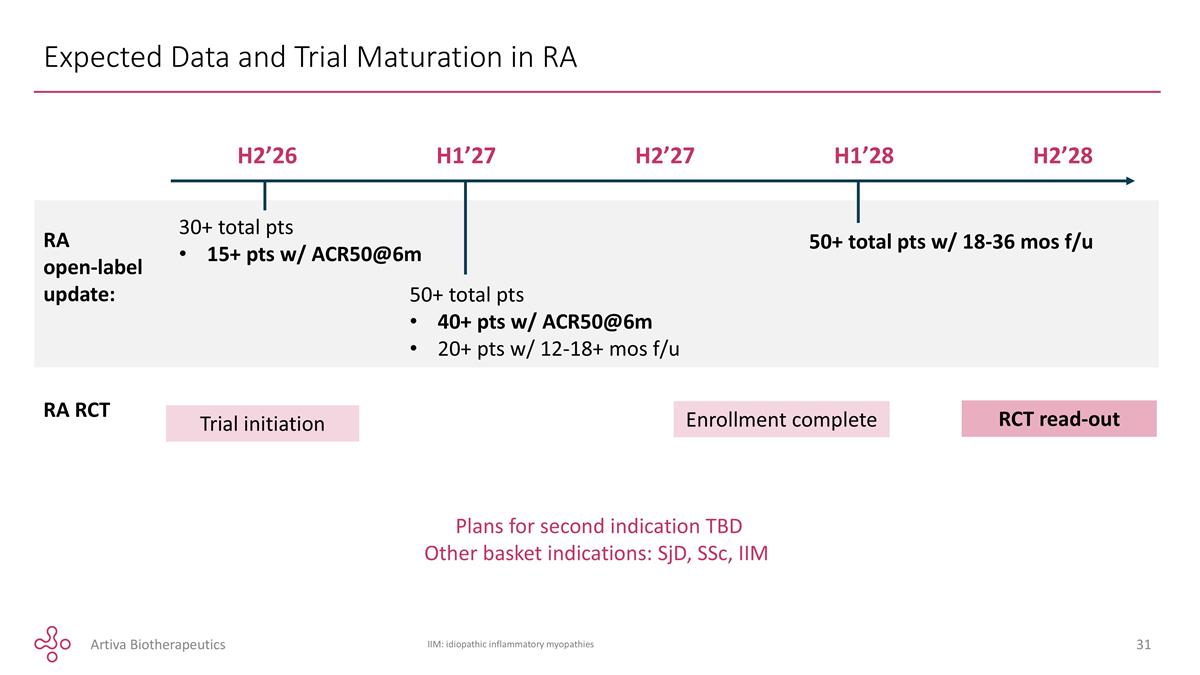
Expected Data and Trial Maturation in RA H2’26 Artiva Biotherapeutics H1’27 H2’27 H1’28 H2’28 30+ total pts 15+ pts w/ ACR50@6m RA open-label update: 50+ total pts 40+ pts w/ ACR50@6m 20+ pts w/ 12-18+ mos f/u 50+ total pts w/ 18-36 mos f/u RCT read-out RA RCT Enrollment complete Trial initiation Plans for second indication TBD Other basket indications: SjD, SSc, IIM IIM: idiopathic inflammatory myopathies
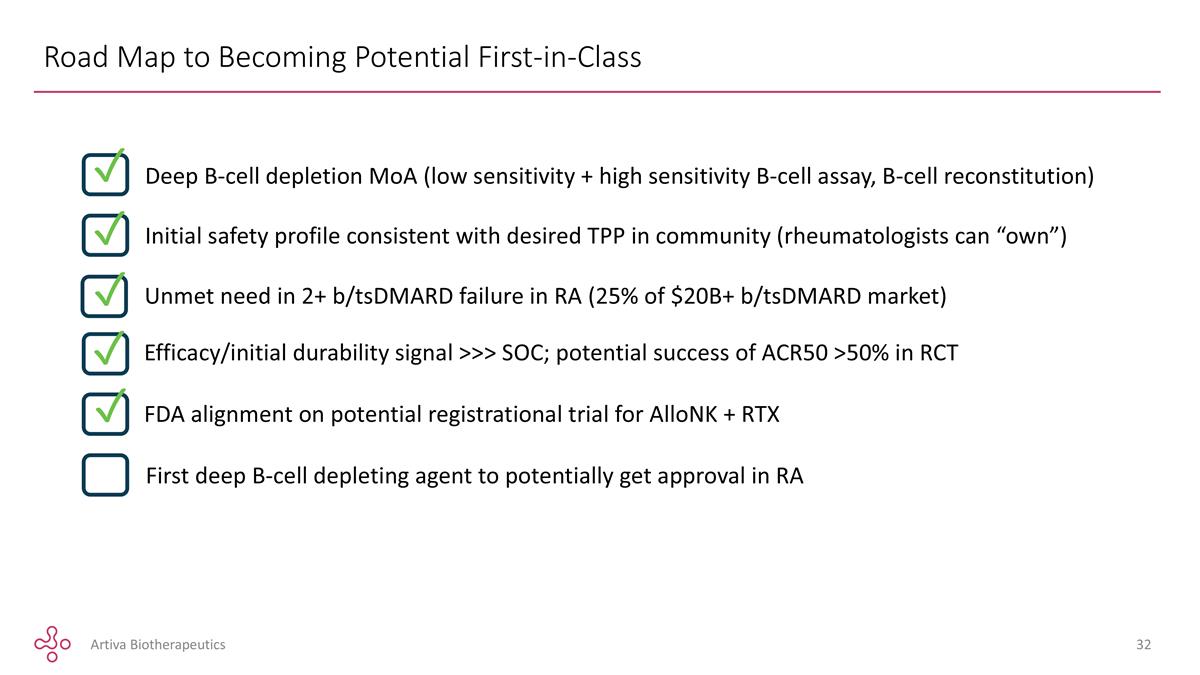
Road Map to Becoming Potential First-in-Class Artiva Biotherapeutics Deep B-cell depletion MoA (low sensitivity + high sensitivity B-cell assay, B-cell reconstitution) Initial safety profile consistent with desired TPP in community (rheumatologists can “own”) Efficacy/initial durability signal >>> SOC; potential success of ACR50 >50% in RCT FDA alignment on potential registrational trial for AlloNK + RTX First deep B-cell depleting agent to potentially get approval in RA ✓ ✓ Unmet need in 2+ b/tsDMARD failure in RA (25% of $20B+ b/tsDMARD market) ✓ ✓ ✓
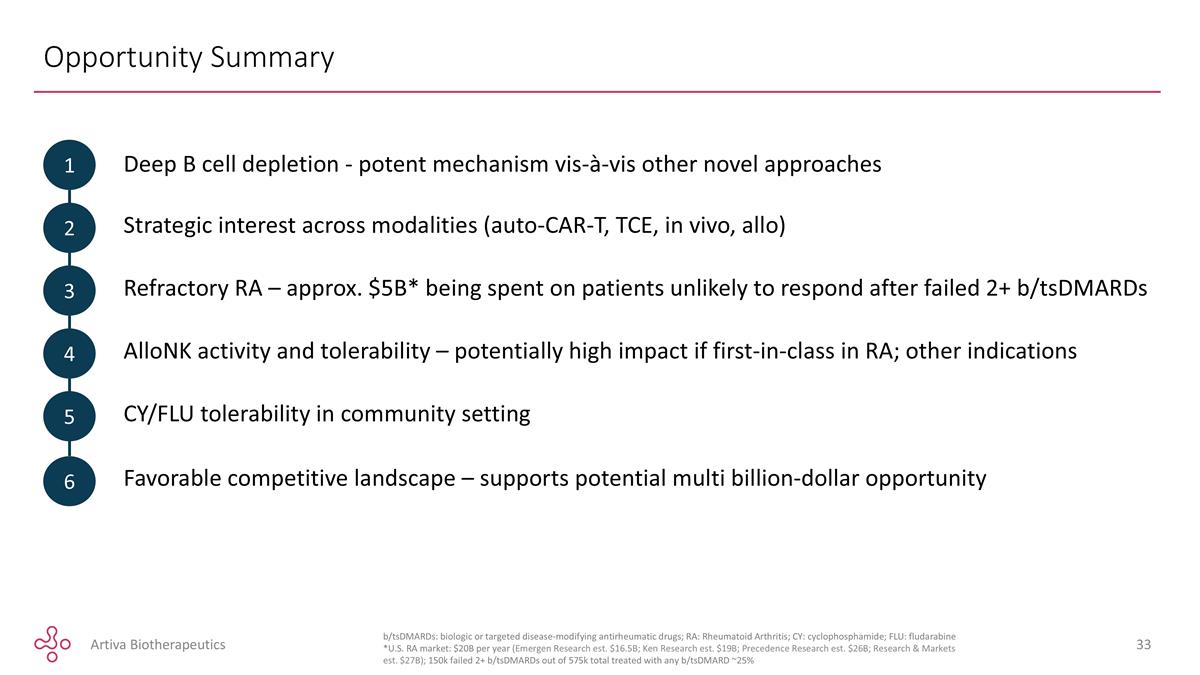
Opportunity Summary Deep B cell depletion - potent mechanism vis-à-vis other novel approaches Artiva Biotherapeutics 1 6 2 Strategic interest across modalities (auto-CAR-T, TCE, in vivo, allo) 3 Refractory RA – approx. $5B* being spent on patients unlikely to respond after failed 2+ b/tsDMARDs 4 AlloNK activity and tolerability – potentially high impact if first-in-class in RA; other indications 5 CY/FLU tolerability in community setting Favorable competitive landscape – supports potential multi billion-dollar opportunity b/tsDMARDs: biologic or targeted disease-modifying antirheumatic drugs; RA: Rheumatoid Arthritis; CY: cyclophosphamide; FLU: fludarabine *U.S. RA market: $20B per year (Emergen Research est. $16.5B; Ken Research est. $19B; Precedence Research est. $26B; Research & Markets est. $27B); 150k failed 2+ b/tsDMARDs out of 575k total treated with any b/tsDMARD ~25%