
Targeted therapies for people of all ages January 2026 Day One Biopharmaceuticals .3
Disclaimer This presentation and the accompanying oral commentary contain forward-looking statements that are based on our management’s beliefs and assumptions and on information currently available to our management. Forward-looking statements are inherently subject to risks and uncertainties, some of which cannot be predicted or quantified. In some cases, you can identify forward-looking statements by terminology such as “may,” “will,” “should,” “could,” “expect,” “plan,” anticipate,” “believe,” “estimate,” “predict,” “intend,” “potential,” “would,” “continue,” “ongoing” or the negative of these terms or other comparable terminology. Forward-looking statements include all statements other than statements of historical fact contained in this presentation, including information concerning our future financial performance, including the sufficiency of our cash, cash equivalents and short-term investments to fund our operations, business plans and objectives, timing and success of our commercialization and marketing efforts, timing and success of our planned nonclinical and clinical development activities, the success of our acquisition of Mersana Therapeutics and its Emi-Le program, the results of any of our strategic collaborations, including the potential achievement of milestones and provision of royalty payments thereunder, efficacy and safety profiles of our products and product candidates, the ability of OJEMDA™ (tovorafenib) to treat pediatric low-grade glioma (pLGG) or related indications, the potential therapeutic benefits and economic value of our products and product candidates, potential growth opportunities, competitive position, industry environment and potential market opportunities, our ability to protect intellectual property and the impact of global business or macroeconomic conditions, including as a result of inflation, changing interest rates, government shutdowns, cybersecurity incidents, significant political, trade or regulatory developments, including tariffs, shifting priorities within the U.S. Food and Drug Administration and reduced funding of federal healthcare programs, and global regional conflicts, on our business and operations. Forward-looking statements are subject to known and unknown risks, uncertainties, assumptions and other factors. It is not possible for our management to predict all risks, nor can we assess the impact of all factors on our business or the extent to which any factor, or combination of factors, may cause actual results to differ materially from those contained in any forward-looking statements we may make. These factors, together with those that are described under the heading “Risk Factors” contained in our most recent Quarterly Report on Form 10-Q filed with the Securities and Exchange Commission (SEC) and other documents we file from time to time with the SEC, may cause our actual results, performance or achievements to differ materially and adversely from those anticipated or implied by our forward-looking statements. In addition, statements that “we believe” and similar statements reflect our beliefs and opinions on the relevant subject. These statements are based upon information available to us as of the date of this presentation, and although we believe such information forms a reasonable basis for such statements, such information may be limited or incomplete, and our statements should not be read to indicate that we have conducted a thorough inquiry into, or review of, all potentially available relevant information. These statements are inherently uncertain and investors are cautioned not to unduly rely upon these statements. Furthermore, if our forward-looking statements prove to be inaccurate, the inaccuracy may be material. In light of the significant uncertainties in these forward-looking statements, you should not regard these statements as a representation or warranty by us or any other person that we will achieve our objectives and plans in any specified time frame, or at all. We undertake no obligation to publicly update any forward-looking statements, whether as a result of new information, future events or otherwise, except as required by law. This presentation also contains estimates and other statistical data made by independent parties and by us relating to market size and growth and other data about our industry. This data involves a number of assumptions and limitations, and you are cautioned not to give undue weight to such estimates. In addition, projections, assumptions and estimates of our future performance and the future performance of the markets in which we operate are necessarily subject to a high degree of uncertainty and risk.

Inspired by the urgent needs of children, Day One creatively and intentionally develops new medicines for people of all ages with life-threatening diseases
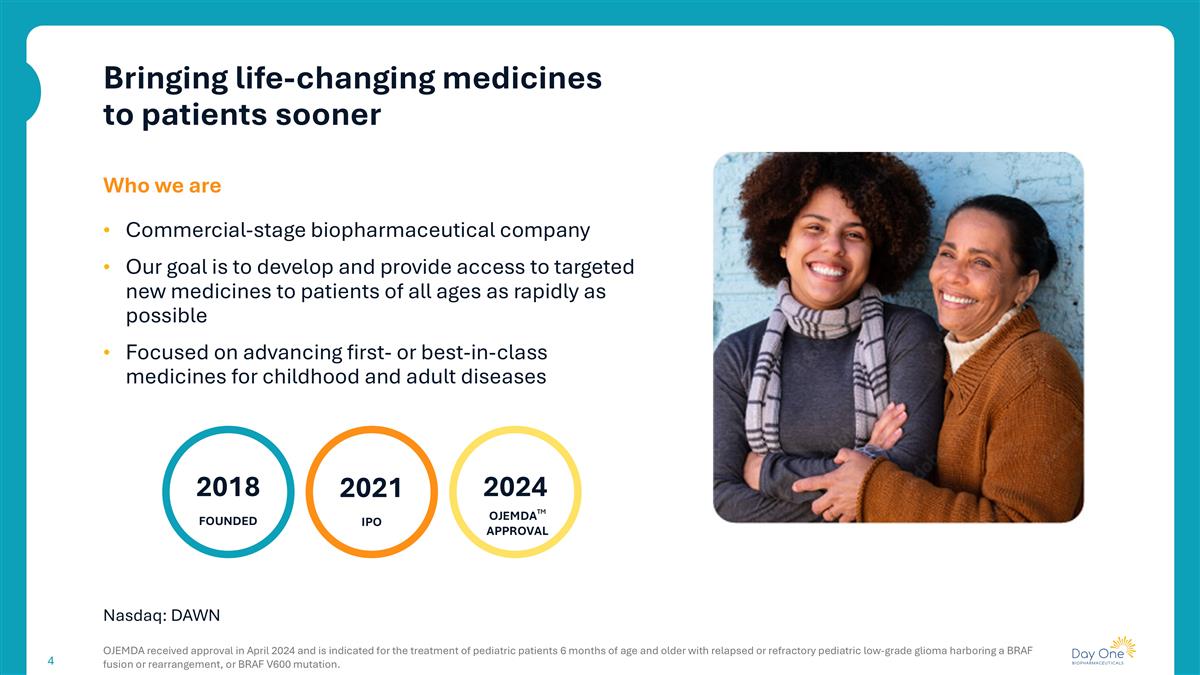
Bringing life-changing medicines to patients sooner Commercial-stage biopharmaceutical company Our goal is to develop and provide access to targeted new medicines to patients of all ages as rapidly as possible Focused on advancing first- or best-in-class medicines for childhood and adult diseases Who we are OJEMDA received approval in April 2024 and is indicated for the treatment of pediatric patients 6 months of age and older with relapsed or refractory pediatric low-grade glioma harboring a BRAF fusion or rearrangement, or BRAF V600 mutation. 2021 IPO 2018 FOUNDED 2024 OJEMDATM APPROVAL Nasdaq: DAWN
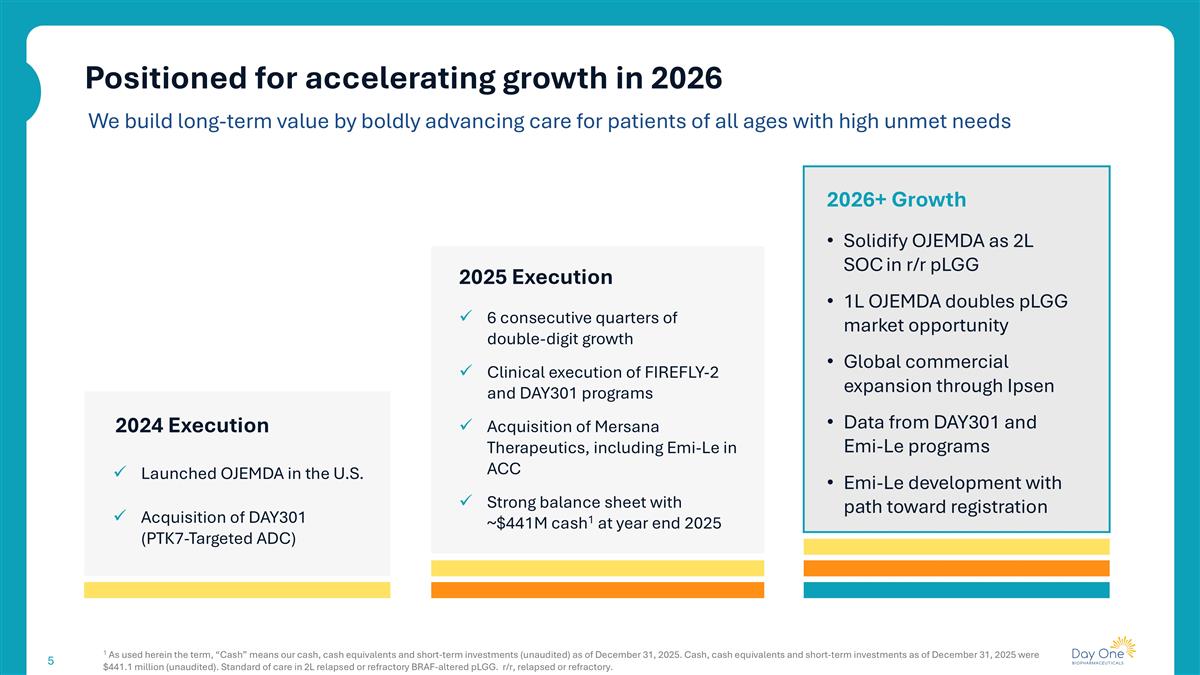
Positioned for accelerating growth in 2026 1 As used herein the term, “Cash” means our cash, cash equivalents and short-term investments (unaudited) as of December 31, 2025. Cash, cash equivalents and short-term investments as of December 31, 2025 were $441.1 million (unaudited). Standard of care in 2L relapsed or refractory BRAF-altered pLGG. r/r, relapsed or refractory. 2024 Execution Launched OJEMDA in the U.S. 2025 Execution 6 consecutive quarters of double-digit growth Clinical execution of FIREFLY-2 and DAY301 programs Acquisition of Mersana Therapeutics, including Emi-Le in ACC Strong balance sheet with ~$441M cash1 at year end 2025 2026+ Growth Solidify OJEMDA as 2L SOC in r/r pLGG 1L OJEMDA doubles pLGG market opportunity Global commercial expansion through Ipsen Data from DAY301 and Emi-Le programs Emi-Le development with path toward registration We build long-term value by boldly advancing care for patients of all ages with high unmet needs Acquisition of DAY301 (PTK7-Targeted ADC)
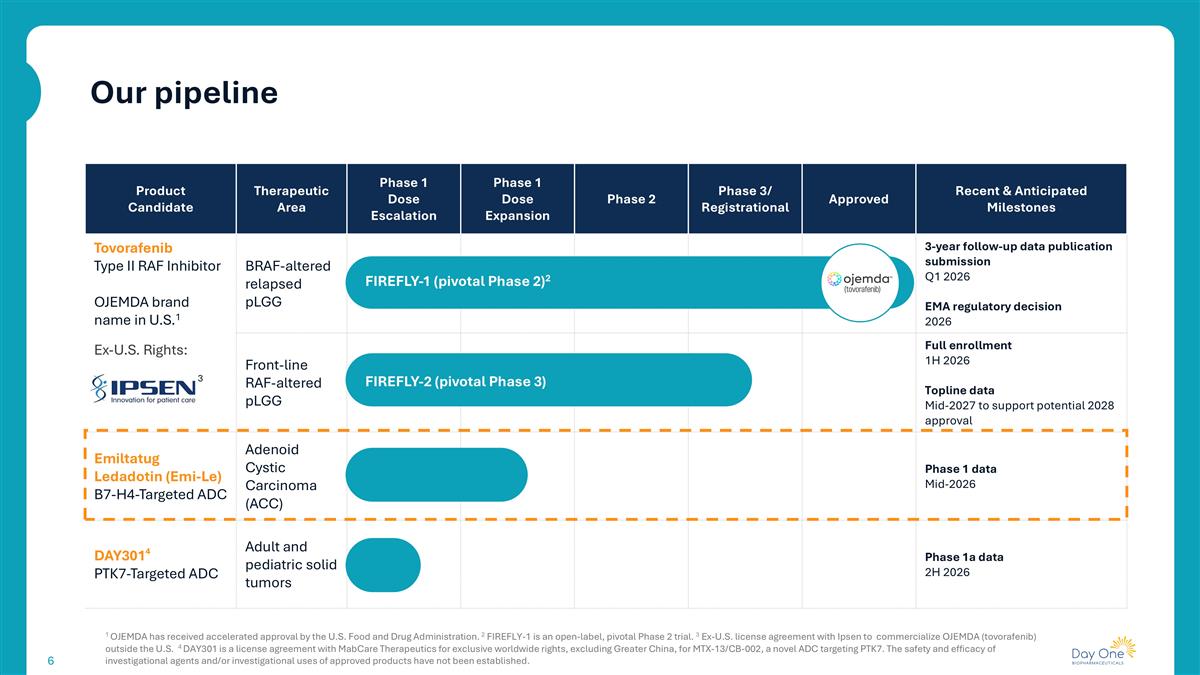
Product Candidate Therapeutic Area Phase 1 Dose Escalation Phase 1 Dose Expansion Phase 2 Phase 3/ Registrational Approved Recent & Anticipated Milestones Tovorafenib Type II RAF Inhibitor OJEMDA brand name in U.S.1 Ex-U.S. Rights: 3 BRAF-altered relapsed pLGG 3-year follow-up data publication submission Q1 2026 EMA regulatory decision 2026 Front-line RAF-altered pLGG Full enrollment 1H 2026 Topline data Mid-2027 to support potential 2028 approval Emiltatug Ledadotin (Emi-Le) B7-H4-Targeted ADC Adenoid Cystic Carcinoma (ACC) Phase 1 data Mid-2026 DAY3014 PTK7-Targeted ADC Adult and pediatric solid tumors Phase 1a data 2H 2026 FIREFLY-1 (pivotal Phase 2)2 FIREFLY-2 (pivotal Phase 3) 1 OJEMDA has received accelerated approval by the U.S. Food and Drug Administration. 2 FIREFLY-1 is an open-label, pivotal Phase 2 trial. 3 Ex-U.S. license agreement with Ipsen to commercialize OJEMDA (tovorafenib) outside the U.S. 4 DAY301 is a license agreement with MabCare Therapeutics for exclusive worldwide rights, excluding Greater China, for MTX-13/CB-002, a novel ADC targeting PTK7. The safety and efficacy of investigational agents and/or investigational uses of approved products have not been established. Our pipeline
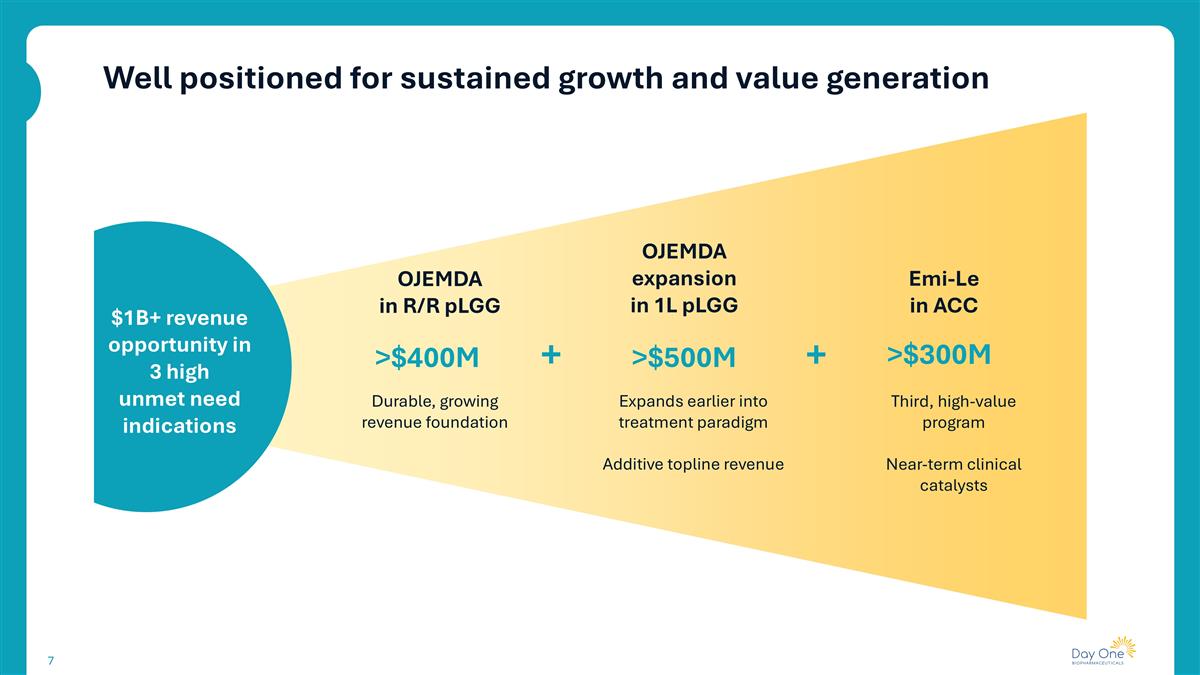
Well positioned for sustained growth and value generation $1B+ revenue opportunity in 3 high unmet need indications OJEMDA in R/R pLGG OJEMDA expansion in 1L pLGG Emi-Le in ACC Durable, growing revenue foundation Expands earlier into treatment paradigm Additive topline revenue Third, high-value program Near-term clinical catalysts >$400M >$500M >$300M + +
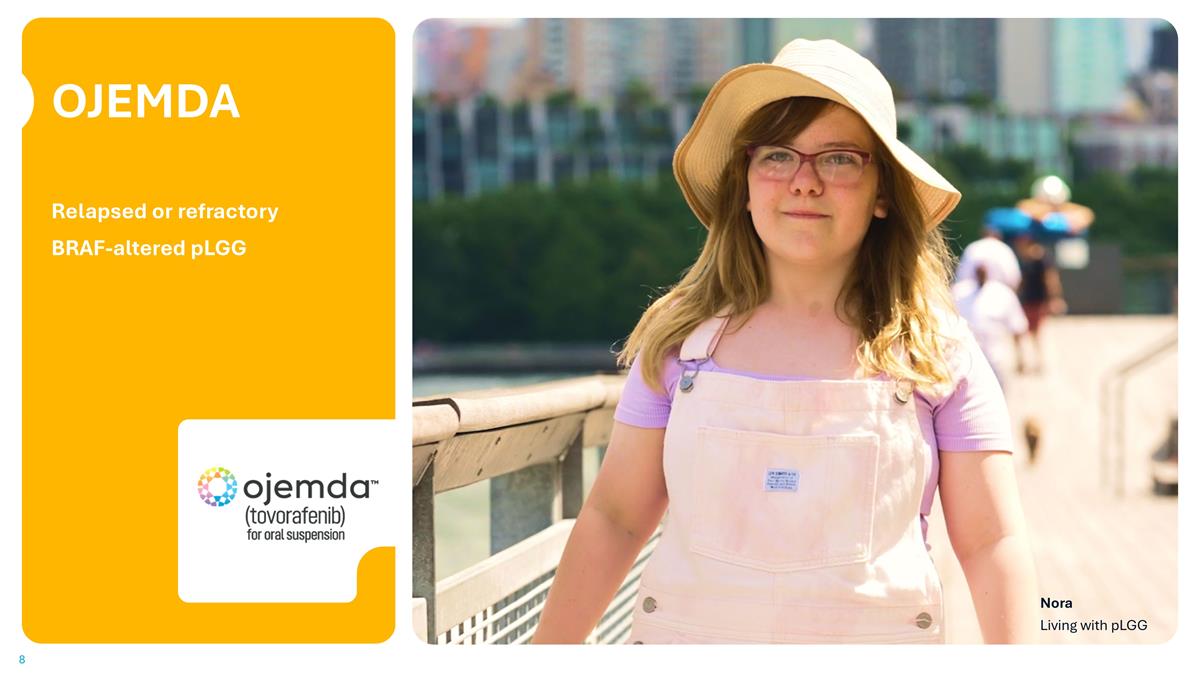
Relapsed or refractory BRAF-altered pLGG OJEMDA Nora Living with pLGG
A serious and life-threatening disease *Incidence of BRAF alterations varies across pLGG subtypes. 1 Sievert AJ, Fisher MJ. Pediatric low-grade gliomas. J Child Neurol. 2009;24(11):1397-1408. doi:10.1177/0883073809342005. 2 Penman CL et al. Front Oncol. 2015;5:54. 3 Cohen AR., N Engl J Med. 2020;386(20):1922-1931. 4 Lassaletta A, et al. J Clin Oncol. 2017;35(25):2934-2941. 5 Faulkner C, et al. J Neuropathol Exp Neurol. 2015;74(9):867-872. 6 Packer RJ, et al. Neuro Oncol. 2017;19(6):750-761. 7 Ostrum QT et al., Neuro Oncol. 2015; 16(Suppl 10):x1-x36; 8 De Blank P. et al., Curr Opin Pediatr. 2019 Feb; 31(1):21-27. Pediatric low-grade glioma: The most common type of brain tumor in children For the majority of patients with pLGG in the relapsed setting, there is no standard of care, and until recently, no approved therapies Up to 75% of pLGGs have a BRAF alteration*, of those ~80% are BRAF fusions and ~20% are BRAF V600 mutations2-6 Despite surgery playing a significant role in treatment, the vast majority of patients still require systemic therapy7,8 Due to high rate of disease recurrence, most patients will undergo multiple lines of systemic therapy over the course of their disease pLGGs are chronic and relentless, with patients suffering profound tumor and treatment-associated morbidity that can impact their life trajectory over the long term1
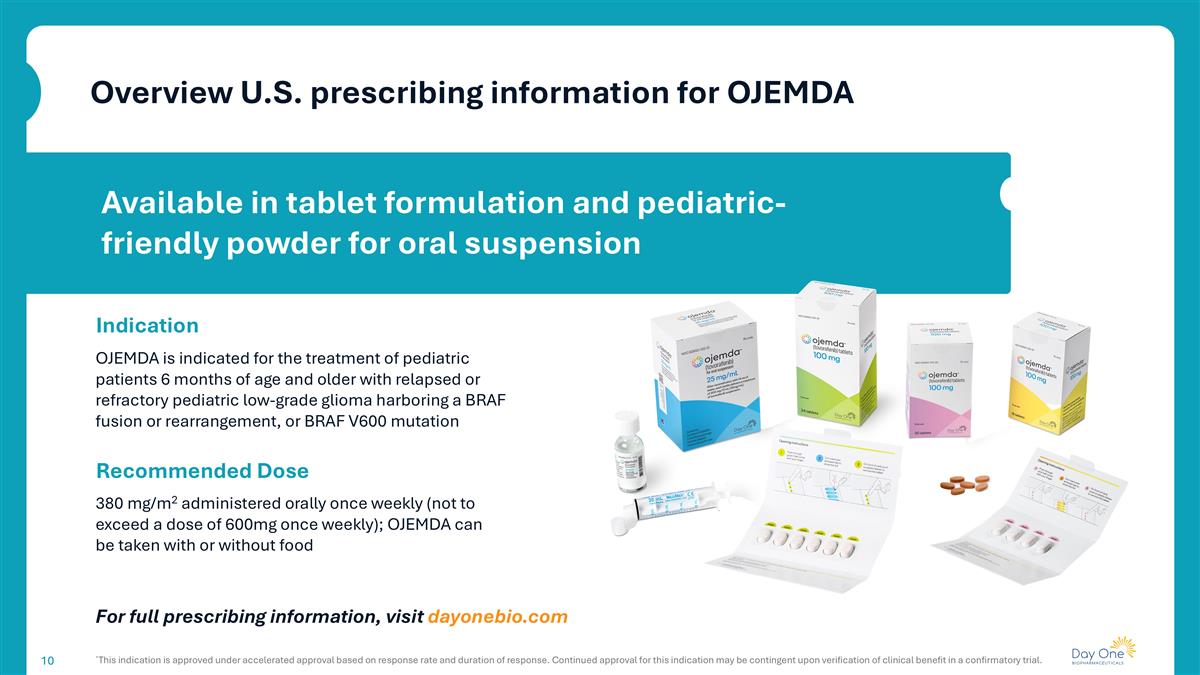
Available in tablet formulation and pediatric-friendly powder for oral suspension Overview U.S. prescribing information for OJEMDA Indication OJEMDA is indicated for the treatment of pediatric patients 6 months of age and older with relapsed or refractory pediatric low-grade glioma harboring a BRAF fusion or rearrangement, or BRAF V600 mutation Recommended Dose 380 mg/m2 administered orally once weekly (not to exceed a dose of 600mg once weekly); OJEMDA can be taken with or without food For full prescribing information, visit dayonebio.com *This indication is approved under accelerated approval based on response rate and duration of response. Continued approval for this indication may be contingent upon verification of clinical benefit in a confirmatory trial.
OJEMDA is redefining the treatment paradigm in relapsed or refractory pLGG Clinical data reinforce OJEMDA’s role in the r/r pLGG treatment paradigm Three-year follow-up data (Society for Neuro-Oncology 2025) reinforce durability of OJEMDA and align with how physicians manage pLGG Growing long-term data and physician experience are driving OJEMDA toward standard of care in the evolving treatment paradigm for children with r/r pLGG
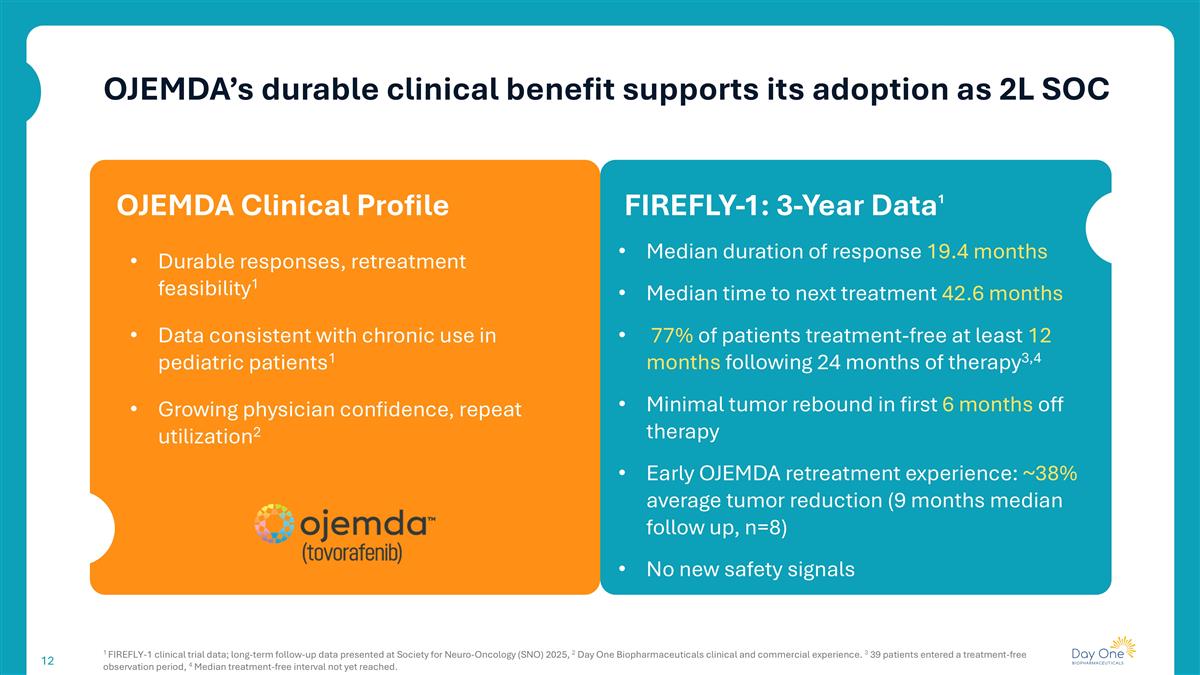
OJEMDA’s durable clinical benefit supports its adoption as 2L SOC 1 FIREFLY-1 clinical trial data; long-term follow-up data presented at Society for Neuro-Oncology (SNO) 2025, 2 Day One Biopharmaceuticals clinical and commercial experience. 3 39 patients entered a treatment-free observation period, 4 Median treatment-free interval not yet reached. FIREFLY-1: 3-Year Data1 Durable responses, retreatment feasibility1 Data consistent with chronic use in pediatric patients1 Growing physician confidence, repeat utilization2 OJEMDA Clinical Profile Median duration of response 19.4 months Median time to next treatment 42.6 months 77% of patients treatment-free at least 12 months following 24 months of therapy3,4 Minimal tumor rebound in first 6 months off therapy Early OJEMDA retreatment experience: ~38% average tumor reduction (9 months median follow up, n=8) No new safety signals
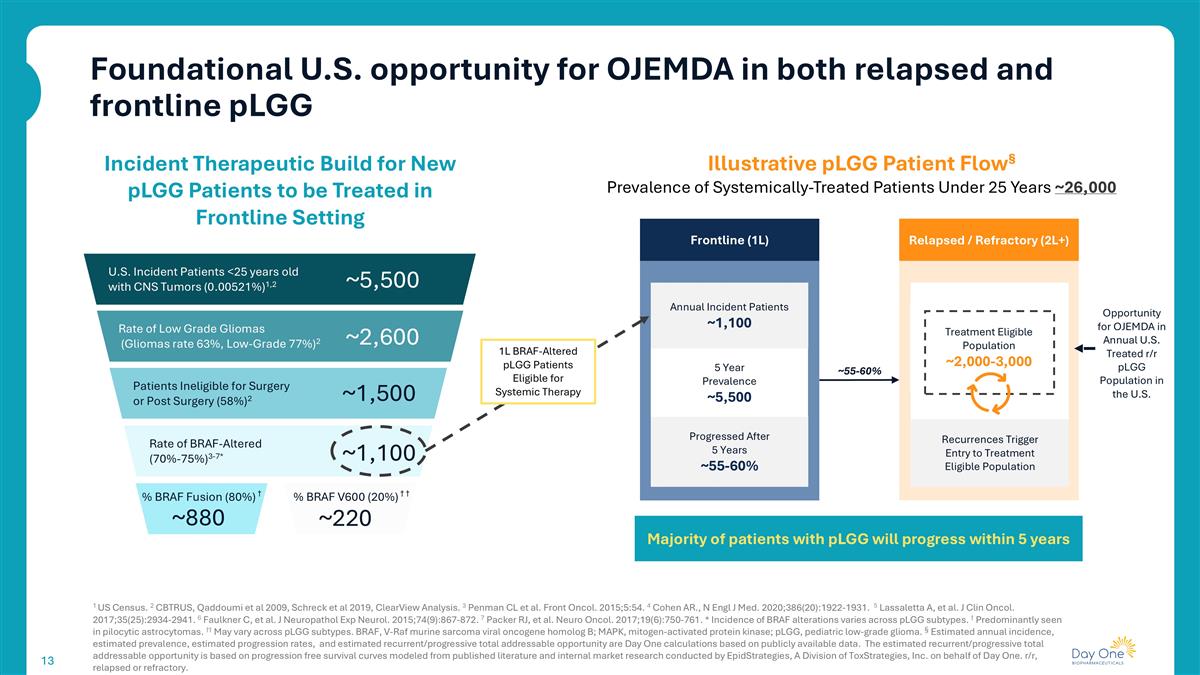
1 US Census. 2 CBTRUS, Qaddoumi et al 2009, Schreck et al 2019, ClearView Analysis. 3 Penman CL et al. Front Oncol. 2015;5:54. 4 Cohen AR., N Engl J Med. 2020;386(20):1922-1931. 5 Lassaletta A, et al. J Clin Oncol. 2017;35(25):2934-2941. 6 Faulkner C, et al. J Neuropathol Exp Neurol. 2015;74(9):867-872. 7 Packer RJ, et al. Neuro Oncol. 2017;19(6):750-761. * Incidence of BRAF alterations varies across pLGG subtypes. † Predominantly seen in pilocytic astrocytomas. †† May vary across pLGG subtypes. BRAF, V-Raf murine sarcoma viral oncogene homolog B; MAPK, mitogen-activated protein kinase; pLGG, pediatric low-grade glioma. § Estimated annual incidence, estimated prevalence, estimated progression rates, and estimated recurrent/progressive total addressable opportunity are Day One calculations based on publicly available data. The estimated recurrent/progressive total addressable opportunity is based on progression free survival curves modeled from published literature and internal market research conducted by EpidStrategies, A Division of ToxStrategies, Inc. on behalf of Day One. r/r, relapsed or refractory. Incident Therapeutic Build for New pLGG Patients to be Treated in Frontline Setting U.S. Incident Patients <25 years old with CNS Tumors (0.00521%)1,2 ~5,500 Rate of Low Grade Gliomas (Gliomas rate 63%, Low-Grade 77%)2 ~2,600 ~1,500 Patients Ineligible for Surgery or Post Surgery (58%)2 ~1,100 % BRAF Fusion (80%) † % BRAF V600 (20%) † † ~880 ~220 Frontline (1L) Annual Incident Patients ~1,100 1L BRAF-Altered pLGG Patients Eligible for Systemic Therapy Illustrative pLGG Patient Flow§ Prevalence of Systemically-Treated Patients Under 25 Years ~26,000 5 Year Prevalence ~5,500 Progressed After 5 Years ~55-60% Relapsed / Refractory (2L+) ~55-60% Majority of patients with pLGG will progress within 5 years Opportunity for OJEMDA in Annual U.S. Treated r/r pLGG Population in the U.S. Rate of BRAF-Altered (70%-75%)3-7* Treatment Eligible Population ~2,000-3,000 Recurrences Trigger Entry to Treatment Eligible Population Foundational U.S. opportunity for OJEMDA in both relapsed and frontline pLGG
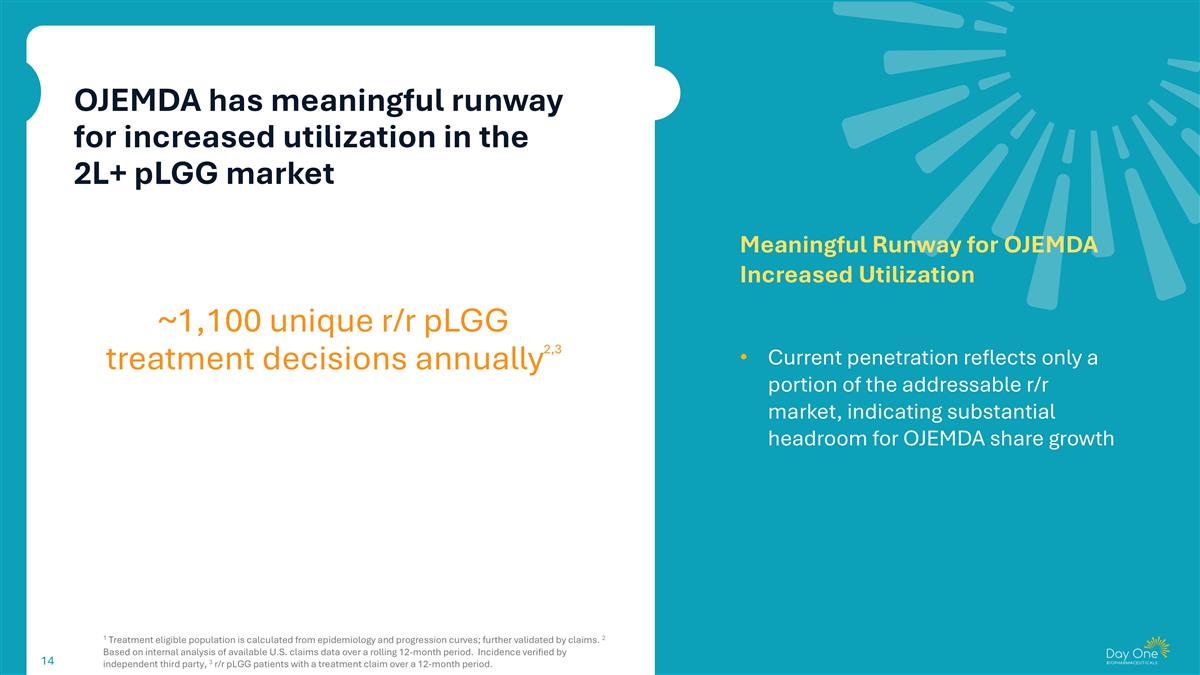
~1,100 unique r/r pLGG treatment decisions annually2,3 1 Treatment eligible population is calculated from epidemiology and progression curves; further validated by claims. 2 Based on internal analysis of available U.S. claims data over a rolling 12-month period. Incidence verified by independent third party, 3 r/r pLGG patients with a treatment claim over a 12-month period. Meaningful Runway for OJEMDA Increased Utilization Current penetration reflects only a portion of the addressable r/r market, indicating substantial headroom for OJEMDA share growth OJEMDA has meaningful runway for increased utilization in the 2L+ pLGG market
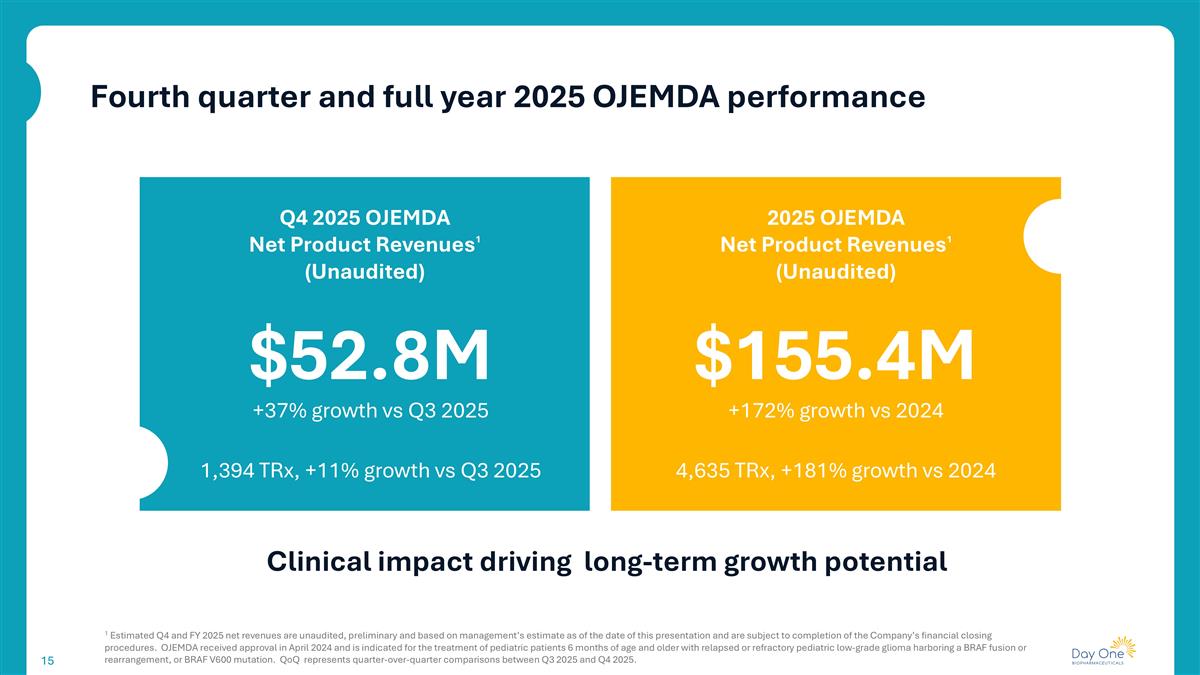
$52.8M Q4 2025 OJEMDA Net Product Revenues1 (Unaudited) 1 Estimated Q4 and FY 2025 net revenues are unaudited, preliminary and based on management’s estimate as of the date of this presentation and are subject to completion of the Company’s financial closing procedures. OJEMDA received approval in April 2024 and is indicated for the treatment of pediatric patients 6 months of age and older with relapsed or refractory pediatric low-grade glioma harboring a BRAF fusion or rearrangement, or BRAF V600 mutation. QoQ represents quarter-over-quarter comparisons between Q3 2025 and Q4 2025. Fourth quarter and full year 2025 OJEMDA performance Clinical impact driving long-term growth potential 2025 OJEMDA Net Product Revenues1 (Unaudited) $155.4M +37% growth vs Q3 2025 +172% growth vs 2024 1,394 TRx, +11% growth vs Q3 2025 4,635 TRx, +181% growth vs 2024
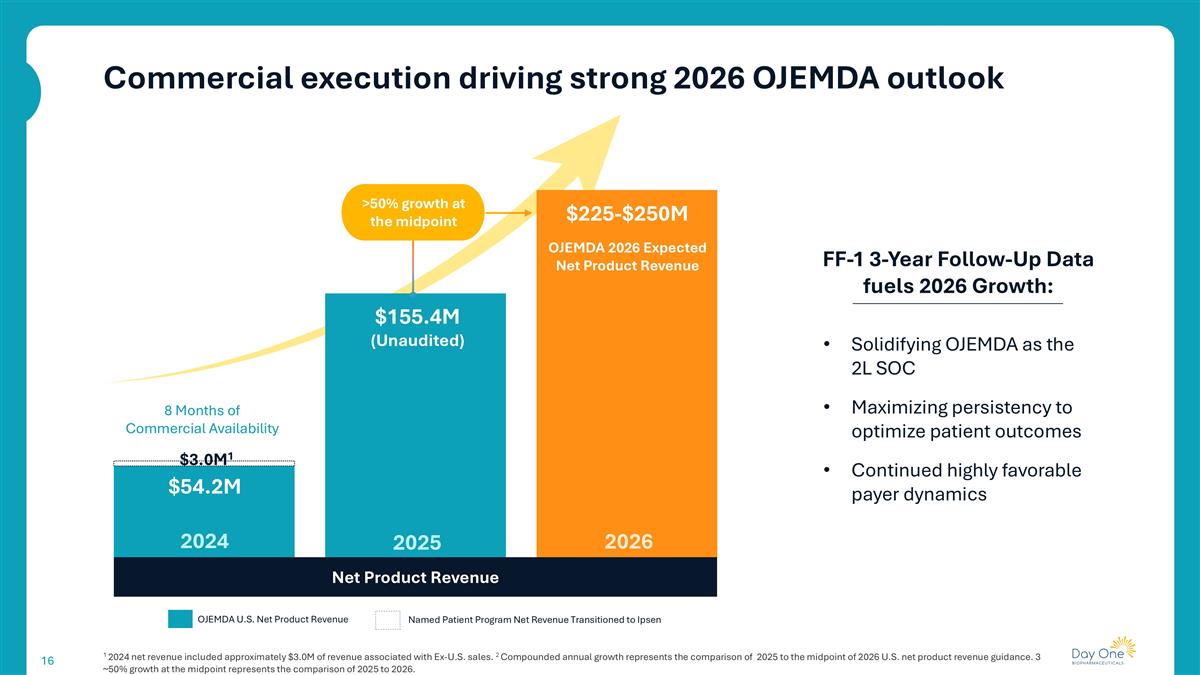
Commercial execution driving strong 2026 OJEMDA outlook 1 2024 net revenue included approximately $3.0M of revenue associated with Ex-U.S. sales. 2 Compounded annual growth represents the comparison of 2025 to the midpoint of 2026 U.S. net product revenue guidance. 3 ~50% growth at the midpoint represents the comparison of 2025 to 2026. FF-1 3-Year Follow-Up Data fuels 2026 Growth: Net Product Revenue 2026 2024 2025 8 Months of Commercial Availability Named Patient Program Net Revenue Transitioned to Ipsen OJEMDA U.S. Net Product Revenue OJEMDA 2026 Expected Net Product Revenue $155.4M (Unaudited) $54.2M $225-$250M >50% growth at the midpoint Solidifying OJEMDA as the 2L SOC Maximizing persistency to optimize patient outcomes Continued highly favorable payer dynamics $3.0M1
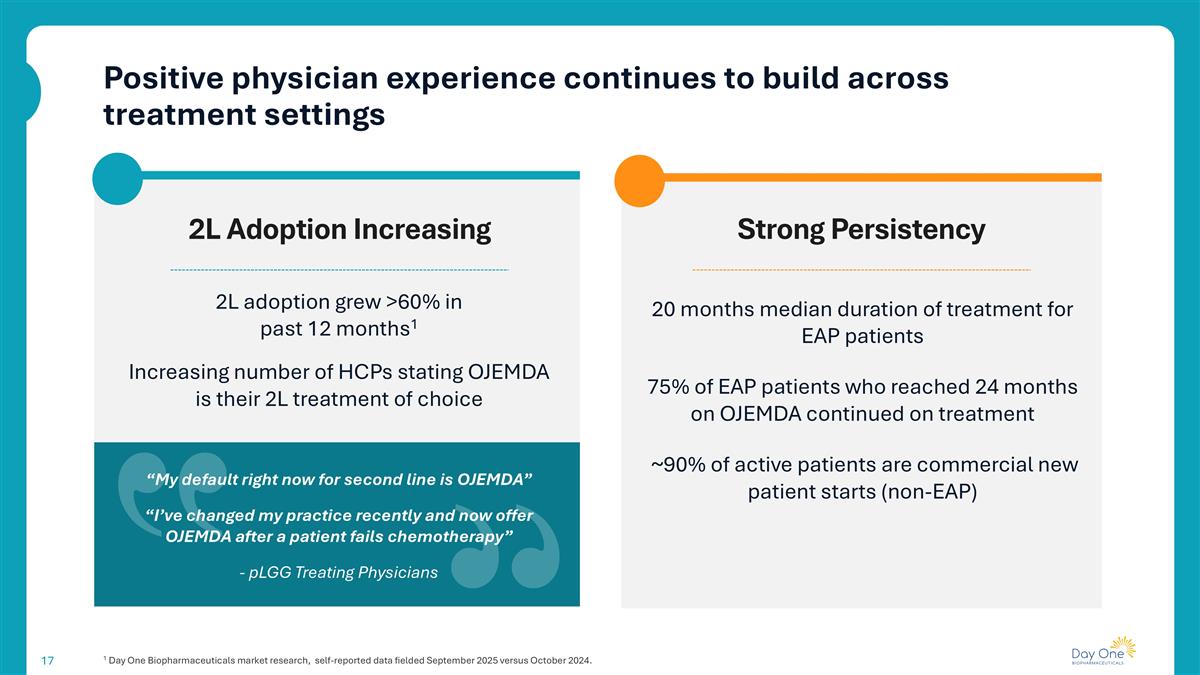
Positive physician experience continues to build across treatment settings 1 Day One Biopharmaceuticals market research, self-reported data fielded September 2025 versus October 2024. Strong Persistency 2L Adoption Increasing 20 months median duration of treatment for EAP patients 75% of EAP patients who reached 24 months on OJEMDA continued on treatment ~90% of active patients are commercial new patient starts (non-EAP) 2L adoption grew >60% in past 12 months1 Increasing number of HCPs stating OJEMDA is their 2L treatment of choice “My default right now for second line is OJEMDA” “I’ve changed my practice recently and now offer OJEMDA after a patient fails chemotherapy” - pLGG Treating Physicians
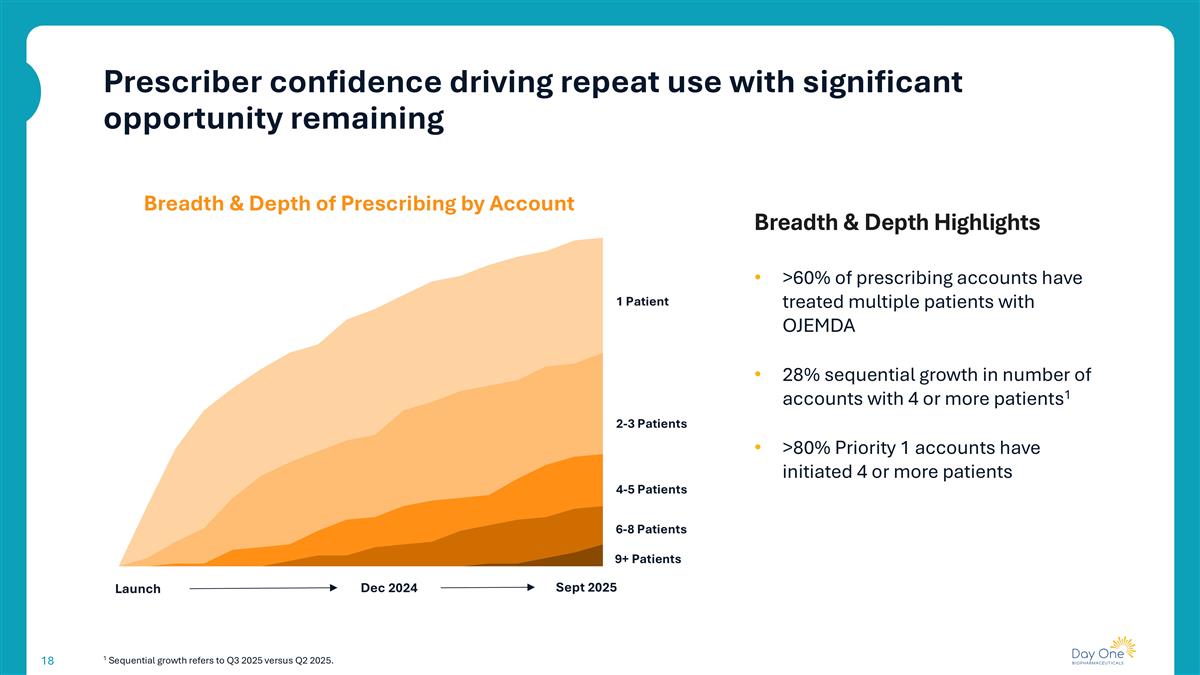
1 Sequential growth refers to Q3 2025 versus Q2 2025. >60% of prescribing accounts have treated multiple patients with OJEMDA 28% sequential growth in number of accounts with 4 or more patients1 >80% Priority 1 accounts have initiated 4 or more patients Launch Dec 2024 Sept 2025 1 Patient 2-3 Patients 4-5 Patients 6-8 Patients 9+ Patients Breadth & Depth of Prescribing by Account Breadth & Depth Highlights Prescriber confidence driving repeat use with significant opportunity remaining
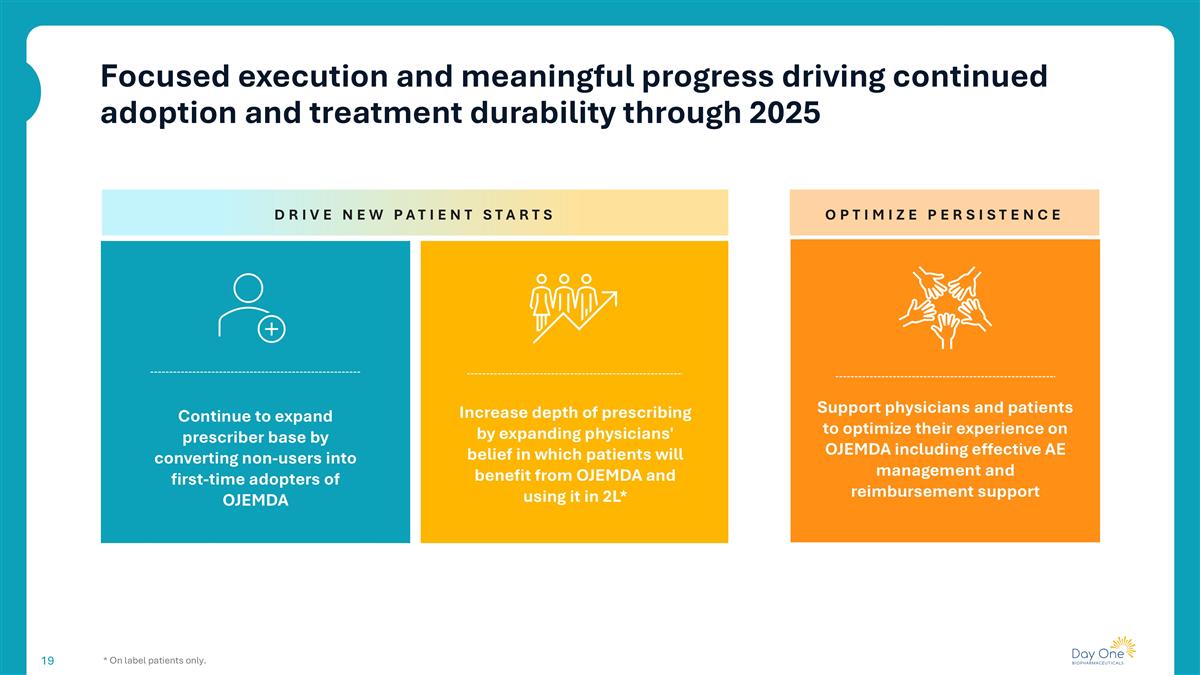
Focused execution and meaningful progress driving continued adoption and treatment durability through 2025 * On label patients only. OPTIMIZE PERSISTENCE Support physicians and patients to optimize their experience on OJEMDA including effective AE management and reimbursement support Increase depth of prescribing by expanding physicians' belief in which patients will benefit from OJEMDA and using it in 2L* Continue to expand prescriber base by converting non-users into first-time adopters of OJEMDA DRIVE NEW PATIENT STARTS
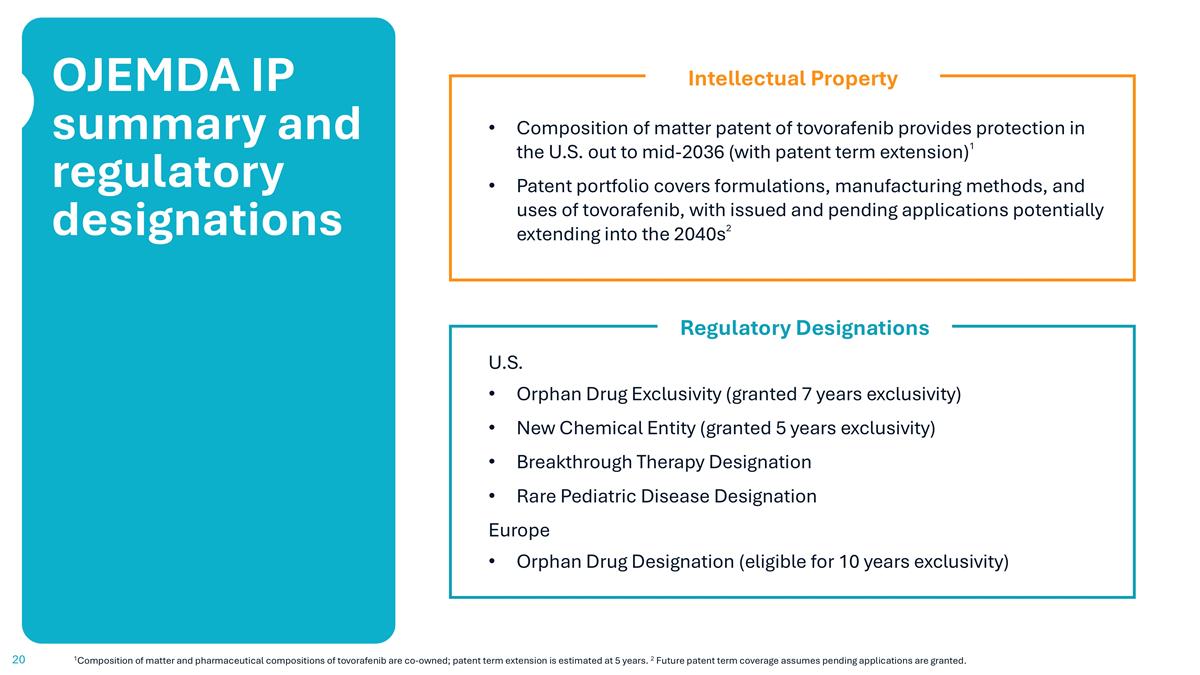
OJEMDA IP summary and regulatory designations Composition of matter patent of tovorafenib provides protection in the U.S. out to mid-2036 (with patent term extension)1 Patent portfolio covers formulations, manufacturing methods, and uses of tovorafenib, with issued and pending applications potentially extending into the 2040s2 1Composition of matter and pharmaceutical compositions of tovorafenib are co-owned; patent term extension is estimated at 5 years. 2 Future patent term coverage assumes pending applications are granted. Intellectual Property U.S. Orphan Drug Exclusivity (granted 7 years exclusivity) New Chemical Entity (granted 5 years exclusivity) Breakthrough Therapy Designation Rare Pediatric Disease Designation Europe Orphan Drug Designation (eligible for 10 years exclusivity) Regulatory Designations
Phase 2 FIREFLY-1 Trial 3-year follow-up data from the FIREFLY-1 trial studying OJEMDA
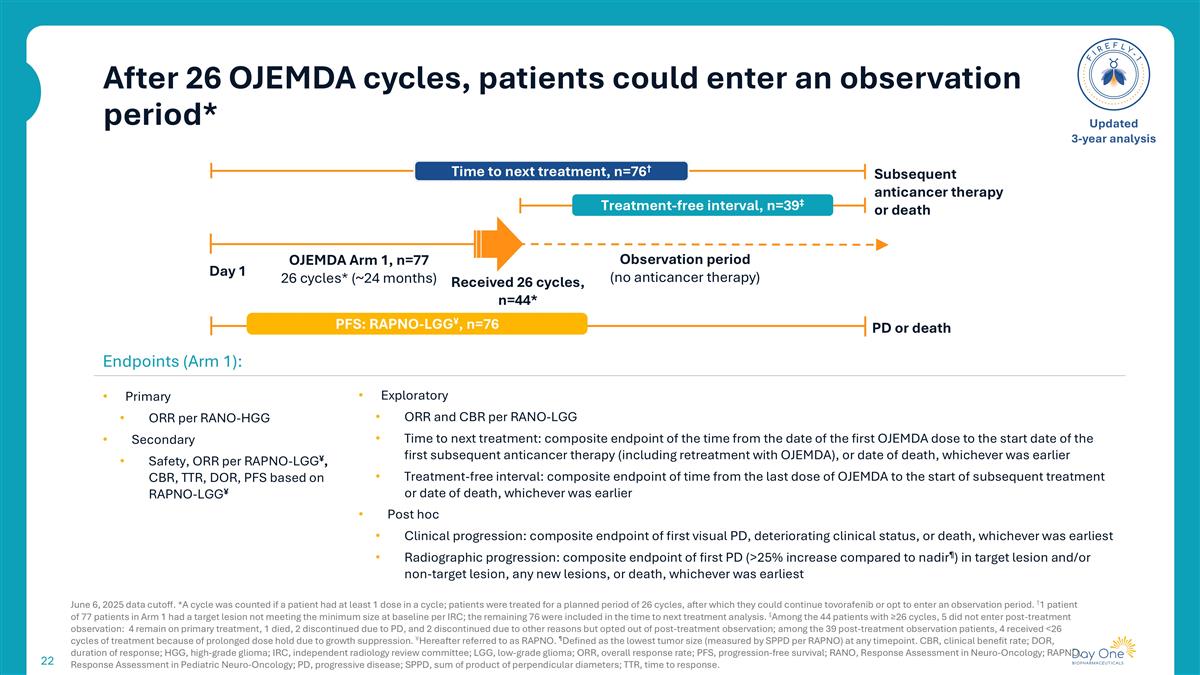
After 26 OJEMDA cycles, patients could enter an observation period* June 6, 2025 data cutoff. *A cycle was counted if a patient had at least 1 dose in a cycle; patients were treated for a planned period of 26 cycles, after which they could continue tovorafenib or opt to enter an observation period. †1 patient of 77 patients in Arm 1 had a target lesion not meeting the minimum size at baseline per IRC; the remaining 76 were included in the time to next treatment analysis. ‡Among the 44 patients with ≥26 cycles, 5 did not enter post-treatment observation: 4 remain on primary treatment, 1 died, 2 discontinued due to PD, and 2 discontinued due to other reasons but opted out of post-treatment observation; among the 39 post-treatment observation patients, 4 received <26 cycles of treatment because of prolonged dose hold due to growth suppression. ¥Hereafter referred to as RAPNO. ¶Defined as the lowest tumor size (measured by SPPD per RAPNO) at any timepoint. CBR, clinical benefit rate; DOR, duration of response; HGG, high-grade glioma; IRC, independent radiology review committee; LGG, low-grade glioma; ORR, overall response rate; PFS, progression-free survival; RANO, Response Assessment in Neuro-Oncology; RAPNO, Response Assessment in Pediatric Neuro-Oncology; PD, progressive disease; SPPD, sum of product of perpendicular diameters; TTR, time to response. Updated 3-year analysis Endpoints (Arm 1): Primary ORR per RANO-HGG Secondary Safety, ORR per RAPNO-LGG¥, CBR, TTR, DOR, PFS based on RAPNO-LGG¥ Exploratory ORR and CBR per RANO-LGG Time to next treatment: composite endpoint of the time from the date of the first OJEMDA dose to the start date of the first subsequent anticancer therapy (including retreatment with OJEMDA), or date of death, whichever was earlier Treatment-free interval: composite endpoint of time from the last dose of OJEMDA to the start of subsequent treatment or date of death, whichever was earlier Post hoc Clinical progression: composite endpoint of first visual PD, deteriorating clinical status, or death, whichever was earliest Radiographic progression: composite endpoint of first PD (>25% increase compared to nadir¶) in target lesion and/or non-target lesion, any new lesions, or death, whichever was earliest Subsequent anticancer therapy or death OJEMDA Arm 1, n=77 26 cycles* (~24 months) Received 26 cycles, n=44* Observation period (no anticancer therapy) Time to next treatment, n=76† Treatment-free interval, n=39‡ Day 1 PD or death PFS: RAPNO-LGG¥, n=76
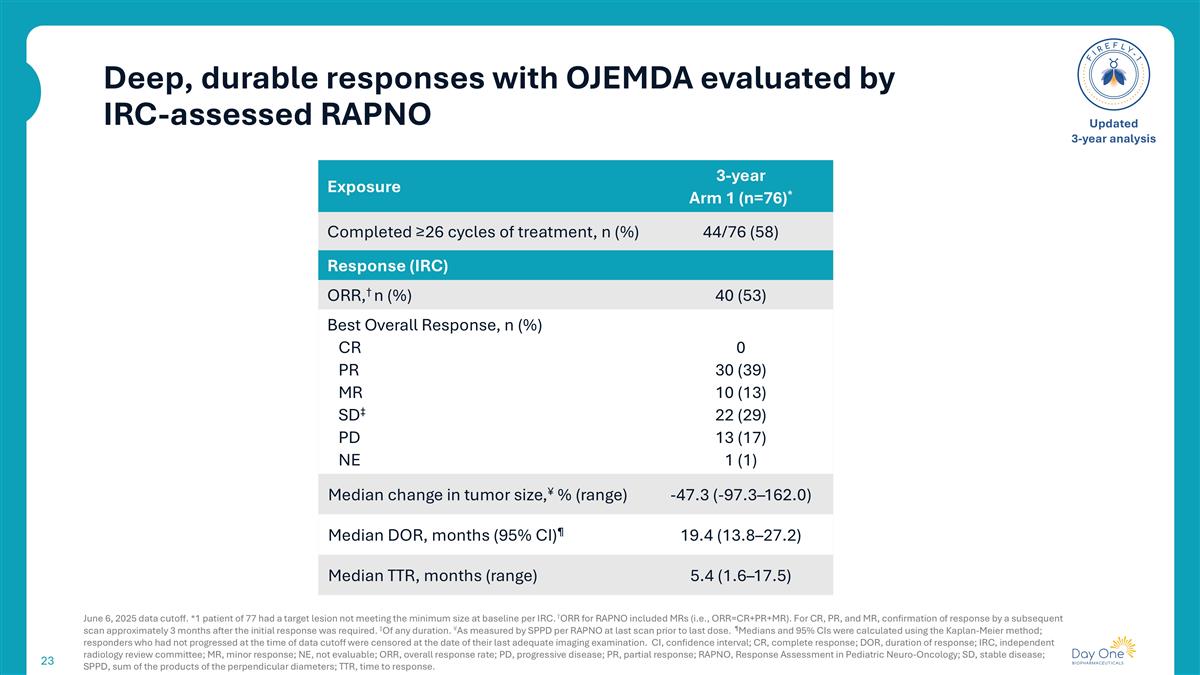
Deep, durable responses with OJEMDA evaluated by IRC-assessed RAPNO June 6, 2025 data cutoff. *1 patient of 77 had a target lesion not meeting the minimum size at baseline per IRC. †ORR for RAPNO included MRs (i.e., ORR=CR+PR+MR). For CR, PR, and MR, confirmation of response by a subsequent scan approximately 3 months after the initial response was required. ‡Of any duration. ¥As measured by SPPD per RAPNO at last scan prior to last dose. ¶Medians and 95% CIs were calculated using the Kaplan-Meier method; responders who had not progressed at the time of data cutoff were censored at the date of their last adequate imaging examination. CI, confidence interval; CR, complete response; DOR, duration of response; IRC, independent radiology review committee; MR, minor response; NE, not evaluable; ORR, overall response rate; PD, progressive disease; PR, partial response; RAPNO, Response Assessment in Pediatric Neuro-Oncology; SD, stable disease; SPPD, sum of the products of the perpendicular diameters; TTR, time to response. Updated 3-year analysis Exposure 3-year Arm 1 (n=76)* Completed ≥26 cycles of treatment, n (%) 44/76 (58) Response (IRC) ORR,† n (%) 40 (53) Best Overall Response, n (%) CR PR MR SD‡ PD NE 0 30 (39) 10 (13) 22 (29) 13 (17) 1 (1) Median change in tumor size,¥ % (range) -47.3 (-97.3–162.0) Median DOR, months (95% CI)¶ 19.4 (13.8–27.2) Median TTR, months (range) 5.4 (1.6–17.5)
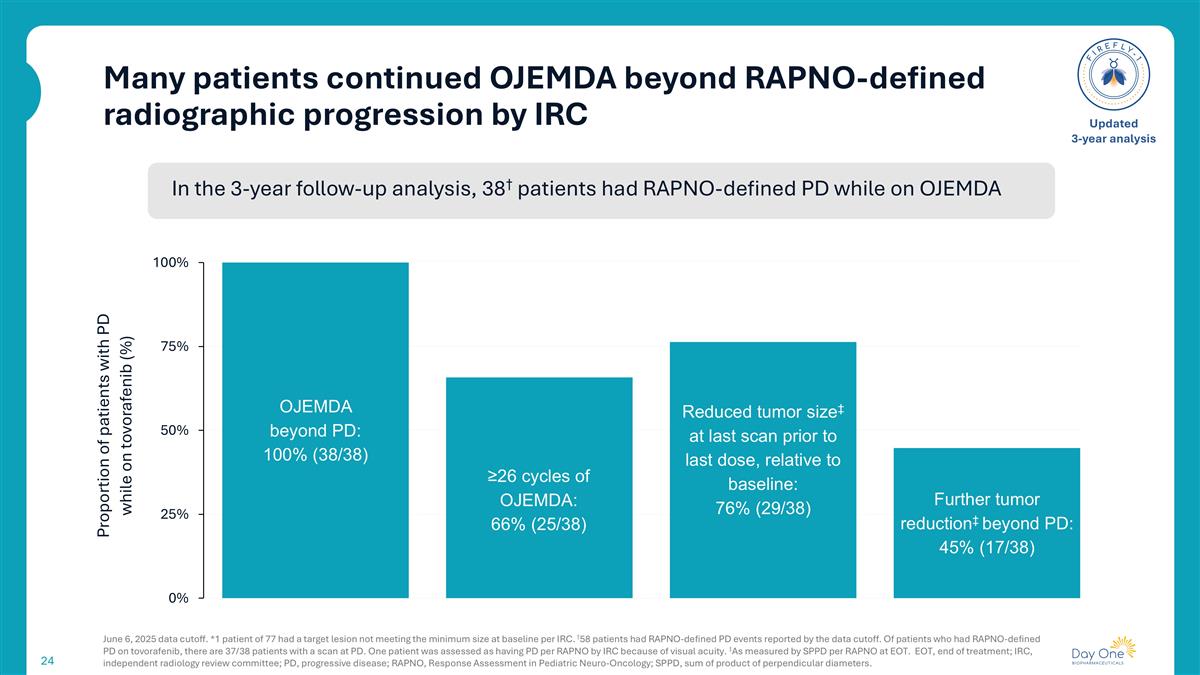
Many patients continued OJEMDA beyond RAPNO-defined radiographic progression by IRC June 6, 2025 data cutoff. *1 patient of 77 had a target lesion not meeting the minimum size at baseline per IRC. †58 patients had RAPNO-defined PD events reported by the data cutoff. Of patients who had RAPNO-defined PD on tovorafenib, there are 37/38 patients with a scan at PD. One patient was assessed as having PD per RAPNO by IRC because of visual acuity. ‡As measured by SPPD per RAPNO at EOT. EOT, end of treatment; IRC, independent radiology review committee; PD, progressive disease; RAPNO, Response Assessment in Pediatric Neuro-Oncology; SPPD, sum of product of perpendicular diameters. Updated 3-year analysis In the 3-year follow-up analysis, 38† patients had RAPNO-defined PD while on OJEMDA
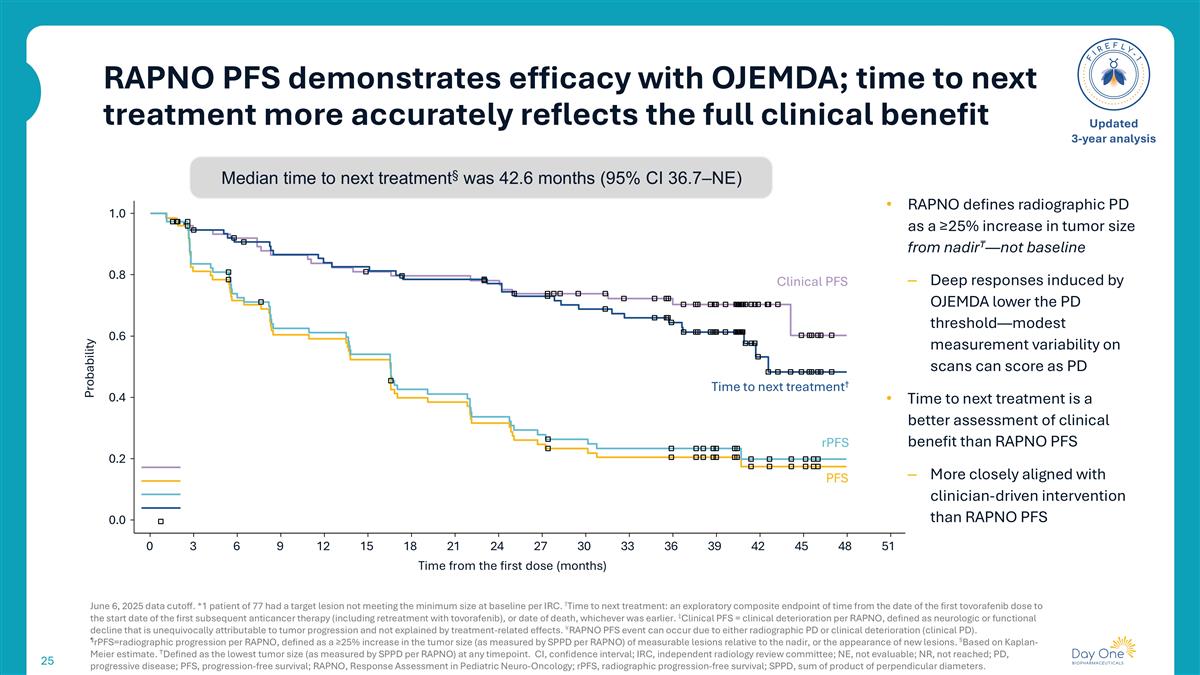
RAPNO PFS demonstrates efficacy with OJEMDA; time to next treatment more accurately reflects the full clinical benefit June 6, 2025 data cutoff. *1 patient of 77 had a target lesion not meeting the minimum size at baseline per IRC. †Time to next treatment: an exploratory composite endpoint of time from the date of the first tovorafenib dose to the start date of the first subsequent anticancer therapy (including retreatment with tovorafenib), or date of death, whichever was earlier. ‡Clinical PFS = clinical deterioration per RAPNO, defined as neurologic or functional decline that is unequivocally attributable to tumor progression and not explained by treatment-related effects. ¥RAPNO PFS event can occur due to either radiographic PD or clinical deterioration (clinical PD). ¶rPFS=radiographic progression per RAPNO, defined as a ≥25% increase in the tumor size (as measured by SPPD per RAPNO) of measurable lesions relative to the nadir, or the appearance of new lesions. §Based on Kaplan-Meier estimate. Defined as the lowest tumor size (as measured by SPPD per RAPNO) at any timepoint. CI, confidence interval; IRC, independent radiology review committee; NE, not evaluable; NR, not reached; PD, progressive disease; PFS, progression-free survival; RAPNO, Response Assessment in Pediatric Neuro-Oncology; rPFS, radiographic progression-free survival; SPPD, sum of product of perpendicular diameters. Updated 3-year analysis 1.0 0.0 0 3 6 9 12 15 18 21 24 27 30 33 36 39 42 45 48 51 Time from the first dose (months) 0.8 0.6 0.4 0.2 Probability Clinical PFS rPFS PFS Time to next treatment† Median time to next treatment§ was 42.6 months (95% CI 36.7–NE) RAPNO defines radiographic PD as a ≥25% increase in tumor size from nadir —not baseline Deep responses induced by OJEMDA lower the PD threshold—modest measurement variability on scans can score as PD Time to next treatment is a better assessment of clinical benefit than RAPNO PFS More closely aligned with clinician-driven intervention than RAPNO PFS
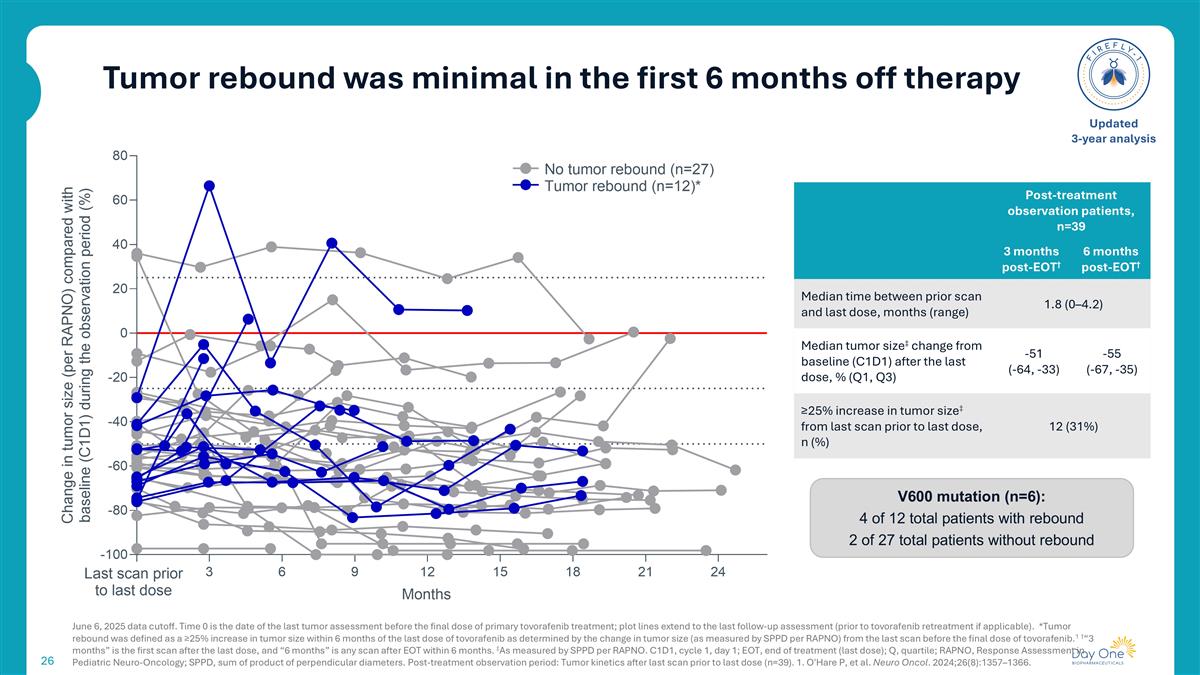
Tumor rebound was minimal in the first 6 months off therapy June 6, 2025 data cutoff. Time 0 is the date of the last tumor assessment before the final dose of primary tovorafenib treatment; plot lines extend to the last follow-up assessment (prior to tovorafenib retreatment if applicable). *Tumor rebound was defined as a ≥25% increase in tumor size within 6 months of the last dose of tovorafenib as determined by the change in tumor size (as measured by SPPD per RAPNO) from the last scan before the final dose of tovorafenib.1 †“3 months” is the first scan after the last dose, and “6 months” is any scan after EOT within 6 months. ‡As measured by SPPD per RAPNO. C1D1, cycle 1, day 1; EOT, end of treatment (last dose); Q, quartile; RAPNO, Response Assessment in Pediatric Neuro-Oncology; SPPD, sum of product of perpendicular diameters. Post-treatment observation period: Tumor kinetics after last scan prior to last dose (n=39). 1. O'Hare P, et al. Neuro Oncol. 2024;26(8):1357–1366. Updated 3-year analysis Post-treatment observation patients, n=39 3 months post-EOT† 6 months post-EOT† Median time between prior scan and last dose, months (range) 1.8 (0–4.2) Median tumor size‡ change from baseline (C1D1) after the last dose, % (Q1, Q3) -51 (-64, -33) -55 (-67, -35) ≥25% increase in tumor size‡ from last scan prior to last dose, n (%) 12 (31%) V600 mutation (n=6): 4 of 12 total patients with rebound 2 of 27 total patients without rebound
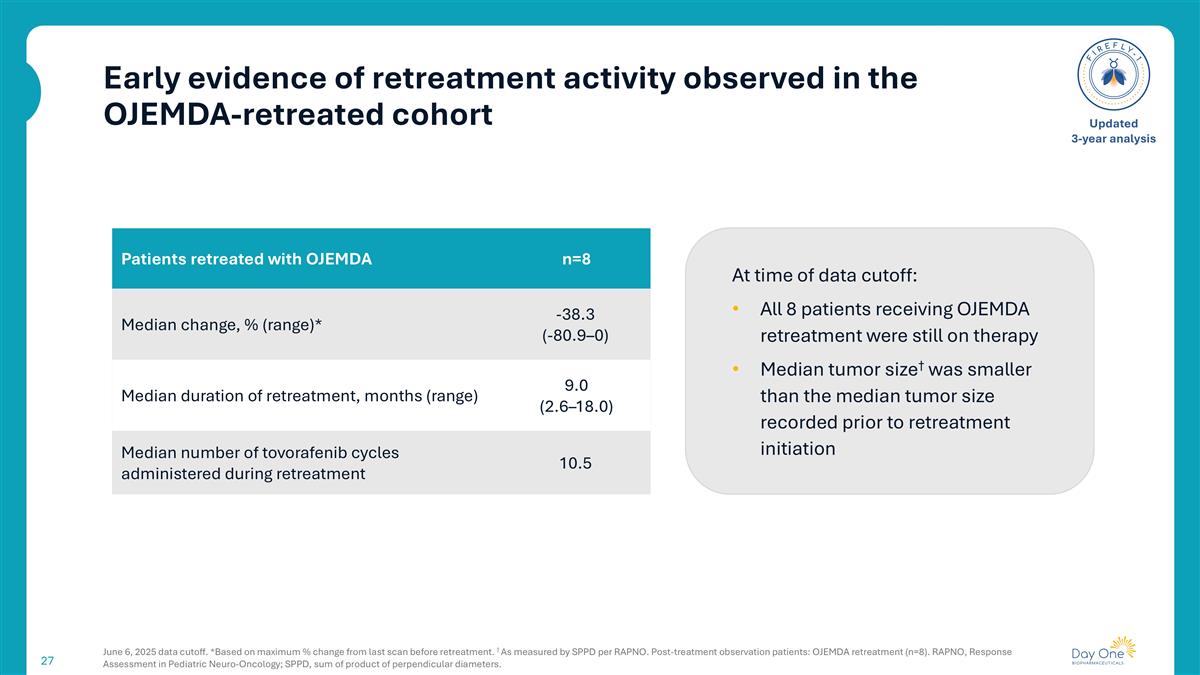
Early evidence of retreatment activity observed in the OJEMDA-retreated cohort June 6, 2025 data cutoff. *Based on maximum % change from last scan before retreatment. † As measured by SPPD per RAPNO. Post-treatment observation patients: OJEMDA retreatment (n=8). RAPNO, Response Assessment in Pediatric Neuro-Oncology; SPPD, sum of product of perpendicular diameters. Updated 3-year analysis Patients retreated with OJEMDA n=8 Median change, % (range)* -38.3 (-80.9–0) Median duration of retreatment, months (range) 9.0 (2.6–18.0) Median number of tovorafenib cycles administered during retreatment 10.5 At time of data cutoff: All 8 patients receiving OJEMDA retreatment were still on therapy Median tumor size† was smaller than the median tumor size recorded prior to retreatment initiation
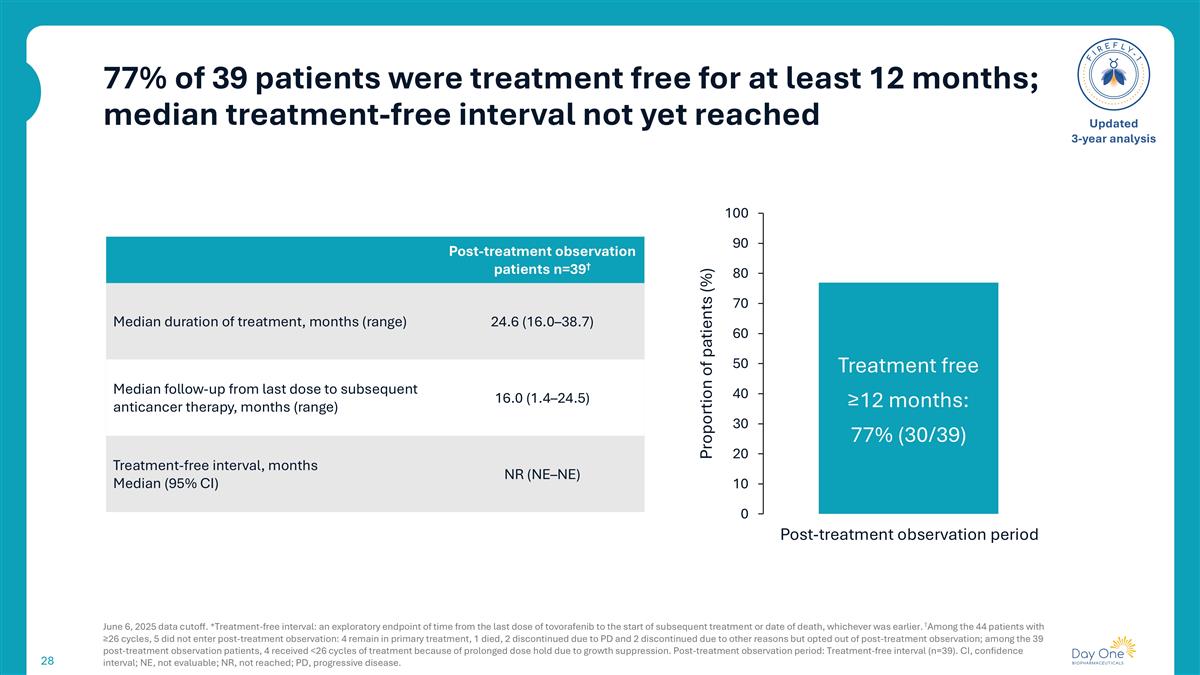
77% of 39 patients were treatment free for at least 12 months; median treatment-free interval not yet reached June 6, 2025 data cutoff. *Treatment-free interval: an exploratory endpoint of time from the last dose of tovorafenib to the start of subsequent treatment or date of death, whichever was earlier. †Among the 44 patients with ≥26 cycles, 5 did not enter post-treatment observation: 4 remain in primary treatment, 1 died, 2 discontinued due to PD and 2 discontinued due to other reasons but opted out of post-treatment observation; among the 39 post-treatment observation patients, 4 received <26 cycles of treatment because of prolonged dose hold due to growth suppression. Post-treatment observation period: Treatment-free interval (n=39). CI, confidence interval; NE, not evaluable; NR, not reached; PD, progressive disease. Updated 3-year analysis Post-treatment observation patients n=39† Median duration of treatment, months (range) 24.6 (16.0–38.7) Median follow-up from last dose to subsequent anticancer therapy, months (range) 16.0 (1.4–24.5) Treatment-free interval, months Median (95% CI) NR (NE–NE) Post-treatment observation period
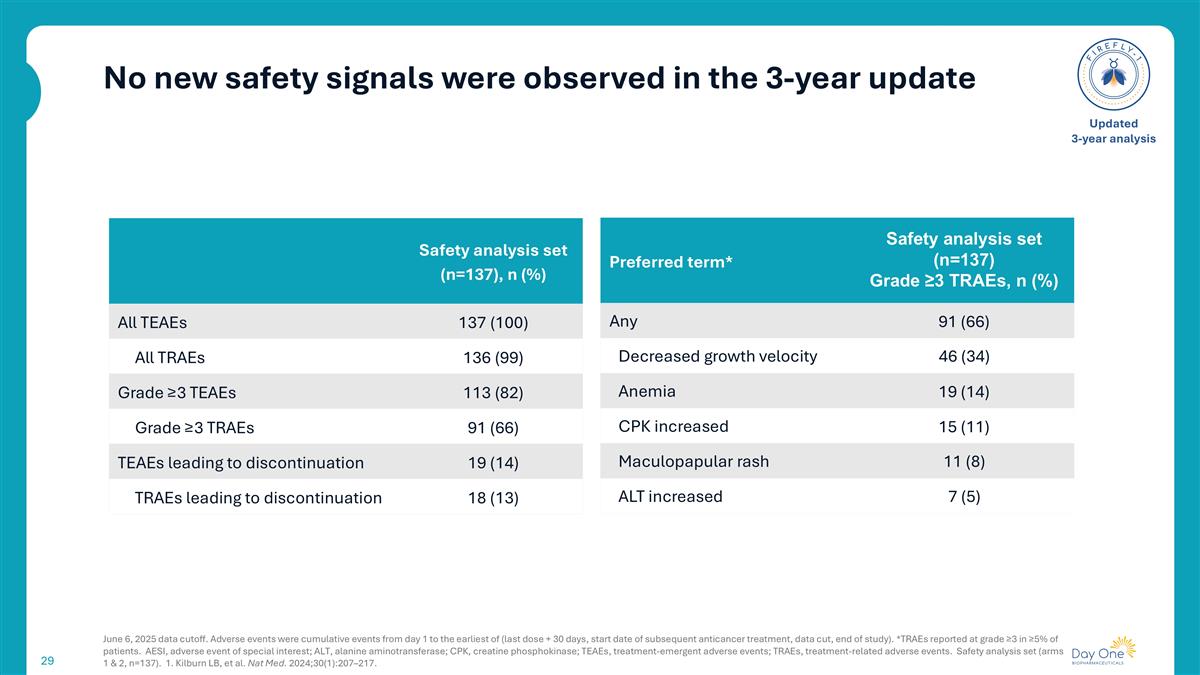
No new safety signals were observed in the 3-year update June 6, 2025 data cutoff. Adverse events were cumulative events from day 1 to the earliest of (last dose + 30 days, start date of subsequent anticancer treatment, data cut, end of study). *TRAEs reported at grade ≥3 in ≥5% of patients. AESI, adverse event of special interest; ALT, alanine aminotransferase; CPK, creatine phosphokinase; TEAEs, treatment-emergent adverse events; TRAEs, treatment-related adverse events. Safety analysis set (arms 1 & 2, n=137). 1. Kilburn LB, et al. Nat Med. 2024;30(1):207–217. Updated 3-year analysis Safety analysis set (n=137), n (%) All TEAEs 137 (100) All TRAEs 136 (99) Grade ≥3 TEAEs 113 (82) Grade ≥3 TRAEs 91 (66) TEAEs leading to discontinuation 19 (14) TRAEs leading to discontinuation 18 (13) Preferred term* Safety analysis set (n=137) Grade ≥3 TRAEs, n (%) Any 91 (66) Decreased growth velocity 46 (34) Anemia 19 (14) CPK increased 15 (11) Maculopapular rash 11 (8) ALT increased 7 (5)
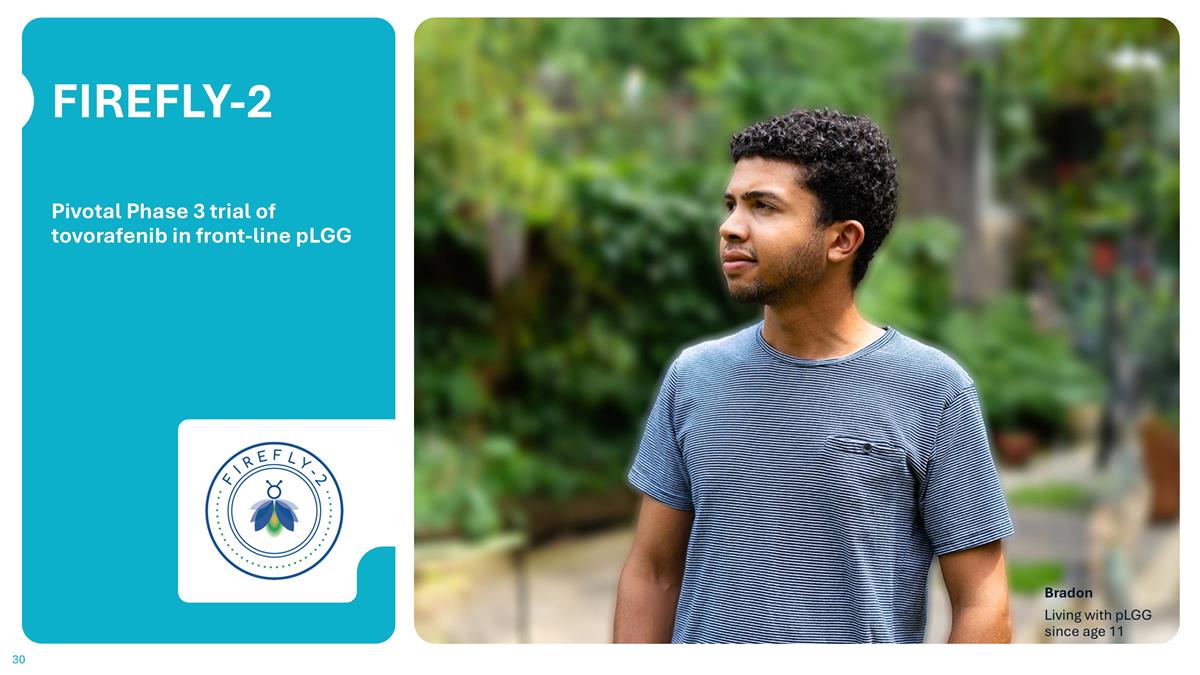
Pivotal Phase 3 trial of tovorafenib in front-line pLGG FIREFLY-2 Bradon Living with pLGG since age 11
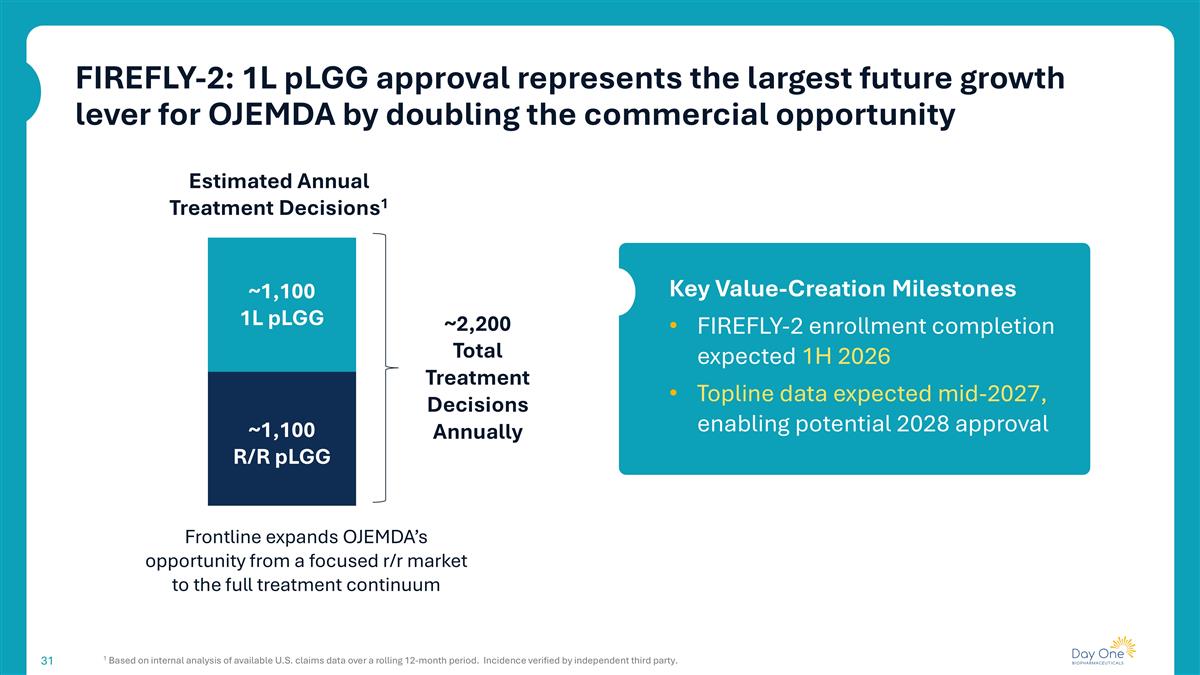
FIREFLY-2: 1L pLGG approval represents the largest future growth lever for OJEMDA by doubling the commercial opportunity 1 Based on internal analysis of available U.S. claims data over a rolling 12-month period. Incidence verified by independent third party. Key Value-Creation Milestones FIREFLY-2 enrollment completion expected 1H 2026 Topline data expected mid-2027, enabling potential 2028 approval ~1,100 R/R pLGG ~1,100 1L pLGG Estimated Annual Treatment Decisions1 Frontline expands OJEMDA’s opportunity from a focused r/r market to the full treatment continuum ~2,200 Total Treatment Decisions Annually
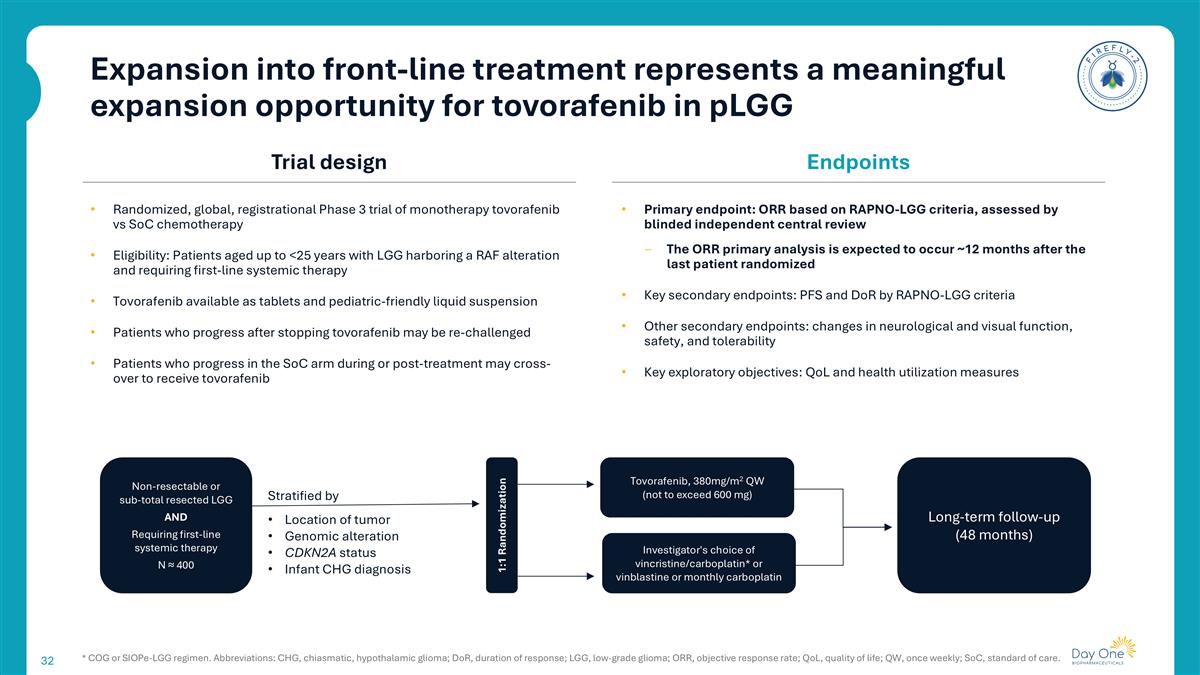
Trial design Endpoints Randomized, global, registrational Phase 3 trial of monotherapy tovorafenib vs SoC chemotherapy Eligibility: Patients aged up to <25 years with LGG harboring a RAF alteration and requiring first-line systemic therapy Tovorafenib available as tablets and pediatric-friendly liquid suspension Patients who progress after stopping tovorafenib may be re-challenged Patients who progress in the SoC arm during or post-treatment may cross-over to receive tovorafenib Primary endpoint: ORR based on RAPNO-LGG criteria, assessed by blinded independent central review The ORR primary analysis is expected to occur ~12 months after the last patient randomized Key secondary endpoints: PFS and DoR by RAPNO-LGG criteria Other secondary endpoints: changes in neurological and visual function, safety, and tolerability Key exploratory objectives: QoL and health utilization measures Non-resectable or sub-total resected LGG AND Requiring first-line systemic therapy N ≈ 400 Stratified by Location of tumor Genomic alteration CDKN2A status Infant CHG diagnosis Tovorafenib, 380mg/m2 QW (not to exceed 600 mg) Investigator's choice of vincristine/carboplatin* or vinblastine or monthly carboplatin Long-term follow-up (48 months) 1:1 Randomization * COG or SIOPe-LGG regimen. Abbreviations: CHG, chiasmatic, hypothalamic glioma; DoR, duration of response; LGG, low-grade glioma; ORR, objective response rate; QoL, quality of life; QW, once weekly; SoC, standard of care. Expansion into front-line treatment represents a meaningful expansion opportunity for tovorafenib in pLGG
B7-H4-targeted antibody-drug conjugate (ADC) Emi-Le
High-impact clinical program parallels OJEMDA’s rapid development and registration Potential first-in-class program targeting a defined, treatment-resistant cancer High unmet medical need with limited therapeutic options No approved treatments today Potential rapid regulatory pathway Emi-Le: Transformational opportunity in Adenoid Cystic Carcinoma (ACC) ~3-year line of sight to potential approval and subsequent meaningful commercial contribution, with expected rapid adoption and time to peak
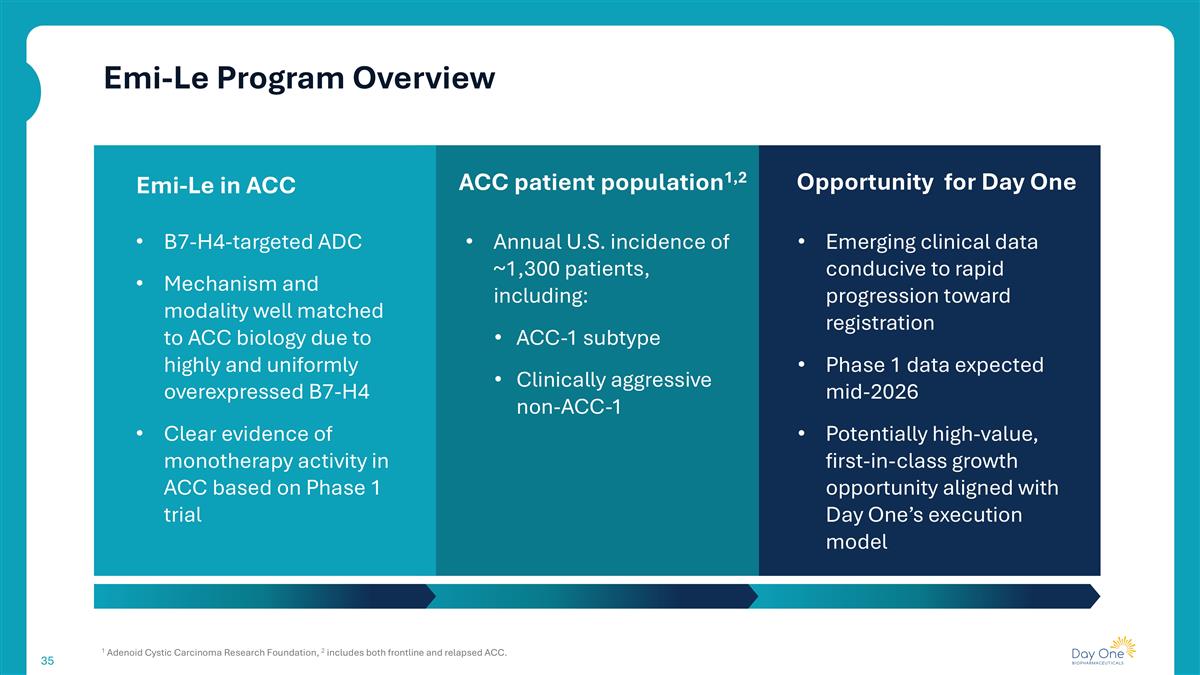
Emi-Le Program Overview 1 Adenoid Cystic Carcinoma Research Foundation, 2 includes both frontline and relapsed ACC. ACC patient population1,2 B7-H4-targeted ADC Mechanism and modality well matched to ACC biology due to highly and uniformly overexpressed B7-H4 Clear evidence of monotherapy activity in ACC based on Phase 1 trial Emi-Le in ACC Opportunity for Day One Annual U.S. incidence of ~1,300 patients, including: ACC-1 subtype Clinically aggressive non-ACC-1 Emerging clinical data conducive to rapid progression toward registration Phase 1 data expected mid-2026 Potentially high-value, first-in-class growth opportunity aligned with Day One’s execution model
PTK7-targeted antibody-drug conjugate (ADC) DAY301
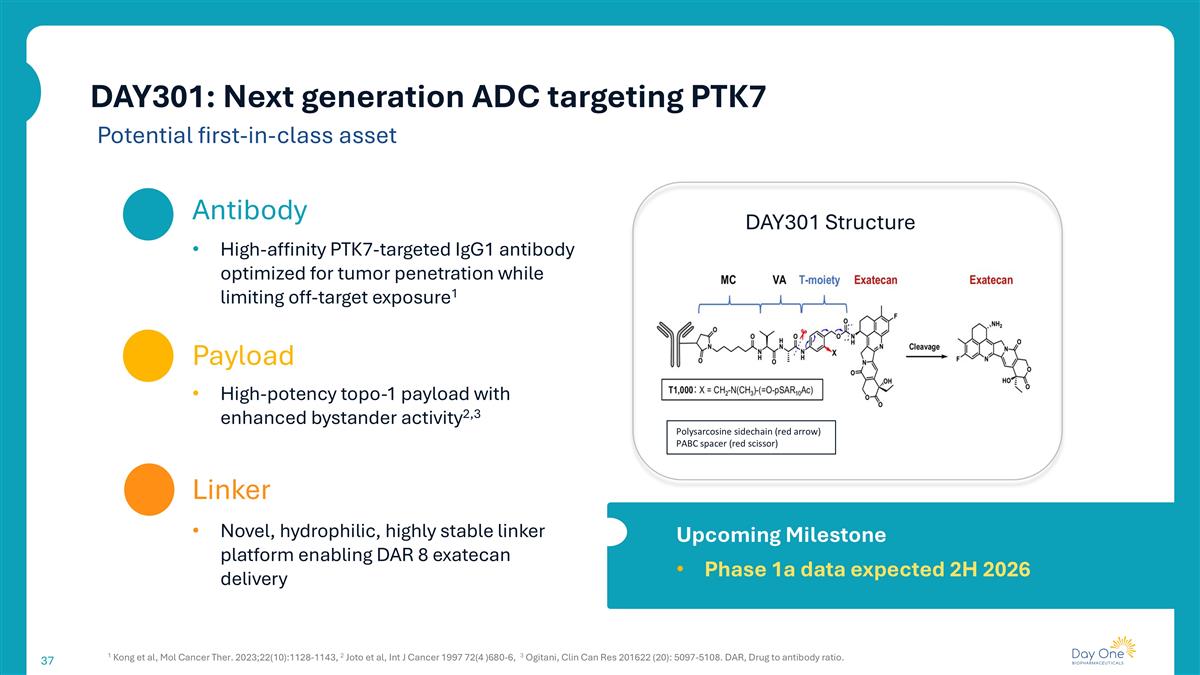
DAY301: Next generation ADC targeting PTK7 Antibody Payload Linker High-affinity PTK7-targeted IgG1 antibody optimized for tumor penetration while limiting off-target exposure1 High-potency topo-1 payload with enhanced bystander activity2,3 1 Kong et al, Mol Cancer Ther. 2023;22(10):1128-1143, 2 Joto et al, Int J Cancer 1997 72(4 )680-6, 3 Ogitani, Clin Can Res 201622 (20): 5097-5108. DAR, Drug to antibody ratio. Novel, hydrophilic, highly stable linker platform enabling DAR 8 exatecan delivery Polysarcosine sidechain (red arrow) PABC spacer (red scissor) DAY301 Structure Potential first-in-class asset Upcoming Milestone Phase 1a data expected 2H 2026
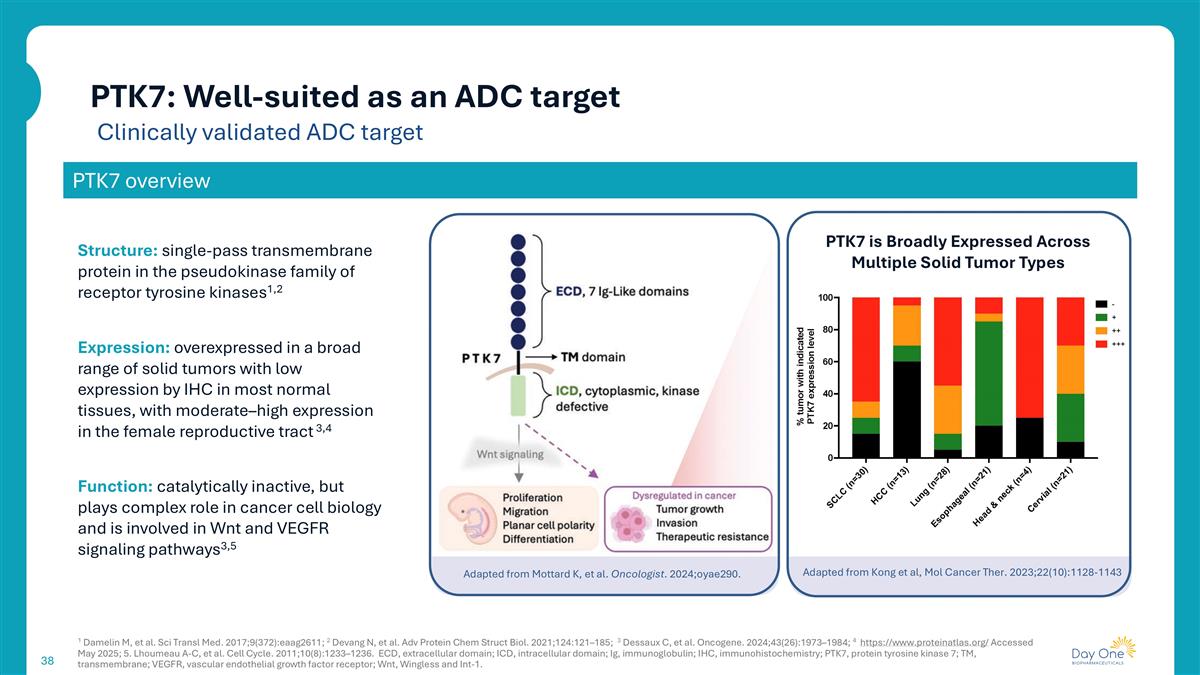
PTK7: Well-suited as an ADC target 1 Damelin M, et al. Sci Transl Med. 2017;9(372):eaag2611; 2 Devang N, et al. Adv Protein Chem Struct Biol. 2021;124:121–185; 3 Dessaux C, et al. Oncogene. 2024;43(26):1973–1984; 4 https://www.proteinatlas.org/ Accessed May 2025; 5. Lhoumeau A-C, et al. Cell Cycle. 2011;10(8):1233–1236. ECD, extracellular domain; ICD, intracellular domain; Ig, immunoglobulin; IHC, immunohistochemistry; PTK7, protein tyrosine kinase 7; TM, transmembrane; VEGFR, vascular endothelial growth factor receptor; Wnt, Wingless and Int-1. Structure: single-pass transmembrane protein in the pseudokinase family of receptor tyrosine kinases1,2 PTK7 overview Adapted from Mottard K, et al. Oncologist. 2024;oyae290. Function: catalytically inactive, but plays complex role in cancer cell biology and is involved in Wnt and VEGFR signaling pathways3,5 Expression: overexpressed in a broad range of solid tumors with low expression by IHC in most normal tissues, with moderate–high expression in the female reproductive tract 3,4 Clinically validated ADC target Adapted from Kong et al, Mol Cancer Ther. 2023;22(10):1128-1143 PTK7 is Broadly Expressed Across Multiple Solid Tumor Types
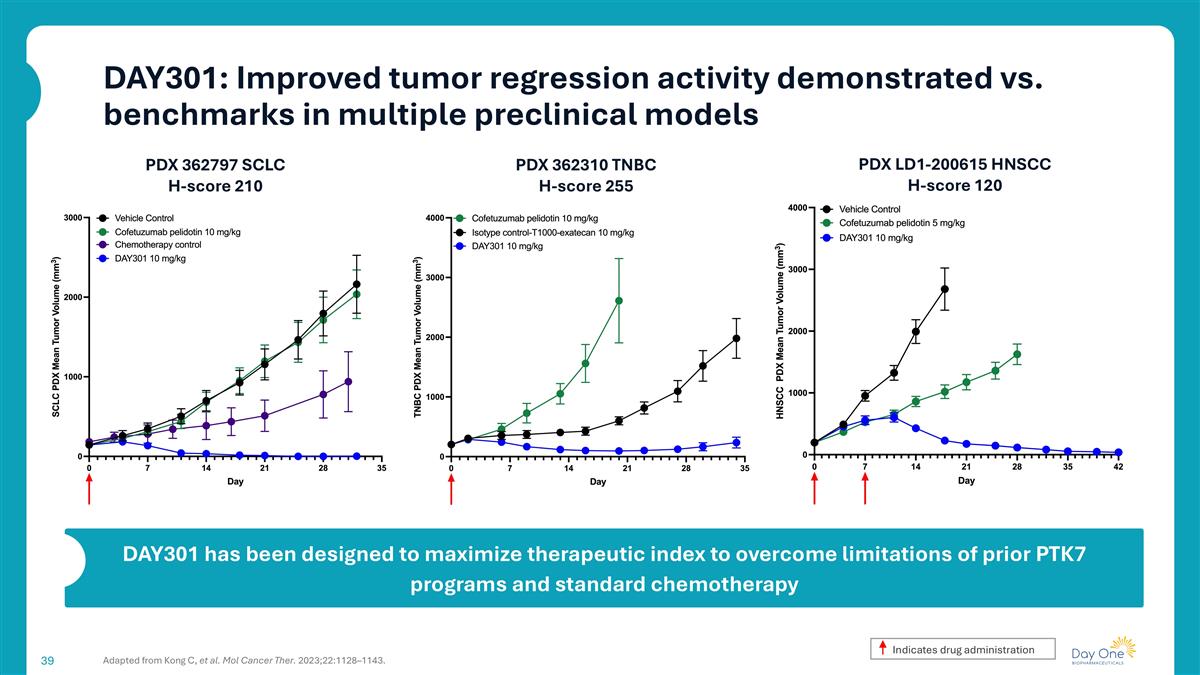
DAY301: Improved tumor regression activity demonstrated vs. benchmarks in multiple preclinical models Adapted from Kong C, et al. Mol Cancer Ther. 2023;22:1128–1143. PDX 362797 SCLC H-score 210 PDX 362310 TNBC H-score 255 PDX LD1-200615 HNSCC H-score 120 Indicates drug administration DAY301 has been designed to maximize therapeutic index to overcome limitations of prior PTK7 programs and standard chemotherapy
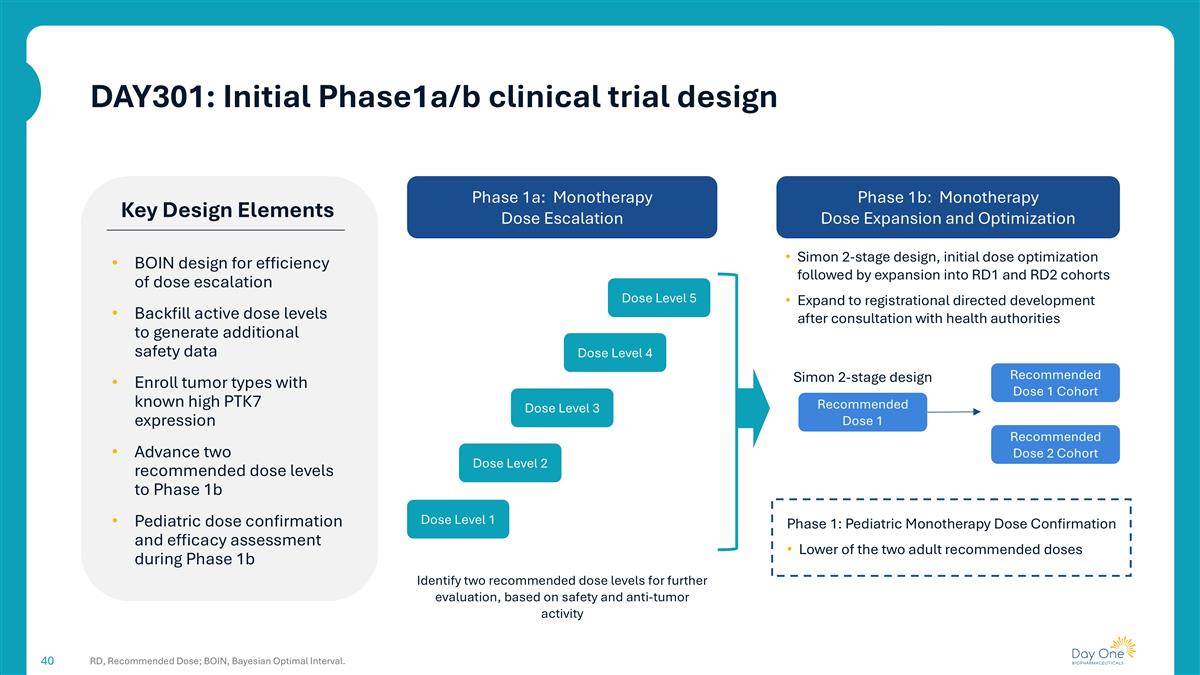
RD, Recommended Dose; BOIN, Bayesian Optimal Interval. DAY301: Initial Phase1a/b clinical trial design Phase 1a: Monotherapy Dose Escalation Dose Level 1 Key Design Elements BOIN design for efficiency of dose escalation Backfill active dose levels to generate additional safety data Enroll tumor types with known high PTK7 expression Advance two recommended dose levels to Phase 1b Pediatric dose confirmation and efficacy assessment during Phase 1b Dose Level 5 Dose Level 2 Dose Level 3 Dose Level 4 Phase 1b: Monotherapy Dose Expansion and Optimization Recommended Dose 1 Simon 2-stage design, initial dose optimization followed by expansion into RD1 and RD2 cohorts Expand to registrational directed development after consultation with health authorities Simon 2-stage design Recommended Dose 1 Cohort Recommended Dose 2 Cohort Identify two recommended dose levels for further evaluation, based on safety and anti-tumor activity Phase 1: Pediatric Monotherapy Dose Confirmation Lower of the two adult recommended doses

Summary
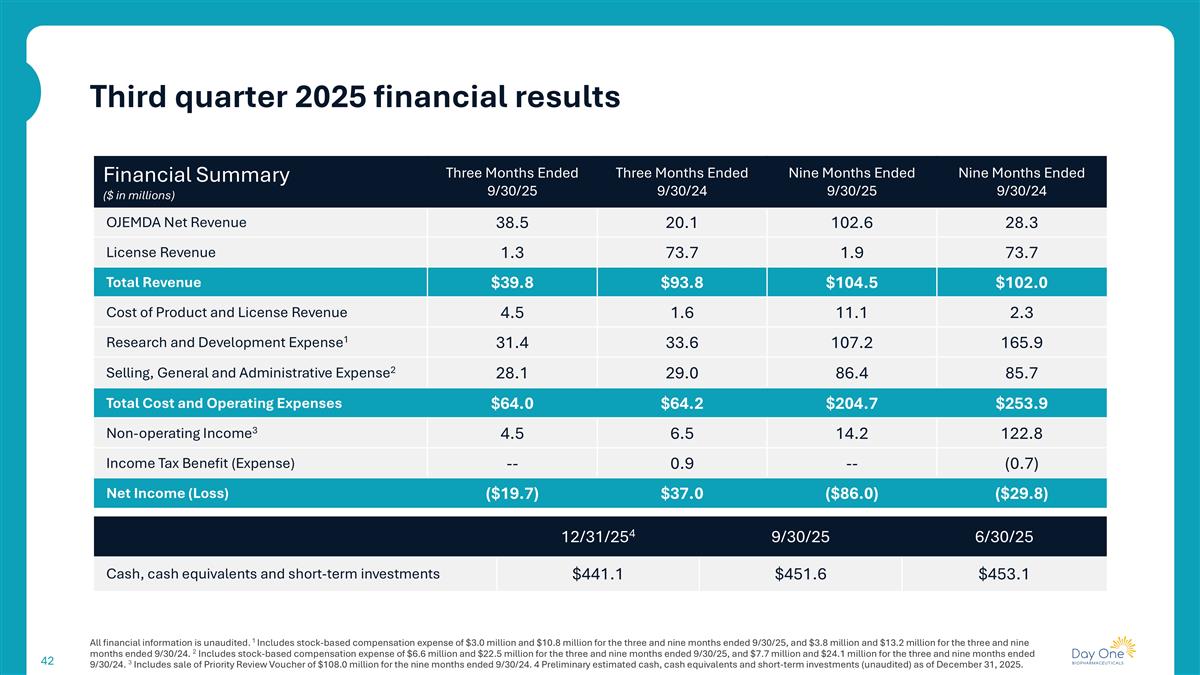
Third quarter 2025 financial results All financial information is unaudited. 1 Includes stock-based compensation expense of $3.0 million and $10.8 million for the three and nine months ended 9/30/25, and $3.8 million and $13.2 million for the three and nine months ended 9/30/24. 2 Includes stock-based compensation expense of $6.6 million and $22.5 million for the three and nine months ended 9/30/25, and $7.7 million and $24.1 million for the three and nine months ended 9/30/24. 3 Includes sale of Priority Review Voucher of $108.0 million for the nine months ended 9/30/24. 4 Preliminary estimated cash, cash equivalents and short-term investments (unaudited) as of December 31, 2025. Financial Summary ($ in millions) Three Months Ended 9/30/25 Three Months Ended 9/30/24 Nine Months Ended 9/30/25 Nine Months Ended 9/30/24 OJEMDA Net Revenue 38.5 20.1 102.6 28.3 License Revenue 1.3 73.7 1.9 73.7 Total Revenue $39.8 $93.8 $104.5 $102.0 Cost of Product and License Revenue 4.5 1.6 11.1 2.3 Research and Development Expense1 31.4 33.6 107.2 165.9 Selling, General and Administrative Expense2 28.1 29.0 86.4 85.7 Total Cost and Operating Expenses $64.0 $64.2 $204.7 $253.9 Non-operating Income3 4.5 6.5 14.2 122.8 Income Tax Benefit (Expense) -- 0.9 -- (0.7) Net Income (Loss) ($19.7) $37.0 ($86.0) ($29.8) 12/31/254 9/30/25 6/30/25 Cash, cash equivalents and short-term investments $441.1 $451.6 $453.1
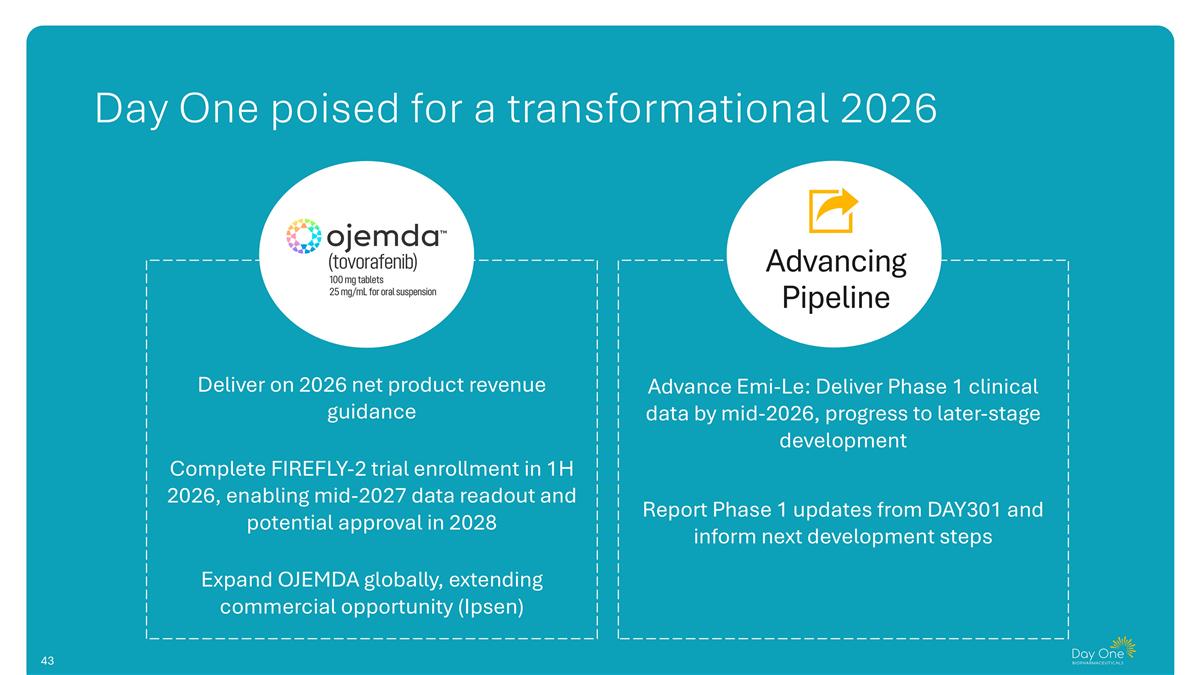
Day One poised for a transformational 2026 Advancing Pipeline Deliver on 2026 net product revenue guidance Complete FIREFLY-2 trial enrollment in 1H 2026, enabling mid-2027 data readout and potential approval in 2028 Expand OJEMDA globally, extending commercial opportunity (Ipsen) Advance Emi-Le: Deliver Phase 1 clinical data by mid-2026, progress to later-stage development Report Phase 1 updates from DAY301 and inform next development steps

Appendix
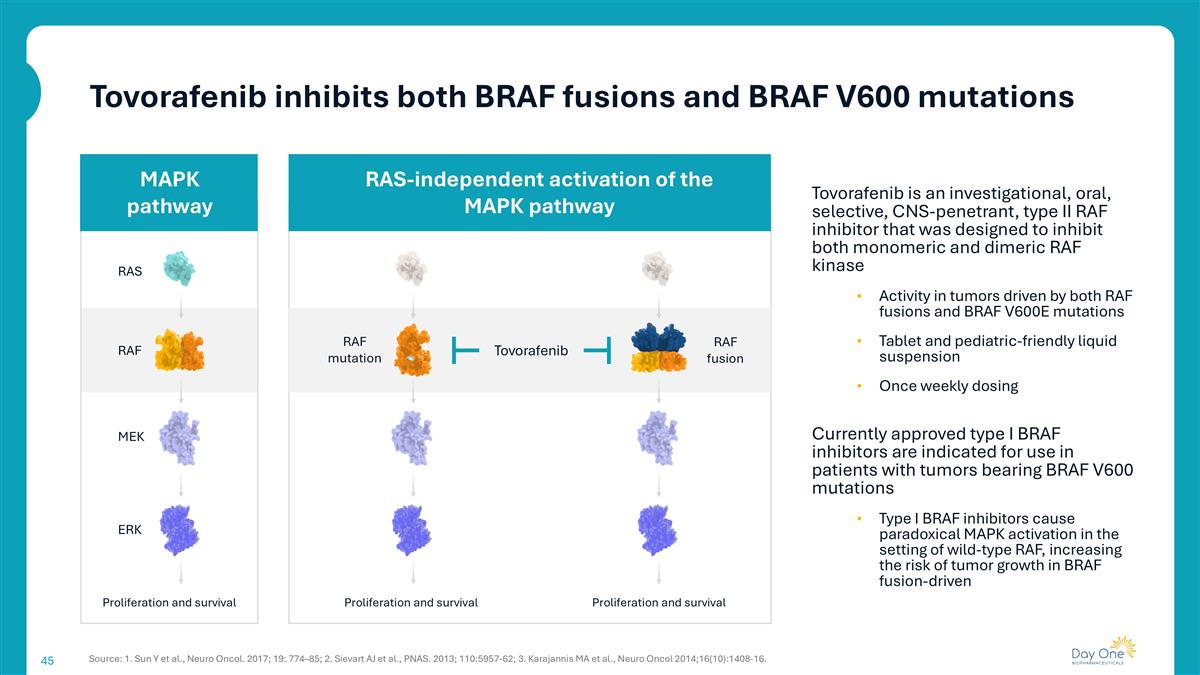
Tovorafenib is an investigational, oral, selective, CNS-penetrant, type II RAF inhibitor that was designed to inhibit both monomeric and dimeric RAF kinase Activity in tumors driven by both RAF fusions and BRAF V600E mutations Tablet and pediatric-friendly liquid suspension Once weekly dosing Currently approved type I BRAF inhibitors are indicated for use in patients with tumors bearing BRAF V600 mutations Type I BRAF inhibitors cause paradoxical MAPK activation in the setting of wild-type RAF, increasing the risk of tumor growth in BRAF fusion-driven RAS RAF MEK ERK Proliferation and survival RAF mutation RAF fusion Proliferation and survival Proliferation and survival Tovorafenib RAS-independent activation of the MAPK pathway MAPK pathway Source: 1. Sun Y et al., Neuro Oncol. 2017; 19: 774–85; 2. Sievart AJ et al., PNAS. 2013; 110:5957-62; 3. Karajannis MA et al., Neuro Oncol 2014;16(10):1408-16. Tovorafenib inhibits both BRAF fusions and BRAF V600 mutations