2024 Annual Information Form
March 27, 2025
Table of Contents
| 1. | Important Information about this Document | 4 | |
| 1.1 | Reporting Currency | 4 | |
| 1.2 | Historic Metals Prices | 4 | |
| 1.3 | Technical Information | 4 | |
| 1.4 | Forward-Looking Information | 6 | |
| 1.5 | Cautionary Note to U.S. Readers Concerning Estimates of Mineral Reserves and Mineral Resources | 8 | |
| 2. | About Centerra | 8 | |
| 2.1 | Our Properties | 8 | |
| 2.2 | Inter-Corporate Relationships | 9 | |
| 2.3 | Recent Developments | 10 | |
| 2.4 | Other Disclosure Relating to Ontario Securities Commission Requirements for Companies Operating in Emerging Markets | 12 | |
| Controls Relating to Corporate Structure Risk | 14 | ||
| Procedures of the Board of Directors of the Company | 14 | ||
| 2.5 | Centerra’s Business | 14 | |
| Business Operations | 14 | ||
| Marketing and Distribution | 15 | ||
| Gold Doré Produced at Öksüt Mine | 15 | ||
| Copper/Gold Concentrate Produced at Mount Milligan Mine | 16 | ||
| Molybdenum Industry | 16 | ||
| 2024 and 2023 Production and Revenue | 17 | ||
| Competitive Conditions | 17 | ||
| Mineral Reserves and Resources | 17 | ||
| Sources, Pricing and Availability of Materials, Parts and Equipment | 23 | ||
| Financial and Operational Effects of Environmental Protection Requirements | 23 | ||
| 2.6 | Responsible Mining | 25 | |
| Our Approach | 25 | ||
| Governance | 26 | ||
| Our Employees | 27 | ||
| Social Performance | 28 | ||
| 3. | Centerra’s Properties | 31 | |
| 3.1 | Operating Mines | 31 | |
| Mount Milligan Mine | 31 | ||
| Öksüt Mine | 40 | ||
| 3.2 | Molybdenum Business Unit | 48 | |
| Thompson Creek Mine | 48 | ||
| Endako Mine | 58 | ||
| Langeloth Metallurgical Facility | 58 | ||
| 3.3 | Other Properties | 59 | |
| Goldfield Project | 59 | ||
| Kemess Project | 59 | ||
| 4. | Governance | 59 | |
| 4.1 | Directors and Officers | 59 | |
| Directors | 60 | ||
| Executive Officers | 61 | ||
| Other Information About Our Directors and Officers | 61 | ||
| 4.2 | Committees | 62 | |
| Audit Committee | 62 | ||
| Audit Committee Charter | 63 | ||
| Composition of the Audit Committee | 63 | ||
| External Audit Pre-Approval Procedures | 63 | ||
| Fees Paid to External Auditors | 64 | ||
| 4.3 | Interest of Management and Others in Material Transactions | 64 | |
| 5. | Risk Factors | 64 | |
| 5.1 | Strategic Risks | 64 | |
| Country, Political & Regulatory | 64 | ||
| Disputes with the Kyrgyz Republic and Kyrgyzaltyn Relating to the Kumtor Mine | 67 | ||
Centerra Gold Inc. 2024 Annual Information Form | Page 2 |
| Legal and Other | 68 | ||
| Strategy and Planning | 69 | ||
| Natural Phenomena | 72 | ||
| Competition | 72 | ||
| 5.2 | Financial Risks | 72 | |
| Commodity Market | 72 | ||
| Economy, Credit and Liquidity | 74 | ||
| Insurance | 75 | ||
| Tax and Royalties | 75 | ||
| Counterparty | 76 | ||
| 5.3 | Operational Risks | 76 | |
| Health, Safety and Environment | 76 | ||
| Asset Management | 79 | ||
| Human Resources | 79 | ||
| Supply Chain | 79 | ||
| Information Technology Systems | 80 | ||
| 6. | Investor information | 80 | |
| 6.1 | Description of Share Capital | 80 | |
| Common Shares | 81 | ||
| Class A Non-Voting Shares | 81 | ||
| Preference Shares | 81 | ||
| 6.2 | Market for Our Securities | 81 | |
| Trading Price and Volume | 81 | ||
| Registrar and Transfer Agent | 82 | ||
| 6.3 | Dividend Policy | 82 | |
| 6.4 | Material Contracts | 83 | |
| Mount Milligan Streaming Arrangement | 83 | ||
| Additional Agreement with Royal Gold | 83 | ||
| 6.5 | Legal Proceedings and Regulatory Actions | 84 | |
| 6.6 | Interests of Experts | 84 | |
| 7. | Glossary of Geological and Mining Terms | 85 | |
| Schedule A Audit Committee Charter | 89 | ||
Centerra Gold Inc. 2024 Annual Information Form | Page 3 |
| 1. | Important Information about this Document |
This annual information form (“AIF”) provides important information about Centerra Gold Inc. It describes our history, our markets, our operations and projects, our mineral reserves and resources, our regulatory environment, the risks we face in our business and the market for our shares, among other things. Unless otherwise indicated, information in this AIF is provided as of December 31, 2024. |
Throughout this document, the terms we, us, our, Centerra and the Company mean Centerra Gold Inc. and its direct and indirect subsidiaries. |
| 1.1 | Reporting Currency |
All dollar amounts in this AIF are expressed in United States dollars except as otherwise indicated. References to $ or dollars are to United States dollars and references to C$ are to Canadian dollars. For reporting purposes, we prepare our financial statements in United States dollars and in conformity with accounting principles generally accepted in Canada, being International Financial Reporting Standards, as issued by the International Accounting Standards Board.
The average exchange rate in 2024 for U.S. dollars to Canadian dollars, based on the Bloomberg L.P. closing rate for the 12 months ending December 31, 2024 (the last business day), was one U.S. dollar per C$1.37.
| 1.2 | Historic Metals Prices |
The price of gold, copper and molybdenum fluctuates. The following table shows the average annual price for gold, copper, and molybdenum from 2015 to 2024, and for the period up to March 1, 2025:
| 2015 | 2016 | 2017 | 2018 | 2019 | 2020 | 2021 | 2022 | 2023 | 2024 | 2025
up to March 1, 2025 | |||||||||||||||||||||||
| Average Gold Price ($/oz)(1) | 1,160 | 1,251 | 1,258 | 1,268 | 1,393 | 1,770 | 1,798 | 1,800 | 1,942 | 2,386 | 2,798 | ||||||||||||||||||||||
| Average Copper Price ($/lb.)(2) | 2.49 | 2.21 | 2.80 | 2.96 | 2.72 | 2.80 | 4.23 | 3.99 | 3.85 | 4.15 | 4.15 | ||||||||||||||||||||||
| Average Molybdenum Oxide Price ($/lb.)(3) | 6.63 | 6.50 | 8.19 | 11.93 | 11.35 | 8.68 | 15.94 | 18.77 | 24.19 | 21.31 | 20.73 | ||||||||||||||||||||||
| (1) | London Bullion Market Association annual average daily afternoon gold price fixing. | |
| (2) | London Metal Exchange Copper Cash-Settlement. | |
| (3) | Platts Metals Week. |
| 1.3 | Technical Information |
The disclosure in this AIF of a scientific or technical nature for our Mount Milligan Mine, Öksüt Mine and Thompson Creek Mine is based on technical reports prepared for these properties in accordance with National Instrument 43-101 - Standards of Disclosure for Mineral Projects (“NI 43-101”) of the Canadian Securities Administrators. The technical information has been updated with current information, where applicable. Information regarding qualified persons is as of the effective date of the relevant technical report.
| · | The technical report for the Mount Milligan Mine, with an effective date of December 31, 2021 (filed on November 7, 2022), (the “Mount Milligan Technical Report”) was prepared by Bruno Borntraeger, Gordon Zurowski, Cheyenne Sica, Tengfei Yue, Curtis Clarke, David Luzi, Brian Thomas, and Jennifer Simper. Each of these persons is a qualified person for purposes of NI 43-101. The authors were independent of Centerra at the time of filing, except for Ms. Sica and Mr. Yue. |
| · | The technical report for the Öksüt Mine, Türkiye with an effective date of June 30, 2015 (filed on September 3, 2015) (the “Öksüt Technical Report”) was prepared by Gordon D. Reid, Peter Woodhouse, Malcolm Stallman, Mustafa Cihan, Pierre Landry, Tyler Hilkewich, Tommaso Roberto Raponi, Kevin D’Souza and Chris Sharpe. At the time of the filing of the Öksüt Technical Report, each of these persons was a qualified person for the purposes of NI 43-101, and none of these individuals were independent of Centerra at the time of the Öksüt Technical Report. |
Centerra Gold Inc. 2024 Annual Information Form | Page 4 |
| · | The technical report for the Thompson Creek Mine, Idaho with an effective date of September 1, 2024 (filed on September 27, 2024) (the “TCM Technical Report”) was prepared by Lars Weiershäuser, Jean-Francois St-Onge, Robert Pratt, Hank Wong, Christopher Graves, Justin Stockwell and Jason Obermeyer. Each of these persons is a qualified person for purposes of NI 43-101. The authors were independent of Centerra at the time of filing, except for Mr. Weiershäuser and Mr. St-Onge. |
The technical reports have been filed on SEDAR+ at www.sedarplus.com.
The scientific and technical information related to mineral reserves at the Öksüt Mine contained in this AIF was reviewed and approved by Andrey Shabunin, Professional Engineer, member of the Professional Engineer of Ontario (PEO) and General Manager of the Öksüt Mine. Mr. Shabunin is a Qualified Person within the meaning of NI 43-101.
The scientific and technical information related to all other mineral reserves contained in this AIF was reviewed and approved by Chris Richings, Professional Engineer, member of the Engineers and Geoscientists British Columbia (EGBC) and Centerra’s Vice President, Technical Services. Mr. Richings is a Qualified Person within the meaning of NI 43-101.
The scientific and technical information related to mineral resources at the Goldfield Project contained in this AIF was reviewed and approved by Karen Chiu, PGeo, a member of the Association of Professional Geoscientists Ontario and a member of the Ordre des géologues du Québec and Centerra’s Corporate Geologist. Ms. Chiu is a Qualified Person within the meaning of NI 43-101.
The scientific and technical information related to all other mineral resources contained in this AIF was reviewed and approved by Lars Weiershäuser, PhD, PGeo, a member of the Association of Professional Geoscientists Ontario and Centerra’s Director of Geology. Dr. Weiershäuser is a Qualified Person within the meaning of NI 43-101.
Exploration information and related scientific and technical information in this AIF regarding Centerra’s Mount Milligan Mine and Kemess Project exploration programs were prepared, reviewed, verified, and compiled by Cheyenne Sica, a member of the Association of Professional Geoscientists Ontario and member of Engineers and Geoscientists British Columbia and Centerra’s Exploration Manager – Canada, who is a qualified person for the purpose of NI 43-101. Sample preparation, analytical techniques, laboratories used, and quality assurance quality control protocols used during the exploration drilling programs are done consistent with industry standards and independent certified assay labs are used.
Exploration information and related scientific and technical information in this AIF regarding Centerra’s Öksüt exploration program was prepared, reviewed, verified, and compiled by our geological and staff under the supervision of Richard Adofo, Member of the Association of Professional Geoscientists Ontario and Vice President, Exploration & Resource at Centerra Gold Inc. Mr. Adofo is a qualified person for the purpose of NI 43-101. Sample preparation, analytical techniques, laboratories, and quality assurance-quality control protocols used during the exploration drilling programs are done consistent with industry standards and independent certified assay labs are used.
All other scientific and technical information in this AIF, including without limitation, costs (operating and capital costs), metallurgical recovery (except as it may relate to our exploration program), mine production (historical and guidance), grades and mill throughput were prepared, reviewed, verified, and compiled by Centerra’s geological and mining staff under the supervision of Chris Richings, Professional Engineer, member of the Engineers and Geoscientists British Columbia (EGBC) and Centerra’s Vice President, Technical Services. Mr. Richings is a qualified person for the purposes of NI 43-101.
All scientific and technical information in this AIF is prepared in accordance with the standards of the Canadian Institute of Mining, Metallurgy and Petroleum (“CIM”) and NI 43-101 (where relevant).
A glossary of geological and mining terms has been included at the end of this AIF for ease of reference.
Centerra Gold Inc. 2024 Annual Information Form | Page 5 |
| 1.4 | Forward-Looking Information |
This document contains or incorporates by reference “forward-looking statements” and “forward-looking information” as defined under applicable Canadian and U.S. securities legislation. All statements, other than statements of historical fact, which address events, results, outcomes or developments that the Company expects to occur are, or may be deemed to be, forward-looking statements. Such forward-looking information involves risks, uncertainties and other factors that could cause actual results, performance, prospects and opportunities to differ materially from those expressed or implied by such forward-looking information. Forward-looking statements are generally, but not always, identified by the use of forward-looking terminology such as “anticipate”, “believe”, “beyond”, “budget”, “contemplate”, “continue”, “estimate”, “expect”, “evaluate”, “finalizing”, “forecast”, “goal”, “intend”, “may”, “ongoing”, “plan”, “potential”, “preliminary”, “project”, “restart”, “target”, “understand” or “update”, or variations of such words and phrases and similar expressions or statements that certain actions, events or results “may”, “could”, “would” or “will” be taken, occur or be achieved or the negative connotation of such terms. Such statements include, but may not be limited to: statements regarding 2025 guidance and expectations, including production and roasting of molybdenum, grade profiles, cash flow, costs including contract mining and labour costs, care and maintenance, PP&E and reclamation costs, capital expenditures, recoveries, processing, inflation, depreciation, depletion and amortization, taxes, annual royalty payments and cash flows; the ability of the Company to fund project costs and expenses through its current operations; exploration potential, budgets, focuses, programs, targets and projected exploration results; gold, copper and molybdenum prices; the declaration, payment and sustainability of the Company’s dividends; the continuation of the Company’s normal course issuer bid (“NCIB”) and automatic share purchase plan and the timing, methods and quantity of any purchases of Common Shares under the NCIB; compliance with applicable laws and regulations pertaining to the NCIB; the availability of cash for repurchases of Common Shares under the NCIB; achieving emission reductions economically and operationally; the strategic plan for the Kemess Project, including the results from a technical evaluation concerning the mining methods utilized; the timing and amount of future benefits and obligations in connection with the Additional Agreement with Royal Gold; a Prefeasibility Study at the Mount Milligan Mine and any related evaluation of resources or a life of mine beyond 2036; receiving approval concerning permits and potential expansions related to ongoing operations at the Mount Milligan Mine and Thompson Creek Mine; the integrated business plan of the molybdenum business unit including the restart of the Thompson Creek Mine and commercial optimization of the Langeloth Metallurgical Facility; expectations about the current supply deficit in the molybdenum market; the commercial success of the US moly business and the Langeloth Metallurgical Facility; the commissioning of equipment at the Thompson Creek Mine and the development of site infrastructure and housing; the re-evaluation of the technical concepts for the Kemess Project and its potential restart including an updated resource estimate, confirmation and exploration drilling and any technical studies and its potential for a long mine life; the Company’s strategic plan; the site-wide optimization program at the Mount Milligan Mine including any further improvements to occupational health and safety, availability and utilization of the haul fleet, mill throughput and any potential costs savings resulting from the same; royalty rates and taxes, including withholding taxes related to repatriation of earnings from Türkiye; financial hedges; and other statements that express management’s expectations or estimates of future plans and performance, operational, geological or financial results, estimates or amounts not yet determinable and assumptions of management. The Company cautions that forward-looking statements are necessarily based upon a number of factors and assumptions that, while considered reasonable by the Company at the time of making such statements, are inherently subject to significant business, economic, technical, legal, geopolitical and competitive uncertainties and contingencies.
Centerra Gold Inc. 2024 Annual Information Form | Page 6 |
Known and unknown factors could cause actual results to differ materially from those projected in the forward-looking statements and undue reliance should not be placed on such statements and information. Risk factors that may affect the Company’s ability to achieve the expectations set forth in the forward-looking statements in this document include, but are not limited to: (A) strategic, legal, planning and other risks, including: political risks associated with the Company’s operations in Türkiye, the USA and Canada; resource nationalism including the management of external stakeholder expectations; the impact of changes in, or to the more aggressive enforcement of, laws, tariffs, regulations and government practices, including unjustified civil or criminal action against the Company, its affiliates, or its current or former employees; risks that community activism may result in increased contributory demands or business interruptions; the risks related to outstanding litigation affecting the Company; the impact of any sanctions or tariffs imposed by Canada, the United States or other jurisdictions; potential defects of title in the Company’s properties that are not known as of the date hereof; the inability of the Company and its subsidiaries to enforce their legal rights in certain circumstances; risks related to anti-corruption legislation; Centerra not being able to replace mineral reserves; Indigenous claims and consultative issues relating to the Company’s properties which are in proximity to Indigenous communities; and potential risks related to kidnapping or acts of terrorism; (B) risks relating to financial matters, including: sensitivity of the Company’s business to the volatility of gold, copper, molybdenum and other mineral prices; the use of provisionally-priced sales contracts for production at the Mount Milligan Mine; reliance on a few key customers for the gold-copper concentrate at the Mount Milligan Mine; use of commodity derivatives; the imprecision of the Company’s mineral reserves and resources estimates and the assumptions they rely on; the accuracy of the Company’s production and cost estimates; persistent inflationary pressures on key input prices; the impact of restrictive covenants in the Company’s credit facilities and in the Mount Milligan Streaming Arrangement which may, among other things, restrict the Company from pursuing certain business activities, including paying dividends or repurchasing shares under its NCIB, or making distributions from its subsidiaries; changes to tax regimes; the Company’s ability to obtain future financing; sensitivity to fuel price volatility; the impact of global financial conditions; the impact of currency fluctuations; the effect of market conditions on the Company’s short-term investments; the Company’s ability to make payments, including any payments of principal and interest on the Company’s debt facilities, which depends on the cash flow of its subsidiaries; the ability to obtain adequate insurance coverage; and changes to taxation laws in the jurisdictions where the Company operates and (C) risks related to operational matters and geotechnical issues and the Company’s continued ability to successfully manage such matters, including: unanticipated ground and water conditions; the stability of the pit walls at the Company’s operations leading to structural cave-ins, wall failures or rock-slides; the integrity of tailings storage facilities and the management thereof, including as to stability, compliance with laws, regulations, licenses and permits, controlling seepages and storage of water, where applicable; periodic interruptions due to inclement or hazardous weather conditions or operating conditions and other force majeure events; the risk of having sufficient water to continue operations at the Mount Milligan Mine and achieve expected mill throughput; changes to, or delays in the Company’s supply chain and transportation routes, including cessation or disruption in rail and shipping networks, whether caused by decisions of third-party providers or force majeure events (including, but not limited to: labour action, flooding, landslides, seismic activity, wildfires, earthquakes, pandemics, or other global events such as wars); lower than expected ore grades or recovery rates; the success of the Company’s future exploration and development activities, including the financial and political risks inherent in carrying out exploration activities; inherent risks associated with the use of sodium cyanide in the mining operations; the adequacy of the Company’s insurance to mitigate operational and corporate risks; mechanical breakdowns; the occurrence of any labour unrest or disturbance and the ability of the Company to successfully renegotiate collective agreements when required; the risk that Centerra’s workforce and operations may be exposed to widespread epidemic or pandemic; seismic activity, including earthquakes; wildfires; long lead-times required for equipment and supplies given the remote location of some of the Company’s operating properties and disruptions caused by global events; reliance on a limited number of suppliers for certain consumables, equipment and components; the ability of the Company to address physical and transition risks from climate change and sufficiently manage stakeholder expectations on climate-related issues; regulations regarding greenhouse gas emissions and climate change; significant volatility of molybdenum prices resulting in material working capital changes and unfavourable pressure on viability of the molybdenum business; the Company’s ability to accurately predict decommissioning and reclamation costs and the assumptions they rely upon; the Company’s ability to attract and retain qualified personnel; competition for mineral acquisition opportunities; risks associated with the conduct of joint ventures/partnerships; risk of cyber incidents such as cybercrime, malware or ransomware, data breaches, fines and penalties; and, the Company’s ability to manage its projects effectively and to mitigate the potential lack of availability of contractors, budget and timing overruns, and project resources. For additional risk factors, please see section titled “Risks Factors” in this AIF.
The foregoing should be reviewed in conjunction with the information, risk factors and assumptions found in this document. The Company disclaims any intention or obligation to update or revise any forward-looking statements, whether written or oral, or whether as a result of new information, future events or otherwise, except as required by applicable law. There can be no assurances that forward-looking information and statements will prove to be accurate, as many factors and future events, both known and unknown could cause actual results, performance or achievements to vary or differ materially from the results, performance or achievements that are or may be expressed or implied by such forward-looking statements contained herein or incorporated by reference. Accordingly, all such factors should be considered carefully when making decisions with respect to Centerra, and prospective investors should not place undue reliance on forward-looking information.
Centerra Gold Inc. 2024 Annual Information Form | Page 7 |
| 1.5 | Cautionary Note to U.S. Readers Concerning Estimates of Mineral Reserves and Mineral Resources |
Disclosure regarding the Company’s mineral properties, including with respect to mineral reserve and mineral resource estimates included in this AIF, have been prepared in accordance with the requirements of Canadian securities laws, which differ from the requirements of United States’ securities laws. The terms “mineral reserve”, “proven mineral reserve”, “probable mineral reserve”, “mineral resource”, “measured mineral resource”, “indicated mineral resource” and “inferred mineral resource” are Canadian mining terms as defined in accordance with NI 43-101 and the CIM Definition Standards. These definitions differ from the definitions in subpart 1300 of Regulation S-K (“Subpart 1300”). Accordingly, there is no assurance any mineral reserves or mineral resources that the Company may report as “proven mineral reserves”, “probable mineral reserves”, “measured mineral resources”, “indicated mineral resources” and “inferred mineral resources” under NI 43-101 would be the same had the Company prepared the mineral reserve or mineral resource estimates under the standards set forth in Subpart 1300. U.S. investors are also cautioned that while the United States Securities and Exchange Commission (“SEC”) recognizes “measured mineral resources”, “indicated mineral resources” and “inferred mineral resources” under Subpart 1300, investors should not assume that any part or all of the mineralization in these categories will ever be converted into a higher category of mineral resources or into mineral reserves. Mineralization described using these terms has a greater amount of uncertainty as to its existence and feasibility than mineralization that has been characterized as reserves. Accordingly, investors are cautioned not to assume that any measured mineral resources, indicated mineral resources, or inferred mineral resources that the Company reports are or will be economically or legally mineable. Further, “inferred mineral resources” have a greater amount of uncertainty as to their existence and as to whether they can be mined legally or economically. Therefore, U.S. investors are also cautioned not to assume that all or any part of the “inferred mineral resources” exist. Under Canadian securities laws, estimates of “inferred mineral resources” may not form the basis of feasibility or pre-feasibility studies, except in rare cases. As a foreign private issuer that files its annual report on Form 40-F with the SEC pursuant to the multi-jurisdictional disclosure system, the Company is not required to provide disclosure on its mineral properties under the Subpart 1300 provisions and will continue to provide disclosure under NI 43-101 and the CIM Definition Standards. If the Company ceases to be a foreign private issuer or loses its eligibility to file its annual report on Form 40-F pursuant to the multi-jurisdictional disclosure system, then the Company will be subject to reporting pursuant to the Subpart 1300 provisions, which differ from the requirements of NI 43-101 and the CIM Definition Standards. For the above reasons, the mineral reserve and mineral resource estimates and related information in this AIF may not be comparable to similar information made public by U.S. companies subject to the reporting and disclosure requirements under the United States federal securities laws and the rules and regulations thereunder.
| 2. | About Centerra |
We are a Canadian-based gold mining company focused on operating, developing, exploring and acquiring gold and copper properties in North America, Türkiye, and other markets worldwide.
Our head office is in Toronto, Ontario (Canada). We also have offices in other locations, including Ankara (Türkiye); Langeloth, Pennsylvania (USA); Challis, Idaho (USA) and Goldfield, Nevada (USA).
We have approximately 1,400 employees.
We are publicly listed on the Toronto Stock Exchange (“TSX”) under the symbol CG and on the New York Stock Exchange (“NYSE”) under the symbol CGAU. |
Centerra
Gold Inc.
Telephone: 416-204-1953
Website: www.centerragold.com |
| 2.1 | Our Properties |
The table below sets out our properties as of the date of this AIF. We have two producing properties: the Mount Milligan Mine in British Columbia, Canada and the Öksüt Mine in Türkiye. We own a 100% interest in each of the following properties except for (i) the Endako Mine in which we own a 75% joint venture interest (the remaining 25% is held by Moon River Molybdenum BC Ltd., Inc., a subsidiary of Moon River Moly Ltd.) (the “Endako Mine Joint Venture”), and (ii) optioned interests in various exploration projects which we are still in the process of earning an interest.
| Property Name | Location | Metal | ||||
| Operation | Mount Milligan (the “Mount Milligan Mine”) | Canada | Gold/Copper | |||
| Öksüt (the “Öksüt Mine”) | Türkiye | Gold | ||||
| Thompson Creek Mine (the “Thompson Creek Mine”) | United States | Molybdenum | ||||
| Exploration Projects | Kemess (the “Kemess Project”) | Canada | Gold/Copper/Silver | |||
| Goldfield District Project (the “Goldfield Project”) | United States | Gold | ||||
| Various owned exploration projects and options to earn interest in projects owned by third parties. | Türkiye, Canada and the United States | Gold/Copper | ||||
| Care and Maintenance | Endako Mine (the “Endako Mine”) | Canada | Molybdenum |
Centerra Gold Inc. 2024 Annual Information Form | Page 8 |
We also own 100% of the Langeloth Metallurgical Facility, which is in Langeloth, Pennsylvania and purchases molybdenum concentrates from third parties to convert to upgraded products, which are then sold into the metallurgical and chemical markets.
| 2.2 | Inter-Corporate Relationships |
Our principal subsidiaries, along with their jurisdiction of incorporation, continuation or organization, are set out below as at December 31, 2024. Each of our principal subsidiaries are 100% owned, unless otherwise noted.
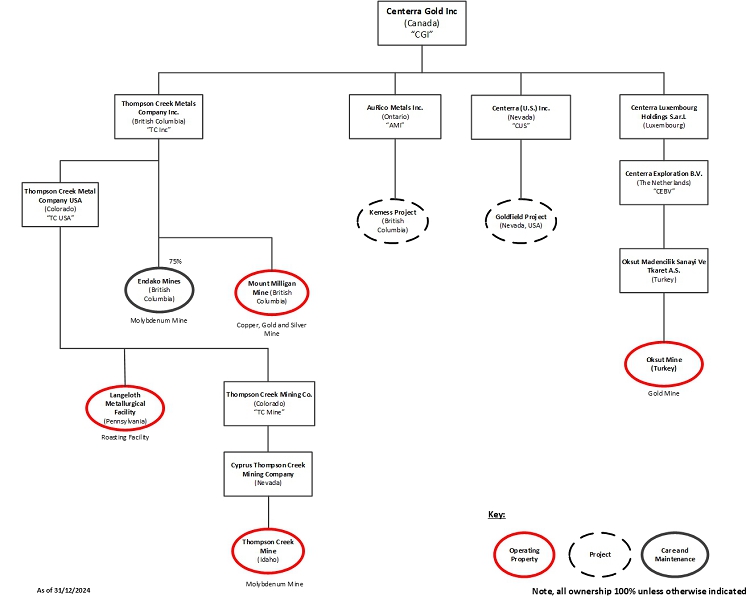
| (1) | Centerra was incorporated under the Canada Business Corporations Act by articles of incorporation dated November 7, 2002, under the name 4122216 Canada Limited. Centerra changed its name on December 13, 2002 to Kumtor Mountain Holdings Corporation, and on December 5, 2003 to Centerra Gold Inc. |
| (2) | Centerra owns an indirect 75% joint venture interest in the Endako Mine. |
| (3) | Other subsidiaries, including those through which we hold our interest in exploration properties (including those in which we are earning an optioned interest), have not been included in the above chart because (i) their respective assets represent less than 10% of the consolidated assets of Centerra, and less than 10% of the consolidated sales and operating revenue of Centerra; and (ii) the consolidated assets and revenues of such excluded subsidiaries are less than 20% of the consolidated assets and consolidated revenue of Centerra, respectively. These subsidiaries are wholly owned, directly or indirectly, by Centerra. |
Centerra Gold Inc. 2024 Annual Information Form | Page 9 |
| 2.3 | Recent Developments |
The following is a summary of key developments over the past three years that have influenced the general development of our business.
| · | In January 2022, the Company obtained an amendment to its provincial environmental assessment certificate to authorize a long-term water supply for the Mount Milligan Mine. |
| · | On February 22, 2022, Centerra announced that it had entered into an agreement to acquire Gemfield Resources LLC, owner of the Goldfield Project, from Waterton Nevada Splitter, LLC for total consideration comprised of $175 million in cash at closing and a $31.5 million deferred milestone payment. The Company announced the closing of its acquisition of the Goldfield Project on February 28, 2022. |
| · | On March 18, 2022, the Company announced a temporary suspension of gold doré bar production at the Öksüt Mine due to mercury having been detected in the gold room of the ADR plant. The affected areas were professionally cleaned, and any contaminated material was removed and properly disposed of. An engineered solution was developed with the assistance of external consultants to ensure that mercury levels are detected, monitored and captured to prevent exposure to personnel and to safeguard the environment. The Company completed construction of a mercury abatement system in early 2023 to allow processing of mercury bearing ores. |
| · | In May 2022 the Öksüt Mine was inspected by the Turkish Minister of Environment, Urbanization and Climate Change (the “Ministry of Environment”) and the Company was informed that the Öksüt Mine had a number of deficiencies relating to its environmental impact assessment (“EIA”). The Company worked to address the majority of the deficiencies and following several further discussions with the Ministry of Environment, (i) the Company determined that an updated EIA should be prepared and submitted to clarify various production and other capacity limits and to align the EIA production levels with current operating plans; (ii) the Öksüt Mine suspended leaching of ore on the heap leach pad and ceased using activated carbon on site effective late August 2022 though mining, crushing and stacking activities continued in line with existing EIA limits for the remainder of 2022. |
| · | On May 4, 2022, Ms. Wendy Kei was appointed to the Company’s board of directors (the “Board”) and Mr. Dan Desjardins retired as the Company’s Vice President and Chief Operating Officer. |
| · | On July 29, 2022, Centerra announced that it had completed a transaction contemplated by the Global Arrangement Agreement dated April 4, 2022 (the “Arrangement Agreement”) with, among others, Kyrgyzaltyn JSC (“Kyrgyzaltyn”) and the Kyrgyz Republic to effect a separation of the parties, including through the disposition of Centerra’s ownership of the Kumtor Mine and its investment in the Kyrgyz Republic, the purchase for cancellation by Centerra of Kyrgyzaltyn’s 77,401,766 Common Shares, the termination of Kyrgyzaltyn’s involvement in the Company, and the resolution of disputes (the “Transaction”). As a result of the completion of the Transaction, Centerra has repurchased and cancelled all of Kyrgyzaltyn’s 77,401,766 Common Shares in exchange for, among other things, Centerra’s 100% equity interest in its two Kyrgyz subsidiaries, and indirectly, the Kumtor Mine, with Kyrgyzaltyn and the Kyrgyz Republic assuming all responsibility for the Kumtor mine, including all reclamation and environmental obligations, and aggregate cash payments of approximately $93 million (a portion of which was withheld on account of Canadian withholding taxes payable by Kyrgyzaltyn and a portion of which was paid to the Company’s financial advisors as transaction costs). The Company announced the completion of the Arrangement Agreement on July 29, 2022. Further details on the terms of the Arrangement Agreement and the Transaction can be found in Centerra’s April 4, 2022 news release and in Centerra’s management information circular in respect of the special meeting of Centerra shareholders held on July 25, 2022. |
| · | On July 29, 2022, in connection the Arrangement Agreement, Kyrgyzaltyn’s two director nominees, Dushen Kasenov and Nurlan Kyshtobaev, resigned from Centerra’s Board. |
| · | On August 17, 2022, Centerra announced that Paul Chawrun would be appointed as Chief Operating Officer, effective September 6, 2022. |
| · | On September 6, 2022, Centerra announced that Paul Wright, a director of Centerra, had replaced Scott Perry as President and Chief Executive Officer of Centerra on an interim basis. |
| · | On October 4, 2022, the Company announced a mine life extension for the Mount Milligan Mine by over four years extending operations into 2033. |
Centerra Gold Inc. 2024 Annual Information Form | Page 10 |
| · | On October 11, 2022, the Company announced that the TSX accepted its notice of intention to proceed with a normal course issuer bid pursuant to which it was authorized to purchase for cancellation up to 15,610,813 Common Shares during the twelve-month period commencing on October 13, 2022 and ending on October 12, 2023. |
| · | On March 13, 2023, the Company announced that Paul Tomory had been appointed President and Chief Executive Officer of Centerra effective May 1, 2023. |
| · | The Öksüt Mine’s updated EIA was approved by the Ministry of Environment in May 2023 resulting in Öksüt resuming full operations in early June 2023. |
| · | In May 2023, the Company appointed Hélène Timpano as its new Executive Vice-President, Strategy & Corporate Development. |
| · | Effective September 11, 2023, the Company entered into a four-year extension of its $400 million revolving credit facility (the "Credit Facility"), now maturing on September 8, 2027. The Credit Facility is led by The Bank of Nova Scotia and National Bank Financial Markets and is supported by a syndicate of international financial institutions. |
| · | On September 18, 2023, the Company announced the results of a prefeasibility study on the restart of mining at the Thompson Creek Mine. |
| · | On November 3, 2023, the Company announced that the TSX accepted the renewal of its normal course issuer bid pursuant to which it was authorized to purchase for cancellation up to 18,293,896 Common Shares during the twelve-month period commencing on November 7, 2023 and ending on November 6, 2024. |
| · | In the fourth quarter of 2023, Centerra embarked on a site-wide optimization program at Mount Milligan, focused on a holistic assessment of occupational health and safety, as well as improvements in mine and plant operations. This program is focused on all aspects of the operation to maximize the potential of the orebody. |
| · | On January 22, 2024, Centerra announced that Ryan Snyder will succeed Darren Millman and be promoted to Executive Vice President and Chief Financial Officer, effective April 8, 2024. |
| · | On February 13, 2024, the Company entered into an Additional Agreement (as defined below) with RGLD Gold AG and Royal Gold Inc. (collectively, “Royal Gold”), relating to the Mount Milligan Mine, which, among other things, resulted in a life of mine extension to 2035 and established favourable parameters for potential future mine life extensions. Centerra commenced a Preliminary Economic Assessment (“PEA”) to include significant drilling completed at the Mount Milligan Mine to the west of the pit not currently included in the existing resource, plus inclusion of existing resources, most of which are classified in the measured and indicated categories. The PEA will also evaluate several capital projects to support further expansion of Mount Milligan’s life, including options for a new tailings storage facility and potential process plant upgrades. The Company will also be starting the associated work on permitting and engagement with its First Nations partners and local stakeholders. The PEA is expected to be completed in the first half of 2025. For further information on this Additional Agreement, see the section entitled “Material Contracts”. |
| · | On September 12, 2024, Centerra announced the results of a feasibility study and a strategic, integrated business plan for its molybdenum business unit consisting of a restart of the Thompson Creek Mine and a commercially optimized ramp up plan for the Langeloth Metallurgical Facility. |
| · | On November 5, 2024, the Company announced that the TSX accepted the renewal of its normal course issuer bid pursuant to which it is authorized to purchase for cancellation up to 18,800,929 Common Shares during the twelve-month period commencing on November 7, 2024 and ending on November 6, 2025. |
| · | On February 20, 2025, the Company announced a mine life extension for the Mount Milligan Mine by approximately one year extending operations into 2036. |
| · | On March 4, 2025, Centerra announced that David Hendriks will succeed Paul Chawrun as Executive Vice President and Chief Operating Officer, effective April 15, 2025. |
Centerra Gold Inc. 2024 Annual Information Form | Page 11 |
| 2.4 | Other Disclosure Relating to Ontario Securities Commission Requirements for Companies Operating in Emerging Markets |
Controls Relating to Corporate Structure Risk
We have implemented a system of corporate governance, internal controls over financial reporting, and disclosure controls and procedures that apply at all levels of the Company and its subsidiaries. These systems are overseen by the Company’s Board and implemented by the Company’s senior management. The relevant features of these systems include:
Control Over Subsidiaries
Centerra’s corporate structure has been designed to ensure that the Company controls or has a measure of direct oversight over the operations of its subsidiaries. All of our subsidiaries are directly or indirectly wholly-owned by the Company with the exception of shareholdings in other publicly traded and privately held companies which represent less than 10% of the consolidated assets of Centerra, and less than 10% of the consolidated sales and operating revenue of Centerra.
The directors of Centerra’s wholly-owned subsidiaries are ultimately accountable to Centerra as the shareholder appointing them, and to Centerra’s Board and senior management. As well, the annual budget, capital investment and exploration program in respect of the Company’s mineral properties are established by the Company and approved by the Board. Members of management of all subsidiaries are also subject to written delegation of financial authority rules (adopted by the board of directors of each subsidiary) which limit their ability to bind such company. Our internal audit group also regularly conducts examinations of Centerra’s operating sites and subsidiaries and reports directly to the Audit Committee on compliance with various matters.
We have a 75% interest in the Endako Mine Joint Venture which was formed on June 12, 1997 pursuant to the terms of the Exploration, Development and Mine Operating Agreement between Thompson Creek Metals Company Inc. (“TCM”) and Moon River Moly BC (“Moon River”), as amended (the “Endako Mine Joint Venture Agreement”). Moon River owns the remaining 25% interest in the Endako Mine Joint Venture after its acquisition of Sojitz Moly Resources Inc. in May 2024. Our 75% interest in the contractual joint venture is held through our wholly owned subsidiary, TCM. We appoint all officers and directors of TCM. We are the manager of the Endako Mine Joint Venture with overall management responsibility for operations. As manager, we prepare annual budgets and production plans and submit them to Moon River for approval. Oversight is provided by a joint venture committee whose members are appointed by TCM and Moon River.
Signing officers for subsidiary foreign bank accounts (of our wholly owned subsidiaries) are either employees of Centerra or directors of the subsidiaries. In accordance with the Company’s internal policies, all subsidiaries must notify the Company’s corporate treasury department of any opening and closure of their local bank accounts. Monetary limits are established internally by the Company as well as with the respective banking institution. Quarterly, authorizations over bank accounts are reviewed and revised as necessary. Changes are communicated to the banking institution by the Company and the applicable subsidiary to ensure appropriate individuals are identified as having authority over the bank accounts.
Strategic Direction
Centerra’s Board is responsible for the overall stewardship of the Company and, as such, supervises the management of the business and affairs of the Company. More specifically, the Board is responsible for reviewing the strategic business plans and corporate objectives, and approving acquisitions, dispositions, investments, capital expenditures, financings. and other transactions and matters that are material to the Company including those of its material subsidiaries.
Internal Control Over Financial Reporting
The Company prepares its consolidated financial statements and managements’ discussion and analysis (“MD&A”) on a quarterly and annual basis, using IFRS as issued by the International Accounting Standards Board, which require financial information and disclosures from its subsidiaries. The Company implements internal controls over the preparation of its financial statements and other financial disclosures to provide reasonable assurance that its financial reporting is reliable and that the quarterly and annual financial statements and MD&A are being prepared in accordance with IFRS and relevant securities laws. These internal controls include the following:
| (i) | The Company has established a monthly and quarterly reporting package relating to its subsidiaries that standardizes the information required from the subsidiaries in order to complete the consolidated financial statements and MD&A. Management of the Company has direct access to relevant financial management of its subsidiaries in order to verify and clarify all information required. |
Centerra Gold Inc. 2024 Annual Information Form | Page 12 |
| (ii) | All public documents and statements relating to the Company and its subsidiaries containing material information (including financial information) are reviewed before being disclosed by members of the in-house legal department and our internal disclosure committee comprised of the President and Chief Executive Officer (“CEO”), Chief Financial Officer (“CFO”), Chief Operating Officer, General Counsel and Vice President, Investor Relations to make sure that all material information has been considered by management of the Company and properly disclosed. Where appropriate, the disclosure committee will also convene a subset of other employees to ensure that our public documents and statements do not contain any misrepresentations, as such term is defined in applicable Canadian securities laws. |
| (iii) | As more fully described below, the Company’s Audit Committee obtains confirmation from the CEO and CFO as to the matters addressed in the quarterly and annual certifications required under National Instrument 52-109 – Certification of Disclosure in the Company’s Annual and Interim Filings (“NI 52-109”), including its review of internal controls over financial reporting and disclosure controls and procedures. |
| (iv) | The Company’s Audit Committee reviews and approves the Company’s quarterly and annual financial statements and MD&A and recommends their approval to the Board for approval prior to their publication or release. |
| (v) | The Company’s Audit Committee assesses and evaluates the adequacy of the procedures in place for the review of the Company’s public disclosure of financial information extracted or derived from the Company’s financial statements by way of reports from management and its internal and external auditors. |
| (vi) | Although not specifically a management control, the Company engages its external auditor to perform reviews of the Company’s quarterly financial statements and an audit of the annual consolidated financial statements in accordance with the standards of the Public Company Accounting Oversight Board. |
Disclosure Controls and Procedures
The Company’s Audit Committee’s responsibilities include oversight of the Company’s internal control systems and disclosure controls and procedures including those systems to monitor compliance with legal, ethical and regulatory requirements.
CEO and CFO Certifications
In order for the Company’s CEO and CFO to be in a position to attest to the matters addressed in the quarterly and annual certifications required by NI 52-109, the Company has developed internal procedures and responsibilities throughout the organization for its regular periodic and timely reporting. These processes are designed to provide assurances that information that may constitute material information will reach the appropriate individuals who draft and/or review public documents and statements relating to the Company.
Pursuant to regulations adopted by the U.S. Securities and Exchange Commission, under the Sarbanes-Oxley Act of 2002 and those of the Canadian Securities Administrators, Centerra’s management evaluates the effectiveness of the design and operation of the Company’s disclosure controls and procedures and internal control over financial reporting. This evaluation is done under the supervision of, and with the participation of, the CEO and CFO.
These systems of corporate governance, internal control over financial reporting and disclosure controls and procedures are designed to ensure that, among other things, the Company has access to all material information about its subsidiaries.
Centerra Gold Inc. 2024 Annual Information Form | Page 13 |
Procedures of the Board of Directors of the Company
Oversight of the Company’s Risks
We have implemented an enterprise risk management program which applies to all of our operations, projects and corporate offices with a goal to ensure risk-informed decision making. The program is based on leading international risk management standards and industry best practice. It employs both a “bottom-up” and “top-down” approach to identify and address risks from all sources that threaten the achievement of our strategic and business objectives or provide opportunities to exploit. As such, our risk program encompasses a broad range of risks including technical, financial, commercial, social, reputational, environmental, governance, health and safety, political and human resources related risks. The Board has oversight responsibilities for the policies, processes and systems for the identification, assessment, and management of the Company’s principal strategic, financial, and operational risks. Each of the Board’s standing committees is responsible for overseeing risks related to their area of responsibility and reviewing the policies, standards and actions undertaken to mitigate such risks. The Company’s executive team meets regularly to review the risks facing the organization and to discuss the implementation and effectiveness of mitigation actions and regularly provides updates to the Board and its committees on the same.
Fund Transfers from the Company’s Subsidiaries to Centerra
Funds are transferred by the Company’s subsidiaries to the Company by way of wire transfer for a variety of purposes, including chargeback of costs undertaken on behalf of the subsidiaries via intercompany invoices by the Company; repayment of loans related to project funding; and dividend declaration/payment by the subsidiaries. The method of transfer is dependent on the funding arrangement established between the Company and the subsidiary. In some cases, loan agreements are established with corresponding terms and conditions. In other cases, dividends are declared and paid based on the profitability and available liquidity of the applicable subsidiary.
Records Management of the Company’s Subsidiaries
The original minute books, corporate seal and corporate records of each of the Company’s subsidiaries are kept at each subsidiary’s respective registered office. All material documents are available in the local language of the subsidiary and in English.
Approval of Related Party Transactions
Centerra’s Audit Committee oversees, reviews, evaluates and considers material transactions and matters involving related parties.
| 2.5 | Centerra’s Business |
We are a Canadian-based gold mining company focused on operating, developing, exploring and acquiring gold and copper properties in North America, Türkiye, and other markets worldwide.
We have two operating properties: the Mount Milligan Mine in British Columbia, Canada and the Öksüt Mine in Türkiye. We also own the Kemess Project in British Columbia, Canada and the Goldfield Project in Nevada, United States.
We also own a molybdenum business unit, which includes our Thompson Creek Mine in Idaho, United States, the Endako Mine (we own a 75% interest) in British Columbia, Canada and the Langeloth Metallurgical Facility in Pennsylvania, United States. The Endako Mine is currently on care and maintenance. |
For more information
You can find more information about Centerra on SEDAR+ at www.sedarplus.com and EDGAR at www.sec.gov.
See our 2024 financial statements and MD&A for additional financial information.
See our most recent management information circular for additional information, including how our directors and officers are compensated and any loans to them, principal holders of our securities, and securities authorized for issuance under our equity compensation plans. |
We have exploration interests in Canada, the United States and Türkiye, which are owned (directly or indirectly) by Centerra, and properties in Canada, Türkiye and the United States in which we are earning interests pursuant to option agreements with the respective property owners.
Business Operations
Our principal business operations of gold, copper and molybdenum production span the six major stages of the mining cycle, from early-stage exploration to mine closure and reclamation.
Centerra Gold Inc. 2024 Annual Information Form | Page 14 |
| Exploration | Our exploration programs are focused on increasing our mineral reserves and resources. These programs include: drilling at, or in, the immediate vicinity of our operating mine(s) to replace mined mineral reserves; drilling programs on advanced stage projects where mineralization has been identified; and grassroots exploration on projects where mineralization has not been identified. Our exploration and business development teams actively pursue new project opportunities worldwide. |
| Development and Construction | If our exploration programs are successful in identifying a mineral resource, the prospects for economic extraction of the resource will be analyzed through a series of technical studies. These may include metallurgical studies, scoping studies, environmental studies, mine and processing design, preliminary economic assessment studies, pre-feasibility studies and feasibility studies. Pre-feasibility and feasibility studies may be undertaken concurrently with permitting for the project. Once technical studies and permitting processes are concluded, financing for the project is arranged, followed by the commencement of detailed engineering and construction of the mine site and processing facilities. |
| Mining | Ore and waste rock are removed from deposits by open pit or underground methods – our two operating mines currently use an open pit method. The ore is then transported to a processing facility/mill to extract metal (depending on the mine). The waste rock is placed on an engineered waste rock dump for subsequent rehabilitation or used in the construction of the tailings storage facility. |
| Processing | Mined ore is processed using different methods depending on its characteristics. This may include heap leaching, crushing, milling, flotation, roasting, and CIL or CIP methods for gold and copper extraction. After having extracted the metal, the remaining processed waste materials are placed in a tailings storage facility (except in the case of heap leach processing). |
| Refining and Gold Sales | At our Öksüt Mine, recovered gold is processed at our ADR plant (processing facility) into doré bars which are then delivered to a refinery for further refining to market delivery standards. At our Mount Milligan Mine, we produce a gold-copper concentrate which is sold to third parties including smelters and traders for further refining. |
| Closure and Reclamation | As a responsible mining company, we plan how we are going to reclaim the areas we mine before we start construction. In some cases, we reclaim at the same time as we extract to expedite the process. In other cases, it is not possible to reclaim during the extraction process and therefore, efforts are deferred until after mining is completed. After mining has permanently ceased, we carry out the permitted closure activities or continue to reclaim (as applicable) and monitor the land. We also regularly update our final closure plans to reflect any changes in operations or regulatory requirements. Our high standards for reclamation comply with both local and international standards. |
Marketing and Distribution
Our principal products are gold, copper, and molybdenum products. Our Öksüt Mine produces gold doré bars. Our Mount Milligan Mine produces a copper-gold concentrate, and our Langeloth Metallurgical Facility purchases molybdenum concentrates from third parties to convert to upgraded products, which are then sold into the metallurgical and chemical markets.
Gold Industry
The two principal uses of gold are bullion investment and product fabrication. A broad range of end uses is included within the fabrication category, the most significant of which is the production of jewelry. Other fabrication uses include official coins, electronics, miscellaneous industrial and decorative uses, medals, and medallions.
Copper Industry
Copper is an excellent conductor of electricity and heat and these properties result in the principal applications for copper consumption. Refined copper is used in the generation and transmission of electricity as well as industrial machinery and consumer products that have electrical and electronic applications.
Molybdenum Industry
Molybdenum is an industrial metal principally used for molybdenum metallurgical applications as a ferro-alloy and steels or high strength temperature-resistant or corrosion-resistant properties are sought The addition of molybdenum enhances, the strength, toughness, and wear and corrosion-resistance and steels when added as an alloy.
Gold Doré Produced at Öksüt Mine
All gold doré produced at the Öksüt Mine is processed at refining facilities within Türkiye. Under Turkish legislation, the Central Bank of the Republic of Türkiye (the “CBRT”) has a first right to purchase gold produced by mining operations in Türkiye. The sales price is fixed based on the gold spot price. If the gold doré is not purchased by the CBRT, it is sold to a buyer via the refining facility on the Borsa Istanbul at spot prices.
Centerra Gold Inc. 2024 Annual Information Form | Page 15 |
Copper/Gold Concentrate Produced at Mount Milligan Mine
Concentrate Sales
Copper/gold concentrate produced by the Mount Milligan Mine in Canada is sold to various smelters and off-take purchasers. We are currently party to two multi-year concentrate sales agreements for the sale of copper/gold concentrate produced at the Mount Milligan Mine. Pursuant to these agreements, we have agreed to sell an aggregate of approximately 140,000 tonnes in 2025 and 130,000 tonnes in 2026 and 120,000 tonnes in 2027.
Pricing under these concentrate sales agreements is determined by reference to specified published reference prices during the applicable quotation periods. Payment for the concentrate is based on the price for the agreed copper and gold content of the parcels delivered, less smelting and refining charges and certain other deductions, if applicable. The copper smelting and refining charges are negotiated and agreed by the parties for each contract year based on terms generally acknowledged as industry benchmark terms. The gold refining charges are as specified in the agreements.
We intend to either extend our current multi-year agreements as the terms expire, or we may enter into additional multi-year sales agreements. To the extent that production is expected to exceed the volume committed under these agreements, we will sell the additional volume under short-term contracts or on a spot basis.
Mount Milligan Streaming Arrangement and Additional Agreement with Royal Gold
We are subject to a streaming arrangement with Royal Gold pursuant to which Royal Gold is entitled to receive 35% of the gold and 18.75% of the copper production at our Mount Milligan Mine in exchange for $435 per ounce of gold delivered and 15% of the spot price per metric tonne of copper delivered, respectively (the “Mount Milligan Streaming Arrangement”). The Mount Milligan Streaming Arrangement required Royal Gold to make upfront payments totaling $781.5 million from 2010 to 2013 to TCM for the rights to receive future gold production. The arrangement was renegotiated by Centerra in conjunction with its acquisition of TCM. To satisfy our obligations under the Mount Milligan Streaming Arrangement, in connection with copper and gold concentrate sale from the Mount Milligan Mine, we purchase gold and copper in the market for delivery to Royal Gold based on a portion of the gold ounces and pounds of copper sold.
On February 13, 2024, the Company entered into an additional agreement with Royal Gold, relating to the Mount Milligan Mine (the “Additional Agreement”). Starting in approximately 2030, the Additional Agreement, taken together with the Mount Milligan Streaming Arrangement, will have the effect of increasing payments for Mount Milligan gold and copper production sold to Royal Gold under the Mount Milligan Streaming Arrangement, among other things. After achieving the First Threshold Date (as defined below), gold payments received will be the lower of $850/oz and 50% of the spot price while copper payments will be 50% of the spot price. After achieving the Second Threshold (Gold) Date (as defined below) or the Second Threshold (Copper) Date (as defined below), as applicable, gold payments received will be the lower of $1,050/oz and 66% of the spot price, while copper payments received will be 66% of the spot price, respectively. The existing Mount Milligan Streaming Arrangement, as amended, is not affected by the Additional Agreement. For further information on the Additional Agreement, see the section entitled “Material Contracts” below.
Molybdenum Industry
Our Langeloth Metallurgical Facility purchases unroasted molybdenum concentrates from third parties to convert to upgraded products, which are then sold into the metallurgical steel and chemical markets largely in North America. Our principal molybdenum products are molybdic oxide (also known as roasted molybdenum concentrate) and ferromolybdenum. Other products we produce include high soluble technical oxide, pure molybdenum trioxide and rhenium.
Molybdenum is used in major industries including chemical and petrochemical processing, oil and gas for drilling and pipelines, power generation, automotive and aerospace. It is also required for several green energy applications, especially wind, geothermal, and nuclear. Molybdenum is also widely used in non-metallurgical applications such as petroleum refining catalysts, lubricants, flame-retardants in plastics, water treatment and as a pigment.
Centerra Gold Inc. 2024 Annual Information Form | Page 16 |
2024 and 2023 Production and Revenue
| 2024 | 2023 | |||||
| Total (1) | ||||||
| Gold sold (oz) | 368,183 | 348,399 | ||||
| Payable copper sold (‘000 lbs.) | 57,897 | 60,109 | ||||
| Revenue ($ millions) | 1,214.5 | 1,094.9 | ||||
| Mount Milligan Mine (2) | ||||||
| Payable Gold Sold (oz) | 170,389 | 152,460 | ||||
| Payable Copper Sold (‘000 lbs.) | 57,897 | 60,109 | ||||
| Gold Sales ($ millions) | 299.8 | 218.2 | ||||
| Copper Sales ($ millions) | 188.0 | 181.0 | ||||
| Öksüt Mine – Gold | ||||||
| Gold sold (oz) | 197,794 | 195,939 | ||||
| Gold Sales ($ millions) | 465.7 | 380.9 | ||||
| Langeloth – Molybdenum | ||||||
| Molybdenum sold (‘000 lbs.) | 10,912 | 11,235 | ||||
| Molybdenum Sales ($ millions) | 240.5 | 294.9 | ||||
| (1) | Mount Milligan sales volumes are presented on a 100% basis. Under the Mount Milligan Streaming Arrangement, Royal Gold is entitled to 35% of payable gold ounces and 18.75% of payable copper. Royal Gold currently pays $435 per ounce of gold delivered and 15% of the spot price per metric tonne of copper delivered. |
Our revenues from the sale of our products are dependent on the world market price of gold, copper and molybdenum. World market prices for our products have fluctuated historically and are affected by numerous factors beyond our control. See the sections of this AIF entitled “Historic Metal Prices” and “Risk Factors” for additional information.
Competitive Conditions
The mining industry is intensely competitive, particularly in the acquisition of mineral reserves and resources.
Mineral Reserves and Resources
Our mineral reserves and resources are fundamental to the Company and serve as the foundation for our future production and project development.
We have interests in several properties. The tables in this section show our estimates of the proven and probable reserves, measured and indicated resources and inferred resources at those properties.
We estimate and disclose mineral reserves and resources in five categories, using the definitions adopted by the Canadian Institute of Mining, Metallurgy and Petroleum, and in accordance with NI 43-101. You can find out more about these categories at www.cim.org. See the “Glossary of Geological and Mining Terms” for complete definitions of mineral reserves and mineral resources.
For a further discussion of the key assumptions, methodologies and parameters used in the estimation of mineral reserves and mineral resources, see the section of this AIF entitled “Centerra’s Properties”.
About Mineral Resources
Mineral resources are not mineral reserves and do not have demonstrated economic viability but do have reasonable prospect for economic extraction. They fall into three categories: measured, indicated, and inferred. Our reported mineral resources do not include mineral reserves. Measured and indicated mineral resources are sufficiently well-defined to allow geological and grade continuity to be reasonably assumed and permit the application of technical and economic parameters in assessing the economic viability of the mineral resource. An indicated mineral resource has a lower level of confidence than that applying to a measured mineral resource and may only be converted to a probable mineral reserve. Inferred mineral resources are estimated on limited information not sufficient to verify geological and grade continuity or to allow technical and economic parameters to be applied. Inferred mineral resources are too speculative geologically to have economic considerations applied to them. There is no certainty that mineral resources of any category will be upgraded to mineral reserves.
Centerra Gold Inc. 2024 Annual Information Form | Page 17 |
Important Information About Mineral Reserve and Resource Estimates
Although we have carefully prepared and verified the mineral reserve and resource figures in this AIF, the figures are estimates based in part on forward-looking information.
Estimates are based on our knowledge, mining experience, analysis of drilling results, the quality of available data and management’s best judgment. They are, however, imprecise by nature, may change over time, and include many variables and assumptions including geological interpretation, commodity prices and currency exchange rates, recovery rates, and operating and capital costs.
There is no assurance that the indicated levels of metal will be produced, and we may have to re-estimate our mineral reserves based on actual production experience. Changes in the metal price, production costs or recovery rates could make it unprofitable for us to operate or develop a particular site or sites for a period of time. See the sections of this AIF entitled “Forward-looking Information”, “Cautionary Note to U.S. Readers Concerning Estimates of Mineral Reserves and Mineral Resources” and “Risk Factors”.
Centerra Gold Inc. 2024 Annual Information Form | Page 18 |
Table 1
Centerra Gold –Inc. - 2024 Year-End Mineral Reserve and
Mineral Resource Summary – Gold (1)
(as of December 31, 2024)
(see additional footnotes on page 23)
| Proven and Probable Gold Mineral Reserves | |||||||||||||||||||||||||||
| Proven | Probable | Total Proven and Probable | |||||||||||||||||||||||||
| Property | Tonnes
(kt) | Grade
(g/t) | Contained Gold (k oz) | Tonnes (kt) | Grade
(g/t) | Contained Gold (k oz) | Tonnes
(kt) | Grade
(g/t) | Contained Gold (k oz) | ||||||||||||||||||
| Mount Milligan (4) | 187,961 | 0.34 | 2,056 | 76,551 | 0.31 | 770 | 264,512 | 0.33 | 2,826 | ||||||||||||||||||
| Öksüt | 475 | 0.63 | 10 | 19,604 | 1.04 | 653 | 20,080 | 1.03 | 662 | ||||||||||||||||||
| Total | 188,436 | 0.34 | 2,065 | 96,155 | 0.46 | 1,423 | 284,591 | 0.38 | 3,488 | ||||||||||||||||||
| Measured and Indicated Gold Mineral Resources (2) | |||||||||||||||||||||||||||
| Measured | Indicated | Total Measured and Indicated | |||||||||||||||||||||||||
| Property | Tonnes (kt) | Grade (g/t) | Contained Gold (k oz) | Tonnes (kt) | Grade (g/t) | Contained
Gold (k oz) | Tonnes (kt) | Grade (g/t) | Contained
Gold (k oz) | ||||||||||||||||||
| Mount Milligan (4) | 91,827 | 0.25 | 743 | 92,144 | 0.28 | 824 | 183,971 | 0.26 | 1,566 | ||||||||||||||||||
| Öksüt | 393 | 0.55 | 7 | 2,224 | 0.72 | 51 | 2,617 | 0.69 | 58 | ||||||||||||||||||
| Kemess Open Pit | - | - | - | 111,682 | 0.27 | 980 | 111,682 | 0.27 | 980 | ||||||||||||||||||
| Kemess Underground | - | - | - | 139,920 | 0.50 | 2,265 | 139,920 | 0.50 | 2,265 | ||||||||||||||||||
| Kemess East | - | - | - | 93,454 | 0.39 | 1,182 | 93,454 | 0.39 | 1,182 | ||||||||||||||||||
| Goldfield | 9,729 | 1.08 | 339 | 21,103 | 0.54 | 368 | 30,833 | 0.71 | 706 | ||||||||||||||||||
| Total | 101,949 | 0.33 | 1,088 | 460,527 | 0.38 | 5,670 | 562,476 | 0.37 | 6,759 | ||||||||||||||||||
| Inferred Gold Mineral Resources (3) | |||||||||||||||||||||||||||
| Property | Tonnes
(kt) | Grade
(g/t) | Contained Gold (k oz) | ||||||||||||||||||||||||
| Mount Milligan (4) | 27,924 | 0.44 | 395 | ||||||||||||||||||||||||
| Öksüt | 130 | 1.06 | 4 | ||||||||||||||||||||||||
| Kemess Open Pit | 13.691 | 0.26 | 116 | ||||||||||||||||||||||||
| Kemess Underground | - | - | - | ||||||||||||||||||||||||
| Kemess East | - | - | - | ||||||||||||||||||||||||
| Goldfield | 2,267 | 0.41 | 30 | ||||||||||||||||||||||||
| Total | 44,012 | 0.39 | 546 | ||||||||||||||||||||||||
| (1) | Centerra’s equity interests are as follows: Mount Milligan 100%, Öksüt 100%, Kemess Open Pit, Kemess Underground and Kemess East 100%, Goldfield 100%. Mineral reserves and resources for these properties are presented on a 100% basis. Numbers may not add up due to rounding. | |
| (2) | Mineral resources are in addition to mineral reserves. Mineral resources do not have demonstrated economic viability. | |
| (3) | Inferred mineral resources have a great amount of uncertainty as to their existence and as to whether they can be mined economically. It cannot be assumed that all or part of the inferred mineral resources will ever be upgraded to a higher category. | |
| (4) | Production at Mount Milligan is subject to a streaming agreement with RGLD Gold AG and Royal Gold, Inc. (collectively, “Royal Gold”) which entitles Royal Gold to 35% of gold sales from the Mount Milligan Mine. Under the stream arrangement, Royal Gold will pay a reduced price per ounce of gold delivered. Mineral reserves and resources for the Mount Milligan property are presented on a 100% basis. |
Centerra Gold Inc. 2024 Annual Information Form | Page 19 |
Table 2
Centerra Gold Inc. - 2024 Year-End Mineral Reserve and
Mineral Resource Summary - Other Metals (1)
(as of December 31, 2024)
(see additional footnotes on page 23)
| Property | Tonnes (kt) | Copper
Grade (%) | Contained Copper (Mlbs) | Molybdenum
Grade (%) | Contained Molybdenum (Mlbs) | Silver Grade (g/t) | Contained
Silver (k oz) | ||||||||||||||
| Proven Mineral Reserves | |||||||||||||||||||||
| Mount Milligan (4) | 187,961 | 0.19 | 808 | - | - | - | - | ||||||||||||||
| Thompson Creek | 44,885 | - | - | 0.076 | 75 | - | - | ||||||||||||||
| Probable Mineral Reserves | |||||||||||||||||||||
| Mount Milligan (4) | 76,551 | 0.20 | 342 | - | - | - | - | ||||||||||||||
| Thompson Creek | 68,104 | - | - | 0.057 | 86 | - | - | ||||||||||||||
| Total Proven and Probable Mineral Reserves | |||||||||||||||||||||
| Mount Milligan (4) | 264,512 | 0.20 | 1,150 | - | - | - | - | ||||||||||||||
| Thompson Creek | 112,989 | - | - | 0.065 | 161 | - | - | ||||||||||||||
| Total Copper and Molybdenum | 377,501 | 0.20 | 1,150 | 0.065 | 161 | - | - | ||||||||||||||
| Measured Mineral Resources (2) | |||||||||||||||||||||
| Mount Milligan (4) | 91,827 | 0.19 | 384 | - | - | - | - | ||||||||||||||
| Thompson Creek | 5,009 | - | - | 0.059 | 7 | - | - | ||||||||||||||
| Endako | 47,100 | - | - | 0.05 | 48 | - | - | ||||||||||||||
| Indicated Mineral Resources (2) | |||||||||||||||||||||
| Mount Milligan (4) | 92,144 | 0.17 | 348 | - | - | - | - | ||||||||||||||
| Kemess Open Pit | 111,682 | 0.14 | 337 | - | - | 1.19 | 4,262 | ||||||||||||||
| Kemess Underground | 139,920 | 0.25 | 779 | - | - | 1.90 | 8,544 | ||||||||||||||
| Kemess East | 93,454 | 0.30 | 628 | - | - | 1.66 | 5,000 | ||||||||||||||
| Thompson Creek | 45,178 | - | - | 0.057 | 57 | - | - | ||||||||||||||
| Endako | 122,175 | - | - | 0.040 | 118 | - | - | ||||||||||||||
| Total Measured and Indicated Mineral Resources (2) | |||||||||||||||||||||
| Mount Milligan (4) | 183,971 | 0.18 | 732 | - | - | - | - | ||||||||||||||
| Kemess Open Pit | 111,682 | 0.14 | 337 | - | - | 1.19 | 4,262 | ||||||||||||||
| Kemess Underground | 139,920 | 0.25 | 779 | - | - | 1.90 | 8,544 | ||||||||||||||
| Kemess East | 93,454 | 0.30 | 628 | - | - | 1.66 | 5,000 | ||||||||||||||
| Total Copper and Silver | 529,027 | 0.21 | 2,476 | - | - | 1.61 | 17,806 | ||||||||||||||
| Thompson Creek | 50,187 | - | - | 0.057 | 63 | - | - | ||||||||||||||
| Endako | 169,275 | - | - | 0.043 | 166 | - | - | ||||||||||||||
| Total Molybdenum | 219,462 | - | - | 0.046 | 229 | - | - | ||||||||||||||
| Inferred Mineral Resources (3) | |||||||||||||||||||||
| Mount Milligan (4) | 27,924 | 0.12 | 74 | - | - | - | - | ||||||||||||||
| Kemess Open Pit | 13,691 | 0.16 | 48 | - | - | 1.40 | 615 | ||||||||||||||
| Total Copper and Silver | 41,615 | 0.13 | 121 | - | - | 1.40 | 615 | ||||||||||||||
| Thompson Creek | 10,523 | - | - | 0.072 | 17 | - | - | ||||||||||||||
| Endako | 47,325 | - | - | 0.040 | 44 | - | - | ||||||||||||||
| Total Molybdenum | 57,848 | - | - | 0.046 | 61 | - | - | ||||||||||||||
| (1) | Centerra’s equity interests are as follows: Mount Milligan 100%, Kemess Underground and Kemess East 100%, Thompson Creek 100%, and Endako 75%. Mineral reserves and resources for these properties are presented on a 100% basis. Numbers may not add up due to rounding. | |
| (2) | Mineral resources are in addition to mineral reserves. Mineral resources do not have demonstrated economic viability. | |
| (3) | Inferred mineral resources have a great amount of uncertainty as to their existence and as to whether they can be mined economically. It cannot be assumed that all or part of the inferred mineral resources will ever be upgraded to a higher category. | |
| (4) | Production at Mount Milligan is subject to a streaming agreement which entitles Royal Gold to 18.75% of copper sales from the Mount Milligan Mine. Under the stream arrangement, Royal Gold will pay a reduced percentage of the spot price per metric tonne of copper delivered. Mineral reserves and resources for the Mount Milligan property are presented on a 100% basis. |
Centerra Gold Inc. 2024 Annual Information Form | Page 20 |
Table 3
Centerra Gold Inc. - Reconciliation of Mineral Reserves and
Mineral Resources (1)-(2) (6) - Gold Contained (k oz)
(as of December 31, 2024)
(see additional footnotes on page 23)
| December 31 2023 (2) | 2024
Addition (Depletion) (3) | December 31 2024 | |||||||
| Proven and Probable Gold Mineral Reserves | |||||||||
| Mount Milligan | 2,822 | 4 | 2,826 | ||||||
| Öksüt (5) | 819 | (157 | ) | 662 | |||||
| Kemess Underground | 0 | 0 | 0 | ||||||
| Total | 3,641 | (153 | ) | 3,488 | |||||
| Measured and Indicated Gold Mineral Resources | |||||||||
| Mount Milligan | 2,333 | (767 | ) | 1,566 | |||||
| Öksüt (4) | 119 | (61 | ) | 58 | |||||
| Kemess Open Pit | 980 | 0 | 980 | ||||||
| Kemess Underground | 2,265 | 0 | 2,265 | ||||||
| Kemess East | 1,182 | 0 | 1,182 | ||||||
| Goldfield | 0 | 706 | 706 | ||||||
| Total | 6,880 | (121 | ) | 6,759 | |||||
| Inferred Mineral Gold Resources (5) | |||||||||
| Mount Milligan | 84 | 311 | 395 | ||||||
| Öksüt (5) | 9 | (4 | ) | 4 | |||||
| Kemess Open Pit | 116 | 0 | 116 | ||||||
| Kemess Underground | 0 | 0 | 0 | ||||||
| Kemess East | 0 | 0 | 0 | ||||||
| Goldfield | 0 | 30 | 30 | ||||||
| Total | 209 | 337 | 546 | ||||||
| (1) | Centerra’s equity interests are as follows: Mount Milligan 100%, Öksüt 100%, Kemess Open Pit, Kemess Underground, Kemess East 100% and Goldfield 100%. Mineral reserves and resources for these properties are presented on a 100% basis. | |
| (2) | Mineral resources are in addition to mineral reserves. Mineral resources do not have demonstrated economic viability. | |
| (3) | Changes in mineral reserves or mineral resources, as applicable, are attributed to: (i) changes to metal price and foreign exchange assumptions, (ii) information provided by drilling and subsequent reinterpretation and reclassification of mineral resources, and (iii) changes to cost estimates and metallurgical recoveries. | |
| (4) | The Öksüt Mine open pit mineral reserves and mineral resources include the Keltepe and Güneytepe deposits. | |
| (5) | Inferred mineral resources have a great amount of uncertainty as to their grade and quantity because they are based on limited geological evidence. It cannot be assumed that all or part of the inferred mineral resources will ever be upgraded to a higher category or converted to mineral reserves through the application of modifying factors. | |
| (6) | Numbers may not add up due to rounding. |
Centerra Gold Inc. 2024 Annual Information Form | Page 21 |
Additional Footnotes for Tables 1, 2, 3
General
| · | A conversion factor of 31.1035 grams per troy ounce of gold is used in the mineral reserve and mineral resource estimates. |
Mount Milligan Mine
| · | The mineral reserves are reported based on a gold price of $1,800 per ounce, a copper price of $3.75 per pound and an exchange rate of 1USD:1.30CAD. | |
| · | The open pit mineral reserves are reported based on a Net Smelter Return (“NSR”) cut-off of $8.72 per tonne (C$11.33 per tonne) that takes into consideration metallurgical recoveries, concentrate grades, transportation costs, and smelter treatment charges to determine economic viability. | |
| · | The mineral resources are reported based on a gold price of $2,000 per ounce, a copper price of $4.00 per pound, and an exchange rate of 1USD:1.30CAD. | |
| · | The open pit mineral resources are constrained by a pit shell and are reported based on a NSR cut-off of $8.72 per tonne (C$11.33 per tonne) that takes into consideration metallurgical recoveries, concentrate grades, transportation costs, and smelter treatment charges to determine economic viability. | |
| · | Further information concerning the Mount Milligan deposit, operation, as well as environmental and other risks is described in Centerra’s most recently filed Annual Information Form and in the Mount Milligan Mine Technical Report, each of which has been filed on SEDAR+ at www.sedarplus.ca and EDGAR at www.sec.gov/edgar. Sample preparation, analytical techniques, laboratories used, and quality assurance-quality control protocols used during the exploration drilling programs are consistent with industry standards and were carried out by independent, certified assay labs. | |
| · | The resource tables above do not include the 2024 exploration drill results. |
Öksüt Mine
| · | The mineral reserves are reported based on a gold price of $1,800 per ounce and an exchange rate of 1USD:34TL. | |
| · | The open pit mineral reserves are reported based on 0.16 grams of gold per tonne cut-off grade. | |
| · | Open pit optimization used an average life of mine (“LOM”) metallurgical recovery of 77%. | |
| · | The mineral resources are reported based on a gold price of $2,000 per ounce. | |
| · | Open pit mineral resources are constrained by a pit shell and are estimated based on 0.16 grams of gold per tonne cut-off grade. | |
| · | Further information concerning the Öksüt deposit, operation, as well as environmental and other risks is described in Centerra’s most recently filed Annual Information Form which is available on SEDAR+ at www.sedarplus.ca and EDGAR at www.sec.gov/edgar and the Technical Report on the Öksüt Project, dated September 3, 2015, which is available on SEDAR+ at www.sedarplus.ca. Sample preparation, analytical techniques, laboratories used, and quality assurance-quality control protocols used during the exploration drilling programs are consistent with industry standards and were carried out by independent, certified assay labs. |
Kemess Open Pit and Underground
| · | The mineral resources are reported based on a gold price of $1,800 per ounce, copper price of $3.75 per pound and an exchange rate of 1USD:1.30CAD. | |
| · | The mineral resources are reported based on a NSR cut-off of C$12.92 open pit and a NSR cut-off value of C$22.92 per tonne for underground block cave mining option that takes into consideration metallurgical recoveries, concentrate grades, transportation costs, and smelter treatment charges. |
Kemess East
| · | The mineral resources are reported based on a gold price of $1,800 per ounce, copper price of $3.75 per pound, and an exchange rate of 1USD:1.30CAD. | |
| · | The mineral resources are reported based on a NSR cut-off of C$22.92 per tonne for underground block cave mining option that takes into consideration metallurgical recoveries, concentrate grades, transportation costs, and smelter treatment charges. |
Thompson Creek Mine
| · | The mineral reserves have been estimated based on a molybdenum price of $16.00 per pound. | |
| · | The open pit mineral reserves are based on a 0.030% molybdenum cut-off grade. | |
| · | The mineral resources have been estimated based on a molybdenum price of $18.50 per pound. | |
| · | The open pit mineral resources are constrained by a pit shell and are estimated based on a 0.025% molybdenum cut-off grade. | |
| · | Further information concerning the Thompson Creek deposit, current and planned operations as well as environmental and other risks are described in the technical report dated September 1, 2024 and filed on SEDAR+ at www.sedarplus.ca. Sample preparation, analytical techniques, laboratories used, and quality assurance-quality control protocols used during the exploration drilling programs are consistent with industry standards and were carried out by independent, certified assay labs. |
Endako Mine
| · | The mineral resources are reported based on a molybdenum price of C$14.00 per pound and an exchange rate of 1USD:1.25CAD. | |
| · | The open pit mineral resources are constrained by a pit shell and are estimated based on a 0.025% molybdenum cut-off grade. |
Goldfield
| · | The mineral resources are reported based on a gold price of $2,000 per ounce. | |
| · | The open pit mineral resources are constrained by a pit shell and are estimated based on the following cut-off grades: |
| · | Gemfield: 0.10 g/t for oxide, transition, and sulphide | |
| · | Jupiter: 0.10 g/t for oxide, transition, and sulphide | |
| · | Goldfield Main: 0.14 g/t for oxide, 0.21 g/t for transition, 0.24 g/t for sulphide | |
| · | McMahon Ridge: 0.14 g/t for oxide, 0.21 g/t for transition, 0.24 g/t for sulphide |
| · | ROM recoveries were assumed to be 67% for the oxide and transition zones for Gemfield and Jupiter, and 62% and 31% for the oxide and transition zones, respectively, for McMahon Ridge. | |
| · | Goldfield Main recoveries considered tertiary crushing, and were 82% for oxide, 61% for transition and 50% for sulphide mineralization. |
Centerra Gold Inc. 2024 Annual Information Form | Page 22 |
Sources, Pricing and Availability of Materials, Parts and Equipment
All of our locations are affected by the availability of diesel fuel, mining equipment and parts, mill equipment and parts, cyanide (Öksüt Mine) and other reagents used in our processing operations at the Mount Milligan Mine and Öksüt Mine.
We use expensive, large mining and milling equipment at the Mount Milligan Mine, Öksüt Mine and Thompson Creek Mine that is internationally sourced and requires a long lead time to procure, build, and install. Cyanide and other reagents used at our mine sites are sourced locally and internationally based on availability and the required specifications. Pricing for supplies is based on competitive market pricing.
Financial and Operational Effects of Environmental Protection Requirements
We are subject to strict environmental regulation in connection with our exploration, development, construction, mining, and reclamation activities in each of the jurisdictions in which we operate. Our policy is to conduct business in a way that safeguards public health and the environment.
The financial and operational effects of our environmental protection requirements are significant. Future legislation, regulations, policies, guidance or other events could cause additional operating expenses, capital expenditures, restrictions or delays in the development and continued operation of our properties, the extent of which cannot be predicted with certainty. For further information of risks associated with environmental matters, see the section entitled “Risk Factors”.
Reclamation Costs and Financial Assurances
All our operations and care & maintenance sites have closure plans or frameworks in place, depending on their current stage of operations. We adopt a strict regime for mine closure including annual mine cost updates and we review our conceptual closure plans on a regular cycle to include both environmental and social impacts of closure.
Our conceptual closure plans and related costs will change over time as a result of, among other things, changes in environmental legislation, changes in international best practices, and changes in our understanding of the types of reclamation activities that each site will require.
For our operations in North America, as at December 31, 2024, we provide financial assurance (surety bonds) for reclamation costs of approximately C$51.3 million for the Mount Milligan Mine, C$56.7 million for the Kemess Project, C$34.8 million at the Endako Mine (reflects our 75% interest in the Endako Mine Joint Venture) and $135.8 million at the Thompson Creek Mine.
As at December 31, 2024, for our Öksüt Mine in Türkiye, we estimate reclamation costs of approximately $57.2 million.
Environmental laws and regulations have become more stringent and restrictive over time, including requirements for companies to account for capital expenditures and to provide additional financial security to cover reclamation expenses, even if the reclamation activities may not occur for a significant amount of time. If this trend continues, our reclamation obligations and the related financial assurances we are required to provide may increase significantly. For further information of risks associated with environmental matters, see the section entitled “Risk Factors”.
General Description of Financial and Operational Effects for Environmental Protection
The financial and operational effects for environmental protection relate primarily to the following countries where we have operations:
| · | in Canada, where we operate the Mount Milligan Mine and own 100% of the Kemess Project and a 75% interest in the Endako Mine, the latter is currently on care and maintenance; | |
| · | in Türkiye, where we operate the Öksüt Mine; and | |
| · | in the USA, where we operate the Langeloth Metallurgical Facility, are developing the Thompson Creek Mine and own the Goldfield Project. |
Centerra is subject to robust environmental regulations in connection with our exploration, development, mining, and reclamation activities in each of the jurisdictions in which the Company operates. Prior to development and expansions, each mining property is subject to environmental assessment and permitting processes including engagement with applicable stakeholders. Environmental management plans guide the compliance and monitoring programs at each operating site. The Company works closely with regulatory authorities in each jurisdiction where it operates to ensure ongoing compliance.
Centerra Gold Inc. 2024 Annual Information Form | Page 23 |
All of our operations present different environmental management concerns and are subject to differing legislation. As such, the nature of the environmental protection activities and the resulting costs cannot be compared. During the financial year ending December 31, 2024, the approximate expenditures by site on environmental programs were as follows: $0.4 million at the Mount Milligan Mine; $0.9 million at the Öksüt Mine; $0.6 million at the Thompson Creek Mine; $11.1 million at the Endako Mine and $0.4 million at the Kemess Mine, which includes environment and reclamation operating expenses.
For further information on the environmental program at each of our operations, please see the relevant disclosure under the heading “Centerra’s Properties”.
Tailings Storage Facilities (“TSF”) Management
Overview
Tailings are a by-product of mining, consisting of the processed rock or soil left over from the separation of the commodities of value from the rock or soil within which they occur. Tailings are typically stored in engineered impoundments that retain solid materials and water. To the extent possible, the water is recycled and reused for processing or released into the environment only after being tested and verified to meet safe regulatory requirements. Centerra actively manages five TSFs. The TSF at Mount Milligan is operating, Endako is in Care and Maintenance, Kemess is in Active Closure, and the Thompson Creek Mine TSF is transitioning from Care and Maintenance to operating to accommodate the restart. The Öksüt Mine is a heap leach facility and does not have a TSF. Centerra’s TSFs are managed to maintain structural performance and ensure worker, environmental and public safety. Centerra’s TSFs are designed in accordance with Canadian Dam Association (“CDA”) Dam Safety Guidelines applicable to mining dams and local regulations. In addition, operation of the TSFs are informed by, and routinely checked against, CDA and the International Commission on Large Dams (“ICLD”) guidelines. Centerra has three types of TSFs: centreline (the Mount Milligan Mine and Thompson Creek Mine), modified centreline (Kemess South) and upstream (two individual facilities at Endako Mine).
Risk Management Process of TSFs
Centerra’s TSFs have all been designed by professional engineers and all are constructed, inspected and monitored under the direction of an external engineer of record (“EOR”) with the exception of the Endako TSF. Mr. Alvin Tong, P.Eng., and Centerra’s Director of Geotechnical and Tailings Engineering is currently the interim EOR for the Endako TSF during a transition period until a new external EOR is in place to assume the responsibilities from the incumbent EOR. We expect the new external EOR to relieve Mr. Tong of this responsibility by the end of September 2025. Each site has an Operations, Maintenance and Surveillance Manual that sets-out clear expectations for the performance, maintenance requirements and ongoing management of the TSFs to ensure they remain safe and perform as designed.
All of Centerra’s mine sites follow the CDA’s Consequence Classification Ratings for Dams which assigns a consequence ranking from low to extreme based upon the environmental, safety and economic impact of a potential dam incident. This system does not assign a risk associated with a given TSF; instead, it is intended to evaluate the consequences in the unlikely event of a dam breach. Formal dam breach inundation studies have also been completed for each of Centerra’s sites to identify potential community and environmental impacts, including impacts on nearby bodies of water in the event of a tailings incident. Used together, Centerra’s sites can evaluate potential risks, evaluate design and mitigation strategies and develop appropriate emergency preparedness and response planning.
Centerra has also developed a 5-step risk mitigation process that is applied and monitored at each site. These systems and procedures are part of Centerra’s proactive approach to tailings management.
Centerra Gold Inc. 2024 Annual Information Form | Page 24 |
| STEP 1 | STEP 2 | STEP 3 | STEP 4 | STEP 5 | ||||
| Site
Monitoring Systems |
Operational
Staff Inspections |
Annual
Engineer of Record Inspections |
Independent
Third- Party Dam Safety Reports |
Independent
Tailings Review Boards | ||||
| Centerra’s on-site teams use monitoring programs that may include but are not limited to piezometers, inclinometers, monitoring prisms, seepage wells and collection systems, thermistors, aerial surveys, satellite imagery and settlement plates to monitor the performance of the tailings dams, abutments, natural slopes, surface and ground water levels. In addition, the on-site teams monitor seepage flow rates and impoundment pools and perform regular visual inspections. Each of the instruments are tracked against trigger limits to ensure their performance is within design tolerance. | Trained site personnel and technical staff perform daily inspections on each active TSF. The operations and on-site teams perform monthly inspections and review systems data to monitor the tailings facilities for cracking or other signs of potential instability. More frequent inspections are conducted following significant precipitation, wind, fire or seismic events. | Annual safety inspections are completed by an external EOR with the exception of the Endako TSF as noted above. The EOR inspects and reviews the performance of the facility against the design criteria and submits reports to the site with prioritized mitigation action items for review as well as proposes a timeline to complete any required actions items. | In all Canadian jurisdictions, a third-party team of qualified independent tailings reviewers (different from the EOR and not a member of the Independent Tailings Review Board (“ITRB”) or equivalent externally appointed expert) conducts a dam safety review of the design, operation, monitoring data, and maintenance practices to evaluate the performance of the tailings facilities against the design criteria and to provide guidance and recommendations regarding these practices every five years. | Each site, regardless of its facilities life cycle, has an ITRB or an equivalent externally appointed expert. An ITRB comprises independent experts who work with Centerra to review the tailings dam management status and issues a report that evaluates the performance of the tailings facilities to Centerra. Starting in 2020, the lead ITRB member provides an annual report directly to a committee of the Board. |
| 2.6 | Responsible Mining |
Centerra is a responsible mining company with membership to the World Gold Council and adherence to the Responsible Gold Mining Principles (“RGMPs”). We meet or exceed regulations in the jurisdictions where we operate and ensure that our environmental and social management framework incorporates continuous improvement principles to ensure the protection of people, the environment and values of people and communities local to where we operate.
Our Approach
We adopted the RGMPs upon their introduction in September 2019. The RGMP is an industry framework that sets out clear expectations for consumers, investors and the downstream gold supply chain as to what constitutes responsible gold mining. The RGMPs consist of 10 umbrella principles and 51 criteria that focus on industry best practices. Centerra began implementing the RGMPs across its operating sites in 2019, a process that continued for several years. In 2024, Centerra received independent assurance confirming conformance to the RGMPs for the calendar year 2023. Our commitment to the RGMP’s continues to the present, with initiatives to continually improve our environmental and social performance.
Centerra’s updated RGMP Report can be found integrated in the 2023 ESG Report on Centerra’s website (www.centerragold.com).
In accordance with our Sustainable Development Policy, Centerra is committed to ensuring a safe and respectful workplace for our employees and contractors, protecting the natural environment, and creating a positive impact in the communities where we operate. We work proactively with key stakeholders, regulators and Indigenous groups to ensure meaningful collaboration in the regions where we explore and through all project phases. We are committed to engaging in a transparent, consistent and accessible manner to build strong and resilient relationships to earn and maintain our regulatory and social licences.
Centerra Gold Inc. 2024 Annual Information Form | Page 25 |
Governance
Board Oversight
The Board reviews performance against our goals, policies and systems to ensure we are fulfilling our objectives relating to safety, health, operational performance, environmental management, and social responsibility.
Management Systems
We manage safety, health and the environment at every site with formal safety, health and environmental management standards and programs. Managing our risks and mining responsibly require that we plan before we do work, check by monitoring progress against our plan and act on what we have learned through audits and other forms of verification.
Assurance Program
From time to time, internal and external audits are performed by auditors to make sure our facilities comply with our safety, health and environmental policies, applicable laws and regulations. These risk-based programs identify concerns and help us improve our performance.
Employee Health and Safety
We recognize the protection of the health and safety of all our employees, contractors, and the public as vital to our business. We are committed to conducting our activities including exploration, development, construction, operations and decommissioning in a responsible manner and in alignment with Centerra’s values, providing a safe and healthy environment for our employees, contractors, visitors and to the general public. To prevent injuries and safety incidents, we use proactive measures, such as job hazard identification, training, competency reviews, workplace and field inspections, and critical control management principles on our critical safety risks. To mitigate recurrence, we investigate all incidents to identify the root causes and proper mitigation efforts. The information is shared among all of our operations and projects. All operations and projects are staffed with skilled and competent emergency personnel and equipped with emergency response equipment.
Our collective agreements cover health and safety topics such as preventing injuries and diseases, safety equipment supply and workplace monitoring to ensure employees are protected against hazards. We engage systematically with unions and employees to promote safety everywhere we work. Our approach is the same with our contractors and vendors.
Work Safe│Home Safe Program
Centerra’s safety leadership program, Work Safe│Home Safe, forms the foundation of our safety culture. Our Work Safe│Home Safe program was developed following extensive input from all levels of the organization throughout our global business units, and assistance from third party consultants. The focus of the program is to build a Company-wide culture of safety and safety leadership by empowering employees and supervisors with information which will lead to changes in safety related behaviour, deliver an emotional element to build a commitment to change, and encourage communication to improve operational practices related to health and safety matters. Substantially all of our employees in the organization have undergone our Work Safe│Home Safe training. In 2023, Centerra’s Work Safe | Home Safe program was updated and refreshed for a post-pandemic re-launch. Senior site leadership teams have been trained as internal facilitators for program delivery to employees and contractors. We also continue to promote and support key safety leadership field interactions between Centerra’s senior and line management personnel and employees through our Visible Felt Leadership program.
Centerra Gold Inc. 2024 Annual Information Form | Page 26 |
Environmental Protection
Environmental stewardship is vitally important to our business, governments, local communities and Indigenous groups. We focus on continually improving our activities so that we prevent, reduce or mitigate impacts to the natural environment.
| Spills | · | We act to prevent spills and ensure that safeguards are in place to minimize the environmental impacts associated with any unforeseen incidents. Corrective actions are put in place as required to ensure continual improvement at each of our sites. |
| Cyanide | · | Cyanide is used to recover gold from ore and is an essential reagent at our Öksüt Mine. |
| · | The Öksüt Mine obtained certification under the International Cyanide Management Code in January 2024, which is recognized as the international best practice standard for cyanide management. | |
| Water and waste | · | To ensure effective water and waste management, we monitor water quantity and quality and aim to minimize waste and ensure proper storage and disposal. Water and waste management is in line with applicable regulations. |
| · | Our water and mine waste management design, layout and closure plans also consider the risks associated with climate change and adhere to applicable regulations. | |
| Air | · | We monitor air quality at our operations, minimize emissions and adhere to applicable regulations. |
| Biodiversity | · | Biodiversity is an important part of our reclamation management strategy and we look for innovative ways to promote biodiversity during operation and closure activities, while incorporating the values and perspectives of local communities and indigenous groups. |
| Waste Management (non-mining) | · | We have established industrial waste segregation at our operations and projects. |
Our Employees
Employee Rights
We strive to be one of the most attractive employers in the regions in which we operate. We pay fair salaries and provide our workers with various benefits; we comply with local legislation and make sure our employees are supplied with high-quality products and safety equipment. We strive to meet and exceed country requirements for working conditions and comply with all relevant International Labour Organization requirements. The benefits available to our full-time employees, which while varying in the offerings site by site, are comprehensive and include pension, family benefits, and health care, compensation for job related accidents or occupational diseases, and unemployment insurance. Benefits for full time employees also include scheduled wage increases and, in limited circumstances, short term employee loans. We support collective bargaining with unions to reach collective agreements. Centerra has a Respectful Workplace Policy that prohibits discrimination and harassment on any grounds, including a person’s sex, age, race, national or ethnic origin, ancestry, place of origin, citizenship, creed/religion, colour, disability, marital status, family status, sexual orientation, gender identity, gender expression, or conviction for which a pardon has been granted.
Inclusion, Diversity, Equity and Accessibility (“IDEA”)
Centerra recognizes that not only is it important to have a workforce comprised of the demographics of the communities in which it operates, but also that diversity brings value to the workplace. We have various policies, guidelines, training, procedures and agreements at each of our operations, unique to each region, to bring cultural diversity and value to each workplace while respecting the cultures, communities and people within each of the regions we operate. We maintain culturally diverse recruitment practices, training of our workforce on cultural sensitivities in applicable regions, and management practices that reinforce principles of diversity, respect, fairness and cultural acceptance. Some of the cultures in which we work, and the related national legislation, create barriers to achieving greater gender diversity, but we currently have good representation in our professional ranks and continue to increase representation, where possible, through our global inclusion, diversity, equity and accessibility (“IDEA”) program.
Centerra Gold Inc. 2024 Annual Information Form | Page 27 |
The Company recognizes that IDEA is imperative for long term success and that the journey begins at the top. To that end, the Company has created a Global IDEA Executive Council, sponsored, and chaired by the CEO with representation from senior management.
Additionally, Centerra has developed a talent management strategy aimed at attracting and retaining skilled and capable diverse talent by specifically focusing on attracting, developing, promoting and supporting employees from underrepresented groups.
Employee Training
Employee training and professional development is integral to maintaining strong and positive employee growth and improving organizational performance. Enhancing the knowledge and skills of a workforce is fundamental to improving the productivity of operations and efficiency of the business. In some instances, equipment or safety training is critical to legislative compliance or maintaining safe and healthy workers and a safe and healthy workplace.
Our approach to developing our employees is dependent on the geographical region, location needs, individual employee needs, or training objective to be achieved. We deliver training to satisfy governance requirements (i.e. ethics and insider trading awareness), safety and IDEA requirements, developmental & career objectives, and technical job training, among other needs. Training needs are identified by direct managers or supervisors, through the performance planning and talent management processes, by HR or training departments, or as requested directly by employees. Training delivery is accomplished through a combination of self-directed online learning opportunities, on-the-job and job secondment opportunities, external vendors and programs and internal qualified trainers. The Company maintains a global talent management system that incorporates a robust learning and development platform to deliver virtual onboarding and orientation, policy and compliance training, and other training and leadership programs.
Social Performance
Centerra works with Indigenous groups and local communities on social, environmental and economic opportunities. We work to establish and maintain trust by collaborating on areas of common interest complemented by supporting various social investment programs.
We have a grievance management and resolution process for each of our operations and development projects to obtain feedback and act on matters of importance to community members.
Community Engagement, Development and Social Investment
The following describes how the Company engages in the communities in which it operates, and its approach to development and social investments at each site. The investments discussed below are in addition to the taxes paid at the Mount Milligan Mine and the Öksüt Mine, local procurement and employment at each operation, and payments and other benefits made pursuant to formal agreements with Indigenous groups.
Mount Milligan Mine
Mount Milligan ensures the opportunity for frequent dialog with local communities so that meaningful and tangible socio-economic benefits for the region are promoted to the extent possible. To facilitate community input, including community programs, the Mount Milligan Community Sustainability Committee (“CSC”) has been operating since 2008. The CSC is comprised of representatives from the communities and Indigenous groups of McLeod Lake Indian Band, Nak’azdli Whut’en, Mackenzie, Fort St. James, Vanderhoof and Prince George. The CSC meets two to three times each year to discuss and action a range of socio-economic opportunities.
In addition to providing input on mine activities and updates on community developments, a primary responsibility of the CSC since 2016 has been allocating the funding provided through the Mount Milligan Community Project Fund (“CPF”). This fund is a component of the Mount Milligan Legacy Program, which was set up in 2014. The CPF provides financial support to local organizations working to build capacity at the community level in one or more of the following priority areas: education and training, health, environment, community (including economic development), and literacy.
To further community investment, the Mount Milligan Mine also operates a regional donation program to facilitate the Company’s support of local non-profit organizations and community events. In 2024, the Company provided over $410,000 in donations, sponsorships and bursaries to support youth sports teams, arts organizations, community development, health and education-focused initiatives and recreation clubs in local communities. These donations are in addition to benefits provided pursuant to formal agreements with Indigenous groups.
The Mount Milligan Mine hosts free mine tours for members of communities surrounding the mine. Participants see the multiple aspects of the mine’s operations up close and learn about the Company’s employment and training initiatives, environmental management, health & safety programs, and community partnerships. On the tour, community members have an opportunity to speak with mine employees from several different departments and ask questions about the mine and the Company’s activities.
Centerra Gold Inc. 2024 Annual Information Form | Page 28 |
Öksüt Mine
The Öksüt Mine's commitment involves implementing sustainable and responsible mining practices while making positive contributions to stakeholders. In 2024, the Company supported various collaborations, with a focus on health, education, economic development, community infrastructure improvements, and donations, resulting in partnerships totaling a monetary contribution of $4,132,609. Öksüt has initiated several social investment and donation projects to enhance the quality of life in local communities and promote sustainable development. These efforts focus on eight key priority areas: Community Health, Educational Support, Sustainable Income Opportunities, Infrastructure Improvement, Cultural and Artistic Support, Donations, and Sponsorships. Some examples of these collaborations included:
| · | focusing on strengthening healthcare equipment and access in the local community by prioritizing local initiatives that directly benefit surrounding areas; |
| · | providing local youth with a space to foster personal growth and promote healthier lifestyles through art and sport; and |
| · | improving water accessibility for livestock in local villages. |
Indigenous Relations
Our Mount Milligan Mine, Endako Mine, and Kemess Project properties are in proximity to multiple Indigenous communities. Our objective is to have mutually respectful and meaningful relationships with Indigenous groups in regions where we operate. Regular meetings are held with our First Nations partners to discuss operational and development plans, environmental and social programs, gain perspectives and enhance programs as required.
Mount Milligan Mine
The Mount Milligan Mine has long-standing relationships and formal agreements with two proximate Indigenous groups near the Mount Milligan Mine, McLeod Lake Indian Band and Nak’azdli Whut’en, that outline provisions concerning employment and training, environmental management, and business opportunities. Both agreements include financial payments to be made by the Mount Milligan Mine and outline provisions for implementation committees, composed of Company and Indigenous representatives. Pursuant to the agreements, the Company has put in place several contracts with its Indigenous partners for significant contracts at the Mount Milligan Mine, including for hauling of concentrate, earthworks, and catering.
In addition to implementation committees, both Indigenous groups have created liaison and direct point of contact positions to facilitate their close working relationship with the Company. These liaisons visit the mine site regularly to provide support to Indigenous employees and meet with the human resources team to discuss training and recruitment initiatives. Representatives from McLeod Lake Indian Band and Nak’azdli Whut’en also sit on the Mount Milligan Community Sustainability Committee.
To advance Indigenous employment opportunities at the Mount Milligan Mine and build capacity within our local communities, Centerra has partnered with the McLeod Lake Indian Band, Nak’azdli Whut’en, and the local community college to develop and implement a customized pre-employment training program (“PETER”) for members of both bands. The program’s curriculum is tailored to the specific skills and core competencies required for mine employment while incorporating key elements important to Nak’azdli Whut’en and the McLeod Lake Indian Band, such as communication skills, mental health awareness, and resume and interview preparation. In 2024, Centerra launched the revamped PETER Program 7.0 in collaboration with the College of New Caledonia, Nak’azdli Whut’en, and the McLeod Lake Indian Band. As part of the program, ten participants completed a two-week soft skills boot camp designed to prepare them for employment. Upon completion, students have the opportunity to apply for dedicated contract positions at the mine. Additionally, in partnership with local school districts, the Mount Milligan Mine has introduced several experiential learning programs that provide students with hands-on experience in the mining industry, fostering future talent and career pathways.
Across the region, the Mount Milligan Mine regularly participates in career fairs hosted by Indigenous groups and provides academic bursaries to graduating high school students from McLeod Lake Indian Band and Nak’azdli Whut’en every year. To support cross-cultural understanding and relationship-building, the Mount Milligan Mine hosts cultural events at the mine site each year.
Centerra Gold Inc. 2024 Annual Information Form | Page 29 |
Kemess Project and Endako Mine
Indigenous and community relations remain a focus for the Kemess Project and Endako Mine, the latter of which is under care and maintenance.
The Kemess underground project is subject to an impact benefit agreement signed with Tsay Keh Dene, Takla Lake First Nation and Kwadacha Nation, together referred to as Tse Keh Nay (“TKN”), under which regular meetings are held with TKN. In 2023, an agreement was signed with the Nation of Gitxsan Wilp Nii Gyap to formalize partnership and a payment structure to help with cultural activities, education and environmental support programs.
At the Endako Mine, the Company continues to engage with the British Columbia government and its Indigenous partners on environmental programs, reclamation and closure planning.
Centerra Gold Inc. 2024 Annual Information Form | Page 30 |
3. Centerra’s Properties
3.1 Operating Mines
Our producing gold mines are the Mount Milligan Mine and Öksüt Mine.
Mount Milligan Mine
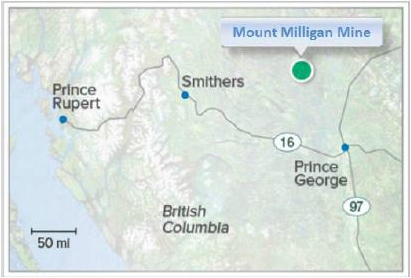 |
Quick Facts
Centerra acquired the Mount Milligan Mine in October 2016.
The Mount Milligan Mine has been in commercial production since 2014. To date, it has produced approximately 2.1 million oz of gold and 716.6 million lbs of copper. |
| Location | British Columbia, Canada |
| Ownership | 100% |
| Business Structure | Our wholly owned subsidiary, TCM, is the holder of the rights to the Mount Milligan Mine. |
| End Product | Copper/gold concentrate |
| Mine Type | Open pit |
Estimated Mineral Reserves (as at December 31, 2024)
See “Mount Milligan Streaming Arrangement” and “Additional Agreement with Royal Gold” below. |
Gold 2,826 k oz of contained gold (proven and probable) average gold grade – 0.33 g/t tonnage – 264,512 kt
Copper 1,150 M lbs of contained copper (proven and probable) average copper grade – 0.19% tonnage – 264,512 kt |
Estimated Mineral Resources (as at December 31, 2024)
See “Mount Milligan Streaming Arrangement” and “Additional Agreement with Royal Gold” below.
Mineral resources are in addition to reserves. Mineral resources do not have demonstrated economic viability. |
Gold 1,566 k oz of contained gold (measured and indicated) average grade – 0.26 g/t tonnage – 183,971 kt
Copper 732 M lbs. of contained copper (measured and indicated) |
| Centerra Gold Inc. | |
| 2024 Annual Information Form | Page 31 |
| Inferred mineral resources have a great amount of uncertainty as to their existence, continuity, and grade, and as to whether they can be mined economically. There is no certainty that all or part of the inferred resources will ever be upgraded to a higher category or converted into mineral reserves. | Gold 395 k oz contained gold (inferred) average grade – 0.44 g/t tonnage – 27,924 kt Copper 74 M lbs of contained copper (inferred) average copper grade – 0.12% tonnage – 27,924 kt |
| Processing Method | Crushing, grinding, flotation, gravity circuit |
| 2024 Production | 167,580 oz of payable gold 54.3 million pounds of payable copper |
| Mount Milligan Streaming Arrangement and the Additional Agreement | The Mount Milligan Mine in Canada is subject to a streaming arrangement whereby Royal Gold is entitled to receive 35% of the gold produced and 18.75% of the copper production. Royal Gold will pay Centerra $435 per ounce of gold delivered and will pay 15% of the spot price per metric tonne of copper delivered. Starting in approximately 2030, the Additional Agreement, taken together with the Mount Milligan Streaming Arrangement, will have the effect of increasing payments for Mount Milligan gold and copper production sold to Royal Gold under the Mount Milligan Streaming Arrangement, among other things. After achieving the First Threshold Date (as defined below), gold payments received will be the lower of $850/oz and 50% of the spot price while copper payments will be 50% of the spot price. After achieving the Second Threshold (Gold) Date (as defined below) or the Second Threshold (Copper) Date (as defined below), as applicable, gold payments received will be the lower of $1050/oz and 66% of the spot price, while copper payments received will be 66% of the spot price, respectively. The existing Mount Milligan Streaming Arrangement, as amended, is not affected by the Additional Agreement. For further information on the Additional Agreement, see the section entitled “Material Contracts” below. |
| Estimated Mine Life | 2036 |
| Employees | 650 |
Technical Report
The Mount Milligan Technical Report, with an effective date of December 31, 2021, was filed on November 7, 2022 on www.sedarplus.com. It is recommended that you read the Mount Milligan Technical Report in its entirety for additional details relating to the Mount Milligan Mine. Defined terms and abbreviations used in this section and not otherwise defined have the meanings attributed to them in the Mount Milligan Technical Report.
| Centerra Gold Inc. | |
| 2024 Annual Information Form | Page 32 |
Project Description, Location and Access
The Mount Milligan Mine is a conventional truck-shovel open-pit copper and gold mine and process plant. The Mount Milligan Mine is currently permitted by the Province of British Columbia to operate at an average of 60,000 tpd over a calendar year.
The Mount Milligan Mine is located within the Omenica Mining Division in North Central British Columbia, Canada, approximately 155 km northwest of Prince George (population approximately 79,000).
The Mount Milligan Mine includes 122 claims and one mining lease (123 total mineral titles) with a combined area of 63,663.3 ha. The mining claims and leases are all held in the name of TCM. The single mining lease expires on September 9, 2029, and requires a lease payment of approximately $102,760, due annually on September 9. Mineral claims are subject to exploration expenditure obligations, or payment of annual fees to the Province of British Columbia in lieu of exploration expenditures. All mineral claims are in good standing with expiry dates in 2032. We expect to renew such mineral claims in the ordinary course of exploration.
A 2% net smelter return royalty is payable to a previous owner of the property, H.R.S. Resources Corp (“HRS”), which royalty payments commenced in 2016, the third year of commercial operations at the Mount Milligan Mine. In 2020, the Company received a notice of civil claim from HRS alleging that since 2016, the Company has incorrectly calculated amounts payable under the production royalty agreement and has therefore underpaid amounts owing to HRS. The B.C. Supreme Court rendered a written decision on October 8, 2024, which determined that the Company was correct to include the effect of the Mount Milligan Streaming Arrangement in its calculation of revenue subject to the production royalty but that such revenue (for purposes of the royalty agreement) should have included amortized amounts relating to advance payments made by Royal Gold to TCM. Both parties have formally filed an appeal of this decision. The Company is currently assessing how to recalculate the royalty payments owed to HRS historically and going forward but believes the potential exposure in relation to this claim from what the Company has accrued is not materially different.
We have also agreed to make certain payments to the McLeod Lake Indian Band and Nak’azdli Whut’en First Nation over the life of the mine. The terms of the agreements under which we make these payments are confidential.
As described herein, we have entered into the Mount Milligan Streaming Arrangement with Royal Gold which provides that 35% of the gold and 18.75% of the copper production at the Mount Milligan Mine will be sold to Royal Gold and that Royal Gold will pay $435 per ounce of gold delivered and will pay 15% of the spot price per metric tonne of copper delivered. Starting in approximately 2030, the Additional Agreement, taken together with the Mount Milligan Streaming Arrangement, will have the effect of increasing payments for Mount Milligan gold and copper production sold to Royal Gold under the Mount Milligan Streaming Arrangement, among other things. After achieving the First Threshold Date (as defined below), gold payments received will be the lower of $850/oz and 50% of the spot price while copper payments will be 50% of the spot price. After achieving the Second Threshold (Gold) Date (as defined below) or the Second Threshold (Copper) Date (as defined below), as applicable, gold payments received will be the lower of $1050/oz and 66% of the spot price, while copper payments received will be 66% of the spot price, respectively. The existing Mount Milligan Streaming Arrangement, as amended, is not affected by the Additional Agreement. For further information on the Additional Agreement, see the section entitled “Material Contracts” below.
The Mount Milligan Mine is accessible by commercial air carrier to Prince George, British Columbia, then by vehicle from the east via Mackenzie on the Finlay Philip Forest Service Road and the North Philip Forest Service Road, and from the west via Fort St. James on the North Road and Rainbow Forest Service Road. Road travel to the Mount Milligan Mine is 770 km from Prince Rupert and 253 km from Prince George. The communities of Mackenzie and Fort St. James are within daily commuting distance of the Mount Milligan Mine, and both communities are serviced by rail. Concentrate is transported by truck from the mine site to Mackenzie, then transferred by railcar to existing port storage facilities of Vancouver Wharves in North Vancouver and loaded as lots into bulk ore carriers. Concentrate is then shipped to customers via ocean transport.
History
Limited exploration activity on Mount Milligan Mine was first recorded in 1937. In 1984, prospector Richard Haslinger and BP Resources Canada Limited located claims on the site. In 1986, Lincoln Resources Inc. (“Lincoln”) optioned the claims and in 1987 completed a diamond drilling program that led to the discovery of significant copper-gold mineralization. In the late 1980s, Lincoln reorganized, amalgamated with Continental Gold Corp. (“Continental”) and continued ongoing drilling in a joint-venture with BP Resources. Subsequent changes in ownership resulted in the property being owned by Terrane Metals Corp. (“Terrane”).
| Centerra Gold Inc. | |
| 2024 Annual Information Form | Page 33 |
In October 2010, TCM acquired Terrane and the Mount Milligan Mine and entered into the Mount Milligan Streaming Arrangement with Royal Gold. On February 18, 2014, the Mount Milligan Mine reached commercial production, which is defined as operation of the mill at 60% of design capacity mill throughput for 30 days.
We acquired the Mount Milligan Mine effective October 20, 2016 through the acquisition of all the issued and outstanding shares of TCM. In addition to the Mount Milligan Mine, we also acquired interests in several molybdenum assets held by TCM. As part of the acquisition, Terrane was amalgamated with TCM effective October 18, 2016.
Geological Setting, Mineralization and Deposit Types
The Mount Milligan Mine deposit is located within the Quesnel Terrane, part of the Intermontane Belt, a composite of low metamorphic grade magmatic arc segments of mixed oceanic and continental affinities, and oceanic plates, which accreted onto North America in the Early Jurassic Period.
The Mount Milligan Mine property is mostly underlain by Upper Triassic volcanic rocks of the Witch Lake succession. The Witch Lake succession is moderately-to-steeply east-northeast dipping and characterized by augite-phyric volcaniclastic and lesser coherent basaltic andesite to andesite, with subordinate epiclastic beds. In the northwestern part of the Mount Milligan Mine property, volcanic rocks are intruded by Early Jurassic to Cretaceous rocks of the Mount Milligan Mine intrusive complex. The Early Jurassic component of the intrusive complex comprises monzonitic rocks with minor dioritic-monzodioritic and gabbroic-monzogabbroic rocks.
Mineralization at the Mount Milligan Mine deposit consists of two styles, early-stage porphyry gold-copper (Au-Cu) and late-stage high-gold-low-copper (“HGLC”, or sub-epithermal). The early-stage porphyry Au-Cu mineralization comprises mainly chalcopyrite and pyrite, occurs with potassic alteration and early-stage vein types, and is spatially associated with composite monzonite porphyry stocks (especially at their hanging-wall and footwall margins), hydrothermal breccia, and narrow dyke and breccia complexes. Late-stage structurally controlled pyritic HGLC style mineralization is associated with carbonate-phyllic alteration and intermediate- to late-stage vein types, and is spatially associated with faults, fault breccias and faulted lithological contacts (i.e. faulted monzonite porphyry dyke margins). It crosscuts and overprints the earlier stage porphyry Au-Cu mineralization.
Porphyry style Au-Cu mineralization occurs in the hanging-wall and footwall zones of the MBX, Saddle, Southern Star, and Goldmark stocks. Disseminated and vein/veinlet-hosted mineralization is associated with the composite monzonite stocks, their brecciated margins and variably altered volcanic host rocks. Core zones of auriferous chalcopyrite-pyrite mineralization with magnetite rich potassic alteration transition laterally and vertically to pyrite rich HGLC zones within the inner propylitic (albitic) and carbonate-phyllic alteration shells; the latter appear to be late stage and exhibit strong structural control.
Copper iron sulphide (chalcopyrite) is associated with potassic alteration at the contact margin between volcanic and intrusive rocks. It occurs as fine-grained disseminations and fracture fillings, and less commonly as veinlets and in veinlet selvages. Adjacent to the MBX stock, chalcopyrite may be accompanied by iron sulphide pyrite to form coarse sulphide aggregates. Chalcopyrite-bearing veins contain pyrite and magnetite in a gangue of potassium feldspar, quartz, and calcite.
Pyrite content increases with distance from the MBX and Southern Star stocks and is most abundant in propylitically altered rocks. Pyrite occurs as disseminations, veinlets, large clots, patches, and as replacements of mafic minerals. Gold mineralization in the 66 zone is associated with 10-20% pyrite. Cross-cutting vein relationships indicate several generations of pyrite mineralization.
Gold occurs as grains from 1 to 100 μm in size, as observed in process samples. Grains occur as microfracture fillings and are attached to pyrite or chalcopyrite. Gold also forms inclusions within pyrite, chalcopyrite, and magnetite grains. SEM work indicates electrum throughout the deposit with varying gold to silver ratios.
The Mount Milligan Mine deposits are categorized as silica-saturated alkalic Cu-Au porphyry deposits associated with alkaline monzodioritic-to-syenitic igneous rocks and are recognized in only a few mineral provinces worldwide. Porphyry copper ± gold deposits commonly consist of vein stockworks, vein sets, veinlets, and disseminations of pyrite, chalcopyrite ± bornite that occur in large zones of economic bulk-mineable mineralization within porphyritic igneous intrusions, their contact margins, and adjoining host rocks. The mineralization is spatially, temporally, and genetically associated with hydrothermal alteration of the intrusive bodies and host rocks.
Exploration and Drilling; Development and Production
Historically, five exploration target zones were identified in the brownfield (in-pit) resource area (DWBX, WBX, MBX, 66 and Southern Star); three in the more distal brownfield area within the mine lease (North Slope, Goldmark and South Boundary); and three in the greenfield area outside the mine lease (Heidi, Mitzi and Snell). Exploration since 2017 has continued to test most of these zones and refine understanding of their geological relationships and mineral potential. In addition, new target zones have been developed and continue to be tested. In total, since 2017 we have completed more than 255,000 metres of resource and exploration diamond drilling in over 500 drill holes at Mount Milligan as outlined in the tables below.
| Centerra Gold Inc. | |
| 2024 Annual Information Form | Page 34 |
Total Resource Expansion and Exploration drilling metres completed at Mount Milligan from 2017-2024
| Program | 2017 (m) | 2018 (m) | 2019 (m) | 2020 (m) | 2021 (m) | 2022 (m) | 2023 (m) | 2024 (m) | Total (m) | ||||||||||||||||||
| In-pit Resource | 7,692.25 | 18,656.89 | 26,803.21 | 15,584.73 | 25,590.78 | 26,872.86 | 7,317.55 | 7,1767.04 | 135,694.31 | ||||||||||||||||||
| Brownfield | 0.00 | 6,668.73 | 14,655.72 | 14,927.83 | 13,914.36 | 28,266.29 | 14,536.61 | 12,403.16 | 105,372.70 | ||||||||||||||||||
| Greenfield | 0.00 | 5,616.85 | 1,361.69 | 0.00 | 0 | 804.00 | 6,289.50 | 3,495.00 | 17,567.04 | ||||||||||||||||||
| Program Total | 7,692.25 | 30,942.47 | 42,820.62 | 30,512.56 | 39,505.14 | 55,943.15 | 28,143.66 | 23,074.20 | 258,634.05 | ||||||||||||||||||
Total Resource Expansion and Exploration drill holes completed at Mount Milligan from 2017-2024
| Program | 2017 (#) | 2018 (#) | 2019 (#) | 2020 (#) | 2021 (#) | 2022 (#) | 2023 (#) | 2024 (#) | Total (#) | ||||||||||||||||||
| In-pit Resource | 21 | 26 | 72 | 34 | 41 | 46 | 17 | 25 | 282 | ||||||||||||||||||
| Brownfield | 0 | 12 | 31 | 28 | 27 | 54 | 26 | 28 | 206 | ||||||||||||||||||
| Greenfield | 0 | 13 | 4 | 0 | 0 | 2 | 16 | 8 | 43 | ||||||||||||||||||
| Program Total | 21 | 51 | 107 | 62 | 68 | 102 | 59 | 61 | 531 | ||||||||||||||||||
The total line-kilometres of geophysical survey completed by Centerra since 2017 has been over 6,000 for airborne and 500 for ground-based as outlined in the table below.
Total line-kilometres of geophysical surveys completed at Mount Milligan from 2017-2024
| Program | 2017 (km) | 2018 (km) | 2019 (km) | 2020 (km) | 2021 (km) | 2022 (km) | 2023 (km) | 2024 (km) | Total (km) | ||||||||||||||||||
| Brownfield ground | 0 | 15.5 | 16.7 | 26.0 | 0 | 0 | 0 | 0 | 58.2 | ||||||||||||||||||
| Brownfield airborne | 0 | 0 | 525.4 | 0 | 0 | 0 | 0 | 0 | 525.4 | ||||||||||||||||||
| Greenfield ground | 376.6 | 0 | 0 | 0 | 14.0 | 30.4 | 26.5 | 41.4 | 488.9 | ||||||||||||||||||
| Greenfield airborne | 0 | 0 | 1,542.6 | 0 | 1,640.0 | 2,362.1 | 0 | 0 | 5544.7 | ||||||||||||||||||
| Program Total | 376.6 | 15.5 | 2,084.7 | 26.0 | 1,654.0 | 2,392.5 | 26.5 | 41.4 | 6,617.2 | ||||||||||||||||||
Numerous drilling programs have been conducted since the deposit was first drilled in 1987. Except for early programs, the majority of core drilled has been of NQ size. In total, there have been 1,824 diamond drill holes drilled at Mount Milligan Mine, recovering over 500 km of drill core.
In 2024, exploration activities continued at Mount Milligan for which a total of 61 holes for 23 km were completed. Approximately 85% of the drilling was carried out within the resource pit (DWBX and extension) and within the three more distal brownfield area within the mine lease (North Slope, Goldmark and Boundary). In all these areas, results received show mineralization extending west from the pit margin and below the ultimate pit boundary.
| Centerra Gold Inc. | |
| 2024 Annual Information Form | Page 35 |
Geotechnical information has been routinely recorded for all diamond drilling programs including core recovery, rock quality, hardness or compressive strength (CS), degree of breakage, degree of weathering or oxidation, fracture and joint frequency, and specific gravity (SG). Core recovery routinely exceeds 95% and averages 91%.
For production information for the Mount Milligan Mine in 2024, see “2024 and 2023 Production and Revenue”.
Sampling, Analysis, and Data Verification
All Mount Milligan Mine Assay Laboratory procedures are accompanied by appropriate, industry standard instrument calibration and quality assurance/quality control (“QAQC”) measures, including quarterly third-party analysis checks. The ore and acid-base accounting analyses Standard Operating Procedure includes steps to confirm on-site laboratory method accuracy, precision, contamination control, sample tracking, and recordkeeping. The assay laboratory also receives blind duplicate samples from the Ore Control Geologist/Technician which are compared against daily sample analyses. This workflow is managed as part of the Mount Milligan Assay Laboratory Quality Management System.
Most samples analyzed for the Mount Milligan Mine deposits have been collected from NQ-sized core. Cores were either split (early programs) or sawn along the long axis with one-half sampled and assayed and the other half retained in core boxes and the core library.
A formal QAQC program, including the insertion of standard, blank and duplicate samples for assay, was introduced after 1992. Prior to that date, external check assays were commissioned from independent laboratories.
Validation of the mapping co-ordinates, elevations, assay quality control/quality assurance program and the DDH database has been completed by Centerra and predecessor owners of Mount Milligan Mine.
All exploration data is captured as per standard geological data management procedures and is stored in an acQuire Geological Information Management System. Throughout 2024, routine validations and verifications of the database were conducted, including QAQC of all assay data received from external laboratories and verifications of raw data imported into the database, e.g., assay certificates, downhole surveys, geochemical data, and geotechnical data.
Mineral Processing and Metallurgical Testing
Mount Milligan Mine is a copper-gold porphyry deposit, consisting of two principal zones, the Main Zone and the Southern Star (SS) Zone. The Main Zone includes four contiguous sub-zones: MBX, WBX, DWBX and 66 (low-copper and high-gold grades, southeast of the MBX sub-zone). These geologic zones are the basis for the metallurgical test work.
The Mount Milligan Mine deposit is being mined using conventional open-pit equipment, with the ore being processed through a gyratory crusher, secondary crushing and a SAG-ball mill-pebble crusher combination together with a rougher and cleaner flotation plant, producing a marketable gold-rich copper concentrate.
Metallurgical investigations conducted by various research laboratories prior to commencement of operations conclusively showed that froth flotation is the optimum process for the recovery of copper and gold; with this processing approach being adopted. These investigations were the basis of the performance models used in previous resource modelling. Further investigations and projects have been undertaken to improve the recovery process and update the accuracy of the copper and gold recovery models. Using these new performance models, the LOM average recoveries are estimated at 78.9% for copper and 65.9% for gold.
Mineral Resource and Mineral Reserve Estimates
For information on the Mount Milligan Mine mineral reserves and mineral resources, see “Mineral Reserves and Resources” starting on page 18.
Mining Operations
Mining
The mining operation is a conventional shovel and truck open pit mine feeding a 60,000 tpd (permitted throughput on an annualised basis) processing plant. The planned mine life is currently just over 11 years (2025 – 2036). The pit has been planned as a series of seven discrete pushbacks and scheduled to maximize the production of ore. This plan has an overall LOM waste:ore ratio of 0.9:1.0. The mining sequence has been developed to allow for provision of suitable waste material for annual TSF construction requirements.
The mine fleet comprises four blast hole drills, one pre-shear drill, two rope shovels, one hydraulic excavator, two rubber-tired front-end loaders, fifteen haul trucks and various other dozers, loaders, graders, and excavators. A fleet of articulated trucks are used in dam construction and project activities.
| Centerra Gold Inc. | |
| 2024 Annual Information Form | Page 36 |
Mount Milligan Mill – Water Management
On December 27, 2017, we announced that due to a lack of sufficient water resources, mill processing operations at the Mount Milligan Mine in British Columbia, Canada had been temporarily suspended. Since that time, the Company has worked with B.C. regulators, its Indigenous partners and other stakeholders to amend Mount Milligan’s permits and environmental assessment certificates to ensure sufficient water access for the mine.
In January 2022, the Company obtained an amendment to its provincial environmental assessment certificate that has authorized a long-term water supply for the Mount Milligan Mine.
As at December 31, 2024, the Mount Milligan Mine had sufficient water inventory to maintain operations and does not expect a curtailment in production in 2025 as there is expected to be sufficient water in the tailings storage facility to run at full capacity throughout the year. However, during years of persistent dry conditions, there is a risk that Mount Milligan’s operations may need to be curtailed in future for lack of sufficient water.
Processing and Recovery Operations
The LOM average process plant feed grade of 0.19% Cu is delivered at an average daily permitted rate of 60,000 tonnes to yield a marketable Cu concentrate. Process plant ore feed quality is maintained to honour metallurgical constraints such as ORE/HGLC ratio, Py:Cpy ratio and mercury (Hg) content. Average recovery to concentrate projected to be achieved during the LOM period is 78.9% for copper and 65.9% for gold.
The Mount Milligan Mine process plant is designed to process ore at a nominal rate of 60,000 tpd, producing a marketable concentrate containing copper, gold, and silver. A secondary crushing circuit, installed in 2016, together with process plant optimization projects, increased the potential throughput to a nominal rate of 62,500 tpd. Key process equipment consists of:
| · | Primary crushing plant with a 1.525 metres x 2.794 metres gyratory crusher; |
| · | Secondary crushing plant with two cone crushers prior to the grinding circuit, each powered by one 1,000 kW motor; |
| · | SAG/ball mill/crusher grinding circuit comprised of one SAG mill, two ball mills and two cone crushers; |
| · | A flotation circuit comprises a total of 4 rougher,6 scavenger, and 17 cleaner cells that include 3 Stage Floatation Reactors (SFRs); and |
| · | Regrinding and gravity concentration circuits comprised of one tower mill, two IsaMills™ and one centrifugal gold concentrator. |
Infrastructure, Permitting and Compliance Activities
The infrastructure at Mount Milligan Mine includes a concentrator, a TSF and reclaim water ponds, an administrative building and change house, a workshop/warehouse, a permanent operations residence, a first aid station, an emergency vehicle storage, a laboratory, and sewage and water treatment facilities. The power supply is provided by B.C. Hydro via a 91-km hydroelectric power line.
Concentrate is transported by truck from the mine site to Mackenzie, transferred onto railcars of the Canadian National Railway, railed to existing port storage facilities of Vancouver Wharves in North Vancouver, and loaded as lots into bulk ore carriers. Concentrate is then shipped to customers via ocean transport. There are no assurances that the service providers involved in the transportation of concentrate will continue to be available on terms acceptable to the Company. See “Risk Factors”.
Tailings Storage Facility
The TSF at the Mount Milligan Mine is currently designed to store tailings solids and potentially acid generating (PAG) and oxide/weathered waste rock materials in designated upstream areas with the TSF. The TSF embankment is constructed as a centreline dam using open pit overburden and non-acid generating (NAG) waste rock materials. Construction of each of the embankment stages is scheduled to correspond with material availability from the open pit and the projected rate of rise. There will be sufficient volume of waste material produced over the LOM to raise the tailings dam to the required final elevation of 1,121 metres, subject to normal course permitting.
| Centerra Gold Inc. | |
| 2024 Annual Information Form | Page 37 |
From the process plant, two tailing streams — the rougher/scavenger tailings and the first cleaner/scavenger tailings — are deposited and stored in separate tailing storage cells within the TSF. The rougher-scavenger tailings contain mostly non-sulphide gangue minerals, while the cleaner scavenger tailings contain most of the sulphide gangue minerals. The latter is kept in a lined pond and submerged underwater to prevent potential acid generation from the oxidation of the sulphide minerals.
The TSF comprises two dams to include the Main Embankment and the West Separator Berm (WSB). The dams will eventually join and become a ringed impoundment as additional raises are completed. The highest portion of the TSF embankment is in the King Richard Creek valley and is approximately 74 metres in height, as measured from crest to downstream toe after Stage 10 construction was complete in 2024.
The Main embankment is subdivided into segments designated: South, Southeast, Northeast, and North Dam. The South Dam is situated across the King Richard Creek valley; the Southeast/Northeast Dams are along the eastern plateau towards the Esker Lakes; the North Dam is constructed through the esker deposit. The WSB is constructed along the western edge of the impoundment providing containment between the TSF and the open pit. The WSB has been extended towards the north and south and will continue to be extended until it connects into the Main embankment creating a continuous ring impoundment.
Permitting and Environmental Monitoring
The Mount Milligan Mine received approval under both federal and provincial environmental assessment legislation in 2009.
The Company also holds numerous other permits and approvals to operate the Mount Milligan Mine. These include an operating permit issued under the British Columbia Mines Act (issued by the Ministry of Energy, Mines and Low Carbon Innovation) and air, refuse and effluent discharge permits under the British Columbia Environmental Management Act (issued by the Ministry of Environment and Climate Change Strategy). The Company also holds several water licences issued by the Ministry of Water, Land & Resource Stewardship and various Special Use Permits and Road Use Permits issued by the British Columbia Ministry of Forest Lands and Natural Resource Operations and Rural Development.
In January 2022, the Company obtained an amendment to its provincial environmental assessment certificate that has authorized a long-term water supply for the Mount Milligan Mine.
In April 2022 the Company registered discharge of water (seepage) from the TSF pursuant to the Metal and Diamond Ming Effluent Regulations (“MDMER”) under the federal Fisheries Act. This requires the Company to complete an environmental effects monitoring program to complement related monitoring presently undertaken pursuant to provincial permits. The company continues to engage with provincial agencies on any required amendments for seepage and its monitoring. The Company is also working to minimize seepage to the receiving environment and will continue to monitor these discharges into the future.
Emergency Response Plan and Handling of Hazardous Materials
The Mount Milligan Mine has an Emergency Response Plan (the “Mount Milligan ERP”) and hazardous material transportation procedures. We conduct quarterly mock exercises to test different aspects of the Mount Milligan ERP, including response time, effective communications and the skills of the emergency response team and we have updated the Mount Milligan ERP to ensure notification protocols remain valid and improvements from the mock exercises are incorporated in the plan.
Decommissioning and Reclamation
The Mount Milligan Mine submitted a five-year revision to its reclamation plan in 2019 and government review of the plan was initiated in 2020. The five-year reclamation plan for the site outlines the closure goals and activities for the site and minimizes and mitigates long-term environmental impacts resulting from construction and operation of the facility via sound science and contingency planning. On September 15, 2021, a mine permit amendment was received approving the reclamation security change. An adaptive management process is utilized whereby new knowledge and technology is incorporated into successive management and reclamation plans that consider operational plan updates.
Social and Community Factors
We endeavor to work in a responsible way to meet or exceed expectations of potentially impacted indigenous groups, and stakeholders. See “Responsible Mining – Our Approach” above.
Indigenous Groups
Maintaining productive relationships with Indigenous groups and ensuring project benefits are shared in accordance with our formal agreements is a priority for all Centerra’s projects and operations in British Columbia. See “Responsible Mining – Our Approach” above.
| Centerra Gold Inc. | |
| 2024 Annual Information Form | Page 38 |
Capital and Operating Costs
Actual results for 2023 and 2024, and guidance for 2025 production, operating costs, and capital are depicted below.
| 2023 Actual | 2024 Actual | 2025 Guidance | ||||||||||
| Total Gold Production (oz) | 154,391 | 167,580 | 165,000 – 185,000 | |||||||||
| Total Copper Production (Mlbs) | 61.9 | 54.3 | 50 - 60 | |||||||||
| Gold Production Cost ($/oz) | 1,088 | 1,105 | 1,075 – 1,175 | |||||||||
| AISC on a by-product basis ($/oz) (1) | 1,156 | 1,078 | 1,100 – 1,200 | |||||||||
| Total capital expenditures ($M) (1) | 44.0 | 54.0 | 75 - 90 | |||||||||
Notes:
| (1) | Detailed reconciliations of the non-GAAP measures to measures under IFRS for the years ended December 31, 2024, and 2023 can be found in the Company’s MD&A for the year ended December 31, 2024 as available on www.sedarplus.com. |
| Centerra Gold Inc. | |
| 2024 Annual Information Form | Page 39 |
Öksüt Mine
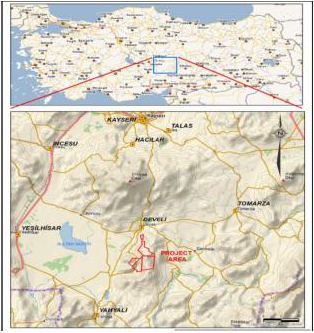 |
Quick Facts
The Öksüt Mine is situated in Türkiye approximately 295 km southeast of Ankara and 48 km south of Kayseri, the provincial capital.
We own 100% of the Öksüt Mine.
The Öksüt Mine achieved first gold pour on January 31, 2020 and achieved commercial production as of May 31, 2020. In 2024, the Öksüt Mine produced 200,525 ounces of gold. |
| Location | Türkiye |
| Ownership | 100% |
| Business structure | Our wholly owned subsidiary (indirectly held), Öksüt Madencilik Sanayi ve Ticaret Anonim Sirketi (“OMAS”), is the holder of the rights to mining and exploration for the Öksüt Mine. |
|
Estimated Mineral Reserves (as at December 31, 2024) |
662 k oz of contained gold (proven and probable) average grade – 1.03 g/t tonnage – 20,080 kt |
|
Estimated Mineral Resources (as at December 31, 2024)
Mineral resources are exclusive of reserves. Mineral resources do not have demonstrated economic viability.
|
58 k oz of contained gold (measured
and indicated)
|
| Inferred mineral resources have a great amount of uncertainty as to their existence, continuity, and grade, and as to whether they can be mined economically. There is no certainty that all or part of the inferred resources will ever be upgraded to a higher category or converted into mineral reserves. | 4 k oz of contained gold (inferred) average grade – 1.06 g/t tonnage – 130 kt |
| Processing Method | Heap leach |
| 2024 Production | 200,525 ounces of gold |
| Estimated Mine Life | 2029 |
| Employees | 335 |
| Centerra Gold Inc. | |
| 2024 Annual Information Form | Page 40 |
Technical Report
The Öksüt Technical Report, with an effective date of June 30, 2015, was filed on September 3, 2015 on www.sedarplus.com. It is recommended that you read the Öksüt Technical Report in its entirety for additional details relating to the Öksüt Mine. Defined terms and abbreviations used in this section and not otherwise defined have the meanings attributed to them in the Öksüt Technical Report.
Property Description, Location and Access
Location
The Öksüt Mine is located in south-central Türkiye, 295 km to the southeast of the capital city of Ankara and 48 km directly south of the city of Kayseri which has a population of 1.1 million. The nearest administrative centre is at Develi (population 66,840) located approximately 10 km north of the Project. Ankara and Kayseri have international airports and are serviced by international and domestic airlines. The Project’s co-ordinates are 715000-722100 Easting and 4236500-4249300 Northing (UTM ED 50 zone 36).
The Öksüt Mine is located in the Develi Mountains on a north-south trending topographic high. The topographic relief comprises steep-sided V-shaped valleys, and locally, cliffs tens of metres high, capped by flat-lying mesas and plateaus. The Project site is located at an elevation of approximately 1,800 metres. The valleys are extensively farmed, with the local population living in a number of small villages including the villages of Öksüt and Zile.
Mining Authorizations
Mining rights and minerals are exclusively owned by the state. The state delegates rights to explore and operate to Turkish individuals or legal entities through set period licenses in return for royalty payments. Mining licensing is regulated by the General Directorate of Mining Affairs, a unit of the Ministry of Energy and Natural Resources. Other institutions of importance are central government ministries, the provincial administration, and local government institutions.
Due to changes in Turkish mineral laws, which now permit the issuance of mining licenses for areas greater than 2000 hectares, we obtained in 2017 a new operation license number 85712 which unifies the previous two contiguous operation licenses (numbers IR 82468 and 82469). The unified license has a total area of 3,995.81 ha. According to the Turkish Mining Law, OMAS has the right to explore and develop any mineral resources contained within the operation license, provided fees and taxes are paid in order to keep the license in good standing. The operations license was issued on May 1, 2017. In January 2023, the Company received 10-year approvals of an extension of the operations licence and an enlarged grazing land permit to allow expansion of the Keltepe and Güneytepe pits. OMAS needs such permits to continue developing the Keltepe and Güneytepe pits as currently planned.
While OMAS has the right to explore and develop within the area covered by the operation licenses, it requires various permits for the development of the project. In March 2022, Centerra announced it had temporarily suspended gold doré bar production at the Öksüt Mine due to mercury detected in the gold room at the ADR plant. Since then, the Company has completed construction of a mercury abatement system to allow processing of mercury bearing ores. On May 31, 2023, the Company obtained an updated Environmental Impact Assessment for the operation and the Company resumed full operations in June 2023.
For information on royalties payable in respect of the Öksüt Mine, see “Taxes and Royalties” below.
History
The Öksüt Mine was discovered by Stratex International Plc (“Stratex”) in early 2007. Reconnaissance rock chip sampling returned up to 0.113 g/t Au from silica ledges within altered andesitic volcanic rocks at what is now the Güneytepe Deposit. In late 2007, Stratex made applications for tenements to cover the property and obtained a total of nine contiguous exploration licences covering an area of 111.6 km2.
In 2009, Stratex and Teck Resources Limited (“Teck”) agreed that Teck would relinquish its rights under a 2004 strategic alliance agreement to acquire interests in projects owned by Stratex. In exchange, Teck received shares of Stratex and a sliding scale royalty on, among others, the Öksüt Mine. The royalty held by Teck was subsequently acquired by Centerra and cancelled in March 2016.
Centerra and Stratex formed a joint venture in 2009, to explore the project. Centerra earned an initial 50% equity in the project by advancing $3M to the joint venture through October 2011 and acquired an additional 20% interest in the project in October of 2012 with an additional contribution of $3M, which brought its equity interest to 70%. In January 2013, Centerra purchased Stratex’s remaining 30% to own 100% of the Öksüt Mine in exchange for a cash payment of $20M and a 1% NSR royalty up to a maximum of $20M. Centerra acquired and cancelled the 1% NSR royalty held by Stratex in December 2015.
| Centerra Gold Inc. | |
| 2024 Annual Information Form | Page 41 |
Centerra published the first mineral resource estimate on the project in February 2013 (with an effective date of December 31, 2012) and on February 19, 2014, Centerra announced the results of a preliminary economic assessment on the project. An updated mineral resource estimate was published in February 2015 (with an effective date of December 31, 2014) and on July 28, 2015, Centerra announced the positive feasibility study results on the project and a development decision to proceed with construction.
In January 2018, the Company received the final permits required for the construction of the Öksüt Mine and, in late March 2018, construction activities commenced.
The Öksüt Mine achieved first gold pour on January 31, 2020, and achieved commercial production as of May 31, 2020.
In early March 2022, the Öksüt Mine suspended gold doré bar production at the Öksüt Mine when mercury was detected in the gold room at the ADR plant and subsequently suspended heap leaching operations in August 2022. In early 2023 the Company completed construction and commissioning of a mercury abatement system to allow processing of mercury-bearing ores in the gold room at the Öksüt Mine’s ADR plant. In February and March 2023, the ADR plant underwent inspection and testing by the Ministry of Environment and the Ministry of Labour and Social Security. Following the completion and commissioning of the mercury abatement system and approval of an amended EIA by the Ministry of Environment, full operations resumed at the Öksüt Mine on June 5, 2023.
Geological Setting, Mineralization and Deposit Types
The Öksüt Mine is a high-sulphidation epithermal gold deposit within the Central Anatolian Volcanic Province, and part of the Tethyan Metallogenic Belt. The belt extends from southeastern Europe across Türkiye, the Caucasus, and on into Pakistan and contains a number of important gold and porphyry copper deposits. Magmatic activity and related ore forming processes are the result of the closure of the Tethyan Ocean in response to the collision between the north-moving Arabian Plate with the Eurasian Plate that began in the late Cretaceous period and continues today.
The Öksüt Mine gold mineralization is hosted within the Develidağ Volcanic Complex, one of the numerous stratovolcanoes situated along the Central Anatolian Fault Zone. The volcanic complex is composed of Miocene basaltic-andesitic volcanic domes, pyroclastic rocks, and lava flows. Flow-banded Pliocene andesite overlies these sequences and the Öksüt Mine mineralization to the north and east.
There are several gold occurrences in the Öksüt Mine area, the most important of which is the Keltepe Deposit. The distribution of the alteration assemblages and the gold grades at the Keltepe Deposit are strongly zoned, with a central massive silica breccia having the highest gold grade. This core is surrounded by quartz-alunite altered volcanic rocks, and as the alteration intensity diminishes outwardly, the gold grade decreases.
The Keltepe Deposit has been oxidized to a depth of up to 400 metres below the surface. The original copper content of the deposit has been completely leached out of the current resources; however, zones of oxide copper enrichment are found deeper within the deposit, below the planned open pit. An irregular zone of supergene enrichment exists below the oxide zone, with some high-grade sulphide copper intersections. It is surmised that the oxidation of the deposit has liberated the gold allowing heap leaching at a relatively coarse crush size.
The nearby Güneytepe Deposit is significantly smaller and does not show the more straightforward zonation and continuity of alteration and gold grades as observed on the Keltepe Deposit. Silicification is intense, however, the host rocks are much less porous than those at Keltepe, hence, oxidation is restricted to the upper 50 metres to 75 metres of this deposit.
Keltepe Deposit
The Keltepe Deposit is elongated NNW-SSE and is approximately 600 metres long and 350 metres wide with a minimum known vertical extent of 450 metres. Two principal rock types are present: a texturally diverse variety of polymictic breccias and a texturally uniform porphyritic andesite.
The Keltepe Deposit is strongly oxidized to a maximum known depth of up to 400 metres below surface. This unusually deep oxidation is attributed to the porous and permeable nature of the siliceous and quartz-alunite altered breccias and to the presence of a deep groundwater table controlled by the NNW-SSE and NE-SW trending fault zones that drain outwards from the topographic high beneath which the Keltepe Deposit is located.
Oxidation is not uniformly complete throughout the deposit, with patches of less oxidized or unoxidized rock enclosed by fully oxidized rocks.
| Centerra Gold Inc. | |
| 2024 Annual Information Form | Page 42 |
Gold mineralization is believed to occur as finely disseminated particles as it was not identified during scanning electron microscope analysis. This has been confirmed by a gold deportment study that shows that the major gold mineral identified at Keltepe is native gold with an average fineness of 6.9 μm. This study also indicates that the host minerals for the gold in the sample studied are mainly quartz and other silicates and iron oxide, with minor (2% to 10%) rutile-silicate complexes and trace associations with pyrite.
Güneytepe Deposit
The Güneytepe Deposit is located approximately 600 metres to the south-southeast of the Keltepe Deposit. Gold mineralization primarily occurs along NW-SE and NE-SW trending ledges of two compositions: (1) massive to vuggy residual quartz with associated silicification, and (2) quartz-alunite plus quartz-kaolinite alteration. The location of the ledges is controlled by the intersection of NW-SE and NE-SW trending structures.
As observed at the Keltepe Deposit, gold mineralization at the Güneytepe Deposit is also considered to be controlled by NW-SE and NE-SW trending faults. The deposit is bounded to the north and south by two NE-SW trending fault zones, which confine the gold mineralization into a NE-SW trending corridor.
Oxidation in the ledges rarely exceeds 150 metres in depth and averages approximately 50 metres to 75 metres. Oxidation appears to be deeper in the massive to vuggy quartz and quartz-alunite zones as compared to those composed mainly of quartz-kaolinite.
Gold mineralization at Güneytepe is more variable than at Keltepe in both grade and lateral/vertical distribution. Higher sulphur contents are also recorded in the oxide zone due to sulphides, mostly pyrite, being encapsulated within massive silica and also in patchy silica altered rocks.
Exploration and Drilling; Development and Production
Gold mineralization was discovered at Öksüt in 2007 by Stratex. Prior to this, there is no record of any modern exploration for gold being conducted on the property. Exploration activities had been performed by Stratex staff from 2007 to 2012 (with technical guidance from Centerra from 2009 to 2012) and by OMAS staff from 2013 onwards.
The initial drilling was limited to the area of Güneytepe where surface sampling had produced the best results. This program intersected gold mineralization starting at the surface and extending up to 70 metres below the surface.
After signing the joint venture agreement with Centerra in 2009, Stratex performed further geological mapping, geochemical sampling, ground geophysics, and trenching. The 2010 drill program confirmed the presence of gold mineralization at Keltepe. The majority of drilling and exploration activities since 2010 have focused on delineating the extents of mineralization at Güneytepe and Keltepe as well as defining additional targets with mineralization potential.
The Öksüt Mine includes several other exploration targets in addition to the Keltepe and Güneytepe Deposits. All of these (Keltepe N, Keltepe NW, Keltepe NNW, Yelibelen, Büyüktepe, Boztepe, Boztepe W, Keltepe E, and Tombak) have received exploratory work since 2008. Except for Keltepe E (waste rock dump area), where condemnation drilling was completed during the feasibility study, exploration for new mineralization at other prospects has been continuing. Drilling programs to date have expanded mineral resources at both Keltepe and Güneytepe. In recent years, more drilling has been undertaken to target oxide gold potential around the known deposits. In 2024, approximately 300 metres of core drilling to test for a potential deep porphyry target beneath the Güneytepe pit was carried out. Despite intercepting zones of sericite and potassic alteration, characteristic of porphyry deposits, no significant copper grade values were obtained. The exploration for deep porphyry deposits was initiated based on historical holes confirming the presence of potassic alteration related to porphyry intrusive on the Öksüt license.
In total, there has been over 198,710 metres of drilling at the Öksüt Mine in 806 holes, the vast majority of which was diamond drilling. Just over 178,230 metres of core samples from 766 diamond holes have been obtained to date.
For production information for the Öksüt Mine in 2024, see “2024 and 2023 Production and Revenue”.
Sample Preparation, Analysis and Data Verification
From 2007 to 2012, samples from the Öksüt Mine were sent to ALS Chemex in Izmir, Türkiye with the actual analyses conducted in the ALS Chemex facility in Vancouver, Canada or Roşia Montanӑ, Romania and finally, in Izmir. From September 2012 onwards, preparation and analysis of samples were carried out by SGS Ankara, Türkiye. Gold was assayed using standard 50 gram fire assay with an atomic absorption (AA) finish, and other elements were determined by multi-acid digestion and inductively coupled plasma (ICP) finish. Both laboratories are independent ISO 9001:2008 registered external commercial assay laboratories.
| Centerra Gold Inc. | |
| 2024 Annual Information Form | Page 43 |
Until early 2013, quality control measures consisted of the routine insertion of prepared standards, blanks and duplicate samples at a rate of three standards, one blank and one duplicate per 100 samples. From 2013, the insertion rates one standard per 30 samples and one blank and one duplicate per 50 samples. In addition, routine duplicate assays of pulps were undertaken as part of laboratory QC protocols.
A protocol was initiated in 2012 to send 5% of all assayed sample pulps to a second laboratory for analysis. Acme Labs (now Bureau Veritas), Ankara, Türkiye, was selected to provide external check assays.
In May 2013, an audit of the SGS Ankara laboratory and QAQC procedures was conducted by Lynda Bloom of Analytical Solutions Laboratory (“ASL”). Based on the review of QC data and a site visit to the Öksüt Mine, ASL considered that “there is no evidence of bias within the current database (as at May 2013) which would materially impact a mineral resource estimate”. Drill samples continued to be dispatched to SGS in Ankara during 2014, and then again for 2018, 2019, 2021 and 2022. During 2015, 2017 and 2020, drill samples were dispatched to ASL in Izmir. During 2022 and 2023, the same QAQC procedures were followed as described in the 2012 protocol. In 2022, 5% of the assays that had a direct impact on mineral resource and mineral reserve estimations were dispatched to the ASL lab as check assays. No check assays work was carried out in 2023 or 2024.
Öksüt Mine Mineral Reserves and Mineral Resource Estimates
For information on the Öksüt Mine mineral reserves and mineral resources, see “Mineral Reserves and Resources” starting on page 18.
Mineral Processing and Metallurgical Testing
Metallurgical testing has focused on supporting the development of the Öksüt Mine as a heap leach operation. Testing focused on gold recovery at coarse particle sizes. Metallurgical testing was initiated in 2012 using samples from existing exploration diamond drill holes. A second program, completed in 2012, utilized samples from a single large diameter hole to provide the bulk of the sample for this program. The second program included the first column leach tests. In 2013, four large diameter drill holes were drilled (three in the Keltepe Deposit and one in the Güneytepe Deposit) to provide samples for two large scale column leach test programs. A mineralogy program was also completed on the samples from this program. In 2014, a further five large diameter drill holes (one in the Güneytepe Deposit and four in the Keltepe Deposit) were completed to provide samples for additional large-scale column leach tests and further mineralogical analysis. Additional series of column leach tests were completed in 2014, 2018 and 2019. The column leach tests were performed for each deposit and for each main ore alteration type.
The results from all programs showed that samples from the Öksüt Mine are amenable to heap leach processing. Leach rates are relatively fast with comparatively high final recoveries. Size by size analysis of the column leach test feed and tails samples showed gold evenly distributed among the size classes, roughly following the mass splits.
Since the Keltepe Deposit contains approximately 90% of the contained gold for the Öksüt Mine, the leach characteristics for the Keltepe Deposit will predominate. Güneytepe Deposit leach characteristics are expected to be as good as or better than Keltepe Deposit and are not anticipated to present any issues based on column leach testing to-date.
Since late 2019 and early 2020, we observed finer feed particle size with a slightly larger fines fraction than originally expected with ongoing occurrence of clay in the ore. Compacted permeability and bulk mineralogy test work was completed by Kappes, Cassiday & Associates and a review of heap performance and associated gold recovery were performed. No significant impacts were identified to performance or recovery. We will continue to monitor operation ore feed properties and any potential impact (if any) on performance.
Mining Operations
Mining
The Öksüt Mine is a conventional truck and excavator open pit mine. Material is drilled and blasted, before being loaded and hauled to the waste dump, crusher, or the various ore stockpiles depending on the most profitable way to process the material. The two pits of the Öksüt Mine are mined simultaneously – the main Keltepe pit (mining started August 16, 2019) and the small satellite Güneytepe pit (mining started September 3, 2019). The Keltepe pit is being developed in six cutbacks to smooth stripping requirements and mine higher grade material earlier in the mine life. The smaller Güneytepe pit is being developed in two cutbacks. Öksüt Mine is using a mining contractor to do all mining using small excavators and 40 tonne trucks. The use of this equipment among mining contractors is common in Türkiye. The mining contractor provides and maintains all equipment, and performs drill, blast, load, haul, and road and dump maintenance on a unit cost basis. OMAS provides oversight of the mining operations, grade control, survey control, mine planning, and other required technical services.
| Centerra Gold Inc. | |
| 2024 Annual Information Form | Page 44 |
Processing
The flowsheet for the Öksüt Mine is based on an 11,000 tpd heap leach operation. It includes primary crushing, screening and secondary crushing, heap stacking and cyanide leaching, carbon adsorption, carbon stripping and regeneration, electrowinning and refining.
Run-of-mine ore is delivered by 40 tonne haul trucks to the primary crusher. The ore is dumped on the stationary grizzly installed over the truck dump hopper. Oversize rocks are handled by a rock breaker. The ore is withdrawn from the dump hopper via an apron feeder. The feed is delivered to the jaw crusher via a scalper. Scalper oversize feeds the 1.5 metre x 2.0 metre jaw crusher that reduces the rock size to minus 150 millimetre prior to being conveyed by a 1.4 metre wide x 95.5 metre long belt conveyor to the secondary crushing circuit, along with the scalper undersize. A self-cleaning belt magnet has been installed over the conveyor belt feeding the secondary crusher building. A metal detector installed after the belt magnet identifies any remaining piece of metal and the conveyor can be stopped to allow manual removal by an operator.
The product from the primary crushing circuit feeds a 2.4 metre wide x 6.1 metre long double-deck screen. The screen oversize will feed a 600 kW cone crusher while the screen undersize reports with the cone crusher product and is transported by a 1.1 metre wide x 50.7 metre long belt conveyor to a radial stacker after quicklime has been added to the crushing circuit product. A 10,000 t capacity stockpile is able to be formed by the 1.1 metre wide x 39 metre long stacker installation.
The crushed ore is trucked from the crushing facility to the heap leach pad. The leach pad is being developed in three phases and is designed to accommodate up to 40 Mt crushed ore.
The heap is irrigated with a diluted cyanide solution recirculated from the ADR plant, via a network of piping covering the surface area under leach. The barren leach solution is pumped from the barren tank at the ADR plant to the area under heap leach. The cyanide concentration of the barren solution is adjusted prior to pumping, and the pH is controlled so that HCN gas formation is inhibited. The solution is filtered to remove carbon fines prior to distribution over the area under leach to minimize emitter plugging. It is pumped by means of three centrifugal pumps installed in series. The first pump covers operation for the first three years of operation, which is the end of Phase 1, while the second pump will be required from year four onwards. The third pump is a spare.
The irrigation distribution piping consists of a 300 millimetre diameter main header made of carbon steel from the barren pumps discharge to the heap perimeter followed by high-density polyethylene (“HDPE”) ending at the ore panels to be irrigated. Drip emitters are used to provide irrigation. A typical panel piping arrangement includes a 300 millimetre diameter HDPE header starting from the main header and running for 190 metres along the 250 metre side of the panel while four lateral pipes spaced at every 62.5 metres branch from the header. Each lateral pipe includes a 150 millimetre butterfly valve, a pressure gauge, and 75 metres of a 150 millimetre diameter HDPE pipe followed by 75 metres of a 100 mm diameter HDPE pipe. Emitter lines branch at every 500 millimetres on the pipes and emitters are spaced at every 762 millimetres on the emitter lines.
The pregnant leach solution flows by gravity through a network of collection pipes at the base of the heap to the pregnant leach solution pond prior to being pumped to the ADR plant for precious metals recovery.
Infrastructure, Permitting and Compliance Activities
Infrastructure
The infrastructure at the Öksüt Mine includes a processing building which includes a primary and secondary crusher buildings, crushing area electrical room and the ADR plant; support and administration buildings including a laboratory and cyanide storage; a heap leach pad; and a waste rock dump. There are no tailings generated from the Öksüt Mine. Power to the site is supplied from a 31.5 kV electrical network through a dedicated 28.5 kilometre overhead line coming from the Sendrimeke substation.
Environmental Matters
The Öksüt Mine operates an environmental and social management system (“ESMP”) and prepared health, safety, environmental and social management plans and procedures based on Turkish legislation and Centerra standards and commitments. The ESMP and the related plans and procedures align with the European Bank Resource Development and IFC (Equator Principles) environmental and sustainability performance standards. OMAS has been conducting several years of biodiversity studies with international and local experts. Key biodiversity activities to date included an ornithological survey; flora and habitat surveys; construction of a plant nursery; critical species salvaging and seed collection; definition of conservation areas within the mine site; and delivery of the collected seeds to a designated seed bank.
| Centerra Gold Inc. | |
| 2024 Annual Information Form | Page 45 |
Cyanide is used to recover gold from ore and is an essential part of our Öksüt Mine operations. The Öksüt Mine obtained certification under the International Cyanide Management Code in January 2024.
Decommissioning and Reclamation
Mine closure and rehabilitation in Türkiye is regulated through the Turkish Regulation on Reclamation of Mine Sites. The regulation requires preparation of a mine closure report as part of the EIA permit. An update of the Öksüt Mine conceptual closure plan was prepared in 2023 using a systematic approach to accurately estimate the LOM and asset retirement obligation closure costs. A conceptual closure plan was submitted as part of the approved EIA received on May 31, 2023. The Öksüt Mine’s asset retirement obligation (“ARO”) Standardized Reclamation Cost Estimator studies were updated in 2023 and 2024.
Processing and Recovery Operations
For “Processing and Recovery Operations”, see “Mining Operations – Processing” above.
Capital and Operating Costs
Actual results for 2023 and 2024, and guidance for 2025 production, operating costs, and capital are depicted below.
| 2023 Actual | 2024 Actual | 2025 Guidance | ||||||||||
| Total Gold Production (oz) | 195,926 | 200,525 | 105,000 – 125,000 | |||||||||
| Gold Production Cost ($/oz) | 457 | 748 | 1,100 – 1,200 | |||||||||
| AISC on a by-product basis ($/oz) (1) | 675 | 1,015 | 1,475 – 1,575 | |||||||||
| Total capital expenditures ($M) | 36.9 | 41.9 | 30 – 40 | |||||||||
Notes:
| (1) | Detailed reconciliations of the non-GAAP measures to measures under IFRS for the years ended December 31, 2024, and 2023 can be found in the Company’s MD&A for the year ended December 31, 2024 as available on www.sedarplus.com. |
Taxes and Royalties
Taxes
In 2021, Türkiye increased corporate tax rates from 20% to 25% for 2021, to 23% for 2022, with a planned reduction to 20% for 2023. In 2023, the corporate income tax rate for companies other than those in the financial sector was increased from 20% to 25%. However, Investment Incentive Certificates are available to provide reduced corporate tax rates for profits derived from investments made in Türkiye to promote economic development. In February 2018 (amended in October 2018 and further amended in November 2022), we obtained an Investment Incentive Certificate for the Öksüt Mine, which makes the project eligible for various benefits, including a reduction of corporate income tax rate (by way of income tax credits), VAT exemptions, and customs duty exemptions. Our current certificate is valid through mid-2025. We have currently utilized the total amount specified in the certificate and are in discussions with the authorities to update and extend the certificate with additional investments which is expected to be received in mid-2025.
Royalties
The Öksüt Mine’s operations are subject to a Turkish Government State royalty, which is a sliding scale royalty, applicable to gold and other metals. The royalty rates for gold were increased in 2020. Turkish Mining Law provides a reduction of 40% of the royalty amount payable for gold processed at refining facilities within Türkiye, which is the case for the Öksüt Mine.
| Centerra Gold Inc. | |
| 2024 Annual Information Form | Page 46 |
The Turkish Government State royalty is dependent on the price of gold, as follows:
| Gold price ($/oz) | Royalty | |||||
| <800 | 1.25 | % | ||||
| 801 – 900 | 2.5 | % | ||||
| 901 – 1,000 | 3.75 | % | ||||
| 1,001 – 1,100 | 5 | % | ||||
| 1,100 – 1,200 | 6.25 | % | ||||
| 1201 – 1,300 | 7.5 | % | ||||
| 1,304 – 1,400 | 8.75 | % | ||||
| 1,401 – 1,500 | 10 | % | ||||
| 1,501 – 1,600 | 11.25 | % | ||||
| 1,601 – 1,700 | 12.5 | % | ||||
| 1,701 – 1,800 | 13.75 | % | ||||
| 1,801 – 1,900 | 15 | % | ||||
| 1,901 – 2,000 | 16.25 | % | ||||
| 2,001 – 2,100 | 17.5 | % | ||||
| >2,101 | 18.75 | % | ||||
| Centerra Gold Inc. | |
| 2024 Annual Information Form | Page 47 |
3.2 Molybdenum Business Unit
Thompson Creek Mine
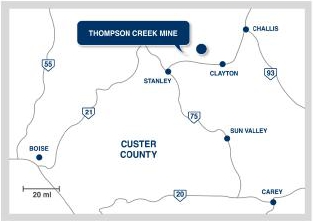 |
Quick Facts
The Thompson Creek Mine is a primary, surface molybdenum mine and mill located approximately 48 kilometres southwest of the town of Challis in Idaho’s Custer County.
The mine, which began operations in 1983, has significant existing infrastructure, including a fleet of mobile equipment, a processing facility, and waste and tailings storage facilities with additional available capacity.
In September 2024 Centerra announced the restart of operations at the Thompson Creek Mine, with first production targeted for the second half of 2027. |
| Location | Idaho, United States |
| Ownership | 100% |
| Business structure | Our wholly-owned, indirect subsidiary, Thompson Creek Mining Co., is the holder of the rights to mining and exploration for the Thompson Creek Mine. |
|
Estimated Mineral Reserves (as at December 31, 2024) |
161 M lbs of contained molybdenum (proven and probable) average grade – 0.065 %Mo tonnage – 112,989 kt |
|
Estimated Mineral Resources (as at December 31, 2024)
Mineral resources are exclusive of reserves. Mineral resources do not have demonstrated economic viability.
|
63 M lbs of contained molybdenum
(measured and indicated) |
| Inferred mineral resources have a great amount of uncertainty as to their existence, continuity, and grade, and as to whether they can be mined economically. There is no certainty that all or part of the inferred resources will ever be upgraded to a higher category or converted into mineral reserves. | 17 M lbs of contained molybdenum (inferred) average grade – 0.072 %Mo tonnage – 10,523 kt |
| Processing Method | Crushing, grinding, flotation |
| Estimated Mine Life | 12 years |
| Employees | 155 |
| Centerra Gold Inc. | |
| 2024 Annual Information Form | Page 48 |
Technical Report
The TCM Technical Report, with an effective date of September 1, 2024, was filed on September 27, 2024, on www.sedarplus.com. It is recommended that you read the TCM Technical Report in its entirety for additional details relating to the Thompson Creek Mine. Defined terms and abbreviations used in this section and not otherwise defined have the meanings attributed to them in the TCM Technical Report.
Project Description, Location, Access and History
The Thompson Creek Mine is an open pit molybdenum mine and concentrator located in Custer County in central Idaho, approximately 22 miles southwest of the town of Challis and approximately 9 miles northwest of the town of Clayton. The property is easily accessible year-round either from Idaho Falls or Boise, both cities within driving distance to the project that are serviced by national and international flights. The operation consists of an open pit mine, ore crusher, overland conveyer system, concentrator, and tailings storage facility (TSF) including the containment dam. Associated infrastructure includes water pumping systems, electrical transmission lines, support facilities (offices, maintenance shops and warehouse), and access roads.
Open pit mining commenced in 1983 and was conducted in several phases, culminating with Phase VII in 2014. The mine was placed on care and maintenance in December 2014, and the open pit was allowed to flood. Care and maintenance has been continuous until September 2024.
The infrastructure at the Thompson Creek Mine includes:
| · | A site access road | |
| · | Tailings pond and associated sands plant and containment dam | |
| · | Process and freshwater ponds | |
| · | A crushing plant, overland conveyor, mill, and concentrator | |
| · | Laboratory | |
| · | Core storage building | |
| · | An administrative building, warehouse, dry, infirmary, main garage, and repair shops. |
Electric power is provided to the site by Bonneville Power Administration through a 24.7-mile, 230 kV power line. There is an ample supply of water to support mining processes.
TCM presently controls a block of contiguous mineral claims that include patented lode claims, placer claims, and mill site claims comprising about 35 square miles of land, or about 22,500 acres. Specifically, the tenement consists of 1,631 patented and unpatented mineral and mill site claims including placer and lode claims. Ongoing obligations are made to maintain these titles. Local taxes levied on the mine and mill site are also current. Under United States law, title to these mineral claims does not expire as long as an annual payment is made for each mineral claim. TCM reports that all fees for mineral claims are current. Maintenance buildings are located on private land. Approximately 40% of the claims are on lands of the Challis National Forest, with the remaining 60% located on lands of the BLM. There are no royalties or streaming agreements associated with the Thompson Creek Mine.
Geological Setting, Mineralization and Deposit Types
The Thompson Creek Mine porphyry molybdenum deposit occurs near the suture of the late Cretaceous Idaho Batholith in the west and complexly folded Paleozoic metasedimentary rocks interpreted to have accumulated in a back-arc environment in the east.
The Idaho Batholith is a multi-phase granitic to granodioritic intrusion with an age range of 65 to 100 million years (Ma). The intrusive phases are thought to have been generated by the subduction of the Pacific Farallon plate under the North American plate. In western Idaho, the batholith is separated by outcrops of older metasedimentary rocks.
East of the Thompson Creek Mine, the terrain is dominated by a complexly deformed back-arc sequence of Paleozoic metasedimentary rocks. Although these rocks are poorly mapped, they may represent transitional and allochthonous portions of a Palaeozoic miogeosynclinal-eugeosynclinal wedge.
Large areas of both geologic provinces are unconformably overlain by thick Eocene volcanic rocks of the Challis Formation that has been dated to 41–51 Ma. The hot spring waters that flow into the Salmon River in the district are relics of these volcanic events. The Challis Formation was emplaced post mineralization and can reach thicknesses of approximately 1,000 feet locally.
| Centerra Gold Inc. | |
| 2024 Annual Information Form | Page 49 |
The primary host for the molybdenite mineralization at the Thompson Creek Mine is the Thompson Creek intrusive complex, composed of a granodiorite-quartz monzonite stock of Cretaceous age that has been dated at 88 Ma. The stock was intruded into carbonaceous argillite of the Mississippian Copper Basin Formation. Both the intrusive rocks and metasedimentary units are overlain by the Eocene-age Challis Volcanics. The volcanic composition ranges from andesite to rhyodacite tuffs, flows, and agglomerates. The volcanic rocks filled paleo-valleys in the area and can be up to 1,000 feet (305 metres) thick.
The quartz monzonite is equigranular with no obvious porphyritic phase or other direct evidence of a highly differentiated system. However, Schmidt et al. (1982) describe a multi-phase intrusive system with an outer zone of biotite granodiorite enclosing an inner zone of biotite quartz monzonite. The inner, deeper, and presumably younger quartz monzonite phase is lower in biotite but higher in potassic feldspar and contains monazite. The molybdenum mineralization has been interpreted to be related to this phase. Schmidt et al. (1982) also mention granite porphyry dikes lower in the system. At the contact of the intrusion, the argillite has been metamorphosed to hornfels and tactites. The metasedimentary host unit is locally mineralized.
Alteration of the intrusive rocks is characterized by pyrite, quartz, and sericite, primarily in veins at shallow depths. This alteration style has been mostly mined out. The dominant alteration at depth comprises coarse biotite, locally intergrown with molybdenite in quartz veins. Potassic feldspar is common in the biotitic veins, and disseminated potassic feldspar occurs in the younger intrusive at depth.
There are two major structural features associated with the Thompson Creek deposit:
| · | The Raise Fault, which strikes northwest, parallel to the trend of the mineralization | |
| · | The Unnamed Fault, which strikes 34° and dips steeply to the southeast. |
The Unnamed Fault separates the deposit into northwest and southeast portions. There is evidence that the southeast portion may be down-dropped relative to the northwest portions.
Mineralization is restricted almost exclusively to the granodiorite/quartz monzonite intrusion discussed above. The long axis of the largely eliptical deposit is oriented in a northwesterly direction with a plunge of about 30 degrees. The approximate dimensions of the deposit are 6,000 feet long by 2,500 feet wide by 2,500 feet deep.
The molybdenum mineralization occurs as a series of crosscutting quartz-molybdenite-pyrite veinlets, stringer zones, and rare coarse disseminations. The dominant vein set strikes at 300–320° and dips at 30–85° northeast, parallel to the long dimension of the intrusive body, implying that the same or a similar stress field played a role in controlling both the intrusion of the igneous rocks and opening the space occupied by the veining.
Over the life of the mine to date, the molybdenum grade mined has averaged approximately 0.083% Mo.
The Thompson Creek Mine deposit is a porphyry molybdenum deposit which are a substantial resource for molybdenum metal. The deposits contain low-grade mineralization (typically 0.03–0.22% Mo) as molybdenite, but are large, which makes them amenable to bulk mining open-pit techniques.
Porphyry molybdenum deposits are broadly categorized into two types: 1) alkali-feldspar rhyolite-granite (Climax-type) porphyry molybdenum deposits; and 2) arc-related (Endako-type) porphyry molybdenum deposits. The Thompson Creek Mine deposit is of the Endako-type.
The Endako-type deposits are associated with subduction related processes, whereas the Climax-type deposits are generally rift-related. Other Endako-type deposits proximal to Thompson Creek Mine include White Cloud, Idaho and Cannivan Gulch, Montana. Of the more than 50 molybdenum occurrences in Idaho and Montana, only the Thompson Creek Mine deposit has had substantial production. Other productive deposits are spread across the western cordillera of Canada, notably the Endako, Kitsault, and Boss Mountain deposits in British Columbia.
The formation of porphyry molybdenum deposits typically occurs within a continental arc environment related to arc-continent or continent-continent collision and subduction. These arc-related porphyry molybdenum deposits are generally hosted by granodiorite to quartz monzonite intrusions. Secondary potassic alteration (biotite-feldspar) is common. Alteration is usually zoned from a core of potassic plus/minus silicic alteration outwards through phyllic to propylitic alteration.
The mineralization is generally associated with molybdenite-bearing quartz veinlets in the form of stockwork. Molybdenum is the sole product of the Thompson Creek Mine deposit, with the mineralization generally accompanied by less than 100 ppm Cu. Compared to other types of porphyry deposits, there is a distinctive overall lack of copper and tin enrichment in the mineralized system; hence, these are not considered to be economically recoverable metals.
| Centerra Gold Inc. | |
| 2024 Annual Information Form | Page 50 |
Exploration and Drilling; Development and Production
The property has been subjected to numerous exploration drilling campaigns by various owners since the 1970s. Of the total of 429,391 feet of drilling (436 holes), TCM drilling programs have recovered 115,158 feet of core from 129 holes. No current mineral exploration has been conducted by Centerra.
Early in 2023, Centerra commenced a geotechnical drill program in support of a study to restart mining activities, which would entail additional pushbacks of the pit walls. The drill program comprised 18 core holes (14,600 feet/4,450 metres). Most of the holes targeted the north and northeast pit walls close to the crest. Holes were drilled using HQ-sized equipment with the possibility of reducing to NQ in case of challenging ground conditions. Select holes penetrated the known mineralization at depth prompting the logging and select sampling of the core in question.
TCM has evaluated an optimized mine plan to restart the mine and continue development of the open pit. Approximately 28,500 tons per day of ore would be processed through the existing, refurbished processing facilities.
Material mined from the Thompson Creek Mine open pit will be processed on site using the existing crushing circuit, mill, and concentrator. Molybdenite concentrate and high-performance molybdenum (HPM) products will be produced and shipped by truck, either directly to customers or to the Langeloth Metallurgical Facility. In the event that molybdenite concentrate and/or HPM products are shipped to the Langeloth Metallurgical Facility, the molybdenite concentrate will be processed to make molybdenum trioxide (MoO3) and other products for sale to various customers.
Sampling, Analysis, and Data Verification
Knowledge regarding sample preparation, assaying, and sample security during the exploration and development phases of the Thompson Creek Mine deposit by Cyprus (1968 through 1981) is based on historical reports from Cyprus and The Winters Company. The Winters Company completed numerous checks and reviews of the pre-2000 drillhole database as part of contracted work for TCM in 2000.
The following presents a summary of the procedures that were utilized by Cyprus for most of their exploration programs:
| · | Drill core was split with a hydraulic splitter usually as 10-foot long (3.05 metre) samples. One half of the split core was kept as reference material in waxed cardboard core boxes and the other half core was transported to a Cyprus preparation facility located in Philipsburg, Montana. | |
| · | The split core was crushed and pulverized, and the pulps sent to one of several labs for analysis. | |
| · | Assay labs that were used by Cyprus included: Chemical and Mineralogical Services (CMS) in Salt Lake City, Utah; Skyline Labs (Skyline) in Denver Colorado; Cyprus Metallurgical Processes Corp. (CYMET) in Tucson, Arizona; Rocky Mountain Geochemical (RMGC) in Salt Lake City; and Hazen Research, Inc. (Hazen) in Denver. There is no information about any certifications those labs may have possessed during those years; however, each laboratory was regularly used by many major mining companies. | |
| · | A subset of pulps was retained in Philipsburg for reference. | |
| · | Samples from surface drilling were generally assayed at Skyline with a duplicate at CMS. Several triplicate analyses were run at Cyprus in-house laboratories or at RMGC. Centerra was not able to assess the analytical quality control data from that period. | |
| · | Drillholes that were collared underground were generally assayed at Hazen. | |
| · | Rotary drillhole cuttings were collected and split in a Jones splitter at the drill site. Sampling was conducted on 10-foot intervals. The rotary cuttings were prepared in Philipsburg, MT and then assayed at one of several labs mentioned above. |
The Cyprus data were collected prior to the more rigorous quality assurance and quality control (QAQC) practices of today. Cyprus did a certain amount of check assaying between different laboratories and was able to make various comparisons between drillhole samples and bulk samples collected from underground developments driven into the orebody. Despite the lack of robust analytical quality control data support of assay data, the mine has produced a significant amount of molybdenum. Since 1998, the mill processed approximately 123 million tons (111.8 million tonnes) of ore, producing approximately 247 million pounds (112,000 tonnes) of molybdenum. Throughout most of the mine life, the long-range geological model was based primarily on the Cyprus drillhole data, and it correlated adequately within the expected variance from production data for tons and grade. This fact suggests that the historical data are generally reliable, and that they can be used for mineral resource estimation purposes.
For most of the post-Cyprus drilling campaigns completed during the years 1997 to 1999 and 2007 to 2009, sample preparation and assaying was completed at the Thompson Creek Mine laboratory. That lab did not obtain ISO certification. However, the laboratory operates to industry standards and serves several third-party clients that trust the laboratory’s data quality. Assays from drill programs since 1997 include molybdenum, lead, iron, uranium, and sulfur. Analyses for the latter elements were obtained to ensure the quality of the molybdenum concentrate and not for potential metal recovery.
| Centerra Gold Inc. | |
| 2024 Annual Information Form | Page 51 |
The sample protocols at the Thompon Creek Mine laboratory were:
| · | Samples were dried and homogenized and then split with a riffle splitter. | |
| · | 200–300 grams were pulverized to -200 mesh. | |
| · | 2 gram samples were digested using a three-acid solute and analysis by atomic absorption. The acid solute comprised an initial decomposition with nitric acid, followed by chlorate, and final hydrochloric acid digestion. |
The blast-hole data were also assayed onsite at the Thompson Creek Mine laboratory. Samples were assayed for molybdenum and lead, and every fifth sample was analyzed for iron if the molybdenum grade was above the cut-off of 0.030% Mo. Waste samples were assayed for sulfur, and every fifth sample was assayed for molybdenum. Blast-hole data have been lost and thus were not available for review.
According to Thompson Creek Mine staff, the core and reverse circulation samples were assayed for molybdenum, copper, lead, and iron at the Thompson Creek Mine laboratory. The Thompson Creek Mine geologic staff did not submit standard reference materials (SRMs) at source; however, the Thompson Creek Mine lab introduced their own SRMs according to their standard protocols. The TCM laboratory also inserted blank material in assay batches as part of their internal QAQC.
After the assays for the 2007 drilling program were completed, the Thompson Creek Mine sent 138 pulps to the Skyline laboratory located in Tucson, Arizona, to be assayed for molybdenum. The samples were selected based on initial waste, low-grade, and high-grade molybdenum values. These samples represented a frequency rate of about one check assay per 12 original samples.
In addition to the external laboratory checks discussed above, the Thompson Creek Mine collected duplicate samples from their 2007 core and reverse circulation drilling campaigns. The mean grades for the first and second duplicates vary between +3% and -8% from the original or initial sample grades.
Analytical QAQC procedures for the 2008, 2009, and 2010 drilling campaigns were restricted to the Thompson Creek Mine onsite lab protocols. The mine prepared SRMs from blast-hole cuttings. These SRMs have an expected grade of approximately 0.074% Mo with two standard deviations ranging between 0.068% and 0.080% Mo. The most recent standard, known as “QC#9”, was routinely inserted into the atomic absorption instrument at a frequency of one standard for every five samples after the machine was calibrated with a blank. In-house SRM is considered acceptable in this case, considering the lack of commercially available material. No assay certificates are available for post-2009 drilling.
Based on the above discussion, the Thompson Creek Mine drillhole data are considered representative of the molybdenum mineralization at Thompson Creek and thus are suitable for the purpose of Mineral Resource estimation. The TCM has had extended periods of production with favorable reconciliation history of prior resource models and production results.
The prior QPs, Marek and Lechner (2011), had a long working relationship with the Thompson Creek Mine. In 1997 and 2000, numerous checks were made between the electronic drillhole database and the Cyprus drillhole assay logs, downhole survey logs and lithologic logs. In general, the electronic database was accurate with few errors. It is noted that the Thompson Creek Mine had been operating for over 15 years at the time those data verifications were made and that the Thompson Creek Mine typically experienced excellent reconciliation results.
Since acquiring the property in late 1993, Thompson Creek Mining Company LLC and later Thompson Creek Metals Company Inc. (2006) have drilled approximately 129 drillholes totaling around 115,258 feet (35,130 metres). Most of this footage was drilled as infill data for mine planning purposes and the rest was for geotechnical and dewatering purposes.
The QP responsible for this in the TCM Technical Report did perform basic data validation on the 10 holes completed in the post-2009 drillhole campaigns. Those validations were based on comparing the new drillhole results to surrounding holes and where available, reviewing various QAQC results.
The same drillhole database (with the inclusion of the post-2009 drillhole data) and long-range block model that were the basis of the last Technical Report (Marek and Lechner, 2011) have been used for the TCM Technical Report. The Thompson Creek Mine used the June 2010 block model until the mine closed in late 2014 due to low metal prices.
| Centerra Gold Inc. | |
| 2024 Annual Information Form | Page 52 |
Mineral Processing and Metallurgical Testing
The Thompson Creek Mine and mill operated from 1983 through to 2014, during which period metallurgical characteristics and operational processes of the ore were well established. The ore is processed through a gyratory crusher, a SAG-ball mill (SAB) circuit, and combined with rougher and cleaner flotation plant, to produce molybdenum-rich concentrates. The mine and concentrator were placed on care and maintenance in December 2014 when the mining and processing of Phase VII ore was completed.
Metallurgical Testing:
The ore to be processed at the Thompson Creek Mine will be from the same mineral deposit as previously mined, extracting ore from the existing pit (walls and floor). The mineral processing characteristics are principally defined by the existing operating data; a metallurgical test program was conducted to confirm that the planned LOM ores would be similar in processing characteristics as established historically.
A metallurgical testwork program was carried out at Base Metallurgical Laboratories Ltd (BaseMetLab), located in Kamloops, British Columbia, Canada, from October 2023 to February 2024. The program consisted of comminution and flotation tests to characterize future ores, and also to confirm the similarities and identify differences, if any, between the restart LOM ore and historical production ore.
Four composite samples, each representing a three-year mining period (Year 1-3, Year 4-6, Year 7-9, and Year 10-EOM) were submitted for analysis. The composite samples were made up of drill core intervals from the prospective mine plan locations, principally along the existing pit wall and floor.
Based on the testwork results, the calculated specific grinding energies required to achieve the target grind (P80 212 μm), shown in the table below, for the LOM are within the operating Specific Energy range experienced previously by the mill, indicating test sample similarity to the historically processed ore from the perspective of hardness and comminution.
Calculated Specific Energy for LOM three-year composite samples
| Test set | Composite sample | Specific Energy (kWh/st) | |||||
| 1 | Year 1-3 | 11.17 | |||||
| 2 | Year 4-6 | 10.23 | |||||
| 3 | Year 7-9 | 10.43 | |||||
| 4 | Year 10-EOM | 11.35 | |||||
Rougher flotation tests were performed at a nominal primary grind size of 200 μm. All composite samples produced high rougher recoveries in the range of 94.3% to 97.0%.
Cleaner flotation tests were performed. High molybdenum recoveries were achieved in Sets 1 to 3, with a range of 88.9% to 94.8% and concentrate grades ranging from 52.3% to 59.3% Mo. Set 4, which corresponds to the previously noted high-sulfur metasediments lithology, exhibited weak metallurgical performance with much lower concentrate grades, ranging from 20.8% to 41.5% Mo.
The flotation testwork program also included a stage of rougher pyrite flotation to inform the design of a new pyrite removal circuit. The objective of the circuit was to produce a non-sulfide tailings grade not greater than 0.1% S. The Thompson Creek Mine’s historical pyrite removal circuit had been removed but will be replaced with the new circuit prior to the restart of operations.
A separate sample, identified as High Sulfur and corresponding to the metasedimentary rock formations, produced the weakest flotation response. Metasediments constitute only a small fraction of the ore, and the low flotation results for this rock type will not impact overall recoveries.
No testwork specific to concentrate dewatering (thickening, filtration, or drying) and acid leaching was completed. It is expected and assumed that the LOM ore will not present any issues in these unit operations, given its similarity to historical feed, and the performance and ability of the existing circuits to produce a clean, saleable concentrate.
Mineral Recovery Methods:
The Thompson Creek Mine has existing process plant facilities at the mine site which will be employed to treat remaining ores and produce high-grade molybdenum concentrate. Currently the plant is being refurbished as part of the restart.
Upon restart, the Thompson Creek Mine plant will process mineralized material from the same deposit as previously mined. Metallurgical testwork has confirmed recovery of molybdenum will be consistent with historical operations. Additional tests have defined the SG of the individual mineralized lithologies, enabling more accurate mass determinations and reconciliations.
| Centerra Gold Inc. | |
| 2024 Annual Information Form | Page 53 |
A review of historical performance indicates the plant can run at a steady state throughput rate of 1,290 short tons per hour (st/h), an average daily rate of 28,500 st/d, and it has a demonstrated maximum capacity of 38,000 st/d.
The plant is expected to operate at 92% availability, recover between 85.3% and 92.5% of molybdenum contained in the ore and deliver concentrate at a molybdenum grade range of 52.3% to 59.3%.
Prior to full-scale production, a restart preparation period will be required to bring the concentrator from its current care and maintenance state to a fully operational state. Where necessary, new replacement equipment will be installed, or existing equipment and circuits will be refurbished prior to plant restart.
Processing operations at the Thompson Creek Mine began in 1983 and have since produced saleable high-grade molybdenum concentrates at recoveries of 90% Mo or better. The Thompson Creek Mine utilizes a conventional process flowsheet similar to other primary molybdenum producers.
Historical production of the Thompson Creek Mine processing plant is in the table below.
The Thompson Creek Mine processing plant throughput statistics
| Year | Reported days | Annual (dry Mst/y) | Average (dry st/d) | Median (dry st/d) | Maximum (dry st/d) | Std dev (dry st/d) | ||||||||||||||||||||
| 2008 | 362 | 10.1 | 27,855 | 29,135 | 35,103 | 4,917 | ||||||||||||||||||||
| 2009 | 272 | 7.7 | 27,908 | 28,838 | 35,158 | 4,637 | ||||||||||||||||||||
| 2010 | 359 | 10.3 | 28,123 | 30,039 | 38,897 | 6,946 | ||||||||||||||||||||
| 2011 | 364 | 10.4 | 28,570 | 29,615 | 38,622 | 6,699 | ||||||||||||||||||||
| 2012 | 366 | 10.3 | 28,090 | 29,442 | 38,356 | 6,145 | ||||||||||||||||||||
| 2013 | 184 | 5.0 | 27,184 | 29,796 | 35,658 | 6,989 | ||||||||||||||||||||
| 2014 | 212 | 5.6 | 26,451 | 28,264 | 32,846 | 5,228 | ||||||||||||||||||||
Based on the maximum daily throughput values tabled above, the mill has processed up to 38,000 st/d. For more sustained daily throughput, the median daily values indicate approximately 29,000 st/d, adequate for the planned average throughput rate of 28,500 st/d or 10.4 Mst/y. Based on the 2012 availability records, and planned refurbishments, it is expected that the Thompson Creek Mine concentrator will be able to achieve 92% availability.
A comprehensive inspection of the 60-inch x 89-inch, 600 hp gyratory crusher was completed in 2023, and a course of actions was recommended to upgrade the crusher for reliable and stable operation. These actions will be completed prior to restart. The gyratory crusher discharge apron feeder was visually inspected, and recommended actions for its refurbishment will also be taken during restart activities.
Crushed ore from the primary crusher is conveyed via two overland conveyors and deposited onto the coarse ore stockpile of five-day capacity upstream of the processing plant. Two process lines reclaim stockpiled ore into dedicated conveyors and SAG mills. Inspections in 2023 resulted in plans to replace idlers, scrapers, and the Conveyor 1 belt.
Each of the two grinding lines (of combined capacity of 1,290 st/h), comprise one 32-ft x 13-ft SAG mill with 8,000 hp installed power and one ball mill operating in closed circuit with two classifying hydrocyclone clusters. Inspections of the grinding circuit resulted in recommended refurbishment actions in advance of startup. New equipment installations include a cyclone pump-box, a particle size analyzer, and a new liner and lifter design for the SAG mills.
Two new banks of rougher flotation cells will be installed of the same specification previously employed. Molybdenum recovery of 94% is expected from the rougher circuit. Rougher tailings will pass through the pyrite removal flotation circuit prior to delivery to the TSF. Rougher concentrate will be reground in closed circuit with cyclones then routed through a first cleaner flotation circuit, then through a series of 60-inch diameter flotation columns for additional molybdenum recovery. The resultant concentrate is screened prior to thickening and delivery to the concentrate leaching process.
The leaching process further improves the grade and quality of the molybdenum concentrate by dissolving impurities such as copper and lead into the leachate at high temperature. The leached molybdenum concentrate is dewatered using filter presses. The filtered molybdenum concentrate cake is collected and conveyed to a Holoflite dryer to reduce the moisture content of the final product before packaging.
| Centerra Gold Inc. | |
| 2024 Annual Information Form | Page 54 |
Plant services (such as compressed air, fire water, etc.) required for the restart of the process plant are all existing and are designed for the operation of the facilities at the nameplate production rate of 28,500 st/d. Further, certain plant facilities are certified and/or in current use, specifically around the HPM circuit. No significant changes are forecasted for the required capacities of existing utilities and services at site. Restart of the plant services will require servicing of existing equipment and/or replacement of damaged/inoperable equipment and wear parts.
Mineral Resource and Mineral Reserve Estimates
For information on the Thompson Creek Mine mineral reserves and mineral resources, see “Mineral Reserves and Resources” starting on page 18.
Infrastructure
Infrastructure to support the operation of the Thompson Creek Mine is in place and has been maintained during the care and maintenance period. Capital expenses are required for refurbishing components of the water management system.
Waste Rock Storage:
Two WRSFs exist at the Thompson Creek Mine. The Buckskin and Pat Hughes WRSFs are capable of accepting the expected 386 Mst of waste rock to be extracted in the Phase VIII Mine Plan. Plans are in place to cover the piles with non-acid generating (NAG) Type I rock to prevent acid rock drainage (ARD).
Tailings Storage
Mine tailings produced at the Thompson Creek Mine are stored in the Bruno Creek Tailings Impoundment, which commenced operations in August 1983. Containment of impounded tailings is provided by a cyclone sand dam, which is raised sequentially as a centerline structure. The original TSF design accommodated tailings produced during Phase I through Phase VI of the Mine Plan. Expansion designs have since been completed for Phase VII and Phase VIII. The Phase VIII design received regulatory approval and is intended to accommodate tailings produced during the remaining LOM. Expansion beyond the Phase VIII design would be challenging due to topographic constraints, particularly at the left abutment and along the left groin. Dam crest elevations in units of feet above sea level (ft-asl) and TSF capacities (including both the sand dam and impounded tailings) for different phases in the mine life are provided in the table below.
| Design timeframe | Date range | Dam crest elevation (ft-asl) | Incremental capacity (Mst) | Cumulative capacity (Mst) | ||||||||
| Design for Phases I through VI | 1983 to 2009 | Up to 7,600 | 200 | 200 | ||||||||
| Design for Phase VII | 2009 to 2013 | Up to 7,646 | 34 | 234 | ||||||||
| Design for Phase VIII, to date | 2013 to 2014 | Up to 7,660 | 6 | 240 | ||||||||
| Design for Phase VIII, remaining | Future | Up to 7,742 | 94 | (1) | 334 | (1) | ||||||
(1) The capacity for the remainder of Phase VIII corresponds to pre-reclamation conditions. Additional tailings will be used to help reach closure grades across the impoundment surface. The amount of additional tailings needed to reach closure grades is subject to adjustment but is currently estimated at 30 Mst based on the conceptual closure plan.
Continued raising of the sand dam after mill restart will require increased on-specification sand recovery from tailings cyclone operations to produce sufficient volumes of dam construction material.
At the start of the current temporary shutdown, there existed a sand deficit from previous operations, totaling approximately 7.5 Mst, which has left some areas lower in elevation and steeper than intended. To help recover from this shortfall, and to enable improved future operations, a fixed cyclone station was constructed above the right abutment of the sand dam in 2012. An assessment is currently underway to evaluate potential improvements to the existing cyclone and tailings distribution systems that would increase on-specification sand recovery and enable delivery of cyclone sand to locations downslope from the dam crest so that the existing deficit can be eliminated as quickly as feasible after mill restart.
The TSF has sufficient capacity to accept the deposition of 94 Mt of tailings to reach the ultimate design grades, plus additional capacity for excess tailings to help reach closure grades across the impoundment surface.
| Centerra Gold Inc. | |
| 2024 Annual Information Form | Page 55 |
Water Management:
A site-wide water balance GoldSim model (WBM) was developed to inform LOM water management decision-making for specific phases of the project, including pit dewatering and operations. The WBM is informed by previous work conducted in support of the restart project and the Phase VIII Environmental Impact Statement (EIS) and is calibrated to site-specific monitoring data from operations as well as long-term regional climate and hydrometric datasets. The WBM integrates physical and catchment-scale processes for all mine facilities, including an open pit, two mine rock storage facilities, a TSF, mill, and associated water management and conveyance infrastructure.
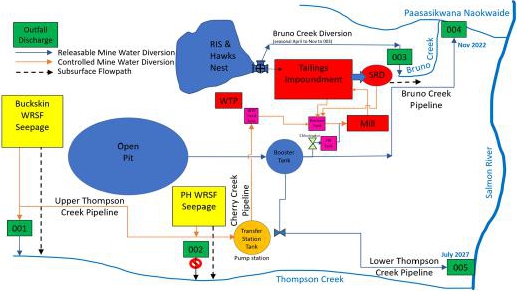
Water discharges to receiving streams are constrained by site infrastructure capacity limitations and approved, flow-based, discharge permit limits specified by the Idaho Pollutant Discharge Elimination System (IPDES), which are built into the WBM logic. The WBM includes flow, precipitation, and evaporation inputs for a 23-year period of record and operates on a daily time step.
The WBM evaluated a range of project phases, including dewatering of the pit prior to milling and operations through the LOM once processing has commenced and after the pit has been dewatered. Following the end of mining operations, the time for the pit to flood was assessed.
The Base Case dewatering scenario demonstrated that the pit can be dewatered in approximately 3.3 years to 5.2 years (median result of 3.7 years) following the restart of milling. If the dewatering period coincides with successive wet years, additional discharge capacity may be required to dewater the pit to the current pit base (floor) ahead of advancing the south highwall below 6,360 ft-asl by 2032. The likelihood of this outcome is considered low because of the conservatism built into the WBM (i.e. overestimation of modelled pit inflows based on a comparison of simulated versus measured pit water levels).
The Base Case operations scenario outcomes identified additional mill make-up water demands consistent with historical operations (e.g. from the Salmon River). Noted model sensitivities to climate and modelled groundwater inflow rates identified potential surge storage demand which can be accommodated in the pit, consistent with historical operations.
Post-closure model simulations suggest the pit will require on the order of 60 years to fill to the final managed water elevation of 7,030 ft-asl. Additional recommendations pertaining to water quantity and water quality management as the project advances through detailed design are provided.
Environmental, Social and Permitting
The Thompson Creek Mine is located within the mountainous terrain of Custer County, south central Idaho, bounded by Thompson Creek to the west and south and Paasasikwana Naokwaide to the east. Steep mountainous terrain bounds the project area to the north and divides the Thompson and Paasasikwana Naokwaide drainages. Thompson and Paasasikwana Naokwaide flow into the Salmon River approximately 4 miles south of the project.
The site has undergone no significant change to the area of disturbance since 2015. A Modified Mine Plan of Operations consistent with the ROD (BLM, 2015) (MMPO), was accepted in early 2022 which detailed the Phase VIII operations: expansion of the open pit, and expansion of the WRSFs and TSF. The additional surface disturbance from Phase VIII will be on approximately 120 acres of TCM land, 200 acres of Bureau of Land Management (BLM) administered land, and 185 acres of United States Forest Service (USFS) land. The Phase VIII Reclamation Plan and Cost Estimate was accepted in May 2023, allowing initiation of Phase VIII early works activities in November 2023. In December 2023, the Thompson Creek Mine submitted a MMPO for the Thompson Creek Phase VIII Mine Plan of Operations to include additional acreage for the pit highwall layback. In July 2024 Thompson Creek Mine received approval for the pit highwall layback acreage subject to a minor update to the reclamation plan.
| Centerra Gold Inc. | |
| 2024 Annual Information Form | Page 56 |
All required permits and authorization for the Thompson Creek Mine are currently in place to mine the Phase VIII Mine Plan, including closure plans and all necessary environmental compliance approvals. Since the receipt of approval for a MMPO in 2024, permits and authorizations include an additional pit highwall layback.
Site operations are overseen by four government agencies:
| · | Idaho Department of Lands (IDL) | |
| · | Idaho Department of Water Resources (IDWR) | |
| · | BLM | |
| · | USFS. |
The Thompson Creek Mine operates under the following permits, licenses, and limits.
| · | Plan of Operation (POO) Permit | |
| · | Water Rights | |
| · | A Section 404 Permit under the Clean Water Act | |
| · | Idaho Pollutant Discharge Elimination System Discharge Permit | |
| · | Air Quality Permit |
Impacted site water includes seepage from beneath the Pat Hughes and Buckskin WRSFs and tailings underdrain water. All the impacted water is pumped in existing pipelines to the existing water treatment plant via the Thompson Creek Pipeline/Cherry Creek pump station (for the Pat Hughes/Buckskin water) and the SRD pump station (for the tailings drain water). The treatment plant provides lime neutralization, clarification, and filtration at 8 μm prior to consumptive use at site (pump gland seal, heat exchange, milling/grinding, leach circuits, etc.). Impacted water in surplus to consumptive use is accumulated in the pit.
Solid waste is disposed at the Thompson Creek Mine landfill, which is permitted through the District Seven Health Department as a private disposal facility for solid waste generated at the mine and mill.
Since 1997, the Consolidated Environmental Monitoring Program has been in continuous operation incorporating monitoring requirements to address various operational and regulatory changes, including potential for ARD, changes in status of threatened and endangered species protection, and new National Pollutants Discharge Elimination System (NDPES) discharge points. The current Consolidated Environmental Monitoring Program is composed of: Biological Monitoring, Air Emission Compliance Monitoring, Discharge Permit Monitoring, Structural and Dam Safety Monitoring, Water Quality Monitoring and Data Validation, Mine Waste Monitoring, Formal Reporting of Environmental Monitoring Program Data and Analyses, and Water Quantity Monitoring.
Water quality management and environmental monitoring are reported in seven annual monitoring reports issued by the Thompson Creek Mine:
| · | Best Management Practices Plan (to USEPA and IDEQ) – annually | |
| · | Environmental and Reclamation Activities Report (to IATF) – annually | |
| · | Water Quality Report (to IDEQ and IATF) – annually | |
| · | Aquatic Biological Conditions Report (to IATF) – annually | |
| · | Waste Rock Dump Report (to IATF) – annually | |
| · | Sediment Report (to IATF) – annually | |
| · | Tailings Impoundment Operation and Dam Safety Monitoring Report (to IDWR, Dam Safety and IATF) – annually. |
The mine disturbance is not impacting private or tribal lands, nor would the Phase VIII expansion. Concern from conservation groups and the Nez Perce tribe have been focused on protection of water quality in the streams near the site that are tributary to the Salmon River. No other social or community requirements have been identified that will affect the implementation of the Phase VIII expansion, and the Thompson Creek Mine continues to work with the IATF and other stakeholders to address input and concerns on a regular basis.
| Centerra Gold Inc. | |
| 2024 Annual Information Form | Page 57 |
Capital and Operating Costs
The total LOM costs are estimated at $2.2 billion, including $0.5 billion in capital expenditures (inclusive of sustaining capital expenditures), which comprises upfront pre-stripping costs, equipment upgrades and replacements, and site facility equipment, and $1.7 billion in operating costs. Operating costs were developed from first principles, considering planned mine physicals, equipment hours, labor projections, consumables forecasts, other expected costs, and historical costs. Operating costs of $1.7 billion include all of stripping costs incurred during the production phase prior to the allocation of capital of $0.2 billion. The LOM production cost per molybdenum pound sold is estimated at $9.66 and all-in sustaining cost per molybdenum pound sold is estimated at $12.46. All-in sustaining cost per molybdenum pound sold is a non-GAAP measure defined by the Company.
Endako Mine
The Endako Mine is an open-pit molybdenum mine located approximately 161 kilometres west of Prince George, British Columbia, Canada. The property currently comprises a contiguous group of 60 mineral tenures containing 34 claims and 26 leases, covering approximately 12,835.11 hectares. Annual rental payment on the 26 mine lease titles is typically paid in installments in May, August, and November.
The Endako Mine is a joint venture between TCM which holds a 75% interest, and Moon River, which holds the remaining 25% interest. Moon River acquired its 25% interest in the Endako Mine Joint Venture after its acquisition of Sojitz Moly Resources Inc. in May 2024 as noted above. The Endako joint venture was formed on June 12, 1997, pursuant to the terms of the Endako Mine Joint Venture Agreement, as amended. We are the manager of the Endako Mine Joint Venture with overall management responsibility for operations.
Endako Mine deposit is divided into four named areas: Northwest, Denak West, Denak East and Endako. Mining has occurred in the Endako and both Denak areas. The Northwest zone is yet to be put in operation. There are no royalties, back-in rights, encumbrances on title or other agreements, other than the agreement governing the Endako Mine Joint Venture. The infrastructure at Endako Mine includes a 55,000 ton (50,000 ktonnes) per day concentrator, tailings and reclaim water ponds, a crushing plant, waste rock dumps, an administrative building, a truck shop/warehouse, a change house, a first aid station, a laboratory, a garage and other shops. The power supply of the site is provided by a 9-kilometre, 69 kV power line owned by B.C. Hydro from a nearby substation. Water for the milling process is re-circulated from the tailings facility while make-up water is pumped from François Lake, located nearby.
Starting in 2018, we initiated a review of our long-term water management options at the Endako Mine, due to ongoing discussions concerning mine reclamation obligations among regulatory and industry bodies in British Columbia. These discussions are ongoing. During 2019 and 2020, we updated our technical and environmental studies for the Endako Mine. A Best Available Technologies (“BAT”) study was completed in February 2020 to assess the potential short-term options for the management of seepage from the mine site with an updated BAT study completed in December 2022 for potential medium- and long-term BAT options. The studies continued to be a focus of ongoing reviews by local Indigenous groups and the provincial government as part of a Water Quality Working Group. Reclamation activities in 2025 will focus on completing construction for the closure of the spillway for Tailings Pond 2.
The Endako Mine has been on care and maintenance effective July 1, 2015. As of December 31, 2024, there are approximately 10 employees at Endako Mine for care and maintenance activities.
Langeloth Metallurgical Facility
Our wholly-owned Langeloth Metallurgical Facility is located in Langeloth, Pennsylvania, approximately 40 kilometres west of Pittsburgh, on land the Company owns in fee simple. The facility receives molybdenum concentrate from third party producers that is principally purchased for processing and re-sale as finished products to customers. The facility produces and sells sulfuric acid and has the ability to produce and sell ammonium perrhenate and rhenium metal pellets, all recovered as by-products of processing the molybdenum disulfide. In addition, the Langeloth Metallurgical Facility calcines other metal containing materials from various third-party operations.
Up to four multiple-hearth furnaces are used for the conversion (roasting) of molybdenum concentrate into technical grade molybdenum oxide. These roasters have the annual capacity to process over 40 million pounds of molybdenum contained in concentrates. The molybdenum oxide can be sold as a finished product to customers or can be upgraded at the facility to molybdenum oxide briquettes, pure molybdenum trioxide powder or various sizes of ferromolybdenum products. Additional furnaces are used to calcine non-hazardous metal containing materials that contain metals other than molybdenum.
As at December 31, 2024, the Langeloth Metallurgical Facility had approximately 85 employees.
| Centerra Gold Inc. | |
| 2024 Annual Information Form | Page 58 |
3.3 Other Properties
Goldfield Project
Centerra acquired the Goldfield Project effective February 28, 2022, with the acquisition of Gemfield Resources LLC.
The Goldfield Project is located in Esmeralda County near the historic gold mining town of Goldfield, approximately 290 km northwest of Las Vegas, Nevada, and 420 km southeast of Reno, Nevada, along Highway 95. The historical mining town of Tonopah is located approximately 38 km north of Goldfield, also on Highway 95. The Goldfield Project comprises approximately 62 square kilometers with three known gold deposits: Gemfield, located approximately 2.4 kilometres north of the town of Goldfield, Goldfield Main, located just to the east of the town of Goldfield, and McMahon Ridge located approximately 4 kilometres northeast of the town of Goldfield.
Gemfield and its immediate satellite target areas are geologically characterized by gently-dipping, intermediate and felsic volcanic units unconformably overlain by unconsolidated pebble to cobble conglomerate and down-dropped by postmineral normal faults. The Jupiter and Callisto prospects represent deeper sulfide mineralization transitioning to shallow oxide mineralization in the up-dip projection of the host stratigraphy.
As a result of a continuing strategic review of the project, the Company continued to focus exploration activities on oxide and transition material, principally in the Gemfield and nearby deposits with a view to develop a more simplified ore processing method and a flow sheet with lower capital costs and increased returns on the project when compared to the known sulphide ore at the Goldfield Project. The Company published the initial resource estimate for the project as part of the 2024 year end resources and reserves statement. Based on the size of resource estimate, Centerra has decided not to proceed with the development of Goldfield Project at this time. The Company remains committed to maximizing the project’s potential and will conduct close-out drilling in 2025, while exploring strategic options for the property.
Kemess Project
The Kemess Project is located in a mountainous area of north-central British Columbia, Canada, approximately 250 kilometres north of Smithers and 430 kilometres northwest of Prince George. The Kemess Project is comprised of 53 mining claims totaling 29,178 hectares. AuRico Metals Inc. (“AuRico”) also has an additional four mining leases totaling 3,483 hectares. The property is host to the former Kemess South Mine (operated from 1998 to 2011), the Kemess Open Pit, Kemess Underground deposit, and the Kemess East deposit.
Centerra acquired the Kemess Project effective January 8, 2018, with the acquisition of AuRico. The Kemess Underground Project has an approved environmental assessment certificate and all permits required to commence construction. There are currently no mining activities at the Kemess site and on-site activities consist of care and maintenance work. As of December 31, 2024, there are approximately 12 employees at the Kemess Project for care and maintenance activities.
In 2024, the Company made a strategic decision to re-evaluate the technical concepts for the Kemess property to determine the future potential of this asset. The project evaluation activities included confirmation and exploration drilling as well as technical studies. The Company expects to provide an updated resource estimate and an accompanying update on the technical concept for the Kemess Project in the second quarter of 2025.
Kemess’ Mineral Resource Estimates
For information on the Kemess Project mineral resources, see “Mineral Reserves and Resources” starting on page 18
4. Governance
4.1 Directors and Officers
The following tables set out the directors and executive officers of Centerra Gold Inc. as at March 1, 2025. The term of office for each of the directors will expire at the time of our next annual shareholders meeting. Each of the directors on the Board as of date of this Annual Information Form was elected to his or her present term as a director by our shareholders at the annual meeting of our shareholders held on May 14, 2024.
| Centerra Gold Inc. | |
| 2024 Annual Information Form | Page 59 |
Directors
| Director | Board Committees | Principal Occupation or Employment |
|
Michael
S. Parrett
Director since May 8, 2014 |
Audit
Human Resources and Compensation |
Chair of the Board since October 2019
Independent Consultant and Corporate Director
Director, Stillwater Mining Company from 2009 to 2017
Director, Pengrowth Energy Corporation from 2004 to 2016
Director of Gabriel Resources Limited from 2003 to 2010 (including Chairman from 2005-2010)
Other Public Company Directorships (current)
None |
|
Wendy Kei
Director since May 4, 2022 |
Audit (Chair)
Nominating and Corporate Governance |
Corporate Director
CFO of Dominion Diamond Corporation from 2013 to 2014
Other Public Company Directorships (current)
Ontario Power Generation Inc. |
|
Craig MacDougall
Director since May 14, 2024 |
Nominating and Corporate Governance
Technical and Corporate Responsibility |
Corporate Director
Other Public Company Directorships (current)
None |
|
Jacques
Perron
Director since October 20, 2016 |
Human Resources and Compensation (Chair)
Technical and Corporate Responsibility |
President and Chief Executive Officer, Pretium Resources Inc. from April 2020 to March 2022
CEO of TCM from October 2013 to October 2016
Other Public Company Directorships (current)
Arizona Metals Corp.
Franco-Nevada Corporation |
|
Sheryl K.
Pressler
Director since May 7, 2008 |
Audit
Nominating and Corporate Governance |
Investment and Strategy Consultant
Director of Stillwater Mining Company from May 2002 to May 2013
CEO of Lending Lease Real Estate Investment – US from 2000 to 2001
Other Public Company Directorships (current)
None |
|
Paul N.
Wright
Director since May 1, 2020 |
Human Resources and Compensation
Technical and Corporate Responsibility (Chair) |
Corporate Director
President and CEO Eldorado Gold Corp. from October 1999 to April 2017.
Other Public Company Directorships (current)
Galiano Gold Inc. |
| Centerra Gold Inc. | |
| 2024 Annual Information Form | Page 60 |
| DIRECTOR | BOARD COMMITTEES | PRINCIPAL OCCUPATION OR EMPLOYMENT |
|
Susan L.
Yurkovich
Director since May 1, 2018 |
Nominating and Corporate Governance (Chair)
Technical and Corporate Responsibility |
CEO at Canfor Corporation since January 2025 and Senior Vice President of Global Business Development since 2022
President and CEO of the British Columbia Council of Forest Industries and President of British Columbia Lumber Trade Council from 2015 to 2022
Executive Vice-President, British Columbia Hydro from 2006 to 2015
Other Public Company Directorships (current)
None
|
Executive Officers
| Officer | Principal occupation in past 5 years |
| Paul Tomory President and Chief Executive Officer Port Credit, Ontario, Canada 52 years old |
President and CEO of Centerra since May 2023
Executive Vice President and Chief Technical Officer of Kinross Gold Corporation from 2017 to 2022 |
| Ryan Snyder Executive Vice President and Chief Financial Officer Oakville, Ontario, Canada 42 years old |
Executive Vice President and Chief Financial Officer of Centerra since April 2024
CFO of Electra Battery Materials Corporation from 2018 to 2022 |
| Paul Chawrun (1) Executive Vice President and Chief Operating Officer Aurora, Ontario, Canada 59 years old |
Executive Vice President and Chief Operating Officer of Centerra since September 2022
Chief Operating Officer of Teranga Gold Corporation from 2016 to 2021 |
| Claudia D’Orazio Executive Vice President, People, Technology and Supply Chain Toronto, Ontario, Canada 55 years old |
Executive Vice President and Chief Human Resources and Technology Officer of Centerra since February 2020
Vice President, Human Resources from 2017 to 2020 and Vice President, Compliance and Risk from 2012 to 2017 at Pembina Pipeline Corporation |
| Yousef Rehman Executive Vice President, Legal and Public Affiars Burlington, Ontario, Canada 43 years old |
Executive Vice President, Legal and Public Affairs since July 2024
Executive Vice President, General Counsel & Corporate Secretary of Centerra from January 2018 to July 2024 |
| Hélène Timpano Executive Vice President, Strategy & Corporate Development Toronto, Ontario, Canada 42 years old |
Executive Vice President, Strategy & Corporate Development of Centerra since May 2023
Senior Vice President, Operations at Kinross Gold Corporation from 2019 to 2022 |
(1) David Hendriks will succeed Mr. Chawrun as Executive Vice President and Chief Operating Officer, effective April 15, 2025
Other Information About Our Directors and Officers
Share Ownership
As of March 1, 2025, our directors and executive officers (as a group) beneficially own, control or direct, or exercise control or direction over, directly or indirectly, 590,281 Common Shares representing approximately 0.28% of our total outstanding Common Shares (on a non-diluted basis).
Cease Trade Orders
To our knowledge as of the date of this AIF, no director or executive officer of Centerra is or has been in the last ten (10) years a director, CEO or CFO of any company that:
| Centerra Gold Inc. | |
| 2024 Annual Information Form | Page 61 |
| · | was subject to an order that was issued while the director or executive officer was acting in the capacity as director, CEO or CFO, or |
| · | was subject to an order that was issued after the director or executive officer ceased to be a director, CEO or CFO and which resulted from an event that occurred while that person was acting in the capacity as director, CEO or CFO. |
For the purposes of the foregoing, order means (i) a cease trade order, (ii) an order similar to a cease trade order, or (iii) an order that denied the relevant company access to any exemption under securities legislation, in effect for a period of more than 30 consecutive days.
Bankruptcy and Insolvency
To our knowledge as of the date of this AIF, no director or executive officer of Centerra, or a shareholder holding a sufficient number of securities of Centerra to affect materially the control of Centerra:
| · | is or has been within the last ten (10) years a director or executive officer of any company that, while that person was acting in that capacity, or within a year of that person ceasing to act in that capacity, became bankrupt, made a proposal under any legislation relating to bankruptcy or insolvency or was subject to or instituted any proceedings, arrangement or compromise with creditors or had a receiver, receiver manager or trustee appointed to hold its assets, or |
| · | has within the last ten (10) years become bankrupt, made a proposal under any legislation relating to bankruptcy or insolvency, or become subject to or instituted any proceedings, arrangement or compromise with creditors, or had a receiver, receiver manager or trustee appointed to hold the assets of the director, executive officer or shareholder. |
Penalties and Other Sanctions
To our knowledge as of the date of this AIF, no director or executive officer of Centerra, or a shareholder holding a sufficient number of securities of Centerra to affect materially the control of Centerra, has been the subject of:
| · | any penalties or sanctions imposed by a court relating to securities legislation or by a securities regulatory authority or has entered into a settlement agreement with a securities regulatory authority; or |
| · | any other penalties or sanctions imposed by a court or regulatory body that would likely be considered important to a reasonable investor in making an investment decision. |
Conflicts of Interest
Some of our directors also serve as directors and/or officers of other companies involved in natural resource exploration, development and production. Consequently, there exists the possibility for such directors to be in a position of conflict.
4.2 Committees
The Board and management believe that sound and effective corporate governance is essential to our performance. We have adopted certain practices and procedures to ensure that effective corporate governance practices are followed and that the Board functions independently of management. The Board carries out its responsibilities directly and through the following four standing committees:
| · | Audit Committee |
| · | Human Resources and Compensation Committee |
| · | Nominating and Corporate Governance Committee |
| · | Technical and Corporate Responsibility Committee |
A discussion of our approach to corporate governance and other committees can be found in our management information circular prepared in connection with our most recent annual meeting of shareholders.
Audit Committee
The Audit Committee is responsible for assisting the Board in fulfilling its oversight responsibilities in relation to the following:
| · | the integrity of our financial statements |
| Centerra Gold Inc. | |
| 2024 Annual Information Form | Page 62 |
| · | our compliance with legal and regulatory requirements (other than with respect to health, safety and the environment) |
| · | compliance with our Code of Ethics for employees and our international business conduct policy (anti-corruption policy) |
| · | establishing procedures for the (i) the receipt, retention and treatment of complaints regarding accounting, internal accounting controls or auditing matters and (ii) the confidential, anonymous submission by employees of concerns regarding such matters |
| · | the qualifications and independence of our external auditor |
| · | the design and implementation of internal controls over financial reporting and disclosure controls |
| · | management of financial risk delegated by the Board |
| · | related party transactions |
| · | the performance of our internal audit function and independent auditor |
| · | any additional matters delegated to the Audit Committee by the Board |
Audit Committee Charter
A copy of the Audit Committee’s charter is attached as Schedule A to this AIF and is also available on our website at www.centerragold.com.
Composition of the Audit Committee
The Audit Committee is comprised of Wendy, Kei (Chair), Michael S. Parrett and Sheryl Pressler. The Board has determined that all of the Audit Committee members are independent, financially literate, financial experts and audit financial experts as required by applicable securities legislation and stock exchange rules.
Relevant educational experience
Wendy Kei, a director and Chair of our Audit Committee, is an accomplished finance executive with over 25 years of business experience across multiple industries. She currently serves as Board Chair for Ontario Power Generation Inc.. Ms. Kei previously served as Chief Financial Officer of Dominion Diamond Corporation. Ms. Kei is a Fellow Chartered Professional Accountants (FCPA, FCA), a Fellow from the Institute of Corporate Directors (F.ICD), holds an ESG Designation (GCB.D) from Competent Boards and holds a Bachelor of Mathematics from the University of Waterloo. Ms. Kei was the recipient of the Women Corporate Directors Visionary Award for Strategic Leadership in 2024. She was also recognized as a BMO Celebrate Women on Boards 2022 Honouree, was named one of Canada’s Top 100 Most Powerful Women in 2020 and was selected as a Diversity 50 2016 Candidate by the Canadian Board Diversity Council.
Michael S. Parrett, a director, is currently an independent consultant and corporate director. He served on the boards of Stillwater Mining Company from 2009 to 2017, and Gabriel Resources Limited from 2003 to 2010 (including as Chairman from 2005 to 2010), Pengrowth Energy Corporation from 2004 to 2016, and of Fording Canadian Coal Trust from 2003 to 2008. Previously, Mr. Parrett was the CFO and the President of Rio Algom Limited and, prior to that, CFO of Falconbridge Limited. Mr. Parrett is a Chartered Professional Accountant and received his Bachelor of Arts degree in Economics from York University.
Sheryl Pressler, a director, is currently an investment and strategy consultant in Atlanta, Georgia. From 2000 to 2001, she served as CEO of Lend Lease Real Estate Investments-United States. From 1994 to 2000, she served as Chief Investment Officer of California Public Employees’ Retirement System. Prior thereto, she was responsible for the investment management of the retirement funds for the McDonnell Douglas Corporation. Ms. Pressler received a Bachelor of Arts degree from Webster University and a Master of Business Administration degree from Washington University. Ms. Pressler served on the board of directors of Stillwater Mining Company from 2002 until 2013 and currently serves on the board of directors of Voya Investment Management.
External Audit Pre-Approval Procedures
As part of our corporate governance practices, under our Audit Committee charter, the Audit Committee is required to pre-approve the audit and non-audit services performed by external auditors in accordance with applicable law.
| Centerra Gold Inc. | |
| 2024 Annual Information Form | Page 63 |
Fees Paid to External Auditors
Audit, tax and other fees billed by our external auditor, KPMG LLP, in respect of the years ended December 31, 2024 and December 31, 2023 are set out below.
| 2023 (C$) | % of total fees (%) | 2024 (C$) | % of total fees (%) | |||||||||
| Audit fees(1) | 2,371,356 | 97 | 2,715,103 | 97 | ||||||||
| Audit-related fees | 0 | 0 | 0 | 0 | ||||||||
| Tax fees(2) | 72,730 | 3 | 70,237 | 3 | ||||||||
| All other fees(3) | 0 | 0 | 0 | 0 | ||||||||
| Total fees | 2,444,086 | 100 | % | 2,785,340 | 100 | % |
Notes:
| (1) | Audit fees in 2023 and 2024 included interim reviews of the consolidated financial statements. | |
| (2) | Tax fees in 2023 and 2024 were all related to tax compliance matters. | |
| (3) | All non-audit services to be provided by KPMG LLP must be pre-approved by the Audit Committee. |
4.3 Interest of Management and Others in Material Transactions
A description of the material transactions entered into during the three years prior to the date of this AIF or during the current financial year with any director, executive officer or shareholder of Centerra or any associate or affiliate of such person that has materially affected or is reasonably expected to materially affect Centerra can be found under the heading “Management’s Discussion and Analysis – Related Party Transactions” in our MD&A for the year ended December 31, 2023.
5. Risk Factors
Below are the risk factors that we believe can have a material effect on the profitability, future cash flow, earnings, results of operations, resources and reserves and financial condition of the Company. If any event arising from these risks occurs, the Company’s business, prospects, financial condition, results of operations or cash flows could be adversely affected, the trading price of Centerra’s Common Shares could decline and all or part of any investment may be lost.
You should note that the following is not, however, a complete list of the potential risks we face. Additional risks and uncertainties not currently known to us, or that are currently deemed immaterial, may also materially and adversely affect the Company’s business operations, prospects, financial condition, results of operations, or cash flows.
5.1 Strategic Risks
Country, Political & Regulatory
Centerra’s operations and mineral resources are subject to country political and regulatory risks
Centerra’s mining operations and exploration activities are affected in varying degrees by the political stability and government regulations relating to investment, corporate activity, and the mining business in the countries in which it operates, explores and develops properties. Operations may also be affected in varying degrees by terrorism; military conflict or repression; crime; populism; activism; labour unrest; renegotiation, nullification or failure to renew or grant existing concessions, licenses, permits and contracts; unstable or unreliable legal systems; changes in fiscal regimes including taxation, and other risks arising out of sovereignty issues.
Governments have granted mining claims, permits or licenses that enable us to conduct operations or exploration and development activities. Notwithstanding these arrangements, Centerra’s ability to conduct operations, exploration and/or development activities at any of its properties is subject to obtaining and/or renewing permits or concessions, changes in laws or government regulations or shifts in political attitudes beyond its control.
In addition to these risks, trade policies and tariffs that may be imposed or modified by foreign governments, particularly the United States, and any retaliatory policies and tariffs in response thereto, may significantly impact the cost of raw materials, equipment, and key inputs used in the Company’s operations. Increased tariffs or trade restrictions on essential mining supplies may lead to higher costs, delays, or sourcing challenges. The potential for retaliatory measures by other jurisdictions could further disrupt supply chains, limit market access, or create regulatory uncertainty. The Company continues to monitor geopolitical trade developments and explore mitigation strategies, including supplier diversification and contingency planning.
| Centerra Gold Inc. | |
| 2024 Annual Information Form | Page 64 |
The Russian invasion of Ukraine and the conflict in the Middle East have resulted in losses of life, the displacement of millions of people, and political and economic disruptions on a global scale. As the situation evolves, the Company may be exposed to potential risks impacting its assets, operations, commodity prices, liquidity and credit or supply chains in the region and globally. The Company will continue to monitor the situation as there may be other significant and unforeseen impacts from these events.
Resource nationalism could adversely impact Centerra’s business
Companies in the mining and metals sector continue to be targeted to raise government revenue, particularly as governments struggle with deficits and concerns over the effects of depressed economies. Many governments are continually assessing the fiscal terms of the economic rent for mining companies to exploit resources in their countries. Numerous countries, including the USA and Türkiye, have in the past introduced changes to their respective mining regimes that reflect increased government control or participation in the mining sector, including, but not limited to, changes of laws or governmental regulations affecting foreign ownership, taxation and royalties, labour mine safety, exchange rates, exchange controls, permitting and licensing of exploration, development and production, land use restrictions, annual fees to maintain mineral properties in good standing, price controls, export controls, export and import duties, restrictions on repatriation of income or return of capital, requirements for local processing of mineral products, environmental protection, as well as requirements for employment of local staff or contractors, and contributions to infrastructure and social support systems. The Company’s operations may be affected in varying degrees by such laws and government regulations.
There can be no assurance that industries deemed of national or strategic importance like mineral production will not be nationalized. Government policy may change to discourage, restrict, or prohibit foreign investment; nationalization of mining industries may occur; or other government limitations, restrictions or requirements not currently foreseen may be implemented. There can be no assurance that the Company’s assets will not be subject to nationalization, expropriation or confiscation, whether legitimate or not, by any authority or body or that the Company will not be restricted or prohibited from selling or otherwise transacting with respect to its assets. While there are often provisions for compensation and reimbursement of losses to investors under such circumstances, there is no assurance that such provisions would effectively restore the value of the Company’s original investment or that such restoration would occur within a reasonable timeframe. There also can be no assurance that the laws in these countries protecting foreign investments will not be amended or abolished or that existing laws will be enforced or interpreted to provide adequate protection against any or all of the risks described above. Furthermore, there can be no assurance that the agreements we have with the governments of these countries will prove to be enforceable or provide adequate protection against any or all of the risks described above.
Centerra’s ability to make payments depends on the cash flows of its subsidiaries
Centerra conducts substantially all of its operations through subsidiaries, some of which are incorporated outside North America. Therefore, the Company is dependent on the cash flows of its subsidiaries to meet its obligations, including payment of principal and interest on any debt it incurs or dividends. The ability of Centerra’s subsidiaries to provide the parent company with payments may be constrained by, among others, the following factors: (i) the cash flows generated by operations, investment activities and financing activities; (ii) the level of taxation and royalties, particularly corporate profits and withholding taxes, in the jurisdiction in which they operate and in Canada; and (iii) the introduction of exchange controls, repatriation restrictions (including those that may be ordered by court sanctions) or the availability of hard currency to be repatriated.
Changes in, or more aggressive enforcement of, laws, regulations and government practices could adversely impact Centerra’s business
Mining operations, development activities, and exploration activities are subject to extensive laws and regulations, both in the countries where mining operations, exploration and development activities are conducted and in the Company’s home jurisdiction. Centerra’s lenders may also impose additional requirements on Centerra’s operations. These regulations relate to production, development, exploration, exports, imports, taxes and royalties, labour standards, suppliers and contractors, occupational health, waste disposal, protection and remediation of the environment, mine decommissioning and reclamation, mine safety, toxic substances, transportation safety and emergency response, social responsibilities and sustainability, and other matters.
| Centerra Gold Inc. | |
| 2024 Annual Information Form | Page 65 |
Compliance with these laws, regulations and lender requirements increases the costs of exploring, drilling, developing, constructing, operating, and closing mines and other facilities. It is possible that the costs, delays, access to land, water, and power, and other effects associated with these laws and regulations may impact the Company’s decision as to whether to continue operation of its existing mines, ore processing and other facilities, or whether to proceed with exploration or development of properties. Since legal requirements change frequently, are subject to interpretation and may be enforced to varying degrees in practice, the Company is unable to predict the ultimate cost of compliance with these requirements or their effect on operations.
In particular, there has been a global increase in the level of local community concerns in respect of the environmental footprint of mining operations as well as concerns over the management of water resources, and mine closure plans. This may lead to governments and other stakeholders becoming increasing rigorous in the application of related laws, regulations or requirements. A recent environmental failure at the heap leach facility of another gold mine owned by a foreign investor in Eastern Türkiye in early 2024 (the “Eastern Türkiye Incident”) may also lead to additional scrutiny of the Öksüt Mine and / or delays, denials or more stringent enforcement of permits and other authorizations.
If the laws, regulations or lender requirements relating to the Company’s operations were to change, or the enforcement of such requirements were to become more rigorous, the Company could be required to incur significant capital and operating expenditures to comply, which could have a material adverse effect on its financial position and its ability to achieve operating and development targets. Changes to laws and regulations may also impact the Company’s mineral resources and reserves.
Community activism may influence laws and regulations, result in increased contributory demands, or in business interruption
Slow economic development in some of the countries in which the Company operates has resulted in an increase in community activism and expectations by local governments for resource companies to increase their contributions to local communities. Heightened global concern for the environment and water in particular, as a result of both climate change impacts as well as following certain significant industrial accidents, has led to increased scrutiny of mining operations, review of laws aimed at environmental protection, and delays in the issuance of required permits and licenses for development and operation activities.
The Company’s planned activities are dependent upon receipt and/or renewal of numerous permits and licenses
Several approvals, licenses and permits are required for various aspects of exploration, mine development, and operations, including but not limited to, those required for the Mount Milligan Mine and Thompson Creek Mine. These include licenses and permits, which include or cover without limitation air quality, water quality, water rights, dam safety, emergency preparedness, hazardous materials (including the transportation thereof), waste rock management, solid waste disposal and tailings operations. Changes in a mine’s design, production rates, quality of material mined, milling processes or circuits, and many other matters often require submission of the proposed changes for agency approval prior to implementation (including consultations with potentially impacted Indigenous groups), and these may not be obtained. In addition, changes in operating conditions beyond our control, changes in agency policy and federal, provincial and state laws, litigation, community opposition or geopolitical considerations could further affect the successful permitting of operations.
Obtaining and maintaining the various permits for the Company’s exploration, mine development, and operations is complex, time-consuming, and expensive. The Company has in place processes and personnel designated to obtain all necessary permits and licenses. However, its efforts are contingent upon many variables outside of its control, including bureaucratic delays resulting from changes to the government agencies in the United States, consultation and accommodation of local communities, including First Nations’ interests, and disputes or legal proceedings brought by local communities or other groups. The Company cannot be certain that all necessary permits and licenses will be maintained or obtained on acceptable terms or in a timely manner. Any failure to obtain or maintain permits or licenses, even if inadvertent, could result in the interruption of production, exploration or development, or material fines, penalties or other liabilities.
As noted above, the Eastern Türkiye Incident may lead to additional scrutiny of the Öksüt Mine and / or delays, denials or more stringent enforcement of permits and other authorizations.
The Company’s relationships with local communities may affect our existing operations and development projects
Having a positive and constructive relationship with the communities in which the Company operates is critical to ensure the future success of our existing operations and the construction and development of our development projects. There is an increasing level of public concern relating to the real and perceived effect of mining activities on the environment and on communities impacted by such activities. Adverse publicity relating to the mining industry, including the Eastern Türkiye Incident, could have an adverse effect on the Company’s reputation or financial condition and may impact its relationship with the communities in which it operates. Reputation loss may also result in decreased investor confidence, increased challenges in developing and maintaining community relations and serve as an impediment to the Company’s overall ability to advance its projects, which could have a material adverse impact on the Company. While the Company is committed to operating in a socially responsible manner, there is no guarantee that its efforts in this regard will mitigate this potential risk.
| Centerra Gold Inc. | |
| 2024 Annual Information Form | Page 66 |
The inability of the Company to maintain positive relationships with local communities may also result in additional obstacles to permitting, increased legal challenges, or other disruptive operational issues at any of its operating mines, and could have a significant adverse impact on the Company’s ability to generate cash flow, with a corresponding adverse impact to the Company’s share price and financial condition.
Indigenous Claims and Consultation Issues
Certain of Centerra’s properties are located in areas where various Indigenous groups have asserted rights. The interests and rights of such groups as well as related consultation issues may impact the Company’s ability to pursue exploration, development and mining at certain of its properties. Governments in many jurisdictions must consult with, or require the Company to consult with, potentially impacted Indigenous groups with respect to grants of mineral rights, the issuance or amendment of project authorizations, and the grant of necessary licenses and permits. Consultation and other rights of Indigenous groups may require accommodation including undertakings regarding employment, procurement opportunities, royalty payments and other matters and the influence and demands of such Indigenous groups continue to grow. Laws and regulations in this area continue to evolve, including the British Columbia Declaration on the Rights of Indigenous Peoples Act. This may affect the Company’s ability to acquire within a reasonable time frame effective mineral titles, permits or licenses in these jurisdictions in which title or other rights are claimed by Indigenous peoples, and may affect the timetable and costs of development and operation of mineral properties in these jurisdictions, particularly if the Company is required to, or chooses to, enter into community development, impact benefits agreements, or other similar agreements with potentially impacted communities. These legal requirements may also affect the Company’s ability to expand or transfer existing operations or to develop new projects.
Disputes with the Kyrgyz Republic and Kyrgyzaltyn Relating to the Kumtor Mine
There can be no assurance that the Kyrgyz Republic, Kyrgyzaltyn or any governmental entity will not bring future Claims against Centerra or other released parties
Pursuant to the Arrangement Agreement, the Kyrgyz Republic and Kyrgyzaltyn have released Centerra from, and provided a covenant not to sue Centerra and other released parties for any past, present or future claims related to, but not limited to, the Arrangement Agreement and the Kumtor Mine. There can be no assurance that the Kyrgyz Republic, and Kyrgyzaltyn will comply with these releases and covenants in the future, or that the Kyrgyz Republic or others acting at their behest will not bring future claims, criminal proceedings, Interpol red notices or extradition requests against Centerra, its current or former directors, officers, personnel or other released parties.
There can be no assurance that the Kyrgyz Republic or Kyrgyzaltyn will comply with their indemnification and intervention covenants
Pursuant to the Arrangement Agreement, the Kyrgyz Republic, Kyrgyzaltyn, the Kumtor Gold Company CJSC (“KGC”) and Kumtor Operating Company CJSC (“KOC”) are required to indemnify Centerra and other indemnified parties (including subsidiaries, directors, officers and other personnel) in certain circumstances from any claims, losses and damages of any kind in connection with, but not limited to, the Kumtor Mine, KGC and KOC. If a claim is brought against Centerra or its related parties, if Centerra or an indemnified party suffers a loss or damage in connection with the Kumtor Mine (whether or not such claim, loss or damage is brought or caused by the Kyrgyz Republic, Kyrgyzaltyn, KGC or KOC), there can be no assurance that the Kyrgyz Republic, Kyrgyzaltyn, KGC or KOC will comply with their indemnification obligations. Centerra and/or an indemnified party may incur significant costs to defend any claims and Centerra and the indemnified parties may continue to be subject to adverse legal proceedings, despite the completion of the Arrangement Agreement and the protections contemplated by the Arrangement Agreement. In addition, pursuant to the Arrangement Agreement, each of the Kyrgyz Republic, Kyrgyzaltyn, KGC and KOC would be required to intervene on behalf of Centerra and certain indemnified parties where a claim is brought by any third party. There can be no assurance, in the event such a claim is initiated against Centerra or an indemnified party, that the Kyrgyz Republic, Kyrgyzaltyn, KGC and KOC would comply with their obligation to intervene in such proceedings and Centerra may incur significant costs in connection with, or be unable to defend, such proceedings, despite the completion of the Arrangement Agreement and the protections contemplated therein. Centerra’s ability to enforce the surviving obligations of the Kyrgyz Republic, Kyrgyzaltyn, KGC and KOC under the Arrangement Agreement is uncertain.
| Centerra Gold Inc. | |
| 2024 Annual Information Form | Page 67 |
Legal and Other
Current and future litigation may impact the revenue and profits of the Company
The Company is from time to time involved in or subject to legal proceedings related to its business. These claims can be based on allegations of breach of contract, negligence, breach of statutory duty, public nuisance or private nuisance or otherwise in connection with our operations or investigations relating thereto. Such legal proceedings can be complex, costly, and highly disruptive to business operations by diverting the attention and energies of management and other key personnel. The assessment of the outcome of legal proceedings, including its potential liability, if any, is a highly subjective process that requires judgments about future events that are not within our control. The outcome of litigation, arbitration or other legal proceedings, including amounts ultimately received or paid upon judgment or settlement, may differ materially from management’s outlook or estimates, including any amounts accrued in the financial statements.
Centerra’s properties may be subject to defects in title
Centerra has investigated its rights to explore and exploit all of its material properties, and to the best of its knowledge, those rights are in good standing. However, no assurance can be given that such rights will not be revoked or significantly altered to its detriment or that further investigation of its rights and title will not uncover deficiencies. There can also be no assurance that the Company’s rights will not be challenged or impugned by third parties, including local governments and Indigenous groups. As a result, the Company may be constrained in its ability to operate its properties or unable to enforce its rights with respect to its properties.
Although the Company is not currently aware of any existing title uncertainties with respect to any of its properties except as discussed in the preceding paragraphs, there is no assurance that such uncertainties will not result in future losses or additional expenditures.
Centerra may be unable to enforce its legal rights in certain circumstances
In the event of a dispute arising at its foreign operations, the Company may be subject to the exclusive jurisdiction of foreign courts or may not be successful in subjecting foreign persons to the jurisdiction of courts outside such foreign jurisdiction or in arbitration. The Company may also be hindered or prevented from enforcing its rights with respect to a governmental entity or instrumentality because of the doctrine of sovereign immunity or because there are no assets outside such foreign jurisdiction to satisfy any judgement obtained in favour of the Company.
Activist stakeholders could advocate for changes to the Company’s corporate governance and operational practices, which could have an adverse effect on the Company’s reputation, business and future operations
The Company’s relationships with stakeholders are critical to ensure the future success of its existing operations and the construction and development of its projects. In recent years, publicly-traded companies in the mining industry have been increasingly subject to demands from non-governmental organizations and activist shareholders advocating for changes to corporate governance practices, such as executive compensation practices, board refreshment and succession planning, social issues, or for certain corporate actions or reorganizations. There is an increasing level of public concern relating to the perceived effect of mining and processing activities on the environment and on communities impacted by such activities. Activist shareholder activity could cause a disruption to the Company’s strategy, operations, and leadership, resulting in a material unfavourable impact on its financial performance and longer-term value creation strategy.
Responding to challenges from activist shareholders, such as proxy contests, media campaigns or other activities, could be costly and time consuming and could have an adverse effect on the Company’s reputation and divert the attention and resources of the management and Board. Reputation loss may result in decreased investor confidence, increased challenges in developing and maintaining community relations and impede the Company’s overall ability to advance its projects, obtain permits and licenses or continue its operations, which could have a material adverse impact on the Company’s business, results of operations and financial condition.
Centerra’s directors may have conflicts of interest
Certain of our directors also serve as directors and/or officers of other companies involved in natural resource exploration, development and production. Consequently, there exists the possibility for such directors to be in a position of conflict.
| Centerra Gold Inc. | |
| 2024 Annual Information Form | Page 68 |
Centerra is subject to Anti-Corruption Legislation
Centerra is subject to anti-corruption and anti-bribery laws, including Canada’s Corruption of Foreign Public Officials Act and the U.S. Foreign Corrupt Practices Act (the “Anti-Corruption Legislation”), which prohibits Centerra or any officer, director, employee or agent of Centerra or any shareholder of Centerra acting on its behalf from paying, offering to pay, or authorizing the payment of anything of value to any foreign government official, government staff member, political party, or political candidate in an attempt to obtain or retain business or to otherwise influence a person working in an official capacity. The Anti-Corruption Legislation also requires companies to make and keep books and records that accurately and fairly reflect their transactions and to devise and maintain an adequate system of internal accounting controls. Centerra’s international activities, which includes high-risk jurisdictions like Türkiye, create the risk of unauthorized payments or offers of payments by Centerra’s employees, consultants or agents, even though they may not always be subject to Centerra’s control. Centerra prohibits these practices and provides training and education to its employees and seeks confirmation of compliance from its consultants and agents. However, Centerra’s existing safeguards may prove to be less than effective, and Centerra’s employees, consultants and agents may engage in conduct for which Centerra might be held responsible. Any failure by us to adopt appropriate compliance procedures and ensure that Centerra’s employees and agents comply with the Anti-Corruption Legislation and applicable laws and regulations in foreign jurisdictions could result in substantial penalties or restrictions on Centerra’s ability to conduct business in certain foreign jurisdictions.
The Company may fail to achieve the adequacy of internal control over financial reporting as per the requirements of the Sarbanes-Oxley Act of 2002 (“SOX”) and Canadian Legislation
Both SOX and Canadian legislation require an annual assessment by management of the effectiveness of the Company’s internal control over financial reporting. The Company may fail to maintain the adequacy of its internal control over financial reporting as such standards are modified, supplemented, or amended from time to time, and the Company may not be able to ensure that it can conclude on an ongoing basis that it has effective internal controls over financial reporting. The Company’s failure to satisfy the applicable requirements of Section 404 of SOX and equivalent Canadian legislation on an ongoing, timely basis could result in the loss of investor confidence in the reliability of its financial statements, which in turn could harm the Company’s business and negatively impact the trading price of the Company’s Common Shares. In addition, any failure to implement required new or improved controls, or difficulties encountered in their implementation, could harm the Company’s operating results, or cause it to fail to meet its reporting obligations.
Centerra is subject to Modern Slavery Legislation
In navigating the complexities of global supply chains, Centerra faces risks related to supply chain disruptions and modern slavery (which includes forced labour and child labour), which can profoundly impact operations, reputation, and legal compliance. With Canada's new legislation aimed at combatting modern slavery, the Fighting Against Forced Labour and Child Labour in Supply Chains Act, there is an added layer of regulatory scrutiny aimed at eliminating forced labor and child labor in both domestic and international supply chains. This legislation requires companies to conduct thorough due diligence and report on the measures taken to identify, prevent, and mitigate the risks of modern slavery within their operations and supply chains. The Company’s failure to comply with these regulations or its inability to detect and prevent the presence of modern slavery in its supply chain, not only poses ethical and legal challenges but also risks financial penalties, damage to brand reputation, and loss of consumer and stakeholder trust.
Strategy and Planning
Centerra’s future exploration and development activities may not be successful
Exploration for and development of mineral properties involve significant financial risks and may be subject to political, technical and other risks that even a combination of careful evaluation, experience and knowledge may not identify or eliminate. While the discovery of a mineral resource or mineral deposit may result in substantial rewards, few properties that are explored are ultimately developed into producing mines. The economic feasibility of development projects is based upon many factors, including the accuracy of mineral resource and reserve estimates; metallurgical recoveries; capital and operating cost estimates; government regulations relating to prices, taxes, royalties, land tenure, land use, water consumption, importing and exporting, and environmental protection; and metal prices, which are highly volatile. Development projects are also subject to the successful completion of socio-environmental impact assessments, feasibility studies, issuance of necessary governmental permits and availability of adequate financing.
The Company’s ability to sustain or increase present levels of production is dependent on the successful acquisition or discovery and development of new orebodies and/or expansion of existing mining operations. The Company cannot ensure that its current exploration and development programs will result in profitable commercial mining operations or replacement of current production at existing mining operations with new mineral reserves. Also, substantial expenses may be incurred on exploration projects that are subsequently abandoned due to poor exploration results or the inability to define mineral resources that can be mined economically.
| Centerra Gold Inc. | |
| 2024 Annual Information Form | Page 69 |
It is also not unusual for new mining operations to experience unexpected problems during the start-up phase and to require more capital and time than anticipated.
Development and construction risks
The Company regularly reviews potential properties in its own portfolio and the acquisition of, or investment in, properties that are in construction/development stages. In making any decision to commence construction of a development property, the Company must consider many factors including future metal prices and exchange rates, which can change significantly over the long period of time often needed to develop and construct the mine. The capital expenditures and time required to develop and construct mines are considerable and changes in cost or construction schedules can also significantly increase both the time and capital required to build the project.
Construction costs and timelines can be impacted by a wide variety of factors, many of which are beyond our control. These include, but are not limited to, weather conditions, ground conditions, performance of the mining fleet and availability of appropriate materials required for construction, availability and performance of contractors and suppliers, delivery and installation of equipment, design changes, accuracy of estimates, global capital cost inflation, local in-country inflation and availability of accommodations for the workforce. Development schedules are also dependent on obtaining the governmental approvals necessary for the operation of a project. The timeline to obtain these government approvals is often beyond the control of the Company. A delay in start-up or commercial production would increase capital costs and delay receipt of revenues.
Centerra’s mineral reserves may not be replaced
If the Company’s existing mineral reserves are not replaced either by the development or discovery of additional reserves and extension of the life of mine at its operations, or through the acquisition or development of an additional producing mine, there could be an adverse impact on its future cash flows, earnings, results of operations and financial condition, including as a result of requirements to expend funds for reclamation and decommissioning. Although the Company is actively engaged in programs to increase mineral reserves, there can be no assurance that these programs will be successful.
Centerra’s mineral reserve and resource estimates may be imprecise
Mineral reserve and resource figures are estimates and no assurances can be given that the indicated levels of minerals will be produced or economically extracted, or that we will receive the price assumed in determining its mineral reserves. These estimates are expressions of judgment based on knowledge, mining experience, analysis and interpretation of drilling results and industry practices, and historical and forecasted costs. Valid estimates and the assumptions such estimates rely on may significantly change when new information becomes available or conditions change. While the Company believes that the mineral reserve and resource estimates included are well established and reflect management’s best estimates, by their nature mineral reserve and resource estimates are imprecise and depend, to a certain extent, upon analysis of drilling results and statistical inferences that may ultimately prove unreliable.
Furthermore, fluctuations in the market price of gold, copper and other commodities, exchange rates, as well as increased capital or production costs or reduced mining or metallurgical recovery rates may render mineral reserves uneconomic and may ultimately result in a reduction of reserves. The extent to which mineral resources may ultimately be reclassified as proven or probable mineral reserves is dependent upon the demonstration of their profitable recovery. The evaluation of mineral reserves or resources is always influenced by economic and technical factors, which may change over time.
No assurances can be given that any mineral resource estimate will ultimately be reclassified as proven or probable mineral reserves or that inferred resources will be upgraded to measured or indicated resources.
Centerra’s production and cost estimates may be inaccurate
Centerra prepares estimates of future production and costs for its operations. These production and cost estimates are based on historical costs and productivity experience or technical studies; however actual production and costs may vary from estimates for a variety of reasons, including actual ore mined varying from estimates of grade, tonnage, dilution and metallurgical and other characteristics; short-term operating factors relating to the ore reserves, such as the need for sequential development of ore-bodies and the processing of new or different ore grades; encountering unusual or unexpected geological conditions; risks and hazards associated with mining; shortages of principal supplies needed for operations, including explosives, fuel, chemical reagents, water, equipment parts and lubricants; natural phenomena, such as inclement weather conditions, floods, earthquakes, ice or ground movements, pit wall failures and cave-ins; equipment failures; labour issues including unexpected labour shortages or strikes, and the inability to retain or attract the suitable personnel and civil action by employees; and insufficient modelling robustness. Costs of production may also be affected by a variety of factors, including changing waste-to-ore ratios, ore grade metallurgy, labour costs, costs of supplies and services (such as, for example, fuel and power), general inflationary pressures and currency exchange rates.
| Centerra Gold Inc. | |
| 2024 Annual Information Form | Page 70 |
Centerra may experience difficulties with its partners
As a result of having partners in the exploration, development and operation of the Company’s projects (Endako and exploration option arrangements), the Company is subject to the risks normally associated with any partnership/joint venture arrangements. These risks include disagreement with a partner on how to explore, develop, operate and finance a project, possible litigation between us and a partner regarding matters in the agreement, and failure by the Company’s partners to abide by Centerra’s policies and procedures. This may be particularly the case when the Company is not the operator on the property.
As a result of social media and other web-based applications, reputational risks have increased.
Damage to the Company’s reputation can be the result of the actual or perceived occurrence of any number of events, including, without limitation, allegations of fraud or improper conduct, environmental non-compliance or damage, or the failure to meet the Company’s objectives or guidance. Any of these events could result in negative publicity to the Company, regardless of whether the underlying information is true.
Although Centerra emphasizes protecting its image and reputation, the Company does not ultimately have direct control over how it is perceived by others. Reputation loss as a result of inaccurate social media statements may lead to increased challenges in developing and maintaining government and community relations, decreased investor confidence and act as an impediment to the Company’s overall ability to advance its projects, or to access equity or debt financing.
Centerra may be unable to identify opportunities to grow its business or replace depleted reserves, and it may be unsuccessful in integrating new businesses and assets that we acquire.
As part of Centerra’s business strategy, the Company has sought and will continue to seek new operating, development and exploration opportunities in the mining industry. In pursuit of such opportunities, the Company may fail to select appropriate acquisition candidates or negotiate acceptable arrangements, including arrangements to finance acquisitions or integrate the acquired businesses into its business. The Company cannot provide assurances that it can complete any acquisition or business arrangement that it pursues, or is pursuing, on favorable terms, if at all, or that any acquisitions or business arrangements completed will ultimately benefit its business. Further, any acquisition the Company makes will require a significant amount of time and attention of the Company’s management, as well as resources that otherwise could be spent on the operation and development of its existing business.
Any future acquisitions could be accompanied by risks, such as a significant decline in assumed commodity prices; the quality of the mineral deposit acquired proving to be lower than expected; the difficulty of assimilating the operations and personnel of any acquired companies; the potential disruption of its ongoing business; the inability of management to realize anticipated synergies and maximize its financial and strategic position; the failure to maintain uniform standards, controls, procedures and policies; and the potential for unknown or unanticipated liabilities associated with acquired assets and businesses, including tax, environmental or other liabilities. There can be no assurance that any business or assets acquired in the future will prove to be profitable, that any development or exploration properties acquired will prove to be promising and eventually benefit Centerra’s business, that the Company will be able to integrate the acquired businesses or assets successfully or that the Company will identify all potential liabilities during the course of due diligence.
The trading price of the Company’s Common Shares may be subject to large fluctuations and may increase or decrease in response to a number of events and factors.
These factors may include, but are not limited to the price of gold, copper and other metals; the impact of exchange rates on our operation costs; the Company’s operating performance and the performance of competitors and other similar companies; the public’s reaction to the Company’s press releases, other public announcements and its filings with the various securities regulatory authorities; changes in earnings estimates or recommendations by research analysts who track the Company’s Common Shares or the shares of other companies in the resource sector; changes in general economic conditions; the presences or actions of large shareholders; the arrival or departure of key personnel; and acquisitions, strategic alliances or joint ventures involving the Company or its competitors.
In addition, the market price of the Company’s shares is affected by many variables not directly related to the Company’s success and are therefore not within its control, including other developments that affect the market price and volume volatility for all resource sector shares, the breadth of the public market for the Company’s shares, and the attractiveness of alternative investments. The effect of these and other factors on the market price of the Common Shares on the exchanges in which the Company trades has historically made Centerra’s share price volatile and suggests that the Company’s share price will continue to be volatile in the future.
| Centerra Gold Inc. | |
| 2024 Annual Information Form | Page 71 |
Natural Phenomena
Centerra may experience further ground movements at its mines and projects
Although extensive efforts are employed by Centerra to prevent and anticipate ground movement at all of its operations, there is no guarantee that sudden unexpected ground movements will not occur. A future ground movement could result in a significant interruption of operations. The Company may also experience a loss of mineral reserves, a delay or suspension in operations, or a material increase in costs, if it is necessary to redesign the open pit or waste rock dumps as a result of a ground movement. The consequences of a ground movement will depend upon the magnitude, location and timing of any such movement.
Natural or Man-Made Disasters
The Company’s operations are subject to adverse events brought on by both natural and man-made disasters including but not limited to severe weather conditions, forest fires, land slides, earthquakes (including that the Öksüt Mine and Thompson Creek Mine are located in earthquake zones), floods and avalanche. These events could damage or destroy or adversely affect the operations at our physical facilities and similar events could also affect the facilities of our suppliers. Any such damage or destruction could adversely affect our financial results, future cash flows and earnings as a result of the reduced availability of supplies, inability to deliver concentrate, decreased production output or increased operating costs.
While the risks were taken into account when determining the design criteria for our operations, there can be no assurance that the Company’s operations will not be adversely affected by this kind of activity. Although we believe we have reasonable insurance arrangements in place to cover certain of such incidents related to damage or destruction, there can be no assurance that these arrangements will be sufficient to fully protect us against such losses.
Competition
Centerra’s future prospects may suffer due to increased competition for mineral acquisition opportunities
Significant and increasing competition exists for mineral acquisition opportunities throughout the world, particularly for opportunities in jurisdictions considered politically safe. As a result of this competition, some of which is with large, better established mining companies with substantial capabilities and greater financial and technical resources, the Company may be unable to acquire rights to exploit additional attractive mining properties on terms we consider acceptable. Accordingly, there can be no assurance that the Company will acquire any interest in additional operations that would yield mineral reserves or result in commercial mining operations. The Company’s inability to acquire such interests could have an adverse impact on its future cash flows, earnings, results of operations and financial condition. Even if the Company does acquire such interests, the resulting business arrangements may not ultimately prove beneficial to its business.
5.2 Financial Risks
Commodity Market
Centerra’s business is sensitive to the volatility of gold, copper and molybdenum prices
The value of the Company’s mineral resources and future operating profit and loss is largely dependent on the world market price of gold and copper and, to a lesser extent, molybdenum, which are volatile and are affected by numerous factors beyond its control. A reduction in the price of gold, copper or molybdenum may prevent the Company’s properties from being economically mined or result in the write down of assets whose value is impaired as a result of low metal or commodity prices. The price of gold, copper or molybdenum may also have a significant influence on the market price of Centerra’s Common Shares. The price of gold, copper and molybdenum are subject to many factors which are beyond the control of the Company, including global supply and demand; central bank lending, sales and purchases; expectations for the future rate of inflation; the level of interest rates; the strength of, and confidence in, the U.S. dollar; market speculation; the availability and cost of substitute materials, including crypto-currencies; and global or regional political and economic events.
If the market prices fall and remain below production costs of any of the Company’s mining operations for an extended period, losses would be sustained, and, under certain circumstances, there may be a curtailment or suspension of some or all of the Company’s mining, development and exploration activities. The Company would also have to assess the economic impact of any sustained lower metal prices on recoverability and, therefore, the cut-off grade and level of our mineral reserves and resources.
| Centerra Gold Inc. | |
| 2024 Annual Information Form | Page 72 |
We enter into provisionally-priced sales contracts, which could have a negative impact on our revenues if prices decline.
In connection with the Company’s Mount Milligan Mine operations, it enters into provisionally-priced sales contracts, under which settlement occurs at prices to be determined at a future date. The future pricing mechanism of these agreements constitutes an embedded derivative, which, for accounting purposes, is bifurcated and separately marked to estimated fair value at the end of each period. Changes to the fair value of embedded derivatives related to sales agreements are included in sales revenue in the determination of net income. To the extent final prices are higher or lower than what was recorded on a provisional basis, an increase or decrease to sales, respectively, is recorded each reporting period until the date of final pricing. Accordingly, in times of falling commodities prices, the Company’s revenues and cash flow are negatively impacted by lower prices received for contracts priced at current market rates and also from a decrease related to the final pricing of provisionally-priced sales pursuant to contracts entered into in prior years; in times of rising commodities prices, the opposite occurs.
We rely on a few key customers for our projects and the loss of any one key customer could negatively impact our financial performance.
Gold doré produced from the Öksüt Mine is sold at market prices on the Borsa Istanbul, subject to a right of first refusal by the Central Bank of the Republic of Türkiye. The Company has also entered into multi-year concentrate sales agreements for the sale of copper/gold concentrate produced at Mount Milligan Mine.
A breach of any agreement by us or any customer, a significant dispute with one of these customers, a force majeure event affecting the parties’ respective performances under the agreement, a bankruptcy event experienced by the customer, early termination of the agreement, disruptions to the Company’s logistics, trucking or rail networks or any other event significantly and negatively impacting the contractual relationship with one of these customers could have a material effect on the Company’s profitability, cash flow and financial condition.
Our commodity hedging activities may reduce the realized prices we receive for our copper and gold and involve market risk for the fair value of the derivatives, credit risk that our counterparties may be unable to satisfy their obligations to us, and financial risk due to fluctuations in the fair value of the derivatives.
In order to manage our cash flow exposure to copper and gold price volatility in selling production from Mount Milligan Mine, the Company enters into commodity derivatives from time to time for a portion of its expected production from the Mount Milligan Mine. Additionally, the Company receives cash provisional payments in selling production for the Mount Milligan Mine, thus requiring that it purchases gold or copper in order to satisfy its obligation to pay Royal Gold in gold and copper (as the case may be). The Company enters into commodity derivatives from time to time. The Company currently has in place hedging lines with various banks and trading companies.
Commodity derivatives may limit the prices the Company actually realizes and therefore could reduce the Company’s copper and gold revenues in the future. The Company’s commodity hedging activities could impact its earnings in various ways, including recognition of certain mark- to-market gains and losses on derivative instruments. The fair value of the Company’s derivative instruments could fluctuate significantly between periods.
The Company’s commodity derivatives may expose it to significant market risk, which is the risk that the fair value of a commodity derivative might be adversely affected by a change in underlying commodity prices or a change in its expected production, which may result in a significant financial loss on the derivative. The Company mitigates the potential market risk by establishing trading agreements with counterparties under which the Company is not required to post any collateral or make any margin calls on our derivatives. The Company’s commodity derivatives also expose it to credit risks that counterparties may be unable to satisfy their obligations to the Company.
The Company mitigates the potential credit risk by entering into derivatives with a number of counterparties, limiting the amount of exposure to any one counterparty, and monitoring the financial condition of the counterparties. If any of the Company’s counterparties were to default on their obligations to the Company under the derivative transaction or seek bankruptcy protection, it could result in a larger percentage of the Company’s future production being subject to commodity price changes which may have a significant adverse effect on the Company’s cash flow, earnings and financial condition. The risk of counterparty default is heightened in a poor economic environment.
Centerra’s operations are sensitive to fuel price volatility
The Company is also exposed to price volatility in respect of key inputs, the most significant of which is fuel. Increases in global fuel prices or the imposition of tariffs can materially increase operating costs, erode operating margins and project investment returns, and potentially reduce viable reserves. Conversely, a significant and sustained decline in world oil prices may offset other costs and improve returns. While the Company has entered into hedge arrangements to minimize its risk to fluctuating fuel prices, there are no assurances that such arrangements will be successful.
| Centerra Gold Inc. | |
| 2024 Annual Information Form | Page 73 |
The Company’s operations are subject to currency fluctuations that may adversely affect the financial position of the Company
The Company’s earnings and cash flow may also be affected by fluctuations in the exchange rate between the U.S. dollar and other currencies, such as the Canadian dollar and Turkish Lira. The Company’s consolidated financial statements are expressed in U.S. dollars. The Company’s sales of gold and copper are denominated in U.S. dollars, while production costs and corporate administration costs are, in part, denominated in Canadian dollars and Turkish Lira and other currencies. Fluctuations in exchange rates between the U.S. dollar and other currencies may give rise to foreign exchange currency exposures, both favourable and unfavourable.
Centerra does not currently use a hedging program to limit the adverse effects of foreign exchange rate fluctuations except for the Canadian dollar. As the Company’s exposure to other currencies increases, including the Turkish Lira with the operation of the Öksüt Mine, the Company may decide to engage in foreign exchange hedging transactions to reduce the risks associated with fluctuations in foreign exchange rates (to the extent available), but there are no assurances that any such hedging program will be available or successful.
Economy, Credit and Liquidity
Global Financial Conditions
Global financial conditions are beyond the Company’s control. A significant disruption in the credit and capital markets could adversely affect our ability to obtain equity or debt financing in the future on favourable terms and could cause permanent decreases in our asset values, which may result in impairment losses. These factors could also increase the Company’s exposure to financial counterparty risk, adversely impact commodity prices, exchange rates, interest rates and impact the trading price of Centerra’s Common Shares.
Centerra may experience reduced liquidity
Centerra may not continue to generate cash flow from operations in the future sufficient to service its debt or make necessary or planned capital expenditures, including the further development and exploration of its mineral properties. If the Company is unable to generate such cash flow, it may be required to adopt one or more alternatives, such as selling assets, borrowing additional funds, restructuring debt or obtaining additional equity capital on terms that may be onerous or highly dilutive, cancelling or deferring capital expenditures and/or suspending or curtailing operations. Such actions may impact production at mining operations and/or the timelines and cost associated with development projects.
Centerra may have difficulty in obtaining future financing
The Company’s ability to borrow additional funds or refinance its indebtedness will depend on the capital markets and its financial condition at such time. The Company may not be able to engage in any of these activities or engage in these activities on desirable terms. Failure to obtain financing on a timely basis may cause us to postpone development plans, forfeit rights in our properties or reduce or terminate our operations.
Centerra’s ESG practices and reporting may be considered inadequate which may impact our ability to obtain financing
There exist many ESG analytics companies that review and report on the Company’s response to ESG matters, including climate change but also other matters relating to sustainable operations and governance. ESG factors, including climate change, are often used by institutional shareholders to review and assess the performance of the Company and a significant factor in their investment decisions. We have systems in place to manage ESG matters at our operations, and to provide reporting thereon. However, there are no assurances that our efforts will be sufficient or meet the standards set by ESG analysts or institutional or other investors or that our efforts will accurately be reported on, which can adversely impact our reputation and potentially our ability to access capital.
In order to finance future operations, Centerra may raise funds through the issuance of shares or the issuance of debt instruments or other securities convertible into shares
Centerra cannot predict the potential need or size of future issuances of Common Shares or the issuance of debt instruments or other securities convertible into shares or the effect, if any, that this would have on the market price of our Common Shares. Any transaction involving the issuance of shares, or securities convertible into shares, could result in dilution, possibly substantial, to present and prospective security holders.
| Centerra Gold Inc. | |
| 2024 Annual Information Form | Page 74 |
Restrictive covenants in Centerra’s credit facilities may impact business activities and distributions to shareholders
Pursuant to Centerra’s credit facilities and the Mount Milligan Streaming Arrangement, the Company must maintain certain financial ratios and satisfy other non-financial maintenance covenants. Centerra and its material subsidiaries are also subject to other restrictive and affirmative covenants in respect of the Company’s respective operations. These covenants include, without limitation, restrictions on our ability to incur additional indebtedness; pay dividends, repurchase shares under our normal course issuer bid or make other distributions; make loans or investments; sell, transfer or otherwise dispose of assets; and incur or permit to exist certain liens.
Compliance with these covenants and financial ratios may impair the Company’s ability to finance its future operations or capital needs or to take advantage of other favourable business opportunities. The Company’s ability to comply with these covenants and financial ratios will depend on its future performance, which may be affected by events beyond its control. The Company’s failure to comply with any of these covenants or financial ratios, if left uncured, will result in a default under applicable credit agreements and may result in the acceleration of the applicable indebtedness and other indebtedness to the extent there are cross-default provisions. In the event of a default and the Company is unable to repay any amounts then outstanding, the applicable lender(s), may be entitled to take possession of any collateral securing the credit facility to the extent required to repay those borrowings.
Insurance
Centerra may not be adequately insured for certain risks
Although the Company maintains insurance to cover some of the operational risks and hazards in amounts it believes to be reasonable, insurance may not provide adequate coverage or may not be available in all circumstances. No assurance can be given that insurance will continue to be available at economically feasible premiums or that it will provide sufficient coverage for all losses.
The Company may also be subject to liability or sustain losses in relation to certain risks and hazards against which the Company cannot insure or for which it may elect not to insure. The occurrence of operational risks and/or a shortfall or lack of insurance coverage could have an adverse impact on the Company’s future cash flows, earnings, results of operations and financial condition. Moreover, insurance against risks such as environmental pollution or other hazards as a result of exploration and production is not generally available to the Company or to other companies in the mining industry on acceptable terms. The Company might also become subject to liability for pollution or other hazards that may not be insured against or that it may elect not to insure against because of premium costs or other reasons. Losses from these events may cause the Company to incur significant costs that could have a material adverse effect upon its business. Furthermore, should the Company be unable to fund fully the cost of remedying an environmental problem, it might be required to suspend operations or enter into interim compliance measures pending completion of the required remedy.
Tax and Royalties
The Company is subject to taxation in multiple jurisdictions and adverse changes to the taxation laws of such jurisdictions could have a material impact on our profitability
Centerra has operations and conducts business in a number of different jurisdictions and is accordingly subject to the taxation laws of each such jurisdiction, as well as tax reviews and assessments in the ordinary course. In some jurisdictions, such as Türkiye, the Company is eligible for certain investment incentive programs which provide tax benefits for companies making investments in the relevant country. Participation in such programs requires continued oversight and compliance with the applicable program, which can be time consuming and require the input of third party contractors.
In Türkiye, the Company is also subject to a state royalty which is applied on the Company’s production. The exact royalty amount is dependent on the underlying gold price. The laws relating to the state royalty may change from time to time which may impact the profitability of our operations in Öksüt.
The Company’s international operations are also subject to the Organization of Economic and Co-operative Development’s Base Erosion and Profit Shifting Action Plan, which mandates global businesses to conduct themselves in a manner that ensures taxes are paid in jurisdictions in which income arises.
Taxation laws are complex, subject to interpretation and subject to change. Any such changes in taxation law (including royalties) or reviews and assessments could result in higher taxes being payable by the Company, which could adversely affect its profitability. Taxes may also adversely affect the Company’s ability to repatriate earnings and otherwise deploy its assets.
| Centerra Gold Inc. | |
| 2024 Annual Information Form | Page 75 |
Counterparty
Short-term investment risks
The Company may, from time to time, invest some excess cash balances in short-term instruments issued by highly rated global financial institutions. The failure of any such financial institutions could have a negative effect on the liquidity of the Company’s investments.
5.3 Operational Risks
Centerra’s business is subject to production and operational risks that could adversely affect its business
Mining and metals processing involve significant production and operational risks, some of which are outside of our control, including but not limited to the following: unanticipated ground and water conditions; shortages of water for processing activities; adjacent or adverse land or mineral ownership that results in constraints on current or future mine operations; geological problems, including earthquakes, land slides and other natural disasters; wildfires; flood; metallurgical and other processing problems; unusual or unexpected mineralogy or rock formations; ground or slope failures; pit flooding; tailings design or operational issues, including dam breaches or failures; structural cave-ins, wall failures or rock-slides; flooding or fires; equipment failures or performance problems; periodic interruptions due to inclement or hazardous weather conditions or operating conditions and other force majeure events; lower than expected ore grades or recovery rates; accidents; delays in the receipt of, or failure to receive, necessary government permits; delays in transportation of people, supplies, and product to and from the mine sites (as applicable), including any trucks, rail and/or ocean carriers used to delivery our product (gold doré or concentrates) to refineries or customers; interruption of energy supply; labour disputes, including any disputes of third parties which may impact our operations; physical and transition risks from climate change; inability to obtain satisfactory insurance coverage; the availability of drilling and related equipment and supplies in the area where mining operations will be conducted; and the failure of equipment or processes to operate in accordance with specifications or expectations.
These risks could result in damage to, or destruction of, the Company’s mines, mills and roasting facilities, resulting in partial or complete permanent shutdowns, sterilization of mineral reserves, personal injury or death, environmental or other damage to our properties or the properties of others, delays in mining, reduced production, monetary losses and potential legal liability. Processing operations are subject to hazards, such as equipment failure or failure of retaining dams around tailings disposal areas that may result in personal injury or death, environmental pollution and consequential liabilities beyond our property boundaries.
Health, Safety and Environment
Centerra’s operations may be exposed to local epidemic and/or widespread pandemic
A major global pandemic (e.g. COVID-19) could have material adverse impacts on our ability to operate due to employee absences, global supply chain disruptions, information technology system constraints, government interventions, market volatility and overall economic uncertainty. There can be no assurance that infectious illness will not impact Centerra personnel and ultimately its operations.
Centerra is subject to environmental, health and safety risks
Centerra expends significant financial and managerial resources to keep our stakeholders safe and to comply with a complex set of environmental, health and safety laws, regulations, guidelines and permitting requirements (for the purpose of this paragraph, “laws”) drawn from a number of different jurisdictions. The Company believes it is in material compliance with these laws. The historical trend that the Company observes is toward stricter laws, and the Company expects this trend to continue. The possibility of more stringent laws or more rigorous enforcement of existing laws exists in the areas of worker health and safety, the disposition of wastes, the decommissioning and reclamation of mining sites, restriction of areas where exploration, development and mining activities may take place, consumption and treatment of water, and other environmental matters, each of which could have a material adverse effect on the Company’s exploration activities, operations and the cost or the viability of a particular project.
Water management and the oversight of our tailings management facilities are subject to regulation and risks and could result in significant damages to persons and property.
The water collection, treatment and disposal operations at the Company’s mines are subject to substantial regulation and involve significant environmental risks. The extraction process for gold and other metals can produce tailings, which are the sand like materials which remain from the extraction process. Tailings are stored in engineered facilities which are designed, constructed, operated, maintained and closed in conformance with local requirements, national guidelines and best practices.
| Centerra Gold Inc. | |
| 2024 Annual Information Form | Page 76 |
If collection or our management systems (including our physical tailings management facilities, tailings dams or seepage collection systems) were to fail, overflow or not operate properly (including through matters beyond our control or ability to predict and mitigate, such as extreme weather, seismic event, or other incident), untreated water or other contaminants could spill onto nearby properties or into nearby streams and rivers, causing damage to persons or property, injury to aquatic life and economic damages. Such failures could result in immediate suspension of mining operations by government authorities and cause significant expenses, write offs of material assets and recognize provisions for remediation, which affect the balance sheet and income statement. The Company could also be held liable for claims for natural resource damages, fines or penalties from governmental authorities, and claims relating to exposure to hazardous and toxic substances. In addition, any such failure would involve a lengthy clean-up.
Environmental and regulatory authorities in the applicable jurisdictions of operation conduct periodic or annual inspections of the relevant mine. As a result of these inspections, the Company is from time to time required to modify its water management program, complete additional monitoring work or take remedial actions with respect to the operations as it pertains to water management.
Liabilities resulting from non-compliance, damage, regulatory orders or demands, or similar, could adversely and materially affect the Company’s business, results of operations and financial condition. Moreover, in the event that the Company is deemed liable for any damage caused by overflow, the Company’s losses or consequences of regulatory action might not be covered by insurance policies.
Centerra’s operations use cyanide
The Öksüt Mine operation employs sodium cyanide, which is a hazardous material, to extract gold from ore. There is inherent risk of unintended discharge of hazardous materials in the operation of leach pads.
If any spills or discharges of sodium cyanide were to occur (at site or during transport), the Company could become subject to liability for remediation costs, which could be significant and may not be insured against. In addition, production could be delayed or halted to allow for remediation, resulting in a reduction or loss of cash flow. Finally, increased sensitivity in respect to the use of sodium cyanide and the potential and perceived environmental impacts of sodium cyanide use in mining operations could exacerbate potential reputational damage to the Company in the event of a sodium cyanide release. While the Company takes appropriate steps to prevent discharges and accidental releases of sodium cyanide and other hazardous materials into the ground water, surface water and the downstream environment, including operating in accordance with the International Cyanide Management Code, there is inherent risk in the operation of gold processing facilities and there can be no assurance that a release of hazardous materials will not occur.
We must remove and reduce impurities and toxic substances naturally occurring in copper, gold and molybdenum ores and comply with applicable law relating thereto, which could result in remedial action and other costs.
Mineral ores and mineral products, including copper, gold and molybdenum ore and products, contain naturally occurring impurities and toxic substances. Although the Company has implemented procedures that are designed to identify, isolate and safely remove or reduce such impurities and substances, such procedures require strict adherence and no assurance can be given that employees, contractors or others will not be exposed to or be affected by such impurities and toxic substances, which may subject us to liability. Standard operating procedures may not identify, isolate and safely remove or reduce such substances.
Even with careful monitoring and effective control, there is still a risk that the presence of impurities or toxic substances in the Company’s products may result in such products being rejected by the Company’s customers, penalties being imposed due to such impurities or the products being barred from certain markets. Such incidents could require remedial action and could result in curtailment of operations. Legislation requiring manufacturers, importers and downstream users of chemical substances, including metals and minerals, to establish that the substances can be handled and used without negatively affecting health or the environment may impact the Company’s operations and markets.
We require permits to raise our tailings dams which may be refused and/or delayed.
The tailings dam design for the Mount Milligan Mine requires additional approvals and permits to reach the height required for its life of mine plan. While the Company has received in the past approvals to raise the tailings dam when required, there are no assurances that such approvals will continue to apply in the future, or that the Company will receive further approvals required to raise the tailings dam to its final height. If all necessary approvals are not maintained or obtained, delays in, or interruptions or cessation of the Company’s production from the applicable mine may occur.
| Centerra Gold Inc. | |
| 2024 Annual Information Form | Page 77 |
The Company’s mining production depends on the availability of sufficient water supplies.
The Company’s operations require significant quantities of water for mining, ore processing and related support facilities. Continuous production at the Company’s mines depends on its ability to maintain its water rights and claims. The failure to obtain needed water permits, the loss of some or all water rights for any of its mines, in whole or in part, or shortages of water to which the Company has rights due to weather, equipment issues or other factors could require the Company to curtail or close mining production and could prevent it from pursuing expansion opportunities.
The Company has obtained an amendment to the Mount Milligan Mine’s environmental assessment certificate that will allow, subject to receipt of ordinary course permits, for a long-term surface water supply for the mine.
However, there are no assurances that this long-term solution will be successful, or that the long-term solution will supply sufficient water resource for the continuous operation of the mill. The re-occurrence of any water availability issues at the Mount Milligan Mine or any other mine site or project, including due to drier than expected weather conditions, extreme temperatures, or for any other reason, could adversely impact on the Company’s future cash flows, earnings, results of operations and financial condition.
Regulation of greenhouse gas emissions effects and climate change issues may adversely affect our operations.
Global climate change continues to attract considerable public, scientific and regulatory attention, and greenhouse gas emission regulation is becoming more commonplace and stringent. As energy, including energy produced from the combustion of carbon-based fuels, is a significant input to the Company’s mining and processing operations, it must also comply with emerging climate change regulatory requirements, including programs to reduce greenhouse gas emissions. The Company’s principal energy sources are electricity, purchased petroleum products and natural gas. In addition, the Company’s processing facilities emit carbon dioxide.
Several governments or governmental bodies have introduced or are contemplating regulatory changes in response to the potential impacts of climate change, including carbon pricing in British Columbia. Where legislation already exists, regulation relating to emission levels and energy efficiency is becoming more stringent. The changes in legislation and regulation will likely increase the Company’s compliance costs. The Company also may be subject to additional and extensive monitoring and reporting requirements. Furthermore, expectations of the Company’s other stakeholders with respect to the Company’s performance in relation to greenhouse gas emissions and other climate change related matters may result in additional costs on the Company’s operations.
In addition, the potential physical impacts of climate change on the Company’s operations are highly uncertain and may be particular to the unique geographic circumstances associated with each of its facilities. These may include extreme weather events, changes in rainfall patterns, water shortages or excess water, and changing temperatures. These physical impacts could require the Company to curtail or close mining production and could prevent the Company from pursuing expansion opportunities. The Company has taken measures to mitigate the impact of weather on its operations, including ensuring that extreme weather conditions are included in its emergency response plans and that our facilities are designed to withstand certain levels of extreme weather events. However, there are no assurances that extreme weather events such as severe cold temperature or drought conditions will not adversely impact the cost, production and financial performance of the Company’s operations.
Centerra faces substantial decommissioning and reclamation costs
The Company is required to establish at each of its mine sites and development projects a decommissioning and reclamation plan. Provision must be made for the cost of decommissioning and reclamation for operating sites. These costs can be significant and are subject to change depending on the requirements of regulatory authorities, changes in legislation, changes in the understanding of what reclamation activities are required at our operations, and changes in best practices for reclamation. We provide financial assurances, whether through cash deposits or bonds, with applicable regulatory authorities. However, there is no way to predict what level of decommissioning and reclamation may be required in the future. If the Company is required to comply with significant additional regulations or if the actual cost of future decommissioning and reclamation is significantly higher than current estimates, this could have an adverse impact on the Company’s future cash flows, earnings and financial condition.
Centerra may be unable to identify and assess all of the potential human rights impacts it may have
The Company may be unable to identify and assess all of the potential human rights impacts it may indirectly have. Any potential human right abuses either internally or externally, through third party business relationships, such as corruption, unequal treatment of ethnic minorities, gender discrimination, use of forced labour or child labour, land use rights and supply chain sourcing could have a negative impact on the Company’s reputation, as well as present legal and financial risks.
| Centerra Gold Inc. | |
| 2024 Annual Information Form | Page 78 |
Allegations (even if unsupported) that Centerra is, directly or indirectly, violating human rights principles could lead to liability for the Company and a loss of reputation which may lead to increased challenges in developing and maintaining government and community relations, decreased investor confidence, and act as an impediment to the Company’s overall ability to advance its projects, or to access equity or debt financing.
Biodiversity risks
Despite the policies, plans and protocols that the Company has put in place, there remains a risk that we may, directly or indirectly, harm the biodiversity in the areas that we operate or within the vicinity of our operations, adversely impact Ramsar sites, or destroy or impair important and legally protected areas. Any of these events could result in liability for Centerra and a loss of reputation which may lead to increased challenges in developing and maintaining government and community relations, decreased investor confidence, and act as an impediment to the Company’s overall ability to advance its projects, or to access equity or debt financing.
Asset Management
Centerra may experience mechanical breakdowns
The Company’s mines (whether operating or currently on care and maintenance) use expensive, large mining and processing equipment that requires a long time to procure, build and install. Although the Company conducts extensive preventive maintenance programs, there can be no assurance that the Company will not experience mechanical breakdowns of mining and processing equipment. In the past, the Company has experienced such mechanical breakdowns, which have resulted in unplanned mill shutdowns and reduced mill capacity. In addition, obtaining replacement components for the equipment can take considerable time which may also impact production. Any extended breakdown in mining or processing equipment could have an adverse impact on the Company’s future cash flows, earnings, results of operations and financial conditions.
Human Resources
Certain of our projects are unionized and may be subject to labour disturbances
Production at the Company’s operations depends on the efforts of its employees. The Company has a unionized environment at the Öksüt Mine and Kemess Project, requiring compliance with collective agreements, which require frequent renegotiations.
There can be no assurance that, when such agreements expire, there will not be any delays in the renewal process, that negotiations will not prove difficult or that Centerra will be able to renegotiate the collective agreement on satisfactory terms, or at all. The renewal of the collective agreement could result in higher on-going labour costs, which could have a material adverse impact on Centerra’s future cash flows, earnings, results of operations and financial condition. Centerra could be subject to labour unrest or other labour disturbances including strikes as a result of any failure of negotiations which could, while ongoing, have a material adverse impact on Centerra, including the achievement of any annual production guidelines and costs estimates. Existing collective agreements may not prevent a strike or work stoppage, and any such work stoppage could have a material adverse impact on the Company.
There is also a possibility that the Company’s employees at its other projects, including the Mount Milligan Mine, could organize and certify a union in the future.
Centerra’s success depends on its ability to attract and retain qualified personnel
Recruiting and retaining qualified personnel is critical to the Company’s success. The number of persons skilled in the acquisition, exploration, development, operation and reclamation of mining properties is limited and competition for these resources is intense. As the Company’s business activity grows, it will require additional key financial, administrative and mining personnel as well as additional operations staff. Certain jurisdictions in which the Company operates may limit the number of foreign nationals that can be employed at the mining site. However, it has been necessary in the past to engage expatriate workers for the Company’s operations in Türkiye because of the shortage locally of trained personnel. Furthermore, large-scale projects in northern and central British Columbia compete for talent with the Company’s operations at the Mount Milligan Mine and the Kemess Property.
Supply Chain
Centerra’s properties are located in remote locations and require a long lead time for equipment and supplies
Some of the Company’s properties are in remote locations and depend on an uninterrupted flow of materials, supplies and services to those locations. Any interruptions to the procurement of equipment, or the flow of materials, supplies and services to the Company’s properties could have an adverse impact on its future cash flows, earnings, results of operations and financial condition.
| Centerra Gold Inc. | |
| 2024 Annual Information Form | Page 79 |
Centerra’s operations may be impacted by supply chain disruptions
The Company’s operations depend on uninterrupted supply of key consumables, equipment and components, which may be impacted by matters outside of the Company’s control or ability to mitigate. These conditions may include global events such as widespread pandemic, natural disasters (e.g. earthquakes) and political or military conflicts such as the war in Ukraine or the Middle East, which may impact our operations globally, as well as localized events affecting specific operations. In addition, major equipment and components and certain key consumables are imported. Any disruption in the transportation of or restriction in the flow of these goods or the imposition of customs clearance requirements may result in production delays. Furthermore, the imposition of tariffs by the United States on imported raw materials and mining equipment could result in increased procurement costs for the Company. These tariffs may not only impact the direct cost of imports but also contribute to broader supply chain disruptions, as suppliers adjust to shifting trade policies. In response, the Company is actively assessing alternative sourcing strategies and engaging with key stakeholders to mitigate potential impacts.
Information Technology Systems
Centerra’s critical operating systems may be compromised
Cyber threats have evolved in severity, frequency and sophistication in recent years, and target entities are no longer primarily from the financial or retail sectors. Individuals engaging in cybercrime may target corruption of systems or data, or theft of sensitive data. Centerra is dependent on information technology systems in the conduct of its operations. The Company’s mines and mills are automated and networked such that Centerra could be adversely affected by network disruptions from a variety of sources, including, without limitation, computer viruses, security breaches, cyber-attacks, natural disasters and defects in design. Centerra’s operations also depend on the timely maintenance, upgrade and replacement of networks, equipment information technology systems and software, as well as pre-emptive expenses to mitigate the risk of failure.
Given the unpredictability of the timing, nature and scope of information technology disruptions, a corruption or theft of the Company’s financial or operational data or an operational disruption of its production infrastructure as a result of any of these or other events could result, among other things, in: (i) production downtimes; (ii) operational delays; (iii) destruction or corruption of data; (iv) increases in capital expenditures; (v) loss of production or accidental discharge; (vi) expensive remediation efforts; (vii) distraction of management; (viii) damage to our reputation; or (ix) events of noncompliance, which events could lead to regulatory fines or penalties. Any of the foregoing could have a material adverse effect on the Company’s business, results of operations and financial condition.
Artificial Intelligence Risks
The increasing use of artificial intelligence (AI) across industries presents new and evolving risks. AI systems rely on large datasets, and errors in data quality, biases in algorithms, or failures in system design can lead to flawed outputs, poor decision-making, and operational inefficiencies. Additionally, AI models may lack transparency, making it difficult to identify errors or assess accountability for decisions influenced by machine learning algorithms. AI is also susceptible to cybersecurity threats. Bad actors may manipulate AI models, introduce biased training data, or exploit vulnerabilities in automated processes, leading to security breaches, misinformation, or operational disruptions. As AI adoption grows, concerns over data privacy, intellectual property, and ethical use may create additional regulatory challenges. Evolving AI legislation may require companies to implement new compliance measures, which could result in increased costs, operational adjustments, or legal exposure. As AI technology continues to develop, the risks associated with automation, decision-making, and regulatory scrutiny will remain dynamic and may impact industries in unpredictable ways.
6. Investor information
6.1 Description of Share Capital
Our authorized share capital consists of an unlimited number of Common Shares, an unlimited number of Class A non-voting shares and an unlimited number of preference shares, issuable in series. There are no constraints on the ownership of our shares. The following summary does not purport to be complete and reference is made to our articles of incorporation, as amended, which can be found on www.sedarplus.com.
| Centerra Gold Inc. | |
| 2024 Annual Information Form | Page 80 |
Common Shares
Each Common Share of Centerra is entitled to:
| · | one vote at meetings of shareholders, except for meetings at which only holders of another specified class or series of shares are entitled to vote separately as a class or series; |
| · | receive dividends if, as, and when declared by the Board; and |
| · | participate in any distribution of our net assets upon liquidation, dissolution or winding-up on an equal basis per share but subject to the rights of the holders of preference shares. |
There are no pre-emptive, redemption, purchase or conversion rights attached to our Common Shares.
The Board, at a meeting held on May 9, 2006, approved a three-for-one stock split of our outstanding Common Shares, which was affected by way of a stock dividend. Shareholders of record at the close of business on May 29, 2006 received two additional Common Shares for each Common Share held. Our Common Shares began trading on a split basis on May 25, 2006 on the TSX.
As at December 31, 2024, there were 210,031,280 Common Shares issued and outstanding (on a non-diluted basis). As at March 1, 2025, there were 209,843,396 Common Shares issued and outstanding (on a non-diluted basis) and 2,406,975 options to acquire Common Shares outstanding and 898,283 restricted share units exercisable on a 1:1 basis for Common Shares outstanding under its equity compensation plan.
Class A Non-Voting Shares
The Class A non-voting shares have the same terms and conditions as our Common Shares, except:
| · | they will be non-voting; and |
| · | they will not be entitled to any dividends or distributions that can be attributed reasonably to KGC or its assets or operations |
There are currently no Class A non-voting shares outstanding as they have been created solely for the purposes of the insurance risk rights plan described below.
Preference Shares
Preference shares may be issued at any time or from time to time in one or more series as may be determined by the Board. The Board is authorized to fix, before issue, the number, the consideration per share and the designation of and, subject to the special rights and restrictions attached to all preference shares, the rights and restrictions attached to the preference shares of each series. The preference shares of each series rank on a parity with the preference shares of each other series with respect to the payment of dividends and the return of capital on liquidation, dissolution or winding-up. The preference shares are entitled to a preference over the Common Shares and any other shares ranking junior to the preference shares with respect to the payment of dividends and the return of capital.
The special rights and restrictions attaching to the preference shares as a class may not be amended without any approval as may then be required by law, subject to a minimum approval requirement of at least two thirds of the votes cast at a meeting of the holders of preference shares to be called and held for that purpose.
There are currently no preference shares outstanding.
6.2 Market for Our Securities
We completed our initial public offering on June 30, 2004. Our Common Shares are listed on the TSX under the symbol CG and on the NYSE under the symbol CGAU.
Trading Price and Volume
The table below shows the high and low prices and total monthly trading volume for our Common Shares on the TSX in 2024. All prices listed below are in Canadian dollars.
| 2024 | High ($) | Low ($) | Volume | |||||||
| January | 8.01 | 7.06 | 6,023,460 | |||||||
| February | 7.33 | 6.07 | 10,175,305 | |||||||
| March | 8.02 | 6.80 | 11,763,304 | |||||||
| April | 8.82 | 7.99 | 15,949,563 | |||||||
| May | 10.25 | 8.22 | 17,649,361 | |||||||
| June | 9.88 | 9.06 | 19,445,081 | |||||||
| July | 9.71 | 8.76 | 19,230,624 | |||||||
| August | 10.18 | 8.34 | 19,996,896 | |||||||
| September | 10.54 | 8.57 | 22,469,906 | |||||||
| October | 10.59 | 9.15 | 11,440,639 | |||||||
| November | 9.53 | 8.12 | 18,688,533 | |||||||
| December | 8.78 | 7.92 | 13,132,241 |
| Centerra Gold Inc. | |
| 2024 Annual Information Form | Page 81 |
On December 31, 2024, the closing price of our Common Shares on the TSX was C$8.18.
The table below shows the high and low prices and total monthly trading volume for our Common Shares on the NYSE in 2024. All prices listed below are in United States dollars.
| 2024 | High ($) | Low ($) | Volume | |||||||
| January | 6.00 | 5.26 | 4,834,700 | |||||||
| February | 5.42 | 4.47 | 7,566,500 | |||||||
| March | 6.04 | 5.19 | 10,127,070 | |||||||
| April | 6.46 | 5.82 | 11,968,750 | |||||||
| May | 7.51 | 5.99 | 12,503,650 | |||||||
| June | 7.22 | 6.59 | 12,214,800 | |||||||
| July | 7.10 | 6.31 | 12,994,510 | |||||||
| August | 7.51 | 5.80 | 18,312,610 | |||||||
| September | 7.82 | 6.32 | 25,363,100 | |||||||
| October | 7.67 | 6.30 | 18,308,530 | |||||||
| November | 6.60 | 5.76 | 17,834,500 | |||||||
| December | 6.25 | 5.51 | 23,031.020 |
On December 31, 2024, the closing price of our Common Shares on the NYSE was $5.69.
Registrar and Transfer Agent
The transfer agent and registrar for our Common Shares is the TSX Trust Company at its principal office in Toronto, Ontario, Canada.
6.3 Dividend Policy
In July 2010, we adopted a dividend policy whereby the decision to pay dividends, the timing and the quantum thereof is to be determined by the Board from time to time based on, among other things, our cash balance, operating cash flows, anticipated capital requirements for future growth and the yields of comparable companies’ dividend rates. The Company’s strong financial position is attributable to historical Company performance (retained earnings) and cash flow generation of its mines.
Pursuant to the terms of our Credit Facility, we are restricted from cash distributions to our shareholders, in the form of declaring or paying dividends or the purchase of shares, of no more than $200 million in any fiscal year and no more than $500 million over the term of the existing Credit Facility, provided that there is no event of default.
The table below shows the dividends paid per common share over the last three financial years.
| 2022 | 2023 | 2024 | ||||||||||
| Cash dividends | C$0.28 | (1) | C$0.28 | (2) | C$0.28 | (3) |
Notes:
| (1) | In each of February, May, August and November, we declared dividends of C$0.07 per share. These quarterly dividends were payable: (i) on March 25, 2022 to shareholders of record on March 11, 2022; (ii) on June 1, 2022 to shareholders of record on May 18, 2022; (iii) on September 8, 2022 to shareholders of record on August 25, 2022; (iv) on December 2, 2022 to shareholders of record on November 18, 2022. | |
| (2) | In each of February, May, August and October, we declared dividends of C$0.07 per share. These quarterly dividends were payable: (i) on March 28, 2023 to shareholders of record on March 14, 2023; (ii) on June 12, 2023 to shareholders of record on May 29, 2023; (iii) on August 29, 2023 to shareholders of record on August 15, 2023; (iv) on November 29, 2023 to shareholders of record on November 15, 2023. |
| Centerra Gold Inc. | |
| 2024 Annual Information Form | Page 82 |
| (3) | In each of February, May, August and October, we declared dividends of C$0.07 per share. These quarterly dividends were payable: (i) on March 27, 2024 to shareholders of record on March 13, 2024; (ii) on June 12, 2024 to shareholders of record on May 29, 2024; (iii) on August 29, 2024 to shareholders of record on August 15, 2024; (iv) on November 27, 2024 to shareholders of record on November 13, 2024. |
6.4 Material Contracts
The following are the only material contracts, other than contracts entered into in the ordinary course of business not otherwise required to be disclosed, that we have entered into within the most recently completed fiscal year or before the most recently completed fiscal year but still in effect.
Mount Milligan Streaming Arrangement
We are subject to the Mount Milligan Streaming Arrangement, a streaming arrangement with Royal Gold pursuant to which Royal Gold is entitled to receive 35% of the gold and 18.75% of the copper production at our Mount Milligan Mine in exchange for $435 per ounce of gold delivered and 15% of the spot price per metric tonne of copper delivered, respectively. The Mount Milligan Streaming Arrangement required Royal Gold to make upfront payments totaling $781.5 million from 2010 to 2013 to TCM for the rights to receive future gold production. The arrangement was renegotiated by Centerra in conjunction with its acquisition of TCM. To satisfy our obligations under the Mount Milligan Streaming Arrangement, in connection with copper and gold concentrate sale from the Mount Milligan Mine, we purchase gold and copper in the market for delivery to Royal Gold based on a portion of the gold ounces and pounds of copper sold.
Additional Agreement with Royal Gold
On February 13, 2024, the Company and its subsidiary, TCM entered into the Additional Agreement, relating to the Mount Milligan Mine. As part of the Additional Agreement, Royal Gold has agreed, among other things, to increase cash payments for the Mount Milligan Mine’s gold and copper delivered to Royal Gold based on the achievement of certain amounts of gold and copper delivered to Royal Gold from shipments occurring after January 1, 2024. The percentage of gold and copper production streamed to Royal Gold pursuant to the Mount Milligan Streaming Arrangement remains unchanged at 35% gold and 18.75% copper.
The first threshold date (“First Threshold Date”) will occur when TCM has delivered to Royal Gold either an aggregate of 375,000 ounces of gold or 30,000 tonnes of copper from shipments occurring after January 1, 2024. The Company expects that to occur in approximately 2030. The second threshold (gold) date (“Second Threshold (Gold) Date”) will occur once TCM has delivered to Royal Gold an aggregate of 665,000 ounces of gold and the second threshold (copper) date (“Second Threshold (Copper) Date”) will occur once TCM has delivered to Royal Gold 60,000 tonnes of copper, in each case from shipments occurring after January 1, 2024. The Company expects the Second Threshold (Gold) Date and the Second Threshold (Copper) Date to occur in approximately 2036.
When considered together with the streaming payments under the Mount Milligan Streaming Arrangement, the Additional Agreement will effectively provide aggregate cash payments for gold and copper sold (“Threshold Payments”) under the Mount Milligan Streaming Arrangement as follows:
For gold, up to:
| · | the lower of $850 per ounce and 50% of the gold spot price for the period between the First Threshold Date and the Second Threshold (Gold) Date; and |
| · | the lower of $1,050 per ounce and 66% of the gold spot price from and after the Second Threshold (Gold) Date. |
For copper, up to:
| · | 50% of the copper spot price for the period between the First Threshold Date and the Second Threshold (Copper) Date; and |
| · | 66% of the copper spot price from and after the Second Threshold (Copper) Date. |
The Additional Agreement also provides the Mount Milligan Mine a right to elect to receive payments (“Pre-Threshold Payments”) from Royal Gold prior to the First Threshold Date but only in a low commodity price environment. If both the gold spot price falls is at or falls below $1,600 per ounce and the copper spot price is at or falls below $3.50 per pound (the “Pre-Threshold Reference Prices”), then the Company may elect to receive up to:
| Centerra Gold Inc. | |
| 2024 Annual Information Form | Page 83 |
| · | for gold, the lesser of: (i) $415 per ounce, for an aggregate cash payment per ounce equal to $850 when including any cash payment under the Mount Milligan Mine Streaming Arrangement; and (ii) an amount per ounce equal to the difference of 66% of the gold spot price, less any cash payment under the Mount Milligan Mine Streaming Arrangement; and |
| · | for copper, 35% of the copper spot price, for an aggregate cash payment per metric tonne equal to 50% of the copper spot price when including any cash payment under the Mount Milligan Mine Streaming Arrangement. |
Any Pre-Threshold Payments previously received would be offset against Threshold Payments if the prices of gold and copper each increase above the Pre-Threshold Reference Prices at the time of any gold or copper delivery under the Mount Milligan Mine Streaming Arrangement.
The Company and TCM have agreed to make certain payments and deliveries to Royal Gold as part of the Additional Agreement, including:
| · | An upfront cash payment of $24.5 million; |
| · | A commitment to deliver an aggregate of 50,000 ounces of gold. The first 33,333 ounces are expected to be delivered in tranches of 11,111 ounces after an equivalent number of gold ounces are received by Centerra in relation to the sale of Centerra’s 50% interest in the Greenstone Gold Mines Partnership. Any remaining ounces are to be delivered to Royal Gold in quarterly installments equally over a 5-year period, with first delivery to occur by June 30, 2030; and |
| · | Commencing on January 1 of the fiscal year following the later of delivering to Royal Gold an aggregate of 375,000 ounces of gold and an aggregate of 30,000 tonnes of copper, in each case from shipments occurring after January 1, 2024, but no later than January 1, 2036, payments equal to 5% of the Mount Milligan Mine’s cumulative free cash flow, which increase by an additional 5% of annual free cash flow (for a total of 10% per year) commencing after the latter of the Second Threshold (Gold) Date and Second Threshold (Copper) Date, but no later than January 1, 2036. No payments will be made for a calendar year in which free cash flow is negative, and Centerra is allowed to recoup any negative free cash flow before any such payments to Royal Gold resume. Free cash flow has a meaning specifically defined in Additional Agreement. |
6.5 Legal Proceedings and Regulatory Actions
Other than the proceedings discussed elsewhere in this document, we are not a party to, or the subject of, any legal proceedings or regulatory actions that are outside of the ordinary course of business or that we would anticipate would result in a material adverse impact on our financial position or our results of operations, and no such proceedings or actions are known to be contemplated.
6.6 Interests of Experts
Our auditors, KPMG LLP, have confirmed with respect to the Company that they are independent within the meaning of the relevant rules and related interpretations prescribed by the relevant professional bodies in Canada and any applicable legislation or regulations, and also that they are independent accountants with respect to the Company under all relevant US professional and regulatory standards.
The individuals who are qualified persons for the purposes of NI 43-101 are listed under the section of this AIF entitled “Technical Information”. As a group, they beneficially own, directly or indirectly, less than 1% of any class of the outstanding securities of Centerra and our associates and affiliates.
| Centerra Gold Inc. | |
| 2024 Annual Information Form | Page 84 |
7. Glossary of Geological and Mining Terms
The following is a glossary of technical terms and abbreviations that appear in this AIF:
| ADR plant | Adsorption – Desorption – Regeneration (ADR) plant which generally follows the CIL/CIP or heap leach process. ADR, covers the adsorption of precious metals on active carbon, stripping the carbon with strong cyanide solution, recovery of the metals through the electrowinning, pouring the precious metals as nuggets from the melting pot as well as regenerating the carbon to activate and reuse. |
| assay | An analysis to determine the presence, absence or concentration of one or more chemical components. |
| ball mill | A large steel cylinder containing steel balls into which crushed ore is fed. The ball mill is then rotated, causing the balls to cascade and grind the ore. |
| belt | An area characterized by a particular assemblage of mineral deposits, or by one or more characteristic types of mineralization. |
| bench | A ledge that, in open pit mines and quarries, forms a single level of operation above which minerals or waste materials are excavated from a contiguous bank or bench face. The mineral or waste is removed in successive layers, each of which is a bench. |
| blast hole | A hole drilled for the purpose of inserting an explosive charge in a material to be blasted. |
| breccia | Rock consisting of fragments, more or less angular, in a matrix of finer-grained or cementing material. |
| carbon-in-leach (CIL) | A recovery process in which a slurry of gold ore, carbon granules and cyanide are mixed in a leach tank. The cyanide dissolves the gold, which is then absorbed by the carbon. The carbon is subsequently separated from the slurry and the gold removed from the carbon. |
| carbon-in-pulp (CIP) | Similar process as CIL (above) except that the leaching takes place in tanks dedicated for leaching followed by adsorption into carbon in tanks dedicated for adsorption. |
| circuits | Facilities for removing valuable minerals from ore so that it can be processed and sold. |
| concentrate | A product containing valuable metal from which most of the waste material in the ore has been eliminated. |
| concession | Grants made under a system whereby the state or the private owner has the right to grant concessions or leases to mine operators subject to certain general restrictions. Concession systems are used in almost every mining country in the world except the United States. |
| cut-off grade | The minimum metal grade at which a tonne of rock can be economically mined and processed. |
| cyanidation | A method of extracting gold or silver by dissolving it in a weak solution of sodium cyanide. |
| deposit | A mineralized body that has been physically delineated by sufficient drilling, trenching and/or underground work and found to contain a sufficient average grade of metal or metals to warrant further exploration and/or development expenditures; such a deposit does not qualify as a commercially mineable orebody or as containing mineral reserves until final legal, technical and economic factors have been resolved. |
| Centerra Gold Inc. | |
| 2024 Annual Information Form | Page 85 |
| diamond drill | A type of rotary drill that cuts by abrasion rather than percussion. The cutting bit is set with diamonds and is attached to the end of long hollow rods through which water is pumped to the cutting face. The drill cuts a core of rock which is recovered in long cylindrical sections, approximately two centimetres or more in diameter. |
| dip | The angle at which a bed, stratum or vein is inclined from the horizontal, measured perpendicular to the strike and in the vertical plane. |
| dilution | The effect of waste or low-grade ore being included in mined ore, increasing tonnage mined and lowering the overall ore grade. |
| doré | Unrefined gold and silver bullion bars usually consisting of approximately 90% precious metals that will be further refined to almost pure metal. |
| drill core | A long cylindrical sample of rock, approximately two centimetres in diameter, brought to the surface by diamond drilling. |
| electrowinning | Recovery of a metal from ore by means of electro-chemical processes. |
| fault | A fracture in the earth’s crust, along which there has been displacement of the two sides relative to one another and parallel to the fracture. The displacement may be a few inches or many miles long. |
| feasibility study | A comprehensive study of a deposit in which all geological, engineering, operating, economic and other relevant factors are considered in sufficient detail that it could reasonably serve as the basis for a final decision by a financial institution to finance the development of the deposit for mineral production. |
| fire assay | The assaying of metallic ores, in particular gold and silver, at high temperatures with an assay furnace. |
| flotation | A milling process by which some mineral particles are induced to become attached to bubbles of froth and float. Others are left to sink so that the valuable minerals are concentrated and separated from the remaining rock or mineral material. |
| g/t | Grams per tonne. |
| geotechnical drilling | Drilling for the purpose of collecting information to be used in rock stability analyses. |
| grade | The amount of mineral in each tonne of ore. |
| gravity concentration | The separation of grains of minerals using a concentration method based on the different densities of those minerals. |
| host rock | The body of rock in which mineralization of economic interest occurs. |
| hydrothermal alteration | Alteration of rocks or minerals by the reaction of hydrothermal water with pre-existing solid phases. |
| infill drilling | Drilling within a defined mineralized area to improve the definition of the known mineralization. |
| intrusive | Rock which, while molten, penetrated into or between other rocks but solidified before reaching the surface. |
| IsaMill™ | A high intensity, stirred mill used in the fine grinding of mineral ores. It was developed by Mount Isa Mines in the 1990s. |
| leach | To extract minerals or metals from ore with chemicals. |
| matrix | The non-valuable minerals in an ore. |
| mill | A processing facility where ore is finely ground and thereafter undergoes physical or chemical treatment to extract the valuable metals. |
| Centerra Gold Inc. | |
| 2024 Annual Information Form | Page 86 |
| mineral reserves | The economically mineable part of a measured or indicated mineral resource demonstrated by at least a preliminary feasibility study. This study must include adequate information on mining, processing, metallurgical, economic and other relevant factors that demonstrate, at the time of reporting, that economic extraction can be justified. A mineral reserve includes diluting materials and allowances for losses that may occur when the material is mined. |
| Proven mineral reserve: The economically mineable part of a measured mineral resource demonstrated by at least a preliminary feasibility study. This study must include adequate information on mining, processing, metallurgical economic and other relevant factors that demonstrate, at the time of reporting, that economic extraction is justified. | |
| Probable mineral reserve: The economically mineable part of an indicated mineral resource, and in some circumstances a measured mineral resource, demonstrated by at least a preliminary feasibility study. This study must include adequate information on mining, processing, metallurgical, economic and other relevant factors that demonstrate, at the time of reporting, that economic extraction can be justified. | |
| mineral resources | A concentration or occurrence of diamonds, natural solid inorganic material, or natural solid fossilized organic material including base and precious metals, coal, and industrial minerals in or on the earth’s crust in such form and quantity and of such a grade or quality that it has reasonable prospects for economic extraction. The location, quantity, grade, geological characteristics and continuity of a mineral resource are known, estimated or interpreted from specific geological evidence and knowledge. |
| Measured mineral resources: That part of a mineral resource for which quantity, grade or quality, densities, shape and physical characteristics are so well established that they can be estimated with confidence sufficient to allow the appropriate application of technical and economic parameters to support production planning and evaluation of the economic viability of the deposit. The estimate is based on detailed and reliable exploration, sampling and testing information gathered through appropriate techniques from locations such as outcrops, trenches, pits, workings and drill holes that are spaced closely enough to confirm both geological and grade continuity. | |
| Indicated mineral resources: That part of a mineral resource for which quantity, grade or quality, densities, shape and physical characteristics can be estimated with a level of confidence sufficient to allow the appropriate application of technical and economic parameters to support mine planning and evaluation of the economic viability of the deposit. The estimate is based on detailed and reliable exploration and testing information gathered through appropriate techniques from locations such as outcrops, trenches, pits, workings and drill holes that are spaced closely enough for geological and grade continuity to be reasonably assumed. | |
| Inferred mineral resources: That part of a mineral resource for which quantity and grade or quality can be estimated on the basis of geological evidence and limited sampling and reasonably assumed, but not verified, geological and grade continuity. The estimate is based on limited information and sampling gathered through appropriate techniques from locations such as outcrops, trenches, pits, workings and drill holes. | |
| mineralization | The concentration of minerals within a body of rock. |
| net smelter return (“NSR”) royalty | A royalty payment made by a producer of metals, normally to a previous property owner, based on gross mineral production from the property, less deduction of certain costs. |
| open pit mine | A mine that is entirely open to the surface. |
| Centerra Gold Inc. | |
| 2024 Annual Information Form | Page 87 |
| ore | A metal or mineral, or a combination of these, of sufficient quality and quantity to enable it to be mined at a profit. |
| ounces (oz) | Troy ounces = 31.103 grams. |
| oxidation | A chemical reaction caused by exposure to oxygen that results in a change in the chemical composition of a mineral. |
| pit shell | A non-engineered open pit contour surface produced by optimization software at a particular metal price, without consideration to equipment access and mining plans. |
| pulp | A mixture of ground ore and water capable of flowing through suitably graded channels as a fluid. |
| pyrite | An iron sulfide mineral, normally of little value and sometimes referred to as fool’s gold. |
| recovery | The proportion of valuable material obtained as a result of processing an ore. It is generally stated as a percentage of valuable metal in the ore that is recovered compared to the total valuable metal present in the ore. |
| refractory ore/material | Ore from which it is difficult to recover valuable substances. Refractory material must be pre-treated before gold can be recovered from it through conventional cyanidation. |
| reserves | Means mineral reserves. |
| resources | Means mineral resources. |
| roasting | A method of oxidizing refractory ore using very high temperatures to thermally decompose the sulphide minerals encapsulating the gold, which is ultimately recovered using conventional cyanide leaching. |
| semi-autogenous (SAG) grinding | A method of grinding rock into fine sand, in which the grinding media consist of larger chunks of rock and steel balls. |
| slurry | A suspension of fine solid particles in a liquid, not thick enough to consolidate as a sludge. |
| stockwork | Mineralization consisting of a three-dimensional network of planar to irregular veinlets closely enough spaced that the whole mass can be mined. |
| strike | The horizontal direction or trend of a geologic structure. |
| strip (or stripping) ratio | The tonnage or volume of waste material that must be removed to allow the mining of one tonne of ore in an open pit. |
| tailings | The material that remains after recoverable metals or minerals of economic interest have been removed from ore through milling. |
| tailings dam | A natural or man-made confined area suitable for depositing tailings. |
| vein | A sheet-like body of minerals formed by fracture filling or replacement of host rock. |
| waste | Barren rock in a mine, or mineralized material that is too low in grade to be mined and milled at a profit. |
| Centerra Gold Inc. | |
| 2024 Annual Information Form | Page 88 |
Schedule
A
Audit Committee Charter
Purpose
The Audit Committee is a standing committee appointed by the board of directors (the “Board”) of Centerra Gold Inc. (the “Company”). The Audit Committee is established to fulfill applicable public company obligations respecting audit committees and to assist the Board in fulfilling its oversight responsibilities with respect to financial reporting including responsibility to, among other things as may be delegated by the Board from time to time, to oversee:
| 1. | The integrity of the Company’s financial statements and financial reporting process, including the audit process and the Company’s internal controls over financial reporting, disclosure controls and procedures, compliance with other related legal and regulatory requirements; |
| 2. | The qualifications, independence and performance of the Company’s external auditors; |
| 3. | The Company’s financial management, internal auditors and external auditors; |
| 4. | Enterprise financial risk management, privacy and data security and to monitor the same; and |
| 5. | The auditing, accounting and financial reporting process generally. |
Composition
The members of the Audit Committee and its Chair shall be appointed annually by the Board on the recommendation of the Nominating and Corporate Governance Committee. The Audit Committee shall comprise at least three and no more than six independent members, each of whom are financially literate (as defined in National Instrument 52-110 – Audit Committees, as amended from time to time) and at least one of whom is an “audit committee financial expert” (as defined in the rules promulgated by the U.S. Securities and Exchange Commission, as amended from time to time).
Meetings
The Audit Committee will meet at least four times annually and as many additional times as the Audit Committee deems necessary to carry out its duties effectively. The Audit Committee will meet privately, as necessary, with each of the external auditor, the internal auditor and senior management at each regularly scheduled meeting.
Notice of every meeting will be given to each member, the Chair of the Board, the external auditor and the internal auditor.
A majority of the members of the Audit Committee shall constitute a quorum. No business may be transacted by the Audit Committee except at a meeting of its members at which a quorum of the Audit Committee is present.
The Audit Committee may invite such officers, directors and employees of the Company and such other persons as it may see fit from time to time to attend meetings of the Audit Committee and assist in the discussion and consideration of any matter.
A meeting of the Audit Committee may be convened by the Chair of the Audit Committee, a member of the Audit Committee, the external auditor or the internal auditor.
Duties and Responsibilities
Financial Reporting
| 1. | Review and recommend to the Board for approval the audited annual financial statements and related management’s discussion and analysis. |
| 2. | Review and recommend to the Board for approval all interim financial statements and quarterly reports and related management’s discussion and analysis. |
| 3. | Before the release of financial statements and related disclosures to the public, obtain confirmation from the CEO and CFO as to the matters addressed in the certifications required by the securities regulatory authorities. |
| 4. | Review and recommend to the Board for approval all other press releases containing financial information based upon the Company’s financial statements prior to their release. |
| Centerra Gold Inc. | |
| 2024 Annual Information Form | Page 89 |
| 5. | Review and recommend to the Board for approval all other financial statements that require approval by the Board before they are released to the public, including financial statements for use in prospectuses or other offering or public disclosure documents and financial statements required by regulatory authorities. |
| 6. | Review the quality, appropriateness and acceptability of accounting principles, practices and policies used in its financial reporting, its consistency from period to period, changes in accounting principles or practices and the application of particular accounting principles, significant accounting estimates and judgments (e.g., reserves), and special issues (e.g., major transactions, changes in the selection or application of accounting policies, off-balance sheet items, effect of regulatory and financial initiatives) . |
| 7. | Review management’s assessment and management of financial risks (e.g., hedging, insurance, debt). |
| 8. | Review any litigation, claim or other contingency that could have a material effect on the financial statements. |
| 9. | Discuss with the external auditor the quality, not just the acceptability, of the Company’s accounting principles as applied in its financial reporting. |
| 10. | Discuss with the external auditor any (i) difference of opinion with management on material auditing or accounting issues and (ii) any audit problems or difficulties experienced by the external auditor in performing the audit. |
| 11. | Discuss with management and the external auditor any significant financial reporting issues considered and the method of resolution. |
External Auditor
| 12. | Recommend to the Board the external auditor to be nominated for appointment or re-appointment by the shareholders. |
| 13. | Evaluate the external auditor’s qualifications, performance and independence. |
| 14. | Review the Company’s policies for hiring employees and former employees of the external auditor. |
| 15. | Review and approve the external auditor’s plans for the annual audit and interim reviews including the auditor’s fees. |
| 16. | Review and pre-approve all non-audit service engagement fees and terms in accordance with applicable law. |
| 17. | Consider any matter required to be communicated to the Audit Committee by the external auditor under applicable generally accepted auditing standards, applicable law and listing standards, including the auditor’s report to the Audit Committee (and management’s response thereto). |
| 18. | Require, in accordance with applicable law, that the external auditor report directly to the Audit Committee. |
Internal Auditor
| 19. | Review and approve the appointment or removal of internal auditor. |
| 20. | Review and approve the mandate of internal auditor and the scope of the internal auditor’s annual work plan. |
| 21. | Require that the internal auditor report directly to the Audit Committee. |
| 22. | Review significant audit findings and status updates on recommendations. |
| 23. | Review the internal auditor’s ongoing assessments of the Company’s business processes and system of internal controls. |
| 24. | Review the effectiveness of the internal audit function. |
Compliance
| 25. | Review procedures adopted by the Company to ensure that all material statutory deductions have been withheld by the Company and remitted to the appropriate authorities. |
| 26. | Monitor compliance with the Code of Ethics and the International Business Conduct Policy. |
| 27. | Review with legal counsel any legal matters that could have a significant effect on the Company’s financial statements. |
| Centerra Gold Inc. | |
| 2024 Annual Information Form | Page 90 |
| 28. | Review with legal counsel the Company’s compliance with applicable laws and regulations and inquiries received from regulators and governmental agencies to the extent they may have a material impact on the financial position of the Company, including but not limited to, tax policies, climate change disclosure and mine closure (including ARO). |
| 29. | Establish procedures for (i) the receipt, retention and treatment of complaints regarding accounting, internal accounting controls or auditing matters and (ii) the confidential, anonymous submission by employees of concerns regarding such matters. |
| 30. | Review reports of compliance with the Company’s Financial Risk Management Policy and report to the Board thereon, and recommend to the Board any amendments to such policy. |
Internal Controls and Disclosure Controls
| 31. | Oversee management’s review of the adequacy of the internal controls that have been adopted by the Company to safeguard assets from loss and unauthorized use and to verify the accuracy of the financial records, including audits and assessments of, and opinions on, internal control over financial reporting related to the Sarbanes-Oxley Act of 2002 (“SOX”), and results of internal audits and SOX compliance audits performed by the internal auditors. |
| 32. | Review any special audit steps adopted in light of material control deficiencies. |
| 33. | Review the controls and procedures that have been adopted by the Company to confirm that material information about the Company and its subsidiaries that is required to be disclosed under applicable law or stock exchange rules is disclosed. |
Currency, Diesel, Commodity and Stream Hedging
| 34. | Oversee the management Hedging Committee and its procedures for identifying, assessing, monitoring and managing currency, diesel, commodity, and steaming risks and the use of derivatives to manage such risks. |
| 35. | Monitor compliance with the Corporate Hedging Policy including receiving quarterly reports from the Company’s Hedging Committee. |
| 36. | Review annually the Corporate Hedging Policy, including confirming the Company’s hedging strategy and the appropriateness of any hedging terms and parameters provided to the Hedging Committee, and recommend to the Board of Directors any changes to the Corporate Hedging Policy. |
Other
| 37. | Review the Company's cybersecurity, privacy and data security risk exposures and measures taken to protect the confidentiality, integrity and availability of its information systems and Company (including employee) data. |
| 38. | Review and approve financial risk management programs. |
| 39. | Liaise as necessary with the Technical and Corporate Responsibility Committee concerning any technical matters that may impact the oversight of the Audit Committee, including but not limited to, mineral reserves and resources and mine closures (including ARO). |
| 40. | Review and pre-approve all proposed related party transactions and situations involving a director's, a senior officer's or an affiliate's potential or actual conflict of interest that are not required to be dealt with by an "independent committee" pursuant to securities law rules, other than routine transactions and situations arising in the ordinary course of business, consistent with past practice. |
| 41. | Review the appointment of the CFO and review with the CFO the qualifications of new key financial executives involved in the financial reporting process. |
| 42. | In conjunction with Human Resources and Compensation Committee, review succession plans for the CFO, Vice President, Finance and the Controller. |
| 43. | Review, or cause to be reviewed, on an annual basis expenses submitted for reimbursement by the CEO. |
| 44. | Provide orientation for new members and continuing education opportunities for all members to enhance their expertise and competencies with finance and accounting. |
| Centerra Gold Inc. | |
| 2024 Annual Information Form | Page 91 |
Reporting
The Audit Committee will report regularly to the Board on all other significant matters it has addressed and with respect to such other matters that are within its responsibilities.
Review and Evaluation
The Audit Committee will annually review and evaluate the adequacy of its mandate and recommend any proposed changes to the Board. It will also participate in an annual performance evaluation by the Nominating and Corporate Governance Committee.
Chair
Each year, the Board will appoint one member to be Chair of the Audit Committee. If, in any year, the Board does not appoint a Chair of the Audit Committee, the incumbent Chair will continue in office until a successor is appointed.
Removal and Vacancies
Any member of the Audit Committee may be removed or replaced at any time by the Board and shall cease to be a member of the Audit Committee upon ceasing to be a director. The Board may fill vacancies on the Audit Committee by appointment from among its members. If and whenever a vacancy shall exist on the Audit Committee, the remaining members may exercise all its powers so long as a quorum remains in office. Subject to the foregoing, each member of the Audit Committee shall remain as such until the next annual meeting of shareholders after that member's election.
Access to Outside Advisors
The Audit Committee may, without seeking approval of the Board or management, select, retain, terminate, set and approve the fees and other retention terms of any outside advisor, as it deems appropriate. The Company will provide for appropriate funding, for payment of compensation to any such advisors, and for ordinary administrative expenses of the Audit Committee.
| Centerra Gold Inc. | |
| 2024 Annual Information Form | Page 92 |