Securities registered or to be registered pursuant to Section 12(b) of the Act.
Title of each class
Trading Symbol(s)
Name of each exchange on which registered
Class A ordinary shares, par value CHF 0.10 per share
ONON
New York Stock Exchange
Securities registered or to be registered pursuant to Section 12(g) of the Act.
None
_________________________
(Title of Class)
Securities for which there is a reporting obligation pursuant to Section 15(d) of the Act.
None
_________________________
(Title of Class)
Indicate the number of outstanding shares of each of the issuer’s classes of capital or common stock as of the close of the period covered by the annual report.
Class A ordinary shares: 296,873,353
Class B voting rights shares: 341,241,680
Indicate by check mark if the registrant is a well-known seasoned issuer, as defined in Rule 405 of the Securities Act. ☒ Yes ☐ No
If this report is an annual or transition report, indicate by check mark if the registrant is not required to file reports pursuant to Section 13 or 15(d) of the Securities Exchange Act of 1934. ☐ Yes ☒ No
Note—Checking the box above will not relieve any registrant required to file reports pursuant to Section 13 or 15(d) of the Securities Exchange Act of 1934 from their obligations under those Sections.
Indicate by check mark whether the registrant (1) has filed all reports required to be filed by Section 13 or 15(d) of the Securities Exchange Act of 1934 during the preceding 12 months (or for such shorter period that the registrant was required to file such reports), and (2) has been subject to such filing requirements for the past 90 days. ☒ Yes ☐ No
Indicate by check mark whether the registrant has submitted electronically every Interactive Data File required to be submitted pursuant to Rule 405 of Regulation S-T (§232.405 of this chapter) during the preceding 12 months (or for such shorter period that the registrant was required to submit such files). ☒ Yes ☐ No
Indicate by check mark whether the registrant is a large accelerated filer, an accelerated filer, a non-accelerated filer, or an emerging growth company. See the definition of “large accelerated filer,” “accelerated filer,” and “emerging growth company” in Rule 12b-2 of the Exchange Act.
Large Accelerated Filer ☒ Accelerated Filer ☐ Non-Accelerated Filer ☐ Emerging growth company ☐
If an emerging growth company that prepares its financial statements in accordance with U.S. GAAP, indicate by check mark if the registrant has elected not to use the extended transition period for complying with any new or revised financial accounting standards† provided pursuant to Section 13(a) of the Exchange Act. ☐
† The term “new or revised financial accounting standard” refers to any update issued by the Financial Accounting Standards Board to its Accounting Standards Codification after April 5, 2012.
Indicate by check mark whether the registrant has filed a report on and attestation to its management’s assessment of the effectiveness of its internal control over financial reporting under Section 404(b) of the Sarbanes-Oxley Act (15 U.S.C. 7262(b)) by the registered public accounting firm that prepared or issued its audit report. ☒
If securities are registered pursuant to Section 12(b) of the Act, indicate by check mark whether the financial statements of the registrant included in the filing reflect the correction of an error to previously issued financial statements. ☐
Indicate by check mark whether any of those error corrections are restatements that required a recovery analysis of incentive-based compensation received by any of the registrant’s executive officers during the relevant recovery period pursuant to §240.10D-1(b). ☐
Indicate by check mark which basis of accounting the registrant has used to prepare the financial statements included in this filing:
U.S. GAAP ☐
International Financial Reporting Standards as issued by the International Accounting Standards Board ☒
Other ☐
If “Other” has been checked in response to the previous question, indicate by check mark which financial statement item the registrant has elected to follow. ☐ Item 17 ☐ Item 18
If this is an annual report, indicate by check mark whether the registrant is a shell company (as defined in Rule 12b-2 of the Exchange Act). ☐ Yes ☒ No
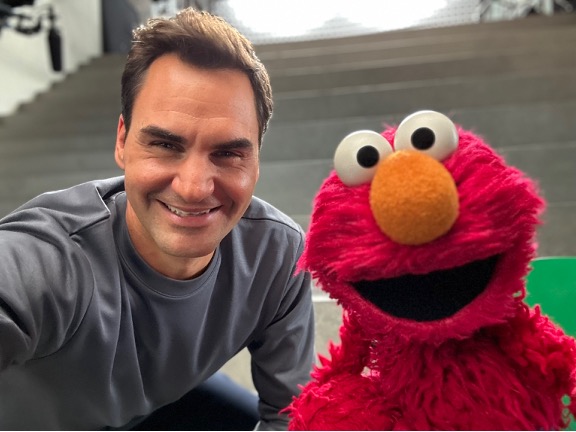
On partners with Elmo for its 'Soft Wins' campaign and debuts its first-ever commercial at one of the world's most watched sporting events: the Super Bowl.
On athletes achieve major success on the court: Iga Świątek cements her legacy with a historic win on grass, completing her Grand Slam collection across all surfaces.
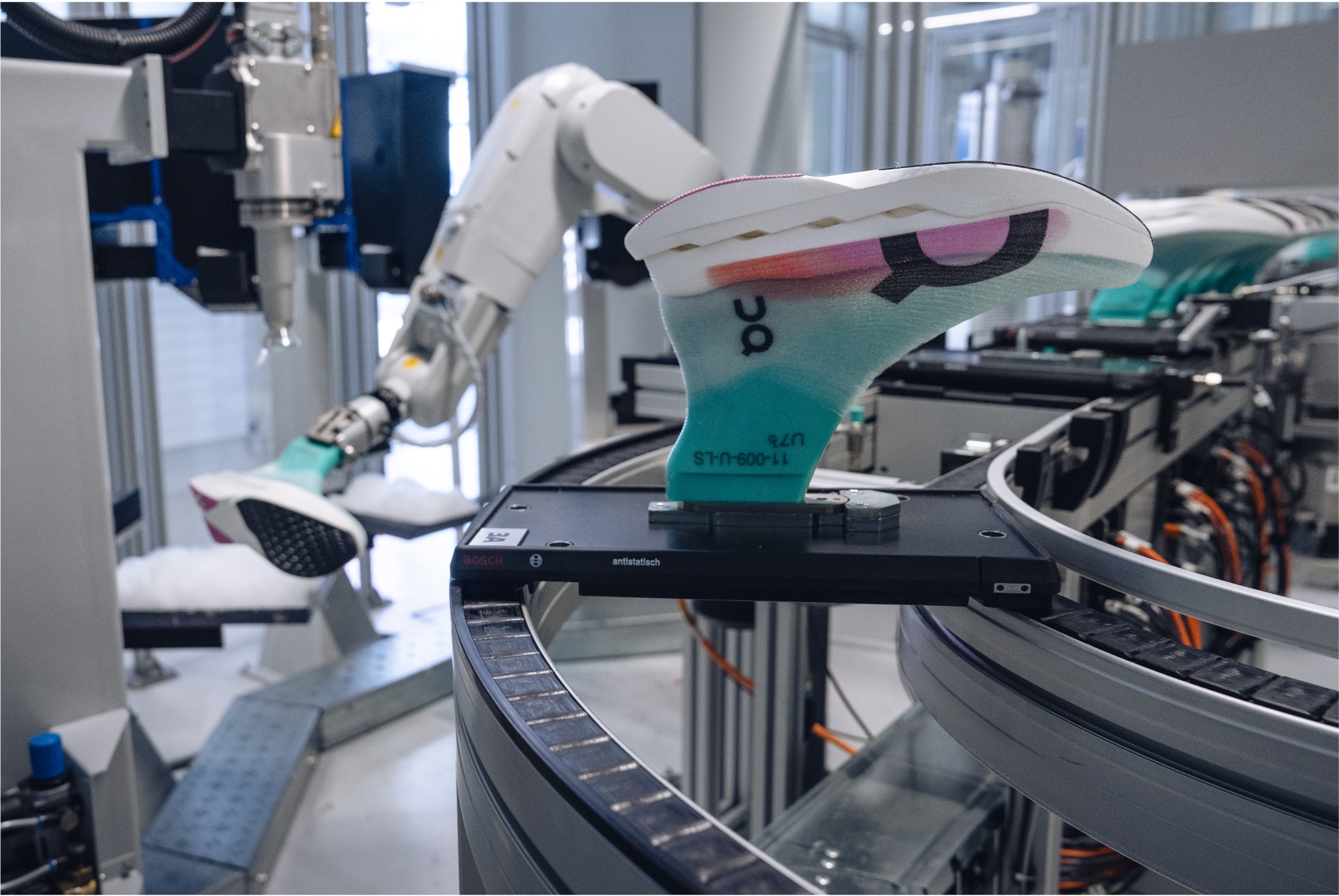
On launches the Cloud 6, supercharging the brand’s most iconic franchise with its biggest product launch to date.
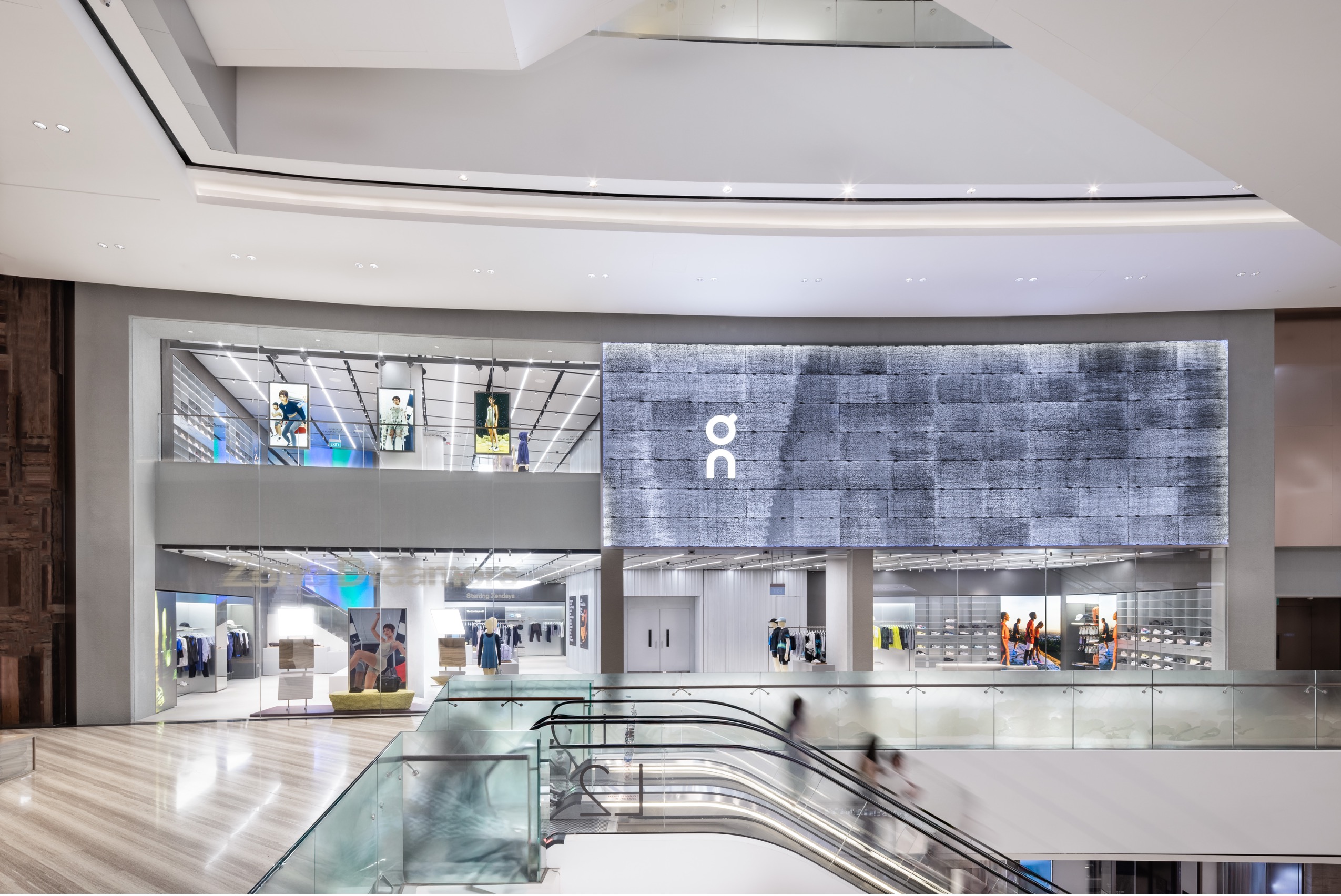
On takes Tokyo by storm - opening the Ginza flagship store, delivering immersive experiences at the 'On Labs' pop-up, and celebrating its first-ever outdoor World Championship medals.
Unless otherwise indicated or the context otherwise requires, all references in this Annual Report on Form 20-F ("Annual Report") to the terms “On,” “On Holding AG,” the “Company,” “we,” “our,” “ours,” “us” or similar terms refer to On Holding AG and its consolidated subsidiaries. References to our “extended founder team,” unless otherwise noted, or our “executive officers,” or our "executive committee," are to (i) our “co-founders,” which consists of (a) our co-founders and executive co-chairmen, David Allemann and Caspar Coppetti, and (b) our co-founder and executive director Olivier Bernhard, and (ii) our chief executive officer and chief financial officer, Martin Hoffmann.
All references to “U.S. dollars,” “dollars” or “USD” are to the lawful currency of the United States of America ("US"). All references to “CHF” or “Swiss francs” are to the lawful currency of Switzerland. In this Annual Report, amounts that are converted from CHF to USD are converted at an exchange rate of USD 1.26 per CHF, the exchange rate as of December 31, 2025.
Financial Statements
We maintain our books and records in Swiss francs and prepare our consolidated financial statements in accordance with International Financial Reporting Standards as issued by the IASB (“IFRS Accounting Standards”).
Rounding
Certain numerical figures shown as totals in some tables in this Annual Report may not be an arithmetic aggregation of the figures that preceded them due to rounding. With respect to financial information set out in this Annual Report, a dash (“—”) signifies that the relevant figure is available but is or has been rounded to zero.
Reclassifications
Certain prior year comparative amounts have been reclassified to conform with current year presentation. These changes in presentation did not have any impact on our results of operations, financial condition, or any other financial statements.
Trademarks and Trade Names
We own registered and unregistered rights in trademarks, service marks, and trade names used in connection with the manufacturing, distribution and sale of our products, including, among others, On, the On Logo, On Running, Run On Clouds, Dream On, CloudTec, Speedboard, Helion, Missiongrip, Cyclon, LightSpray, Cloud, the Cloud Logo, CleanCloud, Cloud X, Cloudalpine, Cloudaway, Cloudboom, Cloudeclipse, Cloudflow, Cloudflyer, Cloudmonster, Cloudsurfer, Cloudwander, Cloudvista, Cloudultra, Cloudhero, Cloudroam, Cloudrock, Cloudventure, Cloudvista, Cloudswift, Cloudgo, Cloudstratus, Cloudrunner, Cloudneo, Cloudtilt, Cloudnova, Cloudrift, Cloudaway, Cloudspike, Cloudswift, Cloudeasy, Cloudspark, Cloudpulse, and Cloudhorizon. Solely for convenience, some of the trademarks, service marks, and trade names referred to in this Annual Report are listed without the ® and ™ symbols, but such references are not intended to indicate, in any way, that we will not assert, to the fullest extent under applicable law, our rights in and to such trademarks, service marks and trade names.
This Annual Report contains statements that constitute forward-looking statements. Many of the forward-looking statements contained in this Annual Report can be identified by the use of forward-looking words such as “anticipate,” “believe,” “continue,” “could,” “expect,” “estimate,” “forecast,” “intend,” “may,” “plan,” “potential,” “predict,” “project,” “target,” “will,” “would,” and “should,” among others.
Forward-looking statements appear in a number of places in this Annual Report and include, but are not limited to, statements regarding our intent, belief or current expectations. Forward-looking statements are based on our management’s beliefs and assumptions and on information currently available to our management. Such statements are subject to risks and uncertainties, and actual results may differ materially from those expressed or implied in the forward-looking statements due to various factors, including, but not limited to, those identified under the section entitled “Risk Factors” in this Annual Report. These risks and uncertainties include factors relating to:
•the strength of our brand and our ability to maintain our reputation and premium brand image;
•our ability and the ability of our independent manufacturers and other suppliers to follow responsible business practices;
•our ability to implement our growth strategy;
•the concentration of our business in a single, discretionary product category, namely footwear, apparel and accessories;
•our ability to continue to innovate and meet consumer expectations;
•changes in consumer tastes and preferences including in products and sustainability, and our ability to connect with our consumer base;
•our ability to open new stores at locations that will attract customers to our premium products;
•our ability to compete and conduct our business in the future;
•health epidemics, pandemics and similar outbreaks;
•general economic, political, demographic and business conditions worldwide, including geopolitical uncertainty and instability, such as the on-going Russia-Ukraine or Israel-Hamas conflicts and on-going shipping disruptions in the Red Sea and surrounding waterways;
•the success of operating initiatives, including advertising and promotional efforts and new product and concept development by us and our competitors;
•our ability to successfully develop, implement, and scale our LightSpray technology and products developed using this technology;
•our ability to strengthen and grow our direct-to-consumer (“DTC”) channel;
•our ability to address climate related risks;
•our ability to execute and manage our sustainability strategy and achieve our sustainability-related goals and targets, including sustainable product offerings, including investor and customer scrutiny
•our third-party suppliers, manufacturers and other partners, including their financial stability and our ability to find suitable partners to implement our growth strategy;
•supply chain disruptions, inflation and increased costs in supplies, goods and transportation, customs and duty expenses, and foreign exchange rates;
•the availability of qualified personnel and the ability to retain such personnel, including our extended founder team;
•our ability to accurately forecast demand for our products and manage product manufacturing decisions;
•our ability to distribute products through our wholesale channel;
•changes in commodity, material, labor, distribution and other operating costs;
•our international operations;
•our ability to protect our intellectual property and defend against allegations of violations of third-party intellectual property by us;
•Cybersecurity incidents and other disruptions to our information technology ("IT") systems;
•increased hacking activity against the critical infrastructure of any nation or organization that retaliates against Russia for its invasion of Ukraine;
•our reliance on complex IT systems;
•our ability to adopt and monitor generative artificial intelligence ("AI") technologies in our operations;
•financial accounting and tax matters;
•changes and contemplation of changes to trade policies, tariffs and import/export regulations in the US and other jurisdictions;
•our ability to maintain effective internal control over financial reporting;
•the potential impact of, and our compliance with, new and existing laws and regulations;
•other factors that may affect our financial condition, liquidity and results of operations; and
•other risk factors discussed under “Risk Factors.”
Forward-looking statements speak only as of the date they are made, and we do not undertake any obligation to update them in light of new information or future developments or to release publicly any revisions to these statements in order to reflect later events or circumstances or to reflect the occurrence of unanticipated events.
PART I
ITEM 1. IDENTITY OF DIRECTORS, SENIOR MANAGEMENT AND ADVISERS
In addition to the other information contained in this Annual Report, the following risk factors, as well as additional factors not presently known to us or that we currently deem to be immaterial, should be considered in evaluating our business. Our business, financial condition, or results of operations could be materially adversely affected as a result of any of these risks.
Summary of Risk Factors
The following is a summary of the material risk factors associated with an investment in our Class A ordinary shares, which are more fully described below:
I.Risks Related to Our Business Industry and Economic Environment
i.Brand reputation and resilience
ii.Business strategy
iii.Innovation
iv.Competitors
v.Economic, political and market conditions
II.Risks Related to Our Operations, Distribution Network and Suppliers
i.Business operations
ii.Supply chain and distribution
iii.Third-party partners and suppliers
iv.Human capital
v.Climate
III.Risks Related to Our Intellectual Property and Information Technology
i.Protection of intellectual property and litigation
ii.Information technology security, laws, and systems
IV.Risks Related to Financial, Accounting and Tax Matters
i.Additional investments in our business
ii.Financial reporting and internal controls
iii.Foreign currency exchange rates
iv.Taxes
V.Risks Related to Legal and Regulatory Compliance
i.Trade policies, tariffs and import/export regulations
ii.Legal or regulatory requirements, proceedings and audits
VI.Risks Associated with Securities Markets and Ownership of our Class A Ordinary Shares
I. Risks Related to Our Business, Industry and Economic Environment
(i) Brand reputation and resilience
Our business depends on the strength of our reputation and premium brand image, and if we are not able to maintain and enhance our brand, our results of operations may be adversely impacted.
The “On” name, our claims (such as “Running on Clouds”), our product or technical-related trademarks (such as “Cloud,” “Cloudsurfer,” “Cloudswift,” and “CloudTec,” among others), our designs and technical patents (such as the “Speedboard”) and our premium performance brand image are integral to our business, and to the implementation of our strategies for expanding our business. We believe that the strong reputation and brand image we have cultivated has significantly contributed to the success of our business and is critical to maintaining and expanding our customer base. Maintaining and enhancing our reputation and premium brand may require us to make substantial investments in areas such as product design, intellectual property (such as patents and trademarks), marketing and communications, operations, community building, employee training and our wholesale and DTC channels, such as investments in additional distribution partnerships, the opening of new physical and e-commerce stores and other e-commerce projects, and these investments may not be successful.
We anticipate that, as our business expands into new markets and new product categories, maintaining and enhancing our brand may become more difficult and may require the use of significant resources. If these or similar efforts in the future are not successful, our reputation may be adversely impacted. Even if such efforts are successful, they may dilute our image in our core running and performance markets. Conversely, as we penetrate these new markets and our brand becomes more widely available, it could potentially detract from the appeal stemming from the relative novelty and scarcity of our brand. Our brand may be adversely affected if our public image or reputation is tarnished by negative publicity, which may occur due to product quality issues, a lack of product acceptance, environmental or labor concerns related to production, customer service complaints or product delivery delays, among other reasons. Our exposure to social media platforms may accelerate and aggravate such negative publicity. In addition, ineffective marketing, product diversion to unauthorized distribution channels, counterfeit products, unfair labor practices and failure or legal limitations to protect the intellectual property rights in our brand are some of the potential threats to the strength of our reputation and brand, and those and other factors could diminish consumer confidence in us. Further, if there are product defects, failures in product quality and/or negative quality claims, then our reputation as a premium performance brand image and expectations on product performance may be negatively impacted. Maintaining and enhancing our brand will depend largely on our ability to be a leader in premium footwear, apparel and accessories industry and to continue to offer a range of high-quality products to our customers, which we may not execute successfully. Any of these factors could harm our sales, profitability, financial condition and the price of our Class A ordinary shares.
A key element of our growth strategy is innovation, product development and expansion of our product offerings into new product categories. However, we may be unsuccessful in designing products that meet our customers’ expectations for our brand or that are attractive to new customers. If we are unable to anticipate customer preferences or industry changes, or if we are unable to modify our products on a timely basis or expand effectively into new product categories, we may lose customers and damage our reputation.
We may receive negative publicity if we do not meet expectations of transparency with respect to our business practices, which could harm our reputation and brand image. Additionally, if our independent contract manufacturers or other suppliers fail to implement socially and environmentally responsible business practices or fail to comply with applicable laws and regulations or our guidelines, we may be subject to fines, penalties or litigation and our reputation and brand image could also be harmed due to negative publicity.
Our core values, which include developing high-quality products in a socially and environmentally responsible manner are an important component of our brand image, which makes our reputation sensitive to allegations of unethical or improper business practices, whether real or perceived. Parties active in promoting ethical business practices, in addition to evaluating the substance of companies’ practices, also often scrutinize companies’ transparency as to such practices and the policies and procedures they use to ensure compliance by their suppliers and other business partners. As a general matter, we do not expect to publicly disclose information that we deem competitively sensitive, except as required by law. If we do not meet the transparency standards expected by parties active in promoting ethical business practices, we may be subject to negative publicity, regardless of whether the actual labor and other business practices adhered to by us and our independent manufacturers satisfy the substantive expectations of such parties. In addition, we may fail to, or only partially, achieve our sustainability and environmental commitments, which could also result in negative publicity. Such negative publicity could be accelerated through social media channels and harm our reputation, brand image, business, results of operations, financial condition and the price of our Class A ordinary shares.
While we are conscious and strategic with our choices of our business partners and require, as part of our supply contracts, compliance with our Supplier Code of Conduct and our standards, we do not control our manufacturing suppliers or their business practices. Accordingly, we cannot guarantee their compliance with our guidelines or applicable laws. A failure by our suppliers to comply with such requirements could, in turn, lead to reduced sales by us as the result of recalls or adverse consumer reactions, damage to our reputation or cause us to seek alternative suppliers, which could increase our costs and result in delayed delivery of our products, product shortages or other disruptions of our operations.
The expectations of consumers, NGOs, or any other third parties regarding socially and environmentally responsible business practices continually evolve and may be substantially more demanding than applicable legal requirements. We have also increasingly been receiving negative feedback from anti-environmental, social and governance stakeholders in opposition to such initiatives. Socially and environmentally responsible business practices are also driven in part by legal and political developments and by diverse groups active in publicizing and organizing public responses to perceived ethical shortcomings, which can quickly lead to negative publicity and boycotts. Stakeholders from both sides of this issue may view us negatively and take public action against us to the extent that we do not satisfy their conflicting views or expectations. Accordingly, we cannot predict how such regulations or expectations might develop in the future and cannot be certain that our guidelines or current practices would satisfy all parties who are active in monitoring our products or other business practices worldwide. Our exposure on social media platforms may accelerate and aggravate such negative publicity and boycott risks not only related to potential non-compliance, but also related to geopolitical developments and related controversial public discussions, such as recent discussions regarding brands sourcing their products from China, which NGOs and others are requesting to boycott due to China’s handling of minorities. Also, China has previously placed pressure and obstacles on international companies who criticize Chinese politics, and may continue to do so in the future. A failure by our suppliers to comply with such requirements could, in turn, lead to reduced sales by us as the result of recalls or adverse consumer reactions, damage to our brand or cause us to seek alternative suppliers, which could increase our costs and result in delayed delivery of our products, product shortages or other disruptions of our operations.
If our marketing efforts or partnerships with other brands are not successful, our business, results of operations and financial condition could be harmed. Additionally, the costs and return on our investments for our sports marketing sponsorships may become more challenging and this could impact the value of our brand image.
We rely on marketing efforts to advertise our brand. Our marketing strategy consists of traditional grassroots efforts focused on building authentic consumer relationships within core communities. Additionally, we employ professional partner-based strategies that utilize high-profile sponsorship agreements and strategic associations to establish authenticity and promote the brand's premium performance image. These efforts include working with select premium brand partners, such as our co-entrepreneur, Roger Federer, athletes chosen by us, and influencers, who we refer to as our ambassadors. Our ambassadors assist us by introducing our brand and culture to various communities. Our marketing efforts must be tailored to each particular market, which may require substantial ongoing attention and resources. For instance, we must successfully identify suitable ambassadors in each of our new and existing markets. Our future growth and profitability and the vibrancy of our premium brand, will depend in part upon the effectiveness and efficiency of these marketing efforts. Additionally, we also partner with fashion brands on collaborative product collections. Partnering with fashion brands can also increase the risk of brand reputational damage if the brand we work with faces any negative publicity.
An element of our marketing strategy has been to create a link in the consumer market between our products and professional and Olympic athletes, such as with Roger Federer and various athletes and celebrities around the world, such as Zendaya, FKA Twigs, and Burna Boy, and we face additional risks as a result. If we lose our celebrity endorsers, or if our celebrity endorsers engage in activities that damage our reputation (whether actual or perceived), our brand and our business could be adversely impacted.
We have also developed sponsorship agreements with a variety of athletes. However, as competition in the footwear, apparel and accessories industry has increased, the costs associated with athlete sponsorships, including the costs of obtaining and retaining these sponsorships and agreements, have varied and at times increased greatly. If we are unable to maintain our current association with athletes, or to do so at a reasonable cost, we could lose the reputational benefit associated with such partnerships, and we may be required to modify and substantially increase our marketing investments. Moreover, a failure to continue to correctly identify promising public figures to use and endorse our products or a failure to enter into cost-effective endorsement arrangements with prominent public figures could adversely affect our brand, sales and profitability. While our partnerships and sponsorships of celebrities, athletes or events often aim to enhance brand visibility, credibility, and market reach, such investments may not always be successful. Additionally, the brand may face adverse consequences in the event of any scandals involving athletes endorsing or associated with our products or in the event of product quality failures or injuries while such persons use our product, impacting consumer trust and market reputation.
If our marketing efforts or sports marketing sponsorships are not successful, there may not be an immediately available alternative marketing channel for us to build awareness of our products in a successful manner. This may impair our ability to successfully integrate new stores into the surrounding communities, to expand into new markets at all or to maintain the strength or distinctiveness of our brand in our existing markets. Failure to successfully market our products and brand in new and existing markets could harm our premium brand and our business, results of operations, financial condition and the price of our Class A ordinary shares.
We may not be able to successfully implement our growth strategies on a timely basis or at all. Additionally, implementation of these plans may divert the attention of our operational, managerial and administrative resources, which could harm our competitive position and results of operations.
Our future success depends, in large part, on our ability to implement our growth strategies, including expanding our product offerings to earn more share of customers’ closets, continuing to engage in customer acquisition and retention efforts that drive long-term customer relationships and continuing to grow our business. Our ability to implement these growth strategies depends, among other things, on our ability to:
•manage our risks associated with regard to third-party distribution and expand our product offerings;
•increase our brand recognition by effectively implementing our multi-channel strategy alongside our network of retail relationships without compromising our premium customer experience;
•increase customer engagement with our digital platforms;
•leverage our investments in our human capital and operational infrastructure to drive traffic and customer acquisition;
•expand and diversify our wholesale channel, accelerate partnerships with digital pure play retailers, and expand our owned retail stores; and
•enter into distribution and other strategic arrangements with potential distributors of our products in order to better influence customer experience with better cost efficiency.
We may not be able to successfully implement our growth strategies and may need to change them. If we fail to implement our growth strategies or if we invest resources in a growth strategy that ultimately proves unsuccessful, our business, results of operations, financial condition and the price of our Class A ordinary shares may be materially and adversely affected.
Because our business is highly concentrated on a single, discretionary product category, namely footwear, apparel and accessories, we are vulnerable to changes in consumer preferences that could harm our sales, profitability and financial condition.
Our business is not currently diversified and consists primarily of designing and distributing footwear, apparel and accessories, with footwear being the most concentrated among the three product groups. Consumer preferences often change rapidly, and demand for our products is substantially dependent on our ability to attract customers who are willing to pay a higher price for our premium products. We believe there are a number of factors that may affect the demand for our products, including:
•brand loyalty;
•consumer perceptions of, and preferences for, our products and brands, including, among other things, as a result of evolving ethical or social standards;
•seasonality;
•consumer acceptance of our new and existing products, including our ability to develop new products that address the needs and preferences of new consumers;
•consumer demand for products of our competitors;
•publicity, including social media, related to us, our products, our brands, our marketing campaigns and our celebrity endorsers;
•the extent to which consumers view certain of our products as substitutes for other products we manufacture;
•the life cycle of our products and consumer replenishment behavior;
•changes in consumer confidence and buying patterns, and other factors that impact discretionary income and spending;
•legislation restricting our ability to use certain materials in our products;
•changes in general economic, political, and market conditions;
•pandemics or other outbreaks of illness or disease; and
•any future shifts in consumer preferences away from retail spending for footwear, apparel and accessories would also have a material adverse effect on our business, results of operations, financial condition and the price of our Class A ordinary shares.
Sales of footwear, apparel and accessories may not continue to increase, and this could impair our ability to innovate and grow our business.
We believe that continued increases in sales of footwear, apparel and accessories will partly depend on customers continuing to demand footwear, apparel and accessories designed for specific athletic pursuits such as running. In addition, we believe that continued increases in sales of footwear, apparel and accessories will largely depend on customers continuing to demand technical superiority, and attractive, trend-setting design from their premium products. If the number of customers demanding footwear, apparel and accessories does not continue to increase, the trend of increased focus on health and wellness or the associated growth in exercise subsides, the appeal of high-technology footwear, apparel and accessories diminishes, the style of our footwear, apparel and accessories falls out of fashion with customers or customers engaging in athletic pursuits are not convinced that our footwear, apparel and accessories are a better choice than available alternatives, we may not achieve the level of sales necessary to support new growth platforms, our ability to innovate and grow our business will be severely impaired, and our business, results of operations, financial condition and the price of our Class A ordinary shares may be adversely impacted.
Our limited operating experience and brand recognition in new markets may limit our expansion strategy and cause our business and growth to suffer.
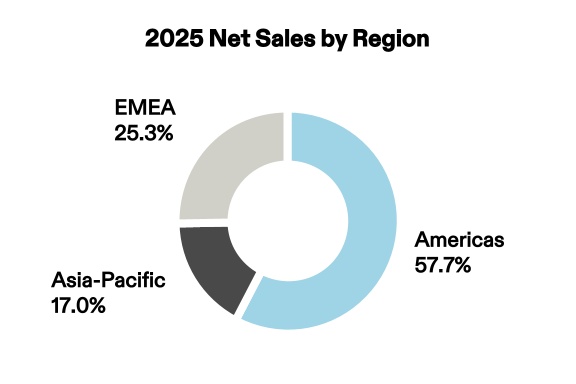
Our future growth depends, to a considerable extent, on our efforts to expand our markets and also on our success in entering new markets throughout the world that we deem attractive. While our headquarters are in Switzerland, we sell our footwear, apparel and accessories globally. For the year ended December 31, 2025, 57.7%, 25.3% and 17.0% of our sales were to customers in the Americas, Europe, Middle East and Africa ("EMEA"), and Asia-Pacific regions, respectively. We also have limited experience with regulatory environments and market practices outside of Europe and the US, and cannot guarantee that we will be able to penetrate or successfully operate in any such markets. In connection with our expansion efforts, especially in the US and Asia-Pacific, we have encountered increased costs of operations resulting from higher customs, payroll and other expenses and from new and different business requirements generally. In connection with our continued expansion efforts throughout the world, we have encountered, and expect to continue to encounter, a number of obstacles including cultural and linguistic differences, differences in regulatory environments and market practices, difficulties in keeping abreast of market, business and technical developments and foreign customers’ tastes and preferences, as well as differences in employee expectations and working culture. We may also encounter difficulty expanding into new markets throughout the world because of limited brand recognition leading to delayed acceptance of our footwear, apparel and accessories by customers in these new markets.
In particular, we have no assurance that our marketing efforts will prove successful outside of the geographic regions in which they have been used in Europe and the US. The expansion into new markets may also present competitive, merchandising, forecasting and distribution challenges that are different from or more severe than those we currently face. Failure to develop new markets globally or disappointing growth outside of such markets may harm our business, results of operations, financial condition or the price of our Class A ordinary shares.
If we fail to adequately continue to connect with our consumer base, including through the use of social media platforms, it could have a material adverse effect on our business, results of operations and financial condition.
Our marketing and promotional programs, by focusing on the premium experience our products provide, are important in capturing the interest of consumers and attracting them to our products and encouraging purchases by consumers. If we fail to successfully develop and implement marketing, advertising and promotional strategies in new and existing markets, we may be unable to achieve and maintain brand awareness and consumer traffic to our sites or stores may be reduced.
We believe that much of the growth in our customer base to date has originated from our marketing strategy, including social media and other digital marketing efforts. If we are unable to cost-effectively use social media platforms as marketing tools, our ability to acquire new customers and our business and financial condition may suffer. Unauthorized or inappropriate use of our social media channels could result in harmful publicity or negative consumer experiences, which could have an adverse impact on the effectiveness of our marketing in these channels. In addition, substantial negative commentary by others on social media platforms could have an adverse impact on our ability to successfully connect with consumers. In addition, if our customers believe we have failed to live up to our stated goals (whether real or perceived), including those related to sustainability matters, they may use social media platforms to cause reputational damage to our brand and business. Furthermore, as laws and regulations rapidly evolve to govern the use of these platforms, the failure by us, our employees or third parties acting at our direction to comply with applicable laws and regulations could subject us to regulatory investigations, lawsuits (including class actions), liability, fines or other penalties. Moreover, if digital advertising platforms increase advertising expenses or change their policies in a manner that is inconsistent with our marketing strategy, our expenses may increase and the effectiveness of our digital advertising strategy may be diminished, and our growth may be harmed as a result. Furthermore, an increase in the use of social media platforms for product promotion and marketing may cause an increase in our burden to monitor compliance of such platforms, and increase the risk that such materials could contain problematic product or marketing claims in violation of applicable regulations. These and other risks could adversely affect our business, results of operations, financial condition and the price of our Class A ordinary shares.
Our ability to attract customers to our stores and premium products depends heavily on successfully locating our stores in suitable locations and any impairment of a store location, including any decrease in customer traffic, could cause our net sales, business and results of operations to be less than expected and adversely affect our financial condition and the price of our Class A ordinary shares.
Our approach to identifying locations for our stores and premium products typically favors street locations and lifestyle centers. As a result, our stores are typically located near retailers or fitness facilities that we believe are consistent with our customers’ lifestyle choices. Our net sales, business and results of operations at these stores are derived, in part, from the volume of foot traffic in these locations. Store locations may become unsuitable due to, and our sales volume, customer traffic and profitability generally may be harmed by, among other things:
•economic downturns in a particular area;
•competition from nearby retailers selling athletic apparel;
•changing consumer demographics in a particular market;
•changing lifestyle choices of consumers in a particular market; and
•the closing or decline in popularity of other businesses located near our stores.
Changes in areas around our store locations that result in reductions in customer foot traffic or otherwise render the locations unsuitable could cause our sales, business and results of operations to be less than expected. While we currently sell our products through a limited number of stores that are owned and operated by us, we plan to open additional stores in the future. If our net sales, business and results of operations through stores owned and operated by us increase in the future, the risks described above may be exacerbated and may adversely affect our financial condition and the price of our Class A ordinary shares.
(iii) Innovation
We rely on technical innovation, unique designs and high-quality products to compete in the market for our products. If we fail to continue to innovate and provide consumers with design features, new technologies and environmentally sustainable products that meet consumer expectations, we may not be able to generate sufficient consumer interest in our footwear, apparel and accessories to remain competitive.
Innovation is at the core of our business, and we must continue to invest in research and development in connection with the innovation, intellectual property and design of our footwear, apparel and accessories in order to attract and retain consumers. If we are unable to anticipate consumer preferences or industry changes, or if we are unable to modify our products on a timely basis, we may lose customers or become subject to greater pricing pressures. Our operating results would also suffer if our innovations and designs do not respond to the needs and demands of our customers, are not appropriately timed with market opportunities or are not effectively brought to market. Any failure on our part to innovate and design new products or modify existing products will harm our brand image and could result in a decrease in our net sales and an increase in our inventory levels. In addition, we may not be able to generate sufficient consumer interest in our apparel and accessories to remain competitive.
The commercial success of our products is increasingly dependent on our ability to conduct and apply proprietary sports science research to drive performance-led innovation. In particular, sourcing novel high performance or sustainable materials, technical innovation, our unique designs and quality control in the design and manufacturing process of footwear, apparel and accessories is essential to the commercial success of our products. Research and development play a key role in technical and environmentally sustainable innovation. Over the last years, we have systematically redesigned and aligned many of our franchises across footwear, apparel and accessories. We rely upon specialists in the fields of biomechanics, chemistry, exercise physiology, engineering, digital technologies, industrial design, sustainability and related fields, as well as research and advisory boards made up of athletes, coaches, trainers, equipment managers, orthopedists, podiatrists and other experts to develop and test our performance products. While we strive to produce products that help to enhance performance and maximize comfort, consumer demand for our products could decline if we fail to introduce technical and environmentally sustainable innovations in our products. In addition, if we experience problems with the quality of our products, we may incur substantial expense to remedy such problems and lose consumer confidence and loyalty, which could negatively impact our reputation, business, results of operations, financial condition and the price of our Class A ordinary shares.
Our plans to innovate and expand our product offerings may not be successful, and implementation of these plans may divert the attention of our operational, managerial and administrative resources, which could harm our competitive position and reduce our net sales and profitability.
In addition to our DTC strategy and the expansion of our geographic footprint, we plan to grow our business by innovating and expanding our product offerings. The principal risks to our ability to successfully carry out our plans to expand our product offering include:
I.if our expanded product offerings fail to maintain and enhance our distinctive brand identity and premium quality, our brand image may be diminished, and our sales may decrease;
II.our innovations may fail to be financially viable at scale or may not be well received by our customers or the market;
III.implementation of our plans may divert management’s attention from other aspects of our business and place a strain on our management, operational and financial resources, as well as our information systems; and
IV.incorporation of novel materials or features into our footwear, apparel and accessories may not be accepted by our customers or may be considered inferior to similar products offered by our competitors.
Moreover, our ability to successfully carry out our plans to expand our product offerings may be affected by economic and competitive conditions, changes in consumer spending patterns and changes in consumer preferences and styles. These plans could be abandoned, could cost more than anticipated, could impact the quality of our products and could divert resources from other areas of our business, any of which could negatively impact our competitive position, reduce our net sales and profitability or negatively impact the price of our Class A ordinary shares.
(iv) Competitors
We operate in a highly competitive market and the size and resources of some of our competitors may allow them to impose pricing pressures or compete more effectively than we can, resulting in a loss of our market share and a decrease in our net sales and profitability.
The market for footwear, apparel and accessories is highly fragmented and extremely competitive. We compete directly against wholesalers and brands that are direct retailers of footwear, apparel and accessories. Because of the fragmented nature of the marketplace, we also compete with other apparel sellers, including those who do not specialize in footwear, apparel and accessories. Many of our competitors have significant competitive advantages, including longer operating histories, larger and broader customer bases, more established relationships with a broader set of suppliers, greater brand recognition and greater financial, technological and engineering resources, research and development, store development, marketing, distribution and other resources than we do. We may face intense pressure with respect to competition for key customer accounts and distribution channels. Because of the highly competitive nature of our industry, we may face increased pressure from our competitors to lower our prices for our products, which may adversely impact consumer demand for our products, our brand image, our realized margins, our net sales and our results of operations. Furthermore, we believe that our key customers face intense competition from other department stores, sporting goods stores, retail specialty stores, and online retailers, among others, which could negatively impact the financial stability of their businesses and their ability to conduct business with us. These factors may result in a loss of our market share, a decrease in our net sales and profitability or negative impacts to our business, results of operations, financial condition and the price of our Class A ordinary shares.
Competitors have and will likely continue to attempt to imitate our premium products and technology and divert sales.
As our business has expanded, our competitors have imitated, and will likely continue to imitate, our premium product designs and branding, which could harm our business, results of operations, financial condition and the price of our Class A ordinary shares. Also, any theft, piracy or leaking, such as through industrial espionage, of our technologies, materials or trade secrets could cause harm to our brand and business. Competitors who flood the market with products seeking to imitate our products could divert sales and dilute the value of our brand. Continued sales of competing products by our competitors could harm our brand and adversely impact our business, financial condition and results of operations. While we rely on a variety of intellectual property laws and procedures to protect our competitive position, intellectual property protection has its limitations. For more information, refer to “—Risks Related to Our Intellectual Property and Information Technology—Protection of intellectual property and litigation."
(v) Economic, political and market conditions
We may be adversely affected by the financial health of our wholesale partners.
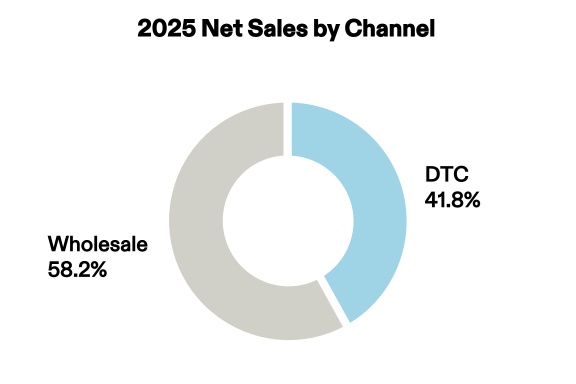
During the year ended December 31, 2025, net sales through our wholesale channel represented 58.2% of our total net sales. We extend credit to our wholesale partners based on an assessment of their financial condition, generally without requiring collateral. To assist in the scheduling of production and the shipping of our products, we offer certain customers the opportunity to place advance orders ahead of delivery. These advance orders may be canceled under certain conditions, and the risk of cancellation may increase when dealing with financially unstable wholesale partners, or wholesale partners struggling with economic uncertainty. In the past, some wholesale partners have experienced financial difficulties, including bankruptcies, which have had an adverse effect on our sales, our ability to collect on receivables and our financial condition. In addition, we and our wholesale partners could face risks from a decline in the overall level of consumer retail spending, and a weak retail environment could impact customer traffic in the stores of our wholesale partners and also adversely affect our net sales.
Moreover, shifts in consumer preferences and purchasing practices, such as a rise in online purchases, may increase the difficulty for us to retain our, and attract new, brick-and-mortar wholesale partners. If and when the retail economy weakens or as consumer behavior shifts, retailers may be more cautious with orders. A slowing or changing economy in our key markets could adversely affect the financial health of our wholesale partners, which in turn could have an adverse effect on our results of operations and financial condition. In addition, product sales in retail stores and online are dependent in part on high-quality merchandising and an appealing environment or website to attract consumers, which requires continuing investments by our wholesale partners. Wholesale partners that experience financial difficulties, or are negatively impacted by weak economic conditions, may fail to make such investments or delay them, resulting in lower sales and orders for our products. These and other risks could adversely affect our business, results of operations, financial condition and the price of our Class A ordinary shares.
An economic recession, depression, downturn, periods of inflation, or economic uncertainty may adversely affect consumer purchases of discretionary items, which could materially harm our sales, profitability and financial condition.
Many factors affect the level of consumer spending for discretionary items such as our footwear, apparel and accessories. These factors include general business conditions, inflation, interest and tax rates, the availability of consumer credit and consumer confidence in future economic conditions.
Consumer purchases of discretionary items, such as our premium footwear, apparel and accessories, tend to decline during recessionary periods when disposable income is lower, and during such periods consumers may tend to choose less costly products and turn away from our premium products.
Recent geopolitical events and general economic conditions have led to a slow-down in certain segments of the global economy and affected the amount of discretionary income available for certain consumers to purchase our products. Any downturn in the economy in markets in which we sell our products may adversely impact our sales, business, results of operations, financial condition and the price of our Class A ordinary shares.
Our international operations involve inherent risks which could result in harm to our business.
All of our premium footwear, apparel and accessories are manufactured outside of the US, and a significant amount of our products are sold outside of the US. Accordingly, we are subject to the risks generally associated with global trade and doing business abroad, which include foreign laws and regulations, varying consumer preferences across geographic regions, political unrest (for example national or international armed conflicts), disruptions or delays in cross-border shipments for various reasons and changes in economic conditions in countries in which our products are manufactured or where we sell products. This includes, for example, new and proposed changes affecting tax laws and trade policy in the US and elsewhere, as further described below under “—Risks Related to Financial, Accounting and Tax Matters— We could be subject to changes in tax laws, tax regulations and tax treaties, including their interpretation and application, in Switzerland, the US or any other country in which we operate, which could result in additional tax liabilities or increased volatility in our effective tax rate” and “—Risks Related to Legal and Regulatory Compliance—Changes to trade policies, tariffs and import/export regulations in the US, European Union ("EU"), and other jurisdictions, or our failure to comply with such regulations, may have a material adverse effect on our reputation, business, financial condition and results of operations.” There could be legislative actions limiting outsourcing manufacturing and production activities to foreign jurisdictions, including through tariffs or penalties on goods manufactured outside the US, which may require us to change the way we conduct business and adversely affect our business, results of operations, financial condition and the price of our Class A ordinary shares.
In addition, disease outbreaks, pandemics, terrorist acts and political or military conflicts, including the ongoing conflicts between Russia and Ukraine and between Israel and Hamas, have increased the risks of doing business abroad. These factors, among others, could affect, among other things, our ability to manufacture products or procure materials in the future, our ability to import products, our ability to ship our products globally, our ability to sell products in international markets, and our cost of doing business. If any of these or other factors make the conduct of business in a particular country undesirable, unprofitable or impractical, our business and financial results could be adversely affected. In addition, many of our imported products are subject to duties, tariffs or quotas that affect the cost and quantity of various types of goods imported into the US and other countries. Any country in which our products are produced, imported or sold may eliminate, adjust or impose new quotas, duties, tariffs, safeguard or protectionist measures, anti-dumping duties, cargo restrictions to prevent terrorism, restrictions on the transfer of currency, climate change legislation, product safety regulations or other charges or restrictions, any of which could have an adverse effect on our business, results of operations, financial condition and the price of our Class A ordinary shares.
Furthermore, we are subject to the US Foreign Corrupt Practices Act as well as the anti-corruption laws of other countries in which we operate. Although we have implemented policies and procedures designed to promote compliance with these laws, our employees, contractors and agents, including the partners, suppliers and companies to which we outsource certain of our business operations, may take actions in violation of our policies or such laws. In addition, these policies and procedures might not be sufficient or adequate to prevent violations by our employees, contractors and agents of our policies or such laws. Any such violation could result in sanctions or other penalties and have an adverse effect on our reputation, business, results of operations, financial condition and the price of our Class A ordinary shares.
Political uncertainty or geopolitical tensions could have a material adverse effect on our business, results of operation and financial condition.
As a prominent Swiss brand, geopolitical events that involve Switzerland may have an impact on our business and share price. In addition, our brand and Swiss heritage may be detrimental to the Company in the context of geopolitical disputes aimed at Switzerland or actors or situations with significant actual or perceived connection to Switzerland. We sell a significant portion of our products to customers outside of Switzerland and changes, potential changes or uncertainties in regulatory and economic conditions or laws and policies governing foreign trade, manufacturing, and development and investment in the territories and countries where we operate, could adversely affect our business, results of operations, and financial condition.
The ongoing conflicts between Russia and Ukraine and hostilities in the Middle East, including the recent military conflict involving Iran, the United States and Israel, have resulted in worldwide geopolitical and macroeconomic uncertainty, and we cannot predict how these conflicts will evolve or the timing and effects thereof. Although our operations in the Middle East are limited, continued instability could adversely affect consumer demand and our sales in those markets. In addition, the conflict could disrupt regional trade routes.
As a result, any escalation or prolonged geopolitical tension could grow and bring about further disruption, instability and volatility in global markets, supply chains and logistics operations, such as the ongoing shipping disruptions in the Red Sea and surrounding waterways, which could in turn adversely affect our business operations and financial performance. If these conflicts continue for a significant time or further expand to other countries and depending on the ultimate outcomes of these conflicts, which remain uncertain, they could have additional adverse effects on macroeconomic conditions, including but not limited to, increased costs, constraints on the availability of materials, supply chain disruptions and decreased consumer spending. Furthermore, the potential continuation and expansion of these conflicts could give rise to disruptions to our or our business partners’ global technology infrastructure, including through cybersecurity incidents; adverse changes in international trade policies and relations; regulatory enforcement; our ability to implement and execute our business strategy; terrorist activities; our exposure to foreign currency fluctuations; and constraints, volatility, or disruption in the capital markets, any of which could magnify the impact of other risks factors discussed in this Annual Report and have a material adverse effect on our business, results of operations, cash flows, financial condition and the price of our Class A ordinary shares.
Our financial condition and results of operations have been, and could in the future be, adversely affected by a pandemic, epidemic or other public health emergency.
Pandemics and other public health emergencies have caused, and may in the future cause disruptions to our business, including disruptions to sourcing, our supply chain, our manufacturing facilities and our distribution facilities.
The spread of pandemics has in the past, and may again in the future, cause public health officials to impose restrictions and recommend precautions in response, in an effort to mitigate such spread, which would negatively impact our business, results of operations, financial condition, and the price of our Class A ordinary shares.
Additionally, pandemics, epidemics or other health emergencies could increase the magnitude of many of the other risks described in "Item 3. Risk Factors" of this Annual Report and may have other material adverse effects on our operations that we are not currently able to predict. If our business and the markets in which we operate experience a prolonged occurrence of adverse public health conditions, it could materially adversely affect our business, financial condition, results of operations and the price of our Class A ordinary shares.
II. Risks Related to Our Operations, Distribution Network and Suppliers
(i) Business operations
We have grown rapidly in recent years and we have limited operating experience at our current scale of operations. If we are unable to manage our operations at our current size or to manage any future growth effectively, our brand image and financial performance may suffer.
We have expanded our operations rapidly since our inception in 2010 and have limited operating experience at our current scale of operations.
Our substantial growth to date has placed a significant strain on our management systems and resources. If our operations continue to grow, of which there can be no assurance, we will be required to continue to expand our sales and marketing, product development and distribution functions, to upgrade our management information systems and other processes, and to obtain more space for our expanding administrative support and other personnel. Moreover, our new innovations may require either new or different infrastructure, relationships or processes. Our continued growth could increase the strain on our resources, and we could experience serious operating difficulties, including difficulties in hiring, training and managing an increasing number of employees, difficulties in obtaining sufficient supplies, raw materials and manufacturing capacity to produce our products, and delays in production and shipments, all of which could impact our ability to bring the brand and our products to market as intended. These difficulties could negatively impact our business, results of operations, financial condition and the price of our Class A ordinary shares.
We may not be able to successfully execute our growth strategy on the continued expansion of our DTC channel, including our own retail stores and e-commerce platform.
Our business involves distributing products on a wholesale basis for resale through our wholesale partners and also includes a multi-channel experience, including physical and online retail stores that are owned and operated by us. Growing our e-commerce platforms and the number of physical stores owned by us is essential to our growth strategy, as is innovating and expanding our product offerings available through these channels. Sales in our DTC channel continue to grow, which may expose us to other risks, including those relating to continuing to grow brand awareness. This strategy has, and will continue to require significant investment in cross-functional operations and management focus, along with investment in supporting technologies and retail store spaces. Our accelerated growth within physical retail store spaces could impact our ability to obtain timely market insights to enable a change in investment and focus, if warranted. If we are unable to provide a convenient and consistent experience for our customers, our ability to compete and our results of operations could be adversely affected. If our physical retail store design does not appeal to our customers, or if we are unable to consistently meet our brand promise through premium customer service and product availability within these stores, we may experience a loss of customer confidence or sales as a result of losing repeat customers. In addition, if our e-commerce platform design does not appeal to our customers, function reliably and conveniently, or maintain the privacy and security of customer data, we may be exposed to fraudulent transactions, cybersecurity incidents or other issues which could adversely affect our reputation and results of operations.
As of December 31, 2025, we currently operate our e-commerce digital platforms in multiple countries globally, the majority of which are serviced by our physical retail stores and also our wholesale channel partners. Additionally, we are planning to expand the reach of our e-commerce platform to new geographies. Failure to implement a cohesive product and assortment distribution strategy could lead to sales cannibalization across our own and our wholesalers' omnichannel platforms, undermining our broader growth objectives. In addition, existing and additional countries may impose different and
evolving laws governing the operation and marketing of e-commerce websites, as well as the collection, storage and use of information on consumers interacting with those websites. We may incur additional costs and operational challenges in complying with these laws, and differences in these laws may cause us to operate our businesses differently in different territories, and not realize benefits from our investment in our international expansion. We are also exposed to the risk of fraudulent domains or websites pretending to sell our products, when they are in reality phishing sites or imitator domains, and we might be unable to stop those sites from operating in due time, or permanently due to regulatory or factual constraints. These collective risks could negatively impact our business, results of operations, financial condition and the price of our Class A ordinary shares.
Our business or our results of operations could be harmed if we or our wholesale partners are unable to accurately forecast demand for our products or if we are unsuccessful at managing product manufacturing decisions.
We have an extended design, development, manufacturing and logistics process. To ensure adequate inventory supply, we and our wholesale partners forecast inventory needs, which are subject to seasonal and quarterly variations, and are also subject to variation as a result of broader economic and social trends. If we or our wholesale partners fail to accurately forecast demand for our products, we may experience excess inventory levels which increases the risk of obsolescence and reduces liquidity flexibility. Conversely, it may lead to a shortage of product to deliver to our wholesale partners and through our DTC channels. This can result in distorted ordering patterns and may destabilize supply planning. Inventory management constitutes a critical component of the end-to-end supply chain. This vulnerability can be amplified by suboptimal replenishment strategies, limited visibility into in-transit inventory, and data inaccuracies, which can have an adverse effect on supply chain planning. Moreover, a potential increase of inventory stock level resulting from fluctuating supply/demand/logistics lead time and capacity may obscure service-level performance, limit valuable storage space, increase our operational costs such as rental costs, and may increase our cost of goods sold and decrease profit margin, if additional freight charges, including demurrage and detention costs, are incurred, and can negatively impact our business, brand and results of operations.
If we, or our wholesale partners, underestimate the demand for our products, we may not be able to produce products to meet our own or our wholesale partner requirements, and this could result in a halt in production or delays in the shipment of our products and accordingly, our failure to satisfy customer demand, as well as damage to our reputation and wholesale partner relationships. If we or our wholesale partners overestimate the demand for our products, we or our wholesale partners could face inventory levels in excess of demand, which could result in inventory write-downs or write-offs and the sale of excess inventory at discounted prices, which would harm our gross profit margins and our brand management efforts. These factors could cause a decline in net sales and harm our business, operating results, financial condition, cash flows and the price of our Class A ordinary shares.
We may not be able to successfully develop, implement, and scale our LightSpray technology and products developed using this technology.
Our business could be impacted by our ability to successfully develop, implement and scale our LightSpray technology and products developed with this technology. Our ability to do so will depend on many factors, including, but not limited to, our ability to:
•successfully establish a stable and efficient LightSpray manufacturing process that meets our quality standards and can be replicated;
•scale up the LightSpray production to meet growing demand, including establishing nearshore manufacturing facilities and managing potential delays or disruptions;
•achieve sufficient market traction and customer demand for LightSpray to justify the investment and scale-up plans;
•maintain consistent product quality, manage potential quality issues, and ensure timely production to meet customer demand;
•manage the financial risks associated with significant capital expenditures required for LightSpray manufacturing, as well as potential delays in production or lower-than-expected customer demand;
•manage execution risks (e.g., delays in project timelines, potential loss of critical resources, etc.); and
•address potential intellectual property risks, including potential infringement of our registered and unregistered intellectual property rights related to the LightSpray technology.
We have limited experience with our LightSpray technology and products developed using this technology, and there can be no assurance that we will be able to successfully implement, develop, and scale our LightSpray technology and products we develop using this technology. Any failure to do so would harm our business, results of operations, financial condition and the price of our Class A ordinary shares.
We may not be able to successfully open new retail stores owned and operated by us or by third parties in a timely manner, if at all, which could harm our results of operations.
Our future growth is highly dependent on our ability to successfully open new retail stores owned and operated by us or to attract third parties to operate those stores and sell our premium products on our behalf. Our ability to successfully open and operate new retail stores depends on many factors, including, among others, our ability to:
•identify suitable store locations, the availability of which is outside of our control;
•negotiate acceptable lease terms, including desired tenant improvement allowances;
•design a retail store that appeals to our customers;
•hire, train and retain store personnel and field management;
•integrate new store personnel and field management into our corporate culture and spirits;
•source sufficient inventory levels to meet demand and maintain efficient stock turnover; and
•successfully integrate new retail stores owned and operated by us into our existing operations and information technology systems.
Successful new store openings may also be affected by our ability to identify new and suitable markets for the opening of a potential new retail store. In addition, new retail stores owned and operated by us or by third parties will not always be immediately profitable, and will cause losses until these stores become profitable and such stores have required, and will continue to require, substantial fixed investment in equipment and leasehold improvements and personnel, and we have entered into substantial operating lease commitments for retail space. There can be no assurance that we will open our planned number of new stores in 2026 or thereafter, or that our estimates regarding the associated costs will be accurate. Any failure to successfully open and operate new stores operated by us would harm our business, results of operations, financial condition and the price of our Class A ordinary shares.
We are subject to risks associated with leasing retail and distribution, office and warehouse spaces subject to long-term and non-cancelable leases.
We enter into lease agreements for all of our stores, offices, and warehouses and our inability to secure appropriate real estate or lease terms could impact our ability to grow. Our leases have varying lease terms and can generally be extended. We generally cannot unilaterally terminate these leases at an earlier time without penalties. If an existing or new store owned and operated by us is not profitable, and we decide to close it, we may nonetheless be committed to perform our obligations under the applicable lease including, among other things, paying rent for the balance of the lease term, assigning the lease, or subleasing to new tenants.
Similarly, we may be committed to perform our obligations under the applicable leases even if current locations of our retail stores become unattractive as demographic patterns change, or if we have to close retail stores due to governmental orders. Moreover, as our operations expand, we may be unable to find additional office space to accommodate our needs. In addition, as each of our leases expire, we may fail to negotiate renewals, either on commercially acceptable terms or at all, which could require us to close retail stores owned and operated by us in desirable locations. We also lease all of our distribution centers and our inability to secure appropriate real estate or lease terms could impact our ability to deliver our products to the market.
(ii) Supply-chain and distribution
We have in the past and could in the future experience significant disruptions in supply from our current or future sources.
We have agreements with our suppliers that are on a purchase order basis and typically rely on inventory forecasts to help determine our quantities for purchase orders. We are highly dependent upon our suppliers, several of them representing a significant share of certain components or finished goods of our products and certain of our suppliers are concentrated in a single country. Interruption of components or finished goods from any of the Company’s suppliers, or the loss of one or more key suppliers, could have a negative effect on the Company’s business and operating results. In addition, any supply chain disruptions due to trade restrictions, political instability, severe weather and natural disasters, war, labor shortages, reduced freight availability and increased costs, shipping or port disruptions, and other factors, have in the past, and may in the future further complicate existing supply chain constraints.
Any delays, interruption or increased costs in the supply of fabric, raw materials or other subcomponents or manufacture of our products have in the past and could in the future have an adverse effect on our ability to meet customer demand for our products and result in lower net sales and operating income both in the short and long term, which could in turn negatively impact our business, financial condition and the price of our Class A ordinary shares.
Problems with our distribution system, including our partners’ ability to scale warehouse and factory operations, could harm our ability to meet customer expectations, manage inventory, complete sales and achieve objectives for operating efficiencies.
We rely on distribution facilities in Australia, Belgium, Brazil, Canada, China, Hong Kong, Japan, Korea, Luxembourg, Switzerland, the United Kingdom ("UK"), and the US, all of which are operated by third-party vendors, for substantially all of our product distribution. Our contracts for these facilities expire at various times, and we may be unable to successfully renegotiate such agreements on terms attractive to us. In addition, we may be unable to terminate such contracts at our convenience. There can be no assurance that we will be able to enter into other contracts for distribution centers on acceptable terms, which could disrupt our operations. In addition, because substantially all of our products are distributed from these distribution centers, our operations could also be interrupted by workforce constraints, such as labor shortages, strikes, or public health crises, or by floods, fires or other natural disasters or force majeure events. Additionally, issues related to inbound transportation and distribution (e.g., freight disruptions, warehouse operational problems, etc.) may prevent the business from reaching operating performance targets.
We rely on third parties for the transportation involved in our distribution systems. Transportation risks in the distribution system include a range of factors that may cause significant disruption. Carrier capacity shortages, fuel price volatility, and driver shortages increase uncertainty and can lead to delays or higher transportation costs. Route disruptions caused by severe weather, accidents, geopolitical events, or infrastructure failures further threaten product delivery reliability. Poor fleet maintenance raises the likelihood of vehicle breakdowns, while regulatory changes such as customs requirements, emissions rules, or transportation permits may create unexpected delays or compliance challenges.
Our distribution facilities include computer controlled and automated equipment, and their operations are complicated and may be subject to a number of risks related to security or computer viruses, the proper operation of software and hardware, electronic or power interruptions or other system failures. Technology and data risks in supply chain operations are rising rapidly as systems become more interconnected and reliant on digital platforms. Data breaches and cyberattacks pose significant risks, potentially exposing sensitive operational information, disrupting critical systems like ERP, WMS, or TMS, and potentially halting supply chain planning activities. With the increasing use of AI for forecasting, optimization, and automation, the risk landscape increases. AI systems can amplify errors if trained on poor-quality data, be manipulated through malicious data injections, or create vulnerabilities if not properly governed. Additionally, fragmented systems and weak integrations can lead to inconsistent data flows, reduced visibility, and compromised decision-making. Altogether, these technology and data risks highlight the need for strong cybersecurity, robust data management, and responsible AI governance across the supply chain.
Our potential, anticipated growth will require further investments into our supply chain and operations capabilities, including but not limited to new warehouses or other facilities. For instance, we have entered into third party logistics and warehouse services agreements for new, highly-automated fulfillment centers. If our partners' ability to scale warehouse operations and automation is unsuccessful or if the warehouse automation does not provide the anticipated benefits or it does not meet market demands, our financial condition and results of operations can be adversely impacted. Overreliance on a limited number of third-party vendors can create vulnerabilities if disruptions occur.
In addition, the property damage, business interruption and other insurance policies held by us may not adequately protect us from the adverse effects that could result from significant disruptions to our business and distribution systems, such as the long-term loss of customers, chargebacks and penalties or an erosion of our brand image.
If we encounter problems with our distribution system, our ability to meet customer expectations, manage inventory, complete sales, achieve objectives for operating efficiencies and the price of our Class A ordinary shares could be harmed.
Fluctuations in the cost of raw materials and commodities we use in our products and our supply chain, including as a result of inflation, could negatively affect our operating results.
The fabrics and other subcomponents used by our suppliers and manufacturers are made of raw materials, including virgin and recycled petrol-based and bio-based polyester, polyamide and ethylene vinyl acetate, rubber and cotton. Significant raw material price fluctuations, such as oil prices, including as a result of inflation, or shortages in such raw materials could adversely impact our cost of goods sold. We are also subject to risks from price fluctuations due to our storage capacity restrictions at our warehouses for the raw materials that our suppliers and manufacturers use for production. Additionally, global sourcing prices may increase if tariffs are implemented on certain trade partners by the US and other countries. See “Changes and contemplation of changes to trade policies, tariffs and import/export regulations in the US, EU and other jurisdictions, or our failure to comply with such regulations, may have a material adverse effect on our reputation, business, financial condition and results of operations.”
Furthermore, we and our manufacturers compete with other companies and industries for raw materials used in our products. In the event of heightened competition for such materials, we or our manufacturers might not be able to locate alternative suppliers of materials of comparable quality at an
acceptable price or at all. In addition, all our manufacturers are subject to government regulations related to wage rates, and therefore the labor costs to produce our products may fluctuate. The cost of transporting our products for distribution and sale is also subject to fluctuation due in large part to the price of oil, but such costs are also subject to geopolitical and climate change impacts that may disrupt our global supply chains. Because most of our products are manufactured abroad, our products must be transported by third parties over large geographical distances and an increase in the price of oil can significantly increase costs.
Manufacturing delays or unexpected transportation delays can also cause us to rely more heavily on airfreight to achieve timely delivery to our customers, which significantly increases freight costs and impacts our carbon-dioxide reduction targets negatively. Price fluctuations, raw material inventory capacity restrictions and extended lead times in our supply chains reduce our ability to react to variances in our inventory forecasts and limit our operational flexibility. Our goal to reduce the carbon dioxide-footprint of our Company may cause us to forgo airfreight transport completely, or may result in increased freight and transportation costs. In addition, any disruptions or reductions of our shipments made through airfreight may increase shipment times. Any of these fluctuations may increase our cost of products and have an adverse effect on our profit margins, business, results of operations, financial condition and the price of our Class A ordinary shares.
(iii) Third-party partners and suppliers
Our financial success may be impacted by the strength of our relationships with our wholesale partners and is dependent on the success of these wholesale partners.
Our financial success is dependent on our wholesale partners continuing to carry our products and the success of these partners. A substantial amount of our net sales is made through our wholesale partners, either directly or indirectly, who may decide to emphasize products from our competitors, to redeploy their retail floor space to other product categories, or to take other actions that reduce or discontinue their purchases of our products. We do not have long-term contracts with any of our wholesale partners, and sales to our wholesale partners are generally on an order-by-order basis and are subject to rights of cancellation and rescheduling by the partner. If we cannot fill our wholesale partners’ orders in a timely manner, the sales of our products and our relationships with those partners may suffer, and this could have a material adverse effect on our ability to grow our product lines and our results of operations.
Although we believe that our business relationships with our wholesale partners are satisfactory, we cannot assure that these business relationships will continue to generate satisfactory sales in the future. If any of our major wholesale partners experiences a significant downturn in their business or fails to remain committed to our products or brand, then these partners may reduce or discontinue purchases from us, which could adversely impact our business. Additionally, if any of our partners experience a significant downturn this could lead to potential losses given that we grant certain credit
limits to our partners. Although we have an insurance policy to limit and manage credit risk of certain wholesale partners, the insurance coverage does not insure us against all potential credit risks or all claims we may receive, and is subject to strict conditions. There is no guarantee that any claims made under such policies will ultimately be paid or that we will be able to maintain such insurance in the future.
Many of our wholesale partners compete with each other, and if they perceive that we are offering their competitors better pricing and support, they may reduce or discontinue purchases of our products. In addition, we compete directly with our wholesale partners by selling our products to consumers through our DTC channel. If our wholesale partners believe that our DTC channel diverts sales from their stores, this may weaken our relationships with our partners and cause them to reduce or discontinue purchases of our products. In addition, if we fail to accurately identify the needs of our partners, our partners fail to accept new products or product line expansions or attribute premium value to our new or existing products or product line expansions relative to competing products or if we fail to obtain shelf space from our wholesale partners (whether by our competitors introducing new products or otherwise), our sales, business, results of operations and financial condition may be adversely impacted.
We may fail to find suitable distribution partners to further expand our distribution network globally and this may cause our growth strategy to suffer and may harm our net sales and results of operations.
As part of our growth strategy, we plan to expand our distribution network and sales of our products into new locations. Our successful expansion in new locations and operation of new stores in those territories will depend on our ability to find suitable distribution partners and to successfully implement and manage joint relationships. Additionally, granting credit limits to our partners poses credit risks. As such, if our partners experience financial difficulties, this could lead to financial losses, disruption of cash flows, and potential write-offs of accounts receivable. Additionally, dependence on a few key customers or wholesale partners in certain markets increases vulnerability to market fluctuations and industry-specific challenges. Failure to find sufficient or capable distribution partners in a particular geographic region may delay the rollout of our products in that area. If we are unable to find suitable partners through distribution relationships, our growth strategy will suffer and our net sales, results of operations and the price of our Class A ordinary shares could be harmed.
The operations of many of our raw material suppliers, third-party manufacturers and other key third-party partners are subject to additional risks that are beyond our control and that could harm our business, financial condition and results of operations.
Almost all of our manufacturing partners and raw material suppliers are located outside the US. In addition, we work with selected third-party distributors, especially in the initial stages of expansion for highly complicated products and in new markets. We also rely on third-party partners to facilitate our customer service. Background checks on third parties and any "Know Your Customer" processes for negotiating and entering contracts with key counterparties may not always identify all risks associated with such parties, including risks of inadvertently engaging with parties with criminal backgrounds or ongoing legal proceedings, such as cases involving child and forced labor, health, safety, and environmental (HSE) violations, bribery, corruption, and sanctions. Moreover, entering into business relationships with third parties involved in lawsuits or criminal cases, or that are not compliant with local and international laws, could adversely affect our business performance and brand reputation, and because we ultimately do not control those third parties, we are subject to additional risks as a result of such relationships. Because we do not control the operations of our third-party suppliers, we face inherent limitations in validating their sustainability disclosures and reporting. This may impair our ability to verify supply chain compliance with our Environmental, Social, and Governance ("ESG") standards, potentially damaging our brand reputation and adversely affecting our business, financial condition, and the price of our Class A ordinary shares. Further, disruptions in service from any of our key third-party partners could harm our business, financial condition, results of operations and the price of our Class A ordinary shares
In 2025, approximately 90% of our footwear products were produced in Vietnam and approximately 10% of our footwear products were produced in Indonesia. In 2025, approximately 65% of our apparel and accessories units produced were manufactured in Vietnam, 29% in Turkey and 6% in China. Substantially all of our products are manufactured by third party manufacturers. As a result, we are subject to risks associated with doing business in multiple jurisdictions with third party manufacturers, including:
•political unrest, international or other conflicts, terrorism, labor disputes and economic instability resulting in the disruption of trade from foreign countries in which our products are manufactured;
•consumer boycotts due to ethical, environmental or political issues in certain countries we do business with, such as for example, human rights and labor concerns in Asia, or product-related environmental concerns;
•compliance with existing and new laws and regulations, including those relating to labor conditions and workplace safety, environmental protection, chemical regulation, quality and safety standards, imports, duties, taxes and other charges on imports, as well as trade restrictions and restrictions on currency exchange or the transfer of funds;
•reduced protection for intellectual property rights, including patent and trademark protection, in some countries;
•disruptions or delays in shipments, global container and capacity shortages, or port congestion; and
•changes in local economic conditions in countries where our manufacturers, suppliers or customers are located.
We also face risks from potential employment shortages for our supply operations as potential employees in certain geographies, including Vietnam, China and Indonesia, pursue opportunities outside of our and our suppliers’ industries. Any potential employment shortages may increase costs for our supplier and manufacturing partners and may limit our ability to scale our warehouse and factory operations efficiently. Increased costs in production may limit our profitability and may adversely impact our business, results of operations and financial condition.
These and other factors beyond our control could interrupt our suppliers’ production in offshore facilities, influence the ability of our suppliers to export our products cost-effectively or at all and inhibit our suppliers’ ability to procure certain materials, any of which could harm our business, financial condition, results of operations and the price of our Class A ordinary shares.
We rely on third-party suppliers to provide fabrics and other subcomponents for and to produce our footwear, apparel and accessories, and we have limited control over them and may not be able to obtain quality products on a timely basis or in sufficient quantity.
We do not manufacture our products (excluding certain Lightspray products) or the raw materials used in our products and rely instead on third-party suppliers and contract manufacturers. Many of the specialty fabrics used in our products are technically advanced textile products developed by third parties and may be available from only one or a very limited number of sources. For example, our engineered warp knitting textiles, which are included in many of our products, are supplied to the manufacturers we use by a few major producers in Vietnam, China, Taiwan and Korea. In 2025, all of our products were produced by less than 30 manufacturing suppliers. In addition, in 2025, approximately 90% of our footwear products were manufactured in Vietnam, and each of our individual apparel and accessories styles were purchased from a single manufacturer. These factors increase the risk of supply disruption and cost inflation, and our efforts to expand our supplier base may fail or be delayed.
If we experience significant increased demand, or need to replace an existing manufacturer, there can be no assurance that additional supplies of fabrics, other subcomponents or raw materials or additional manufacturing capacity will be available when required on terms that are acceptable to us, or at all, or that any supplier or manufacturer would allocate sufficient capacity to us in order to meet our requirements or fill our orders in a timely manner or at all. Even if we are able to expand existing, or find
new, manufacturing or fabric and other subcomponent sources, we may encounter delays in production and added costs as a result of the time it takes to train our suppliers and manufacturers in our methods, products and quality control standards. Delays related to supplier changes could also arise due to an increase in shipping times if new suppliers are located farther away from our markets or from other participants in our supply chain. Any delays, interruption or increased costs in the supply of fabric and other subcomponents or manufacturing of our products could have an adverse effect on our ability to meet customer demand for our products and could result in lower net sales and income from operations, both in the short and long term.
In addition, there can be no assurance that our suppliers and manufacturers will continue to provide fabrics, other subcomponents and raw materials or manufacture products that are consistent with our standards. We have occasionally received, and may in the future continue to receive, shipments of products that fail to conform to our quality control standards. If this occurs, unless we are able to obtain replacement products in a timely manner, we risk the loss of net sales resulting from the inability to sell those products and related increased administrative and shipping costs. Further, as we continue our journey to eliminate petroleum-based materials, there is an increased use of recycled materials and other innovative new and sustainable materials. The use of innovative and sustainable materials without a long history of manufacture by our third-party suppliers increases the risk of higher manufacturing costs or that products that are manufactured may not be consistent with our standards.
(iv) Human capital
Our success is substantially dependent on the continued service of our senior management and broader leadership team.
Our success is substantially dependent on the continued service of our senior management, including the extended founder team, our board of directors and broader leadership team. The loss of the services of key individuals of our senior management, board of directors and broader leadership team could make it more difficult to successfully operate our business and achieve our business goals. We also may be unable to retain existing management, technical, sales and client support personnel that are critical to our success, which could harm our customer and employee relationships, result in loss of key information, expertise or know-how or cause us to incur unanticipated recruitment, training and other costs, which could in turn harm our business, operating results, financial condition and the price of our Class A ordinary shares.
Laws and regulations on executive compensation, including legislation in our home country, Switzerland, may restrict our ability to attract, motivate and retain the required level of qualified personnel. In Switzerland, legislation affecting public companies is in force that, among other things, (i) imposes an annual binding shareholders’ “say on pay” vote with respect to the compensation of our executive committee and board of directors, (ii) generally prohibits severance, advances, transaction premiums and similar payments to members of our executive committee and board of directors, and (iii) requires companies to specify certain compensation-related matters in their articles of association, thus requiring them to be approved by a shareholders’ vote.
If we are unable to attract and retain employees, we may not be able to grow or successfully operate our business.
Our success has largely been the result of significant contributions by our employees, including members of our current senior management, broader leadership and product design teams. Our future growth depends on our ability to attract, retain and motivate a diverse group of highly talented individuals and to maintain and continue to evolve our culture that reflects our core values. Certain geographies in which we operate, including the US, have experienced historically strong labor markets, which complicates our efforts to attract and retain new employees, and may also cause us to fail to retain existing employees. Competition for employees in our industry is intense and we have from time-to-time experienced difficulty in attracting the personnel necessary to support the growth of our business, and we may experience similar difficulties in the future.
Moreover, we have experienced occasional challenges obtaining work permits for potential employees and may experience similar challenges in the future. These problems could be further exacerbated as we continue to expand our business in the US and elsewhere over the next few years. In addition, if we fail to mitigate labor disputes, fail to properly hire and dismiss employees as needed or fail to comply with labor laws, which differ by location and jurisdiction and are rapidly changing, our risk of litigation may increase, which would cause us to incur additional costs. If we are unable to attract and retain additional employees with the necessary skills, we may not be able to grow or successfully operate our business, and our business, results of operation, financial condition and the price of our Class A ordinary shares may be adversely impacted.
Additionally, we have grown rapidly in recent years. If our hiring is not carefully managed and our processes and organizational design are not thoroughly reviewed and updated as needed, we may face increased management and organizational complexities, which may hinder the effective execution of our business strategy. These difficulties could negatively impact our business, results of operations, financial condition and the price of our Class A ordinary shares.
(v) Climate
Climate related risks such as extreme weather conditions and natural disasters could negatively impact our operations, operating results and financial condition. Additionally, the operations of many of our suppliers and third-party manufacturers, warehouses or distribution centers are subject to additional environmental risks that are beyond our control and that could harm our business, financial condition and results of operations.
Shifts in weather patterns or extreme weather conditions, including as a result of climate change, in the areas in which our retail stores, employees, suppliers, manufacturers, customers, warehouses or distribution centers, headquarters and vendors are located could adversely affect our operating results and financial condition. The emergence of longer summers and shorter winters poses challenges for sales forecasting and planning, especially for seasonal items, and the usual predictability of demand based on historical weather patterns is becoming less reliable. This uncertainty may impact inventory management and procurement and could have an adverse impact on consumer spending, which could in turn result in a decrease in sales of our products.
Moreover, natural disasters such as earthquakes, hurricanes and tsunamis, whether occurring in Switzerland, the US, Vietnam or elsewhere, and their related consequences and effects, including energy shortages and public health issues, have in the past temporarily disrupted and could in the future disrupt our operations, the operations of our vendors, manufacturers, warehouses or distribution centers and other suppliers or have in the past resulted in and could in the future result in economic instability (without adequate or any recourse on insurance coverage) that may negatively impact our operating results and financial condition. In particular, if a natural disaster were to occur in an area in which we or our suppliers, manufacturers, customers, warehouses or distribution centers and vendors are located, our continued success, including our ability to deliver product to our customers, would depend, in part, on the safety and availability of the relevant personnel and facilities and proper functioning of our or third parties’ computer, telecommunication and other systems and operations.
In addition, the physical changes prompted by climate change have resulted in, and could in the future result in, changes in regulations, which could in turn affect our business, operating results and financial condition. Governmental authorities in various countries have proposed, and are likely to continue to propose, varying and, in some cases, conflicting legislative and regulatory initiatives to reduce or mitigate the impacts of climate change on the environment. If we, our suppliers or our manufacturers are required to comply with these laws and regulations, or if we choose to take voluntary steps to reduce or mitigate our impact on climate change, we may experience transition risks such as increases in energy, transportation and raw material costs, which could adversely impact our operations.
Substantially all of our products are manufactured by third-party manufacturers. While we are conscious and strategic with our choices of our business partners and require, as part of our supply contracts, compliance with our Supplier Code of Conduct and our standards, we do not control our manufacturing suppliers or their business practices. Accordingly, we cannot guarantee their compliance with our guidelines or applicable laws. A failure by our suppliers to comply with such requirements could, in turn, lead to fines, penalties or litigation, reduced sales by us as a result of recalls or adverse
consumer reactions, and damage to our brand and reputation or cause us to seek alternative suppliers, which could increase our costs and result disruptions.
Although we have sustainability-related goals, targets and initiatives, including CO2 reduction targets, there can be no assurance that our stakeholders, including non-governmental organizations and customers, will agree with our strategies, and any perception, whether or not valid, that we have failed to achieve, or to act responsibly with respect to, such matters. Execution of these strategies and achievement of our goals is subject to risks and uncertainties, which include, but are not limited to, our ability to execute our strategies and achieve our goals within the currently projected costs and the expected timeframes; the availability and cost of raw materials and renewable energy; unforeseen production, design, operational and technological difficulties; the outcome of research efforts and future technology developments, including the ability to scale projects and technologies on a commercially competitive basis such as recycling, carbon sequestration and/or other related processes; compliance with, and changes or additions to, global and regional regulations, taxes, charges, mandates or requirements relating to greenhouse gas emissions, carbon costs or climate-related goals; adapting products to customer preferences and customer acceptance of sustainable supply chain solutions; and the actions of competitors and competitive pressures. As a result, there is no assurance that we will be able to successfully execute our strategies and achieve our sustainability-related goals, which could damage our reputation and customer and other stakeholder relationships and have an adverse effect on our business, results of operations and financial condition.
We have committed to CO2 reduction targets that are approved by the Science Based Targets initiative (SBTi). If we are unable to achieve the CO2 reduction targets that we have committed to achieve, we could face reputational harm, which in turn could have an adverse effect on our business, results of operations, financial condition and the price of our Class A ordinary shares.
Increased scrutiny from investors, customers and others regarding our environmental, social, governance or sustainability responsibilities could result in additional costs or risks and adversely impact our reputation, employee retention and willingness of customers and suppliers to do business with us.
Investor advocacy groups, certain institutional investors, investment funds, other market participants, stockholders, current and prospective employees, and customers have focused increasingly on the ESG or "sustainability" practices of companies, including those associated with climate change. If our sustainability practices do not meet investor or other industry stakeholder expectations and standards, which continue to evolve, our brand, reputation and employee retention may be negatively impacted based on an assessment of our ESG practices. It is possible that stakeholders may not be satisfied with our ESG practices or the speed of their adoption. We could also incur additional costs and require additional resources to monitor, report, and comply with various ESG practices. Further, our failure, or perceived failure, to meet the standards included in any sustainability disclosure could negatively impact our reputation, employee retention, and the willingness of our customers and suppliers to do business with us.
Additionally, customers and investors increasingly prioritize businesses that are transparent about their operations, particularly regarding environmental sustainability. Failure to recognize and respond to these expectations may result in a negative impact on the Company's market share and revenue.
III. Risks Related to our Intellectual Property and Information Technology
(i) Protection of intellectual property and litigation
If we are unable to obtain, maintain, protect and enforce our intellectual property rights for the products we develop, or if the scope of our intellectual property protection is not sufficiently broad, others may be able to develop and commercialize products substantially similar to ours, and our business may be adversely affected.
Our intellectual property is an essential asset of our business. Failure to adequately protect our intellectual property rights could result in our competitors offering similar products, potentially resulting in the loss of our competitive advantage and a decrease in our net sales, which would adversely affect our business prospects, financial condition and results of operations. We place considerable emphasis on technological innovation, including, for example, our proprietary CloudTec, Speedboard, and LightSpray technologies. We rely on a combination of intellectual property rights, such as patents, trademarks, design rights, copyrights, trade secrets and domain names, in addition to confidentiality procedures and contractual provisions to establish, maintain, protect and enforce our rights in our brand, technologies, proprietary information and processes.
For example, we rely heavily upon our trademarks and related domain names and distinctive logos to market our premium brand and to build and maintain brand loyalty and recognition. Without adequate protection for our trademarks and trade names, we will not be able to build name recognition in our markets of interest and our business may be adversely affected. Effective trademark protection may not be available or may not be sought in every country in which our products are made available, and contractual disputes may affect the use of marks governed by private contract. Our registered or unregistered trademarks or trade names may be challenged, infringed, circumvented, declared generic or determined to be dilutive of or infringing on other trademarks, or may lapse. Further, at times, competitors may adopt trade names or trademarks similar to ours, thereby impeding our ability to build brand identity and possibly leading to market confusion. In addition, there could be potential trade name or trademark infringement claims brought by owners of other trademarks or trademarks that incorporate variations of our registered or unregistered trademarks or trade names. We have in the past entered, and may in the future enter, into trademark co-existence agreements to settle such claims. Such agreements may restrict the ways in which we are permitted to obtain, maintain, protect and enforce certain trademark rights. Over the long term, if we are unable to establish name recognition based on our trademarks and trade names, then we may not be able to compete effectively and our business may be adversely affected. Similarly, not every variation of a domain name may be available or be registered, even if available. The occurrence of any of these events could result in the erosion of our brand and limit our ability to market our brand using our various domain names, as well as impede our ability to effectively compete against competitors with similar products or technologies.
Additionally, we rely on patent laws for the protection of our products and product components such as, for example, our outsole, CloudTec, upper, Speedboard and lacing technologies. Any patents that may issue in the future from our pending or future patent applications may not provide us with competitive advantages, may be of limited territorial reach and may be held invalid or unenforceable if successfully challenged by third parties, which may lead to increased competition to our business, which could have a material adverse effect on our business, financial condition, results of operations and prospects. As our patents expire, the scope of our patent protection will be reduced for certain of our patented technology in those jurisdictions where such protection has existed, which may reduce or eliminate any competitive advantage afforded by our patent portfolio for products utilizing the protected technology or application in those jurisdictions. Additionally, certain of our patents are limited to certain jurisdictions and do not cover all of our key markets. As a result, our patent portfolio may not provide us with sufficient rights to exclude others from commercializing products similar or identical to ours. Furthermore, the issuance of a patent is not conclusive as to its inventorship, scope, validity or enforceability, and we may become party to adversarial proceedings regarding our patent portfolio. It is also possible that third parties, including our competitors, may obtain patents relating to technologies that overlap or compete with our technology, and they may assert that our technology infringes their patents and seek to charge us a licensing fee or otherwise preclude the use of certain of our technologies. Any successful third-party challenge to our patents could result in the unenforceability or invalidity of such patents, which may lead to increased competition to our business, which could harm our business. In addition, if the breadth or strength of protection provided by our patents and patent applications is threatened, regardless of the outcome, it could dissuade companies from collaborating with us to license, develop or commercialize current or future products.
We also rely on agreements under which we contract to own, or license rights to use, intellectual property developed by employees, contractors and other third parties. While we seek to enter into
agreements with all of our employees who develop intellectual property during their employment to assign the rights in such intellectual property to us, we may fail to enter into such agreements with all relevant employees, such agreements may be breached or may not be self-executing, and we may be subject to claims that our employees have misappropriated the trade secrets or other intellectual property or proprietary rights of their former employers or other third parties.
In addition, while we generally enter into confidentiality, intellectual property assignment and non-compete agreements with our employees and third parties, as applicable, to protect our trade secrets, know-how, business strategy and other proprietary information, such confidentiality agreements could be breached and our proprietary information could be disclosed, and we may not be able to obtain adequate remedies for such breaches. These agreements also may not provide meaningful protection for our trade secrets and know-how related to our products, including in the event of unauthorized use or disclosure or other breaches of the agreements, and we may not be able to prevent such unauthorized disclosure, which could adversely impact our ability to establish or maintain a competitive advantage in the market. If we are required to assert our rights against such parties, it could result in significant cost and distraction. Depending on the parties involved in such a breach, the available remedies may not provide adequate compensation for the value of the proprietary information disclosed to a third party.
We cannot guarantee that our efforts to obtain and maintain intellectual property rights are adequate or that we have secured, or will be able to secure, all necessary permissions and protections. Even if we obtain such rights, they may be challenged, invalidated, circumvented, infringed, misappropriated or otherwise violated. Any challenge to our intellectual property rights could result in them being narrowed in scope or declared invalid or unenforceable. In addition, other parties may independently develop substantially similar or superior products and technologies, and we may be unable to prevent them from using or commercializing those developments. If we fail to obtain and maintain our intellectual property rights adequately, we may lose a competitive advantage in our markets.
Some intellectual property rights associated with our products and manufacturing technologies are owned or controlled by our suppliers or partners and are generally not unique to us. This limits our ability to secure intellectual property protection and enables competitors to manufacture and sell products with similar performance characteristics, designs and styles. Because many of our competitors have greater financial, distribution, marketing, and other resources than we do, they may be able to manufacture and sell comparable products at lower prices, which could adversely affect our financial results.
Our ability to protect and enforce our intellectual property rights may be affected by developments or uncertainty in laws and regulations. Some of our brands, trademarks and logos might not be sufficiently distinctive for robust legal protection. Moreover, the legal systems of certain countries, particularly certain developing countries, do not favor the enforcement of patents, design rights, trademarks, trade secrets and other intellectual property protection, which could make it difficult for us to stop the infringement, misappropriation or other violation of our intellectual property or marketing of competing products in violation of our intellectual property rights generally. Proceedings to enforce our patent rights in foreign jurisdictions could result in substantial costs and divert our efforts and attention from other aspects of our business, could put our patents at risk of being invalidated or interpreted narrowly and our patent applications at risk of not issuing and could provoke third parties to assert claims against us.
We also may be forced to bring claims against third parties to determine the ownership of what we regard as our intellectual property or to enforce our intellectual property against its infringement, misappropriation or other violations by third parties. However, the measures we take to protect our intellectual property from unauthorized use by others may not be effective and there can be no assurance that our intellectual property rights will be sufficient to protect against others offering products that are substantially similar or superior to ours and that compete with our business. In intellectual property-related proceedings in court or before patent, trademark and copyright agencies, the defendant could claim that our asserted intellectual property is invalid or unenforceable and the
court may agree that our asserted intellectual property is invalid or unenforceable, in which case we could lose valuable intellectual property rights. The outcome following such intellectual property-related proceedings is often unpredictable. In addition, even if we are successful in enforcing our intellectual property against third parties, the damages or other remedies awarded, if any, may not be commercially meaningful. Regardless of whether any such proceedings are resolved in our favor, such proceedings could cause us to incur significant expenses and could distract our personnel from their normal responsibilities. In addition, if the strength of our intellectual property portfolio is threatened, regardless of the outcome, it could dissuade others from collaborating with us to license intellectual property, or develop or commercialize current or future products. Accordingly, our efforts to enforce our intellectual property rights around the world may be inadequate to obtain a significant commercial advantage from the intellectual property that we develop or license.
Over time we may increase our investment in protecting our intellectual property through additional patent, trademark and other intellectual property filings, which could be expensive and time consuming. Effective patent, trademark, trade secret, design right, copyright and other intellectual property protection is expensive to develop and maintain, both in terms of initial and ongoing registration requirements and the costs of defending our rights. Even so, these measures may not be sufficient to offer us meaningful protection. Furthermore, monitoring unauthorized use of our intellectual property is difficult and costly. From time to time, we seek to analyze our competitors’ products, and may in the future seek to enforce our rights against potential infringement, misappropriation or other violation. However, the steps we have taken to protect our intellectual property rights may not be adequate to prevent infringement, misappropriation or other violations of our intellectual property. We may not be able to detect unauthorized use of, or take appropriate steps to enforce, our intellectual property rights, or pursue all counterfeiters who may seek to benefit from our brand. Any inability to meaningfully protect our intellectual property rights could result in harm to our ability to compete and reduce demand for our products. Moreover, our failure to develop and properly manage new intellectual property could adversely affect our market positions, business opportunities and the price of our Class A ordinary shares.
Third parties may initiate legal proceedings alleging that we are infringing, misappropriating or otherwise violating their intellectual property rights, the outcome of which would be uncertain and could have a material adverse effect on our business, financial condition and results of operations.
Our commercial success depends on our avoiding infringement, misappropriation or other violations of the intellectual property rights of third parties. As we face increasing competition and continue to gain greater public recognition, the possibility of intellectual property rights claims against us grows. Any claim or litigation alleging that we have infringed, misappropriated or otherwise violated intellectual property rights of third parties, with or without merit, and whether or not settled out of court or determined in our favor, could be time consuming and costly to address and resolve, and could divert the time and attention of our management and technical personnel. Such claims may be made by third parties seeking to obtain a competitive advantage, including non-practicing entities or individuals with no relevant product sales, and, therefore, our own issued and pending patents, registered designs, registered trademarks and other intellectual property rights may provide little or no deterrence to these rights holders in bringing intellectual property rights claims against us. Additionally, some third parties have substantially greater human and financial resources than we do and are able to sustain the costs and workload of complex intellectual property litigation to a greater degree and for longer periods of time than we could. The outcome of any litigation is inherently uncertain, and there can be no assurances that favorable final outcomes will be obtained in all cases. In addition, third parties may seek, and we may become subject to, preliminary or provisional rulings in the course of any such litigation, including potential preliminary injunctions requiring us to change our products or even cease the commercialization of our products entirely.
We may decide to settle such lawsuits and disputes on terms that are unfavorable to us. Similarly, if any litigation to which we are a party is resolved adversely, we may be subject to an unfavorable judgment that may not be reversed upon appeal, including being subject to a permanent
injunction and being required to pay substantial monetary damages, including treble damages and attorneys’ fees, if we are found to have willfully infringed a party’s intellectual property rights. The terms of such a settlement or judgment may require us to cease some or all of our operations or pay substantial amounts to the other party. Even if we have an agreement to indemnify us against such costs, the indemnifying party may be unable or unwilling to uphold its contractual obligations. Further, our liability insurance may not cover potential claims of this type adequately or at all. In addition, we may have to seek a license to continue practices found to be in violation of a third party’s rights. If we are required, or choose to enter into royalty or licensing arrangements, such arrangements may not be available on reasonable terms, or at all, and may significantly increase our operating costs and expenses. Such arrangements may also only be available on a non-exclusive basis, such that third parties, including our competitors, could have access to use the same intellectual property to compete with us. We may also have to redesign our products so they do not infringe, misappropriate or otherwise violate third-party intellectual property rights, which may not be possible or may require substantial monetary expenditures and time, during which our products may not be available for commercialization or use. If we cannot redesign our products in a non-infringing manner or obtain a license for any allegedly infringing aspect of our business, we would be forced to limit our products and may be unable to compete effectively.
In addition, in any intellectual property proceeding against us or that we assert against a third party, there could be public announcements of the results of hearings, motions or other interim proceedings or developments, and if securities analysts or investors perceive these results to be negative, it could have a material adverse effect on the price of our Class A ordinary shares. Such litigation or proceedings could substantially increase our expenses and reduce the resources available for development activities or any future sales, marketing or distribution activities. Furthermore, because of the substantial amount of discovery required in connection with intellectual property litigation, there is a risk that some of our confidential information could be compromised by disclosure during this type of litigation. Any of the foregoing, and any unfavorable resolution of such disputes and litigation, could have an adverse effect on our business, financial condition, results of operations and prospects.
We license intellectual property rights from third-party owners. If we fail to comply with our obligations in any current or future agreements under which we license intellectual property rights from third parties or otherwise experience disruptions to our business relationships with our licensors, we could lose license rights that are important to our business.
We are and may become party to license agreements with third parties to obtain the rights to certain brands or to allow commercialization of our products. Such agreements may impose numerous obligations, such as development, payment, royalty, sublicensing, insurance, enforcement and other obligations on us in order to maintain the licenses. In spite of our best efforts, our licensors might conclude that we have materially breached such license agreements and might therefore terminate the license agreements, thereby removing or limiting our ability to use certain brands or develop and commercialize products covered by these license agreements. For example, we do not own “THE ROGER” brand and are dependent on a license from Tenro AG for certain trademarks and other rights related to Roger Federer’s name, image and likeness. If our license agreement with Tenro AG were to terminate for any reason, we may be required to cease the development, advertisement, promotion and sale of certain of our products. Any termination of our licenses could result in the loss of significant rights and could harm our ability to commercialize our products, which could have a material adverse effect on our sales, profitability or financial condition.
Disputes may also arise between us and our licensors regarding intellectual property subject to a license agreement, including:
•the scope of rights granted under the license agreement and other interpretation-related issues;
•our compliance with reporting, financial or other obligations under the license agreement;
•the amounts of royalties or other payments due under the license agreement;
•whether and the extent to which we infringe, misappropriate or otherwise violate intellectual property rights of the licensor that are not subject to the license agreement;
•our right to sublicense applicable rights to third parties;
•our right to transfer or assign the license; and
•the ownership of intellectual property and know-how resulting from the joint creation or use of intellectual property by our future licensors and us and our partners.
If we do not prevail in such disputes, we may lose any or all of our rights under such license agreements, experience significant delays in the development and commercialization of our products and technologies, or incur liability for damages, any of which could have a material adverse effect on our business prospects, financial condition and results of operations. In addition, we may seek to obtain additional licenses from our licensors, and, in connection with obtaining such licenses, we may agree to amend our existing licenses in a manner that may be more favorable to the applicable licensor, including by agreeing to terms that could enable third parties, including our competitors, to receive licenses to a portion of the intellectual property that is subject to our existing licenses and to compete with our products.
In addition, the agreements under which we may license intellectual property from third parties are likely to be complex, and certain provisions in such agreements may be susceptible to multiple interpretations. The resolution of any contract interpretation disagreement that may arise could narrow what we believe to be the scope of our rights to the relevant intellectual property, or increase what we believe to be our financial or other obligations under the relevant agreement, either of which could have a material adverse effect on our sales, business, financial condition or results of operations. Moreover, if disputes over intellectual property that we license from third parties prevent or impair our ability to maintain our license agreements on acceptable terms, we may be unable to successfully commercialize the affected products, which could have a material adverse effect on our sales, business, financial conditions or results of operations.
(ii) Information technology security, laws, and systems
A security breach, including a cybersecurity incident or other disruption to our IT systems could result in adverse effects on the confidentiality, integrity, or availability of our IT systems or any information residing therein, including the loss, theft, misuse, unauthorized disclosure, or unauthorized access of customer, supplier, or sensitive company information or could disrupt our operations. Such cybersecurity threats could damage our relationships with customers, suppliers or employees, expose us to litigation or regulatory proceedings, or harm our reputation, any of which could materially adversely affect our business strategy, financial condition or results of operations.
Our business involves the storage, transmission and other processing of a significant amount of personal, confidential, proprietary, and sensitive information, including the personal information of our customers and employees, credit card information, information relating to customer preferences, and our proprietary financial, operational and strategic information. In addition, the utilization of various tools and platforms by teams within the organization involves the storage of a significant amount of confidential information, encompassing sensitive data such as supplier base, new product designs, product costs, etc. The potential exposure of such proprietary information could impact our business, including but not limited to competitive disadvantage, as unauthorized disclosure of proprietary information could provide competitors with insights into our strategic initiatives, product development plans, and supplier relationships, resulting in a loss of competitive advantage. Additionally, there is the risk of reputational damage, as public exposure of confidential data could affect our reputation. Furthermore, the risk of loss of intellectual property is significant, as leakage of new product designs or
proprietary technologies could result in unauthorized replication or exploitation by third parties, leading to diminished market share and revenue streams. The protection of this information is vitally important to us as the loss, theft, misuse, unauthorized disclosure, or unauthorized access of such information could lead to significant reputational or competitive harm, result in litigation involving us or our business partners, expose us to regulatory proceedings, and cause us to incur substantial liabilities, fines, penalties, or expenses. As a result, we believe our future success and growth depends, in part, on the ability of our key business processes and systems, including related technology and global communication systems, to prevent the theft, loss, misuse, unauthorized disclosure, or unauthorized access of this personal, confidential, proprietary and sensitive information, and to respond quickly and effectively if data security incidents do occur. In light of these risks, we acknowledge the critical importance of implementing appropriate data security measures, including but not limited to encryption protocols, access controls, user training programs, and regular audits, designed to mitigate the likelihood and impact of confidential information leakage. Furthermore, appropriate monitoring and evaluation of the efficacy of existing security controls and proactive risk management strategies are imperative to striving to safeguard our intellectual property and preserve our competitive position in the market.
The frequency, intensity, and sophistication of cybersecurity incidents, ransomware or any other malware attacks, and other data security incidents has significantly increased in recent years and, as with many other businesses, we have experienced, and are continually at risk of being subject to such attacks and incidents. Such threats may see their frequency increased, and effectiveness enhanced, by the use of AI. For example, the sophisticated nature of generative AI could be exploited in cybersecurity incidents, enhancing threats like convincing phishing campaigns or advanced social engineering tactics. This necessitates more robust cybersecurity measures, continuous monitoring, and specialized strategies to counteract these advanced cybersecurity threats. Due to the increased risk of these types of attacks and incidents, we allocate significant resources to information security tools, controls, and processes designed to protect our IT systems, as well as the personal, confidential, proprietary or sensitive information stored on, transmitted through or otherwise processed by those systems, and to ensure an effective detection and response to any information security incident. Despite the implementation of preventative and detective security controls, our IT systems are at risk of potential damage or interruption from a variety of sources, including telecommunications or network failures or interruptions, system malfunction, natural disasters, epidemics, malicious human acts, terrorism and war. Our ability to effectively manage and maintain our inventory and to ship products to customers on a timely basis depends significantly on the reliability of our IT systems. We also use these systems to process financial information and results of operations for internal reporting purposes and to comply with regulatory financial reporting, legal and tax requirements. IT systems provided by third parties may also be difficult to integrate with other tools due to their complexity, resulting in high data inconsistency and incompatibility, and also face similar cybersecurity threats.
IT systems used by On may also be subject to physical or electronic break-ins, security breaches from inadvertent or intentional actions by our employees, third-party service providers, contractors, consultants, business partners, and/or other third parties, from cybersecurity threats by malicious third parties or other data security incidents. These risks may also be exacerbated by the complicated supply chains involved with operating a cloud native environment to support our IT systems. In addition, because the techniques used to obtain unauthorized access to IT systems are constantly evolving and becoming more sophisticated, may not be recognized until launched, and can originate from a wide variety of sources, including outside groups such as external service providers, organized crime affiliates, terrorist organizations, or hostile foreign governments or agencies, we may be unable to anticipate all types of cybersecurity threats or implement adequate preventive measures in response.
We have experienced and may in the future experience, whether directly or through our supply chain or other channels, cybersecurity incidents. While prior incidents have not materially affected our business strategy, results of operations or financial condition, and although our processes are designed to help prevent, detect, respond to, and mitigate the impact of such incidents, there is no guarantee that a future cybersecurity incident would not materially affect our business strategy, results of operations or financial conditions. Cybersecurity or data security incidents could remain undetected for an extended
period, which could potentially result in significant harm to our systems, as well as unauthorized access to the information stored on and transmitted by our systems. Even when a security breach is detected, the full extent of the breach may not be determined immediately. The costs of mitigation measures could be significant and, while we have implemented security measures to protect our systems, our efforts to address these problems may not be successful. Further, despite our security efforts and training, our employees may purposefully or inadvertently cause security breaches that could harm our systems or result in the unauthorized disclosure of or access to information. Any measures we take to prevent security breaches have the potential to limit our ability to serve customers, harm relationships with our suppliers, or restrict our ability to meet our customers’ expectations.
A cybersecurity or other data security incident could result in the significant and protracted disruption of our business, a material adverse effect on our financial condition and results of operations and result in harm to our reputation and the price of our Class A ordinary shares. Furthermore, our disaster recovery or business continuity plan may not adequately address such disruptions and we may not be able to adequately continue our business or return to operability within a reasonable period of time in the case of such an occurrence. Recovery of our IT systems may be additionally hampered where we have outsourced the operation of IT and data storage to third parties.
In addition, if a cybersecurity or other data incident results in the loss, theft, misuse, unauthorized disclosure, or unauthorized access of personal, confidential, proprietary or sensitive information belonging to our customers, suppliers, or employees, it could put us at a competitive disadvantage, result in the deterioration of our customers’ confidence in our brand, cause our suppliers to reconsider their relationship with our Company or impose more onerous contractual provisions and subject us to potential litigation, liability, fines and penalties. For example, we could be subject to regulatory or other actions pursuant to domestic and international privacy laws, including regulations such as the California Consumer Privacy Act, as amended by the California Privacy Rights Act (“CCPA”), the General Data Protection Regulation (“GDPR”) in the EU and its equivalent in the UK ("UK GDPR"), the Swiss Federal Act on Data Protection and the Personal Information Protection Law in China. This could result in costly investigations and litigation, civil or criminal penalties, operational changes, and negative publicity that could adversely affect our reputation, as well as our results of operations and financial condition. For more information regarding risks related to our data privacy and security practices, see risk factor titled “—Changes in laws or regulations relating to data privacy and security, or any actual or perceived failure by us to comply with such laws and regulations, or contractual or other obligations relating to data privacy and security, could lead to government enforcement actions (which could include civil or criminal penalties), private litigation or adverse publicity and could have a material adverse effect on our reputation, results of operations, financial condition and cash flows."
We currently maintain separate cybersecurity insurance. However, any insurance we maintain now or in the future against risks associated with cybersecurity threats and data incidents may be insufficient to cover all losses and would not, in any event, remedy damage to our reputation. In addition, we may face difficulties in recovering any losses from a provider and any losses we recover may be lower than we initially expect.
We are also reliant on the security practices of our third-party service providers, which may be outside of our direct control. If these third parties fail to adhere to adequate security practices, or experience a breach of their systems, the data of our employees, customers and business associates may be improperly accessed, used or disclosed. In addition, our providers have broad discretion to change and interpret the terms of service and other policies with respect to us, and those actions may be unfavorable to our business operations. Our providers may also take actions beyond our control that could harm our business, including discontinuing or limiting our access to one or more services, increasing pricing terms, terminating or seeking to terminate our contractual relationship altogether, or altering how we are able to process data in a way that is unfavorable or costly to us. Although we expect that we could obtain similar services from other third parties, if our arrangements with our current providers were terminated, we could experience interruptions in our business, as well as delays and additional expenses in arranging for alternative services. Any loss or interruption to our IT systems or the services provided by third parties could adversely affect our business, financial condition and results of operations. Further, the emergence or expansion of other geopolitical conflicts or war may further
increase the prevalence and severity of cybersecurity threats from a variety of actors. Any such increase in such attacks on our third-party service providers or other systems could adversely affect our network systems or other operations. We have measures in place that are designed to detect and respond to such cybersecurity and data security incidents, but there can be no assurance that our efforts will prevent or detect such cybersecurity and data security incidents.
Changes in laws or regulations relating to data privacy and security, or any actual or perceived failure by us to comply with such laws and regulations, or contractual or other obligations relating to data privacy and security, could lead to government enforcement actions (which could include civil or criminal penalties), private litigation or adverse publicity and could have a material adverse effect on our reputation, results of operations, financial condition and cash flows.
We are, and may increasingly become, subject to various laws, directives, industry standards and regulations, as well as contractual obligations, relating to data privacy and security in the jurisdictions in which we operate. The regulatory environment related to data privacy and security is increasingly rigorous, with new and constantly changing requirements applicable to our business, and enforcement practices are likely to remain uncertain for the foreseeable future. These laws and regulations may be interpreted and applied differently over time and from jurisdiction to jurisdiction, and it is possible that they will be interpreted and applied in ways that may have a material adverse effect on our results of operations, financial condition and cash flows.
In the US various federal and state regulators, including governmental agencies like the Consumer Financial Protection Bureau and the Federal Trade Commission, have adopted, or are considering adopting, laws and regulations concerning personal information and data security and have prioritized privacy and information security violations for enforcement actions. Certain state laws may be more stringent or broader in scope, or offer greater individual rights, with respect to personal information than federal, international or other state laws, and such laws may differ from each other, all of which may complicate compliance efforts. For example, the CCPA increases privacy rights for California residents and imposes obligations on companies that process their personal information. The CCPA provides for civil penalties for violations, as well as a private right of action for certain data breaches that result in the loss of personal information. This private right of action may increase the likelihood of, and risks associated with, data breach litigation. Numerous other states have enacted, or are considering enacting, comprehensive privacy laws and regulations that share similarities with the CCPA. In addition, laws in all 50 states in the US require businesses to provide notice to consumers (and, in some cases, to regulators) whose personal information has been accessed or acquired as a result of a data breach. Emerging federal and state laws may add additional complexity, variation in requirements, restrictions and potential legal risks. These regulations may require additional investment of resources in compliance programs, impact strategies and the availability of previously useful data and could result in increased compliance costs or changes in business practices and policies.
We are also subject to international laws, regulations and standards in many jurisdictions, which apply broadly to the collection, use, retention, security, disclosure, transfer and other processing of personal information. For example, in the EU, the GDPR imposes increased requirements for handling personal data. EU member states are tasked under the GDPR to enact, and have enacted, certain implementing legislation that adds to or further interprets the GDPR requirements and potentially extends our obligations and potential liability for failing to meet such obligations. The GDPR, together with national legislation, regulations and guidelines of the EU member states governing the processing of personal data, imposes strict obligations and restrictions on the ability to collect, use, retain, protect, disclose, transfer and otherwise process personal data. In particular, the GDPR includes obligations and restrictions concerning data transparency and consent, the overall rights of individuals to whom the personal data relates, the transfer of personal data out of the European Economic Area (“EEA”), security breach notifications and the security and confidentiality of personal data. The GDPR authorizes fines for certain violations of up to 4% of global annual net sales or €20 million, whichever is greater. Additionally, the UK's decision to leave the EU created uncertainty with regard to data protection regulation in the UK. While the UK GDPR currently imposes substantially the same obligations as the GDPR, the UK
GDPR will not automatically incorporate changes made to the GDPR going forward. The UK recently enacted the Data (Use and Access) Act 2025, which introduces reforms to the UK data protection regime that deviate from the EU GDPR. These divergences create a risk of parallel compliance obligations and regulatory uncertainty. Although the European Commission has extended the UK's adequacy decision until December 27, 2025, to assess these reforms, there is no assurance that adequacy will be renewed thereafter. A loss of adequacy would increase compliance costs by requiring alternative transfer mechanisms. Furthermore, while the EU-US. Data Privacy Framework and its UK extension currently facilitate data transfers to the US., these mechanisms face ongoing legal scrutiny and potential challenges that could reintroduce uncertainty regarding cross-border data flows. In particular, the durability of these adequacy decisions remains uncertain following an appeal filed on October 31, 2025 with the Court of Justice of the European Union challenging the EU-US. Data Privacy Framework. An adverse ruling in these proceedings could invalidate the framework, materially disrupting our ability to transfer personal data and increasing our compliance costs.
These recent developments will require us to review and amend the legal mechanisms by which we make or receive personal data transfers. As supervisory authorities issue further guidance on personal data export mechanisms or start taking enforcement action, we could suffer additional costs, complaints or regulatory investigations or fines, or if we are otherwise unable to transfer personal data between and among countries and regions in which we operate, it could affect the manner in which we do business, the geographical location or segregation of our relevant operations, and could adversely affect our financial results.
The Swiss Federal Act on Data Protection, or FADP, which came into effect in September 2023, also applies to the collection and processing of personal data by companies located in Switzerland, or in certain circumstances, by companies located outside of Switzerland. The revision aligned the FADP with international rules, which allowed the upholding of the European Commission's adequacy decision for Switzerland. The revised FADP largely follows the regime provided by the GDPR with some reliefs and very limited Swiss-specific statutory requirements and local deviations. This may lead to an increase in our costs of compliance, risk of noncompliance and penalties for noncompliance. In addition, we may also be subject to other international laws and regulations in jurisdictions in which we operate, including the Personal Information Protection Law in China.
All of these evolving compliance and operational requirements impose significant costs, such as costs related to organizational changes, implementing additional protection technologies, training associates and engaging consultants, which are likely to increase over time. In addition, such requirements may require us to modify our data processing practices and policies, distract management or divert resources from other initiatives and projects, all of which could have a material adverse effect on our results of operations, financial condition and cash flows. Any failure or perceived failure by us to comply with any applicable federal, state or similar foreign laws and regulations relating to data privacy and security could result in damage to our reputation and our relationship with our customers, as well as proceedings or litigation by governmental agencies or customers, including class action privacy litigation in certain jurisdictions, which could subject us to significant fines, sanctions, awards, penalties or judgments, any of which could result in costly investigations and litigation, civil or criminal penalties, operational changes, and negative publicity that could adversely affect our reputation, as well as our results of operations and financial condition.
We rely on a large number of complex IT systems. The integration of these IT systems may not be successful. Any failure to operate, maintain and upgrade our IT systems may materially and adversely affect our operations.
It is critical to our success that retailers, consumers and potential new customers within the countries we operate in are able to access our online services at all times. We operate on a combination of shared and individual, central or local IT systems and solutions. Any failure of either central or local IT systems and functions may disrupt the efficiency and functioning of all our operations. Updates or changes in the software or hardware technology may lead to failures of communication between our platforms and customers in the course of the order transmission or other processes. We therefore rely
on a large number of IT systems, such as local network and internet coverage, to manage the entire process, from the placing of and payment for orders online by customers to the receipt of and confirmation of those orders by our backend systems, which creates significant complexity and negatively affects our ability to scale our business and realize cost savings. We also rely on our complex IT landscape to provide us with quality operation and financial data and any disruption may lead to inconsistencies, errors, and delays in the reporting of operational and financial information, potentially compromising decision-making processes, regulatory compliance, and overall operational efficiency.
We have made and continue to make substantial investments into the development of our IT systems and related technology, which form the backbone of our business operations. Due to the complexity of these IT systems, we cannot rule out that they may cause or contribute to failures in the order transmission process or may prove less efficient than anticipated. In addition, a failure of any individual network carrier, IT system or IT service provider would impact our ability to receive and transmit orders or to accept payment for orders. The efficient operation and scalability of our own IT systems and third-party IT systems is therefore critical to maintain operations.
We have previously experienced service disruptions, and in the future, we may experience further service disruptions, outages, or other performance problems due to a variety of factors, including infrastructure changes, human or software errors or bugs, natural disasters, capacity constraints due to a significantly increased number of users accessing our platform simultaneously, and fraud, denial-of-service attacks or cybersecurity incidents. In some instances, we may not be able to identify the cause or causes of these performance problems within an acceptable period of time. It may become increasingly difficult to maintain and improve the availability of our platform, especially during peak usage times and as customer traffic increases. If our online marketplace is unavailable when users attempt to access it or does not load as quickly as customers expect, they may seek other services, and may not return to our online marketplace as often in the future, or at all. This would harm our ability to attract customers and decrease the frequency with which customers use our online marketplace. We expect to continue to make significant investments to maintain and improve the availability of our online marketplace and to enable rapid releases of new products. To the extent that we do not effectively address capacity constraints, respond adequately to service disruptions, upgrade our systems as needed or continually develop our technology and network architecture to accommodate actual and anticipated changes in technology, our business, results of operations and the price of our Class A ordinary shares would be harmed.
Additionally, if we fail to innovate and keep up with the rapidly evolving technological advancements, our processes, systems and services may become outdated, which could negatively impact our reputation, business, results of operations, overall company growth, financial condition and the price of our Class A ordinary shares.
The materialization of any of the risks described above could have a material adverse effect on our assets, financial condition, cash flows and results of operations.
Our marketing programs, e-commerce initiatives and use of customer personal data are governed by an evolving set of laws and enforcement trends and unfavorable changes in those laws or trends, or our failure to comply with existing or future laws, could substantially harm our business.
We collect, process, maintain and use personal data of individuals, available to us through online activities and other customer interactions in our business. Our current and future business operations (particularly our marketing and e-commerce activities) depend on our ability to collect, maintain and use this information, and our ability to do so is subject to evolving international, US, Swiss, EU, Chinese and other laws and enforcement trends. We strive to comply with all applicable laws and other legal obligations relating to data privacy, including those relating to the use of personal data for marketing purposes. It is possible, however, that these requirements may be interpreted and applied inconsistently from one jurisdiction to another, may change over time, may conflict with other rules, may conflict with our practices or fail to be observed by our employees or business partners. Any potential non-
compliance may: (i) require us to invest additional resources and costs to close identified gaps, (ii) result in damage to our reputation, and (iii) make us subject to proceedings, fines or actions by governmental entities or others. Any such proceeding or action could hurt our reputation and financial situation, diminish our customers' or employees' trust in our organization, force us to spend significant amounts to defend our practices and close identified gaps, or otherwise have an adverse effect on our business.
Certain of our marketing practices rely upon e-mail communication with consumers. If there are changes in the data privacy laws that prohibit this type of marketing, we may lose a very important communication channel and our ability to effectively reach and engage our customers. In addition, as data privacy and marketing laws change, we may require additional resources and incur costs to ensure we remain in compliance. If applicable data privacy laws become more restrictive at the international, federal or state levels, our compliance costs may increase, our ability to effectively engage customers through personalized marketing may decrease, our investment in our e-commerce platform may not be fully realized, our opportunities for growth may be curtailed by our compliance burden and our potential reputational harm or liability for breaches may increase. For more information regarding risks related to data privacy and security, see additional risks included in“—Risks Related to our Intellectual Property and Information Technology—Information technology security, laws, and systems."
We utilize AI, which could expose us to liability or adversely affect our business.
The adoption of generative AI technologies in our operations introduces distinct risks, notably in data management and data privacy. No assurance can be provided that our use of such AI technologies will enhance our products or operations or produce the intended results. Some AI systems, for example, are capable of synthesizing customer interactions and generating personalized recommendations, which could inadvertently use personal data to train future models. If this were to occur within a public model, this raises the possibility of reputational damage and legal challenges, especially if false or inaccurate information is disseminated. Additionally, the need for these systems to access extensive datasets heightens the risk of data breaches, potentially leading to unauthorized disclosure of personal customer data and company information. Such breaches could result in identity theft, financial fraud, and non-compliance with data privacy and security laws and regulations, thereby exposing the Company to regulatory penalties and legal liabilities. Further, AI algorithms may be flawed, insufficient, of poor quality, reflect unwanted forms of bias, or contain other errors or inadequacies, any of which may not be easily detectable; AI has been known to produce false or “hallucinatory” inferences or outputs; AI can present ethical issues and may subject us to new or heightened legal, regulatory, ethical, or other challenges; and inappropriate or controversial data practices by developers and end-users; or other factors adversely affecting public opinion of AI, could impair the acceptance of AI solutions, including those incorporated in our products and services. If the AI tools that we use are deficient, inaccurate or controversial, we could incur operational inefficiencies, competitive harm, legal liability, brand or reputational harm, or other adverse impacts on our business and financial results. If we do not have sufficient rights to use the data or other material or content on which the AI tools we use rely, we also may incur liability through the violation of applicable laws and regulations, third-party intellectual property, privacy or other rights, or contracts to which we are a party. Further, failure to attract or up-skill personnel to effectively manage our integration of AI could negatively impact our business.
In addition, regulation of AI is rapidly evolving worldwide as legislators and regulators are increasingly focused on these powerful emerging technologies. AI and its uses are subject to a variety of laws and regulations, including intellectual property, data privacy and security, consumer protection, competition, and equal opportunity laws, and are expected to be subject to increased regulation and new laws or new applications of existing laws and regulations. Certain provisions of the EU Artificial Intelligence Act became effective August 1, 2024, and the remainder will be effective by August 2, 2027. AI is the subject of ongoing review by various US governmental and regulatory agencies, and various US and other foreign jurisdictions are applying, or are considering applying, their platform moderation, cybersecurity, and data protection laws and regulations to AI or are considering general legal frameworks for AI. We may not be able to anticipate how to respond to these rapidly evolving frameworks, and we may need to expend resources to adjust our operations or offerings in certain jurisdictions if the legal frameworks are inconsistent across jurisdictions. Furthermore, because AI technology itself is highly complex and rapidly developing, it is not possible to predict all of the legal,
operational or technological risks that may arise relating to the use of AI. In essence, while generative AI offers significant opportunities for innovation and efficiency in our operations, it also demands stringent management to ensure the protection of data integrity, customer and employee safety, regulatory compliance, and the maintenance of our Company's reputation.
IV. Risks Related to Financial, Accounting and Tax Matters
(i) Additional investments in our business
We plan to primarily use cash from operations to finance our growth strategy, but may need to raise additional capital that may be required to grow our business, which we may not be able to raise on terms acceptable to us or at all.
While we intend to primarily finance our growth through the cash flows generated by our operations, we may need to seek additional capital, potentially through debt or equity financings, to fund our growth. We may not be able to raise the needed cash on terms acceptable to us or at all. In particular, there may be volatility in the financial markets or a lack of investor demand, which would negatively impact our ability to raise additional capital. In addition, macroeconomic conditions, such as increased volatility or disruption in the credit markets, could adversely affect our ability to incur indebtedness. Further, to combat rising inflation, central banks may deploy various strategies, including increasing interest rates, which may impact our borrowing costs and in turn, our financial condition should we incur more debt. Financing may be on terms that are dilutive or potentially dilutive to our shareholders, and the prices at which new investors would be willing to purchase our securities may be lower than the price per share of our Class A ordinary shares. The holders of any new securities may also have rights, preferences or privileges which are senior to those of existing holders of ordinary shares. If we raise additional capital through the sale of equity or convertible debt securities, our existing shareholders may experience substantial dilution, and the terms of these securities may include liquidation or other preferences that adversely affect the rights of holders of our Class A ordinary shares. If new sources of financing are required, but are insufficient or unavailable, we will be required to modify our growth and operating plans based on available funding, if any, which would harm our profitability, business, results of operation, financial condition and the price of our Class A ordinary shares. Moreover, obtaining additional debt financing could lead to increased debt service obligations and subject us to potential operating and financing covenants that may restrict our operations.
We have and expect to continue to incur expenses and devote resources and management time as a result of being a public company, which may negatively impact our financial performance, our results of operations, cash flows and financial condition.
As a public company, we are subject to laws, regulations and requirements, certain corporate governance provisions of the Sarbanes-Oxley Act, related regulations of the Securities and Exchange Commission ("SEC") and the requirements of the New York Stock Exchange ("NYSE"). Complying with these statutes, regulations and requirements occupies a significant amount of time of our board of directors and management and significantly increases our costs and expenses as compared to when we were a private company. For example, as a public company, we have had to institute a more comprehensive internal controls and financial reporting function, comply with rules promulgated by the NYSE, prepare and distribute periodic public reports in compliance with our obligations under the federal securities laws, maintain effective disclosure controls and procedures and internal controls for financial reporting, and involve and retain to a greater degree outside counsel and accountants in the above activities. As such, we have incurred and expect to continue to incur significant legal, accounting, insurance and other expenses. The rules implemented by the SEC, the NYSE, and the securities regulators in Switzerland have required changes in corporate governance practices of public companies. Compliance with these laws, rules and regulations has and will continue to substantially increase our expenses, including our legal, accounting and information technology costs and expenses, and make some activities more time consuming and costly. Compliance with these laws, rules and regulations also require attention from our senior management and could divert their attention away from the day-to-day
management of our business. As a public company, these laws, rules and regulations also make it more expensive for us to obtain director and officer liability insurance, and we may be required to accept reduced policy limits and coverage or incur substantially higher costs to obtain the same or similar coverage. Due to increased risks and exposure it may be more difficult for us to attract and retain qualified persons to serve on our board of directors or as officers. As a result of the foregoing, we expect to continue to incur a substantial increase in legal, accounting, insurance and certain other expenses in the future, which will negatively impact our financial performance and could cause our results of operations and financial condition to suffer.
Furthermore, if we are unable to satisfy our obligations as a public company, we could be subject to the delisting of our Class A ordinary shares, fines, sanctions and other regulatory action and potentially civil litigation, which could adversely impact our business, results of operation, financial condition and the price of our Class A ordinary shares.
Our financial results may be adversely affected if substantial investments in businesses and operations fail to produce expected returns.
We are investing, and will continue to invest, in the expansion of our existing businesses, including our DTC channel, where we are investing in new retail stores and our e-commerce business, among others. Additionally, from time to time, we may invest in technology, business infrastructure, new businesses, product offering and manufacturing innovation, which require substantial cash investments and management attention. We believe cost-effective investments are essential to business growth and profitability; however, significant investments are subject to typical risks and uncertainties inherent in developing a new business or expanding an existing business. Additionally, our future potential will require further investments into our supply chain and operations capabilities, including but not limited to new warehouses or other facilities. For instance, we have entered into third party logistics and warehouse services agreements for new, highly-automated fulfillment centers in order to facilitate our future omnichannel growth in both Europe and North America, and lower our handling cost over time through automation. The failure of any significant investment to provide expected returns or profitability could adversely impact our financial results and results of operation, and divert our management’s attention from more profitable business operations.
(ii) Financial reporting and internal controls
If our estimates or judgments relating to our critical accounting policies prove to be incorrect, our operating results could be adversely affected.
The preparation of financial statements in accordance with IFRS Accounting Standards requires management to make estimates and assumptions that affect the amounts reported in the consolidated financial statements and accompanying notes. We base our estimates on historical experience and on various other assumptions we believe to be reasonable under the circumstances at the time of the estimate, as provided in “Item 5. Operating and Financial Review and Prospects - E. Critical Accounting Estimates.” The results of these estimates form the basis for making judgments about the carrying values of assets, liabilities and equity, and the amount of net sales and expenses that are not readily apparent from other sources. Significant assumptions and estimates used in preparing our consolidated financial statements include those related to right-of-use assets, intangible assets, share-based compensation, employee benefits, provisions and income taxes. Our operating results may be adversely affected if our assumptions change or if actual circumstances differ from those in our assumptions, which could cause our operating results to fall below the expectations of securities analysts and investors, resulting in a decline in the price of our Class A ordinary shares.
If we identify material weaknesses in the future, or otherwise fail to maintain an effective system of internal control over financial reporting, we may not be able to accurately or timely report our
financial results, which may adversely affect our business, investor confidence, and as result, the price of our Class A ordinary shares.
Our management is responsible for establishing and maintaining adequate and effective internal controls over financial reporting, which are necessary for the Company to provide reliable financial reports and, together with adequate disclosure controls and procedures, are designed to prevent fraud. Any failure to maintain adequate internal controls over financial reporting, including any failure to implement new or improved controls, could cause the Company to fail to meet its reporting obligations.
We previously identified a material weakness in our internal control over financial reporting, which was fully remediated as of December 31, 2023. Although we believe the material weakness has since been remediated, there can be no assurance that the measures we have taken to date, or any measures we may take in the future, will be sufficient to identify or prevent future material weaknesses. If other material weaknesses or other deficiencies occur, our ability to accurately and timely report our financial position could be impaired, which could result in a material misstatement of our financial statements that would not be prevented or detected on a timely basis. This may require us to restate previously published financial information, which could adversely impact our operations, investor confidence, and the trading price of our Class A ordinary shares.
Further, if our internal controls over financial reporting are ineffective, or if our independent registered public accounting firm is unable to express an unqualified opinion on the effectiveness of our internal control, for example as a result of any identified material weakness, we could lose investor confidence in the accuracy and completeness of our financial reports.
(iii) Foreign currency exchange rates
Fluctuations in foreign currency exchange rates could harm our net sales, results of operations and the price of our Class A ordinary shares.
The reporting currency for our consolidated financial statements is the Swiss franc. We are subject to translational foreign exchange exposure risks that result from exchange rate fluctuations in the conversion of the different entities' functional currencies to the Swiss franc. For example, since we recognize net sales in the US in USD, if the USD weakens against the Swiss franc, it would have a negative impact on our net sales and operating results upon translation of those results into the Swiss franc in the consolidated financial statements. We face similar translational risks in other foreign jurisdictions that result from movements in the foreign exchange rate between the Euro, the UK pound sterling and other currencies against the Swiss franc.
We are additionally subject to transactional foreign exchange risks that are associated with transactions in currencies other than the entity's functional currency, including external and internal transactions in U.S dollars. Although we have foreign exchange risk mitigation actions in place, depending upon changes in future currency rates, such gains or losses could have a significant, and potentially adverse, effect on our results of operations. Foreign exchange variations (including the value of the Swiss franc relative to the USD) have been significant in the past and current foreign exchange rates may not be indicative of future exchange rates.
Our earnings per share are reported in Swiss francs, and accordingly may be translated into USD by analysts or our investors. As a result, the value of an investment in our Class A ordinary shares to a US shareholder will fluctuate as the USD rises and falls against the Swiss franc. Our decision to declare a dividend depends on results of operations reported in Swiss francs. As a result, shareholders in the US and other shareholders seeking USD total returns, including increases in the price of our Class A ordinary shares and dividends paid, are subject to foreign exchange risk as the USD rises and falls against the Swiss franc.
For more information, refer to “Item 5. Operating and Financial review and Prospect—Foreign Currency Risk” and to “Item 18. Financial Statements—Note 5.2 Foreign Currency Risk”.
We could be subject to changes in tax laws, tax regulations and tax treaties, including their interpretation and application, in Switzerland, the US or any other country in which we operate, which could result in additional tax liabilities or increased volatility in our effective tax rate.
Our principal tax domicile is located in Zurich, Switzerland, making us subject to Swiss federal, cantonal and communal taxes based on the applicable rates. We are also subject to the tax laws in the US and numerous other jurisdictions, as we earn a substantial portion of our income in countries around the world. Current economic and political conditions make tax laws, tax regulations and tax treaties, including their interpretation and application, in any jurisdiction subject to significant change. The adoption or implementation of new or future tax proposals could significantly impact how we are taxed on our earnings from operations in these jurisdictions, and could have an adverse impact on our income tax expense and cash flows. Portions of our operations are subject to a reduced tax rate or are free of tax under various tax holidays and rulings. We also utilize tax rulings and other agreements to obtain certainty in treatment of certain tax matters. These holidays, agreements and rulings expire in whole or in part from time to time and may be extended when certain conditions are met or terminated if certain conditions are not met. The impact of any changes in conditions would be the loss of certainty in treatment thus potentially impacting our effective income tax rate.
The Organization Economic Co-operation and Development (“OECD”) introduced Base Erosion and Profit Shifting (“BEPS”) Pillar Two rules that impose a global minimum tax rate of 15%. The Company is within the scope of the OECD Pillar Two model rules. The Company operates in several jurisdictions where Pillar Two legislation has been enacted, or substantively enacted. In Switzerland, the enacted legislation includes the introduction of a Qualified Domestic Top-up Tax ("QDMTT") effective since January 1st, 2024, as well as the income inclusion rule ("IIR"), effective since January 1st, 2025. While the QDMTT will ensure that corporate income earned in Switzerland is taxed at an effective rate of at least 15%, the IIR mandates Swiss tax authorities to collect additional taxes on income derived by subsidiaries of Swiss corporations in other jurisdictions, if this income is below 15% and the relevant jurisdiction has not implemented a QDMTT. Some jurisdictions in which we operate also have a QDMTT in place, and some other jurisdictions introduced such a regulation in 2025.
Due to the ongoing discussions in many countries regarding the implementation and additional guidelines for interpreting the new global standards, including tax laws that may be enacted in reaction to the new global standards, the full impact of the OECD minimum tax framework on our financial position, income statement and cash flows cannot be reliably estimated in the longer term at present.
The OECD has published transitional Country-by-Country Report ("CbCR") Safe Harbour rules, with the purpose to remove the obligation of calculating the Pillar Two effective tax rate for operations in lower-risk jurisdictions during the initial years when the rules take effect. In applying the transitional CbCR Safe Harbour rules on the fiscal year end 2025 consolidated financial statements, the majority of jurisdictions in which we operate, to the extent such jurisdictions have implemented the OECD rules, qualify for the transitional CbCR Safe Harbour rules.
Effective January 31, 2026, we are subject to public Country-by-Country Reporting (“public CbCR”) rules in the EU and Australia that mandate public disclosure of key tax and high-level operational data for multinational groups exceeding EUR 750m or AUD 1bn in consolidated revenue. This tax transparency mandate requires per-country reporting for Switzerland, Hong Kong, Australia, and EU states with a taxable presence, with remaining countries reported on an aggregate basis.
For more information on income taxes, refer to “Item 18. Financial Statements-Note 6.4 Income Taxes”.
Adverse outcomes resulting from examination of our income or other tax returns could adversely affect our results of operations and financial condition.
We are subject to the examination of our tax returns by tax authorities in Switzerland, the US and numerous other jurisdictions. We regularly assess the likelihood of an adverse outcome resulting
from these examinations to determine the adequacy of its provision for income taxes. Although we believe our tax provisions are adequate, the final determination of tax audits and any related disputes could be materially different from our historical income tax provisions and accruals. The results of audits or related disputes could have an adverse effect on our financial statements for the period or periods for which the applicable final determinations are made. For example, we and our subsidiaries are engaged in a number of intercompany transactions across multiple tax jurisdictions. Although we believe that our transfer pricing policies and positions are correct under current law and we have clearly reflected the economics of these transactions and the proper local transfer pricing documentation is in place, tax authorities may propose and sustain adjustments that could result in changes that may result in material additional tax liabilities and impact our mix of earnings in countries with differing statutory tax rates. These factors could have a negative impact on our business, results of operation, financial condition and the price of our Class A ordinary shares.
If we are a “passive foreign investment company,” or a PFIC, a US shareholder may be subject to adverse US federal income tax consequences.
Under the Internal Revenue Code of 1986, as amended, or the Code, we will be a PFIC for any taxable year in which, after the application of certain look-through rules with respect to our subsidiaries, either (i) 75% or more of our gross income consists of passive income or (ii) 50% or more of the average quarterly value of our assets consists of assets that produce, or are held for the production of, passive income (including cash). Passive income includes, among other things, dividends, interest, certain non-active rents and royalties, and capital gains. Based on the market price of our Class A ordinary shares during 2025 and the composition of our income and assets, including goodwill, we believe we were not a PFIC for our 2025 taxable year. However, the determination of whether we are a PFIC is a fact-intensive determination that must be made on an annual basis applying principles and methodologies that are in some circumstances unclear, and whether we were a PFIC in 2025 is uncertain in several respects. Moreover, our PFIC status for any taxable year will depend on the composition of our income and assets and the value of our assets from time to time (which may be determined, in part, by reference to the market price of our Class A ordinary shares, which may fluctuate substantially over time). Accordingly, there can be no assurance that we will not be a PFIC for any future taxable year.
Certain adverse US federal income tax consequences could apply to US investors if we are treated as a PFIC for any taxable year during which such investors hold our Class A ordinary shares. For further discussion, see "Taxation - US Tax Considerations."
V. Risks Related to Legal and Regulatory Compliance
(i) Trade policies, tariffs and import/export regulations
Changes and contemplation of changes to trade policies, tariffs and import/export regulations in the US, EU, China, Vietnam, and other jurisdictions, or our failure to comply with such regulations, may have a material adverse effect on our reputation, business, financial condition and results of operations.
Changes in US., EU, China, Vietnam, or other international social, political, regulatory and economic conditions could impact our business, financial condition, results of operations and the price of our Class A ordinary shares. In particular, political and economic instability, geopolitical conflicts, political unrest, civil strife, terrorist activity, acts of war, public corruption, expropriation and other economic or political uncertainties in these jurisdictions could interrupt and negatively affect the sale of our products or other business operations. In addition, any negative sentiment toward the US, EU., China, Vietnam, Switzerland or toward any country where we operate, sell or have our products manufactured as a result of any such changes could also adversely affect our business.
Changes or proposed changes in the trade policies of the US, the European Economic Area or any of its member states, China, Vietnam, or other jurisdictions may result in restrictions and economic
disincentives on international trade. Tariffs and other changes in the trade policies of the US and other countries have in the past and could in the future trigger retaliatory trade actions by affected countries. For example, certain foreign governments have instituted or could impose retaliatory trade actions on certain US goods following the announcement by the US of tariffs on goods from certain nations in 2025. Further, any emerging protectionist or nationalist trends either in the US, the European Economic Area, or any of its member states, China, Vietnam, or in other countries could negatively affect the trade environment. We, similar to many other multinational corporations, engage in a significant amount of business that would be impacted by changes to the trade policies of the US (including governmental action related to tariffs, international trade agreements, or economic sanctions). Such changes have the potential to adversely impact the US economy or certain sectors thereof or the economy of another country in which we conduct operations, our industry and the global demand for our products.
In August 2025, a fixed reciprocal import tariff by the US of 20% on Vietnam, applied in addition to the existing 20% import tariff in Vietnam, became effective, which has increased and is expected to increase the costs of products we source from outside the US and subsequently sell within the US. In 2025, we sourced approximately 90% of our shoes and approximately 65% of our apparel and accessories from Vietnam (compared to approximately 90% and approximately 60% in 2024). Further, in 2025 and 2024, we did not source any of our shoes from China and sourced approximately 6% of our apparel and accessories from China (compared to approximately 7% in 2024). In 2025 and 2024, we did not source any shoes, apparel, or accessories from Canada or Mexico.
In February 2026, the US Supreme Court ruled that certain tariffs imposed by the Trump administration under the International Emergency Economic Powers Act are invalid. While this ruling invalidated certain tariffs, it has added uncertainty and confusion to the business environment and to the broader US trade framework. The ruling may prompt additional executive or legislative action, including the imposition of new tariffs under alternative statutory authorities or modifications to existing trade measures. As a result, the future scope, duration and structure of US tariffs and trade restrictions remain uncertain, which could increase our costs, disrupt our sourcing strategy, or otherwise adversely affect our business, financial condition and results of operations.
Additionally, certain trade restrictions related to forced labor could impact our business. Imports or use of raw materials from certain regions could lead to our products being held for inspection by customs authorities (e.g., U.S Customs and Border Protection ("CBP") and delayed or rejected for entry, which could unexpectedly affect our inventory levels, result in other supply chain disruptions, or cause us to be subject to penalties, fines or sanctions. Even if we were not subject to penalties, fines or sanctions, if products we source are linked in any way to regulated regions, our reputation could be harmed.
Customs authorities, including the CBP, may in the future challenge or disagree with our customs classification of our imports, or our customs valuation or country of origin determinations. While we have not experienced tariff liabilities in such instances, such challenges could in the future result in material tariff liabilities, including tariffs on past imports, as well as penalties and interest.
Any changes related to the national customs regulations and trade agreements with countries we currently sell our products or conduct business in, tariffs on goods imported from or exported to such countries, and disagreements with customs authorities could have a negative impact on our business, financial condition, results of operations and the price of our Class A ordinary shares.
(ii) Legal or regulatory requirements, proceedings and audits
We are subject to comply with many laws and regulations which could expose us to criminal sanctions, civil penalties, contractual damages, and reputational harm that could substantially harm our business and results of operations.
Our business requires compliance with many laws and regulations, including, but not limited to, labor and employment, product safety, fair competition, insider trading, product labeling, sales and other taxes, customs, and consumer protection laws and ordinances that regulate our industry generally or govern the production, importation, promotion and sale of merchandise, and the operation of warehouse
facilities. For example, various jurisdictions worldwide have laws and regulations that aim to protect consumers, including by prohibiting advertising or marketing practices that may be deemed misleading or deceptive. Failure to comply with any laws or regulations could subject us to lawsuits and other proceedings, and could also lead to damage awards, fines and penalties. In addition, as a global company we operate in countries with different legal jurisdictions that pose various risks such as uncertain laws, potential bribery, civil unrest, economic instability, differing business practices, or consumer behaviors. To the extent we encounter such challenges, we could be subject to financial losses, criminal and civil penalties and reputation damage.
We may become involved in a number of legal proceedings and audits, including, but not limited to, government and agency investigations, and consumer, employment, tort and other litigation. In addition, we could become subject to potential antitrust claims, which may relate to anti-competitive behavior, pricing pressures on our distribution and/or wholesale partners or other allegations. The outcome of some of these legal proceedings, audits and other contingencies could require us to take actions, or refrain from taking actions, that could harm our operations or require us to pay substantial amounts of money, harming our financial condition. Additionally, defending against these lawsuits and proceedings could result in substantial costs and diversion of management’s attention and resources, harming our financial condition.
Further, we may be subject to investigations, enforcement proceedings or claims arising from a supplier's actual or alleged noncompliance with regulations and statutes and/or to claims relating to alleged personal injury.
There can be no assurance that any pending or future legal or regulatory proceedings and audits will not harm our business, financial condition, reputation, results of operations and the price of our Class A ordinary shares.
VI. Risks Associated with Securities Markets and Ownership of Our Class A Ordinary Shares
(i) Dual class structure of our shares
The dual class structure of our shares and the existing ownership of Class B voting rights shares by our extended founder team have the effect of concentrating voting control with our extended founder team for the foreseeable future, which will limit or preclude the ability of Class A shareholders to influence corporate matters.
While each of our shares carries one vote at our general meeting of shareholders, irrespective of the par value of the shares, our Class A ordinary shares have a par value of CHF 0.10 and our Class B voting rights shares have a par value of CHF 0.01. As a result, on a capital-invested basis, each Class B voting rights share has ten times the voting power of each Class A ordinary share. Given the increased voting power of our Class B voting rights shares, members of our extended founder team, who are our only Class B shareholders and who also hold certain of our Class A ordinary shares, hold approximately 56.1% of total combined voting power of our outstanding shares as of December 31, 2025.
In addition, entitlements to dividends and other distributions are calculated based on par value. As a result of our dual class ownership structure, our extended founder team will be able to exert control over our management and affairs and over matters requiring shareholder approval, including the election of directors and mergers, and indirectly over acquisitions, asset sales, and other significant corporate transactions.
Further, our extended founder team owns shares representing approximately 13.8% of the economic interest as of December 31, 2025 and together with our other executive officers, directors and their affiliates, owns shares representing approximately 16.8% of the economic interest and 57.1% of total combined voting power of our outstanding shares as of December 31, 2025. Because of the 10-to-1 voting ratio between the Class B voting rights shares and Class A ordinary shares on a capital-invested basis, the holders of Class B voting rights shares collectively will continue to control a majority of the total combined voting power of our outstanding shares and therefore be able to control a
substantial number of matters submitted to our shareholders for approval, so long as the outstanding Class B voting rights shares represent at least 50% of the total voting power of our shares.
In addition, the members of our extended founder team have entered into a shareholders’ agreement giving them a right of first refusal to purchase shares of Class B voting rights shares that are intended to be sold or transferred by other members of our extended founder team, subject to certain exceptions. This concentrated control will limit the ability of our Class A shareholders to influence corporate matters for the foreseeable future. For example, our extended founder team will be able to control elections of directors, dividend payments and other distributions, and certain amendments of our articles of association, for the foreseeable future. Additionally, the holders of our Class B voting right shares may cause the Company, through the election of the directors, to make strategic decisions or pursue acquisitions that could involve risks to our Class A shareholders, be contrary to their expectations, or otherwise not align with their interests. This control may materially adversely affect the market price of our Class A ordinary shares.
Our dual class structure may depress the trading price of our Class A ordinary shares.
Our dual class structure may result in a lower or more volatile market price for our Class A ordinary shares, or lead to adverse publicity or other negative consequences. For example, certain index providers have announced restrictions on including companies with dual or multiple class share structures in certain of their indexes. S&P Dow Jones, MSCI and FTSE Russell have announced changes to their eligibility criteria for inclusion of shares of public companies on certain indices, including the S&P 500. These changes exclude companies with multiple classes of shares from being added to these indices.
In addition, several stockholder advisory firms have announced their opposition to the use of dual or multiple class structures. As a result, the dual class structure of our shares may prevent the inclusion of our Class A ordinary shares in these indices and mutual funds, exchange-traded funds and other investment vehicles that attempt to passively track these indices will not invest in our stock. Any such exclusion from indices could result in a less active trading market for our Class A ordinary shares and depress the valuations of publicly traded companies excluded from the indices compared to those of similar companies that are included.
Our dual-class structure may cause stockholder advisory firms to publish negative commentary about our corporate governance practices or otherwise seek to cause us to change our capital structure. Any actions or publications by stockholder advisory firms critical of our corporate governance practices or capital structure could also adversely affect the value of our Class A ordinary shares.
(ii) Foreign private issuer status
We may lose our foreign private issuer status, which would then require us to comply with the Exchange Act’s domestic reporting regime and cause us to incur significant legal, accounting and other expenses.
We qualify as a foreign private issuer ("FPI") under the Exchange Act and therefore we are not required to comply with all of the periodic disclosure and current reporting requirements of the Exchange Act applicable to US domestic issuers. In order to maintain our current status as a foreign private issuer a majority of our outstanding voting securities must be directly or indirectly held of record by nonresidents of the US and all of the following criteria must be met (i) a majority of our executive officers or directors may not be US citizens or residents, (ii) more than 50% of our assets cannot be located in the US and (iii) our business must be administered principally outside the US.
On June 4, 2025, the SEC published a concept release on FPI Eligibility, seeking public comment regarding potential amendments to the FPI definition. There is currently no indication of any timing on any related proposed rulemaking. The release highlights various possible approaches to
amending the FPI definition. If the SEC adopts rules amending the FPI definition to include requirements that we may not currently comply with, we may lose our status as a foreign private issuer.
If we lose our status as a foreign private issuer, we would be required to comply with the Exchange Act reporting and other requirements applicable to US domestic issuers, which are more detailed and extensive than the requirements for foreign private issuers. For example, we would be required to change our basis of accounting from IFRS Accounting Standards to US GAAP, which would be time consuming and costly, and could potentially result in changes in our historical financial statements prepared in accordance with IFRS Accounting Standards. We may also be required to make changes in our corporate governance practices in accordance with various SEC and stock exchange rules. The regulatory and compliance costs to us under US securities laws if we are required to comply with the reporting requirements applicable to a US domestic issuer may be significantly higher than the cost we would incur as a foreign private issuer. As a result, we expect that a loss of foreign private issuer status would increase our legal and financial compliance costs and would make some activities highly time consuming and costly. We also expect that if we are required to comply with the rules and regulations applicable to US domestic issuers, it would be more difficult and expensive for us to obtain director and officer liability insurance, and we may be required to accept reduced coverage or incur substantially higher costs to obtain coverage. These rules and regulations could also make it more difficult for us to attract and retain qualified members of our board of directors.
As a foreign private issuer and “controlled company” within the meaning of the NYSE corporate governance rules, we are permitted to, and we do, rely on certain exemptions from the NYSE corporate governance standards. Our reliance on such exemptions may afford less protection to holders of our Class A ordinary shares.
The corporate governance rules of the NYSE require listed companies to have, among other things, a majority of independent directors and independent director oversight of executive compensation, nomination of directors and corporate governance matters. As a FPI, we are permitted to, and we do, follow home country practice for certain requirements. As long as we rely on the FPI exemption to certain of the NYSE corporate governance standards, a majority of the directors on our board of directors are not required to be independent directors, our compensation committee is not required to be composed entirely of independent directors and director nominations are not required to be made, or recommended to our full board of directors, by a nominations committee that consists entirely of independent directors. As a result, the management oversight of our Company may be more limited than if we were subject to all of the NYSE corporate governance standards. We are also subject to certain reduced disclosure obligations as a result of being a FPI. As such, investors may not have access to the same information as for similar companies that are not FPI's.
In the event we no longer qualify as a FPI, we intend to rely on the “controlled company” exemption under the NYSE corporate governance rules. A “controlled company” under the NYSE corporate governance rules is a company of which more than 50% of the voting power is held by an individual, group or another company. Our extended founder team controls a majority of the combined voting power of our outstanding shares, making us a “controlled company” within the meaning of the NYSE corporate governance rules. As a controlled company, we are eligible to elect not to comply with certain requirements of the NYSE corporate governance standards, and we intend to do so if we no longer qualify as an FPI.
Accordingly, our shareholders will not have the same protection afforded to shareholders of companies that are subject to all of the NYSE corporate governance standards.
(iii) Pricing volatility, dividends, and dilution
Future sales, or the perception of future sales of our Class A ordinary shares in the public market could cause the market price of our Class A ordinary shares to decline.
Sales of a substantial number of our Class A ordinary shares in the public market, or the perception that these sales might occur, could depress the market price of our Class A ordinary shares and could impair our ability to raise capital through the sale of additional equity securities. Certain of our equity holders existing prior to our IPO in 2021 have substantial unrecognized gains on the value of the equity they hold, and therefore they may take steps to sell their shares or otherwise secure the unrecognized gains on those shares. We are unable to predict the timing of or the effect that such sales may have on the prevailing market price of our Class A ordinary shares. All of the Class A ordinary shares are freely tradable without restrictions or further registration under the Securities Act of 1933, as amended, or the Securities Act, except for any shares held by our affiliates as defined in Rule 144 under the Securities Act, or Rule 144.
We do not intend to pay dividends for the foreseeable future and, as a result, the ability of our Class A shareholders to achieve a return on their investment will depend on appreciation in the price of our Class A ordinary shares.
We have never declared or paid any cash dividends on our share capital, and we do not intend to pay any cash dividends in the foreseeable future.
Any future proposals to our shareholders’ meeting to pay dividends in the future will be decided at the discretion of our board of directors, after taking into account various factors, including our business prospects, cash requirements, financial performance and new product development, and subject to approval at a general meeting of shareholders. In addition, payment of future dividends is subject to certain limitations pursuant to Swiss law. See “Item 10. Additional Information - Memorandum and Articles of Association - Dividend Rights.” Accordingly, Class A shareholders may need to rely on sales of our Class A ordinary shares after price appreciation, which may never occur, as the only way to realize any future gains on their investment.
If securities analysts do not continue to publish research or reports about our business or if they publish negative evaluations of our Class A ordinary shares, the price of our Class A ordinary shares could decline.
The trading market for our Class A ordinary shares relies in part on the research and reports that industry or securities analysts publish about us or our business. If one or more of the analysts covering our business downgrade their evaluations of our Class A ordinary shares or publish inaccurate or unfavorable research about our business, the price of our Class A ordinary shares could decline. In addition, if our operating results fail to meet analyst forecasts, the price of our Class A ordinary shares would likely decline. If one or more of these analysts cease to cover our Class A ordinary shares, we could lose visibility in the market for our stock, which in turn could cause the price of our Class A ordinary shares to decline.
(iv) Swiss corporate law
We are a Swiss corporation. The rights of our shareholders may differ from the rights of shareholders in companies governed by the laws of US jurisdictions.
We are a corporation organized and incorporated under the laws of Switzerland, with our registered office and domicile in Zurich, Switzerland. Our corporate affairs are governed by our articles of association, organizational regulations, and by the laws governing companies, including listed companies, incorporated in Switzerland. The rights of our shareholders and the responsibilities of members of our board of directors may differ from the rights and obligations of shareholders and directors of companies governed by the laws of the US. In the performance of its duties, our board of directors is required by Swiss law to consider the interests of our Company, and may also have regard to the interests of our shareholders, our employees and other stakeholders, in all cases with due observance of the principles of reasonableness and fairness. It is possible that some of these parties will
have interests that differ from, or are in addition to, the interests of shareholders. Swiss corporate law limits the ability of our shareholders to challenge in court resolutions made or other actions taken by our board of directors.
Under Swiss law, our shareholders generally are not permitted to file a suit to reverse a decision or an action taken by our board of directors, but are instead only permitted to seek damages for breaches of fiduciary duty. As a matter of Swiss law, shareholder claims against a member of our board of directors for breach of fiduciary duty would have to be brought in the competent courts in Zurich, Switzerland, or where the relevant member of our board of directors is domiciled. In addition, under Swiss law, any claims by our shareholders against us must be brought exclusively in the competent courts in Zurich, Switzerland. US-style class actions and derivative actions are not available under Swiss law. A further summary of applicable Swiss corporate law is included in this Annual Report, see “Item 10. Additional Information - Memorandum and Articles of Association.” There can be no assurance that Swiss law will not change in the future, the occurrence of which could adversely affect the rights of our shareholders, or that Swiss law will protect our shareholders in a similar fashion as under US corporate law principles.
Our shares are not listed in Switzerland, our home jurisdiction. As a result, our shareholders will not benefit from certain provisions of Swiss law that are designed to protect shareholders in a public takeover offer or a change-of-control transaction.
Because our Class A ordinary shares are listed exclusively on the NYSE and not in Switzerland, our shareholders will not benefit from the protection afforded by certain provisions of Swiss law that are designed to protect shareholders in the event of a public takeover offer or a change-of-control transaction. For example, Article 120 of the Swiss Financial Market Infrastructure Act and its implementing provisions require investors to disclose their interest in our Company if they reach, exceed or fall below certain ownership thresholds. Similarly, the Swiss takeover regime imposes a duty on any person or group of persons who acquires more than one-third of a company’s voting rights to make a mandatory offer for all of the Company’s outstanding listed equity securities. In addition, the Swiss takeover regime imposes certain restrictions and obligations on bidders in a voluntary public takeover offer that are designed to protect shareholders. However, these protections are applicable only to issuers that list their equity securities in Switzerland, and because our Class A ordinary shares are listed exclusively on the NYSE, they will not be applicable to us. Furthermore, since Swiss law restricts our ability to implement rights plans or US-style “poison pills,” our ability to resist an unsolicited takeover attempt or to protect minority shareholders in the event of a change-of-control transaction may be limited. Therefore, our shareholders may not be protected to the same degree in a public takeover offer or a change-of-control transaction as are shareholders in a Swiss company listed in Switzerland.
Our status as a Swiss corporation means that our shareholders have certain rights that may limit our flexibility to raise capital, issue dividends and otherwise manage ongoing capital needs.
Swiss law reserves for approval by shareholders for certain corporate actions over which a board of directors would have authority in certain other jurisdictions. For example, the payment of dividends and the cancellation of treasury shares must be approved by shareholders. Swiss law also requires that our shareholders either resolve to increase our share capital, or authorize our board of directors to do so. For more information, refer to “Item 10.B. Memorandum and Articles of Association—Ordinary Capital Increase, Conditional Share Capital and Capital Band.”
Shareholders outside of the US may not be able to exercise preemptive rights in future issuances of equity or other securities that are convertible into equity.
Under Swiss corporate law, shareholders may receive certain preemptive rights to subscribe on a pro-rata basis for issuances of equity securities or other securities that are convertible into equity securities. Due to the laws and regulations in certain jurisdictions, however, shareholders who are not residents of the US may not be able to exercise such rights unless the Company takes action to register or otherwise qualify the rights offering, including, for example, by complying with prospectus
requirements under the laws of that jurisdiction. There can be no assurance that the Company will take any action to register or otherwise qualify an offering of subscription rights or shares under the laws of any jurisdiction other than the US where the offering of such rights is restricted. If shareholders in such jurisdictions were unable to exercise their subscription rights, their ownership in the Company would be diluted.
US shareholders may not be able to obtain judgments or enforce civil liabilities against us or our executive officers or our board of directors.
We are a corporation organized and incorporated under the laws of Switzerland with a registered office and domicile in Zurich, Switzerland, and a significant portion of our assets are located within Switzerland. Moreover, a number of our directors and executive officers are not residents of the US, and all or a substantial portion of the assets of such persons are or may be located outside the US. As a result, investors may not be able to enforce judgments obtained against the Company or such persons in US courts, including judgments in actions predicated upon the civil liability provisions of the federal securities laws of the US. There is doubt that a lawsuit based upon US federal or state securities laws could be brought in an original action in Switzerland and that a judgment of a US court based upon US securities laws would be enforced in Switzerland.
The US and Switzerland currently do not have a treaty providing for the reciprocal recognition and enforcement of judgments, other than arbitration awards, in civil and commercial matters. Consequently, a final judgment for payment given by a court in the US, whether or not predicated solely upon US securities laws, may not be enforceable in Switzerland.
Our legal name is On Holding AG, but most people know us simply as On, our commercial name. We were founded as On AG in 2010. In 2012, On Holding AG, a limited company, was incorporated in Switzerland in accordance with Swiss law and became the ultimate holding company of our consolidated group. Our principal office is located at Förrlibuckstrasse 190, 8005 Zurich, Switzerland, and our telephone number is +41 44 225 1555. Our agent for service of process in the United States is Cogency Global Inc. located at 122 East 42nd Street, 18th Floor, New York, NY 10168.
More information about us can be explored on our website: www.on.com. The information contained on, or accessible through, our website is not incorporated by reference into this Annual Report on Form 20-F and should not be relied upon when making investment decisions regarding our Class A ordinary shares.
In 2021 we took a big step, we completed our initial public offering and listed our Class A ordinary shares on the New York Stock Exchange ("NYSE") under the symbol "ONON". Since then, we have continued to scale our premium brand and broaden our global presence across the Americas, EMEA and Asia-Pacific, supported by strong momentum across channels and product categories. Our reports filed with, or furnished to, the U.S. Securities and Exchange Commission ("SEC") are available, on the SEC's website at www.sec.gov and on our investor relations website at investors.on.com.
As described elsewhere in our Annual Report, On’s capital expenditures follow our strategic priorities and support our ambition to build the most premium global sportswear brand. For the fiscal years 2023, 2024 and 2025, our principal capital expenditures related to the expansion of our owned retail network, investments in innovation and IT, and the growth of our global office infrastructure. These expenditures were financed primarily with existing cash on hand and proceeds from our initial public offering.
We are also making significant investments in our distribution infrastructure, including advanced automation technology, as part of our broader effort to strengthen operational excellence. In previous years, we have signed lease agreements for highly-automated warehouses in Atlanta (USA) and Beringen (Belgium). A portion of these lease obligations has already been funded primarily through operating cash flow and existing cash on hand, and we expect the remaining lease obligations to be funded in the same manner. Our warehouse in Atlanta ("Atlanta warehouse") is fully operational and our Beringen warehouse ("Belgium warehouse") is expected to be fully operational in 2026. These agreements were entered into to facilitate our multi-channel growth in North America and Europe and lower our handling cost over time through automation.
B. Business Overview
Born in the Swiss Alps, On's mission is to ignite the human spirit through movement. From the products we make to the stories we tell, it comes down to a feeling.
Since our market launch in 2010, we have delivered innovative and premium footwear, apparel and accessories that elevate the sensation of movement across running, outdoor, training and tennis, as well as everyday activities. Today, millions of individuals around the world move with On because they feel the difference of our innovative technologies, such as our award-winning CloudTec and LightSpray. We believe we are among one of the fastest growing scaled sportswear brands globally. What sets us apart? Our premium products are built on athlete-validated performance, function-first design and a commitment to sustainability. Every step of our technical product innovation is guided by our belief that performance is a feeling. Whether it’s racing towards gold or powering through the everyday, On as a brand is built to inspire. Because we believe incredible things happen when people move.
With our mission guiding us forward, we remain committed to our vision to be the most premium global sportswear brand. We believe this positioning has supported sustained strong financial momentum. For the fiscal years 2025, 2024, and 2023 we generated net sales of CHF 3,014.0 million, CHF 2,318.3 million, and CHF 1,792.1 million, respectively, representing 30.0% and 29.4% year-over-year growth.
The following table presents net sales by sales channels:
Fiscal year ended December 31,
(CHF in millions)
2025
2024
2023
Wholesale
1,753.4
1,375.5
1,120.3
Direct-to-Consumer
1,260.5
942.8
671.8
Net sales
3,014.0
2,318.3
1,792.1
The following table presents net sales by region (based on the location of the customers):
Fiscal year ended December 31,
(CHF in millions)
2025
2024
2023
Americas
1,740.1
1,480.3
1,162.2
EMEA
762.7
577.8
488.7
Asia-Pacific
511.1
260.2
141.1
Net Sales
3,014.0
2,318.3
1,792.1
The following table presents net sales by product groups:
Fiscal year ended December 31,
(CHF in millions)
2025
2024
2023
Shoes
2,804.4
2,199.6
1,711.4
Apparel
169.9
101.0
68.9
Accessories
39.6
17.7
11.8
Net sales
3,014.0
2,318.3
1,792.1
Our products
All our products are engineered in Switzerland, where our in-house research and development teams lead the innovation, engineering, design, development and testing of our footwear, apparel and accessories. Our products are designed for athletic performance across running, outdoor, training and tennis, and alongside these performance ranges we have built a strong all-day offering. This all-day range reflects the same Swiss design principles, heritage and aesthetic that define our brand and is grounded in our mission to ignite the human spirit through movement. Performance innovation remains central to our identity. Our proprietary technologies, including CloudTec, CloudTec Phase, Helion superfoam, Speedboard and LightSpray, play a key role in delivering distinctive performance benefits across our product range. We validate many of these technologies at the pinnacle of sport through athletes competing at the highest level. Insights from this elite testing flow directly into our broader footwear franchises, which serve millions of runners and active consumers around the world.
We continue to advance the use of renewable and recycled materials in our products. This includes recycled polyesters and polyamide, synthetic leather, and organic cotton. Our sustainability
focus is reflected in the introduction and now the scaling of our LightSpray™ technology, which fuses robotics and materials innovation to streamline manufacturing into a minimal-waste process.
In recent years, we have expanded from a footwear-led business into a full sportswear brand. We aim to scale our apparel business significantly in the coming years, with each vertical offering complete head-to-toe looks. Our Training vertical is the first to be centered predominantly around apparel, underscoring our commitment to building a holistic and premium sportswear portfolio.
Our footwear, apparel and accessories span these verticals and are offered through a diverse range of distribution and marketing channels, including run specialty, general sporting goods, outdoor and lifestyle retailers, as well as our own DTC channels. Across all categories, our products are rooted in performance innovation and engineered to meet the needs of athletes and active consumers.
Our Channels
We connect with our global communities through our wholesale and direct-to-consumer (“DTC”) channels. Together, these channels expand our reach, build brand momentum and deepen engagement with our fans. For the fiscal years 2025 and 2024, our wholesale channel accounted for 58.2% and 59.3% of our net sales, respectively, while our DTC channel contributed 41.8% and 40.7% of our net sales, respectively.
Our wholesale channels let us meet new communities where they’re already shopping, strengthening our presence and building brand awareness in key markets. Our approach to wholesale partnerships, both who we work with and how, is thoughtful. We focus on partners that share our values, so we can reach new consumers in a way that preserves and enhances our brand equity, and our expansion follows a controlled, disciplined approach.
Our network spans run specialty, general sporting goods, outdoor, luxury and street fashion retailers. With every partner, we seek to emphasize premium presentation with curated assortments, strong placement, and, where it makes sense, dedicated On shop-in-shops that bring the brand to life. We see it as teamwork. Our wholesale partnerships are close, collaborative relationships, which enable effective planning to support inventory management and strong sell-through – reflecting a shared commitment to delivering a high-quality consumer experience.
Direct-to-Consumer (“DTC”)
When people step into our DTC channels, they get to experience On in its fullest expression. Our owned retail stores and our global e-commerce platform offer premium access to our products and stories that helps us build deeper relationships with our fans. Launched in 2012, our e-commerce platform brings On to consumers worldwide, offering a broad product assortment in a seamless digital environment. It also provides meaningful insight into their preferences, fueling our broader commercial and product strategies.
Our owned retail stores take this further with immersive physical environments where product, design and community come together in a premium experience. As of December 31, 2025, our global footprint consists of 67 retail locations across the Americas, EMEA and Asia-Pacific set-in premium, high-traffic areas. This includes 38 locations in China across key cities, including Hong Kong. In China, our stores are a mix of smaller format mall-based stores and standalone retail stores. We see each as an experiential hub where people can engage with and discover On, while also expanding our reach.
Our Markets
From day one, we built On with a global mindset. We expanded internationally within our first few years and now have a growing presence across major markets including China, Germany, Japan, the United Kingdom, and the United States. This early global expansion, combined with the scale of the global footwear and apparel market and the opportunity to further develop the premium segment within this, provides a strong foundation for our long-term growth ambitions.
We entered the US market in 2013 and opened our first US retail store in New York City in 2020. We have also expanded our footprint across the region, including Canada and Latin America. In 2025, the Americas represented 57.7% of our total net sales. The Americas is our largest region and a key driver of our global momentum. We are growing brand awareness and strengthening our omnichannel reach through top wholesale partnerships and expanding our network of owned retail stores. Cities like Austin, Miami, Palo Alto, and Washington, D.C. highlight our focus on hubs where demand for premium products is strong.
EMEA
We launched On in the EMEA region in 2010. After our start in Switzerland, we expanded across Europe, including Germany, the United Kingdom, France, Spain, Italy and other key markets. In 2025, it accounted for 25.3% of our total net sales. EMEA continues to offer substantial runway for growth. Over the past years, the region has seen accelerating brand awareness, with strong results in both established and newer markets. We seek to deepen our presence in underpenetrated areas such as the Nordics, as well as in the Middle East and Africa, where early consumer response has been encouraging.
APAC
We began building our presence in APAC through e-commerce and wholesale partners in 2013, followed by our first owned retail store in Tokyo in 2022. Today, the region includes China, Japan, South Korea and several Southeast Asian markets. In 2025, APAC accounted for 17.0% of our total net sales. The region has developed into one of our most dynamic growth engines, fueled by rising brand awareness and an expanding retail footprint. Specifically, China’s market structure lets us operate a larger store network than elsewhere, with 38 locations across key cities, including Hong Kong. In this market, our stores are a mix of smaller format mall-based stores and standalone retail stores. We also connect with consumers through our WeChat mini program and leading third-party marketplaces like Tmall and JD.com. We expect APAC, and China in particular, to remain an important share of our global retail presence and a major driver of future growth.
Our Growth Strategies
Our mission is to ignite the human spirit through movement. It shapes our culture, guides our decisions, and sets the direction for where we’re going next. From the products we make, to the stories we tell, to how we show up in our distribution channels, we bring performance, design, and impact together to inspire a feeling.
This ambition drives our long-term vision, which we first shared at our 2023 Investor Day: to be the most premium global sportswear brand. Our strategy to deliver on this vision is built around three strategic growth pillars, each supported by the capabilities we believe will position us well for sustained growth.
Our first pillar focuses on elevating our foundations. Running remains the heart of who we are. We're focused on growing our market share in this category by increasing brand awareness and deepening our connection with core running communities around the world. Here, product innovations like LightSpray remain central, reinforcing our performance credibility and advancing our sustainability progress.
The second pillar centers on areas where we see substantial potential to expand our reach and depth in the coming years. We see significant potential to reach new fans through our premium multi-channel distribution model. This includes significantly growing our own retail presence. We also plan to expand rapidly in China, which remains one of our fastest-growing and most strategically important markets.
The third pillar focuses on new areas where we can establish our brand to reach even more communities. We've seen our entrances into training and tennis significantly increase our addressable market and build on our authenticity in movement and performance. At the same time, we're building On into a full sportswear brand, delivering head-to-toe looks across both established and emerging product verticals.
Sourcing and manufacturing
We currently do not own or operate any significant manufacturing facilities. In 2025, we opened a production facility in Zurich, Switzerland to manufacture certain LightSpray products. Substantially all of our products, however, are currently supplied by third parties. We work with a focused network of fewer than 30 suppliers, with 6 partners accounting for approximately 70% of our production in 2025. Footwear is produced primarily by 10 suppliers, 8 of which are located in Vietnam and 2 in Indonesia. Our apparel and accessories are sourced from 16 suppliers across several countries including Vietnam, Turkey, China and Indonesia.
To manage supplier concentration risk, we regularly explore alternative suppliers and maintain contingency plans to address potential disruptions. For example, our most popular footwear models are always manufactured by at least two suppliers to diversify production and minimize supply risk, while also encouraging competition based on quality and cost. When it comes to purchase orders from our primary suppliers, we carefully prepare capacity forecasts and we maintain purchase commitments for goods, work-in-progress and components. Additionally, we monitor supplier performance on delivery, quality, and sustainability, allocating volumes according to their capabilities and track record.
We focus on long-term supplier relationships to ensure reliable manufacturing capacity and the technical know-how needed to produce our footwear, apparel and accessories at scale. All of our supplier agreements require adherence to our product specifications and quality assurance processes. To support, we have dedicated production and quality control teams present in the countries where we manufacture to identify and address any issues prior to shipment. Additionally, all suppliers must comply with our Supplier Code of Conduct, which covers working conditions as well as environmental, employment and sourcing practices.
Competition
We're in a competitive market driven by brand strength and recognition, product quality, technical innovation, design aesthetic, sustainability credentials, distribution strategy and price.
On stands out within this landscape through our commitment to premium brand identity and a relentless focus on technical product innovation. We believe our ability to fuse high-performance technology, such as CloudTec and LightSpray, with design that resonates with everyday life allows us to compete effectively against larger incumbents and new entrants alike.
We face direct competition from both wholesalers and direct sellers of athletic footwear and apparel. Primary competitors include established global sportswear companies and specialized performance brands, such as Nike, Inc., adidas AG, Under Armour, Inc., Brooks Sports Inc., Hoka One One (Deckers Outdoor Corporation), ASICS Corporation, New Balance Athletics, Inc., lululemon athletica Inc., Alo, LLC., Patagonia, Inc., Arc’teryx Equipment, Anta Sports Products Limited, and Li-Ning Company Limited.
We believe our established presence as a top running brand in major markets validates our strategy. By continuing to win in performance and expanding our connection with our community, we believe we are well-positioned to capture further market share and drive sustained future growth.
Intellectual Property
Our long-term commercial success is connected to our ability to obtain and maintain intellectual property protection for our brand, products and technology, defend and enforce our intellectual property rights, preserve the confidentiality of our trade secrets, operate our business without infringing, misappropriating or otherwise violating the intellectual property or proprietary rights of third parties and prevent third parties from infringing, misappropriating or otherwise violating our intellectual property rights. We seek to protect our investments made into the development of our products, technology, brand and design by relying on a combination of trademarks, patents, designs, copyrights, trade secrets, know-how, non-disclosure agreements, confidentiality agreements, invention assignment agreements, development agreements and other contractual rights.
We use registered trademarks on nearly all of our products and believe having distinctive marks that are readily identifiable is an important factor in creating a market for our goods, in identifying our brands, and in distinguishing our goods from the goods of others. As of December 31, 2025, we own approximately 1,900 trademark registrations in over 100 different jurisdictions. We consider our trademarks such as On, the On logo, On Running, Cloudtec, Cloud and the Cloud family of marks, and the Cloud logo to be among our most valuable assets.
The current registrations of these trademarks are effective for varying periods of time and may be renewed periodically, provided that we, as the registered owner, comply with all applicable renewal requirements including, where necessary, the continued use of the trademarks in connection with similar goods and services.
We own, maintain and file for numerous US and foreign utility and design patents relating to components, technologies, materials, features, functionality, and industrial and aesthetic designs used in and for the manufacture of various of our products. Assuming payment of all appropriate maintenance, renewal, annuity or other governmental fees, these issued patents and utility models, and any patents granted from such applications, if issued, are expected to expire between 2026 and 2050, without taking potential patent term extensions or adjustments into account. We continually review our development efforts to assess the existence and patentability of new intellectual property. The term of individual patents depends upon the legal term for patents in the countries in which they are granted. In most countries, including the US, the patent term is 20 years from the earliest claimed filing date of a non-provisional patent application in the applicable country. In the US, a patent’s term may, in certain cases, be lengthened by patent term adjustment, which compensates a patentee for administrative delays by the US Patent and Trademark Office in examining and granting a patent. It may also be shortened if a patent is terminally disclaimed over a commonly owned patent or a patent naming a common inventor and having an earlier expiration date. We cannot be sure that our pending patent applications that we have filed or may file in the future will result in issued patents in any jurisdiction, and we can give no assurance that any patents that have been issued or might be issued in the future will protect our current or future products, will provide us with any competitive advantage, and will not be challenged, invalidated, or circumvented.
Moreover, we rely, in part, on trade secrets to protect aspects of our business that are not amenable to, or that we do not consider appropriate for, patent protection. However, trade secrets can be difficult to protect. While we take steps to protect and preserve our trade secrets and our know-how, unpatented technology and other proprietary information, including by entering into intellectual property assignment agreements, non-compete agreements and confidentiality agreements and by maintaining physical security of our premises and physical and electronic security of our information technology systems, such measures can be breached, and we may not have adequate remedies for any such breach. In addition, our trade secrets may otherwise become known or be independently discovered by competitors. As a result, we may not be able to meaningfully protect our trade secrets. For more information regarding the risks related to our intellectual property, refer to “Risk Factors—Risks Related to Our Intellectual Property and Information Technology.”
Government Regulations
Our business activities are global and are subject to various federal, cantonal, local, and foreign laws, rules and regulations. For example, substantially all of our import operations are subject to complex trade and customs laws, regulations and tax requirements such as sanctions orders or tariffs set by governments through mutual agreements or unilateral actions. In addition, the countries in which our products are manufactured or imported may from time to time impose additional duties, tariffs or other restrictions on our imports or adversely modify existing restrictions. Changes in tax policy or trade regulations, or the imposition of new tariffs on imported products, could have an adverse effect on our business and results of operations. For more information on the potential impacts of government regulations affecting our business, see "Item 3D—Risk Factors".
C. Organizational Structure
The following chart reflects our simplified organizational structure presenting main legal entities which are, directly or indirectly, 100% owned by On Holding AG (including the jurisdiction of formation or incorporation of the various entities).
Our tangible fixed assets are mainly comprised of trade and production tools, leasehold improvements in own retail locations and global corporate offices. We generally enter into long-term leases for our main facilities such as offices, warehouses and retail locations which we believe are in good condition and working order. The below table lists material tangible fixed assets, including leased properties.
Location (city, country)
Principal activity
Total square meters in each city
Range of lease expiration dates
Zurich, Switzerland
Corporate Headquarters / Innovation Lab
26,047
Dec.31, 2031 - Dec.31, 2035
Atlanta, USA
Warehouse
95,274
May 31, 2035
Los Angeles, USA
Warehouse
41,806
December 31, 2027
Beringen, Belgium
Warehouse
22,600
December 31, 2026
Contern, Luxembourg
Warehouse
6,000
December 31, 2026
Portland, USA
Regional Office
5,330
October 31, 2034
Shanghai, China
Regional Office
2,816
December 31, 2030
Berlin, Germany
Regional Office
2,569
January 31, 2031
London, Shoreditch, UK
Regional Office
1,841
March 13, 2034
New York, USA
Regional Office
1,296
April 30, 2035
As of December 31, 2025, our global footprint consists of 67 retail locations. This includes 14 retail stores in the Americas, 10 retail stores in Europe and 5 in Asia Pacific (excluding China). We also operate 38 locations in China, including Hong Kong. In this market, our stores are a mix of smaller format mall-based stores and standalone retail stores.
We are expanding our warehouse capabilities in Europe to facilitate our omnichannel growth and lower our handling cost over time through warehouse automation. As such, in the second quarter of 2023, On entered into a ten-year third-party logistics and warehouse services lease agreement in Belgium. This agreement will expand On's warehouse space in Europe by 40,000 square meters, which is expected to be ready for full use by the end of 2026. As such, On will move its warehouse operations to this new automated warehouse and decommission the current Luxembourg and Belgium locations.
The highly automated warehouse in Atlanta, US, became fully operational in 2025, with the remaining 47,637 square meters becoming ready for use.
ITEM 5. OPERATING AND FINANCIAL REVIEW AND PROSPECTS
The following discussion on our operating and financial review and prospects should be read in conjunction with the audited consolidated financial statements, including the notes thereto, included within this Annual Report (see “Item 18. Financial Statements”).
This discussion and analysis and other parts of this Annual Report contain forward-looking statements that reflect our plans, strategy, estimates and current expectations that involve risks and uncertainties. Our actual results and the timing of events could differ materially from those anticipated in the forward-looking statements as a result of several factors that could cause or contribute to these differences including, but not limited to those discussed below and elsewhere in this Annual Report, particularly in the sections titled “Risk Factors” and “Cautionary Statement Regarding Forward-Looking Statements.” The audited consolidated financial statements as of December 31, 2025, and 2024 and for the fiscal years ended December 31, 2025, 2024 and 2023 were prepared in accordance with IFRS Accounting Standards, as issued by the International Accounting Standards Board, and presented in Swiss Francs (CHF). For a comparative discussion and analysis related to the results of operations and changes in financial condition for fiscal years 2024 compared to 2023 refer to “Operating and Financial Review and Prospects” in our Annual Report on Form 20-F for the year ended December 31, 2024, filed on March 4, 2025, with the SEC and available at www.sec.gov.
A. Operating Results
Overview
On is a premium performance sportswear brand rooted in innovation, design, and sustainability. Since our founding in the Swiss Alps in 2010, we have built a distinctive global brand with a passionate community across more than 90 countries. Through our premium product and brand experience, we bring our mission—to ignite the human spirit through movement—to life for our fans worldwide.
We believe our premium positioning and our relentless focus on performance and design sets us apart within the global sportswear market. Our culture of innovation has enabled us to repeatedly introduce groundbreaking technologies designed to elevate the running experience and create enduring excitement around our brand. Anchored in our running heritage, we have extended this expertise into other performance categories, including performance outdoor, performance all-day, performance tennis, and performance training, connecting us with new communities across a full spectrum of movement.
On operates as a single-brand consumer products business and therefore has a single operating and reportable segment. In 2025, we continued to advance the long-term vision we first articulated at our 2023 Investor Day: to be the most premium global sportswear brand. Our journey towards this is built on three strategic growth pillars, each underpinned by foundational capabilities designed to scale our brand, deepen consumer engagement, and drive sustainable growth. (see “Item 4 — Information on the Company — Business Overview”).
By executing successfully against these pillars, On delivered strong results in 2025. Net sales increased by 30.0% to CHF 3,014.0 million compared to 2024. This momentum was driven by organic growth, fueled by strong consumer demand for our brand across sales channels, product categories, and geographic regions, and amplified by our strategic expansion into new products and markets.
We continued to expand our wholesale channel globally, partnering with some of the most reputable general sporting, specialty running, outdoor, fashion and lifestyle retailers to bring On to even more consumers. In 2025, we continued to scale and deepen our collaboration with global key accounts, including Dick's Sporting Goods, JD Sports and Foot Locker. The wholesale channel accounted for 58.2% of net sales in 2025.
With our community and brand awareness growing globally, we continued to scale our global e-commerce platform and grew our own-retail presence, opening new stores across all regions and in key cities like Madrid, Washington DC, Palo Alto, and Seoul. Our DTC channel as a whole, which includes our e-commerce sites and store revenue, represented 41.8% of net sales in 2025. As of December 31, 2025, our global footprint consists of 67 retail locations, including 14 retail stores in the Americas, 10 retail stores in Europe and 5 in Asia Pacific (excluding China). We also operate 38 locations in China, including Hong Kong. In China, our stores are a mix of smaller format mall-based stores and standalone retail stores.
Innovation is core to our brand. In 2025, we advanced our pioneering LightSpray technology, a process set to redefine the running experience and reimagine manufacturing. We introduced a portfolio of cutting-edge products, powered by our suite of proprietary technologies including CloudTec, CloudTec Phase, Helion superfoam, and Speedboard.
The growth and diversification of our product assortment was a significant driver of our net sales increase in 2025. This growth was led by iconic franchises, including performance running favorites like the Cloudsurfer and Cloudmonster; popular all-day styles like the Cloudtilt and the Cloud; and our Roger franchise in performance tennis. The expansion of our apparel and accessories collections brought new fans to the brand and further underscored our evolution from a footwear pioneer into a true "toe-to-head" sportswear brand.
Key Financial Metrics
Key financial metrics for fiscal year 2025 compared to fiscal year 2024 included:
•net sales increased by 30.0% to CHF 3,014.0 million, or by 35.6% on a constant currency basis;
•net sales through the DTC sales channel increased by 33.7% to CHF 1,260.5 million, or by 39.9% on a constant currency basis;
•net sales through the wholesale sales channel increased by 27.5% to CHF 1,753.4 million, or by 32.6% on a constant currency basis;
•net sales in Europe, Middle East and Africa (“EMEA”), Americas and Asia-Pacific ("APAC") increased by 32.0% to CHF 762.7 million, 17.6% to CHF 1,740.1 million and 96.4% to CHF 511.1 million, respectively;
•net sales in EMEA, Americas and APAC increased by 34.7%, 23.4% and 106.7% on a constant currency basis, respectively;
•net sales from shoes, apparel and accessories increased by 27.5% to CHF 2,804.4 million, 68.2% to CHF 169.9 million and 124.1% to CHF 39.6 million, respectively;
•net sales from shoes, apparel and accessories increased by 32.9%, 75.5% and 135.1% on a constant currency basis, respectively;
•gross profit increased by 34.7% to CHF 1,893.6 million from CHF 1,405.7 million;
•gross profit margin increased to 62.8% from 60.6%;
•net income decreased by 15.9% to CHF 203.7 million from CHF 242.3 million;
•net income margin decreased to 6.8% from 10.4%;
•basic earnings per share (“EPS”) Class A (CHF) decreased to 0.62 from 0.75;
•diluted EPS Class A (CHF) decreased to 0.61 from 0.74;
•adjusted earnings before interest, taxes, depreciation and amortization ("Adjusted EBITDA") increased by 46.3% to CHF 567.0 million from CHF 387.6 million;
•adjusted EBITDA margin increased to 18.8% from 16.7%;
•adjusted net income decreased to CHF 266.4 million from CHF 317.4 million;
•adjusted basic EPS Class A (CHF) decreased to 0.81 from 0.98; and
•adjusted diluted EPS Class A (CHF) decreased to 0.80 from 0.97.
Key highlights as of December 31, 2025 compared to December 31, 2024 included:
•cash and cash equivalents increased by 10.3% to CHF 1,019.9 million from CHF 924.3 million; and
•net working capital increased by 14.3% to CHF 570.3 million from CHF 498.9 million.
Adjusted EBITDA, adjusted EBITDA margin, adjusted net income, adjusted basic EPS, adjusted diluted EPS, net working capital and net sales on a constant currency basis are non-IFRS measures used by us to evaluate our performance. Furthermore, we believe these non-IFRS measures enhance investors' understanding of our financial and operating performance from period to period because they enhance the comparability of results between each period, help identify trends in operating results and provide additional insight and transparency on how management evaluates the business. Adjusted EBITDA, adjusted EBITDA margin, adjusted net income, adjusted basic EPS, adjusted diluted EPS, net working capital and net sales on a constant currency basis should not be considered in isolation or as a substitute for other financial measures calculated and presented in accordance with IFRS. For a detailed description and a reconciliation to the nearest IFRS measure, see section titled “Non-IFRS Measures.”
Summary of Financial Performance
The following table summarizes certain key operating measures derived from audited financial statements for the fiscal years ended December 31, 2025, 2024 and 2023, and derived from unaudited financial statements for the three-month periods ended December 31, 2025 and 2024. See “—Results of Operations” for additional details and for the comparison discussions between the years ended December 31, 2025 and 2024 (audited) and the three-month periods ended December 31, 2025 and 2024 (unaudited).
(1) Adjusted EBITDA, adjusted EBITDA margin, adjusted net income, adjusted basic EPS, and adjusted diluted EPS are non-IFRS measures. See section titled “Non-IFRS Measures” for a description of these measures and a reconciliation to the nearest IFRS measure.
Components of our Results of Operations
Net Sales
Net sales are derived from selling On's premium performance products including shoes, apparel and accessories.
Net sales within the wholesale sales channel are recognized at the point in time at which control of the goods has been transferred from On to the customer, which is typically when goods have been shipped or delivered to the customer’s specified location. Net sales within the wholesale sales channel are sales, net of an estimated provision for sales returns, discounts, and volume rebates.
Net sales within the DTC sales channel are recognized when control of the goods has been transferred from On to the customer, primarily upon delivery for e-commerce customers or at the point the customer purchases the goods at the retail store. Payment of the transaction price is due immediately when the customer purchases the goods. Net sales within the DTC sales channel are sales, net of an estimated provision for sales returns.
We outsource substantially all of the manufacturing of our products. Therefore, cost of sales primarily consists of the cost of purchases of finished goods, the majority of which are sourced in USD. Other cost of sales relate to personnel expenses in connection with sourcing materials and quality control, depreciation charges for production tools and equipment, royalty expenses, in-bound freight expenses, custom duty and non-refundable taxes incurred in delivering the goods to distribution centers managed by third parties, and inventory provision expenses.
Gross Profit
Gross profit is net sales less cost of sales. Gross profit margin measures gross profit as a percentage of net sales.
Selling, General and Administrative Expenses
Our Selling, General and Administrative (“SG&A") expenses generally consist of selling, marketing, distribution, general and administrative expenses, and share-based compensation.
Selling expenses support our customer relationships and relate to selling our products to wholesale partners, and end customers through our e-commerce platform and our owned retail stores. These expenses primarily include personnel expenses for sales representatives, sales commissions, payment processing fees in the DTC sales channel, and depreciation expenses primarily related to our retail store right-of-use assets and leasehold improvements. Selling expenses are generally correlated to net sales.
Distribution expenses primarily relate to leasing and third-party expenses for warehousing inventories, and transportation costs associated with delivering products from distribution centers to wholesale partners, end customers and retail stores. Distribution expenses are generally correlated to net sales.
Marketing expenses consist primarily of advertising and marketing promotions (both offline and digital campaigns) of our products, as well as trade show and event costs, sponsorship costs, consulting and contractor expenses, marketing-related travel, product display expenses and overhead costs. We intend to continue to invest in our marketing capabilities in the future and expect this expense to increase in absolute dollars in future periods as we release new products and expand internationally. Marketing expense as a percentage of total net sales may fluctuate from period to period based on total net sales and the timing of our investments in marketing functions as these investments may vary in scope and scale over future periods.
General and administrative expenses represent costs incurred in our corporate offices, primarily related to personnel costs, including salaries, variable incentive compensation, benefits, other professional service costs, including SaaS ("software as a service") costs, depreciation, and amortization related to our offices and infrastructure. We have invested considerably in this area to support the growing volume and complexity of the business and anticipate continuing to do so in the future.
Share-based compensation costs represent expenses for compensation plans for selected employees and for third parties.
Operating Result
Operating result is gross profit less SG&A expenses.
Financial result includes income from interest earned on fixed deposits, less financial expenses consisting primarily of interest expenses as a result of our financial leases, commitment fees paid for bank overdraft facilities, bank charges and the net realized or unrealized impact of foreign exchange rate fluctuations in a given period.
Income Taxes
We are subject to income taxes in the jurisdictions in which we operate and, consequently, income tax expense is a function of the allocation of taxable income by jurisdiction and the various activities that impact the timing of taxable events. The primary regions that determine the effective tax rate are Switzerland, the US, China and Japan.
Results of Operations
For the Year Ended December 31, 2025 Compared to the Year Ended December 31, 2024
The following table summarizes results of operations and expresses the percentage relationship to net sales of certain financial statement captions.
The following table presents net sales by sales channel:
Fiscal year ended December 31,
(CHF in millions)
2025
2024
% Change
Constant Currency % Change (1)
Wholesale
1,753.4
1,375.5
27.5
%
32.6
%
Direct-to-Consumer
1,260.5
942.8
33.7
%
39.9
%
Net sales
3,014.0
2,318.3
30.0
%
35.6
%
Wholesale % of Net sales
58.2
%
59.3
%
Direct-to-Consumer % of Net sales
41.8
%
40.7
%
Net sales %
100.0
%
100.0
%
(1) The constant currency percent change represents changes to net sales on a constant currency basis, which is a non-IFRS financial measure. See section titled "Non-IFRS Measures" for a description of this measure. Reconciliation to the nearest IFRS measure is shown in table above.
Net sales for fiscal year 2025 increased by CHF 695.6 million, or 30.0%, compared to fiscal year 2024.
Net sales generated by the wholesale sales channel for fiscal year 2025 increased by CHF 377.9 million, or 27.5%, to CHF 1,753.4 million, compared to CHF 1,375.5 million in fiscal year 2024. The increase was attributable to sustained strong demand from our wholesale partners and our continued selective door expansion, particularly with global key accounts.
Net sales generated by the DTC sales channel for fiscal year 2025 increased by CHF 317.7 million, or 33.7%, to CHF 1,260.5 million, compared to CHF 942.8 million in fiscal year 2024. The increase was primarily driven by the continued increase in popularity and awareness of the On brand, resulting in high growth on our e-commerce platform and the expansion of our own retail store network across all regions. Additionally, increased traffic and transactions in our existing retail stores contributed to the growth.
As a result of the strength of our DTC channel and in line with the strategic ambition for our DTC sales channel to outgrow our wholesale sales channel, net sales generated from the DTC sales channel as a percentage of net sales increased to 41.8% for fiscal year 2025, compared to 40.7% in fiscal year 2024.
Net sales by geography
The following table presents net sales by geographic region (based on the location of the counterparty):
(1) The constant currency percent change represents changes to net sales on a constant currency basis, which is a non-IFRS financial measure. See section titled "Non-IFRS Measures" for a description of this measure. Reconciliation to the nearest IFRS measure is shown in table above.
Net sales increased across all geographic regions in fiscal year 2025 compared to fiscal year 2024 with APAC showing particularly strong growth.
The 17.6% increase in net sales in Americas was driven by the ongoing rise in popularity and awareness of the On brand in the region and continued strength in both channels, particularly the collaboration with key account partners and the successful expansion of our retail stores. The 32.0% increase in net sales in EMEA was driven by the growth within our distributor network, the continued strength in the United Kingdom, particularly in our DTC channel, along with notable acceleration from France, Italy and Spain. The 96.4% increase in net sales in APAC was primarily driven by strong sales growth in China and Japan across both channels.
Net sales by product
The following table presents net sales by product group:
(1) The constant currency percent change represents changes to net sales on a constant currency basis, which is a non-IFRS financial measure. See section titled "Non-IFRS Measures" for a description of this measure. Reconciliation to the nearest IFRS measure is shown in table above.
Net sales increased across all product groups during fiscal year 2025 compared to fiscal year 2024. The 27.5% increase in net sales for shoes was driven by new product launches, updates to existing models and the continuity of successful products carrying over from previous seasons. Growth was supported by the strong performance of the Cloud and Cloudtilt franchises, as well as contributions from the Cloudsurfer franchises. The 68.2% increase in net sales for apparel was driven primarily by our Performance Running and Performance Training verticals with additional contribution from our Performance All Day vertical. The 124.1% increase in net sales for accessories was driven by growth within the socks category with additional contributions from our headwear category.
Gross Profit
Fiscal year ended December 31,
(CHF in millions)
2025
2024
% Change
Gross profit
1,893.6
1,405.7
34.7
%
Gross profit margin
62.8
%
60.6
%
Cost of sales for fiscal year 2025 increased by CHF 207.7 million, or 22.8%, to CHF 1,120.3 million, compared to CHF 912.6 million in fiscal year 2024. Gross profit was CHF 1,893.6 million in fiscal year 2025, representing a gross profit margin of 62.8%, compared with CHF 1,405.7 million in fiscal year 2024, representing a gross profit margin of 60.6%. The increase in gross profit margin was primarily attributable to ongoing operational efficiencies and improvements, particularly in freight, and a favorable foreign exchange impact during fiscal year 2025, compared to fiscal year 2024.
General and administrative expenses % of Net sales
16.4
%
16.8
%
SG&A expenses % of Net sales
50.3
%
51.5
%
SG&A (excluding share-based compensation) % of Net sales
48.2
%
48.4
%
SG&A expenses for fiscal year 2025 increased by CHF 322.4 million to CHF 1,516.6 million, compared to CHF 1,194.2 million in fiscal year 2024. Excluding share-based compensation, SG&A expenses as a percentage of net sales decreased to 48.2% in fiscal year 2025 from 48.4% in fiscal year 2024.
The drivers for the fluctuations in SG&A expenses, mostly denominated as a percentage of net sales, can be summarized as follows:
•Distribution expenses as a percentage of net sales, decreased to 10.7% in fiscal year 2025 compared to 12.4% in fiscal year 2024. This was primarily attributable to lower warehousing and delivery costs resulting from operational efficiency gains during the twelve-month period ended December 31, 2025.
•Selling expenses as a percentage of net sales, increased to 8.6% in fiscal year 2025 compared to 7.3% in fiscal year 2024. The increase was primarily driven by additional expenses incurred as a result of our expanding retail footprint, primarily due to retail store-related personnel costs and depreciation.
•Marketing expenses as a percentage of net sales increased to 12.5% in fiscal year 2025 compared to 11.9% in fiscal year 2024. The increase was driven by higher marketing spend on upper funnel brand building initiatives and brand partnerships, in line with our ambition to continue to prioritize meaningful brand building investments.
•Share-based compensation expenses decreased to CHF 62.6 million in fiscal year 2025 compared to CHF 71.5 million in fiscal year 2024.
•General and administrative expenses as a percentage of net sales, decreased to 16.4% in fiscal year 2025 compared to 16.8% in fiscal year 2024. This decrease is primarily driven by strong net sales growth, partially offset by higher personnel related expenses and higher IT and technology related expenses.
Depreciation and Amortization
Fiscal year ended December 31,
(CHF in millions)
2025
2024
% Change
Depreciation and amortization
(127.4)
(104.6)
21.8
%
Depreciation and amortization % of Net sales
4.2
%
4.5
%
Depreciation and amortization expenses for fiscal year 2025 increased by CHF 22.8 million, or 21.8%, to CHF 127.4 million, compared to CHF 104.6 million in fiscal year 2024. Thereof, depreciation and amortization expenses attributable to right of use assets increased by CHF 18.6 million primarily as a result of the expansion of our retail stores and our enhanced warehouse and distribution facilities. In addition, depreciation and amortization expenses attributable to owned assets increased by CHF 4.1 million, as a result of retail expansion and warehouse investment, mainly related to leasehold improvements.
Net Financial Result
Fiscal year ended December 31,
(CHF in millions)
2025
2024
% Change
Financial income
30.9
23.5
31.8
%
Financial expenses
(29.6)
(23.1)
27.8
%
Foreign exchange gain / (loss)
(173.2)
67.7
(355.7)
%
Net financial result
(171.8)
68.1
(352.4)
%
Financial income for fiscal year 2025 increased by CHF 7.5 million to CHF 30.9 million when compared to fiscal year 2024. This was primarily driven by an increase in the underlying amount of short-term investments.
Financial expenses for fiscal year 2025 increased by CHF 6.4 million to CHF 29.6 million when compared to fiscal year 2024. This was primarily driven by higher interest expenses on lease contracts, resulting from additional leases outstanding throughout the twelve-month period ended December 31, 2025 compared to the twelve-month period ended December 31, 2024. Refer to note 3.4 Right-of-use assets and lease liabilities for additional information on new leases.
Foreign exchange gain / loss for fiscal year 2025 resulted in foreign exchange loss of CHF 173.2 million, compared to a foreign exchange gain for fiscal year 2024 of CHF 67.7 million. The changes to foreign exchange gain / loss were primarily due to foreign exchange rate revaluation effects, primarily driven by the CHF/USD exchange rate. The total unrealized foreign exchange loss for the twelve-month period ended December 31, 2025, was CHF 116.0 million.
Income tax expense for fiscal year 2025 decreased by CHF 35.8 million to CHF 1.5 million, compared to CHF 37.4 million for fiscal year 2024. Our effective income tax rate was 0.7% for fiscal year 2025, compared to 13.4% in fiscal year 2024. The decreases to the effective income tax rates were mainly due to deferred income tax benefits for the fiscal year 2025 related to the elimination of intercompany profits in inventory, as well as higher effectiveness of certain tax incentives and effects of prior year items.
Three-month period ended December 31, 2025 compared to the three-month period ended December 31, 2024 (Unaudited)
The following table summarizes results of operations and expresses the percentage relationship to net sales of certain financial statement captions.
Three-month period ended December 31,
(CHF in millions)
2025
2024
% Change
Net sales
743.8
606.6
22.6
%
Cost of sales
(268.5)
(229.8)
16.8
%
Gross profit
475.3
376.8
26.1
%
Gross profit margin
63.9
%
62.1
%
SG&A expenses
(392.8)
(323.7)
21.3
%
Operating result
82.5
53.1
55.4
%
Net financial result
(12.5)
38.4
(132.4)
%
Income before taxes
70.0
91.5
(23.5)
%
Income tax expense
(1.0)
(2.0)
(51.8)
%
Net income
69.1
89.5
(22.9)
%
Net sales
Net sales by sales channel
The following table presents net sales by sales channel:
(1) The constant currency percent change represents changes to net sales on a constant currency basis, which is a non-IFRS financial measure. See section titled "Non-IFRS Measures" for a description of this measure. Reconciliation to the nearest IFRS measure is shown in table above.
Net sales for the three-month period ended December 31, 2025, increased by CHF 137.1 million, or 22.6%, compared to the three-month period ended December 31, 2024.
Net sales generated by the wholesale sales channel for the three-month period ended December 31, 2025, increased by CHF 72.7 million, or 23.4%, to CHF 383.2 million, compared to CHF 310.4 million for the three-month period ended December 31, 2024. The increase was attributable to growth within our distributor network, sustained strong demand from our wholesale partners, and our continued selective door expansion, particularly with global key accounts.
Net sales generated by the DTC sales channel for the three-month period ended December 31, 2025, increased by CHF 64.4 million, or 21.7%, to CHF 360.6 million, compared to CHF 296.2 million for the three-month period ended December 31, 2024. The increase was primarily driven by the continued increase in popularity and awareness of the On brand, resulting in increased traffic and transactions, both on our e-commerce platform and in our existing retail stores. Additionally, the expansion of our own retail store network in all regions further contributed to the growth.
Wholesale net sales as a percentage of total net sales increased slightly to 51.5% for the three-month period ended December 31, 2025, compared to 51.2% for the three-month period ended December 31, 2025, driven primarily by strong momentum with key accounts and the expansion of our distributor business.
Net sales by geography
The following table presents net sales by geographic region (based on the location of the counterparty):
(1) The constant currency percent change represents changes to net sales on a constant currency basis, which is a non-IFRS financial measure. See section titled "Non-IFRS Measures" for a description of this measure. Reconciliation to the nearest IFRS measure is shown in table above.
Net sales increased across all geographic regions for the three-month period ended December 31, 2025, with APAC showing particularly strong growth.
The 12.8% increase in net sales in Americas was driven by the ongoing rise in popularity and awareness of the On brand in the region and continued strength in both channels. The 24.2% increase in net sales in EMEA was driven by the continued strength in the United Kingdom, particularly in our DTC channel, the growth within our distributor network, as well as notable acceleration from France and Spain. The 70.8% increase in net sales in Asia-Pacific was primarily driven by growth within our distributor network and strong sales growth in Japan and China.
The following table presents net sales by product group:
Three-month period ended December 31,
(CHF in millions)
2025
2024
% Change
Constant Currency % Change (1)
Shoes
687.3
568.8
20.8
%
28.8
%
Apparel
45.1
32.6
38.3
%
46.0
%
Accessories
11.4
5.2
117.7
%
131.3
%
Net Sales
743.8
606.6
22.6
%
30.6
%
Shoes % of Net sales
92.4
%
93.8
%
Apparel % of Net sales
6.1
%
5.4
%
Accessories % of Net sales
1.5
%
0.9
%
Net sales %
100.0
%
100.0
%
(1) The constant currency percent change represents changes to net sales on a constant currency basis, which is a non-IFRS financial measure. See section titled "Non-IFRS Measures" for a description of this measure. Reconciliation to the nearest IFRS measure is shown in table above.
Net sales increased across all product groups during the three-month period ended December 31, 2025, compared to the three-month period ended December 31, 2024. The 20.8% increase in net sales for shoes was driven by new product launches, updates to existing models and the continuity of successful products carrying over from previous seasons. Growth was supported by the strong performance of the Cloud and Cloudtilt franchises, with additional strong contributions from the Cloudsurfer franchise. The 38.3% increase in net sales for apparel was driven primarily by our Performance Running and Performance Training verticals. The existing and new collections within the apparel range continue to show strong momentum across both channels, with particularly strong performance in our DTC channel. Net sales in accessories increased by 117.7%.
Cost of sales during the three-month period ended December 31, 2025, increased by CHF 38.7 million, or 16.8%, to CHF 268.5 million, compared to CHF 229.8 million during the three-month period ended December 31, 2024. Gross profit was CHF 475.3 million for the three-month period ended December 31, 2025, representing a gross profit margin of 63.9%, compared with CHF 376.8 million for the three-month period ended December 31, 2024, representing a gross profit margin of 62.1%. The gross profit margin increase was mainly driven by operational efficiencies and improvement (including reduced air freight), strong execution during the period, and a favorable foreign exchange impact during the three-month period ended December 31, 2025, compared to the three-month period ended December 31, 2024.
Selling, General and Administrative Expenses
Three-month period ended December 31,
(CHF in millions)
2025
2024
% Change
Distribution expenses
(75.1)
(70.5)
6.4
%
Selling expenses
(73.4)
(47.9)
53.2
%
Marketing expenses
(108.1)
(79.1)
36.6
%
Share-based compensation
(14.0)
(17.6)
(20.4)
%
General and administrative expenses
(122.3)
(108.6)
12.6
%
SG&A expenses
(392.8)
(323.7)
21.3
%
Less share-based compensation
(14.0)
(17.6)
(20.4)
%
SG&A (excluding share-based compensation)
(378.8)
(306.1)
23.7
%
Distribution expenses % of Net sales
10.1
%
11.6
%
Selling expenses % of Net sales
9.9
%
7.9
%
Marketing expenses % of Net sales
14.5
%
13.0
%
Share-based compensation % of Net sales
1.9
%
2.9
%
General and administrative expenses % of Net sales
16.4
%
17.9
%
SG&A expenses % of Net sales
52.8
%
53.4
%
SG&A (excluding share-based compensation) % of Net sales
50.9
%
50.5
%
SG&A expenses for the three-month period ended December 31, 2025 increased by CHF 69.1 million to CHF 392.8 million, compared to CHF 323.7 million for the three-month period ended December 31, 2024. Excluding share-based compensation, SG&A expenses as a percentage of net sales increased to 50.9% in the three-month period ended December 31, 2025 compared to 50.5% for the three-month period ended December 31, 2024.
The drivers for the fluctuations in SG&A expenses, mostly denominated as a percentage of net sales, can be summarized as follows:
•Distribution expenses as a percentage of net sales decreased to 10.1% during the three-month period ended December 31, 2025, compared to 11.6% during the three-month period ended December 31, 2024. This was primarily attributable to lower delivery and logistics costs resulting from operational efficiency gains.
•Selling expenses as a percentage of net sales increased to 9.9% during the three-month period ended December 31, 2025 compared to 7.9% during the three-month period ended December 31, 2024. The increase was primarily driven by additional expenses incurred as a result of our expanding retail footprint, primarily due to retail store-related personnel costs and depreciation.
•Marketing expenses as a percentage of net sales increased to 14.5% during the three-month period ended December 31, 2025 compared to 13.0% during the three-month period ended December 31, 2024. This increase was driven by additional investments into digital marketing opportunities, enabled by our strong topline performance.
•Share-based compensation expenses decreased to CHF 14.0 million during the three-month period ended December 31, 2025 compared to CHF 17.6 million during the three-month period ended December 31, 2024.
•General and administrative expenses as a percentage of net sales decreased to 16.4% during the three-month period ended December 31 2025 compared to 17.9% during the three-month period ended December 31, 2024. This decrease is primarily driven by strong net sales growth, partially offset by higher IT and technology related expenses.
Depreciation and Amortization
Three-month period ended December 31,
(CHF in millions)
2025
2024
% Change
Depreciation and amortization
(34.5)
(28.7)
20.3
%
Depreciation and amortization % of Net sales
4.6
%
4.7
%
Depreciation and amortization expenses during the three-month period ended December 31, 2025 increased by CHF 5.8 million to CHF 34.5 million, compared to CHF 28.7 million during the three-month period ended December 31, 2024. Thereof, depreciation and amortization expenses attributable to right of use assets increased by CHF 6.1 million primarily as a result of the expansion of our retail stores and our enhanced warehouse and distribution facilities. In addition, depreciation and amortization expenses attributable to owned assets decreased by CHF 0.3 million.
Financial income for the three-month period ended December 31, 2025 increased by CHF 1.7 million to CHF 8.0 million, compared to CHF 6.3 million for the three-month period ended December 31, 2024.
Financial expenses for the three-month period ended December 31, 2025 increased by CHF 1.9 million to CHF 7.8 million, compared to CHF 5.9 million for the three-month period ended December 31, 2024.
Foreign exchange gain / loss for the three-month period ended December 31, 2025 resulted in a foreign exchange loss of CHF 12.7 million, compared to a foreign exchange gain of CHF 38.0 million for the three-month period ended December 31, 2024. The changes to foreign exchange gain / loss were primarily due to foreign exchange rate revaluation effects (i.e., unrealized foreign exchange impacts), in particular the CHF/USD exchange rate.
Income Tax Expense / (Benefit)
Three-month period ended December 31,
(CHF in millions)
2025
2024
% Change
Income tax expense
(1.0)
(2.0)
(51.75)
%
Effective income tax rate
1.4
%
2.2
%
(50.0)
%
Income tax expense for the three-month period ended December 31, 2025 decreased by CHF 1.0 million to CHF 1.0 million, compared CHF 2.0 million for the three-month period ended December 31, 2024. Our effective income tax rate was 1.4% for the three-month period ended December 31, 2025, compared to 2.2% for the three-month period ended December 31, 2024.
Non-IFRS Measures
Adjusted EBITDA, adjusted EBITDA margin, adjusted net income, adjusted basic EPS, adjusted diluted EPS, net working capital, and net sales on a constant currency basis are financial measures that are not defined under IFRS.
We use these non-IFRS measures when evaluating our performance, including when making financial and operating decisions, and as a key component in the determination of variable incentive compensation for employees. We believe that, in addition to conventional measures prepared in
accordance with IFRS, these non-IFRS measures enhance investor understanding of our financial and operating performance from period to period, because they enhance the comparability of results between each period, help identify trends in operating results and provide additional insight and transparency on how management evaluates the business. In particular, we believe adjusted EBITDA, adjusted EBITDA margin, adjusted net income and net working capital are measures commonly used by investors to evaluate companies in the sportswear industry.
However, adjusted EBITDA, adjusted EBITDA margin, adjusted net income, adjusted basic EPS, adjusted diluted EPS, net working capital, and net sales on a constant currency basis should not be considered in isolation or as a substitute for other financial measures calculated and presented in accordance with IFRS and may not be comparable to similarly titled non-IFRS measures used by other companies. The tables below reconcile adjusted EBITDA, adjusted EBITDA margin, adjusted net income, adjusted basic EPS, adjusted diluted EPS, and net working capital to their most directly comparable IFRS measure. See section titled "Operating Results" for reconciliations of net sales on a constant currency basis, respectively, to their most directly comparable IFRS measure.
Adjusted EBITDA and Adjusted EBITDA Margin
The table below provides a reconciliation between net income / (loss) and adjusted EBITDA for the periods presented. Adjusted EBITDA margin is equal to adjusted EBITDA for the period presented as a percentage of net sales for the same period.
Fiscal year ended December 31,
Three-month period ended December 31,
(CHF in millions)
2025
2024
% Change
2025
2024
% Change
Net income
203.7
242.3
(15.9)
%
69.1
89.5
(22.9)
%
Exclude the impact of:
Income taxes
1.5
37.4
(95.9)
%
1.0
2.0
(51.8)
%
Financial income
(30.9)
(23.5)
31.8
%
(8.0)
(6.3)
26.6
%
Financial expenses
29.6
23.1
27.8
%
7.8
5.9
32.3
%
Foreign exchange result (1)
173.2
(67.7)
(355.7)
%
12.7
(38.0)
(133.4)
%
Depreciation and amortization
127.4
104.6
21.8
%
34.5
28.7
20.3
%
Share-based compensation(2)
62.6
71.5
(12.5)
%
14.0
17.6
(20.4)
%
Adjusted EBITDA
567.0
387.6
46.3
%
131.0
99.4
31.8
%
Adjusted EBITDA margin
18.8
%
16.7
%
17.6
%
16.4
%
(1) Represents the foreign exchange gain / (loss) line item within the consolidated statements of income / (loss).
(2) Management excludes share-based compensation expenses as we do not consider these expenses reflective of our ongoing operations and performance.
Adjusted Net Income, Adjusted Basic EPS and Adjusted Diluted EPS
We use adjusted net income, adjusted basic EPS and adjusted diluted EPS as measures of operating performance in conjunction with related IFRS measures.
For the purpose of operational performance measurement, we calculate adjusted net income, adjusted basic EPS and adjusted diluted EPS in a manner that fully excludes the impact of any costs related to share-based compensation and includes the tax effect on the tax-deductible portion of the non-IFRS adjustments, which we believe increases comparability of the metric from period to period, and makes it useful for management, our audit committee and investors to assess our financial performance over time.
Adjusted basic EPS is calculated by dividing adjusted net income by the weighted average number of ordinary shares outstanding during the period. Adjusted diluted EPS is calculated by dividing adjusted net income by the weighted average number of ordinary shares outstanding during the period on a fully diluted basis.
The table below provides a reconciliation between net income and adjusted net income, adjusted basic EPS and adjusted diluted EPS for the periods presented:
Fiscal year ended December 31,
(CHF in millions, except per share data)
2025
2025
2024
2024
Class A
Class B
Class A
Class B
Net income
182.7
21.0
216.3
25.9
Exclude the impact of:
Share-based compensation(1)
56.1
6.4
63.9
7.6
Tax effect of adjustments(2)
0.1
—
3.2
0.4
Adjusted net income
239.0
27.5
283.4
33.9
Weighted number of outstanding shares(3)
295,550,380
339,541,070
288,465,380
345,437,500
Weighted number of shares with dilutive effects(3)
3,228,817
11,251,482
3,787,481
12,822,456
Weighted number of outstanding shares (diluted and undiluted)(3)
298,779,197
350,792,552
292,252,861
358,259,956
Adjusted basic EPS (CHF)
0.81
0.08
0.98
0.10
Adjusted diluted EPS (CHF)
0.80
0.08
0.97
0.09
(1) Management excludes share-based compensation expenses as we do not consider these expenses reflective of our ongoing operations and performance.
(2) The tax effect has been calculated by applying the local tax rate on the tax-deductible portion of the respective adjustments.
(3) Weighted numbers of outstanding shares are presented herein in order to calculate adjusted basic EPS in relation to adjusted net income for such periods. Weighted numbers of outstanding shares (diluted and undiluted) are presented herein in order to calculate adjusted diluted EPS in relation to adjusted net income for such periods.
Weighted number of shares with dilutive effects(3)
2,885,416
8,726,618
4,135,300
13,504,922
Weighted number of outstanding shares (diluted and undiluted)(3)
299,624,451
345,658,957
293,199,273
358,942,422
Adjusted basic EPS (CHF)
0.25
0.03
0.33
0.03
Adjusted diluted EPS (CHF)
0.25
0.02
0.33
0.03
(1) Management excludes share-based compensation expenses as we do not consider these expenses reflective of our ongoing operations and performance.
(2) The tax effect has been calculated by applying the local tax rate on the tax deductible portion of the respective adjustments.
(3) Weighted numbers of outstanding shares (diluted and undiluted) are presented herein in order to calculate adjusted EPS as adjusted net income for such periods.
Net Working Capital
Net working capital is a financial measure that is not defined under IFRS Accounting Standards. We use and believe that certain investors and analysts use this information to assess liquidity and management use of net working capital resources. We define net working capital as trade receivables, plus inventories, minus trade payables. This measure should not be considered in isolation or as a substitute for any standardized measure under IFRS Accounting Standards.
Other companies in our industry may calculate this measure differently than we do, limiting its usefulness as a comparative measure.
Net sales on a constant currency basis is a non-IFRS measure which represents current period results that have been retranslated using exchange rates used in the prior year comparative period. We provide constant currency percent change in net sales within our "Key Financial and Operating Metrics" and "Results of Operations" sections, to enhance the visibility of the underlying growth rate of net sales, excluding the impact of foreign currency exchange rate fluctuations.
B. Liquidity and Capital Resources
Our primary need for liquidity is to fund working capital requirements, capital expenditures, lease obligations and for general corporate purposes. Our future contractual obligations are further discussed in the “Contractual Obligations and Commitments” section below. We finance our liquidity needs using a combination of our existing cash and cash equivalents balances and cash arising from operating activities.
As of December 31, 2025, we had CHF 1,019.9 million of cash and cash equivalents and CHF 570.3 million of net working capital, compared to CHF 924.3 million of cash and cash equivalents and CHF 498.9 million of net working capital as of December 31, 2024. As of December 31, 2025 and 2024, 97.6% and 97.7% of our cash and cash equivalents, respectively, were held at banks that are deemed systemically important financial institutions. Movements in cash and net working capital are discussed in the “Cash Flows” section below.
We believe our existing cash and cash equivalent balances and cash flows from operations will be sufficient to meet our net working capital, lease obligations, capital expenditures and other general corporate needs for at least the next twelve months. Additionally, on July 7, 2023, we entered into a CHF 700 million multicurrency credit facility. As of December 31, 2025, and 2024, no amounts had been drawn under the credit facility. Refer to “—Indebtedness” for further details. Our long-term capital requirements may vary materially from those currently planned and will depend on many factors, including the rate of net sales growth, the timing and extent of spending on research and development efforts and other growth initiatives, such as our retail store expansion, the expansion of sales and marketing activities, the timing of new products, and overall economic conditions.
To the extent that current and anticipated future sources of liquidity are insufficient to fund our future business activities and requirements, we may be required to draw from our credit facility mentioned above, or seek additional equity or debt financing. For additional information regarding our ability to fund our future business activities and requirements, refer to Item 3.D, "Risk Factors," in this Annual Report, including the risk factor section "Additional investments in our business."
Net cash and cash equivalents at the beginning of the period
924.3
494.6
429.7
Net impact of foreign exchange rate differences
(106.7)
39.4
(146.1)
Net cash and cash equivalents at the end of the period(1)
1,019.9
924.3
95.5
(1) Net cash and cash equivalents included restricted cash in the amount of CHF 0.9 million as of December 31, 2025 and CHF 0.6 million as of December 31, 2024.
Operating activities
Cash inflow from operating activities for the twelve-month period ended December 31, 2025 decreased by CHF 151.1 million to CHF 359.5 million, compared to CHF 510.6 million for the twelve-month period ended December 31, 2024. This decrease is mainly driven by a decrease in cash flows from changes in working capital of CHF (233.8) million, primarily due to changes in inventories and trade receivables, and a decrease in cash flows from changes in other current assets / liabilities of CHF (70.7) million, partially offset by higher net income after adjustments of CHF 194.4 million, and various other offsetting decreases and increases.
Investing activities
Cash outflow from investing activities for the twelve-month period ended December 31, 2025, increased by CHF 13.7 million to CHF 78.6 million, compared to CHF 64.9 million for the twelve-month period ended December 31, 2024. The increase is driven by higher purchases of property, plant and equipment of CHF 12.4 million (refer to note 3.3 Property, plant and equipment for additional information).
Financing activities
Cash outflow from financing activities for the twelve-month period ended December 31, 2025, increased by CHF 23.1 million to CHF 78.5 million, compared to CHF 55.4 million for the twelve-month period ended December 31, 2024. The increase is primarily driven by higher repayments of lease liabilities of CHF 18.7 million and higher interest expense of CHF 6.2 million mainly due to new leases becoming operational during the twelve-months ended December 31, 2025 (refer to note 3.4 Right-of-use assets and lease liabilities for additional information on the increase to lease liabilities).
(1) As of December 31, 2025, there were 9,973,771 treasury shares held by On (December 31, 2024: 13,159,321).
(2) These awards require little or no further consideration to be exercised, and as such, have been included in the weighted average number of ordinary shares outstanding used to calculate Basic EPS at December 31, 2025.
(3) As announced on Form 6-K filed with the SEC on May 23, 2025, 10,520,820 of Class B Shares were converted into 1,052,082 Class A Ordinary Shares.
(4) As announced on Form 6-K filed with the SEC on August 12, 2025, we amended and restated our memorandum and articles of association to increase the number of authorized Class A ordinary shares. Further, on December 3rd, 2025, we amended and restated our memorandum and articles of association to increase the number of authorized Class B ordinary shares (refer to our amended and restated articles of association filed as Exhibit 1.1 to this Annual Report). Refer to 4.5 Share capital for additional information.
Share-based compensation
As a public company, we grant share-based compensation awards to members of senior management, certain selected employees based on their impact and contribution to On, our extended founder team, and to non-executive members of our board of directors. As of December 31, 2025, On has recognized an increase in shareholders' equity in the balance sheet of CHF 66.6 million for share-based compensation incurred during the twelve-month period ended December 31, 2025.
For the twelve-month period ended December 31, 2025, we have recognized a share-based compensation charge of CHF 62.6 million pursuant to the following share-based compensation plans and programs for select employees including our group executive team and senior management team, which account for a part of the increase:
• Long Term Incentive Plan 2021
• Compensation of non-executive members of our board of directors
Share-based payments are valued based on the grant date fair value of these awards and recorded over the corresponding vesting period.
Indebtedness
On July 7, 2023, we entered into a CHF 700 million multicurrency credit facility ("credit facility") agreement with On AG, as borrower and guarantor, On Inc., as guarantor, and UBS Switzerland AG, as lead arranger, bookrunner, agent, security agent and lender, and several other lenders party thereto, which replaced our bank overdraft facilities previously reported. We have an option to increase the total availability of borrowings under the facility in an aggregate amount of up to CHF 200 million subject to the satisfaction of certain customary conditions. We entered into the credit facility as part of our prudent financial planning strategy to create future financial flexibility to better align with the size and maturity of the Company. The proceeds of any borrowings under the credit facility may be used towards the financing of working capital requirements and for general corporate purposes, including the roll-in of certain existing bank guarantees and the issuance of new bank guarantees. The credit facility had an initial term of three years, which has subsequently been extended for a total period of two years. Subsequent to extensions, the credit facility will expire on July 7, 2028.
As of December 31, 2025 and December 31, 2024, no amounts have been drawn under this credit facility and we do not currently expect to do so in the near term. As of December 31, 2025, we are using the credit facility to provide guarantees and letters of credit, as further discussed in section titled "Off-Balance Sheet Arrangements."
The credit facility also contains financial covenants that depend on our consolidated equity as well as our net debt to adjusted EBITDA ratio. As of and during the years ended December 31, 2025 and December 31, 2024, we were in compliance with all covenants under the credit facility
The following assets have been pledged in relation to the credit facility:
Fiscal year ended December 31,
(CHF in millions)
2025
2024
% Change
Trade receivables
266.4
280.8
(5.1)
%
Inventory
340.4
211.7
60.8
%
Assets pledged
606.9
492.5
23.2
%
Material Cash Requirements
The following summarizes our material cash requirements as of December 31, 2025:
Fiscal year ended December 31, 2025
(CHF in millions)
Total
Less than 1 year
1 to 5
years
More than 5 years
Product purchase obligations(1)
290.0
290.0
—
—
Endorsement contracts(2)
112.7
41.1
69.4
2.1
Lease liabilities(3)
615.6
100.6
299.0
216.0
Lease commitments(4)
153.8
7.8
67.7
78.3
Other purchase commitments(5)
92.7
78.8
13.8
—
Total material cash requirements
1,264.7
518.4
449.9
296.5
(1) We typically place product orders in advance based on forecasted quantities. Product purchase obligations refer to open purchase orders to purchase shoes, apparel and accessories, that are enforceable and legally binding, and that specifies all significant terms.
(2) We have endorsement contracts with future cash commitments we are obligated to pay to promoters of our products.
(3) Lease liabilities are related to storage spaces (e.g., warehouses), various offices, retail stores, showrooms and cars.
(4) Lease commitments represent commitments to new lease contracts, which have not yet commenced as of December 31, 2025, and are therefore not recognized on our balance sheet. The majority of the future lease commitments relate to contracts entered into for new highly-automated warehouse in Belgium (Beringen). The new warehouse in Belgium is expected to be fully operational by the end of 2026, and amounts to CHF 104.4 million (December 31, 2024: CHF 106.7 million) lease commitment. The remaining lease commitments relate to various new stores, offices and warehouses.
(5) Our other purchase obligations consist of non-cancellable minimum commitments for warehousing arrangements, IT services, indirect procurement contracts, and other commitments under service contracts.
As of December 31, 2025 and December 31, 2024, we provided guarantees and letters of credit in favor of third parties in the amount of CHF 153.2 million and CHF 168.3 million, respectively. Of these amounts, CHF 153.2 million (2025) and CHF 168.3 million (2024) relate to our credit facility, as discussed in the section titled "Indebtedness." Other than the items disclosed here and elsewhere in our document, we do not have any material off-balance sheet arrangements or commitments as of December 31, 2025.
Foreign currency risk
We are exposed to certain market risks arising from transactions in the normal course of business. The market risk we are principally exposed to is fluctuations in foreign currency exchange rates.
The functional currency of each individual entity is determined based on the primary economic environment in which the entity operates (generally the local currency). Our consolidated financial statements are presented in Swiss Francs ("CHF"). Therefore, the net sales, expenses, assets, and liabilities of our non-CHF denominated subsidiaries are translated from their functional currencies into CHF, as a result of which the reported amounts can be affected by fluctuations in the value of the CHF. Foreign exchange differences which arise on translation of our subsidiaries’ balance sheets into CHF are recorded as a foreign currency translation adjustment in accumulated other comprehensive income or loss within shareholders’ equity.
As a result of our multinational sales and operations, we are also exposed to fluctuations in foreign exchange at a transactional level. The majority of our transactional foreign exchange risk arises from products sourced in USD and sales denominated in the currencies of the respective destination markets. In 2025 and 2024, 99% and 98% of our net sales, respectively, were generated in currencies other than CHF.
Based on foreign currency sensitivity analysis of the consolidated balance sheets, a 10% fluctuation in On's main currencies would impact net income as shown in the table below. These reflect the effect of exchange rate changes on monetary assets and liabilities denominated in a currency other than the functional currency of the entity carrying them.
Effective January 1, 2026, On Holding AG (the Group's parent company) and On AG (the Group's main trading entity) have changed their functional currency from the Swiss Franc (CHF) to the US Dollar (USD). These changes will be accounted for prospectively in fiscal year 2026 and do not impact prior period financial statements. The Group’s presentation currency will remain CHF.
As a result, in 2026, we expect the effect of exchange rate changes on USD-denominated monetary assets and liabilities, to be reduced, resulting in less impacts within line item foreign exchange gains/ (losses) in our consolidated profit or loss statements. Additionally, beginning in the first quarter of 2026, we will start recording adjustments in other comprehensive income / (loss) to translate these entities' financial statements from USD to CHF (our reporting currency), and expect the impacts to other comprehensive income / (loss) to increase.
Refer to note 6.6 Events after the balance sheet date for additional information on the aforementioned functional currency change.
C. Research and Development, Patents and Licenses
The central tenet of our product design philosophy is to fuse high performance, comfort, sustainable materials and aesthetics, in order to provide our customers with everything they need, and nothing they do not. Our innovations and the performance they deliver have established On as a trusted brand for world-class athletes, amateur runners and customers looking for performance-infused footwear, sportswear and accessories. Research and development plays a key role in driving technical innovation, patents and designs of our footwear, apparel and accessories which we believe is essential to the commercial success of our products. We incurred research, design, and development expenses of CHF 10.6 million, CHF 9.6 million and CHF 8.9 million for the years ended December 31, 2025, 2024 and 2023, respectively, which are expensed as incurred and reported in SG&A expenses in the consolidated statements of income. Additionally, we capitalize certain costs associated with software and intellectual property customized for internal use within the intangible assets line item on the consolidated balance sheets. For the years ended December 31, 2025, 2024 and 2023, capitalized intellectual property and in-house developed software were CHF 2.7 million and CHF 1.4 million; CHF 1.4 million and CHF 1.9 million; and CHF 1.2 million and CHF 0.9 million, respectively.
D. Factors Affecting Performance and Trend Information
Our growth, our financial condition and results have been, and will continue to be, affected by a number of factors, including the following:
Ability to grow into new geographies and to convert distributor markets
Entering new geographic markets or converting distributor markets requires us to invest in personnel, marketing, and infrastructure, including additional offices, showrooms, distribution networks and new retail stores. Our international expansion has resulted in, and will continue to result in, increased costs and is subject to a variety of risks, including local competition, inventory risks, risks related to operating retail stores, low initial brand awareness, multilingual customer service, potentially complex import and delivery logistics, and compliance with foreign laws and regulations. Increased costs include, but are not limited to, personnel expenses for sales and marketing teams to initially build a sales network, lacking economies of scale in distribution and supply chain and additional administration expenses. The duration of those additional costs, among others, depends on the geographical size and structure of the particular market, as well as the existing level of brand awareness. A significant portion
of the investment to grow net sales is reflected in SG&A. SG&A expenses, after removing share-based compensation expense, as a percentage of net sales were 48.2% for 2025 and 48.4% for 2024.
Ability to invest
We will continue to make investments across our business to drive growth, and therefore we expect expenses to increase. We will continue to invest significant resources in our people, sales and marketing to drive brand awareness and demand for our products. Marketing expenses as a percentage of net sales were 12.5% for 2025 and 11.9% for 2024. We intend to continue to increase marketing expenses in the future, focusing on elevating brand awareness across our markets, investment in digital customer acquisition and customer experience through our retail network alongside an exciting portfolio of elite athletes, influencers, and public figures.
To support our growth, we also intend to continue investing in our distribution network as well as into product inventory. For example, during 2025, distribution expenses increased to CHF 322.9 million, compared to CHF 288.3 million in 2024. Over the past years, we have entered into third party logistics and warehouse services agreements for new, highly-automated fulfillment centers, in order to facilitate our future omnichannel growth in both Europe and North America, and lower our handling cost over time through automation. We have also invested, and intend to continue investing, in successfully developing, implementing and scaling our LightSpray technology and products.
We intend to continue investing in new manufacturing partners, which has in the past partially resulted in, and may continue to result in, higher purchasing expenses. We also expect to continue to invest into research and development to drive innovations and product offerings. To support the expansion of our own retail network, we intend to invest into additional physical retail stores and store leases. We plan to continue to invest in our corporate infrastructure, which is essential to our ability to take data driven decisions, enhance customer experience, and enable an efficient and collaborative working environment for our global team
The investments made in the past, and those expected to be made in the future, can be expensive and may negatively impact our results of operations.
Ability to manage inventory
Our ability to grow has been, and will continue to be dependent on the availability of the right inventory at the right time and place. Our data driven approach to demand planning, together with an integrative approach between sales demand and supply planning, has enabled rapid growth, while maintaining a premium positioning. The ongoing transition of our Atlanta warehouse led to some product availability constraints and to delayed or missed deliveries during the first half of fiscal year 2024. While we have seen significantly improved operational execution during the second half of 2024, and in 2025, we may continue to experience operational constraints during the course of On's warehouse automation projects and may potentially incur incremental costs during the ramp-up phase. We remain focused on successfully scaling our global distribution capabilities while deploying enhanced inventory oversight across our network of new and existing logistics partners. Our current inventory balance reflects the purchasing of inventory for our 2026 sales. On continues to manage and mitigate supply chain risks by investing in our partner relationships and visibility of data across our supply network.
Customs and duty expenses
Most distribution markets that we operate in impose customs and duties on the importation of footwear, apparel, and accessories products manufactured in Vietnam, Turkey, Indonesia, China and most other countries. In 2025, approximately 90% and 10% of our footwear products were produced in Vietnam and Indonesia, respectively. Further, in 2025, approximately 65% of our apparel and accessories units produced were manufactured in Vietnam, 30% in Turkey and 5% in China.
In prior fiscal years, we experienced the impact of significant changes in global customs and duty rates for footwear and apparel products, including, but not limited to, higher tariffs for importing
apparel from China into the US and the implementation of the Vietnam-European Union Free Trade Agreement and customs impact from Brexit.
In August 2025, a fixed reciprocal import tariff by the US of 20% on Vietnam, applied in addition to the existing 20% import tariff in Vietnam, became effective, which has increased and is expected to continue to increase the costs of products we source from outside the US and subsequently sell within the US. New proposals to implement new tariffs or other trade restrictions in the US or other jurisdictions, or to increase global customs and duty rates could negatively impact our business. There remains significant uncertainty and confusion within the business environment and the broader US trade framework, and any judicial rulings or executive or legislative action, including the imposition of new tariffs under alternative statutory authorities or modifications to existing trade measures could increase our costs, disrupt our sourcing strategy, or otherwise adversely affect our business, financial condition and results of operations. In line with our ambition to be the most premium global sportswear brand, we continuously assess our global pricing strategy within the movements of the industry and take action where appropriate to maintain our premium brand positioning.
Seasonality
On operates two product seasons, spring-summer, which goes from January to June, and fall-winter, which goes from July to December. Each season is characterized by new product launches typically in the first quarter of a product season (i.e. Q1 and Q3). On generally has a higher proportion of net sales in the second half of the fiscal year compared to the first half of our fiscal year due to the phasing of our product seasons and seasonality of demand. In 2025 and 2024, the second half of our fiscal year represented 51% and 54% of our annual net sales, respectively.
Foreign exchange
We are exposed to fluctuation in foreign exchange on various transactions. We have experienced in fiscal year 2025, and expect to continue to experience, increased foreign exchange rate volatility, which we attribute, in part, to the uncertainty surrounding the global trade environment and to other macroeconomic conditions. In 2025 and 2024, we generated 99% and 98% of our net sales, respectively, in currencies other than CHF. Refer to "Item 5. Operating and Financial Review and Prospects - Liquidity and Capital Resources" section above, and to note 5.2 Foreign currency risk below, for more details on foreign exchange and our foreign exchange exposure.
Share-based compensation expenses
As a public company, we granted and we will continue to grant share-based compensation awards to members of senior management, other selected employees, our extended founder team, and non-executive members of our board of directors. For the twelve-month periods ended December 31, 2025 and 2024, we recognized share-based compensation expenses of CHF 62.6 million and CHF 71.5 million, respectively, primarily in connection with our LTIP 2021 equity incentive plan.
Macroeconomic conditions
We are subject to risks and exposures from the evolving global macroeconomic environment, including supply chain disruptions, economic uncertainty, consumer spending, the imposition of tariffs or trade restrictions, including the tariffs imposed by the US, inflation, and resulting fears of potential economic slowdowns or recessions, all of which may increase the cost of our products and other operational costs, and negatively impact customer demand, consumer spending, and our ability to manage inventory.
We and other companies in our industry are and will continue to be affected by inflation rates across geographies, which impact manufacturing related costs, labor expenses, shipping costs, and other areas of our business. We continue to work to mitigate the price increases on products with our strong partner relationships. We seek to continue to diversify our production partners and supplier network to reduce our reliance on single-partner relationships, and provide further mitigation against inflationary price impacts. Labor expenses have also been subject to inflationary pressures due to various external factors, including a generally high interest rate environment, which On seeks to continue to proactively mitigate through long-term partner relationships, diversification of vendors, and assessing our global pricing strategy and taking action where appropriate to maintain our premium brand positioning.
E. Critical Accounting Estimates
On Holding AG prepares its consolidated financial statements in accordance with IFRS Accounting Standards. For more information about the critical accounting estimates and judgments, see note 1.5 Significant accounting judgments, estimates, and assumptions of our consolidated financial statements for the fiscal year ended December 31, 2025.
Recently Adopted Accounting Pronouncements
See note 1.4 New and amended standards and interpretations of the consolidated financial statements for the year ended December 31, 2025, included elsewhere in this Annual Report for more information on recently adopted accounting pronouncements.
ITEM 6. DIRECTORS, SENIOR MANAGEMENT AND EMPLOYEES
A. Directors and Senior Management
This section presents information about our executive officers and directors at December 31, 2025. The current business addresses for our directors and executive officers is Förrlibuckstrasse 190, 8005 Zurich, Switzerland.
Name
Position
Age
David Allemann
Co-Founder and Executive Co-Chairman
56
Caspar Coppetti
Co-Founder and Executive Co-Chairman
50
Olivier Bernhard
Co-Founder and Executive Director
57
Martin Hoffmann
Chief Executive Officer and Chief Financial Officer
46
Alex Pérez
Director
55
Amy Banse
Director
66
Dennis Durkin
Director
55
Laura Miele
Director
54
Helena Helmersson
Director
52
Biographical information concerning the members of the executive officers and directors
David Allemann is a Co-Founder of On and has served as Executive Co-Chairman since April 2021. In partnership with the other Co-Founders and the CEO, David guides the Company’s long-term strategy, product innovation, and brand development. Since On’s inception in 2010, David has played a pivotal role in the Company’s operational history, establishing the initial production and supply chain infrastructure in Asia. He was also instrumental in defining the brand’s distinct design identity and driving the expansion of the Direct-to-Consumer (DTC) business. Prior to On, David served as Chief Marketing Officer for the design furniture brand Vitra (2006-2010). His earlier career includes leading the advertising agency Young & Rubicam in Switzerland as Managing Director and advising global clients in sports, internet, and media as a strategy consultant at McKinsey & Company. David currently serves on the board of the business association Economiesuisse, and the Swiss Institute for Contemporary Art in New York. He holds a Master of Law degree from the University of Zurich and completed the Advanced Management Program (AMP) at INSEAD.
Caspar Coppetti is a Co-Founder of On and has served as Executive Co-Chairman since April 2021. Previously serving as Chairman and Global Sales Director since the Company’s inception, Caspar leads On as part of the Co-Founder and CEO partnership, driving strategic vision and operations. He has been instrumental in the Company’s global expansion, building the global sales organization and distribution network during On’s critical early growth phases. Currently, his leadership is focused on strategy, R&D, and the commercialization of new manufacturing technologies, such as LightSpray. Before co-founding On, Caspar served as Managing Partner and Chief Strategy Officer for the brand agency Young & Rubicam (2004-2010) and worked as a Management Consultant at McKinsey & Company. He serves as the President of the jury for the Swiss Economic Award and is the Chairman of the Board of InnHub La Punt AG. Caspar holds a Dr. Oec. Diploma from the University of St. Gallen.
Olivier Bernhard is a Co-Founder of On and has served as an Executive Board Member since January 2010. As a former world-class athlete, Olivier brings distinct athletic insight to the partnership leadership team, influencing product creation and marketing strategies. He was instrumental in conceptualizing the Company’s initial "running on clouds" technology and developing the proprietary CloudTec® system. Today, his focus remains on exploring and prototyping future performance technologies and overseeing the Company's athlete partnership program and sports marketing initiatives. Prior to On, Olivier was a professional triathlete and duathlete (1993-2005), achieving three World Championship titles, one European title, and 15 Swiss Championship titles. This competitive background serves as the foundation for the Company's performance engineering and design philosophy.
Martin Hoffmann serves as Chief Executive Officer and Chief Financial Officer. He assumed the role of sole CEO in July 2025, following his tenure as Co-CEO since January 2021. Operating in partnership with the Co-Founders, Martin drives the Company's strategic vision and operational execution. Since joining On in 2013 as CFO, he has been instrumental in the Company's global expansion and financial strategy, playing a central role in delivering key milestones including the 2021 initial public offering on the NYSE and the scaling of global operations to support sustained growth. Prior to joining On, Martin served as the Chief Financial Officer of Valora Retail, a publicly traded European retail company (2009-2013), and worked in strategic business management consulting at CTcon GmbH. Martin holds a diploma in Business Management and Computer Science from the University of Kaiserslautern.
Alex Pérez has served as a member of the Board of Directors since December 2016. He currently chairs the Nomination and Compensation Committee (since May 2022) and has been a member of the Audit Committee since February 2017. Alex brings extensive business experience in the financial industry and capital management to the Board. He is the Founder and Managing Partner of Point Break Capital Management LLC, an investment management firm established in 2012. Prior to founding Point Break, Alex was a founding partner of the global investment firm 3G Capital (2002-2011).
His earlier executive experience includes serving as CFO of São Carlos Empreendimentos and as a Private Equity Analyst for GP Investments. Alex holds a B.S. in Economics from the University of Rio de Janeiro and an M.B.A. from the Fundação Getúlio Vargas.
Amy Banse has served as a member of the Board of Directors since September 2021 and sits on the Nomination and Compensation Committee. Amy brings extensive executive leadership experience to the Board, with a specific focus on investing in and building businesses within the global media and technology sectors. She spent over thirty years at Comcast Corporation, most recently serving as Senior Adviser to the executive committee, including its venture capital arm, Comcast Ventures. Previously, Amy held dual roles as Executive Vice President of Comcast Corporation and Managing Director and Head of Funds at Comcast Ventures (2011-2020). She also served as President of Comcast Interactive Media, where she led the company’s digital strategy. Amy currently serves on the boards of Adobe Inc., Lennar Corporation, and Anchor Group, Inc. She holds a B.A. from Harvard University and a Doctor of Law degree from Temple University Law School.
Dennis Durkin became a member of the Board of Directors and Chairman of the Audit Committee in May 2022, having previously supported the Company’s strategic direction as a Board Observer since September 2021. Dennis brings decades of experience in scaling global interactive entertainment and digital ecosystems to On. He joined the Board following a distinguished career at Activision Blizzard Inc. (ATVI), where he served as Chief Financial Officer and President of Emerging Businesses until his retirement in May 2021. During his tenure at ATVI, which began in 2012, Dennis played a pivotal role in the company's operational evolution, serving as Chief Corporate Officer (2017-2019) and Chief Financial Officer (2012-2017). Prior to Activision, Dennis spent over a decade at Microsoft Corporation (1999-2012), where he helped shape the digital landscape as Corporate Vice President and Chief Operating and Financial Officer of the Interactive Entertainment Business. In this role, he drove financial and operational strategy for the Xbox and Xbox Live businesses. He began his career as a financial analyst at Alex. Brown and Company. Dennis holds a B.A. in government from Dartmouth College and an M.B.A. from Harvard University.
Laura Miele became a member of the Board of Directors and the Audit Committee in May 2024, following her tenure as a board consultant (August 2023-April 2024). Laura brings extensive expertise in managing complex digital transformations and building large-scale consumer communities. She currently serves as President of Electronic Arts ("EA") Entertainment & Central Development, where she leads EA’s vast portfolio of licensed and owned IP along with the company’s central development services. Prior to her current role, Laura served as Chief Operating Officer for EA. Over the past decade, she has played a key role in executing several structural transformations, including leading the company’s pivot to digital delivery, expanding into new consumer demographics, and actively growing EA’s player network. She possesses broad international experience overseeing commercial, creative, and central technology teams. Laura is a Governor of the British Film Institute (appointed 2022), a member of the NAACP Entertainment Advocacy Council, and an Advisory Board Member for The Game Awards. She previously served on the board of the Silicon Valley Community Foundation.
Helena Helmersson has served as a member of the Board of Directors since May 2025 and sits on the Nomination and Compensation Committee. Helena brings profound leadership experience in global business operations, with a specific focus on sustainability and supply chain management within the fashion and retail industries - areas that are central to On’s mission. Prior to joining the Board, Helena served as the Chief Executive Officer of H&M Group, a global fashion and design company, from January 2020 to January 2024. Her leadership path at H&M was defined by operational rigor and environmental advocacy; she served as Chief Operating Officer (2018-2020), Global Head of Production (2015-2018), and Head of Sustainability (2010-2014), where she led the company’s environmental and social initiatives. She originally joined H&M in 1997, holding various positions of increasing responsibility in buying and production. Helena also serves as chairperson of the textile recycling company Circulose,
a board member of the digital training company Quizrr, and a board member of the global fashion retailer, Mango. She holds a Master of Science degree in International Business from Umeå University, Sweden.
Principles of the Compensation of the Board of Directors and Executive Management
For the year ended December 31, 2025, the aggregate compensation accrued or paid to our executive officers for services in all capacities to the Company and its subsidiaries was CHF 19.3 million, including CHF 12.7 million in share-based compensation and CHF 1.7 million in short-term employee benefits including base salary, annual cash bonus as well as health care plans, insurance, car allowances or equivalent contributions. The amount set aside or accrued by us to provide pension, retirement or similar benefits to our executive officers amounted to a total of CHF 4.9 million in the year ended December 31, 2025.
For the year ended December 31, 2025, the aggregate compensation accrued or paid to the members of our board of directors for services in all capacities to the Company and its subsidiaries was CHF 1.2 million.
We incorporate by reference into this Annual Report the information included in the sections labeled “Board of Directors Compensation” and “Executive Officers Compensation” of Exhibit 99.2 to our report on Form 6-K filed with the SEC on March 3, 2026, which includes disclosure of compensation on an individual basis as well as information on the applicable equity incentive and cash bonus plans underlying the compensation accrued or paid to our executive officers.
Pursuant to Swiss law, we are required to submit the aggregate amount of compensation of our board of directors and the aggregate amount of compensation of our executive officers to a binding say-on-pay vote by our shareholders.
C. Board Practices
Board of Directors
Our board of directors is composed of eight members. Each director is elected for a term ending at the next annual general meeting of shareholders. The current term of all of our directors will end at our next annual general meeting of shareholders in May 2026, at which time reelection will be possible. There are no family relationships among any of our directors or executive officers. None of our non-executive directors have entered into service contracts with the Company or any of its subsidiaries providing for benefits beyond their elected term.
We are a foreign private issuer under the rules of the SEC and in accordance with the NYSE listing standards, we rely on home country governance requirements and certain exemptions thereunder rather than on the stock exchange corporate governance requirements. For an overview of our corporate governance principles, see “Item 10. Additional Information - Memorandum and Articles of Association.”
Committees
Audit Committee
The audit committee currently consists of Dennis Durkin (chairman of the audit committee), Alex Pérez and Laura Miele. The primary functions of the audit committee include overseeing our accounting and financial reporting processes, system of internal controls over financial reporting, risk management processes and the audits of our financial statements. In addition, the audit committee is also directly responsible for the selection and nomination of our independent registered public accounting firm for election by the general meeting of shareholders, as well as the supervision and compensation and oversight of the work of our external auditors, including evaluation regarding external auditors' fulfillment of the necessary qualifications and independence. The audit committee is also responsible for reviewing, approving or ratifying any related party transactions. The board of directors has determined that each of
Dennis Durkin, Alex Pérez and Laura Miele is considered an “audit committee financial expert,” as such term is defined in the rules of the SEC. Our board of directors has also determined that each of Alex Pérez, Dennis Durkin and Laura Miele satisfy the "independence" requirements set forth in Rule 10A-3 of the Exchange Act and NYSE listing standards.
Nomination and Compensation Committee
The nomination and compensation committee, which consists of Amy Banse, Helena Helmersson and Alex Pérez (chairman of the nomination and compensation committee), supports our board of directors by preparing and periodically reviewing our compensation policies and principles and the performance criteria related to compensation, as well as periodically reviewing their implementation. The nomination and compensation committee also submits proposals and recommendations to our board of directors regarding the individual compensation of members of our board of directors and our executive officers, and prepares proposals to the annual general meeting of shareholders regarding the aggregate compensation of the members of the board of directors and our executive officers. The nomination and compensation committee may submit proposals to the board of directors on other compensation-related matters as well. Swiss law requires that we have a compensation committee, so in accordance with the NYSE listing standards, we follow home country requirements with respect to the compensation committee. As a result, our practice varies from the NYSE listing standards, which set forth certain requirements as to the responsibilities, composition and independence of compensation committees for domestic issuers. Swiss law requires that our board of directors submit the aggregate amount of compensation of all members of our board of directors and of all executive officers to a binding shareholder vote every year. The members of the nomination and compensation committee were elected at our last AGM held on May 22, 2025, for a term until the next annual general meeting of shareholders, and the members of the nomination and compensation committee will be elected annually by our annual general meeting of shareholders. The board of directors appoints the chair of the nomination and compensation committee and fills any vacancies until the following annual general meeting of shareholders.
D. Employees
Our strongest asset is our team. We have been able to attract, retain and motivate individuals with a diverse background and skills that together build high performing teams. The exceptional individuals that work at On are carefully assessed through a robust interview process and developed throughout their journey at On. We endeavor to incentivize individuals based on their impact and contribution to On through a total rewards package and other incentives.
Our spirits call on each of our team members to care for each other and our customers. We believe that innovative solutions are best achieved by diverse teams collaborating together. Diversity of thoughts, backgrounds, perceptions and ideas helps us create the technologies and innovations and helps our business thrive.
We partner with suppliers who share our commitment to ethical business conduct, fair labor practices, proven environmental, health, and safety practices and environmental sustainability. We recognize the importance of eliminating forced labor within the supply chain. Our supplier code of conduct prohibits the use of forced labor, and we will not knowingly conduct business with vendors or factories that use forced labor. We condemn human trafficking and abuse of child labor. We expect all of our vendors and suppliers to conduct sufficient due diligence in their supply chains to ensure compliance with our vendor code of conduct. We continue to expand our due diligence activities and vendor engagement and training on this important issue. We are subject to, and comply with, local labor law requirements in all countries in which we operate. Within On, the relationship with our team members is considered positive and we have not experienced any work stoppages.
The number of employees by geographic location as of the end of the period for our fiscal years ended December 31, 2025, 2024 and 2023 was as follows:
The information set forth under "Item 6. Directors, Senior Management and Employees - Compensation” and "Item 7. Major Shareholders and Related Party Transactions” is incorporated by reference.
F. Disclosure of a Registrant's Action to Recover Erroneously Awarded Compensation
Not applicable.
ITEM 7. MAJOR SHAREHOLDERS AND RELATED PARTY TRANSACTIONS
A. Major Shareholders
SecurityOwnership
The following table presents information relating to the beneficial ownership of our Class A ordinary shares and Class B voting rights shares as of December 31, 2025:
•each person, or group of affiliated persons, known by us to own beneficially 5% or more of our outstanding Class A ordinary shares or Class B voting rights shares;
•each of our executive officers and directors; and
Beneficial ownership is determined in accordance with SEC rules. The information is not necessarily indicative of beneficial ownership for any other purpose. In general, under these rules a beneficial owner of a security includes any person who, directly or indirectly, through any contract, arrangement, understanding, relationship or otherwise has or shares voting power or investment power with respect to such security. A person is also deemed to be a beneficial owner of a security if that person has the right to acquire beneficial ownership of such security within 60 days. Except as otherwise indicated, and subject to applicable community property laws, the persons named in the table have sole voting and investment power with respect to all shares held by that person.
The percentage of outstanding Class A ordinary shares and Class B voting rights shares beneficially owned is computed based on 296,873,353 Class A ordinary shares and 341,241,680 Class B voting rights shares outstanding as of December 31, 2025. Class A ordinary shares or Class B voting rights shares that a person has the right to acquire within 60 days of December 31, 2025 are deemed outstanding for purposes of computing the percentage ownership of the person holding such rights, but are not deemed outstanding for purposes of computing the percentage ownership of any other person, except with respect to the percentage ownership of all executive officers and directors as a group. Consequently, the denominator used for calculating such percentage may be different for each beneficial owner. The numbers and percentages below will not foot due to the unique calculus required by Rule 13d-3 of the Securities Exchange Act of 1934, as amended. Unless otherwise indicated below, the business address for each beneficial owner is On Holding AG, Förrlibuckstrasse 190, 8005 Zurich, Switzerland.
All directors and executive officers as a group (ten persons)
20,834,824
7.0
%
347,566,680.00
100.0
%
57.1
%
16.8
%
(1) As of December 31, 2025, FMR LLC had sole voting and dispositive power over 29,680,136 Class A ordinary shares, based on a Form 13F filed with the SEC on February 17, 2026. Abigail P. Johnson is a Director, the Chairman and the Chief Executive Officer of FMR LLC. Members of the Johnson family, including Abigail P. Johnson, are the predominant owners, directly or through trusts, of Series B voting common shares of FMR LLC, representing 49% of the voting power of FMR LLC. The address of FMR LLC is 245 Summer Street, Boston, Massachusetts 02210. This information is based on a Schedule 13G/A filed with the SEC on July 8, 2025, except as otherwise noted.
(2) Consists of (i) 19,712,048 Class A ordinary shares held by CHL Investment Fund Ltd. ("CHL") and (ii) 121,923 Class A ordinary shares beneficially owned by Mr. Sicupira's spouse, of which Mr. Sicupira may be deemed to share beneficial ownership. CHL is an investment fund, which is ultimately beneficially owned by Mr. Sicupira. The address for Mr. Sicupira is Attn. Mr. Filipe Romao - Uria Menendez, Praca Marques de Pombal, 12, 1250-162 Lisbon, Portugal. The address for CHL is Goodman's Bay Corporate Centre, 2nd Floor, 309 West Bay Street, PO Box SP61567, Nassau, Bahamas. This information is based on a Schedule 13G filed with the SEC on October 31, 2024.
(3) As of December 31, 2025, (i) Morgan Stanley had shared voting power over 18,120,980 Class A ordinary shares and shared dispositive power over 19,166,610 Class A ordinary
shares and (ii) Morgan Stanley Investment Management Inc. had shared voting power over 17,838,580 Class A ordinary shares and shared dispositive power over 18,876,026 Class A ordinary shares. The securities reported on by Morgan Stanley as a parent holding company are owned, or may be deemed to be beneficially owned, by Morgan Stanley Investment Management Inc., a wholly-owned subsidiary of Morgan Stanley. The address of Morgan Stanley and Morgan Stanley Investment Management Inc. is 1585 Broadway New York, NY 10036. This information is based on a Schedule 13G filed with the SEC on February 12, 2026.
(4) Consists of 18,002,457 Class A ordinary shares held by MAAI Ltd. ("MAAI"). MAAI is a company controlled by Marc Lemann. The address for Marc Lemann is Rua Dr. Renato Paes de Barros, 1017, 15th floor, Sao Paulo – SP, Brazil CEP 04530-001. The address for MAAI is C/O BVC Services Ltd., Bahamas Financial Centre, 2nd Floor, Shirley & Charlotte Streets, PO Box N-1175, Nassau, The Bahamas. This information is based on a Schedule 13G filed with the SEC on December 30, 2021.
Significant Changes in Ownership
According to a Schedule 13G/A filed with the SEC on November 14, 2025, AllianceBernstein L.P. no longer beneficially own more than 5% of our Class A ordinary shares.
To our knowledge, and based on Section 13 filings with the SEC, other than as disclosed in the table above, our other filings with the SEC and this Annual Report, there have been no other significant changes in the percentage ownership held by any major shareholder during the past three years.
Holders
As of December 31, 2025, we had 7 shareholders of record. We estimate that as of December 31, 2025, approximately 96% of our outstanding Class A ordinary shares are held by 2 US record holders. This estimation takes into account that any Class A ordinary shares held by the executive officers shown in the table above are not held by a US holder. Since some of the shares are held by nominees, the number of shareholders may further not be representative of the number of beneficial owners.
The following is a description of certain related party transactions we have entered into since January 1, 2023 with any of our executive officers, directors or their affiliates and holders of more than 5% of any class of our voting securities in the aggregate, which we refer to as related parties, other than compensation arrangements which are described under "Item 6. Directors and Senior Management.”
Related Person Transaction Policy
Our related person transaction policy states that any related person transaction must be reviewed and approved or ratified by our audit committee or board of directors. In determining whether to approve or ratify a transaction with a related person, our audit committee or board of directors will consider all relevant facts and circumstances, including, without limitation, the commercial reasonableness of the terms of the transaction, the benefit and perceived benefit, or lack thereof, to us, the opportunity costs of an alternative transaction, the materiality and character of the related person’s direct or indirect interest and the actual or apparent conflict of interest of the related person. Our audit committee or board of directors will not approve or ratify a related person transaction unless it has determined that, upon consideration of all relevant information, such transaction is in, or not inconsistent with, our best interests and the best interests of our shareholders.
Upon the effective date of the Swiss corporate law reform (see “Item 3 – Key Information – D. Risk Factors, - VI. Risk associated with securities market and ownership of our Class A ordinary shares – (iv) Swiss corporate law”), the members of the board of directors and the executive committee will be required to immediately and fully inform the board of directors about conflicts of interests concerning them. The board of directors will furthermore be required to take measures in order to protect our interests.
Employment Agreements
In connection with the completion of our public offering in 2021, we entered into employment agreements with certain of our executive officers. Each of these agreements provide for a base salary and annual performance cash bonus opportunity (with target and maximum bonus opportunities), as well as participation in certain pension and long-term equity incentive plans and certain other benefits. These agreements generally require 12 months advance notice of termination. The employment agreements also provide for covenants not to compete against us or solicit our employees or customers during employment and for a period of up to one year following termination of employment. We will be required to pay our executive officers compensation for their covenant not to compete with us following termination of employment.
In connection with the departure of (now former) Co-CEO Marc Maurer, the Company entered into a termination agreement under which the parties agreed to terminate his employment agreement effective March 31, 2026. Pursuant to this agreement, the one-year post-termination non-compete covenant was waived. Consequently, no compensation is required to be paid in consideration for this covenant.
Indemnification Agreements
We have entered into indemnification agreements with our executive officers and directors. The indemnification agreements and our amended and restated articles of association require us to indemnify our executive officers and directors to the fullest extent permitted by law.
We have entered into a shareholders’ agreement with our extended founder team1 in connection with our IPO in 2021. Pursuant to the terms of the shareholders’ agreement, the members of our extended founder team have agreed to vote together on those matters that will be put for a vote in our shareholders’ meetings. In particular, if with regard to a specific matter at least 50% or more of the extended founder team and the simple majority of the voting rights of the extended founder team represented at the meeting of the extended founder team resolve to vote in a specific manner, each member of the extended founder team would be required to vote at the shareholders’ meeting on such matter accordingly. If at the meeting of the extended founder team no such quorum is reached, the extended founder team would be required to vote (i) for the motions of the board of directors of the Company at the shareholders’ meeting as set forth in the invitation to such meeting, or (ii) if a motion is requested by a shareholder, according to the recommendations of the board of directors (except for elections to the board of directors, as to which the extended founder team may vote individually).
Moreover, pursuant to the terms of the shareholders’ agreement, the members of the extended founder team are required to vote for a conversion of all Class B voting rights shares into Class A ordinary shares no sooner than 13 months and no later than 24 months following the occurrence of any of the following events, which we refer to as the “general sunset events”:
•the extended founder team ceases to hold at least 65% of the aggregate number of Class B voting rights shares held by them immediately following our IPO; or
•fewer than two of the initial holders of Class B voting rights shares continue to hold Class B voting rights shares.
In addition to the general sunset events, the shareholders’ agreement includes additional restrictions that apply individually to each member of the extended founder team. In particular, the shareholders’ agreement also provides for “individual sunset events,” which include the following events:
•an individual member of the extended founder team ceases to hold at least 65% of the number of Class B voting rights shares held by such individual immediately following our IPO;
•a member of the extended founder team is subject to a final non-appealable conviction for fraud, theft, misappropriation and/or criminal mismanagement against the Company and/or its controlled affiliates; and
•a member of the extended founder team dies or is incapacitated in a manner that causes such member to permanently, but not temporarily, be unable to exercise such member’s function as an executive or board member.
In each case, such member (or such member’s heirs) would be required to offer his Class B voting rights shares for sale to the other members of the extended founder team, or request conversion of the Class B voting rights shares into Class A ordinary shares no sooner than 13 months and no later than 24 months following the occurrence of such individual sunset event.
The shareholders’ agreement provides that as long as a co-founder continues to hold at least 65% of the number of Class B voting rights shares held immediately following our IPO, such co-founder shall be entitled to a seat on the board of directors of the Company and that the members of the extended founder team undertake to vote for such co-founder’s election or re-election (as applicable) to the board of directors of the Company, subject to limited exceptions, including in the case of certain criminal convictions.
1Up until March 31, 2025, our extended founder team included Marc Maurer, former co-CEO.
In addition, the shareholders’ agreement also provides members of our extended founder team with a right of first refusal to purchase shares of Class B voting rights shares that are intended to be sold or transferred by other members of our extended founder team, subject to certain exceptions.
Conversion of Class B voting rights shares into Class A ordinary shares requires approval at a general meeting of shareholders. If such conversion is approved, ten (10) Class B voting rights shares will be converted into one (1) Class A ordinary shares. The conversion ratio is strictly based on the different par value of the shares and there will be no separate consideration for the increased voting right power of the Class B voting rights shares. If the conversion is not approved at the general meeting of shareholders, the holder of the Class B voting rights shares may sell such shares to any third party (subject to compliance with applicable law).
Following his departure from an active role at the Company, Marc Maurer ceased to be a party to the shareholders’ agreement following the Company's 2025 Annual General Shareholder's Meeting on May 22, 2025 ("2025 AGM"). A portion of his Class B shares were acquired by the other members of the extended founder team, and the remaining portion was converted into Class A ordinary shares following approval by shareholders at the 2025 AGM.
Other Related Party Transactions
For additional information on related party transactions, see Note 6.5 Related parties in the Company’s annual consolidated financial statements contained in this Annual Report.
C. Interests of Experts and Counsel
Not applicable.
ITEM 8. FINANCIAL INFORMATION
A. Consolidated Statements and Other Financial Information
See "Item 18. Financial Statements".
Legal Proceedings
From time to time, we may be subject to legal proceedings and claims in the ordinary course of business. The results of litigation and claims cannot be predicted with certainty. As of the date of this Annual Report, we do not believe that we are party to any claim or litigation, the outcome of which would, individually or in the aggregate, be reasonably expected to have a material adverse effect on our business.
Dividends and Dividend Policy
We have never declared or paid cash dividends on our share capital. We currently intend to retain all available funds and future earnings, if any, to fund the development and expansion of our business and we do not anticipate paying any cash dividends in the foreseeable future. Any future proposals at our shareholders’ meeting regarding the declaration and payment of dividends will be at the discretion of our board of directors and will depend on then-existing conditions, including our financial condition, results of operation, contractual restrictions, capital requirements, business prospects and other factors our board of directors may deem relevant. Under Swiss law, any dividend must be approved by our shareholders.
No significant changes, other than as otherwise described in this Annual Report, have occurred in our operations since the date of our financial statements included in this Annual Report.
ITEM 9. THE OFFER AND LISTING
A. Offer and Listing Details
On Holding AG’s Class A ordinary shares have been listed on the NYSE under the symbol “ONON” since September 15, 2021.
As of December 31, 2025, we have a share capital of CHF 34.1 million, divided in 306,847,124 authorized Class A ordinary shares, CHF 0.10 par value, of which 296,873,353 are outstanding, and 341,241,680 authorized and outstanding Class B voting rights shares, CHF 0.01 par value. The Company is registered in the commercial register of the canton of Zurich.
B. Memorandum and Articles of Association
When we refer to our articles of association in this Annual Report, we refer to our amended and restated articles of association filed as Exhibit 1.1 to this Annual Report.
Stated objects or purposes
We are incorporated as a corporation (Aktiengesellschaft) under the laws of Switzerland and our affairs are governed by the provisions of our articles of association, as amended and restated from time to time, our organizational regulations and by the provisions of applicable Swiss law.
As provided in our articles of association, subject to Swiss law, we have full capacity to carry on or undertake any business or activity, do any act or enter into any transaction, and, for such purposes, have full rights, powers and privileges. Our registered office is Förrlibuckstrasse 190, 8005 Zurich, Switzerland.
Directors
The members of the board of directors and the co-chairmen are elected annually by the general meeting of shareholders for a period until the completion of the subsequent annual general meeting of shareholders and are eligible for re-election. Each member of the board of directors must be elected individually.
The board of directors has the following non-delegable and inalienable powers and duties:
•to ultimately manage the Company and issue the necessary directives;
•to determine the Company's organization;
•to structure the accounting systems, the reporting systems and financial controls, as well
as the financial planning of the Company;
•to appoint and remove the persons entrusted with the management and representation
of the Company;
•to exercise the ultimate supervision over the persons entrusted with the management, in particular with respect to compliance with the law and with the articles of association, organizational regulations or any directives, policies or guidelines;
•to prepare the annual report (including, to the extent required, the management report,
the consolidated financial statements, the annual statements, and the compensation
report), and receive the report of the statutory auditors, as well as of the reports of
the board committees;
•to prepare the general meetings of shareholders and to implement the general meetings' resolutions;
•to file a moratorium request and notify the court in case of insolvency or over-indebtedness;
•to pass resolutions regarding the subsequent payment of capital with respect to non-fully
paid-up shares;
•to pass resolutions confirming increases in share capital or changes of the currency of the share capital and amending the articles of association in that respect;
•to resolve on any other matter which is subject to board resolution pursuant to the articles of association or mandatory law.
The board of directors may, while retaining such non-delegable and inalienable powers and duties, delegate some of its powers, in particular the direct management, to a single or to several of its members, to committees or to third parties (such as executive officers) who need be neither members of the board of directors nor shareholders. The board of directors will ensure appropriate reporting to its members. Pursuant to Swiss law and our articles of association, details of the delegation and other procedural rules such as quorum requirements have been set in the organizational regulations established by the board of directors.
Shareholder rights
Pursuant to Swiss law and our articles of association, one or more shareholders whose combined shareholdings represent 0.5% of the voting rights or of our share capital may request that an item be included in the agenda for a general meeting of shareholders. To be timely, the shareholder’s request must be in writing and must be received by us at least 60 calendar days in advance of the meeting.
Our annual report, the compensation report and the auditors' report must be made available electronically for inspection by the shareholders no later than 20 days prior to the general meeting of shareholders. If such documents are not available electronically, a shareholder may request that a copy is sent to it.
Dividend Rights
Our board of directors may propose to shareholders that a dividend or other distribution be paid, but cannot itself authorize distributions. Dividend payments require a resolution passed by an absolute majority of the voting rights represented at a general meeting of shareholders. In addition, our auditors must confirm that the dividend proposal of our board of directors conforms to Swiss statutory law and
our articles of association. Dividends that have not been collected within five years after their payment date shall inure to the Company.
Voting Rights
Each of our shares entitles a holder to one vote in the general meeting of the shareholders, irrespective of the par value of such shares. Our shares are not divisible. The right to vote and the other rights of share ownership may only be exercised by shareholders (including any nominees) or usufructuaries who are entered in the share register prior to the applicable cut-off date to be determined by the board of directors. Those entitled to vote in the general meeting of shareholders may be represented by the independent proxy representative (annually elected by the general meeting of shareholders), by its legal representative or by a third party, who does not need to be a shareholder, with due authorization to act as proxy. The chairman of the general meeting of the shareholders has the power to decide whether to recognize a power of attorney.
Transfer of Shares
Shares in uncertificated form (Wertrechte) may only be transferred by way of written assignment. Shares or the beneficial interest in shares, as applicable, credited in a securities account may only be transferred when a credit of the relevant intermediated securities to the acquirer’s securities account is made in accordance with applicable rules.
Voting rights may be exercised only after a shareholder (including nominee) or usufructuary has been entered in the share register with its name and address (in the case of legal entities, the registered office) as a shareholder with voting rights. For a discussion of the restrictions applicable to the control and exercise of voting rights, see “—Articles of Association—Voting Rights.”
Inspection of Books and Records
Under the Swiss Code of Obligations (the "CO"), a shareholder has a right to inspect the share register with respect to its own shares and otherwise to the extent necessary to exercise its shareholder rights. No other person has a right to inspect the share register. Our books and correspondence may be inspected with the express authorization of the general meeting of shareholders or by resolution of the board of directors and subject to the safeguarding of our business secrets and other legitimate interests.
In addition, shareholders holding in the aggregate at least 5% of our nominal share capital or of our voting rights have the right to inspect at any time company ledgers and files. Furthermore, our board of directors is required to grant the inspection request within four months after receipt of such request. Denial of the request needs to be justified in writing.
Special Investigation
If the shareholders’ inspection rights as outlined above prove to be insufficient in the judgment of the shareholder, any shareholder who has already exercised its inspection rights may propose to the general meeting of shareholders that specific facts be examined by a special examiner in a special investigation. If the general meeting of shareholders approves the proposal, we or any shareholder may, within 30 calendar days after the general meeting of shareholders, request a court at our registered office (currently Zurich, Canton of Zurich, Switzerland) to appoint a special examiner. If the general meeting of shareholders rejects the request, one or more shareholders representing at least 5 % of our share capital or the voting rights may request that the court appoint a special examiner. The court will issue such an order if the petitioners can demonstrate that the board of directors, any member of the board of directors or our executive committee infringed the law or our articles of association and thereby caused damages to the Company or the shareholders.
The costs of the investigation would generally be allocated to us and only in exceptional cases to the petitioners.
Shareholders’ Rights to Bring Actions for the Benefit of the Company
According to the CO, an individual shareholder may bring an action, in its own name and for the benefit of the Company, against the Company’s directors, officers or liquidators for the recovery of any losses we have suffered as a result of the intentional or negligent breach by such directors, officers or liquidators of their duties.
Compulsory Acquisitions; Appraisal Rights
Business combinations and other transactions that are governed by Switzerland’s Federal Act on Mergers, Demergers, Transformations and the Transfer of Assets of October 3, 2003, as amended (the “Swiss Merger Act”) are binding on all shareholders. A statutory merger or demerger requires approval of two-thirds of the shares represented at a general meeting of shareholders and the absolute majority of the par value of the shares represented.
If a transaction under the Swiss Merger Act receives all of the necessary consents, all shareholders are compelled to participate in such a transaction.
Swiss corporations may be acquired by an acquirer through the direct acquisition of the shares of the Swiss corporation. The Swiss Merger Act provides for the possibility of a so-called “cash-out” or “squeeze-out” merger with the approval of holders of 90% of the issued shares. In these limited circumstances, minority shareholders of the corporation being acquired may be compensated in a form other than through shares of the acquiring corporation (for instance, through cash or securities of a parent corporation of the acquiring corporation or of another corporation). For business combinations effected in the form of a statutory merger or demerger and subject to Swiss law, the Swiss Merger Act provides that if equity rights have not been adequately preserved or compensation payments in the transaction are unreasonable, a shareholder may request a competent court to determine a reasonable amount of compensation.
In addition, under Swiss law, the sale of “all or substantially all of our assets” by us may require the approval of two-thirds of the voting rights represented at a general meeting of shareholders and the absolute majority of the par value of the shares represented. Whether a shareholder resolution is required depends on the particular transaction, including whether the following test is satisfied:
•a core part of our business is sold without which it is economically impracticable or unreasonable to continue to operate the remaining business;
•our assets, after the divestment, are not invested in accordance with our corporate purpose as set forth in the articles of association; and
•the proceeds of the divestment are not earmarked for reinvestment in accordance with our corporate purpose but, instead, are intended for distribution to our shareholders or for financial investments unrelated to our corporate purpose.
A shareholder of a Swiss corporation participating in certain major corporate transactions may, under certain circumstances, be entitled to appraisal rights. As a result, such shareholder may, in addition to the consideration (be it in shares or in cash) receive an additional amount to ensure that the shareholder receives the fair value of the shares held by the shareholder. Following a statutory merger or demerger, pursuant to the Swiss Merger Act, shareholders can file an appraisal action against the surviving company. The action must be filed within two months after the merger or demerger resolution has been published in the Swiss Official Gazette of Commerce. The filing of the action will not prevent completion of the merger or demerger. If the consideration is deemed inadequate, the court will determine an adequate compensation payment.
Changes to shareholder rights
Ordinary Capital Increase, Conditional Share Capital and Capital Band
Under Swiss law, we may increase our share capital (Aktienkapital) with a resolution of the general meeting of shareholders (ordinary capital increase) that must be carried out by the board of directors within six months of the respective general meeting in order to become effective. Under our articles of association and Swiss law, in the case of subscription and increase against payment of contributions in cash, a resolution passed by an absolute majority of the voting rights represented at the general meeting of shareholders is required. In the case of subscription and increase against contributions in kind or by way of set-off with a debt of the Company, when shareholders’ statutory pre-emptive subscription rights or advance subscription rights are limited or withdrawn, or where transformation of freely disposable equity into share capital is involved, a resolution passed by two-thirds of the voting rights represented at a general meeting of shareholders and the absolute majority of the par value of the shares represented is required.
Furthermore, under the CO, our shareholders, by a resolution passed by two-thirds of the voting rights represented at a general meeting of shareholders and the absolute majority of the par value of the shares represented, may:
•authorize our board of directors to issue shares of a specific aggregate par value up to a maximum of 50% of the existing share capital registered in the Commercial Register in the form of conditional share capital (bedingtesAktienkapital) for the purpose of issuing shares in connection with, among other things, (i) option and conversion rights granted in connection with warrants and convertible bonds of the Company or one of our subsidiaries or (ii) grants of rights to employees, members of our board of directors or consultants or to our subsidiaries or other persons providing services to the Company or a subsidiary to subscribe for new shares (conversion or option rights); and/or
•create a capital band (Kapitalband) authorizing our board of directors at any time within 5 (five) years to increase or decrease the share capital of the Company by a maximum amount of 50% of the existing the share capital registered in the Commercial Register. As of January 1, 2023, the capital band has replaced the authorized share capital (genehmigtes Aktienkapital), which has been abolished. Existing authorized share capital may remain in place until it expires but it may no longer be renewed and no new authorized share capital may be created.
Pre-Emptive and Advance Subscription Rights
Pursuant to the CO, shareholders have pre-emptive subscription rights (Bezugsrechte) to subscribe for new issuances of shares. With respect to conditional capital in connection with the issuance of conversion rights, convertible bonds or similar debt instruments, shareholders have advance subscription rights (Vorwegzeichnungsrechte) for the subscription of such conversion rights, convertible bonds or similar debt instruments.
A resolution passed at a general meeting of shareholders by two-thirds of the voting rights represented and the absolute majority of the par value of the shares represented may authorize our board of directors to withdraw or limit pre-emptive subscription rights and/or advance subscription rights in certain circumstances.
If pre-emptive subscription rights are granted, but not exercised, the board of directors may allocate the unexercised pre-emptive subscription rights at its discretion.
Shareholder meetings
The general meeting of shareholders is our supreme corporate body. Under Swiss law, an annual general meeting of shareholders must be held annually within six months after the end of a corporation’s financial year. In our case, this generally means on or before June 30. In addition, extraordinary general meetings of shareholders may be held.
The following powers are vested exclusively in the general meeting of shareholders:
•adopting and amending the articles of association, including changing the Company’s purpose or registered seat;
•electing and de-selecting the members of the board of directors, the co-chairmen of the board of directors, the members of the nomination and compensation committee, the auditors and the independent proxy;
•approving the annual and management report, the annual statutory and consolidated financial statements and determining the allocation of profits shown on the balance sheet, in particular with regard to dividends;
•determining interim dividends and approving the interim financial statements required;
•passing resolutions on the repayment of the statutory capital reserve (gesetzliche Kapitalreserve);
•resolving to delist the Company's equity securities;
•approving the aggregate amount of compensation for the members of the board of directors, the executive committee and the advisory board;
•discharging the members of the board of directors and the executive committee from liability with respect to their conduct of business; and
•deciding matters reserved for the general meeting of shareholders by law or the articles of association or submitted by the board of directors.
An extraordinary general meeting of shareholders may be called by a resolution of the board of directors or the general meeting of shareholders or, under certain circumstances, by the Company’s auditors, liquidator or the representatives of bondholders, if any. In addition, the board of directors is required to convene an extraordinary general meeting of shareholders if shareholders representing at least 5% of the share capital or of the voting rights of our share capital request such general meeting of shareholders in writing. Such request must set forth the items to be discussed and the proposals to be acted upon. In case of capital loss (Kapitalverlust), i.e. if, based on our stand-alone annual statutory balance sheet, the assets less the liabilities no longer cover half of the sum of our share capital, the statutory capital reserves (gesetzliche Kapitalreserven) not to be repaid to the shareholders and the statutory retained earnings (gesetzliche Gewinnreserven), our board of directors shall take measures to rectify such loss of capital. Where necessary, it shall take further measures to restructure the Company or shall request the general meeting to approve such measures, if they fall within the competence of the general meeting.
Voting and Quorum Requirements
Shareholder resolutions and elections (including elections of members of the board of directors) require the affirmative vote of the absolute majority of voting rights represented at the general meeting of shareholders, unless otherwise stipulated by law or our articles of association.
Under Swiss law and our articles of association, a resolution of the general meeting of the shareholders passed by two-thirds of the voting rights represented at the meeting and the absolute majority of the par value of the shares represented is required for:
•amending the Company’s corporate purpose;
•creating or cancelling of voting right shares;
•a consolidation of shares, unless the consent of all the shareholders concerned is required;
•cancelling or amending the transfer restrictions of shares;
•creating conditional share capital or a capital band;
•increasing share capital out of equity, against contributions in-kind or through contribution by set-off and granting specific benefits;
•a conversion of participation certificates into shares;
•introducing a provision in the articles of association regarding the holding of the shareholders' meeting abroad;
•an introduction in the articles of association of the casting vote of the chairperson at the general meeting of the shareholders;
•limiting or withdrawing shareholders’ pre-emptive subscription rights;
•changing the Company’s registered office;
•dissolving or liquidating the Company;
•delisting of the shares; and
•introduction of an arbitration clause in the articles of association.
The same voting requirements apply to resolutions regarding transactions among corporations based on the Swiss Merger Act. See “—Articles of Association— Compulsory Acquisitions; Appraisal Rights.”
In accordance with Swiss law and generally accepted business practices, our articles of association do not provide quorum requirements generally applicable to general meetings of shareholders.
Hybrid, Multilocal and Virtual Shareholders' Meeting
A shareholders' meeting may take place at several locations simultaneously, if the votes of the participants are immediately transmitted in sound and image to all meeting venues (multilocal shareholders' meeting). Furthermore, if the board of directors designates an independent proxy representative in the invitation to the general meeting of shareholders and the articles of association contain the necessary provisions in accordance with Swiss law, a shareholders' meeting may be held abroad. The board of directors may previse that shareholders, which are not present at the meeting venue of the shareholders' meeting may exercise their rights electronically (hybrid shareholders' meeting). A virtual shareholders' meeting without a physical meeting venue but using electronic means (virtual shareholders' meeting) is possible if the articles of association include the necessary provisions and the board of directors designates an independent proxy representative in the invitation to the general meeting of shareholders. The board of directors must regulate the use of electronic means and ensure that (i) the identity of the participants is established; (ii) the votes cast are immediately transmitted; (iii) each participant may submit requests and participate in the discussion; and (iv) the results cannot be forged.
Convocation
General meetings of shareholders must be convened by the board of directors at least 20 days before the date of the meeting. The general meeting of shareholders is convened by way of an invitation appearing in our official publication medium, currently the Swiss Official Gazette of Commerce.
Registered shareholders may also be informed by ordinary mail or e-mail. The invitation to a general meeting of shareholders must state (i) the date, the beginning, the type and the place of the general meeting, (ii) the items on the agenda, (iii) the motions to be decided by the shareholders together with a brief statement of the reasons therefor and, in case of elections, the names of the nominated candidates, and (iv) the name and address of the independent proxy representative. A resolution on a matter that is not on the agenda may not be passed at a general meeting of shareholders, except for motions to convene an extraordinary general meeting of shareholders, to initiate a special investigation or to elect the auditors, regarding which the general meeting of shareholders may vote at any time. No previous notification is required for motions concerning items included in the agenda or for debates that do not result in a vote.
All of the owners or representatives of our shares may, if no objection is raised, hold a general meeting of shareholders without complying with the formal requirements for convening general meetings of shareholders (a universal meeting). This universal meeting of shareholders may discuss and pass
binding resolutions on all matters within the purview of the general meeting of shareholders, provided that the owners or representatives of all the shares are present at the meeting. Shareholders may also pass resolutions in written or electronic form without complying with the formal requirements for convening general meetings of shareholders provided no shareholder requests the deliberation at a general meeting of shareholders.
Limitations
There are no limitations under the CO or our articles of association on the right of non-Swiss residents or nationals to own or vote shares other than the restrictions applicable to all shareholders.
Disclosure of shareholdings
The disclosure obligations generally applicable to shareholders of Swiss corporations under the Swiss Federal Act on Financial Market Infrastructures and Market Conduct in Securities and Derivatives Trading, or the Financial Market Infrastructure Act (the “FMIA”), do not apply to us since our shares are not listed on a Swiss exchange and there is no longer a requirement under Swiss law to disclose significant shareholders and their shareholdings in the notes to their statutory annual financial statements.
Differences in the law
The Swiss laws applicable to Swiss corporations and their shareholders differ from laws applicable to US corporations and their shareholders. The following table summarizes significant differences in shareholder rights between the provisions of the Swiss Code of Obligations (Obligationenrecht) applicable to our Company and the Delaware General Corporation Law applicable to companies incorporated in Delaware and their shareholders. Note that this is only a general summary of certain provisions applicable to companies in Delaware. Certain Delaware companies may be permitted to exclude certain of the provisions summarized below in their charter documents. For a more complete discussion, refer to the Delaware General Corporation Law, Swiss law, and our governing articles of association, organizational regulations, and committee charters.
Under the Delaware General Corporation Law, with certain exceptions, a merger, consolidation, sale, lease or transfer of all or substantially all of the assets of a corporation must be approved by the board of directors and a majority of the outstanding shares entitled to vote thereon. A shareholder of a Delaware corporation participating in certain major corporate transactions may, under certain circumstances, be entitled to appraisal rights pursuant to which such shareholder may receive cash in the amount of the fair value of the shares held by such shareholder (as determined by a court) in lieu of the consideration such shareholder would otherwise receive in the transaction. The Delaware General Corporation Law also provides that a parent corporation, by resolution of its board of directors, may merge with any subsidiary, of which it owns at least 90.0% of each class of capital stock without a vote by the shareholders of such subsidiary. Upon any such merger, dissenting shareholders of the subsidiary would have appraisal rights.
Under Swiss law, with certain exceptions, a merger or a demerger of the corporation or a sale of all or substantially all of the assets of a corporation must be approved by two-thirds of the voting rights represented at the respective general meeting of shareholders as well as the absolute majority of the par value of shares represented at such general meeting of shareholders. A shareholder of a Swiss corporation participating in a statutory merger or demerger pursuant to the Swiss Merger Act (Fusionsgesetz) can file a lawsuit against the surviving company. If the consideration is deemed “inadequate,” such shareholder may, in addition to the consideration (be it in shares or in cash) receive an additional amount to ensure that such shareholder receives the fair value of the shares held by such shareholder. Swiss law also provides that if the merger agreement provides only for a compensation payment, at least 90.0% of all members in the transferring legal entity, who are entitled to vote, shall approve the merger agreement.
Shareholders’ suits
Class actions and derivative actions generally are available to shareholders of a Delaware corporation for, among other things, breach of fiduciary duty, corporate waste and actions not taken in accordance with applicable law. In such actions, the court has discretion to permit the winning party to recover attorneys’ fees incurred in connection with such action.
Class actions and derivative actions as such are not available under Swiss law. Nevertheless, certain actions may have a similar effect. A shareholder is entitled to bring suit against directors for breach of their duties and claim the payment of the company’s losses or damages to the corporation and, in some cases, to the individual shareholder. Likewise, an appraisal lawsuit won by a shareholder may indirectly compensate all shareholders. Only to the extent that US. laws and regulations provide a basis for liability and US courts have jurisdiction, a class action may be available.
Under Swiss law, the winning party is generally entitled to recover a limited amount of attorneys’ fees incurred in connection with such action. The court has discretion to permit the shareholder who lost the lawsuit to recover attorneys’ fees incurred to the extent that he or she acted in good faith.
Shareholder vote on board and management compensation
Under the Delaware General Corporation Law, the board of directors has the authority to fix the compensation of directors, unless otherwise restricted by the certificate of incorporation or bylaws.
Pursuant to the Swiss Code of Obligations, the general meeting of shareholders has the non-transferable right, amongst others, to vote separately and bindingly on the aggregate amount of compensation of the members of the board of directors, of the executive board and of the advisory boards.
Annual vote on board renewal
Unless directors are elected by written consent in lieu of an annual meeting, directors are elected in an annual meeting of shareholders on a date and at a time designated by or in the manner provided in the bylaws. Re-election is possible. Classified boards are permitted.
The general meeting of shareholders elects the members of the board of directors, the (co-)chairperson(s) of the board of directors and the members of the compensation committee individually and annually for a term of office until the end of the following general meeting of shareholders. Re-election is possible.
Terms of office until the next ordinary general meeting of shareholders are mandatory under Swiss law for listed companies. Classified boards are therefore not permitted.
Indemnification of directors and executive officers and limitation of liability
The Delaware General Corporation Law provides that a certificate of incorporation may contain a provision eliminating or limiting the personal liability of directors or officers of the corporation for monetary damages for breach of a fiduciary duty as a director or officer, except no provision in the certificate of incorporation may eliminate or limit the liability of:
•a director or officer for any breach of a director’s or officer’s duty of loyalty to the corporation or its shareholders;
•a director or officer for acts or omissions not in good faith or which involve intentional misconduct or a knowing violation of law;
•a director for statutory liability for unlawful payment of dividends or unlawful share purchase or redemption;
•a director or officer for any transaction from which the director or officer derived an improper personal benefit; or
•an officer in any action by or in the right of the corporation.
Under Swiss corporate law, an indemnification by the corporation of a director or member of the executive committee in relation to potential personal liability is not effective to the extent the director or member of the executive committee intentionally or grossly negligently violated his or her corporate duties towards the corporation. Furthermore, the general meeting of shareholders may discharge (release) the directors and members of the executive committee from liability for their conduct to the extent the respective facts are known to shareholders. Such discharge is effective only with respect to claims of the company and of those shareholders who approved the discharge or who have since acquired their shares in full knowledge of the discharge. Most violations of corporate law are regarded as violations of duties towards the corporation rather than towards the shareholders. In addition, indemnification of other controlling persons is not permitted under Swiss corporate law, including shareholders of the corporation. The articles of association of a Swiss corporation may also set forth that the corporation shall indemnify and hold harmless, to the extent permitted by the law, the directors and executive managers out of assets of the corporation against threatened, pending or completed actions. Our articles of association provide for such indemnification.
A Delaware corporation may indemnify any person who was or is a party or is threatened to be made a party to any proceeding, other than an action by or on behalf of the corporation, because the person is or was a director or officer, against liability incurred in connection with the proceeding if the director or officer acted in good faith and in a manner reasonably believed to be in, or not opposed to, the best interests of the corporation; and the director or officer, with respect to any criminal action or proceeding, had no reasonable cause to believe his or her conduct was unlawful.
Also, a corporation may enter into and pay for directors’ and officers’ liability insurance, which may cover negligent acts as well.
Unless ordered by a court, any foregoing indemnification is subject to a determination that the director or officer has met the applicable standard of conduct:
•by a majority vote of the directors who are not parties to the proceeding, even though less than a quorum;
•by a committee of directors designated by a majority vote of the eligible directors, even though less than a quorum;
•by independent legal counsel in a written opinion if there are no eligible directors, or if the eligible directors so direct; or
•by the shareholders.
Moreover, a Delaware corporation may not indemnify a director or officer in connection with any proceeding in which the director or officer has been adjudged to be liable to the corporation unless and only to the extent that the court determines that, despite the adjudication of liability but in view of all the circumstances of the case, the director or officer is fairly and reasonably entitled to indemnity for those expenses which the court deems proper.
Directors’ fiduciary duties
A director of a Delaware corporation has a fiduciary duty to the corporation and its shareholders. This duty has two components:
•the duty of care; and
•the duty of loyalty.
The board of directors of a Swiss corporation manages the business of the corporation, unless responsibility for such management has been duly delegated to the executive board based on organizational regulations. However, there are several non-transferable duties of the board of directors:
The duty of care requires that a director act in good faith, with the care that an ordinarily prudent person would exercise under similar circumstances. Under this duty, a director must inform himself or herself of, and disclose to shareholders, all material information reasonably available regarding a significant transaction.
•the overall management of the corporation and the issuing of all necessary directives;
•determination of the corporation’s organization;
•the organization of the accounting, financial control and financial planning systems as required for management of the corporation;
•the appointment and dismissal of persons entrusted with managing and representing the corporation;
•overall supervision of the persons entrusted with managing the corporation, in particular with regard to compliance with the law, articles of association, operational regulations and directives;
•compilation of the annual report, preparation for the general meeting of the shareholders, the compensation report and implementation of its resolutions; and
•filing of a moratorium request and notifying the court in the event that the company is over-indebted.
The duty of loyalty requires that a director act in a manner he or she reasonably believes to be in the best interests of the corporation. He or she must not use his or her corporate position for personal gain or advantage. This duty prohibits self-dealing by a director and mandates that the best interest of the corporation and its shareholders take precedence over any interest possessed by a director, officer or controlling shareholder and not shared by the shareholders generally. In general, actions of a director are presumed to have been made on an informed basis, in good faith and in the honest belief that the action taken was in the best interests of the corporation. However, this presumption may be rebutted by evidence of a breach of one of the fiduciary duties.
Should such evidence be presented concerning a transaction by a director, a director must prove the procedural fairness of the transaction, and that the transaction was of fair value to the corporation.
The members of the board of directors must perform their duties with all due diligence and safeguard the interests of the corporation in good faith. They must afford the shareholders equal treatment in equal circumstances.
The duty of care requires that a director act in good faith, with the care that an ordinarily prudent director would exercise under like circumstances.
The members of the board of directors and the executive committee are also required to immediately and fully inform the board of directors about conflicts of interests concerning them. The board of directors is furthermore required to take measures in order to protect the interests of the company.
The duty of loyalty requires that a director safeguard the interests of the corporation and requires that directors act in the interest of the corporation and, if necessary, put aside their own interests. If there is a risk of a conflict of interest, the board of directors must take appropriate measures to ensure that the interests of the company are duly taken into account.
The burden of proof for a violation of these duties is with the corporation or with the shareholder bringing a suit against the director.
The Swiss Federal Supreme Court established a doctrine that restricts its review of a business decision if the decision has been taken following proper preparation, on an informed basis and without conflicts of interest.
Shareholder action by written consent
A Delaware corporation may, in its certificate of incorporation, eliminate the right of shareholders to act by written consent.
Shareholders of a Swiss corporation may exercise their voting rights in a general meeting of shareholders. Shareholders can only act by written consent if no shareholder requests a general meeting of shareholders. The articles of association must allow for (independent) proxies to be present at a general meeting of shareholders. The instruction of such (independent) proxies may occur in writing or electronically.
A shareholder of a Delaware corporation has the right to put any proposal before the annual meeting of shareholders, provided it complies with the notice provisions in the governing documents. A special meeting may be called by the board of directors or any other person authorized to do so in the governing documents, but shareholders may be precluded from calling special meetings.
At any general meeting of shareholders any shareholder may put proposals to the meeting if the proposal is part of an agenda item. No resolution may be taken on proposals relating to the agenda items that were not duly notified. Unless the articles of association provide for a lower threshold or for additional shareholders’ rights:
•one or several shareholders together representing at least 5% of the share capital or the voting rights may request in writing that a general meeting of shareholders be called for specific agenda items and specific proposals; and
•one or several shareholders together representing shares with a par value of at least 0.5% of the share capital or representing at least 0.5% of the voting rights, may request in writing that an agenda item including a specific proposal be put on the agenda for a scheduled general meeting of shareholders, provided such request is made with appropriate lead time.
Any shareholder can propose candidates for election as directors or make other proposals within the scope of an agenda item without prior written notice.
In addition, any shareholder is entitled, at a general meeting of shareholders and without advance notice, to (i) request information from the board of directors on the affairs of the company (note, however, that the right to obtain such information is limited), (ii) request information from the auditors on the methods and results of their audit, (iii) request that the general meeting of shareholders resolve to convene an extraordinary general meeting, or (iv) request that the general meeting of shareholders resolve to appoint an examiner to carry out a special examination (Sonderuntersuchung).
Under the Delaware General Corporation Law, cumulative voting for elections of directors is not permitted unless the corporation’s certificate of incorporation provides for it.
Cumulative voting is not permitted under Swiss corporate law. Pursuant to Swiss law, shareholders can vote for each proposed candidate, but they are not allowed to cumulate their votes for single candidates. An annual individual election of (i) all members of the board of directors, (ii) the (co-)chairperson(s) of the board of directors, (iii) the members of the compensation committee, (iv) the independent proxy for a term of office of one year (i.e., until the following annual general meeting of shareholders), as well as the vote on the aggregate amount of compensation of the members of the board of directors, of the executive committee and of the members of any advisory board, is mandatory for listed companies.
Removal of directors
A Delaware corporation with a classified board may be removed only for cause with the approval of a majority of the outstanding shares entitled to vote, unless the certificate of incorporation provides otherwise.
A Swiss corporation may remove, with or without cause, any director at any time with a resolution passed by a majority of the voting rights represented at a general meeting of shareholders where a proposal for such removal was properly set on the agenda.
Transactions with interested shareholders
The Delaware General Corporation Law generally prohibits a Delaware corporation from engaging in certain business combinations with an “interested shareholder” for three years following the date that such person becomes an interested shareholder. An interested shareholder generally is a person or group who or which owns or owned 15.0% or more of the corporation’s outstanding voting shares within the past three years.
No such rule applies to a Swiss corporation.
Dissolution; Winding up
Unless the board of directors of a Delaware corporation approves the proposal to dissolve, dissolution must be approved by shareholders holding 100.0% of the total voting power of the corporation. Only if the dissolution is initiated by the board of directors may it be approved by a simple majority of the corporation’s outstanding shares. Delaware law allows a Delaware corporation to include in its certificate of incorporation a supermajority voting requirement in connection with dissolutions initiated by the board.
A dissolution of a Swiss corporation requires the approval by two-thirds of the voting rights represented at the respective general meeting of shareholders as well as the absolute majority of the par value of shares represented at such general meeting of shareholders. The articles of association may increase the voting thresholds required for such a resolution.
Dissolution by law or court order is possible if, for example, a corporation becomes bankrupt.
Under Swiss law, any surplus arising out of a liquidation (after the settlement of all claims of all creditors) is distributed to shareholders in proportion to the paid up par value of shares held. The articles of association may provide for different form of distribution.
Variation of rights of shares
A Delaware corporation may vary the rights of a class of shares with the approval of a majority of the outstanding shares of such class, unless the certificate of incorporation provides otherwise.
The general meeting of shareholders of a Swiss corporation may resolve that preference shares be issued or that existing shares be converted into preference shares with a resolution passed by a majority of the shares represented at the general meeting of shareholders. Where a company has issued preference shares, further preference shares conferring preferential rights over the existing preference shares may be issued only with the consent of both a special meeting of the adversely affected holders of the existing preference shares and of a general meeting of all shareholders, unless otherwise provided in the articles of association.
Shares with preferential voting rights (such as our Class B voting rights shares) are not regarded as preference shares for these purposes.
Amendment of governing documents
A Delaware corporation’s governing documents may be amended with the approval of a majority of the outstanding shares entitled to vote, unless the certificate of incorporation provides otherwise.
The articles of association of a Swiss corporation may be amended with a resolution passed by a majority of the voting rights represented at a general meeting of shareholders, unless otherwise provided in the articles of association.
There are a number of resolutions, such as an amendment of the stated purpose of the corporation, the introduction of conditional capital and of a capital band and the introduction of shares with preferential voting rights, that require the approval by two-thirds of the voting rights and an absolute majority of the par value of the shares represented at such general meeting of shareholders. The articles of association may increase these voting thresholds.
Subject to certain requirements, shareholders may submit a proposal to amend the articles of association to be voted on at a general meeting of shareholders.
Shareholders of a Delaware corporation, upon written demand under oath stating the purpose thereof, have the right during the usual hours for business to inspect for any proper purpose, and to obtain copies of list(s) of shareholders and other books and records of the corporation and its subsidiaries, if any, to the extent the books and records of such subsidiaries are available to the corporation.
Under Swiss law, a shareholder may request to inspect a corporation’s minutes of general meetings of shareholders. A corporation’s annual report, compensation report and the auditors’ reports must be made available for inspection by shareholders at the corporation’s registered office at least 20 calendar days prior to each annual general meeting of shareholders. Shareholders registered in the share register of a corporation must be notified of the availability of these documents in writing. Any shareholder may request a copy of these reports in advance of, or after, the relevant annual general meeting of shareholders.
Shareholders holding in the aggregate at least 5% of the nominal share capital or of the voting rights of a Swiss corporation may only inspect books and records if the general meeting of shareholders or the board of directors approved such inspection. The information may be refused where providing it would jeopardize the corporation’s trade secrets or other interests warranting protection. A shareholder is only entitled to receive information to the extent required to exercise his or her rights as a shareholder, subject to the interests of the corporation. A shareholder’s right to inspect the share register is limited to the right to inspect his or her own entry in the share register.
Furthermore, the board of directors is required to grant the inspection request within four months after receipt of such request. Denial of the request will need to be justified in writing. In case an inspection or information request is denied by the board of directors, shareholders may request the order of an inspection or information right by the court within thirty days.
The board of directors may approve a dividend without shareholder approval. Subject to any restrictions contained in its certificate of incorporation, the board may declare and pay dividends upon the shares of its capital stock either:
•out of its surplus, or
•in case there is no such surplus, out of its net profits for the fiscal year in which the dividend is declared and/or the preceding fiscal year.
Shareholder approval is required to authorize capital stock in excess of that provided in the charter. Directors may issue authorized shares without shareholder approval.
Dividend payments are subject to the approval of the general meeting of shareholders. The board of directors may propose to shareholders that a dividend shall be paid but cannot itself authorize the distribution.
Payments out of a Swiss corporation’s share capital (in other words, the aggregate par value of the corporation’s registered share capital) in the form of dividends are not allowed and may be made only by way of a share capital reduction. Dividends may be paid only from the profits of the previous business year or brought forward from previous business years or if the corporation has freely distributable reserves, each as evidenced by the corporation’s audited stand-alone statutory balance sheet prepared pursuant to Swiss law, after allocations to reserves required by Swiss law and the articles of association have been deducted and the corporation’s statutory auditors have confirmed that the dividend proposal complies with Swiss law and the corporation’s articles of association.
Swiss corporations are permitted to pay interim dividends out of the current business year’s profits, provided that an interim audited stand-alone statutory balance sheet is drawn-up in addition to the general dividend requirements.
Creation and issuance of new shares
All creations of shares require the board of directors to adopt a resolution or resolutions, pursuant to authority expressly vested in the board of directors by the provisions of the company’s certificate of incorporation.
All creations of shares require a shareholders’ resolution.
A capital band (Kapitalband), if resolved by the general meeting of shareholders, will authorize the board of directors at any time within 5 (five) years to increase or decrease the share capital by a maximum amount of 50% of the current share capital.
The creation of conditional share capital requires at least two-thirds of the voting rights represented at the general meeting of shareholders and an absolute majority of the par value of shares represented at such meeting. Shares are created and issued out of conditional share capital through the exercise of options or of conversion rights that the board of directors may grant in relation to, e.g., debt instruments or employees.
The requirements of the articles of association regarding changes in capital are not more stringent than the requirements of Swiss law.
C. Material Contracts
Neither the Company nor its subsidiaries has been a party, within the two years immediately preceding this Annual Report, to a contract that is material to the Company, other than (i) contracts entered into in the ordinary course of business and (ii) the credit facility described under “Item 5. Operating and Financial Review and Prospects—B. Liquidity and Capital Resources—Indebtedness.”
D. Exchange Controls
There are no Swiss governmental laws, decrees or regulations that affect – in a manner material to On Holding AG – the export or import of capital, including the availability of cash and cash equivalents for use by the Company or the remittance of dividends, interest or other payments to non-residents or non-citizens of Switzerland who hold On Holding AG securities, other than tax withholding requirements as discussed below (see "Taxation").
E. Taxation
The following summary contains a description of certain Swiss and US federal income tax consequences of the acquisition, ownership and disposition of Class A ordinary shares, but it does not purport to be a comprehensive description of all the tax considerations that may be relevant to a decision to purchase Class A ordinary shares. The summary is based upon the tax laws of Switzerland and regulations thereunder and upon the tax laws of the US and regulations thereunder as of the date hereof, which are subject to change.
Swiss Tax Considerations
Withholding Tax
Under present Swiss tax law, dividends due and similar cash or in-kind distributions made by the Company to a shareholder of Class A ordinary shares (including liquidation proceeds, bonus shares and taxable repurchases of Class A ordinary shares as described above) are subject to Swiss federal withholding tax (“Withholding Tax”), currently at a rate of 35% (applicable to the gross amount of taxable distribution). The Company is obliged to deduct the Withholding Tax from the gross amount of any taxable distribution and to pay the tax to the Swiss Federal Tax Administration within 30 days of the due date of such distribution. The repayment of the par value of the Class A ordinary shares and any repayment of qualifying additional paid-in capital (capital contribution reserves confirmed by Swiss Federal Tax Administration, Reserven aus Kapitaleinlagen bestätigt durch die Eidgenössische Steuerverwaltung), within the limitations accepted by the legislation in force when such dividend becomes due and the respective administrative practice, are not subject to the Withholding Tax.
Swiss resident individuals who hold their Class A ordinary shares as private assets (“Resident Private Shareholders”) are in principle eligible for a full refund or credit against income tax of the Withholding Tax if they duly report the underlying income in their income tax return. In addition, (i) corporate and individual shareholders who are resident in Switzerland for tax purposes, (ii) corporate and individual shareholders who are not resident in Switzerland, and who, in each case, hold their Class A ordinary shares as part of a trade or business carried on in Switzerland through a permanent establishment with fixed place of business situated in Switzerland for tax purposes and (iii) Swiss resident private individuals who, for income tax purposes, are classified as “professional securities dealers” for reasons of, inter alia, frequent dealing, or leveraged investments, in shares and other
securities (collectively, “Domestic Commercial Shareholders”) are in principle eligible for a full refund or credit against income tax of the Withholding Tax if they, inter alia, duly report the underlying income in their income statements or income tax return, as the case may be.
Shareholders who are not resident in Switzerland for tax purposes, and who, during the respective taxation year, have not engaged in a trade or business carried on through a permanent establishment with fixed place of business situated in Switzerland for tax purposes, and who are not subject to corporate or individual income taxation in Switzerland for any other reason (collectively, “Non-Resident Shareholders”) may be entitled to a total or partial refund of the Withholding Tax if the country in which such recipient resides for tax purposes maintains a bilateral treaty for the avoidance of double taxation with Switzerland and further conditions of such treaty are met. Non-Resident Shareholders should be aware that the procedures for claiming treaty benefits (and the time required for obtaining a refund) may differ from country to country. Non-Resident Shareholders should consult their own legal, financial or tax advisors regarding receipt, ownership, purchases, sale or other dispositions of Class A ordinary shares and the procedures for claiming a refund of the Withholding Tax.
Swiss Federal Stamp Taxes
Any transactions in Class A ordinary shares in the secondary markets are subject to Swiss securities turnover tax at an aggregate rate of 0.15% of the consideration paid for such Class A ordinary shares, however, only if a bank or other securities dealer in Switzerland or Liechtenstein, as defined in the Swiss Federal Stamp Tax Act (Stempelabgabengesetz), is a party or an intermediary to the transaction and no exemption applies.
Swiss Federal, Cantonal and Communal Individual Income Tax and Corporate Income Tax
Non-Resident Shareholders
Non-Resident Shareholders are not subject to any Swiss federal, cantonal or communal income tax on dividend payments and similar distributions because of the mere holding of Class A ordinary shares. The same generally applies for capital gains on the sale of Class A ordinary shares. For Withholding Tax consequences, see “—Swiss Tax Considerations—Withholding Tax.”
Resident Private Shareholders and Domestic Commercial Shareholders
Resident Private Shareholders who receive dividends and similar cash or in-kind distributions (including liquidation proceeds as well as bonus shares or taxable repurchases of Class A ordinary shares as described above), which are not repayments of the par value of Class A ordinary shares or, within the limitations accepted by the legislation in force and the respective administrative practice, qualifying additional paid-in capital, are required to report such distributions in their individual income tax returns. A gain or a loss by Resident Private Shareholders realized upon the sale or other disposition of Class A ordinary shares to a third party will generally be a tax-free private capital gain or a not tax-deductible capital loss, as the case may be.
Domestic Commercial Shareholders who receive dividends and similar cash or in-kind distributions (including liquidation proceeds as well as bonus shares) are required to recognize such payments in their income statements for the relevant tax period and are subject to Swiss federal, cantonal and communal individual or corporate income tax, as the case may be, on any net taxable earnings accumulated (including the dividends) for such period. Domestic Commercial Shareholders who are corporate taxpayers may qualify for participation relief on dividend distributions (Beteiligungsabzug), if the criteria listed in the law apply. For cantonal and communal income tax purposes, the regulations on participation relief are broadly similar, depending on the canton of residency.
Domestic Commercial Shareholders are required to recognize a gain or loss realized upon the disposal of Class A ordinary shares in their income statement for the respective taxation period and are
subject to Swiss federal, cantonal and communal individual or corporate income tax, as the case may be, on any net taxable earnings (including the gain or loss realized on the sale or other disposition of ordinary shares) for such taxation period.
Swiss Wealth Tax and Capital Tax
Non-Resident Shareholders
Non-Resident Shareholders holding Class A ordinary shares are not subject to cantonal and communal wealth or annual capital tax because of the mere holding of Class A ordinary shares.
Resident Private Shareholders
Resident Private Shareholders are required to report the market value of their Class A ordinary shares at the end of each tax period as part of their private wealth and which is subject to cantonal and communal wealth tax.
Domestic Commercial Shareholders
Domestic Commercial Shareholders are required to report their ordinary shares as part of their business wealth or taxable capital, as defined, and which is subject to cantonal and communal wealth or annual capital tax.
Automatic Exchange of Information in Tax Matters
On November 19, 2014, Switzerland signed the Multilateral Competent Authority Agreement. The Multilateral Competent Authority Agreement is intended to ensure the uniform implementation of Automatic Exchange of Information (the “AEOI”). The Swiss Federal Act on the International Automatic Exchange of Information in Tax Matters (the “AEOI Act”) entered into force on January 1, 2017. The AEOI Act is the legal basis for the implementation of the AEOI standard in Switzerland.
The AEOI is being introduced in Switzerland through bilateral agreements or multilateral agreements. The agreements have been, and will be, concluded on the basis of guaranteed reciprocity, compliance with the principle of specialty (i.e., the information exchanged may only be used to assess and levy taxes (and for criminal tax proceedings)) and adequate data protection.
Based on such multilateral and bilateral agreements and the implementing laws of Switzerland, Switzerland collects data in respect of financial assets, which may include Class A ordinary shares of the Company, held in, and income derived thereon and credited to, accounts or deposits with a paying agent in Switzerland for the benefit of individuals resident in a EU member state or in a treaty state since 2017, and exchanges it since 2018. Switzerland has signed and is expected to sign AEOI agreements with other countries. A list of such agreements of Switzerland in effect or signed and becoming effective can be found on the website of the State Secretariat for International Finance.
In addition to financial account data, Switzerland has implemented the automatic exchange of information regarding the OECD/G20 Global Minimum Tax (Pillar 2). Following the approval of the Multilateral Competent Authority Agreement on the Exchange of GloBE Information Returns (“GIR MCAA”), the Federal Council amended the Minimum Tax Ordinance effective January 1, 2026. Under this framework, Switzerland will automatically exchange GloBE Information Returns (“GIR”) containing data on the effective tax rate and top-up tax calculations of in-scope multinational enterprise groups with partner jurisdictions.
Swiss Facilitation of the Implementation of the US Foreign Account Tax Compliance Act
Switzerland has concluded an intergovernmental agreement with the US to facilitate the implementation of US Foreign Account Tax Compliance Act. The agreement ensures that the accounts held by US persons with Swiss financial institutions are disclosed to the US tax authorities either with the consent of the account holder or by means of group requests within the scope of administrative assistance. Information will not be transferred automatically in the absence of consent, and instead will be exchanged only within the scope of administrative assistance on the basis of the double taxation agreement between the US and Switzerland. On October 8, 2014, the Swiss Federal Council approved a mandate for negotiations with the US on changing the current direct-notification-based regime to a regime where the relevant information is sent to the Swiss Federal Tax Administration, which in turn provides the information to the US tax authorities.
US Tax Considerations
The following section describes the material US federal income tax consequences to US Holders, as defined below, of owning and disposing of Class A ordinary shares. It does not set forth all tax considerations that may be relevant to a particular person’s decision to acquire Class A ordinary shares.
This section applies only to a US Holder that holds Class A ordinary shares as capital assets for US federal income tax purposes. This section does not include a description of the state, local or non-US tax consequences that may be relevant to US Holders, nor does it address US federal tax consequences (such as gift and estate taxes) other than income taxes. In addition, it does not set forth all of the US federal income tax consequences that may be relevant in light of the US Holder’s particular circumstances, including alternative minimum tax consequences, rules conforming the timing of income accruals with respect to the Class A ordinary shares to financial statements under Section 451(b) of the Code, the potential application of the provisions of the Code known as the Medicare contribution tax and tax consequences applicable to US Holders subject to special rules, such as:
•certain financial institutions;
•dealers or traders in securities who use a mark-to-market method of tax accounting;
•persons holding Class A ordinary shares as part of a hedging transaction, straddle, wash sale, conversion transaction or other integrated transaction or persons entering into a constructive sale with respect to the Class A ordinary shares;
•persons whose functional currency for US federal income tax purposes is not the USD;
•entities classified as partnerships or S corporations for US federal income tax purposes;
•persons who acquire our Class A ordinary shares through the exercise of an option or otherwise as compensation;
•tax-exempt entities, including an “individual retirement account” or “Roth IRA”;
•real estate investment trusts or regulated investment companies;
•former US citizens or long-term residents of the US;
•persons that own or are deemed to own 10% or more of our shares (by vote or value); or
•persons holding Class A ordinary shares in connection with a trade or business conducted outside of the US or in connection with a permanent establishment or other fixed place of business outside of the US.
If an entity or arrangement that is classified as a partnership for US federal income tax purposes holds Class A ordinary shares, the US federal income tax treatment of a partner will generally depend on the status of the partner and the activities of the partnership. Partnerships holding Class A ordinary
shares and partners in such partnerships should consult their tax advisers as to the particular US federal income tax consequences of owning and disposing of the Class A ordinary shares.
This section is based on the Code, administrative pronouncements, judicial decisions, final, temporary and proposed Treasury regulations, and the income tax treaty between the Switzerland and the US, or the “Treaty”, all as of the date hereof, any of which is subject to change or differing interpretations, possibly with retroactive effect. Any change or different interpretation could alter the tax consequences to US Holders described in this section. In addition, there can be no assurance that the Internal Revenue Service, or IRS, will not challenge one or more of the tax consequences described in this section.
A “US Holder” is a holder who, for US federal income tax purposes, is a beneficial owner Class A ordinary shares, who is eligible for the benefits of the Treaty and who is:
•a citizen or individual resident of the US;
•a corporation, or other entity taxable as a corporation, created or organized in or under the laws of the US, any state therein or the District of Columbia; or
•an estate or trust the income of which is subject to US federal income taxation regardless of its source.
US Holders should consult their tax advisers concerning the US federal, state, local and non-US tax consequences of owning and disposing of Class A ordinary shares in their particular circumstances.
Taxation of Distributions
We do not currently expect to make distributions on our Class A ordinary shares. In the event that we do make distributions of cash or other property, subject to the passive foreign investment company rules described below, distributions paid on Class A ordinary shares, other than certain pro rata distributions of Class A ordinary shares, will be treated as dividends to the extent paid out of our current or accumulated earnings and profits (as determined under US federal income tax principles). To the extent that the amount of the distribution exceeds our current and accumulated earnings and profits (as determined under US federal income tax principles), such excess amount will be treated first as a tax-free return of a US Holder’s tax basis in the Class A ordinary shares, and then, to the extent such excess amount exceeds such holder’s tax basis in the Class A ordinary shares, as capital gain. However, we currently do not, and we do not intend to calculate our earnings and profits under US federal income tax principles. Therefore, a US Holder should expect that any distribution will generally be reported as a dividend even if that distribution would otherwise be treated as a non-taxable return of capital or as capital gain under the rules described above.
Subject to certain holding-period requirements and the passive foreign investment company rules described below, for so long as our Class A ordinary shares are listed on the NYSE or another established securities market in the US or we are eligible for benefits under the Treaty, dividends paid to certain non-corporate US Holders will generally be eligible for taxation as “qualified dividend income,” which, subject to applicable limitations, is taxable at rates not in excess of the long-term capital gain rate applicable to such US Holders. US Holders should consult their tax advisers regarding the availability of the reduced tax rate on dividends in their particular circumstances.
The amount of a dividend will include any amounts withheld by us or an applicable withholding agent in respect of Swiss income taxes. The amount of the dividend will be treated as foreign-source dividend income to US Holders and will not be eligible for the dividends-received deduction available to US corporations under the Code. Dividends will be included in a US Holder’s income on the date of the US Holder’s receipt of the dividend. The amount of any dividend income paid in Swiss francs will be the USD amount calculated by reference to the exchange rate in effect on the date of actual or constructive receipt, regardless of whether the payment is in fact converted into USD at that time. A US Holder may have foreign currency gain or loss if the dividend is converted into USD after the date of receipt.
Subject to applicable limitations, some of which vary depending upon the US Holder’s particular circumstances, Swiss income taxes withheld from dividends on Class A ordinary shares (at a rate not
exceeding the rate provided by the Treaty, in the case of a US Holder eligible for a reduced rate under the Treaty) will be creditable against the US Holder’s US federal income tax liability. The rules governing foreign tax credits are complex and US Holders should consult their tax advisers regarding the creditability of foreign taxes in their particular circumstances. In lieu of claiming a foreign tax credit, US Holders may, at their election, deduct foreign taxes, including any Swiss income tax, in computing their taxable income, subject to generally applicable limitations under US law. An election to deduct foreign taxes instead of claiming foreign tax credits applies to all foreign taxes paid or accrued in the taxable year.
Sale or Other Disposition of Class A ordinary shares
Subject to the passive foreign investment company rules described below, gain or loss realized on the sale or other disposition of Class A ordinary shares will be capital gain or loss, and will be long-term capital gain or loss if the US Holder held the Class A ordinary shares for more than one year. The amount of the gain or loss will equal the difference between the US Holder’s tax basis in the Class A ordinary shares disposed of and the amount realized on the disposition, in each case as determined in USD. This gain or loss will generally be US-source gain or loss for foreign tax credit purposes. The deductibility of capital losses is subject to various limitations. US Holders should consult their tax advisers regarding the proper treatment of gain or loss in their particular circumstances, including the effects of any applicable income tax treaties.
Passive Foreign Investment Company Rules
Under the Code, we will be a PFIC for any taxable year in which, after the application of certain “look-through” rules with respect to subsidiaries, either (i) 75% or more of our gross income consists of “passive income,” or (ii) 50% or more of the average quarterly value of our assets consist of assets that produce, or are held for the production of, “passive income” (including cash). For purposes of the above calculations, we will be treated as if we hold our proportionate share of the assets of, and receive directly our proportionate share of the income of, any other corporation in which we directly or indirectly own at least 25%, by value, of the shares of such corporation. Passive income includes, among other things, interest, dividends, rents, certain non-active royalties and capital gains.
Based on the market price of our Class A ordinary shares during 2024 and the composition of our income and assets, including goodwill, we believe that we were not a PFIC for our 2024 taxable year. Even if we have determined that we are not a PFIC for a taxable year, there can be no assurance that the IRS will agree with our conclusion or that the IRS would not successfully challenge our position. The determination of whether we are a PFIC is a fact-intensive determination that must be made on an annual basis applying principles and methodologies that are in some circumstances unclear, and whether we were a PFIC in 2024 is uncertain in several respects. Moreover, our PFIC status for any taxable year will depend on the composition of our income and assets and the value of our assets from time to time (which may be determined, in part, by reference to the market price of our Class A ordinary shares, which may fluctuate substantially over time). Accordingly, there can be no assurance that we will not be a PFIC for any future taxable year. If we are a PFIC for any year during which a US Holder holds Class A ordinary shares, we would continue to be treated as a PFIC with respect to that US Holder for all succeeding years during which the US Holder holds Class A ordinary shares, even if we ceased to meet the threshold requirements for PFIC status, unless the US Holder makes a valid deemed sale or deemed dividend election under the applicable Treasury regulations with respect to its Class A ordinary shares. If the deemed sale election is made, the US Holder will be deemed to sell the Class A ordinary shares it holds at their fair market value on the “qualification date,” which may result in recognition of gain (but not loss) without the receipt of any corresponding cash. If the deemed dividend election is made, the US Holder must include in income its pro rata share of our post-1986 earnings and profits attributable to the Class A ordinary shares held on the “qualification date” without the receipt of any corresponding cash. After the deemed sale or deemed dividend election, the US Holder’s Class A ordinary shares would not be treated as shares of a PFIC unless we subsequently again become a PFIC.
If we are a PFIC for any taxable year during which a US Holder holds Class A ordinary shares and one of our subsidiaries or other entity in which we held a direct or indirect equity interest is also a PFIC (i.e., a Lower-tier PFIC), such US Holder would be treated as owning a proportionate amount (by value) of the shares of the Lower-tier PFIC and would be subject to US federal income tax under the PFIC excess distribution regime on certain distributions by the Lower-tier PFIC and on gain from the disposition of shares of the Lower-tier PFIC, even though such US Holder would not receive the proceeds of those distributions or dispositions. In addition, any mark-to-market election (as described below) made for Class A ordinary share will not apply to shares of the Lower-tier PFIC. US Holders should consult their tax advisers regarding the application of the PFIC rules to our non-US subsidiaries.
If we were a PFIC for any taxable year during which a US Holder held Class A ordinary shares (assuming such US Holder has not made a timely mark-to-market or QEF Election, as described below), gain recognized by a US Holder on a sale or other disposition (including certain pledges) of the Class A ordinary shares would be allocated ratably over the US Holder’s holding period for the Class A ordinary shares. The amounts allocated to the taxable year of the sale or other disposition and to any year before we became a PFIC would be taxed as ordinary income. The amount allocated to each other taxable year would be subject to tax at the highest rate in effect for individuals or corporations, as appropriate, for that taxable year, and an interest charge would be imposed on the amount allocated to that taxable year. Further, to the extent that any distribution received by a US Holder on its Class A ordinary shares exceeds 125% of the average of the annual distributions on the Class A ordinary shares received during the preceding three years or the US Holder’s holding period, whichever is shorter, that distribution would be subject to taxation in the same manner as gain, described immediately above.
A US Holder can avoid certain of the adverse rules described above by making a mark-to-market election with respect to its Class A ordinary shares, provided that the Class A ordinary shares are “marketable.” Our Class A ordinary shares will be marketable if they are “regularly traded” on a “qualified exchange” or other market within the meaning of applicable Treasury regulations. If a US Holder makes the mark-to-market election, it will recognize as ordinary income any excess of the fair market value of the Class A ordinary shares at the end of each taxable year over their adjusted tax basis, and will recognize an ordinary loss in respect of any excess of the adjusted tax basis of the Class A ordinary shares over their fair market value at the end of the taxable year (but only to the extent of the net amount of income previously included as a result of the mark-to-market election). If a US Holder makes the election, the US Holder’s tax basis in the Class A ordinary shares will be adjusted to reflect the income or loss amounts recognized. Any gain recognized on the sale or other disposition of Class A ordinary shares in a year when we are a PFIC will be treated as ordinary income and any loss will be treated as an ordinary loss (but only to the extent of the net amount of income previously included as a result of the mark-to-market election).
In addition, in order to avoid the application of the foregoing rules, a US person that owns shares in a PFIC for US federal income tax purposes may make a QEF Election with respect to such PFIC if the PFIC provides the information necessary for such election to be made. If a US person makes a QEF Election with respect to a PFIC, the US person will be currently taxable on its pro rata share of the PFIC’s ordinary earnings and net capital gain (at ordinary income and capital gain rates, respectively) for each taxable year that the entity is classified as a PFIC and will not be required to include such amounts in income when actually distributed by the PFIC. We do not intend to provide information necessary for US Holders to make QEF Elections.
In addition, if we were a PFIC or, with respect to a particular US Holder, were treated as a PFIC for the taxable year in which we paid a dividend or for the prior taxable year, the preferential dividend rates discussed above with respect to dividends paid to certain non-corporate US Holders would not apply.
If a US Holder owns Class A ordinary shares during any year in which we are a PFIC or in which we hold a direct or indirect equity interest is a Lower-tier PFIC, the US Holder generally must file annual reports, containing such information as the US Treasury may require on IRS Form 8621 (or any successor form) with respect to us, with the US Holder’s federal income tax return for that year, unless otherwise specified in the instructions with respect to such form.
US Holders should consult their tax advisers concerning our potential PFIC status and the potential application of the PFIC rules.
Information Reporting and Backup Withholding
Payments of dividends and sales proceeds that are made within the US or through certain US-related financial intermediaries are subject to information reporting, and may be subject to backup withholding, unless (i) the US Holder is a corporation or other exempt recipient or (ii) in the case of backup withholding, the US Holder provides a correct taxpayer identification number and certifies that it is not subject to backup withholding. The amount of any backup withholding from a payment to a US Holder will be allowed as a credit against the holder’s US federal income tax liability and may entitle it to a refund, provided that the required information is timely furnished to the IRS.
Reporting with Respect to Foreign Financial Assets
Certain US Holders who are individuals and certain entities may be required to report information relating to an interest in our Class A ordinary shares by filing a Form 8938 with their US federal income tax return, subject to certain exceptions (including an exception for Class A ordinary shares held in accounts maintained by certain US financial institutions). Failure to file a Form 8938 where required can result in monetary penalties and the extension of the relevant statute of limitations with respect to all or a part of the relevant US tax return. US Holders should consult their tax advisers regarding this reporting requirement.
F. Dividends and Paying Agents
Not applicable.
G. Statement by Experts
Not applicable.
H. Documents on Display
We are required to file or furnish reports and other information with the SEC under the Exchange Act and regulations under that act. As a foreign private issuer, we are exempt from the rules under the Exchange Act prescribing the form and content of proxy statements, and our officers, directors and principal shareholders are exempt from short swing profit recovery provisions contained in Section 16 of the Exchange Act.
Our website is www.on.com. We make available, free of charge, on our website our Annual Reports on Form 20-F, Reports on Form 6-K and amendments to those reports as soon as reasonably practicable after we electronically file such material with, or furnish it to, the SEC. No information contained on our website is intended to be included as part of, or incorporated by reference into, this Annual Report.
In addition, the SEC maintains an internet site at http://www.sec.gov that contains reports and other information regarding issuers that file electronically with the SEC.
I. Subsidiary Information
Not applicable.
J. Annual Report to Security Holders
Not applicable.
ITEM 11. QUANTITATIVE AND QUALITATIVE DISCLOSURES ABOUT MARKET RISK
We are exposed to certain market risks arising from transactions in the normal course of business. Such risk is principally associated with foreign currency exchange rates. See further discussion in "Item 5. Operating and Financial Review and Prospects."
The information set forth under “Item 18. Financial Statements—Note 5. Risk management" is incorporated by reference.
ITEM 12. DESCRIPTION OF SECURITIES OTHER THAN EQUITY SECURITIES
ITEM 13. DEFAULTS, DIVIDEND ARREARAGES AND DELINQUENCIES
None.
ITEM 14. MATERIAL MODIFICATIONS TO THE RIGHTS OF SECURITY HOLDERS AND USE OF PROCEEDS
During 2025, we have increased the number of authorized Class A and Class B ordinary shares, as reflected in our amended and restated memorandum and articles of association. When we refer to our articles of association in this Annual Report, we refer to our amended and restated articles of association filed as Exhibit 1.1 to this Annual Report. See Item 10, “A. Share Capital” for additional information.
ITEM 15. CONTROLS AND PROCEDURES
(a) Disclosure Controls and Procedures
We maintain disclosure controls and procedures (as such term is defined in Rules 13a-15(e) and 15d-15(e) under the Exchange Act) designed to ensure that information required to be disclosed in the Company's reports filed or submitted under the Exchange Act is recorded, processed, summarized and reported within the time periods specified in the SEC's rules and forms, and that such information is accumulated and communicated to our management, including our Chief Executive Officer and Chief Financial Officer, as appropriate, to allow timely decisions regarding required disclosures.
Our management, under the supervision and with the participation of our Chief Executive Officer and Chief Financial Officer, has evaluated the effectiveness of our disclosure controls and procedures as of December 31, 2025. Based on such evaluation the Chief Executive Officer and Chief Financial Officer have concluded that our disclosure controls and procedures were effective as of December 31, 2025.
(b) Management's Annual Report on Internal Controls Over Financial Reporting
Our management is responsible for establishing and maintaining adequate internal control over financial reporting, as defined in Rules 13a-15(f) and 15d-15(f) under the Exchange Act. Internal control over financial reporting is a process designed by, or under the supervision of, our Company’s Chief Executive Officer and Chief Financial Officer, and effected by our board of directors, management and other personnel, to provide reasonable assurance regarding the reliability of financial reporting and the preparation of financial statements for external purposes in accordance with IFRS Accounting Standards as issued by the IASB and includes those policies and procedures that (1) pertain to the maintenance of records that, in reasonable detail, accurately and fairly reflect the transactions and dispositions of the assets of the Company; (2) provide reasonable assurance that transactions are recorded as necessary to permit preparation of financial statements in accordance with IFRS Accounting Standards, and that receipts and expenditures of the Company are being made only in accordance with authorizations of management and directors of the Company; and (3) provide reasonable assurance regarding prevention or timely detection of unauthorized acquisition, use, or disposition of the Company’s assets that could have a material effect on the financial statements.
Because of its inherent limitations, internal control over financial reporting may not prevent or detect misstatements. Also, projections of any evaluation of effectiveness to future periods are subject to the risk that controls may become inadequate because of changes in conditions, or that the degree of compliance with the policies and procedures may deteriorate. Our management assessed the effectiveness of our internal control over financial reporting as of December 31, 2025. This assessment was performed under the direction and supervision of our Chief Executive Officer and our Chief Financial Officer, and based on criteria established in “Internal Control - Integrated Framework (2013)” issued by the Committee of Sponsoring Organizations of the Treadway Commission (COSO). Based on such
assessment, management, including our Chief Executive Officer and our Chief Financial Officer, has concluded that our internal control over financial reporting was effective as of December 31, 2025.
(c) Attestation Report of the Registered Independent Public Accounting Firm
Refer to the report of PricewaterhouseCoopers AG, Switzerland, an independent registered public accounting firm, see “Item 18. Financial Statements—Report of independent registered public accounting firm.”
(d) Changes in Internal Control Over Financial Reporting
There were no changes in our internal control over financial reporting (as such term is defined in Rules 13a-15(f) and 15d-15(f) under Exchange Act) that occurred during the fiscal year ended December 31, 2025 covered by this Annual Report that have materially affected, or is reasonably likely to materially affect, our internal control over financial reporting.
ITEM 16A. AUDIT COMMITTEE FINANCIAL EXPERT
Audit Committee
Our board of directors has determined that Dennis Durkin, Laura Miele and Alex Pérez are all considered an “audit committee financial expert” as such term is defined in the rules of the SEC. Our board of directors has also determined that Dennis Durkin, Laura Miele and Alex Pérez satisfy the “independence” requirements set forth in Rule 10A-3 of the Exchange Act and NYSE listing standards. We have a fully independent audit committee.
For information relating to the qualifications and experience of each audit committee member, see “Item 6. Directors, Senior Management and Employees,” incorporated herein by reference.
ITEM 16B. CODE OF ETHICS
Code of Business Conduct and Ethics
We have adopted a Code of Business Conduct and Ethics (the “Code of Conduct”) that is applicable to all of our employees, executive officers and directors. The Code of Conduct is available to the general public on our website https://investors.on.com under Governance (Governance Documents - On Code of Conduct). The information on our website is not incorporated into this Annual Report. Our board of directors is responsible for overseeing the Code of Conduct and is required to approve any waivers of the Code of Conduct.
In November 2025, we amended our Code of Conduct to, among other things: enhance specific reporting procedures; expand the external communications guidelines and policy; and enhance details on obligations and accountability.
ITEM 16C. PRINCIPAL ACCOUNTANT FEES AND SERVICES
For the year ended December 31, 2025 and 2024, PricewaterhouseCoopers AG (PwC) was the Company's auditor for the IFRS Accounting Standards and statutory accounts.
The following table sets forth the amount of fees, by type of service category, charged by PwC to our Company during fiscal 2025 and fiscal 2024.
(1) “Audit fees” means the aggregate fees billed in each of the fiscal years for professional services rendered by PwC for the audit of our annual financial statements and review of our interim financial statements.
(2) “Audit-related fees” means the aggregate fees billed in each of the fiscal years for professional services rendered by PwC for assurance or other services reasonably related to, but not directly a part of, the performance of the audit.
(3) “Tax fees” means the aggregate fees billed in each of the fiscal years for professional services rendered by PwC for tax compliance and tax advice.
(4) “All other fees” includes the aggregate fees billed in each of the fiscal years for non-audit services rendered which were not listed above.
Audit Committee Pre-Approval Policies and Procedures
In accordance with the requirements of the US Sarbanes-Oxley Act of 2002 and rules issued by the SEC, our audit committee reviews and pre-approves all audit services and permissible non-audit services provided to us that are performed by PwC. All of the services related to our Company provided by PwC listed above have been pre-approved by the audit committee.
ITEM 16D. EXEMPTIONS FROM THE LISTING STANDARDS FOR AUDIT COMMITTEES
Not applicable.
ITEM 16E. PURCHASES OF EQUITY SECURITIES BY THE ISSUER AND AFFILIATED PURCHASERS
During the year ended December 31, 2025, no purchases of our equity securities were made by or on behalf of On Holding AG or any affiliated purchaser.
ITEM 16F. CHANGE IN REGISTRANT’S CERTIFYING ACCOUNTANT
Not applicable.
ITEM 16G. CORPORATE GOVERNANCE
Corporate Governance Practices
As a “foreign private issuer,” as defined by the SEC, we are permitted to follow home country corporate governance practices, instead of certain corporate governance standards required by the NYSE for US companies. Accordingly, we follow Swiss corporate governance rules in lieu of certain of the corporate governance requirements of the NYSE. The significant differences between our Swiss
corporate governance rules and the corporate governance requirements of the NYSE are set forth below:
• Exemption from the requirement that a majority of the board of directors be comprised of independent directors and that there be regularly scheduled meetings with only the independent directors present. Swiss law does not have such a requirement.
• Exemption from the requirements that the compensation committee and the nomination and corporate governance committee be comprised of independent directors. Swiss law does not have such requirements.
• Exemption from quorum requirements applicable to meetings of shareholders. Swiss law does not have such quorum requirements.
• Exemption from the requirement that independent directors meet at regularly scheduled executive sessions. Swiss law does not have such a requirement.
• Exemption from the requirement that listed companies adopt and disclose corporate governance guidelines that cover certain minimum specified subjects related to director qualifications and responsibilities. Swiss law does not require the adoption or disclosure of such guidelines.
• Exemption from the requirement to disclose within four business days of any determination to grant a waiver of the Code of Conduct to directors and executive officers. Although we will require approval by our board of directors for any such waiver, we may choose not to disclose the waiver in the manner set forth in the NYSE listing standards.
• Exemption from the requirement to obtain shareholder approval for certain issuances of securities, including shareholder approval of share option plans. Our amended and restated articles of association provide that our board of directors is authorized, in certain instances, to issue a certain number of Class A ordinary shares without pre-approval by our shareholders, as well as Class B voting rights shares to members of our extended founder team under employee participation plans.
ITEM 16H. MINE SAFETY DISCLOSURE
Not applicable.
ITEM 16I. DISCLOSURE REGARDING FOREIGN JURISDICTIONS THAT PREVENT INSPECTIONS
Not applicable.
ITEM 16J. INSIDER TRADING POLICIES
Our board of directors has adopted an Insider Trading Policy which governs the purchase, sale, and/or other dispositions of our securities by our directors, officers, other key employees, and covered persons which we believe is reasonably designed to ensure compliance with applicable insider trading rules, regulations, and listing standards. A copy of our Insider Trading Policy is filed as Exhibit 19.1 to this Annual Report.
ITEM 16K. CYBERSECURITY
Risk management and strategy
The Company has cybersecurity risk management processes in place to identify, assess, and manage material risks from cybersecurity threats to protect the confidentiality, integrity, and availability of our IT systems and information. The Company’s risk assessment process also includes an established process of due diligence for third-party suppliers, assessing potential privacy and security risks
occurring both before and after integration. Our cybersecurity risk management process is part of the Company’s overall enterprise risk management ("ERM") process.
We engaged an independent, third-party certified audit firm to perform a comprehensive cybersecurity assessment based on the National Institute of Standards and Technology cybersecurity framework. We continuously perform independent IT security assessments of our key IT assets including web application and network infrastructure. The Company also performs continuous bug bounty programs focused on identifying and rectifying vulnerabilities on our key applications and has a centralized identity and provisioning management system. We are regularly conducting phishing simulations across our employees to provide “experiential learning” on how to recognize phishing attempt. We also manage employee devices through a centralized Mobile Device Management ("MDM"), allowing us to enforce policies within our network. MDM solutions also allow the Company to remotely configure settings, deploy apps, enforce security protocols, and monitor device usage. Employee devices are also protected against malicious activities and threats through the deployment of an automated and behavior-based Endpoint Detection and Response ("EDR"). Additionally, our engineering teams leverage advanced security tools to identify and address potential security issues during the build and deployment process. We maintain a dedicated Security Operations Center ('SOC') that provides continuous, 24/7 monitoring and response capabilities. The SOC is designed to identify and mitigate potential threats through proactive vulnerability management and the ongoing assessment of the cybersecurity threat landscape to prevent unauthorized access to our systems and data. On also maintain engagements with third-party cybersecurity experts to ensure immediate access to forensic and technical support for the remediation of significant security incidents.
While On maintains cybersecurity insurance, coverage may not fully mitigate all financial impacts associated with cybersecurity threats or disruptions. While prior incidents have not materially affected our business strategy, results of operations or financial condition, and although our processes are designed to help prevent, detect, respond to, and mitigate the impact of such incidents, there is no guarantee that a future cybersecurity incident would not materially affect our business strategy, results of operations or financial conditions
For additional information regarding whether any risks from cybersecurity threats, including as a result of any previous cybersecurity incidents, have materially affected or are reasonably likely to materially affect our Company, including our business strategy, results of operations, or financial condition, refer to Item 3.D, "Risk Factors," in this Annual Report, including the risk factor titled “A security breach, including a cybersecurity incident or other disruption to our IT systems could result in adverse effects on the confidentiality, integrity, or availability of our IT systems or any information residing therein, including the loss, theft, misuse, unauthorized disclosure, or unauthorized access of customer, supplier, or sensitive company information or could disrupt our operations. Such cybersecurity threats could damage our relationships with customers, suppliers or employees, expose us to litigation or regulatory proceedings, or harm our reputation, any of which could materially adversely affect our business strategy, financial condition or results of operations.”
Governance
While every individual at the Company contributes to managing cybersecurity risks, our board of directors is responsible for overseeing our ERM activities, including material risks related to cybersecurity threats. The board of directors receives an update on the Company’s ERM process and the risk trends related to cybersecurity at least annually.To help ensure effective oversight, the board of directors also receives reports on information security and cybersecurity from the Chief Technology Officer ("CTO") periodically throughout the year.
On's CTO is responsible for the assessment and management of material risks from cybersecurity threats, sits on the Company's senior leadership board and reports directly to On's CEO and CFO. The Company's information security function, which reports directly to our CTO, performs ongoing assessments to identify and mitigate cybersecurity threats. Our information security function has the required expertise with cybersecurity, as demonstrated by prior work experience, possession of a cybersecurity certification or degree, or other cybersecurity experience. The CTO and information
security function also monitor the prevention, detection, and remediation of cybersecurity incidents and work closely with the Company's ERM team to ensure a consistent risk management process. This includes periodic reporting to the extended founder team, board of directors, and to the Company's group reporting team when any cybersecurity incidents identified are deemed material.
PART III
ITEM 17. FINANCIAL STATEMENTS
We have elected to provide financial statements and related information pursuant to Item 18.
ITEM 18. FINANCIAL STATEMENTS
The consolidated financial statements and the related notes required by Item 18 are in included in this Annual Report, beginning on page F-1. The report of PricewaterhouseCoopers AG (PCAOB ID: 1358), the Company's independent registered accounting firm with respect to the referenced financial statements is included on page F-2.
The registrant hereby certifies that it meets all of the requirements for filing on Form 20-F and that it has duly caused and authorized the undersigned to sign this annual report on Form 20-F filed on its behalf.
On Holding AG
Dated: March 3, 2026
By: /s/ Martin Hoffmann
Name: Martin Hoffmann
Chief Executive Officer and Chief Financial Officer
Report of Independent Registered Public Accounting Firm
To the Board of Directors and Shareholders of On Holding AG
Opinions on the Financial Statements and Internal Control over Financial Reporting
We have audited the accompanying consolidated balance sheets of On Holding AG and its subsidiaries(the “Company”) as of December 31, 2025 and 2024, and therelated consolidated statements of income, consolidated statements of comprehensive income, consolidated statements of changes in equity and consolidated statements of cash flows for each of the three years in the period ended December 31, 2025, including the related notes (collectively referred to as the “consolidated financial statements”).We also have audited the Company’s internal control over financial reporting as of December 31, 2025, based on criteria established in Internal Control - Integrated Framework(2013)issued by the Committee of Sponsoring Organizations of the Treadway Commission (COSO).
In our opinion, the consolidated financial statements referred to above present fairly, in all material respects, the financial position of the Company as of December 31, 2025 and 2024, and the results of its operations and its cash flows for each of the three years in the period ended December 31, 2025 in conformity with IFRS Accounting Standards as issued by the International Accounting Standards Board. Also in our opinion, the Company maintained, in all material respects, effective internal control over financial reporting as of December 31, 2025, based on criteria established in Internal Control - Integrated Framework (2013) issued by the COSO.
Basis for Opinions
The Company's management is responsible for these consolidated financial statements, for maintaining effective internal control over financial reporting, and for its assessment of the effectiveness of internal control over financial reporting, included in Management's Annual Report on Internal Control over Financial Reporting appearing under Item 15(b). Our responsibility is to express opinions on the Company’s consolidated financial statements and on the Company's internal control over financial reporting based on our audits. We are a public accounting firm registered with the Public Company Accounting Oversight Board (United States) (PCAOB) and are required to be independent with respect to the Company in accordance with the U.S. federal securities laws and the applicable rules and regulations of the Securities and Exchange Commission and the PCAOB.
We conducted our audits in accordance with the standards of the PCAOB. Those standards require that we plan and perform the audits to obtain reasonable assurance about whether the consolidated financial statements are free of material misstatement, whether due to error or fraud, and whether effective internal control over financial reporting was maintained in all material respects.
Our audits of the consolidated financial statements included performing procedures to assess the risks of material misstatement of the consolidated financial statements, whether due to error or fraud, and performing procedures that respond to those risks. Such procedures included examining, on a test basis, evidence regarding the amounts and disclosures in the consolidated financial statements. Our audits also included evaluating the accounting principles used and significant estimates made by management, as well as evaluating the overall presentation of the consolidated financial statements. Our audit of internal control over financial reporting included obtaining an understanding of internal control over financial reporting, assessing the risk that a material weakness exists, and testing and evaluating the design and operating effectiveness of internal control based on the assessed risk. Our audits also included performing such other procedures as we considered necessary in the circumstances. We believe that our audits provide a reasonable basis for our opinions.
Definition and Limitations of Internal Control over Financial Reporting
A company’s internal control over financial reporting is a process designed to provide reasonable assurance regarding the reliability of financial reporting and the preparation of financial statements for external purposes in accordance with generally accepted accounting principles. A company’s internal control over financial reporting includes those policies and procedures that (i) pertain to the maintenance of records that, in reasonable detail, accurately and fairly reflect the transactions and dispositions of the assets of the company; (ii) provide reasonable assurance that transactions are recorded as necessary to permit preparation of financial statements in accordance with generally accepted accounting principles, and that receipts and expenditures of the company are being made only in accordance with authorizations of management and directors of the company; and (iii) provide reasonable assurance regarding prevention or timely
detection of unauthorized acquisition, use, or disposition of the company’s assets that could have a material effect on the financial statements.
Because of its inherent limitations, internal control over financial reporting may not prevent or detect misstatements. Also, projections of any evaluation of effectiveness to future periods are subject to the risk that controls may become inadequate because of changes in conditions, or that the degree of compliance with the policies or procedures may deteriorate.
Critical Audit Matters
The critical audit matter communicated below is a matter arising from the current period audit of the consolidated financial statements that was communicated or required to be communicated to the audit committee and that (i) relates to accounts or disclosures that are material to the consolidated financial statements and (ii) involved our especially challenging, subjective, or complex judgments. The communication of critical audit matters does not alter in any way our opinion on the consolidated financial statements, taken as a whole, and we are not, by communicating the critical audit matter below, providing a separate opinion on the critical audit matter or on the accounts or disclosures to which it relates.
Accounting for lease contracts
As described in Note 3.4 to the consolidated financial statements, the Company’s right-of-use assets balance was CHF 494.1 million (net) and lease liabilities amounting CHF 521.5 million as of December 31, 2025. Management uses judgement to determine the lease term for some lease contracts which include extension options. The assessment of whether the Company is reasonably certain to exercise such options impacts the lease term which significantly affects the amount of right-of-use assets and lease liabilities recognized. A reassessment only happens when a significant event or change in circumstance occurs that is within the control of the Company and affects whether it is reasonably certain to exercise an option.
The principal considerations for our determination that performing procedures relating to accounting for lease contracts is a critical audit matter are (i) the significant judgment by management in developing the lease term when extension options are present and (ii) a high degree of auditor judgment and effort in performing procedures and evaluating management’s assumptions.
Addressing the matter involved performing procedures and evaluating audit evidence in connection with forming our overall opinion on the consolidated financial statements. These procedures included testing the effectiveness of controls relating to management’s analyses over the accounting for lease contracts, including controls over the determination of the lease term. These procedures also included, among others, obtaining lease contracts including extension options and evaluating the reasonableness of the lease term. Evaluating the reasonableness of the lease term included assessing whether the extension options were reasonably certain to be exercised considering management’s historical past practices, long-term plans and economic incentives and market-based factors.
/s/ PricewaterhouseCoopers AG
Zurich, Switzerland
March 3, 2026
We have served as the Company's auditor since 2013.
On Holding AG and its consolidated subsidiaries (together "On" or the "Company") is engaged in developing and distributing innovative premium performance sports products. On sells products worldwide through our Wholesale ("WHS") sales channel and our Direct-to-Consumer ("DTC") sales channel (i.e., On's e-commerce platform and On's owned and operated retail stores).
On is a publicly traded company on the New York Stock Exchange, trading under the ticker symbol "NYSE: ONON."
These annual consolidated financial statements (the "financial statements”) have been prepared in accordance with International Financial Reporting Standards ("IFRS") as issued by the International Accounting Standards Board ("IASB") (the “IFRS Accounting Standards”) and present the financial position and the results of operations of On. On Holding AG is a limited company incorporated in accordance with Swiss law under a private statute and is domiciled at Förrlibuckstrasse 190, Zurich, Switzerland.
The financial statements for the year ended December 31, 2025, were authorized for issuance by the board of directors of the Company on March 3, 2026.
1.2 About the financials
The financial statements of On:
•have been prepared in accordance with IFRS Accounting Standards,
•include the values of On Holding AG and its domestic and foreign subsidiaries as of December 31, 2025, over which On Holding AG exercised direct or indirect control,
•present fiscal years which correspond to the calendar year,
•present note disclosures related to the consolidated balance sheets as of December 31 and consolidated statements of income, comprehensive income, cash flows, and changes in equity for the respective year,
•are published in Swiss Francs (CHF), the presentation currency of On Holding AG, rounded to millions, unless otherwise stated,
•contain certain numerical figures shown as totals in some tables that may not be an arithmetic aggregation of the figures that preceded them due to rounding,
•with respect to financial information, a dash (“—”) signifies that the relevant figure is available but is or has been rounded to zero,
•include prior year comparative amounts that have been reclassified to conform with current year presentation, none of which had any impact on the Company's results of operations, financial condition, or any other financial statement,
•use the historical cost convention except for items that are required to be accounted for at fair value, and
•present the applicable accounting policy within the respective note disclosures.
On Running Sports Products (Shanghai) Company Ltd.
Shanghai, CN
100%
100%
On Running UK Ltd.
London, UK
100%
100%
On Services UK Ltd.
London, UK
100%
100%
On Vietnam Co. Ltd.
Ho Chi Minh City, VN
100%
100%
PT OnRunning Services Indonesia
Jakarta, ID
100%
—%
Brunner Mettler GmbH
Zurich, CH
100%
100%
(1) On Experience 1-22, LLC consists of twenty-two entities (retail stores). They are all 100% owned as of December 31, 2025 and are all 100%
owned as of December 31, 2024, excluding On Experience 13-22, LLC entities, which were established during fiscal year 2025 and therefore did
not exist as of December 31, 2024.
Accounting policies
“Oniverse” represents the legal group structure of On. Entities are fully consolidated from the date in which control is transferred to On Holding AG, the parent company of the group. Control is achieved when On is exposed, or has rights, to variable returns from its involvement with the investee and has the ability to affect those returns through its power over the investee.
For the consolidated entities, all assets, liabilities, income, and expenses are included in the financial statements. All intercompany balances and transactions (including unrealized profits on inventories) are fully eliminated in the process of consolidation.
Amendments to the Classification and Measurement of Financial Instruments
Amendments to IFRS 9 and IFRS 7
January 1, 2026
Presentation and Disclosure in Financial Statements
IFRS 18
January 1, 2027
Amendments for translating financial information into hyperinflationary currencies
Amendments to IAS 21
January 1, 2027
On does not expect that the adoption of the new and revised standards listed above, excluding IFRS 18, will have a material impact on the financial statement and disclosures of On in the current or future reporting periods.
IFRS 18 – Presentation and Disclosures in Financial Statements that will replace International Accounting Standards ("IAS") 1 – Presentation of Financial Statements from its effective date, was issued on April 9, 2024, by the IASB. IFRS 18 introduces new requirements for information presented in the primary financial statements and disclosed in the notes. The accounting standard introduces three new defined categories for income and expenses - operating, investing and financing, and requires all companies to provide certain new defined subtotals. IFRS 18 also requires companies to disclose explanations of company-specific measures that are related to the income statement, referred to as management-defined performance measures. Moreover, the accounting standard sets out enhanced guidance on how to organize information and whether to provide it in the primary financial statements or in the notes and requires companies to provide more transparency about operating expenses. IFRS 18 will be retroactively effective for annual reporting periods beginning on or after January 1, 2027, but early adoption is permitted.
The Company’s preliminary assessment of IFRS 18 impacts indicates that certain income and expense amounts are expected to be reclassified within the consolidated statements of income. For example, portions of foreign exchange gain / (loss) will move from non-operating to operating income and expense. These expected presentation changes will not affect reported net income. The consolidated statements of cash flows presentation will change. It will start with operating income instead of net income, and certain cash flows are expected to be reclassified among the operating, investing, and financing activities categories. For example, interest received is expected to be reclassified from operating activities to investing activities. These presentation changes will not affect the net change in cash and cash equivalents reported for the period. On is currently finalizing its assessment of the impact of adopting IFRS 18, which will be effective January 1, 2027.
1.5 Significant accounting judgments, estimates, and assumptions
The preparation of financials in conformity with IFRS Accounting Standards requires management to make judgments, estimates, and assumptions that affect the reported amounts of assets, liabilities, revenues, expenses, and related disclosures. This includes judgments, estimates, and assumptions in the ordinary course of business as well as non-operating events. Uncertainty about these judgments, assumptions, and estimates could result in outcomes that require a material adjustment to the carrying amount of assets or liabilities affected in future periods. The judgments, estimates, and assumptions are continuously evaluated and are based on experience and other factors, including expectations of future events that are believed to be reasonable. Actual results may differ from these judgments, estimates, and assumptions. The main significant judgments, estimates, and assumptions are described in the following notes:
•3.4 Right-of-use assets and lease liabilities
•3.5 Intangible assets
•6.1 Share-based compensation
•6.2 Employee benefit obligations
•6.4 Income taxes
2 Operational performance
2.1 Net sales
Net sales by sales channels:
Year ended December 31,
(CHF in millions)
2025
2024
2023
Wholesale
1,753.4
1,375.5
1,120.3
Direct-to-Consumer
1,260.5
942.8
671.8
Net sales
3,014.0
2,318.3
1,792.1
Net sales by product groups:
Year ended December 31,
(CHF in millions)
2025
2024
2023
Shoes
2,804.4
2,199.6
1,711.4
Apparel
169.9
101.0
68.9
Accessories
39.6
17.7
11.8
Net sales
3,014.0
2,318.3
1,792.1
On generates net sales primarily from the sale of premium performance shoes, apparel, and accessories through its WHS and DTC sales channels. The WHS sales channel involves larger volumetric sales to wholesale partners (e.g., large retailers or retail associations) and international distributors (i.e. in markets where On does not have local sales teams) with the intention of re-selling the products. The DTC sales channel includes sales to end customers directly through On’s e-commerce platform and retail stores.
Net sales by geographic regions (based on location of customers):
Year ended December 31,
(CHF in millions)
2025
2024
2023
Americas
1,740.1
1,480.3
1,162.2
thereof the United States
1,550.5
1,367.7
1,082.1
Europe, Middle East and Africa
762.7
577.8
488.7
thereof Switzerland
39.3
38.7
46.0
Asia-Pacific
511.1
260.2
141.1
Net sales
3,014.0
2,318.3
1,792.1
The revenue generated from the largest single customer represents 11.0% of total net sales for the year-ended December 31, 2025, with no other customers individually accounting for more than 10% of total net sales. For the year-ended December 31, 2024 and 2023, no single customer accounted for more than 10% of total net sales. For details on assets and liabilities related to contracts with customers, refer to note 3.1 Trade receivables and note 3.6 Other current operating assets and liabilities, respectively. Trade receivables as shown in the consolidated balance sheets relate to the sale of the Company`s products.
Accounting policies
Revenue is measured based on the total consideration On expects to be entitled in exchange for transferring promised products and excludes amounts collected on behalf of third parties. Consideration promised is variable due to anticipated reductions from sales returns, discounts and volume rebates. While limited judgments and estimates are required for discounts and volume rebates, as the reduction in revenue is largely known by year end, relevant judgments and estimates are required for sales returns as referenced below.
On sells innovative premium performance products through its WHS and DTC sales channels.
Sales within the WHS sales channel
For sales of goods to the wholesale channel, revenue is recognized, and a receivable is established, when On transfers control of the product to the wholesale partner. Payment terms for wholesale transactions depend on the country of sale or agreement with the customer and payment is generally required within 30 to 90 days or less of the shipment to, or receipt by, the wholesale partner.
On has several consignment arrangements with wholesale partners whereby control of the goods is retained by On. For such arrangements, revenue is recognized when the goods have been sold by the wholesale partner to the final consumer.
Sales within the DTC sales channel
For sales of goods to end consumers and retail customers, revenue is recognized when control of the goods has transferred, which is typically upon delivery for e-commerce customers or at the point the customer purchases the product at the retail store. Payment of the transaction price is due immediately at the point the customer purchases the goods.
Estimation is required to determine the expected amount On will be entitled to receive in connection with anticipated sales returns. Estimates of sales returns are based on (1) accumulated historical experience within the respective geographical markets, and (2) specific identification of estimated sales returns not yet finalized with customers.
At the point when the control has transferred, a refund liability (other current financial liabilities) and a corresponding adjustment to revenue is recognized for those products expected to be returned. At the same time, On has a right to recover the product when customers exercise their right of return so consequently recognizes a right to returned goods (other current operating assets) and a corresponding adjustment to cost of sales.
Actual returns in any future period are inherently uncertain and thus may differ from
estimates recorded. If actual or expected future returns significantly differ than the refund liability established, a corresponding adjustment to net sales and cost of sales is recorded in the period in which such determination was made.
2.2 Segment information
Operating segments are defined as components of an entity that engage in business activities from which they may earn revenues and incur expenses, whose operating results are reviewed regularly by the entity's chief operating decision maker ("CODM") to assess performance and make resource allocation decisions, and for which discrete financial information is available.
On’s CODM are the Executive Officers, which consist of the three Co-Founders and one individual currently serving as both the CEO and the CFO. The financial information is regularly reviewed by the CODM to assess performance, make resource allocation decisions, and set compensation targets, is based on financial information presented on a group consolidated basis, accompanied by disaggregated revenue.
On operates as single-brand consumer products business. This is primarily due to On’s business activities which focus on driving sales growth by increasing overall brand awareness and market share. The key operating expenditures related to cost of sales, distribution, selling, marketing and general and administrative expenses are either not differentiated across individual components, or are managed to benefit the entire On brand irrespective of the impact on the potential profitability of a particular component. These key operating expenditures are regularly reviewed by the CODM at the group consolidated level. Accordingly, On has determined that it has a single operating and reportable segment.
The following table reports the carrying amount of On’s non-current assets by geographic area:
The increase in selling expenses was primarily driven by additional expenses incurred as a result of our expanding retail footprint, primarily due to retail store-related personnel costs and depreciation. The increase was driven by higher marketing spend on upper funnel brand building initiatives and brand partnerships. The increase in general and administrative expenses is in line with higher net sales and is driven by higher personnel related expenses and higher IT and technology related expenses.
In 2025, selling, general and administrative expenses include depreciation and amortization of non-current assets in the amount of CHF 115.9 million (2024: CHF 95.1 million, 2023: CHF 57.1 million). Depreciation charges recognized within cost of sales amount to CHF 11.4 million (2024: CHF 9.4 million, 2023: CHF 7.7 million), and primarily consist of the depreciation of production equipment.
Total personnel expenses, excluding any costs related to share-based compensation, amount to CHF 377.9 million in 2025, CHF 285.7 million in 2024 and CHF 206.6 million in 2023, respectively.
3 Operating assets and liabilities
3.1 Trade receivables
Trade receivables are generally due within a payment period of between 30 to 90 days. Due to their short-term nature, the carrying amount is considered to be the same as their fair value.
(CHF in millions)
12/31/2025
12/31/2024
Not yet due
231.5
182.2
Past due 1 - 90 days
71.4
58.5
Past due 91 - 180 days
2.0
5.4
Past due > 181 days
6.2
10.8
Gross Carrying Amount
311.1
257.0
Expected credit loss
(5.7)
(10.7)
Trade receivables
305.3
246.2
Certain trade receivables have been pledged as collateral in relation to the credit facility, refer to note 5.4 Liquidity risk.
The expected credit loss allowance for trade receivables reconciles as follows:
(CHF in millions)
2025
2024
Expected credit loss at January 1
10.7
13.3
Amounts settled or written off during the year
(4.9)
(1.9)
Income statement impact for the year
0.1
(0.8)
Exchange Difference
(0.2)
0.1
Expected credit loss at December 31(1)
5.7
10.7
(1) As of December 31, 2025, the individual loss allowance amounted to CHF 5.5 million (December 31, 2024: CHF 9.6 million).
Refer to note 5.3 Credit risk for additional information.
Accounting policies
Trade receivables are amounts due from customers for products sold during the ordinary course of business. Trade receivables represent On’s right to an amount of consideration that is unconditional and only a passage of time is required before payment of the consideration is due.
Trade receivables are initially recognized at the original invoice amount and subsequently measured at amortized cost less the expected credit loss allowance. The credit loss allowance represents On's estimate of individually impaired trade receivables as well as expected credit losses on trade receivables that are not individually impaired. Trade receivables are written off when there is no reasonable expectation of recovery. Changes in the expected credit loss allowance are recognized as expense (or income) within selling, general and administrative expenses in the consolidated statements of income.
Relevant judgments and accounting estimates
On applies the simplified approach in calculating expected credit losses, considering collective exposures using historical loss rates per region and forward-looking quantitative and qualitative information (such as the global economy outlook). Individual exposures are also considered when there are objective indications for missing collectability, such as legal procedures, insolvency or bankruptcy.
In 2025, inventories of CHF 914.8 million (2024: CHF 719.7 million) and valuation allowances of CHF (5.1) million (2024: CHF 23.0 million) were recognized in cost of sales. As of December 31, 2025, inventories held on consignment amounted to CHF 6.9 million (December 31, 2024: CHF 7.8 million). The decrease to inventory allowances is primarily driven by a one-off write down of certain apparel products in 2024.
Certain inventories have been pledged as collateral in relation to the credit facility, refer to note 5.4 Liquidity risk.
Inventories include finished goods purchased from third parties. Cost of inventories include expenditures incurred in acquiring the products and bringing them to their current location and condition, including allocated conversion costs such as depreciation of production equipment. Inventories are subsequently measured at the lower of cost or net realizable value.Cost is determined using the standard cost method.
Relevant judgments and accounting estimates
Net realizable value is the estimated selling price of each specific item in the ordinary course of business less freight and selling expenses. If the net realizable value is below the cost, an allowance is recognized for the remaining items on stock. On regularly assesses its inventory for excess, obsolescence, and impairment to determine write-downs to the lower of cost or net realizable value.
Additions of CHF 69.2 million for the year ended December 31, 2025 primarily comprised leasehold improvements and furniture and fixtures for new retail stores and regional offices, as well as production equipment for our Lightspray production machines.
During the years ended December 31, 2025 and December 31, 2024, non-cash additions of property, plant and equipment amounted to CHF 0.0 million and CHF 4.6 million respectively.
Other is comprised of IT equipment and fixed assets that are not yet in use. As of December 31, 2025, fixed assets that are not yet in use amounted to CHF 7.9 million (December 31, 2024: CHF 7.3 million).
Accounting policies
Property, plant and equipment ("PPE") is stated at cost less accumulated depreciation and any impairment losses. Costs include expenditures that are directly attributable to the acquisition of the asset. Leasehold improvements include costs incurred to enhance and expand offices, own retail stores and showrooms.
Depreciation is primarily calculated on a straight-line basis over the expected useful life of the individual assets or asset categories:
•Leasehold improvements: 3 to 8 years (or the lease term, whichever is shorter)
•Trade tools (e.g. point-of-sale): 3 years
•Production equipment (e.g. molds at the factory sites and machines): 2 years
•Furniture and fixtures: 5 to 8 years
•Other: 3 to 8 years
For certain production equipment related to Lightspray, depreciation is calculated using the units of production method.
At each reporting date, the residual values, useful lives and method of depreciation are reviewed and adjusted prospectively, if applicable. Furthermore, On assesses whether there is any indication that an asset may be impaired. If any such indication exists, the recoverable amount (being the higher of fair value less cost of disposal or value in use) of the individual asset is determined. If the recoverable amount is lower than the carrying amount, an impairment loss is recognized in the consolidated statements of income.
PPE is derecognized upon disposal or when no future economic benefits are expected from its use or disposal. Any gain or loss arising on derecognition is included in the income statement.
During 2025, right-of-use assets additions increased to CHF 291.2 million, compared to CHF 153.8 million in 2024. The additions in 2025 mainly relate to the highly-automated warehouse in the US ("Atlanta Warehouse") due to the commencement of the remaining warehouse lease space in 2025, and to various retail store leases across the APAC, EMEA, and Americas regions.
For the year ended December 31, 2025 and 2024, we had lease modifications of CHF 2.6 million and CHF 4.4 million, respectively, related to retail store extensions.
At the inception of a contract, On assesses whether it is a lease or contains a lease component. A right-of-use asset and a lease liability is recognized at the lease commencement date. Short-term leases with a lease term of 12 months or less and low-value leases are recognized as an expense in the income statement on a straight-line basis over the lease term.
The right-of-use asset is initially measured at cost, which is comprised of the lease liability, any lease payments made at or before the commencement date (less any lease incentives received), initial direct costs, and an estimate of costs to dismantle and remove the underlying asset. It is subsequently measured at cost less accumulated depreciation, impairment losses as well as lease liability remeasurements.
Depreciation is calculated on a straight-line basis over the shorter of the assets or asset categories’ useful life and the respective lease term:
•Storage: 2 to 11 years
•Offices: 2 to 14 years
•Stores and showrooms: 1 to 10 years
•Cars: 1 to 4 years
The lease liability is initially measured at the present value of any lease payments not paid at the commencement date and are discounted using the interest rate implicit in the lease or, if that rate is not readily determinable, On’s incremental borrowing rate. The lease liability is subsequently increased by the interest cost and decreased by lease payments made. A lease liability is remeasured upon changes to the lease term, expected residual value guarantee, index or rate used to determine future lease payments or a change in the assessment of a purchase option.
At each reporting date, On assesses whether there is any indication that an asset may be impaired. If any such indication exists, the asset is written down to its recoverable amount if the carrying amount exceeds it. The recoverable amount is the higher of its fair value less costs of disposal and its value in use.
Significant judgments
and accounting
estimates
On uses judgment to determine the lease term for some lease contracts which include extension and or termination options. The assessment of whether On is reasonably certain to exercise such options impacts the lease term which significantly affects the amount of right-of-use assets and lease liabilities recognized. A reassessment only happens when a significant event or change in circumstance occurs that is within the control of On and affects whether it is reasonably certain to exercise an option.
Furthermore, lease payments are discounted using the interest rate implicit in the lease, if that rate can be readily determined. If the rate implicit in the leases is not readily determinable, On uses the company's incremental borrowing rate, adjusted to reflect the contract currency-specific risk, and the lease term.
Patents, licenses and other rights include patents, domain names, and license rights for trademarks.
As of December 31, 2025, software includes capitalized development costs not yet in use in the amount of CHF 0.3 million (December 31, 2024: CHF 0.4 million). In 2025, costs recognized in the selling, general and administrative expenses line item within the consolidated statements of income for research and development amounts to CHF 10.6 million (2024: CHF 9.6 million).
Goodwill is allocated and monitored at the reportable segment level. Based on the annual impairment assessments performed as of December 31, 2025 and 2024, there was no need to recognize any impairment of goodwill in 2025 nor 2024. None of the goodwill is expected to be deductible for tax purposes.
Intangible assets acquired are valued at purchase cost less accumulated amortization and any impairment in value. On capitalizes software development costs when the identifiable asset is cumulatively commercially and technically feasible, can and will be completed, its costs can be measured reliably, and will generate probable future economic benefits. All other research and development costs are expensed as incurred within the selling, general, and administrative expense line item within the consolidated statements of income.
Goodwill is measured at cost less any impairment in value. Goodwill is not amortized but is assessed for impairment annually using values at the reporting date, or whenever events or changes in circumstances indicate that its value might be impaired.
Except for goodwill, On has no intangible assets with an indefinite useful life.
Amortization is calculated on a straight-line basis over the expected useful life of the
individual assets or asset categories:
•Patents, licenses and other rights: Determined separately for each asset, varies from 4 to 20 years
•Software acquired or developed in-house : 4 years
•Other development costs capitalized: 4 years
For capitalized development costs, amortization starts when the asset is ready for use. Capitalized development costs not yet in use are tested annually for impairment or whenever events or changes in circumstances indicate that its value might be impaired.
Intangible assets are derecognized upon disposal or when no future economic benefits are expected from its use or disposal. Any gain or loss arising on derecognition is included in the income statement.
Significant judgments
and accounting
estimates
On uses judgment to determine commercial and technical feasibility when capitalizing software development costs. In calculating the respective costs, both planning and actual data are taken into consideration. The judgments related to commercial and technical feasibility are reviewed annually or when changes in circumstances arise.
The intangible asset corresponding to license rights was initially determined using the relief from royalty method, based on royalty data for comparable license agreements and businesses in the sporting goods and sports apparel sector.
At each reporting date, the residual values, useful lives and method of amortization are reviewed and adjusted prospectively, if applicable. Furthermore, On assesses whether there is any indication, that an asset may be impaired. If any such indication exists, the recoverable amount (the higher of fair value less cost of disposal or value in use) of the asset is estimated. The recoverable amounts are measured based on value-in-use calculations which are impacted by projected cash flows, discount rates and other parameters. These estimates, subject to management judgment, could vary significantly from future actuals. If the recoverable amount is lower than carrying amount, an impairment loss is recognized.
3.6 Other current operating assets and liabilities
Accrued expenses mainly comprise accruals for outstanding vendor invoices related to marketing, freight, customs, selling and distribution. Increase in accrued expenses is in line with higher cost of sales and selling, general and administrative expenses. Accrued personnel expenses mainly comprise accruals for costs related to bonus, vacation and participation plans.
4 Capital and financial management
4.1 Net cash and cash equivalents
(CHF in millions)
12/31/2025
12/31/2024
Current bank accounts
382.6
500.9
Digital wallets
13.5
10.9
Fixed deposit
623.7
412.5
Cash and cash equivalents
1,019.9
924.3
Current bank overdrafts
—
—
Net cash and cash equivalents(1)
1,019.9
924.3
(1) Net cash and cash equivalents included restricted cash in the amount of CHF 0.9 million as of December 31, 2025, and CHF 0.6 million as of December 31, 2024.
Fixed deposits are comprised of short-term highly liquid investments which are readily convertible into cash with maturity of three months or less and are subject to an insignificant risk of change in value. Digital wallets mainly include deposit account balances at online payment platforms, primarily PayPal.
Cash and cash equivalents include short-term highly liquid assets with a maturity of three months or less. On measures cash and cash equivalents at amortized costs. On does not recognize any credit impairment losses on these assets as the related credit risk is considered to be insignificant due to their short-term maturity and the external counterparties’ credit ratings.
4.2 Other current financial assets
(CHF in millions)
12/31/2025
12/31/2024
Credit cards
23.4
12.7
Deposits
19.9
18.1
Other current financial assets
15.9
25.5
Other current financial assets at amortized cost
59.2
56.4
Other current financial assets at fair value through profit and loss
—
—
Total other current financial assets
59.2
56.4
Due to their short-term nature, the carrying amount of other current financial assets at amortized cost corresponds to their fair value.
Accounting policies
On’s financial assets, which include trade receivables and other current financial assets, are initially recognized at fair value. Subsequent measurement depends on the business model for managing these assets and the contractual terms of the resulting cash flows, On classifies financial assets as follows:
Assets that are held for collection of contractual cash flows where those cash flows represent solely payments of principal and interest, are measured at amortized cost. Interest income from these financial assets is included in financial result, and any gain or loss arising on derecognition is recognized directly in the income statement.
Assets that do not meet the criteria above for amortized cost are measured at fair value through profit and loss. Changes in fair value are recognized immediately in the income statement.
Total other current financial liabilities at amortized cost
56.7
51.3
Other non-current financial liabilities
2.8
1.7
Total other non-current financial liabilities at amortized cost
2.8
1.7
Total other current and non-current financial liabilities
59.5
53.1
The carrying amount of other current and non-current financial liabilities at amortized cost correspond to their fair value.
Accounting policies
On’s financial liabilities include trade payables, current and non-current lease liabilities, other current and non-current financial liabilities, which are initially recognized at fair value. Subsequently, financial liabilities are measured at amortized cost using the effective interest method. Interest expense and foreign exchange gains and losses are recognized in the income statement. Refer to 3.4 Right-of-use assets and lease liabilities for additional information on lease liabilities.
Customer refund liabilities are recognized for the estimated amount of returns and are updated at the end of each reporting period based on historical data (refer to note 2.1 Net sales for additional information).
Financial liabilities are derecognized when the contractual obligations are discharged, cancelled, or expired.
Interest income primarily relates to interest earned on our short-term investments. As of December 31, 2025 and December 31, 2024, bank charges mainly included fees paid for the credit facility entered into on July 7, 2023. Refer to 5.4 Liquidity risk for additional information.
The foreign exchange loss during the period ended December 31, 2025 is primarily due to foreign exchange rate revaluation effects (i.e., unrealized foreign exchange impacts), in particular the CHF/USD exchange rate.
The share capital amounts to CHF 34.1 million and is divided into 306,847,124 registered shares with a nominal value of CHF 0.10 each (the "Class A Shares") and 341,241,680 registered shares with a nominal value of CHF 0.01 each (voting right shares) (the "Class B Shares"). No preference shares and no restrictions with Class A ordinary shares exist. The share capital is paid in at 100%.
Class A
Class A
Class A
Class B
Authorized registered shares
Shares held by On in treasury
Outstanding shares
Authorized and outstanding registered shares
Shares issued and outstanding as of January 1, 2024
299,998,125
(15,782,848)
284,215,277
345,437,500
Capital increase from conditional capital(4)
2,457,539
—
2,457,539
—
Sale of treasury shares related to share-based compensation
—
2,633,847
2,633,847
—
Purchase of treasury shares
—
(10,320)
(10,320)
—
Shares issued and outstanding as of December 31, 2024
302,455,664
(13,159,321)
289,296,343
345,437,500
Shares issued and outstanding as of January 1, 2025
302,455,664
(13,159,321)
289,296,343
345,437,500
Capital increase from conditional capital(1)
3,339,378
3,339,378
Capital increase from capital band(2)
6,325,000
Conversion of Class B shares to Class A shares(3)
1,052,082
1,052,082
(10,520,820)
Sale of treasury shares related to share-based compensation
3,189,789
3,189,789
—
Purchase of treasury shares
—
(4,239)
(4,239)
—
Shares issued and outstanding as of December 31, 2025
306,847,124
(9,973,771)
296,873,353
341,241,680
(1) As announced on Form 6-K filed with the SEC on August 12, 2025, we amended and restated our memorandum and articles of association to increase the number of authorized Class A ordinary shares.
(2) On December 3rd, 2025, we amended and restated our memorandum and articles of association to increase the number of authorized Class B ordinary shares.
(3) As announced on Form 6-K filed with the SEC on May 23, 2025, 10,520,820 of Class B Shares were converted into 1,052,082 Class A Ordinary Shares.
(4) On November 12, 2024, we amended and restated our memorandum and articles of association to increase the number of authorized Class A ordinary shares.
In 2025, 3,189,789 Class A shares held in treasury have been issued to employees and members of the Board of Directors. This transaction resulted in a cash inflow of CHF 8.6 million.
Basic earnings per share ("EPS") is calculated by dividing On’s net income for the period by the weighted average number of ordinary shares outstanding during the year. Diluted EPS is calculated by dividing On’s net income for the period by the weighted average number of ordinary shares outstanding during the year plus the weighted average number of ordinary shares that would have been outstanding when assuming the conversion of all potentially dilutive share-based awards. Dilutive effects arise from equity settled shares associated with share-based compensation.
2025
2025
2024
2024
2023
2023
Class A
Class B
Class A
Class B
Class A
Class B
Weighted number of outstanding shares
295,550,380
339,541,070
288,465,380
345,437,500
284,262,802
345,437,500
Weighted number of shares with dilutive effects
3,228,817
11,251,482
3,787,481
12,822,456
3,306,122
11,446,403
Weighted number of outstanding shares (diluted and undiluted)
As of December 31, 2025 and December 31, 2024, bank guarantees and letters of credit in the amount of CHF 153.2 million and CHF 168.3 million, respectively, were provided in favor of third parties. Thereof, as of December 31, 2025, CHF 105.5 million and CHF 27.9 million related to contracts entered into for highly-automated warehouses in the US (Atlanta) and Belgium (Beringen), respectively.
The Swiss On entities form a VAT group and, hence, every entity participating in the group is jointly and severally liable for VAT debt of other group participants. Further, On entities participating in central cash pooling are jointly and severally liable for any debit position or outstanding overdraft. In that context, gross intercompany balances in the amount of CHF 271.7 million and CHF 64.9 million have been offset as of December 31, 2025 and December 31, 2024, respectively.
On has several new lease contract commitments, which have not yet commenced as of December 31, 2025, and are therefore not yet recognized on balance sheet. The total committed future outflow resulting of these lease contracts amounts to:
(CHF in millions)
12/31/2025
12/31/2024
Due < 1 year
7.8
16.9
Due 1 - 5 years
67.7
135.8
Due > 5 years
78.3
178.5
Commitments for future lease obligations
153.8
331.1
The majority of the future lease commitments relate to contracts entered into for new highly-automated warehouse in Belgium (Beringen). The new warehouse in Belgium is expected to be fully operational by the end of 2026, and amounts to CHF 104.4 million in lease commitments (December 31, 2024: CHF 106.7 million). The remaining lease commitments relate to various new stores, offices and warehouses.
5 Risk management
On is exposed to market risk, foreign currency risk, credit risk and liquidity risk. On’s senior management oversees and monitors these risks supported by the Audit Committee that assures proper identification, measurement and management of these financial risks by implementing and maintaining a financial governance framework. The Audit Committee reviews and agrees policies for managing each of these risks at least once a year.
5.1 Market risk
On is exposed to certain market risks in the ordinary course of business. Market risk is the risk that the fair value or future cash flows of a financial instrument will fluctuate due to changes in market prices. Market risk comprises of three types of risk: interest risk, currency risk and other price risk. Financial instruments affected by market risk include cash and cash equivalents. The market risk that On is principally exposed to is fluctuations in foreign currency exchange rates (see note 5.2 Foreign currency risk).
In order to minimize the risks associated with supply chain constraints and the availability of raw materials, On adopts a multi-sourcing strategy of diversifying suppliers and purchase plans with a medium-term time horizon. The price for raw materials is generally fixed for a six-month period, in the absence of significant exchange rate and commodity price fluctuations.
There were no material changes in the On’s market risk exposures or changes in the way risk is managed and valued during the period.
Foreign currency risk is the risk that the fair value or future cash flows of an exposure will fluctuate because of changes in foreign exchange rates. On’s exposure to the risk of changes in foreign currency rates is a direct result of multi-currency cash flows within the company. The majority of our transactional foreign exchange risk arises from products sourced in USD and sales denominated in the currencies of the respective destination markets. The currencies in which these transactions are mainly denominated are USD, EUR, GBP, JPY and CNY.
On regularly assesses its exposure to foreign currency risks and manages these risks centrally by reviewing foreign exchange exposures and future commitments, and selectively holding foreign currency in our cash to offset future foreign currency exposures (e.g., lease obligations). To the extent practicable, we centralize foreign currency risk in our main Group entities, and incur operating and financing expenses in the local currencies of the countries in which we operate. Additionally, we have in the past, and may again in the future, enter into derivative financial instruments, such as forward exchange contracts, to further manage our foreign currency risk.
The following table sets forth the foreign exchange rate against the Swiss Franc at the closing dates:
Currency
12/31/2025
12/31/2024
CNY 100
11.35
12.44
EUR 1
0.93
0.94
GBP 1
1.07
1.14
JPY 100
0.51
0.58
USD 1
0.79
0.91
The following table sets forth the average annual foreign exchange rate against the Swiss Franc:
On’s consolidated financial statements are presented in CHF, which is On’s presentation currency.
The functional currency of each individual entity is determined based on the primary economic environment in which the entity operates (normally the local currency). Once an entity's functional currency is determined, it is not changed unless there is a significant change to the underlying transactions, events, and conditions that determine the entity's primary economic environment. A change in functional currency is accounted for prospectively from the date of change.
Foreign currency transactions are translated into the respective functional currency using the average monthly exchange rate of the month in which the transaction occurred. Monetary assets and liabilities denominated in foreign currencies are translated into the functional currency using the exchange rate at the closing date. The resulting exchange differences are recognized in the consolidated income statement within financial result. Non-monetary items measured at historical cost are translated using the historical exchange rate.
Foreign currency exchange differences arising from intercompany receivables or payables relating to foreign operations, the settlement of which is neither planned nor likely to occur in the foreseeable future, are considered to form part of net investment in foreign operations and are recognized in the foreign currency translation effect reserve.
The group entities’ foreign currency financial statements are translated into On’s presentation currency CHF as follows:
•Assets and liabilities for each balance sheet presented are translated at the closing exchange rates at the reporting date.
•Income and expenses for each statement of profit or loss and statement of comprehensive income are translated at average exchange rates.
•All resulting foreign currency translation effect are recognized in other comprehensive income in equity.
•On disposal of a group entity, the related cumulative translation adjustment is transferred from equity to the income statement.
Financial assets and liabilities held in foreign currencies as of December 31, 2025 and 2024, are shown below. These include monetary assets and liabilities denominated in a currency other than the functional currency of the entity carrying them.
(CHF in millions)
12/31/2025
USD
GBP
JPY
CNY
EUR
Cash and cash equivalents
761.7
6.3
0.1
—
12.4
Trade payables and other financial liabilities(1)
(249.8)
(8.5)
(0.1)
(2.9)
(30.8)
Trade receivables and other financial assets(1)
466.2
114.3
59.0
114.7
45.4
Total assets and liabilities
978.1
112.1
58.9
111.8
26.9
(CHF in millions)
12/31/2024
USD
GBP
JPY
CNY
EUR
Cash and cash equivalents
629.3
7.7
1.6
—
24.1
Trade payables and other financial liabilities(1)
(145.3)
(0.8)
—
(1.4)
(21.4)
Trade receivables and other financial assets(1)
229.6
81.4
50.0
65.1
34.5
Total assets and liabilities
713.6
88.2
51.5
63.8
37.2
(1) The majority of these balances are comprised of intercompany positions.
As a result of our multinational sales and operations, On is exposed to fluctuation in foreign exchange at a transactional level, primarily in the USD, GBP, JPY, CNY, and EUR. A change in the foreign exchange rate of the Swiss Franc against the USD, GBP, JPY, CNY, and EUR as of December 31, 2025, and 2024, would have affected the valuation of assets and liabilities denominated in these foreign currencies. This analysis assumes that all other variables remain constant. The exposure is disclosed net of income tax. A 10% increase or decrease in the USD, GBP, JPY, CNY, and EUR foreign currency exchange rates against the Swiss Franc would have impacted On's consolidated statements of income for the period as presented below. These reflect the effect of exchange rate changes on monetary assets and liabilities denominated in a currency other than the functional currency of the entity carrying them.
Credit risk is the possibility of a loss resulting from a counterparty’s failure to meet its contractual obligation. On is exposed to credit risks from its operating activities and from certain financing activities. A potential concentration in credit risk mainly arises from trade receivables and other financial assets, such as credit cards and deposits. The maximum exposure is limited to the respective carrying amounts.
The Company's credit risk is primarily driven by individual customer characteristics. At December 31, 2025, two customers individually represented more than 10% of the trade receivables balance. We have subsequently collected the majority of these outstanding amounts.
New customers are assessed for creditworthiness before standard payment and delivery terms and conditions are offered, and individual tolerance limits are established. Creditworthiness as well as customers receivable limits are monitored on an ongoing basis. Customers that fail to meet On’s minimum creditworthiness may, in general, order only on a prepayment basis. Further, in 2025, the Company implemented credit insurance for certain wholesale customer balances to reduce potential loss exposure.
Core banking relationships are maintained with investment grade rated financial institutions.
5.4 Liquidity risk
Liquidity risks arise from not having the necessary resources available to meet maturing liabilities with regard to timing, volume and currency structure. On’s finance department is centrally managing the net cash and cash equivalent position to mitigate liquidity risk and to ensure On’s obligations can be settled on time.
Main procedures in place to mitigate liquidity risks comprise:
•Centralized control system to manage the net financial position of On and its subsidiaries;
•Obtaining and maintaining forward-looking credit lines to create an adequate debt structure optimizing the liquidity provided by the credit system;
•Continuous monitoring of future cash flows based on rolling forecast and budget data.
Contractual maturities of On’s undiscounted financial liabilities:
(1) This category includes accrued expenses for which the due date is not specified. These are expected to be settled within the next twelve months. Refer to note 3.6 Other current operating assets and liabilities for additional information on accrued expenses.
On July 7, 2023, On entered into the CHF 700 million multicurrency credit facility. On has an option to increase the total availability of borrowings under the facility in an aggregate amount of up to CHF 200 million, subject to the satisfaction of certain customary conditions. The credit facility had an initial term of three years, which has been subsequently extended for a total period of two years. Subsequent to extensions, the credit facility will expire on July 7, 2028. As of December 31, 2025 and 2024, no amounts had been drawn under the credit facility.
Of the total guarantees and letters of credit outstanding as of December 31, 2025 and 2024, which are discussed in note 4.8 Commitments and contingencies, CHF 153.2 million and CHF 168.3 million, respectively, relate to the credit facility.
The credit facility also contains financial covenants that depend on our consolidated equity as well as our net debt to adjusted EBITDA ratio. As of and during the twelve-month periods ended December 31, 2025 and 2024, we were in compliance with all covenants under the credit facility.
The following assets have been pledged in relation to the credit facility:
(CHF in millions)
2025
2024
Trade receivables
266.4
280.8
Inventory
340.4
211.7
Assets pledged
606.9
492.5
5.5 Capital risk management
To uphold investor, creditor, and market confidence and to sustain future development of the business, On focuses on maintaining a strong capital base. On manages its capital structure and makes adjustments in line with changes in general economic conditions and according to its strategic objectives.
6 Other disclosures
6.1 Share-based compensation
Over the current and previous years, On has granted share-based awards to selected employees. These grants have come out of various equity plans, designed to reward long-term and valued employees for their individual
performance by giving them the opportunity to participate in any growth in the value of On by receiving a bonus in the form of share-based awards.
All share-based awards granted under the different share-based compensation plans were classified as equity-settled share-based payments. In addition to the share-based compensation plans for selected employees, On granted share-based compensation in connection with a service, license, and investment agreement. As of December 31, 2025, the following two share-based incentive plans remain active with additional grants expected in future periods: the Long Term Incentive Plan 2021 ("LTIP 2021") and the Board of Directors of On 2019 ("BoD 2019"). These plans provide for grants either in the form of performance stock units ("PSU's"), tied to certain performance criteria and service requirements or restricted stock units ("RSU's"), that are only conditional on the provision of services by the plan participant during the vesting period.
As of December 31, 2025, the Service, License, and Investment Agreement 2019 ("SLIA"), and Tax Recognition Plan 2022 ("TRP 2022") are no longer active, and no further grants are expected. Share-based compensation expenses for these plans, in addition to LTIP 2021 and BoD 2019, were recognized in the consolidated statements of income during the periods presented. Awards under LTIP 2020 remain outstanding as of December 31, 2025.
In 2021, the LTIP 2021 was implemented to replace the existing share-based compensation plans in place at the time and is the currently active share-based compensation plan for equity compensation to On's team members. Awards under the LTIP 2021 are granted as RSU's or PSU's and are subject to time-based and in the case of PSU's performance-based vesting conditions.
In March 2025, the LTIP 2021 was amended to modify the vesting schedule of new RSU grants and to revise the performance cycle allocation for new PSU grants beginning in the fiscal year 2025. These amendments only apply to new grants issued in March 2025 and onwards.
RSU grants issued subsequent to the March 2025 amendment will vest in 12 equal quarterly tranches, commencing one quarter following the date of grant, subject to a participant's continuous employment and unless otherwise agreed in a participant's award agreement. This amendment eliminates the one-year cliff vesting schedule previously in effect.
Prior to the amendment in March 2025, 34% of RSU's granted vested on the first anniversary of the grant date, with the remaining balance vesting in eight equal quarterly tranches of 8.25% each, commencing at the end of first quarter following the first anniversary of the grant date.
PSU grants issued subsequent to the March 2025 amendment are allocated across two performance cycles: a two year performance cycle and a three year cycle. Subject to a participant's continuous employment, the achievement of the performance conditions as well as the resulting vesting factor and unless otherwise agreed in a participant's award agreement, the PSU's vest in full 24 months following the grant date (for a two year performance cycle) and 36 months following the granting date (for a three year performance cycle).
PSU's granted to members of On's Executive Board are subject to a market-based award multiplier, based on the achievement of On's total shareholder return relative to a broad market index measured over the same two year and three year performance cycle.
Prior to the amendment in March 2025, PSU awards were split equally, with 50% subject to a two-year performance cycle and 50% subject to a three-year performance cycle. The amendment approved in March 2025 resulted in a shift in the allocation of PSU awards. For grants issued during the 2025 fiscal year, the allocation shifted to 25% of the granted PSUs being subject to a two-year performance cycle and 75% being subject to a three-year performance cycle. For all PSU grants issued in 2026 and subsequent years, 100% of the granted PSUs will be subject solely to a three-year performance cycle. Regardless of the applicable performance cycle, the vesting of PSU awards remains subject to the achievement of the performance conditions, measured over the respective performance cycle, and the resulting vesting factor, as well as the participant's continuous employment, unless otherwise agreed in a participant's award agreement.
Upon vesting, the awards are distributed to participants in the form of shares as soon as operationally feasible.
Compensation of
non-executive
members of the Board of Directors of On 2019 ("BOD 2019")
Awards under the share-based compensation program for non-executive members of the Board of Directors are granted as RSU's. These awards are granted to On's non-executive board members that receive equity compensation for their services as members of On's Board of Directors on a quarterly basis.
The RSU's are not subject to vesting requirements and immediately vest upon grant, subject to an administrative period to allow for the acceptance of awards by participants.
In 2022 and 2023, RSU's were granted to certain employees of On who were subject to elevated tax obligations in connection with prior grants of equity incentive awards or RSU's vesting in connection with the Company's IPO. In 2024 and 2025, no RSU's were granted pursuant to this plan.
The RSU's immediately vested upon grant, subject to an administrative period to allow for the acceptance of awards by participants.
Service, License, and Investment Agreement 2019 ("SLIA")
In 2019, a “service, license and investment agreement” was negotiated between On and third parties, including the payment of share-based compensation in exchange for the services provided by the third parties. Awards under the SLIA 2019 were granted as options. The milestone-based vesting criteria include the achievement of certain Net Sales thresholds for the fiscal year ended December 31, 2023 as well as the fiscal year ended December 31, 2024. The respective milestones were reached, and the formal vesting of the options occurred upon publication of the annual report for the fiscal year ended December 31, 2023, as well as the fiscal year ended December 31, 2024, respectively.
Vested options were exercised within the six month anniversary of the applicable vesting date.
The fair value of all equity compensation awards granted to employees is estimated at grant date and recorded as an expense over the vesting period. Total expenses arising from share-based payment transactions during the period were as follows:
Year ended December 31,
(CHF in millions)
2025
2024
2023
LTIP 2021
61.5
51.9
24.4
Other(1)
1.0
19.6
7.4
Total share-based compensation expense(2)
62.6
71.5
31.8
(1) Other includes social charges attributable to the respective plans, and share-based compensation expense associated with BOD 2019 and other plans. Social charges are settled in cash and consider any costs related to local legal requirements related to share-based compensation. Refer to note 6.3 Provisions for additional information on social charges.
(2) Share-based compensation is recorded within line item selling, general and administrative expenses in the consolidated statements of income. As of December 31, 2025, On has recognized an increase in shareholders' equity in the balance sheet of CHF 66.6 million and CHF 57.5millionfor share-based compensation incurred during the twelve-month periods ended December 31, 2025 and December 31, 2024.
A summary of activity under the plan types as of December 31, 2025, December 31, 2024, and changes during the years ending on those dates, is presented below:
Plan type
Stock options (Class A Shares)(1)
Stock options (Class B Shares)(2)
RSU's(3)
PSU's(4)
Number of options
Weighted average exercise price US$
Number of options
Weighted average exercise price US$
Number of shares
Number of shares
Awards outstanding at January 1, 2024
9,102,323
3.46
15,812,500
0.77
849,504
1,067,215
Awards granted
—
n/a
—
n/a
629,831
834,743
Awards forfeited / expired
(3,940)
11.69
—
n/a
(71,220)
(21,962)
Awards exercised / vested
(4,588,738)
5.92
—
n/a
(519,510)
—
Awards outstanding at December 31, 2024
4,509,645
4.13
15,812,500
0.77
888,605
1,879,996
weighted average contractual life remaining (years)
0.4
n/a
—
n/a
0.9
1.1
maximum term (years)
0.8
n/a
—
n/a
3.0
2.2
exercisable
4,509,645
4.13
15,812,500
0.77
2,000
—
Awards outstanding at January 1, 2025
4,509,645
4.13
15,812,500
0.77
888,605
1,879,996
Awards granted
—
n/a
—
n/a
782,575
1,508,630
Awards forfeited / expired
(4,766)
11.33
—
n/a
(103,891)
(67,211)
Conversion of Class B to Class A shares
316,250
7.77
(3,162,500)
0.77
—
—
Awards exercised / vested
(3,460,373)
2.81
(6,325,000)
0.77
(723,546)
(1,228,218)
Awards outstanding at December 31, 2025
1,360,756
8.30
6,325,000
0.77
843,743
2,093,197
weighted average contractual life remaining (years)
—
n/a
—
n/a
0.4
0.7
maximum term (years)
—
n/a
—
n/a
4.3
2.2
exercisable
1,360,756
8.30
6,325,000
0.77
262
—
(1) The following plans are included within Stock options (Class A shares): LTPP 2018, LTIP 2018, LTIP 2020 (Class A Shares), and SLIA 2019.
(2) The following plan is included within Stock options (Class B shares): LTIP 2020 (Class B Shares).
(3) The following plans are included within RSU's: BoD 2019, LTIP 2021 RSUs, and Founders' Plan 2021.
(4) The following plan is included within PSU's: LTIP 2021 PSU.
Inputs used in the measurement of the fair values at grant date of the equity compensation plans were as follows:
For the year ended December 31, 2025
Plan
Grant Date
Share price on measurement date (CHF)
LTIP 2021 (PSU's and RSU's) & BOD 2019
March 24, 2025
42.73
LTIP 2021 (PSU's and RSU's) & BOD 2019
June 23, 2025
43.18
LTIP 2021 (PSU's and RSU's) & BOD 2019
September 22, 2025
36.18
LTIP 2021 (RSU's)
October 1, 2025
32.65
LTIP 2021 (PSU's and RSU's) & BOD 2019
December 15, 2025
38.00
For the year ended December 31, 2024
Plan
Grant Date
Share price on measurement date (CHF)
LTIP 2021 (PSU's and RSU's) & BOD 2019
March 25, 2024
31.07
LTIP 2021 (PSU's and RSU's) & BOD 2019
June 24, 2024
34.88
BOD 2019
July 10, 2024
32.94
LTIP 2021 (PSU's and RSU's) & BOD 2019
September 23, 2024
42.74
LTIP 2021 (PSU's and RSU's) & BOD 2019
December 16, 2024
51.65
Accounting policies
Employees and others providing similar services to On receive remuneration in the form of share-based payments, whereby employees render services as consideration for equity instruments (equity-settled transactions). All share-based plans of On have been identified to be equity-settled.
The cost of equity-settled transactions is determined by the fair value at the date when the grant is made using an appropriate valuation model. That cost is recognized as personnel expenses, together with a corresponding increase in equity (other capital reserves), over the period in which the service and, where applicable, the performance conditions are fulfilled (the vesting period). The cumulative expenses recognized for equity-settled transactions at each reporting date until the vesting date reflects the extent to which the vesting period has expired and the On’s best estimate of the number of equity instruments that will ultimately vest. The expense or credit in the income statement for a period represents the movement in cumulative expense recognized as at the beginning and end of that period.
PSU's and RSU's granted during the twelve month period ended December 31, 2025 were valued on the basis of the observable share price on grant date.
When determining the expense recognition, the expected fluctuation has been set to 10% per annum. The expected fluctuation level was determined by On based on historical fluctuation and management estimates. Measuring the fair values of PSU's with TSR performance criteria requires the use of estimates. The Monte Carlo simulation applied to determine this fair value incorporates assumptions, including the correlation of On's total shareholder return relative to a broad market index.
6.2 Employee benefit obligations
On globally maintains defined benefit pension plans and defined contribution pension plans in accordance with local regulations and practices. The Company’s only and most significant defined benefit pension plan is in Switzerland. Current pension arrangements for On employees in Switzerland are made through plans governed by the Swiss Federal Occupational Old Age, Survivors and Disability Pension Act (BVG). These plans are funded by regular employee and employer contributions and are administered by an independent third party. On's estimated contributions for the next reporting period is CHF 9.4 million.
Final benefits are contribution-based with certain minimum guarantees. Due to these minimum guarantees, On’s Swiss plan (excluding the 1e pension plan) is treated as a defined benefit plan for the purpose of these financial statements. The plan is invested in a diversified range of assets in accordance with law, the investment strategy, and the common criteria of an asset and liability management.
All other plans are treated as defined contribution plans. The contributions of those plans are recognized as personnel expenses in the period during which the related services are rendered by employees. Expenses during the year ended December 31, 2025 amounted to CHF 5.8 million (December 31, 2024: CHF 4.5 million).
The result of the Swiss defined benefit plans is summarized in the tables below:
Employee benefit obligations (amount recognized in the consolidated balance sheets)
(CHF in millions)
December 31, 2025
December 31, 2024
Present value of defined benefit obligation
(65.4)
(52.9)
Fair value of plan assets
59.9
44.3
Employee benefit obligations
(5.5)
(8.6)
As of December 31, 2025, the defined benefit obligation has a weighted average duration of 14.0 years (December 31, 2024: 15.7 years). Employee benefit obligations reconcile as follows:
Accounting and reporting of the Swiss defined benefit plans are based on annual actuarial valuations. Defined benefit obligations and service costs are assessed using the projected unit credit method, with the cost of providing pensions charged to the income statement so as to spread the regular cost over the service lives of employees participating in these plans. The pension obligation is measured as the present value of the estimated future outflows using interest rates of government securities, which have terms to maturity approximating the terms of the related liability. Service cost from defined benefit plans are charged to the consolidated statements of income within the selling, general and administrative expenses line item. If the fair value of the plan assets exceeds the present value of the defined benefit obligation, only a net pension asset is recorded in the consolidated balance sheets, taking account of the asset ceiling. If the present value of the defined benefit obligation exceeds the fair value of the plan assets, only a defined benefit obligation is recorded in the consolidated balance sheets.
The net interest component is calculated by applying the discount rate to the employee benefit obligations (net defined benefit asset or liability) and is recognized in the income statement in the selling, general and administrative expenses line item within the consolidated statements of income. Actuarial gains and losses, resulting from changes in actuarial assumptions and differences between assumptions and actual experiences, are recognized the equity (other comprehensive income) in the period in which they occur.
Significant judgments and accounting estimates
The carrying amounts of defined benefit pension plans are based on actuarial valuations. These valuations are calculated based on statistical data and assumptions about discount rates, expected rates of return on plan assets, future salary increases, mortality rates and future pension increases. Due to the long-term nature of these plans, such estimates are subject to significant uncertainty.
Provisions for social charges are related to share-based compensation to fulfil local legal requirements. Provisions for long-service leave are related to jubilee bonus for long-serving employees. Other provisions primarily relate to provisions for asset retirement obligations, which mainly relates to the dismantling costs for the Zurich headquarters and other retail stores in different locations, and amounts to CHF 11.4 million as of December 31, 2025 (CHF 5.9 million as of December 31, 2024). Other further includes provisions for legal matters, which represent the current best estimate of a probable economic outflow.
Accounting policies
Provisions are recognized when On has a present obligation (legal or constructive) as a result of a past event, where it is probable that an outflow of resource will be required to settle the obligation, and where a reliable estimate can be made of the amount of the obligation. If the effect of the time value of money is material, provisions are determined by discounting the expected future cash flows.
From time to time, we are subject to potential litigation. Provisions for legal matters are recorded when an economic outflow for the legal matter or other dispute is probable and when a reliable estimate of the economic outflow can be made. Provisions for legal matters where an economic outflow is less than probable, or when it is considered probable but cannot be reliably estimated, would be disclosed unless the possibility of an economic outflow is remote.
Provisions are recognized when a past event gives rise to a present legal or constructive obligation, it is probable that an outflow of economic resources will be required for settlement, and a reliable estimate can be made of the amount of the obligation. Provisions are based upon management’s best estimate of the expenditure required to settle the obligation, incorporating historical data, expert evaluations, and currently available information. Due to the inherent judgment required to determine the timing, magnitude and probability of such obligations, actual results may differ from these estimates.
The income taxes reflected in the financial statements and the amount calculated at the expected tax rate (starting with On Holding AG's statutory corporate income tax rate in Switzerland) reconcile as follows:
(CHF in millions)
2025
2024
2023
Income before taxes
205.2
279.6
69.1
Expected tax rate / tax expense
19.6
%
40.2
19.6
%
54.8
19.7
%
13.6
Income taxed at different tax rate
(2.7)
%
(5.6)
0.5
%
1.4
(1.8)
%
(1.3)
Non-deductible expenses
5.9
%
12.2
3.1
%
8.8
10.3
%
7.1
Non-taxable income and tax incentives
(17.2)
%
(35.2)
(4.0)
%
(11.1)
(22.4)
%
(15.5)
Effects of (de-)recognition of tax losses
—
%
—
(0.2)
%
(0.6)
(2.4)
%
(1.7)
Effects of tax rate changes
0.3
%
0.7
(0.1)
%
(0.2)
0.7
%
0.5
Effect of prior-year items
(5.8)
%
(11.9)
(0.9)
%
(2.6)
(20.5)
%
(14.2)
Other effects
0.5
%
1.1
(4.7)
%
(13.3)
1.3
%
0.9
Effective tax rate / income tax expense (benefit)
0.7
%
1.5
13.4
%
37.4
(15.1)
%
(10.5)
In 2025 and 2024, the effective tax rate was 0.7% and 13.4%, respectively. The decreases to the effective income tax rates were mainly due to deferred income tax benefits for the fiscal year 2025 related to the elimination of intercompany profits in inventory, as well as higher effectiveness of certain tax incentives and prior year items.
Deferred tax assets and liabilities relate to the following items:
12/31/25
12/31/24
(CHF in millions)
Assets
Liabilities
Net amount
Assets
Liabilities
Net amount
Inventories
134.4
(7.3)
127.2
81.5
(9.9)
71.6
Property, plant and equipment
0.9
(5.4)
(4.5)
0.3
(6.2)
(5.9)
Right-of-use assets
—
(87.8)
(87.7)
—
(50.6)
(50.6)
Intangible assets
—
(2.6)
(2.6)
—
(2.9)
(2.9)
Other current financial liabilities
73.7
—
73.7
46.7
—
46.7
Other current operating liabilities
17.2
(1.0)
16.1
17.2
(0.7)
16.5
Other non-current financial liabilities
22.6
—
22.6
12.8
—
12.8
Tax loss and tax credit carryforwards
18.5
—
18.5
4.6
—
4.6
Other assets and liabilities
6.0
(2.9)
3.2
5.3
(1.2)
4.1
Deferred tax assets (liabilities)
273.4
(106.9)
166.6
168.5
(71.4)
97.1
Offsetting
(97.5)
97.5
—
(60.6)
60.6
—
Deferred tax assets (liabilities) on balance sheet
175.9
(9.3)
166.6
107.8
(10.8)
97.1
Pillar Two income tax disclosure
In December 2021, the OECD published key parameters and model rules on a global minimum tax rate of 15% (Pillar Two) for multinational enterprises with revenue of more than EUR 750 million. Many jurisdictions in which we are subject to income taxes, global minimum tax rules have been enacted, or substantively enacted, which can impose detailed reporting obligations and increase compliance and systems-related costs on our businesses. In Switzerland, where the company is headquartered, the enacted legislation includes the introduction of a Qualified Domestic Top-up Tax effective January 1, 2024, as well as the income inclusion rule that became effective January 1, 2025.
We have applied the temporary exception issued by the IASB in May 2023 from the accounting requirements for deferred taxes in IAS 12. Accordingly, we neither recognize nor disclose information about deferred tax assets and liabilities related to Pillar Two income taxes.
As an integral part of the rule set, the OECD has published transitional Country-by-Country Report ("CbCR") Safe Harbor rules, with the purpose to remove the obligation of calculating the Pillar Two effective tax rate for operations in lower-risk jurisdictions during the initial years when the rules take effect. In applying the transitional CbCR Safe Harbor rules on the 2025 consolidated financial statements, most jurisdictions in which we operate, to the extent such jurisdictions have implemented the OECD rules, qualify for the transitional CbCR Safe Harbor rules.
On has recorded CHF 0.9 million in respect of Pillar Two top up taxes in fiscal year 2025.
The income tax expense recognized for the period consists of current and deferred tax.
Current tax is the expected tax payable or receivable on the taxable income or loss for the year, using tax rates enacted or substantively enacted at the reporting date, and any adjustment to tax payable in respect of previous years.
Deferred tax is recorded on the valuation differences (temporary differences) between the tax bases of assets and liabilities and their carrying values in the consolidated balance sheet. Deferred tax assets are recognized to the extent that it is probable that future taxable income will be available against which the temporary differences and tax losses can be offset. Deferred tax liabilities are provided for on taxable temporary differences arising from investments in subsidiaries, except for deferred income tax liability where the timing of the reversal of the temporary difference is controlled by On and it is probable that the temporary difference will not reverse in the foreseeable future.
Current and deferred tax assets and liabilities are offset only if they relate to the same taxing authority and taxable entity.
For interim periods, Income tax (expense) / benefit is determined using an estimate of our annual effective tax rate, which is subject to several factors, including our ability to accurately forecast our annual pre-tax income, foreign currency fluctuations, tax incentives, implications related to the elimination of intercompany profits in inventory, and the subjectivity of the geopolitical and macroeconomic situations.
Significant judgments and accounting estimates
On is subject to income taxes in numerous jurisdictions and significant judgment is required in determining the worldwide provision for income taxes. The multitude of transactions and calculations implies estimates and assumptions. On recognizes liabilities on the basis of amounts expected to be paid to the tax authorities.
Deferred tax assets relate to deductible differences and, in certain cases, tax loss carry forwards, provided that their utilization is considered probable. The recoverable value is based on management's forecasts of the corresponding taxable On entity over a period of several years. The capitalized tax loss carryforwards are primarily related to transfer price arrangements in place, which will lead to a profit before tax. Therefore, the assumption is that the On entities can use the tax losses. As actual results may differ from these forecasts, the deferred tax assets may need to be adjusted accordingly.
6.5 Related parties
A legal or natural person is related to an On entity if the party directly or indirectly controls, is controlled by, or is under common control with the entity, has an interest in or role at the entity that gives it significant influence over the entity, has joint control over the entity or is an associate or a joint venture of the entity.
On has identified the following related parties:
•Executive officers
•Members of the Board of Directors of On
•Shareholders that have significant influence by delegating a member into the Board of Directors of On
In 2025, total share-based compensation of the non-executive members of the Board of Directors of On amounts to CHF 1.2 million (2024: CHF 1.2 million, 2023: CHF 1.1 million).
There were no further transactions with related parties for the relevant financial years except for the following transactions with On’s extended founder team1:
(CHF in millions)
2025
2024
2023
Short-term employee benefits
1.7
3.4
4.2
Post-employment benefits
4.9
1.1
0.3
Share-based compensation
12.7
13.8
13.8
On’s extended founder team(1)
19.3
18.2
18.3
(1) Up until March 31, 2025, our extended founder team included Marc Maurer, former co-CEO. Transactions with Marc Maurer until March 31, 2025 are included in the above table.
There were no material events after the balance sheet date, excluding the below.
Effective January 1, 2026, in accordance with IAS 21, On Holding AG (the Group's parent company) and On AG (the Group's main trading entity) have changed their functional currency from the Swiss Franc (CHF) to the US Dollar (USD), as a result of significant changes to the underlying transactions, events, and conditions that determine On AG's and On Holding AG's primary economic environment.
On AG, incorporated and domiciled in Switzerland, has historically determined CHF as its functional currency. In recent years, however, its revenues and operating expenses have shifted increasingly toward USD, with additional future plans expected to further increase revenues and expenses in USD. Specifically, the Audit Committee has adopted a new Treasury policy, which establishes USD as the preferred currency for On AG and On Holding AG operating, investing and financing activities from January 1, 2026 and onwards. This policy is expected to expose On AG and On Holding AG to an increasing predominance of USD-denominated activities. As a result of these significant changes to the underlying transactions, events, and conditions that determine On AG's primary economic environment, management determined that a change in functional currency was appropriate.
On Holding AG, has also seen a stronger orientation of its financing and investing activities toward USD. Additionally, the amended Treasury policy discussed above, and On AG’s functional currency change, will further orient its financing and investing activities towards the USD. As a result of these significant changes to the underlying transactions, events, and conditions that determine On Holding AG's primary economic environment, management determined that a change in functional currency was appropriate.
These changes will be accounted for prospectively and do not impact prior period financial statements. The Group’s presentation currency will continue to be the CHF, the lawful currency of Switzerland, where On Holding AG is headquartered and domiciled, and where it is incorporated under Swiss law. Beginning in the first quarter of 2026, we will start recording adjustments in other comprehensive income / (loss) to translate these entities' financial statements from USD to CHF (our presentation currency).