Please wait

TABLE OF CONTENTS

UNITED STATES
SECURITIES AND EXCHANGE COMMISSION
Washington, D.C. 20549

SCHEDULE 14A
Proxy Statement Pursuant to Section 14(a) of the Securities
Exchange Act of 1934 (Amendment No. )
Filed by the Registrant ☑
Filed by a Party other than the Registrant 
 
Check the appropriate box:
Preliminary Proxy Statement
Confidential, for Use of the Commission Only (as permitted by Rule 14a-6(e)(2))
Definitive Proxy Statement
Definitive Additional Materials
Soliciting Material Pursuant to §240.14a-12
Embecta Corp.
(Name of Registrant as Specified In Its Charter)
(Name of Person(s) Filing Proxy Statement, if other than the Registrant)
Payment of Filing Fee (Check all boxes that apply):
No fee required
Fee paid previously with preliminary materials
Fee computed on table in exhibit required by Item 25(b) per Exchange Act Rules 14a-6(i)(1) and 0-11

TABLE OF CONTENTS


2026 Notice of
Annual Meeting and
Proxy Statement
February 11, 2026 | 8:00 a.m. ET

TABLE OF CONTENTS

Letter to our stockholders
Embecta Corp.
300 Kimball Drive, Ste 300
Parsippany, New Jersey 07054
www.embecta.com
December 18, 2025
Dear fellow stockholders,
I’m pleased to invite you to attend the 2026 Annual Meeting of Stockholders (2026 Annual Meeting) of Embecta Corp. (Embecta), to be held virtually at 8:00 a.m. EST on February 11, 2026.
Fiscal year 2025 was a year of strong execution and strategic progress. We completed our global ERP implementation, exceeded our adjusted operating margin targets, and advanced from our “Stand Up” phase to “Seed Growth” — a critical step toward transforming Embecta from an insulin delivery company into a broader medical supplies leader.
Despite a challenging global environment, our scale, resilient supply chain, and experienced teams enabled us to deliver results. Early in the year, we discontinued our patch pump program and implemented restructuring initiatives that improved profitability and enabled us to reduce debt by approximately $185 million while generating strong free cash flow, creating capacity for future growth investments.
We also hosted our inaugural Analyst and Investor Day, where we outlined our phased approach to value creation and reaffirmed our commitment to insulin injection leadership while pursuing new growth opportunities. One of the most promising areas for growth is the GLP-1 space, where we have secured contracts and purchase orders from pharmaceutical partners to co-package Embecta pen needles with potential generic GLP-1 therapies they have in development. We also expanded access to smaller pack configurations to better support GLP-1 administration in several markets.
Our brand transition program is largely complete in the U.S. and Canada, while the global rollout of embecta packaging has started in other global markets and will remain a priority throughout 2026. We also continue to strengthen partnerships in key markets, leveraging our local commercial organizations to provide customers with a broader suite of products that address critical needs for people with diabetes. And we are proud to have earned Great Place to Work® certification in eight countries, reflecting our commitment to an exceptional employee experience.
Looking ahead to fiscal year 2026, we plan to accelerate investments to drive growth while sustaining leadership in our core portfolio. Our plan centers on three strategic priorities:
Grow revenue: Build on our GLP-1 momentum and expand distributed product offerings.
Expand our portfolio: Seek to deliver affordable pen needles and syringes, pursue organic innovation, and explore M&A opportunities.
Strengthen the core: Continue our global brand transition and enhance operational excellence, with the goal to reduce net leverage and debt to enable future strategic investments.
For over a century, Embecta has focused on improving care for people with diabetes. As we look to the future, our approximately 2,000 employees aim to reach far beyond the 30 million individuals we currently serve, guided by our mission to empower people with diabetes today while paving the way for a life unlimited for all.
The accompanying notice of meeting and proxy statement describe the matters to be acted upon at our 2026 Annual Meeting, and we also plan to report on matters of interest to Embecta stockholders. Please take the time to vote so that your shares will be represented. You may vote by proxy online, by telephone, or by completing and mailing the enclosed proxy card in the return envelope provided, or online with your control number during the 2026 Annual Meeting.
Thank you for your continued interest in Embecta as we build on our strong 100-year old legacy to transform into the next stage of our company.
Sincerely,

Devdatt (Dev) Kurdikar
President and Chief Executive Officer
i

TABLE OF CONTENTS

Notice of annual meeting of stockholders
February 11, 2026
8:00 a.m. Eastern Time
Location: The 2026 Annual Meeting will be held exclusively online at
www.virtualshareholdermeeting.com/EMBC2026
Record Date: December 15, 2025
The Annual Meeting of Stockholders of Embecta Corp., a Delaware corporation (“Embecta” or the “Company”), will be held on Wednesday, February 11, 2026, at 8:00 a.m. Eastern Time (“ET”) (the “2026 Annual Meeting”). The 2026 Annual Meeting will be held virtually via the Internet, and stockholders can attend the 2026 Annual Meeting and vote and submit questions by accessing www.virtualshareholdermeeting.com/EMBC2026. Please refer to page 77 of this proxy statement for additional information on how to attend our annual meeting virtually and on how to vote and submit questions at the annual meeting.
At the 2026 Annual Meeting, stockholders will consider and act upon the following proposals:
1.
The election as directors of the seven nominees named in the attached proxy statement for a one-year term
2.
The ratification of the selection of the independent registered public accounting firm
3.
An advisory vote to approve named executive officer compensation
4.
The approval of an amendment to the Embecta 2022 Employee and Director Equity-Based Compensation Plan
We will also transact such other business as may properly come before the 2026 Annual Meeting, or any adjournment or postponement thereof. These proxy materials are being mailed or otherwise sent to stockholders of Embecta on or about December 18, 2025.
Stockholders of record as of the close of business on December 15, 2025, are entitled to notice of and to vote at the 2026 Annual Meeting (or any adjournment or postponement thereof).
By order of the Board of Directors,

Jeff Mann
Senior Vice President, General Counsel and Product Development
ii

TABLE OF CONTENTS

How To Vote


By Mail
Sign, complete and return the proxy card in the postage-paid envelope provided
By Telephone
800-690-6903
Online
www.proxyvote.com
Online during the
Meeting
Attend our annual meeting
virtually by logging into the
virtual annual meeting
website and vote by
following the instructions
provided on the website
Important Notice Regarding the Availability of Proxy Materials for the 2026 Annual Meeting of Stockholders to be held on February 11, 2026. Embecta’s proxy statement and 2025 Annual Report to Stockholders, which includes Embecta’s consolidated financial statements, are available at investors.embecta.com/financials-filings/annual-reports.
iii

TABLE OF CONTENTS

Proxy statement overview
Proposals to be considered at the 2026 Annual Meeting
Proposal
Board Recommendation
1.
The election as directors of the seven nominees named in the attached proxy statement for a one-year term


FOR each of the nominees for director
2.
The ratification of the selection of the independent registered public accounting firm

FOR
3.
An advisory vote to approve named executive officer compensation


FOR
4.
The approval of an amendment to the Embecta 2022 Employee and Director Equity-Based Compensation Plan

FOR
iv

TABLE OF CONTENTS

Proxy statement overview
Proposal
1
Election of directors
 

THE BOARD OF DIRECTORS RECOMMENDS A VOTE “FOR” EACH OF THE NOMINEES FOR DIRECTOR.
Our Board of Directors (the “Board”) currently consists of eight members. Drs. Milton M. Morris and Claire Pomeroy, Mses. Carrie L. Anderson and Karen N. Prange, and Messrs. Robert (Bob) J. Hombach, Devdatt (Dev) Kurdikar and Christopher R. Reidy, each currently serving a term expiring at the 2026 Annual Meeting, have each been nominated for election at the 2026 Annual Meeting for a term expiring at Embecta’s 2027 annual stockholder meeting. As previously announced, LTG (Ret.) David F. Melcher will not be standing for re-election at the 2026 Annual Meeting and will retire from the Board at the end of his current term expiring at the 2026 Annual Meeting.
A more detailed discussion of this proposal and related disclosures can be found beginning on page 1.
Name
Age
Director
Since
Committee Membership
AC
CMDC
CGNC
TQRC
Directors nominated for election at the 2026 Annual Meeting:
Carrie L. Anderson
Former Executive Vice President and Chief Financial Officer, The Campbell’s Company
57
2022
 
 
Robert (Bob) J. Hombach
Former Executive Vice President, Chief Financial Officer and Chief Operations Officer, Baxalta Incorporated
59
2022
 
 
Devdatt (Dev) Kurdikar
President and Chief Executive Officer, Embecta Corp.
57
2022


Milton M. Morris, Ph.D.
Former Chairman and Chief Executive Officer, Neuspera Medical, Inc.
55
2022
 
 
Claire Pomeroy, M.D.
President, The Albert and Mary Lasker Foundation
70
2022
 
 
Karen N. Prange
Industrial Advisor, EQT Group and Former Executive Vice President and Chief Executive Officer, Global Animal Health, Medical and Dental Surgical Group of Henry Schein, Inc.
61
2022
 
 
Christopher R. Reidy
Retired Executive Vice President, Chief Administrative Officer and Chief Financial Officer, Becton, Dickinson and Company (“BD”)
69
2022
 
 
AC - Audit Committee
Chair of the Board
CMDC -
Compensation and Management Development Committee
Committee Chair
CGNC - Corporate Governance and Nominating Committee
Member
TQRC - Technology, Quality and Regulatory Committee
Independent
v

TABLE OF CONTENTS

Proxy statement overview
Board key attributes
Ensuring that the Board is composed of directors who possess a wide variety of relevant skills, professional experience and backgrounds, bring diverse viewpoints and perspectives, and effectively represent the long-term interests of stockholders is a top priority of the Board and the Corporate Governance and Nominating Committee (the “Governance Committee”). Our Board composition reflects strong Board practices that support regular refreshment based on Board needs and proactive succession planning.
Independence

6 of 7 director nominees of the Board are independent
 
 
Diverse board representation

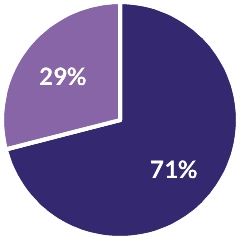
71% of director nominees of the Board are ethnically and/or gender diverse

• 
3 directors are women

• 
1 director is Asian

• 
1 director is African American
or Black
vi

TABLE OF CONTENTS

Proxy statement overview
Director skills and experience
The Board values having directors who possess a wide variety of relevant skills, professional experience, and backgrounds, bring diverse viewpoints and perspectives, and effectively represent the long-term interests of stockholders.
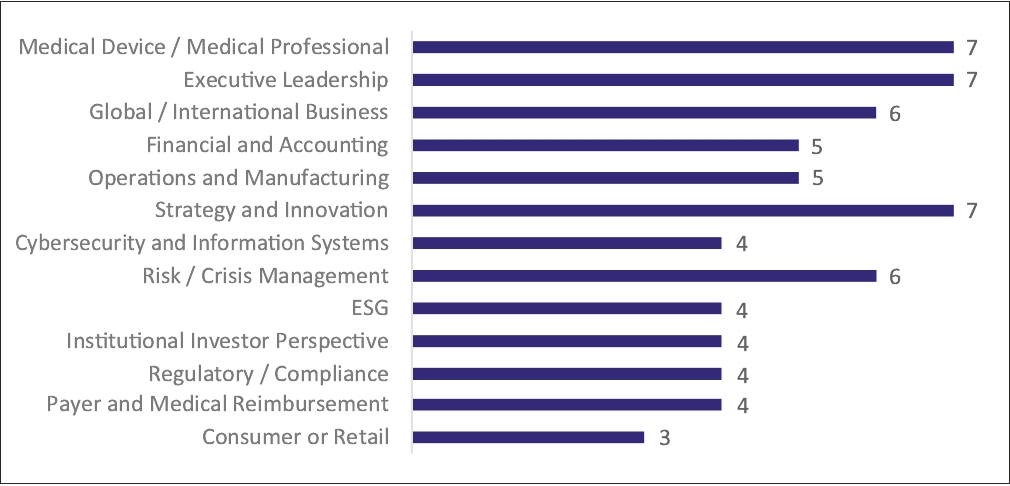
Listed below are certain of the key skills and experience that the Board considers important for our directors to have in light of our current business in order to contribute to the effective leadership and exercise of oversight responsibilities by the Board.
Medical Device / Medical Professional
Experience with and knowledge of our industry and technologies, as well as our end markets or credentialed or licensed as a professional in any of the medical fields, such as a registered nurse, physician or medical technician.
Executive Leadership
Experience in executive-level positions, such as at large multi-national companies, including public company board experience.
Global /
International Business
Experience in a leadership role at an organization with global or international operations.
Financial
and Accounting
Experience with financial matters, such as financial markets, financing operations, or accounting and financial reporting processes.
Operations
and Manufacturing
Experience with and understanding of operations or manufacturing processes.
Strategy
and Innovation
Experience with understanding evolving markets, competitive landscapes, business development and M&A strategy, or internal product development portfolios.
Cybersecurity and
Information Systems
Experience implementing or managing: (i) cybersecurity, information or data security risk or threat programs, (ii) information systems, including enterprise resource planning systems, or (iii) possession of a recognized cybersecurity certification or other skills or expertise related to cybersecurity or information systems.
Risk / Crisis
Management
Experience overseeing enterprise risk management or business continuity planning, including at an enterprise level, experience overseeing product safety compliance programs and policies, or experience with crisis management, such as the implementation or development of strategies designed to help an organization manage sudden or significant events.
ESG
Experience working with Environmental, Social and Governance matters and incorporating these pillars into a sustainable company strategy.
Institutional
Investor Perspective
Experience working with large financial funds, money managers, investment banks, trusts or private equity investors.
Regulatory / Compliance
Experience with the regulatory and industry regulations and governing laws, such as FDA device regulations, international requirements and appropriate interactions in regulated sales environments.
Payer and Medical
Reimbursement
Experience with reimbursable or pharmaceutical products and obtaining reimbursement or coverage through private or government payers.
Consumer or Retail
Experience with consumer or retail products, including direct to patient marketing, pharmacy retailers, or online commerce.
vii

TABLE OF CONTENTS

Proxy statement overview
Director nominees skills composition


Governance best practices
Embecta’s commitment to good corporate governance is embodied in our Corporate Governance Principles. The Corporate Governance Principles set forth the Board’s views and practices regarding a number of governance topics. The Governance Committee assesses the Corporate Governance Principles on an ongoing basis in light of current practices.
The following is a summary of our significant corporate governance practices. A further discussion of our governance practices can be found in “Corporate Governance” below.
Corporate Governance Practices
Majority voting standard for election of directors
6 out of 7 director nominees are independent
Lead independent director when Board Chair is not independent
Rigorous annual board self-evaluation and director re-nomination process
Proxy access by-law
Restrictions on corporate political contributions
Director share ownership requirements
Overboarding policy
Annual election of directors
viii

TABLE OF CONTENTS

Proxy statement overview
Proposal
2
Ratification of selection of independent registered public accounting firm
 

THE BOARD OF DIRECTORS RECOMMENDS A VOTE “FOR”
PROPOSAL 2.
Ernst & Young LLP (“E&Y”) has been selected by the Audit Committee as the Company’s independent registered public accounting firm (referred to herein as the “independent auditors”) for fiscal year 2026. The Audit Committee is solely responsible for the appointment, compensation, retention, and oversight of Embecta’s independent auditors. Stockholders are being asked to ratify the Audit Committee’s selection of E&Y. If ratification is withheld, the Audit Committee will reconsider its selection.
A representative of E&Y is expected to attend the 2026 Annual Meeting to respond to appropriate questions and will have the opportunity to make a statement.
ix

TABLE OF CONTENTS

Proxy statement overview
Proposal
3
Advisory vote to approve
named executive
officer compensation
 

THE BOARD OF DIRECTORS RECOMMENDS A VOTE “FOR”
PROPOSAL 3.
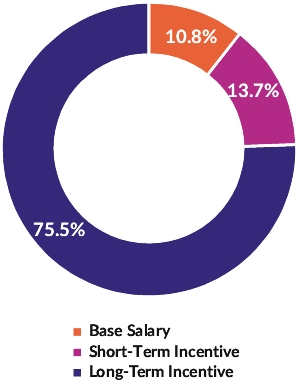
The Compensation and Management Development Committee’s primary objective in the design of the Embecta compensation program is to fully support the strategic business goals of delivering superior long-term stockholder returns and driving performance to achieve strategic objectives. As such, the program is intended to ensure a high degree of alignment between executive pay and stockholder returns.
CEO target direct compensation mix

x

TABLE OF CONTENTS

Proxy statement overview
Our compensation objectives and practices
 
What We Do
What We Don’t Do
Competitive Compensation Program
Significant portion of target annual compensation is delivered in the form of variable compensation tied to performance.
Reinforce and reward behaviors that support our business objectives.
Use of an independent compensation consultant reporting directly to the Compensation Committee.
No individual employment agreements with our executive officers.
Pay for Performance
Align executive compensation with the execution of our business strategy and the creation of long-term stockholder value.
While we emphasize “at risk” pay tied to performance, our program does not encourage excessive risk-taking by management.
No guaranteed incentive awards for executive officers.
Strong Compensation Policies
Robust share retention and ownership guidelines.
“Double-trigger” change in control agreements. Our unvested equity compensation awards also have a double-trigger accelerated vesting provisions.
Clawback policy that provides for recoupment of compensation in connection with restatements of financial results, regardless of individual misconduct, in compliance with Nasdaq Global Select Market’s (“Nasdaq”) listing rules.
Annual say-on-pay vote.
No discounting, reloading or repricing of equity awards without stockholder approval.
Prohibition on executives pledging Embecta shares or hedging against the economic risk of ownership.
No excise tax “gross-ups” in our change in control and severance policy.
Limited executive perquisites.
The Compensation Discussion and Analysis beginning on page 32 of this proxy statement describes Embecta’s executive compensation program and the compensation decisions made with respect to our Chief Executive Officer (“CEO”) and the other executive officers named in the Summary Compensation Table on page 52. The Board believes that the information provided in the Compensation Discussion and Analysis and the executive compensation tables demonstrates that our executive compensation programs are appropriately designed, emphasize pay for performance and align management and stockholder interests.
This vote is advisory, which means that it is not binding on Embecta, the Board, or the Compensation and Management Development Committee.
xi

TABLE OF CONTENTS

Proxy statement overview
Proposal 4: Approval of an amendment to the Embecta 2022 Employee and Director Equity-Based Compensation Plan

THE BOARD OF DIRECTORS RECOMMENDS A VOTE “FOR”
PROPOSAL 4.
At the 2026 Annual Meeting, stockholders will be asked to approve an amendment to the Embecta 2022 Employee and Director Equity-Based Compensation Plan, as amended (the “2022 Plan”). The 2022 Plan amendment, which remains subject to stockholder approval, would increase the number of shares of Embecta common stock authorized for issuance under the 2022 Plan by 2,430,000 shares. The 2022 Plan is an important part of Embecta’s compensation program. It provides a vehicle for the Company to issue compensatory equity awards to eligible nonemployee directors and associates throughout Embecta and in turn increases retention. The use of equity aligns the interests of Embecta’s associates with the interests of our stockholders. Therefore, the Board believes the approval of this proposed amendment to the 2022 Plan is essential to the Company’s ability to attract, motivate and retain talented leaders, associates and directors in an extremely competitive environment.
If the proposed amendment to the 2022 Plan is not approved, we would be required to significantly increase the cash component of our compensation programs by replacing equity awards with cash awards, which does not best align the interests of our associates with the interests of our stockholders.
A more detailed discussion of this proposal and related disclosures can be found beginning on page 70.
xii

TABLE OF CONTENTS

Table of contents
xiii

TABLE OF CONTENTS

Table of contents
xiv

TABLE OF CONTENTS

Proposal 1: Election of directors
The Board currently consists of eight members, seven of whom are standing for election at the 2026 Annual Meeting. Drs. Milton M. Morris and Claire Pomeroy, Mses. Carrie L. Anderson and Karen N. Prange, and Messrs. Robert (Bob) J. Hombach, Devdatt (Dev) Kurdikar and Christopher R. Reidy, each currently serving a term expiring at the 2026 Annual Meeting, have each been nominated for election at the 2026 Annual Meeting for a term expiring at Embecta’s 2027 annual stockholder meeting. As previously announced, LTG (Ret.) David F. Melcher will not be standing for re-election at the 2026 Annual Meeting and will retire from the Board at the end of his current term expiring at the 2026 Annual Meeting. The Board and Company thank LTG (Ret.) Melcher for his valuable service and many contributions over his tenure.
Commencing with the 2026 Annual Meeting, each director will be elected annually and for a term of office to expire at the next succeeding annual stockholder meeting.
Each nominee has consented to serve if elected to the Board. If any director nominee becomes unable to accept nomination or election, which is not anticipated, the persons named as proxies will vote for the election of such other person as the Board may recommend. Proxies cannot be voted for a greater number of persons than the number of nominees named above.
Below is the biography of each of the nominees for election as a director of Embecta. Embecta directors have a variety of backgrounds, which reflects the Board’s continuing efforts to achieve a diverse mix of viewpoints, insights and perspectives on the Board. As more fully discussed below, director nominees are considered on the basis of a range of criteria, including their business knowledge and background, prominence and reputation in their fields, global business perspective and commitment to strong corporate governance and citizenship. They must also have experience and ability that is relevant to the Board’s oversight of Embecta’s business and affairs. Each nominee’s biography includes the particular experience and qualifications that led the Board to conclude that the nominee should serve on the Board.

THE BOARD OF DIRECTORS RECOMMENDS A VOTE “FOR” EACH OF THE NOMINEES FOR DIRECTOR.
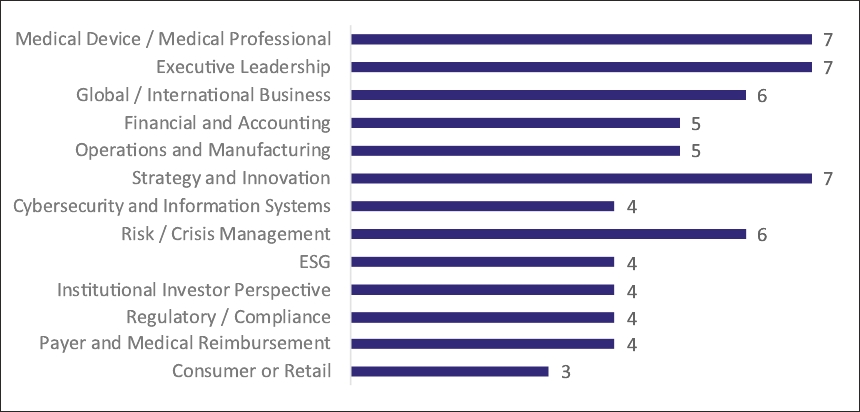
Director nominees - skills and experience
The table below summarizes the key qualifications, skills and attributes of the nominees for director that led our Board to conclude that he or she should serve as a director of the Company.

1

TABLE OF CONTENTS

Proposal 1: Election of directors
Nominees for director
Carrie L. Anderson
Former Executive Vice President and Chief Financial Officer, The Campbell’s Company
Age: 57

Director Since: 2022

Independent: Yes

Committees:
• 
Audit
• 
Corporate Governance
and Nominating
Ms. Anderson served as the Executive Vice President and Chief Financial Officer for The Campbell’s Company (NASDAQ: CPB) (“Campbell’s”) until October 2025. Prior to joining Campbell’s in 2023, Ms. Anderson served as Executive Vice President and Chief Financial Officer for Integra LifeSciences Holdings Corporation (NASDAQ: IART) (“Integra”). Prior to joining Integra in June 2019, she was Vice President and Controller of Dover Corporation (“Dover”). Previously, she was Chief Financial Officer of Dover’s Engineered Systems and initially joined Dover in October 2011 as Chief Financial Officer of Dover Printing and Identification. Prior to Dover, Ms. Anderson spent six years as Vice President and Chief Financial Officer of Delphi Product & Service Solutions, a division of Delphi Corporation. While at Delphi, she also held finance leadership positions at three other global operating divisions of Delphi. Ms. Anderson started her career with The General Motors Company.

Education

Ms. Anderson holds a Bachelor of Science in chemical engineering from Purdue University and earned her Master of Business Administration from Ball State University.

Qualifications, Skills and Experience

Ms. Anderson brings to the Board her financial expertise, life sciences experience and experience working with large, diversified global manufacturing companies, as well as her extensive experience in executive leadership, strategy and innovation, risk and crisis management, consumer/retail, ESG and experience with institutional investors.
2

TABLE OF CONTENTS

Proposal 1: Election of directors
Robert (Bob) J. Hombach
Former Executive Vice President, Chief Financial Officer and Chief Operations Officer, Baxalta Incorporated
Age: 59

Director Since: 2022

Independent: Yes

Committees:
• 
Audit (Chair)
• 
Compensation and Management Development Committee

Other Public Directorships:
• 
BioMarin Pharmaceutical Inc.
• 
Henry Schein, Inc.

Former Public Directorships
(last 5 years):
• 
CarMax, Inc.
• 
Aptinyx, Inc.
Mr. Hombach served as Executive Vice President, Chief Financial Officer and Chief Operations Officer of Baxalta Incorporated until 2016, a biopharmaceutical company spun out from Baxter International, Inc. (“Baxter”) (NYSE: BAX). He served as Corporate Vice President and Chief Financial Officer of Baxter from July 2010 until the spinoff in 2015. From 2007 to 2011, Mr. Hombach served as Treasurer of Baxter and from 2004 to 2007, he was Vice President of Finance, Europe, Middle East and Africa at Baxter. Prior to that, Mr. Hombach served in a number of finance positions of increasing responsibility in the corporate planning, manufacturing, operations and treasury areas at Baxter. Mr. Hombach is currently a member of the Board of Directors of BioMarin Pharmaceutical Inc. (NASDAQ: BMRN) and Henry Schein, Inc. (NASDAQ: HSIC).

Education

Mr. Hombach earned a Bachelor of Science in Finance, cum laude, from the University of Colorado, and a Master of Business Administration from Northwestern University’s Kellogg Graduate School of Management.

Qualifications, Skills and Experience

Mr. Hombach brings to the Board his financial expertise and public company governance experience, as well as his experience in the medical device industry and with medical device technology, experience with strategic and transactional transitions, global business, operations and manufacturing, cybersecurity and information systems, risk and crisis management, experience with institutional investors, and payer and medical reimbursement experience.
3

TABLE OF CONTENTS

Proposal 1: Election of directors
Devdatt (Dev) Kurdikar
President and Chief Executive Officer, Embecta Corp.
Age: 57

Director Since: 2022

Independent: No

Other Public Directorships:
• 
Zimmer Biomet Holdings, Inc.
Mr. Kurdikar is the President and Chief Executive Officer of Embecta. Previously, Mr. Kurdikar was the Worldwide President of Diabetes Care at BD. Prior to that role, Mr. Kurdikar was the President and CEO of Cardiac Science Corporation (“CSC”), a global leader in the manufacturing and marketing of automated external defibrillators for public access markets. CSC had been acquired by a private equity firm via bankruptcy proceedings, and under Mr. Kurdikar’s leadership, CSC returned to profitable growth and was sold in a successful exit to ZOLL Medical. Prior to that role, Mr. Kurdikar was the Vice President and General Manager, Men’s Health, within Urology and Pelvic Health at Boston Scientific. Mr. Kurdikar was in the same role at American Medical Systems (“AMS”) and led the Men’s Health business through a carve-out and sale to Boston Scientific, where Mr. Kurdikar led the business through its integration into Boston Scientific. Before joining AMS, Mr. Kurdikar served as Vice President, Marketing, at Baxter, where he worked on a global commercial initiative to drive market access, and was previously Vice President, Marketing, for the Infusion Systems business for the U.S. region. In his 11 years with Baxter, Mr. Kurdikar held leadership roles of increasing responsibility in finance, strategy and integration, R&D planning and operations. He began his career as a Senior Research Engineer at The Monsanto Company.

Mr. Kurdikar is currently a member of the Board of Directors of Zimmer Biomet Holdings, Inc. (NYSE and SIX: ZBH), AdvaMed (Advanced Medical Technology Association) and LMG Holdings (a portfolio company of The Riverside Company).

Education

Mr. Kurdikar holds a Bachelor in Chemical Engineering from the University of Bombay (India). He earned a Master of Science in Chemical Engineering from Washington State University (Washington), a Ph.D. in Chemical Engineering from Purdue University (Indiana), and a Master of Business Administration from Washington University (Missouri).

Qualifications, Skills and Experience

Mr. Kurdikar is an experienced healthcare executive who brings to the Board his extensive experience in the medical device industry and with medical device technology, experience with global business, operations and manufacturing, consumer/retail, payer and medical reimbursement, strategy and innovation, cybersecurity and information systems, risk and crisis management, ESG, regulatory and compliance matters, as well as experience with institutional investors.
4

TABLE OF CONTENTS

Proposal 1: Election of directors
Milton M. Morris, Ph.D.
Former Chairman and Chief Executive Officer, Neuspera Medical, Inc.
Age: 55

Director Since: 2022

Independent: Yes

Committees:
• 
Compensation and
Management Development
• 
Technology, Quality and Regulatory

Other Public
Directorships:
• 
Myomo, Inc.
• 
Nordson Corporation
Dr. Morris is a medical device C-Suite Executive and a public/private company independent board member. He most recently led Neuspera Medical, Inc.(“Neuspera”), as Chairman and CEO. Prior to joining Neuspera, Dr. Morris was the Senior Vice President of Research & Development and Emerging Therapies at Cyberonics, Inc. (now LivaNova, PLC). Previously, Dr. Morris held several positions of increasing responsibility at Guidant Corporation (“Guidant”) and its successor, Boston Scientific Corporation (“Boston Scientific”), including Principal Research Scientist, Director, Research & Development and Director, Marketing. Prior to joining Guidant, Dr. Morris worked as a Research Assistant in the Medical Computing Laboratory at the University of Michigan in collaboration with the electrophysiology group at the University of Michigan hospital and the Michigan Heart and Vascular Institute.

Dr. Morris is a member of the Board of Directors of Myomo, Inc. (NYSE: MYO) and of Nordson Corporation (NASDAQ: NDSN). Dr. Morris serves on the Board of Trustees for Northwestern University, where he chairs the Northwestern Medicine Committee, and is a Fellow in the American Institute for Medical and Biological Engineering, where he was inducted for contributions to developing and commercializing innovations in bioelectronic medicine.

Education

Dr. Morris holds a Master of Business Administration from Northwestern University’s Kellogg School of Management, a Master’s and Ph.D. in Electrical Engineering from the University of Michigan and a Bachelor of Science in Electrical Engineering from Northwestern University.

Qualifications, Skills and Experience

Dr. Morris brings to the Board his leadership experience in the medical industry, his expertise in developing and successfully launching new medical device products, and his deep knowledge of the medical field. Dr. Morris also has extensive experience in global business, operations and manufacturing, strategy and innovation, payer and medical reimbursement, risk and crisis management and regulatory and compliance matters, cybersecurity and information systems, as well as experience with institutional investors.
5

TABLE OF CONTENTS

Proposal 1: Election of directors
Claire Pomeroy, M.D.
President, The Albert and Mary Lasker Foundation
Age: 70

Director Since: 2022

Independent: Yes

Committees:
• 
Corporate Governance and Nominating
(Chair)
• 
Technology, Quality
and Regulatory

Other Public
Directorships:
• 
Haemonetics
Corporation

Former Public
Directorships
(last 5 years):
• 
Becton, Dickinson
and Company
Dr. Pomeroy has served since 2013 as President of the Albert and Mary Lasker Foundation, a private foundation that seeks to improve health by accelerating support for medical research through recognition of research excellence, public education and advocacy. Prior thereto, she served as Dean and Vice Chancellor of the University of California, Davis School of Medicine. She is an elected member of the National Academy of Medicine.

Dr. Pomeroy is a member of the Board of Directors of Haemonetics Corporation (NYSE: HAE). Dr. Pomeroy also serves on the Board of Directors of the Sierra Health Foundation, Center for Women in Academic Medicine and Science, Science Communication Lab, Science Philanthropy Alliance, Research!America, Geisinger School of Medicine, and Morehouse School of Medicine.

Education

Dr. Pomeroy holds a Bachelor’s degree in Biomedical Sciences and Doctor of Medicine (M.D.) from the University of Michigan, as well as a Master of Business Administration from the University of Kentucky.

Qualifications, Skills and Experience

Dr. Pomeroy is an expert in infectious diseases, with broad experience in areas of healthcare delivery, health system administration, payer and medical reimbursement, higher education, medical research and public health. She brings to the Board important perspectives on patient care services, global health and health policy.
6

TABLE OF CONTENTS

Proposal 1: Election of directors
Karen N. Prange
Industrial Advisor, EQT Group and Former Executive Vice President and Chief Executive Officer, Global Animal Health, Medical and Dental Surgical Group of Henry Schein, Inc.
Age: 61

Director Since: 2022

Independent: Yes

Committees:
• 
Compensation and
Management Development (Chair)
• 
Corporate Governance
and Nominating

Other Public
Directorships:
• 
AtriCure, Inc.

Former Public
Directorships
(last 5 years):
• 
Cantel Medical
Corporation
• 
ViewRay, Inc.
• 
Nevro Corp.
Ms. Prange was most recently Executive Vice President and Chief Executive Officer for the Global Animal Health, Medical and Dental Surgical Group at Henry Schein, Inc. (“Henry Schein”) and a member of its Executive Committee from 2016 to 2018. In this role, she led a business that generated over $6 billion of revenue across three different business units, growing the business to above-market levels in all business segments. Prior to her role at Henry Schein, she was Senior Vice President of Boston Scientific and President of its Urology and Pelvic Health business and served as General Manager of the Micrus Endovascular and Codman Neurovascular business at Johnson & Johnson Company. In addition to general management roles, Ms. Prange has extensive experience in commercial and operational roles, including managing innovation pipelines and acquiring and integrating companies. Ms. Prange currently serves on the board of AtriCure, Inc. (NASDAQ: ATRC) and WS Audiology A/S. She has also served as Industrial Advisor to EQT Group, a global investment organization, since March 2020.

Education

Ms. Prange earned her Bachelor of Science in Business Administration with honors from the University of Florida and has completed executive education coursework at UCLA Anderson School of Business and Smith College.

Qualifications, Skills and Experience

Ms. Prange brings to the Board her public company governance experience and leadership experience in the medical industry, as well as extensive global business, strategy and innovation, payer and medical reimbursement, risk management, ESG and regulatory and compliance experience.
7

TABLE OF CONTENTS

Proposal 1: Election of directors
Christopher R. Reidy
Retired Executive Vice President, Chief Administrative Officer and Chief Financial Officer, Becton, Dickinson and Company
Age: 69

Director Since: 2022

Independent: Yes

Committees:
• 
Technology, Quality
and Regulatory (Chair)
• 
Audit

Other Public Directorships:
• 
Encompass Health
Corporation
Mr. Reidy retired from BD in 2022, where he served as Executive Vice President, Chief Administrative Officer. He served as Executive Vice President, Chief Financial Officer of BD from July 2013 to September 2021. Prior to BD, Mr. Reidy served at ADP Corporation as Corporate Vice President and Chief Financial Officer for six years. Prior to ADP, Mr. Reidy served as Chief Financial Officer at NBA Properties, Inc., Vice President, Controller, Chief Accounting Officer and held division-level Chief Financial Officer roles at AT&T Corporation and was an audit partner at Deloitte & Touche LLP. Mr. Reidy currently serves on the Board of Directors of Encompass Health Corporation (NYSE: EHC) and is the Chair of its Audit Committee and a member of its Compliance/Quality of Care Committee. He also sits on the Board of Directors of the Atlantic Health System and is a member of its Executive Committee and Chair of its Finance & Investment Committee.

Education

Mr. Reidy, a certified public accountant, earned a Bachelor’s degree in Accounting from St. Francis College and a Master of Business Administration from Harvard Business School.

Qualifications, Skills and Experience

Mr. Reidy brings to the Board his financial expertise and leadership experience in the medical device industry, as well as extensive experience with medical device technology, global business, operations and manufacturing, strategy and innovation, cybersecurity and information systems, payer and medical reimbursement, risk and crisis management, consumer/retail, ESG, and institutional investors.
8

TABLE OF CONTENTS

Proposal 1: Election of directors
Board refreshment, composition and selection of new directors
The Board regularly assesses its composition to ensure it has the right mix of skills and experiences in light of Embecta’s strategy and the current and future needs of the Board. The Governance Committee undertakes a robust review before recommending the renomination of any sitting director, including a director’s effectiveness during the past year and the needs of the Board going forward in the context of Embecta’s strategy. Our Corporate Governance Principles state that Board members should not expect that, once elected, they will necessarily be renominated to the Board.
The Board also believes that having members with a diverse mix of backgrounds, viewpoints, insights and perspectives is critical to Board effectiveness, and seeks to have the Board composed of directors that collectively possess a wide range of relevant business and financial expertise, industry knowledge, management experience and prominence in areas of importance to Embecta. To that end, it is the policy of the Board that a panel of director candidates with a broad range of backgrounds, skills, perspectives, and qualities be included in any pool from which new directors are selected.
Director nomination process
Role of the Governance Committee
1
Review of the
Composition of
the Board
The Governance Committee reviews potential director candidates and recommends nominees for director to the full Board for its consideration based on the Governance Committee’s assessment of the overall composition of the Board.
2
Consideration of
Referrals from
Various Sources
It is the Governance Committee’s policy to consider referrals of prospective director nominees from other Board members and management, as well as stockholders and other external sources, such as retained executive search firms. The Governance Committee seeks to identify a broad range of qualified candidates and utilizes the same criteria for evaluating candidates, irrespective of their source.
3
Consideration of
Director
Qualifications
The Governance Committee will seek and actively consider as director candidates individuals who reflect a broad range of backgrounds, perspectives and qualities that, when combined with those of other directors, will provide a blend of skills and experience that will enhance the Board’s effectiveness and further Embecta’s strategic interests. The Governance Committee believes that any nominee for director that it recommends must meet the following minimum qualifications:
Candidates should be persons of high integrity who possess independence, forthrightness, inquisitiveness, good judgment and strong analytical skills.
Candidates should demonstrate a commitment to devote the time required for Board duties, including, but not limited to, attendance at meetings.
Candidates should be team-oriented and committed to the interests of all stockholders as opposed to those of any particular constituency.
4
Assessment
and Nomination
of Candidates
The Governance Committee assesses the characteristics and performance of incumbent director nominees against the above criteria as well, and, to the extent applicable, considers the impact of any change in the principal occupations of such directors during the last year. Upon completion of its assessment, the Governance Committee reports its recommendations for nominations to the full Board.
9

TABLE OF CONTENTS

Proposal 1: Election of directors
Stockholder recommendations
To recommend a director nominee candidate for consideration by the Governance Committee, a stockholder should submit a written statement of the qualifications of the proposed nominee, including full name and address, to the Corporate Secretary, Embecta Corp., 300 Kimball Drive, Ste 300, Parsippany, New Jersey 07054. The Governance Committee evaluates stockholder recommendations using the same process it follows for other candidates. Recommendations do not constitute candidate nominations, which must meet the requirements of our Amended and Restated By-Laws (“By-Laws”).
Proxy access nominations
Embecta has a “proxy access” by-law, which permits eligible stockholders to nominate director candidates for inclusion in Embecta’s proxy statement and proxy card. Our proxy access by-law provides that a stockholder (or a group of up to 20 stockholders) owning 3% or more of Embecta’s outstanding common stock for at least three years can nominate up to two individuals or 20% of the Board, whichever is greater, for election at an annual meeting of stockholders, subject to the relevant requirements in our By-Laws.
Director retirement policy; term limits
It is Embecta’s policy that directors must retire from the Board effective at the conclusion of the annual meeting of stockholders following their 75th birthday. Under special circumstances, the Board may approve exceptions to this policy. The Board believes, however, that any exceptions should be rare. Prior to a director’s 72nd birthday, the Governance Committee will begin discussions with the director regarding the director’s tenure and skills, the director’s anticipated future contributions to the Board, and the Board’s composition and needs going forward to determine whether the director’s continued service until the mandatory retirement age of 75 is appropriate.
10

TABLE OF CONTENTS

Proposal 1: Election of directors
Corporate governance
The Board and committees of the Board
Embecta is governed by the Board. The Board has established four operating committees (the “Committees”) that meet regularly: the Audit Committee; the Compensation and Management Development Committee (the “Compensation Committee”); the Governance Committee; and the Technology, Quality and Regulatory Committee (the “TQR Committee”).
Governance Materials
The following materials related to corporate governance at Embecta are available at investors.embecta.com/corporate-governance/documents-charters.

Corporate Governance Principles
Charters of the Audit, Compensation, Governance and TQR Committees

Printed copies of these documents, Embecta’s 2025 Annual Report to Stockholders, and Embecta’s reports to, and statements filed with or furnished to, the Securities and Exchange Commission (“SEC”) may be obtained, without charge, by contacting the Corporate Secretary, Embecta Corp., 300 Kimball Drive, Ste 300, Parsippany, New Jersey 07054; telephone 201-847-6880 or 862-401-0000.
Committee membership and function
Set forth below are the members of each Committee, a summary description of each Committee’s areas of oversight and the number of meetings held by each committee during fiscal year 2025.
Audit Committee
Members

Bob J. Hombach (Chair)
Carrie L. Anderson
Christpher R. Reidy

Meetings in 2025:

4
Principal Responsibilities:

Retains and reviews the qualifications, independence and performance of Embecta’s independent auditors.
Reviews Embecta’s public financial disclosures and financial statements, and its accounting principles, policies and practices; the scope and results of the annual audit by the independent auditors; Embecta’s internal audit process; and the effectiveness of Embecta’s internal controls over financial reporting and disclosure controls and procedures.
Reviews Embecta’s guidelines and policies relating to enterprise risk assessment and management, including financial risk and cybersecurity and data privacy risk exposures.
Oversees Embecta’s ethics and enterprise compliance programs.
Reviews financial strategies regarding currency, interest rate exposure and use of derivatives, and reviews Embecta’s insurance program.
The Board has determined that each member of the Audit Committee meets Nasdaq’s independence and financial literacy requirements for audit committee members. The Board also has determined that each of Mr. Hombach, Ms. Anderson and Mr. Reidy qualifies as an “audit committee financial expert” under the rules of the SEC.
11

TABLE OF CONTENTS

Proposal 1: Election of directors
Compensation and Management Development Committee
Members

Karen N. Prange (Chair)
Bob J. Hombach
Dr. Milton M. Morris

Meetings in 2025:

6
Principal Responsibilities:

Reviews Embecta’s compensation and benefits practices and policies, recommends the compensation of Embecta’s CEO to the independent members of the Board, evaluates and certifies performance of senior executives and approves the compensation of Embecta’s other senior executives.
Approves all employment, severance and change in control arrangements applicable to our executive officers.
Serves as the granting and administrative committee for Embecta’s equity compensation plans.
Oversees Embecta’s policies and strategies relating to senior management succession, pay equity, inclusion and diversity and human capital management in general.
Reviews initiatives designed to accelerate development and readiness of current and future senior management.
Oversees certain other Embecta benefit plans.
Administers Embecta’s clawback policies and reviews such clawback policies with respect to the incentive compensation that is approved, awarded or granted to senior executives.
The Board has determined that each member of the Compensation Committee meets Nasdaq’s independence requirements for compensation committee members. Each member also qualifies as a “non-employee director” under Section 16 of the Securities Exchange Act of 1934, as amended (the “Exchange Act”).
Process for determining executive compensation
The Compensation Committee oversees the compensation program for the executive officers named in the Summary Compensation Table on page 52 and for Embecta’s other executive officers. The Compensation Committee recommends compensation actions regarding the CEO to the other independent directors of the Board for approval and has the authority to take compensation actions with respect to Embecta’s other executive officers, as discussed below. The Compensation Committee may not delegate these responsibilities to another Committee or members of management.
Role of management
The Compensation Committee’s meetings are typically attended by Embecta’s CEO, its Chief Human Resources Officer and other Embecta employees who support the Compensation Committee in fulfilling its responsibilities. The Compensation Committee considers management’s views on compensation matters, including the performance metrics and targets for Embecta’s performance-based compensation. Management also provides information (which is reviewed by our Internal Audit department and the Audit Committee) to assist the Compensation Committee in determining the extent to which performance targets have been achieved. This includes any recommended adjustments to Embecta’s operating results when assessing Embecta’s performance in connection with performance-based incentives. The CEO and Chief Human Resources Officer work with the Compensation Committee chair in establishing meeting agendas.
Role of the independent consultant
The Compensation Committee is assisted in fulfilling its responsibilities by its independent consultant, Korn Ferry. Korn Ferry is engaged by, and reports directly to, the Compensation Committee. The Compensation Committee evaluated Korn Ferry’s independence under the procedures set forth in the Nasdaq listing requirements and has not identified any conflict of interest on the part of Korn Ferry or any factor that would otherwise impair the independence of Korn Ferry relating to the services
12

TABLE OF CONTENTS

Proposal 1: Election of directors
performed by Korn Ferry for the Compensation Committee. Since the separation from BD (the “Separation”) and during fiscal year 2025, no other consultant was used by the Compensation Committee with respect to compensation of Embecta’s executive officers.
Commencing in fiscal year 2022, the Compensation Committee engaged Korn Ferry to advise management and the Compensation Committee with respect to the Company’s compensation programs, and to undertake various related studies and projects. During fiscal year 2025, the Compensation Committee evaluated Korn Ferry’s independence pursuant to SEC and Nasdaq requirements and determined that no conflicts of interest arose from the work to be performed by Korn Ferry.
In its role as the Compensation Committee’s independent consultant, Korn Ferry:
reviewed materials prepared for the Compensation Committee by management,
provided market comparison data and other materials requested by the Compensation Committee,
assisted the Compensation Committee in the design and implementation of Embecta’s compensation program, including the selection of the key elements of the program, setting of targeted payments for each element, and establishment of performance targets,
assisted the Compensation Committee in conducting a risk assessment of Embecta’s compensation program (in particular, our performance-based programs),
made recommendations regarding the compensation of Embecta’s CEO,
reviewed and advised on compensation disclosures and proxy stockholder considerations,
identified and recommended to the Compensation Committee a compensation benchmarking peer group,
conducted an annual review of the compensation practices of select peer companies, and advised the Compensation Committee with respect to the competitiveness of Embecta’s compensation program in comparison to industry practices, and identified any trends in executive compensation, and
attended Compensation Committee meetings.
Setting compensation
On an annual basis, the independent directors conduct a review of the CEO’s performance. The independent directors then meet in executive session to set the compensation of the CEO after considering the results of their review, market comparison data and the recommendations of the Compensation Committee. The CEO does not play a role in determining or recommending CEO compensation, and is not present during voting or deliberations on his compensation.
The Compensation Committee is responsible for determining the compensation of Embecta’s other executive officers. The CEO reviews the performance of the other executive officers with the Compensation Committee and makes compensation recommendations for its consideration. The Compensation Committee determines the compensation for these executives, in consultation with Korn Ferry, after considering the CEO’s recommendations, executive performance and market comparison data regarding compensation levels for comparable positions at peer companies.
The Board has delegated responsibility for formulating recommendations regarding non-employee director compensation to the Governance Committee, as discussed in “Non-management director compensation” below.
13

TABLE OF CONTENTS

Proposal 1: Election of directors
Corporate Governance and Nominating Committee
Members

Dr. Claire Pomeroy (Chair)
Carrie L. Anderson
Karen N. Prange

Meetings in 2025:

4
Principal Responsibilities:

Identifies and recommends candidates for election to the Board.
Reviews and recommends for appointment certain corporate officers.
Reviews and recommends the composition, structure and function of the Board and its Committees, as well as the compensation of non-employee directors.
Monitors Embecta’s corporate governance and Board practices and oversees the Board’s self-evaluation process.
Oversees Embecta’s processes and practices relating to the management and oversight of environmental, sustainability, health and safety, inclusion, political activities, corporate responsibility and other public policy or social matters relevant to Embecta (“ESG matters”).
The Board has determined that each member of the Governance Committee meets Nasdaq’s independence requirements.
Technology, Quality and Regulatory Committee
Members

Christopher R. Reidy (Chair)
Dr. Claire Pomeroy
Dr. Milton M. Morris

Meetings in 2025:

3
Principal Responsibilities:

Oversees the quality and competitiveness of Embecta’s product portfolio and manufacturing capabilities, including new product development and innovation, research and development activities, quality systems and regulatory compliance matters.
Reviews with management Embecta’s key innovation activities, new product development and commercialization programs, including:
Progress against program objectives;
Organizational integration and capabilities; and
Potentially disruptive trends in technology, medical practice and the external environment.
Reviews and evaluates the combined capabilities of Embecta’s R&D quality assurance, regulatory affairs, manufacturing, operations, distribution and clinical and medical affairs functions and technological aspects of new and existing products and services as they relate to quality, safety, and cybersecurity.
Compensation Committee Interlocks and Insider Participation
Ms. Prange, Mr. Hombach and Dr. Morris served as members of the Compensation Committee during the year ended September 30, 2025. None of the members of the Compensation Committee has at any time been one of our officers or employees. None of our executive officers currently serves, or in the past fiscal year has served, as a member of the board of directors or on a compensation committee of any entity that has one or more executive officers serving on our Board or Compensation Committee.
14

TABLE OF CONTENTS

Proposal 1: Election of directors
Board leadership structure
The Board seeks to achieve the best board leadership structure for the effective oversight and management of Embecta’s affairs. The Board believes there is no single, generally accepted approach to providing effective board leadership, and that each leadership structure must be considered in the context of the individuals involved and the specific circumstances facing a company. Accordingly, what the Board believes to be the right board leadership structure for Embecta may vary over time as circumstances warrant.
The Board does not have a policy on whether the roles of the Chairman of the Board and the CEO should be separate or combined, or, if they are to be separate, whether the Chairman of the Board should be selected from the independent directors. The Board believes it is important to retain the flexibility to allocate the responsibilities of the offices of the Chairman of the Board and the CEO in such a manner as the Board considers to be in the best interests of Embecta at the time, considering the individuals involved and the specific circumstances facing Embecta.
The Corporate Governance Principles provide for the appointment by the independent directors of a Lead Director from among the Board’s independent directors whenever the Board Chair is not independent. The Lead Director role would allow the non-employee directors to provide effective, independent Board leadership and oversight of management, including risk oversight. Under the Corporate Governance Principles, the duties and responsibilities of the Lead Director include to (i) serve as liaison between the Board Chair and the independent directors; (ii) approve information sent to the Board; (iii) approve meeting agendas for the Board; (iv) approve meeting schedules to assure that there is sufficient time for discussion of all agenda items; (v) have the authority to call meetings of the independent directors; (vi) if requested by major stockholders, ensure that he or she is available for consultation and direct communication; and (vii) communicate to the CEO, along with the Chair of the Compensation and Management Development Committee, the Board’s evaluation of the CEO’s performance. Our current Chairman of the Board, LTG (Ret.) David F. Melcher, who will retire from the Board at the end of his current term expiring at the 2026 Annual Meeting, is independent under the Nasdaq rules and our director independence guidelines contained in the Corporate Governance Principles.
Our Board determined that it is in the best interests of the Company and our stockholders to combine the roles of Chairman and CEO and appoint Mr. Kurdikar as Chairman and CEO, effective as of the 2026 Annual Meeting. To ensure an appropriate level of oversight continues between our independent directors and the CEO, the independent directors have selected Dr. Claire Pomeroy, who has served on the Board since 2022, to serve as Lead Director, effective as of the 2026 Annual Meeting. Our Board believes that this Board leadership structure, coupled with a strong emphasis on Board independence, provides effective independent oversight of management while allowing the Board and management to benefit from Mr. Kurdikar’s long tenure at the Company, his extensive knowledge about the industry, and his familiarity with the Company’s business and the risks and opportunities facing the Company. Our independent directors bring experience, oversight and expertise from outside of our company, while our Chairman and CEO brings company and industry specific experience and expertise. Our Board believes that this governance structure provides strong leadership, creates clear accountability, and enhances our ability to communicate our message and strategy clearly and consistently to stockholders. Our Board believes that its independence and oversight of management is maintained effectively through this leadership structure, the composition of the Board and sound corporate governance policies and practices.
Director independence
Under the Nasdaq rules and our Corporate Governance Principles, a director is not independent if the director has a direct or indirect material relationship with Embecta (other than his or her relationship as a director and equity ownership positions in Embecta) or a relationship with Embecta or its management that would interfere with the exercise of independent judgment in carrying out the responsibilities of a director. The Governance Committee reviews and makes recommendations to the Board for action regarding the independence of directors. The Board affirmatively determines each director’s independence on an annual basis (including for purposes of membership on the Audit,
15

TABLE OF CONTENTS

Proposal 1: Election of directors
Compensation, and Governance Committees) based on applicable requirements of the SEC, Nasdaq and the Corporate Governance Principles. To assist in this review, the Board has adopted independence guidelines contained in the Corporate Governance Principles. Former and current relationships of a director with BD are also analyzed to determine the independence of directors and may result in the conclusion that a current or former relationship with BD is disqualifying for independence purposes. The determination of whether a director’s relationship with Embecta would interfere with the exercise of independent judgment in carrying out the responsibilities of a director will be made by the independent directors, excluding the director with the relationship.
The Board has determined that seven of our directors serving on the Board, LTG (Ret.) David F. Melcher, Ms. Carrie L. Anderson, Mr. Robert (Bob) J. Hombach, Dr. Milton M. Morris, Dr. Claire Pomeroy, Ms. Karen N. Prange and Mr. Christopher R. Reidy, are independent under the Nasdaq rules and our independence guidelines. Mr. Devdatt (Dev) Kurdikar, an employee of Embecta, is not independent. The Board also determined that former director Mr. David J. Albritton, who retired from the Board effective November 17, 2025, was independent during the time he served on the Board.
In determining the independence of our directors other than Mr.  Kurdikar, the Board reviewed any transactions or other dealings by Embecta with organizations with which a director has a relationship, such as service as an employee of an organization or as a member of its governing or advisory board. Based on its review, the Board determined that there were no such transactions or dealings in fiscal year 2025 that would interfere with the exercise of independent judgment in carrying out the responsibilities of a director occurred in fiscal year 2025.
Related person transactions
Throughout fiscal year 2025, Embecta did not engage in any transactions with related persons (as defined under applicable SEC rules) meeting the requirements for disclosure in this proxy statement. Each year, our directors, director nominees and executive officers complete a questionnaire designed to elicit information about potential related person transactions. The Governance Committee is responsible for the review and approval or ratification of transactions, arrangements or relationships in which Embecta is a participant and in which related persons have, or will have, a direct or indirect material interest pursuant to the Corporate Governance Principles. The Governance Committee will approve only those transactions that it determines in its business judgment are fair and reasonable to Embecta and in (or not inconsistent with) the best interests of Embecta and its stockholders and that do not impact a director’s independence, in accordance with Embecta’s Related Person Transactions Policy.
Insider trading arrangements and policies
We have adopted an insider trading policy (the “Insider Trading Policy”) governing the purchase, sale and other dispositions of our securities, including by our directors, officers and employees and by Embecta. The Insider Trading Policy prohibits, among other things, insider trading and certain speculative transactions in our securities (including short sales, transacting in put and call options and other hedging or derivative transactions in our securities) and establishes a regular blackout period schedule during which directors, executive officers and employees may not trade in the Company’s securities, as well as certain pre-clearance procedures that directors and certain officers, employees and other covered persons must observe prior to effecting any transaction in our securities. We believe the Insider Trading Policy is reasonably designed to promote compliance with applicable insider trading laws, rules and regulations, as well as Nasdaq listing standards. The foregoing description of our Insider Trading Policy is qualified in its entirety by reference to the full text of the Insider Trading Policy, incorporated by reference as Exhibit 19 to our Annual Report on Form 10-K for the fiscal year ended September 30, 2025, filed with the SEC on November 25, 2025.
Executive sessions of independent directors
The independent directors meet in executive session as a matter of course at each regular meeting of the Board.
16

TABLE OF CONTENTS

Proposal 1: Election of directors
Board’s oversight of risk
Role of the board and committees
BOARD
The full Board reviews the risks associated with Embecta’s strategic plan and discusses the appropriate levels of risk in light of Embecta’s business objectives. This is done through an annual strategy review process, and from time to time throughout the year as part of the Board’s ongoing review of corporate strategy. The full Board also regularly oversees other areas of potential risk, including Embecta’s capital structure, significant acquisitions and divestitures, and succession planning for Embecta’s CEO and other members of senior management.
 
COMMITTEES
The Committees are responsible for monitoring and reporting to the full Board on risks associated with their respective areas of oversight. In connection with its oversight responsibilities, each Committee often meets with the members of management who are primarily responsible for the management of risk in their respective areas, including, among others, Embecta’s Chief Financial Officer (“CFO”), Chief Human Resources Officer, General Counsel, Chief Information Officer, Internal Audit and compliance officers.
 
Audit Committee
Corporate Governance and Nominating Committee
Oversees Embecta’s enterprise risk management (“ERM”) activities.
Oversees Embecta’s accounting and financial reporting processes and the integrity of Embecta’s financial statements, cybersecurity and data privacy risk exposure, Embecta’s ethics and compliance program (including the Ethics Helpline) and its insurance coverages.
Oversees risks relating to Embecta’s corporate governance practices, including director independence and compensation, related person transactions and conflicts of interest, and crisis management, as well as the process and practices relating to the management and oversight of ESG matters.
 
Compensation and Management
Development Committee
Technology, Quality and Regulatory
Committee
Oversees risks associated with Embecta’s compensation practices and programs and human capital management.
Oversees risks associated with product development, safety and innovation, research and development activities, quality systems, and regulatory compliance matters.
 
MANAGEMENT
Embecta’s management engages in an ERM process to identify, assess, manage and mitigate a broad range of risks across Embecta’s businesses, regions and functions, and to ensure alignment of our risk assessment and mitigation efforts with Embecta’s corporate strategy. Senior management reviews the results of its ERM activities with the Audit Committee at least once a year, including the process used within the organization to identify risks, management’s assessment of the significant categories of risk faced by Embecta (including any changes in such assessment since the last review), and management’s plans to mitigate potential exposures. The significant risks identified through Embecta’s ERM activities and the related mitigation plans are also reviewed with the full Board at least once a year. In addition, certain risks (such as cybersecurity) are frequently reviewed in depth with both the Audit Committee and/or the full Board.
17

TABLE OF CONTENTS

Proposal 1: Election of directors
Specific risk oversight
Compensation programs
With respect to our compensation policies and practices, Embecta’s management and the Compensation Committee, with Korn Ferry’s assistance, have reviewed our policies and practices to determine whether they create risks that are reasonably likely to have a material adverse effect on Embecta. In connection with this risk assessment, management reviewed the design of Embecta’s compensation programs (in particular, our performance-based compensation programs) and related policies, potential risks that could be created by the programs, and features of our programs that help mitigate risk. Among the factors considered were the mix of cash and equity compensation, and of fixed and variable compensation, paid to our employees; the balance between short- and long-term objectives in our incentive compensation; the performance targets, mix of performance metrics, vesting periods, threshold performance requirements and funding formulas related to our incentive compensation; the degree to which programs are formulaic or provide discretion to determine payout amounts; caps on payouts; our clawback and share retention and ownership policies; and our general governance structure. Based on this review, we believe that our compensation policies and practices do not create risks that are reasonably likely to have a material adverse effect on Embecta.
Cybersecurity
Embecta relies on industry-standard software applications, information technology (“IT”), computing infrastructure, and cloud service providers to perform essential operations. Many of these systems are managed, hosted, provided, or utilized by third parties to support our business activities. Embecta utilizes the ISO 27001 and 42001 frameworks, which incorporate the National Institute of Standards and Technology and Center for Internet Security frameworks, and various other risk management frameworks to proactively evaluate its cybersecurity controls, risks, and overall program effectiveness against emerging risks including AI.
Cybersecurity risk management is integrated into our broader ERM framework to promote a Company-wide culture of awareness and proactive risk management. Our ERM framework is overseen by the Audit Committee and the Board. Our Chief Information Officer (“CIO”) and Vice President of IT Infrastructure and Security (“VP IT”) are responsible for updating the Audit Committee and the Board on Embecta’s cybersecurity risks. The Audit Committee receives updates on cybersecurity-related topics throughout the year, including any major cybersecurity incidents. Additionally, the Board receives periodic updates on information security and cybersecurity matters from our CIO and VP IT. As part of our risk management process, we engage external providers to conduct periodic internal and external penetration testing and security assessments.
Additional information on Embecta’s cybersecurity risk management and governance is contained in the section titled “Part 1. Item 1C. Cybersecurity” of Embecta’s Annual Report on Form 10-K for the fiscal year ended September 30, 2025.
Product quality and patient safety
The TQR Committee provides oversight of matters relating to regulatory compliance and the quality and safety of Embecta’s products and services. The TQR Committee receives in-depth updates from Embecta’s management on the overall quality strategy and the systems in place to monitor the quality and safety of Embecta’s products and services, the quality internal audit program and the results of product quality and quality system assessments by Embecta and external regulators (and Embecta’s response to such assessments), and the processes and procedures relating to compliance with relevant laws and regulations. Management provides updates to the TQR Committee on significant risks and developments in the global regulatory environment and significant product quality, safety or regulatory registration or compliance issues. The TQR Committee also reviews product quality, safety or regulatory registration or compliance risks identified in connection with acquisitions and the related integration plans for such businesses. The full Board receives periodic updates on product quality and safety risks for the users of our products.
18

TABLE OF CONTENTS

Proposal 1: Election of directors
ESG
At the Board level, the Governance Committee oversees the processes and practices relating to management and oversight of ESG matters, as described in the Governance Committee’s charter. Relevant Board Committees provide input throughout the year, and the full Board receives updates on ESG strategy and its progress.
At the management level, Embecta has an Enterprise Risk Committee (“ERC”) that provides oversight of Embecta’s ERM program and its progress towards priority ESG matters. The ERC consists of a cross-functional group of management, including members of the ESG Working Group, a group of leaders from across Embecta tasked with shaping and driving the ESG strategy, and works with various internal operating committees that are executing on Embecta’s ESG strategy in order to monitor and ensure accountability towards Embecta’s ESG goals, some of which are incorporated into its compensation metrics. The ERC is also responsible for reporting to the Board and the Committees and overseeing external and internal reporting on ESG matters.
As part of the Separation, Embecta started to develop its standalone multi-year strategy to advance ESG initiatives, which included evaluation and assessment, recognizing that Embecta’s risks and impacts are different from those of BD. This evaluation phase commenced with a Sustainability Materiality Assessment (completed in September 2022) and an internal review of the United Nations Sustainable Development Goals (UNSDGs) and their relevance to Embecta. After completing the materiality assessment in late 2022, our ESG team presented to our management and Board our strategic focus areas around which we will monitor and report. Our ESG strategic focus areas are: (i) improving the lives of people living with diabetes; (ii) supporting our team; (iii) better for our planet; and (iv) responsible operations. In 2025, Embecta’s ESG strategy centered on Embecta’s commitment to delivering its products and solutions responsibly and with a view toward how its business impacts the broader communities in which it operates, and continued to evolve alongside Embecta’s business.
Pay equity
Embecta is committed to compensating its employees fairly and equitably. We take a proactive approach to pay equity and continually monitor our compensation program and policies to ensure fair outcomes. Where necessary and appropriate, we take action and make pay adjustments to address any inconsistencies.
We believe that pay equity is critical to our success in supporting a global, diverse, and inclusive workforce.
Note about website and ESG reports
The reports mentioned above, or any other information from the Embecta website, are not part of, or incorporated by reference into this proxy statement. Some of the statements and reports contain cautionary statements regarding forward-looking information that should be carefully considered. Our statements and reports about our objectives may include statistics or metrics that are estimates, make assumptions based on developing standards that may change, and provide aspirational goals that are not intended to be promises or guarantees. The statements and reports may also change at any time, and we undertake no obligation to update them, except as required by law.
Code of conduct
Embecta maintains a Code of Conduct that is applicable to all directors, officers and associates of Embecta, including our CEO, CFO, principal accounting officer and other senior financial officers. It sets forth Embecta’s policies and expectations on several topics, including conflicts of interest, confidentiality, compliance with laws (including insider trading laws), preservation and use of Embecta’s assets, and business ethics. The Code of Conduct also sets forth procedures for addressing
19

TABLE OF CONTENTS

Proposal 1: Election of directors
any potential conflict of interest (or the appearance of a conflict of interest) involving directors, executive officers or employees, and for the confidential communication and handling of issues regarding accounting practices and internal controls. Every Embecta associate is required to complete annual training on the Code of Conduct.
Embecta also maintains Ethics Helpline telephone numbers and an online reporting tool for Embecta associates as means of raising concerns or seeking advice. The Ethics Helpline is available to associates in the U.S., China, France and Ireland and the online reporting tool is available to associates worldwide. Associates using the Ethics Helpline and online reporting tool may choose to remain anonymous and all inquiries are kept confidential to the extent practicable in connection with the investigation of an inquiry. All Ethics Helpline inquiries are forwarded to Embecta’s ethics and compliance department for investigation. The Audit Committee is informed of any reported matters, whether through the Ethics Helpline or otherwise, that could potentially be significant to Embecta, including accounting, internal control or auditing matters, or any fraud involving management or persons who have a significant role in Embecta’s internal controls.
Waivers of any provision of the Code of Conduct are rare and may be granted only by the ethics office, in consultation with the General Counsel. Waivers for executive officers or directors may only be granted by the Board. In addition, certain amendments to the Code of Conduct, as well as any waivers from certain provisions of the Code of Conduct given to Embecta’s CEO, CFO or principal accounting officer, will be posted at the website address set forth below. To the extent required by the rules of the SEC or the Nasdaq, Embecta intends to satisfy the disclosure requirements regarding any amendment or waiver of our Code of Conduct by posting such information on our website.
The Code of Conduct is available on Embecta’s website at investors.embecta.com/corporate-governance/documents-charters. Printed copies of the Code of Conduct may be obtained, without charge, by contacting the Corporate Secretary, Embecta Corp., 300 Kimball Drive, Ste 300, Parsippany, New Jersey 07054; telephone 201-847-6880 or 862-401-0000.
Enterprise ethics and compliance
Under the oversight of the Audit Committee, Embecta’s global ethics and compliance function seeks to ensure that Embecta has a comprehensive compliance program that is designed to prevent and detect wrongdoing and continuously encourages lawful and ethical conduct. Embecta’s General Counsel, along with the Senior Director of Ethics, Compliance and Privacy, lead the global ethics and compliance function and oversee these activities to ensure effective operation and enforcement of Embecta’s ethics and compliance program. The ethics and compliance program is integrated into our global business operations. We evaluate the effectiveness of our program and adapt it periodically to ensure it is appropriately tailored to address the risks inherent in our global business.
In addition to our Code of Conduct, Embecta has a set of global policies and standards, including our Global Standards for Interactions with Healthcare Professionals, Healthcare Organizations, and Government Officials, which are designed to ensure associates have clear guidance on how to do what is right in the context of their work for Embecta. Embecta associates must comply with these Global Standards, the Embecta Code of Conduct, Embecta policies and procedures, applicable laws and regulations, and relevant industry codes (including AdvaMed, APACMed, MedTech Europe, Mecomed and ABIMED).
Embecta associates receive information and training about the Code of Conduct, Global Standards and other policies in several ways, including periodic communications and trainings. Associates can access detailed information on our expectations through our intranet.
Except as prohibited by applicable law, Embecta associates are obligated to report any suspected violations of laws, industry codes, the Embecta Code of Conduct or Embecta policies in accordance with Embecta’s Code of Conduct, under which all associates, vendors and other third parties working on behalf of Embecta are encouraged to ask questions, raise concerns or seek guidance in a number of ways (such as using the online reporting tool or by calling the Ethics Helpline). Embecta takes all
20

TABLE OF CONTENTS

Proposal 1: Election of directors
reports of violations of laws, Embecta policies, and ethical standards seriously and will promptly review all such reports and investigate if necessary. Embecta does not tolerate any form of retaliation against any person who in good faith reports an actual or suspected violation.
Board practices, policies and processes
Governance best practices
Embecta’s commitment to good corporate governance is embodied in our Corporate Governance Principles. The Corporate Governance Principles set forth the Board’s views and practices regarding a number of governance topics, and the Governance Committee assesses the Corporate Governance Principles on an ongoing basis in light of current practices.
The following is a summary of our significant corporate governance practices.
Corporate Governance Practices
Majority voting standard for election of directors
6 out of 7 director nominees are independent
Lead independent director when Board Chair is not independent
Rigorous annual board self-evaluation and director re-nomination process
Proxy access by-law
Restrictions on corporate political contributions
Director share ownership requirements
Overboarding policy
Annual election of directors
Board, Committee and annual meeting attendance
The Board met 12 times in fiscal year 2025. During fiscal year 2025, all directors attended at least 75% of the total number of meetings of the Board and the Committees on which she or he served. The Board has adopted a policy pursuant to which directors are expected to attend our annual stockholder meetings in the absence of a scheduling conflict or other valid reason. All of our directors attended the 2025 annual stockholder meeting.
Board self-evaluation
The Board believes a rigorous self-evaluation process is important to the ongoing effectiveness of the Board. To that end, the Board has committed to conduct an annual self-evaluation of its performance that allows directors to provide individual feedback on the Board’s composition, culture, committee structure, relationship with management, meeting agendas, oversight of strategy and risk, and other Board-related topics. The results of the self-evaluation are presented by the Chair of the Governance Committee to the full Board. As part of the evaluation, the Board assesses the progress in the areas targeted for improvement from the prior evaluation and develops actions to be taken to enhance the Board’s effectiveness over the next year. Each Committee conducts an annual self-evaluation of its performance through a similar process.
The Board believes it is important to periodically obtain an outside perspective on the Board’s overall functioning and effectiveness and seeks to have its annual self-evaluation facilitated by an independent outside consultant experienced in board and governance practices at least once every three years.
21

TABLE OF CONTENTS

Proposal 1: Election of directors
Director continuing education and new director orientation
To enhance and expand the Board’s knowledge of the healthcare industry and topics relevant to its oversight responsibilities, we provide our directors with continuing education presentations developed by both internal and external expert speakers. Additionally, we encourage our directors to participate in external continuing director education programs and pursue director certifications, including cybersecurity, compensation committee and directorship certifications through the National Association of Corporate Directors.
Other significant governance practices
Described below are some of the other significant corporate governance practices at Embecta.
Majority voting standard for election of directors
Under our By-Laws, in uncontested elections (that is, where the number of nominees does not exceed the number of directors to be elected), nominees for director must receive the affirmative vote of a majority of the votes cast in order to be elected to the Board. Any incumbent director who receives a greater number of votes “against” the director’s election than votes “for” is required to offer to submit his or her resignation to the Board following the stockholder vote. The Governance Committee will consider and recommend to the Board whether to accept the resignation offer. The Board will act on such recommendation and publicly disclose its decision within 90 days following the stockholder vote. This process allows the Board the opportunity to identify and assess the reasons for the vote, including whether the vote is attributable to dissatisfaction with a director’s overall performance or is the result of stockholder views on a particular issue. In the event of a contested election, a plurality voting standard will apply.
Political contributions
The Company prohibits the use of corporate funds and assets to support U.S. federal or state candidates, political parties, ballot measures or referendum campaigns. Exceptions to this policy require approval by the CEO, General Counsel and a designated member of the Governance Committee. To date, no exceptions have been sought or approved.
In all cases, Embecta policy prohibits directors and employees from using company resources to promote their personal political views, causes or candidates, and specifies that the Company will not directly or indirectly reimburse any personal political contributions or expenses.
Charitable contributions approval
In furtherance of Embecta’s commitment to good governance and transparent disclosure practices, Embecta charitable contributions or pledges in an aggregate amount of $50,000 or more in any fiscal year (excluding contributions under Embecta’s Matching Gift Program) to entities with which Embecta’s directors and executive officers, or their families, are affiliated must be approved by the Governance Committee. The Governance Committee is provided on an annual basis with a report from management of the charitable contributions or pledges made by Embecta during the preceding fiscal year in an amount of $10,000 or more to entities with which Embecta’s directors and executive officers, or their families, are affiliated.
22

TABLE OF CONTENTS

Proposal 1: Election of directors
Communication with directors
Our relationship with our stockholders and their views about Embecta are important to us, and the Board recognizes the value of director engagement with Embecta’s stockholders. Stockholders or other interested parties wishing to communicate with the Board, Chairman of the Board, the independent directors as a group, the Lead Director (effective as of the 2026 Annual Meeting) or any individual director may do so by mail, addressed to Corporate Secretary, Embecta Corp., 300 Kimball Drive, Ste 300, Parsippany, New Jersey 07054. For complaints or concerns, including regarding accounting, internal accounting controls or audit matters, stockholders or other interested parties may also communicate:
by calling the Embecta Ethics Helpline toll-free at 1-833-600-1032 from within the U.S.;
via the online reporting tool at embecta.ethicspoint.com; or
by email to compliance@embecta.com.
The Ethics Helpline and online reporting tool are both serviced by an independent third party. All communications will be kept confidential and promptly forwarded to the Chairman of the Board, who will, in turn, forward them promptly to the appropriate director(s). Such items that are unrelated to a director’s duties and responsibilities as a Board member may be excluded by our corporate security department, including, without limitation, solicitations and advertisements, junk mail, product-related communications, job referral materials and resumes, surveys, and material that is determined to be illegal or otherwise inappropriate.
Non-management director compensation
The Board believes that providing competitive compensation is necessary to attract and retain qualified non-management directors.
The key elements of Embecta’s non-management director compensation program are a cash retainer, equity compensation and Lead Director/Committee chair fees. Of the base compensation paid to non-management directors (cash retainer and equity), approximately 75% is equity-based compensation, with slight variations for committee chairs and the non-executive chair. See “Equity ownership by directors” as noted below. Management directors do not receive compensation for their service as director.
The Governance Committee reviews the compensation of Embecta’s non-management directors and makes recommendations to the Board. The Governance Committee may not delegate these responsibilities to another Committee or members of management. For fiscal year 2025, the Governance Committee retained Korn Ferry as an independent consultant to assist in making these recommendations. Korn Ferry’s responsibilities include providing market comparison data on director compensation at peer companies, tracking trends in director compensation practices, and advising the Governance Committee regarding the components and levels of director compensation. The Governance Committee has not identified any conflict of interest on the part of Korn Ferry or any other factor that would impair Korn Ferry’s independence. Embecta management does not play any role in either recommending or determining non-management director compensation.
 
23

TABLE OF CONTENTS

Proposal 1: Election of directors
Cash retainer
Each non-management director currently receives an annual cash retainer of $80,000 for services as a director, which is paid in arrears quarterly, unless deferred at the election of the director in accordance with the terms of the Directors’ Deferral Plan, described below. Directors do not receive meeting attendance fees.
Annual equity award
Each non-management director elected at an annual stockholder meeting is granted time-vested restricted stock units (“TVUs”) with a value of $230,000 on the date of the grant. On February 12, 2025, each non-management director received a grant of 13,839 TVUs. The TVUs vest and are settled in shares of Embecta common stock at the following annual stockholder meeting.
Non-executive Chair/Committee chair fees
In addition to the annual fees and annual equity award described above, Embecta’s non-executive Chairman receives an annual fee of $60,000, paid in cash in arrears, and an additional annual TVU grant valued at $60,000, which will vest and be settled in shares of Embecta common stock at the following annual stockholder meeting. The chairs of the Governance Committee, Compensation Committee and TQR Committee receive an annual fee of $16,000, and the chair of the Audit Committee receives an annual fee of $20,000. Each annual fee is paid at year-end in arrears in line with our annual meeting schedule.
Equity ownership by directors
The Board believes that directors should hold meaningful equity ownership positions in Embecta to further align the interests of the non-management directors with our stockholders. To that end, a significant portion of non-management director compensation is in the form of equity awards and the Board has adopted share ownership guidelines. Under the Board’s share ownership guidelines, each non-management director is required to own shares of Embecta common stock (which includes TVUs) valued at five times the annual cash retainer and must comply with the guidelines within five years of joining the Board. All our non-management directors are on track to meet their ownership target.
Directors’ Deferral Plan
Directors are eligible to participate in the 2022 Directors’ Deferral Plan (the “Directors’ Deferral Plan”). The Directors’ Deferral Plan allows non-management directors to defer receipt, in an unfunded cash account, of all or part of their annual retainer and other cash fees. The Directors’ Deferral Plan is not qualified, and participants have an unsecured contractual commitment of Embecta to pay the amounts due under the Directors’ Deferral Plan.
Other arrangements
Embecta provides non-management directors with an annual fixed stipend of $2,000 to cover travel and other business expenses incurred in the performance of their services for Embecta. Directors are reimbursed for attending director education courses and are eligible to participate in Embecta’s Matching Gift Program, pursuant to which Embecta matches charitable contributions made to qualifying nonprofit organizations, subject to the aggregate limit per participant of $5,000 per calendar year.
24

TABLE OF CONTENTS

Proposal 1: Election of directors
The following table sets forth the compensation earned or received by Embecta’s non-management directors during fiscal year 2025.
Name
Fees earned
or paid in
cash
($)(1)
Stock
awards
($)(2)
All other
compensation
($)(3)
Total
($)
David F. Melcher
140,000
290,019
7,000
437,019
David J. Albritton
80,000
230,004
2,000
312,004
Carrie L. Anderson
80,000
230,004
7,000
317,004
Christopher R. Reidy
96,000
230,004
5,750
331,754
Robert (Bob) J. Hombach
100,000
230,004
2,000
332,004
Milton M. Morris
80,000
230,004
7,000
317,004
Claire Pomeroy
96,000
230,004
7,000
333,004
Karen N. Prange
96,000
230,004
2,000
328,004
(1)
Reflects cash retainer and Committee chair fees, and for LTG (Ret.) Melcher, the non-executive Chair fee. All cash retainer and/or fees paid to Mr. Reidy were deferred pursuant to the Directors’ Deferral Plan, which is described in “Non-management director compensation—Directors’ Deferral Plan” above.
(2)
Amounts reflect the grant date fair value under Financial Accounting Standards Board Accounting Standards Codification Topic 718 (“FASB ASC Topic 718”) of TVUs awarded to non-management directors in February 2025. For a discussion of the assumptions made in arriving at the grant date fair value of these awards, see Note 9 to the consolidated financial statements contained in our Annual Report on Form 10-K for the fiscal year ended September 30, 2025.
(3)
Amounts shown represent the aggregate amounts of the matching gifts under Embecta’s Matching Gift Program for Ms. Anderson, Messrs. Melcher and Reidy, and Drs. Morris and Pomeroy in fiscal year 2025, and the quarterly payments paid to the directors with respect to the annual fixed stipend for travel for all directors.
25

TABLE OF CONTENTS

Proposal 2: Ratification of selection
of independent registered public accounting firm
E&Y has been selected by the Audit Committee as Embecta’s independent auditors for fiscal year 2026. The Audit Committee is solely responsible for the appointment, compensation, retention and oversight of Embecta’s independent auditors. Stockholders are being asked to ratify the Audit Committee’s selection of E&Y. If ratification is withheld, the Audit Committee will reconsider its selection.
A representative of E&Y is expected to attend the 2026 Annual Meeting to respond to appropriate questions and will have the opportunity to make a statement.
E&Y began serving as our independent auditors in fiscal year 2022. Listed below are the fees billed to Embecta by E&Y for services rendered during fiscal years 2025 and 2024. All E&Y services for fiscal years 2025 and 2024 were approved in advance by our Audit Committee.
 
FY 2025
FY 2024
 
Audit Fees
$6,335,000
$6,065,000
“Audit Fees” include fees associated with the annual audit of Embecta’s consolidated financial statements, the audit of Embecta’s internal control over financial reporting and statutory audits required internationally. “Audit Fees” also include reviews of Embecta’s quarterly reports on Form 10-Q and registration statements filed with the SEC.
Audit Related Fees
$60,000
$60,000
“Audit Related Fees” include fees associated with the annual audit of Embecta’s 401(k) Plan and pre-implementation work associated with Embecta’s information technology systems.
Tax Fees
$
$37,000
“Tax Fees” includes tax compliance, assistance with tax audits, tax advice and tax planning.
All Other Fees
Total
$6,395,000
$6,162,000
 
26

TABLE OF CONTENTS

Proposal 2: Ratification of selection of independent registered public accounting firm
Pre-approval of audit and non-audit services
The Audit Committee is responsible for appointing Embecta’s independent auditors and approving the terms of the independent auditors’ services. The Audit Committee has established a policy for the pre-approval of all audit and permissible non-audit services to be provided by the independent auditors, as described below. All the services listed in the previous table were approved pursuant to this policy.
Audit Services. Under the policy, the Audit Committee will appoint Embecta’s independent auditors each fiscal year and pre-approve the engagement of the independent auditors for the audit services to be provided.
Non-Audit Services. In accordance with the policy, the Audit Committee has established detailed pre-approved categories of non-audit services that may be performed by the independent auditors during the fiscal year, subject to certain dollar limits. The Audit Committee may, from time to time, delegate its authority to pre-approve non-audit services to one or more Audit Committee members, provided that such designees present any such approvals to the full Audit Committee at the next Audit Committee meeting. All other non-audit services are required to be pre-approved by the entire Audit Committee.
The Audit Committee believes that the provision of the non-audit services described above by E&Y is consistent with maintaining the independence of E&Y. The Audit Committee periodically considers the rotation of the independent auditors. The Audit Committee believes that the continued retention of E&Y to serve as Embecta’s independent auditors is in the best interests of Embecta and its stockholders.

THE BOARD OF DIRECTORS RECOMMENDS A VOTE “FOR” PROPOSAL 2.
27

TABLE OF CONTENTS

Proposal 2: Ratification of selection of independent registered public accounting firm
Report of the audit committee
The Audit Committee reviews Embecta’s financial reporting process on behalf of the Board. Management has the primary responsibility for the financial statements and the reporting process, including the system of internal controls. The independent auditors are responsible for performing an independent audit of Embecta’s consolidated financial statements in accordance with generally accepted auditing standards and to issue a report thereon. The Audit Committee monitors these processes.
In this context, the Audit Committee met and held discussions with management and the independent auditors. Management represented to the Audit Committee that Embecta’s consolidated financial statements were prepared in accordance with accounting principles generally accepted in the United States, and the Audit Committee reviewed and discussed the consolidated financial statements with management and the independent auditors. The Audit Committee also discussed with the independent auditors the matters required to be discussed by the applicable requirements of the Public Company Accounting Oversight Board (“PCAOB”) and the SEC.
In addition, the Audit Committee discussed with the independent auditors the auditors’ independence from Embecta and its management, and the independent auditors provided to the Audit Committee the written disclosures and the letter pursuant to the applicable requirements of the PCAOB regarding the independent auditors’ communications with the Audit Committee concerning independence. The Audit Committee discussed with Embecta’s internal and independent auditors the overall scope and plans for their respective audits. The Audit Committee met with the internal and independent auditors, with and without management present, to discuss the results of their examinations, their evaluations of Embecta’s internal controls, and the overall quality of Embecta’s financial reporting. Management has also reviewed with the Audit Committee its report on the effectiveness of Embecta’s internal control over financial reporting. The Audit Committee also received the report from the independent auditors on Embecta’s internal control over financial reporting.
Based on the reviews and discussions referred to above, the Audit Committee recommended to the Board, and the Board has approved, that the audited financial statements be included in Embecta’s Annual Report on Form 10-K for the fiscal year ended September 30, 2025, for filing with the SEC.
AUDIT COMMITTEE
Robert (Bob) J. Hombach (Chair)
Karen N. Prange*
Carrie L. Anderson
Christopher R. Reidy
*
Ms. Prange served on the Audit Committee during fiscal year 2025 and when it recommended to the Board that the audited financial statements be included in Embecta’s 2025 Annual Report. Ms. Prange is no longer a member of the Audit Committee.
28

TABLE OF CONTENTS

Proposal 3: Advisory vote to approve named executive officer compensation
The Compensation Discussion and Analysis beginning on page 32 of this proxy statement describes Embecta’s executive compensation program and the compensation decisions made with respect to our CEO and the other named executive officers reflected in the Summary Compensation Table on page 52. Pursuant to Section 14A of the Exchange Act, the Board is asking stockholders to cast a non-binding advisory vote on the following resolution:
“RESOLVED, that the stockholders of Embecta approve the compensation of the Embecta executive officers named in the Summary Compensation Table, as disclosed in this proxy statement pursuant to the compensation disclosure rules of the Securities and Exchange Commission (which disclosure includes the Compensation Discussion and Analysis, the executive compensation tables and the related footnotes and narrative accompanying the tables).”
As we describe in the Compensation Discussion and Analysis, our executive compensation program embodies a pay-for-performance philosophy that supports Embecta’s business strategy and aligns the interests of our executives with those of our stockholders. At the same time, we believe our program does not encourage excessive risk-taking by management. We believe that the compensation actions discussed in the Compensation Discussion and Analysis appropriately reflected the performance of our named executive officers and Embecta during the year.
For these reasons, the Board is asking stockholders to support this Proposal 3. While the advisory vote we are asking you to cast is non-binding, the Compensation Committee and the Board value the views of our stockholders and will take into account the outcome of the vote when considering our compensation program and future compensation decisions for our executive officers.

THE BOARD OF DIRECTORS RECOMMENDS A VOTE “FOR” PROPOSAL 3.
29

TABLE OF CONTENTS

Proposal 3: Advisory vote to approve named executive officer compensation
Management
Senior leadership
The following table sets forth information regarding the individuals who are currently serving on the senior leadership team of Embecta. One member of Embecta’s senior leadership team, Devdatt (Dev) Kurdikar, also holds a position as a member of Embecta’s Board.
Name
Position
Devdatt (Dev) Kurdikar*
President and Chief Executive Officer
Jacob (Jake) Elguicze*
Senior Vice President and Chief Financial Officer
Ginny Blocki
Senior Vice President, Strategy
Tom Blount
Senior Vice President and President, North America
Shaun Curtis*
Senior Vice President, Global Manufacturing, Supply Chain and Quality
Jean Casner*
Senior Vice President and Chief Human Resources Officer
Jeff Mann*
Senior Vice President, General Counsel and Product Development
Slobodan Radumilo
Senior Vice President and President, International
Anthony Roth*
Vice President, Chief Accounting Officer and Corporate Controller
*
This senior leadership member has been designated as an “executive officer” under Item 401 of Regulation S-K (17 CFR § 229.401).
Biography for Devdatt (Dev) Kurdikar is provided above in “Nominees for director.”
Jacob (Jake) Elguicze, 52, serves as Senior Vice President and Chief Financial Officer, prior to which he served as Senior Vice President, Finance of Diabetes Care at BD until the Separation. Previously, Jake was the Treasurer and Vice President of Investor Relations of Teleflex Incorporated (NYSE: TFX), a global provider of medical technologies designed to improve the health and quality of people’s lives. Before assuming the role of Treasurer and Vice President of Investor Relations, Jake was the Vice President of Financial Planning and Analysis at Teleflex. Prior to that role, Jake worked at Motorola, Inc. in a variety of corporate finance roles of increasing responsibility, including most recently the Director of Finance for one of Motorola’s strategic business units. Before joining Motorola, Jake served as an auditor for PricewaterhouseCoopers, LLP. Jake holds a Bachelor of Science degree in Accounting from the University of Scranton and a Master of Business Administration degree from Saint Joseph’s University.
Ginny Blocki serves as Senior Vice President, Strategy, prior to which she served in various roles at Embecta and as Senior Vice President, Product Management and Global Marketing of Diabetes Care at BD until the Separation, a position she had held since October 2021. Prior to that, Ginny was head of U.S. medication delivery marketing for Baxter International Inc. (NYSE: BAX) until 2021, and before that held leadership roles with Assertio Therapeutics, Inc. (Nasdaq: ASRT) until 2020, Abbott Laboratories (NYSE: ABT) until 2018, and prior to that at Baxalta (which was later acquired by Shire PLC ADR (Nasdaq: SHPC)). She holds a Bachelor of Science degree in finance from Indiana University and completed the Executive Scholar Program in General Management at Kellogg School of Management, Northwestern University.
Tom Blount, 52, serves as Senior Vice President and President, North America. Previously, Tom joined BD in 2016 and served as Vice President and General Manager, U.S. Diabetes Care, from May 2020 until the Separation. Prior to BD, he spent 16 years in roles of increasing leadership responsibility at Sanofi S.A. (Nasdaq: SNY) following five years on active duty in the U.S. Army. He holds a Bachelor of Science degree in German/French from the United States Military Academy at West Point and a Master of Science degree in International Relations from Troy University – European Campus.
30

TABLE OF CONTENTS

Proposal 3: Advisory vote to approve named executive officer compensation
Shaun Curtis, 56, serves as Senior Vice President, Global Manufacturing, Supply Chain and Quality, prior to which he served as the Worldwide Vice President of Operations for Diabetes Care at BD, from 2018 until the Separation. Previously, Shaun was the Manufacturing Director at BD Plymouth, UK (part of the Integrated Diagnostic Solutions Business) since 2012. Prior to joining BD, Shaun was the Engineering Manager at Cooper Standard Automotive, Plymouth, UK. Before his role at Cooper Standard Automotive, Shaun worked at Pall Filtration, UK. Shaun started his career at Rio Tinto Zinc as an underground maintenance engineer. Shaun holds a Master of Business Administration degree from Northampton University, UK. He earned an Honors Degree in Mechanical Engineering from Plymouth University. He also achieved a Higher National Diploma in Mechanical Engineering at Swindon College.
Jean Casner, 67, serves as Senior Vice President and Chief Human Resources Officer, and has over 30 years of global human resources strategy, design and operations experience across a range of industries. Most recently, she served as Senior Vice President and Chief Human Resources Officer for Renalytix, PLC, an emerging in-vitro diagnostic medical device company, where she was responsible for building the HR function in preparation for rapid growth following FDA approval of its groundbreaking diagnostic test, KidneyIntelX.dkd. Prior to Renalytix, Jean served as Senior Vice President & Chief Human Resources Officer of Cantel Medical Corp., a global medical products company focused on infection prevention products. There, she was responsible for the global human capital strategy, encompassing talent development, talent acquisition, succession planning, total rewards, benefits, diversity, equity and inclusion and HR operations. Previously, Jean also held executive HR leadership positions in the areas of HR Operations, executive compensation, total rewards, global mobility, HRIS, HRIT and talent acquisition, at the National Basketball Association (NBA), Merck & Co., The Dial Corporation (now Henkel), Johnson & Johnson, and ORC (now Mercer). Jean holds a Bachelor of Arts degree in English from the University of Virginia.
Jeff Mann, 53, serves as Senior Vice President, General Counsel and Product Development, prior to which he served as the Senior Vice President, General Counsel and Head of Corporate Development of Diabetes Care at BD until the Separation. Previously, Jeff served as General Counsel and Corporate Secretary of Cantel Medical Corp (Cantel). Prior to Cantel, Jeff spent 14 years with Boston Scientific Corporation in roles including M&A, venture capital investments, SEC and corporate governance, patent strategy, litigation, and business unit support for the Med Surg group. Jeff also served on the Board of Directors of Preventice Solutions and as Chair of its Compensation Committee. Jeff holds a Bachelor of Science degree in Civil and Environmental Engineering from Lafayette College in Easton, PA, and a J.D. from Boston College Law School, magna cum laude.
Slobodan Radumilo, 55, serves as Senior Vice President and President, International, prior to which he was Vice President and General Manager of Diabetes Care for BD in the EMEA region, from 2016 until the Separation. Previously, he held roles of increasing responsibility at Medtronic plc (NYSE: MDT) from 1997 to 2016, most recently as Vice President of Neuromodulation for Europe and Canada, regional Vice President for Central and Eastern Europe and Central Asia, and regional Vice President for Central and Eastern Europe, Greece and Israel. He holds a Bachelor of Science degree in Electrical Engineering, a Master of Science degree in Biomedical Engineering and a Diploma in Management from the University of Zagreb in Croatia, as well as a Diploma in Leadership from the Glasgow Caledonian University.
Anthony Roth, 52, serves as Vice President, Chief Accounting Officer and Corporate Controller. Prior to joining embecta, Anthony was Senior Vice President, Chief Accounting Officer for Ascential plc’s digital commerce business. Prior to that, he held the role of Chief Accounting Officer and Corporate Controller at Summit Health, a healthcare services company. Before joining Summit Health, Anthony was the Senior Vice President, Finance and Corporate Controller for Phibro Animal Health Corporation (Nasdaq: PAHC), a global publicly traded animal health company. Anthony began his career as an auditor for Ernst & Young. He then held a variety of roles with public and private companies with increasing responsibilities before joining Phibro Animal Health Corporation. Anthony holds a Bachelor of Science degree in Accounting from Virginia Polytechnic Institute and State University (Virginia Tech). He is a Certified Public Accountant and a Chartered Global Management Accountant.
31

TABLE OF CONTENTS

Compensation Discussion and Analysis
Introduction
This section provides an overview of our executive compensation philosophy and executive compensation programs, the compensation actions taken with respect to our named executive officers, or our “NEOs,” in 2025, as well as the principles and processes the Compensation Committee has established in determining NEO compensation.
The named executive officers for 2025 are listed below.
Devdatt (Dev) Kurdikar, President, Chief Executive Officer and Director
Jacob (Jake) Elguicze, Senior Vice President and Chief Financial Officer
Shaun Curtis, Senior Vice President, Global Manufacturing, Supply Chain and Quality
Jeff Mann, Senior Vice President, General Counsel and Product Development
Jean Casner, Senior Vice President and Chief Human Resources Officer
All references in this section to years are references to our fiscal year, which ends on September 30, unless otherwise noted.
Executive summary
Our compensation program serves as a key vehicle for attracting, retaining and motivating top talent. In designing our overall compensation structure, we carefully review the programs in which our executive officers and other employees participate to ensure these programs address the needs of our business. We continually refine elements of our compensation program based on our strategy, scale of operations and workforce.
Our compensation philosophy in 2025 was designed to align the interests of our executive officers with those of our stockholders by providing pay that is directly linked to the achievement of performance goals established to create sustainable long-term stockholder value. The use of variable, at-risk compensation is a key element of our executive pay that connects pay outcomes with company performance. Embecta believes in providing executive compensation that is competitive with our peers, has meaningful performance components and has equity-based elements that encourage executives to maintain an appropriate ownership interest in the Company. Our performance-based compensation programs result in a majority of the compensation of our CEO being linked to the achievement of short-term and long-term Company goals and to increasing stockholder value.
Our compensation philosophy, objectives and practices
As we operate in a highly competitive and rapidly evolving market as an independent publicly listed global company with a complex geographic footprint, we monitor our executive compensation philosophy, program and approach to ensure alignment with our long-term strategy and the unique characteristics of Embecta. The Embecta executive compensation program has three primary objectives: to attract and retain talent; to drive performance to achieve strategic objectives; and to create long-term value for our stockholders. The executive compensation philosophy adopted by the Compensation Committee reflects where Embecta is in its life cycle as a public company. It includes the following guiding principles that we believe are critical to our success.
32

TABLE OF CONTENTS

Compensation Discussion and Analysis
Pay for performance
We link pay and performance by delivering 50% or more of executive total compensation opportunity through variable, at-risk incentives designed to incentivize increasing long-term stockholder value through the achievement of predetermined company performance goals.
Accountability
Our compensation program incorporates a short-term incentive plan that holds management accountable for the achievement of financial metrics and strategic objectives, as well as a long-term incentive framework that is heavily weighted on company performance.
Competitive positioning
Total compensation opportunity is generally targeted around the median compensation at peer companies, with flexibility to determine individual compensation based on an executive’s scope, experience, criticality of role, performance and internal equity. Our executives have deep expertise that is highly valued by the market and important to our success and their retention through competitive positioning is a key priority.
Stockholder alignment
We establish and maintain a well-governed compensation program that creates long-term stockholder value by rewarding our executives when stockholder value is created while also mitigating excessive risk-taking and behavior that is inconsistent with our strategic plans and Embecta’s mission, vision and values.
In administering the program, the Compensation Committee seeks to provide transparency to Embecta executives, employees and stockholders on all aspects of Embecta’s compensation structure. This includes disclosure of performance targets, payout formulas and the Compensation Committee’s use of discretion in determining award payouts. As an independent public company, Embecta will continue to assess its compensation program to ensure appropriate alignment with its business strategy and stockholders’ expectations.
How we set executive compensation
The role of the Compensation Committee, its consultant
and management
The Compensation Committee oversees the compensation program for our executive officers, including the program design and performance targets. The Compensation Committee recommends compensation actions with respect to the CEO for approval by the independent members of the Board and sets the compensation of the other NEOs. The Compensation Committee is assisted in fulfilling its responsibilities by its independent compensation consultant, Korn Ferry, and Embecta’s senior management, but final decisions are made by the Compensation Committee or the Board, as applicable, in its sole discretion. The Compensation Committee has utilized Korn Ferry as its independent executive compensation consultant since 2022. In its role as the Compensation Committee’s executive compensation consultant during fiscal 2025, Korn Ferry (among other things):
assisted the Compensation Committee in the design and implementation of our executive compensation program, including the selection of the key elements of the program, setting of targeted payments for each element, and establishment of performance targets;
made recommendations regarding the compensation of our CEO and other NEOs and the compensation of our directors;
conducted an annual review of the composition of the peer group;
advised the Compensation Committee with respect to the competitiveness of our executive and director compensation programs;
33

TABLE OF CONTENTS

Compensation Discussion and Analysis
attended Compensation Committee meetings; and
responded to various ad hoc requests from the Compensation Committee.
Additional information about our process for setting executive compensation, including the roles of Korn Ferry and management, is found beginning on page 12.
The Compensation Committee has implemented a process to approve fees for any non-compensation related consulting advice in advance, to ensure that Korn Ferry remains independent. The aggregate fees billed by Korn Ferry for consulting services rendered to the Compensation Committee during fiscal year 2025 related to the recommendation of the amount or form of executive and director compensation were approximately $230,000. The total amount of fees paid by the Company to Korn Ferry in fiscal year 2025 for all other services, excluding Compensation Committee services, was approximately $86,000. The decision to hire Korn Ferry for these other services (which included executive search, organizational strategy consulting, leadership development and assessments) was made by the Company’s management and approved by the Compensation Committee.
Use of market comparison data
For fiscal year 2025, the Compensation Committee approved a peer group framework and methodology based on a set of principles and criteria. With the assistance of its independent compensation consultant, it established a compensation benchmarking peer group, which is composed of a robust set of companies in the healthcare sector with comparable business characteristics, models, and size for the purposes of reviewing compensation. In selecting companies for the peer group, the Compensation Committee considered companies that met one or more of the following peer group selection criteria established by the Compensation Committee, based on the recommendations of its independent compensation consultant:
domestic, publicly traded company;
similar size in terms of revenue and similar cost characteristics;
member of the healthcare industry, with a focus on healthcare equipment and supplies, healthcare providers and services, healthcare technology, biotechnology, pharmaceuticals and life sciences tools and services; and
similar lines of business and characteristics: chronic condition management, international distribution, business complexity and clinical manufacturing.
Based on the above criteria and considering the recommendations of its independent compensation consultant, the Compensation Committee approved the following peer companies for fiscal year 2025:
Compensation Peer Group
Avanos Medical, Inc,
Bio-Rad Laboratories, Inc.
CONMED Corporation
DexCom, Inc.
Haemonetics Corporation
ICU Medical, Inc.
Insulet Corporation
Integer Holdings Corporation
Integra LifeSciences Holding Corporation
Nevro Corp.
Orthofix Medical Inc.
ResMed Inc.
Tandem Diabetes Care, Inc.
Teleflex Incorporated
The Cooper Companies, Inc.
Waters Corporation
West Pharmaceutical Services, Inc.
The Compensation Committee believes that compensation decisions are complex and require a deliberate review of Embecta performance and peer compensation levels. Other factors that may influence the amount of compensation awarded may include an executive’s scope, experience, criticality of role, performance and internal equity. In addition to the proxy market data from the peer group, the Compensation Committee also reviewed survey data.
34

TABLE OF CONTENTS

Compensation Discussion and Analysis
Our compensation objectives and practices
Our goal is to provide an executive compensation program that best serves the long-term interests of our stockholders. We believe that attracting and retaining superior talent and rewarding performance is key to delivering long-term stockholder returns and that a competitive compensation program is critical to that end. We strive to provide a competitive compensation package to our executives that ties a significant portion of pay to performance and uses components that align the interests of our executives with those of Embecta’s stockholders. The following is a summary of important aspects of our executive compensation program.
Balanced mix of pay components and incentives. We target a balanced mix of cash and equity compensation, and of annual and long-term incentives. The key elements of our program are salary, annual cash incentives under the annual bonus plan and long-term equity compensation.
Significant performance-based compensation tied to business strategy. We emphasize pay-for-performance to align executive compensation with the execution of our business strategy and the creation of long-term stockholder value. We use performance metrics that are aligned with and support Embecta’s business strategy.
Meaningful performance-based compensation to mitigate excessive risk-taking. While we emphasize “at risk” pay tied to performance, we believe our program does not encourage excessive risk-taking by management.
Share retention guidelines and policy against pledging/hedging. Our executives are subject to robust share retention and ownership guidelines and are prohibited from pledging or short selling Embecta shares or hedging against the economic risk of their ownership.
Limited perquisites. We do not offer special perquisites that are not available to other officers of Embecta or other personal benefits to our NEOs.
Clawback policies. We have a compensation recovery policy that gives the Board the authority to recover incentive compensation paid to senior management in the event of a restatement of our financial statements resulting from that person’s misconduct and to recover equity compensation awarded to a member of management if such executive breaches certain restrictive covenants. In compliance with Nasdaq’s rules, we also have a compensation recovery policy that gives the Board the authority to recover incentive compensation paid to current or former senior management in the event of a restatement of our financial statement, regardless of individual misconduct.
Change in control arrangements. We have “double-trigger” change in control agreements with our NEOs to provide continuity of management in the event of an actual or potential change in control. Our change in control agreements do not contain any excise tax “gross-up” provisions.
Use of independent compensation consultant. The Compensation Committee uses an independent compensation consultant to assist it in designing our compensation program and making compensation decisions.
35

TABLE OF CONTENTS

Compensation Discussion and Analysis
Our risk analysis of performance-based compensation
While a significant portion of our executive compensation is performance-based, we do not believe that our program encourages excessive or unnecessary risk-taking. The Compensation Committee focuses on aligning Embecta’s compensation practices with Embecta’s long-term strategy and avoiding short-term rewards for management decisions that could pose long-term risks to Embecta. This includes:
Limits on Bonus Plan awards. We do not overweigh short-term incentives as a proportion of total pay. Under the Embecta Annual Incentive Plan (the “Bonus Plan”), awards are generally capped at 200% of an executive’s target award to protect against disproportionately large short-term incentives. The Compensation Committee has the discretion to determine and adjust award amounts based on any factors it deems appropriate, including whether management has taken unnecessary or excessive risk. For fiscal year 2025, the Compensation Committee also had discretion under the temporary FY25 Focus Plan (as defined below) to apply a modifier that could result in Bonus Plan awards capped at 240% of an executive's target award and the Compensation Committee exercised discretion to eliminate the impact of the FY25 Focus Plan and not to apply the upward adjustment modifier to any Bonus Plan awards to all executives.
Use of long-term equity compensation. The largest portion of the total compensation opportunity for our NEOs is delivered in long-term equity compensation that generally vests over a period of three years, which encourages our executives to focus on sustaining Embecta’s long-term performance.
Balanced set of performance metrics. We use a balanced set of performance metrics in our executive compensation program design. These performance-based compensation metrics align with the execution of our business strategy.
Share retention and ownership guidelines. Our share retention and ownership guidelines ensure that our executives have a significant amount of their personal assets tied to the long-term success of Embecta. We have a policy prohibiting the pledging or short selling of Embecta shares or hedging against the economic risk of their ownership.
Elements of our 2025 executive compensation program
The key elements of the 2025 executive compensation program are summarized below.
36

TABLE OF CONTENTS

Compensation Discussion and Analysis

While the programs and pay levels reflect differences in job responsibilities, the structure of the compensation program is applied consistently to our NEOs, including the CEO. The Compensation Committee reviews each element of total compensation, both individually and on a combined basis, for each NEO and makes adjustments as appropriate based on these comparisons.
The following is a more detailed discussion of the components of Embecta’s executive compensation program.
Base salary
Base salary is the fixed component of the compensation paid to each of our executive officers and is determined based on the executive’s scope, experience, criticality of role, competitive marketplace practices, performance and internal equity.
As part of Embecta’s annual review process, the Compensation Committee, in consultation with its independent compensation consultant, reviewed the base salary levels against the compensation peer group information to assess whether base salary levels were within acceptable market ranges. Based on its review, the Compensation Committee determined that base salary for certain of the NEOs should be increased, effective December 15, 2024 or January 1, 2025. As a result of Mr. Kurdikar’s base salary increase, his base salary percentile as compared to other CEOs in Embecta’s compensation peer group became more closely aligned with, but still below, the median base salary of such other CEOs. The following table sets forth the base salary adjustments for our NEOs in fiscal year 2025:
Named Executive Officer
Starting Base Salary on
October 1, 2024
Final Base Salary on
September 30, 2025
Dev Kurdikar
$900,000
$1,000,000
Jake Elguicze
$580,000
$610,000
Shaun Curtis*
$545,661
$592,042
Jeff Mann
$570,000
$610,000
Jean Casner
$465,000
$485,000
37

TABLE OF CONTENTS

Compensation Discussion and Analysis
*
Mr. Curtis’s salary is paid in Euros. For purposes of this table, Mr. Curtis’s base salary was converted from Euros to USD based on an exchange rate of 1.1731 as of September 30, 2025.
Annual and long-term incentives
We have two primary types of incentives that serve to reward our executives for company performance. The incentives are designed to closely tie compensation to performance and to align our executives’ interests with those of Embecta’s stockholders. Our annual incentives allow us to reward executives with annual cash bonuses for performance against pre-established objectives based on work performed during the applicable year. Our long-term incentives are based on Embecta stock, and the value realized by our executives will increase as the value of Embecta stock increases. We believe the current mix of base salary, annual incentives and long-term incentives is appropriately set to provide market-competitive compensation when company performance warrants. The mix is more heavily weighted toward incentive compensation at higher executive levels within Embecta. The interplay between the annual incentives and the long-term incentives provides a balance designed to motivate executives to achieve our business goals and objectives and to properly reward executives for the achievement of such goals and objectives.
The following describes the variable compensation program that our NEOs were eligible to participate in during fiscal year 2025.
Annual short-term incentive awards
Performance period and metrics for performance-based compensation in 2025
During 2025, our NEOs were eligible to participate in the Bonus Plan, which was also subject to a potential modifier based on a temporary incentive plan for fiscal year 2025 (“FY25 Focus Plan”). The Bonus Plan provides our executives an opportunity to receive an annual cash award based on Embecta’s performance for the 2025 fiscal year and their contribution to that performance as part of our pay-for-performance philosophy. The Compensation Committee approved these performance measures and associated targets with respect to 2025:
80% Financial Metrics (40% Adjusted Constant Currency Revenue $, 40% Adjusted EBITDA $)
20% Strategic Objectives
Overall Modifier (FY25 Focus Plan: Bonus Plan multiplier based on Net Debt results)
This weighting is based on the Compensation Committee’s evaluation of these measures as critical to the Company’s success during the year. The Strategic Objectives are designed to achieve key milestones in connection with the growth and transformation of the Company. Annual incentive awards pursuant to the Bonus Plan are paid based upon achievement of Company performance measures.
2025 Bonus Plan
Funding for the fiscal year 2025 Bonus Plan awards was based on Embecta’s global business results and was subject to modification under the FY25 Focus Plan, which resulted in an overall funding level of 110.2%.
Adjusted Constant Currency Revenue $*
This measure is defined as revenues excluding (i) the recognition of changes in estimates associated with the Italian payback measure relating to certain prior years since 2015, which was recognized as a result of the Constitutional Court of Italy upholding in July 2024 the constitutionality of a 2015 legislation imposing a “payback” measure on medical device companies that supply goods and services to the Italian National Healthcare System for medical device expenditures exceeding certain ceilings (the “Italian payback measure”) and (ii) the impact of fluctuations in foreign exchange (or “FX”) rates since the setting of the
38

TABLE OF CONTENTS

Compensation Discussion and Analysis
 
Bonus Plan targets.
Adjusted EBITDA $*
This measure is defined as earnings before interest, taxes, depreciation, and amortization (“EBITDA”) excluding certain items that affect comparability of operating results and the trend of earnings. These adjustments are either non-cash or irregular in nature, may not be indicative of our past and future performance and are therefore excluded to allow investors to better understand underlying operating trends. The following are examples of the types of adjustments that are excluded: share-based compensation, impairment losses, costs associated with the Separation and other significant items management deems irregular or non-operating in nature. This measure excludes the impact of fluctuations in FX rates since the setting of the Bonus Plan targets.
Net Debt *
This measure is defined as total debt (current debt obligations plus long-term debt) less cash and cash equivalents, and restricted cash.
Strategic Objectives
For the 2025 Bonus Plan, the Strategic Objectives scorecard had the following goals:
Alternative Cannula: Related to milestones in the identification and qualification of alternate cannula suppliers; and
Brand Transition: Related to brand transition; and
GLP-1 Offerings: Related to the co-packaging of Embecta pen needles for GLP-1 therapies.
*
Adjusted Constant Currency Revenue, Adjusted EBITDA and Net Debt are not calculated in accordance with the U.S. generally accepted accounting principles (“GAAP”). For a reconciliation of these metrics for the fiscal year ended September 30, 2025 to the most directly comparable GAAP measures, please see Appendix A to this proxy statement.
How our performance metrics support Embecta’s business strategy
The Compensation Committee believes that, together, these measures provide a balanced set of performance targets that focus on preserving and growing our core business, profitability and operating efficiency.
When measuring actual performance against financial targets, adjustments are made to account for the impact of FX rates in effect during the year, whether favorable or unfavorable to Embecta, compared to the rates we budgeted when the targets were set. We eliminate this impact of unbudgeted foreign currency translation so that only Embecta’s underlying performance is measured.
Funding for awards based on Embecta’s performance
The available funding pool for awards is determined by a formula. For each performance measure, Embecta’s performance is compared to the target goal set by the Compensation Committee to arrive at a performance factor for that measure.
The tables below show the funding levels for threshold, target and maximum performance for the performance measures under the Bonus Plan for 2025 and the FY25 Focus Plan. Performance below threshold for a performance measure results in no funding with respect to that measure.
39

TABLE OF CONTENTS

Compensation Discussion and Analysis
Performance Measures
 
Below
Threshold
Threshold
Target
Max
Adjusted Constant
Currency Revenue $
Achievement
< 85%
85%
100%
110%
 
Payout
0%
50%
100%
200%
Adjusted EBITDA $
Achievement
< 75%
75%
100%
115%
 
Payout
0%
50%
100%
200%
Strategic Objectives
Achievement
N/A
Below
Target
Above
 
Payout
0%
50%
100%
200%
Net Debt
Achievement
N/A
Below
Target
Above
 
Modifier
 
100%
100%
120%
The payout range applicable to 2025 is 50% - 200% for the Bonus Plan measures and there is no payout for performance below threshold. Payout between threshold and target achievement and payout between target and maximum achievement is interpolated on a straight-line basis. The multiplier range applicable to the FY25 Focus Plan is 100% - 120%, from target to maximum, and there is no multiplier applied for results below target.
For 2025, funding for Bonus Plan awards was based on Embecta’s global business results, which resulted in an overall payout of 110.2%. Despite achieving above target results for Net Debt reduction on the FY25 Focus Plan, the Committee exercised negative discretion to eliminate the additional bonus payout that would have occurred had the as-calculated upward adjustment modifier been applied to the 2025 Bonus Plan results.
Performance Measures
Weight
Achieved Payout
Factor
Weighted Payout
Factor
Adjusted Constant Currency Revenue $
40%
89.8%
35.9%
Adjusted EBITDA $
40%
98.1%
39.2%
Strategic Objectives
20%
175.0%
35.0%
 
 
Cumulative Payout
110.2%
 
 
Achieved Modifier
Factor
Final Modifier Factor
not applied per
Compensation
Committee discretion
Net Debt
Modifier
113.0%


Final Bonus Plan
Payout Factor
110.2%
Generally, target performance objectives for our short-term financial goals are developed through our annual operating plan process, during which management assesses our operating environment and builds projections on anticipated results. These target performance objectives are then reviewed and approved by the Compensation Committee. The Compensation Committee approved the following targets for 2025: Adjusted Constant Currency Revenue $ of $1,110.0 million and Adjusted EBITDA $ of $419.0 million. Strategic Objectives performance goals are quantifiable and rigorously set, with final payout subject to the achievement of a minimum Adjusted EBITDA of 20%. The Adjusted EBITDA $ target was above prior year results. The Adjusted Constant Currency Revenue $ target was below prior year results. This year over year reduction was due in part to FX headwinds resulting from budget FX rates in the target year being different from the actual FX rates in the reported prior year results (Note that the Bonus Plan constant currency metric only adjusts for the FX rate changes when measuring actual performance versus Bonus Plan targets), the timing impact of certain orders that were shipped in the prior year, and anticipated pricing concessions related to the renewal of certain customer agreements whose terms were expiring. The Committee also approved the Net Debt target of $1,214.0 million for purposes of the FY25 Focus Plan.
40

TABLE OF CONTENTS

Compensation Discussion and Analysis
For the purposes of measuring performance versus target for the 2025 performance period under the Bonus Plan, actual results were calculated using the same FX rates used to develop the targets.
The final payout factor is subject to the approval of the Compensation Committee, which also has the discretion to reduce or increase the payout factor derived from the Bonus Plan formula. Actual award payouts to our NEOs are subject to the Compensation Committee’s final review and determination at its discretion. Due to the Compensation Committee’s role in exercising this discretion, award payouts to our NEOs, as a percentage of their target amounts, may ultimately be more or less than the final payout factor.
When comparing the Company’s operating results to the performance targets, the Compensation Committee also retains the discretion to make adjustments to Embecta’s results for unbudgeted items that are not considered part of our ordinary operations and other events that significantly impacted Company performance. This encourages management to make holistic business decisions that are in the best interests of Embecta, rather than influencing possible effects on management compensation. It also ensures that our executives are not unfairly rewarded for or penalized by these types of events. For the 2025 Bonus Plan, no discretionary adjustments were made to the operating results.
Setting individual awards
In setting annual performance targets, the Compensation Committee considers Embecta’s business plan, the target bonuses set by companies in its compensation peer group and the market in which Embecta competes. The Compensation Committee seeks to reward superior performance by management, accounting for current industry conditions and growth trends. The Compensation Committee sets challenging performance targets in light of the Embecta operating plans that are reviewed by the Board and structures payouts to align with Embecta’s performance against those targets.
At the beginning of fiscal year 2025, target annual incentive levels were set by the Compensation Committee, with Korn Ferry’s assistance. Based on its review, the Compensation Committee determined that the 2025 annual incentive target for certain NEOs should be adjusted, effective as of the first day of the fiscal year 2025. The following table sets forth the annual incentive targets for our NEOs as adjusted for fiscal year 2025:
Named Executive Officer
Bonus Target at End of Prior
Fiscal Year
Final Target Bonus on
September 30, 2025
Dev Kurdikar
127%
127%
Jake Elguicze
70%
75%
Shaun Curtis
60%
60%
Jeff Mann
60%
70%
Jean Casner
60%
60%
2025 bonus determinations
At the end of 2025, the Compensation Committee measured performance for our employees, including the NEOs. Embecta’s performance for the year resulted in funding for the Bonus Plan at 110.2% of target, based on the following actual results: Adjusted Constant Currency Revenue $ of $1,076.0 million, Adjusted EBITDA $ of $415.0 million, and Strategic Objective targets were exceeded based on the outcomes described below. The Net Debt target was also exceeded, but the Committee decided to apply negative discretion and to eliminate the FY25 Focus Plan from results. Please refer to Appendix A to this proxy statement for a reconciliation of Adjusted Constant Currency Revenue and Adjusted EBITDA to the most directly comparable GAAP measures.
41

TABLE OF CONTENTS

Compensation Discussion and Analysis
2025 Bonus Plan
Strategic Objective
Strategic Objective Outcomes
Alternative Cannula
Alternative Cannula target metrics were met for key milestones in the identification of alternative cannula suppliers, successful feasibility testing of alternative cannula and related components and regulatory submission strategies in place for identified markets. Some above target metrics were met, including successful testing of critical components and key steps towards launch readiness.
Brand Transition
Target metrics were met for readiness to manufacture U.S. and Canada SKUs with the Embecta label, significant completion of brand transition in the U.S. and Canada, meeting regulatory submission milestones and preparedness for launch in other identified markets. Some above target metrics were met for limiting impact to revenue, and additional steps towards launch readiness in critical markets.
GLP-1 Offerings
Target metrics were met for the finalization of commercial business-to-business partnership agreements and the regulatory submission for bulk-packaged and small-pack pen needles in key markets. All above target metrics were met for successful contracts with key partner launches in more than two markets and readying additional regulatory submissions for additional small-pack launches in alignment with brand transition timelines.
The table below reflects the 2025 fiscal year annual short-term incentive opportunity of each NEO under the Bonus Plan and the amount awarded to each NEO for the 2025 fiscal year. As described above, the Compensation Committee exercised discretion to eliminate the impact of the FY25 Focus Plan and not apply the upward adjustment modifier that would have resulted in increases to the awarded bonuses to our NEOs under the Bonus Plan. In determining the appropriate funding level for the Bonus Plan, the Compensation Committee considered the achievement level for the financial metrics, the above target results on Strategic Objectives (which represented critical transformation initiatives) and the overall above target achievement level of the Bonus Plan. The Compensation Committee also considered the impact that additional negative discretion could have on the alignment of executives with critical, long-term business goals and determined it was important to recognize the significant Strategic Objective results achieved in the year. The Committee exercised negative discretion to eliminate the impact of the FY25 Focus Plan from the final bonus calculation.
Named Executive Officer
Target Bonus
Awarded Bonus
Dev Kurdikar
$1,270,000
$1,399,540
Jake Elguicze
$457,500
$504,165
Shaun Curtis*
$355,225
$391,458
Jeff Mann
$427,000
$470,554
Jean Casner
$291,000
$320,682
*
Amounts reported for Mr. Curtis are converted from Euros to USD based on an exchange rate of 1.1731 as of September 30, 2025.
Equity compensation awards
Embecta uses a mix of equity compensation vehicles to promote the long-term objectives of its compensation program. Below is a description of the long-term incentive awards granted during the 2025 fiscal year pursuant to the 2022 Plan. See “Narrative disclosure to Summary Compensation Table and Grants of Plan-Based Awards Table—Embecta 2022 Employee and Director Equity-Based Compensation Plan” for a description of the 2022 Plan.
42

TABLE OF CONTENTS

Compensation Discussion and Analysis
PSUs. PSUs are performance-based restricted stock units that vest three years after grant, based on continued service and the achievement of pre-determined performance metrics. The potential payouts under these awards range from 50% to 200% of target. The actual payout is based on Embecta’s performance against the performance targets set for these awards over the three-year performance period. PSUs are not transferable, and holders cannot vote any shares underlying the award until the shares have been distributed. See “Fiscal 2023-2025 PSU Award Payouts” for a description of the 2023-2025 PSU awards that have completed their three-year performance period, and “Fiscal 2025-2027 PSU Grants” for a description of the 2025-2027 PSU grants.
TVUs. TVUs are restricted stock units that represent the right to receive shares of Embecta common stock upon vesting. TVU awards vest in three annual installments based on continued service, beginning one year from the grant date. TVUs are not transferable, and holders cannot vote any shares underlying the award until the shares have been distributed.
Long-term incentive award targets
For 2025, our NEOs were eligible to receive a long-term equity incentive award pursuant to the 2022 Plan based on a target annual long-term incentive award value approved by the Compensation Committee. Awards were delivered 50% in PSUs and 50% in TVUs. The following table sets forth the long-term incentive award targets for our NEOs in 2025:
Named Executive Officer
LTI Award Target for FY 2025
Dev Kurdikar
$7,000,000
Jake Elguicze
$2,300,000
Shaun Curtis
$900,000
Jeff Mann
$1,900,000
Jean Casner
$875,000
Fiscal 2023-2025 PSU Award Payouts
The PSUs awarded in FY 2023 were eligible to be earned based on achievement versus three-year cumulative financial metrics (including Constant Currency Revenue Growth %, weighted at 45% and Adjusted Operating Income $, weighted at 30%) as well as strategic objectives (including ERP implementation, distribution network operations, exiting of transition service agreements and global shared services implementation), weighted at 25%. In addition, the PSUs were also subject to a minimum performance threshold: if the Adjusted EBITDA % for the Company did not exceed 20% cumulative for the first two years of the PSUs performance period, none of the PSU awards would have vested, regardless of performance achieved.
Fiscal 2023-2025 PSU Grants Incentive Targets and Final Payouts
Weight
Metrics
 
Below
Threshold
Threshold
Target
Max
45%
Constant Currency
Revenue Growth %
Performance
< -20.0%
-20.0%
Target
+20.0%
Payout
0%
50%
100%
200%
30%
Adjusted Operating
Income $
Target
< 75%
75%
Target
125%
Payout
0%
50%
100%
200%
25%
Strategic
Objectives
Target
N/A
Below
Target
Above
Payout
0%
50%
100%
200%
43

TABLE OF CONTENTS

Compensation Discussion and Analysis
Metric
FY23
Target
FY23
Achieved
FY24
Target
FY24
Achieved
FY25
Target
FY25
Achieved
Constant Currency Revenue Growth %
0.0%
1.6%
-0.2%
1.1%
-1.0%
-3.9%
Adjusted Operating Income $
$282.5M
$316.6M
$273.4M
$289.8M
$345.0M
$337.5M
Strategic Objectives
Targets and achievement were measured over the 3-year performance period. Additional details provided below.
Weight
Metrics
3-Year
Target
3-Year
Achieved
Payout
Factor
Weighted
Payout
45%
Constant Currency Revenue
Growth %
-1.2%
-1.2%
100.0%
45.0%
30%
Adjusted Operating Income $
$900.9M
$943.9M
119.1%
35.7%
25%
Strategic Objectives
Achievement details below.
175%
43.8%
 
Final Payout Factor


124.5%
2023 - 2025 PSU Plan Strategic Objective
Strategic Objective Outcomes
ERP Implementation
Target metrics were met for 100% of revenue flowing through Embecta’s ERP. Most above target metrics were met for meeting phased implementation timelines and the identification and solutioning of issues within a defined time period to ensure stable operations.
Distribution Network
Target metrics were met for 100% of product being routed through Embecta’s distribution network. Most above target metrics were met for meeting phased implementation timelines and the identification and solutioning of issues within a defined time period to ensure stable operations.
Exit Transition Service Agreements (TSAs)
Target metrics were met for the successful exit of 95 identified TSAs. All above target metrics were met for the operationalization of Embecta-specific solutions and stable operations.
Global Shared Services
20 of 22 Critical Process Indicators were met in the stand-up of Global Shared Services. Most above target metrics were met for the identification and solutioning of process issues within a defined time period to ensure stable operations.
Targets. The Compensation Committee approved the financial performance targets for the PSUs granted in FY 2023 to be set as the sum of the annual targets in the performance period, aligned with the approved budget in each fiscal year. The Strategic Objectives portion of the FY 2023 PSUs also included goals which had a three-year performance measurement period.
Payout Range. The payout range applicable to the 2023-2025 performance period was 50% - 200% of target value for all measures, with no payout for performance below threshold.
Actual Payout. The Compensation Committee certified the achievement of each of the performance measures for each fiscal year as shown above, resulting in the Compensation Committee approving a range for the final cumulative achievement of the PSUs granted in FY 2023 between 123.2%-125.9% and the CFO certifying the final cumulative achievement of the PSUs at 124.5% of target value for all measures. The Committee determined that an above-target payout was appropriate based on achievements against the established plan targets. During the performance period, the Company’s priorities centered on complex separation and stand-up activities that were critical to establishing the new organization, rather than revenue growth. The PSU program reflected these priorities by including Strategic Objectives tied to separation and stand-up activities, all of which exceeded target. Recognizing this strong execution, the Compensation Committee concluded that the payout accurately reflected achievement of the priorities during the performance period, and that exercising discretion to reduce the payout would risk a negative impact on motivation and alignment with these objectives.
44

TABLE OF CONTENTS

Compensation Discussion and Analysis
This resulted in our NEOs receiving the following number of shares of Embecta common stock upon their FY 2023 PSUs being earned and vested:
Named Executive Officer
LTI Award Target of FY 2023
PSUs (# of shares)
Final Award Payout of FY 2023
PSUs (# of shares)
Dev Kurdikar
83,233
103,626
Jake Elguicze
24,214
30,147
Shaun Curtis
9,080
11,305
Jeff Mann
19,674
24,495
Jean Casner(1)
N/A
N/A
(1)
Ms. Casner was hired in July 2023 and was not a participant in the FY 2023-2025 PSU performance period.
Fiscal 2025-2027 PSU Grants
The PSUs awarded in FY 2025 may be earned based on achievement of three-year cumulative financial metrics. The cumulative financial goals are the sum of annual targets set by the Compensation Committee which align with the approved budget in each fiscal year. The PSUs are also subject to a minimum performance threshold: if the Adjusted EBITDA % for the Company does not exceed 20% cumulative for the first two years of the PSUs performance period, none of the PSU awards will vest, regardless of performance achieved. The Compensation Committee, in partnership with the independent consultant, developed this cumulative target approach in light of the Company’s recent spinoff and dynamic operations. These factors make setting cumulative three-year goals impractical until the business is stabilized. The Committee views this plan design as a temporary solution with the goal to move to a more traditional plan design in fiscal year 2026.
When awarding PSUs for the FY 2025-2027 period, the Compensation Committee used the following performance metrics: Adjusted Constant Currency Revenue Growth %, weighted 50% and Adjusted Operating Income $, weighted 50%.
Adjusted Constant
Currency Revenue
Growth %
 
This measure is defined as the year over year change in revenues, excluding (i) the Italian payback measure and (ii) the impact of fluctuations in FX rates by comparing results between periods as if FX rates had remained constant.
Adjusted Operating
Income $
 
This measure is defined as operating income excluding certain items that affect comparability of operating results and the trend of earnings. These adjustments are either non-cash or irregular in nature, may not be indicative of our past and future performance and are therefore excluded to allow investors to better understand underlying operating trends. The following are examples of the types of adjustments that are excluded: stock-based compensation, impairment losses, costs associated with the Separation and other significant items management deems irregular or non-operating in nature. This measure excludes the impact of fluctuations in FX rates since the setting of the PSU plan targets.
45

TABLE OF CONTENTS

Compensation Discussion and Analysis
Fiscal 2025-2027 PSU Grants Incentive Target, Performance and Payout Ranges

Targets. The Compensation Committee approved the performance targets for the PSUs awarded in FY 2025 to be set as the sum of the annual targets in the performance period. The first-year targets set for these FY 2025 PSUs are Adjusted Constant Currency Revenue Growth % resulting in Adjusted Constant Currency Revenue of $1,110.0 million and Adjusted Operating Income $ of $345.0 million.
Payout Range. The payout range applicable to the 2025-2027 performance period is 50% - 200% of target value for all measures and there is no payout for performance below threshold. Payout between threshold and target achievement and payout between target and maximum achievement is interpolated on a straight-line basis.
TVUs and PSUs are awarded with dividend equivalent rights that accrue on unvested awards each time Embecta pays a dividend on its common stock, with the number of TVUs or PSUs, as applicable, determined by dividing the dividends that would be paid on the number of shares of common stock underlying the award (plus the shares underlying any additional TVUs or PSUs, as applicable, credited to the participant pursuant to the dividend equivalent rights) by the closing price of Embecta’s common stock on the dividend payment date, as reported on the Nasdaq. Dividend equivalents accrued on unvested awards vest at the same time as and are subject to the same vesting, forfeiture and other terms and conditions as the underlying awards and are payable at the same time the underlying awards are settled.
Other benefits under our executive compensation program
Limited executive perquisites
NEOs are not provided significant executive perquisites. In fiscal year 2025, Mr. Curtis received a monthly car allowance consistent with Embecta’s policy for all managers in Ireland, a housing allowance for his use when traveling to Embecta’s Irish office from his home in the United Kingdom, relocation support for his relocation from the United Kingdom to Ireland and tax preparation and advisory services related to his relocation.
Embecta expects to limit the use of perquisites as a method of compensation and provide executive officers with only those perquisites that Embecta believes are reasonable and consistent with its compensation goal of enabling Embecta to attract and retain superior executives for key positions. Embecta does not sponsor or provide access to any defined benefit pension plan for our employees (including our NEOs).
401(k) Plan
Embecta maintains a tax qualified defined contribution retirement plan (the “401(k) Plan”) that covers substantially all US-based employees. Each of the NEOs except Mr. Curtis participates in the 401(k) Plan. Participants may contribute a portion of their compensation on a before-tax basis into their 401(k) Plan accounts, subject to limits. In addition, Embecta matches an amount equal to 75% for each dollar contributed by participants on the first 6% of their eligible earnings, up to
46

TABLE OF CONTENTS

Compensation Discussion and Analysis
prescribed annual limits. In addition to the matching contributions, we may also make additional non-elective contributions to the 401(k) Plan on the same basis for all employees. We believe that providing a vehicle for tax-deferred retirement savings through our 401(k) Plan and making matching contributions adds to the overall desirability of our compensation package and further incentivizes our employees, including our executive officers, in accordance with Embecta’s compensation policies.
Deferred compensation
Our Deferred Compensation Plan (the “DCP”) is an unfunded, nonqualified plan that allows eligible employees to defer receipt of cash compensation on a pre-tax basis in addition to what is allowed under our tax-qualified 401(k) Plan. We do not provide any guaranteed earnings on amounts deferred under the DCP, and earnings on these accounts are based on individual investment elections. Embecta provides matching contributions on deferred cash amounts deferred under the DCP, subject to certain limits. For additional information regarding the deferred compensation provisions of the DCP, see “Compensation of Named Executive Officers—Deferred Compensation Plan, Directors’ Deferral Plan and the GSIP.”
GSIP
Embecta maintains a Global Share Investment Program (the “GSIP”) for the benefit of its employees in Ireland. Mr. Curtis is the only NEO eligible to participate in the GSIP. The purpose of the GSIP is to provide employees in certain countries with a tax-efficient way to save on a regular and long-term basis and acquire a beneficial interest in Embecta common stock. Participants are granted a bonus of 3.85% of their base salary which they can elect to receive in cash, paid through payroll and taxed accordingly. Alternatively, participants can opt to invest the 3.85% bonus into the GSIP on a pre-tax basis to buy GSIP shares, to which Embecta provides matching funds of up to 3% of a participant’s base pay through contributions to the participant’s plan account, subject to an annual maximum of €12,700, established by Ireland’s Revenue Commissioners. Participants may also choose to contribute up to 6.85% of their monthly base pay, through payroll deductions, to the GSIP for their account, subject to the same €12,700 annual maximum. A participant may withdraw the vested portion of the participant’s account, although such withdrawals must be in the form of a cash payment if the participant is employed by Embecta at the time of withdrawal. Following a participant’s termination of service, withdrawals are paid in either cash or shares, at the election of the participant.
Executive severance and change in control plan
Embecta’s Executive Severance and Change in Control Plan, and in the case of Mr. Curtis, a letter agreement providing for the same benefits, terms and conditions as the Executive Severance and Change in Control Plan (together, the “Executive Severance Plan”) provides severance benefits to eligible key employees of Embecta and certain subsidiaries of Embecta, including the NEOs, in connection with certain terminations of employment.
Under the terms of the Executive Severance Plan, in the event that an NEO is involuntarily terminated by Embecta without cause or resigns for good reason outside of a change in control coverage period (each as defined in the Executive Severance Plan), the NEO would be entitled to (i) a severance payment (paid over time) consisting of the continuation of payment of the NEO’s base salary (24 months for the CEO, 12 months for the individuals designated as tier II executives and 9 months for the individuals designated as tier III executives) and a multiple of the NEO’s target annual bonus (two times for the CEO and one time for the individuals designated as tier II executives), (ii) a lump-sum payment equal to a pro-rata portion of the NEO’s target annual cash bonus for the year in which the termination occurred, (iii) a lump-sum payment approximating a certain period of COBRA premiums for continued coverage under Embecta’s group health insurance plan (24 months for the CEO, 12 months for the individuals designated as tier II executives and 9 months for the individuals designated as tier III executives) and (iv) 12 months of outplacement services.
47

TABLE OF CONTENTS

Compensation Discussion and Analysis
In the event that an NEO is involuntarily terminated by Embecta without cause or resigns for good reason during the 24 months following a change in control (or prior to the change in control, if the NEO reasonably demonstrates that the termination was in connection with the change in control), the NEO would be entitled to (i) a lump-sum severance payment consisting of a multiple (three times for the CEO, two times for the individuals designated as tier II executives and one time for the individuals designated as tier III executives) of the sum of the NEO’s base salary and the greater of (x) the NEO’s target annual cash bonus for the year in which the termination occurred, (y) the NEO’s actual annual bonus for the most recently completed fiscal year for which bonuses have been determined and (z) the NEO’s average annual bonus for the two most recently completed fiscal years prior to the year in which the termination occurred, (ii) a lump-sum payment equal to a pro rata portion of the NEO’s target annual cash bonus for the year in which the termination occurred, (iii) a lump-sum payment approximating a certain period of COBRA premiums for continued coverage under Embecta’s group health insurance plan (36 months for the CEO, 24 months for the individuals designated as tier II executives and 12 months for the individuals designated as tier III executives), (iv) 12 months of outplacement services and (v) accelerated vesting of all outstanding equity awards (with performance awards vesting at target unless a higher level would be deemed achieved under the terms of the applicable award agreement).
Ms. Casner and Messrs. Elguicze, Curtis and Mann are designated as tier II executives under the Executive Severance Plan.
The Executive Severance Plan does not provide for a gross-up payment to any of the NEOs to offset taxes, including any excise taxes that may be imposed on excess parachute payments under Section 4999 of the Internal Revenue Code (the “Code”). Instead, the Executive Severance Plan provides that in the event that the payments described above would, if paid, be subject to such excise taxes, then such NEO will receive either (A) the full amount of the payments and assume full responsibility for the tax impacts or (B) the maximum amount that may be provided to such NEO without resulting in any portion of the payments being subject to such excise taxes, based upon which alternative yields the higher after-tax amount.
The receipt of the foregoing benefits under the Executive Severance Plan is conditioned on the NEO signing, and not revoking, a separation and release agreement, which will include a general release of claims by the NEO against Embecta and which may include certain post-employment restrictive covenants.
Significant policies and other information regarding executive compensation
Clawback policies
Embecta maintains a policy that provides the Compensation Committee the discretion to require executive officers or other CEO direct reports at Embecta (including our NEOs), to reimburse Embecta for any Bonus Plan award that was based on financial results that were subsequently restated as a result of that person’s misconduct. The Compensation Committee also has the discretion to cancel any equity compensation awards (or recover payouts under such awards) that were granted to such person with respect to the restated period, and to require the person to reimburse Embecta for any profits realized on any sale of Embecta stock occurring after the public issuance of the financial statements that were subsequently restated. The policy also gives the Compensation Committee the authority to require executive officers and other senior leaders who were not involved in the misconduct to reimburse Embecta for the amount by which their Bonus Plan award exceeded the amount they would have received based on the restated results.
Under the policy, Embecta may also cancel outstanding equity awards and recover any shares received upon the exercise or vesting of such awards (or any gain realized on the sale of such shares) to the extent the individual breaches any restrictive covenant agreement with Embecta, such as non-compete and non-solicitation covenants.
48

TABLE OF CONTENTS

Compensation Discussion and Analysis
In addition to the policy described above, Embecta also maintains a clawback policy that is compliant with Nasdaq requirements under Section 954 of the Dodd-Frank Act, which applies to our current and former executive officers. Under this clawback policy, the Compensation Committee will, in all appropriate circumstances, require reimbursement of any compensation that, during or after the three most recently completed fiscal years, was granted, earned, or vested based upon the attainment of a financial reporting measure (in whole or in part) or in connection with a time-based equity award, in each case to the extent that:
the Company is required to prepare an accounting restatement due to material noncompliance with any financial reporting requirement under applicable securities laws; and
a smaller payment would have been made to or realized by the executive based upon the restated financial results.
Share retention and ownership guidelines
To increase executive share ownership and promote a long-term perspective when managing our business, our NEOs and certain other senior executives are required to retain 50% of the net after-tax shares received from any equity compensation awards granted to them after they become subject to the guidelines. They are subject to this requirement until they achieve and maintain the required ownership level set forth below. All of the NEOs are on track to meet their ownership target and are in compliance with the 50% retention requirement.
Position
Multiple
CEO
5 times salary
Other NEOs
3 times salary
Pledging and hedging policy
Embecta maintains a policy that prohibits all our employees (including our NEOs) and members of our Board from pledging or short selling any Embecta shares or other Embecta securities, trading in options (including exchange-traded options) or engaging in puts, calls, forward contracts or any other derivative transactions that are intended to hedge against the risk of any decrease in the market value of Embecta shares or other Embecta securities granted to them as part of their compensation from Embecta or that are held directly or indirectly by them. The policy also strongly discourages employees and members of our Board from repeatedly trading into and out of holdings of Embecta securities.
Equity award policy
The Compensation Committee has adopted a policy that prohibits the backdating of any equity compensation award and requires annual equity compensation awards and any “off-cycle” awards approved by our CEO to be made on pre-determined fixed dates. The policy also prohibits manipulating the timing of either the public release of information or the grant of an award to increase the value of an award.
Accounting considerations
We follow FASB ASC Topic 718 for our stock-based compensation awards. FASB ASC Topic 718 requires companies to measure the compensation expense for all share-based payment awards made to employees and directors, including restricted stock awards and performance-based awards, based on the grant date fair value of these awards. Depending upon the type of performance conditions applicable to performance-based awards, FASB ASC Topic 718 may require the recording of compensation expense over the service period for the award (usually, the vesting period of the award) based on the grant date value or compensation expense may be recorded based on the expected probability of vesting over the vesting period and subject to adjustment as such probability may vary
49

TABLE OF CONTENTS

Compensation Discussion and Analysis
from period to period. In the case of our PSUs that contain financial performance measures, since the service inception date precedes the grant date of the award (as (a) the awards were authorized prior to establishing an accounting grant date, (b) the recipients began providing services prior to the grant date, and (c) there are performance conditions that, if not met by the accounting grant date, will result in the forfeiture of the awards) and the grant date fair value is not determinable at this time, the amount reported in the Summary Compensation Table and Grants of Plan-Based Awards Table is the fair value of the awards at the service inception date, based upon the then-probable outcome of the performance conditions.
50

TABLE OF CONTENTS

Report of the Compensation and Management Development Committee
The Compensation Committee has reviewed and discussed the Compensation Discussion and Analysis with management and, based on such review and discussions, has recommended to the Board that the Compensation Discussion and Analysis be included in Embecta’s Annual Report on Form 10-K for the fiscal year ended September 30, 2025 and in this proxy statement.
COMPENSATION AND MANAGEMENT DEVELOPMENT COMMITTEE
Karen N. Prange (Chair)
Bob J. Hombach
Dr. Milton M. Morris
51

TABLE OF CONTENTS

Compensation of Named Executive Officers
Summary Compensation Table
The following table shows the compensation provided by Embecta to each of the NEOs in fiscal years 2025, 2024 and 2023.
Name and
principal
position
Year
Salary
($)(1)
Bonus
($)
Stock
awards
($)(2)
Option
awards
($)
Nonequity
incentive plan
compensation
($)(3)
All other
compensation
($)(4)
Total
($)
Dev Kurdikar
Director, Chief Executive Officer and President
2025
976,923
7,000,008
1,399,540
23,617
9,400,088
2024
894,231
6,250,017
1,369,314
73,911
8,587,473
2023
863,462
5,268,441
1,262,844
69,750
7,464,497
Jake Elguicze
Senior Vice President and Chief Financial Officer
2025
603,077
2,300,025
504,165
51,782
3,459,049
2024
557,227
2,000,016
486,388
72,644
3,116,275
2023
528,846
1,532,686
468,241
53,676
2,583,449
Shaun Curtis(5) Senior Vice President, Global Manufacturing, Supply Chain and Quality
2025
580,447
14,898(6)
900,031
391,458
178,202
2,065,037
2024
504,531
12,159(6)
650,033
374,462
143,090
1,684,275
2023
459,447
574,741
320,779
135,440
1,490,407
Jeff Mann
Senior Vice President, General Counsel and Product Development
2025
600,769
1,900,032
470,554
34,017
3,005,372
2024
553,381
1,600,020
409,716
30,101
2,593,218
2023
528,846
1,245,315
401,349
29,258
2,204,768
Jean Casner
Senior Vice President,
Chief Human Resources Officer
2025
480,385
875,010
320,682
53,916
1,729,993
2024
455,769
530,017
334,242
21,207
1,341,235
(1)
Salary. Amount reflects annual base salaries paid to our NEOs in 2025 after taking into account adjustments in base salary rates described above under “Compensation Discussion and Analysis—Base Salary.”
(2)
Stock Awards. Amounts represent the aggregate accounting value of the TVUs and PSUs awards granted to our NEOs during each fiscal year. The amounts reported in each fiscal year do not represent amounts paid to or realized by the NEOs. See the Grants of Plan-Based Awards for Fiscal 2025 table and the accompanying footnotes for information on the accounting value of each award granted in fiscal 2025. The accounting values of the PSUs granted during fiscal 2025 assuming that the highest level of performance conditions will be achieved are: Mr. Kurdikar $7,000,008; Mr. Elguicze $2,300,025; Mr. Curtis $900,031; Mr. Mann $1,900,032; and Ms. Casner $875,010.
(3)
Non-Equity Incentive Plan Compensation. Amounts reflect the aggregate amount of annual incentive awards earned by each NEO under the Bonus Plan. These amounts are generally paid to each NEO in December following the fiscal year in which they are earned, unless deferred at the election of the NEO pursuant to the DCP. For information about annual incentive awards paid to our NEOs, see “Compensation Discussion and Analysis—Annual Short-Term Incentive Awards.”
52

TABLE OF CONTENTS

Compensation of named executive officers
(4)
All Other Compensation. Amounts shown for fiscal year 2025 include the following ($):
 
Devdatt
(Dev)
Kurdikar
Jacob
(Jake)
Elguicze
Shaun
Curtis
Jeff
Mann
Jean
Casner
401(k) employer contributions
21,727
20,732
34,017
29,891
DCP employer contributions
1,890
31,050
24,025
Ireland defined contribution retirement plan employer contributions
56,594
GSIP
14,898
Housing Allowance
33,784
Relocation Support
12,440
Tax Support
38,784
Automobile
21,703
Total
23,617
51,782
178,202
34,017
53,916
The following is a description of these benefits:
401(k) employer contributions—The amounts shown reflect Embecta matching and non-elective contributions credited pursuant to defined contribution plans.
DCP employer contributions—The amounts shown reflect Embecta contributions credited pursuant to the DCP.
Ireland defined contribution retirement plan employer contributions—The amounts shown reflect Embecta matching contributions credited pursuant to the Irish defined contribution retirement plan.
GSIP—The amounts shown reflect an annual benefit provided to Mr. Curtis pursuant to the GSIP, which Mr. Curtis reinvested in the GSIP to purchase Embecta shares, and Embecta matching contributions credited pursuant to the GSIP.
Housing Allowance—The amount shown reflects the housing allowance provided to Mr. Curtis for his use when traveling to Embecta’s Irish office from his home in the United Kingdom.
Relocation Support—The amount shown reflects costs related to the Mr. Curtis’s relocation from the United Kingdom to Ireland. These costs primarily consist of vehicle registration support, shipment of household goods, and travel between the United Kingdom and Ireland.
Tax Support—The amount shown reflects tax preparation and advisory services provided to Mr. Curtis, paid by the Company in conjunction with his relocation for the Company.
Automobile—The amount shown reflects the car allowance provided to Mr. Curtis, consistent with Embecta’s policy for all managers in Ireland.
(5)
Amounts reported for Mr. Curtis are converted from Euros to USD based on an exchange rate of 1.1731 as of September 30, 2025.
(6)
Amount reflects an additional cash bonus paid to Mr. Curtis under the GSIP.
53

TABLE OF CONTENTS

Compensation of named executive officers
Grants of Plan-Based Awards
Set forth below is information regarding awards granted to the NEOs in fiscal year 2025.
Name
Grant Date
Estimated Future Payouts Under
Non-Equity Incentive Plan Awards(1)
Estimated Future Payouts Under
Equity Incentive Plan Awards(2)
All Other
Stock
Awards:
Number
of Shares
of Stock
or Units
(#)(3)
Grant
Date Fair
Value
of Stock
and
Option
Awards
($)(4)
Threshold
($)
Target
($)
Maximum
($)
Threshold
(#)
Target
(#)
Maximum
(#)
Dev Kurdikar
 
635,000
1,270,000
2,540,000


11/26/2024


93,583
187,166
374,332
 
3,500,004
11/26/2024


187,166
3,500,004
Jake Elguicze
 
228,750
457,500
915,000


11/26/2024


30,749
61,498
122,996
 
1,150,013
11/26/2024


61,498
1,150,013
Shaun Curtis
 
177,613
355,225
710,450


11/26/2024


12,033
24,065
48,130
 
450,016
11/26/2024


24,065
450,016
Jeff Mann
 
213,500
427,000
854,000


11/26/2024


25,402
50,803
101,606
 
950,016
11/26/2024


50,803
950,016
Jean Casner
 
145,500
291,000
582,000


11/26/2024


11,698
23,396
46,792
 
437,505
11/26/2024


23,396
437,505
(1)
The amounts shown represent the range of possible payouts that the NEOs could have earned under the Bonus Plan, based on certain assumptions and, for Mr. Curtis, the conversion from Euro to USD based on an exchange rate of 1.1731 as of September 30, 2025. The amount of the actual payments to the NEOs under the Bonus Plan are reflected in the “Non-Equity Incentive Plan Compensation” column of the Summary Compensation Table. The amount in the “Threshold” column assumes Embecta achieved the minimum threshold performance levels for each performance measure, resulting in available funding for awards at 50% of target, and that the NEO received a payment equal to 50% of the NEO’s award target.
(2)
The amounts shown represent the range of shares that can potentially be earned under the PSU awards. The PSUs will cliff-vest three years from the date of grant, subject to the achievement of performance measures relating to Adjusted Constant Currency Revenue Growth Percentage (weighted 50%) and Adjusted Operating Income Dollars (weighted 50%).
(3)
The amounts shown represent the number of shares subject to the TVU awards. The TVUs will vest in three equal annual installments beginning one year from the grant date, subject to continued employment through such date.
(4)
For all awards except PSUs, the amounts shown reflect the grant date fair value of the awards under FASB ASC Topic 718 used by Embecta for financial statement reporting purposes (disregarding estimated forfeitures). For a discussion of the assumptions made to determine the grant date fair value of these awards, see Note 9 to the consolidated financial statements contained in our Annual Report on Form 10-K for the fiscal year ended September 30, 2025. For the PSUs, since the service inception date precedes the grant date of the award, and the grant date fair value is not determinable at this time, the amount reported is the fair value of the PSUs at the service inception date, based upon the then-probable outcome of the performance conditions. See the “Accounting Considerations” section of this proxy statement for additional details.
54

TABLE OF CONTENTS

Compensation of named executive officers
Narrative disclosure to Summary Compensation Table and Grants of Plan-Based Awards Table
See the “Compensation Discussion and Analysis” section of this proxy statement for a description of the annual incentive and equity compensation awards granted in fiscal year 2025 and the performance targets established with respect to the annual incentives.
Embecta 2022 Employee and Director Equity-Based Compensation Plan
In connection with the Separation, Embecta adopted the 2022 Plan. BD, as Embecta’s sole stockholder prior to the Separation, approved the 2022 Plan prior to the Separation and the 2022 Plan became effective as of the date of the Separation. The 2022 Plan was implemented to provide for the grant of equity awards to employees and non-employee directors. Under the 2022 Plan, the Company may grant awards of options, SARs, restricted stock, TVUs, PSUs and other stock-based awards. The 2022 Plan is administered by the Compensation Committee, which has the sole discretion to grant to eligible participants one or more equity awards and to determine the type, number or amount of any award to be granted. The Compensation Committee also has the authority to, among other things, interpret any provision of the 2022 Plan, adopt rules and regulations for administering the 2022 Plan and delegate any administrative responsibilities under the 2022 Plan. A maximum of 10,189,000 Embecta shares are available for issuance under the 2022 Plan, including shares subject to all BD equity-based compensation awards that were converted into Embecta equity-based awards upon the Separation. The Board may amend, discontinue or terminate the 2022 Plan or any portion of the 2022 Plan at any time, but no amendment, suspension or termination will be effective without the approval of Embecta’s stockholders if such approval is required under applicable laws, rules and regulations, including the Nasdaq listing rules.
Please see Proposal 4 (Approval of an amendment to the Embecta 2022 Employee and Director Equity-Based Compensation Plan) for more information on the 2022 Plan and a summary of the proposal to approve an amendment to the 2022 Plan.
55

TABLE OF CONTENTS

Compensation of named executive officers
Outstanding equity awards at 2025 fiscal year-end
The following table sets forth the outstanding equity awards held by the NEOs at the end of fiscal year 2025.
 
 
Option Awards
Stock Awards
Name
Grant
Date
Number of
Securities
Underlying
Unexercised
Options (#)
Exercisable(1)
Number of
Securities
Underlying
Unexercised
Options (#)
Un-exercisable(1)
Option
Exercise
Price
($)
Option
Expiration
Date
Number
of Shares
or Units
of Stock
That
Have Not
Vested
(#)(2)
Market
Value of
Shares or
Units of
Stock That
Have Not
Vested
($)(3)
Equity
Incentive
Plan
Awards:
Number of
Unearned
Shares,
Units or
Other
Rights That
Have Not
Vested
(#)(4)
Equity
Incentive
Plan
Awards:
Market or
Payout
Value of
Unearned
Shares,
Units or
Other
Rights That
Have Not
Vested
($)(3)
Dev
Kurdikar
11/26/2024
195,648
2,760,593
11/26/2024
195,648
2,760,593
11/26/2023
194,561
2,745,256
11/26/2023
129,711
1,830,222
11/26/2022
83,233
1,174,418
11/26/2022
27,750
391,553
4/4/2022
316,802
33,001
31.40
4/4/2032
11/26/2021
156,213
52,080
28.31
11/26/2031
2/11/2021
132,871
29.27
2/11/2031
Jake
Elguicze
11/26/2024
64,287
907,090
11/26/2024
64,287
907,090
11/26/2023
62,263
878,531
11/26/2023
41,513
585,748
11/26/2022
24,214
341,660
11/26/2022
8,073
113,910
4/4/2022
54,450
31.40
4/4/2032
11/26/2021
78,106
26,044
28.31
11/26/2031
Shaun
Curtis
11/26/2024
25,157
354,965
11/26/2024
25,157
354,965
11/26/2023
20,239
285,572
11/26/2023
13,497
190,443
11/26/2022
9,080
128,119
11/26/2022
3,028
42,725
4/4/2022
19,058
31.40
4/4/2032
11/26/2021
8,964
3,014
28.31
11/26/2031
11/26/2020
18,023
26.28
11/26/2030
11/26/2019
15,243
29.48
11/26/2029
11/26/2018
12,957
27.97
11/26/2028
 
Jeff
Mann
11/26/2024
53,107
749,340
11/26/2024
53,107
749,340
11/26/2023
49,811
702,833
11/26/2023
33,211
468,607
11/26/2022
19,674
277,600
11/26/2022
6,560
92,562
4/4/2022
54,450
31.40
4/4/2032
11/26/2021
78,106
26,044
28.31
11/26/2031
Jean
Casner
11/26/2024
24,458
345,102
11/26/2024
24,458
345,102
11/26/2023
16,503
232,857
11/26/2023
11,008
155,323
8/9/2023
3,760
53,054
(1)
Certain Embecta executives received one-time equity grants in connection with the Separation (the “Founder’s Grants”), which included SARs and TVUs. SARs that were granted pursuant to the Founder’s Grants become
56

TABLE OF CONTENTS

Compensation of named executive officers
exercisable after three years from the date of grant. Mr. Kurdikar’s SARs granted on April 4, 2022 pursuant to his employment agreement vest in four equal installments from the date of grant. SARs converted from BD awards are exercisable in four equal annual installments beginning one year from the grant date.
(2)
The amounts shown include grants of TVUs that are not performance-based. TVUs vest in three equal annual installments beginning one year from the grant date.
(3)
Market value has been calculated by multiplying the number of unvested units by $14.11, the closing price of Embecta common stock on September 30, 2025.
(4)
Based on current performance as of the end of fiscal 2025 in accordance with the SEC rules, payout of the PSUs for the fiscal 2024 through 2026 performance cycle is assumed to be achieved at target performance level.
Option exercises and stock vested
The following table contains information relating to the exercise of SARs and the vesting of TVUs during fiscal year 2025.
 
Option awards
Stock awards
Name
Number of Shares
Acquired on Exercise
(#)
Value Realized
on Exercise
(#)
Number of Shares
Acquired on Vesting
(#)(1)
Value Realized
on Vesting
($)(2)
Dev Kurdikar
179,970
2,826,290
Jake Elguicze
50,602
826,910
Shaun Curtis
17,374
283,119
Jeff Mann
45,120
724,397
Jean Casner
9,017
144,485
(1)
Represents the aggregate number of TVUs that vested during fiscal year 2025 with respect to each NEO, prior to the withholding of a number of shares for taxation purposes.
(2)
Represents the aggregate dollar amount realized by each NEO upon the vesting of TVUs during fiscal year 2025, calculated by multiplying the number of TVUs that vested during fiscal year 2025 by the closing price of Embecta stock on the applicable vesting date.
57

TABLE OF CONTENTS

Compensation of named executive officers
Payments upon termination of employment or change in control
Payments upon termination of employment
The following table shows the estimated payments and benefits that would be paid by Embecta to each of the NEOs as a result of a termination of employment under various scenarios. The amounts shown assume termination of employment on September 30, 2025, and the price per share of Embecta’s securities is the closing market price as of that date. However, the actual amounts that would be paid to these NEOs under each scenario can only be determined at the time of actual termination.
 
Termination
without
Cause or for
Good Reason
Following
a CIC
($)(1)
Termination
without
Cause or for
Good Reason
Outside of a
CIC Period
($)(2)
Retirement
($)(3)
Voluntary
Termination/
Termination
for Cause
($)(4)
Disability
($)(5)
Death
($)(5)
Dev Kurdikar


Severance Payments
6,810,000
4,540,000
Prorated Annual Incentive Payments(7)
1,270,000
1,270,000
Health & Welfare Benefits Coverage
34,392
22,928
Accelerated Vesting of Equity Awards
11,662,635
8,536,028
8,536,028
Outplacement Expenses
40,000
40,000
Total
19,817,027
5,872,928
8,536,028
8,536,028
Jake Elguicze


Severance Payments(6)
2,135,000
1,067,500
Prorated Annual Incentive Payments(7)
457,500
457,500
Health & Welfare Benefits Coverage
72,115
36,058
Accelerated Vesting of Equity Awards
3,734,028
2,718,276
2,718,276
Outplacement Expenses
40,000
40,000
Total
6,438,643
1,601,058
2,718,276
2,718,276
Shaun Curtis


Severance Payments
1,894,535
947,268
Prorated Annual Incentive Payments(7)
355,225
355,225
Health & Welfare Benefits Coverage
Accelerated Vesting of Equity Awards
1,356,789
982,252
982,252
982,252
Outplacement Expenses
40,000
40,000
Total
3,646,549
1,342,493
982,252
982,252
982,252
Jeff Mann


Severance Payments(6)
2,074,000
1,037,000
Prorated Annual Incentive Payments(7)
427,000
427,000
Health & Welfare Benefits Coverage
72,115
36,058
Accelerated Vesting of Equity Awards
3,040,282
2,210,346
2,210,346
Outplacement Expenses
40,000
40,000
Total
5,653,397
1,540,058
2,210,346
2,210,346
58

TABLE OF CONTENTS

Compensation of named executive officers
 
Termination
without
Cause or for
Good Reason
Following
a CIC
($)(1)
Termination
without
Cause or for
Good Reason
Outside of a
CIC Period
($)(2)
Retirement
($)(3)
Voluntary
Termination/
Termination
for Cause
($)(4)
Disability
($)(5)
Death
($)(5)
Jean Casner


Severance Payments(6)
1,552,000
776,000
Prorated Annual Incentive Payments(7)
291,000
291,000
Health & Welfare Benefits Coverage
52,421
26,211
Accelerated Vesting of Equity Awards
1,131,439
791,642
791,642
Outplacement Expenses
40,000
40,000
Total
3,066,860
1,133,211
791,642
791,642
Total
38,622,476
11,489,748
982,252
15,238,544
15,238,544
(1)
Reflects (i) a severance payment consisting of a multiple (three times for the CEO, two times for the other NEOs) of the sum of the NEO’s base salary and the NEO’s target annual cash bonus as of September 30, 2025, (ii) a lump sum payment for the pro-rata portion of the NEO’s target annual cash bonus for 2025, (iii) a lump sum payment for continued coverage of COBRA premiums (36 months for the CEO, 24 months for the other NEOs), (iv) 12 months of outplacement services and (v) accelerated vesting of all outstanding equity awards. In order to obtain certain severance benefits, the NEO will be required to execute, deliver, and not thereafter revoke, a Separation and Release Agreement, which will contain, among other things, certain restrictive covenants.
(2)
Reflects (i) a severance payment consisting of salary continuation (24 months for the CEO, 12 months for the other NEOs) of the sum of the NEO’s base salary and a multiple of target annual bonus as of September 30, 2025 (two times for the CEO and one times for the other NEOs), (ii) a lump sum payment for the pro-rata portion of the NEO’s target annual cash bonus for 2025, (iii) a lump sum payment for continued coverage of COBRA premiums (24 months for the CEO, 12 months for the other NEOs) and (iv) 12 months of outplacement services (no accelerated vesting is assumed here, as accelerated vesting is at the discretion of the Compensation Committee). In order to obtain certain severance benefits, the NEO will be required to execute, deliver, and not thereafter revoke, a Separation and Release Agreement, which will contain, among other things, certain restrictive covenants.
(3)
With respect to Mr. Curtis, who is eligible for retirement, this column reflects the value of accelerated vesting of all outstanding TVU awards and, following the expiration of any related performance period, to a pro-rata portion of any amounts otherwise payable with respect to PSU awards paid at target. None of the other NEOs were eligible for retirement as of September 30, 2025.
(4)
Upon voluntary termination, NEOs may exercise each option or SAR held by the NEO within three months after such termination. Upon involuntary termination for Cause, all options and SARs held by the NEO are canceled as of the date of termination. The SARs value was based on $14.11, the closing price of Embecta common stock on September 30, 2025.
(5)
Reflects accelerated vesting of all outstanding TVUs and pro-rate portion of PSUs.
(6)
Reflects the NEO’s base salary and target annual cash bonus for 2025 as of September 30, 2025.
(7)
Reflects the target annual bonus amounts with respect to fiscal year 2025.
59

TABLE OF CONTENTS

Compensation of named executive officers
Deferred compensation
General. Prior to the Separation, Embecta employees were eligible to participate in the portion of the BD Restoration Plan that permitted the deferral of receipt of a portion of salary and annual and long-term incentive awards. As of the Separation, the portion of the BD Restoration Plan that provided for the deferral of compensation was spun off to Embecta as the DCP. Amounts deferred into the BD Restoration Plan and earnings thereon are now subject to the DCP.
Cash deferrals. The DCP allows an eligible Embecta employee to defer receipt of up to 75% of salary and/or up to 100% of an annual incentive award until the date or dates elected by the employee. The amounts deferred are invested in accounts that mirror the gains and/or losses of several different publicly available investment funds, based on the investment selections of the participants. The investment risk is borne solely by the participant. Participants are entitled to change their investment elections at any time with respect to prior deferrals, future deferrals or both. The investment options available to participants may be changed by Embecta at any time.
Withdrawals and distributions. Participants may elect to receive deferred amounts either during their employment or following termination of employment, and to receive distributions in installments or in a lump sum. Except in an unforeseen financial emergency, participants may not withdraw deferred amounts prior to their scheduled distribution date.
Matching contributions. Embecta provides matching contributions on cash amounts deferred under the DCP. These contributions are made in the first calendar quarter following the calendar year in which the compensation was deferred. Embecta matches 75% of the first 6% of salary and annual incentive award deferred by a participant under the DCP, subject to certain limits.
Unfunded liability. Embecta is not required to make any contributions to the DCP with respect to its obligations to pay deferred compensation. Embecta has unrestricted use of any cash amounts deferred by participants. Participants have an unsecured contractual commitment from Embecta to pay deferred amounts due under the DCP. When such payments are due, cash and/or stock will be distributed from Embecta’s general assets.
The following table sets forth information regarding activity during fiscal year 2025 in the deferred compensation accounts of the NEOs.
Nonqualified Deferred Compensation
Name
Executive
contributions
in Last FY
($)(1)
Registrant
Contributions
in Last FY
($)(2)
Aggregate
Earnings in
Last FY
($)
Aggregate
Balance at
Last FYE
($)
Dev Kurdikar
6,231
1,890
263,271
2,444,218
Jake Elguicze
57,961
31,050
50,581
440,568
Shaun Curtis
Jeff Mann
1,062
25,130
Jean Casner
44,155
24,025
22,075
128,828
(1)
Amounts in this column are reported as compensation in the fiscal year 2025 “Salary” column of the Summary Compensation Table appearing on page 52.
(2)
Amounts in this column are included in the “All Other Compensation” column of the Summary Compensation Table and reflect matching contributions credited to accounts in fiscal year 2025.
60

TABLE OF CONTENTS

CEO Pay Ratio
Under the rules the SEC adopted under the Dodd-Frank Act, we are required to disclose the CEO’s annual total compensation, the median employee’s annual total compensation, and the ratio between the two. For fiscal 2025, we used the same median employee that we had identified as of September 30, 2023 because we believe that there have been no changes in our employee population or our compensation arrangements since September 2023 that would result in a significant change in our pay ratio disclosure or our median employee. To determine our median employee in fiscal 2023, we analyzed the compensation of our employee population as of September 30, 2023 (2,088 employees, excluding deferred closing populations in China, Mexico, and Italy, and our CEO). We then converted all compensation elements to USD, using the FX rates as in effect on September 30, 2023. Once converted to USD, we calculated the anticipated cash compensation for fiscal 2023, including base salary and annual cash incentives at target. Two employees were identified as the median employee, and we excluded one of the two employees due to the employee’s recent hire date. We then calculated the annual compensation of the median employee using the same methodology used to calculate Mr. Kurdikar’s compensation for the Summary Compensation Table.
For fiscal year 2025, the annual total compensation of our CEO was $9,400,089 and the annual total compensation of the median employee was $75,558, for a ratio of 124:1.
We believe that the pay ratio reported above is a reasonable estimate calculated in a manner consistent with SEC rules based on our internal records and the methodology described above. The SEC rules for identifying the median compensated employee and calculating the pay ratio based on that employee’s annual total compensation allow companies to adopt a variety of methodologies, to apply certain exclusions, and to make reasonable estimates and assumptions that reflect their employee populations and compensation practices. Therefore, Embecta’s ratio may not be comparable to the ratios disclosed by other companies based on a number of factors, including differences in employee populations, different geographic distributions of employees, and the nature of the companies’ businesses.
61

TABLE OF CONTENTS

Pay Versus Performance
As required by Section 953(a) of the Dodd-Frank Wall Street Reform and Consumer Protection Act and Item 402(v) of Regulation S-K, we are providing the following information about the relationship between “compensation actually paid” to our NEOs and certain financial performance metrics of the Company using a methodology that has been prescribed by the SEC. “Compensation actually paid” does not correlate to the total amount of cash or equity compensation realized during a fiscal year and is different from any references to “realizable” or “realized” compensation in the Compensation Discussion and Analysis.
The Compensation Committee did not consider the pay versus performance disclosure below in making its pay decisions for any of the years shown. For further information concerning our pay-for-performance philosophy and how we align executive compensation with the Company’s performance, including through performance-based annual incentives and the grant of PSUs as a meaningful component of our compensation program, refer to the Compensation Discussion and Analysis.
Pay Versus Performance Table (“PvP Table”)


Value of Initial Fixed $100
Investment Based On:
 
 
Year
Summary
Compensation
Table Total
for PEO
($)(2)
Compensation
Actually Paid
to PEO
($)(3)
Average
Summary
Compensation
Table Total for
Non-PEO
Named
Executive
Officers
($)(2)
Average
Compensation
Actually Paid
to Non-PEO
Named
Executive
Officers
($)(3)
Total
Shareholder
Return
($)
Peer Group
Total
Shareholder
Return
($)(4)
Net
Income
($)
(million)
Adjusted
Constant
Currency
Revenue
($)
(million)(5)
2025
9,400,089
8,713,046
2,564,863
2,412,026
51.78
78.38
95.4
1,063.4
2024
8,587,473
7,419,886
2,183,751
1,980,117
49.55
84.52
78.3
1,120.5
2023
7,464,497
(1,276,899)
1,815,985
535,986
50.82
68.52
70.4
1,134.3
2022(1)
11,253,966
11,143,245
2,559,457
2,459,573
94.82
79.69
223.6
1,114.6
(1)
When the Separation was completed on April 1, 2022, Embecta became a reporting company. All changes in fair value during the 2022 year and the performance measures of Net Income and Adjusted Constant Currency Revenue are measured from October 1, 2021 through September 30, 2022. Total Shareholder Return and Peer Group Total Shareholder Return are measured from the date of the Separation through September 30, 2022.
(2)
The PEO in the compensation columns is Mr. Kurdikar, and the other NEOs (excluding the PEO) in the compensation columns are as follows: (i) for 2022, Mr. Elguicze, Mr. Kumar, Mr. Curtis and Mr. Mann; (ii) for 2023, Mr. Elguicze, Mr. Kumar, Mr. Curtis, Mr. Mann and Mr. Capone; and (iii) for 2024 and 2025, Mr. Elguicze, Mr. Curtis, Mr. Mann, and Ms. Casner.
62

TABLE OF CONTENTS

Pay versus performance
(3)
“Compensation Actually Paid” to the PEO and the average “Compensation Actually Paid” to our other NEOs (excluding the PEO) reflect the following adjustments from the Total Compensation reported in the Summary Compensation Table:
 
Fiscal Year 2022
Fiscal Year 2023
Fiscal Year 2024
Fiscal Year 2025
 
PEO
Average
Compensation
of Non-PEO NEO
PEO
Average
Compensation
of Non-PEO NEO
PEO
Average
Compensation
of Non-PEO NEO
PEO
Average
Compensation
of Non-PEO NEO
Summary Compensation Total
$11,253,966
$2,559,457
$7,464,497
$1,815,985
$8,587,473
$2,183,751
$9,400,089
$2,564,863
Change in Pension Value During Fiscal Year
$0
$(3,306)
$0
$0
$0
$0
$0
$0
Pension Service Cost During Fiscal Year
$0
$3,825
$0
$0
$0
$0
$0
$0
Grant Date Fair Value of Awards Granted in Fiscal Year
$(9,341,554)
$(1,737,070)
$(5,268,441)
$(821,972)
$(6,250,017)
$(1,195,022)
$(7,000,008)
$(1,493,775)
Fair Value of Outstanding Unvested Awards Granted in Fiscal Year at Year-End
$8,919,496
$1,600,130
$2,348,835
$322,535
$5,248,753
$1,003,631
$5,521,187
$1,178,248
Fair Value of Awards Granted in Fiscal Year That Vested During Fiscal Year
$0
$0
$0
$11,088
$0
$0
$0
$0
Change in Fair Value of Outstanding Unvested Awards Granted in Prior Fiscal Years
$267,216
$42,192
$(5,934,491)
$(686,816)
$(344,240)
$(52,376)
$528,375
$90,582
Change in Fair Value of Stock Awards Vested During the Fiscal Year
$44,121
$(5,655)
$112,701
$42,280
$177,917
$40,133
$263,403
$72,108
Fair Value as of Prior Fiscal Year-End of Unvested Awards Granted in Prior Fiscal Years
$0
$0
$0
$(147,114)
$0
$0
$0
$0
Compensation Actually Paid
$11,143,245
$2,459,573
$(1,276,899)
$535,986
$7,419,886
$1,980,117
$8,713,046
$2,412,026
(4)
We selected the Standard & Poor (S&P) Smallcap 600 Health Care Index (referred to herein as the “Index”) as our peer group for purposes of this disclosure. This Index is the same performance peer group used in the Company’s stock performance graph reported pursuant to Item 201(e) of Regulation S-K.
(5)
We have selected Adjusted Constant Currency Revenue as the most important financial performance measure (that is not otherwise required to be disclosed in the table), which is defined as revenues excluding (i) the Italian payback measure (with respect to fiscal years 2024 and 2025), (ii) the impact of fluctuations in foreign currency exchange rates by comparing results between periods as if exchange rates had remained constant period-over-period since October 1, 2022 and (iii) revenues derived from contract manufacturing. We selected this measure because the financial metrics we use to link compensation paid to the Company’s NEOs to the Company’s performance for both our Bonus Plan and PSUs are revenues-adjacent measures (as explained in the “Compensation Discussion and Analysis” section of this proxy statement). We have excluded revenues derived from contract manufacturing from this measure to exclude the transient impact of the manufacturing and sale of non-diabetes products to BD, in order to better reflect Embecta’s core injection business and provide a more accurate year over year measure. We believe that this measure reflects Embecta’s ability to innovate and compete in the global marketplace over a multi-year period. Due to the Separation date of April 1, 2022, our 2022 results include pre-Separation revenues for which there was no contract manufacturing revenue to be excluded. For a reconciliation of this non-GAAP financial measure to the most directly comparable GAAP measures, please see Appendix A to this proxy statement.
63

TABLE OF CONTENTS

Pay versus performance
Analysis of the Information Presented in the Pay Versus Performance Table
The following graphs illustrate the relationships between the “compensation actually paid” to our PEO and non-PEO NEOs and the various metrics provided for this PvP analysis.
1.
CAP and Company TSR
The graph below reflects the relationship between the CAP to the PEOs and Non-PEO NEOs and Company TSR for the applicable reporting years. All TSR calculations are measured from the date of Separation, April 1, 2022, through the end of the corresponding fiscal years.


2.
Company TSR and Peer Group TSR
The graph below reflects the relationship between the Company TSR and Peer Group TSR for the applicable reporting years. All TSR calculations are measured from the date of Separation, April 1, 2022, through the end of the corresponding fiscal years.


64

TABLE OF CONTENTS

Pay versus performance
3.
CAP and Net Income
The graph below reflects the relationship between the CAP to the PEOs and Non-PEO NEOs and the Company’s GAAP Net Income for the applicable reporting years.


4.
CAP vs. Adjusted Constant Currency Revenue
The graph below reflects the relationship between the CAP to the PEOs and Non-PEO NEOs and Adjusted Constant Currency Revenue* for the applicable reporting years.

*
As explained above in footnote (5) to the PvP Table, for purposes of the Pay Versus Performance analysis we use Adjusted Constant Currency Revenue excluding the Italian payback measure (with respect to fiscal years 2024 and 2025), revenues derived from contract manufacturing and the impact of fluctuations in foreign currency exchange rates by comparing results between periods as if exchange rates had remained constant period-over-period since October 1, 2022. Due to the Separation date of April 1, 2022, our 2022 results include pre-Separation revenues for which there was no contract manufacturing in our results to be excluded.
65

TABLE OF CONTENTS

Pay versus performance
List of Most Important Financial Performance Measures for Fiscal Year 2025
As described in greater detail in the “Our compensation philosophy, objectives and practices” section of this proxy statement, Embecta’s executive compensation program reflects a commitment to pay-for-performance. Listed below are the financial performance measures which in our assessment represent the most important performance measures we used to link compensation actually paid to our NEOs for fiscal year 2025, to Company performance.
Adjusted Constant Currency Revenue(1)*
Adjusted Constant Currency Revenue Growth %
Adjusted EBITDA $*
(1)
For purposes of this Pay Versus Performance analysis, Adjusted Constant Currency Revenue and Adjusted Constant Currency Revenue Growth % exclude the Italian payback measure (with respect to fiscal years 2024 and 2025), revenues derived from contract manufacturing and the impact of fluctuations in foreign currency exchange between periods.
*
For a reconciliation of these non-GAAP financial measures to the most directly comparable GAAP financial measures and insights into how these non-GAAP measures are considered by management, please see Appendix A to this proxy statement.
66

TABLE OF CONTENTS

Ownership of Embecta common stock
Securities owned by certain beneficial owners
The following table sets forth information concerning those persons known to Embecta to be the beneficial owner of more than 5% of Embecta’s outstanding common stock, the only class of Embecta capital stock with voting rights. This information is based on filings made by such persons with the SEC. In general, “beneficial ownership” includes those shares that a person has the sole or shared power to vote or dispose of, including shares that the person has the right to acquire within 60 days.
Name of beneficial owner
Amount and nature of
beneficial ownership
Percent
of class(1)
BlackRock, Inc.
8,749,753(2)
14.8%
The Vanguard Group
5,317,080(3)
9.0%
Entities affiliated with American Century Investment Management, Inc.
5,195,948(4)
8.8%
River Road Asset Management, LLC
3,310,749(5)
5.6%
(1)
The percentage of shares beneficially owned is calculated based on the number of shares of Embecta common stock outstanding as of December 1, 2025.
(2)
Based on a Schedule 13G/A filed by BlackRock, Inc. (“Blackrock”) with the SEC dated July 18, 2025. Such information indicates that Blackrock has sole voting power over 8,605,157 of these shares, sole dispositive power over 8,749,753 of these shares, and no shared voting or dispositive power with respect to these shares. According to the Blackrock 13G/A filing, the address of Blackrock is 50 Hudson Yards, New York, NY 10001.
(3)
Based on a Schedule 13G/A filed by The Vanguard Group (“Vanguard”) with the SEC dated July 29, 2025. Such information indicates that Vanguard has sole voting power over none of these shares, sole dispositive power over 5,317,080 of these shares, shared voting power over 90,901 of these shares, and shared dispositive power over 149,524 of these shares. According to the Vanguard 13G/A filing, the address of Vanguard is 100 Vanguard Blvd., Malvern, PA 19355.
(4)
Based on a Schedule 13G/A jointly filed by American Century Investment Management, Inc. (“ACIM”), American Century Companies, Inc. (“ACC”), American Century Capital Portfolios, Inc. (“ACCP”) and Stowers Institute for Medical Research (“Stowers,” and together with ACIM, ACC and ACCP, the “AC Entities”) with the SEC dated August 14, 2025. Such information indicates that ACIM, ACC, ACCP and Stowers have sole voting power over 5,029,197 of these shares, sole dispositive power over 5,195,948 of these shares, and no shared voting or dispositive power with respect to these shares, and ACCP has sole voting power over 3,460,379 of these shares, sole dispositive power over 3,460,379 of these shares, and no shared voting or dispositive power with respect to these shares. Such information also indicates that ACC is controlled by Stowers, and that ACIM is a wholly-owned subsidiary of ACC and an investment adviser registered under §203 of the Investment Advisers Act of 1940. According to the AC Entities 13G/A filing, the address of AC Entities is 4500 Main Street, 9th Floor, Kansas City, MO 64111.
(5)
Based on a Schedule 13G filed by River Road Asset Management, LLC (“River Road”) with the SEC dated January 30, 2024. Such information indicates that River Road has sole voting power over 3,171,702 of these shares, sole dispositive power over 3,310,749 of these shares, and no shared voting or dispositive power with respect to these shares. According to the River Road 13G filing, the address of River Road is 462 S. 4th St., Ste 2000, Louisville, KY 40202.
67

TABLE OF CONTENTS

Ownership of Embecta common stock
Securities owned by directors and management
The following table sets forth as of December 1, 2025 information concerning the beneficial ownership of Embecta common stock by (i) each director and nominee, (ii) the NEOs, and (iii) all Embecta directors and executive officers as a group. Each person has the sole power to vote and dispose of the shares he or she beneficially owns. None of Embecta’s directors or executive officers has pledged or hedged against any of the shares listed.
 
Embecta Common Stock
Name and address of beneficial owner
Amount and nature of
beneficial ownership(1)(2)
Percent
of class
Devdatt (Dev) Kurdikar
291,239
*
David F. Melcher
70,069
*
Carrie L. Anderson
26,857
*
Robert (Bob) J. Hombach
26,863
*
Milton M. Morris, Ph.D.
22,736
*
Claire Pomeroy, M.D.
26,857
*
Karen N. Prange
26,857
*
Christopher R. Reidy
32,398
*
Jacob (Jake) Elguicze
114,140
*
Shaun Curtis(3)
34,008
*
Jeff Mann
95,431
*
Jean Casner
20,345
*
Directors and executive officers as a group (13 persons)(4)
791,408
1.3%
*
Represents less than 1% of the outstanding Embecta common stock.
(1)
Includes shares held directly and, pursuant to SEC regulations, shares receivable through the exercise of SARs and TVUs that are exercisable or that will vest within 60 days after December 1, 2025 are deemed to be beneficially owned as of December 1, 2025.
(2)
The net number of Embecta shares receivable through the exercise of SARs that are exercisable or that will vest within 60 days after December 1, 2025 was calculated using $12.25 per share, which was the closing price of Embecta Common Stock on December 1, 2025.
(3)
Includes shares held in the GSIP.
(4)
Includes Anthony Roth, Vice President, Chief Accounting Officer and Corporate Controller.
Delinquent Section 16(a) reports
Section 16(a) of the Exchange Act requires Embecta’s directors and executive officers to file initial reports of their ownership of Embecta’s equity securities and reports of changes in such ownership with the SEC. Directors and executive officers are required by SEC regulations to furnish Embecta with copies of all Section 16(a) forms they file with respect to Embecta securities. Based solely on a review of copies of such forms and written representations from Embecta’s directors and executive officers, Embecta believes that during fiscal year 2025, all of its directors and executive officers were in compliance with the reporting requirements of Section 16(a).
68

TABLE OF CONTENTS

Ownership of Embecta common stock
Equity compensation plan information
The following table provides certain information as of September 30, 2025 regarding Embecta’s equity compensation plans.
Plan Category
Number of
securities to
be issued upon
exercise of
outstanding
options,
warrants
and rights
(column (a))
Weighted-
average
exercise
price of
outstanding
options,
warrants
and rights
(column (b))
Number of
securities
remaining
available for
future issuance
under equity
compensation
plans (excluding
securities
reflected in
column (a))
(column (c))
Equity compensation plans approved by security holders
4,705,136(1)
$29.23
3,313,161(2)
Equity compensation plans not approved by security holders
618,646(3)
N/A
(4)
Total
5,323,782
$29.23
3,313,161
(1)
Includes 1,443,345 SARs, 2,036,946 TVUs and 1,224,845 PSUs awarded under the 2022 Plan; excludes awards solely settled in cash.
(2)
Represents shares available for issuance under the 2022 Plan.
(3)
Includes 612,830 shares attributable to the GSIP. It also includes 3,864 Embecta shares held under the DCP and 1,952 Embecta shares held under the DDP, resulting from the transfer of the balances and elections of the corresponding BD plans, but no new elections are allowed in these plans, and no shares are paid out to participants.
(4)
Not shown are shares attributable to the GSIP. The number of shares that may become deliverable will depend on future elections made by GSIP participants and there are no limits on the number of shares deliverable under the GSIP.
Deferred Compensation Plan, Directors’ Deferral Plan and the GSIP
Information regarding the deferral features of the Directors’ Deferral Plan and the DCP can be found in “Compensation Discussion and Analysis—Other benefits under our executive compensation program.” Under the BD Restoration Plan and the BD Directors’ Deferral Plan, participants were eligible to defer the receipt of certain equity-based awards. Embecta employees and non-employee directors who were previously associated with BD had their balances under the BD Deferred Compensation and Retirement Benefit Restoration Plan or the BD 1996 Directors’ Deferral Plan, as applicable, transferred to the DCP or the Directors’ Deferral Plan, as applicable. The shares credited to the applicable BD plan were credited with the Embecta dividend in the form of notional Embecta shares. Amounts credited to the Embecta common stock accounts of the DCP and Directors’ Deferral Plan are paid out in cash at the time of distribution. The DCP and Directors’ Deferral Plan are not qualified, and participants have an unsecured contractual commitment of Embecta to pay the amounts due under the plan.
Information regarding the deferral features of the Directors’ Deferral Plan and the DCP can be found in “Compensation Discussion and Analysis—Other benefits under our executive compensation program.”
69

TABLE OF CONTENTS

Proposal 4: Approval of an
amendment to the Embecta 2022
Employee and Director Equity-Based
Compensation Plan
Approval of Amendment
At the 2026 Annual Meeting, stockholders will be asked to approve an amendment to the 2022 Plan. In order to ensure there is a sufficient number of shares available for future grants to eligible non-employee directors and associates throughout Embecta, the Board approved the 2022 Plan amendment on December 2, 2025. The 2022 Plan amendment, which remains subject to stockholder approval, would increase the number of shares of Embecta common stock authorized for issuance under the 2022 Plan by 2,430,000 shares.
The purpose of the 2022 Plan is to attract, retain and motivate non-employee directors and associates throughout the Embecta organization who are important to Embecta’s future, and to align the interests of its associates with those of its stockholders. Therefore, the Board is asking stockholders to approve this amendment to increase the number of shares of Embecta common stock that remain available for issuance under the 2022 Plan by 2,430,000 shares so that the number of shares that remain available for issuance under the 2022 will be increased from 791,505 shares, as of November 30, 2025, to 3,221,505 shares.
Reasons to Vote for the Proposal
Long-term equity is a key component of our compensation programs. The Board believes that equity awards help to attract, motivate and retain talented leaders, associates and directors.
Equity awards granted under the 2022 Plan align participant and stockholder interests. Equity awards, the value of which depends on predetermined performance metrics and which require continued service over time before any value can be realized, link participant compensation to the Company’s performance and maintain a culture that embraces employee stock ownership.
The 2022 Plan is the sole active plan of the Company for granting equity awards. If stockholders do not approve the proposed increase in the share reserve, we may not have sufficient shares to meet our expected needs, and we will lose access to an important compensation tool in the labor markets in which we compete.
Limitations on our ability to grant equity awards would have significant negative consequences for us and our stockholders. One alternative to using equity awards would be to significantly increase cash compensation. Any significant increase in cash compensation in lieu of equity awards would reduce the cash otherwise available for operations and investment in our business and would negatively impact our ability to attract, motivate and retain associates.
We manage our equity compensation program thoughtfully. We manage our long-term stockholder dilution by limiting the number of equity awards granted annually and limiting what we grant to what we believe is an appropriate amount of equity necessary to attract, reward and retain associates.
70

TABLE OF CONTENTS

Proposal 4: Approval of an amendment to the Embecta 2022
Basis for the Requested Share Reserve Increase
Our Board believes that the 2022 Plan has contributed significantly to our success by enabling us to attract and retain the services of highly qualified leaders. The request of 2,430,000 additional shares is driven by share price volatility and takes into consideration an increasingly competitive labor market in which we compete for talent.
Share Activity as of November 30, 2025(1)
 
 
Number of Outstanding SARs
1,427,452
Weighted Average Exercise Price
29.37
Weighted Average Remaining Contractual Term (Years)
5.69
Number of Outstanding TVUs
2,972,427
Number of Outstanding PSUs(2)
1,722,979
Share Reserve under 2022 Plan
791,505
(1)
All data in the table is based upon awards issued under the 2022 Employee and Director Compensation Plan and does not include awards issued under any other plan. No other plans have awards outstanding or shares available for future awards.
(2)
The Company has determined that the service inception date precedes the grant date for certain PSU awards as (a) the awards were authorized prior to establishing an accounting grant date, (b) the recipients began providing services prior to the grant date, and (c) there are performance conditions that, if not met by the accounting grant date, will result in the forfeiture of the awards. The number shown here represents the full number of outstanding PSUs as of November 30, 2025, inclusive of 952,203 awards which contain targets that will be fully established at a future date.
If the proposed amendment to the 2022 Plan is not approved, based on recent share usage rates and the recent price of Embecta common stock, we estimate that the resulting amount of shares would not be sufficient to support the grant of our annual equity awards as early as FY 2027. If the proposed amendment is not approved, we may need to significantly increase the cash component of our compensation programs by replacing equity awards with cash awards, which the Board has determined would not best align with stockholders’ interests.
Description of the 2022 Plan
The principal features of the 2022 Plan are summarized below. We encourage you to read the proposed amendment to the 2022 Plan, which is attached as Appendix B to this proxy statement, and the 2022 Plan document for the full statement of its legal terms and conditions. The foregoing summary of the 2022 Plan is qualified in its entirety by the provisions of the 2022 Plan, and to the extent there is any conflict or inconsistency between this summary and the provisions of the 2022 Plan, the provisions of the 2022 Plan will govern.
Authorized Shares
If the stockholders approve the proposed amendment, there will be a maximum of 12,619,000 Embecta shares available for issuance under the 2022 Plan. All shares available for issuance under the 2022 Plan are subject to adjustment as described below. Shares underlying awards issued in assumption of, or substitution for, awards issued by a company acquired by Embecta (referred to as “Substitute Awards”) will not reduce the number of shares remaining available for issuance under the 2022 Plan. To the extent any outstanding award granted under the 2022 Plan (other than a Substitute Award) is forfeited, settled for cash, or otherwise terminates without the delivery of shares, the shares subject to the award will become available again for issuance. In the event an award is exercised through the delivery of Embecta shares, or withholding tax liabilities arising from an award are satisfied by the withholding of shares, the shares so delivered or withheld will not be available for issuance under the 2022 Plan. The maximum number of Embecta shares available to be granted pursuant to awards to any non-employee director under the 2022 Plan in any fiscal year of the Company shall be equal to $500,000 as of the applicable date of grant.
71

TABLE OF CONTENTS

Proposal 4: Approval of an amendment to the Embecta 2022
Eligibility
Any employee or director of Embecta or any of its affiliates is eligible to receive awards under the 2022 Plan. Additionally, any holder of an outstanding equity-based award issued by a company acquired by Embecta may be granted a Substitute Award under the 2022 Plan.
Administration
The 2022 Plan is administered by the Compensation Committee. The Compensation Committee has the sole discretion to grant to eligible participants one or more equity awards and to determine the type, number or amount of any award to be granted. The Compensation Committee has the authority to, among other things, interpret any provision of the 2022 Plan, adopt rules and regulations for administering the 2022 Plan, and delegate any administrative responsibilities under the 2022 Plan. Decisions of the Compensation Committee are final and binding on all parties.
Awards
General. Awards are granted for no cash consideration, or for minimal cash consideration if required by applicable law. Awards may provide that upon their exercise, the holder will receive cash, Embecta stock, other securities, other awards, other property or any combination thereof. Shares of stock deliverable under the 2022 Plan may consist, in whole or in part, of authorized and unissued shares or treasury shares.
Exercise price. Except in the case of Substitute Awards, the exercise price of any stock option or SAR will not be less than 100% of the fair market value of the Embecta stock or other security on the date of grant. The Compensation Committee may not, without approval of Embecta’s stockholders or in connection with an adjustment event described below, amend an award to reduce its exercise, grant or purchase price (a “repricing”), cancel an outstanding stock option or SAR and replace it with a new award with a lower exercise price (except for adjustments in connection with stock splits and other events, as described below), or exchange for cash any option or SAR whose exercise price is less than the then-current Embecta stock price.
Exercise of award; Form of consideration. The Compensation Committee will determine the times at which options and other purchase rights may be exercised, and the methods by which payment of the purchase price may be made. No loans may be extended by Embecta to any participant in connection with the exercise of an award (although Embecta is permitted to maintain a broker-assisted “cashless exercise” program for stock options).
Stock options and stock appreciation rights. The term of any stock options and SARs granted under the 2022 Plan will be established by the Compensation Committee, but may not exceed 10 years. The Compensation Committee may impose a vesting schedule on stock options and SARs. Unless otherwise provided by the Compensation Committee, employee stock options and SARs:
are exercisable following voluntary termination of employment or involuntary termination of employment without cause for three months, to the extent such awards were exercisable at the time of termination;
become fully vested upon retirement, death and disability, and otherwise remain in effect in accordance with their terms; and
otherwise lapse upon termination of employment.
Stock options granted under the 2022 Plan may be incentive stock options, which afford certain favorable tax treatment for the holder, or nonqualified stock options.
Restricted stock and TVUs. The Compensation Committee may impose restrictions on restricted stock and TVUs, in its discretion. Unless otherwise provided by the Compensation Committee, upon death, disability or retirement, all restrictions on restricted stock and TVUs will no longer apply and in all other cases of termination of employment during the restriction period, restricted stock and TVUs will be forfeited.
72

TABLE OF CONTENTS

Proposal 4: Approval of an amendment to the Embecta 2022
PSUs. PSU payments are tied to the attainment of performance goals established by the Compensation Committee. The Compensation Committee will establish the performance criteria, the length of the performance period and the form and time of payment of the award. Unless otherwise provided by the Compensation Committee, prior to the expiration of the performance period, upon a holder’s retirement or involuntary termination without “cause” (as such term is defined in the 2022 Plan), a holder of PSUs will receive a pro rata portion of the amount otherwise payable under the award, upon a holder’s voluntary termination of employment or termination of employment for cause, the PSUs will be forfeited, and upon a holder’s termination of employment due to death or disability, the holder will receive a partial payment or partial right to exercise the PSUs, as determined by the Compensation Committee.
Other stock-based awards. The Compensation Committee may grant and establish the terms and conditions of other stock-based awards, valued in whole or in part by reference to or otherwise relate to shares, such as dividend equivalent rights.
Adjustments
In the event of a corporate transaction, the Compensation Committee may in its discretion make such substitutions or adjustments as it deems appropriate and equitable to (a) the limits set forth in the 2022 Plan; (b) the number and kind of shares or other securities subject to outstanding awards; (c) the performance goals applicable to outstanding awards; and (d) the exercise price of outstanding awards (clauses (a) – (d) together, the “award terms”). In the event of a stock dividend, stock split, reverse stock split, reorganization, share combination, or recapitalization or similar event affecting the capital structure of Embecta, in each case without consideration, or other extraordinary dividend of cash or other property to Embecta’s stockholders, the Compensation Committee or the Board shall make such substitutions or adjustments as it deems appropriate and equitable to the award terms.
Transferability
Awards granted under the 2022 Plan are not transferable other than by will or the laws of descent and distribution, except as otherwise provided by the Compensation Committee. However, in no event may an award be transferred by a participant for value. Except to the extent a transfer is permitted, an award may be exercisable during a participant’s lifetime only by the participant or by the participant’s guardian or legal representative.
Minimum Vesting Period
Awards under the 2022 Plan shall be subject to a regular vesting period of at least one year following the date of grant, except that this requirement will not apply to up to five percent of shares available for grant under the 2022 Plan or to Substitute Awards or Converted Awards.
Change in Control
Awards under the 2022 Plan will not automatically vest upon a change in control if the awards are either continued or replaced with similar awards. In those instances, the awards will automatically vest only if the associate is terminated without “cause” or the associate terminates employment for “good reason” (as such terms are defined in the 2022 Plan) within two years of the change in control. Awards under the 2022 Plan will vest upon a change in control, with all performance targets applicable to any awards deemed achieved at the greater of target and actual performance (as determined by the Compensation Committee), if the awards are neither assumed by the successor corporation (or affiliate thereof) nor replaced with similar awards.
73

TABLE OF CONTENTS

Proposal 4: Approval of an amendment to the Embecta 2022
Amendment and Termination
The Board may amend, discontinue or terminate the 2022 Plan or any portion of the 2022 Plan at any time. Stockholder approval may be required by the Nasdaq listing rules, tax or regulatory requirements for certain amendments. Participant approval must also be obtained for any amendment that would adversely affect the rights of such participant under any award granted under the 2022 Plan prior to the amendment. No awards may be granted after the tenth anniversary of the effectiveness of the 2022 Plan.
Certain Federal Income Tax Consequences
The following is a brief summary of certain significant United States Federal income tax consequences under the Code, as in effect on the date of this summary, applicable to the Company and plan participants in connection with awards under the 2022 Plan. This summary assumes that all awards will be exempt from, or comply with, the rules under Section 409A of the Code regarding nonqualified deferred compensation. If an award constitutes nonqualified deferred compensation and fails to comply with Section 409A of the Code, the award will be subject to immediate taxation and tax penalties in the year the award vests. This summary is not intended to be exhaustive, and, among other things, does not describe state, local or non-United States tax consequences, or the effect of gift, estate or inheritance taxes.
Incentive Stock Options. Generally, an optionee incurs no federal income tax liability on either the grant or the exercise of an incentive stock option, although an optionee will generally have taxable income for alternative minimum tax purposes at the time of exercise equal to the excess of the fair market value of the shares subject to the option over the exercise price. Provided that the shares are held for at least one year after the date of exercise of the option and at least two years after its date of grant, any gain realized on a subsequent sale of the shares will be taxed as long-term capital gain. If the shares are disposed of within a shorter period of time, the optionee will recognize ordinary income in an amount equal to the difference between the fair market value of the shares on the date of exercise (or the sale price of the shares sold, if less) over the exercise price. The Company receives no tax deduction on the grant or exercise of an incentive stock option, but the Company is entitled to a tax deduction if the optionee recognizes ordinary income on account of an early disposition of shares acquired on exercise of an incentive stock option, in the same amount and at the same time as the optionee recognizes income.
Non-Qualified Stock Options. An optionee realizes no taxable income when a nonqualified stock option is granted. Instead, the difference between the fair market value of the shares acquired pursuant to the exercise of the option and the exercise price paid is taxed as ordinary compensation income when the option is exercised. The difference is measured and taxed as of the date of exercise, if the shares are not subject to a “substantial risk of forfeiture,” or as of the date or dates on which the risk terminates in other cases. An optionee may elect to be taxed on the difference between the exercise price and the fair market value of the shares on the date of exercise, even though some or all of the shares acquired are subject to a substantial risk of forfeiture. Once ordinary compensation income is recognized, gain on the subsequent sale of the shares is taxed as short-term or long-term capital gain, depending on the holding period after exercise. The Company receives no tax deduction on the grant of a nonqualified stock option, but it is entitled to a tax deduction when an optionee recognizes ordinary compensation income on or after exercise of the option, in the same amount as the income recognized by the optionee.
Stock Appreciation Rights. A person realizes no income upon the grant of a SAR, but upon its exercise recognizes ordinary compensation income in an amount equal to the cash or cash equivalent received at that time. If the person receives shares upon exercise of a SAR, he or she recognizes ordinary compensation income equal to the fair market value of the shares received (reduced, if applicable, by the base amount set forth in the related agreement), assuming the shares are not subject to a substantial risk of forfeiture at exercise. The Company is entitled to a tax deduction in the amount of ordinary compensation income recognized.
74

TABLE OF CONTENTS

Proposal 4: Approval of an amendment to the Embecta 2022
Stock Awards. A person who receives an award of shares subject to restrictions will not recognize ordinary compensation income at the time the award is received but will recognize ordinary compensation income when restrictions constituting a substantial risk of forfeiture lapse. The amount of that income will be equal to the excess of the aggregate fair market value, as of the date the restrictions lapse, over the amount (if any) paid for the shares. Alternatively, a person may elect to be taxed, pursuant to Section 83(b) of the Code, on the excess of the fair market value of the shares at the time of grant over the amount (if any) paid for the shares, notwithstanding any restrictions.
A person who receives an award of TVUs will recognize ordinary compensation income equal to the fair market value of the shares (or cash received), less any amount paid, upon settlement of the award, which generally occurs shortly after vesting.
All taxable amounts are deductible by us at the time and in the amount of the ordinary compensation income recognized by the recipient.
When shares of restricted stock are no longer subject to a substantial risk of forfeiture or shares received on settlement of TVUs are subsequently sold, the recipient generally will recognize capital gain or loss equal to the difference between the amount realized upon the sale of the shares and his or her tax basis in the shares (generally, the ordinary income recognized received plus any amount paid). The capital gain or loss will be long-term if the shares were held for more than one year or short-term if held for a shorter period.
PSUs. A person who receives a PSU generally will not recognize ordinary compensation income at the time of grant. Rather, the recipient will generally recognize ordinary compensation income equal to the fair market value of the shares or cash received less the price paid, if any, at the time the award settles and the Compensation Committee has determined the extent to which the award has been earned relative to the performance goals.
When any shares are subsequently sold, the recipient generally will recognize capital gain or loss equal to the difference between the amount realized upon the sale of the shares and his or her tax basis in the shares (generally, the ordinary income recognized plus any amount paid). The capital gain or loss will be long-term if the shares were held for more than one year or short-term if held for a shorter period.
We will be entitled to a tax deduction when the recipient recognizes ordinary compensation income.
Dividends. The full amount of dividends or other distributions of property made with respect to awards before the lapse of any applicable restrictions will constitute ordinary compensation income, and the Company is entitled to a deduction at the same time and in the same amount as the income is realized by the recipient (unless an election under Section 83(b) of the Code has been made). Any dividend equivalents on TVUs and PSUs will be taxed as additional ordinary compensation income, and we will be entitled to a deduction at the same time and in the same amount.
Future awards
The issuance of any future awards under the 2022 Plan will be at the discretion of the Compensation Committee. Therefore, it is not possible to determine the amount or form of any award that will be granted to any individual in the future.
75

TABLE OF CONTENTS

Proposal 4: Approval of an amendment to the Embecta 2022
As of December 1, 2025, outstanding awards under the 2022 Plan are held by, or approved to be granted to, the following named individuals and groups:
Name
SARS
(Number of
Shares)
TVUs
(Number of
Shares)
PSUs
(Number of
Shares)
Dev Kurdikar
690,967
483,680
678,595
Jake Elguicze
158,600
174,999
237,927
Shaun Curtis
77,259
61,316
83,185
Jeff Mann
158,600
147,484
198,384
Jean Casner
0
64,360
79,744
All current executive officers as a group(1)
1,085,426
975,644
1,288,774
All non-employee directors
0
104,261
0
All other employees
342,026
1,892,522
434,205
Total
1,427,452
2,972,427
1,722,979
(1)
Includes Anthony Roth, Vice President, Chief Accounting Officer and Corporate Controller

THE BOARD OF DIRECTORS RECOMMENDS A VOTE “FOR” PROPOSAL 4.
76

TABLE OF CONTENTS

General information
Proxy solicitation
These proxy materials are being mailed or otherwise sent to stockholders of Embecta on or about December 18, 2025 in connection with the solicitation of proxies by the Board for Embecta’s 2026 Annual Meeting to be held virtually via the Internet at 8:00 a.m. ET on February 11, 2026. Embecta’s directors and its officers and other Embecta associates also may solicit proxies by telephone or otherwise. Brokers, banks and other nominees will be requested to solicit proxies or authorizations from beneficial owners and will be reimbursed for their reasonable expenses.
Important Notice Regarding the Availability of Proxy Materials for the 2026 Annual Meeting to be held on February 11, 2026. This proxy statement and Embecta’s 2025 Annual Report to Stockholders are also available at investors.embecta.com/financials-filings/annual-reports.
Stockholders entitled to vote
The record date for determining stockholders entitled to notice of, and to vote at, the 2026 Annual Meeting (or any adjournment or postponement thereof) is December 15, 2025. As of such date, there were 59,211,992 shares of Embecta common stock outstanding, each entitled to one vote.
Virtual Meeting
The 2026 Annual Meeting will be held as a virtual meeting only via the Internet. While you will not be able to attend the 2026 Annual Meeting at a physical location, we are committed to ensuring that our stockholders have the same rights and opportunities to participate in the 2026 Annual Meeting as they would if the 2026 Annual Meeting were being held as an in-person meeting at a physical location. To that end, stockholders will have the ability to attend the 2026 Annual Meeting, vote their shares electronically, and ask questions at the meeting, as discussed further below.
Attendance at the 2026 Annual Meeting
Stockholders of record as of the record date may attend the 2026 Annual Meeting by logging in at www.virtualshareholdermeeting.com/EMBC2026. To log in, you will need the control number that is printed on your proxy card, the Notice Regarding the Availability of Proxy Materials or the email sending you the link to the proxy materials, as applicable.
If your shares are held beneficially in the name of a bank, broker or other nominee (also known as shares held in “street name”), please visit www.virtualshareholdermeeting.com/EMBC2026 and enter your control number found on the voting instructions included with your proxy materials. If you hold your shares in street name and did not receive a 16-digit control number, please contact your bank, broker, or other nominee at least five days before the 2026 Annual Meeting to be able to participate in or vote at the 2026 Annual Meeting.
We encourage you to access the meeting before the start time of 8:00 a.m., ET, on February 11, 2026. Please allow ample time for online check-in, which will begin at 7:45 a.m., ET, on February 11, 2026.
How to ask questions at the 2026 Annual Meeting
The 2026 Annual Meeting will include a question and answer session (subject to time constraints), during which we will answer questions submitted by stockholders in accordance with the meeting rules posted on the meeting website, www.virtualshareholdermeeting.com/EMBC2026, and that are relevant to the company
77

TABLE OF CONTENTS

General information
and meeting matters. Stockholders will have an opportunity to submit written questions via the Internet during the meeting by logging into the meeting website at www.virtualshareholdermeeting.com/EMBC2026 with the control number received with the proxy materials and typing the question into the “Ask a Question” field on the meeting platform, providing the required information, and clicking “Submit.”.
Questions and answers will be grouped by topic, and substantially similar questions will be answered once to avoid repetition and allow more time for other questions. If time does not permit us to address each question received during the 2026 Annual Meeting, in the Company’s discretion, we may post answers to these questions to the “Investors” page of our corporate website, www.investors.embecta.com, after the meeting.
How to vote at the 2026 Annual Meeting or by proxy
If you were a stockholder of record at the close of business on December 15, 2025 and have your control number, you may vote your shares during the 2026 Annual Meeting by following the instructions available on the 2026 Annual Meeting website. Please visit www.virtualshareholdermeeting.com/EMBC2026 to access the 2026 Annual Meeting.
In addition, stockholders of record may cast their votes by proxy, and participants in the Embecta plans described below may submit their voting instructions, by:
using the Internet and voting at the website listed on the enclosed proxy/voting instruction card (the “proxy card”);
using the telephone number listed on their proxy card; or
signing, completing and returning the proxy card in the postage-paid envelope provided.
Votes and voting instructions provided through the Internet and by telephone are authenticated by use of your control number. This procedure allows stockholders to appoint a proxy, and the various plan participants to provide voting instructions, and to confirm that their actions have been properly recorded. If you vote through the Internet or by telephone, you do not need to return your proxy card. In order to be timely processed, voting instructions submitted by participants in the Embecta plans must be received by 11:59 p.m. ET on February 8, 2026. All proxies submitted by record holders through the Internet, by telephone or by mail must be received by 11:59 p.m. ET on February 10, 2026 in order to be timely processed.
If you are the beneficial owner of shares held in street name, you can direct your bank, broker or other nominee on how to vote your shares by following the instructions provided to you by your nominee. In the alternative, beneficial owners of shares held in street name may vote their shares at the 2026 Annual Meeting. If you are the beneficial owner of shares held in street name, and your intermediary does not require registration prior to the 2026 Annual Meeting, please visit www.virtualshareholdermeeting.com/EMBC2026 to vote your shares during the 2026 Annual Meeting.
Shares represented by properly executed proxies will be voted in accordance with the instructions specified therein. Shares represented by properly executed proxies that do not specify voting instructions will be voted in accordance with the recommendations of the Board set forth in this proxy statement. If you hold your shares in street name and do not provide timely voting instructions to your bank, broker or other nominee, your nominee will not be permitted to vote your shares in its discretion on the election of directors (Proposal 1), the advisory vote to approve named executive officer compensation (Proposal 3) or approval of an amendment to the Embecta 2022 Employee and Director Equity-Based Compensation Plan (Proposal 4), but may still be permitted to vote your shares in their discretion on the ratification of the independent registered public accounting firm (Proposal 2). See “Broker non-votes” below.
78

TABLE OF CONTENTS

General information
Technical Assistance
The virtual meeting platform is accessible across browsers (MS Edge, Firefox, Chrome and Safari) and devices (desktops, laptops, tablets and cell phones) that are running the most updated version of applicable software and plugins. Should you require assistance, please call the support team listed on the 2026 Annual Meeting website at www.virtualshareholdermeeting.com/EMBC2026.
Broker non-votes
A “broker non-vote” occurs when a beneficial owner of shares held by a broker, bank or other nominee fails to provide such record holder with voting instructions on any non-routine matters brought to a vote at the annual meeting. If you are a beneficial owner whose shares are held of record by a broker, your broker has discretionary voting authority to vote your shares only on routine matters, such as the ratification of the selection of the independent registered public accounting firm (Proposal 2), even if the broker does not receive voting instructions from you. Non-routine matters include the election of directors (Proposal 1), the advisory vote to approve named executive officer compensation (Proposal 3) and approval of an amendment to the Embecta 2022 Employee and Director Equity-Based Compensation Plan (Proposal 4). Your broker does not have discretionary authority to vote on non-routine matters without instructions from you, in which case a broker non-vote will occur and your shares will not be voted on these matters.
Quorum; required vote
The quorum for the 2026 Annual Meeting is a majority of the outstanding shares of Embecta common stock as of the Record Date represented in person or by proxy. Virtual attendance at the 2026 Annual Meeting constitutes presence in person for purposes of a quorum. Abstentions and broker non-votes are counted as present to determine whether there is a quorum for the 2026 Annual Meeting.
Proposal 1 (Election of Directors). Directors are elected by a majority of the votes cast at the meeting. If a quorum is present, a director nominee will be elected if the number of shares voted “for” a director nominee’s election exceeds 50% of the number of votes cast with respect to that director nominee’s election. As discussed above, if your broker holds shares in your name and delivers this proxy statement to you, the broker is not entitled to vote your shares on this proposal without your instructions. Abstentions and broker non-votes are not counted as votes cast and therefore will have no effect on determining whether the required majority vote has been attained.
If an incumbent director receives a greater number of votes “against” the director’s election than votes “for” such election, the director must offer to submit his or her resignation and the Board will decide whether to accept the offer to resign in accordance with the process described in “Board Practices, Policies and Processes - Majority voting standard for election of directors” above.
Proposal 2 (Ratification of Selection of Independent Registered Public Accounting Firm), Proposal 3 (Advisory Vote to Approve Named Executive Officer Compensation) and Proposal 4 (Approval of an Amendment to the Embecta 2022 Employee and Director Equity-Based Compensation Plan). Approval of each of Proposal 2, Proposal 3 and Proposal 4 requires the affirmative vote of a majority of the shares of Embecta common stock present in person or represented by proxy at the 2026 Annual Meeting and entitled to vote thereon. Shares voting “abstain” on any of these proposals will be counted as present for purposes of that proposal and will have the effect of a vote against the proposal. For Proposals 3 and 4, each of which is a non-routine matter, broker non-votes will not be counted as entitled to vote thereon and, accordingly, will have no effect on the outcome of the vote on this proposal.
The result of the vote on Proposal 3 is not binding on the Board. In evaluating the stockholder vote on an advisory proposal, the Board will consider the voting results in their entirety.
79

TABLE OF CONTENTS

General information
Revocation of proxies or change of instructions
A proxy given by a stockholder of record may be revoked or changed by:
sending written notice of revocation to the Corporate Secretary of Embecta at 300 Kimball Drive, Ste 300, Parsippany, New Jersey 07054 so that it is received no later than February 10, 2026,
delivering a proxy (by one of the methods described above under the heading “How to vote at the 2026 Annual Meeting or by proxy”) bearing a later date, or
voting at the 2026 Annual Meeting by following the instructions available on the 2026 Annual Meeting website.
Participants in the plans described above may change their voting instructions by timely delivering new voting instructions by one of the methods described above under the heading “How to vote at the 2026 Annual Meeting or by proxy.”
If you are the beneficial owner of shares held in street name, you may revoke or change your voting instructions in the manner provided by your bank, broker or other nominee, or you may vote at the 2026 Annual Meeting in the manner described above under the heading “How to vote at the 2026 Annual Meeting or by proxy.”
Stockholder proposals or director nominations for the 2027 annual stockholder meeting
Any proposal that a stockholder wishes to submit for inclusion in Embecta’s proxy materials for Embecta’s 2027 annual stockholder meeting pursuant to SEC Rule 14a-8 must be received by Embecta not later than August 20, 2026.
A stockholder’s notice of nomination of one or more director candidates to be included in Embecta’s proxy statement and proxy card pursuant to Article II, Section 8 of our By-Laws (a “proxy access director nomination”) must be received by Embecta not earlier than July 21, 2026 and not later than August 20, 2026.
Notice of any other business or director nomination (that is, other than a matter brought pursuant to SEC Rule 14a-8 or a proxy access director nomination) that a stockholder wishes to present for consideration at the 2027 annual stockholder meeting pursuant to the advance notice requirements in Article II, Section 3 of our By-Laws must be received by Embecta not earlier than October 14, 2026 and not later than November 13, 2026. In addition to the requirements set forth in our By-Laws, stockholders who intend to solicit proxies for nominations for election to the Board other than the Company’s nominees in reliance on the universal proxy rule (Rule 14a-19 under the Exchange Act) must also comply with the additional requirements of Rule 14a-19.
Any proposal or director nomination submitted by a stockholder in connection with the 2027 annual stockholder meeting must satisfy the applicable information and other requirements specified in Embecta’s By-Laws, which are available on Embecta’s website at investors.embecta.com/corporate-governance/documents-charters. All proposals and nominations, and all supporting materials required by our By-Laws, must be addressed to: Corporate Secretary, Embecta Corp., 300 Kimball Drive, Ste 300, Parsippany, New Jersey 07054. Embecta will not consider any proposal or nomination that is not timely delivered or otherwise does not meet the By-Law and SEC requirements for submitting the proposal or nomination.
Householding
SEC rules permit companies and intermediaries such as brokers to satisfy delivery requirements for proxy statements and notices with respect to two or more stockholders sharing the same address by delivering a single proxy statement or a single notice addressed to those stockholders. This process, which is commonly referred to as “householding,” provides cost savings for companies and helps the environment by conserving natural resources. Some brokers household proxy materials, delivering a
80

TABLE OF CONTENTS

General information
single proxy statement or notice to multiple stockholders sharing an address unless contrary instructions have been received from the affected stockholders. Once you have received notice from your broker that they will be householding materials to your address, householding will continue until you are notified otherwise or until you revoke your consent. If, at any time, you no longer wish to participate in householding and would prefer to receive a separate proxy statement or notice, or if your household is receiving multiple copies of these documents and you wish to request that future deliveries be limited to a single copy, please notify your broker. You can also request prompt delivery of a paper or electronic copy of this proxy statement and the Company’s 2025 Annual Report to Stockholders by visiting www.ProxyVote.com, by calling 1-800-579-1639, or by sending an email to sendmaterial@proxyvote.com prior to January 28, 2026.
Other matters
The Board is not aware of any matters to be presented at the 2026 Annual Meeting other than those set forth in the accompanying notice. If any other matters properly come before the meeting (or any adjournment or postponement thereof), the persons named in the proxy card will vote on such matters in their discretion in accordance with their best judgment.
Note about the Embecta website
Web links to the Embecta website throughout this document are provided for convenience only. Please note that information on or accessible through the Embecta website is not part of, or incorporated by reference into, this proxy statement.
Cautionary note on forward-looking statements
Statements in this proxy statement relating to Embecta’s expectations, assumptions or projections about the future, such as statements regarding our growth focuses, brand transition plan and net leverage and debt reduction, are forward-looking statements under the Private Securities Litigation Reform Act of 1995 and other securities laws. Forward-looking statements are based upon our present intent, beliefs or expectations, are not guarantees of future performance and are subject to numerous risks, uncertainties, and changes in circumstances that are difficult to predict. Potential risks and uncertainties and factors that could affect our current expectations include, but are not limited to, those that can be found in our filings with the SEC, including our most recent Annual Report on Form 10-K. Any forward-looking statement speaks only as of the date on which it is made, and Embecta expressly disclaims and assumes no obligation to update or revise such statement, whether as a result of new information, future events or otherwise, except as required by applicable law. Therefore, you are cautioned not to place undue reliance on these forward-looking statements.
81

TABLE OF CONTENTS

Appendix A: Reconciliation of non-GAAP financial measures
Presented below are reconciliations of non-GAAP financial measures discussed in this proxy statement to the comparable GAAP financial measures. The presentation of these measures has limitations as an analytical tool and should not be considered in isolation, or as a substitute for the Company’s results as reported under GAAP. Because not all companies use identical calculations, the presentations of these non-GAAP measures may not be comparable to other similarly titled measures of other companies. All figures below are rounded, and totals may not add due to rounding.
Reconciliation of Revenues to Adjusted Constant Currency Revenue (2025 bonus determinations)
The Company uses Adjusted Constant Currency Revenue in its decision making related to incentive compensation, including for purposes of its bonus determinations, and believes that it is useful to exclude (i) the Italian payback measure and (ii) the impact of fluctuations in FX rates from the setting of the Bonus Plan targets to actual FX rates during the 12 months ended September 30, 2025 in order to evaluate the underlying operating performance of the business.
U.S. dollars in millions
 
12 Months Ended
September 30, 2025
Revenues
1,080.4
Italian payback measure(1)
(0.7)
Adjusted Revenues
1,079.7
FX impact(2)
(3.7)
Adjusted Constant Currency Revenue (2025 bonus determinations)
1,076.0
Reconciliation of Revenues to Adjusted Constant Currency Revenue (Pay Versus Performance)
The Company has selected Adjusted Constant Currency Revenue, which is defined as revenues excluding (i) the Italian payback measure (with respect to the 12 months ended September 30, 2025), (ii) the impact of fluctuations in foreign currency exchange rates by comparing results between periods as if exchange rates had remained constant period-over-period since October 1, 2022 and (iii) revenues derived from contract manufacturing, as the most important financial performance measure (that is not otherwise required to be disclosed in the PvP Table), because the financial metrics used to link compensation paid to the Company’s NEOs to the Company’s performance for both our Bonus Plan and PSUs are revenues-adjacent measures (as explained in the “Compensation Discussion & Analysis” section of this proxy statement). The Company believes it is useful to exclude the Italian payback measure and the impact of fluctuations in foreign currency exchange rates by comparing results between periods as if exchange rates had remained constant period-over-period since October 1, 2022 in order to evaluate the underlying operating performance of the business and to exclude revenues derived from contract manufacturing to exclude the transient impact of the manufacturing and sale of non-diabetes products to BD, in order to better reflect Embecta’s core injection business and provide a more accurate year over year measure.
A-1

TABLE OF CONTENTS

Appendix A: Reconciliation of non-GAAP financial measures
U.S. dollars in millions
 
12 Months Ended
September 30, 2022
12 Months Ended
September 30, 2023
12 Months Ended
September 30, 2024
12 Months Ended
September 30, 2025
Revenues
1,129.5
1,120.8
1,123.1
1,080.4
Italian payback measure(1)
4.1
(0.7)
Adjusted Revenues
1,129.5
1,120.8
1,127.2
1,079.7
FX impact(3)
26.5
6.1
3.6
Revenues derived from contract manufacturing(4)
(14.9)
(13.0)
(12.8)
(19.9)
Adjusted Constant Currency Revenue (PvP)
1,114.6
1,134.3
1,120.5
​1,063.4
Reconciliation of Net Income to Adjusted EBITDA (2025 bonus determinations)
We believe Adjusted EBITDA provides meaningful information to assist investors, stockholders and other readers of our consolidated financial statements in making comparisons to our historical operating results and analyzing the underlying performance of our results of operations. The Company uses Adjusted EBITDA in its operational and financial decision making, including for incentive compensation purposes, and believes that it is useful to exclude certain items in order to focus on what it regards to be a meaningful alternative representation of the underlying operating performance of the business.
U.S. dollars in millions
 
12 Months Ended
September 30, 2025
Net income
95.4
Interest expense, net
107.3
Income taxes
40.9
Depreciation and amortization
40.7
EBITDA
284.3
Stock-based compensation expense(5)
31.8
One-time stand up costs(6)
35.6
European regulatory initiative-related costs(7)
0.8
Business optimization and severance related costs(8)
6.9
Amortization of cloud computing arrangements(9)
10.4
Italian payback measure(1)
(0.7)
Costs associated with the discontinued patch pump program(11)
46.2
FX Impact(10)
(0.3)
Adjusted EBITDA (2025 bonus determinations)
​415.0
(1)
Reflects the recognition of changes in estimates for the Italian payback measure relating to certain prior fiscal years between 2015 and 2023.
(2)
Represents impact of fluctuations in FX rates from the setting of the Bonus Plan targets to actual FX rates during the 12 months ended September 30, 2025.
(3)
This adjustment excludes the impact of fluctuations in foreign currency exchange rates by comparing results between periods as if exchange rates had remained constant period-over-period since October 1, 2022.
(4)
We have excluded revenues derived from contract manufacturing to exclude the transient impact of the manufacturing and sale of non-diabetes products to BD, in order to better reflect Embecta’s core injection business and provide a more accurate year over year measure. We believe that this measure reflects Embecta’s ability to innovate and compete in the global marketplace over a multi-year period. Due to the Separation date of April 1, 2022, our 2022 results include pre-Separation revenue for which there was no contract manufacturing revenues to be excluded.
(5)
Represents stock-based compensation expense incurred during the twelve months ended September 30, 2025. For the twelve months ended September 30, 2025, $25.8 million is recorded in Selling and administrative
A-2

TABLE OF CONTENTS

Appendix A: Reconciliation of non-GAAP financial measures
expense, $2.8 million is recorded in Cost of products sold, $2.8 million is recorded in Other operating expenses, and $0.4 million is recorded in Research and development expense.
(6)
One-time stand-up costs incurred primarily include: (i) product registration and labeling costs; (ii) warehousing and distribution set-up costs; (iii) legal costs associated with patents and trademark work; (iv) temporary headcount resources within accounting, tax, finance, human resources, regulatory and IT; and (v) one-time business integration and IT related costs primarily associated with our global ERP implementation. For the twelve months ended September 30, 2025, approximately $31.3 million is recorded in Other operating expenses, $2.8 million is recorded in Cost of products sold and $1.5 million is recorded in Research and development expense.
(7)
Represents costs required to develop processes and systems to comply with regulations such as the EU MDR and General Data Protection Regulation (“GDPR”)which represent a significant, unusual change to the existing regulatory framework. We consider these costs to be duplicative of previously incurred costs and/or one-off costs, which are limited to a specific period of time. For the twelve months ended September 30, 2025, $0.6 million is recorded in Research and development expense and $0.2 million is recorded in Cost of products sold.
(8)
Represents business optimization and severance related costs associated with standing up the organization recorded in Other operating expenses.
(9)
Represents amortization of implementation costs associated with cloud computing arrangements recorded in Other operating expenses.
(10)
Represents impact of fluctuations in FX rates from the setting of the Bonus Plan targets to actual FX rates during the 12 months ended September 30, 2025. The impact of fluctuations in FX rates are not presented as an adjustment to arrive at Adjusted EBITDA reported in our earnings release for the quarter and fiscal year ended September 30, 2025 furnished with the SEC on November 25, 2025.
(11)
Represents costs incurred during the twelve months ended September 30, 2025 associated with the discontinued patch pump program, excluding those program costs classified above within Depreciation and amortization and Stock-based compensation expense. The discontinued patch pump program costs are primarily one-time in nature and represent expenses that we do not view as normal operating expenses necessary to operate our core business. The costs primarily consist of severance-related costs, asset impairments, contract termination costs, and other operating costs. For the twelve months ended September 30, 2025, $24.6 million is recorded in Research and development expense, $13.8 million is recorded in Other operating expenses, $7.0 million is recorded in Cost of products sold, and $0.8 million is recorded in Selling and administrative expense.
A-3

TABLE OF CONTENTS

Appendix B: Amendment to the Embecta 2022 Employee and Director Equity-Based Compensation Plan
Amendment No. 2 to the Embecta Corp. 2022 Employee and Director Equity-Based Compensation Plan
This Amendment No. 2 (“Amendment No. 2”) to the Embecta Corp. 2022 Employee and Director Equity-Based Compensation Plan, as amended (the “2022 Plan”), is made effective as of the 11th day of February, 2026, by Embecta Corporation, a Delaware corporation (the “Company”).
1.
Amendment to Section 5(a) of the 2022 Plan. Section 5(a) of the 2022 Plan is deleted in its entirety and replaced with the following:
The number of Shares available for issuance under the Plan is 12,619,000 Shares, which includes Shares subject to all Assumed Spin-Off Awards, subject to adjustment as provided below. Notwithstanding the foregoing and subject to adjustment as provided in Sections 5(e) and 5(f), the maximum number of Shares that may be granted pursuant to Stock Options intended to be Incentive Stock Options shall be 12,619,000 Shares. The maximum number of Shares available to be granted pursuant to Awards to any non-employee director under the Plan in any fiscal year of the Company shall be equal to $500,000 as of the applicable date of grant.
2.
Continued Effect. Except as set forth herein, the 2022 Plan shall remain unchanged and in full force and effect.
B-1

TABLE OF CONTENTS


300 Kimball Drive, Ste 300, Parsippany, New Jersey 07054
201-847-6880
Embecta.com
Embecta and the Embecta logo are trademarks of Embecta Corp.
All other trademarks are the property of their respective owners. ©2025 Embecta. All rights reserved.

TABLE OF CONTENTS


TABLE OF CONTENTS


DEF 14A 0001872789 false 0001872789 2024-10-01 2025-09-30 0001872789 2023-10-01 2024-09-30 0001872789 2022-10-01 2023-09-30 0001872789 2021-10-01 2022-09-30 0001872789 ecd:AggtChngPnsnValInSummryCompstnTblForAplblYrMember ecd:PeoMember 2021-10-01 2022-09-30 0001872789 ecd:AggtChngPnsnValInSummryCompstnTblForAplblYrMember ecd:NonPeoNeoMember 2021-10-01 2022-09-30 0001872789 ecd:AggtChngPnsnValInSummryCompstnTblForAplblYrMember ecd:PeoMember 2022-10-01 2023-09-30 0001872789 ecd:AggtChngPnsnValInSummryCompstnTblForAplblYrMember ecd:NonPeoNeoMember 2022-10-01 2023-09-30 0001872789 ecd:AggtChngPnsnValInSummryCompstnTblForAplblYrMember ecd:PeoMember 2023-10-01 2024-09-30 0001872789 ecd:AggtChngPnsnValInSummryCompstnTblForAplblYrMember ecd:NonPeoNeoMember 2023-10-01 2024-09-30 0001872789 ecd:AggtChngPnsnValInSummryCompstnTblForAplblYrMember ecd:PeoMember 2024-10-01 2025-09-30 0001872789 ecd:AggtChngPnsnValInSummryCompstnTblForAplblYrMember ecd:NonPeoNeoMember 2024-10-01 2025-09-30 0001872789 ecd:PnsnAdjsSvcCstMember ecd:PeoMember 2021-10-01 2022-09-30 0001872789 ecd:PnsnAdjsSvcCstMember ecd:NonPeoNeoMember 2021-10-01 2022-09-30 0001872789 ecd:PnsnAdjsSvcCstMember ecd:PeoMember 2022-10-01 2023-09-30 0001872789 ecd:PnsnAdjsSvcCstMember ecd:NonPeoNeoMember 2022-10-01 2023-09-30 0001872789 ecd:PnsnAdjsSvcCstMember ecd:PeoMember 2023-10-01 2024-09-30 0001872789 ecd:PnsnAdjsSvcCstMember ecd:NonPeoNeoMember 2023-10-01 2024-09-30 0001872789 ecd:PnsnAdjsSvcCstMember ecd:PeoMember 2024-10-01 2025-09-30 0001872789 ecd:PnsnAdjsSvcCstMember ecd:NonPeoNeoMember 2024-10-01 2025-09-30 0001872789 ecd:EqtyAwrdsInSummryCompstnTblForAplblYrMember ecd:PeoMember 2021-10-01 2022-09-30 0001872789 ecd:EqtyAwrdsInSummryCompstnTblForAplblYrMember ecd:NonPeoNeoMember 2021-10-01 2022-09-30 0001872789 ecd:EqtyAwrdsInSummryCompstnTblForAplblYrMember ecd:PeoMember 2022-10-01 2023-09-30 0001872789 ecd:EqtyAwrdsInSummryCompstnTblForAplblYrMember ecd:NonPeoNeoMember 2022-10-01 2023-09-30 0001872789 ecd:EqtyAwrdsInSummryCompstnTblForAplblYrMember ecd:PeoMember 2023-10-01 2024-09-30 0001872789 ecd:EqtyAwrdsInSummryCompstnTblForAplblYrMember ecd:NonPeoNeoMember 2023-10-01 2024-09-30 0001872789 ecd:EqtyAwrdsInSummryCompstnTblForAplblYrMember ecd:PeoMember 2024-10-01 2025-09-30 0001872789 ecd:EqtyAwrdsInSummryCompstnTblForAplblYrMember ecd:NonPeoNeoMember 2024-10-01 2025-09-30 0001872789 ecd:YrEndFrValOfEqtyAwrdsGrntdInCvrdYrOutsdngAndUnvstdMember ecd:PeoMember 2021-10-01 2022-09-30 0001872789 ecd:YrEndFrValOfEqtyAwrdsGrntdInCvrdYrOutsdngAndUnvstdMember ecd:NonPeoNeoMember 2021-10-01 2022-09-30 0001872789 ecd:YrEndFrValOfEqtyAwrdsGrntdInCvrdYrOutsdngAndUnvstdMember ecd:PeoMember 2022-10-01 2023-09-30 0001872789 ecd:YrEndFrValOfEqtyAwrdsGrntdInCvrdYrOutsdngAndUnvstdMember ecd:NonPeoNeoMember 2022-10-01 2023-09-30 0001872789 ecd:YrEndFrValOfEqtyAwrdsGrntdInCvrdYrOutsdngAndUnvstdMember ecd:PeoMember 2023-10-01 2024-09-30 0001872789 ecd:YrEndFrValOfEqtyAwrdsGrntdInCvrdYrOutsdngAndUnvstdMember ecd:NonPeoNeoMember 2023-10-01 2024-09-30 0001872789 ecd:YrEndFrValOfEqtyAwrdsGrntdInCvrdYrOutsdngAndUnvstdMember ecd:PeoMember 2024-10-01 2025-09-30 0001872789 ecd:YrEndFrValOfEqtyAwrdsGrntdInCvrdYrOutsdngAndUnvstdMember ecd:NonPeoNeoMember 2024-10-01 2025-09-30 0001872789 ecd:VstngDtFrValOfEqtyAwrdsGrntdAndVstdInCvrdYrMember ecd:PeoMember 2021-10-01 2022-09-30 0001872789 ecd:VstngDtFrValOfEqtyAwrdsGrntdAndVstdInCvrdYrMember ecd:NonPeoNeoMember 2021-10-01 2022-09-30 0001872789 ecd:VstngDtFrValOfEqtyAwrdsGrntdAndVstdInCvrdYrMember ecd:PeoMember 2022-10-01 2023-09-30 0001872789 ecd:VstngDtFrValOfEqtyAwrdsGrntdAndVstdInCvrdYrMember ecd:NonPeoNeoMember 2022-10-01 2023-09-30 0001872789 ecd:VstngDtFrValOfEqtyAwrdsGrntdAndVstdInCvrdYrMember ecd:PeoMember 2023-10-01 2024-09-30 0001872789 ecd:VstngDtFrValOfEqtyAwrdsGrntdAndVstdInCvrdYrMember ecd:NonPeoNeoMember 2023-10-01 2024-09-30 0001872789 ecd:VstngDtFrValOfEqtyAwrdsGrntdAndVstdInCvrdYrMember ecd:PeoMember 2024-10-01 2025-09-30 0001872789 ecd:VstngDtFrValOfEqtyAwrdsGrntdAndVstdInCvrdYrMember ecd:NonPeoNeoMember 2024-10-01 2025-09-30 0001872789 ecd:ChngInFrValOfOutsdngAndUnvstdEqtyAwrdsGrntdInPrrYrsMember ecd:PeoMember 2021-10-01 2022-09-30 0001872789 ecd:ChngInFrValOfOutsdngAndUnvstdEqtyAwrdsGrntdInPrrYrsMember ecd:NonPeoNeoMember 2021-10-01 2022-09-30 0001872789 ecd:ChngInFrValOfOutsdngAndUnvstdEqtyAwrdsGrntdInPrrYrsMember ecd:PeoMember 2022-10-01 2023-09-30 0001872789 ecd:ChngInFrValOfOutsdngAndUnvstdEqtyAwrdsGrntdInPrrYrsMember ecd:NonPeoNeoMember 2022-10-01 2023-09-30 0001872789 ecd:ChngInFrValOfOutsdngAndUnvstdEqtyAwrdsGrntdInPrrYrsMember ecd:PeoMember 2023-10-01 2024-09-30 0001872789 ecd:ChngInFrValOfOutsdngAndUnvstdEqtyAwrdsGrntdInPrrYrsMember ecd:NonPeoNeoMember 2023-10-01 2024-09-30 0001872789 ecd:ChngInFrValOfOutsdngAndUnvstdEqtyAwrdsGrntdInPrrYrsMember ecd:PeoMember 2024-10-01 2025-09-30 0001872789 ecd:ChngInFrValOfOutsdngAndUnvstdEqtyAwrdsGrntdInPrrYrsMember ecd:NonPeoNeoMember 2024-10-01 2025-09-30 0001872789 ecd:ChngInFrValAsOfVstngDtOfPrrYrEqtyAwrdsVstdInCvrdYrMember ecd:PeoMember 2021-10-01 2022-09-30 0001872789 ecd:ChngInFrValAsOfVstngDtOfPrrYrEqtyAwrdsVstdInCvrdYrMember ecd:NonPeoNeoMember 2021-10-01 2022-09-30 0001872789 ecd:ChngInFrValAsOfVstngDtOfPrrYrEqtyAwrdsVstdInCvrdYrMember ecd:PeoMember 2022-10-01 2023-09-30 0001872789 ecd:ChngInFrValAsOfVstngDtOfPrrYrEqtyAwrdsVstdInCvrdYrMember ecd:NonPeoNeoMember 2022-10-01 2023-09-30 0001872789 ecd:ChngInFrValAsOfVstngDtOfPrrYrEqtyAwrdsVstdInCvrdYrMember ecd:PeoMember 2023-10-01 2024-09-30 0001872789 ecd:ChngInFrValAsOfVstngDtOfPrrYrEqtyAwrdsVstdInCvrdYrMember ecd:NonPeoNeoMember 2023-10-01 2024-09-30 0001872789 ecd:ChngInFrValAsOfVstngDtOfPrrYrEqtyAwrdsVstdInCvrdYrMember ecd:PeoMember 2024-10-01 2025-09-30 0001872789 ecd:ChngInFrValAsOfVstngDtOfPrrYrEqtyAwrdsVstdInCvrdYrMember ecd:NonPeoNeoMember 2024-10-01 2025-09-30 0001872789 ecd:FrValAsOfPrrYrEndOfEqtyAwrdsGrntdInPrrYrsFldVstngCondsDrngCvrdYrMember ecd:PeoMember 2021-10-01 2022-09-30 0001872789 ecd:FrValAsOfPrrYrEndOfEqtyAwrdsGrntdInPrrYrsFldVstngCondsDrngCvrdYrMember ecd:NonPeoNeoMember 2021-10-01 2022-09-30 0001872789 ecd:FrValAsOfPrrYrEndOfEqtyAwrdsGrntdInPrrYrsFldVstngCondsDrngCvrdYrMember ecd:PeoMember 2022-10-01 2023-09-30 0001872789 ecd:FrValAsOfPrrYrEndOfEqtyAwrdsGrntdInPrrYrsFldVstngCondsDrngCvrdYrMember ecd:NonPeoNeoMember 2022-10-01 2023-09-30 0001872789 ecd:FrValAsOfPrrYrEndOfEqtyAwrdsGrntdInPrrYrsFldVstngCondsDrngCvrdYrMember ecd:PeoMember 2023-10-01 2024-09-30 0001872789 ecd:FrValAsOfPrrYrEndOfEqtyAwrdsGrntdInPrrYrsFldVstngCondsDrngCvrdYrMember ecd:NonPeoNeoMember 2023-10-01 2024-09-30 0001872789 ecd:FrValAsOfPrrYrEndOfEqtyAwrdsGrntdInPrrYrsFldVstngCondsDrngCvrdYrMember ecd:PeoMember 2024-10-01 2025-09-30 0001872789 ecd:FrValAsOfPrrYrEndOfEqtyAwrdsGrntdInPrrYrsFldVstngCondsDrngCvrdYrMember ecd:NonPeoNeoMember 2024-10-01 2025-09-30 0001872789 1 2024-10-01 2025-09-30 0001872789 2 2024-10-01 2025-09-30 0001872789 3 2024-10-01 2025-09-30 iso4217:USD