1 Delivering on the promise of Prime Editing Corporate Presentation January 2026
2 This presentation contains forward-looking statements of Prime Medicine, Inc. ("Prime", "we" or "our") within the meaning of the Private Securities Litigation Reform Act of 1995, as amended. These forward-looking statements contain information about our current and future prospects and our operations, which are based on currently available information. All statements other than statements of historical facts contained in this presentation, including statements regarding our strategy, projects and plans are forward-looking statements. In some cases, you can identify forward-looking statements by terminology such as “aim,” “anticipate,” “assume,” “believe,” “contemplate,” “continue” “could,” “design,” “due,” “estimate,” “expect,” “goal,” “hope,” “intend,” “may,” “might,” “objective,” “opportunity,” “plan,” “predict,” “positioned,” “possible,” “potential,” “project,” “seek,” “should,” “strategy,” “target,” “will,” “would” and other similar expressions that are predictions of or indicate future events and future trends, or the negative of these terms or other comparable terminology. These forward-looking statements include, but are not limited to, express or implied statements about Prime’s beliefs and expectations regarding: the potential of Prime Editing to correct the causative mutations of diseases, including CGD, Wilson Disease, CF, and AATD; the continued development and advancement of its AATD and Wilson Disease programs, including the timing of the filing of IND and/or CTA applications in mid-2026 and 1H 2026, respectively, and the timing of initial data for both programs in 2027; the initiation, timing, progress and results of our research and development programs, preclinical studies and future clinical trials, including the release of data related thereto; the significance of data from our Phase 1/2 trial of PM359; the regulatory interactions with the FDA based on the data from our Phase 1/2 trial of PM359 and the outcomes of any such interactions; our ability to make PM359 available to patients; the safety profile of Prime Editing, our modular LNP, and our programs; the timing of, and our ability to achieve, clinical validation and sustained, long-term value creation; the modularity of the Prime Editing platform and the benefits thereof; the 2025 agreement with the Cystic Fibrosis Foundation, its expanded funding pursuant thereto, and the intended and potential benefits thereof; the collaboration with Bristol Myers Squibb and the intended and potential benefits thereof, including the receipt of potential milestone and royalty payments from commercial product sales, if any; our expectations regarding the breadth of Prime Editing, including the potential of Prime Editing to address more than 90% of genetic diseases and to address non-genetic diseases; the continued development and optimization of various non-viral and viral delivery systems, including our universal liver-targeted LNP delivery approach; the scope of protection we are able to establish and maintain for intellectual property rights covering our Prime Editing technology; the implementation of our strategic plans for our business, programs and technology, including our ability to maintain collaborations or strategic relationships and identify and enter into future license agreements and collaborations; regulatory developments in the United States and foreign countries; developments related to our competitors and our industry; our estimates of our expenses, capital requirements, and needs for additional financing; and our expectations regarding the anticipated timeline of our cash runway and future financial performance. Actual results or events could differ materially from the plans, intentions and expectations disclosed in the forward-looking statements we make due to a number of risks and uncertainties. These and other risks, uncertainties and important factors are described in the section entitled "Risk Factors" in our most recent Annual Report on Form 10-K, as well as any subsequent filings with the Securities and Exchange Commission. Any forward-looking statements represent our views only as of the date of this presentation and we undertake no obligation to update or revise any forward-looking statements, whether as a result of new information, the occurrence of certain events or otherwise subject to any obligations under applicable law. We may not actually achieve the plans, intentions or expectations disclosed in our forward-looking statements, and you should not place undue reliance on our forward-looking statements. No representations or warranties (expressed or implied) are made about the accuracy of any such forward-looking statements. Certain information contained in this presentation relates to or is based on studies, publications, surveys and other data obtained from third-party sources and our own internal estimates and research. While we believe these third-party studies, publications, surveys and other data to be reliable as of the date of this presentation, we have not independently verified, and make no representation as to the adequacy, fairness, accuracy or completeness of, any information obtained from third-party sources. In addition, no independent source has evaluated the reasonableness or accuracy of our internal estimates or research and no reliance should be made on any information or statements made in this presentation relating to or based on such internal estimates and research. Forward Looking Statements
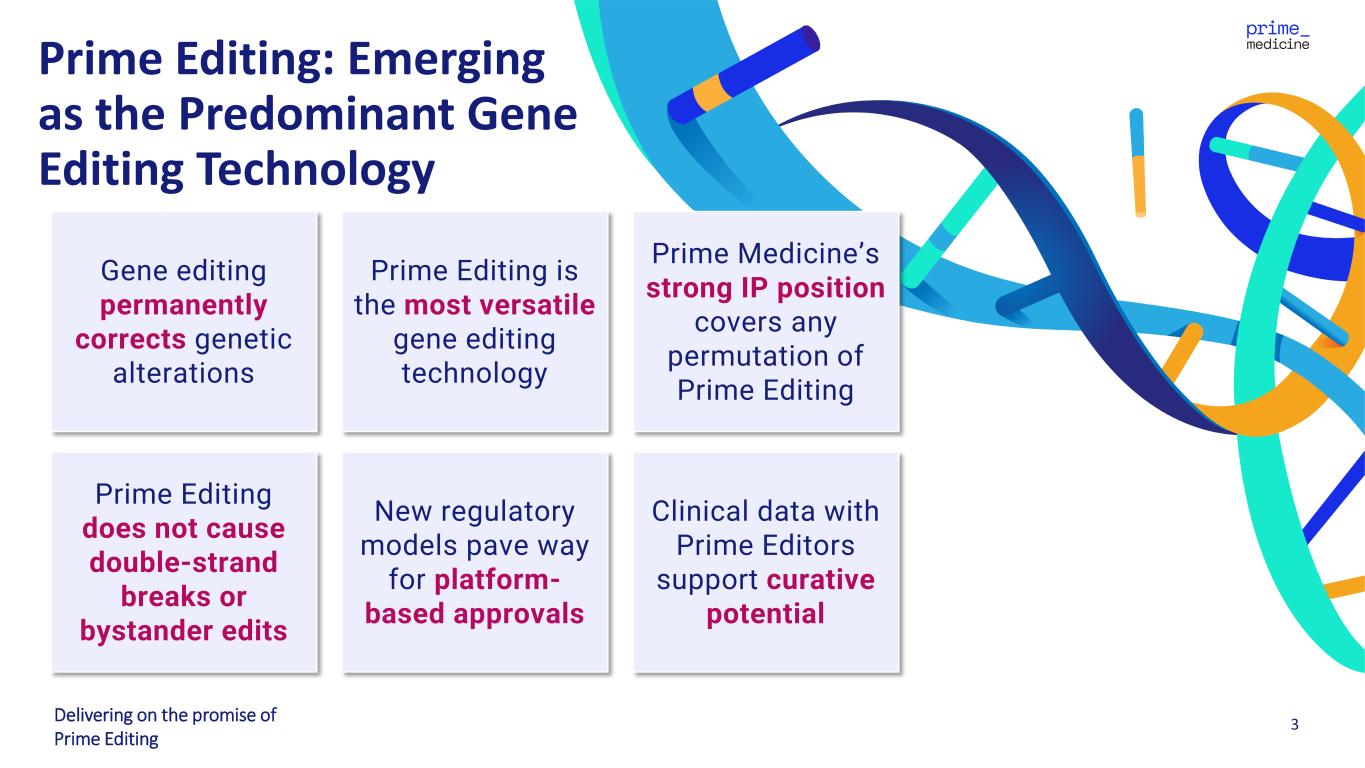
3Delivering on the promise of Prime Editing Prime Editing: Emerging as the Predominant Gene Editing Technology Gene editing permanently corrects genetic alterations Prime Editing is the most versatile gene editing technology Clinical data with Prime Editors support curative potential Prime Editing does not cause double-strand breaks or bystander edits New regulatory models pave way for platform- based approvals Prime Medicine’s strong IP position covers any permutation of Prime Editing
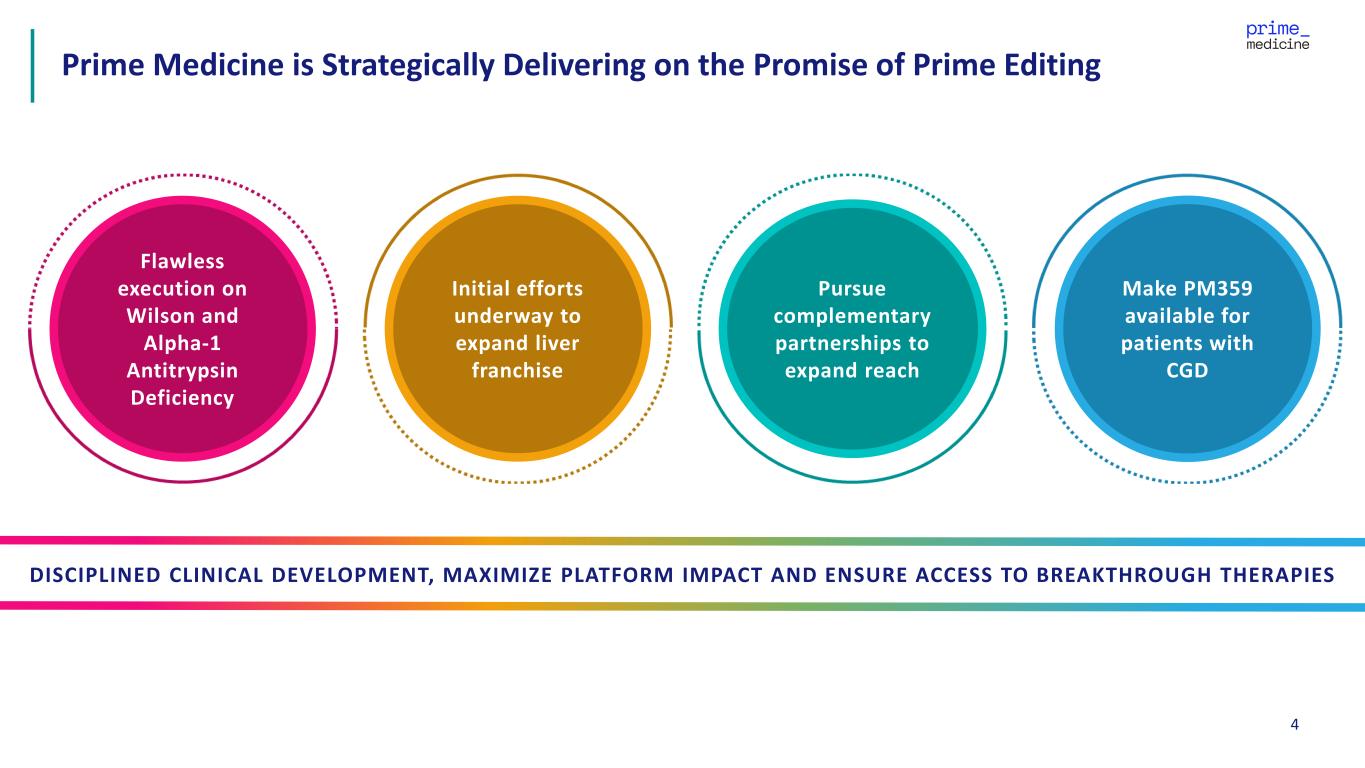
4 Flawless execution on Wilson and Alpha-1 Antitrypsin Deficiency Initial efforts underway to expand liver franchise Prime Medicine is Strategically Delivering on the Promise of Prime Editing DISCIPLINED CLINICAL DEVELOPMENT, MAXIMIZE PLATFORM IMPACT AND ENSURE ACCESS TO BREAKTHROUGH THERAPIES Pursue complementary partnerships to expand reach Make PM359 available for patients with CGD
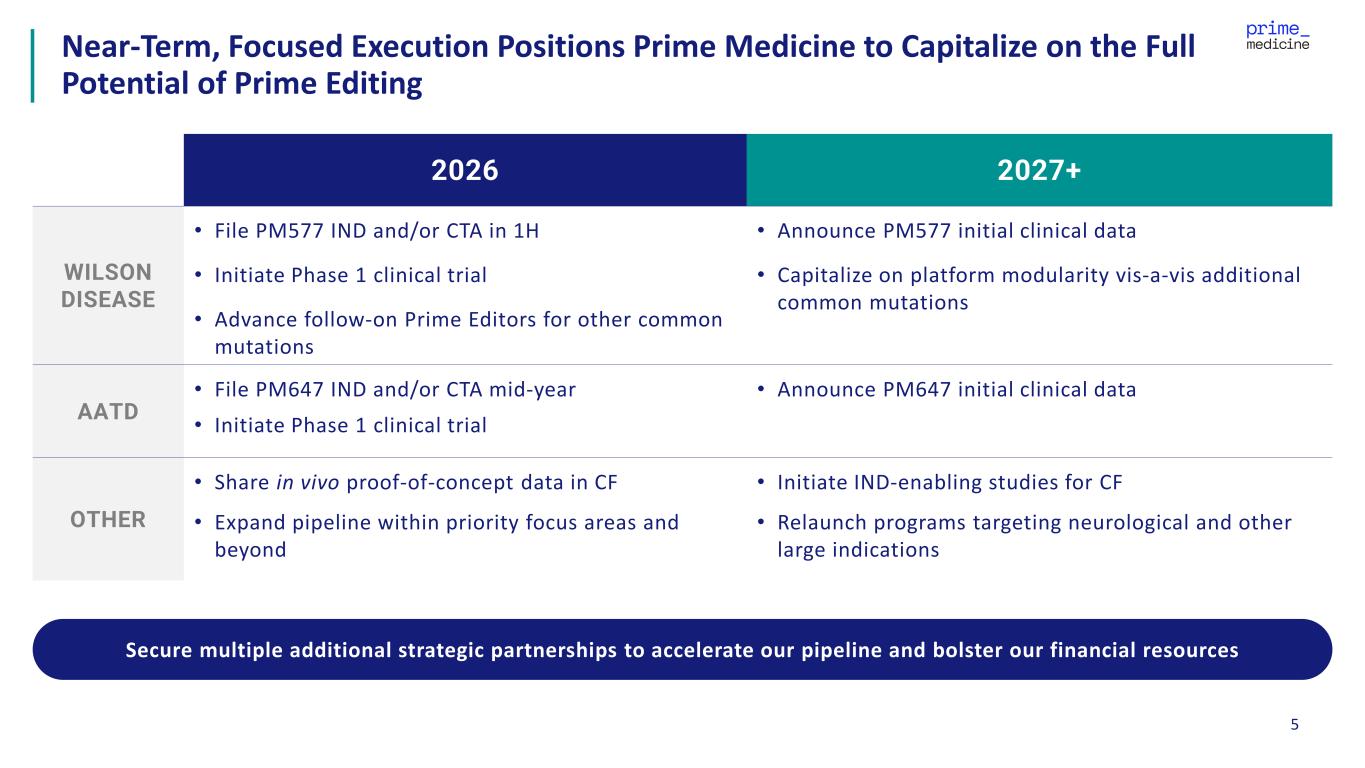
5 Secure multiple additional strategic partnerships to accelerate our pipeline and bolster our financial resources Near-Term, Focused Execution Positions Prime Medicine to Capitalize on the Full Potential of Prime Editing 2026 2027+ WILSON DISEASE • File PM577 IND and/or CTA in 1H • Initiate Phase 1 clinical trial • Advance follow-on Prime Editors for other common mutations • Announce PM577 initial clinical data • Capitalize on platform modularity vis-a-vis additional common mutations AATD • File PM647 IND and/or CTA mid-year • Initiate Phase 1 clinical trial • Announce PM647 initial clinical data OTHER • Share in vivo proof-of-concept data in CF • Expand pipeline within priority focus areas and beyond • Initiate IND-enabling studies for CF • Relaunch programs targeting neurological and other large indications
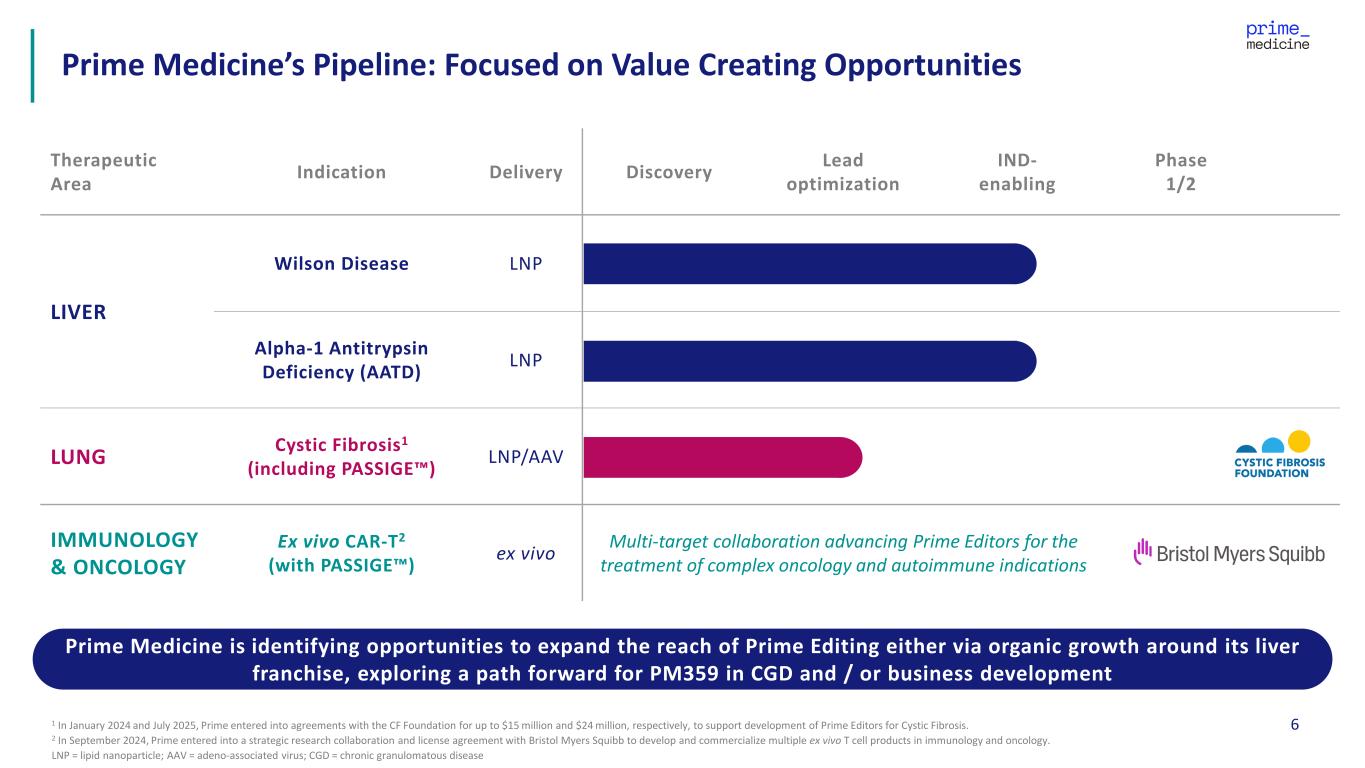
6 Therapeutic Area Indication Delivery Discovery Lead optimization IND- enabling Phase 1/2 LIVER Wilson Disease LNP Alpha-1 Antitrypsin Deficiency (AATD) LNP LUNG Cystic Fibrosis1 (including PASSIGE ) LNP/AAV IMMUNOLOGY & ONCOLOGY Ex vivo CAR-T2 (with PASSIGE ) ex vivo Multi-target collaboration advancing Prime Editors for the treatment of complex oncology and autoimmune indications 1 In January 2024 and July 2025, Prime entered into agreements with the CF Foundation for up to $15 million and $24 million, respectively, to support development of Prime Editors for Cystic Fibrosis. 2 In September 2024, Prime entered into a strategic research collaboration and license agreement with Bristol Myers Squibb to develop and commercialize multiple ex vivo T cell products in immunology and oncology. LNP = lipid nanoparticle; AAV = adeno-associated virus; CGD = chronic granulomatous disease Prime Medicine’s Pipeline: Focused on Value Creating Opportunities Prime Medicine is identifying opportunities to expand the reach of Prime Editing either via organic growth around its liver franchise, exploring a path forward for PM359 in CGD and / or business development
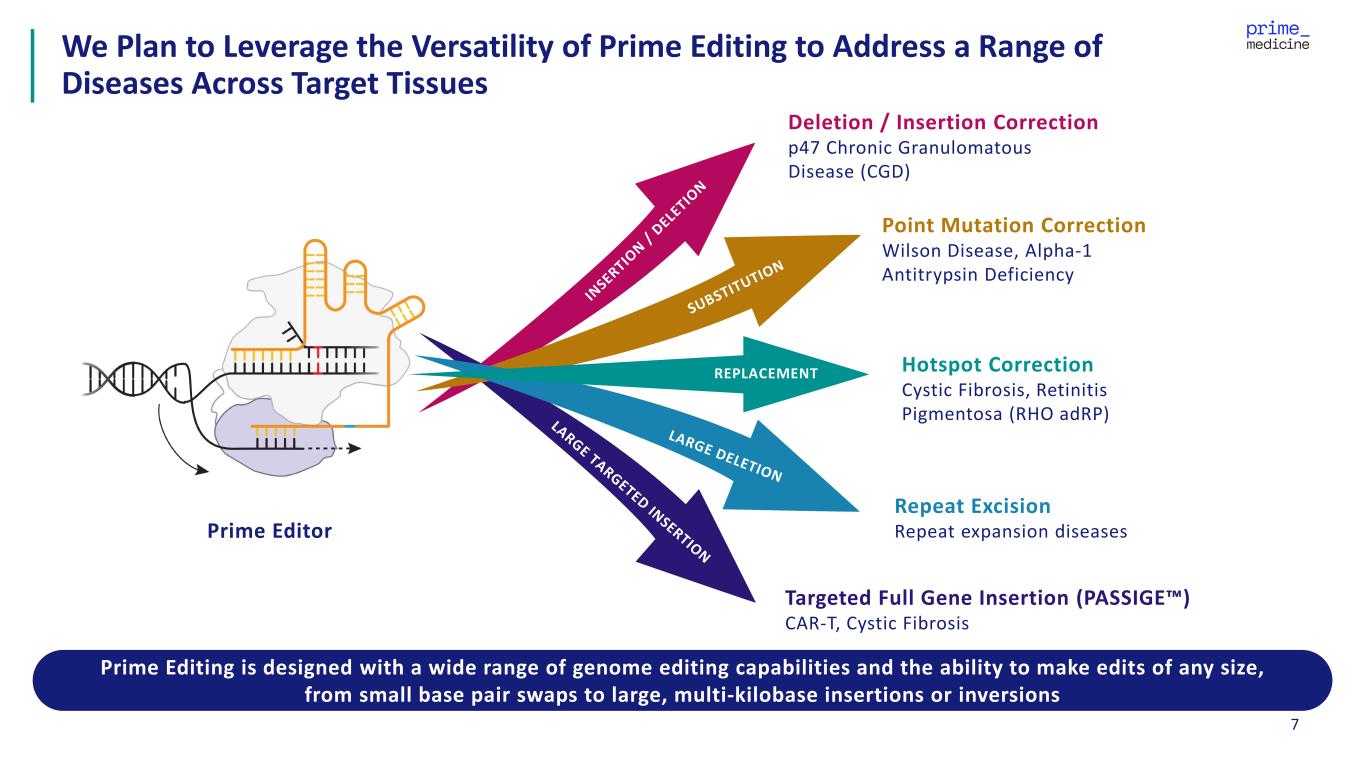
7 We Plan to Leverage the Versatility of Prime Editing to Address a Range of Diseases Across Target Tissues REPLACEMENT Deletion / Insertion Correction p47 Chronic Granulomatous Disease (CGD) Point Mutation Correction Wilson Disease, Alpha-1 Antitrypsin Deficiency Targeted Full Gene Insertion (PASSIGE ) CAR-T, Cystic Fibrosis Repeat Excision Repeat expansion diseases Hotspot Correction Cystic Fibrosis, Retinitis Pigmentosa (RHO adRP) Prime Editor Prime Editing is designed with a wide range of genome editing capabilities and the ability to make edits of any size, from small base pair swaps to large, multi-kilobase insertions or inversions
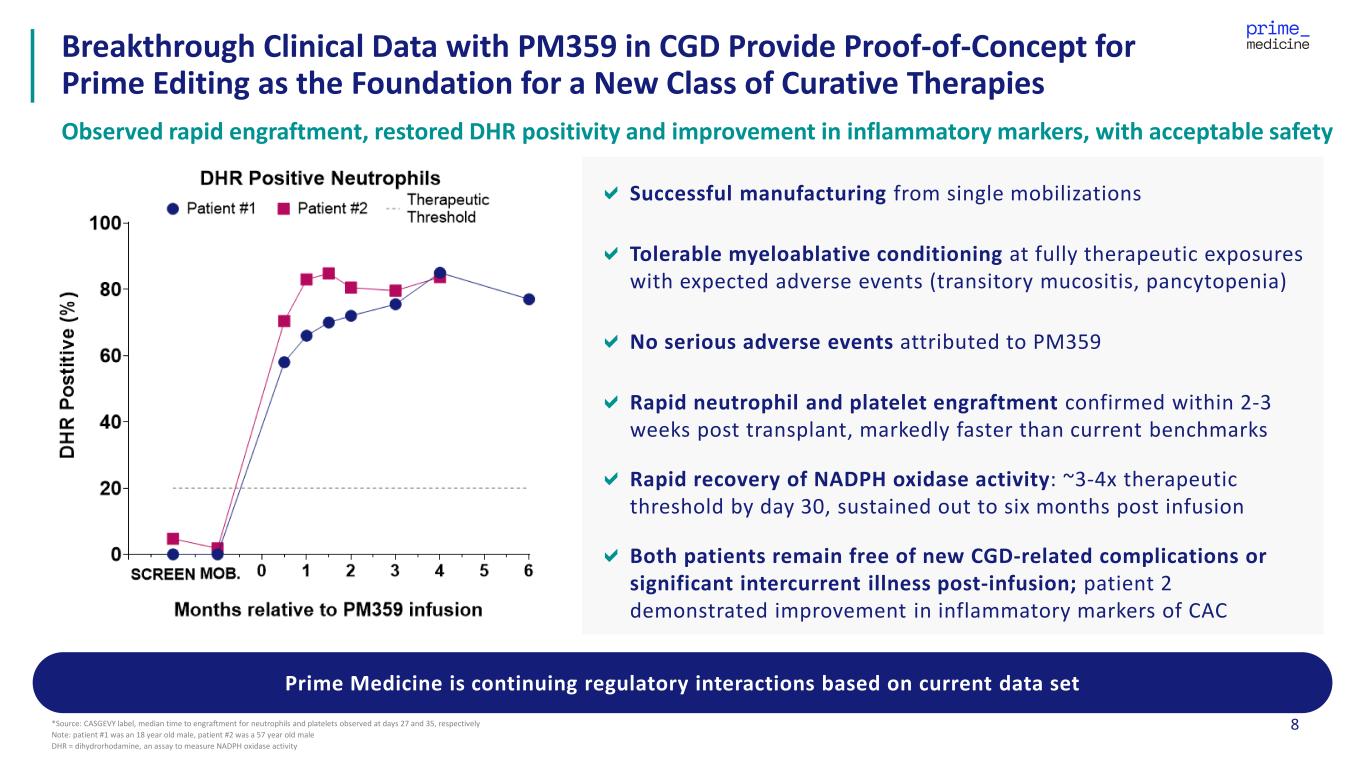
8 Prime Medicine is continuing regulatory interactions based on current data set Successful manufacturing from single mobilizations Tolerable myeloablative conditioning at fully therapeutic exposures with expected adverse events (transitory mucositis, pancytopenia) No serious adverse events attributed to PM359 Rapid neutrophil and platelet engraftment confirmed within 2-3 weeks post transplant, markedly faster than current benchmarks Rapid recovery of NADPH oxidase activity: ~3-4x therapeutic threshold by day 30, sustained out to six months post infusion Both patients remain free of new CGD-related complications or significant intercurrent illness post-infusion; patient 2 demonstrated improvement in inflammatory markers of CAC *Source: CASGEVY label, median time to engraftment for neutrophils and platelets observed at days 27 and 35, respectively Note: patient #1 was an 18 year old male, patient #2 was a 57 year old male DHR = dihydrorhodamine, an assay to measure NADPH oxidase activity Breakthrough Clinical Data with PM359 in CGD Provide Proof-of-Concept for Prime Editing as the Foundation for a New Class of Curative Therapies Observed rapid engraftment, restored DHR positivity and improvement in inflammatory markers, with acceptable safety
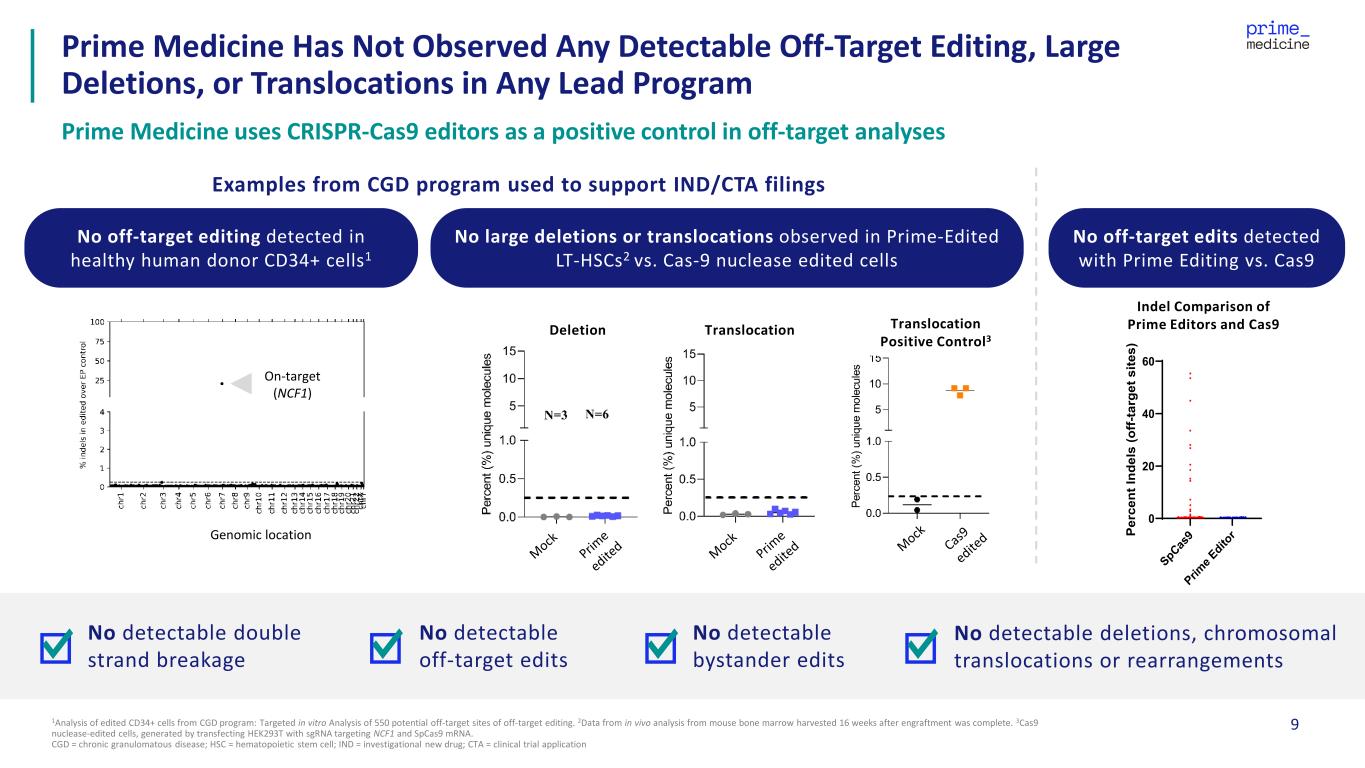
91Analysis of edited CD34+ cells from CGD program: Targeted in vitro Analysis of 550 potential off-target sites of off-target editing. 2Data from in vivo analysis from mouse bone marrow harvested 16 weeks after engraftment was complete. 3Cas9 nuclease-edited cells, generated by transfecting HEK293T with sgRNA targeting NCF1 and SpCas9 mRNA. CGD = chronic granulomatous disease; HSC = hematopoietic stem cell; IND = investigational new drug; CTA = clinical trial application Prime Medicine Has Not Observed Any Detectable Off-Target Editing, Large Deletions, or Translocations in Any Lead Program Prime Medicine uses CRISPR-Cas9 editors as a positive control in off-target analyses No detectable double strand breakage No detectable deletions, chromosomal translocations or rearrangements No detectable off-target edits No detectable bystander edits Examples from CGD program used to support IND/CTA filings No off-target editing detected in healthy human donor CD34+ cells1 Genomic location On-target (NCF1) Translocation Positive Control3 TranslocationDeletion 12 Spacers SpCas 9 Prim e E dito r 0 20 40 60 Pe rc en t I nd el s (o ff- ta rg et s ite s) Indel Comparison of Prime Editors and Cas9 No large deletions or translocations observed in Prime-Edited LT-HSCs2 vs. Cas-9 nuclease edited cells No off-target edits detected with Prime Editing vs. Cas9
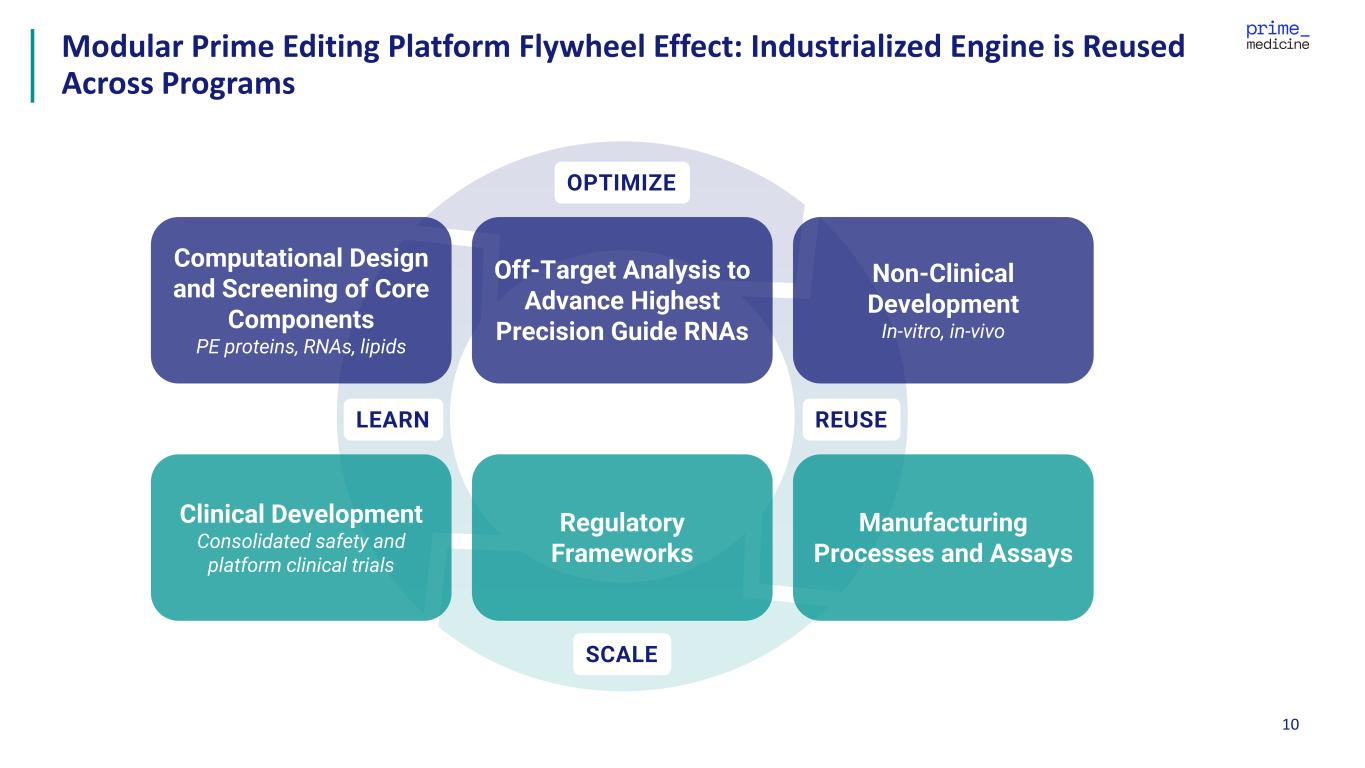
10 Manufacturing Processes and Assays Regulatory Frameworks Clinical Development Consolidated safety and platform clinical trials Computational Design and Screening of Core Components PE proteins, RNAs, lipids Off-Target Analysis to Advance Highest Precision Guide RNAs Non-Clinical Development In-vitro, in-vivo Modular Prime Editing Platform Flywheel Effect: Industrialized Engine is Reused Across Programs LEARN OPTIMIZE REUSE SCALE
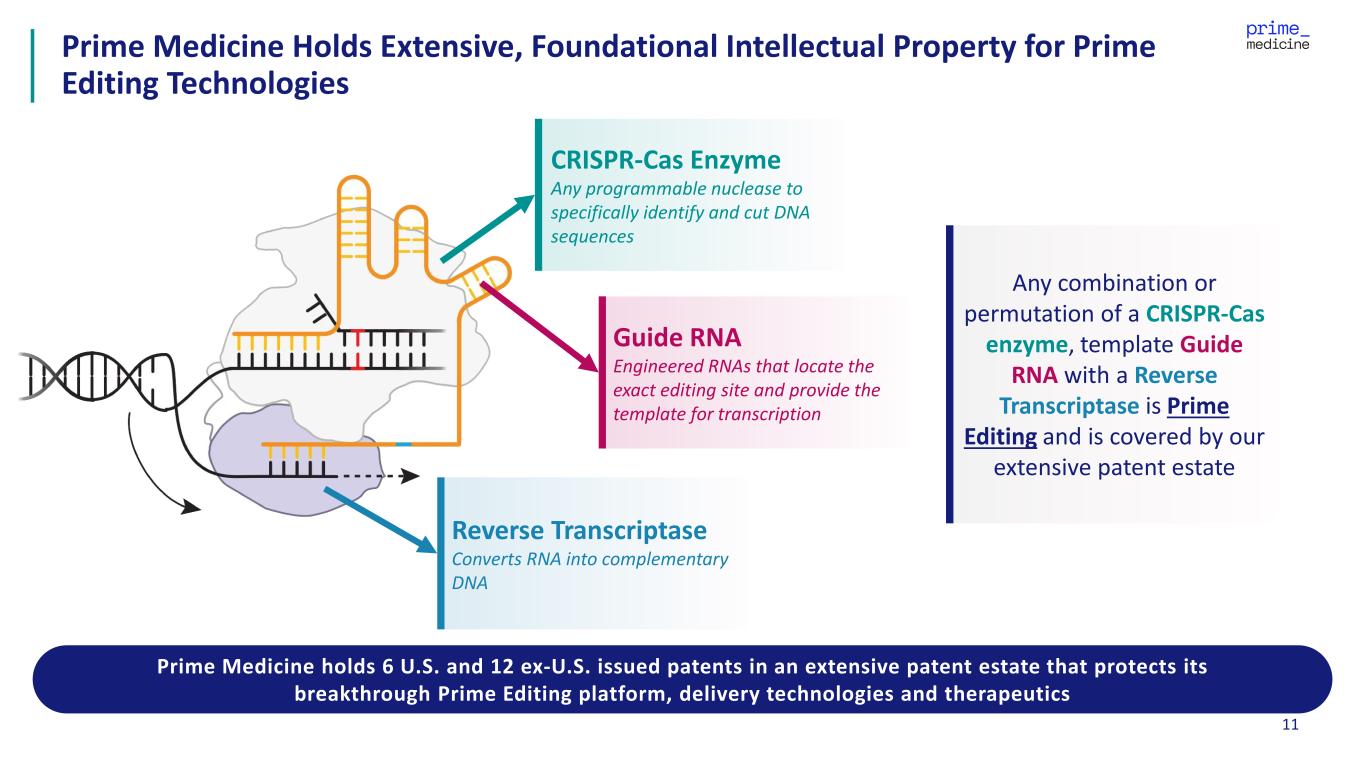
11 Prime Medicine Holds Extensive, Foundational Intellectual Property for Prime Editing Technologies CRISPR-Cas Enzyme Any programmable nuclease to specifically identify and cut DNA sequences Guide RNA Engineered RNAs that locate the exact editing site and provide the template for transcription Reverse Transcriptase Converts RNA into complementary DNA Any combination or permutation of a CRISPR-Cas enzyme, template Guide RNA with a Reverse Transcriptase is Prime Editing and is covered by our extensive patent estate Prime Medicine holds 6 U.S. and 12 ex-U.S. issued patents in an extensive patent estate that protects its breakthrough Prime Editing platform, delivery technologies and therapeutics
12| Liver
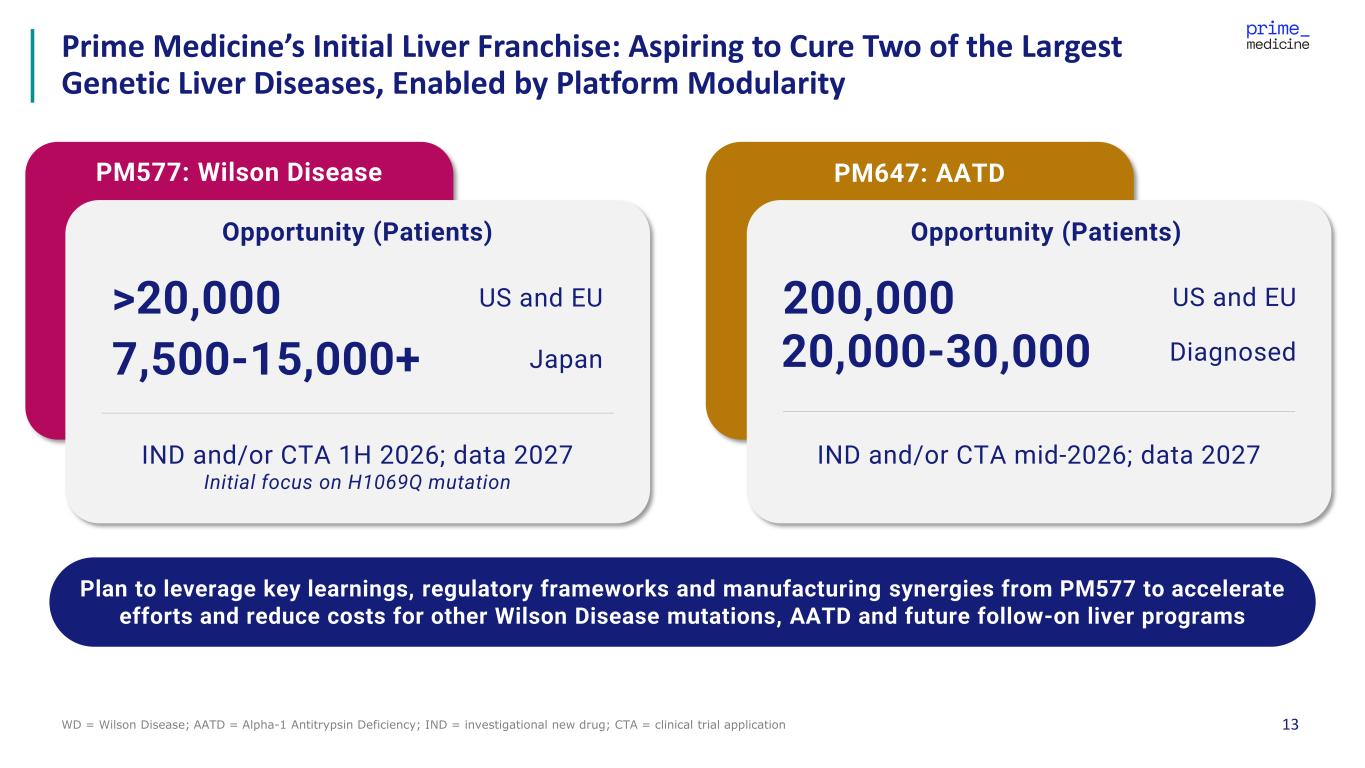
13 PM647: AATD Prime Medicine’s Initial Liver Franchise: Aspiring to Cure Two of the Largest Genetic Liver Diseases, Enabled by Platform Modularity WD = Wilson Disease; AATD = Alpha-1 Antitrypsin Deficiency; IND = investigational new drug; CTA = clinical trial application PM577: Wilson Disease >20,000 7,500-15,000+ US and EU Japan IND and/or CTA 1H 2026; data 2027 Initial focus on H1069Q mutation Plan to leverage key learnings, regulatory frameworks and manufacturing synergies from PM577 to accelerate efforts and reduce costs for other Wilson Disease mutations, AATD and future follow-on liver programs 200,000 US and EU 20,000-30,000 Diagnosed IND and/or CTA mid-2026; data 2027 Opportunity (Patients) Opportunity (Patients)
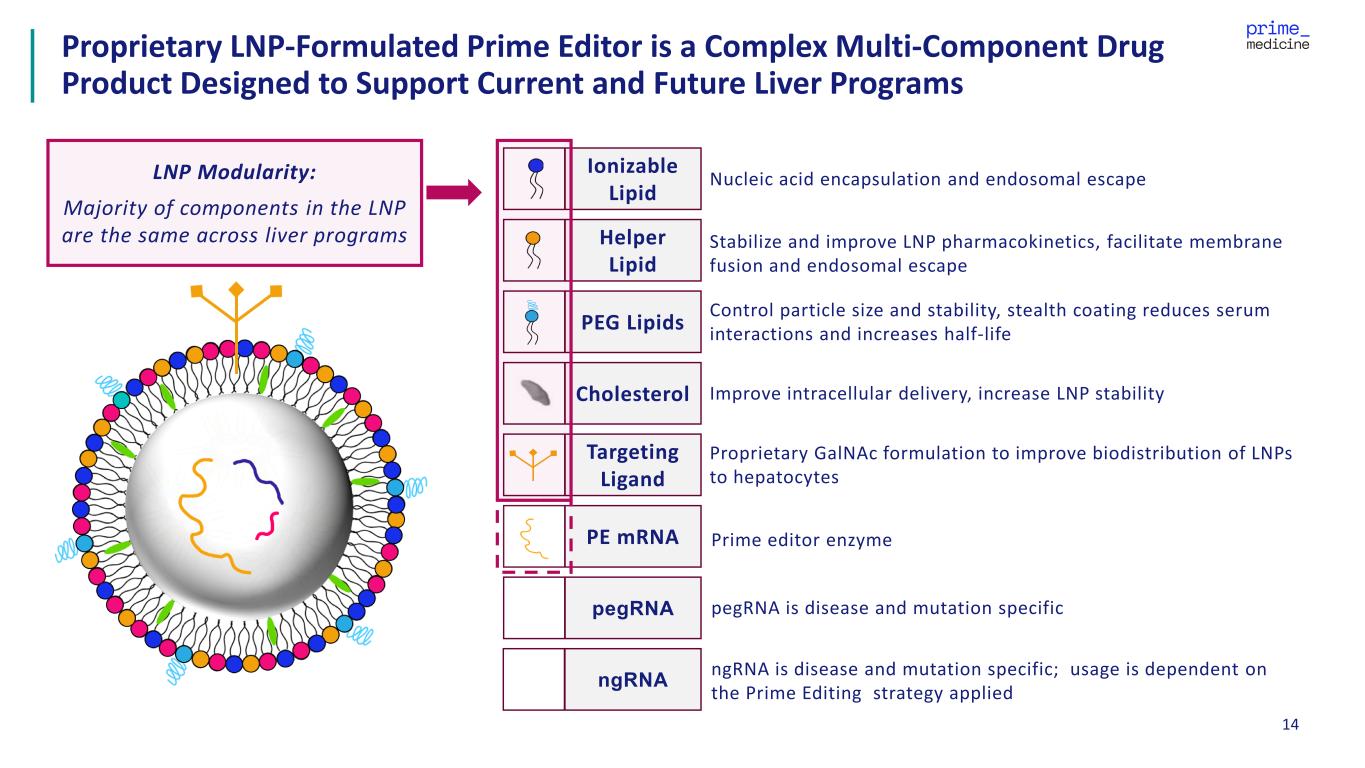
14 Proprietary LNP-Formulated Prime Editor is a Complex Multi-Component Drug Product Designed to Support Current and Future Liver Programs Control particle size and stability, stealth coating reduces serum interactions and increases half-lifePEG Lipids Stabilize and improve LNP pharmacokinetics, facilitate membrane fusion and endosomal escape Helper Lipid Improve intracellular delivery, increase LNP stabilityCholesterol Proprietary GalNAc formulation to improve biodistribution of LNPs to hepatocytes Targeting Ligand LNP Modularity: Majority of components in the LNP are the same across liver programs Ionizable Lipid Nucleic acid encapsulation and endosomal escape pegRNA is disease and mutation specificpegRNA ngRNA ngRNA is disease and mutation specific; usage is dependent on the Prime Editing strategy applied Prime editor enzymePE mRNA
15Delivering on the promise of Prime Editing Wilson Disease
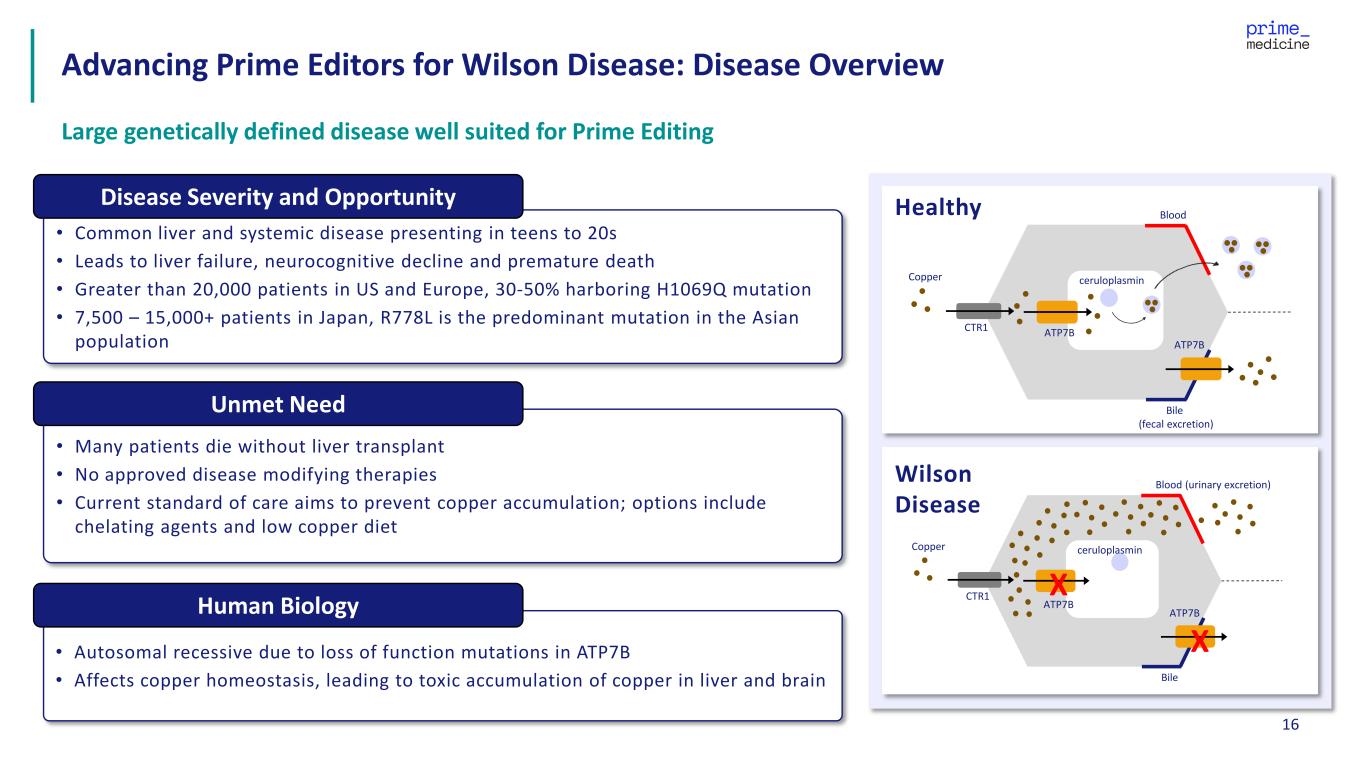
16 Wilson Disease Advancing Prime Editors for Wilson Disease: Disease Overview Large genetically defined disease well suited for Prime Editing ceruloplasmin Blood Bile (fecal excretion) ATP7B ATP7B Copper CTR1 ceruloplasmin Blood (urinary excretion) Bile ATP7B ATP7B Copper CTR1 X X Healthy • Common liver and systemic disease presenting in teens to 20s • Leads to liver failure, neurocognitive decline and premature death • Greater than 20,000 patients in US and Europe, 30-50% harboring H1069Q mutation • 7,500 – 15,000+ patients in Japan, R778L is the predominant mutation in the Asian population Disease Severity and Opportunity • Many patients die without liver transplant • No approved disease modifying therapies • Current standard of care aims to prevent copper accumulation; options include chelating agents and low copper diet Unmet Need • Autosomal recessive due to loss of function mutations in ATP7B • Affects copper homeostasis, leading to toxic accumulation of copper in liver and brain Human Biology
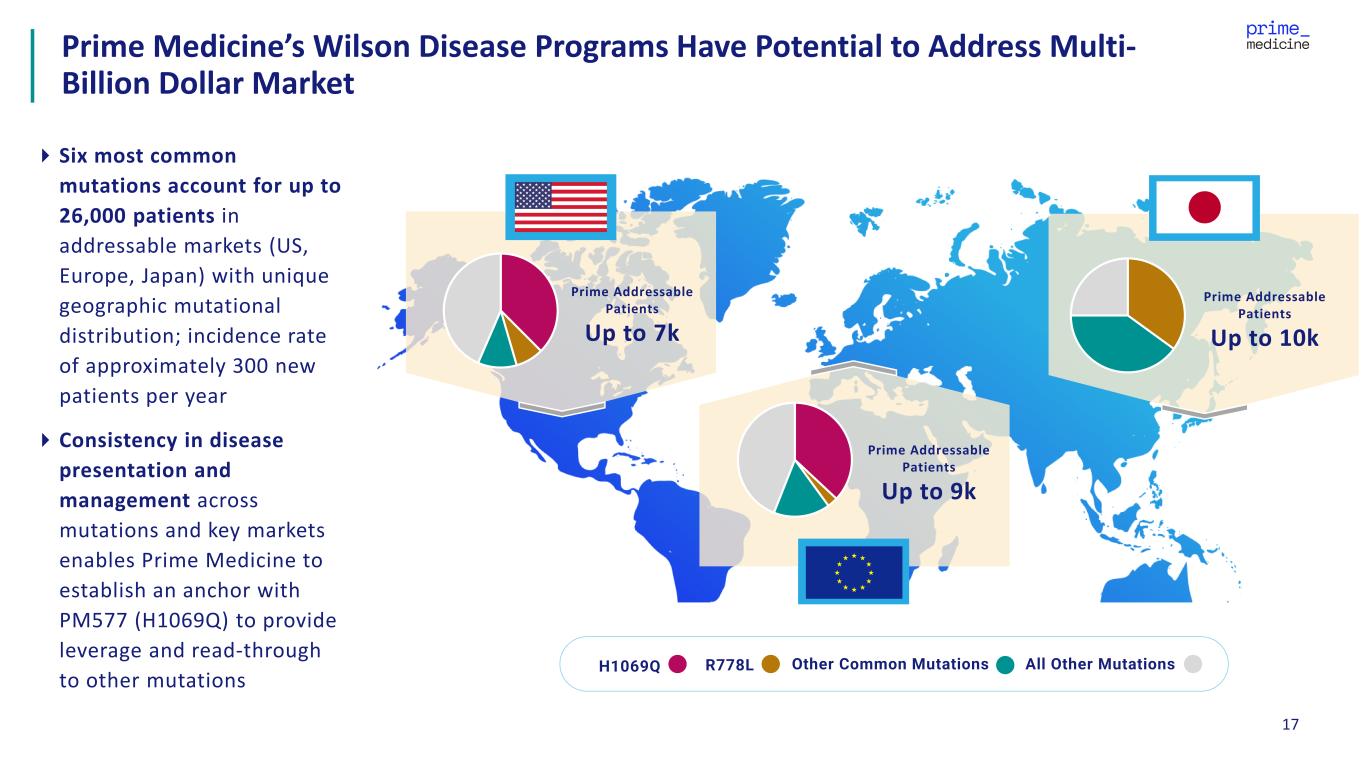
17 Prime Medicine’s Wilson Disease Programs Have Potential to Address Multi- Billion Dollar Market H1069Q R778L Other Common Mutations All Other Mutations Prime Addressable Patients Up to 7k Six most common mutations account for up to 26,000 patients in addressable markets (US, Europe, Japan) with unique geographic mutational distribution; incidence rate of approximately 300 new patients per year Consistency in disease presentation and management across mutations and key markets enables Prime Medicine to establish an anchor with PM577 (H1069Q) to provide leverage and read-through to other mutations Prime Addressable Patients Up to 9k Prime Addressable Patients Up to 10k
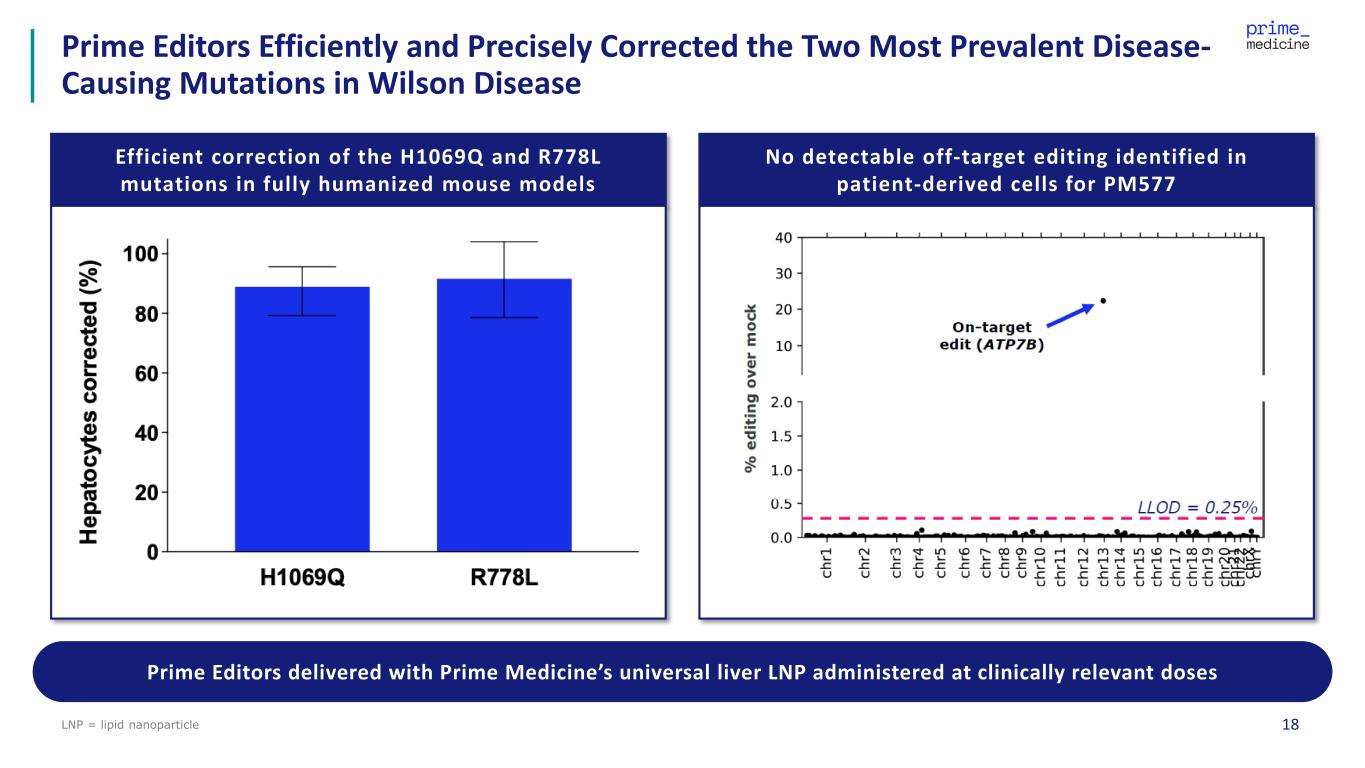
18 Efficient correction of the H1069Q and R778L mutations in fully humanized mouse models Prime Editors Efficiently and Precisely Corrected the Two Most Prevalent Disease- Causing Mutations in Wilson Disease No detectable off-target editing identified in patient-derived cells for PM577 LNP = lipid nanoparticle Prime Editors delivered with Prime Medicine’s universal liver LNP administered at clinically relevant doses
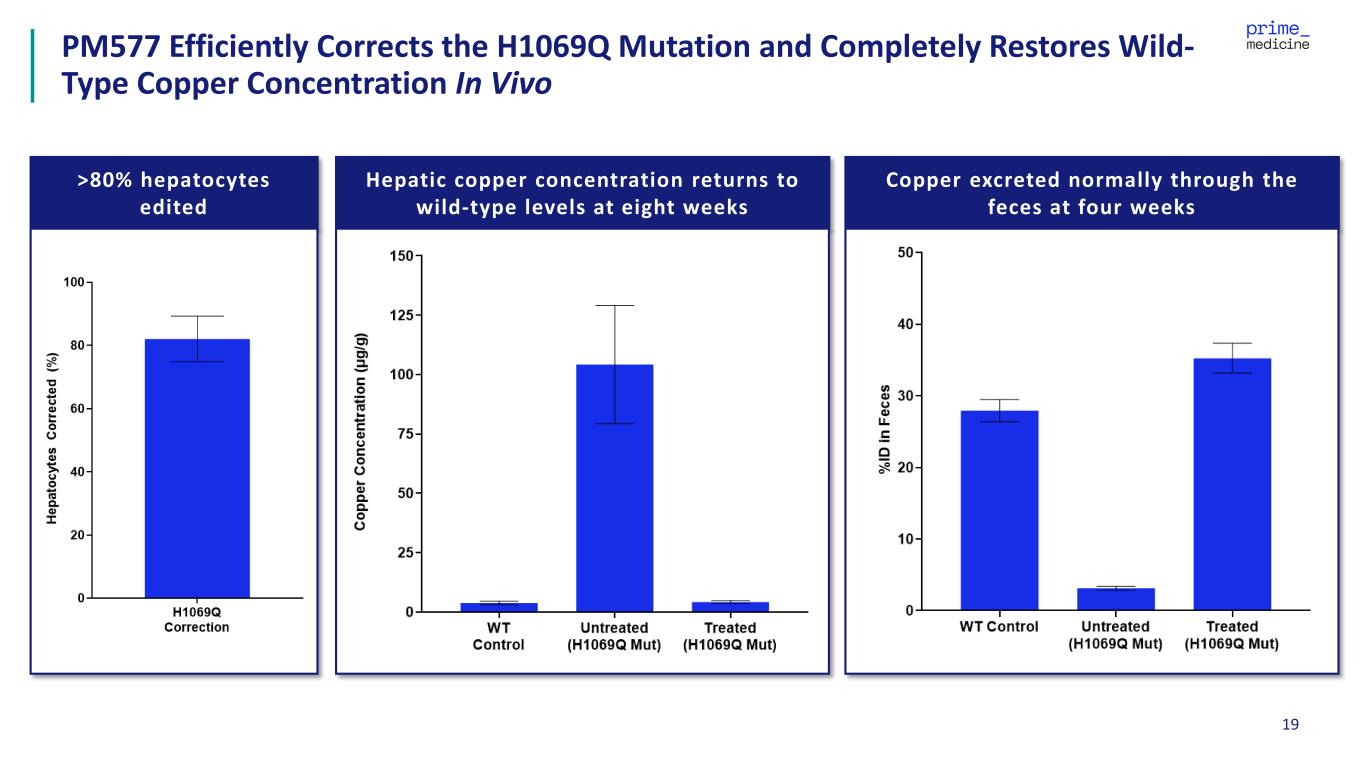
19 >80% hepatocytes edited Hepatic copper concentration returns to wild-type levels at eight weeks Copper excreted normally through the feces at four weeks PM577 Efficiently Corrects the H1069Q Mutation and Completely Restores Wild- Type Copper Concentration In Vivo
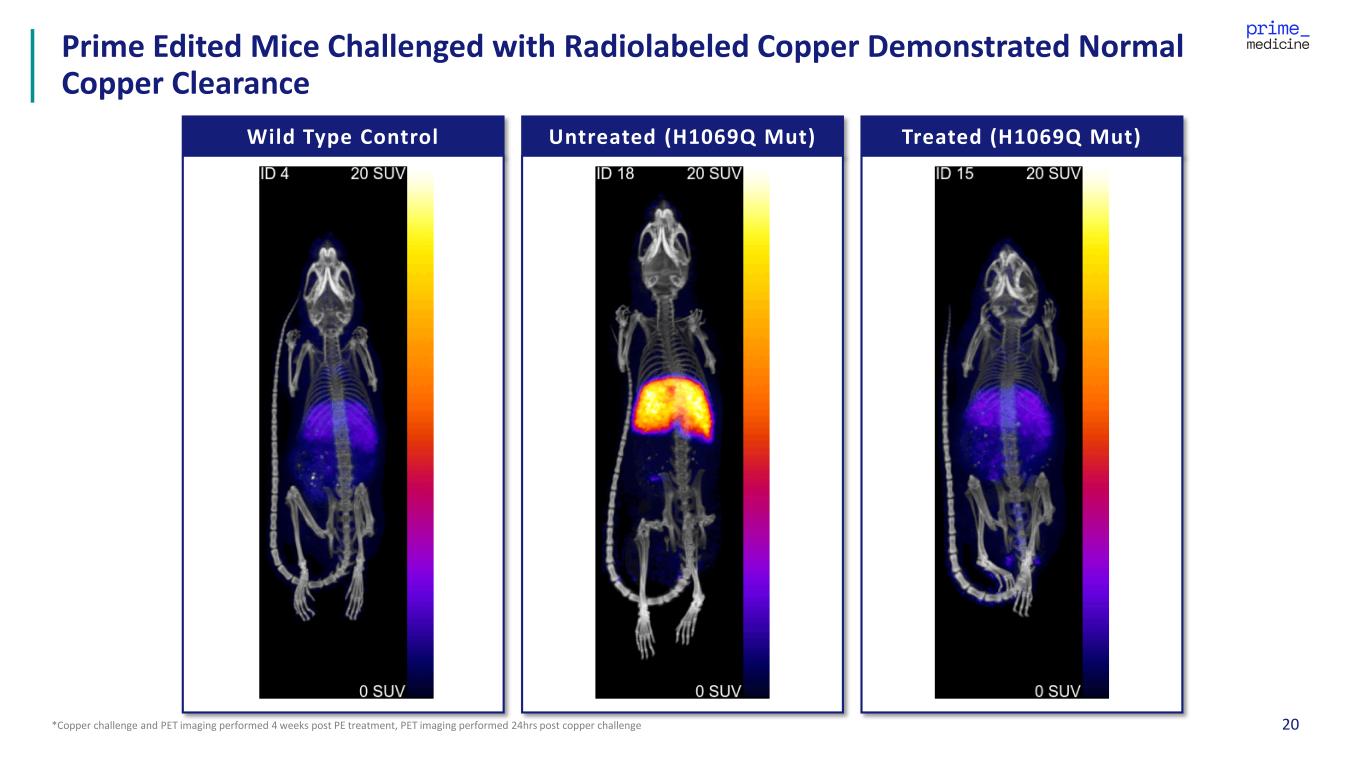
20*Copper challenge and PET imaging performed 4 weeks post PE treatment, PET imaging performed 24hrs post copper challenge Prime Edited Mice Challenged with Radiolabeled Copper Demonstrated Normal Copper Clearance Treated (H1069Q Mut)Wild Type Control Untreated (H1069Q Mut)
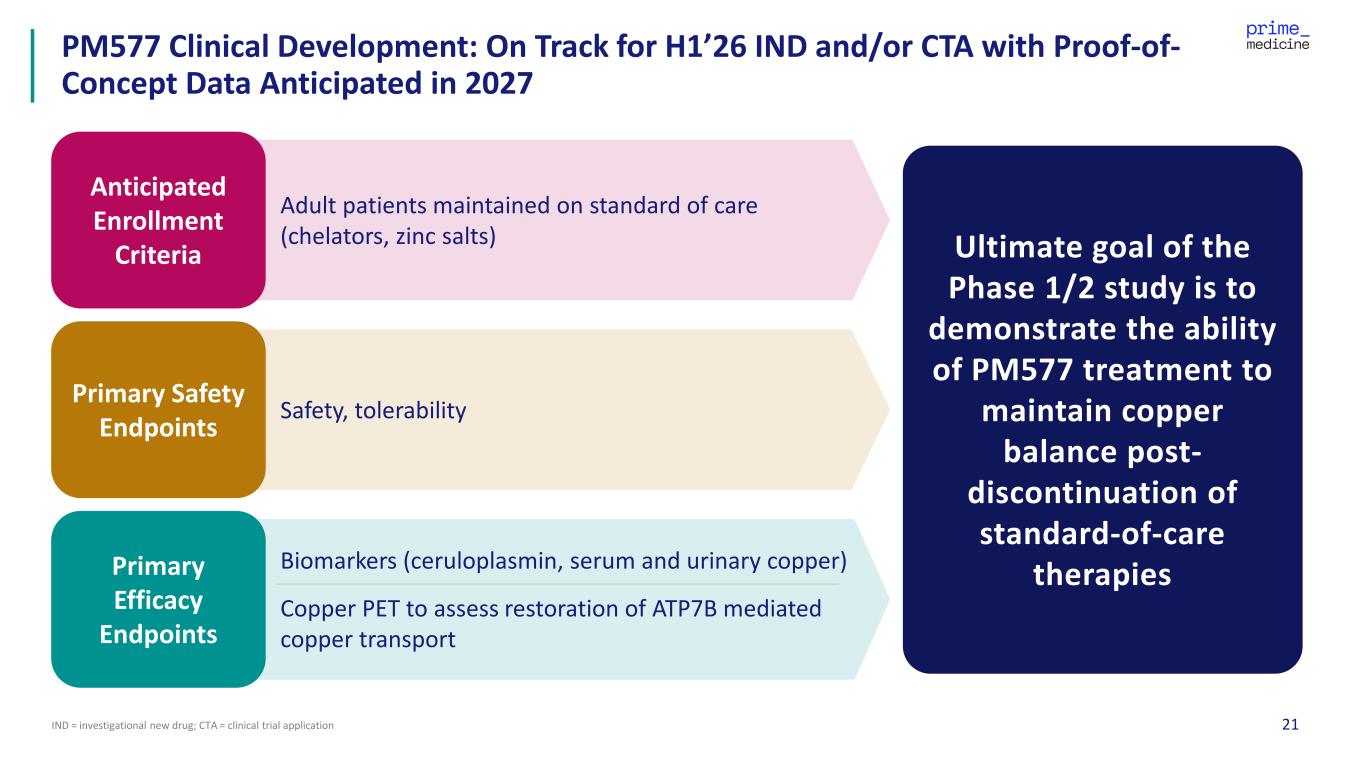
21IND = investigational new drug; CTA = clinical trial application PM577 Clinical Development: On Track for H1’26 IND and/or CTA with Proof-of- Concept Data Anticipated in 2027 Anticipated Enrollment Criteria Primary Safety Endpoints Primary Efficacy Endpoints Adult patients maintained on standard of care (chelators, zinc salts) Safety, tolerability Biomarkers (ceruloplasmin, serum and urinary copper) Copper PET to assess restoration of ATP7B mediated copper transport Ultimate goal of the Phase 1/2 study is to demonstrate the ability of PM577 treatment to maintain copper balance post- discontinuation of standard-of-care therapies
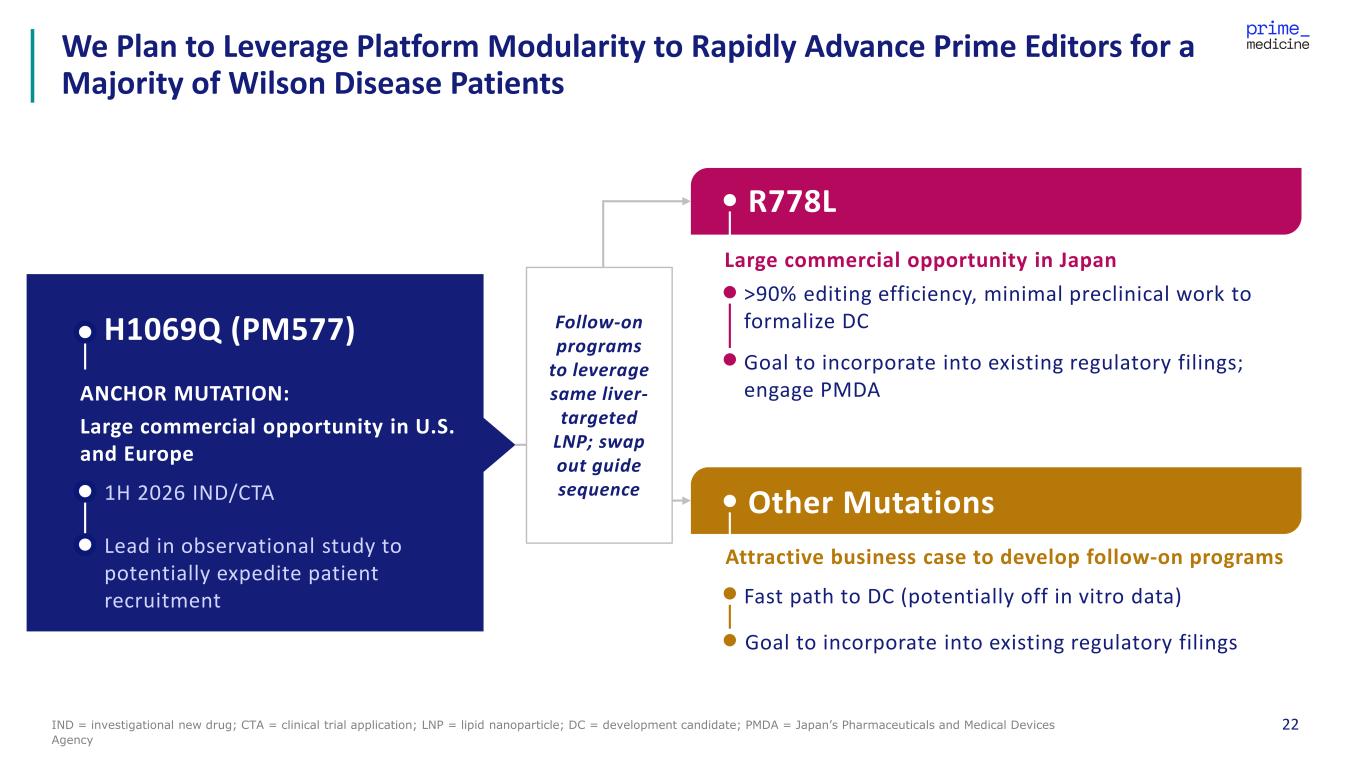
22IND = investigational new drug; CTA = clinical trial application; LNP = lipid nanoparticle; DC = development candidate; PMDA = Japan’s Pharmaceuticals and Medical Devices Agency We Plan to Leverage Platform Modularity to Rapidly Advance Prime Editors for a Majority of Wilson Disease Patients Goal to incorporate into existing regulatory filings Large commercial opportunity in Japan Attractive business case to develop follow-on programs Fast path to DC (potentially off in vitro data) R778L Other Mutations H1069Q (PM577) ANCHOR MUTATION: Large commercial opportunity in U.S. and Europe 1H 2026 IND/CTA Lead in observational study to potentially expedite patient recruitment >90% editing efficiency, minimal preclinical work to formalize DCFollow-on programs to leverage same liver- targeted LNP; swap out guide sequence Goal to incorporate into existing regulatory filings; engage PMDA
23Delivering on the promise of Prime Editing Alpha-1 Antitrypsin Deficiency (AATD)
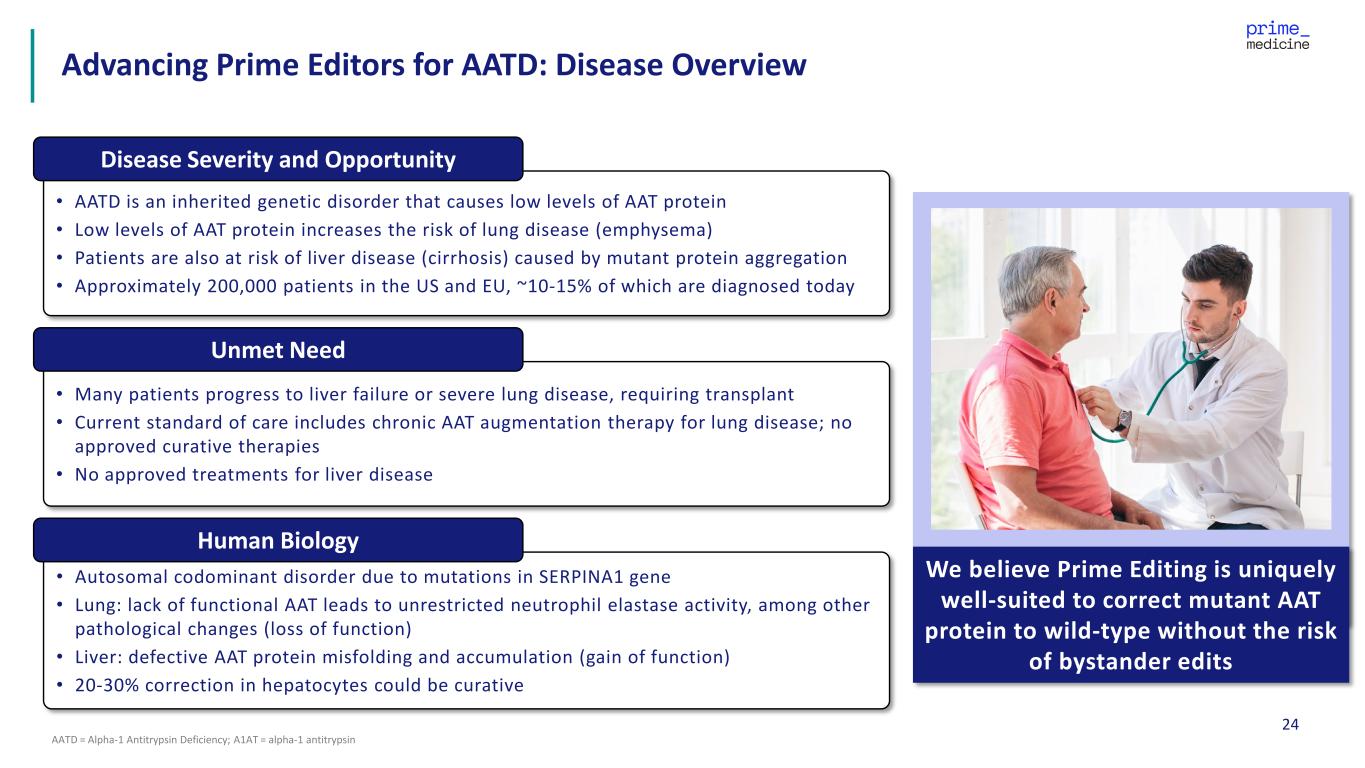
24 Advancing Prime Editors for AATD: Disease Overview AATD = Alpha-1 Antitrypsin Deficiency; A1AT = alpha-1 antitrypsin • AATD is an inherited genetic disorder that causes low levels of AAT protein • Low levels of AAT protein increases the risk of lung disease (emphysema) • Patients are also at risk of liver disease (cirrhosis) caused by mutant protein aggregation • Approximately 200,000 patients in the US and EU, ~10-15% of which are diagnosed today Disease Severity and Opportunity • Many patients progress to liver failure or severe lung disease, requiring transplant • Current standard of care includes chronic AAT augmentation therapy for lung disease; no approved curative therapies • No approved treatments for liver disease Unmet Need • Autosomal codominant disorder due to mutations in SERPINA1 gene • Lung: lack of functional AAT leads to unrestricted neutrophil elastase activity, among other pathological changes (loss of function) • Liver: defective AAT protein misfolding and accumulation (gain of function) • 20-30% correction in hepatocytes could be curative Human Biology We believe Prime Editing is uniquely well-suited to correct mutant AAT protein to wild-type without the risk of bystander edits
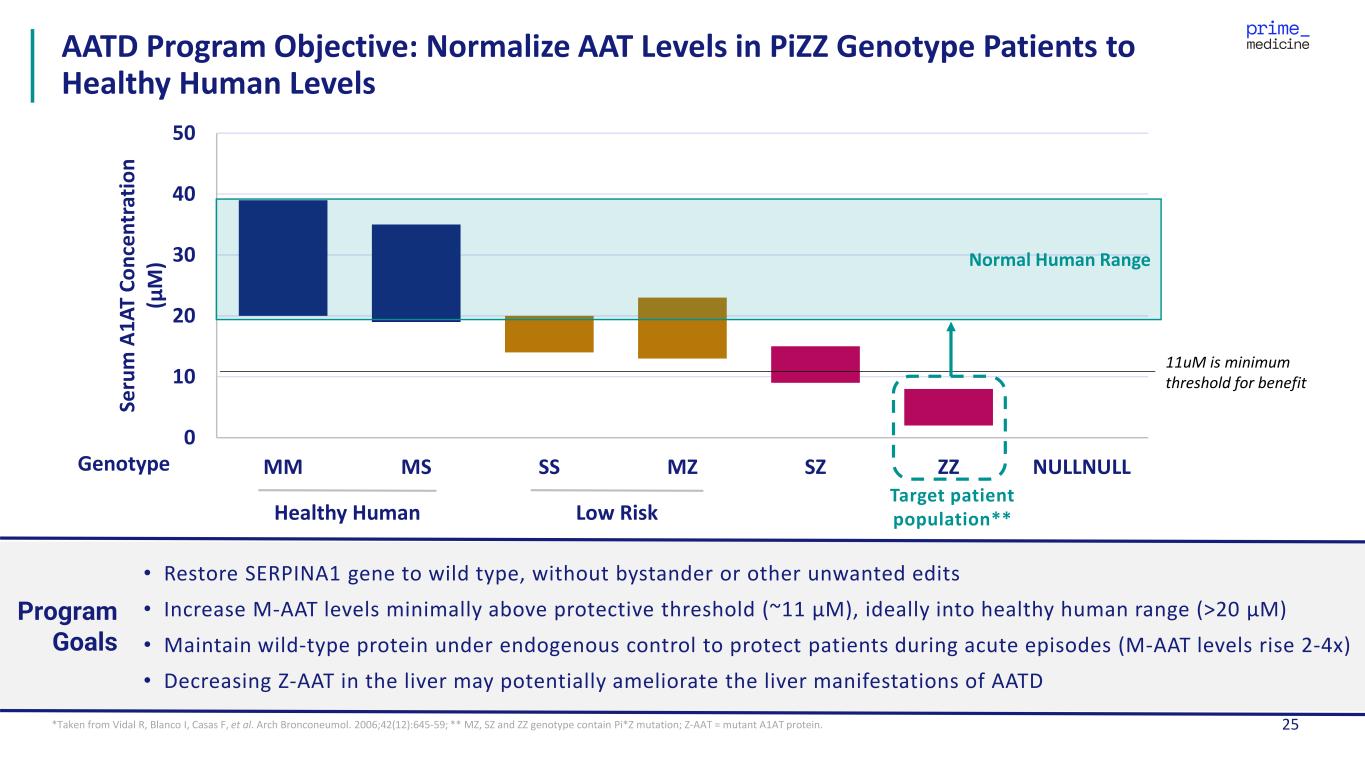
25 • Restore SERPINA1 gene to wild type, without bystander or other unwanted edits • Increase M-AAT levels minimally above protective threshold (~11 µM), ideally into healthy human range (>20 µM) • Maintain wild-type protein under endogenous control to protect patients during acute episodes (M-AAT levels rise 2-4x) • Decreasing Z-AAT in the liver may potentially ameliorate the liver manifestations of AATD *Taken from Vidal R, Blanco I, Casas F, et al. Arch Bronconeumol. 2006;42(12):645-59; ** MZ, SZ and ZZ genotype contain Pi*Z mutation; Z-AAT = mutant A1AT protein. AATD Program Objective: Normalize AAT Levels in PiZZ Genotype Patients to Healthy Human Levels 0 10 20 30 40 50 MM MS SS MZ SZ ZZ NULLNULL Se ru m A 1A T Co nc en tr at io n (µ M ) 11uM is minimum threshold for benefit Target patient population** Genotype Healthy Human Low Risk Program Goals Normal Human Range
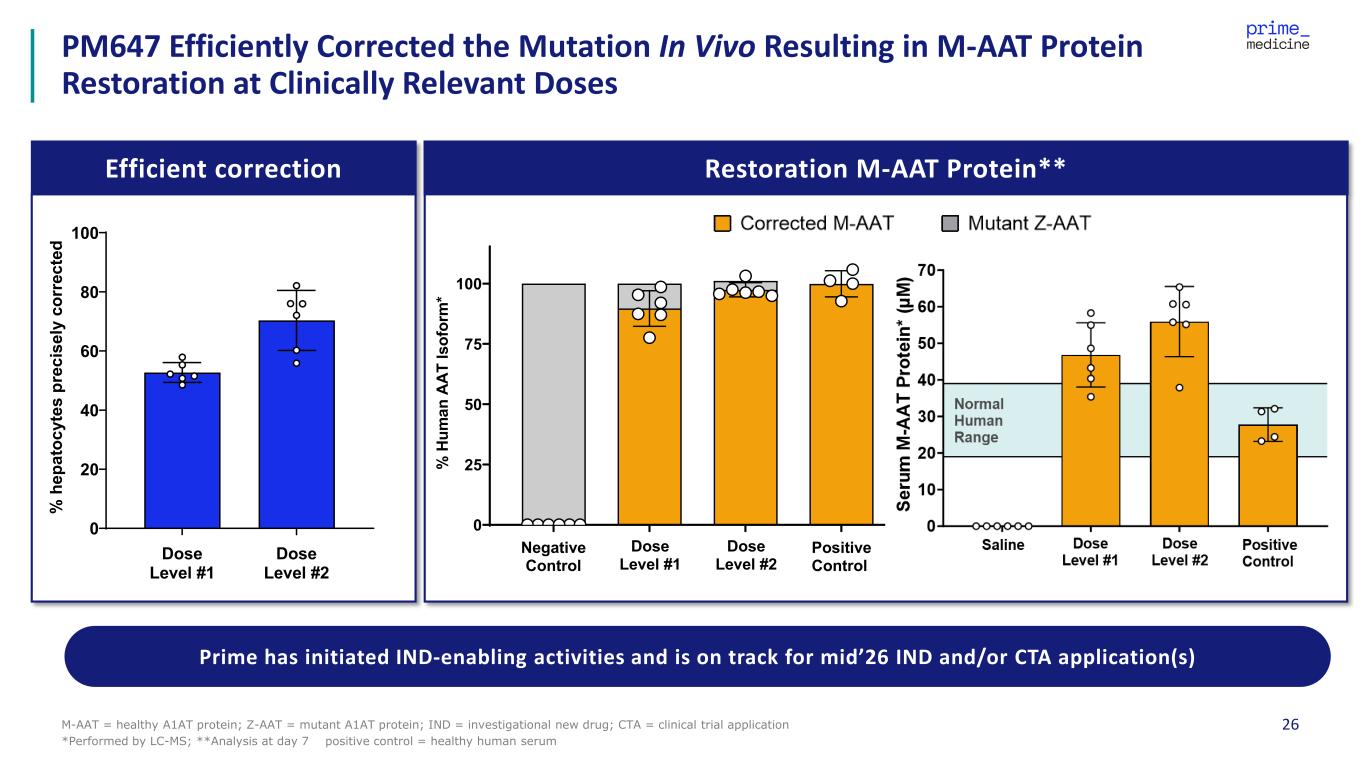
26M-AAT = healthy A1AT protein; Z-AAT = mutant A1AT protein; IND = investigational new drug; CTA = clinical trial application *Performed by LC-MS; **Analysis at day 7 positive control = healthy human serum PM647 Efficiently Corrected the Mutation In Vivo Resulting in M-AAT Protein Restoration at Clinically Relevant Doses Efficient correction Restoration M-AAT Protein** 0 20 40 60 80 100 % h ep at oc yt es p re ci se ly c or re ct ed Dose Level #1 Dose Level #2 0 25 50 75 100 % H um an A AT Is of or m * Dose Level #1 Positive Control Dose Level #2 Negative Control Prime has initiated IND-enabling activities and is on track for mid’26 IND and/or CTA application(s)
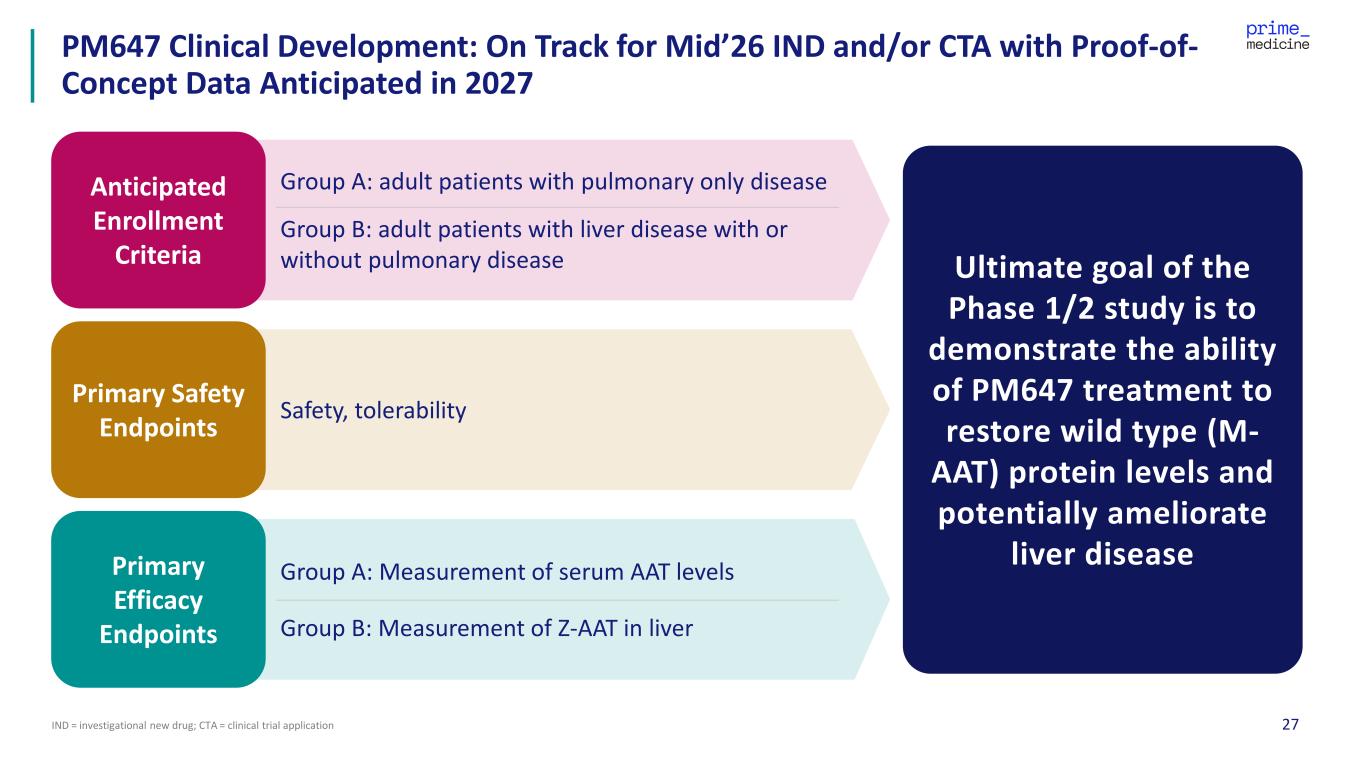
27IND = investigational new drug; CTA = clinical trial application PM647 Clinical Development: On Track for Mid’26 IND and/or CTA with Proof-of- Concept Data Anticipated in 2027 Anticipated Enrollment Criteria Primary Safety Endpoints Primary Efficacy Endpoints Group A: adult patients with pulmonary only disease Group B: adult patients with liver disease with or without pulmonary disease Safety, tolerability Group A: Measurement of serum AAT levels Group B: Measurement of Z-AAT in liver Ultimate goal of the Phase 1/2 study is to demonstrate the ability of PM647 treatment to restore wild type (M- AAT) protein levels and potentially ameliorate liver disease
28| Lung
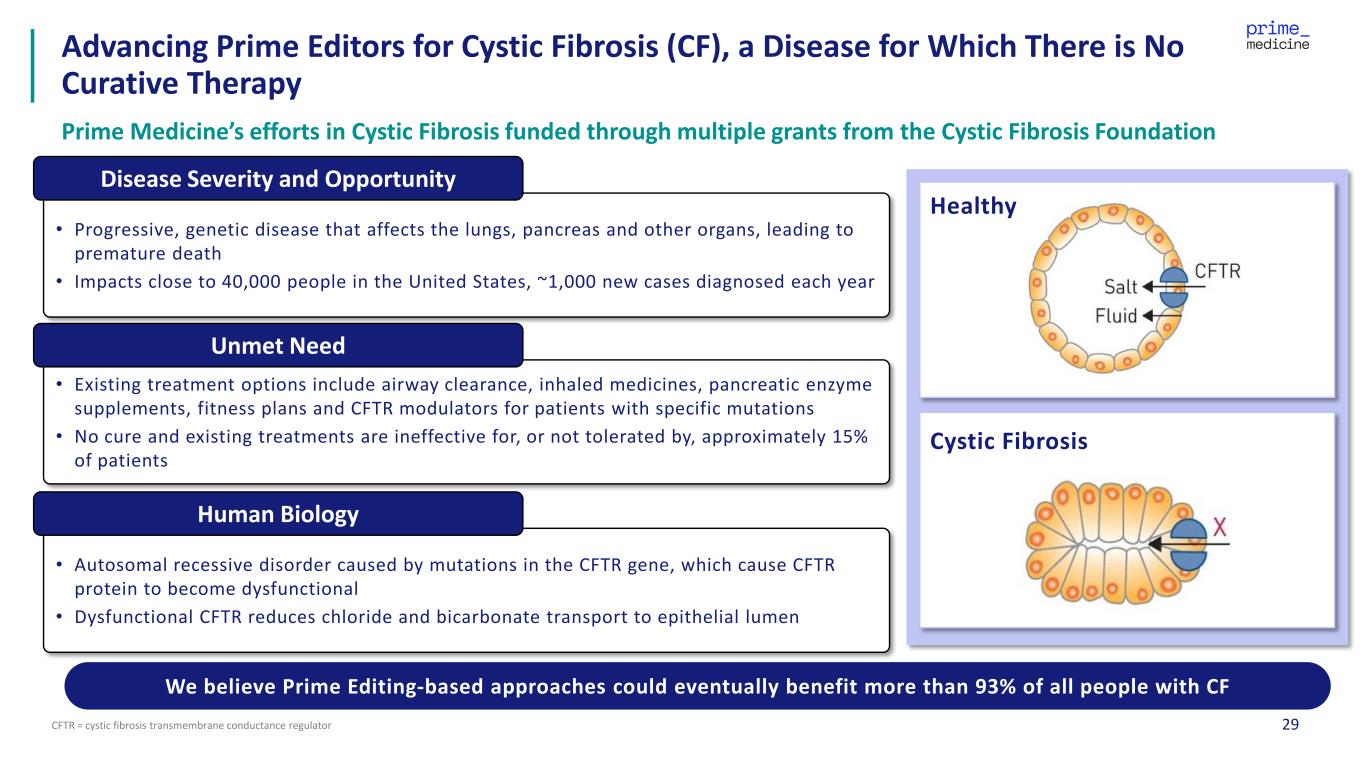
29CFTR = cystic fibrosis transmembrane conductance regulator Advancing Prime Editors for Cystic Fibrosis (CF), a Disease for Which There is No Curative Therapy Prime Medicine’s efforts in Cystic Fibrosis funded through multiple grants from the Cystic Fibrosis Foundation • Progressive, genetic disease that affects the lungs, pancreas and other organs, leading to premature death • Impacts close to 40,000 people in the United States, ~1,000 new cases diagnosed each year Disease Severity and Opportunity • Existing treatment options include airway clearance, inhaled medicines, pancreatic enzyme supplements, fitness plans and CFTR modulators for patients with specific mutations • No cure and existing treatments are ineffective for, or not tolerated by, approximately 15% of patients Unmet Need • Autosomal recessive disorder caused by mutations in the CFTR gene, which cause CFTR protein to become dysfunctional • Dysfunctional CFTR reduces chloride and bicarbonate transport to epithelial lumen Human Biology Cystic Fibrosis Healthy We believe Prime Editing-based approaches could eventually benefit more than 93% of all people with CF
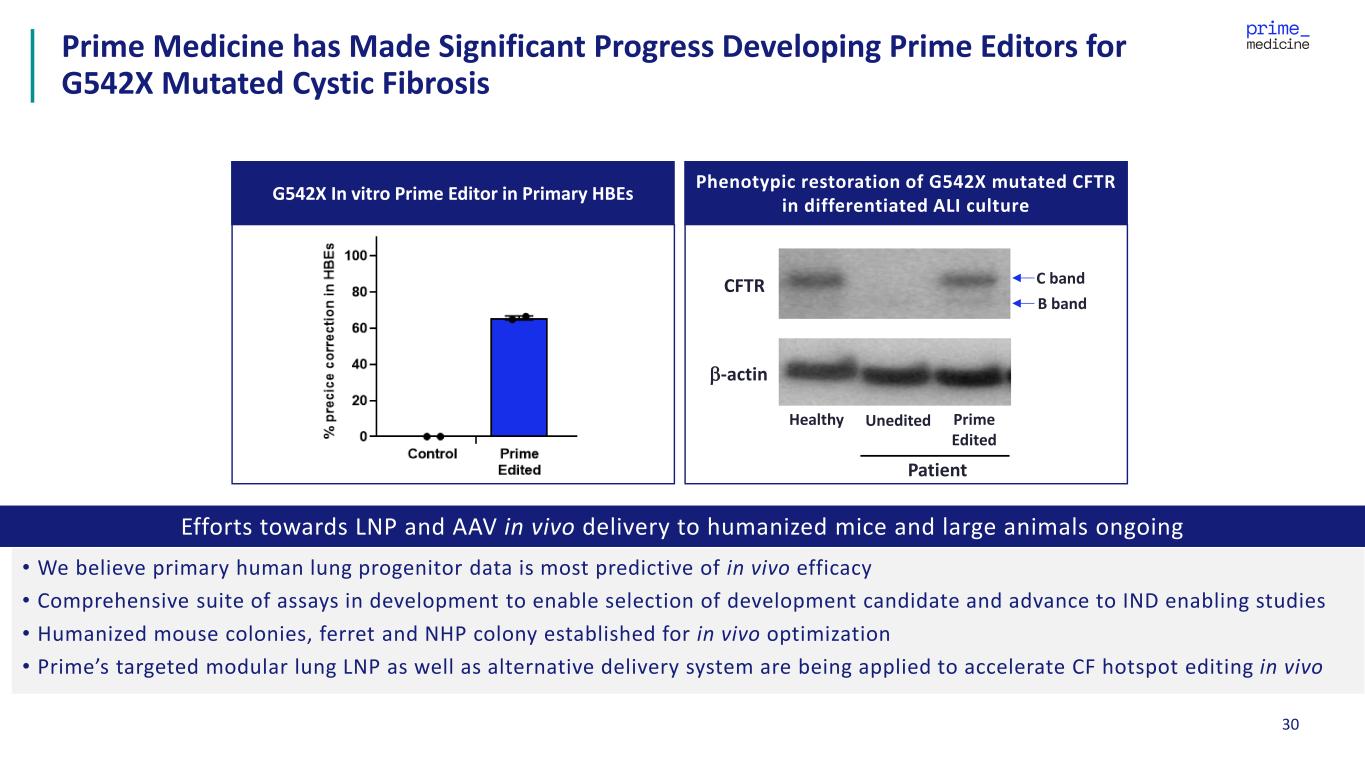
30 Prime Medicine has Made Significant Progress Developing Prime Editors for G542X Mutated Cystic Fibrosis Efforts towards LNP and AAV in vivo delivery to humanized mice and large animals ongoing • We believe primary human lung progenitor data is most predictive of in vivo efficacy • Comprehensive suite of assays in development to enable selection of development candidate and advance to IND enabling studies • Humanized mouse colonies, ferret and NHP colony established for in vivo optimization • Prime’s targeted modular lung LNP as well as alternative delivery system are being applied to accelerate CF hotspot editing in vivo G542X In vitro Prime Editor in Primary HBEs Phenotypic restoration of G542X mutated CFTR in differentiated ALI culture CFTR β-actin Patient Prime Edited C band Healthy B band Unedited
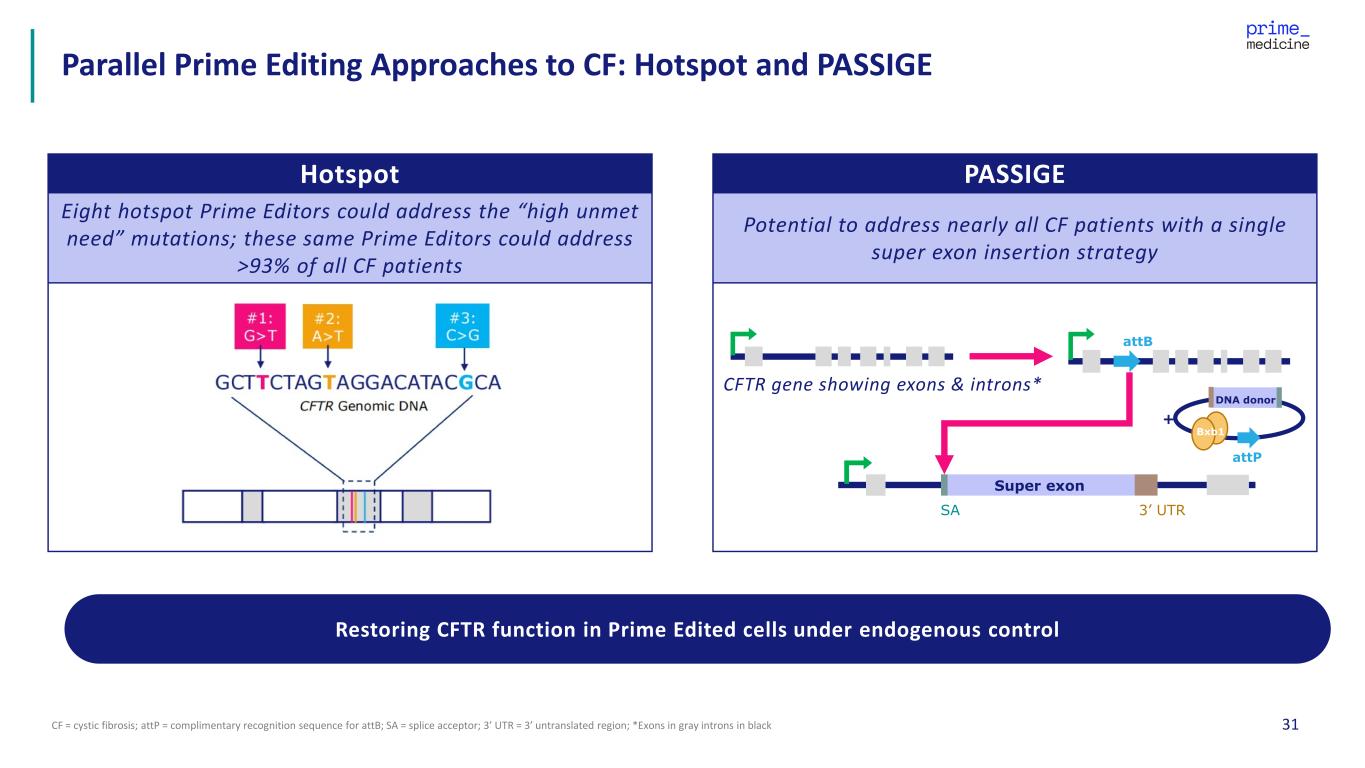
31CF = cystic fibrosis; attP = complimentary recognition sequence for attB; SA = splice acceptor; 3’ UTR = 3’ untranslated region; *Exons in gray introns in black Parallel Prime Editing Approaches to CF: Hotspot and PASSIGE Hotspot PASSIGE Eight hotspot Prime Editors could address the “high unmet need” mutations; these same Prime Editors could address >93% of all CF patients Potential to address nearly all CF patients with a single super exon insertion strategy Super exon SA 3’ UTR attB attP DNA donor + Bxb1 CFTR gene showing exons & introns* Restoring CFTR function in Prime Edited cells under endogenous control

32| Immunology and Oncology
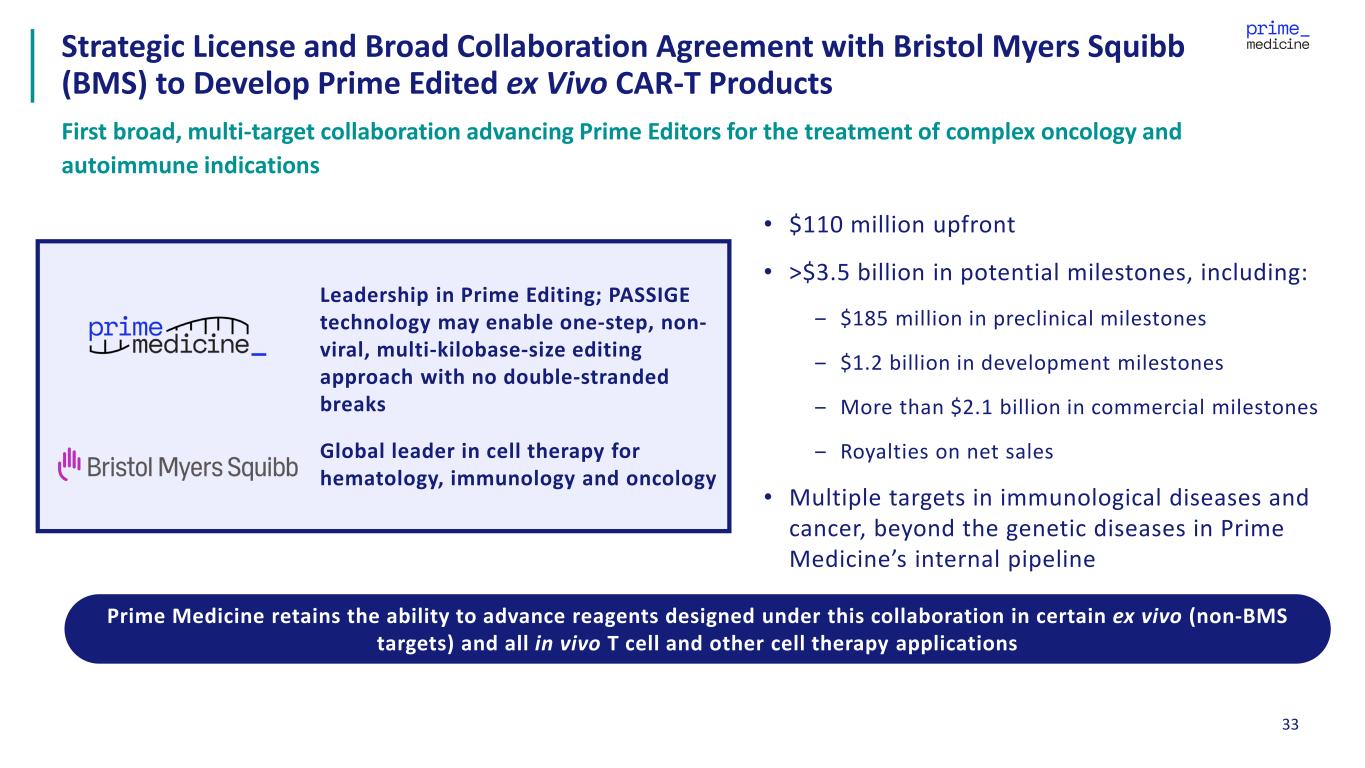
33 Strategic License and Broad Collaboration Agreement with Bristol Myers Squibb (BMS) to Develop Prime Edited ex Vivo CAR-T Products First broad, multi-target collaboration advancing Prime Editors for the treatment of complex oncology and autoimmune indications • $110 million upfront • >$3.5 billion in potential milestones, including: ‒ $185 million in preclinical milestones ‒ $1.2 billion in development milestones ‒ More than $2.1 billion in commercial milestones ‒ Royalties on net sales • Multiple targets in immunological diseases and cancer, beyond the genetic diseases in Prime Medicine’s internal pipeline Leadership in Prime Editing; PASSIGE technology may enable one-step, non- viral, multi-kilobase-size editing approach with no double-stranded breaks Global leader in cell therapy for hematology, immunology and oncology Prime Medicine retains the ability to advance reagents designed under this collaboration in certain ex vivo (non-BMS targets) and all in vivo T cell and other cell therapy applications
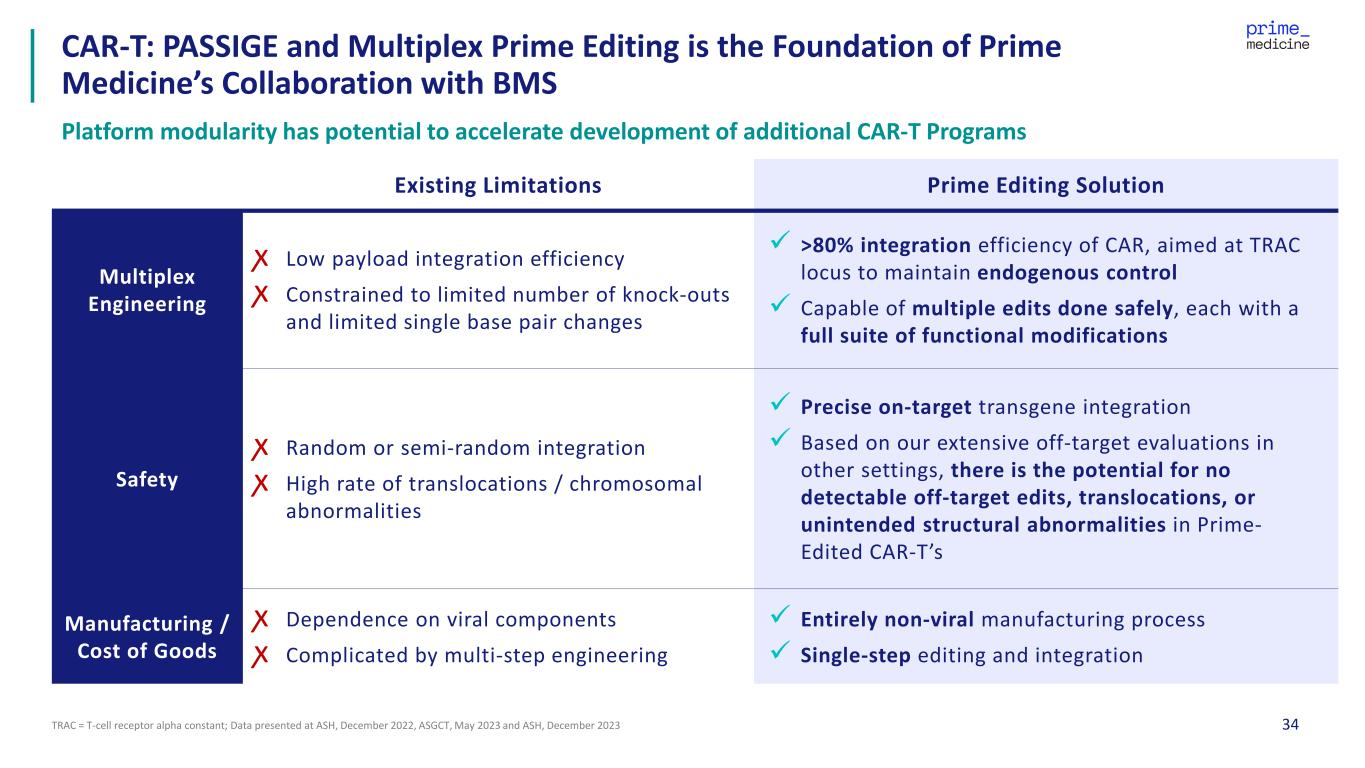
34TRAC = T-cell receptor alpha constant; Data presented at ASH, December 2022, ASGCT, May 2023 and ASH, December 2023 CAR-T: PASSIGE and Multiplex Prime Editing is the Foundation of Prime Medicine’s Collaboration with BMS Platform modularity has potential to accelerate development of additional CAR-T Programs Existing Limitations Prime Editing Solution Multiplex Engineering ꭗ Low payload integration efficiency ꭗ Constrained to limited number of knock-outs and limited single base pair changes >80% integration efficiency of CAR, aimed at TRAC locus to maintain endogenous control Capable of multiple edits done safely, each with a full suite of functional modifications Safety ꭗ Random or semi-random integration ꭗ High rate of translocations / chromosomal abnormalities Precise on-target transgene integration Based on our extensive off-target evaluations in other settings, there is the potential for no detectable off-target edits, translocations, or unintended structural abnormalities in Prime- Edited CAR-T’s Manufacturing / Cost of Goods ꭗ Dependence on viral components ꭗ Complicated by multi-step engineering Entirely non-viral manufacturing process Single-step editing and integration
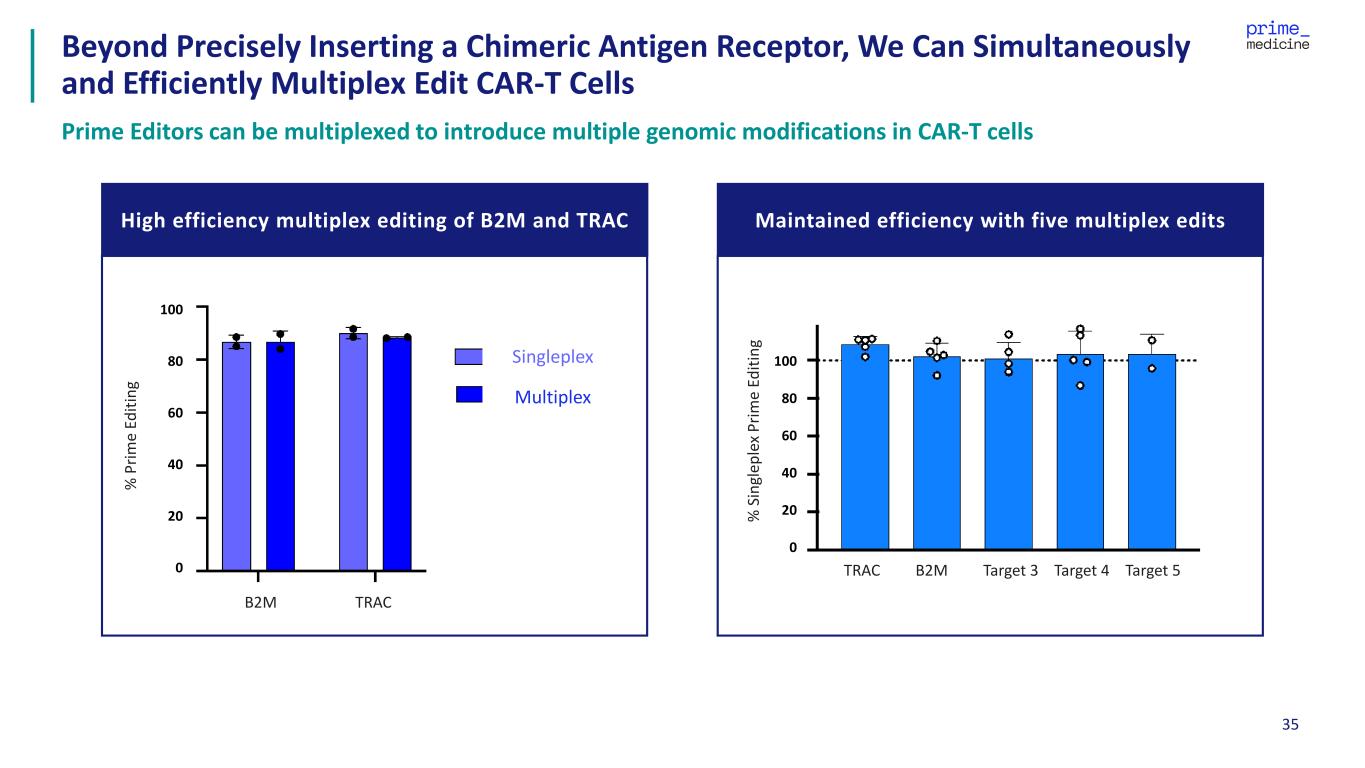
35 Beyond Precisely Inserting a Chimeric Antigen Receptor, We Can Simultaneously and Efficiently Multiplex Edit CAR-T Cells Prime Editors can be multiplexed to introduce multiple genomic modifications in CAR-T cells Maintained efficiency with five multiplex editsHigh efficiency multiplex editing of B2M and TRAC % P rim e Ed iti ng B2M TRAC Singleplex Multiplex % P rim e Ed iti ng % S in gl ep le x Pr im e Ed iti ng TRAC B2M Target 3 Target 4 Target 5 100 80 60 40 20 0 100 80 60 40 20 0
36| Corporate
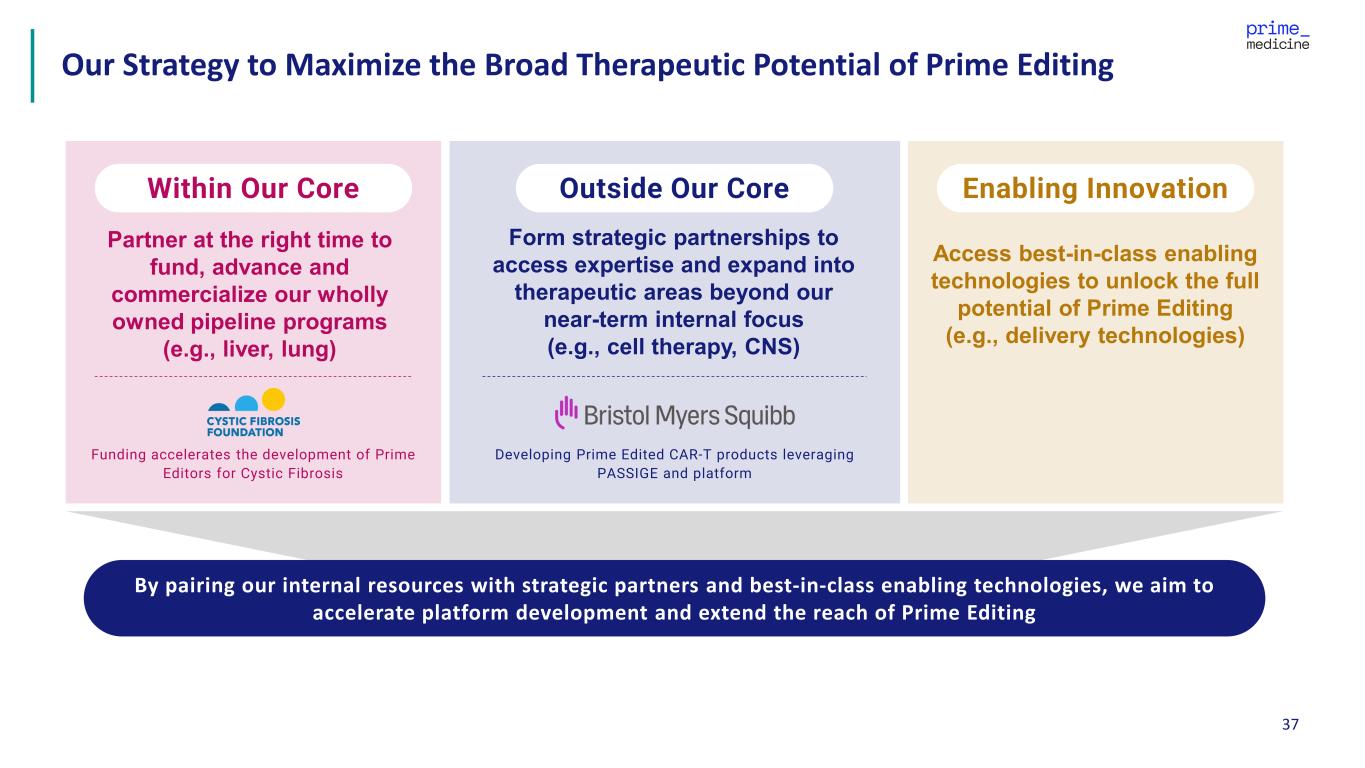
37 Our Strategy to Maximize the Broad Therapeutic Potential of Prime Editing Within Our Core Outside Our Core Enabling Innovation By pairing our internal resources with strategic partners and best-in-class enabling technologies, we aim to accelerate platform development and extend the reach of Prime Editing Funding accelerates the development of Prime Editors for Cystic Fibrosis Developing Prime Edited CAR-T products leveraging PASSIGE and platform Partner at the right time to fund, advance and commercialize our wholly owned pipeline programs (e.g., liver, lung) Form strategic partnerships to access expertise and expand into therapeutic areas beyond our near-term internal focus (e.g., cell therapy, CNS) Access best-in-class enabling technologies to unlock the full potential of Prime Editing (e.g., delivery technologies)
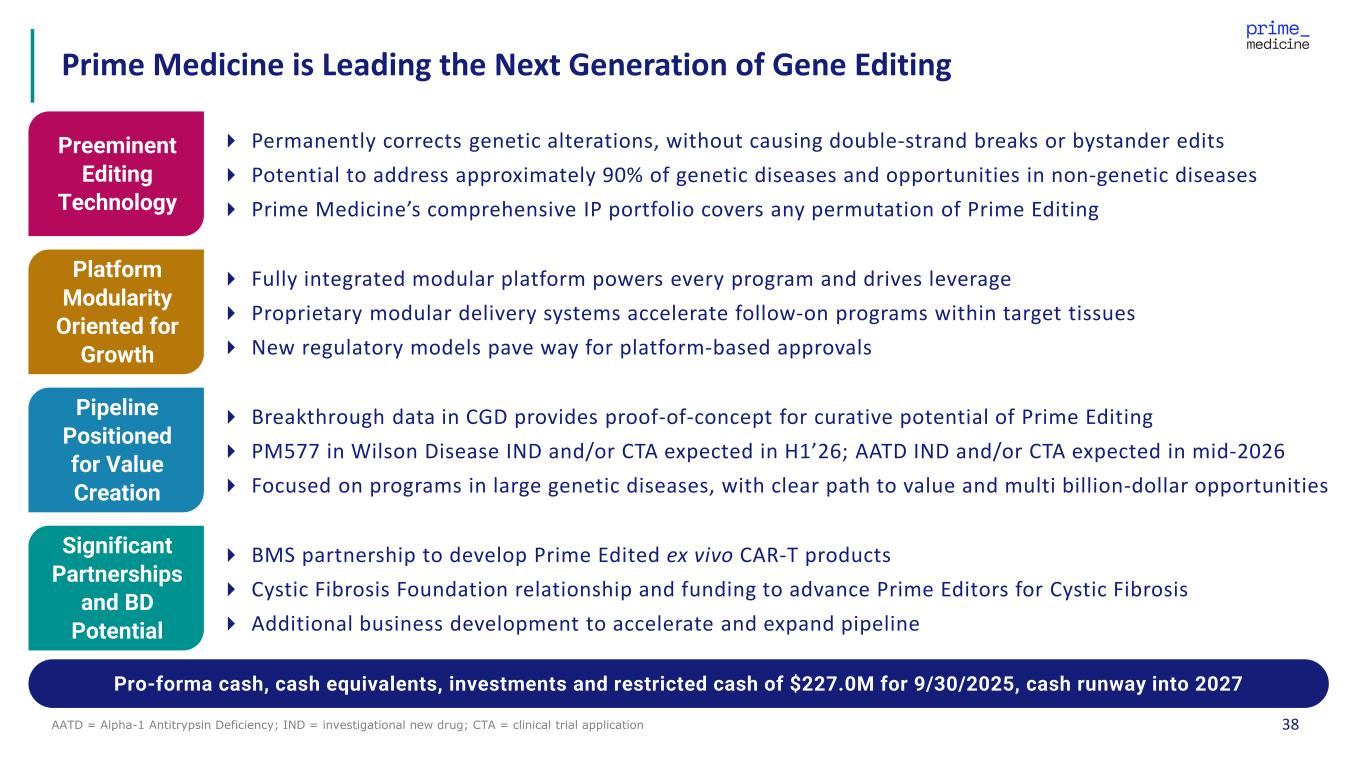
38AATD = Alpha-1 Antitrypsin Deficiency; IND = investigational new drug; CTA = clinical trial application Prime Medicine is Leading the Next Generation of Gene Editing Preeminent Editing Technology Permanently corrects genetic alterations, without causing double-strand breaks or bystander edits Potential to address approximately 90% of genetic diseases and opportunities in non-genetic diseases Prime Medicine’s comprehensive IP portfolio covers any permutation of Prime Editing Platform Modularity Oriented for Growth Fully integrated modular platform powers every program and drives leverage Proprietary modular delivery systems accelerate follow-on programs within target tissues New regulatory models pave way for platform-based approvals Pipeline Positioned for Value Creation Breakthrough data in CGD provides proof-of-concept for curative potential of Prime Editing PM577 in Wilson Disease IND and/or CTA expected in H1’26; AATD IND and/or CTA expected in mid-2026 Focused on programs in large genetic diseases, with clear path to value and multi billion-dollar opportunities Significant Partnerships and BD Potential BMS partnership to develop Prime Edited ex vivo CAR-T products Cystic Fibrosis Foundation relationship and funding to advance Prime Editors for Cystic Fibrosis Additional business development to accelerate and expand pipeline Pro-forma cash, cash equivalents, investments and restricted cash of $227.0M for 9/30/2025, cash runway into 2027

39| Appendix
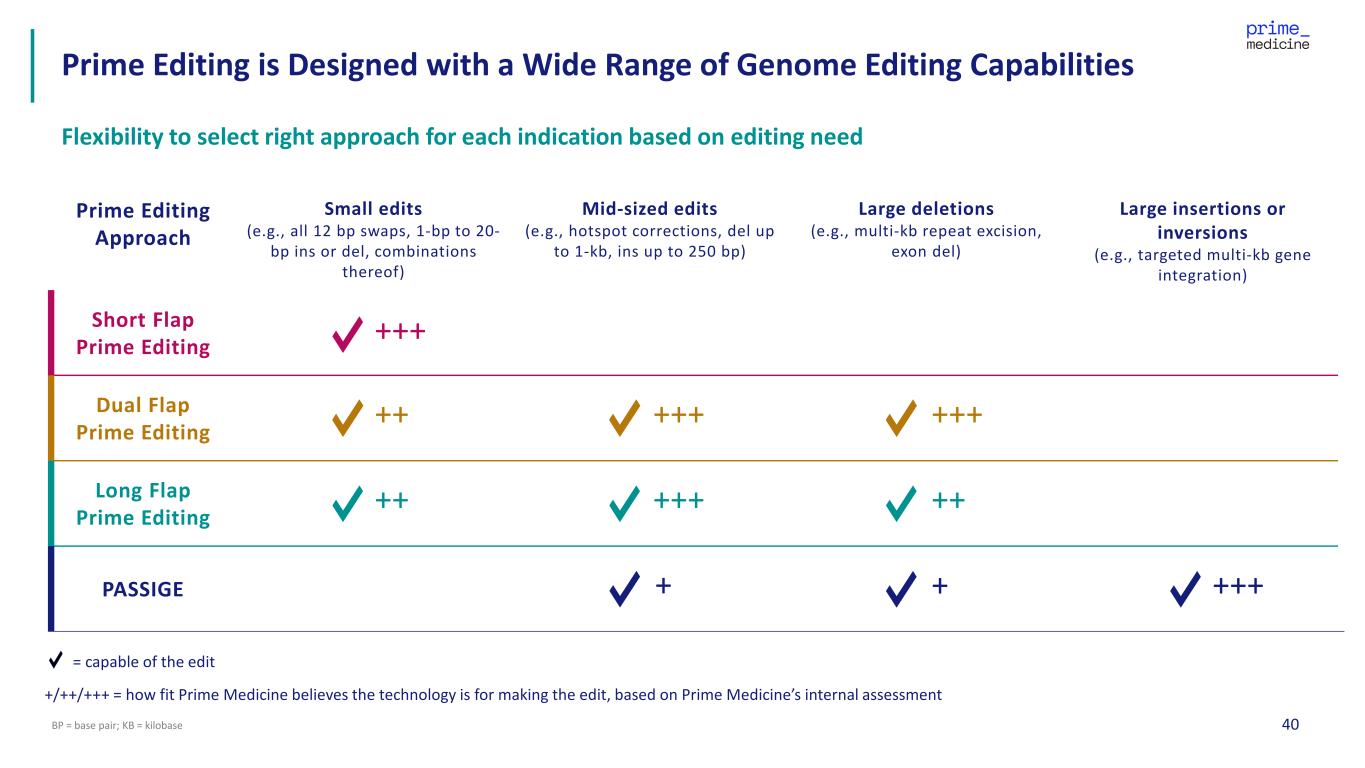
40BP = base pair; KB = kilobase Prime Editing is Designed with a Wide Range of Genome Editing Capabilities Flexibility to select right approach for each indication based on editing need Prime Editing Approach Small edits (e.g., all 12 bp swaps, 1-bp to 20- bp ins or del, combinations thereof) Mid-sized edits (e.g., hotspot corrections, del up to 1-kb, ins up to 250 bp) Large deletions (e.g., multi-kb repeat excision, exon del) Large insertions or inversions (e.g., targeted multi-kb gene integration) Short Flap Prime Editing Dual Flap Prime Editing Long Flap Prime Editing PASSIGE +++ ++ +++ ++ ++ +++ +++ +/++/+++ = how fit Prime Medicine believes the technology is for making the edit, based on Prime Medicine’s internal assessment = capable of the edit +++++
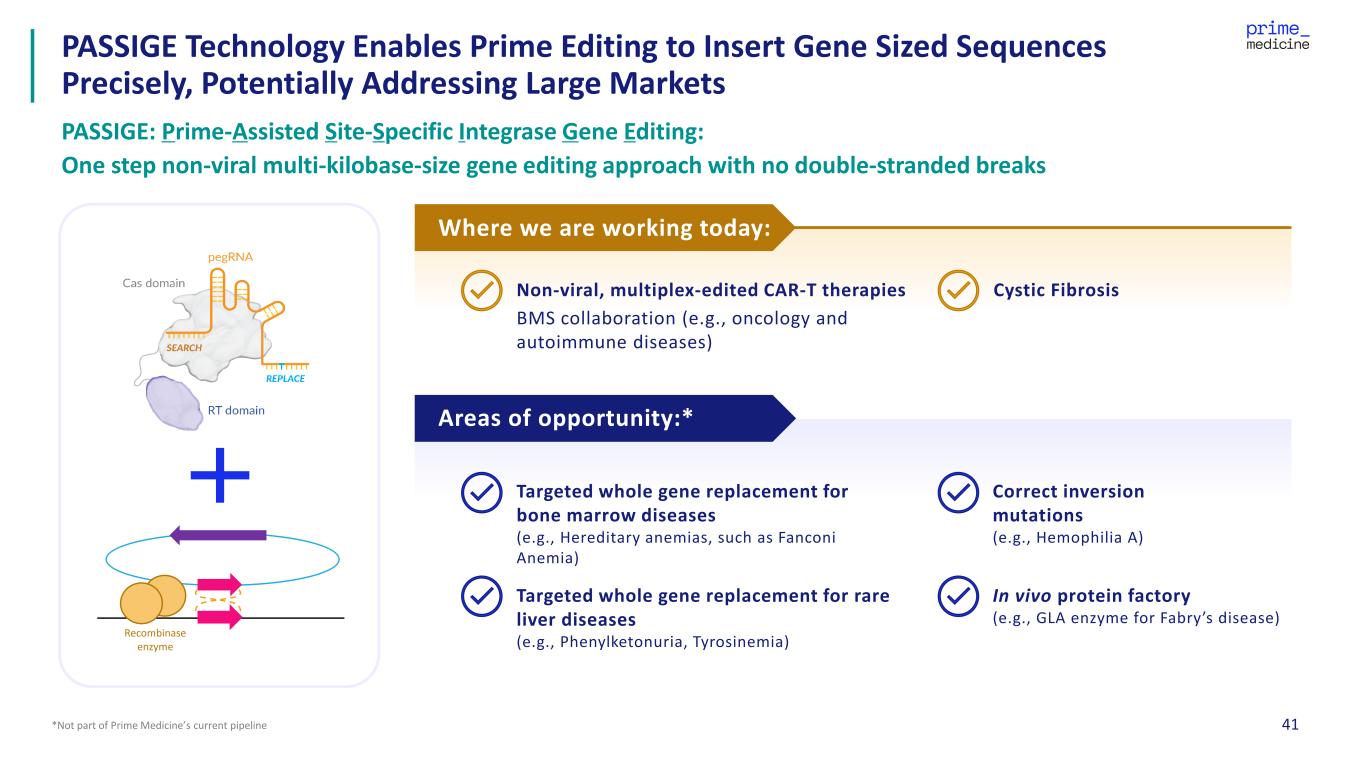
41*Not part of Prime Medicine’s current pipeline PASSIGE Technology Enables Prime Editing to Insert Gene Sized Sequences Precisely, Potentially Addressing Large Markets PASSIGE: Prime-Assisted Site-Specific Integrase Gene Editing: One step non-viral multi-kilobase-size gene editing approach with no double-stranded breaks Correct inversion mutations (e.g., Hemophilia A) In vivo protein factory (e.g., GLA enzyme for Fabry’s disease) Targeted whole gene replacement for rare liver diseases (e.g., Phenylketonuria, Tyrosinemia) Targeted whole gene replacement for bone marrow diseases (e.g., Hereditary anemias, such as Fanconi Anemia) Cystic Fibrosis Areas of opportunity:* Non-viral, multiplex-edited CAR-T therapies BMS collaboration (e.g., oncology and autoimmune diseases) Recombinase enzyme Where we are working today: