Please wait


UNITED STATES
SECURITIES AND EXCHANGE COMMISSION
Washington, D.C. 20549

Form 6-K

REPORT OF FOREIGN PRIVATE ISSUER PURSUANT TO RULE 13a-16 OR 15d-16 UNDER THE
SECURITIES EXCHANGE ACT OF 1934

For the month of June 2026

Commission File Number 001-41836

Birkenstock Holding plc


(Translation of registrant’s name into English)


1-2 Berkeley Square

London W1J 6EA

United Kingdom
(Address of principal executive office)


Indicate by check mark whether the registrant files or will file annual reports under cover of Form 20-F or Form 40-F. Form 20-F Form 40-F


Explanatory Note


On June 16, 2026, Birkenstock Holding plc (NYSE: BIRK) (the “Company” or “we” and, together with its subsidiaries, the “Group”) announced the successful pricing of the offering (the “Offering”) of €900,000,000 in aggregate principal amount of 4.500% Senior Notes due 2033 (the “Notes”) by Birkenstock Group B.V. & Co. KG, an indirect wholly-owned subsidiary of the Company. In connection with the Offering, the Company updated certain disclosure, including but not limited to its Risk Factors.

We are providing in this report on Form 6-K (this "Report") the following disclosure to supplement certain sections of our Annual Report on Form 20-F for the year ended September 30, 2025 (the “Annual Report”) and update the relevant disclosure as of the date hereof:

Item 3. KEY INFORMATION—D. Risk Factors
Item 4. INFORMATION ON THE COMPANY—B. Business Overview, and —D. Property, Plants and Equipment
Item 5. OPERATING AND FINANCIAL REVIEW AND PROSPECTS—A. Operating Results, and —D. Factors Affecting Performance and Trend Information

The updated disclosure in this Report should be read in conjunction with our Annual Report and our other documents filed with the Securities and Exchange Commission. Any defined terms used, but not defined, in the updated disclosure in this Report shall have the meanings assigned to such terms in our Annual Report.

This Report is incorporated by reference into the registration statements of Birkenstock Holding plc on Form F-3 (File No. 333-284905), filed with the U.S. Securities and Exchange Commission (the "SEC") on February 13, 2025, and Form S-8 (File No. 333-274968), filed with the SEC on October 13, 2023, in each case to be a part thereof from the date on which this Report is submitted, to the extent not superseded by documents or reports subsequently filed or furnished.


RISK FACTORS

Risks Related to Our Business, Brand, Products and Industry

If we are unable to effectively execute our DTC growth strategy, or if we encounter certain risks and uncertainties associated with our e-commerce platforms, our business may be harmed.

Our DTC channel consists of our e-commerce sites and a network of owned retail stores. Since 2016, we have significantly expanded our DTC channel through the expansion of e-commerce and our own-store network. With our DTC channel representing 37% of our revenues for the twelve months ended March 31, 2026, one of our strategies is to increase the proportion of our revenues from DTC through the continued expansion of our own-store network and e-commerce business globally. Channel growth dynamics can vary based on consumer preferences.

The success of our e-commerce business depends, in part, on our ability to offer attractive, reliable, secure and user-friendly online platforms for consumers across our markets, including by continuing to invest in our digital infrastructure and digital team. However, our e-commerce business also depends on factors over which we have limited control, including changing consumer preferences and buying trends. Any failure by us, or by any of our third-party digital partners, to provide attractive, reliable, secure and user-friendly online platforms could negatively impact the shopping experience of consumers, resulting in reduced website traffic, diminished loyalty to the BIRKENSTOCK brand and lost revenues.

2


We are also subject to certain additional risks and uncertainties associated with our e-commerce platforms, including changes in required technology interfaces, website downtime and other technical failures, costs and technical issues from website software upgrades, data and system security, cyber attacks, computer viruses and changes in applicable international, federal and state regulations. We also must keep up-to-date with competitive technology trends and resulting rapid shifts in consumer behavior, including, among other things, the use of new or improved technology, creative user interfaces and other e-commerce marketing tools, such as paid and unpaid search, and mobile applications, which may increase our costs and which may not succeed in increasing revenues or attracting consumers. Emerging trends, such as large multimodal search and agentic AI, may fundamentally alter how customers discover, evaluate, and purchase products, as well as how we operate and deliver services. Any of these changes could require significant adaptation of our business model and capabilities. In addition, the use of credit and debit cards in our online platform, which are handled by external service providers, are subject to rules relating to the processing of credit card payments.

Any of these risks could have a material adverse effect on our business, financial condition and results of operations. See also "—Our ability to successfully operate and expand retail stores depends on our ability to negotiate lease terms, achieve brand awareness and hire employees, among other factors" and “—Risks Related to Intellectual Property, Information Technology and Data Security and Privacy—Our operations, products, systems and services rely on complex IT systems and networks that are subject to the risk of disruption and security breaches.”

Tariffs and other changes in international trade policy could adversely affect our business, financial condition and results of operations.

Materials and products imported into the EU, the United States and other countries are subject to import duties. While we have implemented internal measures to comply with applicable customs regulations and to properly calculate the import duties applicable to imported products, customs authorities may disagree with our claimed tariff treatment for certain products, resulting in unexpected costs that may not have been factored into the sales price of such products and our expected margins. In addition, we cannot predict whether future domestic and international laws, regulations or specific or broad trade remedy actions or international agreements may impose additional duties or other restrictions on the importation of products from one or more of our sourcing venues. Any such changes in legislation and government policy may have a material adverse effect on our business, including the imposition of tariffs on certain materials which could increase our product costs.

On July 27, 2025, the United States and the EU announced a trade deal, subject to which all goods imported from the EU to the United States were made subject to at least 15% U.S. tariffs. On February 20, 2026, the U.S. Supreme Court ruled that U.S. tariffs imposed under the International Emergency Economic Powers Act (“IEEPA”) on goods imported into the United States were unauthorized. The ruling has created significant uncertainty regarding the validity of certain tariff measures, and the overall implementation and durability of the trade deal remain uncertain pending further clarification from U.S. authorities and potential legislative action. On the same date, the U.S. administration temporarily imposed a minimum of 10% import surcharges for 150 days, in addition to the originally applicable blended tariff rate of approximately 10%. Surcharges could go up to a maximum of 15%, so that the applicable tariff rate would be approximately 25% in total. On May 7, 2026, the U.S. Court of International Trade ruled that the U.S. administration lacked sufficient justification to enact those 10% across-the-board tariffs; however, the ruling applies only to the impacted plaintiffs. Although we are closely monitoring the tariff and trade policy actions taken by the U.S. administration and other governments, the rapidly changing global trade environment continues to create uncertainty, including with respect to the tariffs and surcharges that may apply following the expiration of the 150 day-period.

While we produce all our footwear products in the EU, our Americas segment (which comprises the U.S. market) accounts for a significant portion of our revenue (51% in the twelve months ended March 31, 2026). Based on the current landscape, and all other factors remaining constant, we expect the tariffs to result in an increase in our cost of sales, and therefore impact our gross profit margin, adjusted EBITDA margin and net profit margin in fiscal 2026 by approximately 100 basis points. Also, we expect to continue to experience adverse foreign currency fluctuations for the three months ending June 30, 2026 impacting our gross profit margin, adjusted EBITDA margin and net profit margin in the year ending September 30, 2026 by approximately 100 basis points. As we seek to unlock the large growth potential of the Asian market, an escalating global trade war, including between the United States and China, could harm our business and growth prospects. Trade barriers and other governmental action related to tariffs or international trade agreements around the world have the potential to decrease demand for our products, negatively impact suppliers and adversely impact the economies in which we operate.

3


Trade barriers and other governmental action related to tariffs or international trade agreements could increase the cost of raw materials and components used in certain of our products, which could in turn increase our cost of goods sold, which could have a material adverse effect on our business, financial condition and results of operations.

We may seek to grow our business through acquisitions of, or investments in, facilities or technologies or through other strategic initiatives; the failure to adequately manage these acquisitions, investments or initiatives, integrate them with our existing business or realize anticipated returns could adversely affect us.

From time to time, we consider opportunities to acquire or make investments in facilities or technologies or pursue other strategic initiatives that may enhance our capabilities or expand our production and supplier network. For example, in September 2025, we signed a definite agreement to purchase a production facility in Wittichenau, Germany, and in October 2025, we completed the acquisition of our long-standing distributor Birkenstock Australia Pty. Ltd., planning to actively invest in the business and to directly access the growth potential of one of our largest markets in the APAC region. Acquisitions, investments and other strategic initiatives involve numerous risks, including problems integrating the acquired facilities or technologies, as well as issues maintaining uniform standards, procedures, controls, policies and culture; unanticipated costs associated with acquisitions, investments or other strategic initiatives; diversion of management’s attention from our existing business; adverse effects on existing business relationships with suppliers, outsourced manufacturing partners and other third parties; potential loss of key employees of acquired businesses; and increased legal and accounting compliance costs.

We may be unable to identify acquisitions, investments or other strategic initiatives we deem suitable. Even if we do, we may be unable to successfully complete any such transactions on favorable terms or at all, or to retain any key personnel, suppliers or customers. Furthermore, even if we complete such transactions and effectively integrate the newly acquired business or strategic initiative into our existing operations, we may fail to realize the anticipated returns or fail to capture the expected benefits in a timely manner or at all, such as strategic or operational synergies or cost savings. The efforts required to complete and integrate these transactions could be expensive and time-consuming and may disrupt our ongoing business and prevent management from focusing on our operations. If we are unable to identify suitable acquisitions, investments or other strategic initiatives, if we are unable to integrate any acquired facilities or technologies effectively or if we fail to realize anticipated returns or capture expected benefits, it could have a material adverse effect on our business, financial condition and results of operations.

Challenging business, economic, market or political conditions may adversely affect our business, financial condition and results of operations.

Our business, financial condition and results of operations may be materially adversely affected by a challenging economic climate, including reductions in consumer spending, tariffs and other trade policy actions, adverse changes in interest rates, adverse changes in currency exchange rates, volatile commodity and other markets, inflation and contraction in the availability of credit in the market. For example, discretionary spending generally declines during periods of economic uncertainty. In a prolonged economic downturn in the regions in which we operate, we may experience declining revenues or decelerating revenue growth as a result of general reduced consumer spending. In addition, consumers have access to lower-priced offerings and, during economic downturns, may shift purchases to these lower-priced or other perceived value offerings. These trends also affect the business of our wholesale customers, which in turn has an adverse impact on our revenues from these distribution channels. As a result, a slow-down in the general economy may cause a decline in demand for our products. If economic conditions result in decreased spending on footwear and have a negative impact on our consumers and suppliers, our business, financial condition and results of operations may be materially adversely affected.

It is difficult to predict how economic conditions will develop, as they are impacted by macro movements of the financial markets and many other factors, including the stock, bond and derivatives markets as well as measures taken by various governmental and regulatory authorities and central banks. Uncertainty remains in the global markets and the global economy could experience another recession, or a depression, which could be more prolonged or have a greater financial impact than the global recession that began in 2008. Any downturns in general economic conditions that impact consumer spending, including inflation and particularly in the countries where we sell a significant portion of our products, could have a material adverse effect on our business, financial condition and results of operations. See also "—Risks Related to Economic, Market and Political Matters—Inflation could adversely impact our business, financial condition and results of operations."

4


Our business, financial condition and results of operations may also be materially adversely affected by a challenging political climate, including events such as invasions, wars, civil unrest and terrorist activities and the imposition of sanctions and importation limitations. As examples, the conflict in the Middle East involving Israel, the Hamas in Gaza and the Hezbollah in Lebanon, and the war between Russia and Ukraine have led to disruption, instability and volatility in global markets and industries (see also "—If we encounter operational challenges relating to the distribution of our products, our business could be adversely affected."). In response to the war between Russia and Ukraine, the United States, the EU and other governments in jurisdictions in which we operate have imposed sanctions and export controls against Russia and Russian interests, including restrictions on selling or importing goods, services or technology in or from affected regions and travel bans and asset freezes impacting connected individuals and political, military, business and financial organizations in Russia. Such governments have threatened additional sanctions and controls and may take other actions should the conflict further escalate. We have no operations in Russia or Ukraine, but the war continues to impact the surrounding region. While we have not experienced material supply chain disruptions to date, we are unable to predict how the war between Russia and Ukraine will develop or guarantee that we will not experience material supply chain disruptions in the future. The recent military conflict in the Middle East involving, among others, Iran, the United States and Israel, has resulted in worldwide geopolitical and macroeconomic uncertainty as well as a challenging consumer environment in the region. During the three months ended March 31, 2026, we have experienced negative impacts from the conflict on our revenue (predominantly in the EMEA segment), gross profit, adjusted EBITDA and net profit. While we cannot predict how the conflict will evolve or the timing and effects thereof, we expect it to continue to negatively affect our revenue and result in an increase in our cost of sales and our selling and distribution expenses, including in particular our transportation insurance costs (and, depending on how the situation develops, shipments to the affected regions may become completely uninsurable), and therefore impact our gross profit margin, adjusted EBITDA margin and net profit margin in the year ending September 30, 2026. Any further escalation or widening of such existing conflicts, including in light of North Korea’s apparent involvement in the war between Russia and Ukraine, as well as any new conflicts (for example, involving China and Taiwan), could have a further adverse impact on the global economy, supply chains and demand, thereby materially adversely affecting our business, financial condition and results of operations.

Inflation could adversely impact our business, financial condition and results of operations.

Inflation in the EU, the United States and other jurisdictions in which we operate began to rise significantly in late 2021, although it has slightly improved in fiscal 2025 and through March 2026. The rise of, and uncertainty regarding, inflation is primarily believed to be the result of the economic impacts from pandemics, including the global supply chain disruptions, government stimulus packages, strong economic recovery and associated widespread demand for goods, as well as geopolitical conflicts, and recently imposed, new or increased tariffs, among other factors. For instance, global supply chain disruptions have resulted in shortages in materials, which has led to inflationary cost increases for materials and energy, and could in the future cause further cost increases as well as scarcity of certain products. We have experienced, and may in the future experience, inflationary pressures in certain areas of our business, including with respect to employee wages and the cost of materials, transportation and energy. We cannot predict any future trends in the rate of inflation or associated increases in our operating costs along with a potential weakening of consumer spending power and how that may impact our business. To the extent we are unable to recover higher operating costs and a potential weakening of consumer spending power resulting from inflation or otherwise mitigate the impact of such costs on our business, our revenues and gross profit margins could decrease, and our business, financial condition and results of operations could be adversely affected.

Risks Related to Our Sales and Distribution Channels

Our sales and distribution channels are dependent on cooperation with third parties.

We rely on our ability to work together with third parties in our B2B channel to ensure that our products are sold in environments and in a manner consistent with our brand image. For the twelve months ended March 31, 2026, sales through third parties in our B2B channel accounted for 63% of revenues. In the event of a dispute with a wholesaler or distributor, we may not have adequate contractual recourse, and insurance, if any, may not be sufficient to cover the cost of a potential claim. If we cannot replace or engage such third parties that meet our specifications in a short period of time, that could increase our expenses and cause shortages of our products. In addition, actions by these third-party sales and distribution channels that do not comply with our policies, such as presenting our products in a manner inconsistent with our preferred positioning or offering our products alongside “look-alike” products, could damage our brand and reputation. If our third-party partners do

5


not maintain the standards of quality, brand positioning and exclusivity we require, or if they otherwise misuse the BIRKENSTOCK brand, there is a risk that our reputation and the integrity of the brand may be damaged. This may in turn have a material adverse effect on our business, financial condition and results of operations.

If we encounter operational challenges relating to the distribution of our products, our business could be adversely affected.

We rely on both our own and third-party logistics centers to warehouse and ship products to our e-commerce customers, retail stores, wholesale partners and distributors throughout the world. These centers are subject to operational risks, including, among other things, mechanical and IT system failure, cyber-attacks, work stoppages or increases in transportation costs and the impact of pandemics, diminished vessel capacity, port congestion and strikes, cross border trade barriers, natural disasters, political crises, civil unrest and other catastrophic events. Such and other disruptions could have an adverse effect on the availability of our in-store and warehoused inventory and would divert financial and management resources. In addition, distribution capacity is dependent on the timely performance of services by third parties, including the transportation of products to and from their distribution facilities. If we encounter problems with our distribution systems, whether our own or those of third parties, our ability to meet customer and consumer expectations, manage inventory, complete sales and achieve operating efficiencies could be adversely affected. Additionally, the success of our e-commerce business and the satisfaction of consumers depend on their timely receipt of products. The efficient flow of our products requires that our own and third-party operated distribution facilities have adequate capacity to support the current level of e-commerce sales and any anticipated increased levels that may follow from the planned growth of that part of our DTC channel. As a result, we could incur, and from time to time have incurred, significantly higher costs and longer lead times associated with distributing our products to consumers and experience dissatisfaction from consumers, which could have a material adverse effect on our business, financial condition and results of operations.

For example, recently ports in Northern Europe, including Rotterdam and Antwerp, were affected by labor strikes, as were ports at the U.S. East Coast in the past, which combined with the ongoing war between Russia and Ukraine as well as the conflict in the Middle East and the related Red Sea crisis, where Houthi forces based in Yemen and backed by Iran have been attacking freighters, have impacted lead times, and the resulting financial and economic sanctions imposed by various countries and organizations have affected transportation costs. The recent military conflict in the Middle East involving, among others, Iran, the United States and Israel, has resulted in worldwide geopolitical and macroeconomic uncertainty as well as a challenging consumer environment in the region. During the three months ended March 31, 2026, we have experienced negative impacts from the conflict on our revenue (predominantly in the EMEA segment), gross profit, adjusted EBITDA and net profit. While we cannot predict how the conflict will evolve or the timing and effects thereof, we expect it to continue to negatively affect our revenue and result in an increase in our cost of sales and our selling and distribution expenses, including in particular our transportation insurance costs (and, depending on how the situation develops, shipments to the affected regions may become completely uninsurable), and therefore impact our gross profit margin, adjusted EBITDA margin and net profit margin in the year ending September 30, 2026.

In addition, we use independent distributors and wholesalers to sell our products in certain of our markets. Failure by our distributors or wholesalers to meet planned annual revenue goals or to make timely payments on amounts owed to us due to, for example, economic difficulties faced by such distributors could have an adverse effect on our business, financial condition and results of operations, and it may be difficult and costly to locate an acceptable substitute distributor or wholesaler. If a change in distributor or wholesaler becomes necessary, we may experience increased costs, as well as substantial disruption and a resulting loss of revenues and brand equity in the market where such distributor or wholesaler operates, which could have a material adverse effect on our business, financial condition and results of operations.

Risks Related to Our Supply Chain

Shipping and delivery are critical parts of our business and any changes in, or disruptions to, our shipping and delivery arrangements could adversely affect our business, financial condition and results of operations.

We rely on several ocean, air parcel and “less than truckload” carriers to deliver the products we sell. If we are not able to negotiate acceptable pricing and other terms with these providers, or if these providers experience performance problems or other difficulties in processing our orders or delivering our products to customers, it could negatively impact our customers’ experience as well as our business, financial condition and results of operations. For example, changes to the terms of our shipping arrangements or the imposition of surcharges or surge pricing have impacted from time to time, and could in
6


the future adversely impact, our margins and profitability. In addition, our ability to receive inbound inventory efficiently and ship merchandise to customers may be negatively affected by factors beyond our and these providers’ control, including pandemics, weather, fires, floodings, power losses, earthquakes, acts of war or terrorism or other events specifically impacting other shipping partners, such as labor disputes, financial difficulties, system failures and other disruptions to the operations of the shipping companies on which we rely. We have in the past experienced, and may in the future experience, shipping delays for reasons outside of our control, including as a result of the recent military conflict in the Middle East involving, among others, Iran, the United States and Israel, which has disrupted regional shipping routes, including through the Strait of Hormuz, and may result in increased transportation costs and, depending on how the situation develops, shipments to the affected regions may become completely uninsurable. We are also subject to risks of damage or loss during delivery by our shipping vendors. If the products ordered by our customers are not delivered in a timely fashion, including to international customers, or are damaged or lost during the delivery process, our customers could become dissatisfied and cease buying products from us, which would adversely affect our business, financial condition and results of operations.

Fluctuations in product costs and availability due to fuel price uncertainty could negatively impact our business, financial condition and results of operations.

We rely upon various means of third-party transportation to deliver products from our manufacturing facilities to our distribution centers, from our distribution centers to our stores and directly to our customers. Consequently, our results may be affected by those factors affecting transportation, including the price of fuel and the availability of aircraft, ships, trucks and personnel. The price of fuel and demand for transportation services has fluctuated significantly in recent years, including as a result of the ongoing war between Russia and Ukraine as well as the conflict in the Middle East, including the armed conflict involving Iran, the United States and Israel and the related disruption to shipping through the Strait of Hormuz, and has resulted in increased costs for us. In addition, changes in regulations may result in higher fuel costs through taxation, transportation restrictions or other means. Fluctuations in transportation costs and availability could adversely affect our business, financial condition and results of operations.

Risks Related to Our Employees and Operations

We are dependent on good relationships with our employees, employee representative bodies and other stakeholders.

We are dependent on good relationships with our employees, employee representative bodies such as works councils (Betriebsräte) and group work council (Konzernbetriebsrat), and other stakeholders to successfully operate our business. Personnel expenses make up a significant portion of our costs and we are obliged to comply with various works council and other agreements that are in place with works councils and other employee representative bodies. In addition, we have a collective bargaining agreement in one of our facilities in Germany. At our German locations we regularly conduct, or are involved in, negotiations with the relevant employee representative bodies, are engaged in a constant dialogue about any topics, which are subject to co-determination, and strive to maintain a balanced relationship with unions. Any deterioration of these relationships could adversely impact our business, financial condition and results of operations.

Although we believe that we generally have good relations with employee representatives and employees today, there is no guarantee that these relations will not deteriorate and that labor disputes will not arise in the future. We may have to deal with strikes or similar conflicts with trade unions and our employees in the future. In particular, conflicts could arise when current collective agreements expire or need to be renegotiated. Such strikes, conflicts, work stoppages or other industrial action could disrupt our production and sales activities, damage our reputation and adversely affect our customer relationships, which in turn could have a material adverse effect on our business, financial condition and results of operations.

Works councils and collective agreements may impose obligations and restrictions on us that may adversely affect our flexibility to undertake adjustments to our workforce, restructurings, reorganizations and similar corporate actions. In addition, certain measures we undertake are generally subject to works councils’ codetermination rights, in particular in relation to occupational pension schemes, the implementation and use of IT systems, variable remuneration schemes and working time systems. Potentially extensive exercise of codetermination rights by the works councils may result in operational difficulties and in us being prevented from implementing planned policy or IT system changes, among other things.

Risks Related to Legal, Regulatory and Taxation Matters

7


We are subject to the risk of litigation and other claims.

In the ordinary course of our business we are, and may from time to time become, involved in various litigation matters and governmental or regulatory investigations, prosecutions or similar matters arising out of our current or future business, including personal injury, wrongful death claims, property damages and product safety, stewardship and liability claims, warranty obligations claims, alleged violations of environmental, health and safety laws, criminal proceedings (such as those relating to injuries suffered by our employees, which could result in criminal liabilities of our legal representatives and administrative penalties against us), labor law related claims by employees, temporary workers or other external workers, claims by distributors, advisers and others. In addition, third-party litigation, including, but not limited to, litigation related to competition law, antitrust law, tax law, distribution law, intellectual property law and consumer protection and marketing laws, could have a materially adverse impact on us and the market environment in which we operate. Our listing in the United States may also expose us to a higher risk of securities-related class action suits, particularly following any significant decline in the price of our ordinary shares. When we determine that a significant risk of a future claim against us exists, we record provisions in an amount equal to our estimated liability. Our insurance or indemnities or amounts we have provisioned may not cover all claims that may be asserted against us, and any claims asserted against us, regardless of merit or eventual outcome, may harm our reputation.

We are subject to litigation from time to time. For example, we are defending an action brought by a French distributor as a result of the termination of a business relationship. The plaintiff’s initial claim amounted to €94.7 million. On January 25, 2024, the commercial court of Nancy, France, delivered its ruling in favor of Birkenstock. The plaintiff appealed against the decision of the commercial court of Nancy on March 14, 2024 and filed their briefing and claim with the Paris Court of Appeal on June 14, 2024. We filed our briefing in response on November 12, 2024. The plaintiff reduced some of its claims but also introduced a new claim. On appeal, their claims total approximately €41.6 million. This change is primarily because the plaintiff made no claim in the appeal alleging the loss of clientele. A decision on the appeal is not expected before the last quarter of fiscal 2026, as the pleadings currently have been scheduled by the Court for July 7, 2026. Birkenstock Holding plc has recognized a provision for management’s best estimate of probable cash outflow. As a result of the proceedings in which we are involved, the amount of total provisions for disputes in our financial statements for future periods could increase. For further information, see also “Item 8. Financial Information—A. Consolidated Statements and Other Financial Information—Legal Proceedings.” There can be no assurance that we will be successful in defending ourselves in pending or future litigation claims or similar matters under various laws or that product specific provisions will be sufficient to cover litigation costs. Moreover, it may be difficult for us to obtain and enforce claims related to existing litigation under the laws of certain countries in which we operate at affordable costs and without any materially adverse effects on our business in such country.

Any of these risks could result in considerable costs, including damages, legal fees and temporary or permanent bans on the marketing and sale of certain products and this could have a material adverse effect on our business, financial condition and results of operations.

Amendments to existing tax laws, rules or regulations or enactment of new unfavorable tax laws, rules or regulations on companies engaged in e-commerce could have an adverse effect on our business and financial performance.

Many of the laws, rules or regulations imposing taxes and other similar obligations were established before the growth of the internet and e-commerce. Tax authorities in non-U.S. jurisdictions and at the U.S. federal, state and local levels are currently reviewing the appropriate treatment of companies engaged in e-commerce and considering changes to existing tax or other laws that could regulate our transmissions and/or levy sales, income, consumption, use or other taxes relating to our activities, and/or impose obligations on us to collect such taxes. In addition, state and local taxing authorities in the United States and taxing authorities in other countries have identified e-commerce platforms as a means to calculate, collect and remit indirect taxes for transactions taking place over the internet. Multiple U.S. states have enacted related legislation and other states are now considering such legislation.

We cannot predict the effect of current attempts to impose taxes on commerce over the internet. If such tax or other laws, rules or regulations were amended, or if new unfavorable laws, rules or regulations were enacted, the results could increase our tax payments or other obligations, prospectively or retrospectively, subject us to interest and penalties, decrease the demand for our products if we pass on such costs to the consumer, result in increased costs to update or expand our technical or administrative infrastructure or effectively limit the scope of our business activities if we decided not to conduct

8


business in particular jurisdictions. As a result, these changes may have a material adverse effect on our business, financial condition and results of operations.

Risks Related to Our Indebtedness

We have a substantial amount of debt, and our leverage and debt service obligations could adversely affect our business, financial position and results of operations and preclude us from satisfying our debt obligations under the New Notes and the New Note Guarantees (each as defined below).

Following the completion of Birkenstock Group B.V. & Co. KG’s offering (the “June 2026 Offering”) of €900,000,000 in aggregate principal amount of its 4.500% Senior Notes due 2033 (the “New Notes”) and the use of proceeds thereof (including the redemption of the Notes and repurchases of Birkenstock Holding plc’s ordinary shares for an aggregate amount of up to $500 million (€431 million equivalent), including from Midco, either in open market transactions, directly negotiated trades or as part of any registered offerings subject to, among other things, market conditions and Birkenstock’s liquidity position (collectively, the “Share Repurchases”) or, to the extent that the Share Repurchases are commercially unreasonable or not otherwise feasible or preferable, the refinancing of other existing indebtedness of Birkenstock companies and the financing of general corporate purposes) and the entering into certain amendments to the Term and Revolving Facilities Agreement, conditional on the completion of the June 2026 Offering and subject to the issuance of the New Notes (the “Term and Revolving Facilities Agreement Amendments”, and references to the Term and Revolving Facilities Agreement shall be construed accordingly) (including the termination of the intercreditor agreement entered into on April 28, 2021 by and among, inter alios, Birkenstock Group B.V. & Co. KG, Birkenstock Limited Partner, the original debtors therein, Goldman Sachs Bank USA as the security agent and certain lenders as original lenders under the Term and Revolving Facilities Agreement (as amended and restated from time to time) (the “Existing Intercreditor Agreement”)) (collectively, the “June 2026 Transactions”), we will be leveraged and will continue to have debt service obligations. Moreover, in May 2026, we entered into the ASR Agreement relating to a $250 million share repurchase program. We funded the share repurchases under the ASR Agreement with a combination of cash on hand and a €110 million drawing under the Revolving Credit Facility and expect settlement of the May 2026 Accelerated Share Repurchase to occur before June 30, 2026. As of March 31, 2026, after giving effect to the June 2026 Transactions and the May 2026 Accelerated Share Repurchase (including the related drawing under the Revolving Credit Facility), we would have had total indebtedness in the amount of €1,714.4 million, primarily comprised of the New Notes, the EUR Term Loan, the USD Term Loan, undrawn commitments under the Revolving Credit Facility and the Vendor Loan. We anticipate that a certain level of leverage will continue to exist for the foreseeable future.

The degree to which we will be leveraged following the completion of the Transactions could have important consequences for our business and for holders of the New Notes, including, but not limited to:

making it more difficult for us to satisfy our debt obligations with respect to the New Notes, the Term Loan and the Revolving Credit Facility (together with the Term Loan, the “Existing Facilities”) and other debt and liabilities we may incur;
increasing our vulnerability to, and reducing our flexibility to respond to, general adverse economic and industry conditions;
requiring the dedication of a substantial portion of our cash flow from operations to the payment of principal of, and interest on, our indebtedness, thereby reducing the availability of such cash flow to fund working capital, capital expenditures, acquisitions, joint ventures, product research and development or for other general corporate purposes;
restricting us from pursuing acquisitions or exploiting business opportunities;
limiting our flexibility in planning for, or reacting to, changes in our business, the competitive environment and the industry in which we operate;
negatively impacting credit terms with our suppliers and other creditors;

9


increasing our exposure to interest rate increases because some of our indebtedness bears a floating rate of interest;
placing us at a competitive disadvantage compared to our competitors that may not be as leveraged;
limiting our ability to obtain additional financing to fund future operations, capital expenditures, business opportunities, acquisitions and other general corporate purposes, and increase the cost of any future borrowings; and
limiting our ability to obtain additional capacity for issuance of bid, advance payment, performance and warranty guarantees for operative business purposes and increasing the cost of any future guarantee issuances.

Any of these or other consequences or events could have a material adverse effect on our business, financial condition and results of operations and on our ability to satisfy our obligations, including under the New Notes and the Existing Facilities.

We may incur substantially more debt in the future, which may make it difficult for us to service our debt, including the New Notes, and impair our ability to operate our businesses.

Despite our substantial leverage, we may incur substantial additional debt in the future. We have the ability to borrow up to €225 million under our Revolving Credit Facility, and the indenture governing the New Notes (the “New Indenture”) will also permit the incurrence of additional debt thereunder. The Term and Revolving Facilities Agreement also permits us to incur, and the New Indenture will not restrict us from incurring, a substantial amount of indebtedness at our subsidiaries (including subsidiaries that do not guarantee the New Notes) and to incur indebtedness that benefits from security interests over assets. Any debt that our subsidiaries incur could be structurally or effectively senior to the New Notes to the extent that such subsidiaries do not guarantee the New Notes, such debt is secured by liens, to the extent of the value of such property and assets securing such debt, and other debt could be secured or could mature prior to the New Notes. In addition, while the Term and Revolving Facilities Agreement contains restrictions on the incurrence of additional indebtedness, no such restrictions will be included in the New Indenture, and these restrictions are subject to a number of significant qualifications and exceptions, and under certain circumstances the amount of indebtedness that could be incurred in compliance with these restrictions could be substantial. If new debt is added to Birkenstock Limited Partner’s, Birkenstock Group B.V. & Co. KG and its subsidiaries’ existing debt levels, the related risks that we now face would increase. In addition, the Term and Revolving Facilities Agreement does not, and the New Indenture will not, prevent us from incurring obligations that do not constitute indebtedness under those agreements. Our inability to service our debt could have a material adverse effect on our business, financial position and results of operations and our ability to fulfil our obligations under the New Notes and the guarantees of the New Notes provided by certain initial guarantors (the “Initial New Note Guarantees”) and any other guarantees of the New Notes provided pursuant to the terms of the New Indenture (collectively, the “New Note Guarantees”).

We are, and following the consummation of the June 2026 Transactions, we will be subject to restrictive covenants that will limit our operating and financial flexibility.

The Term and Revolving Facilities Agreement and the New Indenture contain, or will contain, covenants which impose significant operating and financial restrictions on us. These agreements will limit our ability to carry out certain or all of the following:

incur or guarantee additional indebtedness or issue certain preferred stock;
create or incur certain liens; and
merge, consolidate or transfer all or substantially all of our assets.

All of these limitations will be subject to significant exceptions and qualifications. The covenants to which we will be subject could limit our ability to finance our future operations and capital needs and our ability to pursue business opportunities and activities that may be in our interest.

10


In addition, the Term and Revolving Facilities Agreement requires us to comply with certain affirmative covenants while amounts under the Existing Facilities remain outstanding. The Term and Revolving Facilities Agreement contains a maintenance financial covenant requiring compliance with a certain leverage ratio (the “Financial Covenant”). A breach of any of the covenants or restrictions under the Term and Revolving Facilities Agreement, including our failure to comply with the Financial Covenant could result in an event of default under the Term and Revolving Facilities Agreement. Upon the occurrence of a payment event of default that is continuing under the Term and Revolving Facilities Agreement, subject to the applicable cure period, and upon the acceleration of indebtedness with respect to any other event of default by the creditors under our Term and Revolving Facilities Agreement, the relevant creditors could cancel the availability of the Existing Facilities and elect to declare all amounts outstanding under the Existing Facilities, together with accrued interest, immediately due and payable. In addition, a default under the Term and Revolving Facilities Agreement could lead to an event of default and acceleration under other debt instruments that contain cross default or cross acceleration provisions, including the Indenture. If our creditors, including the creditors under the Term and Revolving Facilities Agreement, accelerate the payment of those amounts, we cannot assure you that our assets and the assets of our subsidiaries would be sufficient to repay in full those amounts, to satisfy all other liabilities of our subsidiaries that would be due and payable and to make payments to enable us to repay the New Notes.

We will require a significant amount of cash to service our debt and sustain our operations, which we may not be able to generate or raise.

Our ability to make principal or interest payments when due on our indebtedness, including the Existing Facilities and our obligations under the New Notes and to fund our ongoing operations and future capital expenditures, will depend on our future performance and ability to generate cash, which, to a certain extent, is subject to the success of our business strategy as well as general economic, financial, competitive, legislative, legal, regulatory and other factors, as well as other factors discussed in these “Risk Factors,” many of which are beyond our control.

We cannot assure you that our business will generate sufficient cash flows from operations, that currently anticipated growth, cost savings or efficiencies will be realized or that future debt financing will be available to us in an amount sufficient to enable us to pay our debts when due, including the New Notes, or to fund our other liquidity needs including the repayment at maturity of the then outstanding amount under the Existing Facilities. At the respective maturities of the Existing Facilities, the New Notes or any other debt that we may incur, if we do not have sufficient cash flows from operations and other capital resources to pay our debt obligations, or to fund our other liquidity needs, we may be required to refinance or restructure our indebtedness.

If our future cash flows from operations and other capital resources are insufficient to pay our obligations as they mature or to fund our liquidity needs, we may be forced to sell assets, obtain additional debt or equity capital or restructure or refinance all or a portion of our debt, including the New Notes, on or before maturity.

The type, timing and terms of any future financing, restructuring, asset sales or other capital raising transactions will depend on our cash needs and the prevailing conditions in the financial markets. We cannot assure you that we would be able to accomplish any of these alternatives on a timely basis or on satisfactory terms, if at all. In such an event, we may not have sufficient assets to repay any portion or all of our debt.

Any failure to make payments on the New Notes on a timely basis would likely result in a reduction of our credit rating, which could also harm our ability to incur additional indebtedness. In addition, the terms of our debt, including the New Notes and the Existing Facilities, will limit, and any future debt may limit, our ability to pursue any of these alternatives. Any refinancing of our debt could be at higher interest rates and may require us to comply with more onerous covenants, which could further restrict our business, financial position and results of operations. There can be no assurances that any assets that we could be required to dispose of could be sold or that, if sold, the timing of such sale and the amount of proceeds realized from such sale would be acceptable. If we are unsuccessful in any of these efforts, we may not have sufficient cash to meet our obligations.

We may be unable to raise the financing that we require or refinance our existing debt, including the Existing Facilities and the Vendor Loan, each of which will mature prior to the New Notes.

11


Certain of our debt matures prior to the New Notes. For example, the Existing Facilities have an original maturity of February 28, 2029 and the Vendor Loan matures on October 30, 2029, both of which are prior to the maturity date of the New Notes offered hereby. In the future, we may also incur other indebtedness that matures prior to the maturity of the New Notes. If we are unable to refinance all or a portion of our indebtedness or obtain such refinancing on terms acceptable to us, we may be forced to sell assets, or raise additional debt or equity financing in amounts that could be substantial or holders of our debt may accelerate our debt. Any delay in refinancing, or the inability to refinance on commercially acceptable terms, debt falling due in accordance with the maturity schedule of our indebtedness may result in an acceleration of such debt, and enforcement over our assets. In addition, the refinancing of existing debt may be on different terms than our current ones, among other things, could drive an increase in debt service costs, thereby restricting our degree of flexibility. If we are unable to refinance our debt when due, we may not be able to satisfy our obligations under the New Notes.

Birkenstock Limited Partner and Birkenstock Group B.V. & Co. KG are holding companies that have limited or no revenue generating operations of their own and will depend on cash from our operating companies to be able to make payments on the New Notes and the New Note Guarantees.

Birkenstock Limited Partner is a holding company that conducts no business operations of its own and has no significant assets other than its interests in its subsidiaries. Birkenstock Group B.V. & Co. KG is a holding company with limited business operations of its own other than management of the equity interests it holds in its subsidiaries and conducting administration and management on behalf of Birkenstock (such as corporate risk and human resource functions). In addition, the financial statements presented herein are financial statements of Birkenstock Holding plc. Further, Birkenstock Holding plc, being the indirect holding company of Birkenstock Limited Partner and Birkenstock Financing S.à r.l. (a wholly owned subsidiary of Birkenstock Holding plc and the direct holding company of Birkenstock Limited Partner), conducts no business operations of its own and no significant assets and liabilities, other than its interests in its subsidiaries and its liabilities under the Vendor Loan and the Tax Receivable Agreement. Birkenstock Holding plc will not guarantee the New Notes.

Birkenstock Limited Partner and Birkenstock Group B.V. & Co. KG will be dependent upon the cash flow from their operating subsidiaries in the form of dividends or other distributions or payments to meet their obligations, including its obligations under the New Notes and the New Note Guarantees. Given our international operations, we have a large number of operating subsidiaries and business participations, which individually contribute to our results. The amounts of dividends and distributions available to Birkenstock Limited Partner and Birkenstock Group B.V. & Co. KG will depend on the profitability and cash flows of their subsidiaries and the ability of each of those subsidiaries to declare dividends under applicable law or transfer profits under profit and loss transfer agreements, if applicable. Birkenstock Limited Partner’s and Birkenstock Group B.V. & Co. KG’s subsidiaries, however, may not be able to, or may not be permitted under applicable law to, make distributions or advance upstream loans to Birkenstock Limited Partner and Birkenstock Group B.V. & Co. KG to make payments in respect of their indebtedness, including the New Notes and the New Note Guarantees.

Various agreements governing our debt may restrict or prohibit the ability of these subsidiaries to move cash to Birkenstock Group B.V. & Co. KG. Applicable tax laws may also subject such payments to further taxation. Applicable law as well as profit and loss transfer agreements between several of our entities may also limit the amounts that some of our subsidiaries will be permitted to pay as dividends or distributions on their equity interests, or even prevent such payments. In particular, the ability of Birkenstock Limited Partner’s and Birkenstock Group B.V. & Co. KG’s subsidiaries to pay dividends to Birkenstock Group B.V. & Co. KG will generally be limited to the amount of distributable reserves available to each of them and the ability to pay their respective debt when due. The subsidiaries of Birkenstock Group B.V. & Co. KG that will not guarantee the New Notes have no direct obligation to make payments with respect to the New Notes or the New Note Guarantees.

Some of our indebtedness, including under the Existing Facilities, bears interest at floating rates that could rise significantly, thereby increasing our costs and reducing our cash flow.

Debt under the Term and Revolving Facilities Agreement bears interest at a variable rate based on EURIBOR for Euro loans (subject to a zero floor if less than zero) and the forward-looking term rate based on SOFR for U.S. Dollar loans in each case, plus an applicable margin. These interest reference rates may increase in the future, increasing our interest expense associated with these obligations, reducing cash flow available for capital expenditures and hindering our ability to make payments on our debt. The Term and Revolving Facilities Agreement does not, and the New Indenture will not, contain a covenant requiring us to hedge all or any portion of our floating rate debt.

12


Although we may continue to enter into, extend or maintain certain hedging arrangements designed to fix a portion of these rates, there can be no assurance that hedging will continue to be available on commercially reasonable terms. Hedging itself carries certain risks, including that we may need to pay a significant amount (including costs) to terminate any hedging arrangements. To the extent interest rates were to rise significantly, our interest expense would correspondingly increase, thus reducing our cash flow.

Risks Related to Our Ordinary Shares

Our Principal Shareholder controls us, and their interests may conflict with ours or yours in the future.

Based on a total of 183,906,056 ordinary shares of Birkenstock Holding plc outstanding as of March 31, 2026 (before giving effect to the accelerated share repurchase agreement (the “ASR Agreement”) with Goldman Sachs International (“Goldman Sachs”) entered into by us on May 20, 2026, under which we agreed to repurchase $250 million of our own ordinary shares (the “May 2026 Accelerated Share Repurchase”)), the Principal Shareholder and its affiliates are known to us to beneficially own approximately 54.1% of Birkenstock Holding plc’s ordinary shares, thereby indirectly controlling Birkenstock Holding plc, with each ordinary share entitling the holder to one vote on all matters submitted to a vote of our shareholders. Moreover, we have agreed to nominate to our board of directors individuals designated by MidCo, which is controlled by our Principal Shareholder, in accordance with our Shareholders’ Agreement. For so long as MidCo beneficially owns at least a majority of our ordinary shares, it will be entitled to designate for nomination a majority of our board of directors and effectively control the composition of our board of directors and the approval of actions requiring shareholder approval through their voting power. Even when MidCo ceases to own a majority of our ordinary shares, for so long as MidCo continues to own at least 5% of our ordinary shares, it will be entitled to designate for nomination a number of directors in proportion to its ownership of our ordinary shares, rounded up to the nearest whole person. In addition, at any time that our Principal Shareholder owns at least 40% of Birkenstock Holding plc’s voting power, shareholders are permitted to take action by written consent if approved by a majority of the voting power of Birkenstock Holding plc, or two-thirds of the voting power of Birkenstock Holding plc, when required by Jersey law, and directors may be removed with or without cause by a majority of the voting power of Birkenstock Holding plc. Accordingly, for such periods of time, our Principal Shareholder will have significant influence with respect to our management, business plans and policies, including the appointment and removal of our officers. In particular, for so long as our Principal Shareholder continues to own a significant percentage of our ordinary shares, our Principal Shareholder will be able to cause or prevent a change of control of Birkenstock Holding plc or a change in the composition of our board of directors and could preclude any unsolicited acquisition of Birkenstock Holding plc. The concentration of ownership could deprive our shareholders of an opportunity to receive a premium for their ordinary shares as part of a sale of Birkenstock Holding plc and ultimately might affect the market price of our ordinary shares.

General Risk Factors

We have identified, and may in the future identify, material weaknesses in our internal control over financial reporting. If we fail to remediate our material weaknesses or if we otherwise fail to establish and maintain an effective system of internal control over financial reporting, we may not be able to report our financial results accurately and timely, meet our reporting obligations or prevent fraud. Any inability to report and file our financial results accurately and timely could harm our business and adversely impact investor confidence and the trading price of our securities.

Internal control over financial reporting is a process designed to provide reasonable assurance regarding the reliability of financial reporting and the preparation of financial statements in accordance with IFRS. A material weakness is defined as a deficiency, or a combination of deficiencies, in internal control over financial reporting, such that there is a reasonable possibility that a material misstatement of a company’s annual or interim financial statements will not be prevented or detected on a timely basis by the company’s internal controls. Our management is responsible for establishing and maintaining adequate internal control over financial reporting. Effective internal controls over financial reporting are necessary to provide reliable financial reports and, together with adequate disclosure controls and procedures, are designed to prevent fraud. Any failure to implement required new or improved controls, or difficulties encountered in their implementation, could cause us to fail to meet our reporting obligations.

We are subject to Section 404 of the Sarbanes-Oxley Act of 2002, which requires that we include a report of management on our internal control over financial reporting in our annual reports (including this Annual Report). Accordingly,

13


our management conducted an evaluation of the effectiveness of our internal control over financial reporting based on the criteria for effective control over financial reporting described in Internal Control - Integrated Framework (2013) issued by the Committee of Sponsoring Organizations of the Treadway Commission (“COSO Criteria”). See also “Item 15. Controls and Procedures—B. Management’s Annual Report on Internal Controls over Financial Reporting.” In addition, our independent registered public accounting firm must attest to and report on the effectiveness of our internal control over financial reporting. Refer to “Item 15. Controls and Procedures—C. Attestation Report of the Registered Independent Public Accounting Firm.”

As described in our annual report on Form 20-F for the year ended September 30, 2024, we identified two material weaknesses, related to (i) IT general controls for IT applications that are relevant for the preparation of financial statements not being sufficiently designed and/or operating effectively and the dependent business process controls (automated and IT-dependent manual) also being ineffective because they could have been adversely impacted and (ii) a lack of controls over accounting for the Tax Receivable Agreement. These deficiencies represented material weaknesses in our internal control over financial reporting in both design and operation. Our management concluded that the material weakness relating to a lack of controls over accounting for the Tax Receivable Agreement has been remediated as of September 30, 2025, while the material weakness relating to ineffective IT general controls for IT processes and applications continues to exist as of September 30, 2025. In addition, as of September 30, 2025, our management identified another material weakness relating to entity-wide and business level transactional controls, including IT application controls, which were not sufficiently designed, implemented, executed, or monitored. Our management has concluded that, as a result of the foregoing material weaknesses, our disclosure controls and procedures were not effective as of September 30, 2025. Further, our auditors have opined that we have not maintained effective internal control over financial reporting as of September 30, 2025, based on the COSO Criteria. See also “Item 15. Controls and Procedures—B. Management’s Annual Report on Internal Controls over Financial Reporting” for a further discussion of our material weaknesses. We are working to remediate these material weaknesses as quickly and efficiently as possible, but our efforts may not be successful. We have incurred significant costs in connection with implementing our remediation plan and will continue to do so in the future. These remediation measures have been, and may continue to be, time consuming and costly, and place significant demands on our financial and operational resources.

If we are unable to successfully remediate these material weaknesses or if other material weaknesses are detected in the future, any such material weakness could result in misstatements of our account balances, financial results or disclosures and result in our inability to produce accurate and timely financial statements. Consequently, our financial statements could contain material misstatements that would not be prevented or detected, which could cause us to fail to meet our future reporting obligations and have a material adverse impact on our business, investor confidence and the trading price of our securities.

If we otherwise fail to achieve and maintain an effective internal control environment, we could suffer material misstatements in our financial statements and fail to meet our reporting obligations, which would likely cause investors to lose confidence in our reported financial information. This could in turn limit our access to capital markets and harm our results of operations. Additionally, ineffective internal control over financial reporting could expose us to increased risk of fraud or misuse of corporate assets and subject us to potential delisting from the NYSE, regulatory investigations or civil and criminal sanctions.

The value of goodwill, brand names or other intangible assets reported in our financial statements may need to be partially or fully impaired as a result of revaluations.

As of March 31, 2026, our carrying amount of intangible assets, including goodwill, recorded on our consolidated statement of financial position was €3,107.4 million. Due to any potential adjustments, future financial statements for the Company could be materially different and may not be comparable to our financial statements included elsewhere in this Annual Report, including, but not limited to, risk of impairment of goodwill and intangible assets, increased depreciation and amortization expenses over the remaining lives of acquired assets. This could in turn have a material adverse effect on our financial condition and results of operations.


14


BUSINESS OVERVIEW

Our Products

We have developed a broad, unisex portfolio of footbed-based products, anchored by our iconic Core Silhouettes, the Madrid, Arizona, Boston, Gizeh and Mayari. While these silhouettes drive consistent, high-visibility revenues and represent a significant portion of our overall business, we also continue to expand our extensive archive by extending our existing silhouettes and launching new styles. This expands our reach across price points, usage occasions and product categories. We incorporate distinctive design elements and develop new materials, buckles and embellishments to create newness while staying true to our heritage and uncompromising quality standards.

During fiscal 2025, we continued to incorporate our legendary footbed as the central functional element in our proven product formula as we celebrate and build our archive. We renewed existing silhouettes and introduced new ones by strategically using aesthetics, construction, design and materials updates that flex elements across uppers, outer soles, buckle details and other embellishments to deliver innovative functionality and renewed purpose. In doing so, we continued to broaden and deepen our product assortment across price bands, building on the success of our opening price point EVA line as well as through our premium 1774 range.

Alongside our classics, we have built our extensive archive by innovating new footwear silhouettes and developing other products. While staying true to our orthopedic heritage, we have created highly functional footwear products across a variety of usage occasions, including professional, active and outdoor, kids, home and orthopedic. Our recent offerings in these expansionary categories include our outdoor products where we have created new silhouettes by using PU direct injection technology to develop water-friendly and high-grip outsoles. Additionally, our use of EVA similarly expands our portfolio by creating products suitable for use in and around water. These developments broaden our potential product range across usage occasions by creating highly functional, water ready, anti-slip outsoles and more rugged constructions. We have also extended our brand’s heritage in health into the sleep category, introducing a range of BIRKENSTOCK sleep systems that leverage our core expertise in orthopedic research and functional product design.

We have expanded our highly functional prestige shoe care and footcare line made in Germany exclusively from materials of natural origin and rooted in our deep heritage in foot health.

Our Operations

Responsible Sourcing

We carefully manage our operations, including the sourcing of required raw materials and components. Our sourcing strategy is rooted in our core values of function, quality and tradition. We favor suppliers from Europe and strive to form long-lasting relationships built on mutual trust. We target a reliable and safe supply of high-quality goods that maximize the full functional potential of our products and enable stable and efficient production. Generally, whenever possible, we source our materials from multiple suppliers and have policies to prevent dependence on any single supplier.

We utilize responsibly sourced raw materials in the production of our silhouettes in compliance with strict ethical and social standards based on European norms and industry best practices. Cork, one of the most prominent materials in our products, is an inherently sustainable and versatile material that can be harvested without harming the tree. Cork is also naturally lightweight and insulating. In fiscal 2025, we sourced 100% of our cork from suppliers in the European Union (mainly Portugal).

We source other raw materials, including leather, EVA adhesives, natural latex, jute, wool felt and buckles from over 200 suppliers: the vast majority of these located in Europe. Certain materials and components, representing less than 10% of the total value of our raw materials, originate from outside of Europe. Examples include jute and latex, which are not grown in Europe. We buy these materials either directly or from EU-based importers and have full transparency of their sources, who we visit frequently to ensure compliance with our strict guidelines on responsible sourcing practices. We are exposed to price fluctuations of materials and manage our exposure to price increases and volatility accordingly. For more information, see "Item 5. Operating and Financial Review and Prospects—D. Factors Affecting Performance and Trend Information—Sourcing and Supply Chain Management" in this Annual Report.

15


Manufacturing and Production

We engineer and produce 100% of our footwear within the European Union, which we believe is one of the safest and most regulated markets in the world.

Our deep vertical manufacturing and “made in Germany” approach enables us to control our operational footprint and apply a highly resilient, quality-first methodology. We set the highest standards for quality, efficiency and delivery, which we execute across all manufacturing sites with full transparency and control.

We believe our factories in Germany and our component operation in Portugal provide a unique platform that can shorten lead-time to fulfill demand. Beyond our owned manufacturing, trusted long-term partners produce a small remaining percentage of components and finished goods. We invest in our manufacturing sites every year to further ensure the highest functional and quality standards and expand our capacity.


We continue to add several million more pairs of product capacity over the next years, which will allow us to expand into untapped markets while maintaining control over our supply chain and product quality. We remain committed to our policy that all footbed production, design, development and engineering take place in Germany and that all manufacturing occurs in Europe to ensure the highest quality products are manufactured according to centuries-long tradition.

Quality Management

We believe how things are made matters as much as the finished product itself. Our products are made to stand the test of time and designed to be long-lasting, durable and, whenever technically possible, repairable. Our operations are built on the passion for delivering perfect products every day and we learn and act swiftly in case of deviations from our standards. To ensure we uphold these values, we employ a strict quality management approach and have made significant investments into physical, chemical and visual inspection laboratories and facilities.

We maintain strict product safety and quality assurance protocols across our entire value chain. These protocols include quality audits, internal product testing, and regulatory monitoring procedures, all designed to help identify and prevent potential product safety risks and to ensure ongoing compliance with applicable consumer protection laws globally.

Our long-lasting quality and durability allow some consumers to keep pairs for decades with careful maintenance and repair.

In the fiscal years ended September 30, 2025 and 2024, we did not initiate any voluntary or mandatory product recalls, and no product units were recalled.

We continuously monitor product safety trends, regulatory developments, and consumer feedback in order to uphold our quality standards and strive to minimize recall-related risks across all markets.

Logistics

We operate a reliable logistics system that utilizes in-house and third-party services to support our global market reach. Our logistics system provides preliminary and intermediate products to our production sites and ensures a demand-driven flow of finished goods to our markets. Our in-house logistics adds additional flexibility to our owned and controlled operations system, which enables us to deliver at short notice.

Environmental and Social Responsibility

Environmental and social responsibility is naturally an important aspect of our core corporate values of function, quality and tradition.

With our stringent health and safety standards and procedures, we believe we ensure a safe and state-of-the-art workplace for every employee. We completed the ISO 45001 certification for our factories in Görlitz and Bernstadt and are gradually completing the process for all of our other German locations.

16


Our factory in Pasewalk is our first fully electrical energy-driven factory. A share of its electricity is self-generated by a photovoltaics source, while the rest is largely provided by renewable sources. Together with its photovoltaics system, heat recovery in compressed air generation and in the exhaust air system, and charging stations on the company parking lot, we believe this location presents the future direction of our facilities.

We take full responsibility for our sourcing of raw materials and components. We require our suppliers related to the manufacture of our products to comply with our “Code of Conduct for Business Partners” relating to working conditions as well as certain environmental, employment and sourcing practices. A significant proportion of the materials we use are of natural origin, such as cork, natural latex, jute, leather or wool felt.

We believe our products are assembled in an efficient manner and we regularly evaluate how to optimize our energy usage and minimize waste. Additionally, we frequently undergo climate risk assessments and greenhouse gas emissions analyses to identify areas for improvement.


PROPERTY, PLANTS AND EQUIPMENT

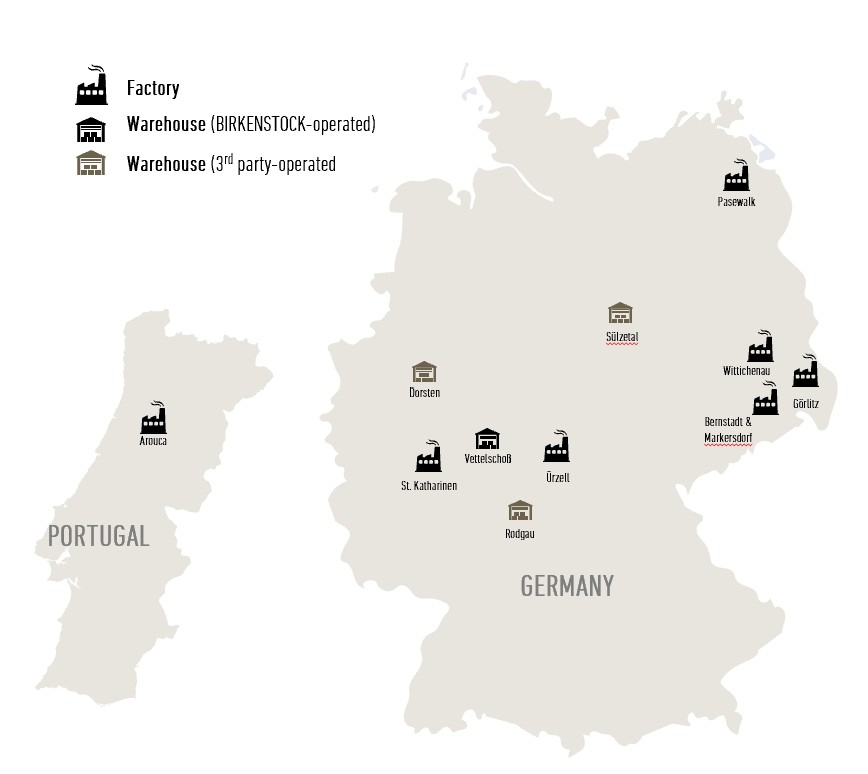
We operate six manufacturing facilities in Germany and one component manufacturing facility in Portugal. We own our St. Katharinen, Görlitz, Bernstadt and Pasewalk manufacturing facilities and our component manufacturing facility in Portugal, which have a production space of approximately 32,000, 36,000, 20,000, 37,000 and 7,000 square meters, respectively. In September 2025 we signed a definitive agreement to acquire a manufacturing facility in Wittichenau, Germany, which has a production and logistics space of approximately 78,000 square meters and is expected to become operational, at latest, by the end of fiscal 2027. See also "Note 31—Subsequent events" to our audited consolidated financial statements included in "Item 18—Financial Statements" of this Annual Report. We lease our Ürzell and Markersdorf manufacturing facilities, which have a production space of approximately 15,000 and 6,000 square meters, respectively. While we expect to renew such leases, if we are unable to do so, we believe suitable alternative space will be available to accommodate our operations.

img25995904_0.jpg

17


We also own a distribution center in Germany and we lease office spaces, retail spaces and storage spaces across the regions in which we operate. We continue investing in our operations and expect that our administrative, manufacturing and distribution facilities will be able to accommodate substantial growth of our operations for the foreseeable future. For information about future investments into capital expenditures, see "Item 5. Operations and Financial Review and Prospects—B. Liquidity and Capital Resources—Capital Expenditures." For information about historical investments into capital expenditures see "Note 9—Property, plant and equipment" to our audited consolidated financial statements included in "Item 18—Financial Information" of this Annual Report.


OPERATING RESULTS

Components of our Results of Operations

Revenue

Revenue is primarily recognized from the sale of our products, including sandals, closed-toe silhouettes and other products, such as care essentials and accessories.

We currently distribute across three reporting segments: Americas, EMEA and APAC. Within each segment, we manage a multi-channel distribution strategy, divided between our DTC and B2B channels. Both channels are important to our strategy and provide differentiated economic benefits and insights.

B2B revenue is recognized when control of the goods has been transferred, depending on the agreement with the customer. Following the transfer of control, the customer has the responsibility to sell the goods and bears the risks of obsolescence and loss in relation to the goods.

DTC channel revenue is recognized when control of the goods has been transferred, either upon delivery to e-commerce consumers or at the point of sale in retail stores. Payment of the transaction price is due immediately when the consumer purchases the goods. When the control of goods has transferred, a refund liability recorded in other current financial liabilities and a corresponding adjustment to revenue is recognized for those products expected to be returned. The Company has a right to recover the product when consumers exercise their right of return, which results in recognizing a right to return goods asset included in other current assets and a corresponding reduction to cost of sales.

Other revenue is comprised of revenue not directly allocated to the geographical operating segments, as well as revenue generated by non-product categories. These categories primarily include license revenue from fees paid to us by our licensees in exchange for the use of our trademarks on their products (mainly our sleep systems business). In addition, other revenue consists of revenue from the sale of leather material to our supplier for footbed cuttings/linings, as well as revenue from the sale of recyclable scrap materials from the production process.

Cost of sales

Cost of sales is comprised primarily of raw materials, consumables and supplies, purchased merchandise, personnel costs, internal handling costs, and overhead costs for the production sites. Freight charges for transfer of work-in-progress inventory between production plants, logistical centers and warehouses as well as inbound freight for raw materials are also included in cost of sales. In addition, duties and tariffs are included in cost of sales. Cost of sales reflect the portion of costs which correspond to the units sold in a given period.

Gross profit and gross profit margin

Gross profit is revenue less cost of sales and gross profit margin measures our gross profit as a percentage of revenue.

Selling and distribution expenses

Selling and distribution expenses are comprised of our selling, marketing, product innovation, outbound shipping and handling costs, all transportation and freight costs incurred after the respective point of sale, and supply chain costs. These

18


expenses are incurred to support and expand our wholesale partner relationships, grow brand awareness and deliver our products to B2B partners, e-commerce consumers and retail stores. These expenses include personnel expenses for sales representatives, leasing expenses related to logistical and selling properties, and amortization of customer relationships.

Selling costs generally correlate with revenue recognition timing and, therefore, experience similar seasonal trends to revenue with the exception of retail store costs, which are primarily fixed and incurred evenly throughout the year. As a percentage of revenue, we expect these selling costs to increase modestly as our business evolves. This increase is expected to be driven primarily by the relative growth of our DTC channel, including the investment required to support additional e-commerce sites and retail stores.

Distribution expenses are largely variable in nature and primarily relate to leasing and third-party expenses for warehousing inventories and transportation costs associated with delivering products from distribution centers to B2B partners and end consumers.

General and administrative expenses

General and administrative expenses consist of costs incurred in our corporate service functions, such as costs relating to the finance department, controlling and tax expenses, legal and consulting fees, HR and IT expenses, and global strategic project costs. More specifically, the nature of these costs relates to corporate personnel costs (including salaries, variable incentive compensation and benefits), other professional service costs, rental and leasing expenses for corporate real estate, depreciation and amortization related to software, patents and other rights. General and administrative expenses will increase as we grow as a publicly traded company. We expect these expenses to decrease as a percentage of revenue as we grow due to economies of scale.

Foreign exchange gain/(loss)

The foreign currency exchange gain/(loss) consists primarily of differences in foreign exchange rates between the currencies in which our subsidiaries transact and their functional currencies as measured on the respective transaction date.

Finance costs, net

Finance income represents interest earned from third-party providers and income from the potential revaluation of the embedded derivative of the Notes.

Finance costs are comprised of interest payable to third-party providers for term loan financing arrangements, the Notes, the Vendor Loan, leases, employee benefits, expenses from the potential revaluation of the embedded derivative of the Notes, interest on the TRA, as well as amortization of transaction costs. Finance costs also include interest expenses arising from lease liabilities recognized in accordance with IFRS accounting principles. Finance costs are recognized in the consolidated income statement based on the effective interest method.

Income tax expense

Income tax includes current income tax and deferred income tax. Income tax is recognized in profit and loss except to the extent that it relates to items recognized in equity or other comprehensive income in which case the income tax expense is also recognized in equity or other comprehensive income. We are subject to income taxes in the jurisdictions in which we operate and, consequently, income tax expense is a function of the allocation of taxable income by jurisdiction and the various activities that impact the timing of taxable events. Our subsidiaries in Germany and the U.S. primarily determine the effective tax rate.


FACTORS AFFECTING PERFORMANCE AND TREND INFORMATION

Tariffs and Changes in International Trade Policy

Materials and products imported into the EU, the United States and other countries are subject to import duties. Any recently imposed, new or increased tariffs or other trade barriers, including by the U.S. administration during fiscal 2025, could

19


adversely affect consumer behavior and demand for our products, negatively impact our ability to manage inventory or dampen economic growth or lead to a recession in certain countries or globally. While we produce all our footwear products in the EU, our Americas segment (which comprises the U.S. market) accounts for a significant portion of our revenue. In fiscal 2025 we experienced and expect to continue to experience increased adverse foreign currency fluctuations, which we attribute, in part, to the significant uncertainty surrounding the global trade environment. Based on the current landscape, and all other factors remaining constant, we expect the tariffs to result in an increase in our cost of sales, and therefore impact our gross profit margin, Adjusted EBITDA margin and net profit margin in the year ending September 30, 2026. We have several levers to respond to, and mitigate, the expected direct impact of the enacted tariffs and any additional tariffs on the Company’s business and financial results, including through negotiations with suppliers, price increases, optimization of the product and geographic mix, maintaining a robust inventory position and use of efficiencies and economies of scale in production.

Our Adjusted EBITDA margin reduced to 32.1% for the three months ended March 31, 2026, from 34.8% for the three months ended March 31, 2025. Although the improved capacity absorption in our manufacturing facilities, sales price adjustments net of inflations and other factors had a net positive impact of approximately 0.6% on our Adjusted EBITDA margin, this impact was offset by negative impact of approximately 3.3% attributable to incremental U.S. tariffs (which are legally capped and set to expire on July 24, 2026) and unfavorable USD translation in the Americas and APAC segments.


20


Signatures

Pursuant to the requirements of the Securities Exchange Act of 1934, the registrant has duly caused this report to be signed on its behalf by the undersigned, thereunto duly authorized.


Birkenstock Holding plc


Date: June 16, 2026


By:_/s/ Ruth Kennedy____________


Name: Ruth Kennedy


Title: Director


21