Please wait
0001996810DEF 14AFALSEiso4217:USDxbrli:pure00019968102025-01-012025-12-3100019968102024-01-012024-12-310001996810ecd:EqtyAwrdsInSummryCompstnTblForAplblYrMemberecd:PeoMember2025-01-012025-12-310001996810ecd:EqtyAwrdsInSummryCompstnTblForAplblYrMemberecd:NonPeoNeoMember2025-01-012025-12-310001996810ecd:YrEndFrValOfEqtyAwrdsGrntdInCvrdYrOutsdngAndUnvstdMemberecd:PeoMember2025-01-012025-12-310001996810ecd:YrEndFrValOfEqtyAwrdsGrntdInCvrdYrOutsdngAndUnvstdMemberecd:NonPeoNeoMember2025-01-012025-12-310001996810ecd:ChngInFrValOfOutsdngAndUnvstdEqtyAwrdsGrntdInPrrYrsMemberecd:PeoMember2025-01-012025-12-310001996810ecd:ChngInFrValOfOutsdngAndUnvstdEqtyAwrdsGrntdInPrrYrsMemberecd:NonPeoNeoMember2025-01-012025-12-310001996810ecd:VstngDtFrValOfEqtyAwrdsGrntdAndVstdInCvrdYrMemberecd:PeoMember2025-01-012025-12-310001996810ecd:VstngDtFrValOfEqtyAwrdsGrntdAndVstdInCvrdYrMemberecd:NonPeoNeoMember2025-01-012025-12-310001996810ecd:ChngInFrValAsOfVstngDtOfPrrYrEqtyAwrdsVstdInCvrdYrMemberecd:PeoMember2025-01-012025-12-310001996810ecd:ChngInFrValAsOfVstngDtOfPrrYrEqtyAwrdsVstdInCvrdYrMemberecd:NonPeoNeoMember2025-01-012025-12-310001996810ecd:FrValAsOfPrrYrEndOfEqtyAwrdsGrntdInPrrYrsFldVstngCondsDrngCvrdYrMemberecd:PeoMember2025-01-012025-12-310001996810ecd:FrValAsOfPrrYrEndOfEqtyAwrdsGrntdInPrrYrsFldVstngCondsDrngCvrdYrMemberecd:NonPeoNeoMember2025-01-012025-12-310001996810ecd:AggtChngPnsnValInSummryCompstnTblForAplblYrMemberecd:PeoMember2025-01-012025-12-310001996810ecd:AggtChngPnsnValInSummryCompstnTblForAplblYrMemberecd:NonPeoNeoMember2025-01-012025-12-310001996810ecd:PnsnAdjsSvcCstMemberecd:PeoMember2025-01-012025-12-310001996810ecd:PnsnAdjsSvcCstMemberecd:NonPeoNeoMember2025-01-012025-12-310001996810ecd:PnsnAdjsPrrSvcCstMemberecd:PeoMember2025-01-012025-12-310001996810ecd:PnsnAdjsPrrSvcCstMemberecd:NonPeoNeoMember2025-01-012025-12-310001996810ecd:PeoMember2025-01-012025-12-310001996810ecd:NonPeoNeoMember2025-01-012025-12-31000199681012025-01-012025-12-31000199681022025-01-012025-12-31000199681032025-01-012025-12-31
UNITED STATES
SECURITIES AND EXCHANGE COMMISSION
WASHINGTON, D.C. 20549
___________________________________
SCHEDULE 14A
Proxy Statement Pursuant to Section 14(a) of
the Securities Exchange Act of 1934
(Amendment No. )
___________________________________
Filed by the Registrant ☒
Filed by a Party other than the Registrant ☐
Check the appropriate box:
| | | | | |
☐ | Preliminary Proxy Statement |
| |
☐ | Confidential, for Use of the Commission Only (as permitted by Rule 14a-6(e)(2)) |
| |
☒ | Definitive Proxy Statement |
| |
☐ | Definitive Additional Materials |
| |
☐ | Soliciting Material Pursuant to §240.14a-12 |
GE Vernova Inc.
_________________________________________________________________________________________________
(Name of Registrant as Specified In Its Charter)
_________________________________________________________________________________________________
(Name of Person(s) Filing Proxy Statement, if other than the Registrant)
Payment of Filing Fee (Check all boxes that apply):
| | | | | | | | | | | | | | |
☒ | | No fee required. |
☐ | | Fee paid previously with preliminary materials. |
☐ | | Fee computed on table in exhibit required by Item 25(b) per Exchange Act Rules 14a-6(i)(1) and 0-11 |
| | | | | |
| GE VERNOVA BOARD OF DIRECTORS |
|
From left to right
Nicholas K. Akins, Martina Hund-Mejean, Steve Angel, Paula Rosput Reynolds, Arnold W. Donald, Scott Strazik, Matthew Harris, Kim K.W. Rucker, Jesus Malave
| | | | | | | | |
April 3, 2026 Fellow Stockholders: On behalf of GE Vernova’s Board of Directors, I am pleased to invite you to our 2026 Annual Meeting of Stockholders. The annual meeting will be held virtually and details for attending and an overview of the matters expected to be acted upon at the meeting are described in the accompanying Notice of 2026 Annual Meeting of Stockholders and Proxy Statement. GE Vernova’s clear mission is to electrify to thrive and decarbonize. The GE Vernova Board is uniquely equipped to enable this mission, with proven leadership across energy, infrastructure, policy, risk management, supply chain, sustainability, and capital allocation, along with extensive experience at global public companies. The Board and its committees are purpose-built to oversee strategy, performance, and risk during a major transformation of the global energy system. Lean is embedded in GE Vernova’s culture and drives operational execution every day. In 2025, we continued to go to Genba - or the point of impact. The Board visited GE Vernova locations in Cambridge, Massachusetts; our manufacturing facility in Greenville, South Carolina; and Washington, D.C. The Board also traveled to Power and Wind customers near Dallas, Texas. We believe there is no better way to demonstrate our engagement than spending time with the GE Vernova team and customers at Genba. GE Vernova continues its journey as an essential company helping to accelerate the path to more reliable, affordable, sustainable, and secure energy. The rapidly growing global demand for electricity is a unique opportunity for GE Vernova, and our Board is focused on supporting the GE Vernova team to serve this market on a global scale. | | GE Vernova is operating from a position of financial strength. In 2025, we delivered $38B in revenue, $4.9B in net income, and $3.2B in Adjusted EBITDA*, up 9%, 213% and 57%* respectively over 2024. Additionally, GE Vernova recorded $59B in orders in 2025, growing the backlog to a record $150B, ensuring continued strong growth for years to come. The Board remains committed to generating significant value for shareholders. GE Vernova executed on its capital allocation principles starting with an investment grade balance sheet and returning at least one-third of cash generation to shareholders after investing for organic growth and targeted M&A. This included the acquisition of the remaining fifty percent stake of our joint venture, Prolec GE, for $5.3B, which closed in February 2026. In 2025, we returned $3.6B to shareholders through share repurchases and dividends. Given our strong cash generation and growth trajectory, in December, we doubled our annual dividend to $2 per share and increased our buyback authorization from $6B to $10B. GE Vernova is well-positioned as a leader in electric power and our Board remains focused on supporting the business and executing on our commitment to effective governance. We are grateful to have the opportunity to build productive relationships with our shareholders and receive feedback on our corporate governance and compensation practices. On behalf of the Board of Directors and our leadership team, I would like to express our appreciation for your continuing support and confidence in GE Vernova. Sincerely, 
Steve Angel
Chair* Non-GAAP financial measure. See Appendix for additional information. |
| | | | | |
| NOTICE OF 2026 ANNUAL MEETING OF STOCKHOLDERS |
|
Date and Time
Wednesday, May 20, 2026 8:00 AM ET
Location
Live Webcast at:
www.virtualshareholdermeeting.com/GEV2026
Who Can Vote
Stockholders of record at the close of business on March 23, 2026 are entitled to vote.
How to Vote
Internet
At the website listed on the Notice of Internet Availability, proxy form or voting instruction form you received.
Telephone
Call the telephone number provided on the proxy form or voting instruction form you received.
Mail
Mark, date and sign your proxy form or voting instruction form and return it in the accompanying postage prepaid envelope.
| | | | | | | | |
| Important notice regarding the availability of proxy materials for the annual meeting of stockholders to be held on May 20, 2026: The 2026 Proxy Statement and 2025 Annual Report are available at www.gevernova.com/investors/annual-meeting. | |
We welcome and encourage you to attend GE Vernova’s 2026 Annual Meeting of Stockholders (Annual Meeting), which will be conducted exclusively online through a live audio webcast to facilitate stockholder attendance and to enable stockholders to participate fully and equally, regardless of size of holdings, resources or physical location. Our 2025 Annual Report, which is not part of the proxy soliciting materials, is enclosed if the proxy materials were mailed to you, and is also available online at www.gevernova.com/investors/annual-meeting. A Notice of Internet Availability of Proxy Materials or a printed copy of the proxy materials were first sent to stockholders on or about April 3, 2026.
Voting Matters and Board Recommendations
You will be asked at our Annual Meeting to:
Stockholders will consider and act upon the four proposals noted above and any other matters that may properly come before the meeting. Your vote is important. Please vote your proxy at your earliest convenience to ensure the presence of a quorum at the meeting. Promptly voting your proxy in accordance with the instructions will save the expense of additional solicitation.
Whether or not you plan to attend the Annual Meeting, we encourage you to vote and submit your proxy in advance of the meeting by one of the methods described on the left. See Meeting Information beginning on page 88 for additional information regarding accessing the Annual Meeting and how to vote your shares. Sincerely,
Lola F. LinChief Legal Officer and Secretary
April 3, 2026
| | | | | | | | | | | |
| | | |
| Frequently requested items |
|
| | | |
| | | |
| | | |
| | | |
| | | |
| | | |
| | | |
| | | |
| | | |
See page 92 for more information on forward-looking statements. Information in this proxy statement is as of the date of filing, unless otherwise noted.
GE Vernova Inc. (the Company, GE Vernova, our, we, or us) is a global leader in the electric power industry, with products and services that generate, transfer, orchestrate, convert, and store electricity. We design, manufacture, deliver, and service technologies to create a more reliable, secure, and sustainable electric power system, enabling electrification and decarbonization, underpinning the progress and prosperity of the communities we serve. We are a purpose-built company, positioned with a unique scope and scale of solutions to help accelerate the energy transition, while servicing and growing our installed base and strengthening our own profitability and stockholder returns. We have a strong history of innovation, which is a key strength enabling us to meet our customers’ needs.
The breadth of our portfolio also enables us to provide an extensive range of technologies and integrated solutions to help advance our customers’ energy and sustainability goals. Our installed base generates approximately 25% of the world’s electricity. We build, modernize, and service power systems to help our customers electrify their operations and economies, meet power demand growth, improve system reliability and resiliency, and navigate the energy transition through limiting and reducing emissions. The portfolio of equipment and services that we deliver is diversified across technology types and is adaptable based on electric power market conditions and demand.
| | | | | | | | | | | | | | | | | |
| ELECTRIFY TO THRIVE AND DECARBONIZE |
|
| | | | | |
| Serving the vital energy transition market with multi-decade growth | | Executing with sustainability, innovation & lean at our core | | Delivering disciplined growth to drive margin expansion, higher free cash flow* & strategic capital allocation |
Our strategy
GE Vernova is positioned as an industry leader to fulfill the growing demand for electrical power, while driving the energy transition forward. Our focus is on supplying our customers with products and services necessary to deliver reliable, affordable, and sustainable electricity. We expect significant growth in demand for the offerings we provide to the electric power industry.
| | | | | | | | | | | | | | |
| | | | |
| Our company strategy is focused on: •Delivering on global sustainability, by developing, providing, and servicing technologies that enable electrification and decarbonization. •Maintaining and enhancing strong relationships with many of the leading and largest utilities, developers, governments, and electricity users. •Servicing the existing installed base and delivering new technologies and processes, which improve customer outcomes while driving increased profitability and cash flow. •Improving margins and lowering risk through better underwriting. | | •Streamlining our product portfolio to focus on core workhorse products, which will improve both cost and quality going forward. •Using Lean to improve our cost structure and productivity levels across our business and corporate functions. •Innovating and investing, along with third parties, in new offerings and technologies that will help customers electrify and decarbonize the world. •Allocating capital as a whole and within our various businesses – focused on generating cash flow to invest in our core businesses, invest in targeted mergers and acquisitions (M&A), and return at least 1/3 of cash generation to our stockholders. | |
| | | | |
* Non-GAAP financial measure. See Appendix for additional information.
| | | | | | | | | | | |
| | | |
| 2025 Highlights | |
| | |
| $59B Orders | $38B Revenue | |
| | | |
| $5.0B Cash from operating activities | $3.7B Free Cash Flow* | |
| | | |
| +830 Basis points of net income margin expansion | +210 Basis points of adjusted organic EBITDA* margin expansion | |
| | | |
| $150B Backlog(1) | ~25% of the world’s electricity generated using our technology | |
| | | |
| 5GW Onshore Wind equipment orders | $30.5B Electrification equipment backlog(1) | |
| | | |
| 83GW Gas Power equipment backlog(1) and slot reservation agreements | |
| | | |
* Non-GAAP financial measure. See Appendix for additional information.
(1)Backlog defined on a remaining performance obligation (RPO) basis.
GE Vernova segments
| | | | | | | | | | | | | | | | | | | | | | | | | | |
| | | | | | | | |
| POWER Gas Power, Nuclear Power, Hydro Power, Steam Power Strong, growing free cash flow* •Services strength •Growing, more profitable equipment •Decarbonization technologies | | | WIND Onshore Wind, Offshore Wind, LM Wind Power Significant margin expansion •Lead in quality •Workhorse products •Executing Offshore Wind backlog | | | ELECTRIFICATION Grid Solutions, Power Conversion & Storage, Electrification Software Accelerating profitable growth •Growing backlog •Electrify industrials •Best-in-class software | |
| | | | | |
| | | | | | | | |
| | | | | | | | |
| $94.4B backlog(1) (74% services) $19.8B revenue | | | $21.6B backlog(1) (58% services) $9.1B revenue | | | $34.7B backlog(1) (12% services) $9.6B revenue | |
| | | | | | | | |
ACCELERATORS
In addition to GE Vernova’s Power, Wind, and Electrification segments, we maintain other businesses and capabilities in our corporate headquarters that support our customers, policy makers, and our businesses. Advanced Research consists of strong, interdisciplinary teams working to solve the power industry’s toughest problems and create differentiated technologies that deliver winning products and services in the marketplace. Our team of researchers at our Advanced Research facilities in Niskayuna, NY and Bangalore, India, partner with governments, our businesses, and external partners to innovate and accelerate the energy transition. Financial Services offers project development and financial solutions to projects utilizing our products and services through a wide range of investing and structuring activities. Consulting Services includes power systems experts focused on solving the world’s toughest technical and economic problems, enabling technology integration, and helping to shape the energy transition.
* Non-GAAP financial measure.
(1)Backlog defined on a remaining performance obligation (RPO) basis.
| | | | | | | | |
1 | | |
| |
Election of our Class II Directors for a Three-year Term Expiring at our 2029 Annual Meeting |
| |
| |
The Board recommends a vote FOR each director nominee. | |
| |
Director nominees
The Board recommends a vote FOR each Class II director nominee.
| | | | | | | | | | | | | | |
| Class II Director Nominees | | |
| | | | |
Matthew Harris | 65
Director since: 2024 INDEPENDENT Founding Partner, Global Infrastructure Partners Committees:
Audit
Safety and Sustainability Other Public Boards:
None | | Martina Hund-Mejean | 65
Director since: 2024 INDEPENDENT Former Chief Financial Officer, MasterCard Inc. Committees:
Audit (Chair)
Compensation and Human Capital Other Public Boards:
Prudential Financial, Inc.,
Colgate-Palmolive Company | | Paula Rosput Reynolds | 69
Director since: 2024 INDEPENDENT President and Chief Executive Officer, PreferWest, LLC Committees:
Audit
Safety and Sustainability (Chair) Other Public Boards:
Linde, National Grid UK (Chair) |
Continuing directors
| | | | | | | | | | | | | | |
| Class I Directors whose terms expire in 2028 | | |
| | | | |
Steve Angel | 70
Director since: 2024 INDEPENDENT,
NON-EXECUTIVE CHAIR President and Chief Executive Officer, CSX Corp. Committees:
Nominating and Governance Other Public Boards:
CSX Corp. | | Arnold W. Donald | 71
Director since: 2024 INDEPENDENT Former President and Chief Executive Officer, Carnival Corporation & plc Committees:
Compensation and Human Capital (Chair)
Nominating and Governance Other Public Boards:
Bank of America Corporation, MP Materials Corp., Salesforce, Inc. | | Jesus Malave | 57
Director since: 2024 INDEPENDENT Chief Financial Officer, Boeing Committees:
Audit
Compensation and Human Capital Other Public Boards:
None |
| | | | | | | | | | | | | | |
| Class III Directors whose terms expire in 2027 | | |
| | | | |
Nicholas K. Akins | 65
Director since: 2024 INDEPENDENT Former Executive Chair, American Electric Power Company, Inc. Committees:
Nominating and Governance (Chair)
Safety and Sustainability Other Public Boards:
DTE Energy Company,
Fifth Third Bancorp | | Kim K.W. Rucker | 59
Director since: 2024 INDEPENDENT Former Executive Vice President, General Counsel and Secretary, Andeavor (formerly Tesoro Corp.) Committees:
Audit
Compensation and Human Capital Other Public Boards:
Celanese Corporation, HP Inc.,
Marathon Petroleum Corporation | | Scott Strazik | 47
Director since: 2024
CHIEF EXECUTIVE OFFICER AND PRESIDENT Chief Executive Officer and President, GE Vernova Committees:
None Other Public Boards:
None |
Director skills and qualifications
Director Skills
| | | | | | | | | | | | | | |
Technology & Innovation | | Manufacturing & Operations | | Human Capital |
| | | | |
| | | | |
Energy | | Risk Management | | Executive Experience |
| | | | |
| | | | |
| Finance & Accounting | | Safety | | Sustainability |
| | | | |
Board profile
Independence
| | | | | | | | |
| 8 | | Independent |
| 1 | | Not Independent |
Demographics
| | | | | | | | |
| 3 | | Female |
| 6 | | Male |
| 3 | | Black / Latino |
Age
| | | | | | | | |
| 1 | | <50 years |
| 5 | | 50-65 years |
| 3 | | >65 years |
| | | | | | | | |
2 | | |
|
|
Advisory (Non-binding) Vote to Approve the Compensation of our NEOs (Say-on-pay) |
| |
| |
The Board recommends a vote FOR this proposal. | |
| |
Our executive compensation policies are designed to attract and retain executive talent by providing competitive levels of compensation that align pay with performance. Consistent with our compensation philosophy, we take a market-based approach to establishing competitive compensation levels. Additionally, we use both short- and long-term performance-based compensation to align compensation with our financial performance and stockholder returns. The Compensation and Human Capital Committee (CHCC) provides ongoing oversight of our executive compensation program, ensuring it continuously aligns with our compensation philosophy and strategic business objectives, while also accounting for market-based insight and stockholder perspectives.
| | | | | |
2025 CEO
Target Compensation | 2025 Other NEO Avg.
Target Compensation |
| |
Compensation best practices
| | | | | | | | |
3 | | |
| |
Ratification of the Appointment of Deloitte & Touche LLP as Our Independent Auditor for the Fiscal Year Ending December 31, 2026 |
| |
| |
The Board recommends a vote FOR this proposal. | |
| |
| | | | | | | | |
4 | | |
| |
Stockholder Proposal Requesting Report Assessing Sustainability Goals on the Basis of Net-Present-Value and Return-on-Investment Calculation |
| |
| |
The Board recommends a vote AGAINST this proposal. | |
| |
| | | | | | | | | | | | | | | | | | | | | | | | | | | | | |
| | | | | | | | | |
PROPOSAL 1: |
|
| | | | | | | | | |
| | | | | | | | | |
ELECTION OF OUR CLASS II DIRECTORS FOR A THREE-YEAR TERM EXPIRING AT OUR 2029 ANNUAL MEETING Proposal Summary Our Board currently consists of nine directors. Until the conclusion of the 2029 annual meeting of stockholders, our Board is divided into three classes, with each class consisting of one-third of the total number of directors. The directors designated as Class II directors have terms expiring at the 2026 annual meeting of stockholders. The Nominating and Governance Committee recommended and the Board nominated the following three incumbent Class II directors for election at the Annual Meeting to hold office until the 2029 annual meeting of stockholders (2029 Annual Meeting) or until their successors have been elected and qualified. | |
| | | | | | | | | |
| | | | | | | | | |
| | | | | | | | | |
| | | | | | | | | |
| | Matthew Harris | | | Martina Hund-Mejean | | | Paula Rosput Reynolds | |
| | | | | | | | | |
| | | | | | | | | |
On April 2, 2024, we completed the spin-off from General Electric Company (GE), which now operates as GE Aerospace (Spin-Off), and became an independent, publicly traded company. Prior to the Spin-Off, GE’s board of directors determined that GE Vernova would initially have a classified board of directors that would “sunset” by 2029, which means that all directors will be elected annually by the 2029 Annual Meeting. This structure is intended to maintain continuity of leadership at the Board level during GE Vernova’s first years of operation as an independent, publicly held company. Our Class III directors have terms expiring at the 2027 annual meeting of stockholders and our Class I directors have terms expiring at our 2028 annual meeting of stockholders. Commencing with the 2026 annual meeting of stockholders, directors of the class standing for election will be elected to hold office for a term of office to expire at the 2029 Annual Meeting. Commencing with the 2029 Annual Meeting, all directors will be elected annually and will hold office until the next annual meeting of stockholders. Effective as of the conclusion of the 2029 Annual Meeting, our Board will no longer be divided into three classes. | |
Our Board will be Fully Declassified by the 2029 Annual Meeting | |
| | | | | | | | | |
| | | | | | | | | |
The Board recommends a vote FOR the election of Matthew Harris, Martina Hund-Mejean and Paula Rosput Reynolds | |
| | | | | | | | | |
| | | | | | | | | |
Proposal 1: Election of our Class II Directors for a Three-Year Term Expiring at our 2029 Annual Meeting
Director profile
Independence
| | | | | | | | |
| 8 | | Independent |
| 1 | | Not Independent |
Demographics
| | | | | | | | |
| 3 | | Female |
| 6 | | Male |
| 3 | | Black / Latino |
Age
| | | | | | | | |
| 1 | | <50 years |
| 5 | | 50-65 years |
| 3 | | >65 years |
Director nominations
Based on the recommendation of the Nominating and Governance Committee, the Board proposes a slate of nominees to the stockholders for election to the Board. Stockholders may recommend nominees for consideration by the Nominating and Governance Committee by submitting the names and supporting information concerning the potential candidate’s qualifications to: Corporate Secretary, GE Vernova, 58 Charles Street, Cambridge, MA 02141. The size of the Board consists of such number of directors as shall be determined from time to time solely by resolution of the Board. Prior to the 2029 annual meeting, any director elected to fill a newly created directorship between annual meetings, which results from an increase in the number of directors, will hold office for a term that coincides with the remaining term of the class of directors to which he/she is elected, and any director elected to fill a vacancy not resulting from an increase in the number of directors will have the same remaining term as that of his/her predecessor. Starting after the 2029 annual meeting, the Board may elect directors to serve until the next annual meeting of stockholders. In addition to considering candidates recommended by stockholders, the Nominating and Governance Committee considers potential candidates recommended by current directors, Company officers, employees and others, including by retention of an executive recruiting firm. The committee considers all potential candidates in the same manner regardless of the source of the recommendation.
Furthermore, as described under “Self-Evaluation,” the Board assesses its effectiveness annually through evaluation at the Board and committee levels of the effectiveness of the directors and their ability to work as a team in the long-term interests of the Company. As part of this evaluation process, the Board discusses the skills and experience of current Board members as well as skills and experience of directors needed in the future to align with the evolution of the Company’s strategy.
The Board does not believe that directors should expect to be renominated at the end of their respective terms. The annual board self-evaluation process is a determinant for board tenure. Additionally, directors will not be nominated for election to the Board after their 75th birthday, except in special circumstances.
IMPORTANT FACTORS IN ASSESSING BOARD COMPOSITION
The Nominating and Governance Committee assists the Board in identifying qualified individuals to become Board members, making recommendations on the composition of the Board and its committees, monitoring a process to assess Board effectiveness, developing and implementing the Company’s Governance Principles, overseeing risks related to the Company’s governance structure, and overseeing other issues of significance that affect investors and other key stakeholders. The Nominating and Governance Committee considers a wide range of factors when selecting and recruiting director candidates, including independence, a variety of views and experience, qualifications, skills, experience, and background.
Proposal 1: Election of our Class II Directors for a Three-Year Term Expiring at our 2029 Annual Meeting
The Board and the Nominating and Governance Committee work together to provide that the members of the Board as a whole, and the committees independently, possess the skills, experience, and commitment to effectively administer their oversight responsibilities and to align with the Company’s strategy. Directors should possess leadership experience; the highest personal and professional ethics, integrity, and values; a passion for learning; a sense of priorities and balance; talent development experience; and commitment to representing the long-term interests of our stockholders. They must also have an inquisitive and objective perspective, practical wisdom, and mature judgment. We endeavor to have a Board that represents a range of experience at policymaking levels in business, government, education, and technology, and deep domain expertise in areas that are relevant to the Company’s global activities, as well as various demographic attributes. The Nominating and Governance Committee assesses its effectiveness in this regard as part of the annual self-evaluation process.
OVERBOARDING
Our directors must be willing to devote sufficient time to carrying out their duties and responsibilities effectively and should be committed to serve on the Board for an extended period of time.
Directors who also serve as executive officers of public companies should not serve on more than one board of a public company in addition to the GE Vernova Board. Other directors should not serve on more than three other boards of public companies in addition to the GE Vernova Board, absent special circumstances, such as a period of transition. Service by a director on the board of a public company for which he or she serves as an executive officer, together with service on the board of any public company subsidiary or public affiliates as part of the director’s executive responsibilities shall count as one board for purposes of this limit. Members of the Audit Committee should not serve on more than three audit committees of public companies (including the Company’s Audit Committee), unless the member is a retired certified public accountant, CFO, controller or has similar experience, in which case the limit for such member shall be four public company audit committees (including the Company’s Audit Committee) if the Board affirmatively determines that such service does not impair service on the Company’s Audit Committee.
Proposal 1: Election of our Class II Directors for a Three-Year Term Expiring at our 2029 Annual Meeting
Director skills
The directors on our Board were selected because they bring a strong mix of domain expertise, varied perspectives, and leadership experience to help GE Vernova lead the energy transition. Collectively, our Board has over a century of energy experience. The skills matrix below is intended as a high-level summary.
| | | | | | | | | | | | | | | | | | | | | | | | | | | | | | | | |
| | Steve
Angel | Nicholas
K. Akins | Arnold
W.
Donald | Matthew
Harris | Jesus
Malave | Martina
Hund-
Mejean | Paula
Rosput
Reynolds | Scott
Strazik | Kim K. W.
Rucker |
| | | | | | | | | | |
| | | | | | | | | | |
| Technology & Innovation | | | | l | l | l | | | |
| | | | | | | | | | |
| | | | | | | | | | |
| Manufacturing & Operations | l | l | l | | l | | | l | |
| | | | | | | | | | |
| | | | | | | | | | |
| Human Capital | l | l | l | | l | l | l | l | l |
| | | | | | | | | | |
| | | | | | | | | | |
| Energy | l | l | | l | | | l | l | l |
| | | | | | | | | | |
| | | | | | | | | | |
| Risk Management | l | l | l | | l | l | l | l | l |
| | | | | | | | | | |
| | | | | | | | | | |
| Executive Experience | l | l | l | l | l | l | l | l | l |
| | | | | | | | | | |
| | | | | | | | | | |
| Finance & Accounting | | | l | l | l | l | l | l | l |
| | | | | | | | | | |
| | | | | | | | | | |
| Safety | l | l | l | | l | | l | l | |
| | | | | | | | | | |
| | | | | | | | | | |
| Sustainability | l | l | | l | | | l | | |
| | | | | | | | | | |
| | | | | | | | | | |
| Demographics | | | | | | | | | |
| | | | | | | | | | |
| | | | | | | | | | |
| Age | 70 | 65 | 71 | 65 | 57 | 65 | 69 | 47 | 59 |
| | | | | | | | | | |
| | | | | | | | | | |
Tenure (years) | 2 | 2 | 2 | 2 | 2 | 2 | 2 | 2 | 2 |
| | | | | | | | | | |
Proposal 1: Election of our Class II Directors for a Three-Year Term Expiring at our 2029 Annual Meeting
Director biographies
Class II Director Nominees
| | | | | | | | | | | | | | | | | | | | |
| | | | | | |
| | Matthew Harris | 65 Founding Partner, Global Infrastructure Partners Independent |
| Director Since: April 2024 | Committees: Audit Safety and Sustainability |
| | | | | | |
| | | | | | |
| Skills |
| | Energy | | | Technology & Innovation |
| | Executive Experience | | | Finance & Accounting |
| | Sustainability | | | |
| | | | | | |
| Qualifications |
| Mr. Harris has spent his career working in the infrastructure and energy investment industry, including having been a founder of Global Infrastructure Partners, an infrastructure investment firm, where he was involved in that firm’s investment, management, and strategic activities. Those roles included global energy transition and decarbonization investment and capital formation strategy and energy industry investment activities. |
| | | | | | |
| Experience |
| Founding Partner, Global Infrastructure Partners (GIP), an infrastructure investment firm (Since 2006) Co-Head of the Global Energy Group and Head of the EMEA Emerging Markets Group, Credit Suisse First Boston (1994-2005) Senior member of the Mergers and Acquisitions Group, Kidder Peabody & Co. Incorporated (1984-1994) |
| | | | | | |
| Current Public Company Boards |
| GE Vernova |
| | | | | | |
| Past Public Company Boards |
| EnLink Midstream LLC Hess Midstream Partners |
| | | | | | |
| Other Positions |
| Chairman of the Advisory Board, Columbia University Center for Global Energy Policy Member, Columbia University Climate School Advisory Board Member, UCLA College of Social Sciences Dean’s Advisory Board Director, Pioneer Works Director, World Wildlife Fund |
| | | | | | |
| Education |
| Bachelor’s degree in political science from University of California at Los Angeles |
| | | | | | | | | | | | | | | | | | | | |
| | | | | | |
| | Martina Hund-Mejean | 65 Former Chief Financial Officer, MasterCard Inc. Independent |
| Director Since: May 2024 | Committees: Audit (Chair) Compensation and Human Capital |
| | |
| | | | | | |
| Skills |
| | Finance & Accounting | | | Executive Experience |
| | Risk Management | | | Technology & Innovation |
| | Human Capital | | | |
| | | | | | |
| Qualifications |
| Ms. Hund-Mejean has served in senior financial leadership roles for much of her career in large, publicly-traded companies. Those roles also included significant responsibilities for strategy, M&A, business integration, operations, technology, and risk management. She also has extensive experience in leadership roles on public company boards of large financial, consumer and energy companies. |
| | | | | | |
| Experience |
| Chief Financial Officer, MasterCard Inc., a technology company in the global payments industry (2007 – 2019) Senior Vice President and Treasurer, Tyco International Ltd. (2002 – 2007) Senior Vice President and Treasurer, Lucent Technologies Inc. (2000 – 2002) Held multiple finance positions of increasing responsibility, General Motors Company (1988-2000) |
| | | | | | |
| Current Public Company Boards |
| GE Vernova Prudential Financial, Inc. Colgate-Palmolive Company |
| | | | | | |
| Past Public Company Boards |
| Shell PLC |
| | | | | | |
| Other Positions |
| Current Board trustee and Former Chair, Darden School Foundation Board of Trustees at the University of Virginia Member, Council of Foreign Relations & American Council on Germany Chair, Mastercard Impact Fund |
| | | | | | |
| Education |
| Master’s degree in economics from University of Freiburg, Germany M.B.A. from the Darden School at The University of Virginia |
Proposal 1: Election of our Class II Directors for a Three-Year Term Expiring at our 2029 Annual Meeting
Class II Director
Nominees (Cont.)
| | | | | | | | | | | | | | | | | | | | |
| | | | | | |
| | Paula Rosput Reynolds | 69 President and Chief Executive Officer, PreferWest, LLC Independent |
| Director Since: April 2024 | Committees: Audit Safety and Sustainability (Chair) |
| | | | | | |
| | | | | | |
| Skills |
| | Sustainability | | | Executive Experience |
| | Energy | | | Safety |
| | Human Capital | | | Risk Management |
| | Finance & Accounting | | | |
| | | | | | |
| Qualifications |
| Ms. Reynolds started her career at Pacific Gas & Electric Corp in 1979 and spent over 35 years in the energy industry. We believe Ms. Reynolds is well-qualified to serve on our Board because of her significant leadership experience, energy sector knowledge, and prior experience on other public companies’ boards of directors, including the GE board of directors. |
| | | | | | |
| Experience | |
| President and Chief Executive Officer, PreferWest LLC, a business advisory firm (Since 2009) Vice Chairman and Chief Restructuring Officer, American International Group (2008 – 2009) Chairman, President and CEO, Safeco Insurance Company of America (2005 – 2008) Chairman and CEO, AGL Resources (1998 – 2005) CEO, Duke Energy Power Services (1995 – 1998) |
| | | | | | |
| Current Public Company Boards |
| GE Vernova Linde plc National Grid plc (Chair) |
| | | | | | |
| Past Public Company Boards |
| CBRE Group, Inc. Coca-Cola Enterprises BAE Systems plc BP plc Delta Air Lines, Inc. GE TC Energy Corporation (formerly TransCanada Corporation) |
| | | | | | |
| Other Positions |
| Trustee, the Eureka Foundation | |
| | | | | | |
| Education |
| Bachelor’s degree from Wellesley College |
Class I Directors
| | | | | | | | | | | | | | | | | | | | |
| | | | |
| | Steve Angel | 70 President and Chief Executive Officer, CSX Corp. Independent, Non-Executive Chair |
| Director Since: April 2024 | Committees: Nominating and Governance
|
| | |
| | | | | | |
| Skills |
| | Safety | | | Executive Experience |
| | Manufacturing & Operations | | | Sustainability |
| | Energy | | | Risk Management |
| | Human Capital | | | |
| | | | | | |
| Qualifications |
| Mr. Angel has extensive executive, management and operations experience in the energy and industrial industries, including serving as chief executive officer and president of CSX Corp. and having served as chief executive officer of a leading global industrial gases and engineering company. Mr. Angel also has significant public company board experience. |
| | | | | | |
| Experience |
| Chief Executive Officer and President, CSX Corp. (Nasdaq: CSX), a U.S. freight railroad company (Since September 2025) Chief Executive Officer, Linde plc (Nasdaq: LIN), a leading global industrial gases and engineering company (2018 – March 2022) Chairman, President, and Chief Executive Officer, Praxair, Inc. (2007 – October 2018) President and Chief Operating Officer, Praxair, Inc. (2006 – 2007) Executive Vice President, Praxair, Inc. (2001 – 2006) Variety of management positions, GE (1979 – 2001) |
| | | | | | |
| Current Public Company Boards |
| CSX Corp.
GE Vernova |
| | | | | | |
| Past Public Company Boards |
| GE Aerospace Linde plc (Chair) Praxair, Inc. (Chair) PPG Industries, Inc. |
| | | | | | |
| Other Positions |
| Member of the Business Council |
| | | | | | |
| Education |
| Bachelor’s degree in civil engineering from North Carolina State University M.B.A. from Loyola College |
Proposal 1: Election of our Class II Directors for a Three-Year Term Expiring at our 2029 Annual Meeting
Class I Director (cont’d)
| | | | | | | | | | | | | | | | | | | | |
| | | | | | |
| | Arnold W. Donald | 71 Former President and Chief Executive Officer, Carnival Corporation & plc Independent |
| Director Since: April 2024 | Committees: Compensation and Human Capital (Chair) Nominating and Governance |
| | | | | |
| | | | | | |
| Skills |
| | Human Capital | | | Risk Management |
| | Manufacturing & Operations | | | Executive Experience |
| | Safety | | | Finance & Accounting |
| | | | | | |
| Qualifications |
| Mr. Donald has more than three decades of strategic planning, global operations, and risk management experience in regulated, consumer, retail, and distribution businesses, including through his service as President and Chief Executive Officer of one of the world’s largest leisure travel companies with operations worldwide and his extensive experience as a public company director. |
| | | | | | |
| Experience |
| President and Chief Executive Officer, Carnival Corporation & plc (NYSE: CCL), an American and British cruise operator (July 2013 – August 2022) Chief Executive Officer, Merisant Company (2000 – 2003) Chairman, Merisant Company (2000 – 2005) Various senior leadership positions including Co-President of Agricultural Group and President of Nutrition and Consumer Sector, Monsanto (1977 – 2000) |
| | | | | | |
| Current Public Company Boards |
| Bank of America Corporation GE Vernova MP Materials Corp. Salesforce, Inc. |
| | | | | | |
| Past Public Company Boards |
| Carnival Corporation & plc Crown Holdings, Inc. Laclede Group Inc. |
| | | | | | |
| Other Positions |
| Director, Foster Farms |
| | | | | | |
| Education |
| Bachelor’s degree in economics from Carleton College Bachelor’s degree in mechanical engineering from Washington University in St. Louis M.B.A. from the University of Chicago Booth School of Business |
| | | | | | | | | | | | | | | | | | | | |
| | | | | | |
| | Jesus Malave | 57 Chief Financial Officer, The Boeing Company Independent |
| Director Since: April 2024 | Committees: Audit Compensation and Human Capital |
| | | | | | |
| | | | | | |
| Skills |
| | Risk Management | | | Executive Experience |
| | Manufacturing & Operations | | | Finance & Accounting |
| | Human Capital | | | Technology & Innovation |
| | Safety | | | |
| | | | | | |
| Qualifications |
| Mr. Malave has served in senior financial leadership roles for much of his career in large, publicly-traded defense, manufacturing and industrial companies. Those roles have also included significant responsibilities and experience relating to operations and risk management. |
| | | | | | |
| Experience |
| Chief Financial Officer, The Boeing Company, a global aerospace company (NYSE: BA) (Since August 2025) Chief Financial Officer, Lockheed Martin Corporation, an American defense and aerospace manufacturer (NYSE: LMT) (January 2022 - April 2025) Senior Vice President and Chief Financial Officer, L3Harris Technologies, Inc., an American technology company, defense contractor, and information technology services provider (NYSE: LHX) (June 2019 - January 2022) Vice President and Chief Financial Officer, UTC’s Carrier Corporation, RTX Corporation (formerly United Technologies Corporation (UTC)) (April 2018 - June 2019) Chief Financial Officer, Aerospace Systems, UTC (January 2015 - April 2018) |
| | | | | | |
| Current Public Company Boards |
| GE Vernova |
| | | | | | |
| Past Public Company Boards |
| None |
| | | | | | |
| Education |
| Bachelor’s degree in mathematics from the University of Connecticut Master’s degree in accounting from University of Hartford J.D. degree from University of Connecticut School of Law |
Proposal 1: Election of our Class II Directors for a Three-Year Term Expiring at our 2029 Annual Meeting
Class III Directors
| | | | | | | | | | | | | | | | | | | | |
| | | | | | |
| | Nicholas K. Akins | 65 Former Executive Chair, American Electric Power Company, Inc. Independent |
| Director Since: April 2024 | Committees: Nominating and Governance (Chair) Safety and Sustainability |
| | |
| | | | | | |
| Skills |
| | Energy | | | Executive Experience |
| | Manufacturing & Operations | | | Risk Management |
| | Human Capital | | | Sustainability |
| | Safety | | | |
| | | | | | |
| Qualifications |
| Mr. Akins rose through the ranks at both American Electric Power Company, Inc. (AEP) and the former Central and South West Corp., which merged with AEP in 2000. We believe Mr. Akins is well-qualified to serve on our Board because of his extensive leadership experience and energy sector knowledge. |
| | | | | | |
| Experience |
| Executive Chair, American Electric Power Company, Inc., an American domestic electric utility company (Nasdaq: AEP) (January 2023 - October 2023) Chair of the Board of Directors, AEP (January 2014 - December 2022) Chief Executive Officer, AEP (November 2011 - December 2022) President, AEP (January 2011 - December 2022) |
| | | | | | |
| Current Public Company Boards |
| DTE Energy Company Fifth Third Bancorp GE Vernova |
| | | | | | |
| Past Public Company Boards |
| American Electric Power Company, Inc. |
| | | | | | |
| Other Positions |
| Director, Rock and Roll Hall of Fame |
| | | | | | |
| Education |
| Bachelor’s degree in electrical engineering from Louisiana Tech University Master’s degree in electrical engineering from Louisiana Tech University |
| | | | | | | | | | | | | | | | | | | | |
| | | | | | |
| | Kim K.W. Rucker | 59 Former Executive Vice President, General Counsel and Secretary, Andeavor (formerly Tesoro Corp.) Independent |
| Director Since: April 2024 | Committees: Audit Compensation and Human Capital |
| | | | | | |
| | | | | | |
| Skills |
| | Energy | | | Executive Experience |
| | Human Capital | | | Risk Management |
| | Finance & Accounting | | | |
| | | | | | |
| Qualifications |
| Ms. Rucker has extensive experience in legal, regulations, complex transactions, human capital, and risk management gained during the course of her career serving as an executive of large publicly-traded companies, including companies in the energy industry, and having served as partner in a large, international law firm. She also has extensive experience in leadership roles on public company boards in various industries, including the energy industry. |
| | | | | | |
| Experience |
| Executive Vice President, General Counsel and Secretary, Andeavor (formerly Tesoro Corporation), an integrated marketing, logistics, and refining company acquired by Marathon Petroleum Corporation (March 2016 – October 2018) Interim Chief Human Resources Officer, Andeavor (February 2017 - April 2018) Executive Vice President, Corporate & Legal Affairs, General Counsel, and Corporate Secretary, Kraft Foods Group, Inc. (2012 – 2015) Senior Vice President, General Counsel, Corporate Secretary and Chief Compliance Officer, Avon Products, Inc. (2008 - 2012) Senior Vice President, Corporate Secretary and Chief Governance Officer, Energy Future Holdings Corp. (2004 – 2008) Partner in the Corporate & Securities group, Sidley Austin LLP |
| | | | | | |
| Current Public Company Boards |
| Celanese Corporation GE Vernova HP Inc. Marathon Petroleum Corporation |
| | | | | | |
| Past Public Company Boards |
| Lennox International, Inc. |
| |
| Education |
| B.B.A. in Economics from University of Iowa J.D. from Harvard Law School Master’s degree in Public Policy from John F. Kennedy School of Government at Harvard University |
Proposal 1: Election of our Class II Directors for a Three-Year Term Expiring at our 2029 Annual Meeting
Class III Directors (Cont.)
| | | | | | | | | | | | | | | | | | | | |
| | | | | | |
| | Scott Strazik | 47 Chief Executive Officer and President, GE Vernova |
| Director Since: April 2024 | Committees: None |
| | |
| | | | | | |
| Skills |
| | Energy | | | Executive Experience |
| | Risk Management | | | Finance & Accounting |
| | Manufacturing & Operations | | | Safety |
| | Human Capital | | | |
| | | | | | |
| Qualifications |
| Mr. Strazik has more than 25 years of finance, operations, and leadership experience with GE, including more than ten years in GE’s power businesses. We believe Mr. Strazik is qualified to serve as a director given his years of experience in the energy industry and because he is our Chief Executive Officer and President. |
| | | | | | |
| Experience |
| Chief Executive Officer and President, GE Vernova Inc. (Since July 2025) Chief Executive Officer, GE Vernova Inc. (April 2024 - July 2025) Chief Executive Officer, GE Vernova (November 2021 - April 2024) CEO, GE Gas Power business (2018 – October 2021) President and CEO, GE Power Services business (2017 – 2018) Sales and Commercial Operations Leader, GE Gas Power Systems business (July 2016 - October 2017) Chief Financial Officer, GE Gas Power Systems business (July 2013 - June 2016) Chief Financial Officer, GE Aviation’s Commercial Engine Operations organization (May 2011 - June 2013) |
| | | | | | |
| Current Public Company Boards |
| GE Vernova |
| | | | | | |
| Education |
| Bachelor’s degree in industrial labor relations from Cornell University Master’s degree from Columbia University’s School of International and Public Affairs with a focus on Economics and Public Policy |
Board leadership structure
GE Vernova believes that independent board oversight is an essential component of strong corporate performance. We currently have an independent, non-executive Chair of the Board, and believe that the Board should have the flexibility to fashion its independent Board oversight with either an independent Chair or an independent lead director. We do not have policies on whether the positions of Chair and CEO should always be separated and whether an executive or an independent director should serve as the Chair, as we believe the structure should be based upon the needs of the Company at any given time. Maintaining this flexibility allows our Board to choose the leadership structure that will best serve the interests of the Company and its stockholders.
Why Our Board Leadership Structure is Appropriate for GE Vernova at this Time
The Board believes that its current leadership structure is in the best interests of GE Vernova and its stockholders. The Board recognizes that its leadership structure—particularly the combination or separation of the Chief Executive Officer (CEO) and Board Chair roles—is driven by the needs of the Company and its stockholders and that different leadership structures are appropriate for different circumstances. In consultation with the Nominating and Governance Committee, the Chair oversees the Board’s periodic review of the Board’s leadership structure to evaluate whether it remains appropriate for the Company based on its needs. The Board has concluded that this leadership structure, in which the roles of Chair and CEO are separate, continues to be the most appropriate one for the Company.
The Board believes that independent Board leadership is an important component of our governance structure. Our Governance Principles require us to have either an independent Board Chair or, if the positions of Chair and CEO are held by the same person, an independent lead director. The Board believes its current leadership structure of separating the roles of Board Chair and CEO allows our CEO to focus his time and energy on setting the strategic direction for the Company, overseeing daily operations, engaging with external constituents, developing our leaders, building our culture, and promoting employee engagement at all levels of the organization, all of which are critically important as a new public company. Meanwhile, this structure allows our independent Board Chair to lead the Board in the performance of its duties by establishing agendas and ensuring appropriate meeting content, engaging with the CEO and senior leadership team between Board meetings on business developments, and providing overall guidance to our CEO as to the Board’s views and perspectives, particularly on the strategic direction of the Company. The Board also believes this leadership structure, coupled with independent directors serving as Chairs of each of our four Board committees, enhances the Board’s effectiveness in providing independent oversight of material risks affecting the Company and fulfilling its risk oversight responsibility.
The Chair's Role
The Chair (or the lead director, if the Chair and the CEO positions were combined) leads meetings of the independent directors and regularly meets with the CEO for discussion of matters arising from these meetings, calls additional meetings of the independent directors or the entire Board as deemed appropriate, serves as a liaison on board-related issues between the CEO and the independent directors and performs such other functions as the Board may direct, including:
1.advising the Nominating and Governance Committee on the selection of committee chairs;
2.approving the agenda, schedule and information sent to the directors for Board meetings;
3.working with the CEO and corporate secretary to propose an annual schedule of major discussion items for the Board’s approval; and
4.guiding the Board’s governance processes, including the annual board self-evaluation, succession planning, and other governance-related matters.
The Chair (or the lead director, if the Chair and the CEO positions were combined) is also available for engagement, consultation and direct communication with the Company’s major stockholders.
Board committees
Committee Purpose and Responsibilities
The purpose and key responsibilities of each committee of the Board are listed below. For more detail, see the Governance Principles and charters of each committee. These materials can be found in the Investors section of our website, gevernova.com/investors, under “Governance.”
| | | | | |
Audit Committee |
| |
| |
Chair: Martina Hund-Mejean Members: Matthew Harris Jesus Malave Paula Rosput Reynolds Kim K.W. Rucker Meetings in 2025: 9 Independent Directors: 100% | The Audit Committee is responsible for overseeing reports of our financial results, the independence and qualifications of the independent auditor, the performance of the Company’s internal audit function and its system of internal controls and the independent auditor, adherence to our code of conduct, and compliance with applicable laws and regulations. In furtherance of this responsibility, as set out more fully in its charter, the committee performs certain functions, including: •selecting the independent registered public accounting firm, approving all related fees and compensation, overseeing the work of the independent accountant, and reviewing its selection with the Board; •annually pre-approving the proposed services to be provided by the independent registered accounting firm during the year; •reviewing the procedures of the independent registered public accounting firm for ensuring its independence and other qualifications with respect to the services performed for us; •reviewing and approving related person transactions under our related person transactions policy; •reviewing any significant changes in accounting principles or developments in accounting practices and the effects of those changes upon our financial reporting; •assessing the effectiveness of our internal audit function, which is overseen by the Audit Committee, and overseeing the adequacy of internal controls and risk management processes; •overseeing and reviewing the compliance function and culture; •assessing our cybersecurity practices at least annually and overseeing associated compliance monitoring; •assessing our enterprise risk management practices at least annually and overseeing associated compliance monitoring; and •meeting with management prior to each quarterly earnings release and periodically to discuss the appropriate approach to earnings press releases and the type of financial information and earnings guidance to be provided to analysts and rating agencies. Per the Audit Committee charter, all Audit Committee members shall be financially literate, and at least one member shall be an “audit committee financial expert” as defined under the rules of the Securities and Exchange Commission (SEC). Our Board has determined that Messrs. Harris and Malave and Mses. Hund-Mejean and Rosput Reynolds each qualify as an “audit committee financial expert.” |
| | | | | |
Compensation and Human Capital Committee |
| |
| |
Chair: Arnold W. Donald Members: Jesus Malave Martina Hund-Mejean Kim K.W. Rucker Meetings in 2025: 4 Independent Directors: 100% | The Compensation and Human Capital Committee is responsible for defining and articulating our overall executive compensation philosophy and key compensation policies, and administering and approving compensation for executive officers. In furtherance of this responsibility, as set out more fully in its charter, the committee performs certain functions, including: •reviewing and approving the corporate goals and objectives relevant to the Chief Executive Officer’s compensation, evaluating performance in light of those goals and objectives and, together with the other independent directors, determining and approving the Chief Executive Officer’s compensation based on this evaluation; •reviewing and approving on an annual basis the evaluation process and compensation structure for the Company’s executive officers and periodically reviewing other material elements of executive compensation, including deferred compensation, severance, and perquisites; •evaluating the performance of the Company’s executive officers (other than the Chief Executive Officer) and approving the annual compensation, including salary, bonus, and equity and non-equity incentive compensation, of such executive officers, based on initial recommendations from the Chief Executive Officer; •reviewing our executive officer succession planning; •approving, by direct action or through delegation to one or more executive officers of the Company, participation in our various equity plans and all equity awards, grants, and related actions under such equity plans; •overseeing human capital management strategy; and •monitoring compliance with stock ownership and clawback guidelines. |
| | | | | |
Nominating and Governance Committee |
| |
| |
Chair: Nicholas K. Akins Members: Steve Angel Arnold W. Donald Meetings in 2025: 5 Independent Directors: 100% | The Nominating and Governance Committee is responsible primarily for the continuing review, definition, and articulation of our governance structure and practices. In furtherance of this responsibility, as set out more fully in its charter, the committee performs certain functions, including: •leading the search for qualified individuals for election as our directors, including for inclusion in the slate of directors that the Board proposes for election by stockholders at the annual meeting of stockholders; •recommending qualified candidates to the Board for election as directors based on the candidate’s business or professional experience, the breadth of their backgrounds, their talents and perspectives, and the needs of the Board for certain areas of expertise at any given time; •reviewing and assessing the independence of each director nominee; •advising and making recommendations to the Board on all matters concerning directorship practices, and on the function, composition, and duties of the committees of the Board; •reviewing our non-management director compensation practices; •developing and making recommendations to the Board regarding governance processes and procedures, including a set of governance principles; •resolving conflict of interest questions involving a director or an executive officer; •reviewing and considering stockholder proposals and director nominees; and •overseeing the manner in which the Company conducts its public policy and government relations activities. |
| | | | | |
Safety and Sustainability Committee |
| |
| |
Chair: Paula Rosput Reynolds Members: Nicholas K. Akins Matthew Harris Meetings in 2025: 5 Independent Directors: 100% | The Safety and Sustainability Committee is responsible for oversight of our environmental, health, and safety programs, as well as oversight of sustainability matters, including those related to environmental and human impacts associated with the Company's products, services and operations. In furtherance of this responsibility, as set out more fully in its charter, the committee performs certain functions, including: •overseeing and reviewing the Company’s environmental, health, safety and sustainability programs, policies, and goals and its progress towards achieving those goals; •reviewing and overseeing the Company’s sustainability program initiatives, strategy, positions on issues of corporate social responsibility, public policy statements, and external environmental, health, safety and sustainability disclosures and reports, including climate-related disclosures, human rights and other environmental, social, and governance matters and the related impacts, risks and opportunities; and •reviewing significant political, legislative, regulatory, and public policy trends in environmental, health, safety, and sustainability that could impact the Company’s business operations, performance, and reputation and disclosures. |
Self-evaluation
Our Nominating and Governance Committee is responsible for overseeing the annual self-evaluation process of the Board and its committees and the individual director evaluation process. For 2025, the Nominating and Governance Committee recommended a process that enabled reflection on the Board’s first full year of service. For the Board and each committee, the process consisted of a discussion in executive session, in each case led by the respective chair, who reviewed a list of topics that included composition, effectiveness at overseeing management, understanding of the Company’s business, effectiveness of meetings and materials, clarity of responsibility, and effective discharge of duties pursuant to the relevant committee charter. The Nominating and Governance Committee determines the most appropriate evaluation process each year depending on the needs and circumstances of the Board and its committees, which process may also include individual director evaluations.
Director orientation and education
Director Orientation
We hold orientation sessions for new directors designed to educate and familiarize the directors with our business, strategies, and policies and assist the directors in developing Company and industry knowledge in order to optimize their service on the Board. In addition, members of senior management conduct specific orientation sessions for members of the Audit Committee and the Compensation and Human Capital Committee.
Director Education
Regular education for our Board members continued during 2025, including through educational sessions at Board meetings, site visits, briefings on topics that present special risks and opportunities to the Company, and additional opportunities to interact with members of management and other employees. The Board also visited multiple of our business and manufacturing facilities to understand the application of our lean operating system, to view our scientific and advanced research activities to create the technology breakthroughs that will feed our future product roadmaps, and to become familiar with emerging leaders in our extensive employee base that specializes in manufacturing, engineering, and services. In 2025, the Board visited customer sites to better understand fundamentals of our products and services.
Key areas of oversight
The Board of Directors is responsible for oversight of management and to assure that the long-term interests of the stockholders are being served. Both the Board and management recognize that the long-term interests of stockholders are advanced by responsibly addressing the interests of other stakeholders, including customers, suppliers, employees, recruits, GE Vernova communities, government officials and the public at large.
The Board provides independent oversight to the Company, including its strategy, enterprise risks, and sustainability commitments and programs.
Risk
The Board provides independent risk oversight with a focus on the most significant risks facing the Company, including those that relate to strategic, operational, financial, legal and compliance, as well as sustainability, climate change and reputational matters. The Board has also delegated specific risk responsibility to its four committees, the members of which are all independent directors. Furthermore, the Board and its committees consult with advisors, including legal counsel and consultants. Management is responsible for managing risk. A summary of the allocation of risk oversight functions among the Board, its committees, and management is as follows:
| | | | | | | | |
| Board |
|
| | |
•Corporate strategy •Sustainability matters •Climate change •Reputation | •Mergers, acquisitions, and divestitures •Market, policy, and geopolitical trends •Competition •Supply chain | •Operations •Capital structure •CEO and executive succession planning |
| | |
| | | | | | | | | | | |
| Audit Committee | Nominating and Governance Committee | Compensation and Human Capital Committee | Safety and Sustainability Committee |
|
| | | |
•Financial statements, financial systems, and financial reporting processes •Regulatory •Compliance and litigation •Enterprise risk management •Cybersecurity | •Corporate governance structure and practices •Conflicts of interest •Political spending and lobbying •Board structure, composition, leadership, refreshment, and succession planning | •Executive compensation policies and practices, including incentive compensation programs •Human capital management •Inclusive global workforce •Workplace environment and culture •Talent recruitment, development, engagement, and retention | •Environmental, health, safety and sustainability programs •External sustainability reporting •Climate-related disclosures, human rights and other environmental, social, and governance matters and the related impacts, risks and opportunities •Significant political, legislative, regulatory, and public policy trends |
| | | |
| | |
| Management |
|
|
•Identify and assess risks affecting the Company •Report information regarding risks to the Board and/or committees of the Board •Address identified risks •Monitor risks on an ongoing basis |
|
Strategy
The Board has oversight responsibility for management’s establishment and execution of corporate strategy, and elements of our strategy are regularly discussed at Board meetings and other engagements with management. The Board also engages directly with management, in and outside of Board meetings, to review the businesses’ strategic and operational priorities, customer needs, competitive environment, market challenges, economic trends, and regulatory developments. Our annual strategy planning process focuses on addressing key strategic questions identified for each business and for the enterprise. In 2025, our strategic plan was reviewed with the full Board in December. The entire senior executive leadership team and the Board jointly discussed the strategic priorities at both the enterprise and segment levels for the coming years, as informed by the multi-year strategic plan, which includes market outlook, segment strategy, enterprise strategic imperatives to invest in capabilities for breakthrough performance (such as profitable customer expansion, AI, automation, and robotics) and capital allocation priorities that deploy cash while continuously returning value to our stockholders. A long‑term orientation that balances near-term performance with long-term growth continues to guide how we set multi‑year priorities across our businesses, as well as our investments, capital allocation, budgets, and operational and financial objectives. The Board regularly discusses the Company’s performance against its operating plan and annual budget, with a view toward alignment with our strategic priorities. The Board also reviews mergers, divestment and acquisition strategies, and significant transactions to shape the portfolio of businesses in line with the strategy.
Safety
We are committed to providing and promoting a safe and healthy working environment, using natural resources and energy in a sustainable way, and avoiding an adverse impact to employees and contractors, our customers, the environment, and the communities where we do business. We support our customers by maintaining the highest standards in safeguarding our employees, our contracting partners, and the environment. Safety is incorporated into our lean operating method and we prioritize safeguarding our employees and contractors. We also enhance our internal enterprise standards and core requirements regularly through a culture of continuous improvement and documenting opportunities to improve through internal and external audits. Our environmental, health and safety (EHS) management system includes measures to verify that we are monitoring adherence to GE Vernova EHS standards and regulatory requirements through audits and inspections. Operations are assessed on a regular basis as part of our management of change process to mitigate safety risks. EHS operational reviews at both the business and GE Vernova level address progress on program execution as well as strategy discussions related to emerging EHS risks.
The Safety and Sustainability Committee of the Board oversees our environmental, health, and safety programs, policies and goals, and our progress towards achieving those goals. We have established a corporate EHS team, which is led by the Global EHS Leader, who sets the Company’s overall EHS strategy, and EHS team members are responsible for setting goals and driving performance. Each business unit has its own EHS organization focused on business-specific risks and the execution of EHS strategy at each site.
Our ultimate goal is that anyone who works for GE Vernova or does work on our behalf goes home safely at the end of their workday. Our expectations to maintain a safe, healthy work environment extend well beyond our own operations to all places where we work—customer sites, field services, and at our project installation and construction locations. Fatality-free operations is our ultimate safety ambition and at the core of our safety strategy, programs, and management system. Our focus on preventing fatalities and severe safety events, largely in projects and services, is our top safety priority. In 2024, we launched our Life-Saving Rules, which are our instructions and critical controls for fatality-free operations. The Life Saving Rules were created to protect our workforce in potentially life-threatening situations – with the mindset that rules should not be broken. The rules are themed around the ultimate responsibility all employees working for GE Vernova have: to start work only when it is safe, and stop when it is not.
Sustainability
The Board provides independent risk oversight with a focus on those risks most significant to the Company, including risks related to finance, operations, legal, and compliance, as well as sustainability, changing policy environments impacting energy, climate change regulations, and reputational matters. As a company whose technology base helps generate approximately 25% of the world’s electricity, we have a strategic imperative to electrify and decarbonize the world while creating long-term value. We recognize the importance of the energy transition to our stockholders and other stakeholders. Our Board oversaw the development and implementation of our Sustainability Framework, which aligns sustainability with our core business strategy.
Our Sustainability Framework is guided by our commitment to help the energy sector address the energy trilemma of reliability, affordability, and sustainability and our goals under the framework are evaluated under the same financial, operational, and risk frameworks that govern our investments. The four pillars of our Sustainability Framework are: Electrify, Decarbonize, Conserve, and Thrive.
•Electrify: Catalyze access to more secure, sustainable, reliable, and affordable electricity, while helping to drive global economic development. We seek to add power generation and grid capacity to strengthen current electricity infrastructure and provide critical redundancy, support electrification in underserved regions, and encourage economic development.
•Decarbonize: Invent, deploy, and service the technology to help decarbonize and electrify the world. As we add more electricity capacity and generation, we seek to simultaneously advance both the near-term impact of emissions by improving the trajectory on carbon intensity and the long-term impact by deploying products that are increasingly capable of lower carbon emissions once supporting infrastructure is deployed at scale.
•Conserve: Innovate more while using less. We are working to reduce both our direct and indirect greenhouse gas emissions and have set a goal to achieve carbon neutrality for our Scope 1 and Scope 2 emissions by 2030. We also support the transition to a more circular economy and recognize the importance of critical raw materials and nature in our mission. We are working to track 90% of our top products sold to be covered by our circularity framework (4R Circularity Framework) by 2030, which accounts for the four product life cycle phases of our product portfolio based on the principles of rethink, reduce, reuse, and recycle, and includes adopting principles and practices such as eco-design.
•Thrive: Advance safe, responsible, and fair working conditions in our operations and across our value chain. We are committed to prioritizing safety, building and fostering a more inclusive workplace and culture, promoting a culture of compliance and ethics, and advancing human rights across our supply chain.
Our Sustainability Framework and leading goals are embedded within and across our business activities through our Lean operating method. To further operationalize this Framework, we developed “the Control Room” - a cross-functional management system for our sustainability programs that is core to our internal operations and drives our external impact. The Control Room is led by our Chief Corporate Officer, who also serves as Chief Sustainability Officer, who supervises a cross-functional, global team, and chairs our Sustainability Council. The Chief Corporate Officer reports directly to our CEO.
The Safety and Sustainability Committee of the Board further guides and oversees our sustainability goals, impacts, risks, and efforts. The existence of this committee demonstrates the Board’s appreciation for how integral safety is to the fulfillment of the Company’s mission and the importance of sustainability to be aligned to our business goals. This committee reviews external sustainability disclosures and reports, including the disclosure of climate-related disclosures, human rights and other environmental, social, and governance matters and the related impacts, risks and opportunities and other sustainability issues, as well as significant political, legislative, regulatory, and public policy trends in sustainability that could affect the company’s business operations, performance, reputation, and disclosures. For more information on this committee, see “Corporate Governance – Board Committees” in this proxy statement.
More information that may be of interest to a variety of stakeholders about our Sustainability Framework, the leading goals we have adopted under the Framework and supporting metrics, and our disclosure and performance on a variety of topics such as safety, greenhouse gas emissions, environmental stewardship, ethics and compliance, culture and inclusion, supply chain and human rights, and other sustainability topics can be found in our 2024 Sustainability Report, available on our website at https://www.gevernova.com/sustainability.
Stockholder engagement
The Board and management believe in transparent and open communication with investors. Our Investor Relations team routinely engages in dialogue with stockholders and prospective stockholders on various topics, including business strategy, financial performance, capital allocation plans, corporate governance, and sustainability-related initiatives. On December 9, 2025, we hosted an Investor Update to raise our multi-year financial outlook and provide commentary on key longer-term trends. We also announced the increase of our share repurchase authorization and doubling of our dividend at the event.
We believe that active stockholder engagement throughout the year promotes good corporate governance. Management reached out to stockholders representing approximately 44% of our outstanding shares (based on ownership reports as of December 31, 2025) to engage on governance and sustainability-related matters and received responses from stockholders representing approximately 23% of our outstanding shares. Members of our executive and senior leadership team met with stockholders representing 9% of our outstanding shares. In these conversations, management discussed a variety of topics with stockholders, including corporate governance, executive compensation, sustainability, and other strategic matters. Feedback from these conversations was shared with our Board of Directors as a key input into their efforts to ensure GE Vernova has the appropriate governance, sustainability, and compensation practices.
Other governance policies and practices
Corporate Governance Guidelines
GE Vernova's commitment to good corporate governance is embodied in our Governance Principles. The Governance Principles set forth the Board’s governance practices. The Nominating and Governance Committee assesses the Governance Principles on an ongoing basis in light of current practices. The following is a summary of our significant corporate governance practices.
Key Corporate Governance Practices
•Majority of independent directors, with a goal of at least two-thirds independent; all director nominees are independent
•Election of directors by majority vote in uncontested elections
•No supermajority provisions in governing documents
•Independent non-executive Chair of the Board
•Chair oversees the Board’s periodic review of its leadership structure
•Annual Board and committee self-evaluations
•Board-level oversight of sustainability matters
•Mandatory retirement age for directors
•Regular executive sessions of independent directors
•Board and committees may engage outside advisors independent of management
•Clawback policy that applies to all cash and equity incentive awards
•Prohibitions against hedging and pledging
•Robust stock ownership and retention requirements
•Limits on director outside board commitments (overboarding)
•No poison pill or dual-class shares
•Stockholder right to call special meetings with 25% ownership
•Proxy access provisions
Meeting Attendance
Directors are expected to attend all meetings of the Board, meetings of the committees on which they serve, and the Annual Meeting of Stockholders. We understand, however, that occasionally a director may be unable to attend a meeting for good reason due to conflicts or unforeseen circumstances. In 2025, the Board held nine meetings, and the committees of the Board collectively held 23 meetings. In 2025, each of the directors attended at least 75% of the aggregate of both the total number of Board meetings held during the period for which he or she was a director and the total number of meetings held by all Board committees on which he or she served (during the period he or she served).
Code of Business Conduct and Ethics
We have adopted our Code of Conduct, which qualifies as a code of ethics under Item 406 of Regulation S-K. The Code of Conduct applies to all of our directors, officers, and employees, including our principal executive officer, principal financial officer, principal accounting officer or controller, and persons performing similar functions. To the extent required under New York Stock Exchange (NYSE) and SEC rules, we will disclose any waiver we grant to an executive officer or director under Code of Conduct, or certain amendments to Code of Conduct, on our website.
Other Materials
In addition, we have adopted Governance Principles and charters for each of the four committees of our Board. Materials, including the Code of Conduct, the Governance Principles, and charters for each committee are available on our website, https://www.gevernova.com/investors/governance, and copies will be provided free of charge to any stockholder requesting a copy by writing to: Corporate Secretary, 58 Charles St., Cambridge, MA 02141, USA.
Director Independence
Board Members
The Governance Principles specify that the Company will have a majority of independent directors at all times with a goal that at least two-thirds of directors will be independent.
•The Board’s Guidelines: The Board assesses independence as defined by NYSE rules. For a director to be considered independent, the Board must determine that he or she does not have any material relationship with GE Vernova. In addition to applying these guidelines, the Board considers all relevant facts and circumstances when making determinations on independence.
•Applying the Guidelines: In assessing director independence, the Board considered relevant transactions, relationships, and arrangements, including as described in “Independence Assessment” below.
Committee Members
All members of the Audit Committee, the Compensation and Human Capital Committee, and the Nominating and Governance Committee must be independent, as defined by NYSE rules. Committee members must also meet additional committee-specific standards:
•Heightened standards for Audit Committee members:
•Under a separate SEC independence requirement, Audit Committee members may not accept any consulting, advisory, or other fees from GE Vernova or any of its subsidiaries, except compensation for Board service, and they may not be an affiliated person with the Company or a subsidiary.
•Heightened standards for members of the Compensation and Human Capital Committee and the Nominating and Governance Committee:
•In determining whether Compensation and Human Capital Committee members are independent, NYSE rules require the Board to consider whether their sources of compensation, including any consulting, advisory, or other compensation paid by GE Vernova or a subsidiary, and any affiliate relationship involving the director, would impair their ability to make independent judgments about executive compensation.
Although not required by NYSE or SEC rules, the charter of the Safety and Sustainability Committee requires that all its members be independent, as defined by NYSE rules.
Independence Assessment
The Company will have a majority of independent directors at all times, as independence is defined under the rules of the NYSE and determined by the Board. The Board assesses the independence of each director and director nominee annually, in accordance with the NYSE listing standards. The Board determined that Nicholas K. Akins, Steve Angel, Arnold W. Donald, Matthew Harris, Martina Hund-Mejean, Jesus Malave, Paula Rosput Reynolds, and Kim K.W. Rucker are independent, and that Scott Strazik is not independent. The Board has determined that all members of the Audit Committee, the Compensation and Human Capital Committee, and the Nominating and Governance Committee are independent and also satisfy applicable committee-specific independence requirements.
Compensation Committee Interlocks and Insider Participation
During fiscal year 2025, none of the members of the Compensation and Human Capital Committee was an officer or employee of the Company. No executive officer of the Company served on the compensation committee (or other board committee performing equivalent functions) or on the board of directors of any entity having an executive officer who serves on the Compensation and Human Capital Committee or on the Board.
Communication with Independent Directors
Stockholders and other interested parties may communicate with the Board, individual directors, the non-management directors as a group, or with the Chair of the Board by sending an email to board@gevernova.com or by sending written materials to: Corporate Secretary, GE Vernova, 58 Charles St., Cambridge, MA 02141. GE Vernova's Corporate Secretary or Deputy Corporate Secretary reviews and forwards communications to the directors as appropriate. Communication involving substantive accounting or auditing matters are forwarded to the Audit Committee Chair. Certain items that are unrelated to the duties and responsibilities of the Board will not be forwarded, such as: business solicitation or advertisements; product- or service-related inquiries; junk mail or mass mailings; resumes or other job-related inquiries; spam; and overly hostile, threatening, potentially illegal, or similarly unsuitable communications.
INSIDER TRADING POLICY
The Company’s Insider Trading Policy (the Policy) is a part of our Code of Conduct and prohibits insider trading and tipping. The Policy establishes standards of conduct for employees and others who obtain material nonpublic information through their work for GE Vernova to ensure full compliance with laws prohibiting insider trading and tipping. The Policy prohibits employees and others who obtain material or price-sensitive nonpublic information through their work for GE Vernova from the buying or selling, or recommending, or suggesting that anyone buy or sell, the stock or other securities of any public company, including GE Vernova, while in possession of material nonpublic information about the company.
As part of the Company’s procedures and controls to maintain compliance with the Policy, we have established trading procedures and controls, including a quarterly blackout period, trading preclearance for senior members of management and our Board, processes related to the adoption of 10b5-1 plans, and enterprise standards.
We believe the Policy, and related trading procedures and controls, are reasonably designed to promote compliance with insider trading laws, rules and regulations, and NYSE listing standards. A copy of the Policy was filed as Exhibit 19.1 to our Annual Report on Form 10-K for the fiscal year ended December 31, 2025.
ANTI-HEDGING AND ANTI-PLEDGING POLICY
Our Board believes that the Company’s executive officers and directors should not speculate or hedge their interests in the Company’s stock. Therefore, as set forth in the Governance Principles, the Company’s executive officers and directors are prohibited from entering into any derivative transactions in the Company’s stock, including any short sale, forward sale, equity swap, option, or collar that is based on the Company’s stock price. The Company’s executive officers and directors are also prohibited from pledging the Company’s stock.
| | | | | |
| RELATED-PERSON AND OTHER TRANSACTIONS |
|
Related person transaction policy
How we review and approve related person transactions. We review all transactions, arrangements or relationships in which we participate and one of our directors, executive officers, or 5% stockholders (or their immediate family members) have an interest if the amount involved exceeds $120,000. The purpose of this review is to determine whether the director, executive officer, or 5% stockholder (or their family members) have a direct or indirect material interest in the transaction, arrangement, or relationship. The company’s legal staff is primarily responsible for making these determinations based on the relevant facts and circumstances, and for developing and implementing processes and controls for obtaining information about these transactions from directors and executive officers. In addition, the Audit Committee reviews and approves any related person transaction. The committee approved the following transactions: the non-executive employment of Mr. Abate’s son and Mr. Koziner’s spouse by the Company, each with annual compensation between $120,000 and $400,000, plus customary benefits.
As described in the Governance Principles, which are available on our website, in the course of reviewing and approving a related person transaction, the Audit Committee considers the factors described below.
•the nature of the related person’s interest in the transaction;
•the material terms of the transaction, including without limitation, the amount and type of transaction;
•the importance of the transaction to the related person;
•the importance of the transaction to the Company;
•whether the transaction would impair the judgment of a director or executive officer to act in the best interest of the Company; and
•any other matters the committee deems appropriate, including any third-party fairness opinions or other expert review obtained by the Company in connection with the transaction.
In its review of any related person transaction, the committee shall also consider if such transaction is consistent with the interests of the Company and its stockholders. Any committee member who is a related person with respect to a transaction under review may not participate in the committee’s deliberations or vote respecting such transaction; provided, however, that such director may be counted in determining the presence of a quorum at a meeting of the committee which considers the transaction.
Non-employee director compensation
For 2025, our non-employee directors were entitled to receive cash and equity compensation as provided in our compensation program for the non-employee directors. Mr. Strazik, our CEO and President, received no compensation in connection with his service as a director. The Board approves the non-employee director compensation program (Director Compensation Program), at the recommendation of the Nominating and Governance Committee, which consults with the independent compensation consultant engaged by the Compensation and Human Capital Committee, considers benchmarking, and recommends changes to the Board as necessary.
In 2025 under the Director Compensation Program, our non-employee directors were compensated for service on the Board as follows:
Cash Retainers
Each non-employee director received an annual cash retainer of $140,000 and a non-employee director who served as the Chair of the Board received an additional annual cash retainer of $180,000. Chairs of the following committees received the following applicable additional annual cash retainers: (a) Audit Committee Chair: $30,000; (b) Compensation and Human Capital Committee Chair: $25,000; (c) Nominating and Governance Committee Chair: $20,000; and (d) Safety and Sustainability Committee Chair: $20,000. Cash retainers are payable quarterly in arrears and prorated for partial years of service. Non-employee directors are also permitted to elect to receive a grant of restricted stock units (RSUs) in lieu of their annual cash retainer (besides committee chair fees) and to further defer such equity (which will accrue dividend equivalent rights). See “Non-Employee Director Compensation – Deferral of Equity Grants” below.
Equity Grants
Each non-employee director receives an annual grant of RSUs with an award value of $185,000. The grant is made on the date of our annual meeting of stockholders. In 2025, each non-employee director received an annual grant of 495 RSUs on May 14, 2025, which was determined by dividing the award value by $374.49 (which was the average closing price of our common stock from the 30-day period beginning on April 15, 2025, and ending on, and inclusive of, May 14, 2025). The grant will vest on the earliest of (i) the date of our next annual meeting of stockholders, (ii) the first anniversary of the grant date, (iii) a Change in Control (as defined in the applicable award agreement), and (iv) the applicable non-employee director’s termination of service due to Disability (as defined in the GE Vernova 2024 Long Term Incentive Plan) or death, subject to continuous service through the applicable vesting date.
Deferral of Equity Grants
In 2025, directors were allowed to defer 100% of their equity grants (including any equity grants received in lieu of cash retainers). Deferred equity grants are payable in Company shares to the director 30 days following cessation of Board service, and they accrue dividend equivalent rights, which are paid out in cash when shares are delivered.
Other Compensation
Our independent directors may participate in the GE Vernova Foundation’s Matching Gifts Program on the same terms as GE Vernova employees. Under this program, the GE Vernova Foundation matches for each participant up to $5,000 for annual contributions to approved charitable organizations.
Director Stock Ownership Requirements
All independent directors are required to hold at least $700,000 (which is five times the cash portion of their annual retainer, or $140,000) worth of Company stock and/or RSUs while serving as a director of GE Vernova. Directors have five years from joining the GE Vernova board to attain this ownership threshold.
Director compensation table
The following table summarizes the compensation of our non-employee directors who served during 2025.
| | | | | | | | | | | | | | | | | | | | | | | | | | |
Name | Fees Earned or Paid in Cash ($)(1) | Stock Awards ($)(2) | All Other Compensation ($)(3) | Total ($) |
Steve Angel | | $ | 320,000 | | | $ | 214,256 | | | $ | 5,000 | | | $ | 539,256 | |
Nicholas K. Akins | | $ | 160,000 | | | $ | 214,256 | | | $ | 0 | | | $ | 374,256 | |
Arnold W. Donald | | $ | 165,000 | | | $ | 214,256 | | | $ | 5,000 | | | $ | 384,256 | |
Matthew Harris | | $ | 140,000 | | | $ | 214,256 | | | $ | 5,000 | | | $ | 359,256 | |
Jesus Malave | | $ | 140,000 | | | $ | 214,256 | | | $ | 0 | | | $ | 354,256 | |
Martina Hund-Mejean | | $ | 170,000 | | | $ | 214,256 | | | $ | 5,000 | | | $ | 389,256 | |
Paula Rosput Reynolds | | $ | 160,000 | | | $ | 214,256 | | | $ | 2,000 | | | $ | 376,256 | |
Kim K. W. Rucker | | $ | 140,000 | | | $ | 214,256 | | | $ | 3,000 | | | $ | 357,256 | |
(1)In 2025, Mr. Angel elected to receive an equity grant of 855 RSUs in lieu of his annual cash retainer.
(2)Represents the aggregate grant date fair value of the 495 RSUs granted to each non-employee director on May 14, 2025, calculated in accordance with Financial Accounting Standards Board Accounting Standards Codification (ASC) Topic 718. The grant will vest on the earliest of (i) the date of our next annual meeting of stockholders, (ii) the first anniversary of the grant date, (iii) a Change in Control (as defined in the applicable award agreement), and (iv) the applicable non-employee director’s termination of service due to Disability (as defined in the GE Vernova 2024 Long Term Incentive Plan) or death, subject to continuous service through the applicable vesting date. The grant date fair value is based on $432.84 per share, the closing price of our common stock on the grant date, whereas the number of RSUs received was determined by dividing $185,000 by the average closing price of our common stock from the 30-day period beginning on April 15, 2025, and ending on, and inclusive of, May 14, 2025. The assumptions used in calculating the grant-date fair value of the awards reported in this column are set forth in Note 17 to our audited consolidated financial statements included in our Annual Report on Form 10-K for the fiscal year ended December 31, 2025.
(3)Represents matching contributions to charitable organizations under the GE Vernova Foundation’s Matching Gifts Program.
The following is the biographical information for our Executive Officers. Biographical information for our CEO and President, Scott Strazik, is included above under “Election of Directors”.
Ken Parks, 62, Chief Financial Officer. Mr. Parks has served as the Chief Financial Officer (CFO) of GE Vernova since the Spin-Off, and, previously served as the CFO of the GE Vernova businesses from October 2023 until the Spin-Off. Mr. Parks brings extensive public company chief financial officer experience and 38 years of comprehensive financial leadership to the role. Most recently, Mr. Parks served as CFO for the global building materials producer, Owens Corning (NYSE: OC) from September 2020 to September 2023. Prior to Owens Corning, Mr. Parks served as CFO at global companies Mylan N.V. (MYLN) from 2016 to 2020 and Wesco International (NYSE: WCC) from June 2012 to June 2016. He was previously divisional CFO at United Technologies Corp (UTC) Fire & Security and also served for three years as Director of Investor Relations at UTC, successfully leading through UTC’s CEO transition. Mr. Parks also previously held finance roles at Carrier Corporation and York International and began his finance career with Coopers & Lybrand. He became a Certified Public Accountant after completing a Bachelor of Science degree in Accounting at the University of Tulsa.
Vic Abate, 61, Chief Executive Officer, Wind. Mr. Abate has served as Chief Executive Officer, Wind of GE Vernova since April 2024. He served as Chief Technology Officer and Senior Vice President of GE from September 2015 until April 2024, and previously also served as Chief Executive Officer, Wind of the GE Vernova businesses beginning in September 2023 until the Spin-Off. Mr. Abate has more than 30 years of senior leadership experience and transformation success from his tenure at GE. From June 2022 to September 2023, Mr. Abate served as CEO of GE’s Onshore Wind business. From 2013 to 2015, he served as CEO of Gas Power Systems, where his team launched the HA gas turbine product line. Prior to that, from 2005 to 2013, he served as CEO of GE’s Renewable Energy business. Mr. Abate was previously President of the board of directors of the American Wind Energy Association and was a member of the board of directors of UI Labs. Before joining GE, he worked for Allied Signal and Zurn Industries. Mr. Abate received a bachelor’s degree in mechanical engineering and a master’s degree in mechanical engineering from Union College, and an M.B.A. from Rensselaer Polytechnic Institute.
Steven Baert, 51, Chief People Officer. Mr. Baert has served as the Chief People Officer of GE Vernova since the Spin-Off, and prior to the Spin-Off, served as the Chief People Officer of the GE Vernova businesses from April 2023 until the Spin-Off. Most recently between September 2021 and March 2023, Mr. Baert advised venture capital and private equity companies on human capital matters, initially as Human Capital Officer and Senior Partner of Flagship Pioneering Inc., a life sciences-focused venture capital company, and subsequently as managing partner of Propuli GmbH, a management consulting business. Additionally, Mr. Baert previously served as Chief People & Organization Officer and Member of the Executive Committee of Novartis (NYSE: NVS) from 2014 until September 2021. Mr. Baert held a number of leadership roles within the company, including Head of Human Resources for Emerging Growth Markets, Head of Human Resources, United States and Canada, and Global Head, Human Resources, Novartis Oncology. Prior to joining Novartis, Mr. Baert held senior HR positions at Bristol-Myers Squibb Co. (NYSE: BMY) and Unilever (NYSE: UL). Mr. Baert also serves as a non-executive director, chair of the remuneration committee and member of the corporate governance committee on the board of directors of Pharming Group N.V. (Nasdaq: PHAR) and serves as a non-executive director of the supervisory board of Servier SAS, a French pharmaceuticals company. Mr. Baert holds a Master of Business Administration from the Vlerick Business School, Gent; a Master of Laws from the Katholieke Universiteit Leuven and a Bachelor of Laws from the Katholieke Universiteit Brussels.
Eric Gray, 50, Chief Executive Officer, Power. Mr. Gray has served as the Chief Executive Officer, Power of GE Vernova since January 2026. Prior to that, Mr. Gray served as President and CEO of Gas Power of GE Vernova from April 2024 to December 2025, and President and CEO of Gas Power of the GE Vernova businesses from July 2022 until the Spin-Off. From January 2019 to June 2022, Mr. Gray served as CEO of Gas Power in the Americas of the GE Vernova businesses. Prior to that, Mr. Gray served in various roles of increasing responsibility at GE since 2001. Mr. Gray received a bachelor’s degree in chemistry from Indiana University and an M.B.A. from Georgia State University.
Pablo Koziner, 53, Chief Commercial and Operations Officer. Mr. Koziner has served as the Chief Commercial and Operations Officer of GE Vernova since May 2025. Prior to that, Mr. Koziner served as the Chief Commercial Officer of GE Vernova from April 2024 to April 2025 and Chief Commercial Officer of the GE Vernova businesses from January 2024 until the Spin-Off. From October 2023 to December 2023, Mr. Koziner served as the Chief Strategy Officer of the GE Vernova businesses. Prior to that, Mr. Koziner served as President of Energy & Commercial of Nikola Corporation, an American manufacturer of heavy-duty commercial battery-electric vehicles, from October 2020 to December 2022 and President, Nikola Energy Company from June 2020 to September 2020. Prior to that, Mr. Koziner served in various capacities at Caterpillar Inc., a manufacturer of construction and mining equipment, including as President of Solar Turbines, Vice President of Electric Power, and in various roles in North and South America leading dealer relations. Mr. Koziner received a bachelor’s degree in political science and a juris doctor from Boston College.
Lola F. Lin, 51, Chief Legal Officer and Secretary. Ms. Lin has served as the Chief Legal Officer and Secretary of GE Vernova since September 2025. Prior to that Ms. Lin served as Executive Vice President, Chief Legal and Compliance Officer and Secretary of Howmet Aerospace Inc., an American aerospace company, from June 2021 to August 2025. Prior to joining Howmet, Ms. Lin served as Senior Vice President and General Counsel of Airgas, Inc., a leading U.S. supplier of industrial, medical, and specialty gases, from July 2016 to May 2021. Prior to her time at Airgas, Ms. Lin held various legal roles at Air Liquide USA LLC from 2007 to 2016, including as Vice President and Deputy General Counsel. Prior to her roles at Airgas Inc. and Air Liquide, Ms. Lin held roles at Dell Inc., Sutherland Asbill & Brennan LLP, and Locke Liddell & Sapp LLP. Ms. Lin received a bachelor’s degree from The University of Texas at Austin and a juris doctor from the University of Houston College of Law.
Philippe Piron, 55, Chief Executive Officer, Electrification. Mr. Piron has served as the Chief Executive Officer, Electrification of GE Vernova since January 2026. Mr. Piron previously served as the CEO, Electrification Systems of GE Vernova from April 2024 to December 2025, and as the CEO, Electrification Systems of the GE Vernova businesses from April 2023 until the Spin-Off. Mr. Piron is also serving as President and CEO of Power Conversion and Storage of GE Vernova since January 2025, has served as the CEO of Power Conversion of GE Vernova from April 2024 to December 2024, and until the Spin-Off, as CEO of GE Power Conversion beginning in November 2020. Furthermore, Mr. Piron has served as CEO of Grid Solutions of GE Vernova since the Spin-Off, and prior to the Spin-Off, served as CEO of GE Grid Solutions from April 2022 to March 2024. Prior to that, Mr. Piron served as President and CEO, Alcatel Submarine Networks of Nokia, a Finnish multinational telecommunications and information technology corporation, from April 2016 to December 2020. Prior to that, Mr. Piron held various roles of increasing responsibility at GEA Group, Roxel, and Roland Berger Strategy Consultants. Mr. Piron received a PhD in Technology Management from École Polytechnique (X) in France and a MSc. from the Lyon School of Management (EM Lyon).
| | | | | |
| |
PROPOSAL 2: |
| |
| |
ADVISORY (NON-BINDING) VOTE TO APPROVE THE COMPENSATION OF OUR NEOs (SAY-ON-PAY) Proposal Summary As required by Section 14A of the Securities Exchange Act of 1934 (Exchange Act), as amended, we are requesting our stockholders to vote to approve, on an advisory (non-binding) basis, the compensation of our named executive officers (NEOs) as described in detail in the Compensation Discussion and Analysis (CD&A) and the accompanying tables in the Executive Compensation section of this proxy statement. This vote is commonly known as Say-on-Pay. Stockholders should review the CD&A beginning on page 37 and the Summary Compensation Table and other executive compensation information and tables beginning on page 58, for information on our executive compensation programs and other important items. We believe that the information provided in this proxy statement demonstrates that our executive compensation programs are designed to link pay to performance. Accordingly, the Board recommends that stockholders approve the compensation of our NEOs by approving the following Say-on-Pay resolution: RESOLVED, that the stockholders of GE Vernova Inc. approve, on an advisory basis, the compensation of the named executive officers identified in the “Summary Compensation Table,” as disclosed in the GE Vernova Inc. 2026 Proxy Statement pursuant to Item 402 of Regulation S-K, including the Compensation Discussion and Analysis, the compensation tables, and the accompanying footnotes and narratives. This vote is not intended to address any specific item of compensation, but rather our overall compensation policies and procedures related to the NEOs. Although the results of the Say-on-Pay vote do not bind the Company, the Board will, as it does each year, continue to review the results carefully and plans to continue to seek the views of our stockholders throughout the year. |
| |
| |
The Board recommends a vote FOR approval of the compensation of our named executive officers. |
| |
| |
Compensation discussion and analysis
This Compensation Discussion and Analysis provides information about our 2025 compensation program and decisions for our 2025 named executive officers (NEOs) listed below. Our executive compensation program, underpinned by our pay-for-performance philosophy, delivers compensation to our NEOs that is intrinsically and strongly linked to GE Vernova performance.
| | | | | |
| |
| •Scott Strazik, Chief Executive Officer and President •Ken Parks, Chief Financial Officer •Mavi Zingoni, Former Chief Executive Officer, Power •Philippe Piron, Chief Executive Officer, Electrification •Steven Baert, Chief People Officer •Rachel Gonzalez, Former General Counsel and Corporate Secretary |
| |
Executive summary
GE Vernova Executive Compensation Policies
The Company’s executive compensation policies are designed to attract and retain executive talent by providing competitive levels of compensation that align pay with performance. Consistent with our compensation philosophy, we take a market-based approach to establishing competitive compensation levels. Additionally, we use both short- and long-term performance-based compensation to align compensation with our financial performance and stockholder returns. The CHCC provides ongoing oversight of our executive compensation program, ensuring it continuously aligns with our compensation philosophy and strategic business objectives, while also accounting for market-based insight and stockholder perspectives.
2025 Year in Review
GE Vernova delivered strong performance in 2025, with orders of $59 billion and revenue of $38 billion, along with significant margin expansion and free cash flow* more than doubling versus the prior year. Our healthy and growing backlog(1) grew to $150 billion, up $31 billion in 2025, while also expanding margins, providing shareholders visibility to increasing future revenue and earnings. Our financial strategy remains unchanged driven by disciplined top line growth, solid underwriting, and continued growth in services. We see a stronger financial trajectory ahead with substantially higher returns expected beyond 2028.
At a segment level, in Power, we delivered another strong year with robust growth and margin expansion led by Gas Power. We continue to see accelerating demand into 2026 driven by multiple factors including demand from traditional customers and data centers associated with artificial intelligence (AI), and we are investing to increase Gas Power capacity. Services, both a major business and source of cash flow for GE Vernova, also delivered a strong year with our Power services backlog reaching $70 billion, up $9 billion year-over-year, as our customers invest into their existing plants. We continue to see nuclear power playing an important role, leading to life-extension and upgrade opportunities for today’s existing fleet, while we advance our BWRX-300 small modular reactor (SMR) standard design for the future.
* Non-GAAP financial measure. See Appendix for additional information.
(1)Backlog defined on a remaining performance obligation (RPO) basis.
Our Wind segment generated similar segment EBITDA losses in 2025 versus the prior year despite the impact of tariffs, driven by improved pricing and higher turbine deliveries at Onshore Wind, offset by Offshore Wind due to the absence of a contract cancellation settlement gain recorded in the third quarter of 2024, net of lower contract losses. We remain focused on executing our strategy in Wind and improving margins going forward.
In Electrification, we delivered significant growth and margin expansion in 2025 while rapidly increasing our backlog(1). Electrification provides critical grid components including transformers, switchgears, and high-voltage direct current (HVDC) systems, which are essential to ensuring a reliable electricity system. In 2025, we saw strong orders and backlog growth from robust customer demand in Europe, the Middle East, North America, and Asia. We continue to maximize output from our existing factories through lean and labor productivity.
GE Vernova also invested for disciplined growth and innovation in 2025. We are investing $11 billion in capital expenditures and R&D from 2025 through 2028, including $1 billion for Prolec GE from 2026 to 2028. We are increasing investments in AI, robotics, and automation to drive productivity over the medium and long term.
We executed on our capital allocation principles with our strong investment grade balance sheet, including investing for organic growth, returning at least one third of cash generation to shareholders, and targeted M&A. We maintain a robust cash position bolstered by strategic moves to generate cash, simplify our portfolio, and invest in our core businesses. Since the Spin-Off, we’ve created approximately $2.5 billion in completed or announced dispositions, simplifying the portfolio with negligible financial trade-offs.
We returned $3.6 billion of capital to shareholders through share repurchases and dividends in 2025. Given our strong cash position and growth trajectory, in December, we doubled our annual dividend to $2 per share and increased our repurchase authorization from $6 billion to $10 billion.
As discussed above and highlighted below, aligned with our mission of electrifying to thrive and decarbonizing the world, we achieved strong operational and financial performance across a broad range of measures in 2025.
As described further in this CD&A, we designed our pay programs to align with shareholder interests. Strong performance is reflected in above-target Annual Incentive Plans (AIP) payouts for 2025, for example, which include a corporate multiplier of 157%. In 2025, our stock price increased by ~99% and our market capitalization was $176 billion as of December 31, 2025. From April 2, 2024, when GE Vernova became an independent publicly traded company, to December 31, 2025, our stock price has increased by over 360%. The value of the S&P 500 Industrials index increased by only 25% over the same time period.
CHCC Activity in 2025
During 2025, the CHCC met a total of four (4) times and discussed the following topics:
•Executive officer base salaries, target bonuses, and target LTI values
•Short-term incentive design and performance metrics
•Long-term incentive design, LTI vehicles, vesting, and performance metrics
•Short-term incentive payouts
•LTI grants
•The 2025 proxy statement
•Market trends and regulatory updates
•Perquisites
•Executive stock ownership requirements
•Peer group selection
•Committee Charter
(1)Backlog defined on a remaining performance obligation (RPO) basis.
Compensation Program Overview
2025 EXECUTIVE COMPENSATION PROGRAM DETAIL
| | | | | | | | | | | |
| | | |
| Base Salary | Base salaries are market-driven and are critical for attracting and retaining talent; for 2025, the CHCC approved a base salary increase of 3% for Mr. Strazik, 11% for Mr. Parks, following an expansion in his role, and 13% for Mr. Piron. None of the other NEOs received an increase in base salary in 2025. |
| | | |
| | | |
| 2025 Annual Incentive Plan (AIP) | Performance Metrics Free Cash Flow* (40% weighting) Adjusted EBITDA* (40% weighting) Organic Revenue* Growth (20% weighting) Subject to modification based on individual performance (0 – 150%) and safety and sustainability performance (+/- 10 percentage points). Maximum payout capped at 200% of target, inclusive of performance modifier. | Payout Results Payouts to the CEO and other NEOs under the 2025 AIP ranged from 157% to 200% of target. |
| | | |
| | | |
| 2025 - 2027 Performance Stock Units (PSUs) | Performance Metrics 3-year cumulative Adjusted EBITDA* (50% weighting) 3-year cumulative Free Cash Flow* (50% weighting) 3-year cumulative Total Shareholder Return (TSR) modifier (+/- 20%) Maximum payout capped at 200% of target, inclusive of modification. | Vesting Vests after 3-year performance has been certified by the CHCC |
| | | |
| | | |
| 2025 Restricted Stock Units (RSUs) | Alignment with stockholders through stock ownership; delivery of shares is not dependent on company performance or stock price appreciation, promotes retention | 3-year annual vesting |
| | | |
| | | |
| 2025 Stock Options | Strong alignment with stockholders through stock price appreciation | 3-year annual vesting |
| | | |
* Non-GAAP financial measure. See Appendix for additional information.
Compensation philosophy and objectives
Human capital is key to our long-term success. GE Vernova designs its total rewards programs to attract, retain, and motivate the specialized workforce we need to support our mission of electrifying to thrive and decarbonize the world, through:
•Market competitive compensation and benefits programs
•Pay differentiation based on individual performance, experience, and business results
•Incentivizing performance that leads to profitable growth and stockholder returns
•Equitable and compliant pay practices
While the CHCC reviews benchmark data when making executive compensation decisions, it does not establish compensation levels based solely on market data. Rather, the CHCC reviews the 25th, 50th and 75th percentiles of relevant market data for the peer group and other industry benchmarks, where applicable, as one element in its decision-making process. The approved executive compensation decisions reflect a variety of factors, including each executive’s experience, performance, the relative scope and complexity of the executive’s role within the organization, as well as where each executive’s pay level falls relative to the market data.
Compensation governance
Role of the Compensation Committee
The CHCC’s oversight responsibilities include the Company’s compensation and benefits, as well as human capital management as further outlined in its charter. With respect to the NEOs and other executive officers, the CHCC establishes compensation and benefits plans, sets compensation targets and performance goals, and evaluates performance against those plans and goals. The CHCC meets throughout the year to review compensation trends, evaluate emerging best practices, and consider changes to the executive compensation program that align pay with performance and provide our senior management with an incentive to achieve superior results for the Company. In determining whether changes to the executive compensation program are needed, the CHCC considers the goals and strategic objectives of the Company, direct stockholder feedback, and input from its independent compensation consultant. The CHCC will also consider the results of advisory votes on compensation once they take place.
Under the terms of its charter, the CHCC reviews recommendations by the CEO and approves compensation changes relating to executive officers (other than the CEO). The CHCC reviews compensation changes relating to the CEO and recommends any changes for approval by the independent directors of the Board.
The CHCC oversees our executive compensation program to ensure it supports the Company’s compensation philosophy and objectives. To this end, the below best practices are maintained in our compensation programs.
Compensation Consultant and Independence
In 2025, the CHCC continued to engage Pay Governance LLC (Pay Governance) as its independent compensation consultant. Pay Governance advises the CHCC on matters related to executive compensation and general compensation programs, including industry best practices. Pay Governance also advises the Nominating and Governance Committee on the compensation of non-employee directors. Pay Governance does not provide any other services to GE Vernova.
The CHCC considered the relationship Pay Governance has with GE Vernova, the members of the CHCC, the members of the Nominating and Governance Committee, and GE Vernova’s executive officers, as well as the policies that Pay Governance has in place to maintain its independence. The CHCC determined that no conflicts of interest were raised by the services of Pay Governance and that Pay Governance is an independent advisor.
Stockholder Engagement
We value the ongoing feedback that we receive from our stockholders. As discussed on page 27, during the Fall of 2025, GE Vernova contacted stockholders representing approximately 44% of shares outstanding (as of December 31, 2025), including all of our 5% or greater stockholders. GE Vernova engaged in discussions with stockholders about the Company, taking an inventory of stockholder perspectives, and answering questions related to the Company’s performance and strategy. We intend to conduct ongoing stockholder outreach to ensure stockholder perspectives on executive compensation are considered. Components of executive compensation
Key Compensation Program Elements
The CHCC has structured the executive compensation program to align compensation with performance using three key elements of compensation: (i) base salary, (ii) the Annual Incentive Plan, and (iii) the Long-Term Incentive Plan. How each compensation component relates to stockholder value is described below.
| | | | | | | | | | | | | | |
| | | | |
| | Cash | Base Salary | Provides a fixed component of cash compensation that is aligned to market-competitive compensation, thereby serving as a key tool in attracting and retaining industry-leading talent. |
| | | | |
| | | | |
| | | Annual Incentive Plan (AIP) | Provides annually set and measured goals, incentivizing critical short-term behaviors that drive the business strategy. Allows for performance-based differentiation in pay every year. |
| | | |
| | | |
| Equity | Performance Stock Units | Provide meaningful equity stakes for executives while incentivizing key financial/ strategic goals measured over a long-term (3-year) period. Includes a Total Shareholder Return (TSR) modifier for additional alignment with stockholders. |
| | | |
| | | |
| | Restricted Stock Units | Provide significant equity stakes for executives through a retentive vehicle that is commonly used in the Peer Group and broader market. RSUs vest annually over three years. |
| | | |
| | | |
| | Stock Options | Provide additional upside opportunity linked exclusively to incremental stockholder value created over the vesting period; annually granted stock options contribute to long-term decision making through 3-year vesting and 10-year terms. |
| | | |
In addition to the primary elements of our executive compensation program described above, we also provide limited perquisites, severance benefits, and retirement benefits as part of a standard, competitive compensation package. The retirement benefits include a retirement savings plan for our U.S.-based NEOs, and local retirement plans in Spain and France for Ms. Zingoni and Mr. Piron, respectively. Retirement plans are consistent with those offered to other eligible GE Vernova employees, are not exclusive to NEOs and do not constitute a meaningful part of the executive compensation mix.
Given his prior tenure at GE, Mr. Strazik is also eligible for benefits under certain pension-based retirement plans we adopted in connection with the Spin-Off. See the “Pension Benefits” section below for more information. We also adopted an Executive Severance Plan in connection with the Spin-Off, which standardizes payments available to U.S. executives not otherwise subject to an existing employment arrangement, and other than in connection with a change in control (as defined in our Change in Control Policy). Other than Ms. Zingoni and Mr. Piron, who are not based in the U.S., we do not have individual employment agreements with any of our executive officers, including our NEOs, although we have a practice of entering into offer letters with new executive officers that set forth the expected terms and conditions of their employment. Our executive officers are appointed by the Board after recommendation by the CEO, and their rights to severance benefits following a termination of employment, if any, are determined under our Executive Severance Plan, good leaver policy or Change in Control Policy, as applicable, unless as otherwise may be provided in their offer letter or employment agreement, as applicable. See the “Potential Payments Upon Termination or Change in Control” section for further description of the Executive Severance Plan and existing employment arrangements with our NEOs.
Target Total Direct Compensation Components and Mix
GE Vernova’s target total direct compensation mix for our NEOs strongly links pay and performance through variable compensation, which is included in both the AIP and LTI plan components. Annual cash compensation consists of base salary and the AIP. For our NEOs, their annual payout under the AIP is considered “at risk”, as payouts can be zero if performance goals are not achieved. Likewise, all three LTI vehicles, PSUs, RSUs, and non-qualified stock options (Stock Options) represent at risk compensation, given that their values are tied to our Company’s stock price performance over time. Further, PSUs will not pay out at all if the threshold goals against performance metrics are not met, and Stock Options are only valuable to recipients to the extent our stock price increases above the grant-date exercise price and stockholder value is created. In alignment with stockholders’ interests, the vast majority of NEO compensation is delivered in the form of equity: 75% of CEO target compensation is in LTI, as is 60% of other NEO compensation, on average. Combined with AIP payouts, 90% of total target CEO compensation and 80% of other NEO total target compensation, on average, is variable and linked to performance. We believe our compensation mix strongly links pay and performance and is well-suited to attract and retain talent while incentivizing behaviors consistent with our strategic objectives.
2025 Target total direct compensation: Components and mix
| | | | | |
2025 CEO
Target Compensation | 2025 Other NEO Avg.
Target Compensation |
| |
Additional benefits and perquisites provided to executives
Change in Control Policy
GE Vernova has a Change in Control (CIC) policy for executive officers and certain other U.S. employees, which provides benefits to our NEOs in the case of a Qualifying Termination (as defined in the CIC policy) in connection with a change in control. A Qualifying Termination is a termination without Cause or a resignation by the executive for Good Reason (each as defined in the CIC policy) within 24 months of a qualifying change in control. Benefits provided by the CIC policy include:
•For the CEO: A lump sum cash payment equal to 2x the aggregate of: (a) annual base salary and (b) annual target bonus, as well as a lump sum cash payment equal to a prorated bonus amount calculated based on actual performance during the year of termination.
•For all other NEOs and other senior executives: A lump sum cash payment equal to 1.5x the aggregate of: (a) annual base salary and (b) annual target bonus, as well as a lump sum cash payment equal to a prorated bonus amount calculated based on actual performance during the year of termination.
•For all NEOs unvested Stock options and RSUs fully accelerate, and service-based restrictions on unvested PSUs fully lapse. The final number of shares delivered with respect to unvested PSUs will be based on the greater of actual or target performance under the terms of the applicable award agreement.
The CIC Policy prohibits tax gross-ups on payments or benefits paid in connection with a qualifying change in control. The CIC Policy provides for a Section 280G “best net benefit provision”, which means that the payments or benefits that each participant receives in connection with a qualifying termination will be reduced to the extent necessary to avoid the imposition of any excise tax under Sections 280G and 4999 of the Internal Revenue Code of 1986, as amended, if such reduction would result in a greater after-tax benefit than would be received if the full amount was paid and the excise tax was imposed. The CIC Policy supersedes our Executive Severance Plan to the extent an NEO would be eligible to receive severance benefits under that plan as a result of a termination that constitutes both a “Qualifying Termination” under such plan and a termination under the CIC Policy. Benefits under the CIC Policy are also reduced to the extent of certain other severance-related benefits that an NEO may be entitled to receive outside of the CIC Policy (including pursuant to an employment agreement or offer letter and/or pursuant to applicable law).
Severance Program and Good Leaver Policy
GE Vernova utilizes a severance program to ensure a market-competitive compensation structure for certain employees, including NEOs. Under the standard severance program, our CEO and other NEOs, if eligible under the terms of the Executive Severance Plan, will receive a lump sum cash payment equal to 18 months of base salary and a prorated bonus based on actual performance, if they experience an employer initiated elimination of position, termination for “cause”, or a change in position, and in any such event are not offered a “suitable position” (as defined in the Executive Severance Plan). Such payouts may be superseded by an existing agreement or local law, as applicable. See “Potential Payments Upon Termination or Change in Control” section for further information.
In addition, employees who hold equity, including the CEO and other NEOs, may be eligible for our Good Leaver policy, as determined by GE Vernova in its sole discretion, which provides for the continued vesting of prorated equity held for more than one year. Prorated PSUs under the Good Leaver commitments are paid out at the lower of performance or target. To be eligible for the Good Leaver policy, the termination must be involuntary and without cause or performance issues that were a detriment to the Company or its interests. To receive severance payments and Good Leaver equity commitments, the employee must sign a separation agreement that provides protective covenants, including confidentiality, non-competition and non-solicitation clauses and waivers of legal or arbitration proceedings, to protect the Company’s and shareholder interests, the enforcement of which would be enabled by continued vesting under the Good Leaver equity commitments.
Clawback Policy
GE Vernova’s Clawback Policy is intended to comply with the requirements of Section 303A.14 of the NYSE Listed Company Manual implementing Rule 10D-1 under the Securities Exchange Act of 1934, as amended. In the event we are required to prepare an accounting restatement of our financial statements due to material non-compliance with any financial reporting requirement under the federal securities laws, we will seek to recover the excess incentive-based compensation received by any covered executive, including the NEOs, during the prior three fiscal years that exceeds the amount that the executive otherwise would have received had the incentive-based compensation been determined based on the restated financial statements.
Business-Related Security Measures
The CHCC believes that limited perquisites are necessary to ensure the security and safety of our executives. Before security services are provided to a NEO, our internal security team conducts a safety risk analysis and advises on the necessary security measures. For Mr. Strazik, these measures include Company aircraft use, security, and car services, including for family members attending GE Vernova events. While the CHCC considers these to be necessary security-related business expenses, disclosure regulations require certain of these costs to be reported in the Summary Compensation Table.
Other Benefits
The CHCC has determined that certain other benefits are appropriate and provide value to the executive leadership, including relocation, financial planning and tax advice, executive physical examinations, car service fees, tuition payments and associated tax gross-ups, and certain expenses associated with sporting event attendance. Furthermore, our non-U.S. employees receive additional benefits that are standard for their jurisdiction.
Please reference page 66 for a description of our Pension Benefits. Stock Ownership Guidelines
We require our NEOs to hold significant amounts of GE Vernova common stock. The number of shares of GE Vernova common stock that must be held is determined as follows:
| | | | | |
Position | Ownership Guideline Expressed as a Multiple of Base Salary |
CEO | 6x |
Other Executive Officers and others designated by the CHCC | 3x |
Shares of GE Vernova stock directly or beneficially owned, underlying unvested RSUs and stock held in a Company retirement plan are counted towards the ownership requirement. Shares of common stock underlying unvested PSUs and Stock options do not count towards the ownership requirement. All covered executives have five (5) years from the time they become subject to the guidelines to comply. Until compliance with the threshold set forth in the guidelines is met by an executive officer, 50% of net shares of GE Vernova common stock received from vesting of RSUs or PSUs or exercise of options must be held. The executive stock ownership guidelines may also apply to other senior executives, as determined by the CHCC.
As of December 31, 2025, our CEO and all of our NEOs were in compliance or are expected to be compliant within the permitted five (5) year period after becoming subject to our stock ownership guidelines.
Performance plans
Annual Incentive Plan
The AIP is a Company-wide short-term, annual incentive plan that applies to our executives eligible for incentives, including the NEOs. The AIP is designed to compensate our executives for achieving annual goals that further our strategy and create stockholder value. The AIP features Total Company (or corporate) and segment-level financial metrics (as applicable), to account for segment- or business- specific goals and performance, as applicable, and to harmonize practices across GE Vernova. Results of Total Company-level, segment-level, and business-level performance, as applicable, produce a “Business Performance Factor” which is used to determine the final payout percentage for participating executives. For 2025 the financial metrics selected for the AIP by the CHCC were free cash flow*, adjusted EBITDA*, and organic revenue* growth.
For 2025, the AIP payout for NEOs was determined based on the NEO’s base salary and target award percentage, as well as three components:
•Financial metrics, approved by the CHCC at the start of the performance cycle, based on Total Company and, if applicable, segment or business performance (Business Performance Factor);
•A modifier based on GE Vernova’s performance with respect to safety and sustainability goals (Safety and Sustainability Modifier); and
•A modifier based on individual performance (Individual Performance Factor or IPF) against individual objectives
Target bonus percentages are approved by the CHCC after taking into account market data and market-based insights provided by Pay Governance, input from management, and other factors such as internal equity, executive retention, and strategic priorities.
Total Company financial goals may be achieved by the NEOs between the threshold and maximum levels. For NEOs that are segment or business leaders, their AIP payout is comprised of both corporate performance metrics and segment or business performance metrics, as applicable. For NEOs who lead corporate functions, their AIP payout is comprised solely of corporate performance metrics. If actual performance for a financial goal falls between either the threshold and target levels or the target and maximum levels, the payouts are linearly interpolated based on payout levels shown below. Each goal is measured separately and if the threshold level of performance for a particular goal is not achieved, the payout for that goal is zero.
* Non-GAAP financial measure. See Appendix for additional information.
| | | | | |
Performance Level | Payout Level |
Threshold | 50% of Target |
Target | 100% of Target |
Maximum | 200% of Target |
To further align the AIP with GE Vernova’s overarching operational priorities of safety and a commitment to our mission to electrify to thrive and decarbonize the world, the CHCC applies the Safety and Sustainability Modifier to increase or decrease AIP payouts to our NEOs by up to 10 percentage points, based on achievement of defined safety metrics and sustainability metrics, as described below. For 2025, the application of the safety component of the Safety and Sustainability Modifier was determined based on the CHCC’s assessment of the achievement of the following safety metrics: work-related fatalities, work-related injuries/illnesses that are permanently disabling, and Potential Severe Event (PSE) reviews. For our executive officers and most senior leaders, the CHCC also considered sustainability performance which was measured by our progress towards carbon neutrality. Both direct emissions from our operations and indirect emissions from energy and utilities at facilities were considered. The CHCC performed a holistic review of the Company’s achievements and performance against the safety goals and the sustainability metrics to determine how to apply this performance modifier.
In addition, the IPF impacts each NEO’s bonus under the AIP based on individual performance. The IPF may address individual, strategic, and operational objectives, as well as skills such as leadership and collaboration. The IPF may range from 0% to 150% of target and is multiplied by the amount earned based on financial, safety, and sustainability performance to reach a final payout. The maximum payout under the AIP is capped at 200% of target, including the impact of the safety and sustainability modifier and the IPF, if any.
The threshold, target, and maximum goals for the 2025 AIP Total Company and segment financial metrics were approved by the CHCC in early 2025.
Long-Term Incentive Awards
LTI awards granted to NEOs for 2025 were comprised of PSUs, RSUs, and Stock Options. PSUs vest based on Company performance at the end of a three-year cumulative performance period. Annual RSUs and Stock Options vest in equal one-third increments over a three-year period. For each NEO, annual LTI grants have a target grant value mix of 50% PSUs, 30% RSUs, and 20% Stock Options.
In setting 2025 LTI compensation, the CHCC determined that a program using PSUs, RSUs, and Stock Options would achieve the following:
•Reward share-price growth, aligning the interests of executive officers, including NEOs, with stockholders;
•Deliver performance-based, at-risk compensation through performance-based equity;
•Ensure long-term, consistent business focus through the use of cumulative performance goals to determine the number of performance share awards ultimately earned;
•Provide retention features through multi-year vesting; and
•Align with emerging practices of the market and Peer Group data.
For 2025, the CHCC selected financial performance metrics that are consistent with how management measures and reports the Company’s operating results. Accordingly, the CHCC determined that adjusted EBITDA*, free cash flow*, and relative TSR (rTSR) were appropriate metrics for PSU awards for the 2025-2027 performance period. These metrics (i) are critical to the long-term success of the Company, (ii) are metrics used by stockholders and our management to evaluate our performance, and (iii) reinforce alignment between the NEOs and stockholders. These total Company financial metrics help align all company leaders (including all NEOs) who receive the PSUs with the same performance targets, in contrast to the metrics used in our AIP, which for business leaders like Ms. Zingoni and Mr. Piron, are in part based on segment-level or business-level performance, as applicable.
* Non-GAAP financial measure. See Appendix for additional information.
The 2025 PSU awards provide that achievement at the threshold level results in earning 50% of the target level of the award, achievement at the target level results in earning 100% of the target level of the award, and achievement at the maximum level results in earning 200% of the target level of the award. Adjusted EBITDA* and free cash flow* are equally weighted. For both metrics, goals are set at the beginning of each three-year performance period and performance is measured on a cumulative basis at the end each such period. If the three-year cumulative rTSR is at or below the 25th percentile of the S&P 500 Industrial Index, the calculated payout of the PSUs will be reduced by 20%. If the three-year cumulative rTSR is at or above the 75th percentile, the calculated payout of the PSUs will be increased by 20%, subject to an overall payout maximum of 200% of target.
The CHCC establishes targets and performance levels that are designed to be rigorous but realistic and informed by our long-term strategy and financial performance goals. Similarly, the threshold and maximum performance levels for each metric are set within a range that represents fair payouts, given the level of over- or under-performance compared to the target performance level.
Further information relating to the grant size for each NEO can be found in the Grants of Plan-Based Awards table on page 61. Metric Selection
When selecting 2025 performance metrics, the CHCC sought to align our short- and long-term incentive compensation programs with financial measures that reflect how the Company measures its performance against its current strategy, of which profitability and cash generation are key components. As described above, metrics for the AIP were chosen to align with the short-term behaviors that the plan seeks to reward, while metrics for the 2025 PSUs are measured over a multi-year period, aligning our executives with the long-term interests of stockholders. After separately considering the design of each program, the CHCC selected organic revenue* growth, free cash flow*, Adjusted EBITDA*, a safety and sustainability modifier (+/- 10%), and an individual performance modifier (0-150%) as its 2025 AIP performance metrics, and free cash flow*, Adjusted EBITDA*, and a rTSR modifier as its 2025-2027 LTI performance metrics.
Although free cash flow* and Adjusted EBITDA* are used in the two compensation programs, they were each independently selected as the most appropriate financial performance measures against which to measure the Company’s performance. Free cash flow* is a key measure of our cash generation and Adjusted EBITDA* reflects our profitability. Free cash flow* is of particular interest to our investors as an important measure of our ability to generate cash that also provides insight into our ability to produce cash subsequent to fulfilling our capital obligations. Adjusted EBITDA* is monitored by investors as a key profitability metric because it excludes the effects of unique and/or non-cash items not closely associated with ongoing operations and highlights our results from ongoing operations. The CHCC believes our performance against each of these metrics is appropriate and meaningful to investors in both the short-term and the long-term contexts. However, the use of the metrics in the two programs is differentiated by the duration of the performance period and the impact of the results on overall payouts. For the AIP, the two performance metrics were measured over an annual time period and are among the overall mix of financial, operational and individual performance inputs that contribute to the overall payout opportunity for our NEOs. Accordingly, these financial performance results are weighed against other inputs and are therefore less of a determining factor of the overall outcome of an NEO’s AIP payout. In addition, the AIP differentiates between targets for corporate executives (whose AIP payouts are tied to Total Company performance only) and segment- or business-level executives (whose payouts are primarily tied to segment- or business- level performance, as applicable).
In contrast, the 2025-2027 PSUs will measure performance against the metrics over a cumulative three-year performance period. Unlike the 2025 AIP payout, which was based on a greater number of metrics, the 2025-2027 PSU payout will be determined by the Company’s performance against these two metrics, each weighted 50%, with the cumulative rTSR modifier as the only other variable. The use of Total Company performance against these metrics for all executives, regardless of whether they work at the corporate or segment- or business- level, aligns their interests with the long-term interests of our stockholders and further differentiates this program from the AIP.
* Non-GAAP financial measure. See Appendix for additional information.
Peer group and benchmarking approach
The CHCC uses a group of comparator companies (Peer Group) for compensation benchmarking purposes. For 2025 compensation decisions, the Peer Group below was approved by the CHCC in 2024. Peer Group constituents are listed in the table below.
As is consistent with our compensation philosophy, we benchmark target total compensation against the Peer Group, reviewing the 25th, 50th and 75th percentiles of relevant market data. Additionally, to ensure further market alignment, we benchmark individual components of target total compensation (base salaries, target bonuses, and long-term incentives) against Peer Group market data. The CHCC periodically analyzes compensation benchmarking results in the context of our talent needs, business strategy, and the performance and experience of individual executives to ensure we are appropriately aligned with market over time. In selecting the Peer Group, the CHCC considered multiple factors, including:
•Size, which is generally measured by revenue, number of employees and market capitalization
•Industry, such that companies operating in comparable industries with relevant business operations were prioritized, and
•Global presence, which reflects our significant global operations.
The CHCC uses the Peer Group to assess the pay level of executives, pay mix, compensation program design, and pay practices.
| | | | | | | | | | | | | | | | | | | | |
|
| |
| ABB Ltd (Switzerland) Baker Hughes Company Caterpillar Inc. Cummins Inc. Deere & Company |
| Eaton Corporation plc (Ireland) Emerson Electric Co. Halliburton Company Honeywell International Inc. Parker-Hannifin Corporation |
| Quanta Services, Inc. Schlumberger Limited Schneider Electric S.E. (France) Siemens Energy AG (Germany) Vestas Wind Systems A/S (Denmark) | |
|
|
|
|
|
| |
In 2025, the CHCC reviewed and updated the peer group for 2026 compensation decisions with guidance from its external compensation consultant. The factors used in selecting the prior peer group listed above were also considered in reviewing the peer group for 2026 compensation decisions. These factors included GE Vernova’s growth in size, in terms of revenue and market capitalization, since the Spin-Off. For 2026, the peer group will remain substantially the same, with the changes outlined below. Peers were primarily removed due to relative size, and in the case of Honeywell, a pending spin off. New peers were selected based on relative size and a focus on technology, manufacturing, or the energy industry.
| | | | | | | | | | | | | | | | | |
|
|
|
|
|
|
| Peers Removed |
|
| Peers Added |
|
| | | | | |
| Halliburton Company Honeywell International Inc. Vestas Wind Systems A/S (Denmark) | | | RTX Corporation International Business Machines Corporation Cisco Systems NextEra Energy | |
|
|
|
|
|
|
Risk considerations
Risk Assessment
The CHCC regularly reviews the Company’s compensation policies and practices to ensure that they are aligned with market best practices, stockholders’ interests, and the goal of attracting and retaining world-class talent. Throughout the year, management reviews compensation policies, practices, and changes in applicable regulations with the CHCC, including the impact of the Company’s pay practices on the Company’s risk profile. The CHCC also works directly with its independent compensation consultant, Pay Governance, to identify potential risks in the compensation programs. To this end, Pay Governance conducted a risk assessment in 2025. After reviewing Pay Governance’s analysis, the CHCC concluded that the Company’s executive compensation design does not encourage excessive risk taking.
Hedging and Pledging
We believe that our executive officers and directors should not speculate or hedge their interests in our common stock. We therefore prohibit them from entering into any derivative transactions in the Company’s common stock, including any short sale, forward sale, equity swap, option, or collar that is based on the Company’s stock price. We also prohibit executive officers and directors from pledging the Company’s common stock.
Policies and Practices Related to the Grant of Equity Awards
We grant equity awards, including Stock Options, RSUs, and PSUs to our employees and directors, as applicable, on an annual basis. We may also grant equity awards to individuals upon hire or promotion or for retention purposes. During the last fiscal year, neither the Board nor the Compensation and Human Capital Committee took material nonpublic information into account when determining the timing or terms of equity awards, nor did the Company time the disclosure of material nonpublic information for the purpose of affecting the value of executive compensation.
2025 Compensation decisions for NEOs
Base Salary
The table below sets forth the base salary changes for the NEOs during 2025. In 2025, the CHCC approved a base salary increase of 3% for Mr. Strazik, 11% for Mr. Parks due to expansion of his role and responsibilities, and 13% for Mr. Piron based on the growth of the businesses for which he was responsible in 2025. None of the other NEOs received an increase in base salary in 2025. Annual changes in base salaries are determined by considering several factors, including market practices, GE Vernova performance, individual performance, experience, and increases generally provided to our employees.
| | | | | | | | | | | | | | | | | |
Named Executive Officer | Annual Base Salary as of January 1, 2025 | Annual Base Salary as of December 31, 2025 | Percent Change |
Scott Strazik | | $ | 1,450,000 | | | $ | 1,500,000 | | 3 | % |
Ken Parks | | $ | 900,000 | | | $ | 1,000,000 | | 11 | % |
Maví Zingoni(1) | | $ | 1,164,540 | | | $ | 1,164,540 | | — | % |
Philippe Piron(1) | | $ | 847,966 | | | $ | 961,028 | | 13 | % |
| Steven Baert | | $ | 900,000 | | | $ | 900,000 | | — | % |
Rachel Gonzalez(2) | | $ | 900,000 | | | N/A | N/A |
(1)For Ms. Zingoni and Mr. Piron, cash compensation was originally paid in Euros and converted for purposes of this presentation at an exchange rate of approximately $1.13 per €1.00, based on the 2025 average noon buying rate certified for customs purposes by the U.S. Federal Reserve Bank of New York set forth in the H.10 statistical release of the Federal Reserve Board.
(2)Ms. Gonzalez departed the Company on May 16, 2025.
2025 Annual Incentive Plan
For 2025, compensation decisions were made in the context of strong financial results delivered at both the Total Company, segment, and business levels. GE Vernova booked $59.3 billion of orders with $38.1 billion in revenue, delivered margin expansion, and improved its free cash flow* by more than $2 billion.
After considering several factors, including market practice, GE Vernova performance, individual performance, experience, and GE Vernova’s internal compensation structure, for 2025 the CHCC approved an increase in Mr. Strazik’s target AIP opportunity from 135% of base salary to 150% and set the AIP opportunities for the other NEOs at 100% of base salary. Counsel from the compensation consultant, which included analysis of market data sourced from the Peer Group, was considered in sizing Mr. Strazik’s increase. Notably, this increase consists entirely of non-guaranteed, variable compensation, which aligns pay and performance.
The financial metrics for each NEO’s AIP opportunity either consist entirely of Total Company metrics or a combination of Total Company and segment or business metrics, depending on the NEO’s area of responsibility. The table below shows the metrics and weightings that determine the Business Performance Factor for each NEO.
| | | | | | | | |
Named Executive Officer | Corporate Financial Metrics Weight | Segment / Business Financial Metrics Weight |
Scott Strazik | 100 | % | |
Ken Parks | 100 | % | |
Maví Zingoni | 20 | % | 80 | % |
Philippe Piron | 20 | % | 80 | % |
| Steven Baert | 100 | % | |
Rachel Gonzalez | 100 | % | |
| | | | | |
Corporate Financial
Metrics Weight | Segment / Business Financial
Metrics Weight |
40% Free Cash Flow* | 40% Free Cash Flow* |
40% Adjusted EBITDA* | 40% EBITDA |
20% Organic revenue* growth | 20% Organic revenue* growth |
For our Corporate NEOs — Messrs. Strazik, Parks, and Baert, and Ms. Gonzalez — AIP payouts were based upon Total Company performance targets for the Company. Pursuant to her separation agreement, Ms. Gonzalez received a 2025 pro-rated AIP payout based upon performance targets for the Company as a whole.
| | | | | | | | | | | | | | | | | | | | | | | | | | | | | |
Total Company Financial Goals | Threshold ($MM) | Target ($MM) | Maximum ($MM) | 2025 Result ($MM) | Payout Level (%) |
Free Cash Flow* | | $ | 2,000 | | | $ | 2,500 | | | $ | 3,500 | | | $ | 3,710 | | 200 | % |
Adjusted EBITDA* | | $ | 2,400 | | | $ | 2,900 | | | $ | 3,900 | | | $ | 3,196 | | 130 | % |
Organic Revenue* Growth | | 2.6 | % | | 5.2 | % | | 10.4 | % | | 9.3 | % | 178 | % |
Approximately 20% of the AIP payout for Ms. Zingoni was based on Total Company performance metrics and 80% was based on performance metrics for the Power segment, for which she served as chief executive officer during 2025. For Power, segment-level financial metrics were free cash flow*, EBITDA, and organic revenue* growth, weighted 40%, 40% and 20%, respectively. Based on Power’s performance, the payout levels for each metric were 200%, 146%, and 199%, respectively. Approximately 20% of the AIP payout for Mr. Piron was based on Total Company performance metrics and 80% was based on the performance of businesses that comprise the Electrification Systems businesses within our Electrification segment, for which he served as chief executive officer during 2025. For the Electrification Systems businesses within the Electrification segment, financial metrics were free cash flow*, EBITDA, and Organic Revenue* growth, weighted 40%, 40% and 20%, respectively. Based on the performance of the Electrification Systems businesses, the payout levels for each metric were 200%, 170%, and 200%, respectively. Because we believe both segment- and business-level targets and segment- and business-level free cash flow* results are competitively sensitive and that their disclosure would result in competitive harm, they are not disclosed. The Company does not report EBITDA or organic revenue* growth metrics for the Electrification Systems businesses within the Electrification segment.
* Non-GAAP financial measure. See Appendix for additional information
As described above on page 46, the application of the Safety and Sustainability Modifier can result in a +/- 10% modifier on Total Company, segment, and/or business AIP performance. Our safety performance did not meet expectations, as the Company experienced 4 worker fatalities across the Power and Wind segments. With respect to sustainability, in 2025 our goal was a 15% reduction in our carbon dioxide emissions, which we achieved. After a holistic review of the combined performance across our safety and sustainability goals, the CHCC determined that the number of fatalities experienced, a component of the safety portion of the modifier, should have a greater impact, reflecting a commitment to our safety standards and meaningful accountability when they are not reached. As a result, the CHCC approved the application of a -10% Safety and Sustainability Modifier to the results for the Total Company, and Power and Wind segments, which impacted the AIP payouts of Messrs. Strazik, Parks, Baert, and Mses. Gonzalez and Zingoni. The CHCC also determined not to similarly reduce AIP payouts for the Electrification segment, as there were no work-related fatalities or permanently disabling injuries/illnesses in the segment’s businesses. As a result, Mr. Piron’s performance was not reduced by this modifier. In addition to business financial results and the safety and sustainability modifier, the CHCC considered the individual performance of each NEO in determining their AIP payouts. This table outlines key strategic priorities for the CEO and the Company as a whole for 2025, which drove each NEO’s individual strategic priorities.
| | | | | | | | |
| Evaluation Area | | Description |
| | |
| Drive Fatality-Free operations | | Did not meet expectations with respect to Safety goals due to 4 fatalities, despite strategic progress in some areas, such as in injury and illness and stop work enforcement. |
| | |
| | |
| Deliver Financial Goals | | Exceeded expectations in key financial metrics: •Revenue $38.1 billion – increased 9% and 9% organically* •Adjusted EBITDA Margin* of 8.4% |
| | |
| | |
Cash Discipline and Capital Management | | Exceeded expectations by: •Delivering $3.7 billion in Free Cash Flow* •Returning $3.6 billion of value to shareholders through share repurchases and dividends |
| | |
| | |
Strategic Long-Term Financial Ambition | | Exceeded expectations, leading to increasing by 2028 outlook to $56 billion in revenue and 20% adjusted EBITDA margin* rates (inclusive of the Prolec GE acquisition); an increase over previous outlook of $11 billion in revenue and +600 basis points in EBITDA margin. |
| | |
| | |
Segment and Business Unit Growth Strategies | | Met expectations, with the following key accomplishments: •Orders of $59.3 billion, an increase of 35%, 34% organically, led by equipment and services in the Power and Electrification segments •Electrification segment revenues increased 28%, 26% organically*, primarily driven by the Grid Solutions business unit •Grew Gas Power business unit equipment backlog(1) and slot reservation agreements to 83 gigawatts |
| | |
| | |
Human Capital and Leadership Focus | | Exceeded expectations, with the following key accomplishments •Continued to strengthen culture through focus on GE Vernova Way •Significant progress in building talent pipeline for sustainable leadership |
| | |
* Non-GAAP financial measure. See Appendix for additional information.
(1)Backlog defined on a remaining performance obligation (RPO) basis.
After considering his performance across all of the Company’s strategic priorities, the CHCC believed that Mr. Strazik’s strong overall performance exceeded expectations and approved a 130% IPF for Mr. Strazik. The payout for Mr. Strazik was determined as follows:
•Base Salary x 150% AIP Target x 157% GE Vernova Total Company Performance x 130% IPF less An amount necessary to comply with the 200% of target payout maximum = a payout of $4,500,000, or 200% of target
Mr. Piron achieved a 125% IPF in recognition of his leadership in driving strong financial performance in the Electrification Systems businesses of our Electrification segment:
•Growth in Electrification Systems orders and backlog(1), supported by continued strong demand.
•Growth in Electrification Systems revenue, primarily at Grid Solutions due to growth in switchgear, high-voltage direct current solutions, and alternative current substation solutions volume and at Power Conversion & Storage. Grid Solutions and Power Conversion & Storage generated $6.6 and $2.0 billion in revenues, respectively, in 2025, compared to $5.0 billion and $1.7 billion, respectively, in 2024.
•EBITDA* and free cash flow* for Electrification Systems increased meaningfully in 2025 on a year-over-year basis.
Ms. Zingoni achieved a 115% IPF based on her leadership in the Power segment, overseeing a significant growth in demand in an evolving marketplace, while delivering strong financial and operational performance:
•Segment Orders of $32.8 billion, an increase of 51%, 52% organically, led by Gas Power with robust equipment demand and growth in services
•Segment Revenues of $19.8 billion: an increase of 9%, 10% organically*, led by Gas Power equipment, with increased heavy-duty gas turbines
•Segment EBITDA was $2,902M. Segment EBITDA margin was 14.7%, an increase of 220 basis points, 100 basis points organically*, driven by price and productivity.
•Gas Power equipment backlog and slot reservation agreements grew to 83 GW
Mr. Parks achieved a 115% IPF based on his leadership with the analyst and investor community, and the Company’s strong financial performance, cash discipline and capital management:
•Adjusted EBITDA* of $3.2 billion and adjusted EBITDA margin* of 8.4%
•Cash from operating activities of $5.0 billion; free cash flow* of $3.7 billion
•$3.6 billion in capital returned to shareholders through share repurchase and dividends
•$8.8 billion cash balance as of December 31, 2025
Mr. Baert received a 125% IPF based on his strong contributions to the Company’s human capital, talent management, and productivity goals:
•Continued to strengthen GEV’s culture through focus on GE Vernova Way
•Significant progress in building talent pipeline for sustainable leadership
•Leading efforts to drive productivity and efficiency in human capital variable costs
The table below shows the full AIP opportunity for each NEO, the safety and sustainability modifier, the IPF, and the resulting 2025 AIP payout.
* Non-GAAP financial measure. See Appendix for additional information
(1)Backlog defined on a remaining performance obligation (RPO) basis.
| | | | | | | | | | | | | | | | | | | | | | | | | | | | | |
Named Executive Officer | | Base Salary
($) | AIP Target (%) of Base Salary | Target
Opportunity | Safety and
Sustainability
Modifier | Business Performance Factor Payout %(1) | Individual Performance Factor % | AIP Payout ($) | Payout as % of Target |
Scott Strazik(2) | | $ | 1,500,000 | | 150 | % | $ | 2,250,000 | | (10 | %) | 157 | % | 130 | % | $ | 4,500,000 | | 200 | % |
Ken Parks | | $ | 1,000,000 | | 100 | % | $ | 1,000,000 | | (10 | %) | 157 | % | 115 | % | $ | 1,805,500 | | 181 | % |
Maví Zingoni(3) | | $ | 1,164,540 | | 100 | % | $ | 1,164,540 | | (10 | %) | 166 | % | 115 | % | $ | 2,223,107 | | 191 | % |
Philippe Piron(2)(3) | | $ | 961,028 | | 100 | % | $ | 961,028 | | — | % | 182 | % | 125 | % | $ | 1,922,057 | | 200 | % |
| Steven Baert | | $ | 900,000 | | 100 | % | $ | 900,000 | | (10 | %) | 157 | % | 125 | % | $ | 1,766,250 | | 196 | % |
Rachel Gonzalez(4) | | $ | 900,000 | | 37 | % | $ | 332,877 | | (10 | %) | 157 | % | 100 | % | $ | 522,616 | | 157 | % |
(1)Includes -10% safety and sustainability modifier for both GE Vernova Total Company and the Power Segment, and no application of the modifier for the Electrification Systems business.
(2)Mr. Strazik and Mr. Piron’s AIP payout was capped at 200% given Business and Individual Performance Factors exceeding overall payout cap of 200%.
(3)For Ms. Zingoni and Mr. Piron, cash compensation was originally paid in Euros and converted for purposes of this presentation at an exchange rate of approximately $1.13 per €1.00, based on the 2025 average noon buying rate certified for customs purposes by the U.S. Federal Reserve Bank of New York set forth in the H.10 statistical release of the Federal Reserve Board.
(4)Target bonus percentage prorated to reflect partial year of service.
2025 Annual LTI Grants
To determine the 2025 LTI opportunities for our NEOs, the CHCC considered several factors, including market practice, Company performance, individual performance, experience, and the Company’s internal compensation structure, as well as advice from Pay Governance, including analysis of market data sourced from our Peer Group. After such consideration, the CHCC recommended that the independent directors of the Board approve, and they did approve, an increase in Mr. Strazik’s target LTI opportunity from $9.5 million to $11 million. The CHCC also approved an increase in Mr. Baert’s LTI opportunity from $2.5 million to $3.0 million. Notably, the value of these increases is tied to stockholder value creation and Company financial performance, further aligning compensation of Messrs. Strazik and Baert to performance. No other changes were made to NEO LTI opportunities in 2025.
The CHCC believes the NEOs’ 2025 LTI awards and their total compensation opportunities reflect their extensive global and prior public company experience and appropriately recognize their individual performances and GE Vernova’s need for an experienced leadership team.
| | | | | | | | | | | | | | | | | |
Executives | 2024 Annual LTI Target ($MM) | 2025 Annual LTI Target ($MM) | Percent Change |
Scott Strazik | | $ | 9.5 | | | $ | 11 | | 16 | % |
Ken Parks | | $ | 3.5 | | | $ | 3.5 | | 0 | % |
Maví Zingoni | | $ | 2.5 | | | $ | 2.5 | | 0 | % |
Philippe Piron | | $ | 2.5 | | | $ | 2.5 | | 0 | % |
| Steven Baert | | $ | 2.5 | | | $ | 3 | | 20 | % |
Rachel Gonzalez | | $ | 3.5 | | | N/A | N/A |
In connection with the grant of the 2025 PSUs, the CHCC approved three-year cumulative financial metric targets for free cash flow*, Adjusted EBITDA* and rTSR for the 2025-2027 performance period. Because the CHCC believes the targets for the 2025 PSUs are considered commercially and competitively sensitive, they will be disclosed at the end of the performance period.
| | |
| 2025 PSU Financial Metrics (3-Year Cumulative) |
50% 3-year cumulative Free Cash Flow* |
50% 3-year cumulative Adjusted EBITDA* |
| rTSR modifier |
The payout of the 2025 PSU awards can range from zero for below threshold performance against both performance measures to a maximum of 200% of target, based on the maximum level of achievement of the performance measures.
* Non-GAAP financial measure. See Appendix for additional information
2025 Compensation Decisions for our CEO
Following a strong performance year from the perspective of both stock price returns and internal strategic execution, the CHCC recommended to the independent directors of the Board, who then approved, an increase to Mr. Strazik’s target total annual compensation from $12.9M to $14.8M. Counsel from the compensation consultant, which included analysis of market data sourced from the Peer Group, was considered in sizing these increases and selecting which elements of Mr. Strazik’s compensation to adjust. Of the total increase, 97% was composed of additional LTI opportunity (50% PSUs, 30% RSUs and 20% options) and an increased AIP opportunity, meaning nearly all of Mr. Strazik’s increased compensation for 2025 is linked to the achievement of Company and individual goals, and stock price performance. The increase better aligns Mr. Strazik with the market from the perspective of pay magnitudes and continues to provide strong pay and performance alignment.
2025 CEO Pay Changes Year-Over-Year
| | | | | | | | | | | | | | | | | | | | |
| 2024 Target | 2025 Target | Increase |
| Base Salary | | $ | 1,450,000 | | | $ | 1,500,000 | | | +3% |
| AIP % (% of Salary) | | 135 | % | | 150 | % | | +11% |
| AIP $ | | $ | 1,957,500 | | | $ | 2,250,000 | | | +15% |
| LTI $ | | $ | 9,500,000 | | | $ | 11,000,000 | | | +16% |
| Total | | $ | 12,907,500 | | | $ | 14,750,000 | | | +14% |
Mr. Strazik’s 2025 target total compensation was $14.8 million US Dollars. The chart below reconciles this amount with Mr. Strazik’s total compensation in the 2025 Summary Compensation Table of $18 million. The decrease in amount from 2024 to 2025 was driven by unique 2024 items, including sizable one-time compensation items and accounting-related adjustments in connection with our separation from GE. These items are described in our 2025 proxy statement.
2025 CEO TARGET COMPENSATION TO SCT COMPENSATION BRIDGE ($K)
Departure of Named Executive Officers
Rachel Gonzalez (2025)
As previously disclosed, on January 31, 2025, the Company and Ms. Gonzalez entered into a Mutual Transition and Separation Agreement and Release (the Separation Agreement), and pursuant to the terms of such agreement, Ms. Gonzalez departed the Company on May 16, 2025. Under the Separation Agreement, following her execution of a supplemental release of claims, Ms. Gonzalez became entitled to receive (i) a lump sum payment equal to eighteen (18) months of her then current base salary, (ii) contributions to the cost of COBRA continuation for a period of eighteen (18) months, (iii) reimbursement of expenses reasonably incurred for relocation not to exceed $150,000, (iv) consistent with her employment offer letter with the Company, a pro-rated annual bonus for calendar year 2025 based on Company performance, and (v) consistent with the Company's long-term incentive Good Leaver program: (x) continued vesting of a pro-rated portion of each outstanding equity award of Company common stock held by Ms. Gonzalez, other than her one-time stock option Founders Grant, which was forfeited, for at least one year from the applicable date of grant and (y) the right to exercise outstanding options until the applicable option expiration date.
As disclosed in the Summary Compensation Table, Ms. Gonzalez's total compensation in 2025 includes compensation received under the Separation Agreement. These amounts include $9,206 in COBRA contributions, $0 in reimbursed relocation expenses, $1.4M in cash severance, and $11.7M in value realized from the treatment of her qualified outstanding equity awards pursuant to our Good Leaver program.
As described on page 43 of this Proxy Statement, the Good Leaver policy allows employees who hold equity to be considered eligible for Good Leaver treatment, upon review and approval. Certain of Ms. Gonzalez's equity awards were determined to be eligible for Good Leaver treatment, resulting in the receipt of $11.7M in value. This value is primarily driven by stock price appreciation and equity holdings provided by GE prior to the Spin-Off (GE Awards). At the time she signed the Separation Agreement, the value of awards Ms. Gonzalez would hold at exit had increased by $19.0M as compared to their target grant values, representing an increase of approximately 156%. Further, of the $11.7M equity value realized, $9.9M is attributable to the GE Awards, whereas only $1.8M is attributable to awards granted by GE Vernova. Equity benefits were provided in exchange for signing the Separation Agreement, which provides the Company legal protection, and are in the best interest of the Company and its stockholders.
R. Gonzalez Compensation Breakdown ($M)
| | | | | | | | | | | | | | |
| Salary, Bonus, Other Comp. | | | 2024 Founders Grant (Granted by GEV) |
| Cash Severance | | | 2024 Annual Equity Awards (Granted by GEV) |
| 2023 Annual Equity Awards (Granted by GE) | | | |
Mavi Zingoni (2026)
On January 20, 2026, the Company entered into a Mutual Termination Agreement and Final Payment (the Mutual Termination Agreement) with Ms. Zingoni, who had resigned from her position as CEO of the Company’s Power segment, effective January 21, 2026. The Board appointed Eric Gray to serve as CEO of the Power segment to succeed Ms. Zingoni.
The Mutual Termination Agreement provides that Ms. Zingoni will depart from the Company on June 30, 2026 (Effective Termination Date) and prior to such departure, remain in an advisory role to ensure the effective handover of her day-to-day duties to Mr. Gray and advise management on business and customer matters. The agreement also provides that through the Effective Termination Date, Ms. Zingoni continues to receive her salary, earned 2025 AIP payout, and other contractual benefits. Ms. Zingoni will be entitled to a prorated AIP payout for her service during 2026, measured at target performance. Ms. Zingoni’s outstanding equity awards will continue to vest through the Effective Termination Date, after which remaining unvested equity awards will be cancelled. In accordance with her local law employment contract in Spain, entered into in connection with joining the Company, Ms. Zingoni is entitled to 60% of her base salary for a period of 12 months after termination, subject to her written agreement to certain non-compete and non-solicit covenants. See the “Employment Agreements and Offer Letters” section below for more information. The Mutual Termination Agreement further includes protections for GE Vernova, including a release of claims, confidentiality, and non-disparagement covenants.
Conclusion
GE Vernova’s executive compensation program is designed to attract and retain world-class talent while aligning pay and performance. Guided by our compensation philosophy, our compensation policies are market-aligned and competitive. Through varied and appropriate sets of performance metrics applied across both short-and long-term performance periods, as well as a strong emphasis on equity compensation, our programs incentivize behaviors that lead to strong stockholder returns. The CHCC will continuously monitor our compensation programs to ensure they are market-aligned and optimally designed.
Compensation committee report
The Committee has reviewed and discussed the foregoing Compensation Discussion & Analysis (CD&A) with management. Based on our review and discussions with management, the Committee recommended to the Board of Directors that the CD&A be included in this proxy statement and incorporated by reference into our Annual Report on Form 10-K for the year ended December 31, 2025.
Compensation and Human Capital Committee
Arnold W. Donald (Chair)
Jesus Malave
Martina Hund-Mejean
Kim K.W. Rucker
Summary compensation table
The table below sets forth the annual compensation earned by our NEOs for the years ended December 31, 2023, 2024, and 2025.
| | | | | | | | | | | | | | | | | | | | | | | | | | | | | |
Name and Principal Position | Year | Salary ($)(1) | Bonus ($)(2) | Stock Awards ($)(3) | Option Awards ($)(4) | Non-Equity Incentive Plan Compensation ($)(5) | Change in Pension Value($)(6) | All Other Compensation ($)(7) | Total ($) |
Scott Strazik, Chief Executive Officer | 2025 | 1,469,136 | | 0 | | 8,514,678 | | 2,191,808 | | 4,500,000 | | 1,054,852 | | 289,871 | | 18,020,345 | |
2024 | 1,390,159 | | 0 | | 14,171,334 | | 5,310,664 | | 3,206,385 | | 48,985 | | 198,811 | | 24,326,338 | |
2023 | 1,208,333 | | 0 | | 2,094,085 | | 1,799,987 | | 1,550,000 | | 607,455 | | 70,587 | | 7,330,447 | |
Ken Parks, Chief Financial Officer | 2025 | 961,150 | | 0 | | 2,709,341 | | 697,427 | | 1,805,500 | | 0 | | 108,955 | | 6,282,373 | |
2024 | 897,124 | | 0 | | 3,598,548 | | 1,689,531 | | 1,190,700 | | 0 | | 104,117 | | 7,480,020 | |
2023 | 225,000 | | 2,000,000 | | 5,245,818 | | 0 | | 236,500 | | 0 | | 182,426 | | 7,889,744 | |
Maví Zingoni, Former CEO, Power | 2025 | 1,164,540 | | 0 | | 1,935,342 | | 498,249 | | 2,223,107 | | 0 | | 156,517 | | 5,977,755 | |
2024 | 1,114,460 | | 506,376 | | 3,856,590 | | 1,490,382 | | 1,497,834 | | 0 | | 156,552 | | 8,622,193 | |
2023 | 1,114,111 | | 1,531,633 | | 4,720,501 | | 0 | | 1,348,074 | | 0 | | 163,761 | | 8,878,080 | |
Philippe Piron, CEO, Electrification | 2025 | 904,497 | | 0 | | 1,935,342 | | 498,249 | | 1,922,057 | | 0 | | 159,492 | | 5,419,637 | |
Steven Baert, Chief People Officer | 2025 | 897,124 | | 0 | | 2,322,686 | | 597,777 | | 1,766,250 | | 0 | | 139,605 | | 5,723,442 | |
| 2024 | 897,124 | | 0 | | 4,024,144 | | 1,490,382 | | 1,247,400 | | 0 | | 204,841 | | 7,863,891 | |
| 2023 | 675,000 | | 250,000 | | 1,743,894 | | 0 | 1,043,460 | | 0 | | 2,170,095 | | 5,882,449 | |
Rachel Gonzalez, Former General Counsel | 2025 | 362,300 | | 0 | | 11,644,486 | | 72,583 | | 522,616 | | 0 | | 1,377,206 | | 13,979,192 | |
2024 | 897,124 | | 0 | | 5,634,044 | | 1,689,531 | | 1,134,000 | | 0 | | 109,544 | | 9,464,243 | |
2023 | 675,000 | | 0 | | 2,441,447 | | 0 | | 1,043,460 | | 0 | | 949,160 | | 5,109,067 | |
(1)Salary. As described on page 49, in 2025 Mr. Strazik’s salary was increased from $1,450,000 to $1,500,000, Mr. Parks’ salary was increased from $900,000 to $1,000,000, and Mr. Piron’s salary was increased from $847,966 to $961,028. For Ms. Zingoni, each of her 2025, 2024 and 2023 cash compensation, and Mr. Piron’s 2025 cash compensation, were originally paid in Euros and converted for purposes of this presentation at an exchange rate of approximately $1.13 per €1.00 (2025), $1.08 per €1.00 (2024) and $1.08 per €1.00 (2023), based on the average noon buying rates certified for customs purposes by the U.S. Federal Reserve Bank of New York set forth in the H.10 statistical release of the Federal Reserve Board. (2)Bonus. Amounts in this column reflect sign-on bonuses that were paid, which are subject to repayment under the circumstances described under “Potential Termination Payments—Employment Agreements and Offer Letters” below. For the 2025 AIP, see “Non-Equity Incentive Plan Compensation” below.
(3)Stock Awards. Represents the aggregate grant date fair value of PSU and RSU awards pursuant to FASB ASC Topic 718, Compensation – Stock Awards. The assumptions used to calculate the grant date fair value of PSU and RSU awards are set forth in Note 17 to our Consolidated Financial Statements included in our Annual Report on Form 10-K for the fiscal year ended December 31, 2025. The value is reflective of the amount the Company expects to expense for accounting purposes over the awards’ vesting schedules and does not correspond to the actual values that NEOs will realize from the award.
Assuming the highest level of financial performance conditions were achieved, the fair value for the 2025 PSUs included in the “Stock Awards” column would be approximately $9,710,642 for Mr. Strazik; $3,089,865 for Mr. Parks; $2,207,137 for Ms. Zingoni; $2,648,817 for Mr. Baert; and $2,207,137 for Mr. Piron.
For Ms. Gonzalez, her 2025 amount reflects the grant date fair value of RSUs that were outstanding as of her separation from the Company on May 16, 2025, and which received good leaver treatment in accordance with her Separation Agreement, resulting in continued vesting of a pro rata portion of such RSUs. Ms. Gonzalez did not receive any new Stock Awards in 2025.
(4)Option Awards. Aggregate grant date fair value of option awards granted. These amounts reflect the accounting expense and do not correspond to the actual value that the named executive officers will realize. GEV valued Stock Options using a Black-Scholes option pricing model. Key assumptions used in the Black-Scholes valuation for Stock Options granted during 2025 generally include: risk-free rate of 4.1%, dividend yield of 0.3%, expected volatility of 30%, and expected term of 6.0 years. See the “2025 Grants of Plan-Based Awards Table” below for additional information on 2025 grants.
For Ms. Gonzalez, her 2025 amounts reflect the fair value of Stock Options that received good leaver treatment in connection with her separation from the Company, resulting in continued vesting of a pro rata portion of her outstanding Stock Options, with a fair value of $72,583. Ms. Gonzalez did not receive any new Option Awards in 2025.
(5)Non-Equity Incentive Plan Compensation. Amounts earned under the AIP for the applicable year. See the “Grants of Plan-Based Awards Table” on beginning on page 61 for additional information on the AIP. (6)Change in Pension Value. Year-over-year changes in pension value generally are driven by changes in actuarial pension assumptions, increases in age, any additional service, and compensation, as applicable. See “Pension Benefits” beginning on page 66 for additional information on these benefits. (7)All Other Compensation. GE Vernova provides its executives with other benefits that it believes are market-competitive and contribute to attraction and retention of top talent. The costs of these benefits for 2025, minus any reimbursements by the NEOs, are shown in the table below:
| | | | | | | | | | | | | | | | | | | | | | | | | | | | | |
| Life Insurance Premiums ($)(1) | Company Contributions to Retirement Plans ($)(2) | Company Credits to Restoration Plan ($)(3) | Relocation Benefits ($)(4) | Relocation Tax Benefits ($)(5) | Severance ($)(6) | Security Measures ($)(7) | Other ($)(8) | Total ($) |
Scott Strazik, Chief Executive Officer | 41,049 | | 24,500 | | n/a | 0 | | 0 | | 0 | | 93,818 | | 130,504 | | 289,871 | |
Ken Parks, Chief Financial Officer | 0 | | 24,500 | | 84,455 | | 0 | | 0 | | 0 | | 0 | | 0 | | 108,955 | |
Maví Zingoni, Former CEO, Power | 0 | | 119,469 | | n/a | 0 | | 0 | | 0 | | 0 | | 37,048 | | 156,517 | |
Philippe Piron, CEO, Electrification | 0 | | 61,970 | | n/a | 0 | | 0 | | 0 | | 0 | | 97,522 | | 159,492 | |
Steven Baert, Chief People Officer | 0 | | 24,500 | | 81,958 | | 0 | | 0 | | 0 | | 0 | | 33,147 | | 139,605 | |
Rachel Gonzalez, Former General Counsel | 0 | | 14,000 | | 0 | | 0 | | 0 | | 1,350,000 | | 0 | | 13,206 | | 1,377,206 | |
(1)Life Insurance Premiums. Represents taxable payments to cover premiums for universal life insurance policies. These policies include: (1) Executive Life, which provides universal life insurance policies for the indicated NEOs totaling up to $3 million in coverage at the time of enrollment and increased 4% annually thereafter; and (2) Leadership Life, which provides universal life insurance policies for the indicated NEOs with coverage of 2X their annual pay (salary plus most recent bonus). As of January 1, 2018, these plans were closed to new employees and employees who were not already employed at the relevant band level.
(2)Company Contributions to Defined Contribution Retirement Plans. U.S. participants generally are eligible for contributions under the Retirement Savings Plan, consisting of matching contributions equaling up to 4% of eligible pay and automatic contributions equaling 3% of eligible pay, up to the caps imposed under IRS rules. Ms. Zingoni is eligible for contributions under a local retirement plan in Spain, consisting of contributions up to 10% of eligible pay, up to applicable pay limits, if she elects to participate and makes the required contributions. Mr. Piron is eligible for contributions under a local retirement plan in France. Ms. Gonzalez was not eligible for the automatic 3% Company contribution in 2025 because her employment ended before December 15, 2025 and she did not qualify otherwise.
(3)Company Credits to Restoration Plan. Represents credits under the Restoration Plan for U.S. participants, consisting of 7% of their annual earnings, which include base salary and up to one-half of eligible bonus payments, that exceed the IRS-prescribed limit applicable to tax-qualified plans. Ms. Gonzalez was not eligible for the credit in 2025 because her employment ended before December 15, 2025 and she did not qualify otherwise.
(4)Relocation Benefits. Expenses for relocating the NEOs and their families in connection with their hiring from outside GE Vernova. These benefits allow us to recruit the best executives from all over the world regardless of where they are based.
(5)Relocation Tax Benefits. Tax gross up provided in connection with new hire relocations.
(6)Severance. See summary of Ms. Gonzalez’s Separation Agreement on page 55 for additional information. (7)Security Measures. Total includes business-related security measures the CHCC has endorsed, such as security, car service, and private air (including when family travels with Mr. Strazik to business events). Reported business-related security measures for Mr. Strazik and his family included $75,692 in home security expenses.
(8)Other. Mr. Strazik’s “Other” total includes use of Company aircraft, with $105,427 in incremental costs. The incremental cost for leased aircraft is based on the third-party’s invoiced amount for the variable costs incurred, such as billed hourly fees, international travel expenses and fuel costs. Also, Mr. Strazik’s total includes costs for event attendance and financial counseling. For Ms. Zingoni, includes costs for financial counseling and fees, a car allowance, and lunch allowance. For Ms. Gonzalez, includes executive physical reimbursement and COBRA continuation costs pursuant to her Separation Agreement. For Mr. Baert, includes costs for tuition payments, an associated tax gross up, and a car benefit. For Mr. Piron, includes costs of $41,062 for private unemployment insurance and an associated tax gross up of $38,661, financial counseling, a car allowance, and tenure related award.
Grants of plan-based awards
The following table shows AIP and PSU, RSU, and Stock Option awards granted by GE Vernova to our NEOs in 2025. Please refer to “Annual Incentive Plan” beginning on page 45 for a description of the Company’s AIP and “Long-Term Incentive Program” beginning on page 46 for more information on each of the LTI award types. | | | | | | | | | | | | | | | | | | | | | | | | | | | | | | | | | | | | | | | | | |
Name | Grant Date and Approval Date | Type | Estimated Future Payouts Under Non-Equity Incentive Plan Awards(1) | | Estimated Future Payouts Under Equity Incentive Plan Awards (2) | All Other Stock Awards: Number of Shares of Stock or Units(3) (#) | All Other Option Awards: Number of Securities Underlying Options(4) (#) | Exercise or Base Price of Option Awards ($/SH)(5) | Grant Date Fair Value of Stock and Option Awards ($)(6) |
Threshold ($) | Target ($) | Maximum ($) | | Threshold (#) | Target (#) | Maximum (#) |
Scott Strazik |
| AIP | 225,000 | | 2,250,000 | | 4,500,000 | | | — | | — | | — | | — | | — | | — | | — | |
| 2/28/2025 | RSU | — | | — | | — | | | — | | — | | — | | 9,208 | | — | | — | | 3,086,337 | |
| 2/28/2025 | PSU | — | | — | | — | | | 3,069 | | 15,346 | | 30,692 | | — | | — | | — | | 5,428,341 | |
| 2/28/2025 | Option | — | | — | | — | | | — | | — | | — | | — | | 17,904 | | 335.18 | | 2,191,808 | |
Ken Parks |
| AIP | 100,000 | | 1,000,000 | | 2,000,000 | | | — | | — | | — | | — | | — | | — | | — | |
| 2/28/2025 | RSU | — | | — | | — | | | — | | — | | — | | 2,930 | | — | | — | | 982,077 | |
| 2/28/2025 | PSU | — | | — | | — | | | 977 | | 4,883 | | 9,766 | | — | | — | | — | | 1,727,264 | |
| 2/28/2025 | Option | — | | — | | — | | | — | | — | | — | | — | | 5,697 | | 335.18 | | 697,427 | |
Mavi Zingoni |
| AIP | 116,454 | | 1,164,540 | | 2,329,080 | | | — | | — | | — | | — | | — | | — | | — | |
| 2/28/2025 | RSU | — | | — | | — | | | — | | — | | — | | 2,093 | | — | | — | | 701,532 | |
| 2/28/2025 | PSU | — | | — | | — | | | 698 | | 3,488 | | 6,976 | | — | | — | | — | | 1,233,810 | |
| 2/28/2025 | Option | — | | — | | — | | | — | | — | | — | | — | | 4,070 | | 335.18 | | 498,249 | |
Philippe Piron |
| AIP | 96,103 | | 961,028 | | 1,922,057 | | | — | | — | | — | | — | | — | | — | | — | |
| 2/28/2025 | RSU | — | | — | | — | | | — | | — | | — | | 2,093 | | — | | — | | 701,532 | |
| 2/28/2025 | PSU | — | | — | | — | | | 698 | | 3,488 | | 6,976 | | — | | — | | — | | 1,233,810 | |
| 2/28/2025 | Option | — | | — | | — | | | — | | — | | — | | — | | 4,070 | | 335.18 | | 498,249 | |
Steven Baert |
| AIP | 90,000 | | 900,000 | | 1,800,000 | | | — | | — | | — | | — | | — | | — | | — | |
| 2/28/2025 | RSU | — | | — | | — | | | — | | — | | — | | 2,512 | | — | | — | | 841,972 | |
| 2/28/2025 | PSU | — | | — | | — | | | 837 | | 4,186 | | 8,372 | | — | | — | | — | | 1,480,714 | |
| 2/28/2025 | Option | — | | — | | — | | | — | | — | | — | | — | | 4,883 | | 335.18 | | 597,777 | |
Rachel Gonzalez |
| AIP | 33,288 | | 332,877 | | 665,753 | | | — | | — | | — | | — | | — | | — | | — | |
| 5/16/2025 | (7) | — | | — | | — | | | — | | — | | — | | — | | — | | — | | 11,644,486 | |
| 5/16/2025 | (8) | — | | — | | — | | | — | | — | | — | | — | | — | | — | | 72,583 | |
(1)Estimated Future Payouts Under Non-Equity Incentive Plan Awards. Amounts shown are the target potential payouts under the AIP for 2025. The payout under the 2025 AIP can range from zero for below threshold performance to a maximum of 200% of target for our NEOs. The actual 2025 AIP payouts for our named executive officers are reported in the Summary Compensation Table.
(2)Estimated Future Payouts Under PSUs. Amounts shown are the threshold, target and maximum number of shares that could be earned under PSU awards granted in 2025. The payout of the 2025 PSU awards can range from zero for below threshold performance against both performance measures to a maximum of 200% of target, based on the maximum level of achievement of the performance measures. The amounts in this table reflect the portions of the 2025 PSUs tied to performance goals for 2025 which were set at the time of grant.
(3)Represents the number of RSUs granted as 2025 LTI awards.
(4)Represents the number of Stock Options granted as 2025 LTI awards.
(5)Represents the closing price of GE Vernova common stock on the NYSE on the grant date.
(6)Grant Date Fair Value of Awards. Generally, the aggregate grant date fair value is the amount that GE Vernova expects to expense in its financial statements over the award's vesting schedule.
(a)For Stock Options, grant date fair value is calculated using the Black-Scholes value of each option on the grant date.
(b)For RSUs, grant date fair value is calculated based on the closing price of GE Vernova common stock on the NYSE on the grant date.
(c)For PSUs, the actual value of units received will depend on achievement of the performance goals, as described in the “2025 Executive Compensation Program Detail” above. Grant date fair value is calculated by multiplying the per unit value of the award by the number of units at target, adjusted for the rTSR modifier using a Monte Carlo simulation.
(7)Amounts represent expense in the “Grant Date Fair Value of Stock and Option Awards” column for the following RSU and PSU awards for Ms. Gonzalez associated with good leaver treatment: 4/3/2023 grant date with an expense of $9,890,131 and 5/16/2024 grant date with an expense of $1,754,355.
(8)Amounts represent the expense in the “Grant Date Fair Value of Stock and Option Awards” column for the following Stock Option amounts for Ms. Gonzalez associated with good leaver treatment: 5/16/2024 grant date with an expense of $72,583.
Outstanding equity awards at fiscal year-end
The following table shows the NEOs’ outstanding stock and option grants as of year-end. It includes unexercised options (vested and unvested) and RSUs and PSUs for which vesting conditions were not yet satisfied as of December 31, 2025. The number of shares underlying awards included in the following table reflects both the pre-Spin-Off equity awards granted by GE to our NEOs, as applicable and as converted to GE Vernova equity awards at the time of the Spin-Off and the post-Spin-Off equity awards granted by GE Vernova to our NEOs(1).
| | | | | | | | | | | | | | | | | | | | | | | | | | | | | | | | | | | |
| Option Awards | | Stock Awards |
Name | Grant Date | Number of Securities Underlying Unexercised Options (exercisable) (#) | Number of Securities Underlying Unexercised Options (un- exercisable) (#) | Option Exercise Price ($) | Option Expiration Date | | Number of Shares or Units of Stock That Have Not Vested (RSUs) (#) | Market Value of Shares or Units of Stock That Have Not Vested ($)(1) | Number of Unearned Shares That Have Not Vested (PSUs) (#) | Market Value of Unearned Shares That Have Not Vested ($)(1) |
Scott Strazik | 9/30/2016 | | 21,754 | | 0 | | 149.78 | | 9/30/2026 | | — | | — | | — | | — | |
11/17/2017 | | 22,742 | | 0 | | 92.13 | | 11/17/2027 | | — | | — | | — | | — | |
1/29/2018 | | 24,719 | | 0 | | 82.34 | | 1/29/2028 | | — | | — | | — | | — | |
3/1/2021 | | 44,119 | | 0 | | 68.98 | | 3/1/2031 | | — | | — | | — | | — | |
3/1/2022 | | 68,478 | | 0 | | 60.73 | | 3/1/2032 | | — | | — | | — | | — | |
3/1/2023 | (2) | 33,279 | | 33,279 | | 67.75 | | 3/1/2033 | | — | | — | | — | | — | |
5/16/2024 | (3) | 9,777 | | 19,851 | | 166.40 | | 5/16/2034 | | — | | — | | — | | — | |
6/3/2024 | (4) | 0 | | 42,481 | | 170.37 | | 6/3/2034 | | — | | — | | — | | — | |
| 2/28/2025 | (5) | — | | 17,904 | | 335.18 | | 2/28/2035 | | — | | — | | — | | — | |
3/1/2023 | (6) | — | | — | | — | | — | | | 8,996 | | 5,879,516 | | — | | — | |
5/16/2024 | (7) | — | | — | | — | | — | | | 13,718 | | 8,965,673 | | — | | — | |
| 2/28/2025 | (8) | — | | — | | — | | — | | | 9,208 | | 6,018,073 | | — | | — | |
3/1/2023 | (9) | — | | — | | — | | — | | | 67,272 | | 43,966,961 | | — | | — | |
5/16/2024 | (10) | — | | — | | — | | — | | | — | | — | | 34,123 | | 22,301,769 | |
| 2/28/2025 | (11) | — | | — | | — | | — | | | — | | — | | 15,346 | | 10,029,685 | |
Ken Parks | 5/16/2024 | (3) | 3,602 | | 7,314 | | 166.40 | | 5/16/2034 | | — | | — | | — | | — | |
6/3/2024 | (4) | — | | 14,161 | | 170.37 | | 6/3/2034 | | — | | — | | — | | — | |
| 2/28/2025 | (5) | — | | 5,697 | | 335.18 | | 2/28/2035 | | — | | — | | — | | — | |
12/1/2023 | (12) | — | | — | | — | | — | | | 17,730 | | 11,587,796 | | — | | — | |
5/16/2024 | (7) | — | | — | | — | | — | | | 5,054 | | 3,303,143 | | — | | — | |
| 2/28/2025 | (8) | — | | — | | — | | — | | | 2,930 | | 1,914,960 | | — | | — | |
5/16/2024 | (10) | — | | — | | — | | — | | | — | | — | | 12,572 | | 8,216,682 | |
| 2/28/2025 | (11) | — | | — | | — | | — | | | — | | — | | 4,883 | | 3,191,382 | |
| | | | | | | | | | | |
| | | | | | | | | | | | | | | | | | | | | | | | | | | | | | | | | | | |
| Option Awards | | Stock Awards |
Name | Grant Date | Number of Securities Underlying Unexercised Options (exercisable) (#) | Number of Securities Underlying Unexercised Options (un- exercisable) (#) | Option Exercise Price ($) | Option Expiration Date | | Number of Shares or Units of Stock That Have Not Vested (RSUs) (#) | Market Value of Shares or Units of Stock That Have Not Vested ($)(1) | Number of Unearned Shares That Have Not Vested (PSUs) (#) | Market Value of Unearned Shares That Have Not Vested ($)(1) |
Mavi Zingoni | 5/16/2024 | (3) | 2,573 | | 5,224 | | 166.40 | | 5/16/2034 | | — | | — | | — | | — | |
6/3/2024 | (4) | — | | 14,161 | | 170.37 | | 6/3/2034 | | — | | — | | — | | — | |
| 2/28/2025 | (5) | — | | 4,070 | | 335.18 | | 2/28/2035 | | — | | — | | — | | — | |
2/9/2023 | (13) | — | | — | | — | | — | | | 26,955 | | 17,616,979 | | — | | — | |
3/1/2023 | (6) | — | | — | | — | | — | | | 6,747 | | 4,409,637 | | — | | — | |
5/16/2024 | (7) | — | | — | | — | | — | | | 3,610 | | 2,359,388 | | — | | — | |
| 2/28/2025 | (8) | — | | — | | — | | — | | | 2,093 | | 1,367,922 | | — | | — | |
3/1/2023 | (9) | — | | — | | — | | — | | | 18,191 | | 11,889,092 | | — | | — | |
5/16/2024 | (10) | — | | — | | — | | — | | | — | | — | | 8,980 | | 5,869,059 | |
| 2/28/2025 | (11) | — | | — | | — | | — | | | — | | — | | 3,488 | | 2,279,652 | |
| Philippe Piron | 5/16/2024 | (3) | 2,573 | | 5,224 | | 166.40 | | 5/16/2034 | | — | | — | | — | | — | |
6/3/2024 | (4) | — | | 14,161 | | 170.37 | | 6/3/2034 | | — | | — | | — | | — | |
| 2/28/2025 | (5) | — | | 4,070 | | 335.18 | | 2/28/2035 | | — | | — | | — | | — | |
3/1/2023 | (6) | — | | — | | — | | — | | | 4,686 | | 3,062,629 | | — | | — | |
| 5/16/2024 | (7) | — | | — | | — | | — | | | 3,610 | | 2,359,388 | | — | | — | |
| 2/28/2025 | (8) | — | | — | | — | | — | | | 2,093 | | 1,367,922 | | — | | — | |
3/1/2023 | (9) | — | | — | | — | | — | | | 12,636 | | 8,258,511 | | — | | — | |
5/16/2024 | (10) | — | | — | | — | | — | | | — | | — | | 8,980 | | 5,869,059 | |
| 2/28/2025 | (11) | — | | — | | — | | — | | | — | | — | | 3,488 | | 2,279,652 | |
Steven Baert | 5/16/2024 | (3) | 2,573 | | 5,224 | | 166.40 | | 5/16/2034 | | — | | — | | — | | — | |
6/3/2024 | (4) | — | | 14,161 | | 170.37 | | 6/3/2034 | | — | | — | | — | | — | |
| 2/28/2025 | (5) | — | | 4,883 | | 335.18 | | 2/28/2035 | | — | | — | | — | | — | |
4/3/2023 | (14) | — | | — | | — | | — | | | 8,505 | | 5,558,613 | | — | | — | |
5/16/2024 | (7) | — | | — | | — | | — | | | 3,610 | | 2,359,388 | | — | | — | |
| 2/28/2025 | (8) | — | | — | | — | | — | | | 2,512 | | 1,641,768 | | — | | — | |
4/3/2023 | (9) | — | | — | | — | | — | | | 21,218 | | 13,867,448 | | — | | — | |
5/16/2024 | (10) | — | | — | | — | | — | | | — | | — | | 8,980 | | 5,869,059 | |
| 2/28/2025 | (11) | — | | — | | — | | — | | | — | | — | | 4,186 | | 2,735,844 | |
Rachel Gonzalez | 5/16/2024 | (3) | 3,602 | | 308 | | 166.40 | | 5/16/2034 | | — | | — | | — | | — | |
4/3/2023 | (14) | — | | — | | — | | — | | | 4,795 | | 3,133,868 | | — | | — | |
5/16/2024 | (7) | — | | — | | — | | — | | | 207 | | 135,289 | | — | | — | |
4/3/2023 | (9) | — | | — | | — | | — | | | 21,120 | | 13,803,398 | | — | | — | |
5/16/2024 | (10) | — | | — | | — | | — | | | — | | — | | 4,503 | | 2,943,026 | |
(1)The market value of RSUs and PSUs is calculated by multiplying the closing price of GEV common stock on the NYSE as of December 31, 2025 (the last business day of the fiscal year), which was $653.57, by the number of target shares underlying each award.
(2)The remaining unvested Stock Options will vest on March 1, 2026.
(3)The remaining unvested Stock Options will vest in equal increments on March 1, 2026 and March 1, 2027.
(4)The remaining unvested Stock Options will vest on April 2, 2028.
(5)The remaining unvested Stock Options will vest in equal increments on March 1, 2026, March 1, 2027, and March 1, 2028.
(6)The remaining unvested RSUs will vest on March 1, 2026.
(7)The remaining unvested RSUs will vest in equal increments on March 1, 2026 and March 1, 2027.
(8)The remaining unvested RSUs will vest in equal increments on March 1, 2026, March 1, 2027, and March 1, 2028.
(9)The remaining unvested RSUs will vest on March 1, 2026. These RSUs represent the 2023 PSUs that converted to RSUs at the time of the Spin-Off.
(10)The PSUs will vest on March 1, 2027, subject to the certification by the CHCC that the performance conditions have been achieved, unless otherwise stated. For further detail on the terms and conditions of the 2024 PSU awards, see ”Compensation Discussion and Analysis- 2024 Compensation Decisions for NEOs” in our 2025 Proxy Statement.
(11)The PSUs will vest on March 1, 2028, subject to the certification by the CHCC that the performance conditions have been achieved, unless otherwise stated. For further detail on the terms and conditions of the 2025 PSU awards, see ”Compensation Discussion and Analysis- 2025 Compensation Decisions for NEOs” above.
(12)The remaining unvested RSUs will vest on December 1, 2026.
(13)The remaining unvested RSUs will vest on February 9, 2026.
(14)The remaining unvested RSUs will vest on April 3, 2026.
Option exercises and stock vested table
The following table shows the number of shares the NEOs acquired and the values they realized upon the exercise of Stock Options and the vesting of RSUs during 2025. During the year, only Mr. Strazik exercised Stock Options, which were expiring in 2025, and none of the NEOs had PSUs that were earned. Values are shown before payment of any applicable withholding taxes or brokerage commissions.
| | | | | | | | | | | | | | | | | |
| GE Vernova Option Awards | | GE Vernova Stock Awards (RSUs) |
Name | Number of Shares Acquired on Exercise (#) | Value Realized on Exercise ($)(1) | | Number of Shares Acquired on Vesting (#) | Value Realized on Vesting ($)(1) |
Scott Strazik | 17,798 | | 4,793,001 | | | 23,596 | | 7,908,907 | |
Ken Parks | 0 | | 0 | | | 20,219 | | 11,468,185 | |
Mavi Zingoni | 0 | | 0 | | | 35,479 | | 13,045,256 | |
| Philippe Piron | 0 | | 0 | | | 9,406 | | 3,152,703 | |
| Steven Baert | 0 | | 0 | | | 10,282 | | 3,409,073 | |
Rachel Gonzalez | 0 | | 0 | | | 15,657 | | 4,772,768 | |
(1)Amount represents pre-tax value on exercise or vesting, as applicable, based on the market value of GE Vernova’s common stock on the NYSE on the exercise date or vesting date, as applicable, minus, in the case of exercise of Stock Options, the exercise price.
Pension benefits
Mr. Strazik is our only NEO eligible for benefits under the retirement plans described below.
Pension Plan. The Pension Plan is a funded, broad-based tax-qualified retirement program for U.S.-based employees that is closed to new participants. Effective January 1, 2021, participants with salaried benefits (including Mr. Strazik) stopped accruing benefits (and making contributions) under this plan. For Mr. Strazik, the plan benefits are based primarily on a formula that provided an annual benefit accrual through 2020 equal to 1.45% of his earnings (base salary and up to one-half of bonus payments) for each year of employment (through 2020) up to a covered compensation amount and 1.9% of his earnings for the year in excess of covered compensation, subject to tax code limitations and plan terms. Mr. Strazik’s benefits under the plan are fully vested. The accumulated benefit is payable after retirement on a monthly basis for life with a guaranteed minimum benefit of five years. In addition, the plan provides for Social Security supplements and spousal joint and survivor annuity options. Mr. Strazik is eligible for retirement at age 60 without any reduction in benefits.
Supplementary Pension Plan. The Supplementary Pension Plan is an unfunded and non-tax-qualified retirement program that is closed to new participants and provides the benefits described below.
Supplementary Pension Benefit. The Supplementary Pension benefit is an annuity benefit above amounts available under the Pension Plan. Effective January 1, 2021, participants (including Mr. Strazik) stopped accruing this benefit. Employees generally must remain continuously employed until age 60 in order to vest in the Supplementary Pension benefit. The annual Supplementary Pension benefit, when combined with certain amounts payable under other pension programs and Social Security, will equal 1.75% of his earnings credited for retirement benefits multiplied by the number of years of credited service (through 2020), up to a maximum of 60% of such earnings credited for retirement benefits. The earnings credited for retirement benefits are his average annual compensation (base salary and bonus) for the highest 36 consecutive months out of the last 120 months prior to December 31, 2020. The Supplementary Pension benefit would be provided to Mr. Strazik after retirement as monthly payments for life (with a guaranteed minimum benefit of five years), and could not be received in a lump sum. The plan also provides for spousal joint and survivor annuity options. Mr. Strazik is eligible for retirement at age 60 without any reduction in benefits.
Executive Retirement Benefit. After the Supplementary Pension benefit stopped accruing, Mr. Strazik began accruing an Executive Retirement Benefit beginning January 1, 2021. The Executive Retirement Benefit for Mr. Strazik’s position equals, for each year of credited service as an officer, 18% of average annual compensation (base salary and bonus) for the highest 36 consecutive months out of the last 120 months prior to retirement. The benefit would be provided after retirement as 10 equal annual installment payments. Mr. Strazik is eligible for retirement at age 60 but would be subject to a reduction in benefits of up to 25% for retirement prior to age 65.
Excess Benefits Plan. The Excess Benefits Plan is an unfunded and non-tax-qualified retirement program that is offered to employees whose benefits under the Pension Plan are limited by certain tax code provisions. Effective January 1, 2021, participants stopped accruing benefits under this plan. Benefits payable under this plan are equal to the amount that would be payable under the terms of the Pension Plan disregarding tax code limitations, minus the amount actually payable under the Pension Plan taking those limitations into account, and are generally payable at the same time and in the same manner as permitted under the Pension Plan.
Pension Benefits Table
The table below shows the present value of the accumulated benefit under each plan as of December 31, 2025.
| | | | | | | | | | | | | | | | | | | | | | | |
Name | Number of Years Credited Service (#)(1) | | Present Value of Accumulated Benefit ($)(2) | Payment During Last Fiscal Year |
| Pension Plan | Supplementary Pension Benefit | Executive Retirement Benefit | Excess Benefits Plan |
Scott Strazik | 20 | | | 671,827 | | 3,003,788 | | 1,268,880 | | 0 | | 0 | |
Ken Parks | — | | | — | | — | | — | | — | | — | |
Mavi Zingoni | — | | | — | | — | | — | | — | | — | |
Philippe Piron | — | | | — | | — | | — | | — | | — | |
| Steven Baert | — | | | — | | — | | — | | — | | — | |
Rachel Gonzalez | — | | | — | | — | | — | | — | | — | |
(1)No further accruals of benefits under the Pension Plan and the Supplementary Pension benefit are permitted for service after 2020. For purposes of the Executive Retirement Benefit, Mr. Strazik’s credited service is limited to his service on and after January 1, 2021. None of Messrs. Parks, Baert, or Piron or Mses. Gonzalez or Zingoni, were eligible to participate in these plans.
(2)The accumulated benefit is based on years of service and earnings (base salary and bonus) considered by the plans for the period through December 31, 2025. It also includes the value of contributions made by the executive. For purposes of calculating the present value, we assume that Mr. Strazik will remain in service until the age at which he may retire without any reduction in benefits, which is age 60 for the Pension Plan and the Supplementary Pension benefit and age 65 for the Executive Retirement Benefit. We also assume that benefits are payable under available forms of annuity consistent with assumptions used for annual pension valuations. These assumptions include the statutory discount rate assumption of 5.39% for the Pension Plan and 5.39% for the Supplementary Pension Plan and Excess Benefits Plan. The postretirement mortality assumption used for present value calculations for U.S. retirees is the Pri2012 Healthy Retiree mortality table projected to 2016, adjusted for company experience and factoring in projected generational improvements.
Deferred compensation
Restoration Plan
Our NEOs in the U.S. who became executives of GE on or after January 1, 2021, and then became executives of GE Vernova in connection with or after the Spin-Off, accrue benefits under the Restoration Plan. Restoration Plan participants are credited with 7% of their annual earnings, which include base salary and up to one-half of eligible bonus payments, that exceed the IRS-prescribed limit applicable to tax-qualified plans ($350,000 for 2025). The annual credits are notionally invested as elected by the participant in earnings options that mirror the investment options available under the broad-based tax qualified Retirement Savings Plan. Participants may change their election up to 12 times per quarter. GEV makes all decisions regarding the earnings options that are offered and the measures for calculating earnings under those options. Earnings are currently credited daily. Participants generally vest in their Restoration Plan accounts after three years of service. Vested amounts under the Restoration Plan are paid in a lump sum, generally in July of the year following the year of the participant’s separation from service.
Nonqualified Deferred Compensation Table
| | | | | | | | | | | | | | | | | |
Name | Executive Contribution in Last Fiscal year ($) | Registrant Contribution in Last Fiscal year ($)(1) | Aggregate Earnings in Last Fiscal Year | Aggregate/ Withdrawals Distributions ($) | Aggregate Balance at Last Fiscal Year End |
Scott Strazik | — | | — | | — | | — | | — | |
| Ken Parks | — | | 84,455 | | 7,098 | | — | | 138,479 | |
Mavi Zingoni | — | | — | | — | | — | | — | |
Philippe Piron | — | | — | | — | | — | | — | |
| Steven Baert | — | | 81,958 | | 17,916 | | — | | 201,171 | |
Rachel Gonzalez | — | | — | | 17,118 | | — | | 118,115 | |
(1)These credits under the Restoration Plan were accrued on December 15, 2025 and credited to the participant's plan balance in January 2026. Such amounts are reported as compensation in the Summary Compensation Table above. Ms. Gonzalez was not eligible for the credit for 2025 because her employment ended before December 15, 2025 and she did not qualify otherwise. Ms. Gonzalez was not vested in her balance because she did not have 3 years of service.
Potential payments upon termination or change in control
In this section, we describe and quantify certain compensation that would have been payable under existing compensation plans and arrangements had one of our NEO’s employment terminated on December 31, 2025. For this hypothetical calculation, we have used each NEO’s compensation and service levels as of this date (and, where applicable, GE Vernova’s closing stock price on the NYSE on December 31, 2025). Because many factors (e.g., the time of year when the event occurs, GE Vernova’s stock price, and the NEO’s age) could affect the nature and amount of benefits an NEO could potentially receive, any amounts paid or distributed upon a future termination may be different from those shown in the tables below. The amounts shown are in addition to benefits generally available to salaried employees, such as distributions under the Retirement Savings Plan.
Employment Agreements and Offer Letters
Ken Parks. The at-will offer letter with Mr. Parks, dated August 21, 2023, provides that Mr. Parks is eligible to receive (i) an annual salary of $900,000, (ii) an annual cash bonus under the AIP with a target bonus amount equal to 85% of base salary (increasing to 100% of base salary after completion of the Spin-Off), (iii) sign-on equity awards with a grant date fair value of $5 million, vesting 1/3 annually over three years, (iv) annual equity awards with a grant date fair value of $3.5 million, (v) a special cash sign-on bonus of $2,000,000, which was subject to repayment if Mr. Parks had resigned prior to the second anniversary of his start date or is found to have engaged in conduct constituting “cause” during his employment and (vi) relocation benefits under GE Vernova’s U.S. relocation policy. During the term of employment, Mr. Parks is eligible to participate in employee benefit plans as in effect from time to time.
Mavi Zingoni. The local law employment agreement with Ms. Zingoni, dated September 23, 2022, provides that Ms. Zingoni, as an employee located in Spain, is eligible to receive (i) an annual salary of €1,030,000, (ii) an annual cash bonus under the AIP with a target bonus amount equal to 100% of base salary, (iii) sign-on equity awards with a grant date fair value of $3.5 million, vesting 50% on the second anniversary of grant and 50% on the third anniversary of grant, subject to accelerated vesting upon a termination without “cause” or mutual separation before the applicable vesting date, (iv) annual equity awards with a grant date fair value of $1.8 million, and (v) a special cash sign-on bonus, of which €1,416,000 was to be paid within 30 days of her start date and the remaining €468,000 paid on the first anniversary of her start date, in each case subject to repayment if Ms. Zingoni had resigned prior to the first anniversary of her start date or is found to have engaged in conduct constituting “cause” during her employment. In consideration of a post-contractual 12-month noncompetition provision, Ms. Zingoni’s employment agreement provides that she will be entitled to compensation following her termination of employment with a total amount equal to 60% of her gross annual fixed remuneration under the employment agreement, paid monthly following termination and during the enforceability of the non-compete obligation, which, assuming a termination on December 31, 2025, would have an aggregate value of approximately $700,000. In addition, to the extent she is eligible under local law or policy, she may receive a termination benefit of 33 days of pay (generally consisting of salary and bonus) for each year of completed service. On January 20, 2026, GE Vernova and Ms. Zingoni entered into a Mutual Termination Agreement. Please see page 56 for a discussion regarding relevant terms. Philippe Piron. Mr. Piron’s Letter Agreement dated January 16, 2026 confirms key terms of his employment arrangements and provides that, as an employee located in France, Mr. Piron is eligible to receive (i) an annual salary of €850,000, (ii) an annual cash bonus under the AIP with a target bonus amount equal to 100% of base salary, and (iii) annual equity awards with a grant date fair value of $2.5 million. In the event of a qualifying termination, Mr. Piron is entitled to receive severance commensurate with that paid to eligible executives reporting to the Company’s Chief Executive Officer, consisting of a gross cash payment equal to 1.5 times the aggregate of (i) his annual base salary and (ii) his annual target bonus, as well as a lump-sum cash payment equal to a pro-rated bonus amount based on actual performance for the year of termination. In consideration of post-termination restrictive covenants, including a non-competition and non-solicitation obligation applicable for a period of 12 months following the termination of his employment, Mr. Piron is entitled, during the enforceability of such obligations, to compensation equal to 50% of his gross annual salary, unless the Company elects to waive the non-competition obligation in accordance with applicable collective bargaining provisions, in which case such compensation would not be payable.
Steven Baert. The at-will offer letter with Mr. Baert, dated January 12, 2023, provides that Mr. Baert is eligible to receive (i) an annual salary of $900,000, (ii) an annual cash bonus under the AIP with a target bonus amount equal to 85% of base salary, (iii) for calendar year 2023, equity awards with a grant date fair value of $2.5 million, of which 50% are RSUs and 50% are PSUs, (iv) a special cash sign-on bonus of $250,000, which was subject to repayment if Mr. Baert resigned prior to the first anniversary of his start date or is found to have engaged in conduct constituting “cause” during his employment and (v) relocation benefits under GE’s U.S. relocation policy. During the term of employment, Mr. Baert will be eligible to participate in employee benefit plans as in effect from time to time. The offer letter provides that upon a termination without “cause” or for “good reason”, upon a death or disability, or upon a change in control in which he does not receive a comparable offer, Mr. Baert is entitled to receive severance of (x) a lump sum payment equal to 12 months of base salary; (y) if employed through the first quarter of the year of termination, a pro-rated AIP payment; and (z) if a termination without cause occurs within one year following his start date, eligibility for relocation benefits. An amendment to Mr. Baert’s offer letter dated July 21, 2025 entitles him to an additional lump-sum severance equal to six months’ base salary, on top of the 12 months already provided. Assuming a qualifying termination on December 31, 2025, Mr. Baert would have been entitled to a severance payment of $1,350,000 (excluding any AIP payment).
Executive Severance
In order to standardize the severance payments available to executives who are not otherwise subject to an employment agreement providing a different amount, the GE Vernova Executive Severance Plan was adopted effective April 2024 and amended in December 2025. Eligible executives who experience an employer-initiated elimination of position, termination of employment that is not for “cause,” or a change in position, and in any such event who are not offered a “suitable position,” receive between 6 and 18 months of base salary (based on their career band), which is paid in a lump sum. Outplacement services are also provided for the same period. For purposes of this plan, a “suitable position” includes a position that is within the same career band, within 50 miles of the prior job location and would not result in more than a 20% decrease in combined base salary and annual incentive award opportunity. To receive a benefit under the plan, the executive must enter into a separation agreement and release in a form acceptable to the plan sponsor, our subsidiary Ropcor, Inc., which may also include cooperation, confidential information, non-disparagement, non-competition, non-solicitation, and other covenants. Mr. Strazik and Mr. Parks are eligible to participate under the plan at the 18-month level. Assuming a qualifying termination on December 31, 2025, the amount of the severance payment would have been $2,250,000 for Mr. Strazik and $1,500,000 for Mr. Parks, in each case plus potential outplacement services (excluding any AIP payment).
Under the executive severance plan, the following terms have the meanings set forth below:
•“Cause” generally means: (i) breach of any confidentiality, non-solicitation, non-competition, or other material provision of an agreement with the Company, (ii) conduct that has the potential to cause material harm to the Company, (iii) an act of dishonesty, fraud, embezzlement, or theft, (iv) conviction of, or plea of guilty or no contest to, a felony or crime involving moral turpitude, or (v) failure to comply with the Company’s policies and procedures.
•“Suitable position” generally means a position providing at least 80% of the executive’s base salary and annual incentive award opportunity. If the position is with the Company, rather than a successor employer in a business disposition or other third party in an outsourcing arrangement, the position must also be within 50 miles of the executive’s job location and in the same career band.
Executive Change in Control Severance Benefits Policy
The CHCC has approved an Executive Change in Control Severance Benefits Policy (Change in Control Policy) for our executive officers and certain other employees (Covered Executives). The Change in Control Policy supersedes our Executive Severance Plan to the extent a Covered Executive would be eligible to receive severance benefits under the Executive Severance Plan as a result of a termination that constitutes both a “Qualifying Termination” under such plan and a Covered Termination (as defined below) under the Change in Control Policy.
Under the terms of the Change in Control Policy, if the employment of a Covered Executive is terminated by us without Cause (as defined in the Change in Control Policy) or by the Covered Executive for Good Reason (as defined in the Change in Control Policy), in either case within the twenty-four (24) month period following the first date on which a Change in Control (as defined in the Change in Control Policy) occurs (a “Covered Termination”), subject to certain conditions, we will pay the Covered Executives an amount equal to the sum of 150% of the Covered Executive’s (200% for the Chief Executive Officer) then-current annual base salary (or his or her annual base salary in effect prior to the Change in Control, if greater), plus 150% of the Covered Executive’s (200% for the Chief Executive Officer) target annual bonus for the year in which the Covered Termination occurs (or, if greater, his or her target annual bonus for the year in which the Change in Control occurs). Assuming a Covered Termination on December 31, 2025, the payment would have been $7,500,000 for Mr. Strazik, $3,000,000 for Mr. Parks, and $2,700,000 for Mr. Baert (excluding any AIP payments).
In the event of a Covered Termination, each Covered Executive would also be entitled to receive (x) his or her earned but unpaid annual bonus for the most recently completed fiscal year, (y) a pro rata annual bonus for the then current year and (z) except as otherwise provided in the applicable award agreement, full vesting acceleration of his or her then-outstanding equity awards that are substituted or assumed by the successor company and that vest based solely on the passage of time. In the event of a Change in Control, except as otherwise provided in the applicable award agreement, the performance period of a Covered Executive’s then-outstanding equity awards that vest based on the achievement of one or more performance goals will be deemed to end on the day immediately prior to the Change in Control, and the performance goals shall be deemed achieved at the greater of target level performance or actual performance, as determined by the Board, with any applicable continued employment criteria continuing to apply. In the event of a Covered Termination, any such awards that are substituted or assumed by the successor company in connection with the Change in Control shall be treated as described in (z) above.
Benefits under the Change in Control Policy will be reduced to the extent of certain other severance-related benefits, including pursuant to an employment agreement or offer letter and/or pursuant to applicable law, that the Covered Executive may be entitled to receive outside of the Change of Control Policy. If the plan administrator of the Change in Control Policy reasonably determines in good faith that a Covered Executive has failed to comply with the terms of the Change in Control Policy, we may require the Covered Executive to repay any benefits he or she received, and cancel any benefits he or she has not yet received, under the Change in Control Policy.
Good Leaver Policy
GE Vernova has established a policy that allows for continued equity vesting on a limited basis in the case of certain terminations (the Good Leaver policy), as determined by GE Vernova in its sole discretion. This policy helps further protect the interests of both GE Vernova and shareholders upon exit of the employee by requiring separation agreements, which include restrictive covenants that are critical to protect GE Vernova from legal action and other threats, to be signed by the departing employee. In exchange for signing this agreement, as part of the policy the departing employee would receive limited, standardized equity benefits as described below, pursuant to the policy.
•100% of equity held for less than 1 year from the grant date at the time of separation would be forfeited upon separation
•A prorated portion of equity held for longer than 1 year from the grant date at the time of separation would continue to vest according to its original vesting schedule. Proration would be determined based on time served during the vesting period for each applicable grant. PSUs would pay out at the lesser of actual or target.
•If the separation agreement is violated by the former employee, all equity that remains unvested would be forfeited.
The policy is only available for separations initiated by GE Vernova except as otherwise determined by GE Vernova in its sole discretion. This policy is not available in cases of dismissal for cause, dismissal for performance reasons, or dismissal for behavioral reasons, aside from extreme exceptions as determined by GE Vernova in its sole discretion.
Potential Termination Payments (Equity Awards)
The following table shows the intrinsic value of equity awards that would have vested or become exercisable if the NEO’s employment had been terminated for the specified reason on December 31, 2025. Intrinsic value is based upon GE Vernova’s stock price on the NYSE on December 31, 2025 (the last business day of the fiscal year), minus the exercise price in the case of stock options. Our NEOs generally are not entitled to benefits if they leave voluntarily or are terminated for cause (other than benefits already accrued) unless they satisfy the conditions for retirement eligibility.
| | | | | | | | | | | | | | | | | | | | | | | | | | | | | | | | |
| Death/Disability(1) | | Termination Without Cause(2) | | Retirement(3) | | Good Leaver(4) |
Name | Stock Options ($) | RSUs/PSUs ($) | | RSUs ($) | | Stock Options ($) | RSU/PSUs ($) | | Stock Options ($) | RSU/PSUs ($) |
Scott Strazik | 55,393,589 | | 97,161,677 | | | | | N/A | N/A | | 21,011,628 | | 63,180,612 | |
Ken Parks | 12,219,624 | | 28,213,963 | | | | | N/A | N/A | | 1,345,076 | | 6,999,081 | |
Mavi Zingoni | 10,683,419 | | 45,791,728 | | | 17,616,979 | | | N/A | N/A | | 960,699 | | 37,094,019 | |
Philippe Piron | 10,683,419 | | 23,197,160 | | | | | N/A | N/A | | 960,699 | | 14,845,843 | |
| Steven Baert | 10,942,270 | | 32,032,119 | | | | | N/A | N/A | | 960,699 | | 22,012,238 | |
(1)Upon death or disability, unvested options, RSUs and PSUs would generally vest, depending on the award terms. Vested options would generally remain exercisable until their expiration date. PSUs would remain subject to the achievement of the performance objectives. For the 2025 PSUs, amounts reflect the full amount of the grant, and assume the achievement of applicable performance objectives at the target level. For these purposes, “disability” generally means the executive being unable to perform his or her job.
(2)See the description of Ms. Zingoni’s employment agreement above for treatment on a termination without cause. Excludes vesting of certain equity awards in the event that the executive transfers to a successor employer in a business disposition (not including the Spin-Off).
(3)Unvested options, RSUs, and PSUs held for at least one year from grant date would generally vest, depending on the award terms. Vested options would generally remain exercisable until their expiration date, and PSUs would remain subject to the achievement of the performance objectives. For these purposes, “retirement” generally means reaching the applicable retirement age, defined under the equity plan as age 60 with at least five years of service, unless otherwise provided in an award agreement. None of the NEOs were eligible for “retirement” under the equity plan on December 31, 2025.
(4)See the description of our Good Leaver Policy above for more information.
Potential Termination Payments (Pension Benefits)
Mr. Strazik is our only named executive officer participating in defined benefit pension plans. The years of credited service and the present value of accumulated benefits are shown under “Pension Benefits” above. The table below shows the pension benefits that would have become payable if Mr. Strazik had died, become disabled, voluntarily terminated, or retired on December 31, 2025. The amounts payable depend on several factors, including employee contributions and the ages of the named executive and surviving spouse.
| | | | | | | | | | | | | | | | | |
Name | Lump Sum Upon Death ($)(1) | Annual Benefit Upon Death ($)(2) | Annual Benefit Upon Disability ($)(3) | Annual benefit Upon Voluntary Termination ($)(4) | Annual Benefit Upon Retirement ($)(5) |
Scott Strazik | 1,680,937 | | 352,778 | | 808,356 | | 85,152 | | N/A |
(1)Lump sum payable to the surviving spouse after death. Because Mr. Strazik has more than 15 years of service, the Supplementary Pension benefit is payable in a lump sum based on whichever of the following has a higher value: (1) the 50% survivor annuity that the spouse would have received under this plan if Mr. Strazik had retired at age 60 and elected the spousal 50% joint and survivor annuity option prior to death, or (2) five years of pension distributions under this plan.
(2)The annual amount is payable for the life of the surviving spouse as the Pension Plan benefit, except that a portion may be payable in 10 annual installments as the Executive Retirement Benefit. Mr. Strazik’s beneficiaries may receive the following Executive Retirement Benefit: 10 equal annual installments of the accrued benefit, reduced by up to 25% for commencement before attaining age 65. Under the Pension Plan, because Mr. Strazik has more than 15 years of service, the benefit is payable either as an annuity, starting when he would have reached age 60 and elected the spousal 50% joint and survivor annuity option prior to death, or an immediate lump-sum payment based on five years of pension distributions, in each case based upon the accrued benefit.
(3)The annual amount includes the 50% joint and survivor annuity as the Pension Plan and Supplementary Pension benefits, except that a portion may be payable in 10 annual installment payments as the Executive Retirement Benefit, in each case commencing after disability. In the event a disability occurs before age 60, Mr. Strazik, having more than 15 years of service, may receive an annuity payment of accrued Pension and Supplementary Pension benefits, and 10 equal annual installments of his Executive Retirement Benefit.
(4)The annual amount includes the 50% joint and survivor annuity payable at age 60 under the Pension Plan; this does not include any payments under the Supplementary Pension Plan (either the Supplementary Pension benefit or the Executive Retirement Benefit) because they are forfeited upon voluntary termination before age 60.
(5)Not eligible to retire.
Potential Termination Payments (Life Insurance Benefits)
For a description of the supplemental life insurance plans that provide coverage to Mr. Strazik, see “Summary Compensation Table—Life Insurance Premiums” above. If he had died on December 31, 2025, the survivors of Mr. Strazik would have received the following under these arrangements.
| | | | | |
Name | Death Benefit ($)(1) |
Scott Strazik | 10,736,982 | |
(1)In addition, premiums would continue to be paid in the event of a disability for Executive Life, until the later of age 60 or 15 years in the plan, and under Leadership Life, until the later of age 65 or 10 years in the plan.
Securities authorized for issuance under equity compensation plans
The table below presents information regarding equity compensation plans under which our common stock may be issued to employees and non-employees as compensation as of December 31, 2025.
| | | | | | | | | | | | | | |
| Plan category | Number of securities to be issued upon exercise of outstanding options, warrants and rights | Weighted-average exercise price of outstanding options, warrants and rights(1) | Number of securities remaining
available for future issuance
under equity compensation plans
(excluding securities reflected in
column (a)) |
Equity compensation plans approved by security holders(2) | 4,620,361 | | | $ | 144.04 | | 22,851,095 | |
| Equity compensation plans not approved by security holders | — | | | | — | |
| Total | 4,620,361 | | | $ | 144.04 | | 22,851,095 | |
(1)The weighted-average exercise price does not include RSUs and PSUs, which have no exercise price.
(2)In connection with the Spin-Off, we adopted the GE Vernova Inc. 2024 Long-Term Incentive Plan, the GE Vernova Mirror 2022 Long-Term Incentive Plan, and the GE Vernova Mirror 2007 Long-Term Incentive Plan, which plans became effective as of the Spin-Off.
Pay versus performance
The following tables and related disclosures provide information about (i) the “total compensation” of our principal executive officer (PEO) and our other named executive officers (Other NEOs) as presented in the Summary Compensation Table on page 58 (SCT Amounts), (ii) the “compensation actually paid” to our PEO and our Other NEOs, as calculated pursuant to the SEC’s pay-versus-performance rules (CAP Amounts), (iii) certain financial performance measures, and (iv) the relationship of the CAP Amounts to those financial performance measures. This disclosure has been prepared in accordance with Item 402(v) of Regulation S-K under the Securities Exchange Act of 1934, as amended (Exchange Act) and does not necessarily reflect value actually realized by the executives or how our CHCC evaluates compensation decisions in light of Company or individual performance. For discussion of how our CHCC seeks to align pay with performance when making compensation decisions, please review Compensation Discussion and Analysis beginning on page 37. | | | | | | | | | | | | | | | | | | | | | | | | | | | | | | | | | | | | | | | | | | | | |
Year (a) | Summary Compensation Table Total for PEO(1) (b) | Compensation Actually Paid to PEO(2) (c) | Average Summary Compensation Table Total for Non-PEO Named Executive Officers(1) (d) | Average Compensation Actually Paid to Non-PEO Named Executive Officers(2) (e) | | Value of Initial Fixed $100 Investment Based on: | Net Income (h) | Adjusted EBITDA*(4) (i) |
| Total Shareholder Return (f) | Peer Group Total Shareholder Return(3) (g) |
2025 | $ | 18,020,345 | | | $ | 119,347,311 | | | $ | 7,476,480 | | | $ | 27,840,444 | | | | $ | 468 | | | $ | 128 | | $ | 4,879,123,748 | | $ | 3,196,405,462 | |
| 2024 | $ | 24,326,338 | | | $ | 93,739,301 | | | $ | 8,374,408 | | | $ | 26,111,218 | | | | $ | 235 | | | $ | 107 | | $1,558,985,542 | $2,035,409,899 |
* Non-GAAP financial measure. See Appendix for additional information.
(1)For 2025, the PEO was Scott Strazik and the Other NEOs were Ken Parks, Rachel Gonzalez, Mavi Zingoni, Philippe Piron, and Steven Baert. For 2024, the PEO was Scott Strazik and the Other NEOs were Ken Parks, Rachel Gonzalez, Mavi Zingoni and Jessica Uhl.
(2)The following table describes the adjustments, each of which is prescribed by SEC rule, to calculate the CAP Amounts from the SCT Amounts. The SCT Amounts and the CAP Amounts do not reflect the actual amount of compensation earned by or paid to our executives during the applicable years, but rather are amounts determined in accordance with Item 402 of Regulation S-K under the Exchange Act.
| | | | | | | | |
| 2025 |
PEO | Average of Non-PEO NEOs* |
Total Reported in Summary Compensation Table (SCT) | 18,020,345 | | 7,476,480 | |
Less, value of stock awards and option awards reported in SCT | (10,706,486) | | (4,582,297) | |
Add, year-end fair value of awards granted in the year that were unvested and outstanding at year end | 24,743,818 | | 5,174,290 | |
| Add, year-over-year change in fair value of prior year awards that were outstanding and unvested at year end | 87,699,904 | | 20,976,290 | |
Add, vesting date fair value of awards granted and vested during the year | | |
Add, change in fair value as of vesting date (from prior year-end) of prior year awards that vested during the year | 511,582 | | 1,593,381 | |
Less, fair value at prior year-end of prior year awards that failed to vest during the year - - | — | | (2,797,700) | |
Less: aggregate change in actuarial present value included in SCT amounts for the covered fiscal year | (1,054,852) | | — | |
Add: service cost for the covered fiscal year | 133,000 | | — | |
Add: prior service cost for the covered fiscal year | — | | — | |
Total Adjustments | 101,326,966 | 20,363,964 |
CAP Amounts (as calculated) | 119,347,311 | | 27,840,444 | |
* Amounts presented are averages for the entire group of Other NEOs.
Valuation assumptions and methodology used to calculate fair values did not materially differ from those used to calculate fair values at the time of grant as reflected in the SCT Amounts. The Black-Scholes values as of the applicable year-end or vest dates used (a) the closing price as of the revaluation date as the current market price and (b) an adjusted expected life, given applicable time lapsed since grant date.
(3)As permitted by SEC rules, the peer group referenced for purposes of “Peer group total shareholder return” is that of the S&P 500 Industrials Index, which is the industry index reported in our Annual Report on Form 10‑K for 2025 in accordance with Regulation S‑K Item 201(e). For GE Vernova and our peer group, the TSR for each year reflects what the cumulative value of $100 would be, including reinvestment of dividends, if such amount were invested on the Spin-Off date.
(4)Adjusted EBITDA is a non-GAAP financial measure. See the Appendix for additional information about this non-GAAP financial measures.
The following table lists the three financial performance measures that, in our assessment, represent the most important performance measures we use to link the CAP Amounts for our named executive officers for 2025 (our most recently completed fiscal year), to Company performance. Of these measures, we have identified Adjusted EBITDA* as the most important of our financial performance measures (that is not already required to be disclosed in the pay versus performance table above) used to link CAP Amounts for our executives for 2025 to Company performance.
| | |
Adjusted EBITDA** |
Free Cash Flow** |
Organic Revenue** Growth |
** Non-GAAP financial measure. See Appendix for additional information.
The following charts show graphically the relationships over the two years of the CAP Amounts for our PEO and Other NEOs as compared to our cumulative total shareholder return (TSR), net income and Adjusted EBITDA*, as well as the relationship between TSR and Peer Group TSR.
We consider our compensation to be generally aligned with both TSR and the performance of Net Income and Adjusted EBITDA*. Secondly, our TSR outperformed the peer groups in 2025, as illustrated in the chart below. As discussed in the CD&A, the majority of each NEO’s compensation is in the form of equity, creating alignment between compensation outcomes and stock price performance. Our focus on equity compensation provides NEOs the opportunity to participate in stock price gains (or losses), which creates shareholder alignment, promotes retention, and encourages long-term stewardship of the Company. In terms of alignment with financial performance, Adjusted EBITDA* appears as a metric in both our AIP and LTI plan, meaning its result has a direct impact on both short- and long-term compensation outcomes. Net Income is similarly impactful, being a key measure of profitability. As illustrated in the charts below, both metrics increased over 2025.
* Non-GAAP financial measure. See Appendix for additional information.
Compensation Actually Paid v. TSR
| | | | | | | | | | | |
| Compensation Actually Paid to PEO | | Compensation Actually Paid to non-PEO NEOs |
| Company TSR | | Peer Group TSR |
Compensation Actually Paid v. Net Income
| | | | | | | | | | | |
| Compensation Actually Paid to PEO | | Compensation Actually Paid to non-PEO NEOs |
| Net Income | | |
Compensation Actually Paid v. Adjusted EBITDA*
| | | | | | | | | | | |
| Compensation Actually Paid to PEO | | Compensation Actually Paid to non-PEO NEOs |
| Adjusted EBITDA* | | |
* Non-GAAP financial measure. See Appendix for additional information.
CEO pay ratio
Following is a reasonable estimate, prepared under applicable SEC rules, of the ratio of the annual total compensation of our CEO to the median of the annual total compensation of our other employees. We identified our median employee based on our workforce as of October 1, 2025. We determined the median employee from our workforce, determined in accordance with SEC rules, of 79,199 persons (excluding our CEO) based on annualized base salary for all full and part-time employees employed as of October 1, 2025 converted to USD. The annual total compensation of our median employee (other than the CEO) for 2025 was $63,902. As disclosed in the Summary Compensation Table appearing on page 58, our CEO’s annual total compensation for 2025 was $18,020,345. Based on the foregoing, our estimate of the ratio of the annual total compensation of our CEO to the median of the annual total compensation of all other employees was 282 to 1. Given the different methodologies that various public companies will use to determine an estimate of their pay ratio, the estimated ratio reported above should not be used as a basis for comparison between companies.
| | | | | | | | | | | | | | | | | |
|
PROPOSAL 3: |
|
| | | | | |
| |
RATIFICATION OF THE APPOINTMENT OF DELOITTE & TOUCHE LLP AS OUR INDEPENDENT AUDITOR FOR THE FISCAL YEAR ENDING DECEMBER 31, 2026 Review and Engagement The Audit Committee is responsible for the appointment, compensation (including advance approval of audit fees), retention, and oversight of the independent auditor that audits our financial statements and our internal control over financial reporting. In accordance with its charter, the Audit Committee has selected Deloitte & Touche LLP (Deloitte), an independent registered public accounting firm, to be our auditor for the fiscal year ending December 31, 2026. The Audit Committee believes that this selection is in the best interests of GE Vernova and its stockholders and, therefore, recommends to stockholders that they ratify that appointment. Prior to the selection of Deloitte as the Company’s independent auditor, the Audit Committee considered various factors, including: •Deloitte’s capability and expertise to audit our financial statements and provide us with non-audit services in light of the breadth and complexity of our global operations •Deloitte’s independence •The appropriateness of Deloitte’s fees for audit and non-audit services •Deloitte’s reputation for integrity and competence in the fields of accounting and auditing •The level of service provided by the firm A representative of Deloitte will be present at the Annual Meeting, will have the opportunity to make a statement if they desire to do so, and will be available to respond to appropriate stockholder questions. Fees Paid to Independent Auditor The Audit Committee oversees the audit and non-audit services provided by the independent auditor, approves associated fees, and receives periodic reports on the fees paid. The Audit Committee may authorize Deloitte (along with other accounting firms) to provide non-audit services. Accordingly, the Audit Committee has established the following policies and processes related to non-audit services. We Limit the Non-Audit Services that Deloitte can Provide To minimize relationships that could appear to impair Deloitte’s objectivity, the Audit Committee will only pre-approve permissible, selected types of non-audit services that Deloitte may provide to us (and that otherwise would be permissible under SEC rules). For more detail, see the Audit Committee charter. |
| | | | | |
Proposal 3: Ratification of the Appointment of Deloitte & Touche LLP as our Independent Auditor
for the Fiscal Year Ending December 31, 2026
| | | | | | | | | | | | | | | | | |
We Have a Pre-Approval Process for all Audit or Non-Audit Services The Audit Committee has adopted policies and procedures for pre-approving all audit or non-audit services that Deloitte provides to us. Specifically regarding non-audit services, the Audit Committee pre-approves the use of Deloitte for specific types of services within the categories of merger and acquisition services; employee benefit plan audits; agreed-upon procedures, accounting consultations, and internal control-related services; tax compliance and consultation services; certain business advisory services; and other permissible services. The Audit Committee sets a specific annual limit on the amount of non-audit services that the Company can obtain from Deloitte. Management is also required to obtain specific pre-approval from the Audit Committee for any single engagement over $750,000. The Audit Committee Chair is authorized to pre-approve any audit or non-audit service on behalf of the Audit Committee and presents these decisions to the full committee at its next regularly scheduled meeting. We Have Hiring Restrictions for Deloitte Employees The Audit Committee has adopted practices regarding the hiring by the Company of any partner, director, manager, staff, advising member of the department of professional practice, reviewing actuary, reviewing tax professional, and any other persons having responsibility for providing audit assurance to the Company’s independent auditor on any aspect of the independent auditor’s attestation of the Company’s financial statements. These restrictions are contained in our Audit Committee Charter. Principal Accountant Fees and Services Deloitte audited our consolidated and combined financial statements for the years ended December 31, 2025 and 2024 and has been our independent auditor since 2022. Fees billed for professional services rendered by Deloitte for the fiscal year ended December 31, 2025 and 2024 are as set forth in the table below. The services presented in the table below for the years ended December 31, 2025 and 2024 were approved by our Audit Committee. |
| Types of fees (in millions) | | 2025 | 2024 | |
| Audit Fees(1) | | $ | 25.2 | | $ | 28.9 | | |
| Audit-Related Fees(2) | | $ | 2.3 | | $ | 2.9 | | |
| Tax Fees(3) | | $ | 0.4 | | $ | 0.3 | | |
| All Other Fees(4) | | $ | 0.1 | | $ | 0.1 | | |
| | | | | |
| (1)Audit fees consist of fees for professional services rendered in connection with the audit of our annual financial statements, review of our quarterly financial statements, and services that are normally provided by our independent registered public accounting firm in connection with statutory and regulatory filings or engagements for those fiscal years. (2)Audit-Related Fees consists of fees for assurance and related services reasonably related to the performance of the audit or review of financial statements that are not reported under “Audit Fees” above, including: (1) comfort letters and consents related to SEC filings, (2) employee benefit plan audits, and (3) special attestation reports. (3)Tax fees consist of fees for professional services for tax compliance, tax advice, and tax planning. These tax services include preparation of original and amended tax returns and claims for refund, transfer pricing studies, and tax planning and advisory services. (4)All Other Fees consist of fees for products and services provided by Deloitte, other than the services reported under “Audit Fees,” “Audit-Related Fees,” or “Tax Fees” above. | |
| | | | | |
| | | | | |
The Board recommends a vote FOR the ratification of the appointment of Deloitte & Touche LLP as our independent registered public accounting firm for the fiscal year ending December 31, 2026. | |
| | | | | |
| | | | | |
Proposal 3: Ratification of the Appointment of Deloitte & Touche LLP as our Independent Auditor
for the Fiscal Year Ending December 31, 2026
Audit committee report
The Audit Committee has reviewed and discussed the audited financial statements of the Company contained in the Annual Report on Form 10-K for the year ended December 31, 2025, with management. The Audit Committee has discussed with Deloitte & Touche LLP the matters required to be discussed by the applicable requirements of the Public Company Accounting Oversight Board (PCAOB) and the SEC. The Audit Committee has also received the written disclosures and the letter from Deloitte & Touche LLP per the applicable requirements of the PCAOB regarding the independent registered public accounting firm’s communications with the Audit Committee concerning independence, and has discussed with Deloitte & Touche LLP its independence.
Based on the review and discussions referred to in the preceding paragraph, the Audit Committee recommended to the Board that the audited financial statements be included in the Company’s Annual Report on Form 10-K for the year ended December 31, 2025, for filing with the SEC.
By the Audit Committee:
Martina Hund-Mejean (Chair)
Matthew Harris
Jesus Malave
Paula Rosput Reynolds
Kim K.W. Rucker
| | | | | | | | | | | | | | |
| | | | |
| PROPOSAL 4: |
|
|
|
| | | | |
| | | | |
| STOCKHOLDER PROPOSAL REQUESTING REPORT ASSESSING SUSTAINABILITY GOALS ON THE BASIS OF NET-PRESENT-VALUE AND RETURN-ON-INVESTMENT CALCULATION | |
| | | | |
| | | | |
| | | | |
| What are you voting on? The following shareholder proposal from the National Center for Public Policy Research will be voted on at the Annual Meeting only if properly presented by or on behalf of the shareholder proponent. In accordance with the applicable proxy regulations, the text of the shareholder proposal and supporting statement, are set forth below. The Board of Directors, on behalf of GE Vernova, disclaims any responsibility for the content of the proposal and the supporting statement. The text of the proposal and supporting statement, as furnished to us by the proponent, are as follows: | | How to find more information about the proponent To obtain the address of the shareholder proponent, or their GE Vernova stock holdings, email shareholder.proposals@gevernova.com or write to the Secretary, at 58 Charles Street, Cambridge, MA 02141, and you will receive this information promptly. | |
| | | | |
| | | | |
| Sustainability ROI Audit RESOLVED: Shareholders request that the Board of Directors of GE Vernova Inc. publish a report within the next year—prepared at reasonable cost and omitting proprietary or competitively sensitive information—assessing the extent to which the Corporation's sustainability goals have been authorized and maintained on the basis of net-present-value and return-on-investment calculations. Supporting Statement GE Vernova has positioned itself as a leader in the global energy transition, emphasizing decarbonization, renewable energy, and social sustainability initiatives. These goals should be pursued with financial discipline consistent with the Company’s fiduciary duties. However, review of the Company’s “2024 Sustainability Report”(1) suggests that many of its major sustainability goals have been adopted or maintained without the type of traditional financial analysis—net-present value (NPV) or return-on-investment (ROI)—that would typically guide corporate decision-making for long-term capital allocation. For example, GE Vernova’s goal to achieve carbon neutrality for Scope 1 and 2 emissions by 2030 and net zero for Scope 3 emissions by 2050 represents a substantial corporate obligation. Yet the Company provides no disclosure of expected costs, payback periods, or projected impact on shareholder value. Similarly, its significant investment—approximately $1.2 billion in research and development in 2024—to pursue “breakthrough technologies” such as small modular nuclear reactors, hydrogen fuel, carbon capture, and direct air capture is described in aspirational terms, without accompanying ROI analysis or economic feasibility assessment. The report also highlights expanded investments in wind and hybrid renewable technologies. However, the Company’s disclosures make no reference to cost-benefit analyses or internal rate of return evaluations that would demonstrate how such expenditures enhance long-term enterprise value. (1)https://www.gevernova.com/sustainability/documents/Sustainability/ge-vernova-sustainability-report-2024.pdf | |
Proposal 4: Stockholder Proposal Requesting Report Assessing Sustainability Goals
on the Basis of Net-Present-Value and Return-on-Investment Calculation
| | | | | | | | | | | | | | |
| Additionally, the Company’s commitments to expansive human rights, social, and employee culture initiatives—such as adherence to multiple international frameworks (UNGP, OECD Guidelines, and UN SDGs) and the establishment of a global Culture & Inclusion Council—are presented without disclosure of their financial implications, projected returns, or measurable productivity impacts, underscoring the apparent absence of NPV or ROI analysis even in programs that may require significant ongoing expenditure. This pattern raises a governance concern. Absent clear financial evaluation, shareholders cannot assess whether these initiatives enhance or dilute value. The current sustainability governance structure—apparently anchored in an executive-led Sustainability Council—does not appear to include any oversight committed to ensuring that sustainability decisions are supported by rigorous economic analysis comparable to other strategic investments. The requested report would provide such oversight. Producing the requested report would not restrict management’s ability to pursue sustainability objectives, but it would require the Company to apply consistent financial discipline and transparency to those commitments or at least acknowledge when it will not or cannot. Requiring such oversight would strengthen accountability, align sustainability investments with shareholder interests, and ensure that the Company’s environmental and social strategies are economically sustainable as well as operationally sound. It would also position GE Vernova as a governance leader among energy companies integrating sustainability into fiduciary frameworks. For these reasons, shareholders are urged to vote FOR this proposal. | |
| | |
Proposal 4: Stockholder Proposal Requesting Report Assessing Sustainability Goals
on the Basis of Net-Present-Value and Return-on-Investment Calculation
| | | | | | | | | | | | | | |
| | |
| Board of Directors’ Statement In Opposition The Board of Directors unanimously recommends that you vote “AGAINST” the proposal (the “Proposal”) for the reasons described below. After careful consideration, the Board believes the Proposal is unnecessary and not in the best interests of GE Vernova and its stockholders for the following reasons: •The Company already provides stockholders with comprehensive, transparent disclosures on sustainability‑related risks, opportunities, goals, and progress. The Proposal’s requested report would not add value to GE Vernova’s existing disclosures, potentially confuse investors, and divert management attention and resources without providing additional useful information. •GE Vernova has clearly and consistently disclosed that its sustainability approach prioritizes business success and aligns sustainability objectives with business and economic goals, not the other way around. Management evaluates these objectives under the financial, operational, and risk frameworks applied to the Company’s investments and tracks them under a cross-functional sustainability management system, with oversight by the Board and its committees. Comprehensive and Transparent Disclosures. The Company maintains regular, two‑way engagement with stockholders and discloses material risks, expenditures, and strategic sustainability priorities through its Annual Report on Form 10‑K, as well as sustainability related risks, opportunities, goals, and progress through its voluntary Sustainability Report and Human Rights Report. Management and the Board have invested substantial time assessing and articulating the Company’s Sustainability Framework. Launched in the Company’s first year as an independent public company, the framework sets leading goals within defined pillars core to the Company’s business. The Company already annually discloses metrics and narrative reporting on impact and progress. Conversely, the Proposal requests a report assessing sustainability goals using one-size-fits-all calculations of net present value and return on investment, which could mislead investors as to the Company’s approach to evaluating its sustainability programs. Integration of Sustainability with Strategy and Financial Framework. GE Vernova’s sustainability objectives are embedded in its business and financial strategies, are evaluated under the same financial, operational, and risk frameworks that govern its investments, and are pursued only when they support long-term value. Sustainability Framework. The Company executes its sustainability programs to translate business objectives into progress against goals under its Sustainability Framework, which includes the growth of electrification. For example, the “Electrify” pillar includes a goal to lead in expanding global power generation and grid capacity to deliver reliable, affordable, sustainable electricity, including in underserved regions, as energy demand grows. The “Conserve” pillar includes a goal to achieve carbon neutrality for Scope 1 and Scope 2 emissions by 2030, supported by an internal tool that facilitates selection of cost-effective initiatives. Another goal aims to cover 90 percent of products with the Company’s 4R Circularity Framework by 2030 to support life extension and end‑of‑life solutions. These goals are informed by financial indicators and climate-related risk assessments consistent with the TCFD framework, reported annually in the Sustainability Report. R&D Aligned with Value Creation. Investments in research and development (R&D), a key capital allocation priority, reinforce the Company’s core businesses, not standalone sustainability objectives. R&D programs, including small modular reactors (the subject of a recent memorandum of understanding of up to $100 billion between the Company and the U.S. government), solid oxide fuel cells, and direct air capture, must demonstrate a clear path to incremental value, durable differentiation, and significant market impact. Management monitors industry sectors and seeks customer feedback to ensure product-market fit for technologies selected for commercialization and scaling. Effective Governance and Oversight. The Board provides rigorous oversight of strategy, sustainability, R&D, and risk management. The Safety and Sustainability Committee guides sustainability programs, goals, metrics and disclosures and monitors external policy and regulatory trends. The Company's cross-functional sustainability management system tracks and governs sustainability goals through risk and impact assessments and Lean principles. Summary. The Board believes that the Company’s existing disclosures provide stockholders with comprehensive information to evaluate its sustainability strategy, goals, progress, associated risks, and alignment with GE Vernova’s long‑term financial framework. By contrast, the Proposal would impose narrow, formulaic measures that could confuse investors, risk mispresenting the Company's sustainability approach, and divert management resources while providing little additional value. | |
| | | | |
| | | | |
| For the reasons set forth above, the Board unanimously recommends voting AGAINST this proposal. | |
| | | | |
| | | | |
| | | | | |
| STOCK OWNERSHIP INFORMATION |
|
Directors and officers
The following table sets forth information with respect to the beneficial ownership of our shares of our common stock as of March 3, 2026, by: (i) each of our current directors and nominees; (ii) each of our NEOs; and (iii) all of our directors and executive officers as a group. Beneficial ownership is determined in accordance with SEC rules. Except to the extent noted below, everyone included in the table has sole voting and investment power over the shares reported. No shares are pledged as security by the named person. Unless otherwise indicated, the address of each beneficial owner listed is c/o GE Vernova Inc., 58 Charles Street, Cambridge, Massachusetts 02141.
| | | | | | | | | | | | | | |
Name of Beneficial Owner | Shares Beneficially Owned(1) | Shares Underlying RSUs and Options(2) | Total Shares Beneficially Owned(3) | Percent of Outstanding Shares |
Named Executive Officers and Directors: | | | | |
Scott Strazik(4) | 135,690 | | 273,832 | | 409,522 | | * |
Ken Parks | 18,744 | | 9,084 | | 27,828 | | * |
Mavi Zingoni | 14,809 | | 6,489 | | 21,298 | | * |
Philippe Piron | 10,707 | | 6,489 | | 17,196 | | * |
Steven Baert | 12,646 | | 15,262 | | 27,908 | | * |
Rachel Gonzalez(5) | 7,902 | | 3,910 | | 11,812 | | * |
Steve Angel(6), (10) | 2,764 | | — | | 2,764 | | * |
Nicholas K. Akins(7), (10) | 18 | | — | | 18 | | * |
Arnold W. Donald(10) | — | | — | | — | | * |
Matthew Harris(8), (10) | 695 | | — | | 695 | | * |
Jesus Malave(10) | 18 | | — | | 18 | | * |
Martina Hund-Mejean(10) | 213 | | — | | 213 | | * |
Paula Rosput Reynolds(9), (10) | 1,524 | | — | | 1,524 | | * |
Kim K.W. Rucker(10) | — | | — | | — | | * |
All executive officers and directors as a group (18 persons)(11) | 230,307 | | 326,522 | | 556,829 | | * |
* Represents beneficial ownership of less than 1% of the outstanding shares of our common stock.
(1)Shares Beneficially Owned. This column shows beneficial ownership of our shares of common stock that are issued and outstanding.
(2)Shares Underlying RSUs and Options. This column includes shares that may be acquired within 60 days pursuant to the vesting of RSUs and/or stock options that are currently exercisable or will become exercisable within 60 days.
(3)Total Shares Beneficially Owned. This column includes the sum of the amounts listed in the Shares Beneficially Owned and the Shares Underlying RSUs and Options columns.
(4)Includes 2,356 shares held in a 401(k) plan of which Mr. Strazik is the beneficiary and 1,288 shares held in a 401(k) plan of which Mr. Strazik’s spouse is the beneficiary.
(5)All share information for Ms. Gonzalez is presented as of the date of her departure from the Company on May 16, 2025.
(6)Includes 303 shares held in a trust and 1,177 shares in an individual retirement account over which Mr. Angel exercises voting and investment control.
(7)Includes 10 shares held in a trust over which Mr. Akins’s spouse exercises voting and investment control and 1 share held in a trust over which Mr. Akins exercises voting and investment control.
(8)Includes 695 shares held in entities of which Mr. Harris is the direct or indirect beneficiary.
Stock Ownership Information
(9)Includes 106 shares held by Ms. Rosput Reynolds’s spouse and 28 shares held in an investment retirement account over which Ms. Rosput Reynolds’s spouse exercises voting and investment control.
(10)Each of our non-employee directors was granted an annual equity award of RSUs on May 14, 2025, which award vests in full at the Annual Meeting. Each director, except Mr. Donald, elected to defer the award in accordance with our Director Compensation Program. Deferred equity grants are payable in shares of Company stock to the director 30 days following cessation of Board service. Accordingly, the shares of stock underlying those RSUs awards are not (and if vested, would not be) included in this Stock Ownership Information table. See page 32 for a description of our Director Compensation Program, including the Director Compensation Table. The following table shows the aggregate equity ownership of our non-employee directors, including unvested and deferred stock awards. | | | | | | | | | | | | | | | | | |
| Director |
Vested Deferred
Stock Awards | Unvested Deferred
Stock Awards | Unvested
Stock Award | Shares
Beneficially
Owned | Total |
Steve Angel(a) | 1,329 | | 1,350 | | — | | 2,764 | | 5,443 | |
Nicholas K. Akins(b) | 1,329 | | 495 | | — | | 18 | | 1,842 | |
Arnold W. Donald | 1,329 | | — | | 495 | | — | | 1,824 | |
Matthew Harris(c) | 1,329 | | 495 | | — | | 695 | | 2,519 | |
Jesus Malave | 1,329 | | 495 | | — | | 18 | | 1,842 | |
Martina Hund-Mejean | 1,329 | | 495 | | — | | 213 | | 2,037 | |
Paula Rosput Reynolds(d) | 1,329 | | 495 | | — | | 1,524 | | 3,348 | |
Kim K.W. Rucker | 1,329 | | 495 | | — | | — | | 1,824 | |
(a)See footnote (6) to the Stock Ownership Information table.
(b)See footnote (7) to the Stock Ownership Information table.
(c)See footnote (8) to the Stock Ownership Information table.
(d)See footnote (9) to the Stock Ownership Information table.
(11)In addition to the NEOs and directors included in this table, 4 other executive officers were members of this group as of March 3, 2026.
Principal stockholders
The following table sets forth information with respect to the beneficial ownership of our shares as of March 3, 2026, by each person or entity who GE Vernova knows to beneficially own 5% or more of our outstanding shares of common stock.
| | | | | | | | |
Principal Stockholders | Amount and Nature of Beneficial Ownership | Percentage of Class |
5% Stockholders: | | |
FMR LLC(1) 245 Summer Street Boston, MA 02210 | 24,012,018 | | 8.7 | % |
The Vanguard Group(2) 100 Vanguard Blvd. Malvern, PA 19355 | 23,958,951 | | 8.7 | % |
BlackRock, Inc.(3) 50 Hudson Yard, New York, NY 10001 | 17,964,644 | | 6.5 | % |
(1)Based on the Schedule 13G filed with the SEC on November 12, 2024, by FMR LLC and Abigail P. Johnson. FMR LLC reported that it had sole voting power over 21,688,446 shares and sole dispositive power over 24,012,018 shares of GE Vernova common stock. Abigail P. Johnson reported that she has sole dispositive power over 24,012,018 shares of GE Vernova common stock.
(2)Based on Amendment No. 1 to Schedule 13G filed with the SEC on January 30, 2025, by The Vanguard Group. The Vanguard Group reported that it had shared voting power over 320,699 shares, sole dispositive power over 22,772,579 shares, and shared dispositive power over 1,186,372 shares of GE Vernova common stock. On March 26, 2026, The Vanguard Group filed Amendment No 2. to its Schedule 13G stating that certain subsidiaries or business divisions of subsidiaries of The Vanguard Group, that formerly had, or were deemed to have, beneficial ownership with The Vanguard Group, will report beneficial ownership separately (on a disaggregated basis) from The Vanguard Group. This resulted in The Vanguard Group holding ownership of 5 percent or less of GE Vernova.
Stock Ownership Information
(3)Based on the Schedule 13G filed with the SEC on November 8, 2024 by BlackRock, Inc. and certain subsidiaries (BlackRock). BlackRock reported that it had sole voting power over 16,091,740 shares and sole dispositive power over 17,964,644 shares of GE Vernova common stock.
Delinquent section 16(a) reports
Section 16(a) of the Exchange Act requires that our officers, directors and 10% stockholders file reports of ownership and changes of ownership of our common stock with the SEC. Based on a review of copies of these reports provided to us and written representations from officers and directors, we believe that all filing requirements of Section 16(a) were satisfied on a timely basis during 2025, except that a Form 4 for Mr. Abate was filed late due to an administrative error, resulting in one transaction not being reported on a timely basis.
| | | | | |
| SUBMITTING 2027 STOCKHOLDER PROPOSALS |
|
The table below summarizes the requirements for stockholders who wish to submit proposals, including director nominations, for the 2027 Annual Meeting of Stockholders (2027 Annual Meeting). Stockholders are encouraged to consult Rule 14a‑8 of the Exchange Act (SEC Rule 14a-8) and our by‑laws, as applicable, to see all applicable requirements.
| | | | | | | | | | | |
| Proposals for Inclusion in 2027 Proxy Statement | Director Nominees for Inclusion in the 2027 Proxy Statement (Proxy Access) | Other Proposals/Nominees to be presented at the 2027 Annual Meeting |
| | | |
| Type of Proposal | SEC rules permit stockholders to submit proposals for inclusion in our proxy statement by satisfying the requirements specified in SEC Rule 14a-8 | A stockholder (or a group of up to 20 stockholders) owning at least 3% of GE Vernova common stock for at least 3 years may submit director nominees (up to the greater of two or 20% of the Board) for inclusion in our proxy statement by satisfying the requirement specified in Article III, Section 3.5 of our bylaws*. | Stockholders may present proposals or director nominations directly at the 2027 Annual Meeting (and not for inclusion in our proxy statement) by satisfying the requirements specified in Article II, Sections 2.2 or 3.3 of our bylaws*, as applicable (which includes information required under Rule 14a-19)**. |
| | | |
| | | |
When Proposal must be received by GE Vernova | No later than December 4, 2026*** | No earlier than November 4, 2026 and no later than December 4, 2026**** | No earlier than January 20, 2027 and no later than February 19, 2027**** |
| | | |
| | | |
Where to Send | By Mail: | GE Vernova Attn: Corporate Secretary 58 Charles Street Cambridge, MA 02141 | |
| | | |
| By Email: | shareholder.proposals@gevernova.com | |
| | | |
| | | |
What to Include | The information required by SEC Rule 14a-8 | The information required by our bylaws* | The information required by our bylaws* (which includes information required under Rule 14a-19)** |
| | | |
* Our bylaws are available in the Investors section of our website, gevernova.com/investors.
** Per Section 3.3(d) of our bylaws, if the number of directors to be elected to the Board at the 2027 Annual Meeting is increased and we do not publicly name the nominees for the additional directorships or specify the increased size of the Board at least 100 days before the first anniversary of the Annual Meeting, a stockholder’s director nomination shall also be considered timely with respect to nominees for the additional directorships, if delivered personally to our headquarters at 58 Charles Street, Cambridge, Massachusetts 02141, addressed to the attention of the Secretary, no later than the close of business on the tenth day following the day on which we first announce the names of the nominees or the increased Board size.
*** This date assumes that we do not change the date of our 2027 Annual Meeting by more than 30 days from the anniversary of our 2026 Annual Meeting of Stockholders.
**** These dates assume that we do not change the date of our 2027 Annual Meeting by more than 30 days before or 60 days after the anniversary date of our 2026 Annual Meeting of Stockholders.
| | | | | |
| VOTING AND MEETING INFORMATION |
|
Voting standards and Board recommendations
The following summarizes the Board’s voting recommendations for each proposal, the vote required for each proposal to pass, and the effect of abstentions and broker non-votes on each proposal.
| | | | | | | | | | | | | | |
Voting Item | Board Recommendation | Voting Standards | Treatment of Abstentions | Treatment of Broker Non-Votes |
| | | | |
Election of Directors | For each director nominee | Majority of votes cast | Not counted as votes cast and therefore no effect | Not counted as votes cast and therefore no effect |
| | | | |
| | | | |
Say-on-Pay | For | Affirmative vote of majority of the voting power of shares of stock present in person or represented by proxy and entitled to vote thereon | Same as vote against | Not counted as entitled to vote therefore no effect |
| | | | |
| | | | |
Ratification of appointment of independent auditor | For | Affirmative vote of majority of the voting power of shares of stock present in person or represented by proxy and entitled to vote thereon | Same as vote against | Not applicable |
| | | | |
| | | | |
| Stockholder Proposal | Against | Affirmative vote of majority of the voting power of shares of stock present in person or represented by proxy and entitled to vote thereon | Same as vote against | Not counted as entitled to vote therefore no effect |
| | | | |
We Have a Majority Voting Standard for Director Elections: Each director nominee who receives a majority of the votes cast will be elected, except in a contested election where director nominees are elected by a plurality of the votes cast. Any current director who does not meet this standard is subject to the Board’s policy regarding resignations by directors who do not receive a majority of “For” votes cast in an uncontested election, which is described in the Governance Principles. All other matters are approved if supported by the affirmative vote of a majority of the voting power of shares of stock present in person or represented by proxy and entitled to vote thereon.
Voting and Meeting Information
Meeting information
We have adopted a virtual format for the Annual Meeting to provide for a safe, consistent, and convenient experience for all stockholders. The virtual meeting will be governed by our rules of conduct, which will be posted on the virtual meeting platform on the date of the Annual Meeting. We have designed the virtual Annual Meeting to provide the same rights and opportunities to participate as stockholders would have at an in-person meeting, including the right to vote and ask questions through the virtual meeting platform.
How Do I Attend the Virtual Annual Meeting?
To participate in the meeting, you must have your 16-Digit control number that is shown on your Notice of Internet Availability of Proxy Materials (Notice) or as provided via email from Broadridge, or if you received a printed copy of the proxy materials, on your proxy form or the voting instruction form that accompanied your proxy materials. If the Notice or voting instruction form that you received does not indicate that you may vote your shares through the www.proxyvote.com website, you should contact your bank, broker, or other nominee (preferably at least 5 days before the Annual Meeting) and obtain a “legal proxy” (which will contain a 16-digit control number that will allow you to attend, participate in, or vote at the meeting). Anyone may access the Annual Meeting by visiting www.virtualshareholdermeeting.com/GEV2026. If you encounter any difficulties accessing the virtual Annual Meeting during the check-in or meeting time, please call the technical support number that will be posted on the virtual Annual Meeting log-in page. Technical support will be available starting 15 minutes prior to the meeting. We will post a recording of the virtual Annual Meeting on our website at gevernova.com/investors.
Can I Ask a Question at the Virtual Annual Meeting?
Stockholders of record will be able to submit questions before the meeting by going to (www.proxyvote.com). We will accept pre-submitted questions up until the day before the meeting. We will also respond to questions submitted during the meeting at www.virtualshareholdermeeting.com/GEV2026, if time permits. We will answer questions that comply with the meeting rules of conduct during the Annual Meeting, which can be found at www.gevernova.com/investors/annual-meeting. If we receive related questions, we may group those questions together and substantially similar questions will only be answered once. As set forth in the rules of conduct for the Annual Meeting, questions related to personal matters, which are not pertinent to Annual Meeting matters, or that contain derogatory references to individuals, use offensive language, or are otherwise out of order or not suitable for the conduct of the Annual Meeting, will not be addressed during the meeting. If there are questions pertinent to Annual Meeting matters that cannot be answered during the Annual Meeting due to time constraints, management will post answers to such questions at gevernova.com/investors.
What if I Need Technical Assistance During the Virtual Annual Meeting?
If you encounter any difficulties accessing the Annual Meeting during the check-in or meeting time, please call the technical support number that will be posted on the virtual Annual Meeting log-in page.
Voting information
Who is Entitled to Vote?
Stockholders of record at the close of business on the record date (March 23, 2026) are eligible to vote at the Annual Meeting. Our voting securities consist of our common stock, par value $0.01 per share, and there were 268,856,205 shares outstanding on the record date.
Voting and Meeting Information
How Do I Vote My Shares if I am a Record Holder?
If your name is registered on GE Vernova’s stockholder records as the owner of shares, you are the “record holder.” If you hold shares of common stock as a record holder, there are four ways that you can vote your shares:
1.Over the Internet. Vote your proxy at www.proxyvote.com. The internet voting system is available 24 hours a day until 11:59 p.m. Eastern Time on Tuesday, May 19, 2026. Once you enter the internet voting system, you can record and confirm (or change) your voting instructions.
•You will need the 16-digit number included on your Notice or proxy form (if you received a paper copy of the proxy materials) to obtain your records and to vote your proxy.
2.By Telephone. You can vote your proxy by calling 1-800-690-6903. The telephone voting system is available 24 hours a day in the United States until 11:59 p.m. Eastern Time on Tuesday, May 19, 2026. Once you enter the telephone voting system, a series of prompts will tell you how to record and confirm (or change) your voting instructions.
•You will need the 16-digit number included on your Notice or your proxy form (if you received a paper copy of the proxy materials) in order to vote your proxy by telephone.
3.By Mail. If you received a paper copy of the proxy materials, mark your voting instructions on the proxy form and sign, date, and return it in the postage-paid envelope provided. If you received only a Notice but want to vote your proxy by mail, the Notice includes instructions on how to request a paper proxy form. For your mailed proxy form to be counted, we must receive it before 11:59 p.m. Eastern Time on Tuesday, May 19, 2026.
4.Online at the Annual Meeting. You may vote while attending the Annual Meeting online via live webcast. Shares held in your name as the stockholder may be voted by you, while the polls remain open, at www.virtualshareholdermeeting.com/GEV2026 during the meeting.
•You will need the 16-digit number included on your Notice or your proxy form (if you received a paper copy of the proxy materials) in order to be able to vote and participate in the meeting.
•Even if you plan to attend the Annual Meeting online, we encourage you to vote your proxy in advance by internet, telephone, or mail so that your vote will be counted even if you later decide not to attend the Annual Meeting.
How Do I Vote my Shares if my Shares are Held by a Broker, Bank, or Other Nominee?
For those stockholders whose shares are held by a broker, bank, or other nominee, you must complete and return the voting instruction form provided by your broker, bank, or nominee in order to instruct your broker, bank, or nominee on how to vote. Unless you provide voting instructions, your shares may not be voted on any matter except for the ratification of the appointment of our independent auditors. To ensure that your shares are voted in the other proposals to come before the Annual Meeting, we encourage you to provide instructions to your broker, bank, or other nominee on how to vote your shares. Please refer to information from your bank, broker, or other nominee on how to submit voting instructions.
In addition, if you attend the virtual Annual Meeting and have a 16-digit control number, you will be able to cast your vote via the online meeting platform during a designated portion of the meeting. Have your Notice or proxy form with the 16-digit control number available when you access the virtual Annual Meeting.
Which Shares can be Voted with the Proxy Form?
If you are a stockholder of record, you will receive only one Notice or proxy form for all the shares of common stock you hold. Please vote proxies for all accounts to ensure that all of your shares are voted. If you wish to consolidate multiple registered accounts, contact EQ Shareowner Services at 1-888-999-0031 or at shareowneronline.com.
What is Notice and Access?
The SEC’s notice and access rule allows companies to deliver a Notice to stockholders in lieu of a paper copy of the proxy statement and annual report. The Notice provides instructions as to how stockholders can access the proxy statement and the annual report online, contains a listing of matters to be considered at the Annual Meeting, and sets forth instructions as to how shares can be voted. Instructions for requesting a paper copy of the proxy statement and the annual report are set forth on the Notice.
Voting and Meeting Information
Shares must be voted by internet, by phone, online at the Annual Meeting, or by completing and returning a proxy form. Shares cannot be voted by marking, writing on, and/or returning the Notice. Any Notices that are returned will not be counted as votes.
What if I am a Stockholder of Record and Do Not Specify a Voting Choice for a Matter when Returning a Proxy Form?
Stockholders should specify their voting choice for each matter on the proxy form. If no specific instructions are given, proxies that are signed and returned will be voted in accordance with the Board’s recommendations.
Can I Change my Vote?
You may change your vote by voting again over the internet, telephone, during the Annual Meeting, or by sending in a later vote to Vote Processing, C/O Broadridge, 51 Mercedes Way, Edgewood, NY 11717. You may revoke your proxy by providing written notice to GE Vernova, Attention: Chief Legal Officer and Secretary, 58 Charles St., Cambridge, MA 02141. If your GE Vernova shares are held for you in a brokerage, bank, or other nominee, you must contact that firm to revoke a previously authorized proxy.
How are Votes Counted?
Each share is entitled to one vote on each matter to be voted on at the Annual Meeting.
What are Broker Non-Votes?
Broker non-votes occur on a matter up for vote when a broker, bank, or other nominee holder of shares you own in “street name” is not permitted to vote on that particular matter without instructions from you, you do not give instructions, and the broker, bank, or other nominee indicates on its proxy form, or otherwise notifies us, that it does not have authority to vote its shares on that matter.
Is my Vote Confidential?
Individual votes of stockholders are kept private, except as necessary to meet legal requirements. Only the independent inspector of election and certain employees of GE Vernova and its agents have access to proxies and other individual stockholder voting records.
How Do I Vote for Shares Held in the GE Vernova Retirement Savings Plan?
If you are a participant in the GE Vernova Retirement Savings Plan (RSP), the trustee of the GE Vernova RSP trust will vote the shares allocable to your RSP account as of March 23, 2026 as you instruct (you should consider this date the “record date” for purposes of the shares allocable to your RSP account). You may give instructions via telephone or the internet or by mailing the proxy form. If your valid proxy form is received by May 17, 2026 and it does not specify a choice, the trustee will vote the shares as the Board recommends.
If your proxy form is not received by May 17, 2026 and you did not submit a vote via telephone or the internet by that date, shares allocable to your RSP account will not be voted, unless the trustee of the RSP is directed to vote by an independent fiduciary. You may revoke a previously delivered proxy by either notifying the inspector of election in writing that you wish to revoke or by delivering a subsequent proxy by May 17, 2026. For more information about the voting process, you can call the GE Vernova Retirement Service Center at 1-800-354-6538.
Voting and Meeting Information
How Record Shareholders and RSP Participants Can Request Copies of Our Annual Report?
If you hold your shares directly with us and previously elected not to receive an annual report for a specific account, you may request a copy, free of charge, by:
•Calling 1-800-579-1639
•Going online to www.proxyvote.com
•Emailing sendmaterial@proxyvote.com with the control number from your Notice in the subject line
In addition, participants in the GE Vernova RSP may request copies of our annual report by calling the GE Vernova Retirement Service Center at 1-800-354-6538.
Other information
Who is Soliciting my Proxy and Who Pays the Expense of Such Solicitations?
Your proxy is being solicited on behalf of the Board, and we will bear the cost of soliciting proxies. Proxies will be solicited by mail, telephone, other electronic means, or in person, and we will pay the solicitation costs. Copies of proxy materials will be supplied to brokers, dealers, banks, and voting trustees, or their nominees, to solicit proxies from beneficial owners, and we will reimburse these institutions for their reasonable expenses.
What is “Householding”?
Stockholders sharing a single address may receive only one copy of the proxy statement and annual report or the Notice, unless the transfer agent, broker, bank, or other nominee has received contrary instructions from any owner at that address. This practice, known as householding, is designed to reduce printing and mailing costs.
•To Receive Separate Copies. To request an individual copy of this proxy statement and the Annual Report on Form 10-K for the fiscal year ended December 31, 2025, or the materials for future meetings, write to sendmaterial@proxyvote.com with the control number from your Notice in the subject line, or call 800-579-1639. We will promptly deliver them to you.
•To Stop Receiving Separate Copies. If you currently receive separate copies of these materials and wish to receive a single copy in the future, you will need to contact your broker, bank, or other nominee where you hold your shares.
How You Can Obtain More Information:
If you have any questions about the proxy voting process, please contact the broker, bank, or other nominee where you hold your shares. The SEC also has a website with more information about your rights as a stockholder. Additionally, you may contact our Investor Relations team by following the instructions on our Investor Relations website.
Voting and Meeting Information
Forward-looking statements
This proxy statement contains forward-looking statements – that is, statements related to future events that by their nature address matters that are, to different degrees, uncertain. These forward-looking statements include statements regarding GE Vernova’s expected future business and financial performance and financial condition, the expected performance of its products, the impact of its services and the results they may generate or produce, environmental, health, and safety programs, policies and goals, and our progress towards achieving those goals, planned and potential transactions, investments or projects and their expected results and the impacts of macroeconomic and market conditions and volatility on the Company’s business operations, financial results and financial position and on the global supply chain and world economy. Forward-looking statements often contain words such as “expect,” “anticipate,” “intend,” “plan,” “believe,” “seek,” “see,” “will,” “would,” “estimate,” “forecast,” “target,” “preliminary,” or “range.” Forward-looking statements by their nature address matters that are, to different degrees, uncertain and are subject to risks, uncertainties, and other factors, which could cause our actual results, performance, or achievements to differ materially from current expectations. These and other factors are more fully discussed in our Annual Report on Form 10-K for the year ended December 31, 2025, as may be updated from time to time in our SEC filings and as posted on our website at www.gevernova.com/investors/fls. We do not undertake any obligation to update or revise our forward-looking statements except as may be required by law or regulation.
Links to websites included in this proxy statement are provided solely for convenience purposes. Content on the websites, including content on our Company website, is not, and shall not be deemed to be, part of this proxy statement or incorporated herein or into any of our other filings with the Securities and Exchange Commission.
Our Board does not know of any other matters to be presented at the Annual Meeting. If any additional matters are properly presented at the Annual Meeting, the persons named in the proxy form will have discretion to vote the shares represented by proxy in accordance with their own judgment on such matters.
It is important that your shares be represented at the Annual Meeting, regardless of the number of shares that you hold. We urge you to vote your proxy by telephone, by Internet or by executing and returning the proxy form at your earliest convenience.
APPENDIX
| | | | | |
| EXPLANATION OF NON-GAAP FINANCIAL MEASURES AND PERFORMANCE METRICS |
|
As noted throughout, in this proxy statement we reference certain non‑GAAP financial measures. Information on why GE Vernova uses these non‑GAAP financial measures, how these measures are calculated, and a reconciliation with the most comparable GAAP number can be found either in the Management’s Discussion and Analysis section of our 2025 Form 10-K, on the pages specified for each measure, or as detailed below.
The non-GAAP financial measures presented in this proxy statement are supplemental measures of our performance and our liquidity that we believe help investors understand our financial condition and operating results and assess our future prospects. We believe that presenting these non-GAAP financial measures, in addition to the corresponding U.S. GAAP financial measures, are important supplemental measures that exclude non-cash or other items that may not be indicative of or are unrelated to our core operating results and the overall health of the Company. We believe that these non-GAAP financial measures provide investors greater transparency to the information used by management for its operational decision-making and allow investors to see our results “through the eyes of management.” We further believe that providing this information assists our investors in understanding our operating performance and the methodology used by management to evaluate and measure such performance. When read in conjunction with our U.S. GAAP results, these non-GAAP financial measures provide a baseline for analyzing trends in our underlying businesses and can be used by management as one basis for financial, operational, and planning decisions. Finally, these measures are often used by analysts and other interested parties to evaluate companies in our industry.
Management recognizes that these non-GAAP financial measures have limitations, including that they may be calculated differently by other companies or may be used under different circumstances or for different purposes, thereby affecting their comparability from company to company. In order to compensate for these and the other limitations discussed below, management does not consider these measures in isolation from or as alternatives to the comparable financial measures determined in accordance with U.S. GAAP. Readers should review the reconciliations below and should not rely on any single financial measure to evaluate our business.
•Total Company Organic Revenue Growth p. 34 of our 2025 Form 10-K
•Power Organic Revenue Growth p. 33 of our 2025 Form 10-K
•Power EBITDA Margin Organic Growth p. 33 of our 2025 Form 10-K
•Electrification Organic Revenue Growth p. 33 of our 2025 Form 10-K
We believe the organic measures presented provide management and investors with a more complete understanding of underlying operating results and trends of established, ongoing operations by excluding the effect of acquisitions, dispositions, and foreign currency, which includes translational and transactional impacts, as these activities can obscure underlying trends.
•Free Cash Flow:
We believe that free cash flow provides management and investors with an important measure of our ability to generate cash on a normalized basis. Free cash flow also provides insight into our ability to produce cash subsequent to fulfilling our capital obligations; however, free cash flow does not delineate funds available for discretionary uses as it does not deduct the payments required for certain investing and financing activities.
| | | | | |
| Free Cash Flow (Non-GAAP) | 2025 |
| Cash from (used for) operating activities (GAAP) | $ | 4,987 | |
| Add: Gross additions to property, plant, and equipment and internal-use software | (1,277) | |
| Free cash flow (Non-GAAP) | $ | 3,710 | |
Appendix: Explanation of Non-GAAP Financial Measures and Performance Metrics
•Total Company Adjusted EBITDA, Adjusted EBITDA Margin, Adjusted Organic EBITDA and Adjusted Organic EBITDA Margin:
We believe that Adjusted EBITDA and Adjusted EBITDA margin, which are adjusted to exclude the effects of unique and/or non-cash items that are not closely associated with ongoing operations, provide management and investors with meaningful measures of our performance that increase the period-to-period comparability by highlighting the results from ongoing operations and the underlying profitability factors. We believe Adjusted organic EBITDA and Adjusted organic EBITDA margin provide management and investors with, when considered with Adjusted EBITDA and Adjusted EBITDA margin, a more complete understanding of underlying operating results and trends of established, ongoing operations by further excluding the effect of acquisitions, dispositions, and foreign currency, which includes translational and transactional impacts, as these activities can obscure underlying trends. We believe these measures provide additional insight into how our businesses are performing on a normalized basis. However, Adjusted EBITDA, Adjusted organic EBITDA, Adjusted EBITDA margin and Adjusted organic EBITDA margin should not be construed as inferring that our future results will be unaffected by the items for which the measures adjust.
| | | | | | | | | | | |
Adjusted EBITDA and Adjusted EBITDA Margin (Non-GAAP) | 2025 | 2024 | V% |
| Net income (loss) (GAAP) | $ | 4,879 | | $ | 1,559 | | F |
Add: Restructuring and other charges | 277 | | 426 | | |
Add: (Gains) losses on purchases and sales of business interests(a) | (281) | | (1,024) | | |
Add: Separation costs (benefits)(b) | 180 | | (9) | | |
Add: Arbitration (refund)(c) | — | | (254) | | |
Add: Non-operating benefit income | (459) | | (536) | | |
Add: Depreciation and amortization(d) | 847 | | 1,008 | | |
Add: Interest and other financial charges – net(e)(f) | (185) | | (130) | | |
Add: Provision (benefit) for income taxes(f) | (2,062) | | 995 | | |
| Adjusted EBITDA (Non-GAAP) | $ | 3,196 | | $ | 2,035 | | 57 | % |
| Net income (loss) margin (GAAP) | 12.8 | % | 4.5 | % | 8.3 pts |
| Adjusted EBITDA margin (Non-GAAP) | 8.4 | % | 5.8 | % | 2.6 pts |
(a)Includes unrealized (gains) losses related to our interest in China XD Electric Co., Ltd, recorded in Net interest and investment income (loss) which is part of Other income (expense) - net.
(b)Costs incurred in the Spin-Off and separation from GE, including system implementations, advisory fees, one-time stock option grant, and other one-time costs. In addition, 2024 includes $136 million benefit related to deferred intercompany profit that was recognized upon GE retaining the renewable energy U.S. tax equity investments.
(c)Represents a cash refund received related to an arbitration proceeding with a multiemployer pension plan and excludes $52 million related to the interest on such amounts that was recorded in Interest and other financial charges – net.
(d)Excludes depreciation and amortization expense related to Restructuring and other charges. Includes amortization of basis differences included in Equity method investment income (loss) which is part of Other income (expense) - net.
(e)Consists of interest and other financial charges, net of interest income, other than financial interest related to our normal business operations primarily with customers.
(f)Excludes interest expense (income) of $(1) million and $10 million and benefit (provision) for income taxes of $(11) million and $56 million for the years ended December 31, 2025, and 2024, respectively, related to our Financial Services business which, because of the nature of its investments, is measured on an after-tax basis.
| | | | | | | | | | | |
Adjusted Organic EBITDA and Adjusted Organic EBITDA Margin (Non-GAAP) | 2025 | 2024 | V% |
| Adjusted EBITDA (Non-GAAP) | $ | 3,196 | | $ | 2,035 | | 57 | % |
| Less: Acquisitions | (3) | | — | | |
| Less: Business dispositions | — | | (41) | | |
| Less: Foreign currency effect | 31 | | (96) | | |
| Adjusted organic EBITDA (Non-GAAP) | $ | 3,168 | | $ | 2,172 | | 46 | % |
| Adjusted EBITDA margin (Non-GAAP) | 8.4 | % | 5.8 | % | 2.6 pts |
| Adjusted organic EBITDA margin (Non-GAAP) | 8.4 | % | 6.3 | % | 2.1 pts |
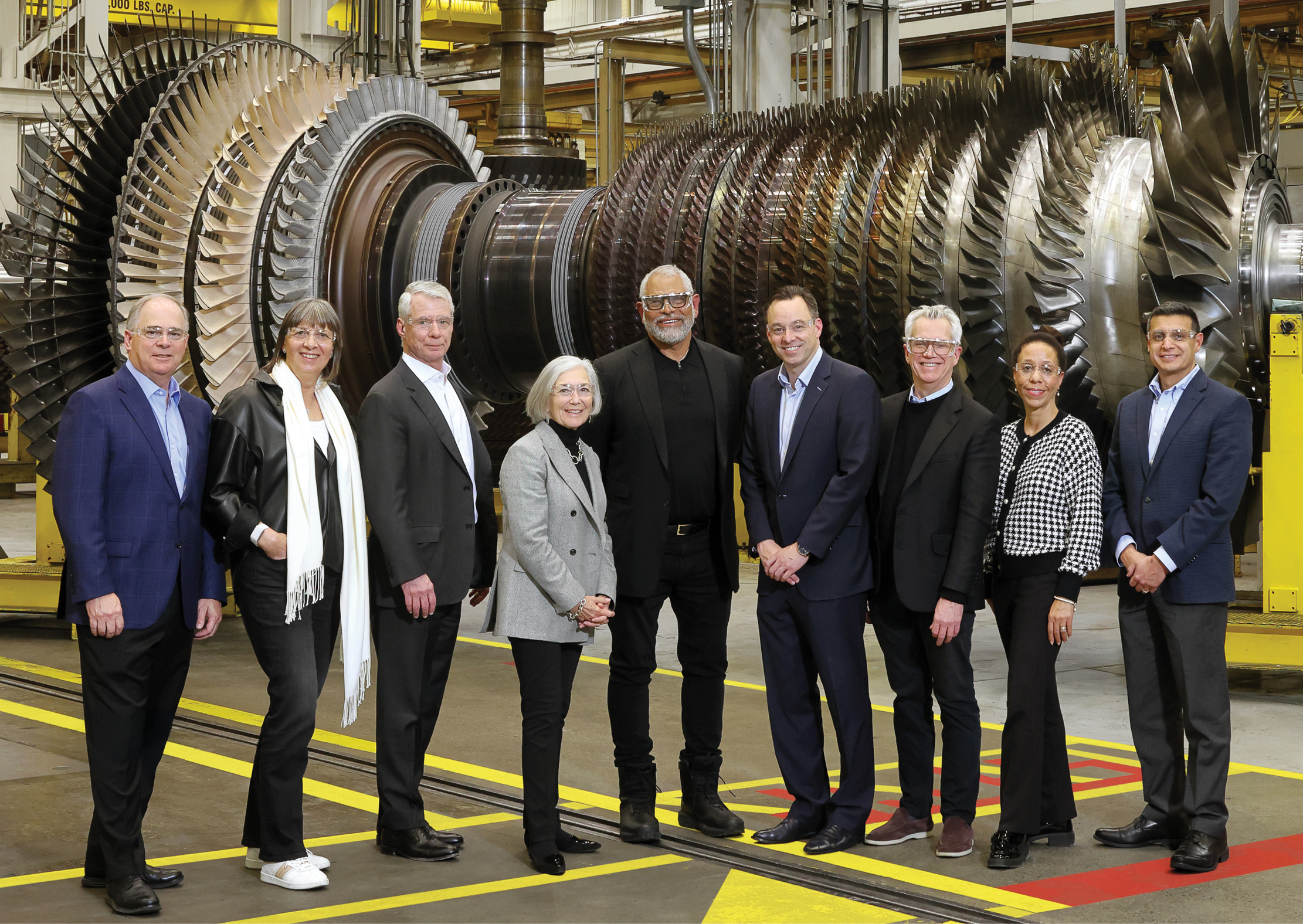

 FOR each director nominee
 AGAINST
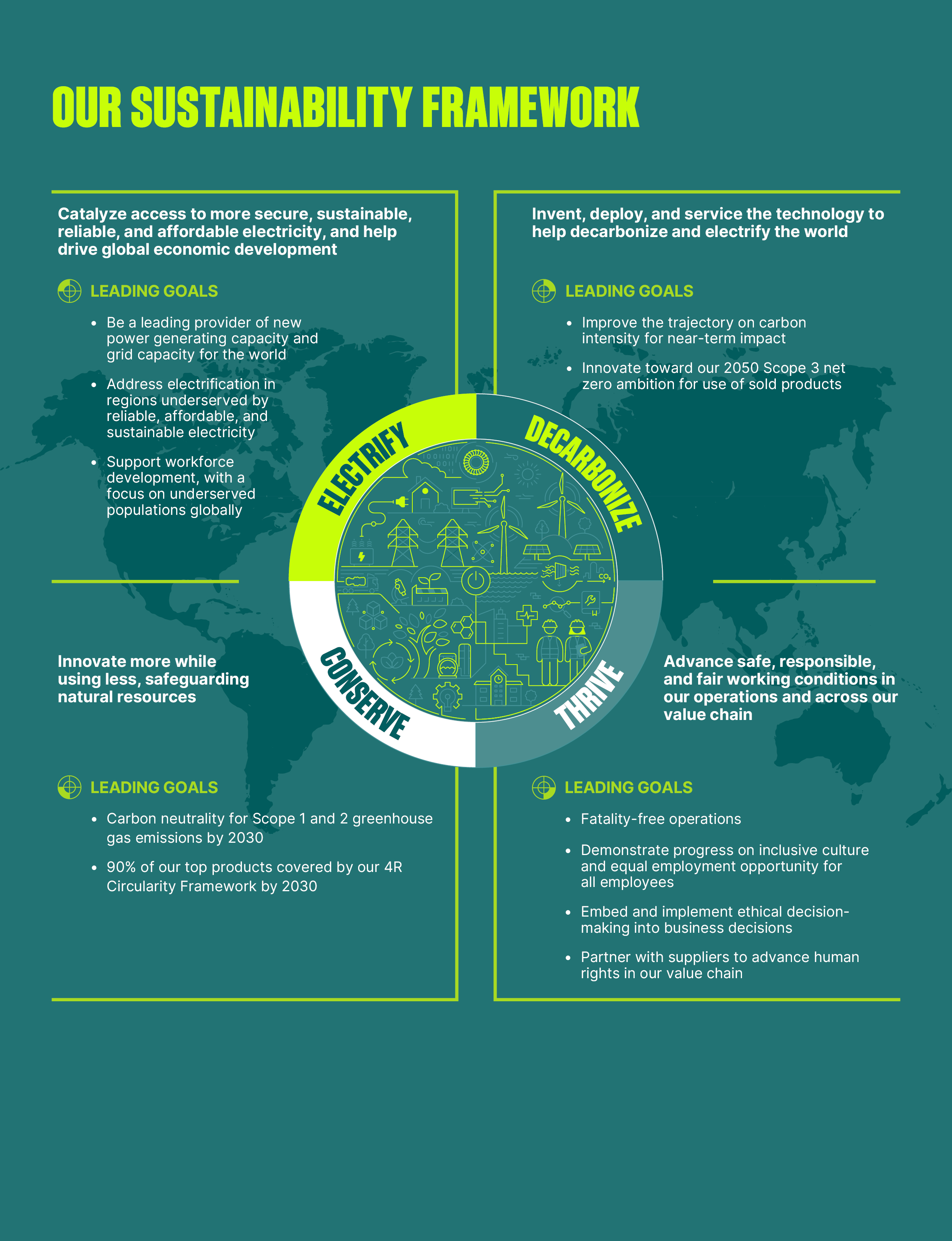


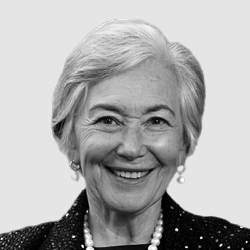

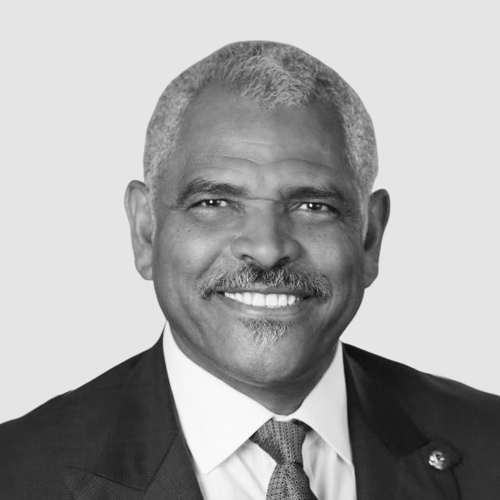










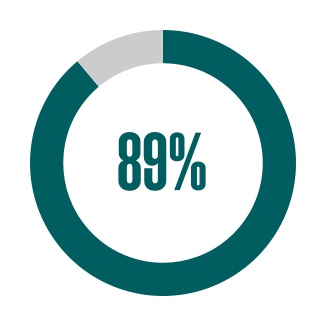


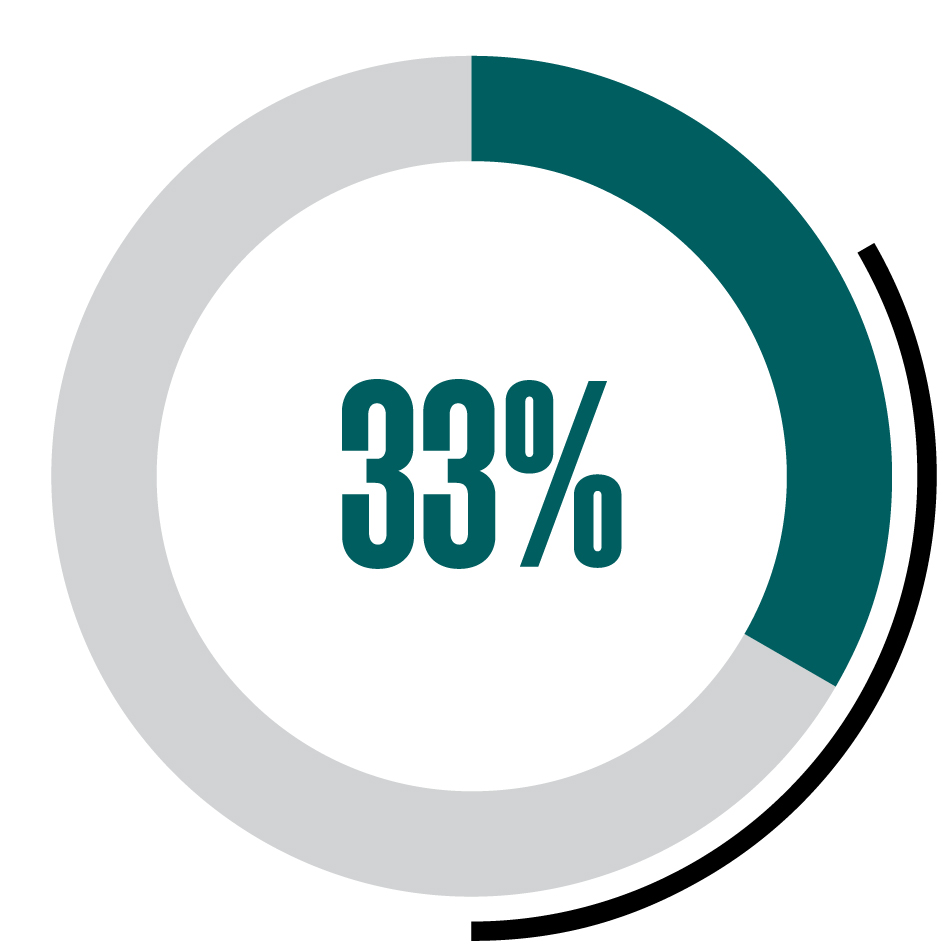




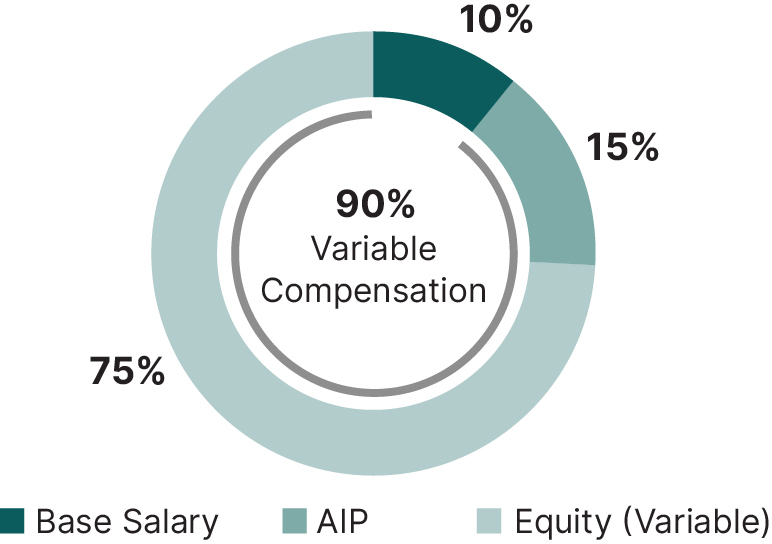
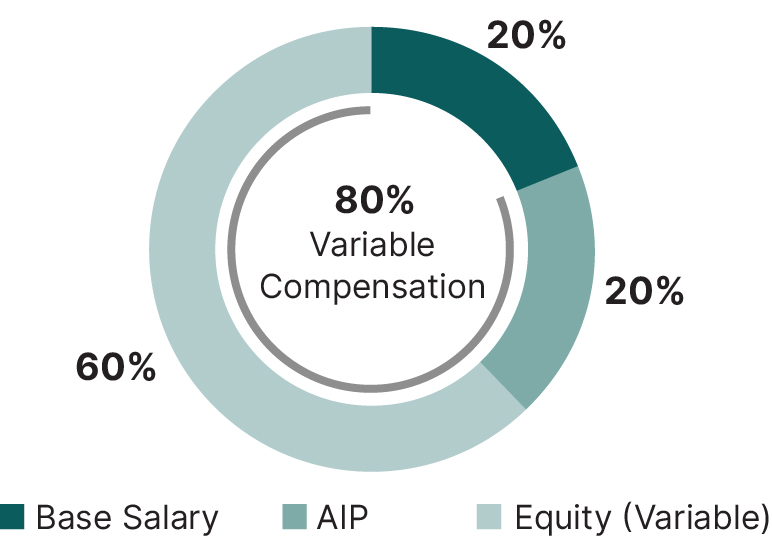


 CHCC oversight of incentive metrics, goals and pay/performance relationship, including annual review of compensation structure
 We do not allow pledging or hedging of Company shares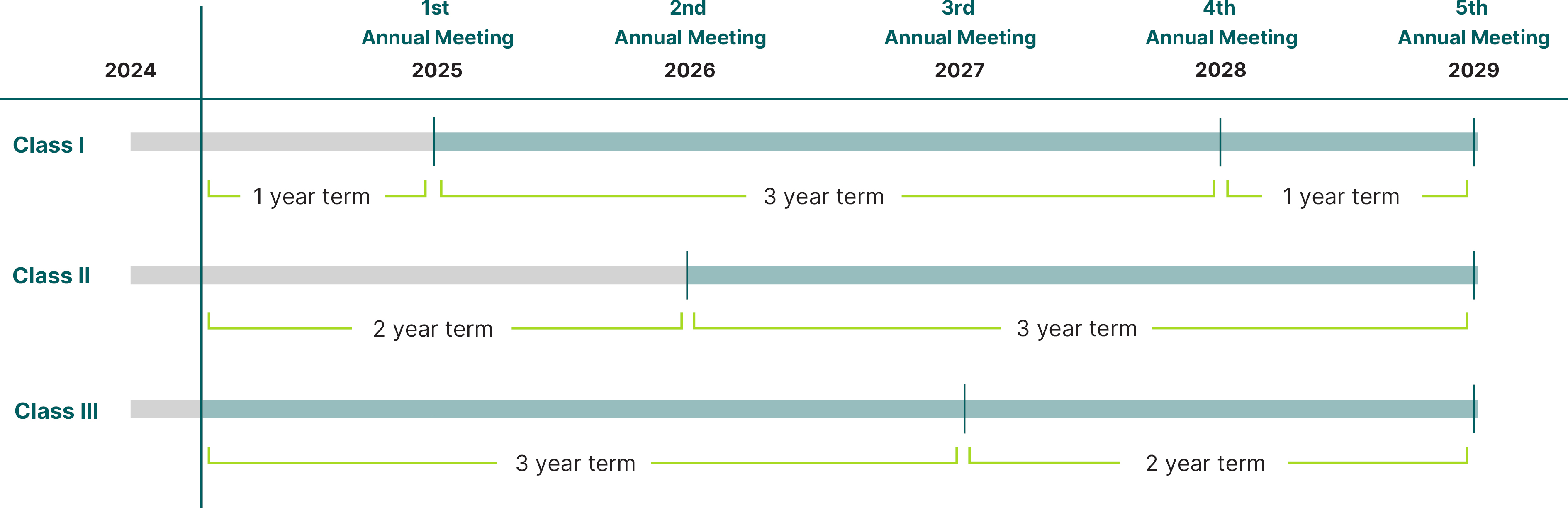
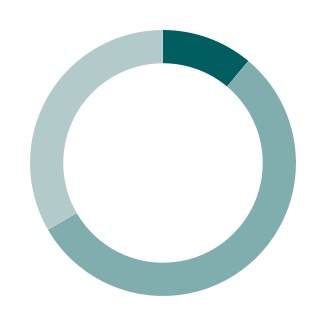











 CHCC oversight of incentive metrics, goals and pay/performance relationship, including annual review of compensation structure