Filed Pursuant to Rule 424(b)(2)
Registration No. 333-289203
The information in this preliminary pricing supplement is not complete and may be changed. This preliminary pricing supplement and the accompanying underlying supplement, prospectus supplement and prospectus are not an offer to sell these securities and we are not soliciting an offer to buy these securities in any jurisdiction where the offer or sale is not permitted.
Subject to Completion, Dated June 18, 2026
Pricing Supplement dated , 2026
(To Equity Index Underlying Supplement dated August 4, 2025,
Prospectus Supplement dated August 4, 2025, and Prospectus dated August 4, 2025)
Marex Group plc
$ Issuer Callable Fixed Interest Barrier Notes Linked to the Worst Performing of the S&P 500® Index, the Russell 2000® Index and the Nasdaq-100 Index® due June 29, 2027
| ► | Quarterly fixed Interest Payments of $34.38 per $1,000 Principal Amount (or 3.438% of the Principal Amount, equivalent to 13.752% per annum) regardless of the performance of the S&P 500® Index, the Russell 2000® Index and the Nasdaq-100 Index® (each, an “Underlying” and together the “Underlyings”) until the earlier of maturity or early redemption |
| ► | Redeemable at the Issuer’s option on the quarterly Call Payment Dates beginning on September 22, 2026 at the Principal Amount plus the applicable Interest Payment. |
| ► | If the Notes are not redeemed early, at maturity: |
| o | Return of the Principal Amount if a Trigger Event does not occur or the Final Value of the Worst Performing Underlying is at or above its Initial Value |
| o | If a Trigger Event occurs and the Worst Performing Underlying decreases from its Initial Value to its Final Value, full exposure to such decrease, and you will lose all or a portion of your Principal Amount. |
| ► | A Trigger Event occurs if the Closing Level of any Underlying is at or below its Barrier Value (70.00% of its Initial Value) on any Trading Day during the Observation Period |
| ► | Term: Approximately one year, if not redeemed |
| ► | All payments on the Notes are subject to the credit risk of Marex Group plc (“Marex”) |
Application has been made for the Issuer Callable Fixed Interest Barrier Notes (the “Notes”) offered hereunder to be admitted to listing and trading on the Vienna Multilateral Trading Facility (“Vienna MTF”) of the Vienna Stock Exchange. The Vienna MTF is not a regulated market as defined by Directive 2014/65/EU (as amended, “MiFID II”). It is, however, a multilateral trading facility (MTF) for purposes of MiFID II.
Neither the U.S. Securities and Exchange Commission (the “SEC”) nor any state securities commission has approved or disapproved of the Notes or passed upon the accuracy or the adequacy of this document or the accompanying prospectus, prospectus supplement or underlying supplement. Any representation to the contrary is a criminal offense.
Any offering of the Notes will be made pursuant to Article 1(4) of Regulation (EU) 2017/1129 (as amended), including as it forms part of domestic law of the United Kingdom. Accordingly, no prospectus is required to be published in connection with such offering of the Notes in any member state of the European Economic Area (the "EEA") or the United Kingdom (the "UK"). See page ii of the accompanying prospectus supplement for further restrictions on offers and sales of the Notes in the EEA and the UK.
Investment in the Notes involves certain risks. You should refer to “Risk Factors” beginning on page PS-7 of this document, page S-1 of the accompanying prospectus supplement and page S-1 of the accompanying underlying supplement.
The Estimated Initial Value of the Notes on the Trade Date is expected to be between $985.00 and $995.00 per Note, which will be less than the price to public. The market value of the Notes at any time will reflect many factors and cannot be predicted with accuracy. See “Summary—Estimated Initial Value” on page PS-3 and “Risk Factors” beginning on page PS-7 of this document for additional information.
| Price to Public | Underwriting Discount (1) | Proceeds to Issuer | |
| Per Note | $1,000.00 | ||
| Total |
(1) Marex Capital Markets Inc. (“MCMI”), an affiliate of ours, will act as the agent for the sale of the Notes. MCMI will purchase the Notes from us at an underwriting discount of up to $5.00 per $1,000 Principal Amount for distribution to other registered broker-dealers or will offer the Notes directly to investors. MCMI will use the underwriting discount to pay selling concessions or fees (including custodial or clearing fees) to other registered broker-dealers. See “Supplemental Plan of Distribution (Conflicts of Interest)” on page PS-14 of this document.
The Notes:
| Are Not FDIC Insured | Are Not Bank Guaranteed | May Lose Value |
Marex Capital Markets
SUMMARY
The information in this “Summary” section is qualified by the more detailed information set forth in the underlying supplement, the prospectus supplement and the prospectus. See “General” in this document.
| Issuer: | Marex Group plc |
| Principal Amount: | $1,000 per Note |
| Reference Asset: | The S&P 500® Index (Bloomberg symbol: SPX) (the “SPX”) , the Russell 2000® Index (Bloomberg symbol: RTY) (the “RTY”), and the Nasdaq-100 Index® (Bloomberg symbol: NDX) (the “NDX”). |
| Pricing Date: | June 17, 2026 |
| Trade Date: | June 18, 2026 |
| Original Issue Date: | June 24, 2026 |
| Final Valuation Date: | June 24, 2027, subject to adjustment as described under “Additional Terms of the Notes―Valuation Dates” in the accompanying underlying supplement. |
| Maturity Date: | June 29, 2027, subject to adjustment as described under “Additional Terms of the Notes―Interest Payment Dates, Coupon Payment Dates, Call Payment Dates and Maturity Date” in the accompanying underlying supplement. |
| Optional Early Redemption: | The Issuer has the right to redeem the Notes, in whole but not in part, on any Call Payment Date. If we elect to redeem the Notes, we will send a notice to DTC through the trustee at least 3 Business Days and no more than 20 Business Days before the applicable Call Payment Date. We will have no independent obligation to notify you directly.
If the Notes are redeemed, you will receive a cash payment equal to the Principal Amount plus the related Interest Payment on the applicable Call Payment Date.
If the Notes are redeemed early, they will cease to be outstanding on the related Call Payment Date, and no further payments will be made on the Notes. |
| Call Payment Dates: | The Interest Payment Dates beginning on September 22, 2026 and ending on March 22, 2027. |
| Interest Payments: | Regardless of the performance of any Underlying, you will receive a quarterly fixed interest payment of $34.38 per $1,000 Principal Amount (or 3.438% of the Principal Amount, equivalent to 13.752% per annum) (an “Interest Payment”) on each Interest Payment Date until the earlier of maturity or early redemption. |
| Interest Payment Dates: | Quarterly, on September 22, 2026, December 22, 2026, March 22, 2027, and June 29, 2027. Each Interest Payment Date is subject to postponement as described under “Additional Terms of the Notes—Interest Payment Dates, Coupon Payment Dates, Call Payment Dates and Maturity Date” in the underlying supplement. |
| Barrier Value: | 5,194.07 with respect to the SPX, 2,042.587 with respect to the RTY, and 20,769.67 with respect to the NDX, each of which is 70% of its Initial Value (rounded to two decimal places for the NDX, and three decimal places for the RTY). |
| Trigger Event: | A Trigger Event occurs if the Closing Level of any Underlying is at or below its Barrier Value on any Trading Day during the Observation Period. If a Market Disruption Event occurs with respect to any Underlying or its Closing Level is otherwise unavailable on any Trading Day during the Observation Period, the Closing Level of such Underlying on such Trading Day will be disregarded for purpose of determining the occurrence of a Trigger Event. |
| Observation Period: | The period from but excluding the Pricing Date to and including the Final Valuation Date. |
PS-2
| Payment at Maturity: | Unless the Notes are redeemed, for each $1,000 Principal Amount, in addition to the final Interest Payment, you will receive a cash payment on the Maturity Date, calculated as follows:
n If a Trigger Event does not occur or the Final Value of the Worst Performing Underlying is at or above its Initial Value:
$1,000
n If a Trigger Event occurs and the Final Value of the Worst Performing Underlying is below its Initial Value:
$1,000 + ($1,000 × Reference Return of the Worst Performing Underlying)
If the Notes are not redeemed, a Trigger Event occurs and the Final Value of the Worst Performing Underlying is less than its Initial Value, you will lose up to 100% of the Principal Amount. Even with the Interest Payments, your return on the Notes may be negative in this case. |
| Worst Performing Underlying: | The Underlying with the lowest Reference Return. |
| Reference Return: | With respect to each Underlying, the quotient, expressed as a percentage, calculated as follows:
Final Value – Initial Value Initial Value |
| Initial Value: | 7,420.10 with respect to the SPX, 2,917.982 with respect to the RTY, and 29,670.95 with respect to the NDX, each of which was its Closing Level on the Pricing Date. |
| Final Value: | With respect to each Underlying, its Closing Level on the Final Valuation Date. |
| CUSIP/ISIN: | 56653LBR5 / US56653LBR50 |
| Form of Notes: | Book-Entry |
| Listing: | Application has been made for the Notes to be admitted to listing and trading on the Vienna MTF, a multilateral trading facility operated by the Vienna Stock Exchange. |
| Estimated Initial Value: | The Estimated Initial Value of the Notes is expected to be less than the price you pay to purchase the Notes. The Estimated Initial Value does not represent a minimum price at which we or any of our affiliates would be willing to purchase your Notes in the secondary market, if any, at any time. The Estimated Initial Value will be calculated on the Trade Date and will be set forth in the pricing supplement to which this document relates. See “Risk Factors — The Estimated Initial Value of the Notes, which will be determined by us on the Trade Date, is expected to be less than the price to public and may differ from the market value of the Notes in the secondary market, if any.” |
| Calculation Agent: | Marex Financial, one of our affiliates |
The Trade Date and the other dates set forth above are subject to change, and will be set forth in the pricing supplement relating to the Notes.
PS-3
GENERAL
This document relates to an offering of Notes linked to the Underlyings. The purchaser of a Note will acquire a senior unsecured debt security of Marex. We reserve the right to withdraw, cancel or modify this offering and to reject orders in whole or in part. Although the offering of Notes relates to the Underlyings, you should not construe that fact as a recommendation as to the merits of acquiring an investment linked to the Underlyings or any security included in any Underlying or as to the suitability of an investment in the Notes.
You should read this document together with the prospectus dated August 4, 2025 (the “prospectus”), the prospectus supplement dated August 4, 2025 (the “prospectus supplement”) and the Equity Index Underlying Supplement dated August 4, 2025 (the “underlying supplement”). If the terms of the Notes offered hereby are inconsistent with those described in the accompanying prospectus, prospectus supplement or underlying supplement, the terms described in this document shall control. You should carefully consider, among other things, the matters set forth in “Risk Factors” beginning on page PS-7 of this document, page S-1 of the prospectus supplement and page S-1 of the underlying supplement, as the Notes involve risks not associated with conventional debt securities. We urge you to consult your investment, legal, tax, accounting and other advisors before you invest in the Notes. As used herein, references to the “Issuer”, “Marex”, “we”, “us” and “our” are to Marex Group plc. References to “Index” or “Worst Performing Index” in the underlying supplement will be references to “Underlying” or “Worst Performing Underlying” in this document. Certain terms used but not defined herein will have the meanings set forth in the underlying supplement, the prospectus supplement or the prospectus.
You may access the underlying supplement, the prospectus supplement and the prospectus on the SEC website www.sec.gov as follows (or if such address has changed, by reviewing our filing for the relevant date on the SEC website):
| 4 | The underlying supplement at: https://www.sec.gov/Archives/edgar/data/1997464/000119312525172164/d92960d424b2.htm |
| 4 | The prospectus supplement at: https://www.sec.gov/Archives/edgar/data/1997464/000119312525172136/d87748d424b2.htm |
| 4 | The prospectus at: https://www.sec.gov/Archives/edgar/data/1997464/000119312525172120/d87748d424b3.htm |
We are using this document to solicit from you an offer to purchase the Notes. You may revoke your offer to purchase the Notes at any time prior to the time at which we accept your offer by notifying MCMI. We reserve the right to change the terms of, or reject any offer to purchase, the Notes prior to their issuance. In the event of any material changes to the terms of the Notes, we will notify you.
PS-4
PAYMENTS ON THE NOTES
Optional Early Redemption
The Issuer has the right to redeem the Notes, in whole but not in part, on the quarterly Call Payment Dates beginning on September 22, 2026. If the Notes are redeemed, you will receive a cash payment equal to the Principal Amount plus the related Interest Payment on the applicable Call Payment Date. If the Notes are redeemed, no further amounts will be owed to you.
Interest Payments
Regardless of the performance of any Underlying, you will receive a quarterly fixed Interest Payment of $34.38 per $1,000 Principal Amount (or 3.438% of the Principal Amount, equivalent to 13.752% per annum) on each Interest Payment Date until the earlier of maturity or early redemption. For information regarding the record dates applicable to the Interest Payments on the Notes, see “Additional Terms of Notes—Certain Definitions—Record Date” on page S-52 of the accompanying underlying supplement.
Payment at Maturity
Unless the Notes are redeemed, on the Maturity Date and for each $1,000 Principal Amount, in addition to the final Interest Payment, you will receive a cash payment determined as follows:
n If a Trigger Event does not occur or the Final Value of the Worst Performing Underlying is at or above its Initial Value:
$1,000
n If a Trigger Event occurs and the Final Value of the Worst Performing Underlying is below its Initial Value:
$1,000 + ($1,000 × Reference Return of the Worst Performing Underlying).
If the Notes are not redeemed, a Trigger Event occurs and the Final Value of the Worst Performing Underlying is below its Initial Value, you will lose up to 100% of the Principal Amount. Even with the Interest Payments received during the term of the Notes, your return on the Notes may be negative in this case.
PS-5
INVESTOR SUITABILITY
The Notes may be suitable for you if:
| 4 | You are a retail investor outside the EEA and the UK or an institutional buyer (for restrictions on offers or sales to retail investors in the EEA and the UK, please see page ii of the accompanying prospectus supplement). | |
| 4 | You are an investor with the competence (either independently or with the support of a financial advisor) to assess the suitability of this investment based on your individual circumstances. | |
| 4 | You have the necessary knowledge and/or experience with structured products and are prepared to accept the corresponding risks. | |
| 4 | You believe that a Trigger Event will not occur or the Final Value of the Worst Performing Underlying will be at or above its Initial Value. | |
| 4 | You seek quarterly fixed Interest Payments regardless of the performance of any Underlying until the earlier of maturity or early redemption. | |
| 4 | You are willing to invest in the Notes based on the fact that your maximum potential return is limited to the Interest Payments payable on the Notes. | |
| 4 | You do not seek an investment that provides an opportunity to participate in the appreciation of any Underlying. | |
| 4 | You are willing to make an investment that is exposed to the potential downside performance of the Worst Performing Underlying on a 1-to-1 basis if the Notes are not redeemed and a Trigger Event occurs. | |
| 4 | You are willing to lose up to 100% of the Principal Amount. | |
| 4 | You understand that the return on the Notes will depend solely on the performance of the Worst Performing Underlying and consequently, the Notes are riskier than alternative investments linked to only one of the Underlyings or linked to a basket composed of the Underlyings. | |
| 4 | You are willing to hold the Notes which will be redeemed prior to maturity at our option on any Call Payment Date, or you are otherwise willing to hold the Notes to maturity. | |
| 4 | You are willing to forgo the dividends or other distributions paid on the stocks included in the Underlyings. | |
| 4 | You do not seek an investment for which there will be an active secondary market. | |
| 4 | You are willing to accept the risk and return profile of the Notes versus a conventional debt security with a comparable maturity issued by Marex or another issuer with a similar credit rating. | |
| 4 | You are comfortable with the creditworthiness of Marex, as Issuer of the Notes. |
The Notes may not be suitable for you if:
| 4 | You are a retail investor in the EEA or the UK (for restrictions on offers or sales to retail investors in the EEA and the UK, please see page ii of the accompanying prospectus supplement). | |
| 4 | You are an investor without the competence (either independently or with the support of a financial advisor) to assess the suitability of this investment based on your individual circumstances. | |
| 4 | You do not have the necessary knowledge and/or experience with structured products and are not prepared to accept the corresponding risks. | |
| 4 | You believe that a Trigger Event will occur and the Final Value of the Worst Performing Underlying will be below its Initial Value. | |
| 4 | You believe that the Interest Payments will not provide you with your desired return. | |
| 4 | You are unwilling to invest in the Notes based on the fact that your maximum potential return is limited to the Interest Payments payable on the Notes. | |
| 4 | You seek an investment that provides an opportunity to participate in the appreciation of one or more Underlyings. | |
| 4 | You are unwilling to make an investment that is exposed to the potential downside performance of the Worst Performing Underlying on a 1-to-1 basis if the Notes are not redeemed and a Trigger Event occurs. | |
| 4 | You seek an investment that provides full return of principal at maturity. | |
| 4 | You seek exposure to a basket composed of the Underlyings or a similar investment in which the overall return is based on a blend of the performances of the Underlyings, rather than solely on the Worst Performing Underlying. | |
| 4 | You are unable or unwilling to hold the Notes that will be redeemed prior to maturity at our option on any Call Payment Date, or you are otherwise unable or unwilling to hold the Notes to maturity. | |
| 4 | You prefer to receive the dividends or other distributions paid on the stocks included in the Underlyings. | |
| 4 | You seek an investment for which there will be an active secondary market. | |
| 4 | You prefer the lower risk, and therefore accept the potentially lower returns, of conventional debt securities with comparable maturities issued by Marex or another issuer with a similar credit rating. | |
| 4 | You are not willing or are unable to assume the credit risk associated with Marex, as Issuer of the Notes. |
PS-6
RISK FACTORS
We urge you to read the section “Risk Factors” beginning on page S-1 of the accompanying prospectus supplement and page S-1 of the accompanying underlying supplement. You should understand the risks of investing in the Notes and should reach an investment decision only after careful consideration, with your advisors, of the suitability of the Notes in light of your particular financial circumstances and the information set forth in this document and the accompanying prospectus, prospectus supplement and underlying supplement. In addition to the risks discussed below, you should review “Risk Factors” in the accompanying prospectus supplement and underlying supplement including the explanation of risks relating to the Notes described in the following sections:
| 4 | “—Risks Related to Note Issuances” in the prospectus supplement; and | |
| 4 | “—General risks related to an Index” in the underlying supplement. |
You will be subject to significant risks not associated with conventional fixed-rate or floating-rate debt securities.
Risks Relating to the Structure or Features of the Notes
The Notes do not guarantee any return of principal and you may lose all of your Principal Amount.
The Notes do not guarantee any return of principal. The Notes differ from ordinary debt securities in that we will not pay you 100% of the Principal Amount of your Notes if the Notes are not redeemed, a Trigger Event occurs and the Final Value of the Worst Performing Underlying is less than its Initial Value. In this case, the Payment at Maturity you will be entitled to receive will be less than the Principal Amount and you will lose 1% for each 1% that the Reference Return of the Worst Performing Underlying is less than 0.00%. You may lose up to 100% of your investment at maturity. Even with the Interest Payments received during the term of the Notes, your return on the Notes may be negative in this case.
Your return on the Notes is limited to the Principal Amount plus the Interest Payments, regardless of any appreciation in the value of any Underlying.
You will not participate in any appreciation of any Underlying. Whether the Notes are redeemed or at maturity, the total payments on the Notes will not exceed the Principal Amount plus the Interest Payments, regardless of any appreciation in the value of any Underlying, which may be significant. Accordingly, the return on the Notes may be significantly less than the return on a direct investment in the stocks included in the Underlyings during the term of the Notes.
The Notes may be redeemed at our option prior to maturity, and the Notes are subject to reinvestment risk.
If the Notes are redeemed early, the holding period over which you may receive the Interest Payments could be as little as approximately 3 months. Once the Notes are redeemed, you will lose the opportunity to continue to receive the Interest Payments from the relevant Call Payment Date to the Maturity Date, and the total return on the Notes could be minimal. It is more likely that we will redeem the Notes prior to maturity to the extent that the interest rate on the Notes is higher than the then-current interest rate on a conventional debt security with a comparable maturity issued by Marex or another issuer with a similar credit rating. There is no guarantee that you would be able to reinvest the proceeds from an investment in the Notes at a comparable return for a similar level of risk in the event the Notes are redeemed prior to the Maturity Date.
The Notes are subject to the full risks of the Worst Performing Underlying and will be negatively affected if any Underlying performs poorly, even if the other Underlyings perform favorably.
You are subject to the full risks of the Worst Performing Underlying. If the Worst Performing Underlying performs poorly, you will be negatively affected, even if the other Underlyings perform favorably. The Notes are not linked to a basket composed of the Underlyings, where the better performance of one Underlying could offset the poor performance of the others. Instead, you are subject to the full risks of the Worst Performing Underlying on the Final Valuation Date. As a result, the Notes are riskier than an alternative investment linked to only one of the Underlyings or linked to a basket composed of the Underlyings. You should not invest in the Notes unless you understand and are willing to accept the full downside risks of the Worst Performing Underlying.
Risks Relating to the Reference Asset
Changes that affect an Underlying may affect the value of that Underlying and the return on the Notes.
The policies of the Reference Sponsor of an Underlying concerning additions, deletions and substitutions of the stocks included in that Underlying, and the manner in which the Reference Sponsor takes account of certain changes affecting those stocks, may adversely affect the value of that Underlying. The policies of the Reference Sponsor with respect to the calculation of an Underlying could also adversely affect the value of that Underlying. The Reference Sponsor may discontinue or suspend calculation or dissemination of an Underlying. Any such actions could adversely affect the value of an Underlying and the value of and the return on the Notes.
The Notes are subject to small-capitalization risk.
The RTY tracks companies that are considered small-capitalization. These companies often have greater stock price volatility, lower trading volume and less liquidity than large-capitalization companies and therefore the level of the RTY may be more volatile than an investment in stocks issued by large-capitalization companies. Stock prices of small-capitalization companies are also more vulnerable than those of large-capitalization companies to adverse business and economic developments, and the stocks of small-capitalization companies may be thinly traded, making it difficult for the RTY to track them. In addition, small-capitalization companies are typically less stable financially than large-capitalization companies and may depend on a small number of key personnel, making them more
PS-7
vulnerable to loss of personnel. Small-capitalization companies are often subject to less analyst coverage and may be in early, and less predictable, periods of their corporate existences. Such companies tend to have smaller revenues, less diverse product lines, smaller shares of their product or service markets, fewer financial resources and less competitive strengths than large-capitalization companies and are more susceptible to adverse developments related to their products or services.
The Notes are subject to non-U.S. securities risk.
Some of the equity securities included in the NDX are issued by non-U.S. companies. Investments in securities linked to the value of such non-U.S. equity securities, such as the Notes, involve risks associated with the home countries of the issuers of those non-U.S. equity securities. The prices of securities in non-U.S. markets may be affected by political, economic, financial and social factors in those countries, or global regions, including changes in government, economic and fiscal policies and currency exchange laws.
General Risk Factors
The Notes are subject to our credit risk.
Marex may partially or wholly fail to meet their obligations under the Notes. Investors should therefore take the creditworthiness of Marex and its subsidiaries into account in their investment decision. Credit risk means the risk of insolvency or illiquidity of an issuer, i.e. a potential, temporary or final inability to fulfil their interest and repayment obligations on time. An increased insolvency risk is typical of issuers that have a low creditworthiness. The payment of any amount due on the Notes is subject to the credit risk of Marex. The Notes are senior unsecured debt obligations of Marex, and are not, either directly or indirectly, an obligation of any third party. Investors are dependent on Marex’s ability to pay all amounts due on the Notes, and therefore investors are subject to the credit risk of Marex and to changes in the market’s view of its creditworthiness.
The Notes are not bank deposits and are not insured or guaranteed by the U.S. Federal Deposit Insurance Corporation, the UK Financial Services Compensation Scheme or any other government or governmental or private agency or deposit protection scheme in any jurisdiction. Investors are dependent on Marex’s ability to pay all amounts due on the Notes, and therefore investors are subject to Marex’s credit risk and to changes in the market’s view of Marex’s creditworthiness. The payment of any amount due on the Notes is not guaranteed by any entity.
The Notes are not insured against loss by any third parties; you can depend only on our earnings and assets for payments on the Notes.
The Notes will be solely our obligations, and no other entity will have any obligation, contingent or otherwise, to make any payments in respect of the Notes.
The Estimated Initial Value of the Notes, which will be determined by us on the Trade Date, is expected to be less than the price to public and may differ from the market value of the Notes in the secondary market, if any.
The Estimated Initial Value of the Notes will be calculated by us on the Trade Date and is expected to be less than the price to public. The Estimated Initial Value will reflect our and our affiliates’ internal funding rate, which is the borrowing rate paid to issue market-linked securities, as well as the mid-market value of the embedded derivatives in the Notes. This internal funding rate is typically lower than the rate we would use when we issue conventional fixed or floating rate debt securities. As a result of the difference between our internal funding rate and the rate we would use when we issue conventional fixed or floating rate debt securities, the Estimated Initial Value of the Notes may be lower if it were based on the prices at which our fixed or floating rate debt securities trade in the secondary market. In addition, if we were to use the rate we use for our conventional fixed or floating rate debt issuances, we would expect the economic terms of the Notes to be more favorable to you. We will determine the value of the embedded derivatives in the Notes by reference to our or our affiliates’ internal pricing models. These pricing models consider certain assumptions and variables, which can include volatility and interest rates. Different pricing models and assumptions could provide valuations for the Notes that are different from our Estimated Initial Value. These pricing models rely in part on certain forecasts about future events, which may prove to be incorrect. The Estimated Initial Value does not represent a minimum price at which we or any of our affiliates would be willing to purchase your Notes in the secondary market (if any exists) at any time.
The price of your Notes in the secondary market, if any, immediately after the Trade Date is expected to be less than the price to public.
The price to public takes into account certain costs. These costs include our affiliates’ projected hedging profits (which may or may not be realized) for assuming risks inherent in hedging our obligations under the Notes, the underwriting discount and the costs associated with structuring and hedging our obligations under the Notes. These costs will be used or retained by us or one of our affiliates, except for underwriting discounts paid to unaffiliated distributors. If you were to sell your Notes in the secondary market, if any, the price you would receive for your Notes may be less than the price you paid for them because secondary market prices will not take into account these costs. The price of your Notes in the secondary market, if any, at any time after issuance will vary based on many factors, including the values of the Underlyings and changes in market conditions, and cannot be predicted with accuracy. The Notes are not designed to be short-term trading instruments, and you should, therefore, be able and willing to hold the Notes to maturity. Any sale of the Notes prior to maturity could result in a loss to you.
If we were to repurchase your Notes immediately after the Original Issue Date, the price you receive may be higher than the Estimated Initial Value of the Notes.
Assuming that all relevant factors remain constant after the Original Issue Date, the price at which MCMI may initially buy or sell the Notes in the secondary market, if any, and the value that may initially be used for customer account statements, if any, may exceed the
PS-8
Estimated Initial Value on the Trade Date for a temporary period expected to be approximately 6 months after the Original Issue Date. This temporary price difference may exist because, in our discretion, we may elect to effectively reimburse to investors a portion of the estimated cost of hedging our obligations under the Notes and other costs in connection with the Notes that we will no longer expect to incur over the term of the Notes. We will make such discretionary election and determine this temporary reimbursement period on the basis of a number of factors, including the tenor of the Notes and any agreement we may have with the distributors of the Notes. The amount of our estimated costs which we effectively reimburse to investors in this way may not be allocated ratably throughout the reimbursement period, and we may discontinue such reimbursement at any time or revise the duration of the reimbursement period after the Original Issue Date of the Notes based on changes in market conditions and other factors that cannot be predicted.
You will not have any ownership interest in the stocks included in an Underlying.
As a holder of the Notes, you will not have any ownership interest in the stocks included in an Underlying, such as rights to vote, dividend payments or other distributions. Because the return on the Notes will not reflect any dividends on those stocks, the Notes may underperform an investment in the stocks included in an Underlying.
The Notes lack liquidity.
The Notes are a new issue of securities for which there is no established market. Although we will apply for the Notes to be listed for trading on the Vienna MTF, we cannot provide you with any assurance regarding whether the Notes will become or remain listed or whether a trading market for the Notes will develop or as to the liquidity or sustainability of any such market, the ability of holders of the Notes to sell their Notes or the price at which holders may be able to sell their Notes. The listing application will be subject to approval by the Vienna Stock Exchange. There can be no assurance that application for listing and admission to trading will be granted or than an active trading market in the Notes will develop. If such a listing is obtained, we have no obligation to maintain such listing, and we may delist the Notes at any time. In addition, MCMI is not required to offer to purchase the Notes in the secondary market. Even if a secondary market were to develop, it may not provide enough liquidity to allow you to trade or sell the Notes easily. Because other dealers are not likely to make a secondary market for the Notes, the price at which you may be able to trade your Notes is likely to depend on the price, if any, at which MCMI is willing to buy the Notes.
Potential conflicts of interest may exist.
Marex and its affiliates play a variety of roles in connection with the issuance of the Notes, including acting as calculation agent and hedging our obligations under the Notes. Following the occurrence of certain events – relating to the Issuer, the Issuer's hedging arrangements, the Underlying(s), taxation, the relevant currency or other matters – outside of the Issuer's control, the calculation agent may determine in its discretion to take one of the actions available to it in order to deal with the impact of such event on the Notes or the Issuer or both. These actions may include (i) adjustment to the terms and conditions of the Notes, (ii) substitution of the Underlying(s) and/or (iii) early redemption or exercise of the Notes. In performing these duties, the economic interests of the calculation agent and other affiliates of ours are potentially adverse to your interests as an investor in the Notes. Any such discretionary determination by the Issuer or the calculation agent could have a negative impact on the value of the Notes. We will not have any obligation to consider your interests as a holder of the Notes in taking any action that might adversely affect the value of your Notes.
Uncertain tax treatment.
For a discussion of the U.S. federal income tax consequences of your investment in a Note, please see the discussion under “U.S. Federal Income Tax Considerations” herein, the discussion under “U.S. Federal Income Tax Considerations” in the accompanying prospectus supplement and the discussion under “Material Tax Considerations — Material U.S. Federal Income Tax Considerations” in the accompanying prospectus.
PS-9
ILLUSTRATIVE EXAMPLES
The following table and examples are provided for illustrative purposes only and are hypothetical. They do not purport to be representative of every possible scenario concerning increases or decreases in the Final Value of any Underlying relative to its Initial Value. We cannot predict the Closing Level of any Underlying on any Trading Day during the Observation Period, including the Final Valuation Date. The assumptions we have made in connection with the illustrations set forth below may not reflect actual events. You should not take this illustration or these examples as an indication or assurance of the expected performance of any Underlying or return on the Notes. The numbers appearing in the table below and following examples have been rounded for ease of analysis.
The table and examples below illustrate the payments on a $1,000 investment in the Notes for a hypothetical range of Reference Return of the Worst Performing Underlying from -100% to +100%. The following results are based solely on the assumptions outlined below. The “Hypothetical Return on the Notes” as used below is the number, expressed as a percentage, that results from comparing the Payment at Maturity per $1,000 Principal Amount to $1,000. The potential returns described below assume that the Notes have not been redeemed prior to maturity and are held to maturity. The following table and examples assume the following:
| Principal Amount: | $1,000 |
| Interest Payment: | $34.38 (or 3.438% of the Principal Amount, equivalent to 13.752% per annum) |
| Hypothetical Initial Value of the Worst Performing Underlying: | 1,000 |
| Hypothetical Barrier Value of the Worst Performing Underlying: | 700 (70% of its Initial Value) |
| Hypothetical Final Value of the Worst Performing Underlying |
Hypothetical Reference Return of the Worst Performing Underlying |
Total
Interest Payments |
Trigger Event Does Not Occur(1) | Trigger Event Occurs(1) | ||
| Hypothetical Payment at Maturity (Excluding Final Interest Payment) |
Hypothetical
Total Return on the Notes (Including All Interest Payments) |
Hypothetical
Payment at Maturity (Excluding Final Interest Payment) |
Hypothetical Total Return on the Notes (Including All Interest Payments) | |||
| 2,000.00 | 100.00% | $137.52 | $1,000.00 | 13.752%(2) | $1,000.00 | 13.752%(2) |
| 1,750.00 | 75.00% | $137.52 | $1,000.00 | 13.752% | $1,000.00 | 13.752% |
| 1,500.00 | 50.00% | $137.52 | $1,000.00 | 13.752% | $1,000.00 | 13.752% |
| 1,250.00 | 25.00% | $137.52 | $1,000.00 | 13.752% | $1,000.00 | 13.752% |
| 1,000.00(3) | 0.00% | $137.52 | $1,000.00 | 13.752% | $1,000.00 | 13.752% |
| 900.00 | -10.00% | $137.52 | $1,000.00 | 13.752% | $900.00 | 3.752% |
| 800.00 | -20.00% | $137.52 | $1,000.00 | 13.752% | $800.00 | -6.248% |
| 700.00(4) | -30.00% | $137.52 | N/A | N/A | $700.00 | -16.248% |
| 600.00 | -40.00% | $137.52 | N/A | N/A | $600.00 | -26.248% |
| 500.00 | -50.00% | $137.52 | N/A | N/A | $500.00 | -36.248% |
| 250.00 | -75.00% | $137.52 | N/A | N/A | $250.00 | -61.248% |
| 100.00 | -90.00% | $137.52 | N/A | N/A | $100.00 | -76.248% |
| 0.00 | -100.00% | $137.52 | N/A | N/A | $0.00 | -86.248% |
(1) A Trigger Event occurs if the Closing Level of any Underlying is at or below its Barrier Value on any Trading Day during the Observation Period.
(2) The total return on the Notes will not exceed the return represented by the Interest Payments.
(3) The hypothetical Initial Value of 1,000 used in these examples has been chosen for illustrative purposes only. The actual Initial Value of each Underlying is set forth on page PS-3 of this pricing supplement.
(4) This is the hypothetical Barrier Value of the Worst Performing Underlying.
PS-10
The following examples indicate how the Payment at Maturity would be calculated with respect to a hypothetical $1,000 investment in the Notes assuming that the Notes have not been redeemed prior to maturity and are held to maturity.
Example 1: A Trigger Event Does Not Occur and the Reference Return of the Worst Performing Underlying Is 50.00%.
If a Trigger Event does not occur, the Payment at Maturity, excluding the final Interest Payment, would be $1,000.00 per $1,000 Principal Amount. When the Payment at Maturity is added to the Interest Payments of $137.52 received over the term of the Notes, we would have paid a total of $1,137.52 per $1,000 Principal Amount, for a 13.752% total return on the Notes.
Example 1 shows that the total payments on the Notes will be fixed at the Principal Amount plus the Interest Payments when the Notes are not redeemed and a Trigger Event does not occur, regardless of the extent to which the value of the Worst Performing Underlying increases on the Final Valuation Date.
Example 2: A Trigger Event Does Not Occur and the Reference Return of the Worst Performing Underlying Is -20.00%.
If a Trigger Event does not occur, the Payment at Maturity, excluding the final Interest Payment, would be $1,000.00 per $1,000 Principal Amount. When the Payment at Maturity is added to the Interest Payments of $137.52 received over the term of the Notes, we would have paid a total of $1,137.52 per $1,000 Principal Amount, for a 13.752% total return on the Notes.
Example 2 shows that the total payments on the Notes will be fixed at the Principal Amount plus the Interest Payments when the Notes are not redeemed and a Trigger Event does not occur, although the value of the Worst Performing Underlying has decreased moderately on the Final Valuation Date.
Example 3: A Trigger Event Occurs and the Reference Return of the Worst Performing Underlying Is 50.00%.
If a Trigger Event occurs but the Final Value of the Worst Performing Underlying is greater than or equal to its Initial Value, the Payment at Maturity, excluding the final Interest Payment, would be $1,000.00 per $1,000 Principal Amount. When the Payment at Maturity is added to the Interest Payments of $137.52 received over the term of the Notes, we would have paid a total of $1,137.52 per $1,000 Principal Amount, for a 13.752% total return on the Notes.
Example 3 shows that the total payments on the Notes will be fixed at the Principal Amount plus the Interest Payments when the Notes are not redeemed, a Trigger Event occurs and the Final Value of the Worst Performing Underlying is at or above its Initial Value, regardless of the extent to which the value of the Worst Performing Underlying increases on the Final Valuation Date.
Example 4: A Trigger Event Occurs and the Reference Return of the Worst Performing Underlying Is -75.00%.
If a Trigger Event occurs and the Final Value of the Worst Performing Underlying is less than its Initial Value, the Payment at Maturity, excluding the final Interest Payment, would be $250.00 per $1,000 Principal Amount, calculated as follows:
$1,000 + ($1,000 × Reference Return of the Worst Performing Underlying)
= $1,000 + ($1,000 × -75.00%)
= $250.00
When the Payment at Maturity is added to the Interest Payments of $137.52 received over the term of the Notes, we would have paid a total of $387.52 per $1,000 Principal Amount, for a -61.248% total return on the Notes.
Example 4 shows that if a Trigger Event occurs and the Worst Performing Underlying decreases from its Initial Value to its Final Value, you are exposed on a 1-to-1 basis to such decrease. You may lose up to 100% of your Principal Amount at maturity. Even with the Interest Payments, the return on the Notes could be negative.
These examples illustrate that you will not participate in any appreciation of any Underlying, but will be fully exposed to any decrease in the Worst Performing Underlying if the Notes are not redeemed and a Trigger Event occurs.
PS-11
DESCRIPTION OF THE REFERENCE ASSET
Description of the SPX
The SPX is a capitalization-weighted index of 500 U.S. stocks. It is designed to measure performance of the broad domestic economy through changes in the aggregate market value of 500 stocks representing all major industries.
For more information about the SPX, see "Index Descriptions—The S&P U.S. Indices" beginning on page S-42 of the accompanying underlying supplement. |
Historical Performance of the SPX
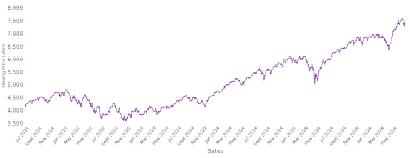
The following graph sets forth the historical performance of the SPX based on the daily historical closing values from June 17, 2021 through June 17, 2026. We obtained the closing values below from Bloomberg L.P. (“Bloomberg”). We have not undertaken any independent review of, or made any due diligence inquiry with respect to, the information obtained from Bloomberg.
| |
The historical values of the SPX should not be taken as an indication of its future performance, and no assurance can be given as to the Closing Level of the SPX on any Trading Day during the Observation Period, including the Final Valuation Date.
| ||
Description of the RTY
The RTY is designed to track the performance of the small capitalization segment of the U.S. equity market. The RTY consists of the smallest 2,000 companies included in the Russell 3000® Index, which represents approximately 98% of the U.S. equity market.
For more information about the RTY, see " Index Descriptions—The Russell Indices" beginning on page S-30 of the accompanying underlying supplement. |
Historical Performance of the RTY
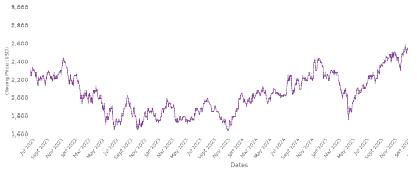
The following graph sets forth the historical performance of the RTY based on the daily historical closing values from June 17, 2021 through June 17, 2026. We obtained the closing values below from Bloomberg. We have not undertaken any independent review of, or made any due diligence inquiry with respect to, the information obtained from Bloomberg.
| |
The historical values of the RTY should not be taken as an indication of its future performance, and no assurance can be given as to the Closing Level of the RTY on any Trading Day during the Observation Period, including the Final Valuation Date.
| ||
PS-12
Description of the NDX
The NDX is a modified market capitalization-weighted index of 100 of the largest domestic and international non-financial companies listed on The Nasdaq Stock Market based on market capitalization. It does not contain securities of financial companies, including investment companies.
For more information about the NDX, see " Index Descriptions—The Nasdaq-100 Index®" beginning on page S-25 of the accompanying underlying supplement. |
Historical Performance of the NDX
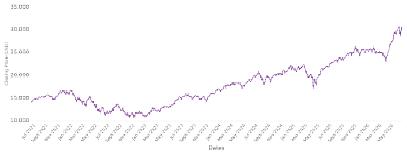
The following graph sets forth the historical performance of the NDX based on the daily historical closing values from June 17, 2021 through June 17, 2026. We obtained the closing values below from Bloomberg. We have not undertaken any independent review of, or made any due diligence inquiry with respect to, the information obtained from Bloomberg.
| |
The historical values of the NDX should not be taken as an indication of its future performance, and no assurance can be given as to the Closing Level of the NDX on any Trading Day during the Observation Period, including the Final Valuation Date.
| ||
PS-13
SUPPLEMENTAL PLAN OF DISTRIBUTION (CONFLICTS OF INTEREST)
We have appointed MCMI, an affiliate of Marex, as the agent for the sale of the Notes. Pursuant to the terms of a distribution agreement, MCMI will purchase the Notes from Marex at the price to public less the underwriting discount set forth on the cover page of the pricing supplement to which this document relates, for distribution to other registered broker-dealers or will offer the Notes directly to investors. MCMI proposes to offer the Notes at the price to public set forth on the cover page of this document. MCMI will use the underwriting discount to pay selling concessions or fees (including custodial or clearing fees) to other registered broker-dealers.
An affiliate of Marex has paid or may pay in the future an amount to broker-dealers in connection with the costs of the continuing implementation of systems to support the Notes. We or one of our affiliates may pay a fee to one or more broker dealers for providing certain services with respect to this offering, which may reduce the economic terms of the Notes to you.
In addition, MCMI or another of our affiliates or agents may use the pricing supplement to which this document relates in market-making transactions after the initial sale of the Notes, but is under no obligation to make a market in the Notes and may discontinue any market-making activities at any time without notice.
See “Supplemental Plan of Distribution (Conflicts of Interest)” on page S-61 in the prospectus supplement.
We expect that delivery of the Notes will be made against payment for the Notes on or about the Original Issue Date set forth on the inside cover page of this document, which is more than one business day following the Trade Date. Under Rule 15c6-1 under the Securities Exchange Act of 1934, trades in the secondary market generally are required to settle in one business day, unless the parties to that trade expressly agree otherwise. Accordingly, purchasers who wish to trade the Notes more than one business day prior to the Original Issue Date will be required to specify an alternate settlement cycle at the time of any such trade to prevent a failed settlement, and should consult their own advisors.
U.S. FEDERAL INCOME TAX CONSIDERATIONS
The U.S. federal income tax consequences of each holder’s investment in the Notes are uncertain. There are no Treasury Regulations, published rulings or judicial decisions addressing the treatment for U.S. federal income tax purposes of securities with terms that are substantially the same as the Notes. By purchasing the Notes, each holder agrees (in the absence of a change in law, an administrative determination or a judicial ruling to the contrary) to treat each Note as a put option written by you (the “Put Option”) and a deposit with us of cash in an amount equal to the Principal Amount of the Note (the “Deposit”) to secure your potential obligation under the Put Option, as described in the prospectus supplement under the heading "U.S. Federal Income Tax Considerations —U.S. Holders — Certain Notes Treated as a Put Option and a Deposit or an Executory Contract — Certain Notes Treated as a Put Option and a Deposit”, for U.S. federal income tax purposes. We intend to treat the Notes consistent with this approach, and we intend to treat the Deposits as non-contingent debt instruments for U.S. federal income tax purposes. Pursuant to the terms of the Notes, each holder agrees to such treatment for all U.S. federal income tax purposes. In the opinion of our counsel, Mayer Brown LLP, it would generally be reasonable to treat the Notes as Put Opinions and Deposits in respect of the Underlyings for U.S. federal income tax purposes.
The U.S. federal income tax consequences of a U.S. Holder’s investment in the Notes are uncertain and the Internal Revenue Service could assert that the Notes should be taxed in a manner that is different from that described above. Please see the discussion in the accompanying prospectus supplement under “U.S. Federal Income Tax Considerations” and in particular the discussion under "U.S. Federal Income Tax Considerations —U.S. Holders — Certain Notes Treated as a Put Option and a Deposit or an Executory Contract — Certain Notes Treated as a Put Option and a Deposit” and the discussion in the accompanying prospectus under “Material Tax Considerations — Material U.S. Federal Income Tax Considerations”. With respect to Interest Payments you receive, we intend to treat such payments as consisting of interest on the Deposit and a payment with respect to the Put Option as follows:
| Interest Rate per Annum | Interest on Deposit per Annum | Put Option Component per Annum |
| [●] % | [●] % | [●] % |
The Put Premium should not be taxable to a U.S. Holder upon its receipt. If the Put Option expires unexercised, the U.S. Holder should recognize the total Put Premium received as short-term capital gain at such time.
Non-U.S. Holders should review the discussion in the accompanying prospectus supplement under “U.S. Federal Income Tax Considerations — Non-U.S. Holders” for a discussion of the U.S. federal income tax consequences applicable to Non-U.S. Holders.
A “dividend equivalent” payment is treated as a dividend from sources within the United States and such payments generally would be subject to a 30% U.S. withholding tax if paid to a Non-U.S. Holder. Under Treasury Regulations, payments (including deemed payments) with respect to equity-linked instruments (“ELIs”) that are “specified ELIs” may be treated as dividend equivalents if such specified ELIs reference an interest in an “underlying security,” which is generally any interest in an entity taxable as a corporation for U.S. federal income tax purposes if a payment with respect to such interest could give rise to a U.S. source dividend. However, IRS guidance
PS-14
provides that withholding on dividend equivalent payments will not apply to specified ELIs that are not delta-one instruments and that are issued before January 1, 2027. We expect that the delta of the Notes will not be one, and therefore, we expect that Non-U.S. Holders should not be subject to withholding on dividend equivalent payments, if any, under the Notes. However, it is possible that the Notes could be treated as deemed reissued for U.S. federal income tax purposes upon the occurrence of certain events affecting an Underlying or the Notes, and following such occurrence the Notes could be treated as subject to withholding on dividend equivalent payments. Non-U.S. Holders that enter, or have entered, into other transactions in respect of an Underlying or the Notes should consult their tax advisors as to the application of the dividend equivalent withholding tax in the context of the Notes and their other transactions. If any payments are treated as dividend equivalents subject to withholding, we (or an applicable withholding agent) would be entitled to withhold taxes without being required to pay any additional amounts with respect to amounts so withheld.
PROSPECTIVE PURCHASERS OF THE NOTES SHOULD CONSULT THEIR TAX ADVISORS AS TO THE TAX CONSEQUENCES OF THE ABOVE DESCRIBED CHARACTERIZATION OF THE NOTES AND ANY POSSIBLE ALTERNATIVE CHARACTERIZATIONS OF THE NOTES FOR U.S. FEDERAL INCOME TAX PURPOSES. PROSPECTIVE PURCHASERS OF NOTES SHOULD CONSULT THEIR TAX ADVISORS AS TO THE FEDERAL, STATE, LOCAL, AND OTHER TAX CONSEQUENCES TO THEM OF THE PURCHASE, OWNERSHIP AND DISPOSITION OF NOTES.
PS-15